Fruit Galette Recipe
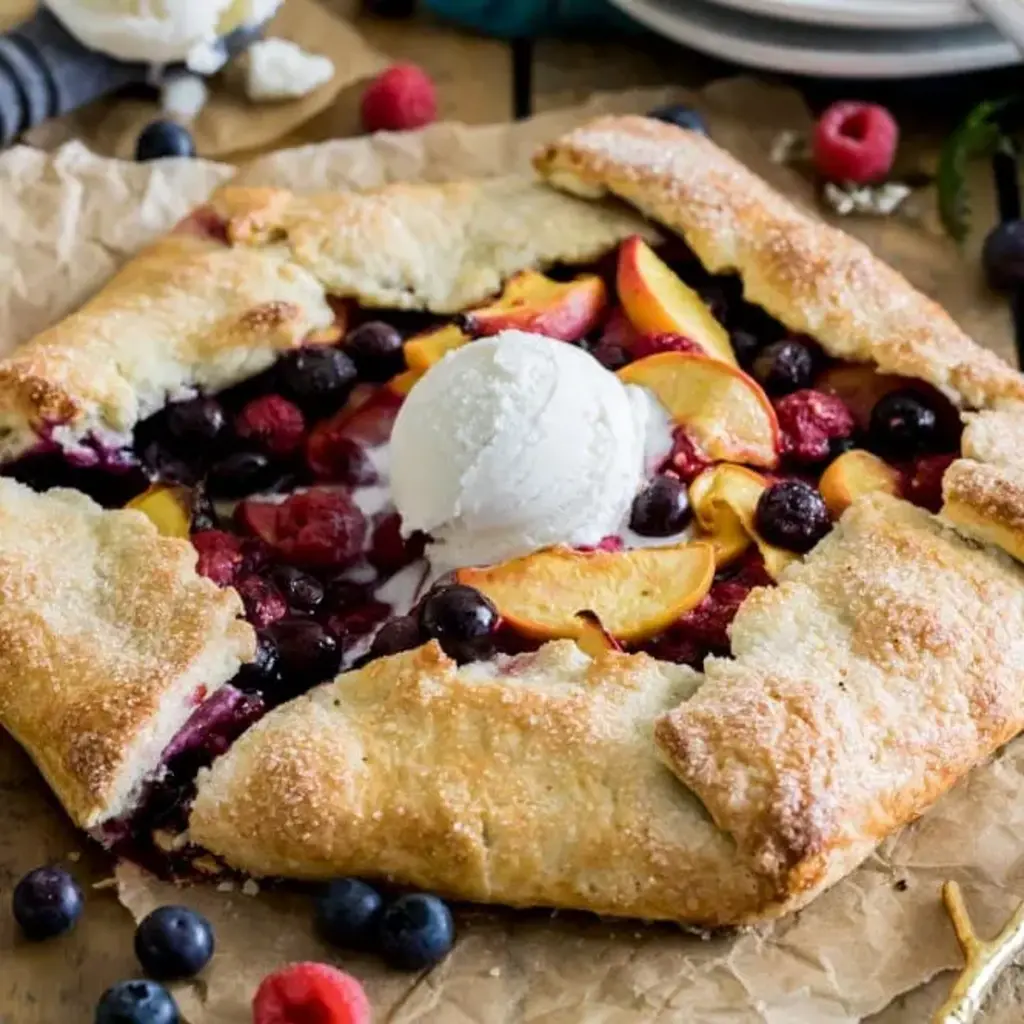
Table of Contents
Fruit Galette Recipe Quick Sour Cream Crust – Easy & Lively Tasting Tart
Growing up in the bustling souqs of Fez, I was always surrounded by the aroma of fresh spices and sweet figs. When I moved to New York, I carried that sensory memory with me, and it first sparked my love for fruit galettes when a friend asked me to whip up something easy for a brunch. That moment made me realize that a fruit galette can capture the comfort of a Moroccan “briouat” and the elegance of a Parisian tarte tatin—all in one crust. I decided to experiment with a quick sour‑cream crust that turns the dough into a soft, tender blanket for the fruit, and that’s why this recipe is different, simple, and irresistibly delicious.
For the filling, I love the golden blush of ripe peaches, the tart burst of blueberries, specks of prickly‑pear from my Brooklyn farmer’s market—each piece glistens with sugar and lemon zest before they mingle with a soft cornstarch paste. The crust is a buttery, slightly sweet canvas that folds over the fruit like a warm hug. When baked, steam rises and the butter traces a delicate lattice across the top as it caramelizes, giving the galette that signature rustic, hand‑made look. Even when the clock is ticking, the aroma alone whispers temptation, turning the kitchen into a Mediterranean courtyard even in the heart of Manhattan.
As a chef trained at Le Cordon Bleu, I bring precise techniques yet keep cooking approachable. In this galette, the unique quick sour‑cream crust not only adds a silky texture but also keeps the pastry crisp‑yet‑loose, avoiding the soggy bottoms that plague many beginners. I’m excited to share a pro tip for perfect puffiness: let the dough chill straight before rolling, and keep a bottle of cold water nearby to mellow the butter. The most common mistake is over‑mixing the butter with flour; I’ll show you how to keep the pastry flaky with a simple trimming trick.
Why This Fruit Galette Recipe Is the Best
The secret behind this galette is the delicate interplay of textures: a soft, slightly sweet sour‑cream base that melts into the fruit, creating pockets of syrupy flavor that burst in your mouth. My Moroccan roots taught me to balance richness with bright, citrusy notes, while my Parisian training honed my eye for delicate crusts that hold their shape yet yield to the feathered touch of a rolling pin.
Perfected Texture comes from a simple but crucial step—cutting the butter into fine shards that whisper into the dough. The butter’s coldness keeps it separate, giving rise to a flaky crust that lifts around the fruit like a springy hug, while the sour cream keeps the crumb tender and moist. The technique is a staple from my pastry school days, yet anyone can execute it with minimal fuss.
Foolproof & Fast: The dough can be assembled in 20 minutes and baked in 35. No rolling pin is too small, no dusting of flour is excessive, and the optional sugar sprinkle on top turns into a caramelized kiss only when the oven is hot enough. That means you—city mom, busy executive, or weekend baker—can enjoy a sophisticated dessert without sacrificing valuable time.
Fruit Galette Ingredients
I source most of these from the Williamsburg market: a handful of honey‑roasted peaches for that citrusy sweetness, a patch of deep‑red blueberries, and, of course, a nibble of my favorite Moroccan orange zest. The ingredients snap onto the tile of my fridge as if they’re old friends waiting for the next adventure.
Ingredients List
- 1 ½ cups all purpose flour
- 1 Tablespoon granulated sugar
- ½ teaspoon salt
- 9 Tablespoons unsalted butter (very cold and cut into 9 or more pieces)
- 6 Tablespoons of sour cream
- 1 ½ lbs various prepared fruit¹
- ¼ cup granulated sugar
- 2 teaspoons Lemon juice
- 1 ½ Tablespoons cornstarch²
- teaspoon salt
- 1 large egg
- 2 teaspoons water
- Coarse or granulated sugar for sprinkling (optional)
- 1 ½ Tablespoons unsalted butter (cold and cut into small pieces, optional)
Ingredient Spotlight
All Purpose Flour – In New York, I reach for the crisp‑box cereals of the grocery aisle. If you’re gluten‑sensitive, you can swap with an equal amount of a 1‑to‑1 all‑purpose gluten‑free blend; the crust will retain its flakiness but become gluten‑free without new flavors.
Unsalted Butter – I always buy a 1‑lb block in the dairy section of Whole Foods, because clumping butter is the secret to a flaky crust. One handy substitution is clarified butter or ghee, which gives a richer, nutty aroma but may produce a slightly denser crumb.
Sour Cream – The tang cuts through the sweetness, providing balance. If you’re lactose intolerant, replace it with plain Greek yogurt for a sauce‑like feel; the texture may become a little thicker but the flavor stays bright.
| Original Ingredient | Best Substitution | Flavor / Texture Impact |
|---|---|---|
| All Purpose Flour | Gluten‑free All‑Purpose Blend | Stays flaky, slightly lighter. |
| Unsalted Butter | Clarified Butter or Ghee | Richer nutty flavor, denser crumb. |
| Sour Cream | Plain Greek Yogurt | Thicker, tangier, vegan option. |
| Muscat or Raisins (for optional sugar sprinkle) | Dried Apricots or Prune Chunks | Adds chewier texture, fruity depth. |
| Cold Water | Ice Cold Sparkling Water | Helps keep the dough chill, reduces sticking. |
How to Make Fruit Galette – Step by Step
Let’s stitch the story of flavors together, one step at a time.
Step 1: Mix Dry Ingredients
Combine 1 ½ cups flour, 1 Tablespoon sugar and ½ teaspoon salt in the bowl of a food processor, pulsing just until blended.
💡 Stella’s Pro Tip: Keep the mixture dry before the butter; a sticky base will cause the crust to crumple.
Step 2: Add Butter
Add the cold butter pieces and pulse until the dough resembles coarse crumbs. The butter should look like small pebbles.
⚠️ Common Mistake to Avoid: Mixing the butter too long – it ends up silky and sticky.
Step 3: Include Sour Cream
Add 6 Tablespoons of sour cream, pulse once more until the dough clumps. Wrap in plastic and chill for 30 minutes.
💡 Stella’s Pro Tip: Press the dough into a disc before refrigerating so it lays flat when ready to roll.
Step 4: Roll Out Dough
Remove from fridge, dust a flat surface with flour, roll the dough to a 12‑13 inch circle. Place on a baking sheet or a round pizza pan.
⚠️ Common Mistake to Avoid: Rolling too thin near the edges – this causes the crust to crack.
Step 5: Preheat Oven
Knock back into the middle rack of a preheated 400 °F oven; an oven thermometer ensures temperature stability.
💡 Stella’s Pro Tip: Placing the galette on a cooler parchment tends to give a more even bottom crust.
Step 6: Make Filling
In a bowl, combine the 1 ½ lbs of fruit, ¼ cup sugar, 2 teaspoons lemon juice, 1 ½ Tablespoons cornstarch and a pinch of salt; stir dry quickly – cornstarch helps with thickening.
⚠️ Common Mistake to Avoid: Missing the cornstarch – the fruit will loan more liquid than needed.
Step 7: Transfer Filling
Place the fruit mixture in the center of the crust, leaving a 2-inch border.
💡 Stella’s Pro Tip: Swirl the fruit lightly to disperse the sugar for a uniform carmine glaze.
Step 8: Secure Crust
Fold the edge over the filling, pinch corners, letting a clear circle of fruit become a work of art.
⚠️ Common Mistake to Avoid: Pushing the crust too tight – it can take heat away from the fruit.
Step 9: Dissolve Butter
Drop small dried butter pieces on top; they will melt into the fruit as the oven warms.
💡 Stella’s Pro Tip: A tiny burst of sweet butter on top creates a caramelized kiss after baking.
Step 10: Brush Egg Wash
Whisk together 1 egg and 2 teaspoons water; brush the flap of crust lightly to give golden sheen. Keep the bottle while baking.
⚠️ Common Mistake to Avoid: Brushing too thickly – a wet crust will become soggy.
Step 11: Bake Galette
Bake 30‑35 minutes until fruit bubbles and crust turns a deep golden color. Let cool 10 minutes before slicing.
💡 Stella’s Pro Tip: If the crust browns too fast, tent it with foil to avoid burning.
Step 12: Cool & Serve
Serve warm from the oven, possibly with a dollop of extra sour cream or a swirl of lemon custard for contrast.
⚠️ Common Mistake to Avoid: Cutting right away – the filling needs time to set for a perfect bite.
| Step | Action | Duration | Key Visual Cue |
|---|---|---|---|
| 1 | Combine dry | 5 min | Whizable texture |
| 2 | Add butter | 3 min | Pebble crust |
| 3 | Add sour cream | 3 min | Soft disc |
| 4 | Roll dough | 4 min | Circular shape |
| 5 | Preheat oven | 5 min heat up | Even heat |
| 6 | Make filling | 4 min | Glassy swirl |
| 7 | Transfer filling | 3 min | Clear ring |
| 8 | Secure crust | 2 min | Pleat edges |
| 9 | Add butter dots | 1 min | Melty sparkle |
| 10 | Brush egg wash | 2 min | Golden sheen |
| 11 | Bake | 35 min | Oil syrup |
| 12 | Cool & Serve | 10 min | Melted glaze |
Serving & Presentation
Slice the galette into wedges and serve warm, perhaps leaning it on a rustic wooden board. The caramelized edges form a textural contrast against the chewy fruit. Drown a small spoonful of chilled Greek yogurt or a drizzle of honey‑spiced Moroccan orange jam over each slice; the sweetness mirrors the city’s streets, the jam’s spice adds depth.
For a brunch, plate the galette next to toasted croissant halves and a glass of sparkling wine—my favorite summer choice. A light pomegranate reduction or a dollop of mascarpone will create the harmony between French technique and North African heritage that lives in my kitchen.
| Pairing Type | Suggestions | Why It Works |
|---|---|---|
| Side Dish | Quinoa salad with lemon vinaigrette | Brightens the sweet fruit and adds protein |
| Sauce / Dip | Honey‑spiced orange jam, yogurt swirl | Enhances citrus notes and cools the richness |
| Beverage | Cruising strawberries sparkling wine, iced tea with mint | Balances sweetness, a festive vibe |
| Garnish | Fresh mint leaves, toasted almond slivers | Adds color, nutty crunch |
Make-Ahead, Storage & Reheating
I like to bake a batch over the weekend and slice into slices so that I have ready‑to‑heat portions during the hectic weekday lunches. The crust holds up well; the only tweak is to brush a pinch of flour on the topper to keep the caramelization from over‑browning during storage.
| Method | Container | Duration | Reheating Tip |
|---|---|---|---|
| Refrigerator | airtight plastic bag | 4‑5 days | Microwave 1‑2 min, then finish in 180 °F oven 5 min. |
| Freezer | vacuum bag | 2‑3 months | Thaw overnight; reheat 10–12 min at 350 °F. |
| Make-Ahead | individual parchment cups | up to 3 days prior | Assemble; bake when needed; avoid over‑baking. |
When reheating from the freezer, I find re‑baking at a lower temperature preserves the flakiness without cracking the crust. Another trick is to cover the galette with foil for the first 5 minutes to trap steam, then uncover to finish browning.
Variations & Easy Swaps
| Variation | Key Change | Best For | Difficulty Impact |
|---|---|---|---|
| Berries & Lime | Replace peach with mixed berries + 1 tsp lime zest | Summer brunch | Easy |
| Gluten‑Free | Use GF flour blend, slightly less liquid | Gluten‑free diet | Moderate |
| Seasonal Rhubarb | Swap fruit for fresh rhubarb + vanilla glaze | Autumn dinner | Easy |
Berries & Lime
A combination of blueberries, strawberries, and blackberries with a splash of lime zest adds a tangy, citrus punch that echoes the freshness of a Mediterranean tazza. The acidity balances the richness of the crust and the buttery egg wash, creating a light yet satisfying dessert.
Gluten‑Free
Swap the all‑purpose flour for an equal amount of a gluten‑free blend—think a 1‑to‑1 mix made from rice, tapioca, and potato starch. The dough will still rise nicely, but the crumb will be a bit denser. I’ve tested it in my apartment kitchen and it comes out flaky with a pronounced buttery note.
Seasonal Rhubarb
Fresh rhubarb, simmered with a hint of vanilla and a dash of sugar, creates a tart, fragrant filling that parallels the smoky heat of a Moroccan tagine. It pairs particularly well with a warm slice of breaded chicken for a rebellious dessert experience.
FAQ
Can I use frozen fruit for the galette?
Yes, frozen fruit works wonderfully, especially when the season is out of reach. Take them straight from the freezer to the bowl—no thawing needed—to keep the gel consistency of the fruit. However, you’ll want to lean a little more on the cornstarch (up to 2 tbsp) so that excess moisture is absorbed during baking, preventing a stew‑like filling.
Should I brush the crust with butter or milk?
Both butter and milk brushings can work, but butter provides a richer, more caramelized top, especially for a rustic galette. Milk gives a subtle sheen but can lead to a more uniform, softer crust. For a buttery finish, lightly whisk a tablespoon of melted butter with a teaspoon of water and brush lightly over the flaps before baking.
Do I need a special pan?
No special pan is required. A standard 9‑inch cookie sheet or a round pizza pan will do. The key is that the sheet is sturdy, so the grounds don’t sag. If you use a sheet with a slight indent, the crust will hold the filling better and prevent it from spilling during the bake.
What’s the best egg wash to avoid sogginess?
A light egg wash of one whole egg and a splash of water is sufficient. To keep the crust crisp, whisk the egg with about 1–2 teaspoons of cold water—this lowers the temperature, limiting moisture during the bake. Always apply a thin coat; a heavy coat creates steam that may soften the pastry.
Can I swap eggs for plant‑based alternatives?
Absolutely. For a dairy‑free option, blend 3 tbsp aquafaba with 1 tsp water, whisk vigorously to create a foam, then brush over the crust. The result is a light, slightly neutral coating that still sets to a golden finish, though the flavor will be subtly different from a traditional egg wash.
What if I want a sweeter crust?
Increasing the sugar by about 1–2 tablespoons in the dough will sweeten the crust, but be careful not to add too much—excess sugar can make the dough overly sticky and affect the flakiness. A gentle dusting of superfine sugared sugar just after baking adds a final caramelized crunch reminiscent of a French caramel tart.
Is the galette good for a kids’ party?
Definitely. The simple shape and vibrant fruit make it visually engaging for children. You can add a pinch of cinnamon or spice them with a small amount of finely chopped dried apricots, and serve with a side of vanilla ice cream or Greek yogurt for a sweet “family friendly” finish.
Can I pre‑bake the crust?
Pre‑baking the unfilled crust (known as blind baking) is possible but not necessary. If you do, lightly dust it with flour and bake at 350 °F for 10 minutes, then let cool before adding the fruit. This technique is useful when you want a fully crisp crust but can also increase baking time and risk over‑browning.
What type of fruit works best?
Seasonal berries—strawberries, blueberries, raspberries—are ideal for a light, sweet dish. For a more robust flavor, apples or pears with a sprinkle of cinnamon work wonders. If you’re in the fall, rhubarb or quince can substitute, adding tangy depth that pairs nicely with the creamy crust.
How do I store leftovers?
Place leftover galettes in an airtight container or wrap them tightly in foil and store in the refrigerator up to five days. Before reheating, let them sit at room temperature for 10–15 minutes so they warm evenly. Reheat in a 350 °F oven for 5 minutes for crisp crust or 1–2 minutes in a microwave if you’re in a rush. Flour to keep the crust from steaming.
Share Your Version!
Don’t keep all that deliciousness to yourself—share a star rating or drop a comment below; a little feedback brightens my screen like a sunrise over Marrakesh. Capture a mouth‑watering photo on Instagram or Pinterest and tag @leosfoods so that we can celebrate your creation. Tell me, what variation did you test? Did the pomegranate glaze turn your galette into a Mediterranean masterpiece?
From my NYC kitchen to yours — I hope this recipe brings as much warmth to your table as it does to mine. — Stella 🧡
Love This Recipe? Save It to Pinterest!
If you enjoyed this Fruit Galette recipe, don’t let it get lost in your browser tabs! 😄 Pin it now so you can find it again anytime — and explore hundreds more tried-and-tested recipes waiting for you on my Pinterest boards.
👉 Follow Stella on Pinterest @exorecipe
📌 Pin this recipe · 🔁 Re-pin your favorites · 💬 Tag me when you make it — I love seeing your creations!
Looking for more homemade delights? Explore my collection of quick‑scratch crusts, savory tarts, and the culinary journey that blends North African spice with French finesse.
Fruit Galette Recipe
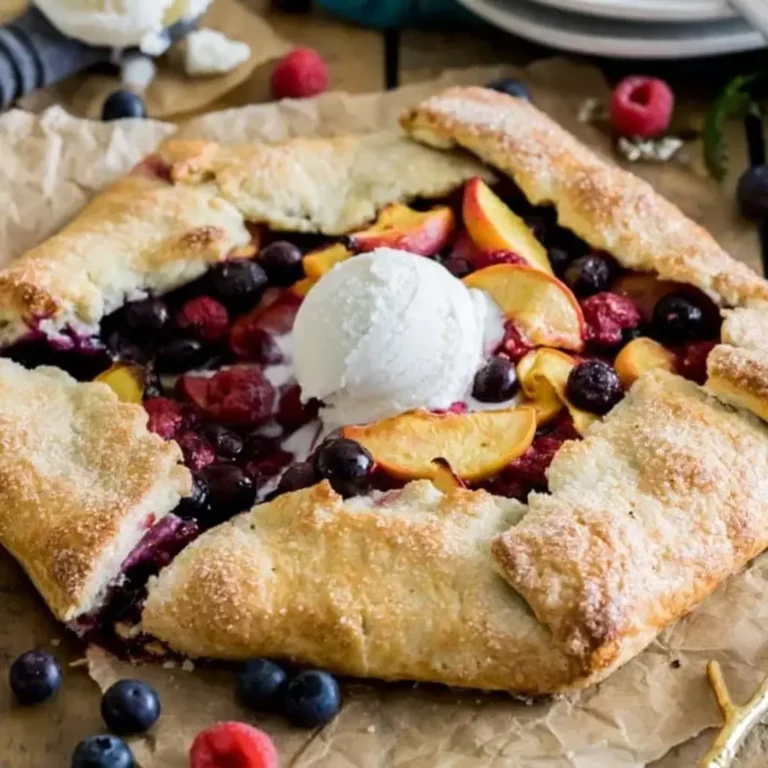
How to make a simple fruit galette! Galettes are easier to make than fruit pies, but every bit as tasty. Be sure to check out my how-to VIDEO!
Ingredients
- 1 ½ cups all purpose flour
- 1 Tablespoon granulated sugar
- ½ teaspoon salt
- 9 Tablespoons unsalted butter (very cold and cut into 9 or more pieces)
- 6 Tablespoons of sour cream
- 1 ½ lbs various prepared fruit¹
- ¼ cup granulated sugar
- 2 teaspoons Lemon juice
- 1 ½ Tablespoons cornstarch²
- teaspoon salt
- 1 large egg
- 2 teaspoons water
- Coarse or granulated sugar for sprinkling (optional)
- 1 ½ Tablespoons unsalted butter (cold and cut into small pieces, optional)
Instructions
- Combine flour, sugar, and salt in the basin of a food processor³ and pulse to combine.
- Scatter butter pieces over the top of your dry ingredients and pulse until butter is cut into the dry ingredients and the mixture resembles coarse crumbs.
- Add sour cream and pulse again until the mixture begins to clump together. Transfer to a piece of plastic wrap or wax paper and form into a ball. Lightly flatten into a disc and chill for at least 30 minutes in the refrigerator.
- While galette crust is chilling, preheat oven to 400F (205C) and prepare your fruit filling.
- Combine fruit, sugar, lemon juice, cornstarch, and salt in a large bowl and stir until well-combined. Set aside.
- Once dough has finished chilling, remove from refrigerator and transfer to a clean, lightly floured surface. Dust with additional flour and roll out to a 12-13 circle. Transfer to a baking sheet (sometimes I will use a round pizza pan, but a standard cookie sheet works, too).
- Prepare egg wash by whisking together egg and water in a small bowl. Use a pastry brush to lightly brush your pie dough with egg wash (this will help keep the galette from getting soggy). Dont discard egg wash yet.
- Give your fruit one more stir in the bowl and then carefully transfer to the center of your galette crust, leaving a 2 perimeter of fruit-free crust.
- Fold the perimeter/border of your crust carefully over the fruit filling and pinch together to secure (it will not completely cover it, you should have a nice circle of exposed fruit in the center!).
- Dot the fruit with butter pieces, if using.
- Brush the folded-over pastry with egg wash and sprinkle with sugar, if desired.
- Transfer to 400F (205C) oven and bake for 30-35 minutes or until the fruit is bubbling and the crust is a nice golden color. Allow to cool before slicing and serving.