Vegan Cabbage Rolls (Asian-Inspired Wraps)
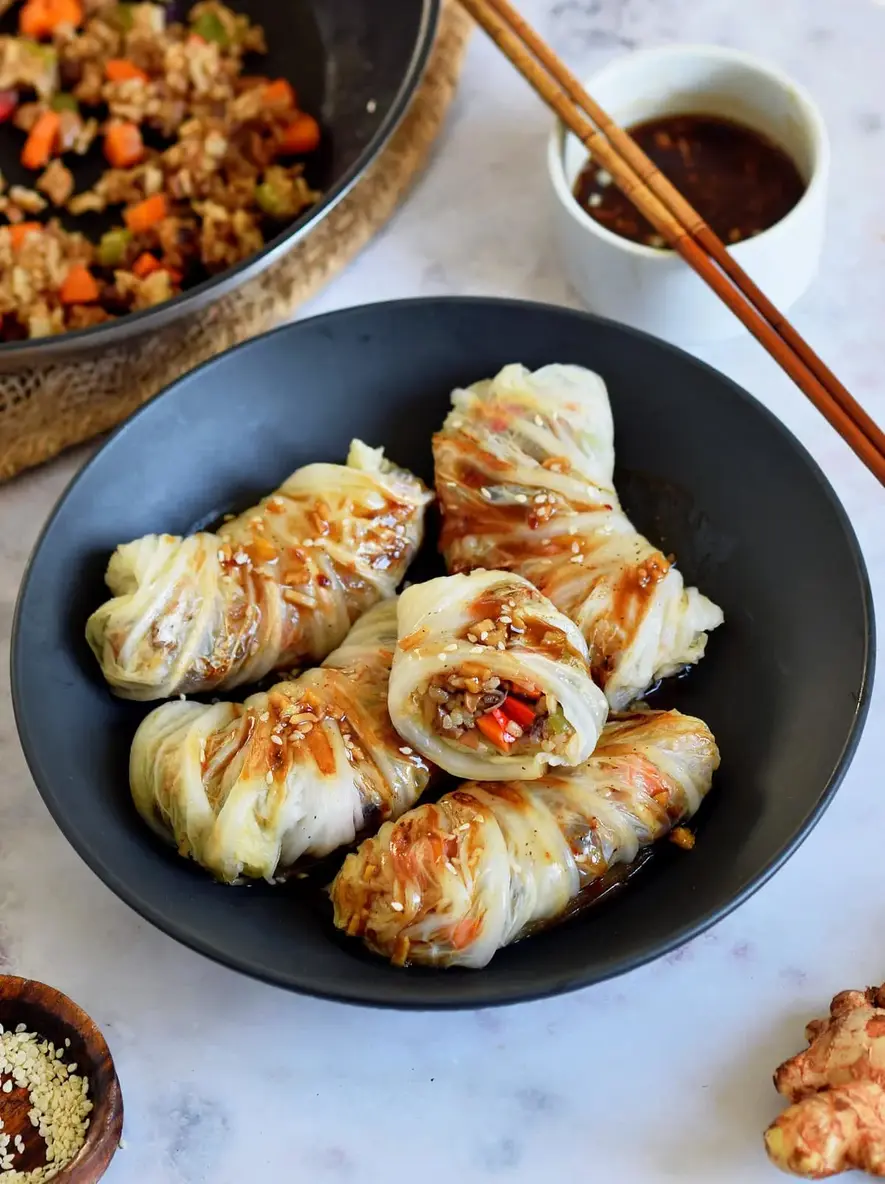
Table of Contents
Vegan Cabbage Rolls with Chinese Brown Garlic Sauce – An Asian-Inspired, Gluten-Free Feast
Growing up in my mother’s kitchen in Morocco, stuffed vegetables were a weekly ritual—zucchini, peppers, and grape leaves filled with fragrant rice and herbs. Years later, my culinary training in Paris taught me the art of a perfectly balanced sauce. Now, in my NYC apartment, I’ve fused those worlds to create these Asian-inspired vegan cabbage rolls, a dish that’s both comforting and exciting. The unique angle here is the Chinese brown garlic sauce—a glossy, savory-sweet glaze that elevates the humble cabbage roll into something truly special.
Imagine tender, blanched napa cabbage leaves, so pliable they wrap around a savory filling of short-grain rice, diced peppers, carrots, and mushrooms sautéed with ginger and garlic. The real magic happens when you pan-sear those little parcels until their edges are golden and crisp, then blanket them in that rich, aromatic sauce. The sauce itself is a symphony of tamari’s umami depth, rice vinegar’s bright tang, and maple syrup’s subtle sweetness, all thickened to a luxurious consistency that clings to every bite. It’s a textural dream: soft cabbage, slightly chewy rice, crisp-tender veggies, and that velvety sauce.
As a professional cook, I’ve tested this recipe to ensure it’s gluten-free, naturally vegan, and approachable for home cooks. My version stands out because of the sauce technique—creating a proper slurry with cornstarch for a glossy, restaurant-quality finish without any fuss. I’ll share my pro tip for perfectly blanching cabbage leaves so they don’t tear, and I’ll warn you about the one common mistake that can make your rolls soggy. Let’s make a meal that’s as beautiful to plate as it is delicious to eat.
Why This Vegan Cabbage Rolls Recipe Is the Best
The Flavor Secret: My Moroccan heritage means I never shy away from bold spices, and my French training demands balance. This Chinese brown garlic sauce is that perfect balance. It’s not just an afterthought; it’s the star, built layer by layer with fresh ginger, garlic, and a touch of smoked paprika for a subtle depth you won’t find in other recipes. It’s the unique angle that transforms this from a simple stuffed cabbage into an unforgettable, Asian-inspired feast.
Perfected Texture: Many cabbage roll recipes can be mushy. Not these. The key is a technique I perfected in Paris: pan-searing the assembled rolls. This crucial step adds a delightful caramelized crust to the exterior, which contrasts beautifully with the soft interior and creates a barrier that helps the roll hold its shape under the sauce. It’s a chef’s trick that makes all the difference in presentation and mouthfeel.
Foolproof & Fast: While stuffed dishes can seem daunting, I’ve streamlined the process. By using readily available napa cabbage (softer than green cabbage) and a quick-cooking veggie sauté, this recipe comes together in under an hour. The steps are clear, and the make-ahead options are flexible. Whether you’re a beginner looking to impress or a busy New Yorker like me needing a reliable weeknight meal, this recipe is designed for success.
Vegan Cabbage Rolls Ingredients
I love how this recipe lets me shop my local NYC greenmarket for the freshest peppers and carrots, while the core Asian pantry staples are things I always have on hand. It reminds me of the vibrant souks in Morocco, where the quality of each component truly matters. Let’s gather what we need for these gluten-free cabbage rolls.
Ingredients List
- 1 1/4 cups dry sushi rice (or any short-grain rice like Arborio)
- 1 large napa cabbage (10-12 whole leaves)
- 1 tbsp neutral oil, divided (like avocado or grapeseed)
- 1 medium onion, diced
- 3/4 tbsp fresh ginger, minced
- 3 garlic cloves, minced
- 1 medium carrot, diced
- 2 medium bell peppers (any color), diced
- 8 white button mushrooms, diced (fresh or canned, drained)
- 2 tbsp tamari or coconut aminos (for gluten-free)
- 1/2 tsp each of sea salt, ground black pepper, onion powder
- 1/4 tsp red pepper flakes (or to taste)
- Sesame seeds, for garnish
For the Chinese Brown Garlic Sauce:
- 1 tsp sesame oil (or neutral oil)
- 1/2 tbsp fresh ginger, minced
- 2 garlic cloves, minced
- 1 1/2 tbsp tamari or coconut aminos
- 1 tbsp rice vinegar
- 3/4 tbsp pure maple syrup or agave
- 1/2 cup water
- 1/2 tbsp cornstarch
- Salt, pepper, red pepper flakes, and a pinch of smoked paprika to taste
Ingredient Spotlight
Napa Cabbage: This is the foundation. Its long, tender, and slightly sweet leaves are far easier to blanch and roll than tough green cabbage. Look for a head that feels heavy for its size with crisp, pale green leaves. If you can’t find it, savoy cabbage is the best substitute, though you may need to blanch it a minute longer.
Sushi Rice: The short, plump grains of sushi rice become sticky when cooked, which acts as a natural binder for the filling, holding all the veggies together. In a US grocery store, it’s often labeled “sushi rice” or “short-grain white rice.” Arborio rice (used for risotto) is a great swap and will give a slightly creamier texture.
Tamari/Coconut Aminos: This is our salty, umami powerhouse. Tamari is a wheat-free soy sauce, making this recipe gluten-free. Coconut aminos are a sweeter, soy-free alternative. Both work beautifully. Standard soy sauce can be used if gluten isn’t a concern, but reduce the amount slightly as it’s saltier.
Fresh Ginger & Garlic: Non-negotiable for that authentic Asian-inspired flavor base. Please use fresh! The pre-minced jars lack the bright, pungent kick. Look for firm ginger root with smooth skin and firm, plump garlic heads.
| Original Ingredient | Best Substitution | Flavor / Texture Impact |
|---|---|---|
| Napa Cabbage | Savoy Cabbage | Slightly more robust texture, may require longer blanching. Flavor remains mild and sweet. |
| Sushi Rice | Arborio Rice or Brown Short-Grain Rice | Arborio is creamier; brown rice is nuttier and chewier. Adjust cooking time accordingly. |
| Tamari | Liquid Aminos or Light Soy Sauce | Very similar umami profile. Light soy sauce will be saltier, so start with less. |
| Bell Peppers | Zucchini or Shiitake Mushrooms | Zucchini adds moisture; shiitakes add a deeper, earthier umami flavor. |
| Maple Syrup | Agave Nectar or Brown Sugar | Agave is neutral; brown sugar will add a slight molasses note. Both provide the needed sweetness. |
How to Make Vegan Cabbage Rolls — Step-by-Step
Don’t let the rolling intimidate you! I’ve broken it down into simple, manageable steps. Think of it as a therapeutic kitchen project—the result is so worth it. Let’s create these beautiful, Asian-inspired wraps together.
Step 1: Prep the Rice and Cabbage
Start by soaking the sushi rice in a large bowl of cold water for 45-60 minutes. This step is crucial for even cooking and perfect texture. Drain the rice thoroughly. Cook it in a saucepan with 1.5 cups of water and a pinch of salt. Bring to a boil, then reduce heat to low, cover, and simmer for 10-12 minutes until tender and water is absorbed. Fluff with a fork and set aside.
⚠️ Common Mistake to Avoid: Skipping the rice soak. This can lead to unevenly cooked, crunchy grains in the middle of your tender filling. The soak hydrates the core of the grain for perfect, consistent tenderness.
Step 2: Blanch the Cabbage Leaves
While the rice soaks/cooks, carefully separate 10-12 whole, large leaves from the napa cabbage. Bring a large pot of water to a rolling boil. Using tongs, submerge 3-4 leaves at a time and cook for 2-3 minutes until they turn bright green and are pliable. Immediately transfer them to a bowl of ice water to stop the cooking. This sets the color and makes them easy to handle. Pat them dry gently with a clean kitchen towel.
💡 Stella’s Pro Tip: Use a paring knife to carefully shave down the thick, tough rib at the base of each leaf after blanching. This makes rolling infinitely easier and prevents the rib from cracking and breaking your beautiful roll.
Step 3: Sauté the Veggie Filling
Heat 1/2 tablespoon of oil in a large skillet or wok over medium-high heat. Add the diced onion, ginger, and garlic. Sauté for 1 minute until fragrant. Add the diced carrot, peppers, and mushrooms. Cook, stirring occasionally, for 3-4 minutes until the veggies are just tender-crisp. Add the 2 tablespoons of tamari, salt, pepper, onion powder, and red pepper flakes. Stir and cook for another 1-2 minutes.
Step 4: Combine Filling and Roll
Add the cooked, fluffed rice to the skillet with the veggies. Turn off the heat and stir everything to combine thoroughly. Taste and adjust seasonings—this is your chance to make it perfect. Lay a blanched cabbage leaf flat on a cutting board. Place about 1.5 to 2 tablespoons of the rice mixture in the center of the lower third of the leaf. Fold the bottom edge over the filling, then fold in the sides, and roll it up tightly like a burrito. Place seam-side down on a plate. Repeat.
⚠️ Common Mistake to Avoid: Overstuffing the leaves. Using more than 2 tablespoons of filling will make them difficult to roll and likely cause them to burst open during searing. Less is more for neat, tight rolls.
Step 5: Pan Sear the Rolls
Heat the remaining 1/2 tablespoon of oil in a clean non-stick skillet over medium heat. Once hot, carefully place 5-6 rolls in the pan, seam-side down. Cook for 2-3 minutes per side, or until golden brown and slightly crispy. This step adds incredible flavor and texture. Work in batches to avoid crowding. Transfer seared rolls to your serving platter.
Step 6: Make the Chinese Brown Garlic Sauce
In a small saucepan, heat 1 teaspoon of oil over medium heat. Add the ginger and garlic and sauté for 30 seconds until fragrant but not browned. Pour in the tamari, rice vinegar, and maple syrup. Let it simmer for 1 minute. In a separate small bowl, whisk the water and cornstarch into a smooth slurry. While stirring the saucepan, slowly pour in the cornstarch slurry. Add a pinch of salt, pepper, red pepper flakes, and smoked paprika. Cook, stirring constantly, for 2-3 minutes until the sauce thickens to a glossy, gravy-like consistency.
💡 Stella’s Pro Tip: For a truly professional, lump-free sauce, always make a cold slurry (cornstarch mixed with cold water) before adding it to the hot liquid. Adding cornstarch directly to the hot pan will cause it to clump instantly.
Step 7: Serve and Enjoy
Arrange the pan-seared cabbage rolls on a platter. Drizzle the warm Chinese brown garlic sauce generously over the top. Garnish with a sprinkle of sesame seeds and perhaps some thinly sliced green onion. Serve immediately while the rolls are warm and the sauce is luxuriously glossy.
| Step | Action | Duration | Key Visual Cue |
|---|---|---|---|
| 1 | Soak & Cook Rice | ~60 mins (mostly inactive) | Rice is tender, water fully absorbed. |
| 2 | Blanch Cabbage | 2-3 min per batch | Leaves turn bright green and are pliable. |
| 3 & 4 | Sauté Filling & Combine | 6-8 mins | Veggies are tender-crisp, rice is fully incorporated. |
| 5 | Roll & Sear | 4-6 mins per batch | Rolls are golden brown on both sides. |
| 6 | Make Sauce | 4-5 mins | Sauce coats the back of a spoon thickly. |
Serving & Presentation
Presentation is where my French training really shines. For a stunning family-style plate, arrange the vegan cabbage rolls in a circular pattern on a large, shallow platter. Drizzle the glossy Chinese brown garlic sauce in a zig-zag pattern over the top, allowing some to pool enticingly on the plate. The contrast of the golden rolls against the dark sauce is beautiful. I love adding a final flourish of white and black sesame seeds for texture and thinly sliced scallion greens for a pop of color.
In NYC, we love a meal with contrasting flavors and textures. These rolls are substantial but not heavy, making them perfect for pairing. Think of a light, crunchy Asian slaw on the side, or some simply steamed bok choy drizzled with a little extra tamari. For a more substantial meal, they pair wonderfully with a miso-glazed eggplant or some crispy tofu nuggets. It’s a versatile centerpiece that welcomes creativity.
| Pairing Type | Suggestions | Why It Works |
|---|---|---|
| Side Dish | Quick-pickled cucumber salad, steamed jasmine rice, sautéed garlic green beans | Adds freshness, absorbs extra sauce, provides a simple, clean vegetable component. |
| Sauce / Dip | Extra brown garlic sauce, spicy sriracha mayo, sweet chili sauce | Allows guests to customize heat and flavor, enhancing the umami experience. |
| Beverage | Jasmine iced tea, crisp lager or IPA, dry Riesling | Cuts through the richness, complements the ginger and garlic notes, and refreshes the palate. |
| Garnish | Sesame seeds, sliced scallions, fresh cilantro, microgreens | Adds visual appeal, textural crunch, and bursts of fresh herbal flavor. |
Make-Ahead, Storage & Reheating
As a busy New Yorker, I’m a meal-prep enthusiast. The great news is that these Asian-inspired cabbage rolls are fantastic for making ahead. You can prepare the filling and blanch the leaves up to two days in advance, storing them separately in airtight containers in the fridge. Assembly and searing are then a 15-minute task. It’s my secret for having an impressive, home-cooked dinner on the table with minimal weeknight effort.
| Method | Container | Duration | Reheating Tip |
|---|---|---|---|
| Refrigerator | Airtight container, single layer if possible | 3-4 days | Reheat in a covered skillet with a splash of water over medium-low heat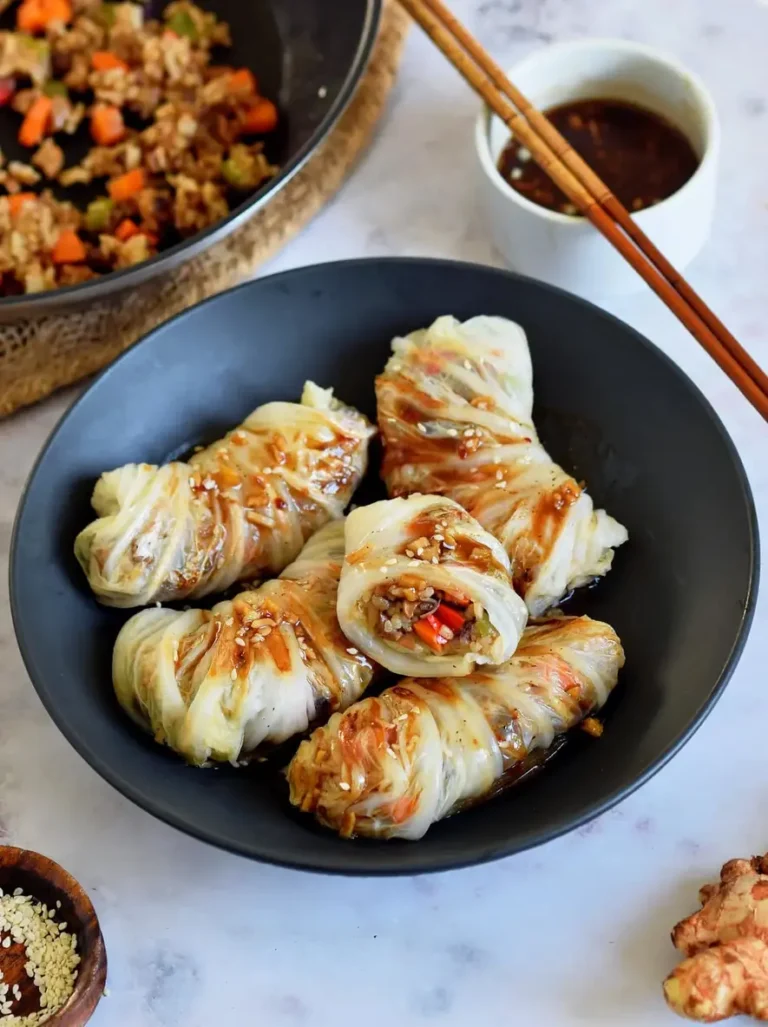 Vegan Cabbage RollsThese Asian-inspired vegan cabbage rolls are made up of tender cabbage leaves, stuffed with a rice and veggie filling, and served alongside a Chinese brown garlic sauce. Plus, this recipe is super versatile, gluten-free, and naturally vegetarian and vegan! Ingredients
Scale
Instructions
Similar Posts |