Luxurious Saffron Mango Coconut Clouds Recipe
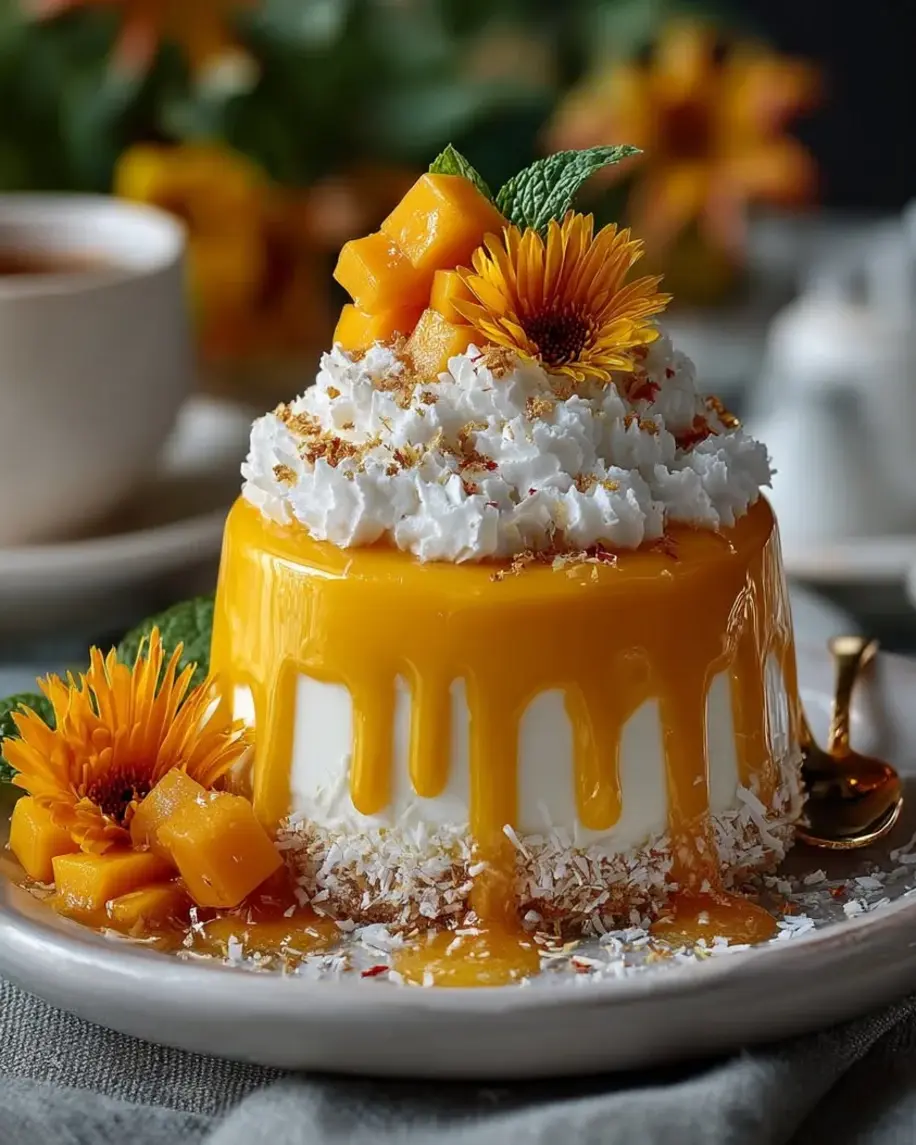
Table of Contents
Saffron Mango Coconut Clouds – A Luxurious Dessert with Moroccan Flair
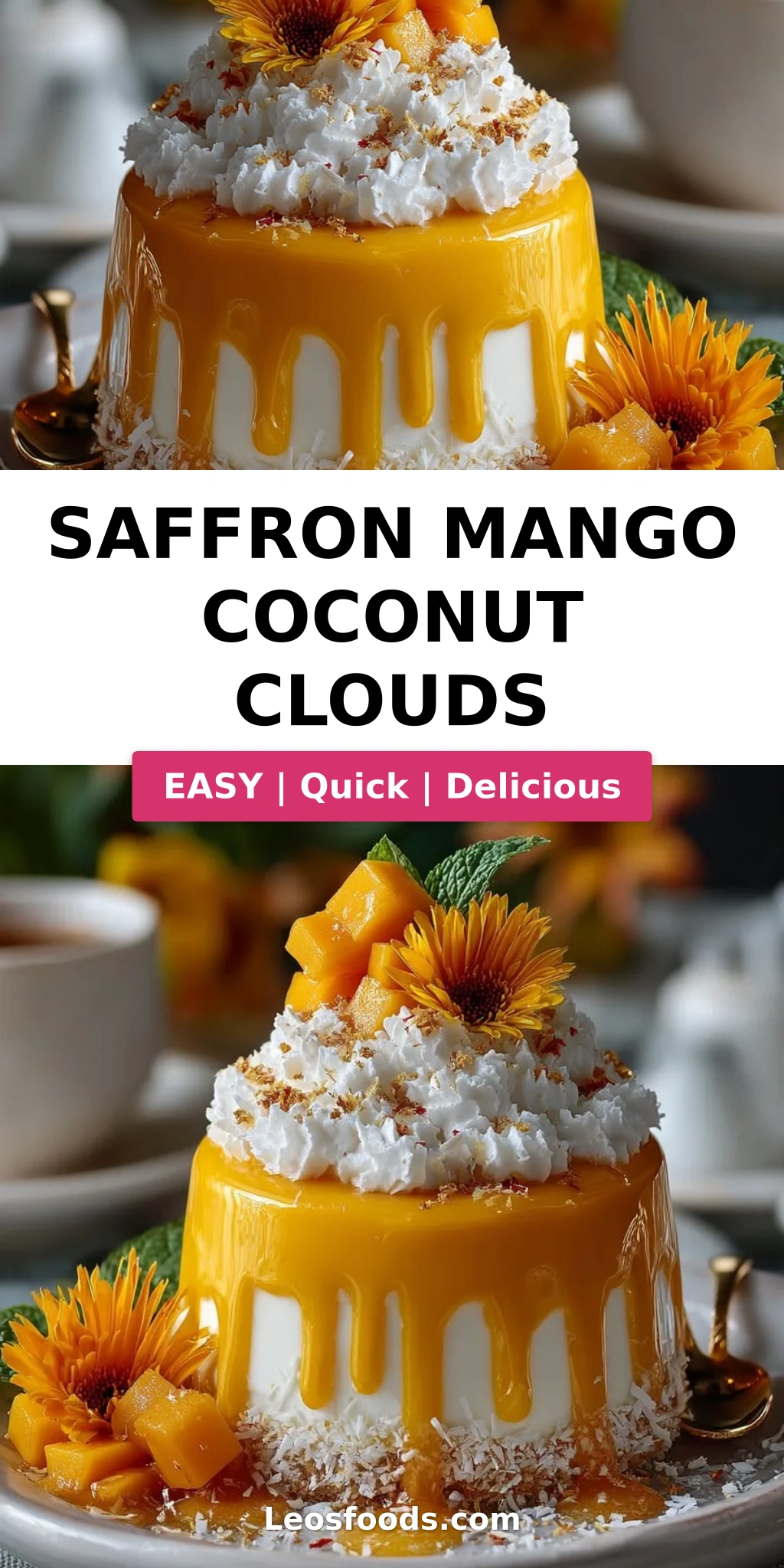
I still remember the first time I tasted saffron in a dessert. It was in my mother’s kitchen in Marrakech, where the golden threads would steep in warm milk for her legendary rice pudding. That unmistakable aroma—earthy, floral, honeyed—has stayed with me ever since. Now, living in New York City and having trained in classical French pastry in Paris, I love bringing those North African flavors into refined presentations. These Saffron Mango Coconut Clouds are exactly that: a luxurious mango coconut dessert that combines the sunshine of ripe mangoes, the creaminess of coconut, and the exotic warmth of saffron, all wrapped in a cloud-like mousse perched on a crunchy coconut biscuit base. It’s the saffron dessert recipe you never knew your dinner party needed.
Every spoonful starts with a silky mango mousse infused with saffron—soaked first in warm water to unlock its color and fragrance—then layered with a luscious coconut cream filling and finished with a glossy golden saffron glaze that shimmers like liquid gold. The base? Crushed coconut biscuits bound with butter and a touch of brown sugar, giving that satisfying crunch against the airy mousse. It’s a coconut cloud mousse that feels both indulgent and airy, with just the right balance of tropical sweetness and floral depth. I garnish mine with fresh mango cubes, toasted coconut flakes, and a whisper of edible gold leaf—because if you’re going to make an exotic fruit dessert, you might as well go all out.
This recipe is my signature twist on the classic French bavarois, using gelatin for structure and a no-bake freeze method that makes it incredibly doable for home cooks. The secret? Bloom the gelatin correctly and don’t rush the freezing—those 6 hours are crucial for a clean dome. Most people over-whip the cream or skip the saffron steeping step; I’ll show you exactly how to avoid those pitfalls. From my NYC kitchen to yours, let’s create something unforgettable.
Why This Saffron Mango Coconut Clouds Recipe Is the Best
The Flavor Secret: Saffron is the star here, and I treat it with the reverence it deserves. Instead of just tossing threads into the mix, I steep them for five minutes in warm water to draw out their full floral and honeyed notes. That infusion then marries with ripe mango puree—I always use Alphonso mangoes when I can find them at the Union Square Greenmarket—and a touch of vanilla. The result is a mousse that tastes like a Moroccan summer day, elevated by French pastry precision. This isn’t just another mango dessert; it’s a love letter to my heritage.
Perfected Texture: The magic of these clouds lies in the contrast between three distinct textures. The mango mousse is whipped until light and airy, then folded with gelatin to hold its shape yet still feel cloud-like on the tongue. The coconut cream filling—heavy on mascarpone and honey—adds a rich, velvety counterpoint. And the base? That buttery, sandy crunch from crushed coconut biscuits gives you something to bite into. Every layer is engineered for a perfect mouthfeel, thanks to techniques I mastered at Le Cordon Bleu.
Foolproof & Fast: Despite its impressive appearance, this coconut cloud mousse is surprisingly forgiving. No baking, no tempering eggs—just careful folding and a long freeze. I’ve streamlined the process so even a first-time dessert maker can succeed. The key is reading my tips: use a silicone dome mold for easy unmolding, and let the glaze cool to exactly 90°F before pouring. I’ve tested this recipe a dozen times in my tiny NYC apartment kitchen, and it works every single time. Trust me—you can do this.
Saffron Mango Coconut Clouds Ingredients
Every ingredient in this recipe plays a specific role. I source my saffron from a Moroccan spice shop in Jackson Heights—it’s worth seeking out the real thing, not the faded imitations. For mangoes, I wait for the Alphonso season in spring, but good-quality frozen mango puree works beautifully too (just make sure it’s unsweetened). The coconut cream should be full-fat—look for Coco Lopez or Thai Kitchen in the international aisle. Let’s go through the full list.
Ingredients List
- For the Mango Saffron Clouds:
- 2 cups mango puree (fresh or thawed)
- 1 cup heavy cream
- 1/3 cup powdered sugar
- 1/4 tsp saffron threads
- 1 tsp vanilla extract
- 1 tsp unflavored gelatin
- 2 tbsp warm water
- For the Coconut Cream Layer:
- 3/4 cup coconut cream
- 1/4 cup mascarpone cheese
- 2 tbsp honey
- 1 tbsp toasted coconut flakes
- For the Coconut Biscuit Base:
- 1 cup crushed coconut biscuits (like Marie or coconut cookies)
- 3 tbsp melted butter
- 1 tbsp brown sugar
- Pinch of sea salt
- For the Golden Saffron Glaze:
- 1/2 cup white chocolate, chopped
- 1/3 cup sweetened condensed milk
- 1/4 cup water
- 1 tbsp gelatin powder
- 2 tbsp warm water
- Pinch of saffron threads
- Gold shimmer dust (optional)
- For Garnish (optional):
- Fresh mango cubes
- Toasted coconut flakes
- Edible gold leaf
Ingredient Spotlight
Saffron: This is the soul of the dessert. Real saffron (from Iran, Kashmir, or Spain) has intense color and aroma. A small pinch goes a long way. Don’t substitute with turmeric—the flavor is completely different. If you must, use saffron extract in the same quantity, but the threads give a more beautiful infusion.
Mango puree: Fresh ripe mangoes (Alphonso or Ataulfo) are best. If using frozen, thaw completely and drain excess liquid. Avoid canned mango pulp with added sugar—you want pure mango flavor. The puree forms the base of the mousse, so quality matters.
Coconut cream: The thick, unsweetened cream from a can of full-fat coconut milk (refrigerate the can, then scoop off the solid part). Or buy coconut cream directly. It gives the filling its rich, tropical taste. Light coconut milk will be too watery and won’t set properly.
Gelatin: Both powdered and sheet gelatin work. I use powdered for convenience. Bloom it in cold water (not warm) for 5 minutes, then melt gently. This ensures a smooth, stable mousse without lumps. For a vegetarian version, use agar-agar (see variations table below).
White chocolate: Use a high-quality brand like Lindt or Ghirardelli. Avoid white chocolate chips that contain stabilizers—they won’t melt as smoothly. The glaze should be glossy and pourable.
| Original Ingredient | Best Substitution | Flavor / Texture Impact |
|---|---|---|
| Saffron threads | 1/8 tsp saffron extract | Slightly less floral; color may be artificial |
| Mango puree (fresh) | Frozen mango puree, thawed | Very similar; drain excess water |
| Coconut cream | Full-fat coconut milk (refrigerated, solid part only) | Same texture; may need to adjust sweetness |
| Gelatin | Agar-agar (1 tsp powder) – for vegetarian | Firmer set, slightly different mouthfeel |
| White chocolate | White candy melts (for baking) | Glossy but less creamy flavor |
How to Make Saffron Mango Coconut Clouds — Step-by-Step
Follow these steps carefully, and you’ll have a showstopper dessert that looks like it came from a professional patisserie. I’ve broken it down into manageable parts.
Step 1: Soak Saffron and Bloom Gelatin
Start by steeping 1/4 tsp saffron threads in 1 tablespoon warm water for exactly 5 minutes. Meanwhile, sprinkle 1 tsp unflavored gelatin over 2 tablespoons cold water (not warm). Let it sit for 5 minutes to bloom. This step is non-negotiable—the saffron needs time to release its color and aroma, and the gelatin needs to soften for smooth incorporation.
💡 Stella’s Pro Tip: Use a small bowl and warm water that’s just hot to the touch (around 110°F). Too hot, and the saffron will become bitter.
Step 2: Make the Mango Mousse
In a blender, combine 2 cups mango puree, 1/3 cup powdered sugar, 1 tsp vanilla extract, and the saffron infusion (including the threads). Blend until smooth. Gently melt the bloomed gelatin in the microwave (10-second bursts) or over a double boiler until just liquid. Stir it into the mango mixture. In a separate bowl, whip 1 cup heavy cream to soft peaks—be careful not to over-whip. Fold the cream into the mango mixture in three additions, using a rubber spatula and a gentle hand until no streaks remain.
⚠️ Common Mistake to Avoid: Over-whipping the cream makes the mousse grainy. Stop when it holds a soft, droopy peak.
Step 3: Prepare the Coconut Cream Filling
Mix 3/4 cup coconut cream, 1/4 cup mascarpone cheese, 2 tbsp honey, and 1 tbsp toasted coconut flakes until smooth and well combined. This filling should be thick but spreadable. Taste and adjust honey if needed.
Step 4: Assemble the Domes
Spoon the mango mousse into a piping bag (or use a spoon) and fill each dome-shaped silicone mold cavity about halfway. Add a spoonful (about 1 tbsp) of the coconut cream filling in the center of each cavity. Then cover with remaining mousse, smoothing the tops. Tap the mold gently on the counter to release air bubbles. Freeze for at least 6 hours, ideally overnight.
💡 Stella’s Pro Tip: If you don’t have dome molds, use a 1-cup muffin pan lined with plastic wrap to create a dome shape.
Step 5: Make the Coconut Biscuit Base
While the mousse freezes, prepare the base. Crush 1 cup coconut biscuits into fine crumbs (use a food processor or a rolling pin). Mix with 3 tbsp melted butter, 1 tbsp brown sugar, and a pinch of sea salt. Press the mixture into 6 small rounds on a parchment-lined baking sheet. Use a round cookie cutter or ring mold for neat edges. Chill for at least 30 minutes.
Step 6: Prepare the Saffron Glaze
Bloom 1 tbsp gelatin powder in 2 tbsp cold water for 5 minutes. In a saucepan, warm 1/4 cup water and 1/3 cup sweetened condensed milk until steaming (do not boil). Pour over 1/2 cup chopped white chocolate in a bowl; stir until smooth. Add the bloomed gelatin, a pinch of saffron threads, and gold shimmer dust (if using). Stir gently to combine. Let the glaze cool to about 90°F—it should be thick but still pourable.
⚠️ Common Mistake to Avoid: If the glaze is too warm, it will melt the frozen mousse. Wait until it’s just warm to the touch but not hot.
Step 7: Glaze and Assemble
Remove the frozen mousse domes from the molds and place them on a wire rack set over a tray. Pour the saffron glaze evenly over each dome, starting from the center and letting it cascade down. Allow the excess to drip off. Quickly transfer the glazed domes onto the chilled biscuit bases. Garnish with fresh mango cubes, toasted coconut flakes, and edible gold leaf. Serve immediately, or keep refrigerated for up to 2 hours.
💡 Stella’s Pro Tip: Work fast—once the glaze sets (within 2–3 minutes), it won’t flow anymore. Have your garnishes ready in advance.
| Step | Action | Duration | Key Visual Cue |
|---|---|---|---|
| 1 | Soak saffron & bloom gelatin | 5 mins | Water turns deep orange; gelatin is soft and opaque |
| 2 | Make mango mousse | 10 mins | Cream folds in evenly; mixture holds its shape |
| 3 | Prepare coconut filling | 5 mins | Creamy, thick, not runny |
| 4 | Assemble domes | 15 mins | Mousses are filled evenly; tops smooth |
| 5 | Make biscuit base | 10 mins + chill | Firm, holds together when pressed |
| 6 | Prepare glaze | 15 mins + cool | Glossy, amber, drips off spoon in a ribbon |
| 7 | Glaze & assemble | 10 mins | Smooth mirror-like finish on domes |
Serving & Presentation
These clouds are meant to be the grand finale of any dinner party. I like to serve them on a chilled white plate with a few extra mango cubes and a dusting of toasted coconut. A tiny pinch of flaky sea salt on the side balances the sweetness—a trick I learned from a Parisian pastry chef. For a Moroccan touch, add a small spoonful of rose-petal jam alongside. In New York, I’ve seen guests’ eyes widen when the gold leaf catches the light; it’s pure theater.
The texture is best enjoyed straight from the fridge (not fully frozen). Allow the domes to sit at room temperature for about 5 minutes after glazing so the mousse softens slightly but the glaze stays set. Pair with a glass of Champagne or a floral iced tea for an elegant finish.
| Pairing Type | Suggestions | Why It Works |
|---|---|---|
| Side Dish | Crisp almond cookies, coconut sorbet | Reinforces tropical flavors |
| Sauce / Dip | Passion fruit coulis, salted caramel | Adds acidity or salt to balance sweet |
| Beverage | Sparkling wine, ginger tea, Moroccan mint tea | Cut through richness |
| Garnish | Edible flowers (nasturtium, pansies), citrus zest | Visual appeal and fresh aroma |
Make-Ahead, Storage & Reheating
This entire dessert is designed for a busy NYC food blogger’s schedule. You can make the mousse domes and biscuit bases three days ahead and keep them frozen. The glaze should be made fresh the day of serving for best shine. But leftovers? They keep beautifully—just follow my storage guide.
| Method | Container | Duration | Reheating Tip |
|---|---|---|---|
| Refrigerator | Airtight container, single layer | Up to 2 days | Serve cold; no reheating needed |
| Freezer | Wrap each dome in plastic, then in foil | Up to 1 month | Thaw in fridge 1 hour before glazing |
| Make-Ahead | Mousse domes (unglazed) frozen | Up to 3 days | Glaze and assemble on day of serving |
If you have assembled clouds (glazed and on bases) that you didn’t eat, they can sit in the fridge uncovered for up to 6 hours (the base may soften slightly). To refresh, pop them in the freezer for 10 minutes to re-firm the mousse. I don’t recommend reheating—this is a cold dessert—but if you want a warm element, a drizzle of warm coconut caramel works beautifully.
Variations & Easy Swaps
One of the joys of this coconut cloud mousse is its adaptability. I’ve played with countless versions in my own kitchen—here are three of my favorites that keep the spirit of the exotic fruit dessert alive.
| Variation | Key Change | Best For | Difficulty Impact |
|---|---|---|---|
| Raspberry Rose Clouds | Replace mango puree with raspberry puree; add rose water | Valentine’s Day, romantic dinners | Same |
| Vegan Version | Use coconut cream for mousse, agar-agar for gelatin, vegan white chocolate | Plant-based diners | Slightly harder (agar sets differently) |
| Passion Fruit & Cardamom | Add passion fruit pulp to mousse; use cardamom instead of saffron | Unique twist, exotic flavors | Same |
Raspberry Rose Clouds
Swap the mango puree for an equal amount of frozen raspberry puree (thawed and strained). Add 1 tsp rose water to the mousse and use rose petals in the garnish. The tartness of raspberries beautifully counters the richness of coconut, and the floral note pairs with the saffron if you keep a pinch—but for a cleaner rose profile, skip saffron and use a few drops of red food coloring. This version reminds me of the Persian rosewater treats I discovered at a small bakery in Paris.
Vegan Version
For a fully plant-based dessert, replace the heavy cream with full-fat coconut cream (same quantity) whipped until stiff; use agar-agar powder (1 tsp, bloomed and boiled) instead of gelatin. Use vegan white chocolate (look for brands like iChoc or Vego). The rest stays the same—the biscuit base works with vegan butter. The texture is slightly firmer, but the flavor remains lush. I’ve tested this for my vegan friends and it’s a hit.
Passion Fruit & Cardamom
Add the pulp of 2 passion fruits to the mango puree and substitute ½ tsp ground cardamom for the saffron in both mousse and glaze. The cardamom adds a warm, citrusy note that pairs perfectly with passion fruit. This variation is inspired by the flavors of Indian kulfi and is a wonderful summer dessert. I love using Mexican vanilla in this version for a deeper flavor.
What is the best way to dissolve saffron for Saffron Mango Coconut Clouds?
The best way is to steep saffron threads in a small amount of warm water (about 1 tablespoon) for 5–10 minutes. The water should be just hot to the touch, not boiling—around 110°F. This gentle heat allows the saffron to release its color, aroma, and flavor without becoming bitter. Do not crush the threads; let them bloom whole. If you’re short on time, you can also use a mortar and pestle to gently grind the threads with a pinch of sugar before steeping. Avoid using alcohol or lemon juice, which can overpower the delicate saffron taste.
Can I use frozen mango instead of fresh for this recipe?
Yes, absolutely. Frozen mango is a great alternative, especially when fresh mangoes are out of season. Thaw the mango pieces completely and drain any excess liquid before pureeing. I recommend using unsweetened frozen mango chunks to control the sugar level. For the best flavor, look for frozen Ataulfo or Alphonso mangoes if available. The texture of the mousse will remain light and airy as long as you avoid adding extra water. Just be sure to blend until completely smooth—no lumps.
How long do Saffron Mango Coconut Clouds need to chill before serving?
After assembling the domes, they need to freeze for at least 6 hours, but overnight is best for a firm, clean set. Once glazed, they can be served immediately (the glaze sets in about 2 minutes) or kept in the refrigerator for up to 2 hours. If you plan to serve them later, store the unglazed frozen domes in an airtight container, then glaze and garnish right before serving. Do not leave them at room temperature for longer than 15 minutes, as the mousse will soften too much.
What can I substitute for coconut cream in Saffron Mango Coconut Clouds?
If you don’t have coconut cream, you can make your own by refrigerating a can of full-fat coconut milk overnight and scooping off the solid cream that rises to the top. Alternatively, use mascarpone cheese mixed with a splash of coconut milk to thin it slightly. For a lower-fat option, use Greek yogurt (full-fat) mixed with coconut extract—but note that the texture will be less rich and the yoghurt may curdle with the honey. Avoid using light coconut milk, as it won’t provide enough body for the filling.
Can I make these clouds without gelatin? What’s a vegetarian option?
Yes, you can replace the gelatin with agar-agar powder, a plant-based setting agent. Use 1 teaspoon of agar-agar powder dissolved in 1/4 cup water, then bring to a boil for 1 minute while stirring. Allow it to cool slightly before incorporating into the mango puree. Note that agar-agar sets at room temperature and creates a firmer, slightly more brittle texture than gelatin. The mousse will still be creamy but less jiggly. For the glaze, gelatin can be replaced with agar-agar as well, but the consistency will be thicker; you may need to apply it warm and quickly.
How do I get a smooth, shiny saffron glaze every time?
The key to a mirror-like glaze is temperature control. After mixing the white chocolate, condensed milk, gelatin, and saffron, let the glaze cool to 90°F (32°C)—it should feel just warm to the touch, not hot. If it’s too warm, it will melt the frozen mousse dome; too cold and it will be too thick to flow. Use an instant-read thermometer for precision. Also, sift the gold shimmer dust to avoid lumps. Pour the glaze in one steady motion over the center of each dome, allowing gravity to create an even coating. Work quickly, as the glaze sets in 2–3 minutes.
Can I prepare the biscuit base ahead of time? How do I store it?
Absolutely. The coconut biscuit base can be made up to 5 days in advance. Press the mixture into your desired shapes (rounds or small discs) on a parchment-lined tray and refrigerate, uncovered, for 30 minutes to firm up. Then transfer to an airtight container with wax paper between layers. Store in the refrigerator for up to 5 days or freeze for up to 1 month. If frozen, let them thaw at room temperature for 5 minutes before using. The base should remain crunchy; if it absorbs moisture, you can re-crisp them in a 300°F oven for 5 minutes.
What if I don’t have dome molds? Can I use something else?
Yes, you can still make this dessert without dome molds. Use a regular 1-cup muffin pan lined with plastic wrap (overhanging the edges). Fill each cavity with the mousse and coconut filling as directed, then bring the plastic wrap over the top to create a dome shape. Freeze until firm. Alternatively, use small silicone mini loaf pans or even ramekins—the shape will be different but equally delicious. For an elegant presentation, you can serve the mousse in parfait glasses, layering the components, and pour the glaze over just before serving.
Is there a way to reduce the sugar in this recipe?
You can reduce the sugar by about 20% without affecting the texture significantly. For the mousse, use a mango puree that’s naturally very sweet (Alphonso or honey mangoes) and reduce the powdered sugar to 1/4 cup. Skip the sweetened condensed milk in the glaze and replace it with an equal amount of evaporated milk plus 1 tablespoon honey—though the glaze will be slightly less glossy. The coconut biscuit base can have the brown sugar omitted entirely if you use naturally sweet cookies. Keep in mind that the dessert will be less stable if you cut sugar drastically, as sugar helps with structure in mousses.
What’s the best way to reheat leftovers? Or can I serve them warm?
This is a cold dessert, so I don’t recommend reheating the assembled clouds—they’ll melt into a puddle. However, if you have leftover biscuit bases or plain mousse domes (unglazed), you can serve the mousse slightly softened by letting it sit at room temperature for 10 minutes. For a warm twist, try drizzling a warm coconut caramel sauce over the cold dome just before serving. The contrast of warm and cold is lovely. Leftover glaze can be rewarmed gently over a double boiler and reused within 24 hours—but it won’t be as shiny as fresh.
Share Your Version!
Now it’s your turn to bring a little Moroccan-Parisian magic to your table. I’d love to hear how your Saffron Mango Coconut Clouds turn out! Did you try the raspberry rose variation? Or maybe you added a pinch of cardamom? Drop a comment below with your star rating and any tweaks you made—your ideas might inspire another home cook.
And don’t forget to snap a picture of your golden, shimmering clouds and tag me on Instagram or Pinterest @leosfoods. I personally look at every single post and feature my favorites in the monthly roundup. If you have a question about that tricky glaze or an ingredient substitution, ask below—I read every comment and answer as soon as I finish my morning coffee in my tiny NYC kitchen. Happy cooking!
From my NYC kitchen to yours — I hope this recipe brings as much warmth to your table as it does to mine. — Stella 🧡
Love This Recipe? Save It to Pinterest!
If you enjoyed this Saffron Mango Coconut Clouds recipe, don’t let it get lost in your browser tabs! 😄 Pin it now so you can find it again anytime — and explore hundreds more tried-and-tested recipes waiting for you on my Pinterest boards.
👉 Follow Stella on Pinterest @stellarecipeblog
📌 Pin this recipe · 🔁 Re-pin your favorites · 💬 Tag me when you make it — I love seeing your creations!
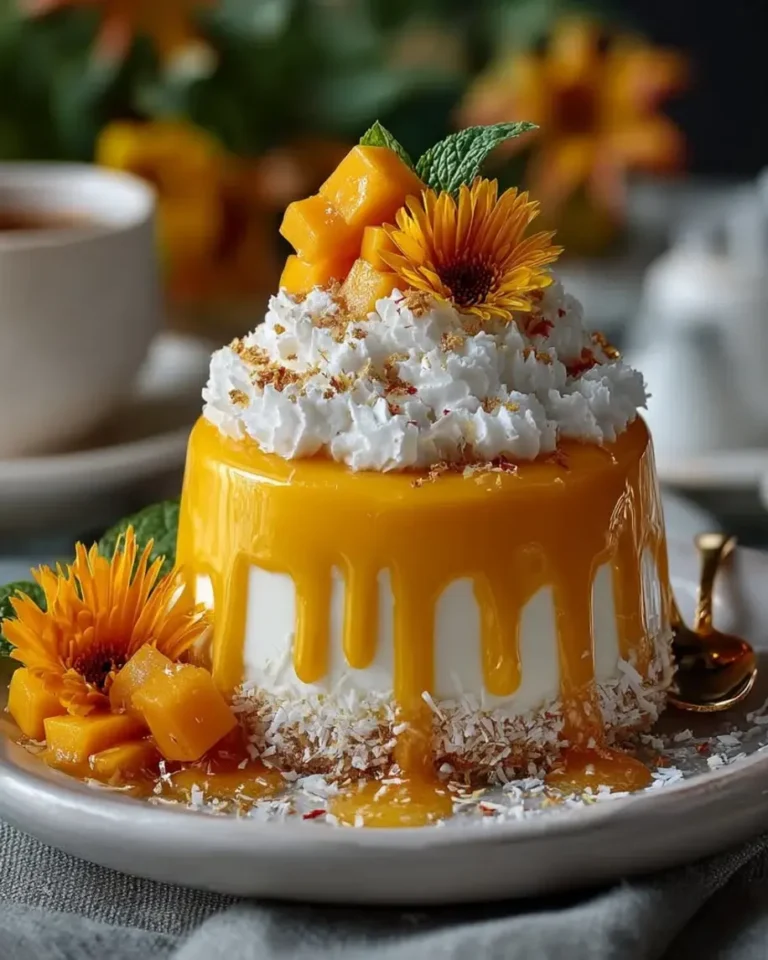
Saffron Mango Coconut Clouds
A luxurious dessert combining mango mousse, coconut cream, and saffron glaze on a coconut biscuit base.
- Yield: 6 1x
Ingredients
- For the Mango Saffron Clouds:
- 2 cups mango puree
- 1 cup heavy cream
- 1/3 cup powdered sugar
- 1/4 tsp saffron threads
- 1 tsp vanilla extract
- 1 tsp unflavored gelatin
- 2 tbsp warm water
- For the Coconut Cream Layer:
- 3/4 cup coconut cream
- 1/4 cup mascarpone cheese
- 2 tbsp honey
- 1 tbsp toasted coconut flakes
- For the Coconut Biscuit Base:
- 1 cup crushed coconut biscuits
- 3 tbsp melted butter
- 1 tbsp brown sugar
- Pinch of sea salt
- For the Golden Saffron Glaze:
- 1/2 cup white chocolate, chopped
- 1/3 cup sweetened condensed milk
- 1/4 cup water
- 1 tbsp gelatin powder
- 2 tbsp warm water
- Pinch of saffron threads
- Gold shimmer dust
- For Garnish (optional):
- Fresh mango cubes
- Toasted coconut flakes
- Edible gold leaf
Instructions
- Soak saffron threads in 1 tablespoon warm water for 5 minutes.
- Dissolve gelatin in warm water and let bloom for 5 minutes.
- Blend mango puree, powdered sugar, vanilla extract, and saffron infusion until smooth.
- Melt the bloomed gelatin gently and stir into the mango mixture.
- Whip heavy cream to soft peaks and fold into the mango mixture until light and airy.
- In a separate bowl, combine coconut cream, mascarpone cheese, honey, and toasted coconut flakes until smooth.
- Fill silicone dome molds halfway with mango mousse. Add a spoonful of coconut cream filling in the center and cover with remaining mousse.
- Freeze for at least 6 hours until fully firm.
- Mix crushed coconut biscuits with melted butter, brown sugar, and sea salt. Press into small rounds and chill.
- Bloom gelatin for the glaze in warm water for 5 minutes.
- Heat water and condensed milk until warm. Pour over white chocolate and stir until smooth.
- Add bloomed gelatin, saffron threads, and gold shimmer dust. Blend until glossy and slightly cooled.
- Remove frozen mousse domes from molds and place on a wire rack.
- Pour the saffron glaze evenly over each cloud dome.
- Transfer onto the coconut biscuit bases and garnish with mango cubes, toasted coconut flakes, and edible gold leaf before serving.
Nutrition
- Calories: 425
- Sugar: 29g
- Fat: 29g
- Carbohydrates: 39g
- Protein: 5g
Tried This Recipe? Leave a Comment!
Did you make this recipe? I’d love to hear how it turned out! Please leave a comment and a rating below. Your feedback helps other home cooks and supports cheerychop.com!
For more delicious inspiration, follow me on Pinterest!