Stunning Lemon Cheesecake Domes with Crystal Glaze Recipe
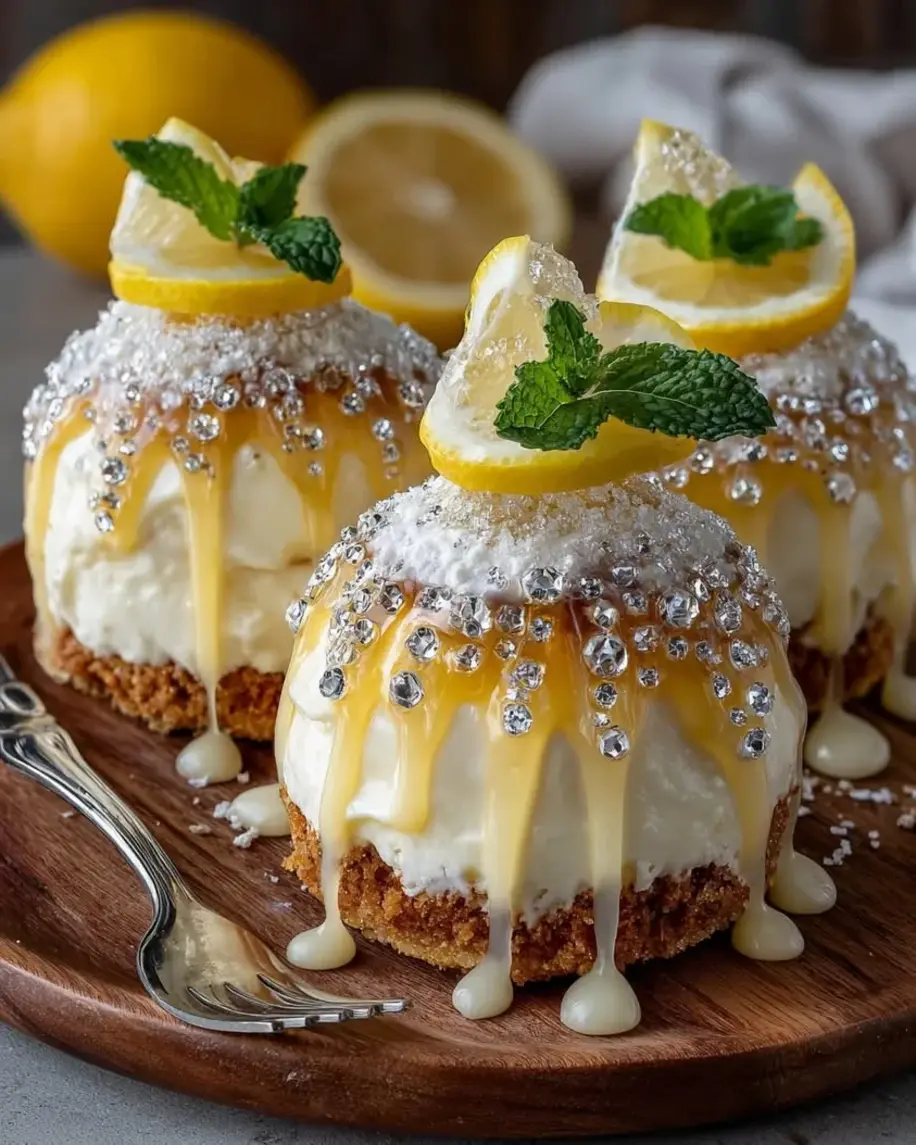
Table of Contents
Diamond Lemon Cheesecake Domes with Crystal Glaze – A Stunning Lemon Cheesecake Domes Recipe with Shimmering Finish
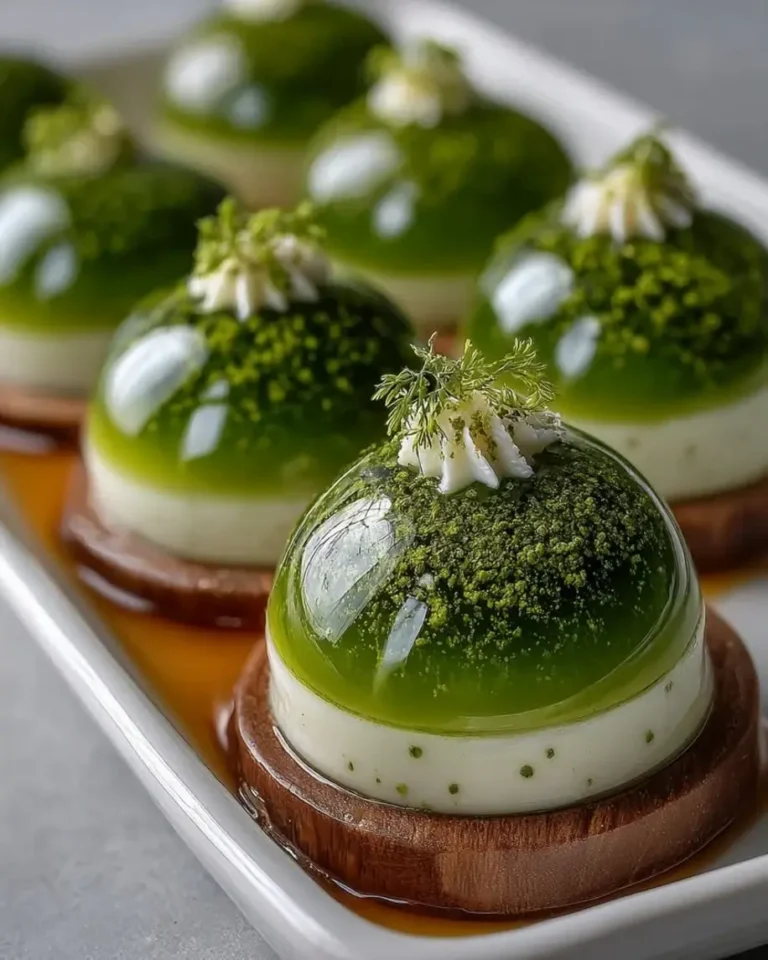
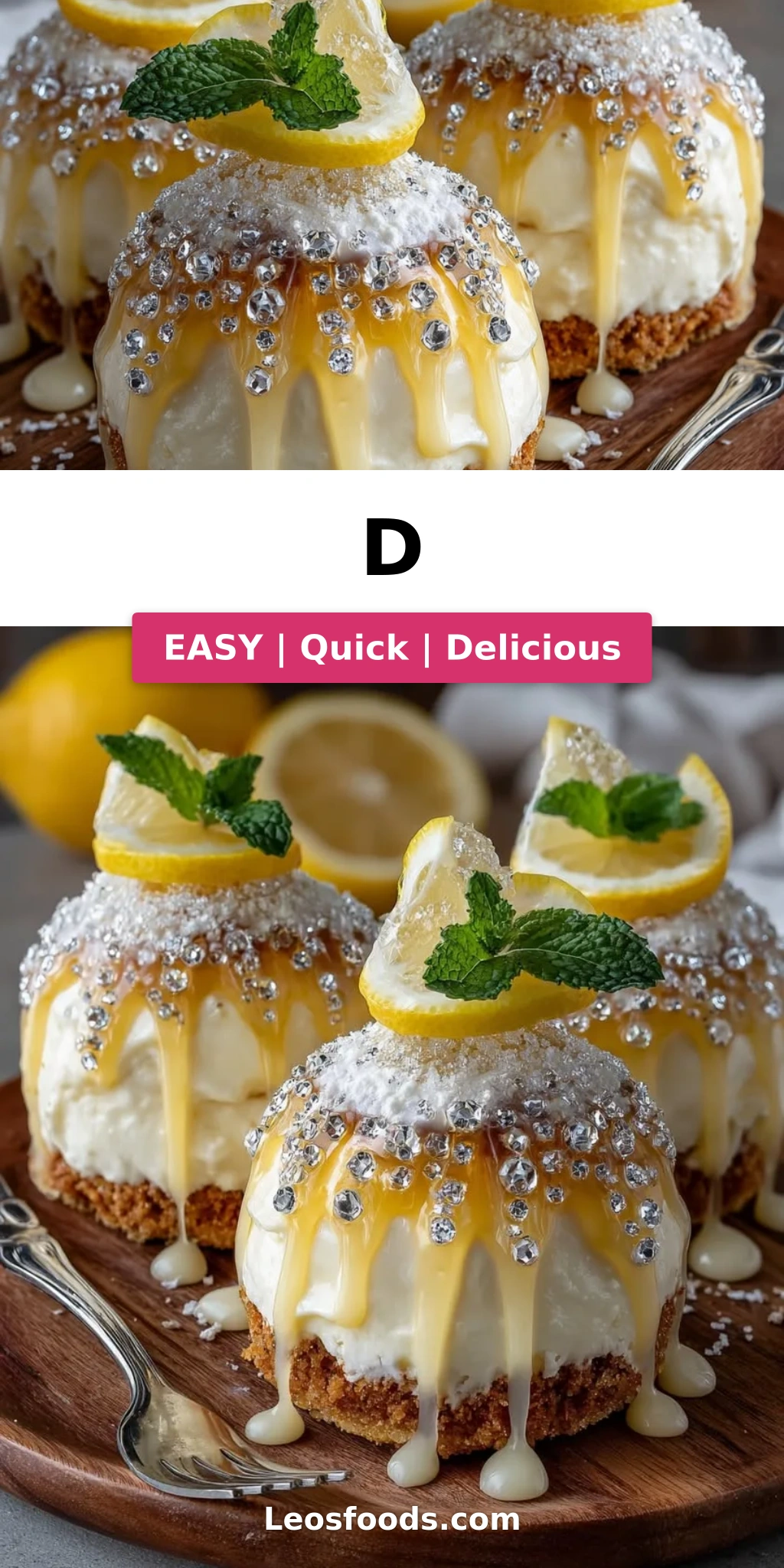
I still remember the first time I saw a dessert glazed with a crystal-clear shimmer — it was in a pastry window in Paris during my culinary training, and I stood there frozen, completely mesmerized. That memory came rushing back years later in my own NYC kitchen as I developed this diamond lemon cheesecake domes recipe, a dessert that combines my French pastry training with the bright, sunny citrus I grew up with in Morocco. This lemon cheesecake domes recipe with crystal glaze is the showstopper you’ve been looking for — a creamy, tangy lemon cheesecake encased in a jewel-like gelatin glaze that catches the light like a diamond.
Every spoonful delivers layers of texture and flavor: the buttery graham cracker base crumbles softly beneath a luscious, airy lemon cheesecake dome, all wrapped in a glossy, translucent crystal glaze that shatters ever so slightly as you cut through it. The lemon zest and juice sing with brightness — a nod to the fresh citrus I squeezed alongside my mother in our Moroccan kitchen — while the heavy cream keeps the filling impossibly light and mousse-like. It’s the kind of dessert that makes people gasp when you bring it to the table, and yet it’s built on techniques any home cook can master with a little patience.
What sets this diamond lemon cheesecake apart from other lemon desserts is the crystal glaze technique I refined during my time in Paris — a careful balance of gelatin, honey, and edible shimmer dust that creates a mirror-like finish without being sticky or thick. Over the years, I’ve tested this recipe more times than I can count, tweaking the gelatin ratio and glaze temperature to ensure perfect results every time. In this post, I’ll walk you through each step, share my best pro tips for avoiding common pitfalls, and show you how to get that stunning crystal-clear coating that makes this lemon gelatin glaze cheesecake truly unforgettable.
Why This Diamond Lemon Cheesecake Domes Recipe Is the Best
The secret to this fancy lemon dessert lies in the way I’ve married my Moroccan love for bright, bold citrus with the precision of French pastry technique. Instead of a dense, heavy cheesecake, I whip the cream separately and fold it in with a delicate hand, creating a mousse-like dome that feels ethereal on the tongue. The lemon juice and zest are used generously — not shyly — so every bite has that clean, sunshiny punch that reminds me of the lemon trees my grandmother tended in Marrakech.
Texture is everything in this recipe, and I’ve spent years perfecting the ratio of cream cheese to heavy cream to gelatin. The domes need to be firm enough to unmold cleanly and hold their shape under the glaze, but soft enough to melt luxuriously when you eat them. The crystal glaze, meanwhile, is a technique I learned in a Paris patisserie course — it requires blooming gelatin just right and cooling it to the perfect consistency so it drapes over the frozen domes like liquid glass.
What makes this recipe foolproof is the make-ahead timing. The domes need to freeze for at least six hours, which means you can prepare them fully the day before and simply glaze them an hour before serving. I’ve designed every step to be approachable for a confident home cook, with clear visual cues and substitutions tested in my own kitchen. Whether you’re making this for a birthday, anniversary, or holiday gathering, this lemon cheesecake domes recipe delivers restaurant-quality results without the pastry-school price tag.
Lemon Cheesecake Domes Recipe Ingredients
I source my cream cheese from a small dairy upstate that I discovered at the Union Square Greenmarket — it’s extra creamy and tangy, which makes a real difference in the final texture. In Morocco, my mother would use fresh goat’s milk cheese for similar desserts, but here in NYC, a good-quality full-fat block cream cheese is your best friend. For the lemons, I always reach for organic ones from the farmers market in summer or the bright, thin-skinned Meyer lemons I find at Russo’s on First Avenue.
Ingredients List
- For the Lemon Cheesecake Domes:
- 12 oz cream cheese, softened
- 1/2 cup heavy cream
- 1/3 cup powdered sugar
- 1/4 cup fresh lemon juice
- 1 tbsp lemon zest
- 1 tsp vanilla extract
- 1 tsp unflavored gelatin
- 2 tbsp warm water
- For the Crystal Lemon Glaze:
- 1/2 cup water
- 1/3 cup granulated sugar
- 2 tbsp lemon juice
- 1 tbsp honey
- 1 tbsp gelatin powder
- 2 tbsp warm water
- Edible shimmer dust (clear or pearl)
- For the Biscuit Base:
- 1 cup crushed graham crackers
- 3 tbsp melted butter
- 1 tbsp sugar
- Pinch of salt
- For Garnish (optional):
- Thin lemon slices
- Mint leaves
- Sugar crystals or edible glitter
Ingredient Spotlight
Cream Cheese: This is the backbone of your lemon cheesecake domes recipe. Always use full-fat block cream cheese (not the spreadable kind in a tub) for the richest texture and stable structure. Let it come to room temperature for at least an hour before beating — cold cream cheese creates lumps that no amount of mixing can fully erase. In a pinch, you can substitute mascarpone for a silkier, slightly less tangy result, but the domes will be softer and need a longer freeze time.
Gelatin: Both the cheesecake and the glaze rely on gelatin for structure and clarity. Use unflavored powdered gelatin from brands like Knox — it’s reliable and widely available. The bloom (letting gelatin sit in cold water for 5 minutes) is non-negotiable; skipping this step leads to streaks and a gritty texture. For a vegetarian option, agar-agar works, but the ratio is different and the texture will be more firm and less melt-in-your-mouth.
Edible Shimmer Dust: This is what gives the glaze its diamond-like sparkle. Look for clear or pearl shimmer dust at specialty baking shops or online — it’s completely tasteless and dissolves into the glaze without altering the color. Avoid craft glitter or any product not labeled edible. If you can’t find shimmer dust, a tiny pinch of luster dust mixed with the glaze liquid works beautifully too.
| Original Ingredient | Best Substitution | Flavor / Texture Impact |
|---|---|---|
| Cream Cheese | Mascarpone | Silkier, less tangy, softer set — freeze 1 hr longer |
| Graham Crackers | Shortbread cookies or vanilla wafers | Butterier base, slightly sweeter, less honey note |
| Heavy Cream | Full-fat coconut cream (chilled) | Dairy-free, lighter body, subtle coconut note |
| Honey (in glaze) | Light corn syrup or agave | Slightly different sweetness profile, same gloss |
| Edible Shimmer Dust | Pearl luster dust | Same sparkle, mix with a drop of vodka for smooth dispersion |
How to Make Diamond Lemon Cheesecake Domes — Step-by-Step
Don’t let the elegant result intimidate you — this lemon cheesecake domes recipe is built on simple steps that just need a little patience and attention to detail. I’ll guide you through each stage with the exact visual cues I use in my own kitchen.
Step 1: Bloom the Gelatin
Sprinkle 1 teaspoon of unflavored gelatin over 2 tablespoons of warm water in a small bowl. Let it sit undisturbed for 5 minutes until it becomes firm and jelly-like. This blooming step is essential — it hydrates the gelatin so it dissolves evenly into the cheesecake base without forming lumps.
💡 Stella’s Pro Tip: Use warm water (around 110°F) — not hot. If the water is too hot, it can weaken the gelatin’s setting power. I always test a drop on my wrist like I would for baby formula.
Step 2: Make the Cheesecake Base
In a large mixing bowl, beat the softened cream cheese with powdered sugar, fresh lemon juice, lemon zest, and vanilla extract on medium speed until completely smooth and fluffy — about 3 minutes. Scrape down the sides and bottom of the bowl at least twice. The mixture should be silky with no lumps whatsoever.
⚠️ Common Mistake to Avoid: Using cold cream cheese straight from the fridge. It will create small lumps that never fully smooth out. Set it out on the counter for at least 60 minutes before starting.
Step 3: Melt and Incorporate Gelatin
Gently melt the bloomed gelatin in the microwave in 10-second bursts or over a small saucepan of simmering water, stirring until it becomes liquid. Let it cool for 1 minute, then drizzle it into the cream cheese mixture while beating on low speed. Make sure it’s fully incorporated before moving on.
💡 Stella’s Pro Tip: If the gelatin seizes or becomes lumpy when you add it, your cream cheese mixture might be too cold. Let the bowl sit at room temperature for 5 minutes, then beat again — the heat from friction will help re-emulsify it.
Step 4: Fold in Whipped Cream
In a separate bowl, whip the heavy cream to soft peaks — it should hold its shape but still look slightly billowy. Using a rubber spatula, fold one-third of the whipped cream into the cheesecake base to lighten it, then gently fold in the remaining cream until no white streaks remain. The final mixture should be airy and mousse-like.
⚠️ Common Mistake to Avoid: Over-whipping the cream to stiff peaks can make the final texture grainy. Stop as soon as the cream holds a soft, droopy peak — it will continue to firm up as you fold.
Step 5: Fill and Freeze
Spoon or pipe the cheesecake mixture into silicone dome molds, filling each cavity to the top. Tap the molds gently on the counter to release any air pockets, then smooth the tops with an offset spatula. Freeze for at least 6 hours, preferably overnight, until the domes are solid to the touch.
💡 Stella’s Pro Tip: Silicone molds are non-negotiable here — they flex, making unmolding effortless. If you only have metal dome molds, line them with plastic wrap first, leaving overhang to pull the domes out.
Step 6: Prepare the Biscuit Base
Combine crushed graham crackers, melted butter, sugar, and a pinch of salt in a bowl. Mix until the texture resembles wet sand. Press firmly into 6 small rounds (about 2 inches wide) on a parchment-lined baking sheet. Use the bottom of a glass to compress them evenly. Chill for at least 30 minutes.
⚠️ Common Mistake to Avoid: If the crumbs are too loose, add another teaspoon of melted butter. The base should hold together when pinched — if it crumbles apart, it won’t support the dome.
Step 7: Make the Crystal Glaze
In a small saucepan, combine 1/2 cup water, 1/3 cup granulated sugar, 2 tablespoons lemon juice, and 1 tablespoon honey. Heat over medium, stirring, until the sugar dissolves and the mixture is lightly simmering. Meanwhile, bloom 1 tablespoon of gelatin powder in 2 tablespoons of warm water for 5 minutes. Remove the saucepan from heat and stir the bloomed gelatin into the hot lemon syrup until fully melted. Add edible shimmer dust and stir until the glaze is glossy and translucent. Let it cool to about 90°F — it should feel just warm to the touch, not hot.
💡 Stella’s Pro Tip: The glaze temperature is the single most important detail. Too hot, and it will melt the frozen domes on contact. Too cool, and it will thicken and lose that glass-like clarity. I use an instant-read thermometer, but if you don’t have one, dip your finger in — it should feel like warm bathwater, not hot tea.
Step 8: Glaze the Domes
Remove the frozen cheesecake domes from their silicone molds and place them on a wire rack set over a baking sheet. Working one at a time, pour the crystal glaze evenly over each dome, starting at the top and letting it cascade down the sides. Use a small offset spatula to encourage full coverage if needed. Let the excess drip off, then carefully transfer each glazed dome onto a chilled biscuit base.
⚠️ Common Mistake to Avoid: Don’t pour the glaze too slowly or stop mid-way — it creates uneven streaks. Commit to one smooth, continuous pour per dome for that flawless, diamond-like finish.
Step 9: Garnish and Serve
While the glaze is still slightly tacky, decorate with thin lemon slices, fresh mint leaves, and a sprinkle of sugar crystals or edible glitter. Work quickly — the glaze sets in about 2 minutes at room temperature. Serve immediately for the most dramatic presentation, or refrigerate for up to 2 hours (the glaze will stay glossy).
💡 Stella’s Pro Tip: For the cleanest garnish placement, use tweezers or a small pair of kitchen tongs. It sounds fussy, but it makes a huge difference when you’re placing tiny mint leaves or sugar crystals on a mirror-like surface.
| Step | Action | Duration | Key Visual Cue |
|---|---|---|---|
| 1 | Bloom gelatin | 5 mins | Firm, jelly-like texture |
| 2 | Beat cheesecake base | 3 mins | Smooth, fluffy, no lumps |
| 3 | Incorporate gelatin | 1 min | Fully combined, no streaks |
| 4 | Fold in whipped cream | 2 mins | Airy, mousse-like, no white streaks |
| 5 | Fill molds & freeze | 6+ hrs | Solid to touch, releases cleanly |
| 6 | Make biscuit base | 10 mins + 30 mins chill | Holds together when pressed |
| 7 | Make crystal glaze | 10 mins | Glossy, translucent, ~90°F |
| 8 | Glaze domes | 3 mins per dome | Smooth, mirror-like coating |
| 9 | Garnish & serve | 2 mins per dome | Glaze sets in ~2 mins at room temp |
Serving & Presentation
These diamond lemon cheesecake domes are at their absolute best served within an hour of glazing, when the crystal coating is still glassy and the interior is cold and creamy. I like to place each dome on a wide, white plate with a small pool of lemon curd or a drizzle of honey on the side — the contrast between the pale yellow curd and the clear glaze is stunning. A single mint leaf and a thin lemon wheel on top complete the look with a pop of color.
In my NYC apartment, I often serve these after a dinner party when I want to end the meal with something truly memorable. They pair beautifully with a small glass of limoncello or a floral gin cocktail — the bright citrus notes echo the lemon in the cheesecake. For a non-alcoholic option, a sparkling lemonade with fresh thyme is a lovely match. If you’re serving these at a brunch, a side of fresh berries with a dusting of powdered sugar adds a lovely contrast.
| Pairing Type | Suggestions | Why It Works |
|---|---|---|
| Side Dish | Fresh berries, lemon curd, honey drizzle | Bright acidity and sweetness complement the creamy dome |
| Sauce / Dip | Raspberry coulis, passion fruit sauce, caramel | Fruity sauces contrast the lemon and add color |
| Beverage | Limoncello, floral gin cocktail, sparkling lemonade | Citrus and floral notes echo and elevate the dessert |
| Garnish | Thin lemon slices, mint leaves, sugar crystals | Adds visual height, freshness, and sparkle |
Make-Ahead, Storage & Reheating
One of the things I love most about this lemon cheesecake domes recipe is how well it fits into a busy schedule. I often make the cheesecake mixture, fill the molds, and freeze the domes up to a week before I plan to serve them. The biscuit base can also be made ahead and stored in an airtight container at room temperature for up to 3 days. The glaze, however, should be made fresh on the day you serve — it sets too quickly to reheat well.
| Method | Container | Duration | Reheating Tip |
|---|---|---|---|
| Refrigerator | Airtight container, glazed domes | Up to 2 days | Serve cold — do not reheat; garnish fresh after chilling |
| Freezer | Wrap domes individually in plastic, then foil | Up to 1 month | Thaw in fridge for 1 hr before glazing — do not microwave |
| Make-Ahead | Freeze unglazed domes, store base separately | Up to 1 week in advance | Glaze and assemble 1 hr before serving for best texture |
If you have leftovers (which rarely happens in my kitchen!), store the glazed domes in the refrigerator on a tray covered loosely with plastic wrap. The glaze may soften slightly after 24 hours, but the flavor remains bright and delicious. I do not recommend freezing glazed domes — the glaze can crack and lose its mirror finish during thawing. Instead, freeze the unglazed domes and glaze them fresh when you’re ready to serve.
Variations & Easy Swaps
| Variation | Key Change | Best For | Difficulty Impact |
|---|---|---|---|
| Lavender-Honey | Add 1 tsp dried lavender to glaze, use honey in place of sugar | Elegant floral twist for spring | Same difficulty |
| Passion Fruit | Replace lemon juice with passion fruit pulp in cheesecake | Tropical flavor, striking orange glaze | Same difficulty |
| Vegan-Friendly | Use cashew cream, coconut cream, and agar-agar | Dairy-free and plant-based | Slightly more challenging |
Lavender-Honey Version
This is my favorite spring variation — inspired by the lavender fields I visited during a trip to Provence during culinary school. Steep 1 teaspoon of dried culinary lavender in the warm water for the glaze for 10 minutes before straining and proceeding with the recipe. Swap the granulated sugar in the glaze for an equal amount of honey, and add a tiny pinch of dried lavender to the graham cracker base. The floral notes are subtle but unmistakable, and they pair beautifully with the lemon.
Passion Fruit Version
For a tropical twist that always gets rave reviews at my summer dinner parties, replace the 1/4 cup of lemon juice in the cheesecake base with passion fruit pulp (about 4-5 fresh passion fruits, strained to remove seeds). The glaze can stay lemon-based for contrast, or you can use half lemon juice and half passion fruit juice for a gorgeous amber color. The tartness of passion fruit is slightly more floral than lemon, and it gives the domes a beautiful golden hue.
Vegan-Friendly Version
I developed this version for a friend who follows a plant-based diet, and it turned out so well that it’s become a staple in my recipe rotation. Substitute the cream cheese with a thick cashew cream (soak 1 cup cashews overnight, blend with 1/4 cup water and 2 tablespoons nutritional yeast until silky), use full-fat coconut cream in place of heavy cream, and replace the gelatin with agar-agar powder (use 1 teaspoon agar per 1 teaspoon gelatin, but note that agar sets more firmly and at room temperature). The texture is slightly less mousse-like but still deliciously creamy.
What is the best way to prepare lemon cheesecake domes for maximum flavor?
For the brightest, most vibrant lemon flavor, I always recommend using fresh lemon juice and zest — never bottled juice. The zest contains essential oils that carry the true essence of the fruit, so be generous with it. I also let the cream cheese come to room temperature for at least an hour before beating, which allows it to fully emulsify with the lemon juice and sugar, creating a smoother, more flavorful base. Finally, don’t skip the pinch of salt in the biscuit base — it balances the sweetness and makes the lemon flavor pop even more.
Can I substitute any ingredients in lemon cheesecake domes without ruining the recipe?
Yes, but with careful attention to ratios and texture. You can substitute mascarpone for cream cheese for a silkier result, though the domes will be softer and need a longer freeze time. For a dairy-free version, cashew cream and coconut cream work well, but you’ll need to use agar-agar instead of gelatin since gelatin is not vegan. The graham cracker base is quite forgiving — shortbread cookies, vanilla wafers, or gluten-free graham crackers all work. The glaze is the most sensitive component; swapping honey for corn syrup or agave is fine, but changing the gelatin ratio will affect the clarity and set.
How long does it take to make lemon cheesecake domes from start to finish?
The active prep time is about 30 minutes — that includes making the cheesecake base, whipping the cream, filling the molds, preparing the biscuit base, and making the glaze. However, the domes need to freeze for a minimum of 6 hours (overnight is ideal) to set firmly enough for glazing. The biscuit base needs about 30 minutes to chill. So from start to finish, plan for about 6 hours and 40 minutes total, with the vast majority of that being hands-off freezing time. I almost always make the domes a day ahead and glaze them just before serving.
What are some recommended side dishes to serve with lemon cheesecake domes?
These domes are rich and decadent, so I like to serve them with something light and fresh on the side. A bowl of mixed berries — raspberries, blueberries, and sliced strawberries — tossed with a tiny bit of sugar and lemon zest adds a bright, juicy contrast. A small dollop of lemon curd or a drizzle of honey on the plate complements the glaze beautifully. For a more substantial pairing, a thin, crispy tuile cookie or a delicate shortbread adds a lovely textural contrast. And don’t forget the beverage: a cold glass of limoncello or a sparkling lemonade with fresh thyme rounds out the experience perfectly.
Why did my crystal glaze turn out cloudy instead of clear?
Cloudy glaze is almost always caused by one of two issues: the gelatin was not fully dissolved, or the glaze was poured too cold. When you bloom the gelatin, make sure it becomes completely liquid after heating — any undissolved particles will scatter light and create cloudiness. Also, if the glaze cools below about 85°F before you pour it, the gelatin begins to set prematurely, trapping tiny air bubbles that cloud the finish. I always use an instant-read thermometer and aim for exactly 90°F. Straining the glaze through a fine-mesh sieve before pouring also helps remove any impurities.
Can I make lemon cheesecake domes without silicone dome molds?
Yes, but silicone molds are by far the easiest option because they flex, allowing you to unmold the frozen domes cleanly without damaging their shape. If you don’t have silicone dome molds, you can use a standard metal muffin tin or even small glass bowls, but you’ll need to line them with plastic wrap, leaving plenty of overhang to lift the frozen domes out. Another option is to use a half-sphere silicone ice cube tray, which creates smaller, bite-sized domes — just reduce the freeze time to about 4 hours. The key is to have a smooth, rounded cavity that will give you that elegant dome shape.
How do I store leftover lemon cheesecake domes and keep the glaze shiny?
Leftover glazed domes should be stored in an airtight container in the refrigerator for up to 2 days. The glaze may soften slightly and lose some of its mirror-like shine, but the flavor will still be wonderful. To minimize moisture loss, place a piece of parchment paper lightly over the domes before sealing the container — don’t let plastic wrap touch the glaze directly or it will stick and pull off the shiny coating. If you’re planning ahead, I recommend freezing the unglazed domes and glazing them fresh on the day you serve. Unglazed frozen domes keep well for up to a month.
Can I use a different citrus fruit instead of lemon for this recipe?
Absolutely! This lemon cheesecake domes recipe is very adaptable to other citrus fruits. Lime is a natural substitute — use the same amount of lime juice and zest, and the result is a slightly more tart, tropical flavor. Orange works beautifully too, though you’ll want to reduce the juice to 3 tablespoons (orange is sweeter and less acidic) and add an extra teaspoon of zest. Grapefruit is also lovely but can be bitter; use only 2 tablespoons of juice and add 1 tablespoon of honey to balance. For any citrus swap, the key is to maintain the total liquid volume so the gelatin sets properly.
Why did my cheesecake domes have a grainy texture?
A grainy texture usually means one of two things: the cream cheese wasn’t fully softened before beating, or the cream was over-whipped. Cold cream cheese creates small lumps that persist even after extended mixing, so always let it sit at room temperature for at least an hour. As for the cream, whip only to soft peaks — when you lift the whisk, the cream should droop slightly, not stand upright. Over-whipped cream can separate and release liquid, which makes the cheesecake mixture grainy and watery. If you’re unsure, err on the side of under-whipping; you can always whip it a few more seconds, but you can’t fix over-whipped cream.
Is this diamond lemon cheesecake domes recipe suitable for beginners?
I would rate this recipe as intermediate to advanced, primarily because of the gelatin work and the glaze application technique. However, I’ve designed every step with detailed visual cues and pro tips that make it accessible for a confident beginner who is willing to read through the entire recipe before starting. If you’re new to working with gelatin, I recommend doing a small test batch first — make just one or two domes to practice the bloom-and-melt technique. The biscuit base is very beginner-friendly, and the lemon cheesecake filling itself is straightforward. With patience and attention to detail, a motivated beginner can absolutely nail this recipe.
Share Your Version!
I absolutely love seeing how this lemon cheesecake domes recipe turns out in your kitchen — every variation, every garnish choice, every happy accident. If you make these diamond lemon cheesecake domes with crystal glaze, please leave a star rating and a comment below telling me how it went. Did you try one of the variations? Did you come up with your own twist? Your feedback helps other readers and inspires me to keep creating new recipes for you.
Snap a photo of your beautiful creation and share it on Instagram or Pinterest — tag me @leosfoods so I can see and share your post. I’m especially curious: did you add a special garnish or try a different citrus? Let me know in the comments — I read every single one and I’ll personally answer any questions you have. From my NYC kitchen to yours — I hope this recipe brings as much warmth to your table as it does to mine. — Stella 🧡
⭐️ Loved this recipe? Share the love!
Pin it to your Desserts Board on Pinterest, rate it 5 stars below, and tag me @leosfoods when you make it — I can’t wait to see your diamond domes shine! 💎✨
Love This Recipe? Save It to Pinterest!
If you enjoyed this Diamond Lemon Cheesecake Domes with Crystal Glaze recipe, don’t let it get lost in your browser tabs! 😄 Pin it now so you can find it again anytime — and explore hundreds more tried-and-tested recipes waiting for you on my Pinterest boards.
👉 Follow Stella on Pinterest @stellarecipeblog
📌 Pin this recipe · 🔁 Re-pin your favorites · 💬 Tag me when you make it — I love seeing your creations!
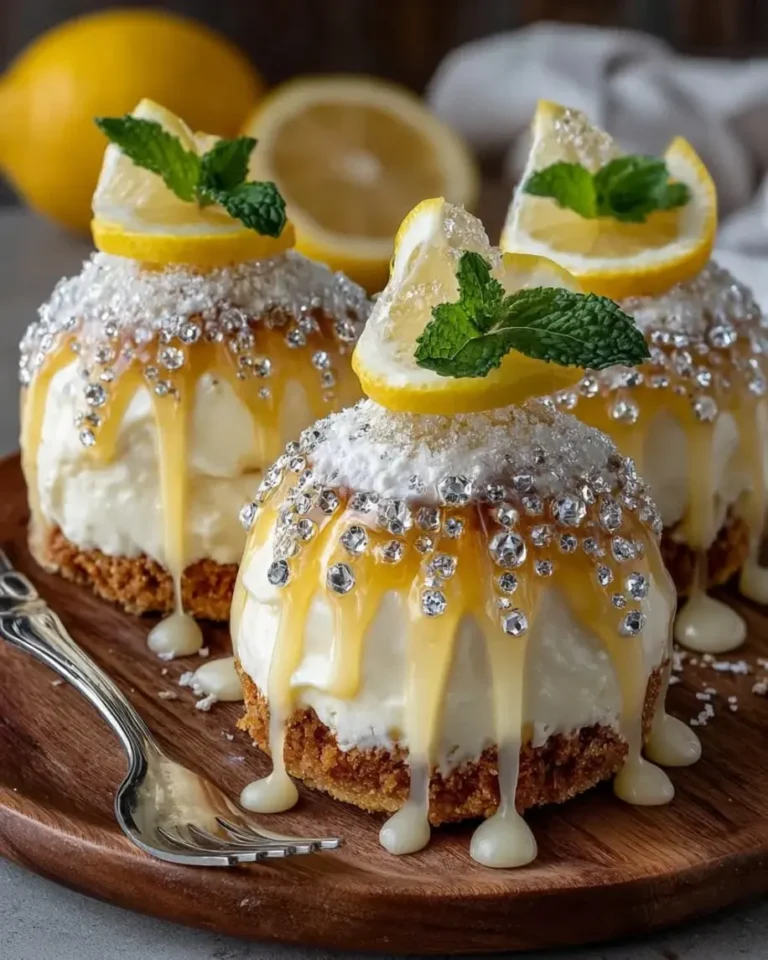
Diamond Lemon Cheesecake Domes with Crystal Glaze
Delicate lemon cheesecake domes coated in a shimmering crystal glaze, served on a buttery graham cracker base. A stunning dessert for special occasions.
- Yield: 6 1x
Ingredients
- For the Lemon Cheesecake Domes:
- 12 oz cream cheese, softened
- 1/2 cup heavy cream
- 1/3 cup powdered sugar
- 1/4 cup fresh lemon juice
- 1 tbsp lemon zest
- 1 tsp vanilla extract
- 1 tsp unflavored gelatin
- 2 tbsp warm water
- For the Crystal Lemon Glaze:
- 1/2 cup water
- 1/3 cup granulated sugar
- 2 tbsp lemon juice
- 1 tbsp honey
- 1 tbsp gelatin powder
- 2 tbsp warm water
- Edible shimmer dust (clear or pearl)
- For the Biscuit Base:
- 1 cup crushed graham crackers
- 3 tbsp melted butter
- 1 tbsp sugar
- Pinch of salt
- For Garnish (optional):
- Thin lemon slices
- Mint leaves
- Sugar crystals or edible glitter
Instructions
- Dissolve gelatin in warm water and let bloom for 5 minutes.
- In a bowl, beat cream cheese, powdered sugar, lemon juice, lemon zest, and vanilla extract until smooth.
- Melt bloomed gelatin gently and mix into the cheesecake base.
- Whip heavy cream to soft peaks and fold into the mixture until light and creamy.
- Pour into silicone dome molds and freeze for at least 6 hours until fully set.
- Combine crushed graham crackers, melted butter, sugar, and salt. Press into small rounds and chill.
- In a saucepan, heat water, sugar, lemon juice, and honey until dissolved and lightly simmering.
- Bloom gelatin in warm water, then stir into the lemon syrup until fully melted.
- Add edible shimmer dust and mix until the glaze becomes glossy and translucent. Cool slightly.
- Remove frozen cheesecake domes from molds and place on a wire rack.
- Pour crystal glaze evenly over each dome until fully coated and shimmering.
- Transfer domes onto biscuit bases.
- Garnish with lemon slices, mint leaves, and sugar crystals before serving.
Nutrition
- Calories: 360
- Sugar: 25g
- Fat: 24g
- Carbohydrates: 30g
- Protein: 5g
Tried This Recipe? Leave a Comment!
Did you make this recipe? I’d love to hear how it turned out! Please leave a comment and a rating below. Your feedback helps other home cooks and supports cheerychop.com!
For more delicious inspiration, follow me on Pinterest!