Lemon Elderflower Crystal Domes with Cheesecake Core
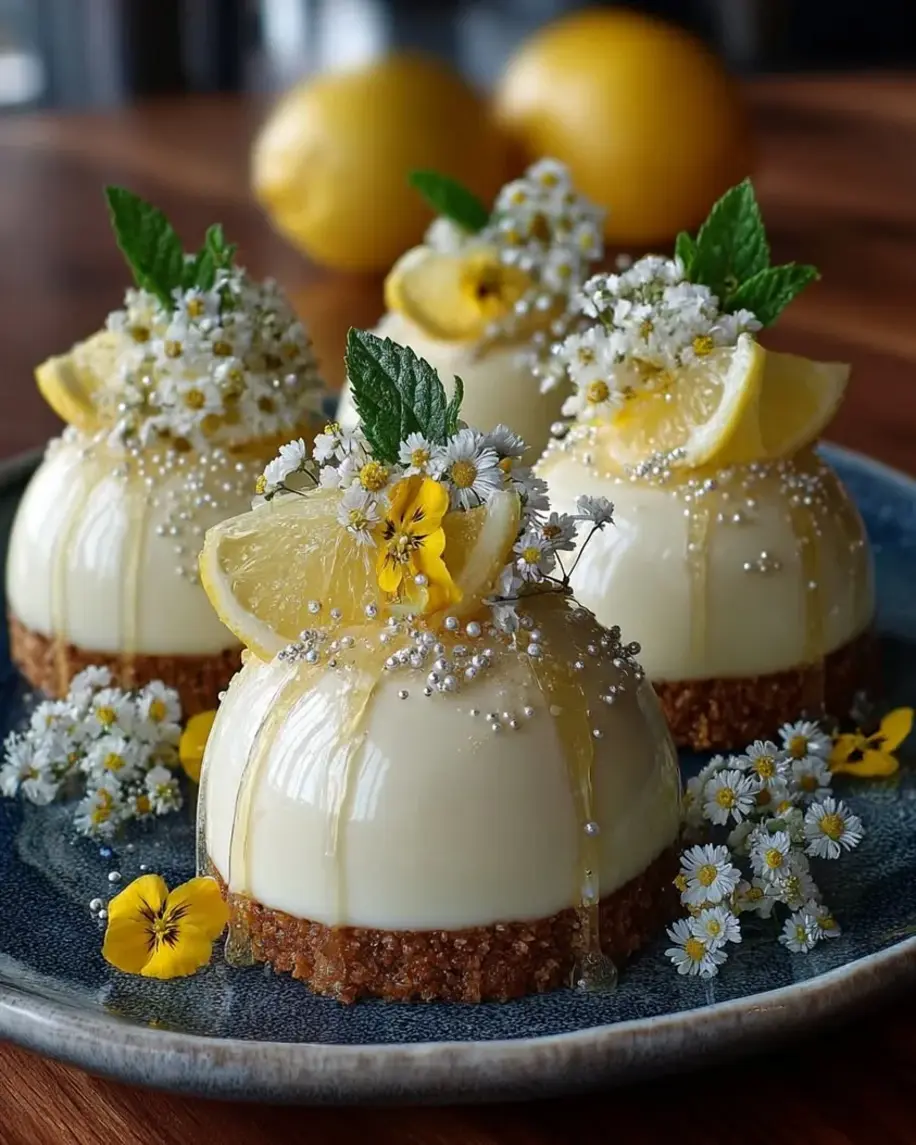
Table of Contents
Lemon Elderflower Crystal Domes with Cheesecake Core – A Hidden-Center Dessert That Dazzles
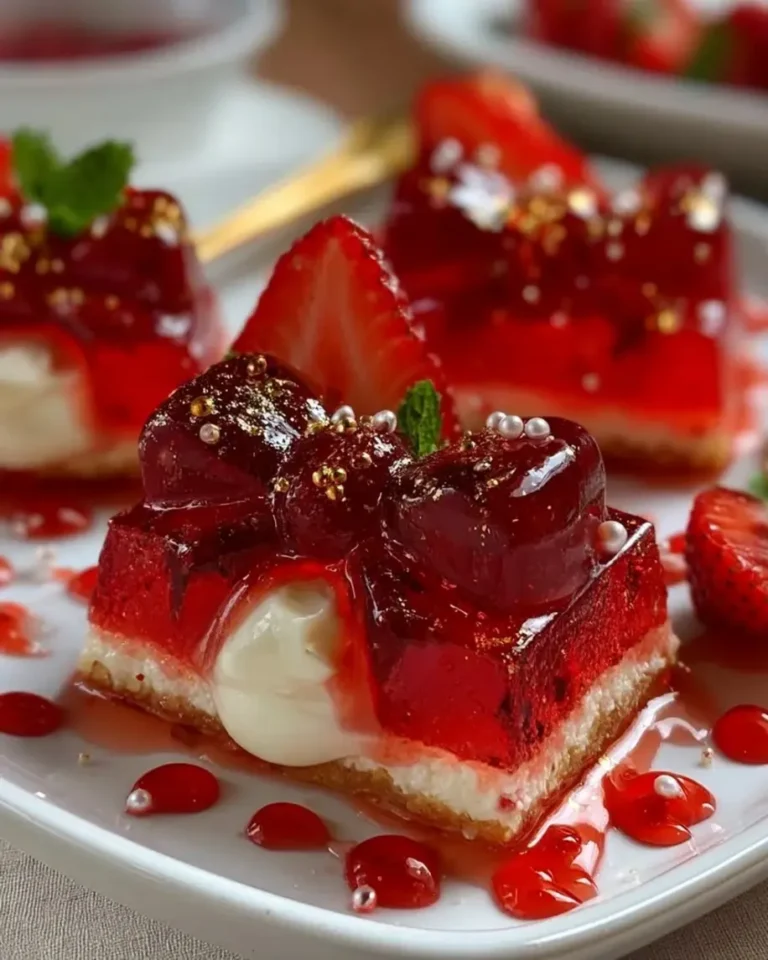
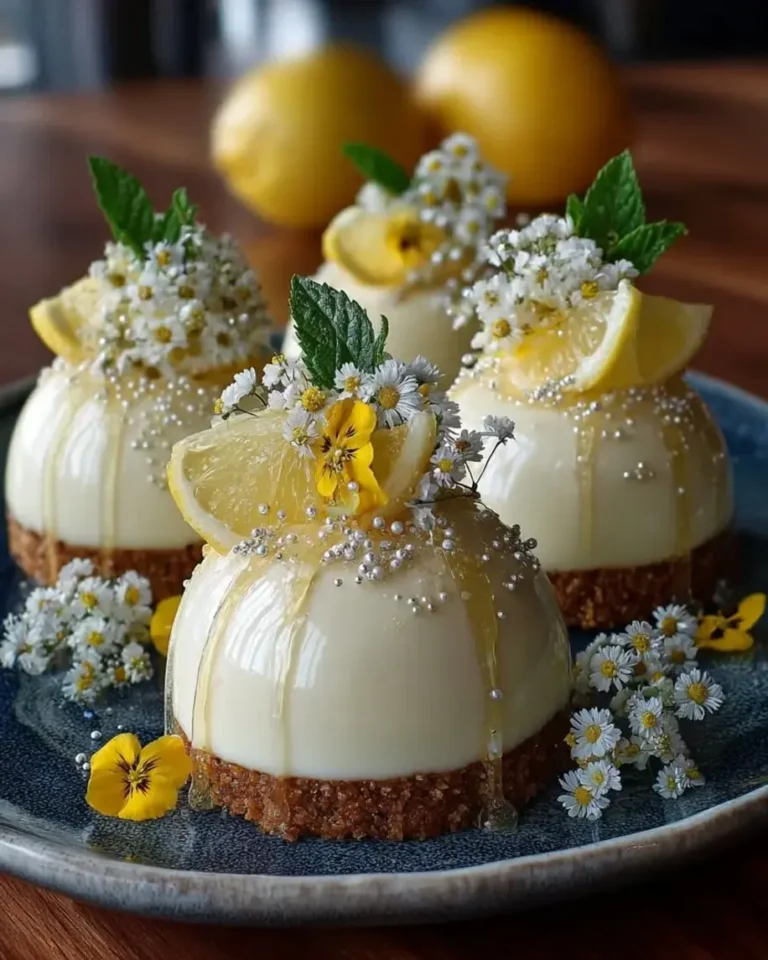
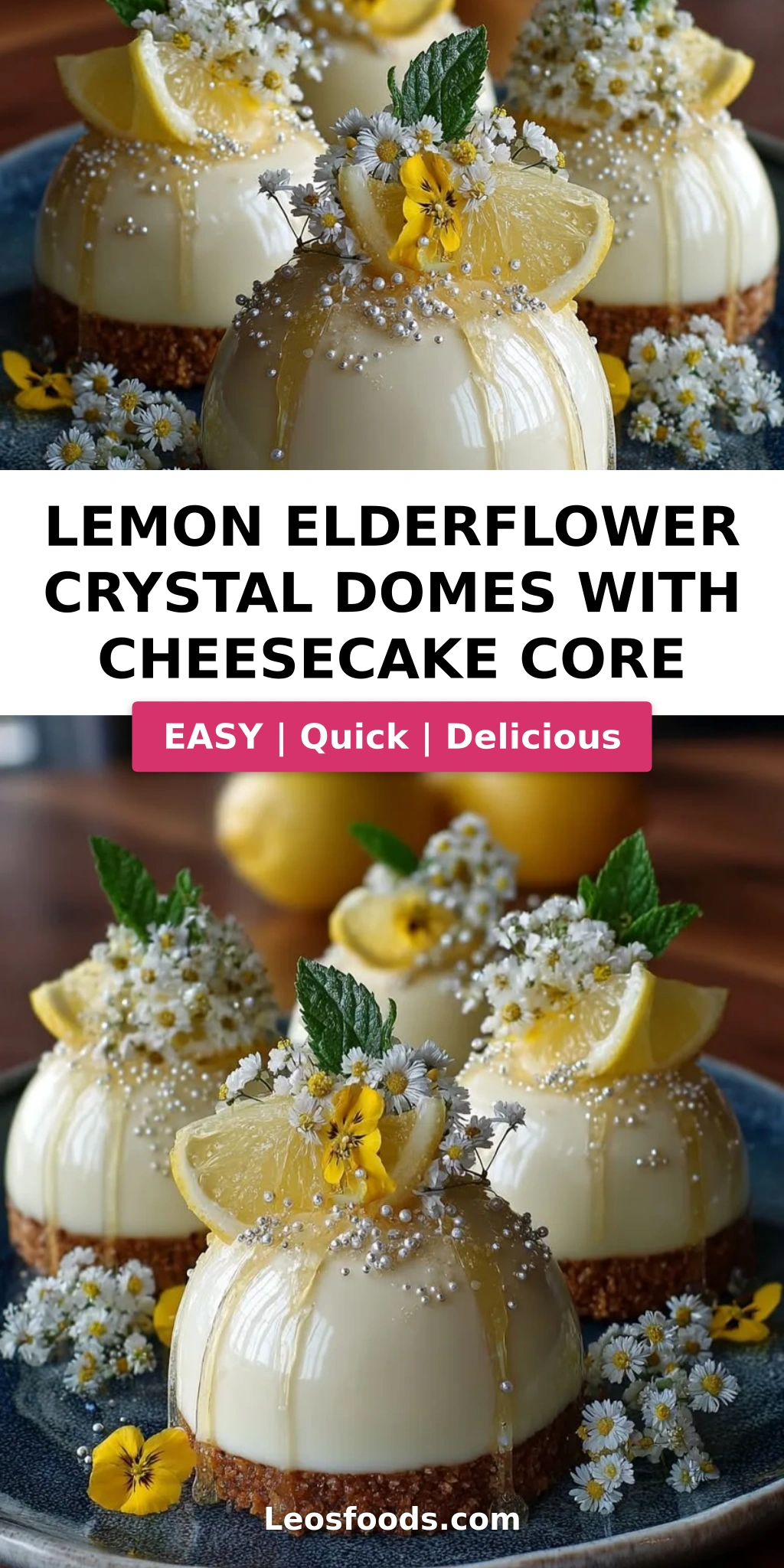
I still remember standing at a patisserie counter in the 11th arrondissement of Paris, staring at a row of jewel-like domes glistening under the lights. The way the light caught their surface — it was pure magic. Years later, after training in French pastry techniques and settling here in New York City, I knew I had to create my own version. These lemon elderflower crystal domes are that vision come to life. A bright, floral elderflower mousse wraps around a creamy cheesecake core, all nestled on a buttery biscuit base and enrobed in a mirror-like crystal glaze that shimmers with edible pearl luster dust. This elderflower dessert recipe is my love letter to French technique, Moroccan citrus traditions, and the bold flavor layering I’ve come to love in NYC kitchens.
The very first bite delivers a triple sensation: the crystal shell cracks gently under your spoon, revealing a cloud-light mousse scented with lemon and elderflower syrup — floral, tangy, and sweet all at once. Then you hit the frozen cheesecake core, dense and luscious, like a hidden treasure in the center. The biscuit base adds just enough crunch and buttery saltiness to anchor every spoonful. I love how the elderflower whispers rather than shouts, letting the lemon take the lead while adding an almost honeylike floral note. In my kitchen on the Upper West Side, I test these domes obsessively — adjusting the gelatin bloom, checking the glaze temperature with a thermometer, and tweaking the ratio of lemon to elderflower until it sings.
What makes my version stand out? First, I use a double-gelatin technique — one for the mousse and one for the glaze — to ensure both layers set cleanly and hold their shape. Second, I’ve perfected a crystal glaze that stays glossy for hours without cracking, thanks to a precise cooling step I learned during my pastry training in Paris. And third, I sneak in a frozen cheesecake core that delivers a cool, creamy contrast to the softer mousse. I’ll share my best tips throughout this post, including the exact temperature for the glaze and how to avoid air bubbles. If you’ve ever been intimidated by dome cakes, let this recipe be your guide. I promise — with a little patience and a few professional tricks — you can create these stunning lemon cheesecake domes at home.
Why This Lemon Elderflower Crystal Domes Recipe Is the Best
The Flavor Secret. My Moroccan roots taught me to balance sweet and tangy with a light hand. Here, lemon curd provides bright, sunshiny acidity while elderflower syrup adds a delicate floral sweetness that doesn’t overpower. I use cream cheese in both the mousse and the core for a double dose of creamy tang, but each layer stays distinct. The elderflower syrup — which I pick up at Kalustyan’s in NYC or order online — brings a subtle pear-like floral note that transforms an ordinary lemon mousse into something truly special.
Perfected Texture. I’m a texture person through and through. The crunchy biscuit base gives way to a light, airy mousse, then a dense frozen cheesecake center, all sealed in a crisp crystal shell. This is a dome cake recipe that delivers contrast in every bite. The key is getting the gelatin ratio right — too much and the mousse turns rubbery, too little and the domes won’t unmold cleanly. I’ve tested this more times than I can count, and these proportions work every time.
Foolproof & Fast. While the component list looks long, each step is straightforward. I’ve organized the workflow so you can prep the biscuit base and cheesecake core while the mousse sets, and the glaze comes together in under 10 minutes. The crystal glaze dessert technique I share below is the same one I use in my professional work — and I’ve broken it down so home cooks can nail it on the first try. No pastry degree required, just a thermometer and a little patience.
Lemon Elderflower Crystal Domes Ingredients
I love sourcing ingredients for this recipe. The elderflower syrup I buy from a little specialty shop near Union Square, the lemon curd I sometimes make from scratch using my mother’s recipe, and the digestive biscuits remind me of the tea-time treats my family would enjoy back in Morocco. Every ingredient here plays a specific role, and I’ll walk you through each one so you know exactly what to look for at the grocery store.
Ingredients List
- For the Lemon Elderflower Mousse: 1 cup lemon curd, 8 oz cream cheese (softened), 1 cup heavy cream, 1/2 cup granulated sugar, 2 tbsp elderflower syrup, 1 tsp vanilla extract, 2 tsp powdered gelatin, 3 tbsp cold water
- For the Cheesecake Core: 3/4 cup cream cheese (softened), 2 tbsp powdered sugar, 1 tsp vanilla extract, 2 tbsp heavy cream
- For the Biscuit Base: 1 cup digestive biscuits (finely crushed), 3 tbsp melted butter
- For the Crystal Glaze: 1 cup granulated sugar, 1/2 cup water, 1/2 cup sweetened condensed milk, 1 cup white chocolate (finely chopped), 1 tbsp powdered gelatin, 3 tbsp cold water, 1 tsp clear vanilla extract, 1 tsp edible pearl luster dust
- For Garnish (optional): Lemon zest curls, edible flowers, edible silver flakes
Ingredient Spotlight
Elderflower Syrup: This is the star floral ingredient. Look for a high-quality syrup without artificial flavors — I like Belvoir or Monin brands found at specialty grocery stores. The syrup adds a honeylike floral sweetness that pairs beautifully with lemon. If you can’t find elderflower syrup, substitute with a mild honey or agave nectar, though the floral note will be softer.
White Chocolate for the Glaze: Use a good-quality white chocolate with cocoa butter (at least 30%), not candy melts. Callebaut or Guittard work beautifully. The white chocolate gives the crystal glaze its body and creamy opacity. For a dairy-free version, try a plant-based white chocolate, but note that the glaze may set slightly softer.
Powdered Gelatin: I use powdered gelatin for both the mousse and the glaze. It’s widely available, easy to bloom, and gives consistent results. Knox brand is reliable. For a vegetarian-friendly version, see the FAQ and variations section below — I’ve tested agar agar as a substitute.
Edible Pearl Luster Dust: This is what gives the crystal glaze its shimmering, mirror-like finish. Look for brands labeled “edible” — CK Products or The Sugar Art are my go-tos. A little goes a long way, and it makes the domes look professionally finished.
| Original Ingredient | Best Substitution | Flavor / Texture Impact |
|---|---|---|
| Elderflower Syrup | Mild honey + 1/2 tsp rose water | Loses floral nuance; sweeter, less complex |
| White Chocolate | Dairy-free white chocolate (e.g., Enjoy Life) | Slightly softer set; still glossy |
| Powdered Gelatin | Agar agar (1 tsp powder per 1 tbsp gelatin) | Firmer set; must be boiled to activate; slightly different mouthfeel |
| Digestive Biscuits | Graham crackers or shortbread cookies | Slightly sweeter; similar crunch |
How to Make Lemon Elderflower Crystal Domes — Step-by-Step
I’ve organized these steps so you can work efficiently. Start with the biscuit base and cheesecake core while the gelatin blooms, and you’ll have the whole thing assembled in under an hour of active time. Trust the process — the freezing step does the heavy lifting.
Step 1: Prepare the Biscuit Base
Mix 1 cup finely crushed digestive biscuits with 3 tbsp melted butter until the texture resembles wet sand. Press a thin, even layer into the bottom of each dome mold. Use the back of a small spoon or a shot glass to compress it firmly. Chill for 15 minutes while you prep the next component.
⚠️ Common Mistake to Avoid: Pressing the base too thick. A thin layer — about 1/8 inch — is all you need. Too much biscuit base will overwhelm the delicate mousse and make the domes hard to unmold cleanly.
Step 2: Make the Cheesecake Core
Beat 3/4 cup softened cream cheese with 2 tbsp powdered sugar, 1 tsp vanilla extract, and 2 tbsp heavy cream until completely smooth and lump-free. Spoon the mixture into small silicone hemisphere molds or an ice cube tray (about 1 tbsp each). Freeze for at least 2 hours, or until rock solid.
💡 Stella’s Pro Tip: Use a piping bag to fill the core molds — it keeps them neat and uniform. If you don’t have small hemisphere molds, a mini muffin tin lined with plastic wrap works perfectly.
Step 3: Prepare the Lemon Elderflower Mousse
Bloom 2 tsp powdered gelatin in 3 tbsp cold water for 5 minutes. In a large bowl, beat 8 oz cream cheese, 1 cup lemon curd, 1/2 cup sugar, 2 tbsp elderflower syrup, and 1 tsp vanilla until smooth. Warm a small portion of the heavy cream (about 1/4 cup) in a saucepan or microwave, then dissolve the bloomed gelatin into the warm cream, stirring until fully incorporated. Mix this gelatin-cream into the lemon mixture. Whip the remaining 3/4 cup heavy cream to soft peaks and fold gently into the lemon base until no streaks remain.
⚠️ Common Mistake to Avoid: Adding gelatin directly to cold cream — it will seize into lumps. Always warm a small amount of liquid first, then whisk the gelatin into it before incorporating with the rest of the mixture.
Step 4: Assemble and Freeze the Domes
Fill each dome mold halfway with the lemon elderflower mousse. Place one frozen cheesecake core into the center of each mold, pressing it gently into the mousse. Cover with the remaining mousse, smoothing the tops flat with an offset spatula. Freeze for at least 6 hours — or overnight — until the domes are solid all the way through.
💡 Stella’s Pro Tip: Make sure the cheesecake core is fully frozen before assembling. If it’s even slightly soft, it will sink or blend into the mousse instead of staying a distinct center. I always freeze my cores the day before.
Step 5: Make the Crystal Glaze
Bloom 1 tbsp powdered gelatin in 3 tbsp cold water for 5 minutes. In a small saucepan, heat 1 cup sugar, 1/2 cup water, and 1/2 cup sweetened condensed milk until steaming (about 150°F / 65°C) — do not boil. Remove from heat and stir in the bloomed gelatin until dissolved, then add 1 cup finely chopped white chocolate. Stir until completely smooth. Add 1 tsp clear vanilla extract and 1 tsp edible pearl luster dust, then blend until glossy. Cool the glaze to 90°F (32°C) before using.
⚠️ Common Mistake to Avoid: Glaze that’s too hot (above 95°F) will slide off the frozen domes and create thin, patchy coverage. Too cold (below 85°F) and it will thicken and clump. I always use an instant-read thermometer to nail that 90°F sweet spot.
Step 6: Glaze and Finish
Unmold the frozen domes from their silicone molds and place each one on a wire rack set over a baking sheet. Pour the crystal glaze evenly over each dome in one steady motion, letting the excess drip off. Work quickly — the glaze sets fast on the frozen surface. Transfer the glazed domes to a parchment-lined tray and refrigerate for at least 30 minutes to allow the glaze to set fully before serving. Garnish with lemon zest curls, edible flowers, and silver flakes.
💡 Stella’s Pro Tip: For the cleanest glaze coverage, make sure the frozen domes are completely dry — any condensation or ice crystals will cause the glaze to bead up and leave bare spots. Pat them gently with a paper towel before glazing if needed.
| Step | Action | Duration | Key Visual Cue |
|---|---|---|---|
| 1 | Prep biscuit base in molds | 10 mins + 15 mins chill | Firm, compacted layer |
| 2 | Make cheesecake cores | 10 mins + 2 hrs freeze | Solid, easy to handle |
| 3 | Make mousse | 15 mins | Smooth, fluffy, no lumps |
| 4 | Assemble & freeze domes | 10 mins + 6 hrs freeze | Firm to the touch |
| 5 | Make crystal glaze | 10 mins + cool to 90°F | Glossy, smooth, flows like syrup |
| 6 | Glaze & chill | 5 mins + 30 mins set | Shiny, smooth, no bubbles |
Serving & Presentation
These crystal domes are made for a grand entrance. I like to serve them on a white plate with a light drizzle of extra elderflower syrup around the base and a few fresh lemon slices on the side. The contrast between the glossy dome and the simple plate makes the dessert feel like something from a high-end patisserie — but you made it in your kitchen. A few edible flowers (pansies or violets look stunning) and a pinch of silver flakes catch the light beautifully.
In my NYC dinner parties, I often pair these domes with a crisp sparkling wine or a citrusy herbal tea. The brightness of the lemon and elderflower cuts through richer courses, making this a perfect spring or early summer finale. If you’re serving these after a heavier meal, the light, frozen texture is incredibly refreshing — like a sorbet and cheesecake in one bite. I once served them at a birthday dinner overlooking Central Park, and everyone thought I’d ordered them from a bakery. Moments like that remind me why I love sharing recipes.
| Pairing Type | Suggestions | Why It Works |
|---|---|---|
| Side / Accompaniment | Fresh berries, lemon zest curls, shortbread cookies | Adds brightness and crunch alongside the creamy dome |
| Sauce / Drizzle | Raspberry coulis, extra elderflower syrup, honey | Fruit tartness mirrors the lemon; honey echoes floral notes |
| Beverage | Prosecco, lemon verbena tea, sparkling water with elderflower | Bubbles and herbal notes complement the light, floral dessert |
| Garnish | Edible flowers, silver flakes, candied lemon peel | Adds visual drama and a touch of elegance |
Make-Ahead, Storage & Reheating
Between recipe testing for leosfoods.com and my own busy New York schedule, I rely on make-ahead strategies. These crystal domes are actually best prepared in stages — the cheesecake cores can be frozen up to a week in advance, and the assembled unglazed domes can live in the freezer for up to 2 weeks. Just wrap them tightly in plastic wrap once they’re fully frozen to prevent freezer burn. The glaze is best made the day you plan to serve, but you can prepare it up to 3 days ahead, refrigerate it in an airtight container, and gently reheat it to 90°F before using.
| Method | Container | Duration | Reheating Tip |
|---|---|---|---|
| Refrigerator | Airtight container, single layer | Up to 3 days (glazed) | Serve chilled, straight from fridge |
| Freezer | Plastic wrap + foil, or freezer bag | Up to 2 weeks (unglazed) | Glaze directly from frozen, then refrigerate 30 mins |
| Make-Ahead | Cheesecake cores in freezer bag | Up to 1 week in advance | Assemble domes straight from frozen cores |
One thing I’ve learned the hard way: never refreeze a dome after it’s been glazed and thawed. The glaze will crack and the mousse will lose its airy texture. Plan your servings so you glaze only what you need, and keep the unglazed domes frozen for later. If you’re hosting, I recommend glazing the domes about an hour before serving — they need 30 minutes in the fridge to set, and then they can sit at room temperature for about 15 minutes before serving, which softens the mousse just slightly for the perfect spoonable texture.
Variations & Easy Swaps
Once you’ve mastered the base recipe, the possibilities are endless. I love experimenting with different fruit purees in the mousse or swapping the citrus profile entirely. These are three of my favorite variations that I’ve tested in my own kitchen — each one keeps the crystal dome structure but brings a completely new flavor personality.
| Variation | Key Change | Best For | Difficulty Impact |
|---|---|---|---|
| Raspberry Swirl | Add 1/4 cup raspberry puree to mousse | Berry lovers, Valentine’s Day | Same — just swirl in puree |
| Dairy-Free / Vegan | Use plant-based cream cheese, coconut cream, and agar agar | Dairy-free diets, vegan guests | More complex — requires careful testing |
| Orange Blossom & Honey | Replace elderflower syrup with orange blossom water + honey | North African flavor profile | Same — simple swap |
Variation 1: Raspberry Swirl Crystal Domes
Fold 1/4 cup seedless raspberry puree into the finished mousse just before filling the molds — a few quick strokes so you get streaks rather than a uniform color. The raspberry adds a tart, fruity layer that’s gorgeous against the elderflower and lemon. I like to garnish these with a single fresh raspberry on top of each dome. The acidity of the raspberry plays beautifully with the sweet crystal glaze, and the color contrast is stunning. This version was a hit at a summer barbecue I catered in Brooklyn last year.
Variation 2: Dairy-Free / Vegan Version
To make these domes dairy-free and vegan, substitute the cream cheese with a high-quality plant-based cream cheese (like Kite Hill or Miyoko’s), use full-fat coconut cream instead of heavy cream, and replace the gelatin with agar agar powder — use 1 tsp agar agar for every 1 tbsp of gelatin, and make sure to boil the liquid for 2 minutes to activate the agar. The texture will be slightly firmer and less creamy than the original, but the structure holds beautifully. For the glaze, use dairy-free white chocolate and sweetened condensed coconut milk. I developed this version for a friend’s vegan wedding, and it was a total showstopper.
Variation 3: Orange Blossom & Honey Twist
This variation takes me straight back to my grandmother’s kitchen in Morocco. Replace the elderflower syrup with 1 tbsp orange blossom water and 3 tbsp honey (warmed slightly so it blends). The orange blossom adds a fragrant, floral perfume that’s common in North African pastries, while honey deepens the sweetness. I like to garnish these with candied orange peel and a dusting of pistachio. The combination of orange blossom, honey, and pistachio is incredibly elegant — it’s the version I serve at my own family gatherings when I want to honor my heritage.
What is the best way to make the elderflower jelly dome clear and smooth without bubbles?
The key to a perfectly clear, smooth crystal glaze is temperature and technique. First, make sure your frozen domes are completely dry — pat them gently with a paper towel to remove any condensation or ice crystals before glazing. Second, cool your glaze to exactly 90°F (32°C). If it’s too hot, it will melt the surface of the dome and create a cloudy finish; too cold, and it will thicken and trap bubbles. Third, use a steady, generous pour — don’t drizzle or paint the glaze on. Place each dome on a wire rack over a baking sheet and pour the glaze in one smooth motion over the top center, letting it flow naturally over the sides. The excess will drip off cleanly. I also recommend letting the glaze sit for 2-3 minutes after mixing to allow any tiny air bubbles to rise to the surface before you pour.
Can I substitute the cheesecake core with a dairy-free or vegan alternative?
Absolutely. I’ve tested a dairy-free cheesecake core using plant-based cream cheese (like Kite Hill or Violife) and coconut cream in place of heavy cream. Use a 1:1 swap for the cream cheese, and replace the heavy cream with full-fat coconut cream or a thick cashew cream. The texture will be slightly less dense than the original, but it firms up beautifully when frozen. For a vegan version, you’ll also need to use agar agar instead of gelatin in both the mousse and the glaze (1 tsp agar agar powder per 1 tbsp gelatin, boiled for 2 minutes to activate). The mousse will set a bit firmer, but the structure holds well for glazing. I recommend making a test batch with just two domes to dial in the texture before committing to the full recipe.
How long do I need to freeze the crystal domes for them to set properly?
The assembled domes need at least 6 hours in the freezer, but overnight is ideal. The mousse must be fully frozen solid — not just chilled — to hold its shape when you unmold and pour the warm glaze over it. If the domes are even slightly soft in the center, they can collapse or develop cracks during glazing. I always freeze my domes for 8 to 12 hours when possible. The cheesecake cores themselves need a minimum of 2 hours in the freezer before assembly. Pro tip: arrange the dome molds on a flat baking sheet so they stay level in the freezer, and cover them loosely with plastic wrap after about an hour to prevent freezer odors from affecting the flavor.
What can I use instead of gelatin to make the lemon elderflower domes vegetarian-friendly?
Agar agar powder is the best vegetarian-friendly substitute for gelatin in this recipe. Use 1 teaspoon of agar agar powder for every 1 tablespoon of powdered gelatin called for. The key difference: agar agar must be brought to a boil for 2 minutes to fully activate, while gelatin simply needs to be bloomed in cold water and then dissolved in warm liquid. I also recommend increasing the liquid in the mousse by about 2 tablespoons, as agar agar sets more firmly and can make the mousse too stiff if the ratios are off. For the crystal glaze, the agar will work the same way — boil it with the sugar and water before adding the white chocolate. Note that the set will be slightly firmer and less creamy than with gelatin, but the glossy finish will be identical.
Why did my crystal glaze crack after I poured it over the domes?
Cracked glaze usually happens for one of two reasons: the domes were too cold, or the glaze was too thick. If the domes are frozen at a very low temperature (below 0°F / -18°C), the sudden temperature shock can cause the glaze to contract and crack as it sets. Let the frozen domes sit at room temperature for 2-3 minutes before glazing to take the edge off. If the glaze itself is too thick (below 85°F / 29°C), it won’t flow evenly and can crack as it dries. Always check the glaze temperature with a thermometer and rewarm it gently if needed. Finally, make sure your white chocolate is finely chopped so it melts completely without lumps, which can also cause weak spots in the glaze shell.
Can I use store-bought lemon curd for this recipe, or should I make it from scratch?
You can absolutely use high-quality store-bought lemon curd — I do it all the time, especially during busy weeks. Look for a brand that lists butter, eggs, and lemon juice as the first ingredients rather than corn syrup or artificial flavors. Bonne Maman and Dickie’s are two brands I trust. That said, homemade lemon curd gives you a brighter, fresher flavor and lets you control the sweetness level. If you have 15 minutes and some lemons, making your own is worth the effort. My quick version: whisk together 3 eggs, 1/2 cup sugar, 1/2 cup lemon juice, and 1 tbsp lemon zest in a saucepan, cook over medium heat while stirring constantly until thickened (about 6 minutes), then stir in 2 tbsp butter. It keeps in the fridge for up to two weeks.
How do I get the dome shape to be perfectly round without flat spots?
The mold you use makes all the difference. I recommend silicone hemisphere molds with smooth, non-stick surfaces — they release cleanly and produce a professional shape. Before filling, make sure the biscuit base is pressed evenly and not too thick, because an uneven base can cause the dome to sit lopsided. When filling the mold with mousse, overfill slightly and use an offset spatula to scrape the excess flat across the top rim so the base is perfectly level. And here’s a trick I learned in Paris: once the domes are frozen, dip the bottom of each silicone mold in warm water for exactly 3 seconds before unmolding. This softens the silicone just enough to release the dome cleanly without melting the surface.
Can I make these lemon elderflower crystal domes without a thermometer?
You can, but a thermometer makes the process significantly more reliable. The glaze temperature of 90°F (32°C) is critical for proper coverage. Without a thermometer, use the “finger test”: dip a clean finger into the glaze — it should feel warm but not hot, similar to bath water. If it feels cool or barely warm, it’s likely below 85°F and too thick. If it feels hot or leaves a slight sting, it’s above 95°F and will slide off the domes. The texture should be liquid but not watery, like warm honey. I highly recommend investing in an instant-read thermometer — they cost around $15 and will save you a lot of guesswork, not just for this recipe but for candy making, tempering chocolate, and getting perfectly cooked meats.
How should I store leftover glazed domes, and how long will they keep?
Leftover glazed domes should be stored in the refrigerator in an airtight container for up to 3 days. The glaze will remain glossy and the mousse will soften slightly, becoming more like a traditional mousse texture. I don’t recommend refreezing glazed domes because the glaze can crack and the mousse can become grainy. If you know you won’t eat all the domes within 3 days, keep the unglazed domes in the freezer and glaze them in batches as needed. Unglazed frozen domes keep well for up to 2 weeks when wrapped tightly in plastic wrap and stored in a freezer bag. When you’re ready to serve, glaze directly from frozen and refrigerate for 30 minutes to set — the texture will be just as perfect as day one.
What can I use as a substitute for elderflower syrup if I can’t find it?
If elderflower syrup is hard to find in your area, you have several good options. The closest substitute is a combination of 1 1/2 tablespoons honey and 1/2 teaspoon rose water or orange blossom water — this gives you a floral sweetness that mimics elderflower’s profile. You can also use St-Germain elderflower liqueur (just reduce the sugar by 1 tablespoon since the liqueur is sweet), though this won’t work for an alcohol-free version. Another option: make a quick elderflower simple syrup by simmering 1/2 cup sugar, 1/2 cup water, and 2 tablespoons dried elderflower (available at tea shops) for 10 minutes, then straining. Each substitute will shift the flavor slightly, but any of these will give you a beautiful floral-lemon dessert that’s still unmistakably special.
Love This Recipe? Save It to Pinterest!
If you enjoyed this Lemon Elderflower Crystal Domes with Cheesecake Core recipe, don’t let it get lost in your browser tabs! 😄 Pin it now so you can find it again anytime — and explore hundreds more tried-and-tested recipes waiting for you on my Pinterest boards.
👉 Follow Stella on Pinterest @stellarecipeblog
📌 Pin this recipe · 🔁 Re-pin your favorites · 💬 Tag me when you make it — I love seeing your creations!
Share Your Version!
I truly love hearing from you — it’s the best part of running this little corner of the internet. If you make these lemon elderflower crystal domes with cheesecake core, please leave a star rating and a comment below to let me know how they turned out. Did the glaze stay glossy? Did your guests go quiet after the first bite? I want to hear every detail.
Snap a photo of your finished domes and tag me on Instagram or Pinterest @stellarecipeblog — I feature my favorite reader creations on my stories every month. I’m especially curious: did you try any of the variations? I’d love to know if the raspberry swirl or the orange blossom honey twist caught your eye. Your feedback and photos are what keep me testing, tweaking, and sharing new recipes from my NYC kitchen to yours. From my NYC kitchen to yours — I hope this recipe brings as much warmth to your table as it does to mine. — Stella 🧡
Lemon Elderflower Crystal Domes with Cheesecake Core
- Yield: 8 1x
Ingredients
- For the Lemon Elderflower Mousse:
- 1 cup lemon curd
- 8 oz cream cheese, softened
- 1 cup heavy cream
- 1/2 cup granulated sugar
- 2 tbsp elderflower syrup
- 1 tsp vanilla extract
- 2 tsp powdered gelatin
- 3 tbsp cold water
- For the Cheesecake Core:
- 3/4 cup cream cheese, softened
- 2 tbsp powdered sugar
- 1 tsp vanilla extract
- 2 tbsp heavy cream
- For the Biscuit Base:
- 1 cup digestive biscuits, finely crushed
- 3 tbsp melted butter
- For the Crystal Glaze:
- 1 cup granulated sugar
- 1/2 cup water
- 1/2 cup sweetened condensed milk
- 1 cup white chocolate, finely chopped
- 1 tbsp powdered gelatin
- 3 tbsp cold water
- 1 tsp clear vanilla extract
- 1 tsp edible pearl luster dust
- For Garnish (optional):
- Lemon zest curls
- Edible flowers
- Edible silver flakes
Instructions
- 1. Mix crushed biscuits with melted butter and press into dome molds as a thin base layer. Chill for 15 minutes.
- 2. Beat cream cheese, powdered sugar, vanilla extract, and heavy cream until smooth.
- 3. Spoon into small silicone inserts and freeze until firm.
- 4. Bloom gelatin for the mousse in cold water for 5 minutes.
- 5. Beat cream cheese, lemon curd, sugar, elderflower syrup, and vanilla extract until smooth.
- 6. Warm a small portion of the cream and dissolve the gelatin, then mix into the lemon mixture.
- 7. Whip the remaining cream to soft peaks and fold into the mixture.
- 8. Fill dome molds halfway with mousse.
- 9. Place a frozen cheesecake core into the center of each mold.
- 10. Cover with remaining mousse and smooth the tops.
- 11. Freeze for at least 6 hours or until completely firm.
- 12. Bloom gelatin for the glaze in cold water.
- 13. Heat sugar, water, and condensed milk until steaming.
- 14. Remove from heat and stir in gelatin and white chocolate until smooth.
- 15. Add vanilla extract and pearl luster dust, then blend until glossy.
- 16. Cool glaze to about 90°F (32°C).
- 17. Unmold frozen domes and place on a wire rack.
- 18. Pour the crystal glaze evenly over each dome until fully coated.
- 19. Refrigerate for 30 minutes before serving.
- 20. Garnish with lemon zest curls, edible flowers, and silver flakes.
Nutrition
- Calories: 360
- Sugar: 35g
- Fat: 20g
- Carbohydrates: 40g
- Protein: 4g
Tried This Recipe? Leave a Comment!
Did you make this recipe? I’d love to hear how it turned out! Please leave a comment and a rating below. Your feedback helps other home cooks and supports cheerychop.com!
For more delicious inspiration, follow me on Pinterest!