Romantic Rose Gold Hibiscus Strawberry Pavlova Hearts
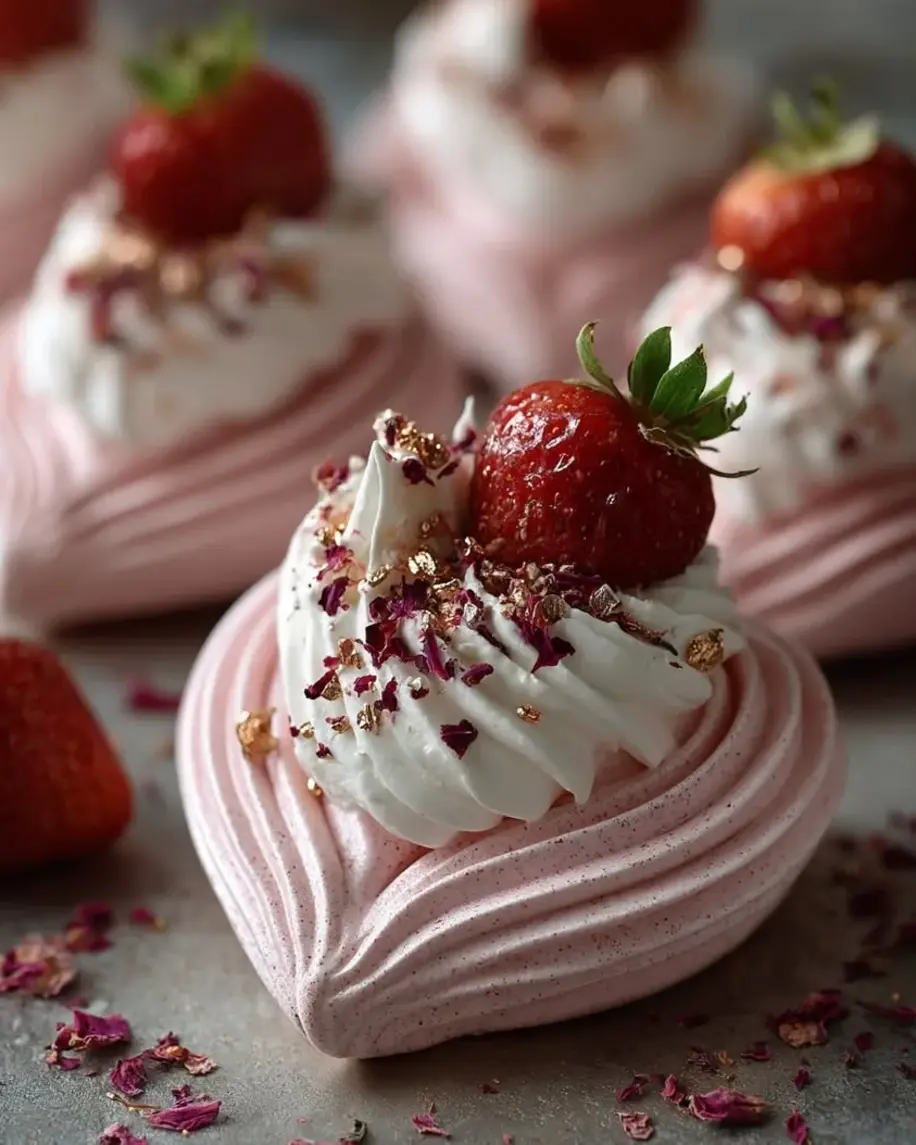
Table of Contents
Rose Gold Hibiscus Strawberry Pavlova Hearts – A Romantic Showstopper
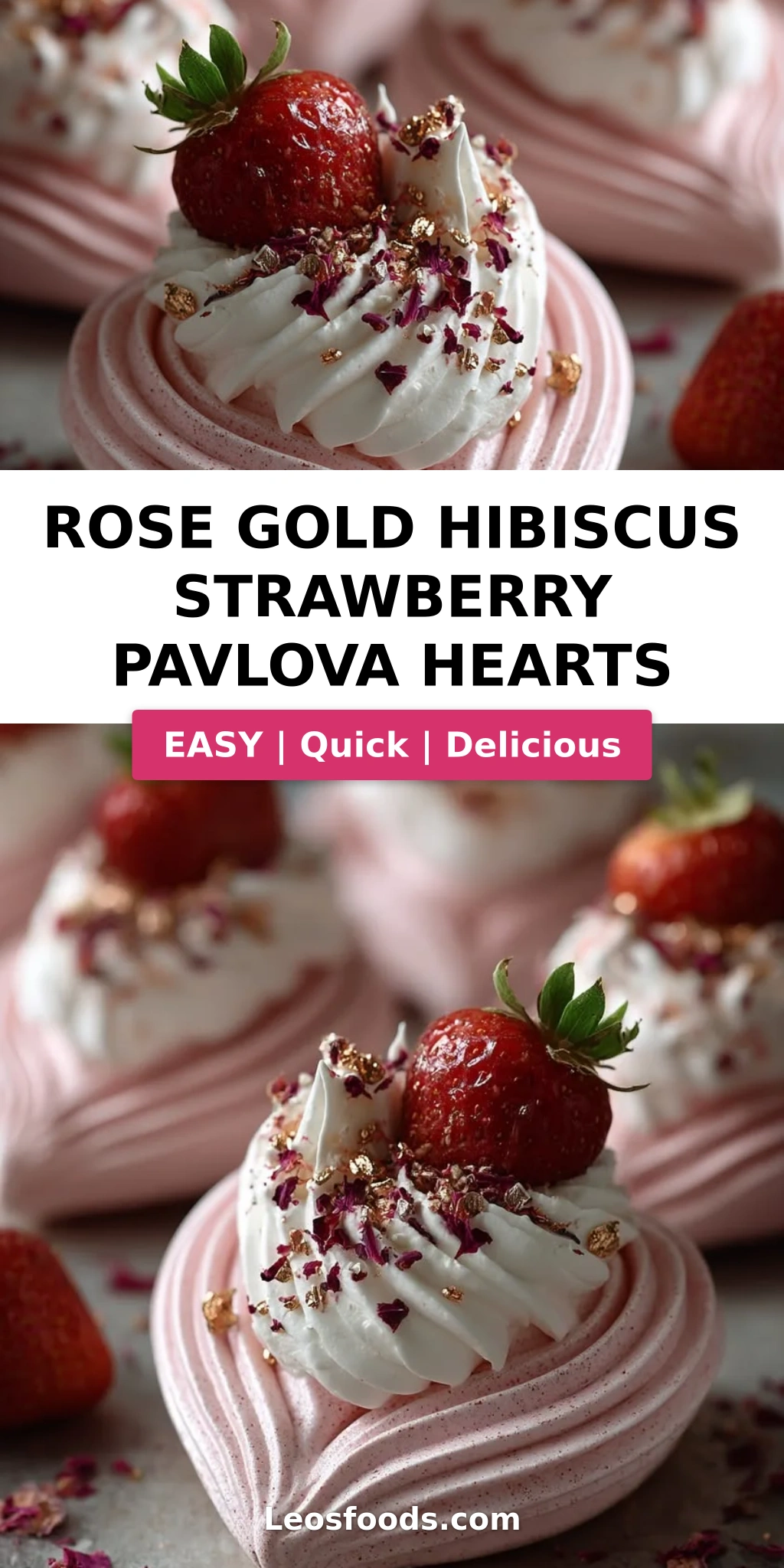
I still remember the first time I made a pavlova. I was in pastry school in Paris, and we were tasked with creating a dessert that was both delicate and striking. My instructor, a stern but brilliant chef, said, “Stella, meringue is like love – it needs patience, a steady hand, and just the right amount of sweetness.” That lesson stuck with me, and years later, back in my New York kitchen, I began experimenting with flavors from my Moroccan heritage. This Rose Gold Hibiscus Strawberry Pavlova Hearts recipe is the result – a dessert that combines the airy crispness of classic French meringue with the bold, floral notes of hibiscus, a staple in North African teas. The rose gold hue comes from a touch of powdered hibiscus mixed into the meringue (my secret trick!), giving each heart a blush that’s utterly romantic.
Imagine biting into a pavlova heart: the outer shell cracks with a gentle resistance, giving way to a marshmallow-soft interior. The whipped cream is clouds of cool richness, and the strawberry-hibiscus compote – speckled with crushed petals – bursts with tangy sweetness and a lingering floral finish. A whisper of honey and lemon balances the berries, while the dried hibiscus steeps into a deep magenta syrup that stains the cream like a sunset. It’s the kind of dessert that makes you close your eyes on the first bite. I often serve these at Valentine’s Day dinner parties, but honestly, they’re perfect any time you want to say “I love you” through food.
What sets my version apart? I’ve combined three culinary worlds: the precision of a French meringue (no weeping, no cracks – I promise!), the vibrant warmth of Moroccan hibiscus, and the seasonal spirit of NYC berry season. I’ve also mastered a foolproof technique for shaping heart-shaped pavlovas that hold their form without spreading. In this post, I’ll share my 💡 Stella’s Pro Tip for a stable meringue, the most common mistake people make with dried hibiscus, and my exact method for achieving that dreamy rose gold color. Let’s make some hearts! 🧡
Why This Rose Gold Hibiscus Strawberry Pavlova Hearts Recipe Is the Best
The Flavor Secret: Most pavlova recipes stop at berries and cream. But I borrow a trick from my mother’s kitchen in Marrakech: steeping dried hibiscus flowers in water to create a concentrated syrup. That syrup not only flavors the strawberries but also gives the compote a jewel-like color and a subtle tartness that cuts through the sweetness of the meringue. Paired with honey instead of refined sugar in the compote, the result is a more complex, grown-up dessert that still feels playful. The rose gold tint in the meringue? I add a tiny pinch of finely ground dried hibiscus petals (or a drop of natural red food coloring, if you want a deeper hue) – it’s a nod to the “rose gold” trend with an ingredient that actually belongs on the plate.
Perfected Texture: A pavlova should be crispy on the outside and chewy-soft on the inside – not hollow like a meringue cookie. My method uses the French technique of adding cornstarch and vinegar to the egg whites, which stabilizes the foam and ensures a marshmallowy center. I also bake at a low temperature (250°F) and then let the meringues cool completely in the turned-off oven. This gradual cooling prevents the dreaded cracking and collapse. During my Paris training, I learned that patience is the only way to get that perfect texture – no shortcuts, no opening the oven door to peek!
Foolproof & Fast (for a Pavlova): I know pavlova can seem intimidating – sugar syrups, weeping, humidity – but I’ve designed this recipe for home bakers. I skip the complicated Italian meringue (no candy thermometer needed) and use a simple French meringue that works beautifully in dry weather. I also give exact timing for each step, including how to pipe heart shapes using a template (easier than freehand!). If you follow the step-by-step, you’ll get beautiful, Instagram-worthy hearts on your first try. And the compote can be made days ahead, making this an ideal easy entertaining dessert.
Rose Gold Hibiscus Strawberry Pavlova Hearts Ingredients
I love shopping for these ingredients at the Union Square Greenmarket in NYC. The strawberries in summer are out of this world, but even in winter, good-quality frozen strawberries work (just thaw and drain). The dried hibiscus flowers I always stock up from a Moroccan spice shop in the East Village – they’re also available online or in health food stores. For the meringue, use fresh egg whites from large eggs – the older they are, the better they whip (leave them out at room temperature for 30 minutes before beating).
Ingredients List
- For the Pavlova Hearts:
- 4 large egg whites (room temperature)
- 1 cup granulated sugar
- 1 tsp cornstarch
- 1 tsp white vinegar
- 1/2 tsp vanilla extract
- Optional: 1/4 tsp powdered dried hibiscus petals or 1 drop red food coloring (for rose gold color)
- For the Hibiscus Strawberry Filling:
- 2 cups strawberries, sliced (fresh or frozen, thawed)
- 2 tbsp dried hibiscus flowers (caffeine-free, culinary grade)
- 1/4 cup water
- 2 tbsp honey
- 1 tsp lemon juice
- For the Whipped Cream Layer:
- 1 cup heavy cream, cold
- 2 tbsp powdered sugar
- 1 tsp vanilla extract
- For Garnish (optional):
- Fresh strawberry slices
- Crushed dried hibiscus petals
Ingredient Spotlight
Dried Hibiscus Flowers: also called karkadé in Moroccan Arabic. They have a tart, cranberry-like flavor that pairs beautifully with strawberries. Look for deep red, whole petals – avoid tea bags with added sugar. Substitution: 1 tbsp of hibiscus powder (ground petals) can replace both the flowers and part of the water – stir it into the compote for a more intense color.
Egg Whites: For the strongest meringue, use egg whites that have been separated and left at room temperature for 30 minutes. Even a trace of yolk will prevent them from whipping – so separate each egg white into a small bowl first. Substitution: Pasteurized egg whites from a carton work, but they may need a pinch of cream of tartar to stabilize.
Strawberries: Fresh are best for texture, but frozen (unsweetened) give a lovely saucy consistency. If using frozen, thaw them completely and drain off excess juice before cooking. Substitution: Raspberries or a mix of berries (blueberries, blackberries) work wonderfully – just adjust sugar slightly.
Cornstarch & Vinegar: These are the stabilizing heroes of a French meringue. Cornstarch absorbs moisture and prevents weeping; vinegar (or lemon juice) acidifies the egg whites, making them hold their shape longer. Don’t skip them!
| Original Ingredient | Best Substitution | Flavor / Texture Impact |
|---|---|---|
| Dried hibiscus flowers | 1 tbsp hibiscus powder + less water | More concentrated color; slightly stronger tartness |
| Granulated sugar (meringue) | Superfine sugar | Dissolves faster, yields a glossier meringue |
| Honey (compote) | Maple syrup or agave | Maple adds a woody note; agave is milder |
| Heavy cream | Coconut cream (chilled, whipped) | Dairy-free; adds a subtle coconut flavor |
How to Make Rose Gold Hibiscus Strawberry Pavlova Hearts – Step-by-Step
Don’t let the steps intimidate you – I’ve broken it down into bite-size actions. The key to success is reading through once before you start. And trust me, once you pull those perfect pink hearts from the oven, you’ll feel like a pastry pro!
Step 1: Preheat and Prepare Baking Sheet
Preheat your oven to 250°F (120°C). Line a large baking sheet with parchment paper. To make perfect heart shapes, draw six heart templates (about 3 inches wide) on the back of the parchment with a pencil – simple outlines. Flip the paper over so the pencil side is down; you’ll still see the shapes to pipe over. Set aside.
💡 Stella’s Pro Tip: If you’re not confident piping freehand, use a heart-shaped cookie cutter as a stencil – place it on the parchment and spoon the meringue inside, then lift off gently.
Step 2: Make the Meringue
In a completely clean, dry bowl (glass or metal, no plastic), beat the egg whites with an electric mixer on medium speed until soft, foamy peaks form – about 2 minutes. Start adding the sugar, one tablespoon at a time, with the mixer running. After all sugar is added, increase to high speed and beat until the meringue is glossy, white, and holds stiff peaks when you lift the beaters. This takes about 5–6 minutes. Test by rubbing a bit between your fingers – it should feel smooth, not grainy. Fold in the cornstarch, vinegar, and vanilla extract with a spatula. If you want the rose gold color, add the powdered hibiscus or food coloring now and fold gently until evenly distributed.
⚠️ Common Mistake to Avoid: Under-whipped meringue. If the peaks flop over when you lift the beaters, keep beating. Stiff peaks should stand up straight.
Step 3: Shape the Hearts
Transfer the meringue to a piping bag fitted with a large round or star tip (or use a zip-top bag with a corner snipped). Pipe the meringue onto the parchment, following the heart outlines. Start at the base and pipe a thick outline, then fill the center with more meringue. Smooth the top lightly with a spatula if needed. Make sure the hearts are about 1 inch thick – they will not spread much during baking. You should have six hearts spaced apart.
💡 Stella’s Pro Tip: For clean edges, dip a small offset spatula in water and run it along the sides of the hearts to smooth them – this also helps create defined shapes.
Step 4: Bake the Pavlovas
Place the baking sheet on the middle rack of the oven. Bake for 60–70 minutes, until the meringues are dry to the touch and can be lifted easily from the parchment. They should be pale ivory with a slight blush. Do not let them brown. Turn off the oven and leave the door slightly ajar with a wooden spoon handle. Let the pavlovas cool completely inside the oven – at least 1 hour, or overnight if you prefer. Cooling slowly prevents cracking.
⚠️ Common Mistake to Avoid: Opening the oven door during baking. The sudden temperature drop can cause the meringues to crack or collapse. Be patient – no peeking!
Step 5: Make the Hibiscus Strawberry Compote
While the pavlovas are cooling, prepare the filling. In a small saucepan, combine the dried hibiscus flowers and water. Bring to a simmer over medium heat and cook for 5 minutes, until the liquid turns deep red. Strain through a fine-mesh sieve into a bowl, pressing on the flowers to extract all the liquid. Discard flowers. Return the hibiscus liquid to the saucepan. Add the sliced strawberries, honey, and lemon juice. Cook over medium-low heat, stirring occasionally, for 5–8 minutes, until the strawberries are softened but still hold some shape. Remove from heat and let cool completely. The compote will thicken as it cools. Refrigerate if not using within an hour.
💡 Stella’s Pro Tip: If you want an even deeper color, reserve 1 tablespoon of the hibiscus liquid before adding strawberries and use it as a final drizzle over the assembled pavlovas. So pretty!
Step 6: Whip the Cream
In a large chilled bowl, whip the heavy cream with an electric mixer on medium speed until soft peaks form – about 2 minutes. Add the powdered sugar and vanilla, then continue beating until medium-stiff peaks form (be careful not to over-whip or it will become grainy). If you’re not assembling immediately, cover and refrigerate.
⚠️ Common Mistake to Avoid: Over-whipping the cream – it can separate into butter. Stop as soon as the peaks hold their shape but are still silky.
Step 7: Assemble and Serve
Just before serving, place a pavlova heart on each plate. Spoon a generous dollop of whipped cream onto the center of each heart, leaving a border of meringue visible. Top with the hibiscus strawberry compote, letting some of the syrup cascade over the sides. Garnish with fresh strawberry slices and a sprinkle of crushed dried hibiscus petals if desired. Serve immediately – pavlovas soften quickly once topped.
💡 Stella’s Pro Tip: For an extra-special touch, grate a little white chocolate over the top. It adds a subtle sweetness that echoes the rose gold theme.
| Step | Action | Duration | Key Visual Cue |
|---|---|---|---|
| 1 | Preheat & prepare parchment | 5 min | Pencil hearts drawn |
| 2 | Whip meringue | 8–10 min | Stiff, glossy peaks |
| 3 | Pipe hearts | 10 min | Smooth, defined edges |
| 4 | Bake & cool | 60–70 min bake + 1 hr cool | Meringue dry, lifts off paper |
| 5 | Make compote | 15 min + cooling | Deep red syrup, berries softened |
| 6 | Whip cream | 3 min | Soft peaks |
| 7 | Assemble | 5 min | Cream and compote on meringue |
Serving & Presentation
These pavlova hearts are made for romance – Valentine’s Day, anniversaries, or a Galentine’s brunch. I love to serve them on a marble board or individual white plates to contrast with the pink tones. For a NYC dinner party, I’ll arrange them on a vintage cake stand and garnish with fresh mint leaves and a few edible rose petals (from my local flower market). The combination of the crisp meringue, the fluffy cream, and the syrupy berries is a textural symphony – each bite a little different.
In my Moroccan home, we often finish a meal with fresh fruit and mint tea. This pavlova nods to that tradition, but with French elegance. I sometimes dust the plate with a pinch of cinnamon or nutmeg for an extra layer of warmth. If you’re serving these at a party, consider making mini pavlova hearts (pipe them smaller, about 2 inches) for a bite-sized dessert that’s easier to handle. They’re also lovely with a dollop of crème fraîche instead of whipped cream for a tangier twist.
Pair these hearts with something light and bright – a crisp Prosecco, a hibiscus iced tea, or even a Moroccan mint tea (my childhood favorite). For a non-alcoholic option, a sparkling lemonade with a splash of hibiscus syrup is divine. Don’t forget to snap a picture before diving in – the rose gold and red are pure food art!
| Pairing Type | Suggestions | Why It Works |
|---|---|---|
| Side Dish | Fresh fruit salad, light cookies | Adds freshness without overwhelming |
| Sauce / Dip | Extra compote, honey drizzle, white chocolate ganache | Luxurious finishing touches |
| Beverage | Prosecco, hibiscus iced tea, Moroccan mint tea | Echoes the floral and sparkling notes |
| Garnish | Fresh mint, rose petals, crushed pistachios | Adds color, texture, and aromatic lift |
Make-Ahead, Storage & Reheating
Living in NYC means my schedule is always full, so I love a recipe that can be prepped in stages. The pavlova hearts themselves can be baked up to 3 days in advance and stored in an airtight container at room temperature – just make sure they’re completely cool and the container is sealed tight to prevent humidity. The compote can be made up to 5 days ahead and refrigerated. The whipped cream should be made fresh, but you can also whip it a few hours ahead and keep it chilled (re-whip briefly if needed).
| Method | Container | Duration | Reheating Tip |
|---|---|---|---|
| Refrigerator (assembled) | Not recommended – meringue softens | N/A | Assemble just before serving |
| Freezer (meringues only) | Airtight container with layers of parchment | Up to 1 month | Thaw at room temp 30 min, then re-crisp at 250°F for 5 min |
| Make-Ahead | Store components separately | Meringues: 3 days; compote: 5 days; cream: fresh | Assemble within 30 min of serving |
If you’ve stored the meringues and they’ve lost their crispness, pop them in a 250°F oven for 5–8 minutes, then cool again. Never microwave a pavlova – it will turn into a sticky mess! The compote can be gently rewarmed on the stove if you prefer a warm filling, but let it cool slightly before adding to the cream to avoid melting. And remember, once the cream and compote are on, the clock is ticking – serve within 20 minutes for the best crunch-to-cream ratio.
Variations & Easy Swaps
| Variation | Key Change | Best For | Difficulty Impact |
|---|---|---|---|
| Moroccan Rose & Pistachio | Replace strawberries with sliced peaches, add rose water to cream | Summer fruit, fragrant twist | Easy |
| Dairy-Free & Vegan | Use aquafaba for meringue, coconut cream for whip | Plant-based diets | Medium (aquafaba requires extra beating) |
| Chocolate Hibiscus | Add 1 tbsp cocoa powder to compote, use dark chocolate shavings on top | Rich, decadent indulgence | Easy |
Moroccan Rose & Pistachio Variation
Inspired by my childhood in Morocco, this version swaps strawberries for sliced ripe peaches (or nectarines) and infuses the whipped cream with a teaspoon of rose water (from a Middle Eastern market). Top with crushed pistachios and a few dried rose petals. The floral notes of rose water pair beautifully with the hibiscus syrup. It’s like a garden on your plate! Use the same pavlova base and method – just adapt the compote. For the pistachios, toast them lightly for extra crunch.
Dairy-Free & Vegan Variation
Yes, you can make a vegan pavlova! Use the liquid from a can of chickpeas (aquafaba) – about 1/2 cup for 4 egg whites. Whip it with cream of tartar and sugar until stiff peaks form (it takes a bit longer than egg whites). For the cream, chill a can of full-fat coconut milk overnight, then scoop the solid top and whip with powdered sugar. The compote is naturally vegan. This variant is perfect for those with dietary restrictions, and it still yields a surprisingly crisp shell and creamy center. Just be extra careful with humidity – aquafaba is more sensitive.
Chocolate Hibiscus Variation
For the chocolate lovers at your table, add 1 tablespoon unsweetened cocoa powder to the compote along with the strawberries – it deepens the color and adds a subtle, bittersweet layer. Swap the vanilla in the cream for 1/2 teaspoon almond extract. Finish with shaved dark chocolate over the top. The combination of chocolate and hibiscus is surprisingly sophisticated; I discovered it at a café in Brooklyn’s Williamsburg. The difficulty remains easy, but the flavor takes a bold turn toward dessert-wine territory.
How do I get the pavlova to hold its heart shape without cracking?
This is a common challenge, but it’s entirely avoidable. First, make sure your meringue is beaten to stiff peaks – if it’s too soft, the shape will spread during piping. Pipe the hearts onto parchment with a consistent thickness (about 1 inch) and smooth the edges with a damp spatula. The real secret is in the cooling: after baking at 250°F for 60–70 minutes, turn off the oven and leave the meringues inside with the door ajar until completely cool – at least 1 hour. This gradual temperature change prevents the sudden contraction that causes cracks. Also, adding cornstarch and vinegar to the meringue makes it more forgiving. If you still see tiny cracks, don’t worry – they’ll be hidden under the cream and compote!
Can I use dried hibiscus flowers instead of fresh for the strawberry topping?
Absolutely – in fact, dried hibiscus is the traditional choice for this recipe. Fresh hibiscus (from the hibiscus sabdariffa plant) is rarely available in US grocery stores, but dried flowers are easy to find in Latin markets (called “flor de Jamaica”), Middle Eastern stores, or online. They have a concentrated tart, cranberry-like flavor that infuses the strawberries beautifully. Just simmer them in water for 5 minutes, strain, and use the liquid. The flowers themselves are too tough to eat, so discard them after steeping. If you can’t find dried hibiscus, you can substitute 1/4 cup of hibiscus tea (from tea bags) brewed double strength – but avoid tea blends with added sugar or flavorings.
What is the best way to achieve a rose gold color in the meringue?
I love this question! The rose gold color is part of what makes these hearts so mesmerizing. The most natural way is to add finely ground dried hibiscus petals to the meringue – about 1/4 teaspoon (grind whole dried flowers in a spice grinder or mortar). This gives a soft pink with a slightly mottled, organic effect. For a more uniform and vibrant rose gold, use a tiny drop of pink or red gel food coloring (avoid liquid food coloring, which can deflate the meringue). Mix the color into the meringue just before piping. If you want a shimmer, you can dust the baked hearts with edible gold luster dust – but do that just before serving, as humidity will dull the shine. Remember: the compote will already be a deep red, so the meringue can be subtle.
How far in advance can I assemble the pavlova hearts before serving?
Pavlova is best assembled just before serving – no more than 20 minutes ahead. The moment you add whipped cream and compote, the moisture starts to soften the meringue’s crisp shell. If you assemble more than 20 minutes in advance, you’ll lose that wonderful crunchy-to-chewy contrast. However, you can prepare all the components well in advance: bake the meringues up to 3 days ahead and store airtight at room temperature, make the compote up to 5 days ahead and refrigerate, and whip the cream a few hours ahead (keep it chilled and re-whip briefly). Then, 20 minutes before you’re ready to serve, quickly assemble and garnish. This makes pavlova a fantastic dessert for entertaining – you can enjoy your guests without last-minute stress!
Why did my pavlova collapse or weep?
There are three main culprits. First, humidity – pavlova is the enemy of humid weather. Avoid making it on rainy or muggy days, or run a dehumidifier in your kitchen. Second, under-whipped meringue: if the peaks aren’t stiff enough, the structure won’t hold. Beat until you can hold the bowl upside-down without the mixture sliding. Third, cooling too quickly. Always cool the pavlovas in the turned-off oven with the door ajar – this gentle transition prevents collapse. Weeping (beads of syrup on the surface) is usually from sugar not fully dissolving – rub a bit of meringue between your fingers; if it feels grainy, keep beating. Add the sugar gradually and use superfine sugar if possible.
Can I make a large round pavlova instead of hearts?
Yes, absolutely! If you prefer a classic shape, simply spread the meringue into a large circle (about 9 inches in diameter) on the parchment. Create a slight well in the center to hold the filling. The baking time will increase to about 75–90 minutes because of the larger volume. Watch for even coloring – if the edges are browning too fast, tent with foil. The cooling process remains the same. Once cooled, top with the whole batch of cream and compote. This is a great option for a family-style dessert or a birthday cake alternative. You can also use a piping bag to make a round nest with a decorative edge.
What’s the best way to store leftover assembled pavlovas?
Honestly, leftover assembled pavlovas don’t keep well – the meringue will become soft and chewy overnight. If you have leftovers, the best bet is to separate the components. Store unused meringue hearts in an airtight container at room temperature for up to 3 days. The compote keeps in the fridge for up to 5 days. The whipped cream should be used within 2 days (re-whip if necessary). To repurpose leftover meringue pieces, crush them and use as a topping for ice cream, yogurt, or fruit salads. They make a lovely crunchy crumble for a trifle!
Can I use frozen strawberries for the compote?
Yes! Frozen strawberries work beautifully, especially in winter when fresh berries are less flavorful. Thaw them completely first, then drain off any excess liquid before adding to the hibiscus syrup. The texture will be softer than fresh, which is actually lovely for a compote. Frozen strawberries also release more juice, so you may want to cook the compote for an extra minute to thicken. Just be careful not to overcook into a jam – you want the berries to retain some shape. If you’re using unsweetened frozen berries, no adjustment is needed; if they’re sweetened, reduce the honey by half.
How do I prevent the egg whites from not whipping?
Several factors can prevent egg whites from whipping. First, make sure your bowl and beaters are completely free of grease – wash them with hot soapy water and dry thoroughly. Even a trace of oil from the beaters or a plastic bowl can ruin the foam. Use glass, metal, or ceramic bowls only. Second, use room temperature egg whites (separate and let sit for 30 minutes). Cold whites take longer to whip and may not achieve full volume. Third, avoid any yolk contamination – crack each egg separately into a small bowl before adding to the main bowl. If you suspect a drop of yolk, discard that white. Finally, if your kitchen is very humid, add a pinch of cream of tartar (about 1/8 teaspoon per egg white) to stabilize the whites – it’s a lifesaver in summer!
What can I use instead of honey in the compote?
Honey adds a floral sweetness that complements the hibiscus, but you can substitute with maple syrup, agave nectar, or even granulated sugar. If using maple syrup, the flavor will be slightly woodier – still delicious, especially in fall. For agave, use the same amount and it will be slightly sweeter. If using granulated sugar, dissolve 2 tablespoons sugar with the water and hibiscus before adding strawberries. You might also try a combination: 1 tablespoon honey + 1 tablespoon brown sugar for a deeper, molasses-like note. Each substitution will shift the taste just a little, so choose according to what you have on hand.
Share Your Version!
I hope you fall in love with these Rose Gold Hibiscus Strawberry Pavlova Hearts as much as I have! Whether you make them for a special occasion or just a sweet Tuesday night, I’d love to hear how they turned out. Did you try the rose gold coloring? Pair them with a special drink? Leave a star rating and a comment below – your feedback helps other cooks know what works and inspires me to create even more recipes for you.
Take a picture of your gorgeous pavlova hearts and share them on Instagram or Pinterest. Tag me @leosfoods so I can see your creations – I love nothing more than scrolling through my feed and seeing your beautiful plates. And if there’s a variation you’d love to see me try (maybe a lavender version, or a tropical twist?), drop that in the comments too. Let’s keep cooking together, one perfect meringue at a time.
From my NYC kitchen to yours – I hope this recipe brings as much warmth to your table as it does to mine. — Stella 🧡
Love This Recipe? Save It to Pinterest!
If you enjoyed this Rose Gold Hibiscus Strawberry Pavlova Hearts recipe, don’t let it get lost in your browser tabs! 😄 Pin it now so you can find it again anytime — and explore hundreds more tried-and-tested recipes waiting for you on my Pinterest boards.
👉 Follow Stella on Pinterest @stellarecipeblog
📌 Pin this recipe · 🔁 Re-pin your favorites · 💬 Tag me when you make it — I love seeing your creations!
Did you make this recipe? ⭐ Please leave a star rating and tell me what you thought in the comments below! Your feedback helps me create better recipes for you. 🧡
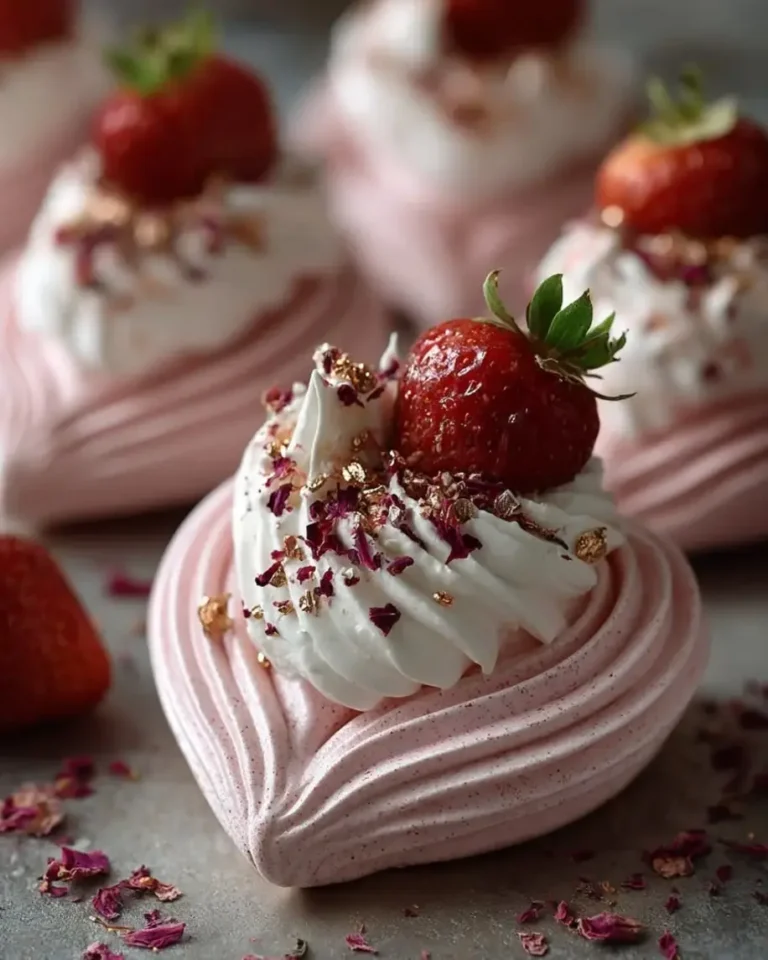
Rose Gold Hibiscus Strawberry Pavlova Hearts
A romantic and elegant dessert featuring light meringue hearts topped with whipped cream and a vibrant hibiscus-strawberry compote.
Ingredients
- For the Pavlova Hearts:
- 4 large egg whites
- 1 cup granulated sugar
- 1 tsp cornstarch
- 1 tsp white vinegar
- 1/2 tsp vanilla extract
- For the Hibiscus Strawberry Filling:
- 2 cups strawberries, sliced
- 2 tbsp dried hibiscus flowers
- 1/4 cup water
- 2 tbsp honey
- 1 tsp lemon juice
- For the Whipped Cream Layer:
- 1 cup heavy cream, cold
- 2 tbsp powdered sugar
- 1 tsp vanilla extract
- For Garnish (optional):
- Fresh strawberry slices
- Crushed dried hibiscus petals
Instructions
- 1. Preheat oven to 250°F (120°C) and line a baking sheet with parchment paper.
- 2. Beat egg whites until soft peaks form. Gradually add sugar, beating until glossy and stiff peaks develop.
- 3. Mix in cornstarch, vinegar, and vanilla extract.
- 4. Pipe or shape the meringue into heart shapes on the prepared baking sheet.
- 5. Bake for 60–70 minutes, then turn off the oven and allow the pavlovas to cool completely inside.
- 6. Simmer hibiscus flowers and water for 5 minutes. Strain and discard flowers.
- 7. Add strawberries, honey, and lemon juice to the hibiscus liquid and cook briefly until slightly softened. Cool completely.
- 8. Whip heavy cream with powdered sugar and vanilla until soft peaks form.
- 9. Spoon whipped cream onto each pavlova heart.
- 10. Top with the hibiscus strawberry mixture.
- 11. Garnish with fresh strawberry slices and crushed hibiscus petals.
- 12. Serve immediately.
Notes
Ensure the meringues are completely cooled before adding toppings to prevent the cream from melting.
Nutrition
- Calories: 235
- Sugar: 31 g
- Fat: 10 g
- Carbohydrates: 34 g
- Protein: 3 g
Tried This Recipe? Leave a Comment!
Did you make this recipe? I’d love to hear how it turned out! Please leave a comment and a rating below. Your feedback helps other home cooks and supports cheerychop.com!
For more delicious inspiration, follow me on Pinterest!