Stunning Passionfruit Mango Lava Mirror Domes Recipe
“`html
Table of Contents
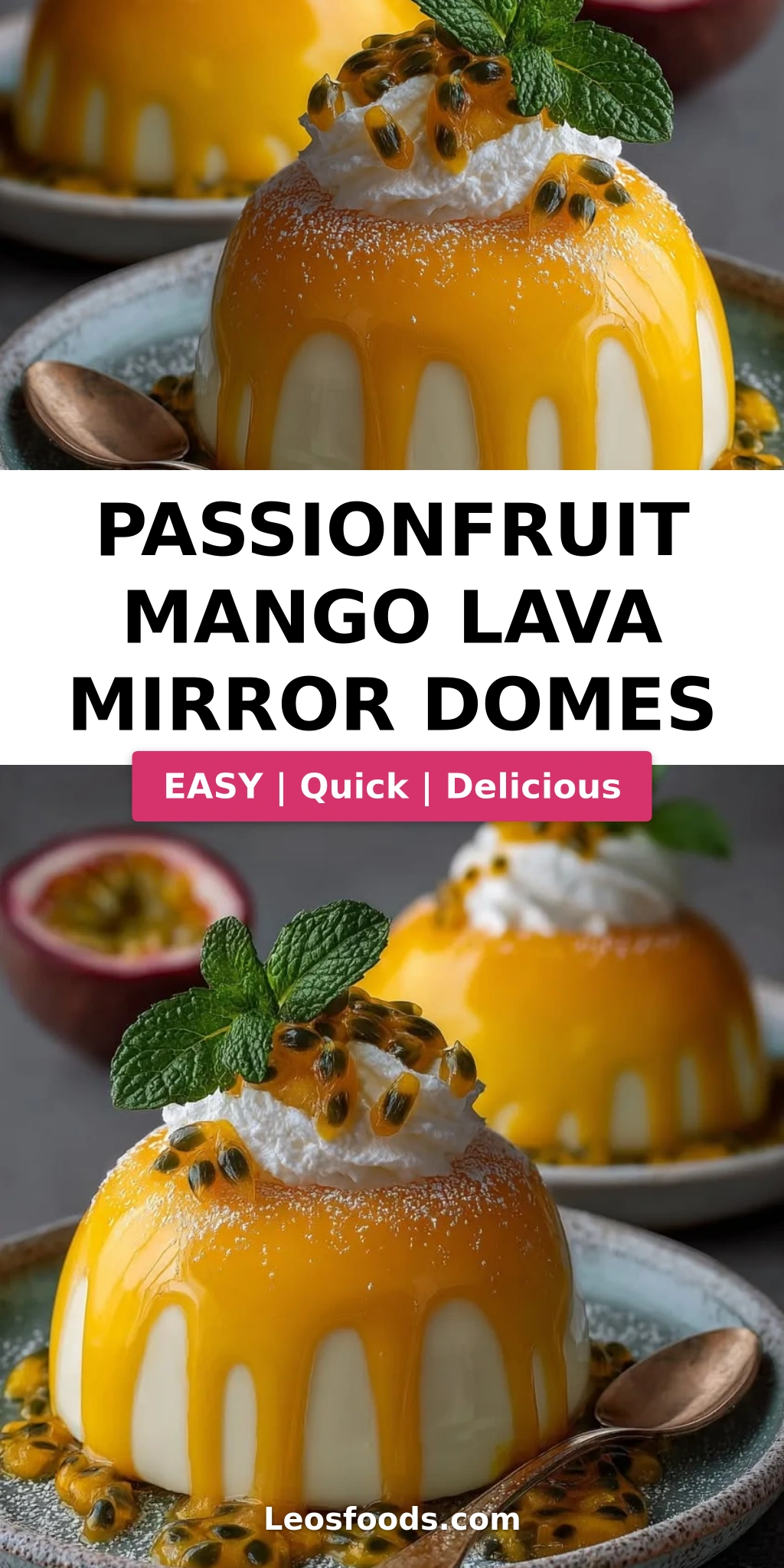
Passionfruit Mango Lava Mirror Domes – A Showstopping Tropical Dessert
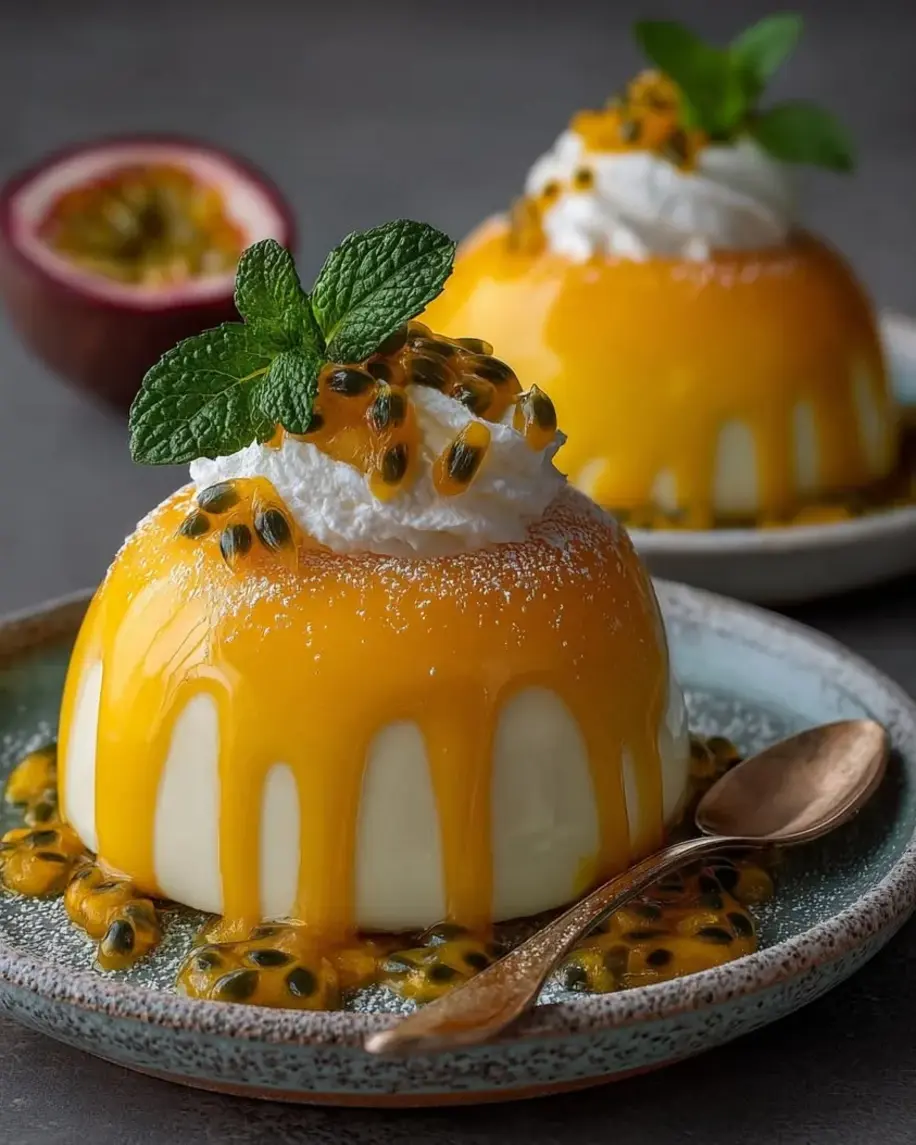
I still remember the first time I made passionfruit mango lava mirror domes—it was a humid summer afternoon in my tiny New York City apartment, and I was channeling every technique I had learned at culinary school in Paris. The moment I unmolded those glossy, orange-yellow domes and saw the mirror glaze ripple like liquid sunset, I knew I had created something special. This recipe is the culmination of my Moroccan heritage (where mango and passionfruit were staples in my mother’s kitchen), my French pastry training, and the bold, creative energy of NYC. These domes are not just a dessert—they are an experience, a conversation piece, a little piece of edible art that tastes as incredible as it looks.
Imagine breaking through a perfectly smooth, mirror-like shell of white chocolate glaze to reveal a cloudlike mango mousse, and then—surprise!—a warm, tangy passionfruit lava spills out, fragrant with honey and tropical sunshine. The contrast of textures is pure magic: the firm, glossy exterior gives way to a silky mousse, and finally to that liquid gold center that pools on your plate. The aroma alone—sweet mango, bright passionfruit, a whisper of vanilla—will transport you straight to a Caribbean beach or a Moroccan market. Every spoonful is a balance of creamy, tangy, sweet, and tart, with the edible gold flakes adding just a hint of celebration.
I have tested this recipe more times than I can count, tweaking the mirror glaze temperature, perfecting the lava core so it stays fluid even after freezing, and finding the exact balance of cream cheese to mango puree for the lightest possible mousse. My version is designed to be approachable for home bakers who want to try something spectacular, but it also includes the precision techniques I learned in Paris. In this post, I will share my 💡 Stella’s Pro Tip for achieving that flawless mirror finish, the common mistake that causes the lava core to freeze solid, and the one ingredient swap you can make if you cannot find fresh passionfruit. Let’s dive in, my friends!
Why This Passionfruit Mango Lava Mirror Domes Recipe Is the Best
The Flavor Secret: This recipe draws on my Moroccan roots, where ripe mangoes and tart passionfruit are a classic pairing. The mango mousse is made with cream cheese, not just whipped cream, which gives it a slight tang that echoes the passionfruit. I add a touch of vanilla extract (a trick from my Paris days) to round out the tropical notes. The lava core uses honey instead of sugar for a more complex sweetness that complements the passionfruit’s natural acidity. Every layer is intentional, every flavor balanced.
Perfected Texture: The mirror glaze is the crown jewel, and I have dialed in the exact ratio of white chocolate to condensed milk to coconut oil for a shine that looks like polished glass. The mousse is whipped to soft peaks and folded gently to keep it airy, while the lava core is thickened with just enough cornstarch to stay fluid at room temperature but not so much that it becomes gummy. The freezing and glazing technique—something I refined in a Paris pâtisserie—ensures the glaze adheres perfectly without cracking or sliding off.
Foolproof & Fast: Even though these domes look like something from a high-end bakery, the process is surprisingly straightforward. I have broken down every step with clear visual cues and specific timing so you know exactly when the mousse is ready, when the lava core is set, and when the glaze is at the perfect pouring temperature. No complicated equipment needed—just a half-sphere silicone mold, a hand mixer, and a little patience. Whether you are making these for a birthday party, a holiday dinner, or just because you want to impress yourself, this recipe delivers every single time.
Passionfruit Mango Lava Mirror Domes Ingredients
When I shop for these ingredients in NYC, I head to the Union Square Greenmarket for ripe mangoes in the summer, or I use high-quality frozen mango from the specialty aisle at Whole Foods. The passionfruit pulp I usually buy frozen from a Latin American market in Queens—it has the most authentic flavor. For the white chocolate, I splurge on Valrhona or Guittard because the glaze’s shine and texture depend on it. Let me walk you through the full list.
Ingredients List
- For the Mango Mousse Layer:
- 2 cups ripe mango, pureed (about 3 large mangoes or 1 lb frozen, thawed)
- 8 oz (225 g) cream cheese, softened
- 1/2 cup heavy cream, cold
- 1/3 cup powdered sugar
- 1 tsp vanilla extract
- For the Passionfruit Lava Core:
- 3/4 cup passionfruit pulp (fresh or frozen, seeds strained if desired)
- 2 tbsp honey
- 1 tsp cornstarch
- 2 tbsp water
- For the Mirror Glaze:
- 1 cup white chocolate, finely chopped
- 1/2 cup sweetened condensed milk
- 1 tbsp coconut oil
- 1 tsp yellow food coloring
- 1 tsp orange food coloring
- For Garnish (optional):
- Fresh passionfruit seeds (from 1-2 passionfruits)
- Mango cubes (from 1/2 mango)
- Edible gold flakes
Ingredient Spotlight
Mango: The foundation of the mousse. Choose mangoes that yield slightly to gentle pressure and smell fragrant at the stem. Ataulfo (honey) mangoes are ideal for their creamy texture and sweetness. If using frozen, thaw completely and drain any excess liquid before pureeing—too much water will make the mousse weep.
Passionfruit pulp: The soul of the lava core. Fresh passionfruits have a more complex floral aroma, but frozen pulp (often sold in Latin markets) is more consistent and just as delicious. If you can only find passionfruit juice, reduce it by half over low heat to concentrate the flavor before using.
White chocolate: The key to a glossy, stable mirror glaze. Use a high-quality brand with at least 30% cocoa butter (like Valrhona Ivoire or Guittard). Chips or cheap white chocolate often contain additives that prevent smooth melting and dull the shine.
Cream cheese: Provides structure and a subtle tang to balance the sweetness. Use full-fat, block-style cream cheese (not spreadable) for the best texture. Let it come to room temperature before beating to avoid lumps.
| Original Ingredient | Best Substitution | Flavor / Texture Impact |
|---|---|---|
| Fresh mango | Frozen mango, thawed & pureed | Slightly thinner puree; drain excess liquid for best results |
| Passionfruit pulp | Guava pulp + 1 tbsp lime juice | Milder tropical flavor, less tart; add more lime for acidity |
| White chocolate | Dairy-free white chocolate (e.g., Enjoy Life) | Slightly grainier glaze; add 1/2 tsp extra coconut oil for smoothness |
| Cream cheese | Mascarpone cheese | Richer, creamier mousse; slightly less tang |
| Heavy cream | Chilled coconut cream (full-fat) | Dairy-free option; adds subtle coconut flavor, lighter texture |
How to Make Passionfruit Mango Lava Mirror Domes — Step-by-Step
Do not worry—this recipe is more straightforward than it looks. I have broken it into seven clear steps, each with a Pro Tip and a Common Mistake to keep you on track. Let us make some magic.
Step 1: Make the Passionfruit Lava Core
In a small saucepan, combine 3/4 cup passionfruit pulp, 2 tbsp honey, 1 tsp cornstarch, and 2 tbsp water. Whisk until the cornstarch is fully dissolved. Place over medium heat and cook, stirring constantly, for 2–3 minutes until the mixture thickens slightly—it should coat the back of a spoon but still be pourable. Remove from heat and let it cool completely to room temperature. The lava will thicken a bit more as it cools, but it should remain fluid.
💡 Stella’s Pro Tip: For the most vibrant lava color, add a tiny pinch of turmeric or a drop of yellow food coloring to the lava core. This ensures it stays bright and visible when it spills out of the dome.
Step 2: Prepare the Mango Mousse
In a large bowl, beat 8 oz softened cream cheese, 1/3 cup powdered sugar, and 1 tsp vanilla extract with an electric mixer until smooth and fluffy. Add 2 cups mango puree and beat until fully incorporated. In a separate bowl, whip 1/2 cup cold heavy cream to soft peaks—when you lift the whisk, the cream should gently droop, not stand stiff. Fold the whipped cream into the mango mixture in three additions, using a rubber spatula with a gentle cutting-and-folding motion. Be careful not to deflate the mixture; you want the mousse to be light and airy.
⚠️ Common Mistake to Avoid: Over-whipping the cream or over-folding the mousse. If you deflate the mixture, the domes will be dense and heavy instead of cloudlike. Fold just until no white streaks remain.
Step 3: Assemble the Domes
Spoon the mango mousse into a piping bag (or a zip-top bag with the tip snipped off) for easiest filling. Pipe the mousse into each cavity of a half-sphere silicone mold (about 2.5 inches wide), filling them halfway. Use the back of a small spoon to create a shallow well in the center of each. Spoon about 1 tablespoon of the cooled passionfruit lava into each well. Then pipe the remaining mousse over the top, smoothing the surface with an offset spatula so it is flush with the mold rim. Tap the mold gently on the counter to release any air bubbles.
💡 Stella’s Pro Tip: For a perfectly centered lava core, freeze the mousse with the lava for 30 minutes before adding the top layer of mousse. This prevents the lava from sinking to the bottom and ensures it stays right in the middle of each dome.
Step 4: Freeze the Domes
Place the filled mold in the freezer and freeze for at least 6 hours, preferably overnight. The domes must be completely solid before you unmold them—this is critical for the mirror glaze step. If the domes are even slightly soft, they will crack or lose their shape when you unmold them.
⚠️ Common Mistake to Avoid: Rushing the freezing time. Six hours is the absolute minimum; 8–12 hours is ideal. A fully frozen dome unmolds cleanly and holds its shape perfectly during glazing.
Step 5: Make the Mirror Glaze
Finely chop 1 cup white chocolate and place it in a heatproof bowl. In a small saucepan, gently warm 1/2 cup sweetened condensed milk and 1 tbsp coconut oil over low heat until just warmed through—do not let it boil. Pour the warm milk mixture over the chopped white chocolate and let it sit for 2 minutes, then stir gently until completely smooth. Divide the glaze into two bowls. Tint one bowl with 1 tsp yellow food coloring and the other with 1 tsp orange food coloring. To create the swirl effect, pour the two colors into one bowl and give it just two or three gentle stirs—do not overmix or you will lose the marbled look.
💡 Stella’s Pro Tip: The ideal temperature for pouring the glaze is 90–95°F (32–35°C). If the glaze is too hot, it will melt the mousse; if too cool, it will set too quickly and not self-level. Use an instant-read thermometer for precision.
Step 6: Glaze the Domes
Remove the frozen domes from the mold by gently flexing the silicone. Place each dome on a wire rack set over a baking sheet (to catch drips). Working quickly, pour the mirror glaze over each dome, starting from the top center and letting it flow evenly down the sides. Do not touch the dome with the spoon or the glaze—let gravity do the work. Let the excess drip off for about 10 seconds, then gently lift the dome and transfer it to a serving plate or a parchment-lined tray. Repeat for all domes.
⚠️ Common Mistake to Avoid: Pouring the glaze too slowly or stopping mid-pour. This creates uneven coverage and visible lines. Use one smooth, continuous pour for each dome, covering the entire surface in one motion.
Step 7: Garnish and Serve
Let the glazed domes sit at room temperature for about 5 minutes to allow the glaze to set slightly. Then garnish with fresh passionfruit seeds, small mango cubes, and a sprinkle of edible gold flakes. Serve immediately while the glaze is still glossy and the interior is cold but not frozen solid. The lava core will remain fluid at room temperature for about 15–20 minutes, so plan to serve within that window for the best dramatic effect.
💡 Stella’s Pro Tip: If you want the lava to be truly “flowing” when you cut into the dome, let the finished domes sit at room temperature for 8–10 minutes before serving. This allows the mousse to soften slightly while the lava core stays liquid.
| Step | Action | Duration | Key Visual Cue |
|---|---|---|---|
| 1 | Cook lava core | 2–3 min | Coats spoon, still fluid |
| 2 | Make mousse | 8–10 min | Soft peaks, no lumps |
| 3 | Assemble domes | 10–12 min | Mousse flush with rim |
| 4 | Freeze domes | 6+ hours | Rock solid, no give |
| 5 | Make glaze | 5–7 min | Smooth, glossy, 90–95°F |
| 6 | Glaze domes | 2–3 min per dome | Full coverage, even drip |
| 7 | Garnish & serve | 5 min | Glaze set, garnishes placed |
Serving & Presentation
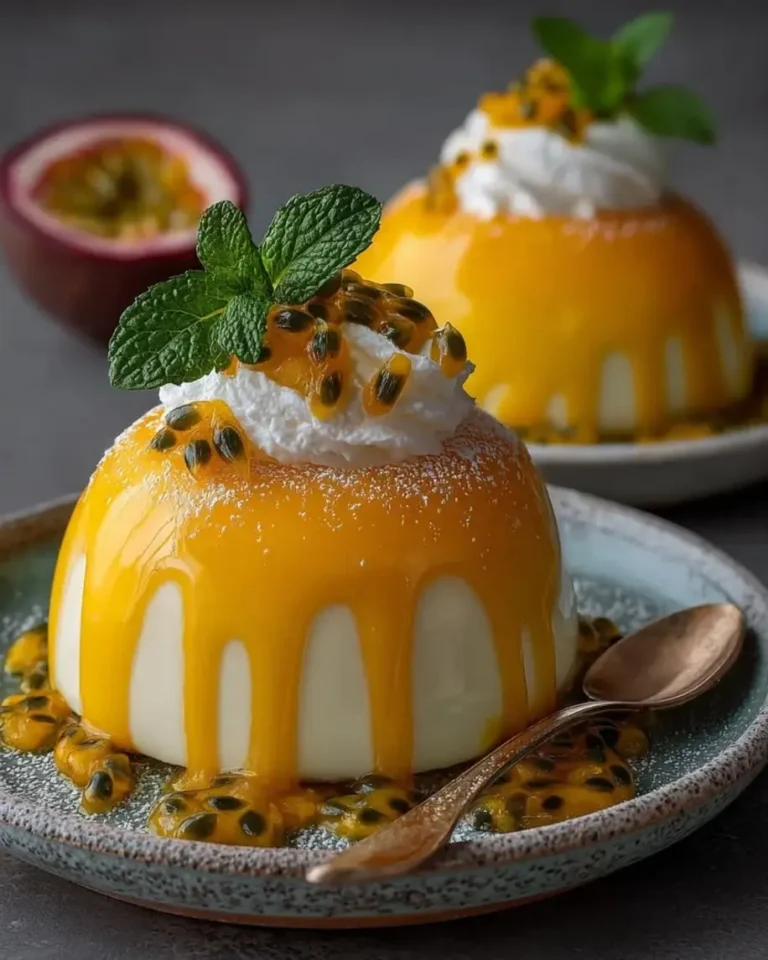
These passionfruit mango lava mirror domes are designed to be a showstopper at any gathering. I love serving them on a simple white plate or a dark slate board to make the glossy orange-yellow glaze really pop. Place each dome off-center on the plate and add a small pool of extra passionfruit lava (warm some reserved pulp with a little honey) around it for an artistic touch. A few fresh passionfruit seeds scattered on the plate mimic the tropical vibe, and a tiny pinch of edible gold flakes catches the light beautifully.
In my NYC apartment, I often serve these after a Moroccan-inspired dinner of lamb tagine with apricots and saffron rice. The bright, citrusy passionfruit and sweet mango cut through the richness of the meal perfectly. For a summer party, I pair them with a chilled glass of Prosecco or a mango lassi mocktail. The key is to let the domes sit at room temperature for about 8 minutes before serving—this softens the mousse to a silky consistency while keeping the lava core fluid and dramatic.
If you want to go all out, create a “tropical tasting plate” by adding a small quenelle of coconut sorbet and a slice of grilled pineapple alongside each dome. The combination of temperatures and textures is absolutely sublime. My French pastry chef instructor in Paris always said, “La première bouchée se mange avec les yeux”—the first bite is eaten with the eyes. These domes deliver on that promise.
| Pairing Type | Suggestions | Why It Works |
|---|---|---|
| Side Dessert | Coconut sorbet, grilled pineapple, mango lassi | Enhances tropical theme, adds temperature contrast |
| Sauce / Dip | Extra passionfruit-honey drizzle, coconut cream, raspberry coulis | Adds acidity or creaminess to balance sweetness |
| Beverage | Prosecco, mango lassi mocktail, iced jasmine tea | Crisp or floral notes complement tropical fruit |
| Garnish | Passionfruit seeds, mango cubes, edible gold flakes, mint sprig | Adds texture, color, and visual drama |
Make-Ahead, Storage & Reheating
In my busy NYC life, I rely on make-ahead strategies constantly. The good news: these passionfruit mango lava mirror domes are actually better when prepared in stages. The mousse-filled domes can be frozen for up to 2 weeks before glazing, and the lava core can be made 3 days ahead and stored in the fridge. I often prepare the domes on a Friday night, glaze them on Saturday morning, and serve them that evening for a dinner party. Here is everything you need to know about storing and reheating.
| Method | Container | Duration | Reheating Tip |
|---|---|---|---|
| Refrigerator | Airtight container, single layer | Up to 3 days (glazed) | Serve cold, let sit 8 min at room temp before serving |
| Freezer | Silicone mold or parchment-lined tray, then wrap in plastic | Up to 2 weeks (unglazed) | Glaze directly from frozen; no need to thaw |
| Make-Ahead | Lava core in jar, mousse in piping bag | Core: 3 days fridge; Mousse: 2 days fridge | Assemble and freeze when ready |
To reheat a fully assembled dome (if you prefer it slightly less cold), let it sit at room temperature for 12–15 minutes. Do not microwave—the glaze will melt and the mousse will become grainy. If the glaze has lost its shine after refrigeration, you can gently warm the dome with a blow dryer on low heat, held about 10 inches away, moving constantly to restore the gloss without melting the mousse. This is a trick I learned from a pastry chef in Paris who could revive day-old éclairs to perfection.
Variations & Easy Swaps
One of the things I love about this mirror glaze domes recipe is how versatile it is. Over the years, I have experimented with countless variations in my NYC kitchen—some inspired by my Moroccan roots, others by seasonal finds at the Union Square Greenmarket. Here are three of my favorite twists, each tested and perfected.
| Variation | Key Change | Best For | Difficulty Impact |
|---|---|---|---|
| Tropical Coconut | Replace 1/4 cup heavy cream with coconut cream | Extra tropical flavor, dairy-free option | Easy (same technique) |
| Dairy-Free / Vegan | Use vegan cream cheese, coconut cream, dairy-free white chocolate | Vegan guests, lactose intolerance | Medium (glaze may be slightly less glossy) |
| Berry Lava Twist | Replace passionfruit lava with raspberry or strawberry | Summer berries, Valentine’s Day | Easy (same technique) |
Tropical Coconut Variation
This variation takes the tropical theme even further. Replace 1/4 cup of the heavy cream with full-fat coconut cream (the thick part from a chilled can of coconut milk). The mousse will have a subtle coconut flavor that pairs beautifully with the mango and passionfruit. I love adding a pinch of toasted coconut flakes to the garnish for extra texture. This variation reminds me of the coconut-scented desserts my mother used to make in Morocco, where coconut and mango were a classic combination.
Dairy-Free / Vegan Option
For a fully plant-based version, use vegan cream cheese (like Miyoko’s or Kite Hill), chilled coconut cream instead of heavy cream, and a high-quality dairy-free white chocolate (such as Enjoy Life). The mirror glaze may be slightly less glossy because dairy-free white chocolate has a different fat content, but it still looks stunning. Add 1/2 tsp extra coconut oil to the glaze to improve flow and shine. This version is perfect for vegan dinner parties or for anyone with dairy sensitivities, and the flavor is still incredibly rich and satisfying.
Berry Lava Twist
When passionfruit is out of season, I swap the lava core for a bright berry version. Use 3/4 cup raspberry or strawberry puree (fresh or frozen, blended and strained) in place of the passionfruit pulp, and sweeten with maple syrup instead of honey for a different depth of flavor. The berry lava is slightly less tart but equally dramatic when it spills out of the dome. This variation is a hit at summer barbecues and birthday parties, and the red color contrasts beautifully with the orange-yellow mirror glaze. I discovered this version during a particularly cold NYC winter when I was craving something bright and summery.
How do you achieve the perfect mirror glaze for passionfruit mango lava mirror domes?
The key to a flawless mirror glaze is temperature control and ingredient quality. Use a high-quality white chocolate with at least 30% cocoa butter, and make sure your condensed milk and coconut oil are warmed gently—never boiled. The glaze should be between 90–95°F (32–35°C) when you pour it. Work quickly and pour in one smooth, continuous motion over each frozen dome. If the glaze is too thick, add a few drops of warm water; if too thin, let it cool for a minute. Always strain the glaze through a fine-mesh sieve before pouring to remove any lumps. And remember: the domes must be completely frozen—any softness will cause the glaze to slide off or crack as it sets.
What is the best way to create a liquid lava center in passionfruit mango mirror domes?
The secret to a liquid lava center is in the cornstarch ratio and the freezing technique. Combine 1 tsp cornstarch with 2 tbsp water to make a slurry, then cook it with the passionfruit pulp and honey just until it thickens slightly—it should still be pourable. Overcooking will make it too thick and gummy. Once cooked, cool the lava completely to room temperature before using. When assembling the domes, freeze the mousse with the lava center for 30 minutes before adding the top layer of mousse. This prevents the lava from sinking to the bottom. Finally, do not overfill the mold—leave a little room for the top mousse layer to fully encase the lava.
Can you substitute fresh mango with frozen mango in passionfruit mirror dome cakes?
Yes, absolutely! Frozen mango works beautifully in this recipe, and I often use it when fresh mangoes are not in season. The key is to thaw the frozen mango completely and drain any excess liquid before pureeing. Too much water in the puree can make the mousse too loose and cause it to separate when frozen. I recommend placing the thawed mango in a fine-mesh sieve set over a bowl for about 15 minutes to drain. Then puree it in a blender until smooth. The flavor of frozen mango is often just as vibrant as fresh, especially if it was flash-frozen at peak ripeness. No other adjustments are needed.
How far in advance can you prepare passionfruit mango lava mirror domes for a special occasion?
You can prepare these domes several days in advance, which makes them perfect for entertaining. The mousse-filled domes can be frozen in their silicone mold for up to 2 weeks before glazing. The lava core can be cooked and stored in the refrigerator for up to 3 days. The mirror glaze is best made fresh on the day you plan to serve it, but you can prepare the dry ingredients (chopped chocolate) ahead of time. For best results, I recommend glazing the domes no more than 24 hours before serving—the glaze stays shiny and pristine for about a day. If you need to prepare further ahead, freeze the unglazed domes and glaze them the morning of your event.
Why did my mirror glaze crack or not set properly?
Mirror glaze cracking is usually caused by one of three issues: the domes were not frozen solid enough, the glaze was too hot when poured, or the glaze was too thick. Make sure your domes are frozen for at least 6 hours—they should be rock hard with no give when pressed. The glaze should be at 90–95°F, not hotter. If the glaze is too thick, it will set too quickly and crack as the dome settles. To fix a thick glaze, add warm water a teaspoon at a time until it flows like warm honey. Also, make sure you are using full-fat condensed milk and good-quality white chocolate—low-fat alternatives can cause setting issues.
Can I use a different fruit for the lava center in these mirror domes?
Absolutely! The technique works beautifully with many fruit purees. Some of my favorite variations include raspberry, strawberry, guava, or even a tangy lime curd. The key is to maintain the same ratio of fruit pulp to cornstarch to achieve the right consistency—about 3/4 cup fruit, 2 tbsp honey (or sugar), 1 tsp cornstarch, and 2 tbsp water. Cook until slightly thickened but still fluid. Keep in mind that fruits with high water content, like watermelon or cucumber, will need a little more cornstarch. I always test the lava by spooning a small amount onto a chilled plate—it should spread slightly but not run like water.
What is the best way to unmold frozen domes without damaging them?
Unmolding frozen domes is easy if you use a flexible silicone mold. Gently flex the mold by pushing up from the bottom of each cavity—the dome should pop out cleanly. If the dome sticks, let the mold sit at room temperature for 30–60 seconds to slightly soften the surface, then try again. Never use a knife or metal tool to pry the domes out, as this will scratch the surface and ruin the mirror finish. If you are using a metal mold, line it with plastic wrap before filling, or lightly spray with nonstick cooking spray. Work quickly when transferring the domes to the wire rack for glazing—they start to soften at room temperature after about 2 minutes.
How do I get the perfect yellow-orange swirl in the mirror glaze?
The swirl effect is achieved by gently marbling two colors together without overmixing. After tinting the glaze yellow and orange in separate bowls, pour both colors into one bowl. Use a skewer or the tip of a knife to make 3–4 gentle figure-eight swirls through the glaze—do not stir vigorously or you will lose the marbled effect. The key is to work quickly: pour the combined glaze over your domes immediately after swirling, before the colors have time to fully blend into a single shade. For a more dramatic swirl, use gel food coloring rather than liquid, as it disperses more slowly and creates sharper color contrasts.
Can these passionfruit mango lava mirror domes be made without a half-sphere mold?
Yes, you can still make this dessert without a specialty mold! Use silicone muffin cups or a standard muffin tin lined with plastic wrap. The shape will be more like a rounded dome or even a small hemisphere, which still looks beautiful when glazed. Alternatively, you can freeze the mousse and lava in a shallow baking dish, then use a round cookie cutter or a knife to cut out shapes after freezing. Just make sure the pieces are at least 1.5 inches thick to hold the lava core. The presentation will be slightly less polished than a mold, but the flavor and texture will be exactly the same. I have even made these in small paper cups for a picnic version!
What is the ideal temperature for the mirror glaze before pouring over the domes?
The ideal temperature range for pouring mirror glaze is 90–95°F (32–35°C). At this temperature, the glaze is fluid enough to self-level and flow smoothly over the dome, but not so hot that it melts the frozen mousse underneath. Use an instant-read thermometer to check the temperature. If the glaze is above 100°F, let it cool slightly while stirring gently. If it drops below 85°F, it will start to set too quickly and may not coat the dome evenly. In that case, warm it briefly over a double boiler or in short bursts in the microwave (10 seconds at a time, stirring in between) to bring it back to the ideal range.
Share Your Version!
I absolutely love seeing how you bring this recipe to life in your own kitchen. Whether you are making these passionfruit mango lava mirror domes for a birthday party, a holiday dinner, or just a special weekend treat, I want to hear about it! Leave a star rating and a comment below to let me know how it went—what worked, what you changed, and how your guests reacted to that dramatic lava moment. It honestly makes my day every time someone tells me they tried this recipe and loved it.
And do not forget to snap a photo and share it on Instagram or Pinterest—tag me @leosfoods so I can see your gorgeous creations. I always feature my favorites in my stories! If you have a question about the recipe that wasn’t answered here, drop it in the comments and I will personally respond within 48 hours. From my NYC kitchen to yours—I hope this recipe brings as much warmth to your table as it does to mine. — Stella 🧡
Love This Recipe? Save It to Pinterest!
If you enjoyed this Passionfruit Mango Lava Mirror Domes recipe, don’t let it get lost in your browser tabs! 😄 Pin it now so you can find it again anytime — and explore hundreds more tried-and-tested recipes waiting for you on my Pinterest boards.
👉 Follow Stella on Pinterest @stellarecipeblog
📌 Pin this recipe · 🔁 Re-pin your favorites · 💬 Tag me when you make it — I love seeing your creations!
🍽️ What is your favorite tropical dessert?
Drop a comment below and tell me which fruit combination you would love to see me turn into a mirror glaze dome next! Your idea might just become my next recipe. 💬
“`
Print
Passionfruit Mango Lava Mirror Domes
- Yield: 8 1x
Ingredients
- For the Mango Mousse Layer:
- 2 cups ripe mango, pureed
- 8 oz (225 g) cream cheese, softened
- 1/2 cup heavy cream
- 1/3 cup powdered sugar
- 1 tsp vanilla extract
- For the Passionfruit Lava Core:
- 3/4 cup passionfruit pulp
- 2 tbsp honey
- 1 tsp cornstarch
- 2 tbsp water
- For the Mirror Glaze:
- 1 cup white chocolate, finely chopped
- 1/2 cup sweetened condensed milk
- 1 tbsp coconut oil
- 1 tsp yellow food coloring
- 1 tsp orange food coloring
- For Garnish (optional):
- Fresh passionfruit seeds
- Mango cubes
- Edible gold flakes
Instructions
- 1. Combine passionfruit pulp, honey, cornstarch, and water in a saucepan.
- 2. Cook over medium heat until slightly thickened but still fluid. Cool completely.
- 3. Beat cream cheese, powdered sugar, vanilla extract, and mango puree until smooth.
- 4. Whip heavy cream to soft peaks and fold into the mango mixture.
- 5. Fill half-sphere molds halfway with mango mousse.
- 6. Add a spoonful of cooled passionfruit lava to the center of each mold.
- 7. Cover with remaining mousse and smooth the tops.
- 8. Freeze for at least 6 hours until completely firm.
- 9. Melt white chocolate, condensed milk, and coconut oil until smooth.
- 10. Divide and tint with yellow and orange coloring, then gently swirl together.
- 11. Unmold the frozen domes and place on a wire rack.
- 12. Pour the mirror glaze evenly over each dome.
- 13. Allow the glaze to set completely.
- 14. Garnish with passionfruit seeds, mango cubes, and edible gold flakes before serving.
Nutrition
- Calories: 315
- Sugar: 25 g
- Fat: 21 g
- Carbohydrates: 29 g
- Protein: 4 g
Tried This Recipe? Leave a Comment!
Did you make this recipe? I’d love to hear how it turned out! Please leave a comment and a rating below. Your feedback helps other home cooks and supports cheerychop.com!
For more delicious inspiration, follow me on Pinterest!