Slow-Braised Lamb Shanks with Velvety Red Wine Gravy
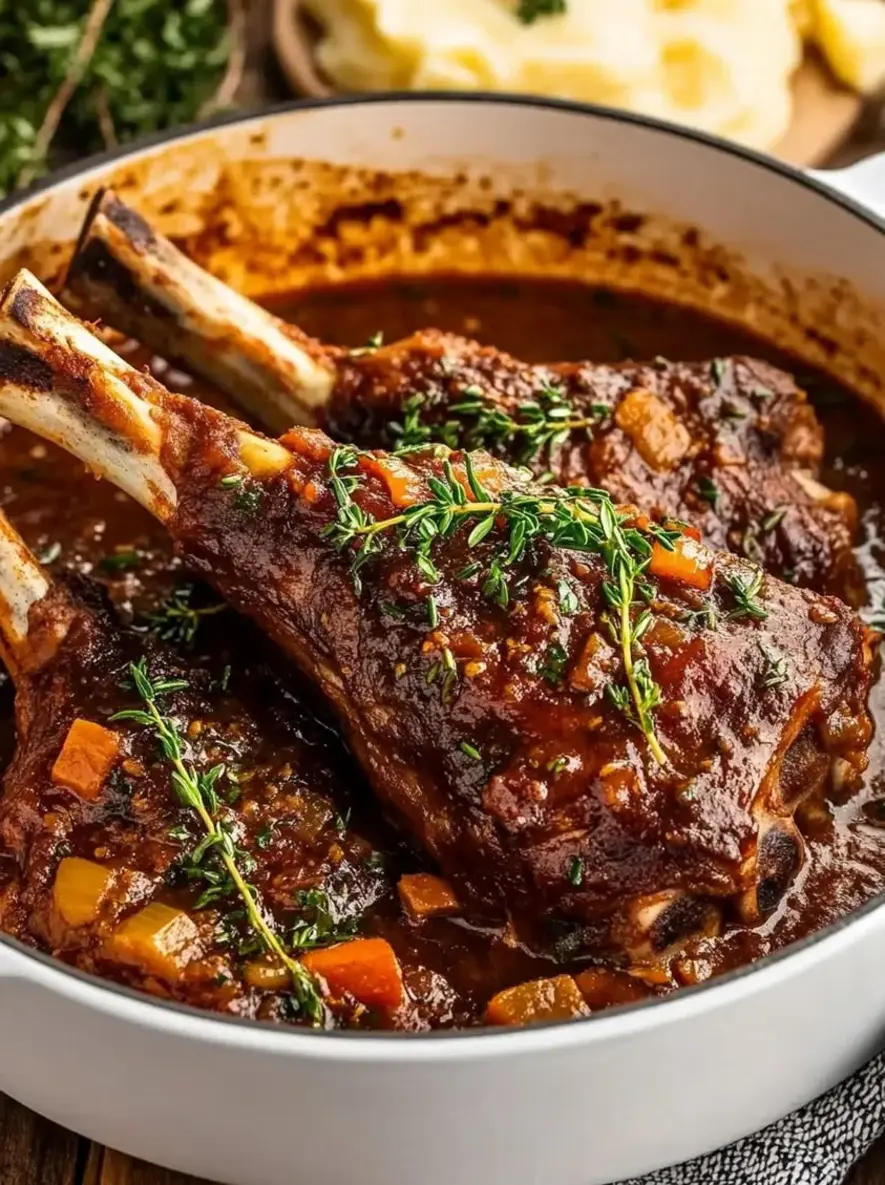
Table of Contents
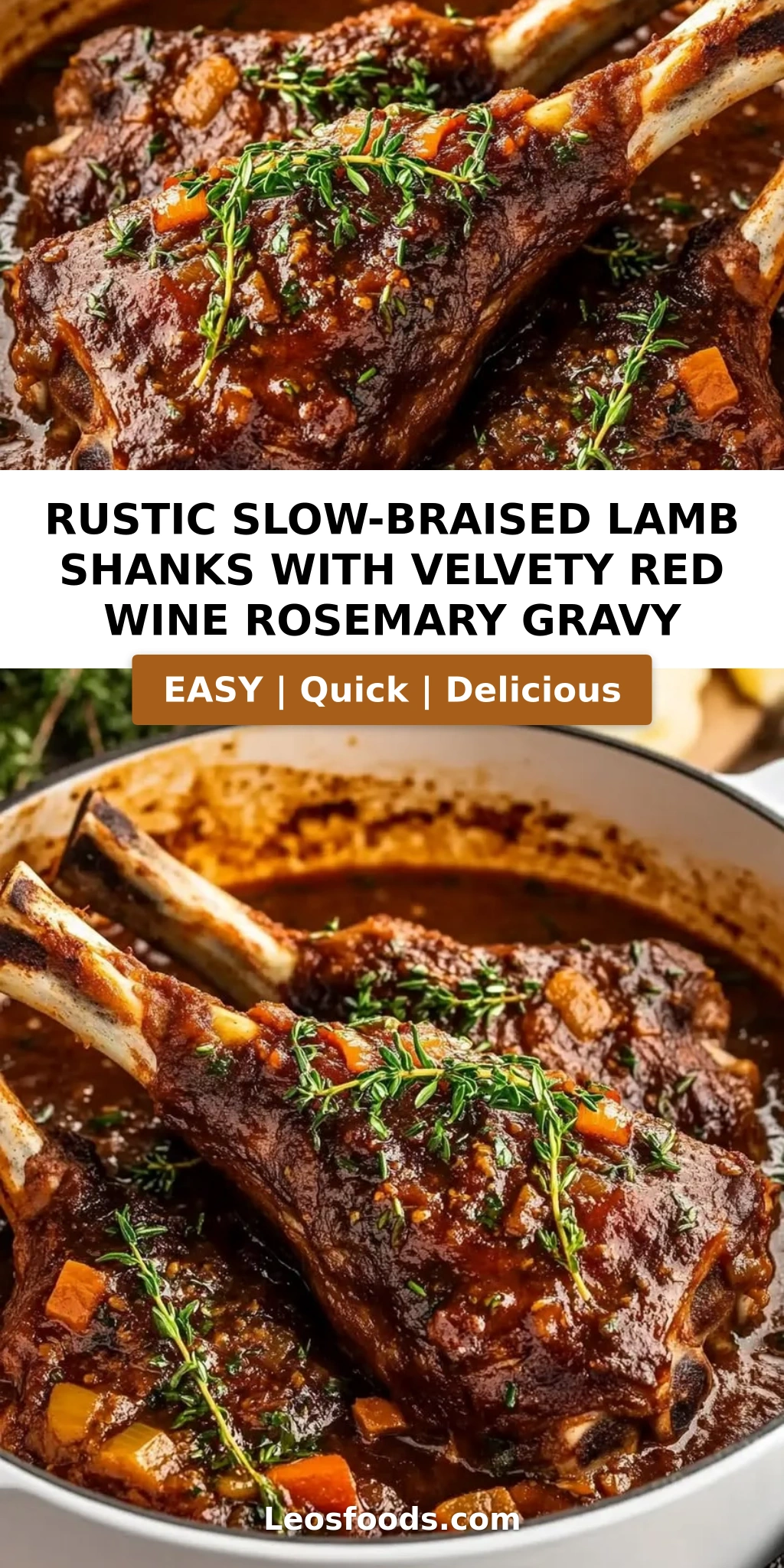
Rustic Slow-Braised Lamb Shanks with Velvety Red Wine Rosemary Gravy – A Cozy, Fall-Off-the-Bone Supper
I still remember the first time I made these slow braised lamb shanks for a cold winter evening in my tiny Parisian apartment. The scent of red wine and rosemary filled every corner, wrapping the room in a warmth that no radiator could match. Now, years later and settled in my New York City kitchen, this dish has become my ultimate comfort-food centerpiece — the one I turn to when I want to impress without stressing. These braised lamb shanks are everything you crave: deeply savory, impossibly tender, and bathed in a velvety red wine rosemary gravy that tastes like it simmered all day (because it did). With roots in my Moroccan upbringing and a French culinary lens, this recipe brings the best of both worlds to your table.
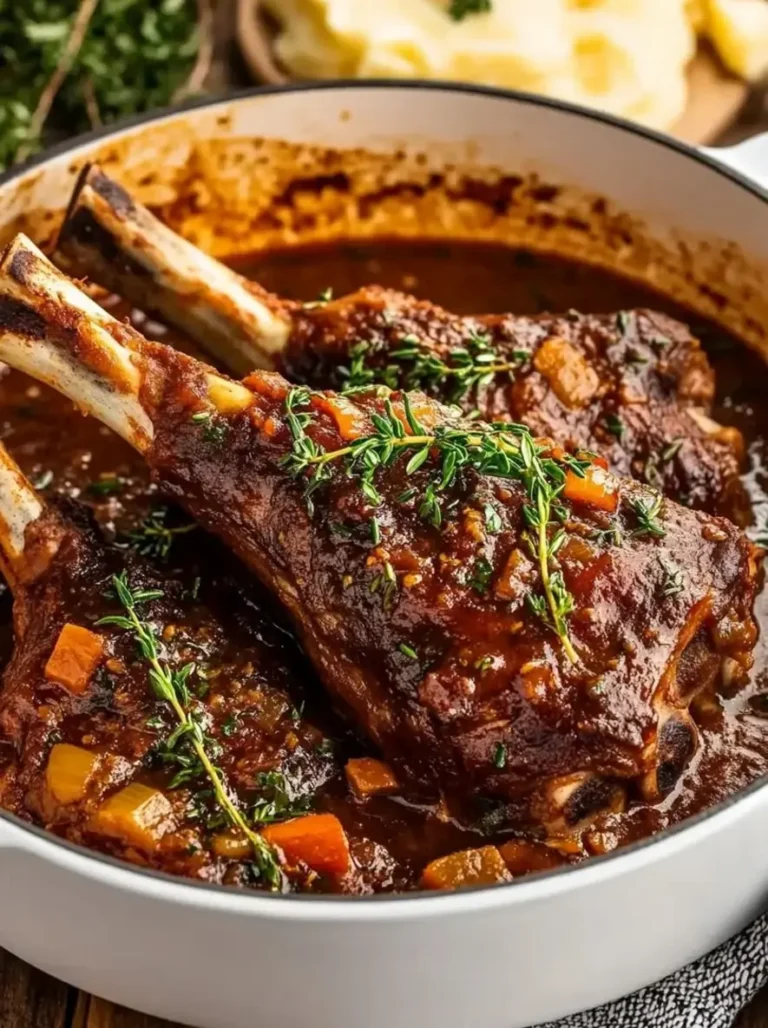
Picture this: a lamb shank so fork-tender it practically falls off the bone, nestled in a glossy, wine-dark gravy that’s fragrant with fresh rosemary and mellow garlic. The first bite hits you with richness — the kind that comes from patient, low-and-slow cooking. The red wine adds structure and a gentle fruity depth, while the rosemary lends an earthy, almost piney note that cuts through the fat. Every spoonful of that gravy, thickened just enough to coat the back of a spoon, feels like a hug from the inside out. It’s rustic, yes — but it’s also refined, the kind of dish that made me fall in love with French sauce work back in culinary school.
What makes my version special? I sear the lamb shanks until they’re deeply browned — that’s non-negotiable for building flavor — and I deglaze the pan properly, scraping up every bit of fond. Then comes my secret touch: a tablespoon of balsamic vinegar stirred in with the red wine, a trick I picked up from my mother’s tagine-making in Morocco. It adds a subtle sweetness and acidity that balances the richness beautifully. I’ll also show you how to thicken the gravy to that perfect velvety consistency without any lumps. Whether you’re a seasoned cook or trying braised lamb shanks for the first time, I promise this recipe will make you look like a pro.
Why This Braised Lamb Shanks Recipe Is the Best
The Flavor Secret. The magic starts with a proper sear and a thorough deglaze. I brown the lamb shanks in batches until they form a deep, dark crust, then I deglaze the pan with red wine, scraping up all those caramelized bits. That fond is pure flavor gold. Then I add a splash of balsamic vinegar — my Moroccan-French hybrid touch — which brightens the whole dish and lifts the rosemary and wine into something truly memorable. This isn’t just a recipe; it’s a technique I’ve honed over years of professional cooking.
Perfected Texture. The “slow” in slow braised lamb shanks is the star. Cooking at a gentle 325°F for 2.5 to 3 hours breaks down the connective tissue in the lamb, turning it into buttery, pull-apart tenderness. The gravy, meanwhile, reduces and concentrates, becoming velvety and rich. I’ll teach you the flour slurry trick for thickening — no lumps, just pure silk. Every element is calibrated so that the meat and the sauce reach perfection at the same moment.
Foolproof & Fast(ish). Yes, it takes three hours — but active work is only about 20 minutes. Once everything is in the pot, the oven does the rest. This is the perfect weekend-project meal that fills your home with an incredible aroma and delivers a restaurant-quality result. I’ve tested this recipe dozens of times in my NYC kitchen, and I’ve made sure the instructions are easy to follow for cooks of every level.
Braised Lamb Shanks Ingredients
I source my lamb shanks from the farmers market in Union Square when I can, but good-quality ones from any grocery store work beautifully. This ingredient list is simple, and each component plays a vital role. Let me walk you through what you’ll need and why it matters.
Ingredients List
- 4 lamb shanks
- 2 tablespoons olive oil
- 1 large onion, diced
- 2 carrots, diced
- 2 celery stalks, diced
- 6 garlic cloves, minced
- 2 tablespoons tomato paste
- 2 cups dry red wine (like Cabernet Sauvignon or Merlot)
- 3 cups beef stock
- 2 sprigs fresh rosemary
- 2 bay leaves
- Salt and pepper to taste
- 2 tablespoons all-purpose flour (optional, for thickening)
Ingredient Spotlight
Lamb Shanks: The star of the show. Lamb shanks are a tougher cut packed with connective tissue, which makes them ideal for slow braising. As they cook, the collagen breaks down into gelatin, creating that silky, fall-apart texture. Look for shanks that are meaty and have a good layer of fat for flavor. If you can’t find lamb, beef shanks or even veal shanks work as substitutes, though the flavor will be less delicate.
Dry Red Wine: This is the backbone of the gravy. Choose a wine you’d enjoy drinking — a dry Cabernet Sauvignon, Merlot, or even a medium-bodied Zinfandel. The wine adds acidity, fruitiness, and structure. Avoid sweet wines, which will make the gravy cloying. No red wine on hand? Dry sherry or even a robust beef broth with a tablespoon of red wine vinegar can work in a pinch, though the depth will be different.
Fresh Rosemary: Rosemary and lamb are a classic pairing for a reason. The herb’s piney, slightly peppery notes cut through the richness of the meat and the wine. Always use fresh rosemary if you can — dried rosemary can be woody and less fragrant. Thyme or a few sprigs of oregano make excellent substitutes if rosemary isn’t available.
Beef Stock: The liquid base of the braise. A good-quality beef stock adds savory depth and body. I recommend low-sodium so you can control the salt level. Homemade is wonderful, but store-bought works perfectly. For a richer gravy, use bone broth. If you need a substitute, chicken stock will work, though the flavor will be lighter.
| Original Ingredient | Best Substitution | Flavor / Texture Impact |
|---|---|---|
| Lamb shanks | Beef shanks | Richer, beefier flavor; less delicate, still very tender |
| Dry red wine | Dry sherry + 1 tbsp red wine vinegar | Less fruity, more nutty and acidic; still complex |
| Fresh rosemary | Fresh thyme or oregano | More earthy/herbal, less piney; still pairs well with lamb |
How to Make Braised Lamb Shanks — Step-by-Step
Let’s get cooking! This process is simple and rewarding. Follow each step, and you’ll be rewarded with the most tender, flavorful lamb shanks of your life.
Step 1: Season and Sear the Lamb Shanks
Generously season all sides of the lamb shanks with salt and pepper. Don’t be shy — this is the only chance to season the meat directly. Heat the olive oil in a large Dutch oven over medium-high heat until it shimmers. Working in batches if needed, sear the lamb shanks for 4–5 minutes per side, until a deep, dark brown crust forms. This step is essential for building the rich flavor base of the entire dish.
💡 Stella’s Pro Tip: Pat the lamb shanks dry with paper towels before seasoning. Moisture is the enemy of browning, and a dry surface guarantees a beautiful, flavorful crust.
Step 2: Sauté the Aromatics
Remove the seared lamb shanks to a plate and set aside. Reduce the heat to medium. In the same pot, add the diced onion, carrots, and celery. Cook, stirring occasionally, until softened and lightly golden, about 5 minutes. Add the minced garlic and cook for 1 minute more, until fragrant.
⚠️ Common Mistake to Avoid: Don’t rush the sauté. If the vegetables aren’t fully softened before you add the liquid, they won’t release their full flavor into the gravy.
Step 3: Build the Flavor Base
Stir in the tomato paste and cook for 2 minutes, stirring constantly. This caramelizes the paste and deepens its sweetness. Pour in the red wine, scraping up every browned bit from the bottom of the pot with a wooden spoon. Bring the wine to a simmer and let it reduce slightly, about 5 minutes. This cooks off the raw alcohol and concentrates the wine flavor.
💡 Stella’s Pro Tip: Use a wooden spoon to scrape the fond — those browned bits are packed with flavor from the seared lamb. Getting them into the liquid is what makes the gravy so velvety and rich.
Step 4: Braise to Perfection
Add the beef stock, rosemary sprigs, and bay leaves to the pot. Return the lamb shanks, nestling them into the liquid so they’re partially submerged. Bring the liquid to a gentle simmer, then cover the pot and transfer it to a 325°F oven (or keep it on the stovetop over the lowest possible heat). Cook for 2.5 to 3 hours, until the meat is tender and practically falling off the bone.
⚠️ Common Mistake to Avoid: Don’t let the liquid boil. A gentle simmer is key — boiling will toughen the meat instead of tenderizing it. Check the pot once or twice to ensure it’s at a low, steady bubble.
Step 5: Thicken the Velvety Gravy
Carefully remove the lamb shanks from the pot and keep them warm on a serving platter. Discard the rosemary sprigs and bay leaves. If you’d like a thicker gravy, whisk 2 tablespoons of all-purpose flour with ¼ cup of cold water until smooth to form a slurry. Bring the braising liquid to a simmer, then whisk in the slurry and cook for 3–5 minutes, until the gravy thickens to a velvety consistency. Season with additional salt and pepper if needed.
💡 Stella’s Pro Tip: For an even silkier gravy, strain the liquid through a fine-mesh sieve before thickening. This removes any vegetable bits and gives you a perfectly smooth, restaurant-quality finish.
| Step | Action | Duration | Key Visual Cue |
|---|---|---|---|
| 1 | Season & sear lamb shanks | 8–10 min | Deep brown crust on all sides |
| 2 | Sauté aromatics | 5–6 min | Onions translucent, garlic fragrant |
| 3 | Build base with tomato paste & wine | 7 min | Wine reduced, fond dissolved |
| 4 | Braise in oven | 2.5–3 hr | Meat pulls away from bone easily |
| 5 | Thicken gravy | 5 min | Gravy coats the back of a spoon |
Serving & Presentation
When I serve these braised lamb shanks, I like to let the dish speak for itself — rustic and hearty, but with a touch of elegance. Place one lamb shank in the center of a wide, shallow bowl or a large plate. Spoon a generous amount of the velvety red wine rosemary gravy over the top, letting it pool around the meat. Garnish with a fresh sprig of rosemary or a sprinkle of chopped parsley for a pop of color and freshness.
In my NYC kitchen, I often serve this with creamy mashed potatoes or soft polenta, both of which soak up the gravy beautifully. A side of roasted carrots or green beans adds color and a touch of freshness. For a truly Moroccan-inspired twist, serve it alongside a mound of fluffy couscous — the gravy seeps into every grain. And don’t forget a crusty baguette or sourdough to mop up every last drop of that incredible sauce.
This dish pairs beautifully with a full-bodied red wine — the same one you used in the braise, if you like. A Cabernet Sauvignon or a Rhône-style blend complements the richness of the lamb and the herbal notes of the rosemary. For a non-alcoholic option, a sparkling water with a twist of lemon or a rich pomegranate juice works wonderfully.
| Pairing Type | Suggestions | Why It Works |
|---|---|---|
| Side Dish | Mashed potatoes, creamy polenta, roasted carrots, couscous | Neutral or buttery bases soak up the rich gravy beautifully |
| Sauce / Dip | Extra gravy, a drizzle of balsamic glaze, or a dollop of gremolata | Adds brightness, acidity, or herbaceous contrast to the rich lamb |
| Beverage | Cabernet Sauvignon, Merlot, Rhône blend, pomegranate juice | Full-bodied reds complement the meat; tart juice cuts the richness |
| Garnish | Fresh rosemary sprigs, chopped parsley, flaky sea salt, lemon zest | Adds color, freshness, and a final layer of flavor |
Make-Ahead, Storage & Reheating
One of the many things I love about this slow braised lamb shanks recipe is that it tastes even better the next day. The flavors have time to meld and deepen, making it a perfect make-ahead meal for busy weeks. In my NYC life, I often make a double batch on Sunday and enjoy it through the week. Here’s how to store and reheat it properly.
| Method | Container | Duration | Reheating Tip |
|---|---|---|---|
| Refrigerator | Airtight container | 3–4 days | Reheat gently on stovetop over low heat, adding a splash of stock if needed |
| Freezer | Freezer-safe container or zip-top bag | Up to 3 months | Thaw overnight in the fridge, then reheat gently on stovetop or in a 300°F oven |
| Make-Ahead | In the Dutch oven, cooled | 2 days in advance | Cool completely, cover, and refrigerate. Reheat covered in a 325°F oven for 30–40 min |
When reheating, I prefer the stovetop for smaller portions. Place the lamb shanks and gravy in a wide skillet or saucepan over low heat, cover, and warm gently for 10–15 minutes, turning once. If the gravy has thickened too much in the fridge, loosen it with a splash of beef stock or water. For a full batch, the oven is your best bet — cover the Dutch oven and reheat at 325°F until warmed through, about 30–40 minutes. The meat will stay moist and tender, and the gravy will be just as velvety as the day you made it.
💡 Stella’s Pro Tip: I always make extra gravy on purpose. It freezes beautifully on its own in a small container, and I use it later to dress up weeknight stews, roasted vegetables, or even a simple bowl of mashed potatoes.
Variations & Easy Swaps
This recipe is wonderfully adaptable. Whether you need a gluten-free version or want to try a different flavor profile, these variations will keep your slow braised lamb shanks exciting every time.
| Variation | Key Change | Best For | Difficulty Impact |
|---|---|---|---|
| Moroccan Spiced | Add cinnamon, cumin, and ginger; swap rosemary for cilantro | A North African twist with warm, aromatic depth | Medium |
| Gluten-Free | Use cornstarch or arrowroot instead of flour for thickening | Those avoiding gluten | Easy |
| Red Wine-Free | Use all beef stock + 2 tbsp balsamic vinegar | Alcohol-free or no-wine-on-hand | Easy |
Moroccan Spiced Variation
This variation is close to my heart — it’s inspired by the lamb tagines my mother used to make in Marrakech. Add 1 teaspoon of ground cinnamon, 1 teaspoon of ground cumin, and ½ teaspoon of ground ginger along with the tomato paste. Skip the rosemary and add a handful of fresh cilantro at the end instead. The spices give the gravy a warm, fragrant complexity that pairs beautifully with couscous and a sprinkle of toasted almonds. It’s a completely different dish but equally delicious.
Gluten-Free Version
To make this recipe gluten-free, simply replace the all-purpose flour with an equal amount of cornstarch or arrowroot powder. Mix 1½ tablespoons of cornstarch with ¼ cup of cold water to form a slurry, then whisk it into the simmering gravy. Cornstarch gives a beautiful, glossy sheen and a silky texture. Arrowroot works similarly but is even more neutral in flavor. Both options thicken beautifully without any graininess, and the taste of the gravy remains perfectly rich and savory.
Red Wine-Free Version
If you don’t have red wine or prefer not to cook with alcohol, you can still make a deeply flavorful gravy. Replace the 2 cups of red wine with an additional 2 cups of beef stock, plus 2 tablespoons of balsamic vinegar added at the same time. The balsamic vinegar provides the acidity and fruitiness that the wine would, while the beef stock ensures the gravy stays rich and savory. Add a teaspoon of tomato paste extra to deepen the color and flavor. The result is a slightly tangier, but equally velvety, gravy that pairs wonderfully with the lamb.
How long should I braise lamb shanks to make them tender?
For perfectly tender braised lamb shanks, plan for 2.5 to 3 hours of slow cooking at a low temperature — either in a 325°F oven or on the stovetop over the gentlest simmer. The exact time depends on the size of the shanks and your oven. You’ll know they’re ready when the meat is so tender it nearly falls off the bone when you nudge it with a fork. If you’re using a slow cooker, cook on low for 7–8 hours. The key is patience — rushing the braise won’t give the connective tissue enough time to break down into that buttery, melt-in-your-mouth texture.
Can I use a different type of wine instead of red wine for the gravy?
Absolutely — while dry red wine is traditional and adds wonderful structure and fruitiness, you can absolutely adapt. Dry sherry or even a robust white wine like an oaked Chardonnay will work, though the flavor profile will shift. For a non-alcoholic option, use all beef stock plus a tablespoon of balsamic vinegar or pomegranate molasses to mimic the acidity and depth of wine. If you use a sweet wine, the gravy may become too sugary, so stick to dry or semi-dry varieties for the most balanced result.
What is the best way to thicken the red wine rosemary gravy?
The most reliable method is a simple flour slurry: whisk 2 tablespoons of all-purpose flour with ¼ cup of cold water until completely smooth, then stir it into the simmering braising liquid and cook for 3–5 minutes. This gives a silky, lump-free thickness. For a gluten-free option, use cornstarch or arrowroot in the same ratio. Another option is to remove the lamb shanks and simmer the liquid uncovered for 10–15 minutes to reduce and concentrate it naturally — this yields a deeper flavor but a thinner consistency. I personally love the slurry method for its reliability and velvety finish.
Should I sear the lamb shanks before braising them?
Yes — searing is a crucial step that you should never skip. Browning the lamb shanks in hot oil before braising creates a deep, caramelized crust that adds immense flavor to the final dish. This process, called the Maillard reaction, develops complex savory notes that you simply can’t achieve any other way. The browned bits left in the pot (the fond) are then dissolved by the red wine during deglazing, becoming the foundation of your velvety gravy. Without searing, the lamb shanks will be paler and the gravy will lack that rich, roasted depth.
Can I make braised lamb shanks in a slow cooker?
Yes, you can absolutely adapt this recipe for a slow cooker. Follow steps 1 through 3 on the stovetop — sear the lamb shanks, sauté the aromatics, and deglaze the pan with wine — then transfer everything to your slow cooker. Add the beef stock, rosemary, and bay leaves, and cook on low for 7–8 hours or on high for 4–5 hours. The meat will be fall-apart tender. Thicken the gravy on the stovetop after removing the shanks, as the slow cooker won’t reduce the liquid enough on its own.
What should I serve with braised lamb shanks?
Braised lamb shanks pair wonderfully with sides that can soak up the rich red wine rosemary gravy. Creamy mashed potatoes are my number one recommendation — they’re a classic for a reason. Soft polenta, buttered egg noodles, or fluffy couscous also work beautifully. For vegetables, roasted carrots, green beans, or a simple arugula salad with lemon vinaigrette add freshness and balance. And don’t forget crusty bread — a good baguette or sourdough is perfect for mopping up every last drop of that velvety sauce.
Can I freeze braised lamb shanks?
Yes, braised lamb shanks freeze exceptionally well. In fact, the flavors often deepen and improve after freezing. Cool the cooked lamb shanks and gravy completely, then transfer them to a freezer-safe container or heavy-duty zip-top bag. They’ll keep for up to 3 months. To reheat, thaw overnight in the refrigerator, then warm gently on the stovetop over low heat or in a 325°F oven until heated through. Add a splash of beef stock if the gravy has thickened too much. I often double the batch just to have a freezer stash for busy weeks.
How do I prevent the lamb shanks from becoming dry?
The secret to moist, tender lamb shanks is maintaining a gentle, steady simmer throughout the braise — never a vigorous boil. Boiling can cause the meat to toughen and dry out. Keep the liquid at a low bubble, and make sure the shanks are partially submerged (about two-thirds covered is ideal). Using a tight-fitting lid traps steam and keeps the environment moist. Finally, don’t overcook — once the meat is fork-tender and pulling away from the bone, it’s ready. Overcooking can eventually dry it out, so check at the 2.5-hour mark.
Can I use dried rosemary instead of fresh?
You can, but I strongly recommend fresh rosemary for this recipe. Fresh rosemary has a bright, piney fragrance that infuses the gravy beautifully during the long braise. Dried rosemary can be woody and more pungent, and it may not soften completely, leaving a slightly prickly texture. If you must use dried, reduce the amount to about 1 teaspoon and tie it in a cheesecloth sachet for easy removal. Thyme is a better dried substitute — it holds up well and adds a lovely earthy note without the textural issue.
What is the best cut of lamb for braising?
Lamb shanks are the ultimate cut for braising because they come from a well-exercised part of the animal (the leg), which means they’re rich in connective tissue and collagen. As they cook low and slow, this collagen breaks down into gelatin, creating that signature velvety texture and rich mouthfeel. You can also use lamb shoulder chops or lamb breast for braising, but shanks are hands-down the best for individual serving pieces. They look impressive on the plate and deliver the most consistent, tender results.
Share Your Version!
I hope you love these slow braised lamb shanks as much as I do. There’s something so special about the way the red wine and rosemary come together with the tender lamb — it’s a dish that feels both rustic and elegant, comforting and impressive all at once. I’d love to see how yours turn out! Leave a star rating and a comment below to let me know what you think, and if you make any of the variations, tell me about them too.
Snap a photo of your braised lamb shanks and share it on Instagram or Pinterest — tag me @leosfoods so I can see your beautiful creation. I love connecting with home cooks who bring these recipes to life in their own kitchens. Have a question I didn’t cover? Drop it in the comments and I’ll get back to you. From my NYC kitchen to yours — I hope this recipe brings as much warmth to your table as it does to mine. — Stella 🧡
Love This Recipe? Save It to Pinterest!
If you enjoyed this Rustic Slow-Braised Lamb Shanks with Velvety Red Wine Rosemary Gravy recipe, don’t let it get lost in your browser tabs! 😄 Pin it now so you can find it again anytime — and explore hundreds more tried-and-tested recipes waiting for you on my Pinterest boards.
👉 Follow Stella on Pinterest @stellarecipeblog
📌 Pin this recipe · 🔁 Re-pin your favorites · 💬 Tag me when you make it — I love seeing your creations!
💬 What’s your favorite side dish with braised lamb shanks?
I love hearing from you! Drop a comment below with your go-to pairing — creamy mashed potatoes, buttery polenta, or something unexpected? Let me know! 👇
★ If you tried this recipe, please leave a star rating — it helps other home cooks find it too!
Rustic Slow-Braised Lamb Shanks with Velvety Red Wine Rosemary Gravy
Tender lamb shanks slow-braised in a rich red wine and rosemary gravy, perfect for a comforting dinner.
- Total Time: 3 hours 20 minutes
- Yield: 4 1x
Ingredients
- 4 lamb shanks
- 2 tablespoons olive oil
- 1 large onion, diced
- 2 carrots, diced
- 2 celery stalks, diced
- 6 garlic cloves, minced
- 2 tablespoons tomato paste
- 2 cups dry red wine
- 3 cups beef stock
- 2 sprigs fresh rosemary
- 2 bay leaves
- Salt and pepper to taste
- 2 tablespoons all-purpose flour (optional, for thickening)
Instructions
- Season the lamb shanks generously with salt and pepper.
- Heat olive oil in a large Dutch oven over medium-high heat. Sear the lamb shanks on all sides until deeply browned, about 4-5 minutes per side. Remove and set aside.
- In the same pot, add the onion, carrots, and celery. Cook until softened, about 5 minutes. Add the garlic and cook for 1 minute more.
- Stir in the tomato paste and cook for 2 minutes.
- Pour in the red wine, scraping up any browned bits from the bottom of the pot. Bring to a simmer and cook until the wine reduces slightly, about 5 minutes.
- Add the beef stock, rosemary sprigs, and bay leaves. Return the lamb shanks to the pot, nestling them into the liquid.
- Cover and cook on low heat (or in a 325°F oven) for 2.5 to 3 hours, until the meat is tender and falling off the bone.
- Remove the lamb shanks and keep warm. Optional: whisk flour with a little water to make a slurry, then stir into the pot and simmer for 5 minutes to thicken the gravy.
- Serve the lamb shanks with the velvety gravy spooned over the top.
Notes
For extra depth, add a tablespoon of balsamic vinegar along with the red wine. This dish pairs wonderfully with mashed potatoes or crusty bread.
- Prep Time: 20 minutes
- Cook Time: 3 hours
- Method: Main Course
- Cuisine: Rustic European
Nutrition
- Calories: 650
- Sugar: 6 g
- Fat: 28 g
- Carbohydrates: 12 g
- Protein: 45 g
Tried This Recipe? Leave a Comment!
Did you make this recipe? I’d love to hear how it turned out! Please leave a comment and a rating below. Your feedback helps other home cooks and supports cheerychop.com!
For more delicious inspiration, follow me on Pinterest!