Tender Fall-Apart Lamb Shank in Red Wine Rosemary Jus
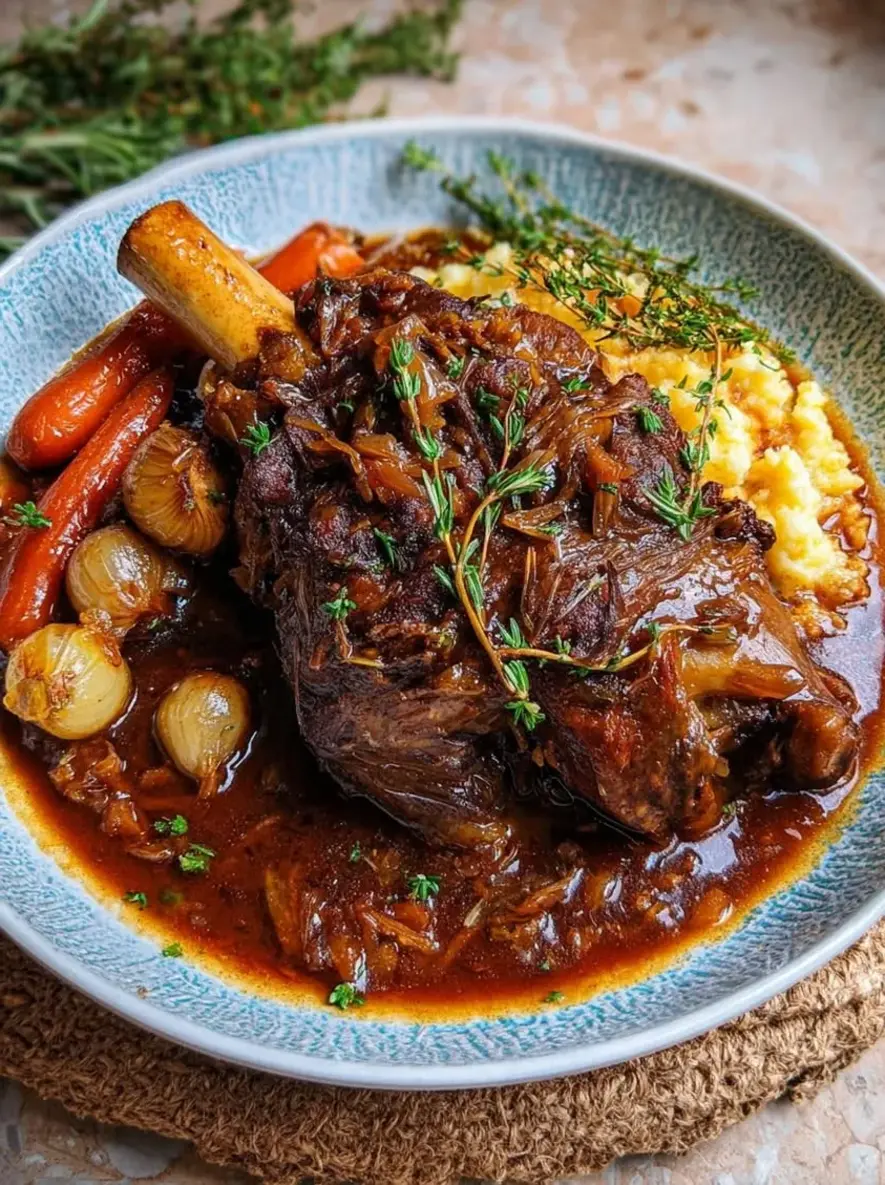
Table of Contents
Fall-Apart Lamb Shank in Velvet Red Wine Rosemary Jus – A Slow-Braised Masterpiece from My Kitchen to Yours
Growing up in Morocco, I watched my mother transform tough cuts of meat into tender, soul-warming meals with nothing more than patience and a handful of spices. Years later, in a Parisian culinary school, I learned the French technique of braising — how a slow oven and a good wine can turn humble lamb shanks into something truly velvety. This fall-apart lamb shank recipe is my love letter to both worlds: the smoky warmth of North African paprika and the elegance of a silky red wine rosemary jus. It’s the kind of dish that fills your home with an intoxicating aroma long before you take that first fork-tender bite.
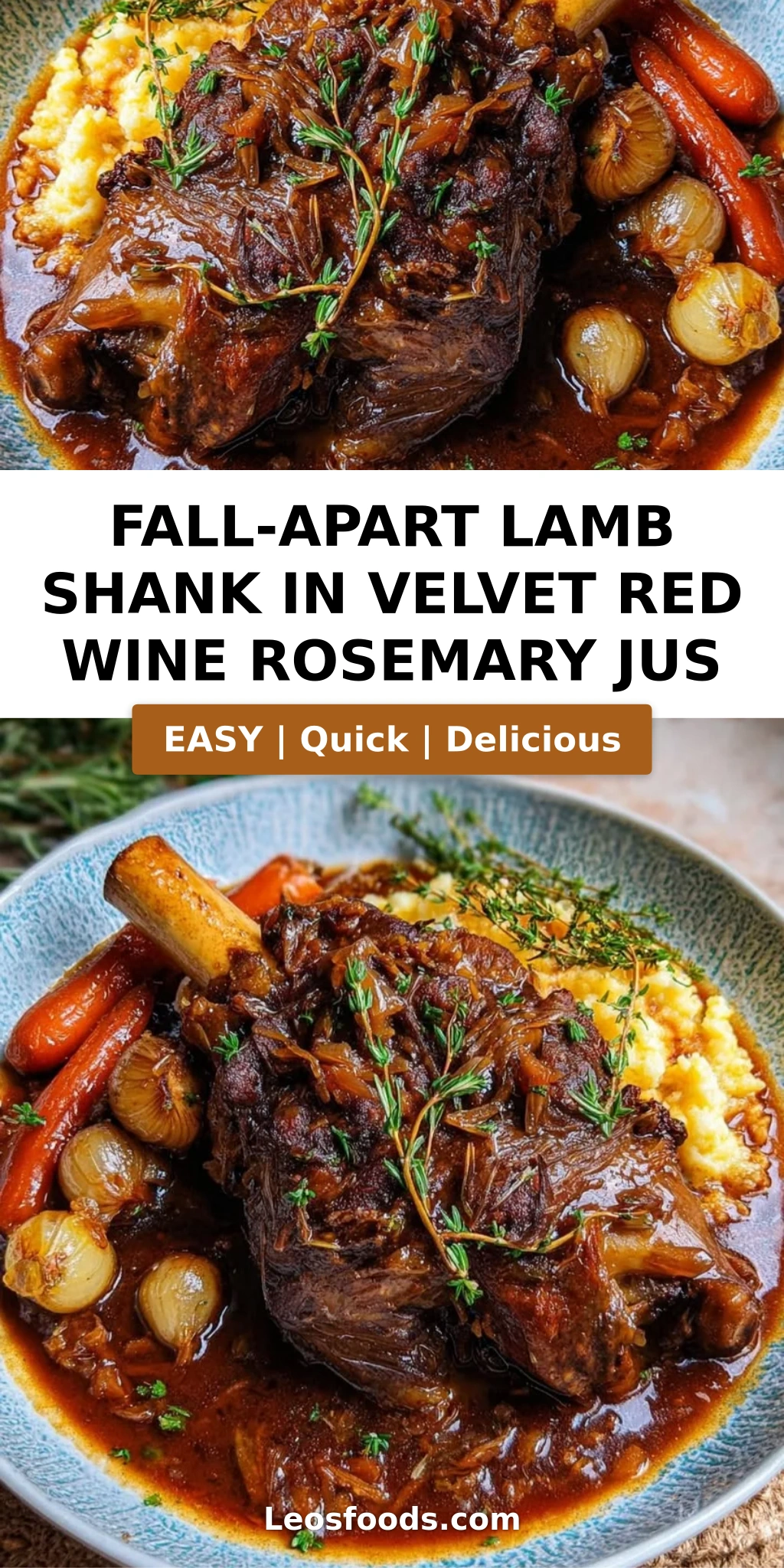
Imagine thick, bone-in lamb shanks, seared until deeply golden, then nestled into a bath of robust red wine, beef stock, and fresh rosemary. As they braise low and slow, the connective tissue melts into gelatin, the meat becomes impossibly tender, and the liquid reduces into a glossy, almost velvety jus. The subtle heat of smoked paprika, the sweetness of caramelized pearl onions, and the earthy depth of carrots all come together in perfect harmony. Every spoonful is pure comfort — rich, savory, and just a little bit indulgent.
This isn’t just any red wine braised lamb shank — it’s the version I’ve refined over countless Sunday dinners in my tiny New York City kitchen. I’ll show you how to get that fall-apart texture without fail, how to build layers of flavor from the very first sear, and one common mistake that can rob you of that gorgeous jus. Whether you’re cooking for a special occasion or a cozy weekend meal, this lamb shank with rosemary jus will earn a permanent spot in your recipe collection.
Why This Fall-Apart Lamb Shank Recipe Is the Best
The Flavor Secret: Most braised lamb shank recipes rely on just red wine and herbs, but I add a secret weapon — smoked paprika. That single teaspoon, a gift from my mother’s Moroccan pantry, adds a subtle smoky warmth that perfectly complements the fruity notes of the red wine and the piney freshness of rosemary. It’s the same trick I learned in Paris: never let the sauce be one-dimensional. Every layer counts.
Perfected Texture: The key to truly tender lamb shanks is the sear. I don’t rush it. I take four to five minutes per side, building that deep brown crust that locks in juices and creates the fond (those browned bits) that transform into the most flavorful jus. Then the low oven — 325°F for 2.5 to 3 hours — gently coaxes the collagen into liquid silk. The result? Meat that falls off the bone with the slightest nudge of your fork.
Foolproof & Fast (for a braise): I know your time is precious. That’s why this recipe is designed for real home cooks. You don’t need a special wine — a decent dry red you’d drink works beautifully. No marinating required (though overnight soak in red wine and rosemary takes it over the top). And the best part: the dish actually tastes even better the next day. Make it on a Sunday, and you’ve got luxurious dinners ready for Monday and Tuesday too.
Fall-Apart Lamb Shank Recipe Ingredients
I pick up my lamb shanks from the butcher at the Union Square Greenmarket — they’re always the meatiest and most affordable. If you can’t find pearl onions (I often swap for a regular onion, but the little ones add such nice pops of sweetness), don’t skip the smoked paprika — it’s what makes this red wine rosemary lamb shank sing. For the wine, I reach for a medium-bodied Cabernet Sauvignon or a Côtes du Rhône; nothing too oaky, just something you’d happily drink a glass of.
Ingredients List
- 4 lamb shanks (about 1 lb each)
- 2 tablespoons olive oil
- 1 tablespoon unsalted butter
- 1 teaspoon kosher salt
- 1 teaspoon freshly ground black pepper
- 1 teaspoon smoked paprika
- 1 medium yellow onion, chopped
- 3 garlic cloves, minced
- 2 carrots, cut into thick chunks
- 2 celery stalks, chopped
- 10 pearl onions, peeled (or 1 small onion, quartered)
- 2 tablespoons tomato paste
- 2 cups dry red wine (e.g., Cabernet Sauvignon or Côtes du Rhône)
- 2 cups beef stock (low-sodium)
Ingredient Spotlight
Lamb shanks are the star — look for ones with a good fat cap and plenty of meat around the bone. They’re usually sold individually; four shanks feed four people perfectly. The bone adds flavor and helps the meat stay moist.
Smoked paprika is my non-negotiable. It’s not just for color — it brings a subtle campfire note that brightens the rich red wine. If you don’t have it, use sweet paprika plus a pinch of cayenne.
Red wine needs to be dry and bold enough to stand up to the lamb. Avoid “cooking wine” — use something you’d enjoy drinking. A Zinfandel or Malbec also works.
Beef stock is the backbone of the jus. Use homemade or a good-quality store-bought brand (I like Kitchen Basics or Better Than Bouillon). Stock adds deeper body than broth.
Pearl onions add little bursts of sweetness when braised. If you can’t find them, frozen pearl onions work perfectly — just toss them in frozen.
| Original Ingredient | Best Substitution | Flavor / Texture Impact |
|---|---|---|
| Lamb shanks | Beef short ribs (bone-in) | Richer, beefier flavor; even more gelatin for the jus |
| Smoked paprika | Sweet paprika + pinch of cayenne | Loses smoky depth but keeps warmth and color |
| Dry red wine | Cranberry juice + 1 tbsp red wine vinegar (for acidity) | Less complex, but still tangy; skip if using wine is possible |
| Pearl onions | 1 medium yellow onion, cut into wedges | Less sweet, but still aromatic; add a pinch of sugar |
How to Make Fall-Apart Lamb Shank in Velvet Red Wine Rosemary Jus — Step-by-Step
Follow these steps carefully, and you’ll be rewarded with the most tender fall-apart lamb shank recipe you’ve ever made. I’ll walk you through each phase with my tested tips and the common pitfalls to avoid.
Step 1: Prepare and Sear the Lamb
Preheat the oven to 325°F (165°C). Pat the lamb shanks dry with paper towels — moisture is the enemy of a good sear. Season generously on all sides with salt, black pepper, and smoked paprika. In a large Dutch oven (or heavy oven-safe pot), heat olive oil and butter over medium-high heat. Once the oil shimmers, add the lamb shanks, being careful not to crowd the pot. Sear each side for 4–5 minutes until a deep, mahogany-brown crust forms. This is where the flavor lives — don’t rush it.
⚠️ Common Mistake to Avoid: Moving the lamb too soon. The meat will stick at first; let it release naturally. If you force it, you’ll tear the crust.
Step 2: Sauté the Vegetables
Remove the seared lamb to a plate. In the same pot, add the chopped onion, garlic, carrots, celery, and pearl onions. Sauté over medium heat, scraping up the browned bits (fond) from the bottom, until the vegetables soften and start to brown, about 5 minutes. The fond will dissolve into the vegetables, adding immense depth.
💡 Stella’s Pro Tip: If the bottom of the pot looks too dark, add a splash of red wine now — it will deglaze and prevent burning.
Step 3: Build the Jus
Stir in the tomato paste and cook for 1 minute, until it darkens slightly. Pour in the red wine, scraping the bottom vigorously to lift every last bit of fond. Bring to a simmer and let the wine reduce by about a third, roughly 3 minutes. Then add the beef stock and stir.
⚠️ Common Mistake to Avoid: Skipping the reduction step. Reducing the wine concentrates its flavor and removes harsh alcohol notes, giving you a velvet-smooth jus.
Step 4: Braise to Perfection
Return the lamb shanks to the pot, nestling them into the liquid — they should be about two-thirds submerged. Cover tightly with a lid and transfer to the preheated oven. Braise for 2.5 to 3 hours, checking once or twice. The meat is ready when it’s fork-tender and starts to separate from the bone. A gentle twist with a fork should yield clean separation.
💡 Stella’s Pro Tip: For the most succulent results, let the shanks rest in the jus for 10–15 minutes after removing from the oven. The carryover heat settles the juices.
| Step | Action | Duration | Key Visual Cue |
|---|---|---|---|
| 1 | Sear lamb shanks | 4–5 min per side | Deep mahogany crust |
| 2 | Sauté vegetables | 5 minutes | Vegetables softened, fond incorporated |
| 3 | Deglaze + reduce wine | ~3 minutes | Liquid reduces by 1/3, smells rich |
| 4 | Braise in oven | 2.5–3 hours | Meat is fork-tender, almost falling off bone |
Serving & Presentation
When the lamb shanks emerge from the oven, the jus will be glossy and deeply flavored. I like to spoon the vegetables and sauce first onto a warm plate, then place a lamb shank on top, gently supporting it so it stays intact. For a touch of elegance, I’ll scatter a few fresh rosemary sprigs or a sprinkle of flaky sea salt — a trick I picked up at the farmers market in Brooklyn where the herb selection is glorious.
These red wine braised lamb shanks pair beautifully with creamy mashed potatoes (the jus pools perfectly in the crater) or a mound of buttery polenta. If you’re keeping it French, crusty bread for sopping up every drop of that rosemary jus is non-negotiable. Add a simple green salad with a lemony vinaigrette to cut the richness, and you have a dinner that feels both rustic and refined.
| Pairing Type | Suggestions | Why It Works |
|---|---|---|
| Side Dish | Mashed potatoes, creamy polenta, or crusty bread | Absorbs the rich jus and balances the protein |
| Sauce / Dip | Extra jus on the side, horseradish cream, or mint yogurt | Adds a fresh or tangy contrast to the deep braised flavor |
| Beverage | Same red wine as in the recipe, or a dark beer | Reinforces the wine notes; beer adds maltiness |
| Garnish | Fresh rosemary sprigs, flaky sea salt, lemon zest | Lifts the dish visually and adds a fresh herbal pop |
Make-Ahead, Storage & Reheating
I often make this fall-apart lamb shank recipe on a lazy Sunday — it’s the ultimate meal prep. The flavors deepen overnight, so leftovers taste even better. For my busy NYC weeknights, I’ll cook the shanks, cool them in the pot, and store everything together. Here’s exactly how to keep that velvet jus and tender meat at their best.
| Method | Container | Duration | Reheating Tip |
|---|---|---|---|
| Refrigerator | Airtight container (shanks submerged in jus) | Up to 5 days | Reheat in a covered pot over low heat, 15–20 min, until warmed through |
| Freezer | Freezer-safe bag or container, shanks + jus | Up to 3 months | Thaw overnight in fridge, then reheat gently on stovetop, adding a splash of stock if needed |
| Make-Ahead | Cook fully, cool, refrigerate in pot | Up to 2 days before serving | Remove solidified fat before reheating; flavors are even deeper |
One more tip from my NYC kitchen: if you’re reheating from frozen, never use the microwave — it will toughen the meat. Instead, place the frozen block in a pot, cover, and cook over the lowest heat, stirring occasionally, until piping hot. The gentle heat preserves that fall-apart texture.
Variations & Easy Swaps
| Variation | Key Change | Best For | Difficulty Impact |
|---|---|---|---|
| Moroccan Spice Twist | Add 1 tsp cumin, 1/2 tsp cinnamon, and 1/4 tsp cayenne | Warming, exotic flavor profile; great for a change | Easy (just add spices) |
| Dairy-Free / Paleo | Replace butter with olive oil, serve with roasted veggies | Paleo or dairy-free diets | Easy (simple swap) |
| Winter Root Veg Braise | Add parsnips, turnips, and sweet potato chunks | Hearty one-pot meal, perfect for cold months | Easy (add with other veggies) |
Moroccan Spice Twist
When I’m craving a taste of home, I add a teaspoon of cumin, half a teaspoon of cinnamon, and a pinch of cayenne to the sear. It transforms the red wine rosemary lamb shank into something deeply aromatic, with North African warmth. The cinnamon doesn’t make it sweet — it just rounds out the acidity of the wine. Serve with couscous and harissa for a complete experience.
Dairy-Free / Paleo
Simply replace the butter with an extra tablespoon of olive oil. The recipe is naturally grain-free and nut-free, so it fits paleo and Whole30 plans beautifully. Skip the pearl onions if you’re avoiding nightshades? No problem — use leeks or extra celery. The jus thickens perfectly without any flour, thanks to the collagen from the lamb. Pair with roasted cauliflower or a sweet potato mash.
Winter Root Veg Braise
In the colder months, I love loading the pot with chunks of parsnip, turnip, and sweet potato along with the carrots. These root vegetables soak up the red wine jus and become meltingly tender. It turns the dish into a one-pot meal — just add a handful of chopped kale in the last 10 minutes for color and nutrients. I discovered this hack at the Union Square winter market, and it’s been a staple ever since.
What is the best way to tenderize lamb shanks so they fall apart?
The best way to get fall-apart tender lamb shanks is low-and-slow braising. You don’t need a chemical tenderizer or a meat mallet. Start by searing the shanks to develop flavor, then cook them submerged in liquid (like my red wine rosemary jus) in a 325°F oven for 2.5 to 3 hours. The gentle heat breaks down the collagen in the connective tissue into gelatin, which makes the meat moist and gives the sauce a silky texture. For even better results, marinate the shanks overnight in red wine and rosemary — the acid helps soften the fibers, but the real work happens during the braise. Avoid boiling the liquid; a gentle simmer in the oven is key. If you rush with high heat, the meat will toughen instead of falling apart.
Can I use a different type of wine instead of red wine for the rosemary jus?
Absolutely, but the flavor will change. This red wine rosemary lamb shank recipe is built around dry red wine — its tannins and acidity cut through the lamb’s richness. If you need a substitute, try a dry white wine like Chardonnay or Pinot Grigio, but add a tablespoon of red wine vinegar to mimic the acidity. For a non-alcoholic version, use a combination of pomegranate juice and beef stock (skip the sugar — the juice is sweet enough). The result will be lighter and fruitier, not as deep. Rosé works too but yields a more delicate jus. If you’re avoiding alcohol altogether, simply increase the beef stock and add a splash of balsamic vinegar plus a pinch of sugar for complexity.
How long should I cook lamb shanks in the oven to get them fork-tender?
For perfectly fork-tender lamb shanks, plan on 2.5 to 3 hours in a 325°F oven. The exact time depends on the size of the shanks (larger ones may need up to 3.5 hours) and your oven’s accuracy. I recommend checking at the 2.5-hour mark: insert a fork into the thickest part of the meat — if it twists easily and the meat begins to pull away from the bone, it’s ready. If not, continue cooking in 15-minute increments. Remember to keep the pot covered tightly; the steam is what breaks down the collagen. This slow cooking is the heart of any fall-apart lamb shank recipe, so don’t rush it.
What side dishes pair well with lamb shanks in red wine rosemary jus?
The rich, velvety jus of tender lamb shanks cries out for something that soaks it up. My top picks are: creamy mashed potatoes (the classic), creamy polenta with Parmesan, or crusty sourdough bread for dipping. For a lighter side, try a lemony arugula salad or roasted green beans with garlic. If you want to go French, serve with a gratin dauphinois (thinly sliced potatoes baked in cream). For a Moroccan touch, fluffy couscous with raisins and toasted almonds is wonderful. In my NYC kitchen, I often roast a medley of carrots and parsnips alongside the lamb — they caramelize beautifully and match the sweetness of the pearl onions in the jus.
Can I make this fall-apart lamb shank recipe in a slow cooker?
Yes, you can adapt this red wine braised lamb shanks recipe for a slow cooker. However, you must still sear the lamb shanks and sauté the vegetables in a skillet first — that step builds the flavor you won’t get from the slow cooker alone. Then transfer everything to the slow cooker, add the wine and stock, and cook on low for 7–8 hours or on high for 4–5 hours. The final texture will be fall-apart tender, but the jus may be thinner because the slow cooker doesn’t reduce liquid the way an oven braise does. I recommend removing the lid for the last 30 minutes of cooking to let some of the liquid evaporate, or thicken the jus with a cornstarch slurry (1 tbsp cornstarch mixed with 2 tbsp cold water) in the last 15 minutes.
Can I use frozen lamb shanks for this recipe?
Frozen lamb shanks work well, but you need to thaw them completely before cooking. The best way is to move them from the freezer to the refrigerator 24 hours in advance. If you’re short on time, you can thaw them in a sealed bag submerged in cold water (change the water every 30 minutes). Never cook frozen shanks directly in the braise — the uneven temperature will cause the meat to cook unevenly and may not reach a safe internal temperature in time. Once thawed, pat them very dry before seasoning and searing; excess moisture will ruin the crust that’s essential for a deep-flavored jus. Frozen shanks are often a good value, so stock up!
Why is my lamb shank tough instead of falling apart?
Tough lamb shanks are usually the result of undercooking or cooking at too high a temperature. Braising requires low heat and a long time to break down collagen into gelatin. If your oven was >350°F, the meat may have tightened up before the connective tissue had a chance to melt. Another culprit is not enough liquid — the shanks need to be partially submerged to cook gently. Also, if you skipped the sear, you missed the chance to build the fond, which contributes to flavor but not texture. Finally, make sure you’re using bone-in shanks; the bone helps conduct heat and adds natural gelatin. For a guaranteed fall-apart result, follow my recipe exactly: 325°F, covered, for at least 2.5 hours.
Can I use fresh rosemary instead of dried for the jus?
Absolutely! Fresh rosemary is ideal for this lamb shank with rosemary jus. I actually prefer it because it releases its oils more gradually and gives a brighter flavor. Use 2–3 sprigs of fresh rosemary — tie them with kitchen twine or just nestle them in the pot (they’ll soften and you can remove them before serving). If you’re using dried rosemary, use about 2 teaspoons, but crush it lightly in your palm to release the aroma. Note that dried rosemary can be a bit prickly, so if you don’t want stray needles in your jus, tie it in a cheesecloth sachet. Fresh rosemary pairs beautifully with the red wine and garlic in this dish.
What kind of red wine is best for braising lamb shanks?
For the most flavorful red wine braised lamb shanks, choose a dry red wine that you’d enjoy drinking. A medium-to-full-bodied wine with good acidity and moderate tannins works best. My go-to options are Côtes du Rhône, Cabernet Sauvignon, Malbec, or a Zinfandel. Avoid sweet wines like Moscato or Port — they’ll make the jus cloying. Also avoid “cooking wine” from the grocery store; it often contains salt and preservatives. If you’re on a budget, look for an affordable bottle of Merlot or Shiraz from Chile or Australia. The wine doesn’t need to be expensive, but it should be something you’d drink — because its flavor concentrates in the sauce.
How do I store leftover lamb shanks and reheat them without drying out?
Store leftover tender lamb shanks submerged in their jus in an airtight container in the refrigerator for up to 5 days, or freeze for up to 3 months. The key to reheating without drying out is low, gentle heat. For refrigerated leftovers, transfer the shanks and jus to a covered pot and warm over low heat for 15–20 minutes, stirring the sauce occasionally. If the sauce has thickened too much, add a splash of beef stock or water. For frozen leftovers, thaw overnight in the fridge, then reheat as above. Never use a microwave — it will make the meat rubbery. The gentle stovetop method keeps the meat moist and the jus silky, just like when you first made it.
Share Your Version!
I hope you love this fall-apart lamb shank recipe as much as I do. If you make it, I’d be so happy if you left a star rating and a comment below — tell me how it turned out and any twists you added! Did you try the Moroccan spice twist? How did the leftovers work with your weeknight dinner?
And don’t forget to snap a photo before you dig in — tag @leosfoods on Instagram or Pinterest so I can see your beautiful creation. I read every single comment and I genuinely learn from your kitchen stories. Until next time, happy braising!
From my NYC kitchen to yours — I hope this recipe brings as much warmth to your table as it does to mine. — Stella 🧡
Love This Recipe? Save It to Pinterest!
If you enjoyed this Fall-Apart Lamb Shank in Velvet Red Wine Rosemary Jus recipe, don’t let it get lost in your browser tabs! 😄 Pin it now so you can find it again anytime — and explore hundreds more tried-and-tested recipes waiting for you on my Pinterest boards.
👉 Follow Stella on Pinterest @stellarecipeblog
📌 Pin this recipe · 🔁 Re-pin your favorites · 💬 Tag me when you make it — I love seeing your creations!
💬 What’s your favorite twist on a classic braised lamb?
Drop your idea in the comments — I’d love to hear how you make this dish your own!
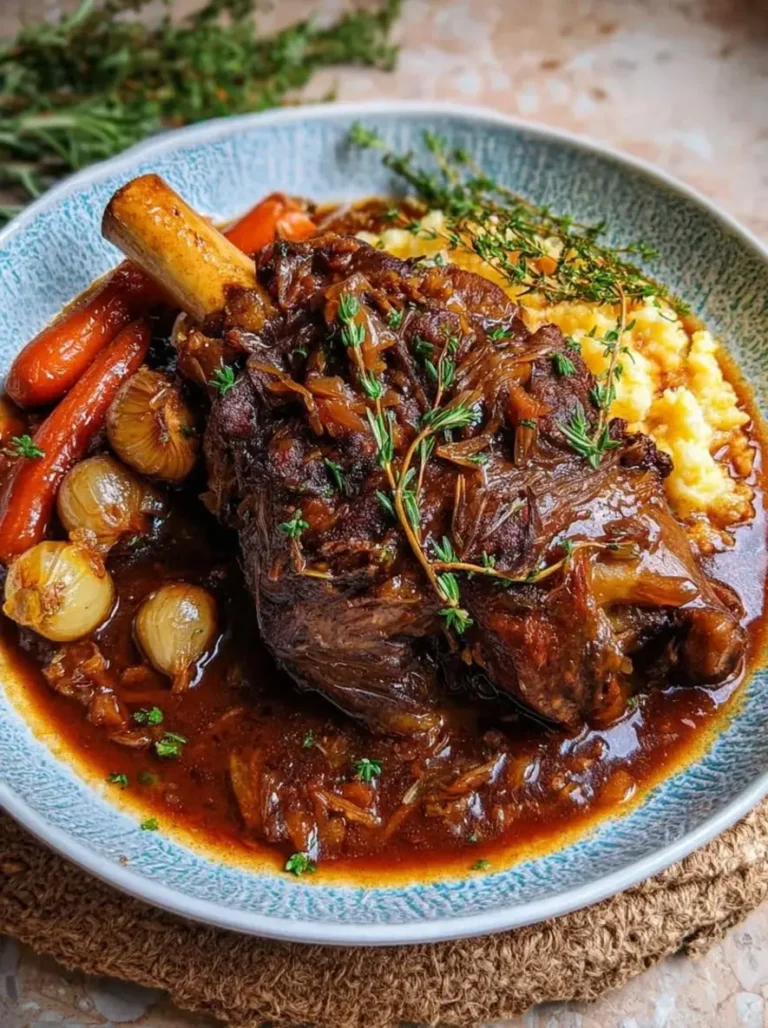
Fall-Apart Lamb Shank in Velvet Red Wine Rosemary Jus
Tender lamb shanks braised in a rich red wine and rosemary jus until fall-apart tender.
- Total Time: 3 hrs 20 mins
- Yield: 4 1x
Ingredients
- 4 lamb shanks
- 2 tablespoons olive oil
- 1 tablespoon butter
- 1 teaspoon salt
- 1 teaspoon black pepper
- 1 teaspoon smoked paprika
- 1 medium onion, chopped
- 3 cloves garlic, minced
- 2 carrots, cut into thick chunks
- 2 celery stalks, chopped
- 10 pearl onions, peeled
- 2 tablespoons tomato paste
- 2 cups dry red wine
- 2 cups beef stock
Instructions
- Preheat the oven to 325°F (165°C).
- Season lamb shanks with salt, pepper, and smoked paprika.
- Heat olive oil and butter in a large Dutch oven over medium-high heat. Sear lamb shanks on all sides until browned, about 4-5 minutes per side. Remove and set aside.
- In the same pot, add onion, garlic, carrots, celery, and pearl onions. Sauté until softened, about 5 minutes.
- Stir in tomato paste and cook for 1 minute.
- Pour in red wine, scraping up any browned bits from the bottom. Bring to a simmer and let reduce slightly, about 3 minutes.
- Add beef stock and return lamb shanks to the pot, nestling them into the liquid.
- Cover and transfer to the oven. Braise for 2.5 to 3 hours, until the meat is fork-tender and falling off the bone.
- Remove from oven and let rest for 10 minutes before serving. Spoon the rich jus over the lamb.
Notes
For an even richer flavor, marinate the lamb shanks in red wine and rosemary overnight before cooking. The leftovers are delicious shredded over polenta.
- Prep Time: 20 mins
- Cook Time: 3 hrs
- Method: Main Course
- Cuisine: French
Nutrition
- Calories: 680
- Sugar: 8
- Fat: 34
- Carbohydrates: 18
- Protein: 52
Tried This Recipe? Leave a Comment!
Did you make this recipe? I’d love to hear how it turned out! Please leave a comment and a rating below. Your feedback helps other home cooks and supports cheerychop.com!
For more delicious inspiration, follow me on Pinterest!