Ultimate Braised Short Ribs and Lamb Shank Recipe
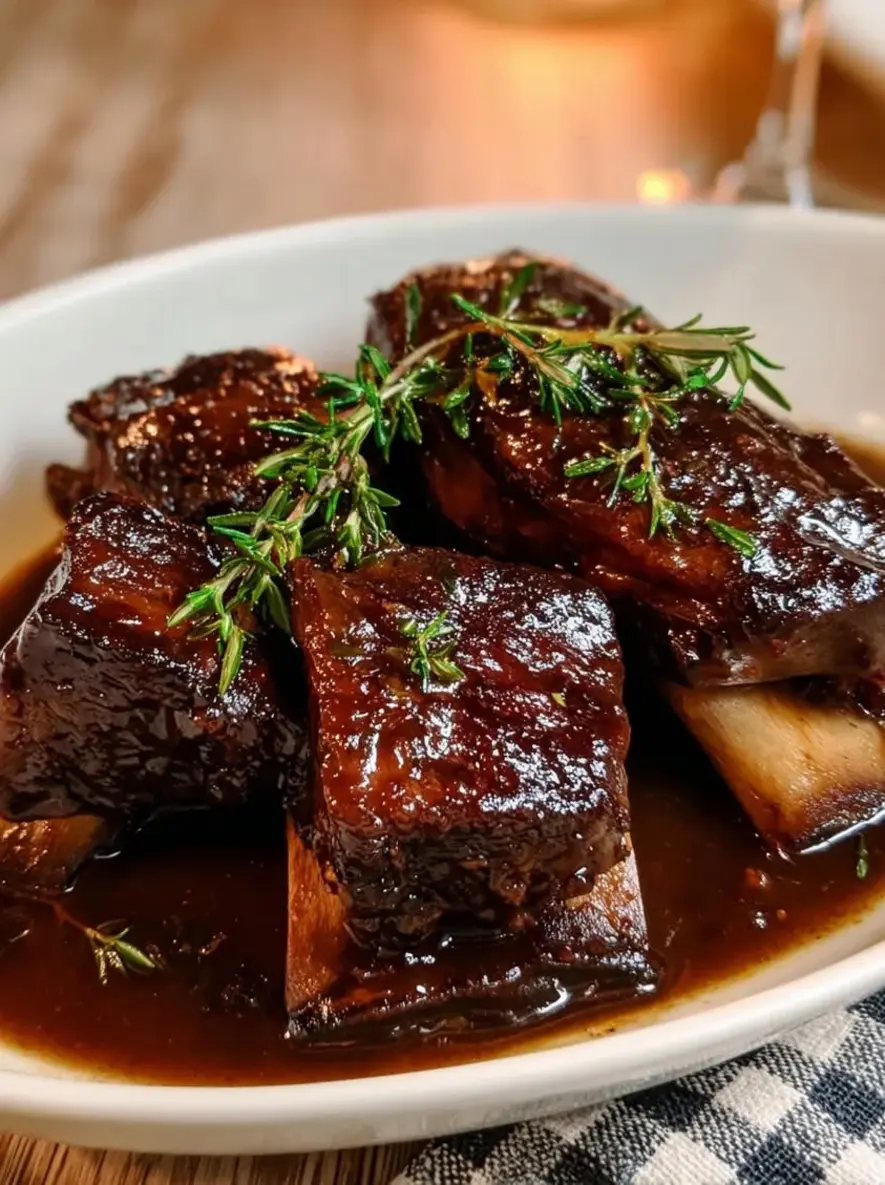
Table of Contents
Slow-Braised Short Ribs and Tender Herb Lamb Shank in a Rich Garlic Red Wine Reduction – Two Meats, One Unforgettable Dish
I still remember the first time I braised lamb shanks in my mother’s kitchen in Marrakech — the air thick with cumin, coriander, and the slow, patient bubbling of meat turning tender in a tagine. Years later, as a young cook training in Paris, I learned how a simple red wine reduction braised meat technique could transform tough cuts into something truly regal. This slow-braised short ribs and lamb shank recipe is where those two worlds meet: the bold, soulful warmth of North African home cooking and the precise, elegant technique of French braising. The unique angle here is bringing two different meats — beef short ribs and lamb shanks — together in one pot, each soaking up the same glorious garlic-herb red wine reduction while contributing its own deep, distinct flavor.
Imagine pulling open the oven door after three hours to find short ribs that have surrendered their last bit of resistance, their meat clinging to the bone in glossy, wine-dark strands. The lamb shanks, meanwhile, are so tender you can slide a fork through them with no effort at all. The sauce — oh, that sauce — is a velvety, garlic-flecked reduction with notes of smoked paprika and a long, slow finish of Cabernet Sauvignon. It coats each piece of meat like a rich, savory glaze. The aromas that fill your kitchen will have your family circling the stove before you even call them to the table.
I’ve tested this braised beef short ribs with lamb recipe over and over in my own NYC kitchen, and I’m sharing every trick I’ve learned so you can nail it on your first try. From why you absolutely need to sear the meat (it’s not optional — it’s the foundation of flavor) to how to build that deep, glossy sauce without any thickeners, I’ve got you covered. I’ll also walk you through a common mistake most home cooks make with braised meats and show you exactly how to avoid it. Whether you’re cooking for a holiday feast or a cozy Sunday dinner, this dish delivers every time.
Why This Slow-Braised Short Ribs and Lamb Shank Recipe Is the Best
The Flavor Secret: The pairing of beef short ribs and lamb shanks is a stroke of genius that most recipes don’t attempt. The beef brings a rich, almost sweet umami depth, while the lamb adds a delicate, herbaceous complexity. Together, they create a layered, multi-dimensional sauce that no single meat can achieve. My training at Le Cordon Bleu taught me the art of building flavor in stages, and this recipe uses every trick — from the initial sear to the slow wine reduction — to create something truly extraordinary. A garlic herb lamb shank recipe this good deserves to be shared.
Perfected Texture: The key to fall-apart tender meat is low, slow cooking at 325°F for a full three hours. This allows the collagen in both cuts to break down into gelatin, giving you a silky, luxurious sauce that clings to every forkful. I’ve dialed in the exact timing so the short ribs stay moist and the lamb shanks are butter-soft — no dry meat, no greasy sauce. The rich red wine braised short ribs emerge from the oven with a deep mahogany color and a texture that practically melts.
Foolproof & Fast: Don’t let the three-hour cook time scare you — this recipe is almost entirely hands-off. Once you’ve seared the meat and built the base, the oven does all the work. I’ve streamlined the ingredient list to focus on what really matters: quality meat, a good bottle of wine, and a handful of aromatic vegetables. Even if you’re new to braising, my step-by-step instructions and pro tips will guide you to a winner. It’s the kind of dish that makes you look like a hero with very little active effort.
Slow-Braised Short Ribs and Lamb Shank Recipe Ingredients
I source my short ribs from the Union Square Greenmarket in NYC — the grass-fed beef from a small farm in Pennsylvania is worth the trip. The lamb shanks I pick up from a halal butcher in Astoria who reminds me of the markets back home. For the wine, I always use a Cabernet Sauvignon or Merlot that I’d happily drink — a $15 bottle works beautifully. Here’s what you’ll need for this red wine reduction braised meat masterpiece.
Ingredients List
- 2 lbs beef short ribs, bone-in
- 2 lamb shanks (about 1 lb each)
- 2 tablespoons olive oil
- Salt and black pepper to taste
- 1 teaspoon smoked paprika
- 1 teaspoon garlic powder
- 1 large onion, diced
- 4 cloves garlic, minced
- 2 carrots, chopped
- 2 celery stalks, chopped
- 2 tablespoons tomato paste
- 2 cups full-bodied red wine (Cabernet Sauvignon or Merlot)
- 2 cups beef broth (optional, if more liquid is needed)
- Fresh rosemary and thyme sprigs for garnish
Ingredient Spotlight
Beef Short Ribs: The star of this braised beef short ribs with lamb dish. Look for ribs that are well-marbled with a thick layer of meat on top — at least 1 inch of meat above the bone. Ask your butcher for “English-cut” short ribs, which are cut crosswise between the bones. If you can only find flanken-cut (thin, crosswise slices), they’ll work too, but reduce the braising time to about 2 hours to prevent them from drying out.
Lamb Shanks: For this garlic herb lamb shank recipe, choose shanks that are plump and pinkish-red with a good amount of connective tissue — that’s what melts into the sauce. Avoid shanks that look dry or have a strong gamey smell. If you can’t find lamb shanks, you can substitute with beef shank or oxtail, but the flavor will be less distinct.
Red Wine: This is the backbone of the rich red wine braised short ribs. Use a wine you enjoy drinking — the flavor concentrates as it reduces. Cabernet Sauvignon adds structure and dark fruit notes, while Merlot brings a softer, plum-like sweetness. Never use “cooking wine” — it’s loaded with salt and preservatives that will ruin your sauce.
| Original Ingredient | Best Substitution | Flavor / Texture Impact |
|---|---|---|
| Beef Short Ribs | Beef Chuck Roast (cut into 2-inch chunks) | Slightly leaner, but still tender; less bone-in flavor |
| Lamb Shanks | Beef Shank or Oxtail | Similar collagen content; beef shank is milder, oxtail adds richness |
| Red Wine (Cabernet/Merlot) | Dry Red Vermouth or non-alcoholic red wine | Less depth but still good acidity; non-alcoholic wine is thinner |
| Smoked Paprika | Regular paprika + a pinch of cumin | Loses the smokiness but adds earthy warmth |
How to Make Slow-Braised Short Ribs and Lamb Shank — Step-by-Step
Trust me, the process is simpler than you think. Follow these steps and you’ll have a braising masterpiece that fills your home with the most incredible aroma. Let’s get cooking!
Step 1: Preheat and Season
Preheat your oven to 325°F (165°C). While it heats, pat the beef short ribs and lamb shanks dry with paper towels — moisture is the enemy of a good sear. Season generously on all sides with salt, black pepper, smoked paprika, and garlic powder. Don’t be shy with the salt; it’s your first layer of flavor.
💡 Stella’s Pro Tip: Season the meat at least 15 minutes before searing. This lets the salt penetrate the surface, giving you deeper seasoning and a better crust. If you have time, do this the night before and leave the meat uncovered in the fridge — that’s how we did it in Paris.
Step 2: Sear the Meat
Heat the olive oil in a large Dutch oven over medium-high heat. Once the oil is shimmering (not smoking), sear the short ribs and lamb shanks in batches. Don’t crowd the pot — each piece needs room to brown. Sear for 3-4 minutes per side until deeply browned. Transfer the seared meat to a plate and set aside.
⚠️ Common Mistake to Avoid: Rushing the sear. If you flip the meat too soon, it will stick and tear. Wait until it releases naturally from the pan — that’s how you know it’s properly browned. The crust you build here is the foundation of the entire sauce.
Step 3: Sauté the Aromatics
Reduce the heat to medium. Add the diced onion, minced garlic, chopped carrots, and chopped celery to the same pot. Sauté for about 5 minutes, scraping up the browned bits from the bottom of the pot (that’s pure flavor!). The vegetables should be softened and fragrant but not browned.
💡 Stella’s Pro Tip: Add a pinch of salt to the vegetables as they cook — it helps them release moisture and soften faster. This is a classic French technique called “sweating” the aromatics.
Step 4: Add Tomato Paste
Stir in the tomato paste and cook for 1 minute, stirring constantly. This caramelizes the paste and deepens its flavor, removing any raw, tinny taste. You’ll see it darken slightly and smell a rich, concentrated tomato aroma.
⚠️ Common Mistake to Avoid: Skipping this step or rushing it. Raw tomato paste can taste metallic. That one minute of cooking transforms it into a rich, savory base for your red wine reduction braised meat.
Step 5: Deglaze and Combine
Return the seared meat to the pot, nestling the short ribs and lamb shanks among the vegetables. Pour in about 2 cups of red wine — it should come about halfway up the sides of the meat. Bring to a simmer, scraping up any remaining browned bits. Add beef broth if needed to reach the halfway mark.
💡 Stella’s Pro Tip: Use a wooden spoon or a flat-edged spatula to scrape the bottom of the pot — those caramelized bits (called “fond” in French) are pure flavor gold. They’ll dissolve into the wine and enrich your sauce.
Step 6: Braise in the Oven
Cover the Dutch oven with its lid and transfer to the preheated oven. Braise for 2.5 to 3 hours, until the meat is fall-apart tender. Check at the 2-hour mark — the meat should be starting to pull away from the bone. If it’s not there yet, continue braising, checking every 20 minutes.
⚠️ Common Mistake to Avoid: Lifting the lid too often. Every time you open the oven, you lose heat and moisture. Resist the urge to peek! Trust the process — the meat will be tender at the 3-hour mark.
Step 7: Finish and Serve
Remove the pot from the oven. Carefully transfer the meat to a serving platter and tent with foil. Skim excess fat from the surface of the sauce using a large spoon or a fat separator. Taste and adjust seasoning with salt and pepper. Spoon the sauce over the meat and garnish with fresh rosemary and thyme sprigs.
💡 Stella’s Pro Tip: If your sauce is thinner than you’d like, simmer it on the stovetop over medium heat for 5-10 minutes after removing the meat. It will reduce and thicken naturally. No flour or cornstarch needed — the gelatin from the bones does the work.
| Step | Action | Duration | Key Visual Cue |
|---|---|---|---|
| 1 | Preheat & Season | 15 min | Meat coated in spices, oven at 325°F |
| 2 | Sear Meat | 10-12 min total | Deep golden-brown crust on all sides |
| 3 | Sauté Aromatics | 5 min | Vegetables softened, fragrant, browned bits lifted |
| 4 | Add Tomato Paste | 1 min | Paste darkens to a rusty red |
| 5 | Deglaze & Combine | 3 min | Wine simmers, fond dissolves, liquid halfway up meat |
| 6 | Braise in Oven | 2.5-3 hours | Meat pulls from bone, sauce is glossy |
| 7 | Finish & Serve | 10 min | Fat skimmed, sauce coats spoon, meat fork-tender |
Serving & Presentation
I love serving this braised beef short ribs with lamb over a bed of creamy mashed potatoes or soft polenta — they soak up the red wine reduction like a dream. For a touch of freshness, I add a sprinkle of chopped parsley and a few whole rosemary sprigs. In the winter, I’ll pair it with roasted root vegetables that I buy from the Union Square farmers market — parsnips, turnips, and carrots caramelized in a bit of the braising liquid.
When I serve this at dinner parties in my NYC apartment, I always place the Dutch oven right on the table — it keeps the dish warm and makes a stunning centerpiece. I once brought this to a potluck in Brooklyn and came home with an empty pot and five people asking for the recipe. Serve with a crusty baguette to mop up every last drop of that luscious garlic-herb sauce.
| Pairing Type | Suggestions | Why It Works |
|---|---|---|
| Side Dish | Creamy mashed potatoes, soft polenta, roasted root vegetables | Neutral bases that absorb the rich sauce |
| Sauce / Dip | Red wine reduction (from the pot), horseradish cream | Horseradish cuts the richness beautifully |
| Beverage | Same red wine used for braising, dark beer stout, pomegranate spritzer | Wine mirrors the braising liquid; stout adds roasty notes |
| Garnish | Fresh rosemary, thyme sprigs, chopped parsley, flaky sea salt | Herbs add brightness; salt enhances all flavors |
Make-Ahead, Storage & Reheating
This slow-braised short ribs and lamb shank recipe is a dream for meal prep — it actually tastes better the next day as the flavors meld together. In my busy NYC life, I often make this on a Saturday and enjoy it all week. Here’s how to store and reheat it like a pro.
| Method | Container | Duration | Reheating Tip |
|---|---|---|---|
| Refrigerator | Airtight glass or plastic container | Up to 5 days | Reheat gently on stovetop over medium-low heat, adding a splash of broth if needed |
| Freezer | Freezer-safe zip-top bag or rigid container | Up to 3 months | Thaw overnight in the fridge, then reheat in a covered pot at 325°F for 20-25 minutes |
| Make-Ahead | Dutch oven (cool before covering) | Up to 2 days in advance | Cool completely, refrigerate, then reheat covered at 325°F for 30 minutes. Skim fat before serving |
I always make a double batch and freeze half for busy weeknights. The key to reheating is to do it slowly and gently — never microwave braised meat, as it will toughen the fibers. Instead, warm it in a covered Dutch oven at 325°F for about 20-25 minutes, or on the stovetop over medium-low heat. If the sauce looks too thick, add a splash of beef broth or water to loosen it up.
Variations & Easy Swaps
This recipe is wonderfully adaptable. Here are my favorite variations, each tested in my kitchen so you can experiment with confidence.
| Variation | Key Change | Best For | Difficulty Impact |
|---|---|---|---|
| Moroccan Spiced | Add 1 tsp cumin, 1 tsp coriander, ½ tsp cinnamon | Warm, aromatic depth | Easy |
| Gluten-Free / Dairy-Free | Use gluten-free broth; skip any flour thickener | Dietary restrictions | Easy |
| Herb-Rosemary | Add 2 fresh rosemary sprigs + 1 tbsp fresh thyme | Bright, aromatic finish | Easy |
Moroccan Spiced Version
This version is a nod to my childhood. Add 1 teaspoon of ground cumin, 1 teaspoon of ground coriander, and ½ teaspoon of cinnamon along with the smoked paprika. The cumin and coriander add an earthy warmth that pairs beautifully with the lamb shanks, while the cinnamon brings a subtle sweetness that rounds out the red wine reduction. Serve with saffron rice and a sprinkle of toasted almonds — my mother’s favorite way to enjoy braised meats.
Gluten-Free / Dairy-Free Version
This recipe is naturally gluten-free and dairy-free as written — no flour or dairy is used in the braising liquid. Just be sure to check your beef broth for any gluten-containing additives. If you want to thicken the sauce further, simply simmer it after removing the meat, or mash a few of the cooked carrots into the sauce — they release natural starches that will thicken it beautifully without any gluten or cornstarch.
Herb-Rosemary Twist
For a more aromatic, garden-fresh flavor, add 2 sprigs of fresh rosemary and 1 tablespoon of fresh thyme leaves to the pot along with the wine. I love this version in the spring when I find gorgeous rosemary at the farmers market. The herbs infuse the garlic herb lamb shank recipe with a bright, piney note that cuts through the richness of the meat. Garnish with extra fresh herbs right before serving for a pop of color and fragrance.
What is the best cooking time and temperature for slow-braised short ribs to ensure they are tender?
The ideal cooking temperature for slow-braised short ribs is 325°F (165°C) — low enough to break down collagen gradually without toughening the meat, but high enough to keep the cooking time manageable. For bone-in short ribs, braise for 2.5 to 3 hours. The meat should be fork-tender and pulling away from the bone. If you’re using boneless short ribs, check at the 2-hour mark. I always tell my readers to look for that “jiggle” — when the meat wobbles slightly on the bone, it’s ready. Every oven runs a little differently, so use an oven thermometer to make sure yours is accurate. This temperature range gives you that perfect balance of tender meat and a rich, concentrated sauce.
Can I substitute lamb shank with another cut of meat in this red wine reduction recipe?
Absolutely! If you can’t find lamb shanks, the best substitutes are beef shank, oxtail, or even a well-marbled beef chuck roast cut into large chunks. Beef shank has a similar bone-in structure and collagen content, which gives you that silky sauce texture. Oxtail is even richer and more gelatinous — it will make your sauce incredibly luxurious. If using beef chuck, cut it into 2-inch pieces and braise for about 2.5 hours. Keep in mind that lamb has a distinctive, slightly gamey flavor that beef doesn’t have, so the sauce will taste different — still delicious, but different. You could also add a splash of balsamic vinegar at the end to add some complexity back.
Do I need to sear the meat before braising for a richer garlic red wine flavor?
Yes, searing is absolutely essential — please don’t skip this step! Searing creates a deep golden-brown crust on the meat through the Maillard reaction, which produces hundreds of flavor compounds that no amount of slow cooking can replicate. Those browned bits that stick to the bottom of the pot (the fond) are the foundation of your sauce’s richness. When you add the wine and scrape them up, they dissolve and infuse the liquid with that deep, roasted flavor. If you skip searing, you’ll end up with a pale, one-dimensional sauce that lacks complexity. Think of searing as the flavor anchor for the entire dish — it takes just 10 minutes and makes a world of difference in your red wine reduction braised meat.
How can I thicken the red wine reduction sauce without using flour or cornstarch?
There are several excellent ways to thicken the sauce naturally without any flour or cornstarch. The easiest method is to simply simmer the sauce on the stovetop after removing the meat — the liquid will reduce and concentrate, becoming thicker and glossier naturally. Another trick is to mash some of the cooked carrots from the pot into the sauce — they release natural starches and pectin that add body. You can also remove the lid for the last 30 minutes of braising to allow more evaporation. My favorite method: remove the meat, skim the fat, and simmer the sauce over medium heat for 5-10 minutes. The gelatin from the bones and connective tissue will do the thickening work for you. If you want it even thicker, you can whisk in a tablespoon of softened butter at the end for a glossy, restaurant-quality finish.
Can I make this slow-braised short ribs and lamb shank recipe in a slow cooker?
Yes, you can adapt this braised beef short ribs with lamb recipe for a slow cooker. Follow steps 1 through 5 as written (searing the meat and sautéing the aromatics are still essential). Then transfer everything to your slow cooker, add the wine, and cook on low for 7-8 hours or on high for 4-5 hours. The main difference is that the sauce won’t reduce as much in a slow cooker because it’s a sealed environment. To fix this, remove the meat when tender, pour the sauce into a saucepan, and simmer it on the stovetop for 10-15 minutes to thicken. Also, the meat won’t develop quite the same depth of flavor as oven-braising because there’s less caramelization, but it’s still delicious and much more convenient for busy days.
What type of red wine should I use for the garlic red wine reduction?
I recommend using a full-bodied red wine like Cabernet Sauvignon, Merlot, or a rich Zinfandel for this rich red wine braised short ribs recipe. These wines have enough structure, tannin, and fruit concentration to stand up to the bold flavors of the beef and lamb. Cabernet Sauvignon adds dark cherry and cassis notes with a firm backbone. Merlot is softer and more plummy, making it a great choice if you prefer a sweeter, rounder sauce. Avoid using “cooking wine” or anything labeled as such — they contain added salt and preservatives that will throw off your seasoning. A $12-15 bottle that you’d happily drink is perfect. If you prefer not to cook with alcohol, you can substitute with equal parts beef broth and pomegranate juice, plus a tablespoon of balsamic vinegar for acidity.
How do I know when the braised meat is fully cooked and tender?
The best way to test for doneness is with a fork — insert it into the thickest part of the meat and twist gently. The meat should pull apart easily with no resistance, and it should be starting to separate from the bone (if bone-in). For short ribs, the meat should be so tender that a fork slides through like butter. For lamb shanks, the meat should be falling off the bone. You can also check the internal temperature — braised meats are typically done when they reach about 195-205°F internally, which is when collagen has fully broken down into gelatin. Visually, look for a glossy, thickened sauce that coats the meat, and the meat should have a deep, dark brown color from the long braise. If it still feels tough, give it another 20-30 minutes and check again.
Can I use dried herbs instead of fresh in this garlic herb lamb shank recipe?
Yes, you can use dried herbs if fresh isn’t available, but you’ll need to adjust the amount and timing. Dried herbs are more concentrated in flavor than fresh, so use about one-third the amount. For example, if the recipe calls for 2 sprigs of fresh rosemary (about 2 teaspoons of leaves), use about ¾ teaspoon of dried rosemary. Add dried herbs at the beginning of the braise so they have time to rehydrate and release their flavors. Fresh herbs are best added toward the end to preserve their brightness, but dried herbs need that long cooking time to soften and infuse. My preference is always fresh when I can get it — the farmers market in NYC has amazing fresh herbs year-round — but dried works perfectly well and still gives you that lovely herbaceous aroma in the garlic herb lamb shank recipe.
What side dishes pair best with slow-braised short ribs and lamb shank?
This slow-braised short ribs and lamb shank recipe pairs beautifully with side dishes that can soak up the rich red wine reduction. My top recommendations are creamy mashed potatoes (the classic choice), soft polenta with Parmesan, or buttery egg noodles. For a lighter option, try roasted root vegetables — carrots, parsnips, and celery root caramelized in a bit of olive oil and thyme. A crisp green salad with a lemony vinaigrette cuts through the richness beautifully. I also love serving it with a crusty sourdough or baguette for dipping. In the winter, I’ll add a side of braised red cabbage or sautéed spinach with garlic. The key is to choose something that complements without competing — let the braised meat and sauce be the star of the show.
How do I prevent the meat from becoming dry during the braising process?
The key to preventing dry meat in a braise is maintaining the right liquid level and temperature. Make sure the braising liquid comes about halfway up the sides of the meat — not fully submerged, but enough to keep the bottom portion cooking in moisture while the top caramelizes slightly. Keep the pot covered for most of the cooking time to trap steam. Use an oven thermometer to ensure your oven stays at 325°F — if it runs hot, the meat can dry out before it becomes tender. Also, use bone-in meat when possible — the bone adds flavor and helps regulate temperature. Finally, don’t overcook. Check for doneness at the 2.5-hour mark. The meat should be tender but not falling apart into strings. If it starts to shred easily, it’s ready. Braising is forgiving, but timing still matters for perfect texture.
Share Your Version!
I truly hope you fall in love with this slow-braised short ribs and lamb shank recipe — it’s one of those dishes that feels like a warm hug on a cold evening. If you make it, I’d love to know how it turned out! Leave a star rating and a comment below telling me about your experience. Did you try any of the variations? Did your family ask for seconds? I read every single comment and I answer every question — your feedback helps me create better recipes for all of you.
Snap a photo of your beautifully plated dish and share it on Instagram or Pinterest — tag @leosfoods so I can see your creation and maybe even feature it on my page! And here’s a question for you: which herb do you think shines brightest in this garlic-herb sauce — rosemary or thyme? Let me know in the comments! From my NYC kitchen to yours — I hope this recipe brings as much warmth to your table as it does to mine. — Stella 🧡
Love This Recipe? Save It to Pinterest!
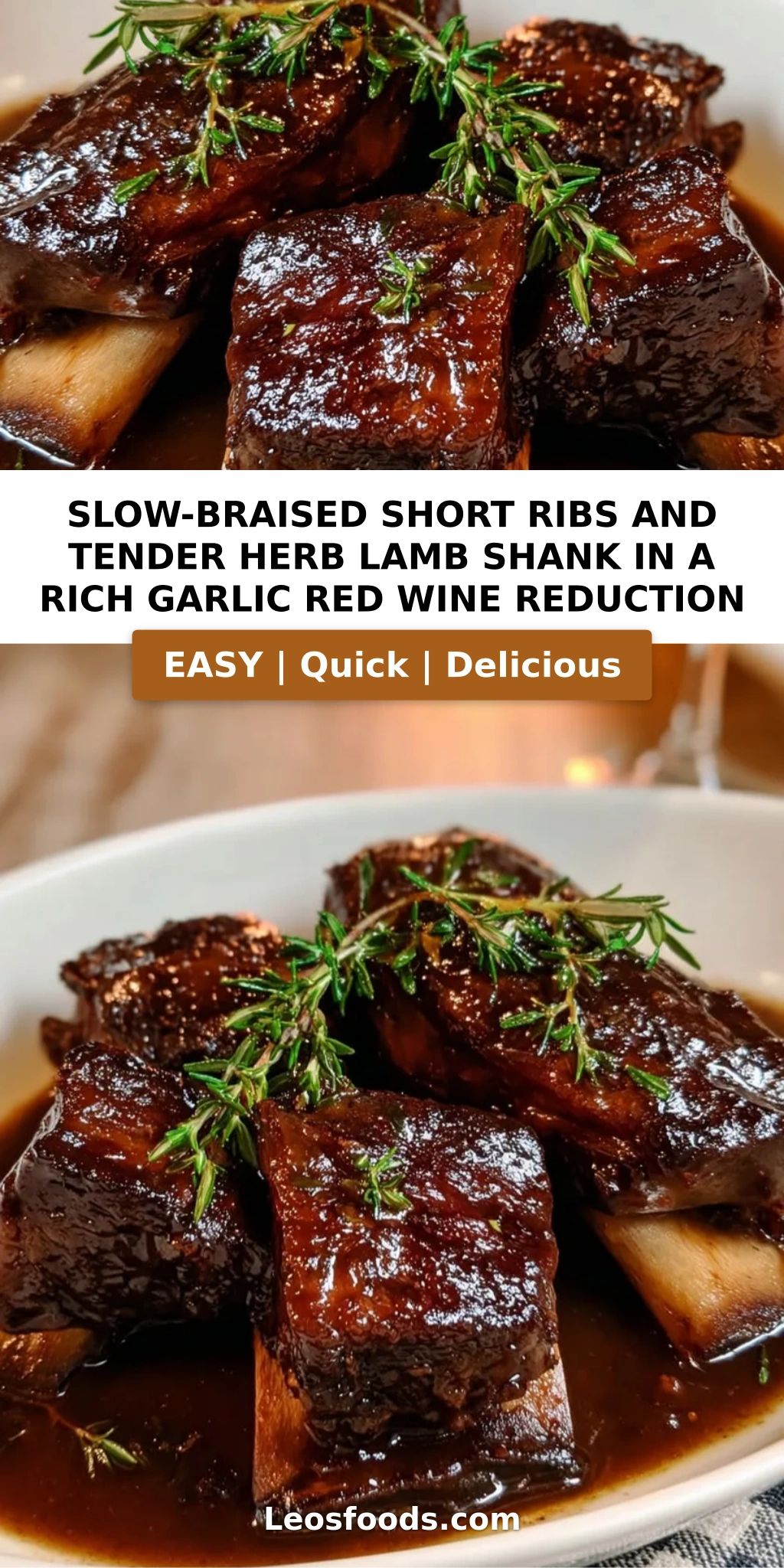
If you enjoyed this Slow-Braised Short Ribs and Tender Herb Lamb Shank in a Rich Garlic Red Wine Reduction recipe, don’t let it get lost in your browser tabs! 😄 Pin it now so you can find it again anytime — and explore hundreds more tried-and-tested recipes waiting for you on my Pinterest boards.
👉 Follow Stella on Pinterest @stellarecipeblog
📌 Pin this recipe · 🔁 Re-pin your favorites · 💬 Tag me when you make it — I love seeing your creations!
💬 Made this recipe? Let me know how it turned out in the comments below! I personally reply to every single one. ✨
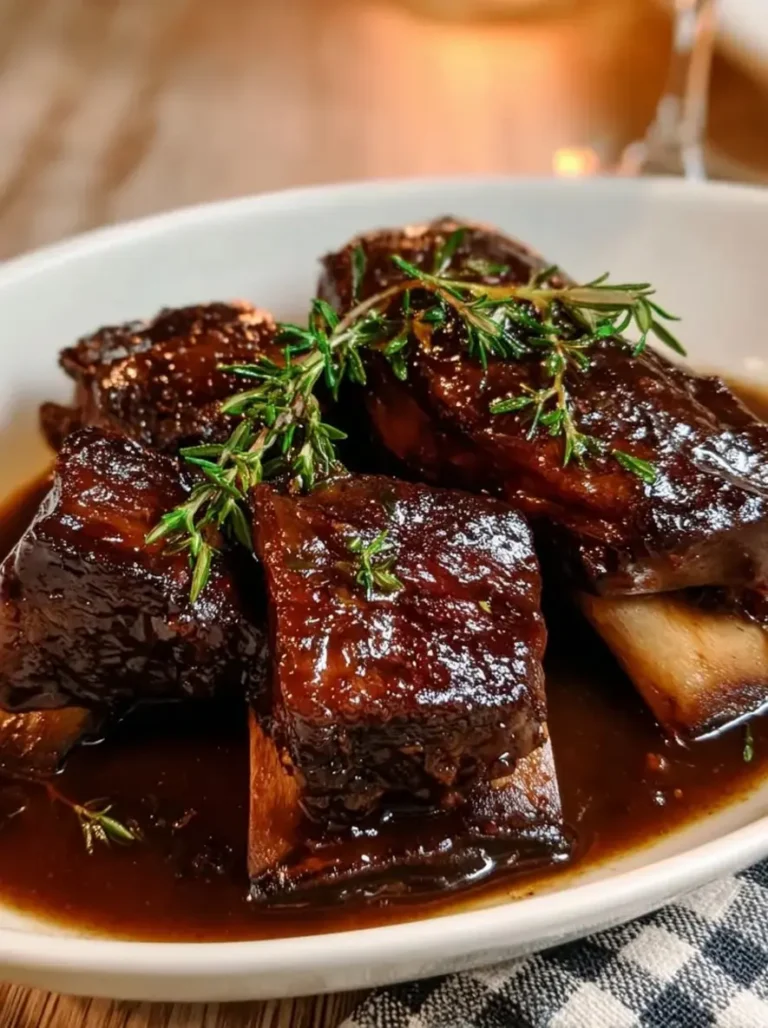
Slow-Braised Short Ribs and Tender Herb Lamb Shank in a Rich Garlic Red Wine Reduction
A hearty, slow-braised dish combining beef short ribs and lamb shanks, infused with herbs and a rich garlic red wine reduction.
- Total Time: 3 hours 20 minutes
- Yield: 4-6 1x
Ingredients
- 2 lbs beef short ribs
- 2 lamb shanks
- 2 tablespoons olive oil
- Salt and black pepper to taste
- 1 teaspoon smoked paprika
- 1 teaspoon garlic powder
- 1 large onion, diced
- 4 cloves garlic, minced
- 2 carrots, chopped
- 2 celery stalks, chopped
- 2 tablespoons tomato paste
Instructions
- Preheat oven to 325°F (165°C).
- Season short ribs and lamb shanks with salt, pepper, smoked paprika, and garlic powder.
- Heat olive oil in a large Dutch oven over medium-high heat. Sear the meat in batches until browned on all sides. Set aside.
- In the same pot, sauté onion, garlic, carrots, and celery until softened, about 5 minutes.
- Stir in tomato paste and cook for 1 minute.
- Return the meat to the pot. Add red wine (about 2 cups) and bring to a simmer.
- Cover and transfer to the oven. Braise for 2.5 to 3 hours, until meat is tender.
- Remove from oven, skim excess fat, and adjust seasoning. Serve the meat with the reduced sauce.
Notes
For best results, use a full-bodied red wine such as Cabernet Sauvignon or Merlot. The dish can be made a day ahead and reheated.
- Prep Time: 20 minutes
- Cook Time: 3 hours
- Method: Main Course
- Cuisine: American
Nutrition
- Calories: 650
- Sugar: 5g
- Fat: 38g
- Carbohydrates: 12g
- Protein: 55g
Tried This Recipe? Leave a Comment!
Did you make this recipe? I’d love to hear how it turned out! Please leave a comment and a rating below. Your feedback helps other home cooks and supports cheerychop.com!
For more delicious inspiration, follow me on Pinterest!