Passionfruit Mango Crystal Jewels with Coconut Cream
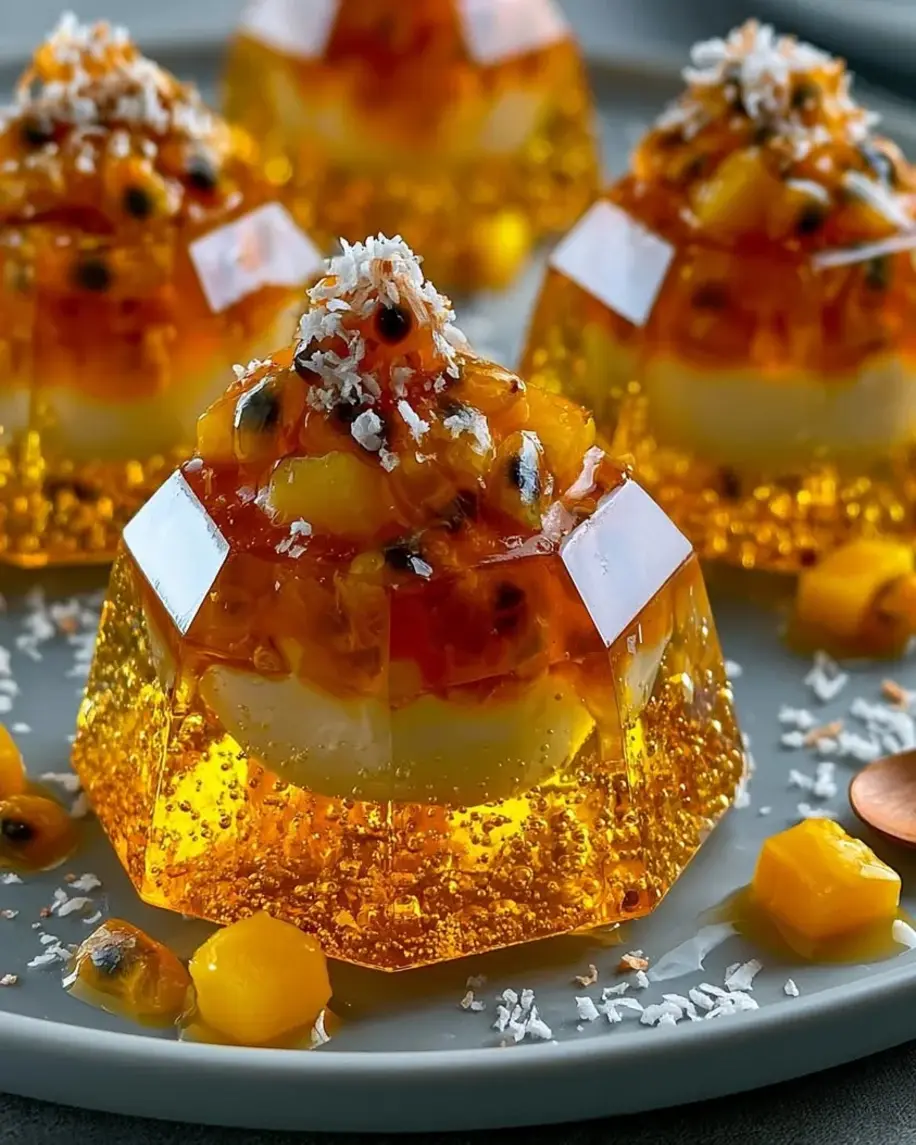
Table of Contents
Passionfruit Mango Crystal Jewels Recipe – Gem-Inspired Tropical Dessert
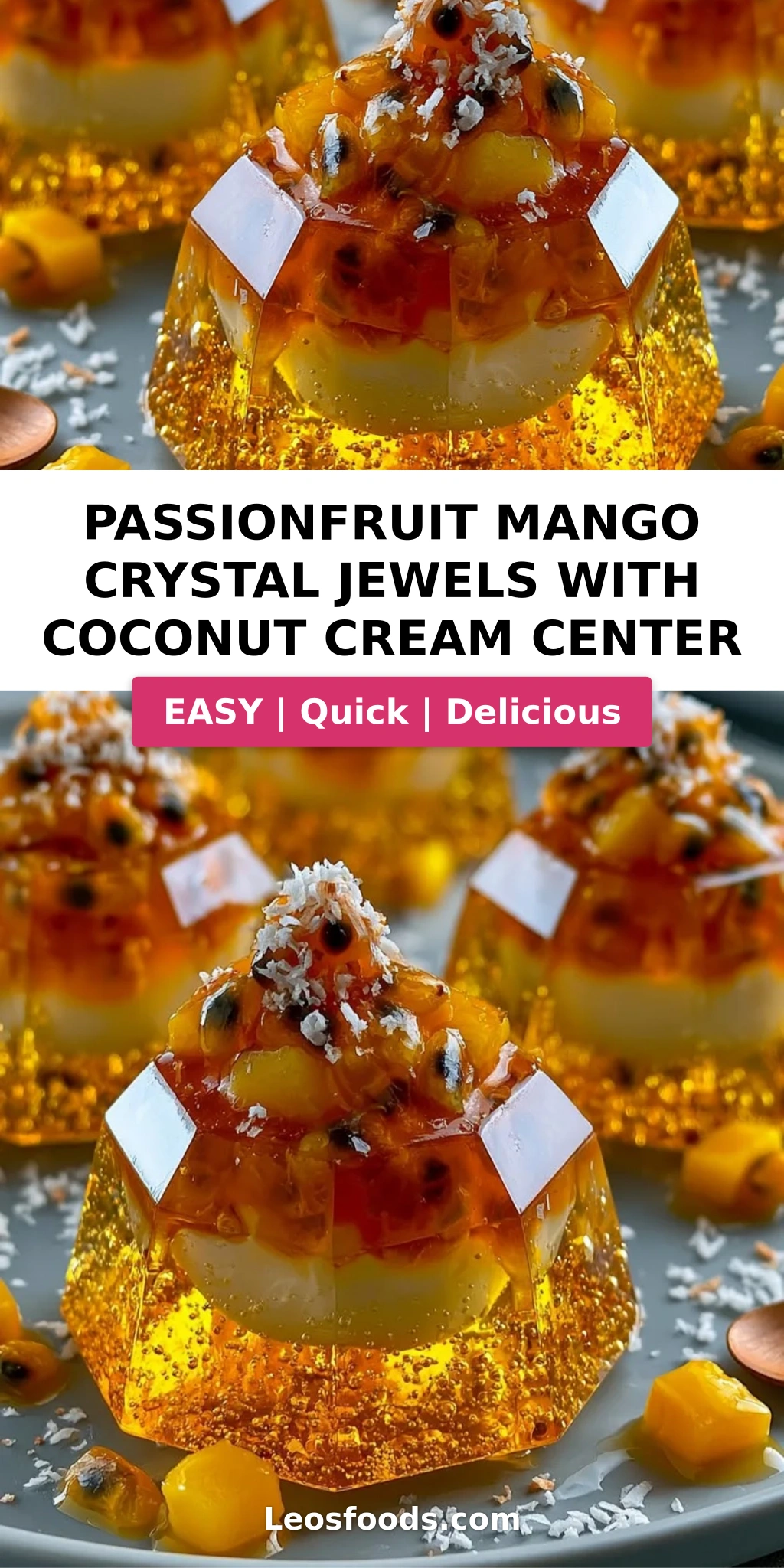
Let me take you back to a humid summer afternoon in Marrakech, standing on a stool next to my mother as she stirred a pot of sun-ripened fruit with agar-agar — a pantry staple in Moroccan kitchens long before it became trendy in Western pastry. I remember watching the liquid turn jewel-clear, catching the light like stained glass. That memory stayed with me through culinary school in Paris and into my tiny NYC kitchen, where I reimagined those translucent gems into this passionfruit mango crystal jewels recipe — a dessert that tastes like a tropical vacation and looks like edible gemstones. The tropical agar jelly dessert you see here is my love letter to North African technique, French refinement, and the vibrant fruit I now find at the Union Square Greenmarket.
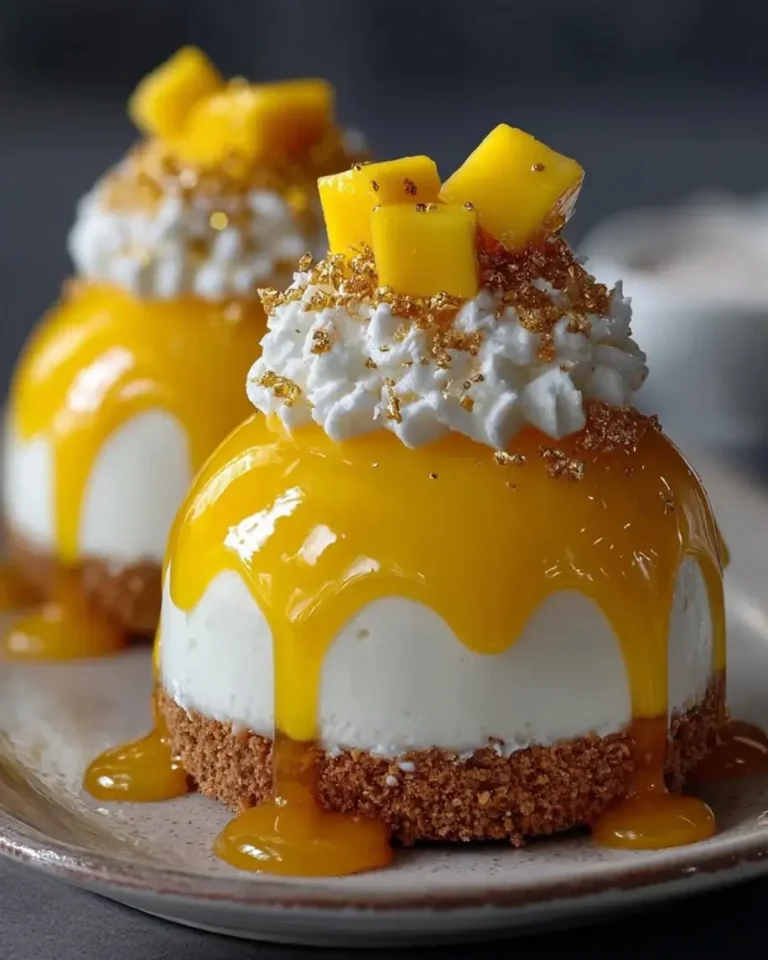
The first bite of these coconut cream filled jellies is pure magic: the jelly layer shatters ever so slightly on your tongue before melting into a bright wave of passionfruit and mango, followed immediately by the lush, velvety coconut cream center. The exotic fruit gemstone dessert gets its signature clarity from agar-agar — a plant-based setting agent derived from seaweed — which gives a firmer, cleaner bite than gelatin and sets beautifully at room temperature. I brush each jewel with a tropical glaze that catches the light like a sunrise over the Atlantic, making every piece look like something you’d find in a high-end Parisian pâtisserie window.
What makes this mango passionfruit jelly recipe truly special is the way I’ve layered textures and temperatures. The jelly is firm yet delicate, the filling is cold and creamy, and the glaze adds a sticky-sweet sheen that ties everything together. I’ve tested this recipe dozens of times to get the agar-agar ratio just right — too much and the jelly is rubbery, too little and it won’t hold its shape. In the sections below, I’ll share my 💡 Stella’s Pro Tip for perfect clarity every time, plus the one ⚠️ Common Mistake to Avoid that most home cooks make when working with tropical fruit and agar. Trust me, once you make these, you’ll be the star of every dinner party.
Why This Passionfruit Mango Crystal Jewels Recipe Is the Best
The Flavor Secret. Growing up in Morocco, my mother taught me that the best fruit desserts don’t mask the fruit — they elevate it. I use equal parts passionfruit pulp and mango puree, letting the tartness of passionfruit cut through the sweetness of mango. A touch of lime juice and salt brightens everything without overpowering the tropical notes. This balance is the heart of my passionfruit mango crystal jewels recipe, and it’s what makes each bite taste like fresh fruit, not just sugar.
Perfected Texture. My classical French training taught me that texture is as important as flavor. Agar-agar sets at a higher temperature than gelatin — around 104°F — which means the jelly firms up quickly and holds its shape beautifully at room temperature. I’ve calibrated the exact amount so the jewels are firm enough to unmold cleanly but tender enough to yield to the spoon. The coconut cream filling, stabilized with mascarpone, stays pillowy and light without being greasy. This tropical agar jelly dessert has the kind of texture that makes people close their eyes and sigh.
Foolproof & Fast. Despite its elegant appearance, this recipe is remarkably forgiving. You don’t need any special equipment — just a saucepan, a whisk, and a silicone mold. The agar-agar does all the heavy lifting, setting the jelly in about 2 hours in the fridge. I’ve streamlined the steps so even a beginner can achieve professional results. The exotic fruit gemstone dessert comes together in under an hour of active time, making it perfect for weekend entertaining or a showstopping holiday centerpiece.
Passionfruit Mango Crystal Jewels Recipe Ingredients
I source my passionfruit pulp from a small vendor at the Union Square Greenmarket who brings them in from Hawaii, and my mangoes from the Mexican grocery on 9th Avenue — they always have the ripest Ataúlfo mangoes. When I’m feeling nostalgic for my mother’s kitchen, I use frozen passionfruit pulp from the Moroccan market in Brooklyn; it’s just as vibrant and saves time. For this coconut cream filled jellies recipe, fresh or high-quality frozen fruit works beautifully, so use what’s available in your area.
Ingredients List
For the Passionfruit Mango Crystal Jewels:
- 1 cup passionfruit pulp (fresh or frozen, thawed)
- 2 cups mango puree, strained (from about 3 ripe mangoes or 1½ cups frozen)
- 2 cups water
- 3/4 cup sugar
- 2 1/2 tsp agar-agar powder
- 1 tbsp lime juice
- 1/4 tsp salt
For the Coconut Cream Center:
- 8 oz mascarpone cheese
- 1/2 cup coconut cream (the thick part from a can of full-fat coconut milk)
- 1/4 cup powdered sugar
- 1 tsp vanilla extract
- 1 tbsp honey
For the Tropical Glaze:
- 1/4 cup mango preserves
- 1 tbsp passionfruit pulp
- 1 tbsp honey
- 1 tsp lime juice
For Garnish (optional):
- Fresh mango cubes
- Passionfruit seeds
- Toasted coconut flakes
Ingredient Spotlight
Agar-Agar Powder: This is the key to the crystal-clear jelly. Unlike gelatin, agar-agar is plant-based and sets firmly at room temperature. Look for it in Asian grocery stores, health food stores, or online. I use the brand “Telephone” from my local Filipino market — it’s reliable and affordable. A good substitute is agar-agar flakes, but you’ll need about 2 tablespoons instead of 2½ teaspoons. Do NOT substitute gelatin directly — the texture and setting temperature are different.
Passionfruit Pulp: This is what gives the jewels their signature tartness and gorgeous speckled appearance. Fresh passionfruit is ideal — you’ll need about 6–8 fruits to get 1 cup of pulp. Frozen passionfruit pulp is an excellent alternative; just thaw and stir it well before measuring. Avoid bottled passionfruit syrup or concentrate, which contain added sugar and preservatives that can affect the set.
Mango Puree: Ataúlfo mangoes (the small yellow ones) are my go-to because they’re fiberless and intensely sweet. For the puree, peel and blend the mango flesh, then strain through a fine-mesh sieve to remove any fibers. If you’re using frozen mango, thaw it first and strain off any excess liquid — you want a thick, concentrated puree.
Mascarpone Cheese: This Italian cream cheese adds richness and stability to the coconut cream center. Full-fat mascarpone is non-negotiable here — low-fat versions are too watery. If you can’t find mascarpone, you can substitute an equal amount of full-fat cream cheese softened and blended with 2 tablespoons of heavy cream.
| Original Ingredient | Best Substitution | Flavor / Texture Impact |
|---|---|---|
| Agar-agar powder | Agar-agar flakes (2 tbsp) | Slightly softer set; dissolve flakes in hot water first |
| Passionfruit pulp | Frozen passionfruit pulp (thawed) | Nearly identical; strain out seeds if desired |
| Mango puree | Frozen mango puree (thawed and strained) | Slightly less bright; add 1 tsp lime juice to brighten |
| Mascarpone cheese | Full-fat cream cheese + 2 tbsp heavy cream | Slightly tangier, but still creamy and stable |
| Coconut cream | Full-fat coconut milk (use the thick top layer) | Same texture; less concentrated coconut flavor |
How to Make Passionfruit Mango Crystal Jewels — Step-by-Step
Making these passionfruit mango crystal jewels is easier than you think. I’ll walk you through each step with the exact visual cues I use in my own kitchen. Trust the process — the agar-agar does the work for you.
Step 1: Make the Jelly Base
Combine 1 cup passionfruit pulp, 2 cups mango puree, 2 cups water, 3/4 cup sugar, 2½ tsp agar-agar powder, 1 tbsp lime juice, and ¼ tsp salt in a medium saucepan. Whisk thoroughly to dissolve the agar-agar — it should look like sandy liquid with no visible clumps. Place over medium heat and stir constantly with a silicone spatula, scraping the bottom and corners. When the mixture reaches a gentle simmer (you’ll see small bubbles around the edges), let it bubble for exactly 2 minutes. The agar-agar needs to reach at least 212°F to activate properly.
💡 Stella’s Pro Tip: Whisk the agar-agar into cold liquid first, then heat. If you add it to hot liquid, it will clump and leave unset spots in your jewels. I learned this the hard way during my first pastry exam in Paris!
Step 2: Pour and Set the Jelly
Remove the saucepan from heat and let the mixture cool for about 2 minutes — just enough to stop the bubbling but not long enough for it to start setting. Pour the liquid carefully into jewel-shaped silicone molds. If any bubbles form on the surface, pop them with a toothpick or lightly spray the surface with cooking spray before pouring. Refrigerate the molds for at least 2 hours, or until the jelly is completely firm and translucent. It should feel solid to the touch and release easily from the edges of the mold.
⚠️ Common Mistake to Avoid: Don’t skip the cooling step before pouring into molds. If the liquid is too hot, it can warp thin silicone molds and cause uneven setting. I always let it sit for 2 minutes — just enough time to wash my whisk and set out the molds.
Step 3: Make the Coconut Cream Center
While the jelly sets, make the filling. In a medium bowl, combine 8 oz mascarpone cheese, ½ cup coconut cream, ¼ cup powdered sugar, 1 tsp vanilla extract, and 1 tbsp honey. Beat with a hand mixer on medium speed until smooth, light, and fluffy — about 2 minutes. Be careful not to over-whip; you want a soft, pipeable consistency, not butter. Transfer to a piping bag fitted with a round tip and refrigerate until needed. The cold temperature will firm it up and make it easier to pipe later.
💡 Stella’s Pro Tip: Use only the thick, solid top layer from a can of full-fat coconut milk for the coconut cream. Refrigerate the can overnight so the cream separates completely. The watery part at the bottom — save it for smoothies or curries!
Step 4: Unmold and Create Cavities
Gently press the bottom of each silicone mold to release the jelly jewels. If they’re stubborn, dip the mold in warm water for 5 seconds — not longer, or the jelly will start to soften. Place each jewel on a clean work surface. Use a small melon baller or the back of a ½ teaspoon to carve a small cavity in the center of each piece. Go about halfway through the depth — you want to create a pocket for the filling without breaking through the bottom. I think of it like hollowing out a little jewel box.
⚠️ Common Mistake to Avoid: Don’t carve too deep or the filling will leak out the bottom. Aim for a cavity that’s about the size of a large pea — just enough for a generous dollop of cream.
Step 5: Fill the Jewels
Remove the coconut cream filling from the refrigerator. Gently pipe the cream into each cavity, filling it level with the surface. Don’t overfill — you want a neat, smooth top. If you don’t have a piping bag, you can use a small zip-top bag with a corner snipped off. Place the filled jewels on a tray and return to the refrigerator for at least 30 minutes to allow the filling to firm up and the flavors to meld.
💡 Stella’s Pro Tip: For a dramatic presentation, use a small offset spatula to smooth the filling flush with the surface of the jewel. The flat top will catch the glaze beautifully later.
Step 6: Make the Tropical Glaze
In a small saucepan, combine ¼ cup mango preserves, 1 tbsp passionfruit pulp, 1 tbsp honey, and 1 tsp lime juice. Warm over low heat, stirring constantly, until the preserves melt and the mixture is smooth and glossy — about 2 minutes. Remove from heat and let cool to room temperature. The glaze should be thick but pourable; if it’s too thick, add a few drops of water. If it’s too thin, simmer for another minute to concentrate.
⚠️ Common Mistake to Avoid: Don’t apply the glaze while it’s hot — it will melt the surface of the jelly and ruin the crystal-clear effect. Wait until it’s just warm to the touch, like a comfortable bath.
Step 7: Glaze and Garnish
Using a small pastry brush, gently brush the tropical glaze over the top and sides of each jewel. The glaze should coat the surface in a thin, even layer — think of it like painting a gemstone. For extra shine, apply a second coat after the first one sets for 5 minutes. Immediately garnish with fresh mango cubes, passionfruit seeds, and toasted coconut flakes while the glaze is still tacky, so the garnishes stick. Serve the jewels thoroughly chilled on a white platter to show off their brilliant colors.
💡 Stella’s Pro Tip: For a pro-level finish, place the glazed jewels on a wire rack set over a baking sheet before brushing. This allows excess glaze to drip off instead of pooling around the bottom.
| Step | Action | Duration | Key Visual Cue |
|---|---|---|---|
| 1 | Make jelly base | 5 mins | Small bubbles at edges, liquid is clear |
| 2 | Pour and set jelly | 2 hrs (fridge) | Firm, translucent, releases from mold |
| 3 | Make filling | 5 mins | Smooth, fluffy, holds peaks softly |
| 4 | Unmold and cavity | 5 mins | Clean release, cavity is pea-sized |
| 5 | Fill jewels | 5 mins | Cream is level with surface |
| 6 | Make glaze | 3 mins | Smooth, glossy, pourable |
| 7 | Glaze and garnish | 5 mins | Even coat, garnishes stick |
Serving & Presentation
I serve these coconut cream filled jellies on a large white marble platter — the contrast makes the jewels look like they’re glowing from within. Arrange them in a single layer, spacing them about an inch apart so each piece stands out. For a dramatic centerpiece, I sometimes place a small cluster of fresh passionfruit seeds and a few edible orchid flowers in the center of the platter, surrounded by the jewels like a crown.
The ideal serving temperature is thoroughly chilled — straight from the fridge to the table. The cold temperature keeps the jelly firm and the filling creamy. I like to serve them with a small spoon alongside, though they’re also perfect as finger food for parties. When I bring these to a dinner party in Brooklyn, they disappear within minutes. Pair them with a glass of chilled Prosecco or a passionfruit iced tea for a truly tropical experience.
For a Moroccan-inspired twist, I sometimes dust the platter with a tiny sprinkle of ground cardamom or cinnamon — a nod to my mother’s kitchen where those spices always found their way into fruit desserts. The warmth of the spice against the bright fruit and creamy center is absolutely stunning.
| Pairing Type | Suggestions | Why It Works |
|---|---|---|
| Side Dish | Coconut rice pudding, fresh fruit salad, sesame tuile | Complements without overpowering the tropical flavors |
| Sauce / Dip | Passionfruit coulis, mango-pineapple salsa, honey-lime drizzle | Adds extra brightness and texture contrast |
| Beverage | Prosecco, passionfruit iced tea, coconut water with lime | Light, refreshing, echoes the tropical theme |
| Garnish | Fresh mint leaves, edible flowers, toasted coconut | Adds color, aroma, and a professional finish |
Make-Ahead, Storage & Reheating
In my busy NYC life, make-ahead desserts are a lifesaver. This passionfruit mango crystal jewels recipe is perfect for preparing in stages. I often make the jelly base and filling a day ahead, then assemble and glaze the day of serving. The jewels actually improve overnight as the flavors meld and the texture settles into a perfect balance.
| Method | Container | Duration | Reheating Tip |
|---|---|---|---|
| Refrigerator | Airtight container, single layer | Up to 5 days | Serve cold — no reheating needed |
| Freezer | Freezer-safe container, parchment between layers | Up to 2 months | Thaw overnight in fridge; avoid microwaving |
| Make-Ahead | Jelly and filling separate in fridge | Up to 2 days in advance | Assemble and glaze day of serving for best look |
If you’re freezing the jewels, I recommend freezing them before adding the glaze and garnishes. Place the unglazed filled jewels on a parchment-lined baking sheet and freeze until solid (about 2 hours), then transfer to a freezer-safe container. When ready to serve, thaw in the refrigerator overnight, then glaze and garnish fresh. The texture remains remarkably close to fresh-made — I’ve tested this up to 2 months and was thrilled with the result.
💡 Stella’s Pro Tip: Never microwave these jewels to soften them — the agar-agar will break down and turn watery. If you forget to take them out of the fridge ahead of time, just let them sit at room temperature for 10 minutes before serving. They’ll soften slightly but hold their shape beautifully.
Variations & Easy Swaps
One of the joys of this tropical agar jelly dessert is how adaptable it is. Over the years, I’ve played with dozens of variations — sometimes inspired by the season, sometimes by a chance find at the market. Here are three of my favorites that I come back to again and again.
| Variation | Key Change | Best For | Difficulty Impact |
|---|---|---|---|
| Rose & Lychee Crystal Jewels | Substitute lychee puree for mango, add 1 tsp rose water | Romantic occasions, bridal showers | Same — easy swap |
| Dairy-Free / Vegan Version | Use coconut cream + cashew cream instead of mascarpone | Plant-based diets, dairy allergies | Slightly harder — needs more blending |
| Spiced Pineapple & Ginger | Use pineapple puree for mango, add 1 tsp fresh grated ginger | Holiday season, fall gatherings | Same — easy swap |
Rose & Lychee Crystal Jewels
This variation is my most requested for bridal showers and romantic dinners. Replace the mango puree with an equal amount of lychee puree (canned lychees blended and strained work perfectly) and add 1 teaspoon of rose water to the jelly base. The lychee adds a delicate floral sweetness, and the rose water — a staple in Moroccan pastry — elevates the whole dessert into something ethereal. For the filling, I sometimes swap the vanilla extract for rose water and add a drop of pink food coloring for a blush tint. The result is a jewel that tastes like a garden in bloom.
Dairy-Free / Vegan Version
For my plant-based friends, this version is a winner. Replace the mascarpone with 1 cup of full-fat coconut cream whipped with 1/2 cup of raw cashew cream (soaked cashews blended with water until silky). Use maple syrup instead of honey in both the filling and glaze. The texture is slightly less firm than the original but still incredibly creamy and indulgent. I tested this version at a vegan dinner party in Williamsburg and it was devoured in minutes. The key is to chill the coconut cream thoroughly before whipping — it needs to be very cold to hold its structure.
Spiced Pineapple & Ginger
When fall rolls around and I’m craving something with warmth, I turn to this variation. Substitute the mango puree with 2 cups of pineapple puree (fresh or canned, strained) and add 1 tablespoon of fresh grated ginger to the jelly base. The ginger adds a gentle heat that pairs beautifully with the tropical fruit. For the filling, I fold in a pinch of ground cardamom — a Moroccan touch my mother would approve of. This version is especially gorgeous when garnished with a tiny piece of crystallized ginger on top. I found the inspiration for this at the NYC Holiday Market in Bryant Park, where a spice vendor had the most incredible ginger I’d ever tasted.
How do you make the clear crystal jelly layer for Passionfruit Mango Crystal Jewels?
To achieve that stunning crystal-clear jelly layer, start by combining passionfruit pulp, mango puree, water, sugar, and agar-agar powder in a saucepan. Whisk the agar-agar into the cold liquid first — this prevents clumps. Heat the mixture while stirring constantly until it reaches a gentle simmer, then let it bubble for exactly 2 minutes to fully activate the agar. Strain the liquid through a fine-mesh sieve lined with cheesecloth to remove any impurities or bubbles, then pour it into jewel-shaped silicone molds. The key to clarity is avoiding any vigorous stirring once the liquid is hot, which can introduce air bubbles. Refrigerate for at least 2 hours until completely firm and translucent.
What is a good substitute for coconut cream in the center of this dessert?
If you don’t have coconut cream on hand, you can substitute the thick top layer from a can of full-fat coconut milk — just refrigerate the can overnight so the cream separates completely from the watery liquid. Another excellent option is heavy cream whipped with a splash of coconut extract for flavor. For a dairy-free alternative, use cashew cream (soaked cashews blended with water until silky) or a store-bought vegan coconut whipped cream. Keep in mind that any substitute with a lower fat content will result in a less stable filling, so I recommend adding 1 tablespoon of cornstarch or arrowroot powder to help it hold its shape. The mascarpone in the original recipe also adds stability, so if you’re replacing that too, you’ll need to compensate with a bit more thickener.
How long does it take for the crystal jelly to set properly in the fridge?
The crystal jelly typically takes about 2 hours to set fully in the refrigerator. However, I recommend giving it at least 3 to 4 hours for the best results, especially if your molds are on the thicker side. Agar-agar sets at around 104°F, which is much higher than gelatin, so it firms up relatively quickly. You’ll know it’s ready when the jelly feels solid to the touch, releases cleanly from the edges of the mold, and appears completely translucent with no cloudiness. If you’re in a hurry, you can speed up the process by placing the molds in the freezer for 45 minutes, but watch carefully — if left too long, the jelly can become brittle and crack. For make-ahead convenience, the jelly can stay in the fridge for up to 5 days without losing its texture.
Can I use frozen mango or passionfruit pulp instead of fresh for this recipe?
Absolutely — frozen fruit works beautifully in this passionfruit mango crystal jewels recipe. In fact, I often use high-quality frozen passionfruit pulp from my local Moroccan market in Brooklyn, and it delivers the same vibrant tartness as fresh. For mango, look for frozen Ataúlfo mango chunks or frozen mango puree. The key is to thaw the fruit completely and strain off any excess liquid before measuring. Frozen fruit tends to release more water than fresh, which can dilute the jelly if you don’t drain it properly. I recommend placing the thawed fruit in a fine-mesh sieve over a bowl for about 15 minutes to remove excess moisture. One tip: if your frozen fruit seems particularly watery, reduce the water in the recipe by 2 to 3 tablespoons to maintain the proper agar-agar ratio.
What is the best type of mold to use for these crystal jewels?
Silicone molds are absolutely the best choice for this tropical agar jelly dessert. They’re flexible, non-stick, and make unmolding effortless. I recommend jewel-shaped or geometric silicone molds — look for diamond, square, or teardrop shapes at baking supply stores or online. The flexibility allows you to press gently on the bottom to release the jelly without damaging it. Avoid rigid plastic or metal molds, as the jelly can stick and you risk tearing the delicate surface. If you don’t have jewel-shaped molds, you can use small silicone ice cube trays, mini muffin pans (lined with plastic wrap for easy removal), or even shallow silicone baking cups. Just make sure whatever you use is food-grade silicone and has a smooth interior surface for the clearest finish.
Why did my jelly turn out cloudy instead of crystal clear?
Cloudy jelly is usually caused by one of three things. First, air bubbles — if you whisk the mixture too vigorously after it starts to heat, you’ll incorporate tiny bubbles that make the jelly look milky. I recommend whisking gently and letting the mixture rest for a minute before pouring into molds. Second, impurities in the fruit puree — unfiltered mango puree often contains fibers and sediment that cloud the jelly. Always strain your mango puree through a fine-mesh sieve before using. Third, and most importantly, the agar-agar must be fully dissolved. If you see any undissolved powder when you pour, that will create cloudy spots. Whisk the agar into cold liquid first, then heat slowly while stirring constantly until the mixture is completely clear. A final tip: use filtered water if your tap water is hard, as mineral content can also cause cloudiness.
Can I make this dessert without a piping bag for the filling?
Yes, you can absolutely make these coconut cream filled jellies without a piping bag. A simple zip-top plastic bag works perfectly — just spoon the filling into the bag, seal the top, and snip off a small corner with scissors. You can also use a small spoon or a melon baller to carefully place the filling into each cavity, then smooth it level with a small offset spatula. If you’re using a spoon, chill the filling first so it’s firm enough to hold its shape. For a more rustic look, you can even dollop the filling on top of each jewel and gently press it into the cavity. The key is to work quickly and keep the filling cold, as it softens rapidly at room temperature. I’ve made these many times with just a spoon when I couldn’t find my piping tips, and they were still gorgeous.
How should I store leftover Passionfruit Mango Crystal Jewels?
Store leftover passionfruit mango crystal jewels in an airtight container in the refrigerator for up to 5 days. Place them in a single layer with a piece of parchment paper between layers if you need to stack them. The jewels are best enjoyed cold — the texture stays firm and the filling remains creamy. Do not leave them at room temperature for more than 30 minutes, as the agar-agar jelly can start to soften and weep. If you’ve already glazed them, the glaze may become slightly sticky over time, but the flavor will still be excellent. For longer storage, you can freeze the unglazed jewels for up to 2 months. Thaw them overnight in the refrigerator, then glaze and garnish fresh. I don’t recommend freezing glazed jewels, as the glaze can become grainy when thawed.
Can I use gelatin instead of agar-agar for this recipe?
While you can substitute gelatin for agar-agar, I don’t recommend it for this particular recipe. Agar-agar is what gives these jewels their signature crystal clarity and firm, clean bite. Gelatin produces a softer, wobblier texture that doesn’t hold its shape as well at room temperature — the jewels would be much more delicate and prone to melting. If you must use gelatin, use about 2 tablespoons of powdered gelatin (or 6 sheets of leaf gelatin) bloomed in cold water, then dissolved into the warm fruit mixture. The setting time will be longer — about 4 to 6 hours in the fridge — and the jewels will need to be kept cold until serving. The texture will be more like a traditional jello than a firm crystal jewel. For the best results, I strongly recommend sticking with agar-agar for this exotic fruit gemstone dessert.
What are some creative ways to garnish these crystal jewels for a party?
For a party presentation that wows your guests, I love to garnish these exotic fruit gemstone desserts with edible flowers like orchids, violas, or hibiscus blossoms — they add a pop of color and an elegant, high-end feel. A sprinkle of toasted coconut flakes and fresh passionfruit seeds on top gives texture and reinforces the tropical theme. For a more dramatic look, arrange the jewels on a bed of crushed ice or on a mirror-glazed cake stand to double the shine. I sometimes add a tiny mint leaf on each jewel for a fresh green contrast. If you’re serving them as part of a dessert table, place each jewel in a small foil candy cup for easy handling. For holiday parties, a dusting of edible gold luster dust makes them look truly like precious gemstones — my NYC clients absolutely love that touch.
Share Your Version!
I absolutely love seeing how you make this recipe your own! If you tried these Passionfruit Mango Crystal Jewels with Coconut Cream Center, please leave a star rating and a comment below — it helps other readers know what to expect and gives me so much joy to read your stories. Did you try one of the variations? Did your family fight over the last jewel? Tell me everything! 🧡
Snap a photo of your creation and share it on Instagram or Pinterest — tag me @leosfoods so I can see your beautiful work. I personally reply to every tag and love featuring my favorites in my stories. And if you have a question I didn’t cover in the FAQ above, drop it in the comments and I’ll answer within 48 hours. From my NYC kitchen to yours — I hope this recipe brings as much warmth to your table as it does to mine. — Stella 🧡
Love This Recipe? Save It to Pinterest!
If you enjoyed this Passionfruit Mango Crystal Jewels with Coconut Cream Center recipe, don’t let it get lost in your browser tabs! 😄 Pin it now so you can find it again anytime — and explore hundreds more tried-and-tested recipes waiting for you on my Pinterest boards.
👉 Follow Stella on Pinterest @stellarecipeblog
📌 Pin this recipe · 🔁 Re-pin your favorites · 💬 Tag me when you make it — I love seeing your creations!
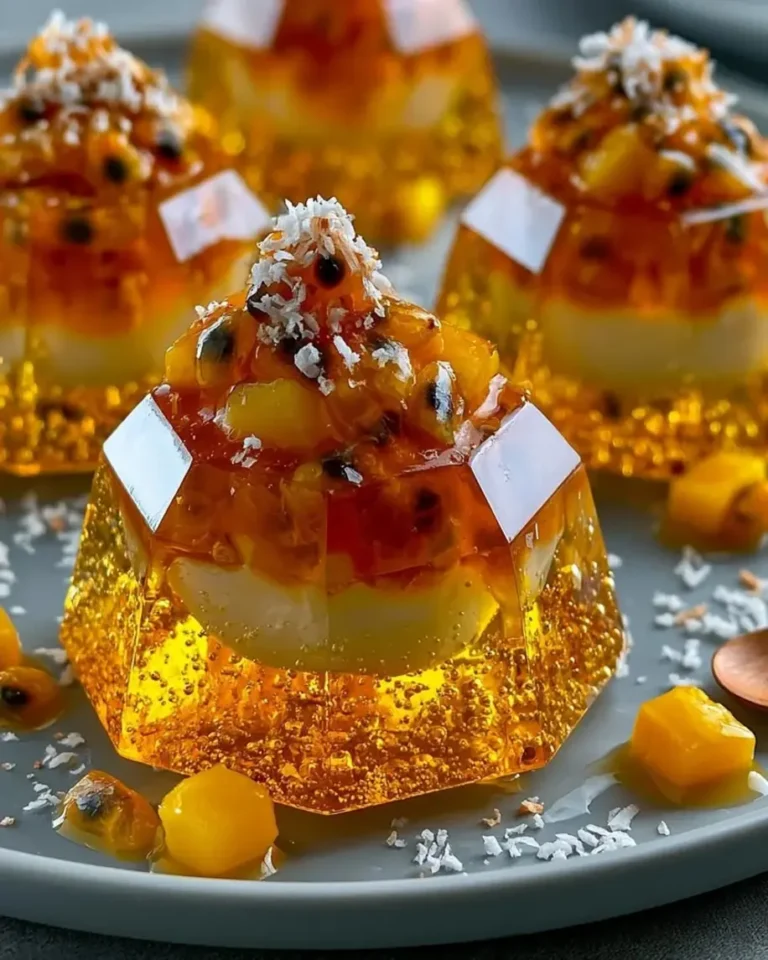
Passionfruit Mango Crystal Jewels with Coconut Cream Center
- Yield: 6 1x
Ingredients
- For the Passionfruit Mango Crystal Jewels:
- 1 cup passionfruit pulp
- 2 cups mango puree, strained
- 2 cups water
- 3/4 cup sugar
- 2 1/2 tsp agar-agar powder
- 1 tbsp lime juice
- 1/4 tsp salt
- For the Coconut Cream Center:
- 8 oz mascarpone cheese
- 1/2 cup coconut cream
- 1/4 cup powdered sugar
- 1 tsp vanilla extract
- 1 tbsp honey
- For the Tropical Glaze:
- 1/4 cup mango preserves
- 1 tbsp passionfruit pulp
- 1 tbsp honey
- 1 tsp lime juice
- For Garnish (optional):
- Fresh mango cubes
- Passionfruit seeds
- Toasted coconut flakes
Instructions
- Combine passionfruit pulp, mango puree, water, sugar, agar-agar powder, lime juice, and salt in a saucepan. Heat while stirring until fully dissolved and bring to a gentle simmer.
- Pour the mixture into jewel-shaped silicone molds and refrigerate until fully set and translucent.
- Whip mascarpone cheese, coconut cream, powdered sugar, vanilla extract, and honey until smooth, light, and fluffy. Chill until ready to use.
- Carefully unmold the crystal jewels and create a small cavity in the center of each piece.
- Pipe the coconut cream filling into the center, creating a rich creamy core.
- Warm mango preserves, passionfruit pulp, honey, and lime juice until smooth and glossy. Allow to cool slightly.
- Brush or drizzle the tropical glaze over the jewels for a sparkling gemstone finish.
- Garnish with fresh mango cubes, passionfruit seeds, and toasted coconut flakes. Serve thoroughly chilled.
Nutrition
- Calories: 280
- Sugar: 30g
- Fat: 14g
- Carbohydrates: 36g
- Protein: 3g
Tried This Recipe? Leave a Comment!
Did you make this recipe? I’d love to hear how it turned out! Please leave a comment and a rating below. Your feedback helps other home cooks and supports cheerychop.com!
For more delicious inspiration, follow me on Pinterest!