
Rustic Slow-Braised Beef Stew with Spiced Eggs
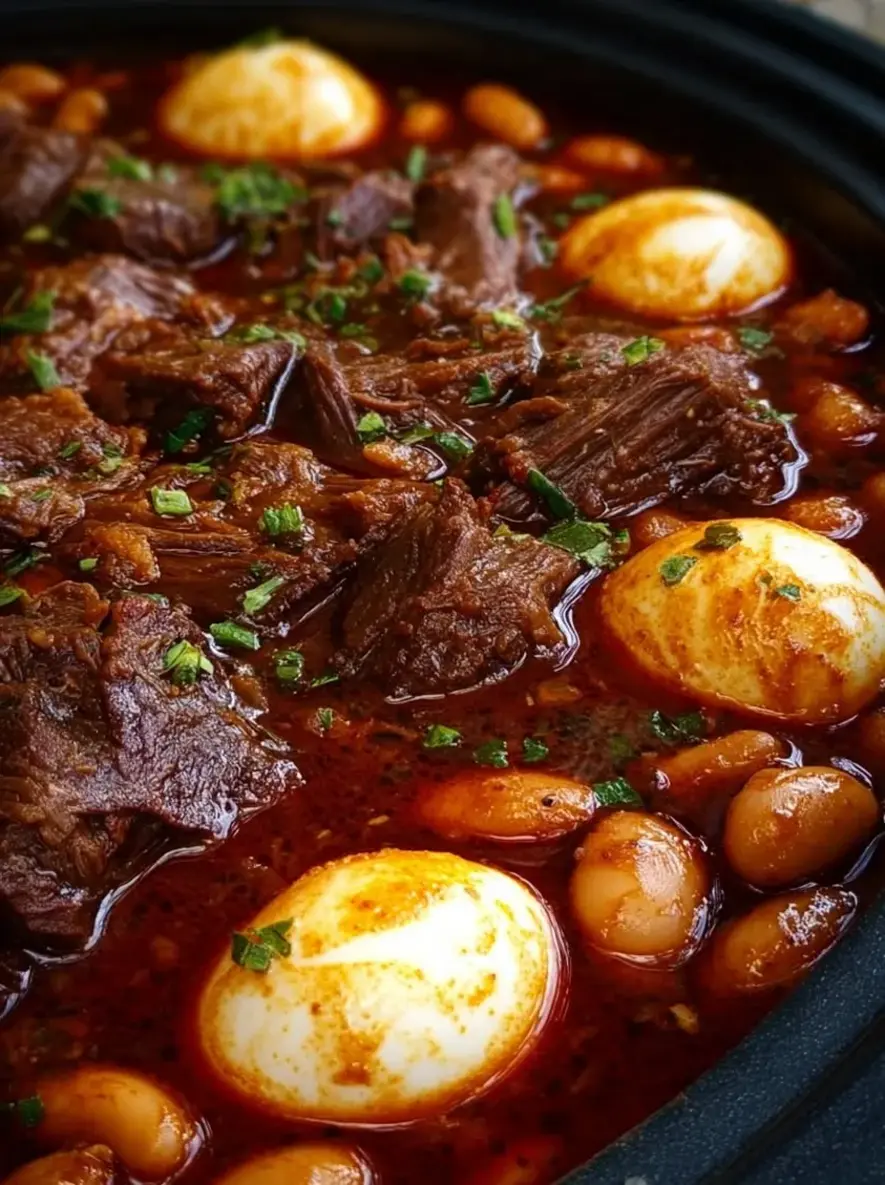
Table of Contents
Slow-Braised Rustic Beef Stew with Spiced Eggs and Hearty Beans – Rich, Smoky Comfort
I’ll never forget the first time I tasted a slow-braised beef stew with spiced eggs in my mother’s kitchen in Morocco. The air was thick with smoked paprika and cumin, and the eggs—gently simmered in a rich tomato sauce—seemed to drink up all the warmth. Now, living in NYC and trained in classic French technique, I’ve reimagined that memory into this slow-braised rustic beef stew with spiced eggs and hearty beans. It’s the kind of meal that makes a snowy afternoon feel like a celebration, and it’s become a staple in our home every fall.
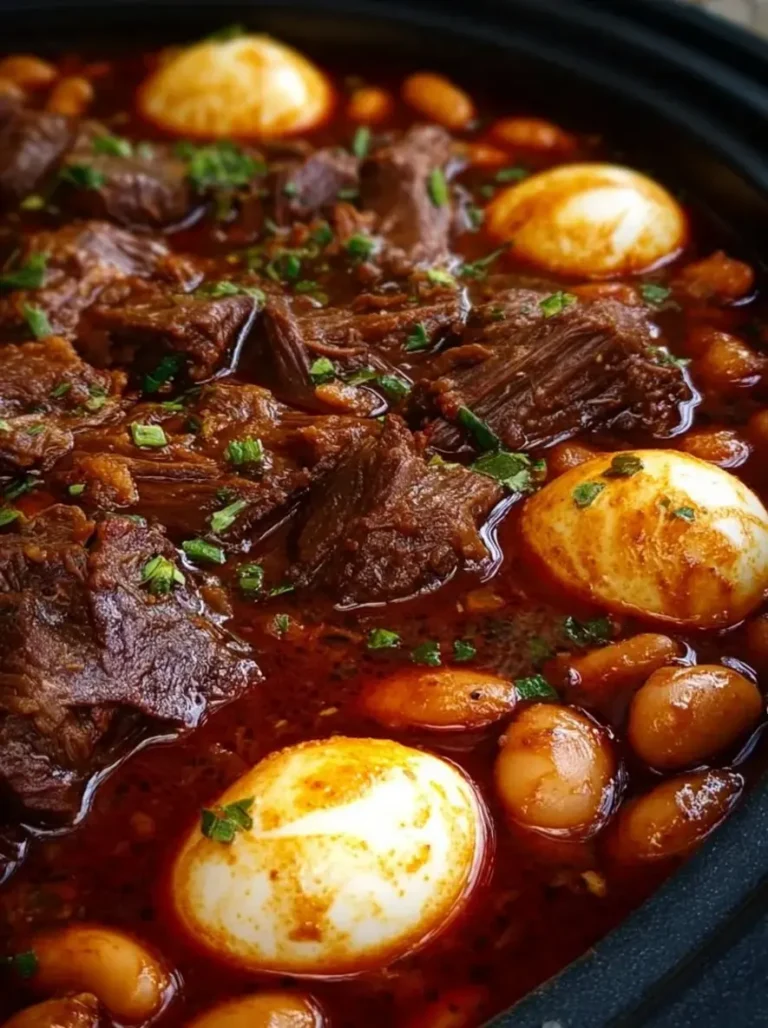
The beef chuck melts into fork-tender shreds, while the eggs develop a delicate smoky crust from the paprika and cumin. The beans—kidney beans or white beans—swell in the sauce, catching every bit of goodness. The tomato base is deep, almost sweet from the long braise, with a layer of heat from smoked paprika that lingers gently. When you lift the lid, the steam carries all those aromas: garlic, coriander, and the faint tang of good beef broth. It’s comfort that feels both rustic and refined—the kind of dish that tastes even better the next day.
What sets my version apart is the way I layer the spices: blooming them in hot tomato paste before adding the liquid, a trick I learned while studying at Le Cordon Bleu in Paris. This blooming technique releases the essential oils and gives the sauce a depth you can’t get from simply sprinkling spices in. One common mistake I see is rushing the sear—if the beef doesn’t brown, you lose all that flavor in the pan. Take your time, and you’ll be rewarded. 💡 Stella’s Pro Tip: For the best texture, let the stew rest off the heat for 10 minutes before serving—it lets the flavors marry and the meat relax.
Why This Slow Braised Beef Stew Recipe Is the Best
The Flavor Secret: By blooming smoked paprika, cumin, and coriander in hot tomato paste, I create a base that is both smoky and bright—a nod to my Moroccan heritage. French training taught me to deglaze with broth, scraping up the fond, which builds a sauce that clings beautifully to the beef.
Perfected Texture: Braising at a mere bubble (not a full boil) for 2 hours breaks down the connective tissue in chuck until it’s spoon-tender. The eggs, added in the last 10 minutes, stay soft and creamy, while the beans keep their shape. No mushiness here.
Foolproof & Fast to Prep: Don’t be intimidated by the ingredient list. The active prep is only 20 minutes, and the oven does the rest. This is a recipe that works for beginners because it relies on gentle heat and patience, not complicated techniques.
Ingredients for the Perfect Slow Braised Beef Stew
I pick up my beef chuck from the Union Square Farmers Market—ask your butcher for a piece with good marbling. For the beans, I love dried kidney beans that I soak overnight, but good-quality canned ones work in a pinch. The spices? I buy smoked paprika from a small spice shop in the East Village; it makes all the difference.
Ingredients List
- 2 lbs beef chuck roast, cut into large chunks
- 2 tablespoons olive oil
- 1 large onion, finely chopped
- 5 cloves garlic, minced
- 2 tablespoons tomato paste
- 1 can (14 oz) crushed tomatoes
- 2 cups beef broth (preferably low-sodium)
- 1½ cups cooked beans (kidney beans or white beans)
- 4 hard-boiled eggs, peeled
- 2 teaspoons smoked paprika
- 1 teaspoon ground cumin
- 1 teaspoon ground coriander
- Salt and black pepper to taste
Ingredient Spotlight
Beef Chuck: This cut is king for braising—it has enough fat and collagen to stay moist and tender. Look for meat with white streaks (marbling). Substitution: brisket or short ribs work, but adjust cooking time.
Smoked Paprika: The soul of this dish. Use Spanish smoked paprika (pimentón) for a deep, woody flavor. Substitution: regular paprika plus a drop of liquid smoke, but it won’t be quite the same.
Beans: I prefer kidney beans for their creamy texture, but white beans (cannellini or great northern) are also excellent. Canned beans are fine—rinse them well.
Hard-Boiled Eggs: They absorb the sauce and add protein. The spiced broth turns them a beautiful amber. Substitution: try poached eggs if you prefer a runny yolk, but add them in the last 5 minutes.
| Original Ingredient | Best Substitution | Flavor / Texture Impact |
|---|---|---|
| Beef chuck | Beef brisket or short ribs | Slightly richer, may need extra 30 min braising |
| Smoked paprika | Regular paprika + pinch of chipotle powder | Less earthy, more heat |
| Kidney beans | Cannellini or chickpeas | Cannellini: creamier; chickpeas: nuttier |
| Hard-boiled eggs | Soft-boiled or poached eggs | Runny yolk enriches sauce |
Step-by-Step Instructions
Follow these steps, and you’ll have a stew that tastes like it simmered all day—even if you’re short on time. The key is to be patient with the searing and let the pot do the work.
Step 1: Sear the Beef
Heat olive oil in a large Dutch oven or heavy pot over medium-high heat. Add the beef chunks in batches—don’t crowd the pan. Sear until browned on all sides, about 3–4 minutes per side. Remove and set aside on a plate.
💡 Stella’s Pro Tip: Pat the beef dry with paper towels before searing. Moisture is the enemy of browning—dry meat gets a perfect crust.
Step 2: Sweat the Aromatics
Reduce heat to medium. Add the onion and cook until softened, about 5 minutes, scraping up any browned bits from the bottom of the pot. Add the garlic and cook 1 minute more until fragrant.
⚠️ Common Mistake to Avoid: Don’t let the garlic burn. If it turns dark, it becomes bitter. Keep it moving.
Step 3: Build the Tomato Base
Stir in the tomato paste and cook for 2 minutes, stirring constantly, until it darkens and smells sweet. This blooming step releases the spices’ full flavor. Add the crushed tomatoes and beef broth, scraping up all the caramelized bits from the bottom (that’s pure flavor).
Step 4: Return Beef and Spice
Return the beef to the pot. Add the smoked paprika, ground cumin, and ground coriander. Stir everything together, making sure the beef is submerged. Bring to a gentle simmer—tiny bubbles around the edges, not a rolling boil.
Step 5: Slow Braise
Cover the pot, then reduce the heat to low. Let it braise for 1½ to 2 hours, checking once or twice to ensure it’s barely simmering. The beef is ready when it pulls apart easily with a fork.
💡 Stella’s Pro Tip: For deeper flavor, braise in a 325°F oven. The even heat distributes gently and reduces the risk of scorching.
Step 6: Add Beans and Eggs
Once the beef is tender, stir in the cooked beans and the peeled hard-boiled eggs. Simmer uncovered for 10 more minutes. The eggs will absorb the sauce and the beans will warm through.
⚠️ Common Mistake to Avoid: Adding the eggs too early makes them rubbery. Wait until the last 10 minutes for tender, flavorful eggs.
Step 7: Season and Serve
Taste and adjust with salt and black pepper. I usually add a generous pinch of salt at this point because the broth concentrates. Serve hot, with the eggs halved or whole, over crusty bread or fluffy couscous.
| Step | Action | Duration | Key Visual Cue |
|---|---|---|---|
| 1 | Sear beef | 10–12 min | Deep brown crust on all sides |
| 2 | Sweat aromatics | 6 min | Onion translucent, garlic fragrant |
| 3 | Build tomato base | 5 min | Tomato paste darkens, fond released |
| 4 | Combine and spice | 3 min | Spices fragrant, liquid bubbling gently |
| 5 | Braise | 1.5–2 hrs | Beef fork-tender |
| 6 | Add beans & eggs | 10 min | Eggs take on sauce color |
| 7 | Season and serve | 2 min | Balanced salt, hot and steamy |
Serving & Presentation
Serve this stew in wide shallow bowls to show off the eggs and beans. I like to halve the eggs and arrange them on top, then spoon the sauce over everything. A sprinkle of fresh parsley or cilantro adds color and a fresh note—my mother always added cilantro at the end. For a true North African touch, serve with warm crusty bread or buttery couscous.
In NYC, I often pair this with a simple arugula salad dressed in lemon and olive oil. The peppery leaves cut through the richness of the stew. For a heartier side, try roasted potatoes or garlic mashed potatoes—they soak up every drop of the tomato sauce.
| Pairing Type | Suggestions | Why It Works |
|---|---|---|
| Side Dish | Crusty bread, couscous, garlic mashed potatoes | Soaks up the rich tomato sauce |
| Sauce / Dip | Extra broth, harissa (on the side) | Harissa adds heat; broth for dipping |
| Beverage | Full-bodied red wine (Syrah), dark beer, mint tea | Wine complements beef; tea echoes Moroccan roots |
| Garnish | Fresh cilantro, parsley, a squeeze of lemon | Adds brightness and freshness |
Make-Ahead, Storage & Reheating
I often make a double batch on Sunday and let it sit in the fridge—the flavors deepen beautifully. For my busy NYC life, this is a lifesaver. Just remember to store the eggs separately if you want to keep them from absorbing too much liquid.
| Method | Container | Duration | Reheating Tip |
|---|---|---|---|
| Refrigerator | Airtight container | 3–4 days | Reheat gently on stovetop, adding a splash of broth |
| Freezer | Freezer-safe container (remove eggs) | Up to 3 months | Thaw in fridge overnight, then simmer on low |
| Make-Ahead | Pot with lid | 2 days in advance | Prepare without eggs; add fresh eggs when reheating |
For reheating, I always warm it slowly on the stove, stirring occasionally. If the stew thickens too much during storage, add a little beef broth or water to loosen it. The eggs are best when added fresh, so if you’re planning leftovers, store them separately and add them during reheating.
Variations & Easy Swaps
| Variation | Key Change | Best For | Difficulty Impact |
|---|---|---|---|
| Spicy Moroccan | Add 1 tsp harissa + ½ tsp cayenne | Heat lovers | Easy – just add spices |
| Gluten-Free / Dairy-Free | Use tamari instead of Worcestershire (if used) and serve with quinoa | Dietary restrictions | Easy – same steps |
| Spring Vegetable Twist | Add diced carrots, celery, and peas; reduce beans to 1 cup | Lighter, seasonal | Easy – add veggies with beans |
Variation: Spicy Moroccan Version
Turn up the heat with a teaspoon of harissa paste stirred in along with the tomato base. The harissa adds a complex chili-smoke flavor that reminds me of the souks in Marrakech. If you don’t have harissa, use ½ teaspoon cayenne pepper mixed with a splash of vinegar. This version pairs beautifully with a dollop of yogurt.
Variation: Gluten-Free / Dairy-Free
This recipe is naturally gluten-free and dairy-free if you skip any bread toppings. Use tamari instead of Worcestershire sauce (if you add it), and serve with quinoa or rice instead of bread. The stew itself is entirely free of gluten and dairy, making it a perfect hearty meal for those with sensitivities.
Variation: Spring Vegetable Twist
When I see fresh peas and carrots at the Union Square Greenmarket, I like to add them to the stew in the last 20 minutes. Reduce the beans to 1 cup to keep the balance. The vegetables add a pop of color and sweetness that contrasts beautifully with the smoky sauce.
Frequently Asked Questions
What is the best cut of beef to use for slow-braised rustic beef stew?
Beef chuck is my top recommendation—it’s well-marbled, affordable, and becomes fork-tender after a long, gentle braise. Other excellent options include brisket, which has a rich flavor, or short ribs, which are extra fatty and decadent. Avoid lean cuts like sirloin or round, as they will dry out and remain tough. When shopping, look for pieces with visible white streaks of fat throughout the meat—that’s what keeps the stew moist during the 2-hour cooking time.
Can I substitute the spiced eggs with something else in this beef stew recipe?
Absolutely! If you’re not a fan of eggs, you can replace them with extra beans—try using 2 cups total of cooked kidney beans or chickpeas. For a protein boost, cubed firm tofu or seared chicken thighs (added during the last 15 minutes) work well. If you love the idea of a soft, creamy element but want to skip eggs, consider adding a dollop of crème fraîche or yogurt right before serving. The eggs are a signature touch, but the stew is versatile enough to adapt.
How long should I braise the beef stew to get the most tender results?
For perfectly tender beef, braise for 1½ to 2 hours at a gentle simmer. The key is to keep the liquid at a low bubble—not a rolling boil. If you’re using a different cut like brisket, you may need up to 2½ hours. To test, insert a fork into the largest piece; it should slide in with little resistance. I recommend checking at the 1½-hour mark and then in 15-minute intervals. Under-braising leaves the meat tough, but over-braising can make it dry and stringy.
What type of beans work best with a rich tomato sauce in a rustic beef stew?
Kidney beans are my go-to because they hold their shape well and have a creamy interior that soaks up the tomato sauce. White beans like cannellini or great northern are also fantastic—they’re softer and add a velvety texture. Chickpeas are another excellent option; they bring a nutty flavor and firm bite. Avoid black beans or lentils, which can turn the stew muddy in color and texture. For the best results, cook dried beans from scratch, but canned beans (rinsed) work perfectly in a pinch.
Can I make this slow-braised beef stew in a slow cooker?
Yes, you can adapt this recipe for a slow cooker. First, sear the beef in a skillet and sauté the aromatics as directed – this step is crucial for building deep flavor. Transfer everything to the slow cooker, add the tomato base, spices, and broth, then cook on low for 7–8 hours or on high for 4–5 hours. Add the beans and hard-boiled eggs during the last 30 minutes of cooking. The slow cooker gives you a slightly more tender result with less hands-on time.
What if I don’t have a Dutch oven? Can I use a regular pot?
A heavy-bottomed pot with a tight-fitting lid works beautifully if you don’t own a Dutch oven. The key is that the pot retains and distributes heat evenly to prevent scorching. Stainless steel or enameled cast iron are best. If your pot lid isn’t very tight, you can cover it with a layer of aluminum foil before putting the lid on to trap steam. The same searing and braising techniques apply—just keep a close eye on the liquid level during the 2-hour braise and add a splash of broth if needed.
How do I get a rich, deep tomato base for this stew?
The secret lies in blooming the tomato paste. After adding the paste to the pot with the aromatics, cook it for a full 2 minutes, stirring constantly, until it deepens from bright red to a rusty brick color. This caramelization unlocks savory sweetness and umami. Deglazing with broth and scraping up the browned bits (fond) from the pan also adds incredible depth. Finally, using good-quality crushed tomatoes—preferably fire-roasted—makes a noticeable difference in the final sauce.
Can I freeze this beef stew with the eggs?
I recommend freezing the stew without the hard-boiled eggs, as the eggs can become rubbery and watery when thawed. Instead, make the stew base, cool it completely, and transfer it to a freezer-safe container. When you’re ready to serve, thaw the stew overnight in the refrigerator, reheat gently on the stove, and then add freshly hard-boiled eggs during the last 10 minutes of simmering. This way, you get the best texture and flavor from the eggs every time.
What are the best herbs to add to this rustic beef stew?
Fresh cilantro is my first choice—it’s authentic to the Moroccan roots of this dish and brightens the smoky flavor. Fresh parsley is another excellent option, especially Italian flat-leaf. For a more French twist, add a bay leaf and a sprig of thyme during the braise (remove before serving). Dried herbs like oregano or marjoram work too, but I recommend adding them sparingly—a teaspoon of dried oregano is plenty. The key is to use herbs that complement, not overpower, the rich tomato and spice profile.
Can I use canned beans instead of dried in this recipe?
Absolutely, canned beans are a fantastic time-saver. Simply drain and rinse them well to remove excess sodium and any canned flavor. Add them during the last 10 minutes of cooking—since they’re already cooked, they just need to warm through and absorb the sauce. If you’re using dried beans, make sure to soak them overnight and cook until tender before adding to the stew. I’ve tested both ways, and the flavor is nearly identical; the main difference is texture—dried beans tend to be slightly firmer.
Share Your Version!
I truly believe food is meant to be shared—and I’d love to see how your slow-braised rustic beef stew turns out! Did you add extra spice? Swap the beans for chickpeas? Or maybe you discovered a new favorite side dish to serve with it. Drop a comment below with a star rating—your feedback helps me create even better recipes for you.
Snap a photo of your stew and tag me on Instagram or Pinterest (@leosfoods). I love seeing your kitchen creations, and it makes my day to know this recipe brought warmth to your table. From my NYC kitchen to yours — I hope this recipe brings as much warmth to your table as it does to mine. — Stella 🧡
Love This Recipe? Save It to Pinterest!
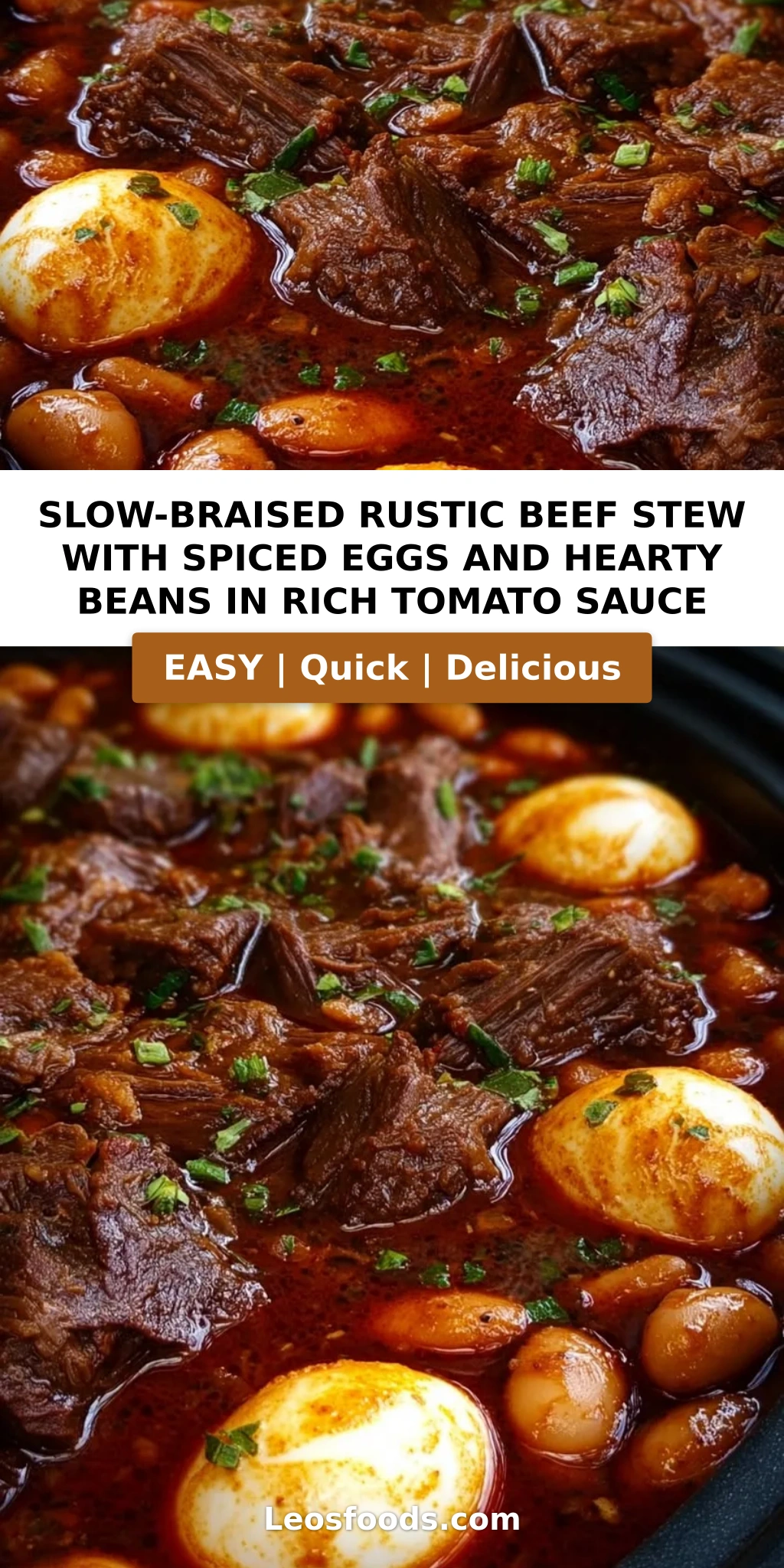
If you enjoyed this Slow-Braised Rustic Beef Stew with Spiced Eggs and Hearty Beans recipe, don’t let it get lost in your browser tabs! 😄 Pin it now so you can find it again anytime—and explore hundreds more tried-and-tested recipes waiting for you on my Pinterest boards.
👉 Follow Stella on Pinterest @stellarecipeblog
📌 Pin this recipe · 🔁 Re-pin your favorites · 💬 Tag me when you make it — I love seeing your creations!
Slow-Braised Rustic Beef Stew with Spiced Eggs and Hearty Beans in Rich Tomato Sauce
A hearty, slow-braised beef stew with tender chunks of beef chuck, smoky spiced eggs, and creamy beans in a rich tomato sauce. Perfect for cold weather comfort.
- Total Time: 2 hours 20 minutes
- Yield: 6 1x
Ingredients
- 2 lbs beef chuck roast, cut into large chunks
- 2 tablespoons olive oil
- 1 large onion, finely chopped
- 5 cloves garlic, minced
- 2 tablespoons tomato paste
- 1 can (14 oz) crushed tomatoes
- 2 cups beef broth
- 1½ cups cooked beans (kidney beans or white beans)
- 4 hard-boiled eggs, peeled
- 2 teaspoons smoked paprika
- 1 teaspoon ground cumin
- 1 teaspoon ground coriander
Instructions
- Heat olive oil in a large Dutch oven or heavy pot over medium-high heat. Add beef chunks in batches and sear until browned on all sides. Remove and set aside.
- Reduce heat to medium. Add onion and cook until softened, about 5 minutes. Add garlic and cook 1 minute more.
- Stir in tomato paste and cook for 2 minutes, until darkened. Add crushed tomatoes and beef broth, scraping up any browned bits.
- Return beef to the pot. Add smoked paprika, ground cumin, and ground coriander. Stir to combine. Bring to a simmer.
- Cover and reduce heat to low. Braise for 1½ to 2 hours, until beef is very tender.
- Add cooked beans and peeled hard-boiled eggs. Simmer uncovered for 10 more minutes, allowing flavors to meld.
- Season with salt and pepper to taste. Serve hot.
Notes
For best flavor, use a good quality smoked paprika. You can substitute the beans with chickpeas if desired. The eggs can be added whole or halved.
- Prep Time: 20 minutes
- Cook Time: 2 hours
- Method: Main Course
- Cuisine: Rustic
Nutrition
- Calories: 450
- Sugar: 8 g
- Fat: 20 g
- Carbohydrates: 25 g
- Protein: 35 g
Tried This Recipe? Leave a Comment!
Did you make this recipe? I’d love to hear how it turned out! Please leave a comment and a rating below. Your feedback helps other home cooks and supports cheerychop.com!
For more delicious inspiration, follow me on Pinterest!