Golden Moroccan Roasted Chicken with Sweet Prunes
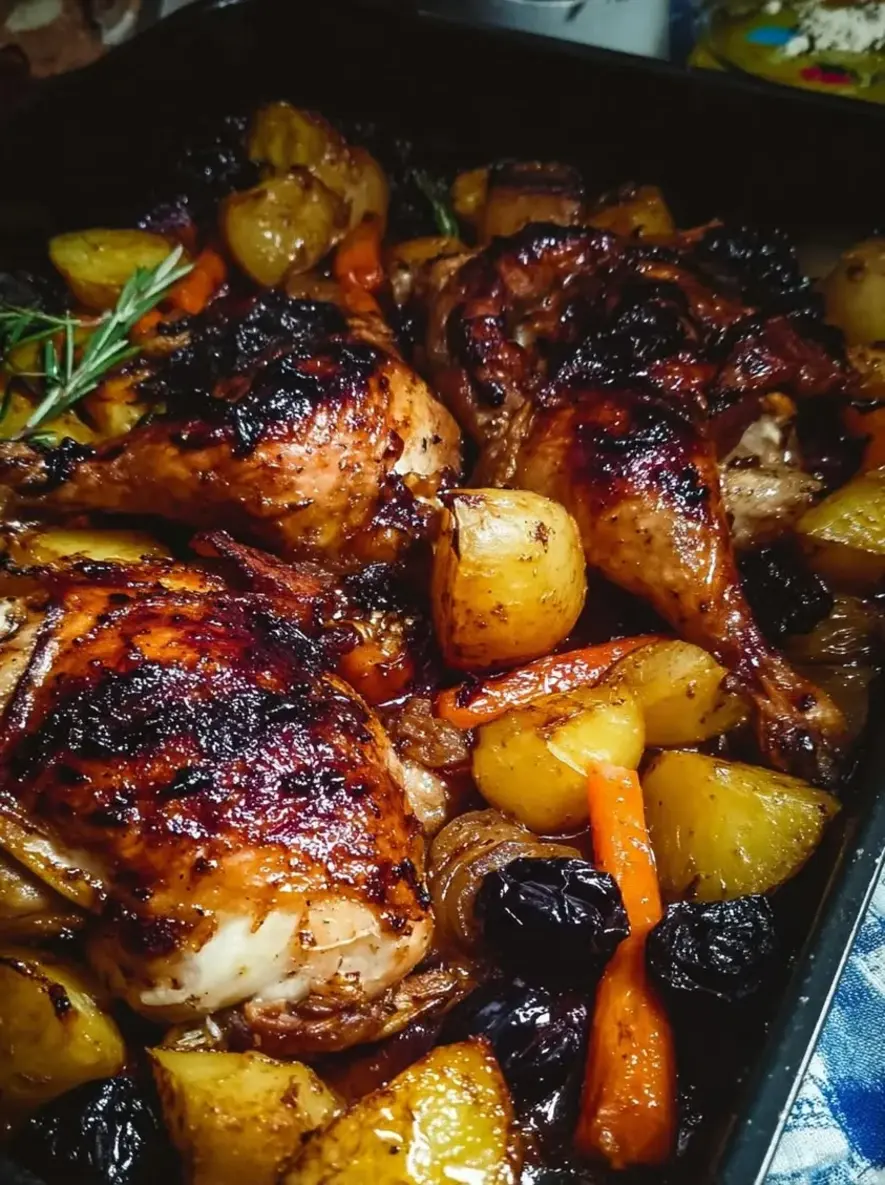
Table of Contents
Golden Moroccan-Style Roasted Chicken with Caramelized Vegetables and Sweet Prunes – A One-Pan Honey-Roasted Dinner That Brings North Africa to Your Table
I still remember the first time I made this Moroccan roasted chicken with prunes for a dinner party here in New York City. It was a chilly November evening, and I wanted something that smelled like my mother’s kitchen in Marrakech — warm, spiced, and deeply comforting. As the chicken roasted, the aroma of turmeric, ginger, and cumin filled my tiny Manhattan apartment, and by the time my guests arrived, they were already asking what was in that pot. This Moroccan chicken recipe is the kind of dish that stops conversation for a moment when you bring it to the table — and then starts it right back up, because everyone wants to know how you got that golden, glossy skin and those sweet, caramelized vegetables. It’s no exaggeration to say this chicken with caramelized vegetables has become my most-requested recipe among friends and family.
What makes this dish so special is the way the honey roasted chicken develops a sticky, burnished exterior while the potatoes and carrots beneath soak up all those spiced pan juices. The prunes add little bursts of sweetness that play beautifully against the earthy warmth of paprika, turmeric, and cumin — a combination I fell in love with as a child in Morocco and later learned to balance with French precision during my culinary training in Paris. Every bite hits that perfect note between savory and sweet, with tender meat that pulls away from the bone and vegetables that have gone soft and jammy at the edges. The first time I tested this recipe for my blog, I ate an entire leg quarter standing over the kitchen counter before I even got a plate out — and I have zero regrets about that.
This version of Moroccan chicken dinner is the one I always turn to when I want something impressive but not fussy. I’ve streamlined it so the spice paste does double duty as a marinade and a sauce builder, and the one-pan format means you get perfectly cooked chicken and vegetables with minimal cleanup. In this post, I’m sharing my tested technique for getting crispy skin without drying out the meat (including the exact oven temperature and resting time I learned in pastry school), plus a few common mistakes I see home cooks make when they try to caramelize vegetables under chicken. Whether you’re new to Moroccan cooking or you’ve been making tagines for years, I think you’ll find this Moroccan roasted chicken with prunes recipe both approachable and rewarding. Let’s get to it!
Why This Golden Moroccan-Style Roasted Chicken Recipe Is the Best
The Flavor Secret: The magic here is the honey-tomato paste glaze. I learned this technique during my time at Le Cordon Bleu in Paris — a simple panade of tomato paste and honey creates a surface that caramelizes beautifully without burning. Combined with the Moroccan spice blend of paprika, ginger, turmeric, and cumin, it builds layers of flavor that no bottled marinade can touch. The prunes aren’t just for sweetness either; they melt into the pan juices and create a natural sauce that coats every vegetable.
Perfected Texture: By arranging the chicken on top of the vegetables rather than beside them, the fat renders down and bastes the potatoes and carrots as they roast. The prunes release their moisture and help steam the vegetables from below, while the exposed chicken skin gets direct heat for that golden-brown finish. I call this the “stacked roasting” method, and it’s the same technique I used when working in a busy NYC bistro kitchen to get dinner on the table for 80 covers a night.
Foolproof & Fast: This recipe uses leg quarters, which are virtually impossible to overcook. The dark meat stays juicy even if you accidentally leave it in the oven an extra five minutes. With just 15 minutes of active prep time and a single roasting pan, it’s the kind of Moroccan chicken dinner you can pull off on a Tuesday night or serve to company on Saturday — and both times it will disappear just as fast.
Moroccan Roasted Chicken with Prunes Ingredients
Every Saturday morning, I walk down to the Union Square Greenmarket and pick up my chicken from a pastured-poultry farmer who sets up near the southeast corner. For this Moroccan chicken recipe, I always look for leg quarters with the skin on — that skin is where all the golden, crackling goodness happens. The prunes I buy from a little halal market in Astoria that imports dried fruit directly from Morocco, but any good-quality California prunes will work beautifully. Here’s everything you’ll need:
Ingredients List
- 4 chicken leg quarters (about 2½ lbs total)
- 4 large potatoes (Yukon Gold or Russet), peeled and cut into 2-inch chunks
- 3 carrots, peeled and sliced into ½-inch rounds
- 1 cup pitted prunes (about 6 oz)
- 4 cloves garlic, minced
- 1 large yellow onion, sliced into half-moons
- 3 tablespoons olive oil, divided
- 2 tablespoons honey (use a mild wildflower or clover honey)
- 1 tablespoon tomato paste
- 1 teaspoon paprika (smoked or sweet — both work)
- 1 teaspoon ground ginger
- 1 teaspoon turmeric
- 1 teaspoon cumin
- Kosher salt and freshly ground black pepper, to taste
- Optional garnish: fresh cilantro or parsley, chopped
Ingredient Spotlight
Chicken Leg Quarters: This is hands-down the best cut for roasting Moroccan-style. The skin stays intact during cooking, and the dark meat stays moist even at higher temperatures. When shopping at a US grocery store, look for leg quarters that are evenly colored and smell fresh — avoid any with a strong “poultry” odor. If you can’t find leg quarters, whole chicken legs (drumstick + thigh attached) work perfectly. I do not recommend boneless, skinless thighs here because they lack the fat needed to keep the meat tender during the longer roasting time.
Prunes: Prunes are the unsung heroes of this Moroccan roasted chicken with prunes. As they roast, they soften and release a honey-like sweetness that balances the warm spices. In American supermarkets, look for “pitted prunes” in the dried fruit aisle — Sun-Maid and Made in Nature are reliable brands. If you can find Medjool dates, they make a wonderful substitute, though they’re sweeter and will create a darker pan sauce. Dried apricots are another excellent swap; they add a slightly tart edge that many of my readers love.
Turmeric: This is the spice that gives the chicken that gorgeous golden color. Beyond appearance, turmeric has an earthy, slightly peppery flavor that forms the backbone of many Moroccan dishes. I buy ground turmeric from Kalustyan’s in Manhattan (a truly magical spice shop), but any grocery store brand will work. A word of caution: turmeric stains everything it touches — cutting boards, countertops, and wooden spoons — so use a stainless steel bowl for mixing your spice paste.
Honey: The honey in this recipe is not just a sweetener — it’s part of the caramelization process. When you roast it at 375°F, the natural sugars in honey begin to brown and develop those complex, almost toasty notes that make the chicken skin irresistible. I recommend a mild honey like clover or orange blossom so it doesn’t overpower the spices. If you’re vegan, you can substitute maple syrup, but the caramelization will be slightly less pronounced and the color won’t be as deep.
| Original Ingredient | Best Substitution | Flavor / Texture Impact |
|---|---|---|
| Chicken leg quarters | Whole chicken legs or bone-in thighs | Slightly drier if using thighs only; legs stay very moist |
| Prunes | Medjool dates or dried apricots | Dates: sweeter, darker sauce. Apricots: brighter, slightly tart |
| Honey | Maple syrup or agave nectar | Maple: less caramelization, slightly thinner glaze |
| Turmeric | Saffron (pinch) or curry powder (omit cumin) | Saffron: more delicate, floral. Curry powder: more complex but less pure |
| Potatoes | Sweet potatoes or parsnips | Sweet potatoes: softer, sweeter. Parsnips: more earthy, less starch |
How to Make Golden Moroccan-Style Roasted Chicken — Step-by-Step
Making this Moroccan chicken recipe is surprisingly straightforward. The key is building that spice paste and then letting the oven do the heavy lifting. Here’s exactly how I do it in my own kitchen:
Step 1: Prepare the Spice Paste
In a small bowl, combine 1 teaspoon each of paprika, ground ginger, turmeric, and cumin with the 4 cloves of minced garlic and 2 tablespoons of olive oil. Stir everything together until you have a thick, fragrant paste. The smell at this point is incredible — pure Morocco. I always taste a tiny bit of the paste (it’s safe since it’s just spices and oil) to check the balance of flavors. If it tastes too earthy, add a pinch of salt. If it feels one-dimensional, a tiny extra pinch of cumin usually does the trick.
💡 Stella’s Pro Tip: Let the spice paste sit for 5 minutes after mixing. This brief rest allows the garlic to infuse the oil and the dried spices to hydrate slightly, which makes them cling to the chicken better and prevents them from burning in the oven.
Step 2: Season the Chicken
Pat the chicken leg quarters dry with paper towels — this is crucial for crispy skin. Rub the spice paste all over each piece, making sure to get some under the skin if possible (gently slide your fingers between the skin and meat to create a pocket). I season the chicken on a plate so I can see that every surface is coated. After rubbing, set the chicken aside at room temperature while you prepare the vegetables — this gives the spices about 10 minutes to start working into the meat.
⚠️ Common Mistake to Avoid: Don’t skip patting the chicken dry. If the skin is damp, the spice paste will steam off rather than roast onto the surface, and you’ll end up with pale, rubbery skin instead of that golden-brown crackle we’re after.
Step 3: Prepare the Vegetables
In your largest roasting pan, toss the potato chunks, sliced carrots, and sliced onion with the remaining 1 tablespoon of olive oil. I use my hands for this — it’s the fastest way to ensure every piece is lightly coated. Spread the vegetables in an even layer across the bottom of the pan. Don’t overcrowd them; if they’re piled too high, they’ll steam instead of caramelizing. If your pan is too small, use a rimmed baking sheet instead.
💡 Stella’s Pro Tip: Cut your potato chunks no smaller than 2 inches. Smaller pieces will cook too quickly and turn to mush before the chicken is done. You want them to hold their shape and develop those beautiful golden-brown edges.
Step 4: Assemble and Roast
Place the seasoned chicken leg quarters on top of the vegetables, skin side up. Drizzle the honey over the chicken and vegetables — I use a spoon to ribbon it across everything evenly. Then dot small spoonfuls of tomato paste around the pan; don’t stir it in, just let it sit on top. Sprinkle the prunes around the chicken and between the vegetables. Roast at 375°F for 45–50 minutes, pulling the pan out halfway through to stir the vegetables (be careful not to disturb the chicken). The chicken should be deep golden-brown, the vegetables tender and caramelized, and the prunes plump and glossy.
⚠️ Common Mistake to Avoid: Opening the oven door too often. Every time you open it, the temperature drops and the skin takes longer to crisp. I wait until the 25-minute mark to stir the vegetables, and that’s the only time I open the door until the chicken is done.
Step 5: Rest and Serve
Let the chicken rest in the pan for a full 5 minutes after it comes out of the oven. This is non-negotiable! The juices inside the meat need time to redistribute, so if you cut into the chicken immediately, all that moisture will end up on the cutting board rather than in your mouth. During these 5 minutes, I spoon some of the pan juices over the chicken and vegetables to keep everything glossy. Then transfer the chicken and vegetables to a serving platter, and pour the remaining pan juices over the top.
💡 Stella’s Pro Tip: Use a meat thermometer to check for doneness. The chicken is ready when the thickest part of the thigh reaches 165°F. But honestly, at 375°F for 45–50 minutes, leg quarters are almost always perfectly cooked. I rely more on visual cues: the skin should be golden and pulling away from the drumstick slightly, and the juices should run clear when you pierce the thigh.
| Step | Action | Duration | Key Visual Cue |
|---|---|---|---|
| 1 | Mix spice paste | 2 min | Thick, fragrant, dark orange paste |
| 2 | Season chicken | 3 min | Chicken evenly coated, no bare spots |
| 3 | Toss vegetables | 3 min | Vegetables glistening with oil, evenly coated |
| 4 | Assemble and roast | 45–50 min | Skin golden-brown, vegetables caramelized, prunes plump |
| 5 | Rest and serve | 5 min | Pan juices settled, chicken glistening |
Serving & Presentation
When I serve this Moroccan roasted chicken with prunes, I like to bring the whole roasting pan to the table — it’s rustic and stunning, and everyone loves seeing the glossy chicken nestled among the caramelized vegetables and prunes. Transfer the chicken to a large, shallow platter and arrange the vegetables and prunes around it. Spoon a generous amount of the pan juices over everything; that golden liquid is liquid gold, full of spice and sweetness. I always sprinkle a handful of fresh cilantro or parsley over the top right before serving — it adds a pop of green that makes the dish look even more inviting.
In my home, we serve this with couscous — the fluffy grains soak up the pan juices beautifully. I make a quick lemon-herb couscous by stirring in some chopped mint and a squeeze of lemon right before serving. But crusty bread is just as good, especially if you’re someone (like me) who likes to mop up every last drop of sauce from your plate. For a lighter meal, a simple arugula salad with lemon vinaigrette is a lovely counterpoint to the richness of the chicken.
My favorite way to plate this for dinner guests is to place one leg quarter on each plate, fan the potatoes and carrots alongside, and tuck a few prunes in between. A final drizzle of pan juices and a sprinkle of fresh herbs, and you have a dish that looks like it came from a restaurant — but you made it in your own kitchen. As my French chef instructor in Paris used to say, “On mange d’abord avec les yeux” — we eat first with our eyes. And this dish delivers on that promise.
| Pairing Type | Suggestions | Why It Works |
|---|---|---|
| Side Dish | Couscous, quinoa, crusty bread, or steamed basmati rice | Grains absorb the spiced pan juices and balance the sweetness |
| Sauce / Dip | Harissa yogurt, chermoula, or preserved lemon aioli | Adds brightness and a touch of heat to cut the richness |
| Beverage | Mint tea, dry Riesling, or a Moroccan rosé | Mint tea cleanses the palate; wine’s acidity balances the honey |
| Garnish | Fresh cilantro, parsley, toasted almonds, or pomegranate seeds | Adds freshness, crunch, and visual contrast |
Make-Ahead, Storage & Reheating
In my busy New York City life, I often make this Moroccan chicken recipe on Sunday night and eat it for lunches through the week. It’s one of those dishes that actually tastes better on day two, because the flavors have had time to meld. I’ll walk you through my tested storage and reheating methods so you can enjoy it at its best, whether you’re meal-prepping or saving leftovers from a dinner party.
| Method | Container | Duration | Reheating Tip |
|---|---|---|---|
| Refrigerator | Airtight glass container, chicken and vegetables stored together | Up to 4 days | Reheat in a 350°F oven for 15 min, covered with foil to retain moisture |
| Freezer | Freezer-safe zip-top bag or rigid container, remove as much air as possible | Up to 3 months | Thaw overnight in the fridge, then reheat in a 350°F oven for 20 min |
| Make-Ahead | Assemble in the roasting pan, cover and refrigerate | Up to 24 hours in advance | Add 5–10 minutes to roasting time if baking straight from the fridge |
The most important thing I’ve learned about reheating this honey roasted chicken is to avoid the microwave at all costs. It makes the skin rubbery and the vegetables soggy. Instead, I reheat leftovers in a 350°F oven for about 15 minutes, with a sheet of foil tented loosely over the top to keep the moisture in. Remove the foil for the last 3 minutes if you want to re-crisp the skin. If I’m reheating just the vegetables and prunes (without the chicken), I’ll add a splash of chicken broth to the pan to keep them from drying out.
One of my favorite ways to use leftover Moroccan chicken with caramelized vegetables is to shred the chicken and toss it with the vegetables and any remaining pan juices, then pile it onto a bed of warm couscous or stuff it into a pita with some fresh herbs. It makes for a phenomenal lunch that tastes completely different from the original dish — in the best way possible.
Variations & Easy Swaps
| Variation | Key Change | Best For | Difficulty Impact |
|---|---|---|---|
| Chicken Thighs & Drumsticks | Replace leg quarters with 6 bone-in thighs or 8 drumsticks | Budget-friendly, quicker cooking | Easy — same technique, reduce cook time by 5–10 min |
| Spicy Harissa Version | Add 1–2 tbsp harissa paste to the spice paste | Heat lovers, North African flavor boost | Easy — no extra steps |
| Fall Harvest Twist | Swap potatoes for cubed butternut squash and add sliced apples | Autumn entertaining, seasonal flavors | Easy — squash cooks faster, check at 35 min |
Chicken Thighs & Drumsticks Variation
If chicken leg quarters are hard to find at your grocery store, this variation is your next-best option. Bone-in, skin-on thighs and drumsticks are widely available, often sold in combination packs. The main adjustment is cooking time: thighs and drumsticks are smaller than leg quarters, so they’ll be done in about 35–40 minutes at 375°F. Check the internal temperature with a thermometer — 165°F for thighs, 170°F for drumsticks. I actually love this version for weeknight cooking because it’s even faster than the original. The spice paste and honey glaze work beautifully on both cuts, and the prunes still caramelize to perfection around the smaller pieces of meat.
Gluten-Free / Dairy-Free Variation
This Moroccan chicken recipe is naturally gluten-free and dairy-free as written — there’s no wheat or dairy in the ingredients list at all. That makes it a fantastic option for guests with dietary restrictions. The one thing to watch for is if you’re serving it with a grain: choose certified gluten-free couscous (which is typically made from rice or corn), quinoa, or a simple roasted potato side. I often make this for my friend Leah, who has celiac disease, and she always tells me it’s one of the few roast chicken dinners she can eat without worrying. The prunes and honey provide plenty of natural sweetness, so you don’t need any butter or cream to round out the dish.
Seasonal Fall Harvest Twist
When autumn rolls around and the farmers markets in NYC are overflowing with squash and apples, I love switching up the vegetables in this dish. Instead of potatoes, I use cubed butternut squash (peeled, seeded, and cut into 1½-inch cubes). I also add one sliced Honeycrisp or Fuji apple to the pan — it roasts until soft and jammy, adding a bright, fruity note that pairs beautifully with the prunes. The cooking time reduces slightly because squash cooks faster than potatoes — start checking at 35 minutes. This version is especially gorgeous on a Thanksgiving table, where it stands up beautifully alongside all the classic sides.
How long do you roast golden Moroccan-style chicken to get crispy skin without drying out the meat?
I roast this Moroccan chicken at 375°F for 45 to 50 minutes, which I’ve found to be the sweet spot for getting the skin golden and crispy while keeping the meat juicy and tender. The key factors are the starting temperature of your chicken (let it sit at room temperature for 15 minutes before roasting so it cooks more evenly) and using a reliable meat thermometer to check for doneness in the thickest part of the thigh — you’re looking for 165°F. I also recommend patting the skin very dry with paper towels before applying the spice paste, as any moisture on the surface will create steam and prevent that crisp, crackling finish from developing. If your chicken is browning too quickly around the 35-minute mark, you can tent it loosely with foil for the remaining time.
Can I substitute dried apricots or dates for the sweet prunes in this Moroccan chicken recipe?
Absolutely you can, and I’ve tested both substitutions extensively in my own kitchen. Dried apricots will give you a slightly brighter, more tart-sweet flavor profile that many of my readers actually prefer — they hold their shape well during roasting and add a lovely golden-orange color to the pan. Medjool dates are sweeter and denser than prunes, so they’ll create a darker, more syrupy pan sauce and the dates themselves will become very soft and almost jammy. If you’re using dates, I suggest removing the pits and cutting them in half so their sweetness distributes more evenly. Both substitutes work beautifully with the spice blend, though the overall character of the dish will shift slightly — the apricots lean more toward a tagine-like brightness, while the dates make it feel richer and more dessert-adjacent.
What is the best way to caramelize the vegetables for Moroccan roasted chicken?
The best method I’ve found is to toss the vegetables with just enough olive oil to coat them lightly (about 1 tablespoon for the full recipe) and then arrange them in a single, even layer in the roasting pan. You want them to have some contact with the hot pan surface — this is what creates those golden-brown caramelized edges. I also make sure to stir the vegetables once, at the 25-minute mark, to expose new surfaces to the heat. The chicken sits on top of the vegetables, and as it roasts, the rendered chicken fat and honey-tomato paste glaze drip down onto the potatoes and carrots, coating them in flavor and helping them caramelize. Cutting the potatoes into uniform 2-inch chunks and the carrots into ½-inch rounds ensures everything cooks at the same rate. If the vegetables aren’t caramelized enough after 45 minutes, you can remove the chicken to a plate and return the vegetables to the oven for an additional 5–10 minutes while the chicken rests.
Should I marinate the chicken overnight before roasting it Moroccan-style?
I’ve tested this both ways and I actually prefer not to marinate the chicken overnight. The spice paste in this recipe is built around garlic and dried spices mixed with olive oil, and while it’s delicious, marinating for longer than 2 hours can allow the garlic to become slightly acrid and the turmeric to develop a slightly bitter edge. Instead, I recommend rubbing the spice paste onto the chicken and letting it rest at room temperature for 15 to 30 minutes while you preheat the oven and prepare the vegetables. This brief rest is enough time for the spices to begin penetrating the surface without the downsides of a long marinade. If you really want to get ahead the night before, you can assemble the entire dish in the roasting pan (chicken on top of vegetables, with the paste, honey, and tomato paste) and keep it covered in the refrigerator for up to 24 hours — then just add 5 to 10 minutes to the roasting time since you’ll be starting from cold.
Can I make this Moroccan chicken recipe in a slow cooker or Instant Pot?
I don’t recommend a slow cooker or Instant Pot for this particular recipe because you won’t get the caramelized vegetables or the crispy, golden-brown skin that make this dish so special. The high dry heat of the oven at 375°F is what transforms the honey and tomato paste into that glossy glaze and allows the potato and carrot edges to become truly caramelized. However, if you need a hands-off version, you can use the oven method with a convection setting if your oven has one — the circulating air will give you even better browning. For a completely different but still delicious slow-cooker adaptation, you could make a Moroccan-style chicken tagine by browning the chicken first, then cooking it with the spices, a little broth, and the prunes on low for 6 hours — just know it will be a very different dish from this roasted version.
What can I use instead of honey to make this recipe vegan or lower in sugar?
For a vegan version, maple syrup is your best swap — it caramelizes reasonably well at 375°F and has a warm, woody sweetness that complements the Moroccan spices beautifully. Use the same amount (2 tablespoons) and expect the final color of the chicken to be slightly darker because maple syrup contains different sugars that brown more quickly. For a lower-sugar option, you can use sugar-free maple syrup or simply reduce the honey to 1 tablespoon and add an extra tablespoon of tomato paste to maintain the glaze consistency. I’ve also tested this with a sugar-free apricot preserves, which worked surprisingly well because the natural fruit sweetness and acidity helped mimic the honey’s role. Just note that any substitution will change the caramelization dynamics slightly, so keep an eye on the chicken during the last 10 minutes of roasting.
How do I prevent the prunes from burning or becoming too hard in the oven?
Prunes have a high sugar content, so they can burn if they’re sitting directly on the bottom of the pan in a spot that gets concentrated heat. The trick I use is to scatter the prunes around the pan after the chicken and vegetables are arranged, nestling them slightly into the vegetables so they’re partially protected by the potato and carrot chunks. I also wait until the pan is about to go into the oven before adding the prunes — they don’t need to sit in the pan beforehand, and this prevents them from starting to break down before they hit the heat. If you notice the prunes are browning too quickly around the 35-minute mark (this can happen in ovens with hot spots), you can spoon a little of the pan juices over them to cool them down and add moisture. And please use prunes that are relatively fresh and still soft — if your prunes have been sitting in the pantry for months and have dried out, they won’t soften properly during roasting.
What side dishes pair best with Moroccan roasted chicken and caramelized vegetables?
In my household, we almost always serve this with a light, fluffy couscous — I make a quick version by stirring in some chopped fresh mint, a squeeze of lemon juice, and a pinch of salt right before serving. The couscous acts like a sponge for the spiced pan juices, and the bright mint and lemon cut through the richness of the chicken and honey. Another wonderful pairing is a simple arugula salad with a lemon vinaigrette and toasted pine nuts — the peppery greens and acidic dressing provide a beautiful contrast to the sweet, warm flavors of the main dish. If you’re feeding a crowd, consider adding a bowl of steamed green beans tossed with olive oil and garlic, or a plate of roasted bell peppers and chickpeas for extra color and texture. And don’t forget warm crusty bread for sopping up every last bit of that incredible pan sauce — it’s frankly non-negotiable in my kitchen.
Can I use boneless, skinless chicken breasts in this Moroccan chicken recipe?
I have tested this with boneless, skinless chicken breasts, and I’ll be honest — they’re not ideal for this recipe. Chicken breasts cook much faster than leg quarters and have very little fat, so they tend to dry out before the vegetables are fully caramelized. If you’re determined to use breasts, I recommend reducing the oven temperature to 350°F to give the vegetables more time to soften without overcooking the chicken. You’ll also want to check the internal temperature at 25 minutes and remove the breasts as soon as they hit 160°F (they’ll carry over to 165°F while resting). For a better result with lean white meat, try using bone-in, skin-on chicken breasts instead — the bone and skin help retain moisture and flavor, and they can stand up to the 45-minute roast time much better than their boneless counterparts.
How do I adjust the cooking time if I’m doubling this recipe for a crowd?
When I double this recipe for a larger group or a holiday gathering, the most important thing is to use two separate roasting pans instead of one overcrowded pan. If you try to fit eight leg quarters and double the vegetables in a single pan, the ingredients will steam rather than roast, and you’ll end up with pale, soft skin instead of that golden-brown caramelization we love. Use two identical pans and rotate them on the upper and lower oven racks at the 25-minute mark (swap their positions). The total roasting time stays about the same — 45 to 50 minutes — but I recommend checking the temperature of the chicken in both pans to account for any hot spots in your oven. For the vegetables, you may need an extra 5 minutes if they seem underdone after the chicken is finished. And if your oven can’t accommodate two pans side by side, roast them one at a time and keep the first batch warm by tenting it with foil.
Share Your Version!
I absolutely love hearing how this recipe turns out in your kitchen — especially the little twists and substitutions you make to fit your family’s tastes. If you try this Moroccan roasted chicken with prunes, please come back and leave a star rating and a comment below. Tell me what you served with it, whether you swapped in apricots or squash, or if you discovered another trick for getting that skin extra crispy. Your feedback helps other readers decide to give it a try, and I personally read every single comment.
And if you share a photo on Instagram or Pinterest, tag me @stellarecipeblog so I can see your beautiful creation! I love re-sharing reader photos in my stories — there’s nothing that makes me happier than seeing this Moroccan chicken dinner being enjoyed at tables all over the country. If you have a question about any part of the recipe, drop it in the comments and I’ll answer within a day or two. From my NYC kitchen to yours — I hope this recipe brings as much warmth to your table as it does to mine. — Stella 🧡
Love This Recipe? Save It to Pinterest!
If you enjoyed this Golden Moroccan-Style Roasted Chicken with Caramelized Vegetables and Sweet Prunes recipe, don’t let it get lost in your browser tabs! 😄 Pin it now so you can find it again anytime — and explore hundreds more tried-and-tested recipes waiting for you on my Pinterest boards.
👉 Follow Stella on Pinterest @stellarecipeblog
📌 Pin this recipe · 🔁 Re-pin your favorites · 💬 Tag me when you make it — I love seeing your creations!
🌿 Did you make this recipe? Let me know!
Leave a star rating ⭐⭐⭐⭐⭐ or share your photos in the comments. I read every one!
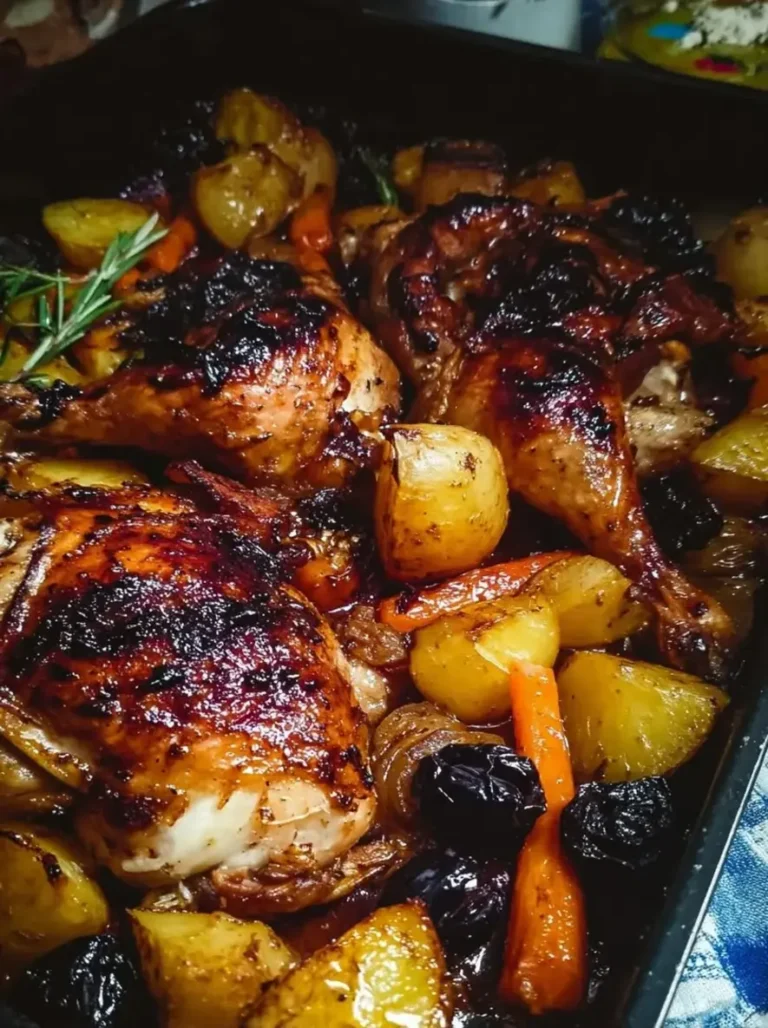
Golden Moroccan-Style Roasted Chicken with Caramelized Vegetables and Sweet Prunes
A flavorful and aromatic Moroccan-inspired roasted chicken dish featuring caramelized vegetables and sweet prunes, perfect for a hearty dinner.
- Total Time: 1 hour 5 minutes
- Yield: 4 1x
Ingredients
- 4 chicken leg quarters
- 4 large potatoes, peeled and cut into chunks
- 3 carrots, peeled and sliced
- 1 cup prunes
- 4 cloves garlic, minced
- 1 large onion, sliced
- 3 tablespoons olive oil
- 2 tablespoons honey
- 1 tablespoon tomato paste
- 1 teaspoon paprika
- 1 teaspoon ground ginger
- 1 teaspoon turmeric
- 1 teaspoon cumin
Instructions
- Preheat oven to 375°F (190°C).
- In a small bowl, mix together paprika, ground ginger, turmeric, cumin, and minced garlic with 2 tablespoons olive oil to form a paste.
- Rub the chicken leg quarters with the spice paste and set aside.
- In a large roasting pan, toss the potato chunks, sliced carrots, and sliced onion with remaining 1 tablespoon olive oil.
- Arrange the seasoned chicken on top of the vegetables.
- Drizzle honey over the chicken and vegetables, then dot with tomato paste.
- Sprinkle prunes around the pan.
- Roast in the preheated oven for 45-50 minutes, or until chicken is golden and cooked through, and vegetables are tender and caramelized, stirring vegetables halfway through.
- Let rest for 5 minutes before serving.
Notes
For a sweeter flavor, add an extra tablespoon of honey. Serve with couscous or crusty bread.
- Prep Time: 15 minutes
- Cook Time: 50 minutes
- Method: Main Course
- Cuisine: Moroccan
Nutrition
- Calories: 580
- Sugar: 18 g
- Fat: 28 g
- Carbohydrates: 52 g
- Protein: 32 g
Tried This Recipe? Leave a Comment!
Did you make this recipe? I’d love to hear how it turned out! Please leave a comment and a rating below. Your feedback helps other home cooks and supports cheerychop.com!
For more delicious inspiration, follow me on Pinterest!