Slow-Simmered Coconut Chicken Curry with Fiery Red Chilies
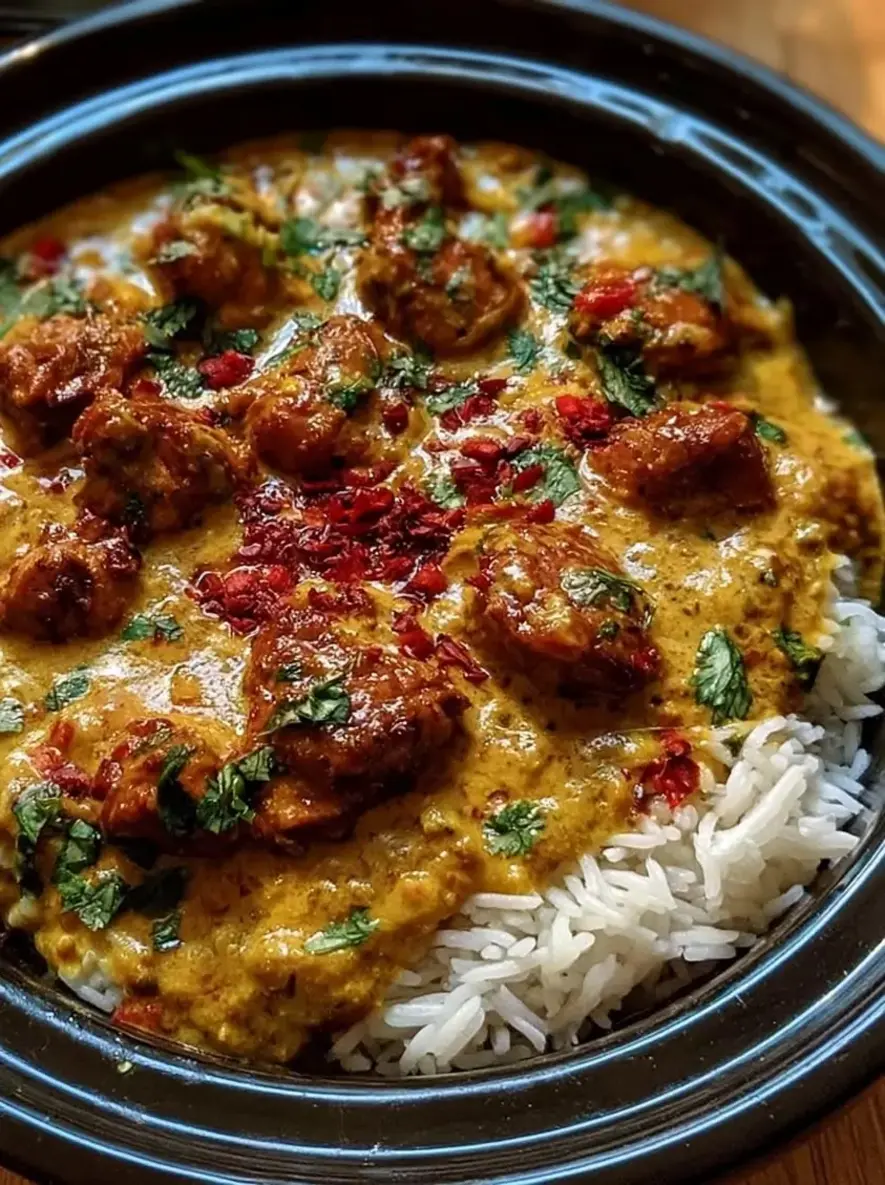
Table of Contents
Slow-Simmered Coconut Chicken Curry with Aromatic Spices and Fiery Red Chilies – A Comforting Bowl of Bold Flavors
I first learned the art of slow-simmering spices in my mother’s kitchen in Morocco, where the scent of turmeric, cumin, and ginger would fill our small home every evening. Years later, during my culinary training in Paris, I mastered the technique of building layers of flavor — browning protein first, blooming spices at just the right temperature, then letting a sauce reduce to velvety perfection. This slow-simmered coconut chicken curry is born from that fusion: the soulful spice wisdom of North Africa meets the precision of French sauce work, all grounded in the comfort-food warmth I now share from my NYC kitchen. It’s a coconut chicken curry recipe that asks only for patience — and rewards you with every fragrant, fiery spoonful.
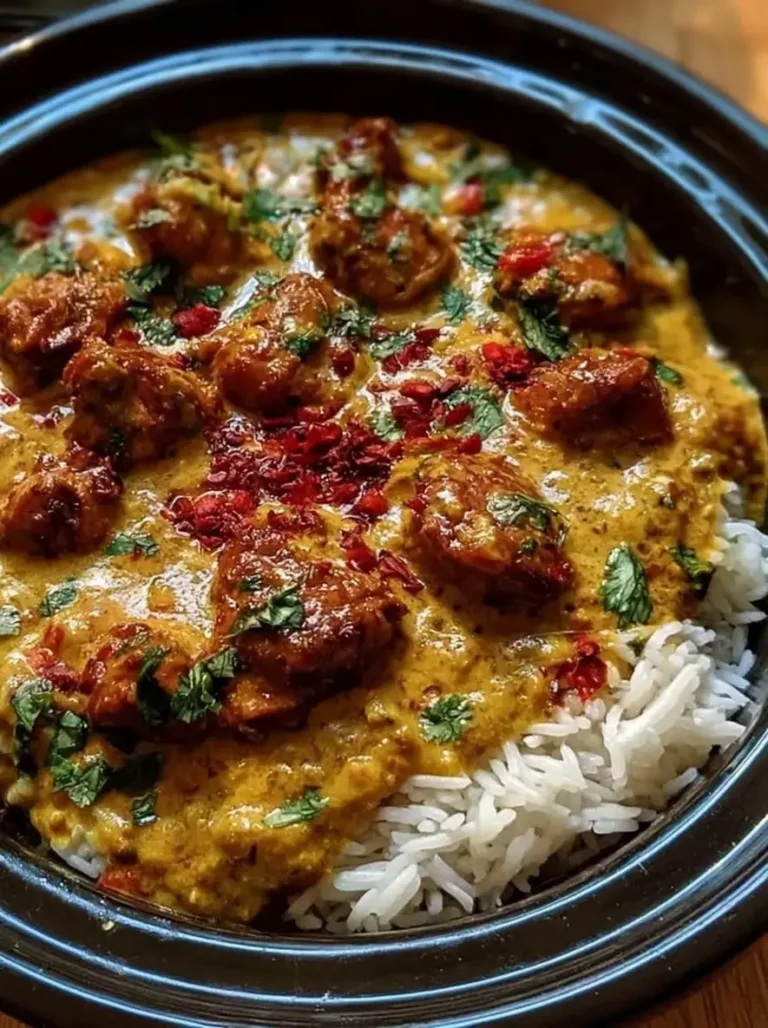
Imagine tender chunks of chicken thigh simmering in a luscious coconut milk sauce that’s been kissed by curry powder, turmeric, cumin, and a touch of smoked paprika. The sauce turns a deep golden hue as it reduces, and the aroma of ginger and garlic weaves through every bite. A whisper of brown sugar balances the earthy spices, while a squeeze of lime juice cuts through the richness with bright acidity. The red chilies — fiery and bold — awaken your palate without overwhelming it, especially when you serve this over a bed of steamed rice or alongside warm naan. It’s the kind of meal that makes you close your eyes on the first bite, and I mean that sincerely.
What sets my version apart is the technique I call “layered blooming” — browning the chicken first to build a savory base, then cooking the onion, garlic, and ginger until deeply softened before adding the spice blend. This ensures the spices release their essential oils without scorching, a common pitfall I see in many easy chicken curry recipes. I also dial up the red chilies for a fiery kick that stays warm and inviting rather than punishing. In this post, I’ll walk you through every step, share my pro tips for achieving a silky, restaurant-quality finish, and point out the one mistake that can dull your spice flavor. Whether you’re new to Thai coconut chicken curry or a seasoned home cook, this recipe was tested to bring you confidence and joy.
Why This Slow-Simmered Coconut Chicken Curry Recipe Is the Best
The Flavor Secret: The secret lies in the unhurried cooking process. By browning the chicken first, then gently blooming the spices in the same pot, you create a deep, complex base that no quick-cook version can match. I learned this technique during my time in Paris — it’s essentially a curry version of a French fond, where every layer builds on the last. The coconut milk, added after the spices have toasted, absorbs all those aromatic oils and becomes a velvety carrier of flavor. This is not a curry that comes together in twenty minutes; it’s a slow-simmered chicken curry that tastes like it’s been bubbling on the stove all afternoon, because it has.
Perfected Texture: Chicken thighs are your best friend here. They stay moist and tender even after the extended simmering time, while chicken breast can turn dry and stringy. I brown the thighs until the skin (or exposed meat) is deeply caramelized, then let them finish cooking in the sauce. The 45-minute covered simmer allows the collagen to break down, making every bite fork-tender. After uncovering and reducing for another 15 minutes, the sauce thickens naturally — no cornstarch or slurry needed. You get a luscious, cling-to-the-rice consistency that feels indulgent but comes entirely from good technique.
Foolproof & Fast (for a slow-cooked dish): Even though this is a slow-simmered coconut chicken curry, the active work is only about 15 minutes. The oven or stovetop does the rest. I’ve streamlined the ingredient list so you can find everything at your local grocery store — no specialty spice blends required. The recipe is also forgiving: you can swap in boneless skinless chicken breast if you prefer (see the FAQ), adjust the heat level by adding or omitting extra red chilies, or even make it entirely in a Dutch oven for one-pot convenience. Whether you’re meal-prepping for the week or hosting a cozy dinner, this recipe delivers reliably every single time.
Coconut Chicken Curry Recipe Ingredients
Every time I make this spicy coconut curry, I’m transported to the spice markets of Marrakech and the farmers markets of Brooklyn. I source my coconut milk from a brand that uses no guar gum (look for cans with just coconut and water — it makes a difference in texture). The curry powder I keep in a dark jar near my stove, and I always buy turmeric in small quantities so it stays fragrant. Here’s everything you’ll need for this easy chicken curry recipe.
Ingredients List
- 2 lbs (900g) boneless skinless chicken thighs, cut into chunks
- 1 tablespoon olive oil
- 1 large onion, finely diced
- 4 cloves garlic, minced
- 1 tablespoon fresh ginger, grated
- 2 tablespoons curry powder
- 1 teaspoon ground turmeric
- 1 teaspoon ground cumin
- ½ teaspoon smoked paprika
- 1 can (14 oz) full-fat coconut milk
- 1 cup chicken broth (low-sodium preferred)
- 2 tablespoons tomato paste
- 1 tablespoon brown sugar
- 1 tablespoon lime juice (about ½ lime)
- Salt and pepper, to taste
- Optional: 2–3 fresh red chilies, chopped (for extra heat)
- Optional: Fresh cilantro, for garnish
Ingredient Spotlight
Chicken Thighs: Boneless skinless thighs are ideal because they stay moist and tender during the long simmer. Look for thighs that are pink and plump, with no off-odor. If you must use chicken breast, reduce the covered simmer time to 30 minutes and check for doneness to avoid dryness. The flavor will still be wonderful, but the texture will be leaner.
Coconut Milk: Full-fat coconut milk is non-negotiable for that signature velvety sauce. I recommend Chaokoh or Aroy-D brands — they have the highest fat content and no stabilizers. Light coconut milk will yield a thinner sauce with less body. Shake the can well before opening, or stir the cream and water together in a bowl.
Curry Powder and Spices: Use a good-quality curry powder labeled “Madras” or “hot” for more depth. I buy my turmeric and cumin in small batches from the spice aisle at Kalustyan’s in NYC. Smoked paprika adds a subtle barbecue-like warmth that blends beautifully with the chilies. Store all ground spices in a cool, dark place and replace them every six months for peak flavor.
Fresh Red Chilies: Thai bird’s eye chilies or Fresno peppers work beautifully here. Remove the seeds for milder heat or keep them if you love fire. The chilies add not just heat but also a fruity, floral note that balances the rich coconut milk.
| Original Ingredient | Best Substitution | Flavor / Texture Impact |
|---|---|---|
| Chicken thighs | Boneless skinless chicken breast | Leaner, slightly drier; reduce simmer to 30 mins covered |
| Coconut milk (full-fat) | Canned coconut cream + water (mix to 14 oz) | Richer, thicker sauce; same flavor intensity |
| Curry powder (Madras) | Garam masala + extra turmeric | Warmer, less sharp; slightly sweeter finish |
| Fresh red chilies | Red pepper flakes (1–2 tsp) or cayenne (½ tsp) | Less fruity heat, more direct spice; adjust to taste |
How to Make Slow-Simmered Coconut Chicken Curry — Step-by-Step
Let me walk you through each step with the same care I use in my own kitchen. I’ve added my best pro tips and the common mistakes to avoid so your curry turns out perfectly every time.
Step 1: Brown the Chicken
Heat 1 tablespoon of olive oil in a large pot or Dutch oven over medium-high heat. Add the chicken thigh chunks in a single layer (work in batches if needed) and cook until deep golden brown on all sides, about 4–5 minutes per side. Remove and set aside on a plate. Do not skip this step — browning creates the savory foundation for the entire dish.
💡 Stella’s Pro Tip: Pat the chicken dry with paper towels before browning. Moisture is the enemy of a good sear — dry chicken means a beautiful golden crust.
Step 2: Sauté the Aromatics
In the same pot, reduce the heat to medium. Add the finely diced onion and cook, stirring occasionally, until softened and translucent — about 5 minutes. Scrape up any browned bits from the bottom; they’ll add flavor. Add the minced garlic and grated ginger, and cook for 1 minute more until fragrant.
⚠️ Common Mistake to Avoid: Burning the garlic and ginger. If the pot is too hot, they’ll scorch in seconds. Cook on medium and stir constantly — as soon as you smell their aroma, move to the next step.
Step 3: Bloom the Spices
Stir in 2 tablespoons curry powder, 1 teaspoon ground turmeric, 1 teaspoon ground cumin, and ½ teaspoon smoked paprika. Cook for about 1 minute, stirring constantly, until the spices become fragrant and deepen in color. This blooming step releases their essential oils and eliminates any raw, gritty taste.
💡 Stella’s Pro Tip: If the spice paste starts to stick, add a splash of chicken broth or water immediately. This prevents burning and keeps the mixture loose while the spices toast evenly.
Step 4: Build the Sauce
Add the full can of coconut milk (14 oz), 1 cup chicken broth, 2 tablespoons tomato paste, 1 tablespoon brown sugar, and 1 tablespoon lime juice. Stir everything together until the tomato paste is fully incorporated and the sauce is a uniform golden orange color. Bring the mixture to a gentle simmer.
⚠️ Common Mistake to Avoid: Adding the coconut milk when the pot is too hot. If it boils aggressively, the coconut milk can separate and become grainy. Keep the heat at medium-low and stir occasionally for a silky finish.
Step 5: Simmer Covered
Return the browned chicken to the pot, along with any accumulated juices. Stir to coat the chicken in the sauce. Bring to a gentle simmer, then reduce the heat to low. Cover the pot and let it simmer for 45 minutes, stirring once or twice to prevent sticking. The chicken will become tender and the flavors will meld beautifully.
💡 Stella’s Pro Tip: For the most tender chicken, keep the heat on a low, lazy bubble — not a full boil. Peek under the lid only when necessary to stir; every time you open it, you release precious steam and slow down the cooking.
Step 6: Uncover and Reduce
After 45 minutes, remove the lid and increase the heat to medium-low. Let the curry simmer uncovered for 15 more minutes, stirring occasionally, until the sauce thickens to your liking. Taste and adjust seasoning with salt and pepper — you may need about ½–1 teaspoon of salt depending on the saltiness of your broth.
⚠️ Common Mistake to Avoid: Not tasting before salting. The curry powder, broth, and tomato paste all contain varying amounts of sodium. Always taste first, then season gradually to avoid over-salting.
Step 7: Serve
Remove from heat and let the curry rest for 5 minutes before serving. The resting time allows the sauce to settle and the flavors to marry. Serve hot over steamed jasmine rice, basmati rice, or with warm naan bread. Garnish with fresh cilantro and extra lime wedges if desired.
💡 Stella’s Pro Tip: For the best texture, serve the curry immediately after the resting time. If you let it sit too long, the sauce will continue to thicken as it cools. A splash of hot broth or water can loosen it up if needed.
| Step | Action | Duration | Key Visual Cue |
|---|---|---|---|
| 1 | Brown chicken | 8–10 mins total | Deep golden brown on all sides |
| 2 | Sauté aromatics | 6 mins | Onions translucent, garlic fragrant |
| 3 | Bloom spices | 1 min | Spices darkened and aromatic |
| 4 | Build sauce | 3–5 mins | Uniform golden-orange, gently simmering |
| 5 | Simmer covered | 45 mins | Chicken tender, sauce slightly reduced |
| 6 | Uncover and reduce | 15 mins | Sauce thickened, coats a spoon |
| 7 | Rest and serve | 5 mins rest | Sauce settled, aromas fully melded |
Serving & Presentation
I love serving this slow-simmered coconut chicken curry in large, shallow bowls to show off the vibrant golden sauce. Spoon a generous portion of steamed jasmine rice into the center, then ladle the curry around it so the rice soaks up all that aromatic liquid. A sprinkle of fresh cilantro and a wedge of lime on the side add color and a bright finish. If you have naan or roti, warm it in the oven or over a gas flame for a few seconds — the slight char pairs beautifully with the creamy sauce.
When I make this for friends in my NYC apartment, I set out a small bowl of extra chopped red chilies and a dish of plain yogurt or raita on the side. The yogurt cools the heat and adds a tangy counterpoint, while the extra chilies let heat-seekers customize their bowl. A simple cucumber salad with mint and lemon makes a refreshing side that cuts through the richness.
For a more elegant presentation, try serving the curry over a bed of basmati rice pilaf with toasted almonds and raisins — a touch I picked up from a Parisian friend who loved Moroccan flavors. And don’t forget the garnishes: a drizzle of coconut cream, a few torn basil leaves (Thai basil if you can find it), and a pinch of flaky sea salt right before serving elevate this to company-worthy status.
| Pairing Type | Suggestions | Why It Works |
|---|---|---|
| Side Dish | Steamed jasmine rice, basmati rice pilaf, warm naan bread, roti | Neutral starches absorb the sauce and balance the heat |
| Sauce / Dip | Plain yogurt, raita, cucumber raita, mint chutney | Cool, tangy elements tame the fiery chilies |
| Beverage | Mango lassi, cold beer (lager or pale ale), iced tea with mint | Creamy or crisp drinks refresh the palate |
| Garnish | Fresh cilantro, lime wedges, sliced red chilies, Thai basil, coconut cream drizzle | Adds freshness, color, and customizable heat |
Make-Ahead, Storage & Reheating
One of the best things about this slow-simmered coconut chicken curry is that it tastes even better the next day. I often make a double batch on Sunday and portion it out for busy weeknights in my NYC kitchen. The flavors continue to develop as the curry sits, making it a perfect candidate for meal prep. Here’s how to store and reheat it safely while preserving that luscious texture.
| Method | Container | Duration | Reheating Tip |
|---|---|---|---|
| Refrigerator | Airtight container (glass or BPA-free plastic) | Up to 4 days | Reheat gently in a pot over medium-low, stirring often. Add a splash of broth or water if the sauce has thickened too much. |
| Freezer | Freezer-safe zip-top bags or rigid containers (leave 1-inch headspace) | Up to 3 months | Thaw overnight in the fridge, then reheat on the stovetop. Do not microwave — it can make the coconut milk separate. |
| Make-Ahead | Prepare fully, cool quickly, and refrigerate | Up to 2 days in advance | The flavor only improves. Add the lime juice just before serving for the brightest taste. |
💡 Stella’s Pro Tip: When reheating from frozen, I like to add a spoonful of fresh coconut milk or a drizzle of cream to revive the sauce’s richness. The texture comes back beautifully, and it tastes just like freshly made.
One thing to keep in mind: coconut milk can separate when frozen and thawed. To minimize this, cool the curry completely before freezing, and reheat it gently over low heat, stirring frequently. If you notice slight separation, whisk in a teaspoon of warm water or broth — it usually comes back together smoothly. This curry freezes like a dream, so don’t hesitate to make extra.
Variations & Easy Swaps
Over the years, I’ve tested many riffs on this slow-simmered coconut chicken curry, and I’m excited to share my three favorite variations with you. Each one is a gateway to new flavors while keeping the soul of the original recipe intact. Whether you’re in the mood for something green, something vegan, or something with a smoky twist, you’ll find an option here that sings.
| Variation | Key Change | Best For | Difficulty Impact |
|---|---|---|---|
| Green Curry Twist | Replace curry powder with 2 tbsp green curry paste; omit smoked paprika; add 1 cup spinach at the end | Lighter, herbaceous flavor with a vibrant green hue | Same difficulty, fewer spices to measure |
| Vegan Sweet Potato & Chickpea | Omit chicken; add 1 large diced sweet potato and 1 can drained chickpeas; use vegetable broth | Plant-based, hearty, naturally sweet | Easy — no browning step needed |
| Smoky Chipotle-Lime | Add 1–2 chipotle peppers in adobo (finely chopped) with the spices; double the lime juice | Smoky, spicy, and tangy — a Tex-Mex meets curry fusion | Same difficulty, adds 2 minutes of prep |
Green Curry Twist
This variation takes the recipe in a Thai-inspired direction using green curry paste instead of curry powder. I love how the fresh flavors of lemongrass, galangal, and kaffir lime leaf brighten the coconut milk. At the very end of cooking, stir in a big handful of fresh spinach and let it wilt into the sauce — it adds color and nutrients without weighing things down. Serve with rice noodles or jasmine rice for a completely different but equally delicious experience. A spoonful of fish sauce (or soy sauce for vegetarian) at the end adds the perfect savory depth.
Vegan Sweet Potato & Chickpea
When I want a plant-based version, I skip the chicken entirely and add diced sweet potatoes and canned chickpeas. The sweet potatoes break down slightly as they simmer, thickening the sauce naturally, while the chickpeas provide protein and a tender bite. Use vegetable broth in place of chicken broth, and follow the same spice-blooming process. The sweetness of the potatoes balances the spicy red chilies beautifully, and a dollop of coconut yogurt on top adds a lovely tang. This version has become a favorite at my NYC dinner parties, even among meat-eaters.
Smoky Chipotle-Lime
For a bold fusion twist, I add one or two finely chopped chipotle peppers in adobo along with the spices. The smoky heat from the chipotles pairs unexpectedly well with the coconut milk and curry spices, creating a deep, almost barbecue-like undertone. I double the lime juice to keep the sauce bright, and garnish with fresh cilantro and a sprinkle of toasted sesame seeds. Serve with warm corn tortillas or rice — this variation is a crowd-pleaser that sparks conversation every time. It’s my go-to when I want to surprise guests with something familiar yet excitingly different.
What is the best way to temper the spices for a slow-simmered coconut chicken curry to avoid burning them?
The best way to temper spices without burning them is to cook them in the oil after the aromatics (onion, garlic, ginger) have softened and the pot is no longer at high heat. Reduce the heat to medium-low before adding the spice blend, and stir constantly for about 60 seconds. You should see the spices darken slightly and smell their aroma bloom — that’s your cue to add the liquid ingredients (coconut milk and broth) immediately. If the paste starts to stick, add a splash of broth or water to loosen it. This method, which I learned in Paris, ensures the spices release their oils into the fat without scorching, giving you a smooth, flavorful base without any bitterness.
Can I substitute chicken thighs with breast meat in this coconut curry recipe without losing flavor?
Yes, you can substitute boneless skinless chicken breast for the thighs, but the texture will be leaner and slightly drier. Chicken breast lacks the collagen and fat that thighs have, so it won’t stay as tender during the 45-minute covered simmer. To avoid overcooking, reduce the covered simmer time to 30 minutes and check the internal temperature — it should reach 165°F. The flavor will still be excellent because the sauce carries the spices and aromatics. If you do use breast meat, I recommend slicing the chunks slightly larger (2-inch pieces) and letting the sauce do the flavor work. You might also add an extra tablespoon of coconut milk or a pat of butter at the end to boost richness.
How long should I simmer the curry to ensure the chicken is tender and the flavors fully develop?
For perfectly tender chicken and deep, cohesive flavors, I recommend simmering the curry covered for 45 minutes, then uncovered for an additional 15 minutes. The covered simmer allows the chicken thighs to cook gently and become fork-tender while the spices meld into the coconut milk. The uncovered simmer at the end thickens the sauce to a velvety consistency and concentrates the flavors. If you’re using chicken breast, reduce the covered simmer to 30 minutes to avoid dryness. For the best results, keep the heat at a low, gentle bubble — not a rolling boil — and stir occasionally to prevent the sauce from sticking to the bottom of the pot.
What can I serve with this spicy coconut chicken curry to balance out the heat from the red chilies?
To balance the heat from the fiery red chilies, I always suggest serving this curry with cooling accompaniments. Plain yogurt or raita (a seasoned yogurt dip with cucumber and mint) is my top choice — the cool, tangy dairy tames the spice beautifully. Steamed jasmine rice or basmati rice also helps absorb the heat, as do warm naan or roti. On the side, a simple cucumber salad with a squeeze of lime and fresh mint adds a refreshing crunch. For drinks, a mango lassi or a cold lager beer works wonders. The key is to provide contrast: cool, creamy, or starchy elements that let you enjoy the chili heat without overwhelming your palate.
Can I make this coconut chicken curry in a slow cooker or Instant Pot?
Absolutely. For a slow cooker, brown the chicken and bloom the spices on the stovetop first, then transfer everything to the slow cooker. Cook on low for 6–7 hours or on high for 3–4 hours. For the Instant Pot, use the sauté function to brown the chicken and bloom the spices, then pressure cook on high for 12 minutes with a natural release. In both cases, you may need to thicken the sauce at the end by simmering it uncovered on the stovetop for a few minutes or using a cornstarch slurry. The flavor develops beautifully in both methods, though the stovetop version offers the most control over texture.
How can I reduce the spiciness of this curry without sacrificing flavor?
If you prefer a milder curry, start by removing the seeds and membranes from the fresh red chilies before adding them — that’s where most of the heat lives. You can also reduce the number of chilies to one or omit them entirely and rely on the curry powder for warmth. Another excellent trick is to stir in an extra ½ cup of coconut milk or a spoonful of plain yogurt at the end of cooking; the fat and dairy help neutralize capsaicin without dulling the aromatic spices. Alternatively, serve the curry with a side of sweet mango chutney or a dollop of coconut cream — both add sweetness and coolness that balance the heat beautifully.
What’s the best type of curry powder to use for this recipe?
I recommend a Madras-style curry powder for this recipe — it has a warm, slightly hot profile with good depth from turmeric, coriander, cumin, and fenugreek. Brands like Morton & Bassett, Simply Organic, or a good store-brand Madras blend work wonderfully. Avoid generic “curry powder” that may contain filler spices or be too mild. If you can’t find Madras, you can mix your own: combine 1 tablespoon ground coriander, 1 teaspoon ground cumin, 1 teaspoon ground turmeric, ½ teaspoon ground ginger, ½ teaspoon mustard powder, and a pinch of cayenne. This homemade blend will give you a vibrant, aromatic result that’s tailored to this slow-simmered coconut chicken curry.
Can I add vegetables like potatoes, carrots, or bell peppers to this curry?
Yes, vegetables are a wonderful addition to this coconut chicken curry. Add diced potatoes (about 1 cup) along with the coconut milk and broth — they’ll cook during the 45-minute simmer and absorb the sauce beautifully. For bell peppers and carrots, add them during the last 15 minutes of cooking so they retain some texture. I recommend cutting all vegetables into bite-sized pieces to ensure even cooking. If adding potatoes, you might want to increase the broth by ¼ cup to maintain the desired sauce consistency. This is a great way to stretch the curry into a heartier, one-bowl meal that’s perfect for weeknights.
How do I prevent the coconut milk from separating or curdling during cooking?
Coconut milk can separate if it’s heated too quickly or if an acidic ingredient (like lime juice) is added at the wrong time. To prevent this, always use full-fat coconut milk (the fat content stabilizes the emulsion), and add the lime juice at the very end of cooking — not during the simmer. Keep the heat at a gentle simmer, not a rolling boil, and stir occasionally. If you see the sauce starting to look grainy, remove it from the heat momentarily and whisk in a tablespoon of warm water or a splash of cream — this usually brings it back together. Also, shake your can of coconut milk well before opening to reincorporate the cream and water.
Can I use dried spices instead of fresh ginger and garlic?
While fresh ginger and garlic provide the brightest, most aromatic flavor, you can substitute dried versions in a pinch. Use 1 teaspoon ground ginger for the 1 tablespoon fresh, and 1 teaspoon garlic powder for the 4 cloves fresh. Keep in mind that dried spices are more concentrated and lack the moisture of fresh, so the flavor will be less punchy and slightly more muted. I recommend adding the dried ginger and garlic along with the other ground spices in step 3, and consider adding an extra squeeze of lime juice at the end to brighten the dish. For the best result, fresh is always worth the extra minute of grating and mincing.
Share Your Version!
I absolutely love hearing how this slow-simmered coconut chicken curry turns out in your kitchen. Did you add extra chilies for more fire? Serve it with naan or rice? Try one of the variations above? Drop a comment below and let me know — your feedback helps me refine my recipes and inspires other home cooks. If you’re on Instagram or Pinterest, snap a photo of your curry and tag @leosfoods so I can see your beautiful creation. I read every comment and love connecting with this wonderful community. Your star rating also means the world to me — it helps other readers find this recipe with confidence.
One question I’d love for you to answer: What’s your favorite way to balance the heat in a spicy coconut curry — yogurt, rice, or something else entirely? Your answers might just spark my next recipe! From my NYC kitchen to yours — I hope this recipe brings as much warmth to your table as it does to mine. — Stella 🧡
Love This Recipe? Save It to Pinterest!
If you enjoyed this Slow-Simmered Coconut Chicken Curry recipe, don’t let it get lost in your browser tabs! 😄 Pin it now so you can find it again anytime — and explore hundreds more tried-and-tested recipes waiting for you on my Pinterest boards.
👉 Follow Stella on Pinterest @stellarecipeblog
📌 Pin this recipe · 🔁 Re-pin your favorites · 💬 Tag me when you make it — I love seeing your creations!
💬 What’s your go-to side for a spicy curry? Rice, naan, or something else? Let me know in the comments below!
Slow-Simmered Coconut Chicken Curry with Aromatic Spices and Fiery Red Chilies
A rich and aromatic coconut chicken curry slow-simmered with warm spices and fiery red chilies, perfect for a comforting meal.
- Total Time: 1 hour 25 minutes
- Yield: 6 1x
Ingredients
- 2 lbs (900g) boneless skinless chicken thighs, cut into chunks
- 1 tablespoon olive oil
- 1 large onion, finely diced
- 4 cloves garlic, minced
- 1 tablespoon fresh ginger, grated
- 2 tablespoons curry powder
- 1 teaspoon ground turmeric
- 1 teaspoon ground cumin
- 1/2 teaspoon smoked paprika
- 1 can (14 oz) coconut milk
- 1 cup chicken broth
- 2 tablespoons tomato paste
- 1 tablespoon brown sugar
- 1 tablespoon lime juice
Instructions
- Heat olive oil in a large pot over medium heat. Add chicken thighs and cook until browned on all sides. Remove and set aside.
- In the same pot, add onion and cook until softened, about 5 minutes. Add garlic and ginger, cook for 1 minute.
- Stir in curry powder, turmeric, cumin, and smoked paprika. Cook for 1 minute until fragrant.
- Add coconut milk, chicken broth, tomato paste, brown sugar, and lime juice. Stir to combine.
- Return chicken to the pot. Bring to a simmer, then reduce heat to low. Cover and cook for 45 minutes, stirring occasionally.
- Uncover and simmer for an additional 15 minutes to thicken the sauce. Adjust seasoning with salt and pepper.
- Serve hot over steamed rice or with naan bread.
Notes
For extra heat, add 2-3 chopped red chilies with the onion. Garnish with fresh cilantro.
- Prep Time: 15 minutes
- Cook Time: 1 hour 10 minutes
- Method: Main Course
- Cuisine: Indian
Nutrition
- Calories: 485 kcal
- Sugar: 6 g
- Fat: 33 g
- Carbohydrates: 10 g
- Protein: 35 g
Tried This Recipe? Leave a Comment!
Did you make this recipe? I’d love to hear how it turned out! Please leave a comment and a rating below. Your feedback helps other home cooks and supports cheerychop.com!
For more delicious inspiration, follow me on Pinterest!