Lavender Lemon Pavlova with Mascarpone Cream & Berries
“`html
Table of Contents
Lavender Lemon Pavlova with Mascarpone Cream & Ruby Berries – A Showstopper Dessert
Recipe Information
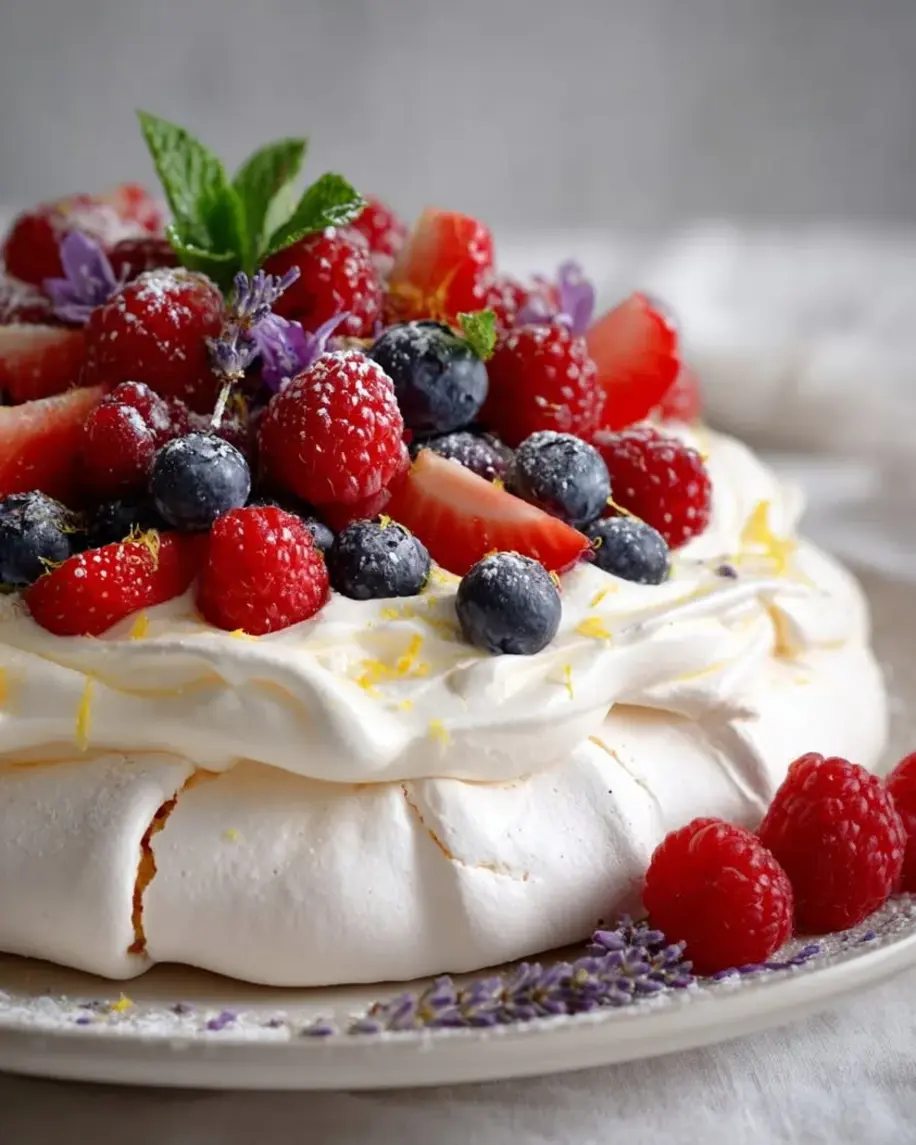
I still remember the first time I made a pavlova — I was in my tiny Parisian kitchen, fresh out of culinary school, and my instructor had drilled into me the importance of a perfectly stable meringue. That lesson never left me. Now, here in my NYC apartment, I’ve taken that classic and given it a little Moroccan-French twist with this lavender lemon pavlova — a fragrant, cloud-like meringue shell infused with dried lavender, topped with silky mascarpone cream, and finished with a ruby berry medley. The combination of floral lavender, bright lemon, and tart berries is utterly elegant, yet it comes together with surprising ease once you know a few tricks.
Picture this: a crunchy, melt-in-your-mouth meringue that cracks slightly under your fork, revealing a marshmallow-soft interior. That’s followed by a luscious, lemony mascarpone cream that’s not too sweet, and then a burst of fresh strawberries, raspberries, and blueberries glistening with honey and lemon juice. The dried lavender buds in the meringue add a gentle floral note that makes every bite feel like a spring garden party. I love bringing this dessert to Sunday brunches with friends in Brooklyn — it always gets oohs and aahs before anyone even tastes it.
What makes my version of this lavender lemon pavlova stand out? I’ve taken the classic pavlova structure (courtesy of my Paris training) and layered in a few North African touches: I grind the dried culinary lavender with a mortar and pestle (like my mama used to do with herbs back in Morocco) so the flavor distributes evenly without any harsh bits. The mascarpone cream gets a hit of fresh lemon zest instead of extract for a brighter, more authentic citrus note. And I always, always let my berries macerate with honey and lemon juice for at least ten minutes — that little step makes all the difference. Oh, and one 💡 Stella’s Pro Tip: never open the oven door while the meringue is baking; a sudden draft is the number one cause of cracking. You can thank me later!
Why This Lavender Lemon Pavlova Recipe Is the Best
The Flavor Secret: The lavender isn’t just tossed in — it’s finely ground and folded gently into the meringue, releasing its floral perfume without overwhelming the delicate egg whites. Growing up in Morocco, my mother always used dried lavender in her tea, and I learned that a light hand is everything. Combined with a whisper of lemon zest in the cream and the natural sweetness of ruby berries, each forkful is balanced, bright, and utterly refined.
Perfected Texture: My Paris chef taught me that the key to a pavlova shell that’s crisp on the outside and soft inside lies in the sugar — add it slowly, one tablespoon at a time, and whip until the meringue is glossy and stiff. The cornstarch and vinegar act as stabilizers, ensuring your pavlova doesn’t weep or collapse. I’ve tested this exact ratio dozens of times; it’s foolproof for home cooks.
Foolproof & Fast: While pavlova sounds intimidating, the actual hands-on time is only about 20 minutes. The oven does the rest. I’ve designed this recipe so you can nail it on your first try, even if you’ve never made meringue before. The step-by-step instructions include visual cues (like “stiff peaks that hold their shape when you lift the whisk”) so you’ll know exactly what to look for.
Lavender Lemon Pavlova Ingredients
I shop for my lavender at the Union Square Greenmarket in NYC — there’s a spice vendor who sells the most beautiful culinary lavender. The berries I pick up at the farmers market in summer, or I use frozen wild blueberries when they’re out of season. Everything else is standard pantry stuff. Here’s what you’ll need:
Ingredients List
- For the Lavender Pavlova Shell:
- 4 large egg whites (room temperature)
- 1 cup granulated sugar
- 1 tsp cornstarch
- 1 tsp white vinegar
- 1/2 tsp vanilla extract
- 1/2 tsp dried culinary lavender, finely ground
- For the Mascarpone Cream:
- 1 cup mascarpone cheese (room temperature)
- 1 cup heavy whipping cream (cold)
- 3 tbsp powdered sugar
- 1 tsp vanilla extract
- 1 tsp lemon zest (from 1 lemon)
- For the Ruby Berry Topping:
- 1 cup strawberries, halved (or quartered if large)
- 1 cup raspberries
- 1/2 cup blueberries
- 2 tbsp honey
- 1 tsp lemon juice
- For Garnish (optional):
- 1 tbsp dried lavender buds
- 1 tsp lemon zest
- Fresh mint leaves
Ingredient Spotlight
Dried Culinary Lavender: This is the star of the show — but use only culinary-grade lavender, not the kind from sachets. You can find it online or at spice shops. Grinding it finely (I use a mortar and pestle or a clean coffee grinder) prevents any bitter lavender bits in your meringue. If you can’t find lavender, you can substitute with 1 tsp of dried rosemary (finely chopped) for an earthy twist, but the flavor will be completely different.
Mascarpone Cheese: Italian mascarpone gives the cream an incredible richness without being heavy. Regular cream cheese can replace it — use 1 cup cream cheese plus 2 tbsp heavy cream to thin it — but the flavor will be tangier and less silky. For a dairy-free version, full-fat coconut cream whipped with a little lemon zest works beautifully.
Egg Whites: Room-temperature egg whites whip up to higher volume than cold ones. Separate your eggs carefully — any yolk will prevent the whites from reaching stiff peaks. Save the yolks for crème brûlée or lemon curd!
Berries: I call these “ruby berries” because they look like jewels. You can use any combination of fresh or frozen berries; just be sure to drain frozen berries well after thawing. The honey-lemon maceration is essential — it brings out the berries’ sweetness and creates a gorgeous syrupy glaze.
| Original Ingredient | Best Substitution | Flavor / Texture Impact |
|---|---|---|
| Dried culinary lavender | 1 tsp dried rosemary (finely ground) | Earthy, savory note — less floral, still aromatic |
| Mascarpone cheese | Cream cheese + 2 tbsp heavy cream | Tangier, slightly less silky — still creamy |
| Heavy whipping cream | Full-fat coconut cream (chilled, whipped) | Dairy-free, coconut flavor, lighter texture |
| Fresh berries | Frozen mixed berries (thawed, drained) | Slightly softer texture, still delicious — pat dry before macerating |
How to Make Lavender Lemon Pavlova — Step-by-Step
Don’t let the long list intimidate you — the actual work is quick. I’ll walk you through each stage with pro tips I’ve learned from making hundreds of pavlovas in my NYC kitchen.
Step 1: Prepare Oven and Pan
Preheat your oven to 250°F (120°C) and line a large baking tray with parchment paper. Draw an 8-inch circle on the parchment as a guide (use a cake pan as template). This will help you shape an even pavlova shell.
💡 Stella’s Pro Tip: Use a dab of meringue under each corner of the parchment to stick it to the tray — prevents slipping when you pipe or spoon the meringue.
Step 2: Whip the Meringue
Place the egg whites in a clean, dry bowl of a stand mixer (or use a hand mixer). Beat on medium speed until soft peaks form — the whites should look foamy and hold a very gentle shape. With the mixer running, add the sugar one tablespoon at a time, waiting about 10 seconds between each addition. Once all sugar is in, increase to high speed and whip until the meringue is glossy and stiff peaks form (when you lift the whisk, the peak stands straight up without drooping). This takes about 5–7 minutes.
⚠️ Common Mistake to Avoid: Under-whipped meringue will weep and collapse in the oven. Rub a little between your fingers — if it feels grainy (sugar not dissolved), keep whipping.
Step 3: Fold in Stabilizers and Lavender
Sprinkle cornstarch, white vinegar, vanilla extract, and the finely ground lavender over the meringue. Using a rubber spatula, fold gently with a cut-and-lift motion until just combined. Do not overmix — you want to keep as much air as possible.
💡 Stella’s Pro Tip: Sift the cornstarch over the meringue to avoid clumps. And yes, vinegar sounds odd but it’s crucial for a marshmallowy center!
Step 4: Shape the Pavlova
Spoon the meringue onto the parchment within the drawn circle. Use the back of a spoon to spread it into a round, building the edges slightly higher than the center (like a shallow bowl). Create a well in the middle — about 2 inches wide — to hold the cream and berries later.
⚠️ Common Mistake to Avoid: Don’t make the well too deep or the edges may crack. A gentle depression is all you need.
Step 5: Bake and Cool
Bake for 1 hour at 250°F. After 1 hour, turn off the oven and leave the pavlova inside to cool completely — at least 2 hours, preferably overnight. This drying step ensures a crisp exterior and prevents collapse.
💡 Stella’s Pro Tip: Never open the oven door during baking or while cooling! A sudden rush of cold air can cause the meringue to crack dramatically.
Step 6: Make Mascarpone Cream
In a large bowl, combine mascarpone, heavy cream, powdered sugar, vanilla, and lemon zest. Using a hand mixer or stand mixer with whisk attachment, beat on medium-low until just combined, then increase to medium-high and whip until smooth and airy — about 2 minutes. Be careful not to overwhip; stop when it holds soft peaks.
⚠️ Common Mistake to Avoid: Overwhipping can separate the mascarpone and make the cream grainy. Whip only until smooth and thick; it should be spreadable, not stiff.
Step 7: Macerate Berries
In a medium bowl, combine strawberries, raspberries, blueberries, honey, and lemon juice. Gently toss to coat. Let sit at room temperature for 10 minutes while the pavlova cools — the berries will release their juices and create a beautiful ruby syrup.
💡 Stella’s Pro Tip: Use a mix of berries for color contrast. If using frozen berries, thaw them first and pat dry, then macerate — they’ll be softer but still delicious.
Step 8: Assemble
Just before serving, carefully transfer the cooled pavlova shell to a serving plate. Spread the mascarpone cream evenly over the top, staying within the edges. Spoon the ruby berries and their juices over the cream. Finish with a sprinkle of dried lavender buds, fresh lemon zest, and a few mint leaves.
⚠️ Common Mistake to Avoid: Always assemble right before serving — otherwise the cream will soften the meringue and it will lose its signature crunch.
Step 9: Serve
Cut into wedges using a serrated knife. Serve immediately, while the shell is crisp and the cream is cool. The contrast of textures — crunchy, creamy, juicy — is pure magic.
| Step | Action | Duration | Key Visual Cue |
|---|---|---|---|
| 1 | Preheat oven and prep tray | 5 mins | Parchment with drawn circle |
| 2 | Whip egg whites with sugar | 7–10 mins | Glossy, stiff peaks |
| 3 | Fold in cornstarch, vinegar, vanilla, lavender | 1 min | No white streaks remain |
| 4 | Shape pavlova on tray | 3 mins | Even round with slight well |
| 5 | Bake and cool in oven | 1 hr + 2 hr cooling | Shell is dry and lightly golden |
| 6 | Whip mascarpone cream | 2 mins | Smooth, soft peaks |
| 7 | Macerate berries with honey and lemon | 10 mins | Juices are released, berries look glossy |
| 8 | Assemble: cream + berries + garnish | 5 mins | Beautifully layered |
| 9 | Serve immediately | — | Crisp shell, creamy interior |
Serving & Presentation
This lavender lemon pavlova is a showstopper — perfect for Easter brunch, Mother’s Day, or any spring celebration. I like to place the whole pavlova on a large wooden board or a white cake stand to let the ruby berries pop against the ivory cream. Garnish with fresh mint leaves and extra lavender buds for that “wow” factor. The contrast of bright red, purple, green, and white makes it look like a floral masterpiece.
When I serve this at my NYC dinner parties, I often pair it with a chilled glass of Prosecco or a lavender lemon spritzer. For a more casual affair, a dollop of extra mascarpone cream on the side doesn’t hurt. One thing I’ve learned from my Moroccan side: a dusting of edible rose petals over the top adds an exotic, romantic touch — but that’s entirely optional.
For leftovers (if there are any!), store the components separately (see storage section below) and reassemble just before serving. The meringue alone can be kept in an airtight container for up to 3 days — but honestly, it never lasts that long.
| Pairing Type | Suggestions | Why It Works |
|---|---|---|
| Side Dish | Fresh fruit salad, Lemon sorbet, Mini madeleines | Light, refreshing complements that don’t overshadow the pavlova |
| Sauce / Dip | Extra berry coulis, Lemon curd, Whipped honey butter | Adds tangy, sweet layers that enhance the berries and cream |
| Beverage | Prosecco, Lavender lemonade, Iced chai latte | Floral and citrus notes mirror the flavors in the dessert |
| Garnish | Fresh mint, Dried lavender buds, Edible rose petals, Lemon zest curls | Adds visual pop and aromatic freshness |
Make-Ahead, Storage & Reheating
Life in NYC is busy, so I often prep components in advance. The pavlova shell can be baked and cooled a day ahead — store it in an airtight container at room temperature. The mascarpone cream can be whipped up to 4 hours ahead and kept refrigerated in a covered bowl. The berries are best macerated close to serving time, but you can wash and dry them the day before. Pro tip: never assemble more than 30 minutes before serving, or the meringue will soften.
| Method | Container | Duration | Reheating Tip |
|---|---|---|---|
| Refrigerator (assembled) | Covered dish | Up to 2 hours (texture declines after) | Not recommended to reheat; serve cold or at room temp |
| Freezer (shell only) | Airtight container, separated with wax paper | Up to 1 month | Thaw at room temp, then re-crisp in 250°F oven for 10 minutes |
| Make-Ahead (components) | Separate containers | Shell: 1 day; Cream: 4 hrs; Berries: 1 day (dry) | Assemble within 30 min of serving |
If you have leftover macerated berries, they’re wonderful over yogurt, pancakes, or ice cream. The mascarpone cream can be thinned with a splash of milk and used as a fruit dip. And the pavlova shell, even if it softens, makes a fantastic “Eton mess” – just crush it up with extra cream and berries. Nothing goes to waste in Stella’s kitchen!
Variations & Easy Swaps
I love how adaptable this dessert is. Whether you’re catering to dietary needs or just want to play with flavors, here are three variations I’ve tested in my own kitchen.
| Variation | Key Change | Best For | Difficulty Impact |
|---|---|---|---|
| Rose & Raspberry Pavlova | Replace lavender with 1 tsp rose water + pink food coloring | Valentine’s Day, romantic occasions | Easy (same technique) |
| Dairy-Free & Vegan | Use coconut cream for mascarpone; aquafaba meringue (chickpea water) | Vegan, lactose-intolerant guests | Medium (aquafaba takes practice) |
| Chocolate-Cherry Pavlova | Add 1 tbsp cocoa powder to meringue; use cherries in brandy syrup | Deep winter flavors, chocolate lovers | Easy (cocoa powder may require extra whipping) |
Rose & Raspberry Pavlova
In this romantic twist, omit the ground lavender and add 1 teaspoon of rose water to the meringue at the folding stage. Stir a tiny dot of pink gel food coloring into the whites just before whipping for a pale blush hue. Top with fresh raspberries and a drizzle of rose syrup. My Paris chef taught me that rose pairs beautifully with lacy meringue — it’s like a Parisian garden on a plate. This variation is perfect for bridal showers or Galentine’s Day.
Dairy-Free & Vegan Pavlova
Yes, a vegan pavlova is possible! Replace egg whites with aquafaba (liquid from a can of unsalted chickpeas) – 4 egg whites = 1 cup aquafaba. Whip with cream of tartar and sugar just like regular meringue. The baking time may need an extra 15 minutes; the shell will be slightly chewier but still delicious. For the cream, use full-fat coconut cream whipped with powdered sugar and lemon zest. I tested this at home and my non-vegan friends didn’t notice the difference!
Chocolate-Cherry Pavlova
When winter hits NYC and fresh berries are scarce, I turn to chocolate and cherries. Fold 1 tablespoon unsweetened cocoa powder (sifted) into the meringue along with the cornstarch. Use dark sweet cherries, pitted and macerated with a splash of brandy and honey instead of the berry medley. Top with shaved dark chocolate. This version is decadent and satisfying – think black forest dessert, but lighter. A dusting of edible gold leaf? Even better!
Can I use dried lavender instead of fresh for a lavender lemon pavlova?
Yes, and I actually recommend dried culinary lavender over fresh for pavlova. Fresh lavender contains moisture that can make the meringue weep and collapse. Dried lavender gives a more concentrated, consistent floral flavor without altering the texture. Be sure to use food-grade dried lavender (not from a sachet) and grind it finely with a mortar and pestle or spice grinder. This avoids any bitter, tough bits in your delicate meringue. Start with ½ teaspoon – it might not seem like much, but the flavor blooms as the meringue bakes.
What can I substitute for mascarpone cream in a pavlova recipe?
If you don’t have mascarpone, you can substitute with an equal amount of full-fat cream cheese blended with 2 tablespoons of heavy cream to lighten the texture. The flavor will be tangier and slightly less silky than mascarpone, but still delicious. For a dairy-free option, use chilled full-fat coconut cream – whip it with a little powdered sugar and lemon zest until soft peaks form. Another classic substitute is a simple chantilly cream: whip 1½ cups heavy cream with 2 tablespoons powdered sugar and 1 teaspoon vanilla. It won’t have the same richness as mascarpone, but it’s still lovely.
How do I prevent my pavlova from cracking or collapsing?
The three golden rules of a flawless pavlova: 1) Make sure your egg whites are at room temperature – cold whites don’t whip as high. 2) Add sugar slowly, one tablespoon at a time, and beat until the meringue is glossy and holds stiff peaks. Rub a little between your fingers – if it feels grainy, the sugar hasn’t dissolved, and the pavlova will weep. 3) Never open the oven door during baking or while the pavlova is cooling inside. A sudden rush of cold air will cause the meringue to crack dramatically. Let it cool completely in the switched-off oven with the door closed for at least 2 hours.
Can I make lavender lemon pavlova with mascarpone cream ahead of time?
Absolutely! I often make the components in advance for stress-free entertaining. Bake the pavlova shell up to 24 hours ahead and store it in an airtight container at room temperature (not in the fridge, which makes it sticky). Whip the mascarpone cream up to 4 hours ahead and refrigerate it in a covered bowl – give it a quick whisk before using. Wash and dry the berries the day before, but macerate them with honey and lemon no more than 30 minutes before serving. The key is never to assemble the pavlova until just before serving, or the meringue will soften from the moisture of the cream and berries.
Can I use frozen berries for the ruby berry topping?
Yes, frozen berries work perfectly! Thaw them completely at room temperature, then drain off any excess liquid. Pat them dry gently with paper towels before macerating with honey and lemon juice. The texture will be slightly softer than fresh berries, but the flavor is still excellent. I especially like using frozen wild blueberries when they’re in season – they’re tiny, intensely sweet, and turn the syrup a deep ruby color. Just remember that frozen berries release more liquid, so you may need to drain them more thoroughly to keep the pavlova from getting soggy.
Is lavender lemon pavlova gluten-free?
Yes, this recipe is naturally gluten-free! The pavlova shell is made entirely from egg whites, sugar, cornstarch, and vinegar – no flour at all. The mascarpone cream and berries are also gluten-free. Just double-check that your dried lavender and other ingredients (like vanilla extract) are certified gluten-free if you have celiac disease or a severe intolerance. The only potential cross-contamination could come from the cornstarch – some brands process it in facilities that also handle wheat, so opt for a trusted gluten-free brand if needed.
Why did my pavlova crack during baking or cooling?
Cracking usually happens for one of three reasons: the oven temperature was too high, the meringue was over- or under-whipped, or the pavlova experienced a sudden temperature change. Pavlova needs a low, steady 250°F (120°C) – anything hotter will cause the exterior to set too quickly while the interior expands and cracks. Make sure your sugar is fully dissolved (test by rubbing a bit of meringue between your fingers – it should feel smooth, not grainy). And most importantly, after baking, leave the pavlova in the oven with the door closed while it cools completely. A minor crack on the surface is actually normal and pretty – just cover it with cream and berries!
Can I use a different type of citrus in this pavlova?
Absolutely! Lemon is classic, but you can use lime, orange, or grapefruit zest in the mascarpone cream. Each brings a different character – lime adds a tropical zing, orange is sweeter and more floral, and grapefruit gives a slightly bitter, sophisticated edge. If you substitute the lemon juice in the berry maceration, use a matching citrus juice (e.g., lime juice for lime zest). My personal favorite twist is using Meyer lemon zest and juice – they’re sweeter and less acidic, with a hint of spice. You can find Meyer lemons at farmers markets in late winter here in NYC.
How do I get that perfect marshmallow center in my pavlova?
The marshmallow center comes from a combination of factors: the cornstarch and vinegar act as stabilizers that soften the interior, and the low-and-slow baking method dries out the outside while keeping the inside tender. The most important step is to whip the meringue to stiff peaks – under-whipped whites won’t have the structure to hold a soft center. Also, don’t spread the meringue too thin; a 1½-inch-thick shell with a slight well in the center will give you that perfect contrast of crunchy exterior and gooey inside. Finally, never skip the long cooling time in the oven – it gently finishes drying the interior.
What else can I use instead of honey in the berry topping?
If you don’t have honey or want a vegan option, you can substitute with maple syrup, agave nectar, or simple syrup (equal parts sugar and water heated until dissolved). Each will change the flavor slightly – maple syrup adds a warm, woodsy note; agave is neutral and sweet; simple syrup lets the fruit shine purely. Use the same amount (2 tablespoons). For a lower-sugar version, you can omit the sweetener entirely if your berries are very ripe and sweet – just toss them with lemon juice and let them sit for 10 minutes to release their own juices.
Share Your Version!
I’d love to see how your lavender lemon pavlova turns out! Did you try the rose variation? Did you manage to sneak a slice before anyone else could? Drop a comment below and let me know how it went — I read every single one. If you share a photo on Instagram or Pinterest, tag @leosfoods and use #StellaPavlova — I may just feature your creation on my stories!
One question I always ask my readers: what’s your favorite floral flavor to bake with? Is it lavender, rose, maybe orange blossom? I’d love to hear your ideas and maybe turn them into my next recipe. Don’t forget to rate the recipe below – your stars help other home cooks find this gem.
From my NYC kitchen to yours — I hope this recipe brings as much warmth to your table as it does to mine. — Stella 🧡
Love This Recipe? Save It to Pinterest!
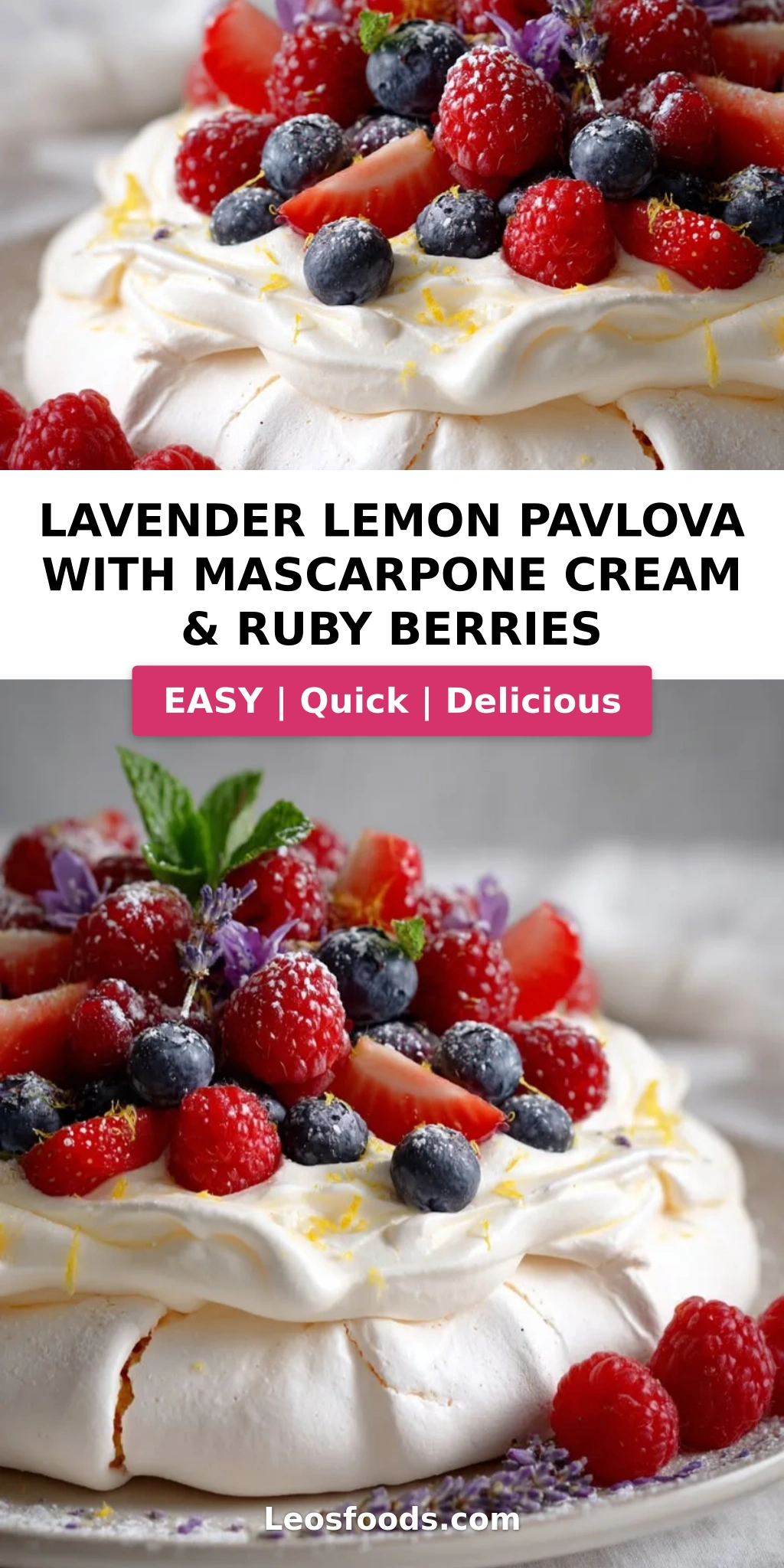
If you enjoyed this Lavender Lemon Pavlova with Mascarpone Cream & Ruby Berries recipe, don’t let it get lost in your browser tabs! 😄 Pin it now so you can find it again anytime — and explore hundreds more tried-and-tested recipes waiting for you on my Pinterest boards.
👉 Follow Stella on Pinterest @stellarecipeblog
📌 Pin this recipe · 🔁 Re-pin your favorites · 💬 Tag me when you make it — I love seeing your creations!
⭐ Rate this recipe & leave a comment – I love hearing from you!
Did you make it? What did you think? Any questions? Drop them below!
“`
Print
Lavender Lemon Pavlova with Mascarpone Cream & Ruby Berries
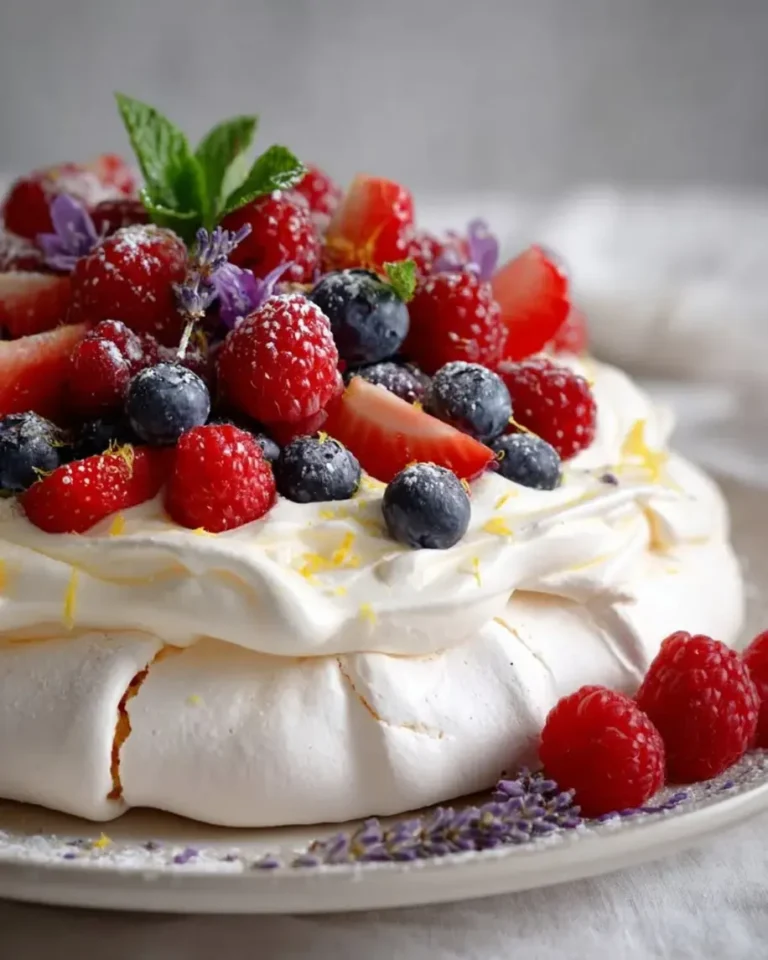
A stunning pavlova with a lavender-infused meringue shell, creamy mascarpone filling, and a tangy ruby berry topping.
- Yield: 6 1x
Ingredients
- For the Lavender Pavlova Shell:
- 4 large egg whites
- 1 cup granulated sugar
- 1 tsp cornstarch
- 1 tsp white vinegar
- 1/2 tsp vanilla extract
- 1/2 tsp dried culinary lavender, finely ground
- For the Mascarpone Cream:
- 1 cup mascarpone cheese
- 1 cup heavy whipping cream
- 3 tbsp powdered sugar
- 1 tsp vanilla extract
- 1 tsp lemon zest
- For the Ruby Berry Topping:
- 1 cup strawberries, halved
- 1 cup raspberries
- 1/2 cup blueberries
- 2 tbsp honey
- 1 tsp lemon juice
- For Garnish (optional):
- 1 tbsp dried lavender buds
- 1 tsp lemon zest
- Fresh mint leaves
Instructions
- Preheat oven to 250°F (120°C) and line a baking tray with parchment paper.
- Whip egg whites until soft peaks form, then gradually add sugar until glossy and stiff peaks develop.
- Fold in cornstarch, vinegar, vanilla, and ground lavender gently to maintain volume.
- Shape meringue into a round pavlova shell on the baking tray, creating a slight well in the center.
- Bake for 1 hour, then turn off oven and let it cool completely inside to dry out.
- Whip mascarpone, heavy cream, powdered sugar, vanilla, and lemon zest until smooth and airy.
- Mix berries with honey and lemon juice and let them sit for 10 minutes to release juices.
- Assemble by spreading mascarpone cream over the cooled pavlova shell.
- Top with ruby berries and drizzle with any remaining juices.
- Finish with lavender buds, lemon zest, and fresh mint leaves.
- Serve immediately for a crisp shell and creamy center.
Nutrition
- Calories: 310
- Sugar: 30g
- Fat: 16g
- Carbohydrates: 38g
- Protein: 5g
Tried This Recipe? Leave a Comment!
Did you make this recipe? I’d love to hear how it turned out! Please leave a comment and a rating below. Your feedback helps other home cooks and supports cheerychop.com!
For more delicious inspiration, follow me on Pinterest!