Golden Mango Jewel Bars – No-Bake Coconut Mirror Glaze
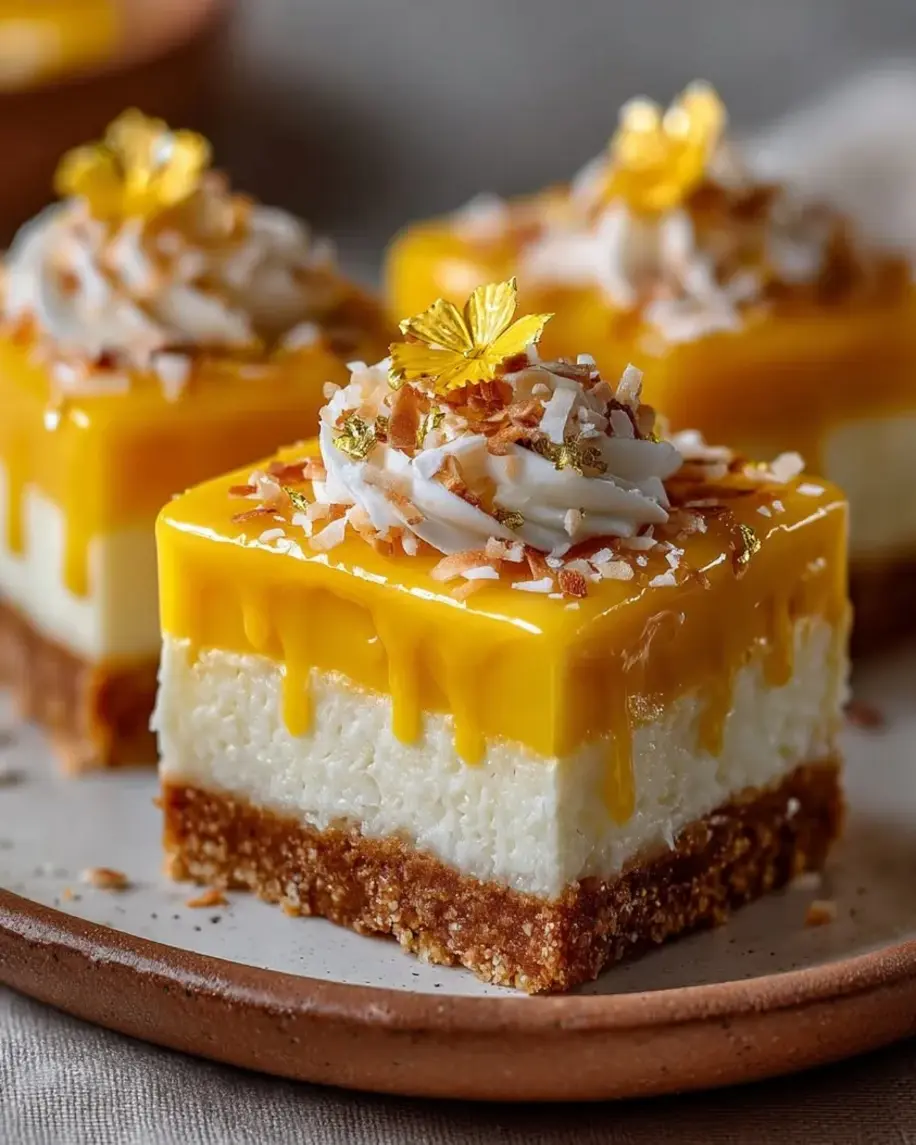
Table of Contents
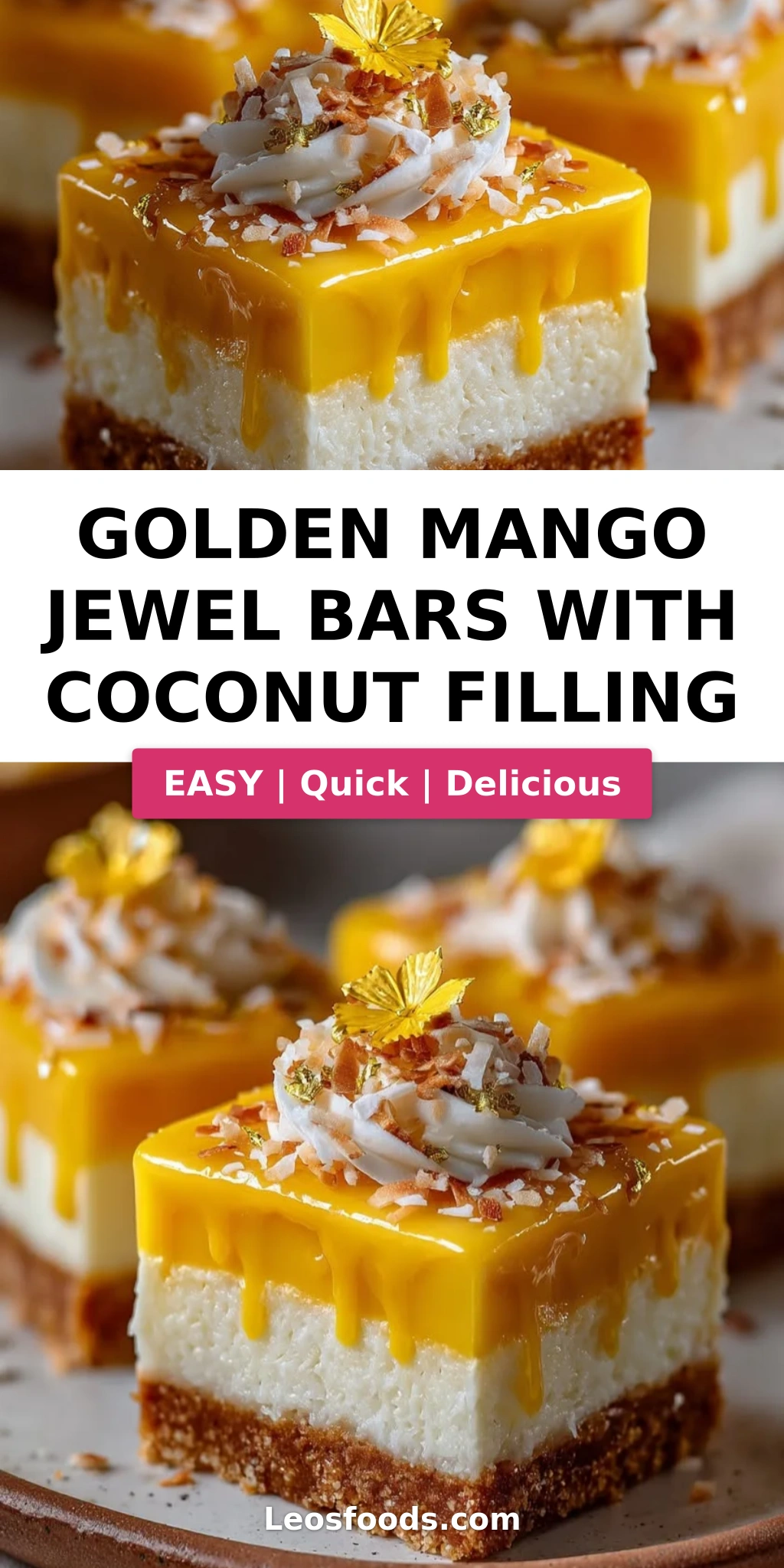
Golden Mango Jewel Bars with Coconut Filling – Golden Mirror Glaze Dessert
Growing up in Morocco, my mother would slice ripe mangoes straight from the tree and drizzle them with a little orange blossom water — a simple, sun-drenched treat. Years later, after training at Le Cordon Bleu in Paris, I found myself in New York City’s bustling East Village farmers market, staring at a pile of fragrant Ataulfo mangoes. That’s when I knew I had to combine my heritage with the mirror-gloss techniques I learned in pastry school. These Golden Mango Jewel Bars with Coconut Filling are the result: a no-bake dessert that looks like a jewel box and tastes like a tropical daydream. The secret? A shimmering golden mirror glaze that makes each bar glow like Burmese jade — but the real star is that creamy coconut filling nestled inside.
Imagine biting through a mirror-smooth mango shell into a cloud of mascarpone whipped with coconut cream. The mango base is firm yet tender, infused with lime and vanilla, while the filling stays silky and light. The golden glaze — tinted with a tiny bit of mango puree and edible gold luster dust — catches the light like liquid gold. I love to finish mine with toasted coconut flakes and a few white chocolate shards for crunch. Every bite is a contrast of glossy, creamy, and crisp. The aroma alone (think ripe mango, warm coconut, and a whisper of vanilla) will transport you straight to a Moroccan courtyard at sunset.
This recipe is my take on the classic Bengali “mohanbhog” inspired bar, but with a French patisserie sensibility. I’ve tested it a dozen times to make sure the gelatin does exactly what we need — no rubbery texture, just a perfect sliceable jelly. In this post, I’ll show you my little trick for keeping the coconut filling from making the crust soggy (spoiler: it’s all about layering and timing). Plus, I’ll share a common mistake that home cooks make with mirror glazes. Trust me, once you master this technique, you’ll want to glaze everything from petit fours to cheesecake. Let’s get started!
Why This Golden Mango Jewel Bars Recipe Is the Best
The Flavor Secret — Most mango bar recipes rely on a graham cracker crust or a heavy cream filling, which masks the fruit. My version uses a mango jelly base that is its own crust (no added flour or butter). I learned this technique from a Parisian pâtissier who made fruit jelly “mosaics” — the pure mango flavor shines because we build the bar from the inside out. The coconut filling brings a gentle, nutty sweetness that doesn’t overpower the mango. In Morocco, my mother often paired mango with a touch of rose, but here I use coconut extract to keep it tropical and accessible for American palates.
Perfected Texture — The key is the careful bloom and setting of gelatin. Too much and the base becomes rubbery; too little and it won’t hold the filling. I use a precise ratio: 2 teaspoons of gelatin per cup of mango puree, bloomed in cold water for exactly 5 minutes. This yields a silky, almost panna cotta-like set that holds its shape when unmolded. The coconut filling is whipped to soft peaks — not too stiff, so it remains creamy against the jelly. Then the golden mirror glaze is cooled to the perfect “spatula test” consistency: it should coat the back of a spoon and drip slowly. That’s how you get that flawless, mirror-like finish.
Foolproof & Fast — I know “mirror glaze” sounds intimidating, but I promise this recipe is beginner-friendly if you follow the timing. The active cooking time is only about 40 minutes; the rest is just chill time in the fridge or freezer. Most of the work happens while the gelatin sets. I’ve designed the steps so you can make the mango base one day, add the filling and freeze overnight, and glaze the next morning. My NYC life demands recipes that fit into busy schedules, and this one does beautifully. Plus, there’s no baking — perfect for summer when you don’t want to turn on the oven.
Mango Jewel Bars Ingredients
For the absolute best flavor, I head to the Union Square Greenmarket in early summer when local mangoes are flown in from Florida and Mexico. But even from the supermarket, a good-quality frozen mango puree (like Boiron or Independence brand) works wonders. Here’s everything you need — I’ve organized them into the three components.
Ingredients List
- For the Mango Jewel Base: 2 cups mango puree, 1/2 cup granulated sugar, 1/2 cup coconut milk (full-fat from a can), 1 tsp vanilla extract, 2 tsp gelatin powder, 2 tbsp cold water, 1 tbsp lime juice, Pinch of salt
- For the Coconut Filling: 1 cup mascarpone cheese (cold), 1/2 cup heavy whipping cream (cold), 3 tbsp powdered sugar, 1 tsp coconut extract
- For the Golden Mirror Glaze: 1 cup white chocolate (finely chopped), 1/2 cup sweetened condensed milk, 1/4 cup water, 1 tbsp gelatin powder, 3 tbsp cold water, 2 tbsp mango puree, 1/2 tsp edible gold luster dust, Yellow food coloring as needed
- For Garnish (optional): 2 tbsp toasted coconut flakes, 1 tbsp white chocolate shards, Edible gold flakes
Ingredient Spotlight
Mango Puree: Use a smooth, sweet puree — not chunky. If using fresh mangoes, peel and blend until silky. Ataulfo (honey) mangoes are preferred for their sweetness and low fiber. For a tangier flavor, add a touch more lime juice. Substitution: one can of alphonso mango pulp (from Indian grocery stores) works perfectly.
Coconut Milk: Full-fat canned coconut milk (like Chaokoh or Thai Kitchen) gives richness. Light coconut milk will make the base less flavorful. Refrigerate the can overnight, then use only the thick coconut cream part for an even lusher result.
Mascarpone: This Italian cream cheese is essential for the filling’s luxurious texture. It’s not the same as cream cheese — it’s thicker and less tangy. If you can’t find it, substitute with an equal weight of cream cheese plus 2 tablespoons of heavy cream, blended until smooth.
White Chocolate: Use a high-quality white chocolate (like Ghirardelli, Callebaut, or Valrhona) that contains cocoa butter. Avoid “white morsels” that are mostly oil — they won’t melt into a smooth glaze. Chop finely for quick melting.
| Original Ingredient | Best Substitution | Flavor / Texture Impact |
|---|---|---|
| Mango puree (fresh) | Frozen mango puree (thawed) or canned Alphonso pulp | Similar sweetness and texture. Canned pulp is thicker — reduce sugar by 1 tbsp. |
| Coconut milk (full-fat) | Coconut cream + a splash of water | Richer, but may need extra water to thin. Use same volume. |
| Mascarpone | Cream cheese + 2 tbsp heavy cream | Slightly more tang. Texture is less velvety but still good. |
| White chocolate (for glaze) | White candy melts + 2 tbsp coconut oil | Glaze will be slightly less shiny. Candy melts contain more stabilizers. |
| Coconut extract | Vanilla extract + toasted shredded coconut in filling | Less concentrated coconut flavor. Toasted coconut adds texture. |
How to Make Golden Mango Jewel Bars — Step-by-Step
Trust me, this recipe is less complicated than it looks. The key is to prep everything before you start — read through once, then follow each step calmly. I promise a stunning result.
Step 1: Bloom Gelatin for Base
In a small bowl, combine 2 tsp gelatin powder with 2 tbsp cold water. Stir gently and let sit for 5 minutes. The gelatin will absorb the water and become a firm, spongy mass. This step is critical — never skip blooming; otherwise, gelatin won’t dissolve evenly.
💡 Stella’s Pro Tip: Use cold water (not warm) to bloom. Warm water can partially dissolve the gelatin and create lumps later.
Step 2: Heat Mango Mixture
In a medium saucepan, whisk together 2 cups mango puree, 1/2 cup coconut milk, 1/2 cup sugar, 1 tsp vanilla, 1 tbsp lime juice, and a pinch of salt. Warm over medium heat, stirring often, until the mixture is steaming and the sugar dissolves completely (about 3–4 minutes). Do not boil — you want it hot but not bubbling.
⚠️ Common Mistake to Avoid: If you overheat, the mango flavor can become cooked and slightly caramelized. Keep the heat medium-low and stir constantly.
Step 3: Dissolve Gelatin
Remove the saucepan from heat. Add the bloomed gelatin and stir until completely dissolved — about 30 seconds. The mixture should be smooth and slightly thickened. Pour through a fine-mesh sieve into a liquid measuring cup to remove any undissolved bits.
Step 4: Pour First Layer
Lightly grease 6 rectangular bar molds (or one 9-inch loaf pan for larger bars). Pour a thin layer (about 1/4 inch) of the mango mixture into the bottom of each mold. Place in the refrigerator for 20–30 minutes, until partially set — it should be jiggly but not liquid.
💡 Stella’s Pro Tip: To speed up the partial set, place the molds in the freezer for 10 minutes instead. Watch carefully — you don’t want it fully firm yet.
Step 5: Make Coconut Filling
In a large bowl, combine 1 cup cold mascarpone, 1/2 cup cold heavy cream, 3 tbsp powdered sugar, and 1 tsp coconut extract. Whip with an electric mixer on medium-high speed until soft peaks form — about 2–3 minutes. Do not over-whip or it may turn grainy.
Step 6: Pipe Filling
Transfer the filling to a piping bag fitted with a round tip (or use a zip-top bag with a corner snipped). Pipe a log of filling down the center of each partially-set mango base, leaving about 1/2 inch of clear mango jelly on all sides. The filling should not touch the edges — that’s important for the final structure.
⚠️ Common Mistake to Avoid: If filling touches the mold edges, the final bars will have a messy, leaking filling when unmolded.
Step 7: Cover with Remaining Mango Mixture
Pour the remaining mango mixture (reheat slightly if it has thickened) over the filling, completely covering it. Smooth the tops with an offset spatula. The bars should be about 1 inch thick total.
Step 8: Freeze
Place the molds in the freezer for at least 4 hours, preferably overnight. The bars need to be completely solid before glazing — if they are too soft, the glaze will slide off.
💡 Stella’s Pro Tip: Cover the molds tightly with plastic wrap to prevent freezer burn and odor absorption.
Step 9: Make the Glaze – Bloom Gelatin
For the glaze, bloom 1 tbsp gelatin powder in 3 tbsp cold water in a small bowl. Let stand 5 minutes. Meanwhile, chop 1 cup white chocolate finely and place in a heatproof bowl.
Step 10: Heat Condensed Milk
In a small saucepan, combine 1/2 cup sweetened condensed milk and 1/4 cup water. Heat over medium heat until steaming — do not boil. Remove from heat and stir in the bloomed gelatin until fully dissolved. Pour this hot mixture over the chopped white chocolate. Let sit 2 minutes, then whisk gently until smooth and glossy.
⚠️ Common Mistake to Avoid: Whisk too vigorously and you’ll incorporate air bubbles — they’ll show in the glaze. Stir slowly and gently.
Step 11: Add Mango Puree and Color
Add 2 tbsp mango puree, 1/2 tsp edible gold luster dust, and a tiny drop of yellow food coloring (optional, for deeper gold). Whisk until the glaze is an even, golden hue. Let the glaze cool to about 90°F (32°C) — it should be slightly thickened but still pourable. Test on a spoon: it should coat the back and drip in a steady ribbon.
Step 12: Unmold and Glaze
Remove the frozen bars from the molds. Place each bar on a wire rack set over a baking sheet. Working quickly, pour the glaze over each bar, starting at the center and letting it flow over the sides. Use an offset spatula to gently encourage coverage. Allow excess glaze to drip off. Let set at room temperature for 5–10 minutes — the glaze will become firm but not hard.
💡 Stella’s Pro Tip: For a second coat, reheat any dripped glaze (strain it first) and re-pour after the first coat sets slightly. This gives an ultra-glossy finish.
Step 13: Garnish
While the glaze is still tacky, sprinkle each bar with toasted coconut flakes, press white chocolate shards into the top, and finish with a few edible gold flakes. Let the bars sit until the glaze is fully set (about 15 minutes). Serve chilled.
| Step | Action | Duration | Key Visual Cue |
|---|---|---|---|
| 1 | Bloom gelatin for base | 5 min | Gelatin becomes a firm, spongy mass. |
| 2 | Heat mango mixture | 3–4 min | Steaming, sugar dissolved, slight steam rise. |
| 3 | Dissolve gelatin in hot liquid | 30 sec | Mixture becomes slightly thicker, no lumps. |
| 4 | Pour first layer and chill | 20–30 min | Layer is jiggly but no longer liquid. |
| 5 | Whip coconut filling | 2–3 min | Soft peaks — holds shape when lifted. |
| 6 | Pipe filling into center | 2 min | Log of filling, clear edge visible. |
| 7 | Cover with mango mixture | 2 min | Filling completely encased in mango jelly. |
| 8 | Freeze | ≥4 hrs | Bars solid, no give when pressed. |
| 9 | Bloom gelatin for glaze | 5 min | Same as step 1. |
| 10 | Heat condensed milk + whisk in gelatin | 3 min | Smooth liquid when mixed with chocolate. |
| 11 | Add mango puree and color | 1 min | Uniform golden color, glossy. |
| 12 | Unmold and pour glaze | 5 min | Glaze flows evenly, covers completely. |
| 13 | Garnish and set | 15 min | Glaze tacky to touch, garnishes stick. |
Serving & Presentation
These jewel bars are best served chilled — straight from the fridge — so the filling stays creamy and the glaze remains firm but delicate. I like to plate them on a white rectangular dish to let the golden color pop. For a Moroccan-inspired presentation, arrange a few edible rose petals around the plate — a nod to my mother’s garden. In New York, I often serve these at summer brunches alongside a pitcher of iced hibiscus tea or a passion fruit spritzer.
Because the glaze is soft, handle the bars gently. Use a thin, sharp knife dipped in hot water and wiped dry for clean slices — though I prefer to serve them whole as individual bars. A dollop of unsweetened whipped cream or a quenelle of coconut sorbet on the side makes an elegant dessert. For a more rustic touch, simply add a few fresh mango cubes and a mint sprig.
| Pairing Type | Suggestions | Why It Works |
|---|---|---|
| Side Dish | Fresh fruit salad, coconut rice pudding | Light, tropical complements without overwhelming. |
| Sauce / Dip | Passion fruit coulis, lime glaze drizzle | Adds acidity that balances the sweet glaze and filling. |
| Beverage | Iced green tea, mango lassi, Prosecco | Citrus and herbal notes cut through richness. |
| Garnish | Toasted coconut, gold leaf, mint, edible flowers | Visual pop and textural contrast. |
Make-Ahead, Storage & Reheating
I’m a huge fan of make-ahead desserts, and this recipe is perfect for my busy NYC schedule. The bars (unglazed) can be frozen for up to 2 weeks — just wrap each tightly in plastic wrap then foil. When ready to serve, thaw in the fridge for 2 hours, then glaze as instructed. The glaze itself can be made a day ahead and stored in the fridge; reheat gently in a double boiler to 90°F before using.
| Method | Container | Duration | Reheating Tip |
|---|---|---|---|
| Refrigerator (glazed bars) | Airtight container, layered with parchment | Up to 3 days | Serve straight from fridge — no reheating needed. |
| Freezer (unglazed bars) | Wrap individually in plastic + foil | Up to 2 months | Thaw at room temp 30 min before glazing. |
| Make-Ahead | Prepare base + filling, freeze in mold | Up to 2 weeks in advance | Glaze day of serving for best shine. |
If you do need to reheat the bars (unlikely, but if you accidentally freeze them too hard and want a softer texture), let them sit at room temperature for 20 minutes before serving. The glaze will weep if microwaved, so avoid that. I always make a double batch — one to serve, one to stash in the freezer for unexpected guests.
Variations & Easy Swaps
| Variation | Key Change | Best For | Difficulty Impact |
|---|---|---|---|
| Passion Fruit & Coconut | Replace 1/2 cup mango puree with passion fruit pulp | Tropical twist with tangy contrast | Same (adjust sugar ±) |
| Vegan Mango Bars | Use agar-agar instead of gelatin; coconut cream + silken tofu for filling | Dairy-free, egg-free | Medium (agar sets differently) |
| Spiced Chai Mirror Glaze | Add 1 tsp chai masala to mango base; replace mango puree in glaze with chai concentrate | Fall/winter warm flavors | Easy |
Passion Fruit & Coconut Variation
Substitute half the mango puree with fresh passion fruit pulp (about 1/2 cup). The seeds add a nice crunch, but you can strain them if you prefer a smoother texture. Reduce the sugar by 1 tablespoon because passion fruit is quite tart. The golden mirror glaze can stay as is — the passion fruit adds a beautiful golden-orange hue, and the tangy notes cut through the richness of the coconut filling beautifully. I first tried this combination at a patisserie in Paris’s 6th arrondissement and knew I had to recreate it.
Vegan Mango Bars
For a plant-based version, replace the gelatin with agar-agar powder (use the same weight: 2 tsp for base, 1 tbsp for glaze). Follow the package instructions for blooming and setting — typically, agar needs to be boiled for 2 minutes to activate. For the coconut filling, use full-fat coconut cream (from a can) whipped with a little powdered sugar and a pinch of salt; you can also add a touch of coconut extract. The texture will be slightly firmer than with gelatin, but still creamy. I’ve served this at a vegan brunch in Brooklyn and it was a hit.
Spiced Chai Mirror Glaze
When fall hits, I swap out the mango puree in the glaze for a strong chai concentrate (brew 2 chai tea bags in 1/4 cup hot water, cool, and use that instead of the 2 tbsp mango puree). Into the mango base, add 1 teaspoon of garam masala (or a homemade blend of cardamom, cinnamon, cloves). The warm spices pair wonderfully with the coconut filling. The glaze turns a warm golden-amber color, reminiscent of a spiced honey. This variation was inspired by the chai cart near my apartment in Union Square.
Can I use fresh mango instead of dried mango for Golden Mango Jewel Bars with Coconut Filling?
Yes, absolutely — fresh mango is actually the preferred choice for this recipe! The recipe calls for mango puree, not dried mango. Fresh ripe mangoes (like Ataulfo or Kent) give the best flavor and natural sweetness. Simply peel, chop, and blend until smooth. You will need about 3 large mangoes to yield 2 cups of puree. If you only have dried mango, you can rehydrate it by soaking in warm water for 30 minutes and then blending, but the texture will be less silky and the flavor less vibrant. Stick with fresh or high-quality frozen puree for that jewel-like result.
How do I prevent the coconut filling from making the crust soggy?
Great question — this is a common concern with layered bars. The trick here is twofold. First, make sure your mango base layer is partially set before piping the filling. I chill it for 20–30 minutes until it’s firm but still slightly tacky. Second, leave a clear border around the filling (about 1/2 inch) so the mango jelly can fully encase the filling once the top layer is poured. The frozen step also helps: when you freeze the bars, the filling solidifies and won’t release moisture into the jelly. The gelatin in the base also helps hold everything together. As long as you don’t pour the top layer too hot, you’ll get a perfectly dry, non-soggy texture.
What can I substitute for the coconut if I don’t like coconut in these mango bars?
If coconut isn’t your thing, you have several delicious options. For the coconut milk in the base, substitute full-fat dairy milk or oat milk for a similar richness. For the filling, you can replace the coconut extract with vanilla bean paste or almond extract — almond pairs beautifully with mango. You can also skip the coconut extract altogether and add a teaspoon of lime zest for a zesty twist. If you’re omitting coconut flakes from the garnish, try crushed pistachios or toasted sesame seeds for a similar crunch. The bars will still be wonderfully tropical, just without the distinctive coconut flavor.
How long should I chill Golden Mango Jewel Bars before slicing them cleanly?
For the cleanest slices, you need to freeze the bars for at least 4 hours (preferably overnight) before unmolding and glazing. After glazing, they must be fully set in the fridge for at least 2 hours before slicing. The glaze needs to firm up so it doesn’t smear. Use a thin, sharp knife dipped in hot water and dried between cuts. If you slice too early, the glaze will stick to the knife and the filling might ooze out. For perfect presentation, I freeze the glazed bars for 30 minutes before slicing — the cold keeps everything firm, and the slices come out pristine.
Can I make Golden Mango Jewel Bars without a mold? Can I use a regular loaf pan?
Absolutely! If you don’t have individual bar molds, a standard 9×5-inch loaf pan works perfectly. Line the pan with plastic wrap for easy unmolding. Pour the first mango layer, pipe the filling in a log shape down the center, then pour the remaining mango mixture. Freeze and unmold, then cut into 6 even bars. After glazing, you can slice them again if desired. The loaf pan method actually makes the process even easier — just be sure to leave enough space around the filling so it’s fully encased. The final shape will be more like a rectangular block, but it tastes just as amazing.
Why did my golden mirror glaze turn out dull? How can I fix it?
A dull mirror glaze usually means the temperature was off — either too hot (causing fat separation) or too cool (not flowing properly). The ideal pouring temperature is 88–92°F (31–33°C). Use an instant-read thermometer. If the glaze is too thick, warm it gently over a double boiler, adding a drop of water and whisking carefully. Over-whisking introduces air bubbles, which also dull the finish. Always strain the glaze through a fine-mesh sieve before pouring. If your glaze has already set dull, a thin second coat of a fresh, warm (not hot) glaze can revive the shine. And always use good-quality white chocolate with cocoa butter — that’s the key to gloss.
Can I use regular food coloring instead of edible gold luster dust?
Yes, you can, but the effect will be different. Edible gold luster dust gives that subtle shimmer and “jewel” effect — regular food coloring will produce a flat, opaque golden color. For a better alternative, look for edible gold dust or even a pinch of turmeric (for a natural yellow-orange hue). Liquid gold food coloring (sold at specialty baking stores) contains mica and provides a golden sheen. If you want the mirror glaze to truly look like a golden mirror, I recommend using the luster dust — a small pot lasts for many batches and costs only a few dollars. You can find it in NYC baking supply shops like NY Cake or online.
Is this recipe gluten-free?
Yes, these Golden Mango Jewel Bars are naturally gluten-free! None of the ingredients contain wheat, barley, or rye. The base uses only gelatin, mango puree, coconut milk, and sugar — no flour or graham crackers to worry about. Just double-check that your white chocolate is certified gluten-free (some brands may have additives). The coconut filling and glaze also contain no gluten. This makes the recipe perfect for those with celiac disease or gluten sensitivity. If you’re serving at a party, you can confidently label these as gluten-free — just be careful about cross-contamination if you use a kitchen that handles gluten regularly.
How do I store leftover glazed bars? Can they be frozen again?
Leftover glazed bars should be stored in an airtight container in the refrigerator for up to 3 days. The glaze may lose some shine over time, but the flavor remains. I do not recommend freezing already-glazed bars because the glaze can become brittle and peel off when thawed. If you have unglazed frozen bars, you can glaze only what you need and store the rest unglazed in the freezer. For the best texture, serve the bars chilled within 24 hours of glazing. If you must freeze leftover glazed bars, wrap each individually in plastic wrap and thaw in the fridge — the glaze may be a bit dull, but a quick re-spray with a thin layer of warm glaze can fix it.
Can I use agar-agar instead of gelatin for a vegetarian version?
Yes, agar-agar is a great plant-based alternative. Use the same weight as gelatin: 2 tsp for the base, 1 tbsp for the glaze. However, agar behaves differently — it needs to be boiled for 2 minutes to activate, and it sets at room temperature much faster (within 15–30 minutes). For the base, stir the agar into the mango mixture before heating and boil for 2 minutes, then proceed. For the glaze, whisk the agar into the condensed milk mixture and bring to a boil for 2 minutes, then pour over chocolate. The texture will be firmer and slightly more brittle than gelatin. I recommend doing a test batch first — agar is less forgiving, but once you nail the timing, it works beautifully.
Share Your Version!
I would love to see how your Golden Mango Jewel Bars turn out! Leave a star rating below — whether it’s a perfect 5-star or you have a question, your feedback helps me improve and inspires other home cooks. Snap a photo of your creation, tag @leosfoods on Instagram or Pinterest, and I’ll feature my favorites in my stories. And here’s a question to start the conversation: What’s your favorite tropical twist to add to this recipe — do you think a touch of passion fruit or a hint of chai would be your go-to? I can’t wait to hear!
From my NYC kitchen to yours — I hope this recipe brings as much warmth to your table as it does to mine. — Stella 🧡
Love This Recipe? Save It to Pinterest!
If you enjoyed this Golden Mango Jewel Bars with Coconut Filling recipe, don’t let it get lost in your browser tabs! 😄 Pin it now so you can find it again anytime — and explore hundreds more tried-and-tested recipes waiting for you on my Pinterest boards.
👉 Follow Stella on Pinterest @stellarecipeblog
📌 Pin this recipe · 🔁 Re-pin your favorites · 💬 Tag me when you make it — I love seeing your creations!
🥭 Already made these Golden Mango Jewel Bars? I’d love to hear from you! Rate the recipe below or share your photo on social media with #StellaRecipes.
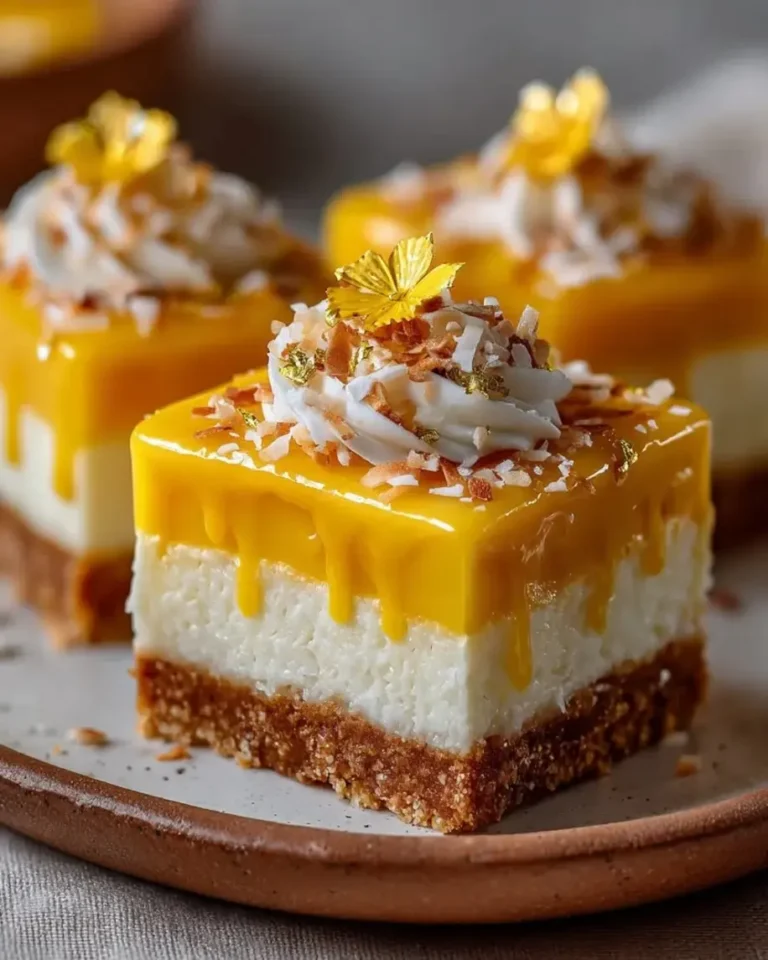
Golden Mango Jewel Bars with Coconut Filling
A decadent dessert featuring a mango jelly base, creamy coconut filling, and a golden mirror glaze.
- Yield: 6 1x
Ingredients
- For the Mango Jewel Base:
- 2 cups mango puree
- 1/2 cup granulated sugar
- 1/2 cup coconut milk
- 1 tsp vanilla extract
- 2 tsp gelatin powder
- 2 tbsp cold water
- 1 tbsp lime juice
- Pinch of salt
- For the Coconut Filling:
- 1 cup mascarpone cheese
- 1/2 cup heavy whipping cream
- 3 tbsp powdered sugar
- 1 tsp coconut extract
- For the Golden Mirror Glaze:
- 1 cup white chocolate, finely chopped
- 1/2 cup sweetened condensed milk
- 1/4 cup water
- 1 tbsp gelatin powder
- 3 tbsp cold water
- 2 tbsp mango puree
- 1/2 tsp edible gold luster dust
- Yellow food coloring, as needed
- For Garnish (optional):
- 2 tbsp toasted coconut flakes
- 1 tbsp white chocolate shards
- Edible gold flakes
Instructions
- Bloom gelatin in cold water for 5 minutes.
- Heat mango puree, coconut milk, sugar, vanilla extract, lime juice, and salt until warm and smooth.
- Remove from heat and stir in the bloomed gelatin until fully dissolved.
- Pour a thin layer into rectangular bar molds, coating evenly.
- Chill until partially set.
- Whip mascarpone, heavy cream, powdered sugar, and coconut extract until light and fluffy.
- Pipe the coconut filling into the center of each mold, leaving space around the edges.
- Cover with remaining mango mixture and smooth the tops.
- Freeze for at least 4 hours until fully firm.
- For the glaze, bloom gelatin in cold water for 5 minutes.
- Heat sweetened condensed milk and water until steaming. Remove from heat and stir in gelatin until dissolved.
- Pour over white chocolate and whisk until smooth.
- Add mango puree, gold luster dust, and food coloring until a glossy golden finish forms.
- Allow glaze to cool until slightly thickened but still pourable.
- Unmold the frozen bars and place on a wire rack.
- Pour the golden mirror glaze evenly over each bar, allowing excess to drip away.
- Let the coating set for several minutes.
- Finish with toasted coconut flakes, white chocolate shards, and edible gold flakes.
- Serve chilled.
Nutrition
- Calories: 410
- Sugar: 32g
- Fat: 27g
- Carbohydrates: 38g
- Protein: 5g
Tried This Recipe? Leave a Comment!
Did you make this recipe? I’d love to hear how it turned out! Please leave a comment and a rating below. Your feedback helps other home cooks and supports cheerychop.com!
For more delicious inspiration, follow me on Pinterest!