Juicy Thai Chicken Meatballs in Velvety Coconut Curry
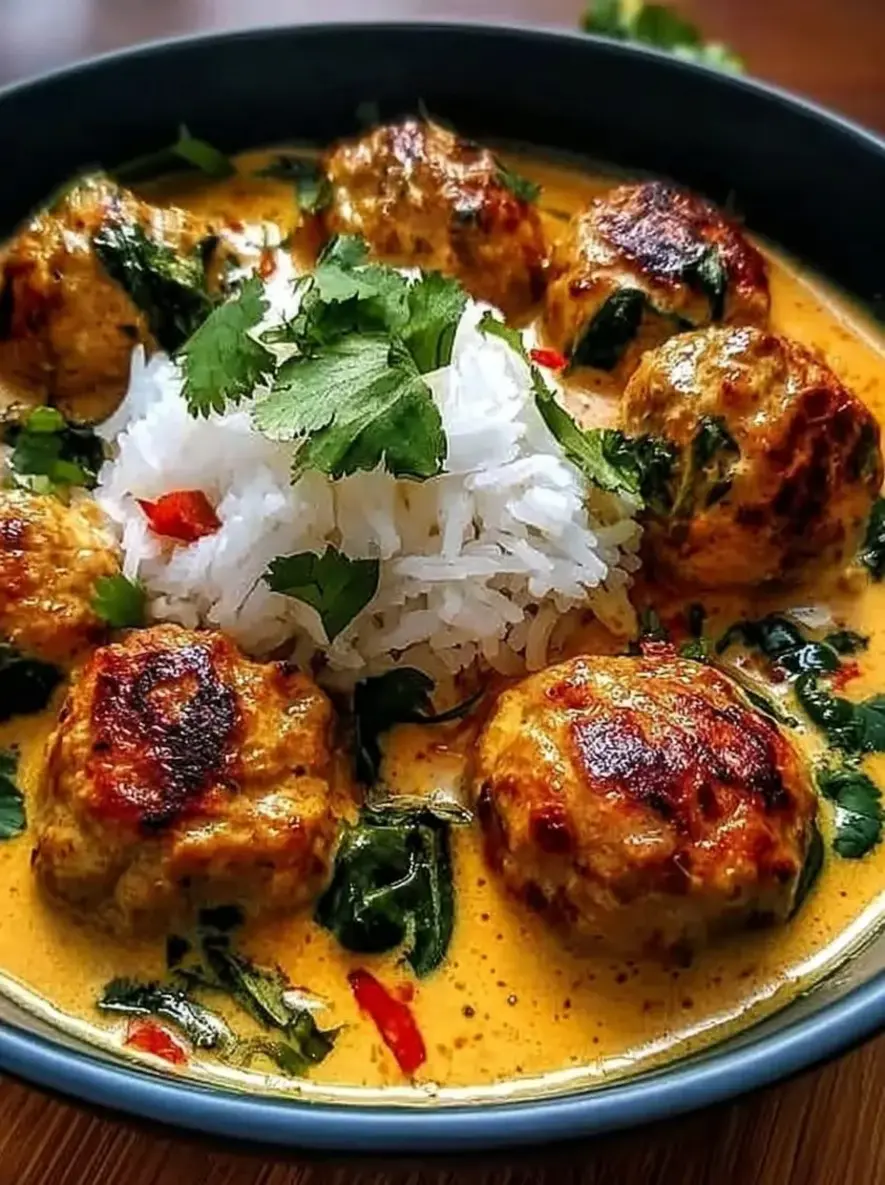
Table of Contents
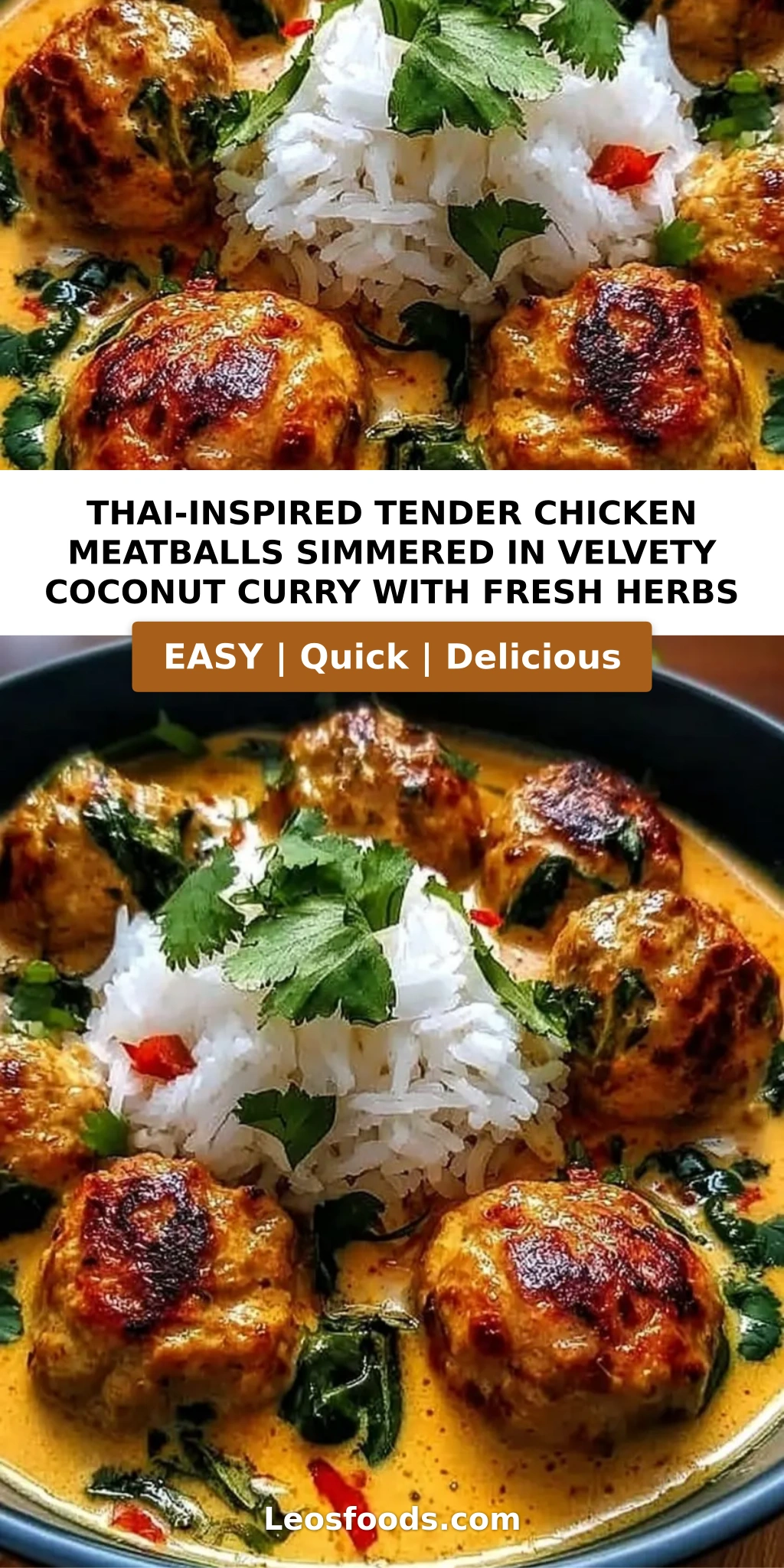
Thai-Inspired Tender Chicken Meatballs Simmered in Velvety Coconut Curry with Fresh Herbs – The Ultimate Comfort Bowl
I still remember the first time I made these Thai chicken meatballs coconut curry — it was a rainy Tuesday evening in my small NYC apartment, and I was craving something that tasted like the bustling street markets I fell in love with during a trip to Bangkok. But I also wanted the cozy, homey feel of the Moroccan meatball tagines my mother used to make in our kitchen back in Casablanca. So I did what I always do: I blended my worlds. The result? These incredibly tender chicken meatballs simmered in a velvety coconut curry sauce — aromatic with ginger, garlic, and Thai red curry paste, and finished with a shower of fresh herbs. The sauce is luxuriously smooth, thanks to a gentle simmer that lets the coconut milk thicken naturally, and the meatballs stay impossibly moist because of a simple French technique I learned in culinary school in Paris. This Thai chicken meatballs coconut curry recipe has become one of the most requested dishes on my blog, and I know it will become a staple in your kitchen too.
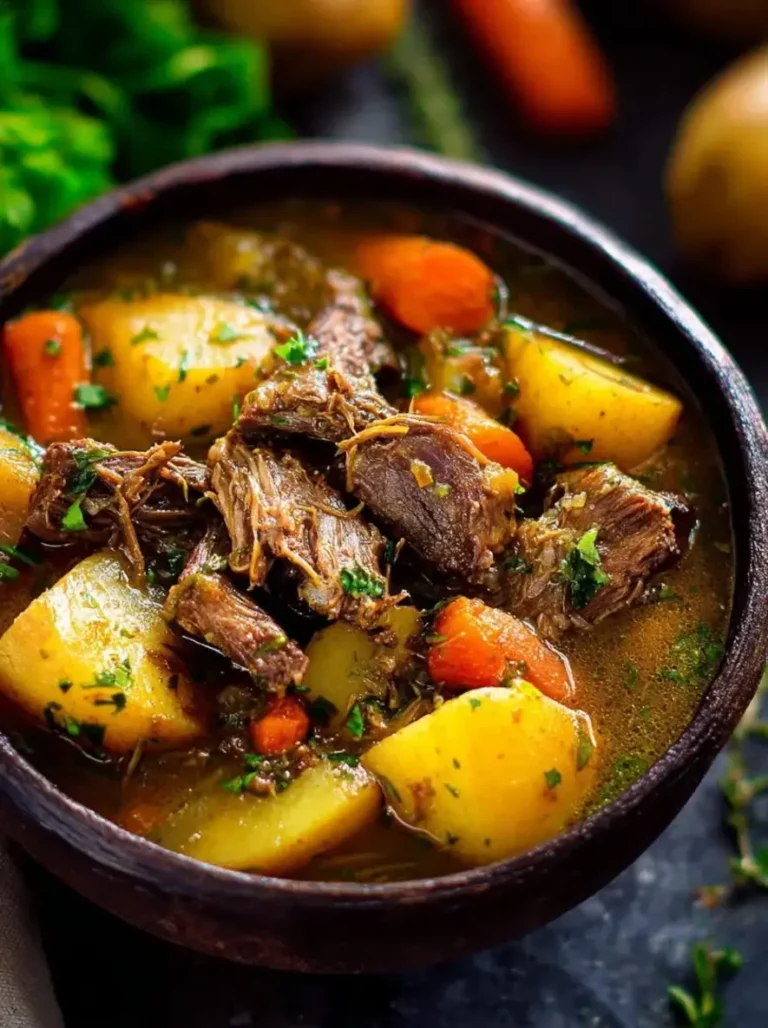
Imagine this: you take a bite and first hit the tender, juicy meatball — fragrant with cilantro, green onion, and a whisper of fish sauce. Then comes the sauce: velvety, rich, and just slightly spicy from the red curry paste, with a hint of sweetness from the coconut milk. The fresh cilantro and sliced green chilies on top add a pop of brightness and color. The whole dish is deeply aromatic, thanks to the ginger and garlic that get bloomed in the pan before the curry paste goes in. It’s the kind of meal that warms you from the inside out — deeply comforting yet bright and fresh at the same time. My husband, who grew up on classic American meatballs and gravy, told me this version “completely redefined meatballs” for him. And when I serve it over a bed of jasmine rice or slurpy rice noodles, I watch everyone at the table go quiet — the best compliment any cook can get.
What makes this chicken meatball curry recipe different from others you’ll find? It’s the attention to detail that my French culinary training instilled in me — from the way I gently combine the meatball mixture to avoid toughness, to the technique of browning the meatballs in batches so they develop a deep golden crust without steaming, to the final simmering step where the meatballs and sauce meld together into one harmonious dish. I’ve also incorporated a trick from my mother’s Moroccan kitchen: a touch of fish sauce in the meatball mixture that adds savory depth without tasting fishy. And I’m sharing my absolute best tip for keeping meatballs tender every single time. In this complete guide, I’ll walk you through each step, share my favorite ingredient substitutions tested in my own kitchen, and answer the most common questions I get from readers. Whether you’re a Thai food lover or just looking for an easy weeknight dinner that feels special, this Thai coconut curry meatballs recipe is going to become your new go-to.
Why This Thai Chicken Meatballs Coconut Curry Recipe Is the Best
The Flavor Secret. The magic of this easy Thai chicken meatballs recipe lies in layering flavors the way I learned in Paris: building from the ground up. The meatballs themselves are packed with fresh aromatics — garlic, ginger, green onions, and cilantro — plus a touch of fish sauce and soy sauce for umami. Then they get browned in the pan, leaving behind those delicious browned bits that become the foundation of the curry sauce. When you deglaze with the curry paste and coconut milk, all that concentrated flavor dissolves into the sauce. It’s a technique straight from classic French sauce-making, applied to Thai flavors. The result is a curry that tastes like it’s been simmering for hours, but comes together in about 25 minutes.
Perfected Texture. The biggest challenge with chicken meatballs is keeping them moist — ground chicken is lean and can easily become dry and crumbly. Here’s where my training kicks in: I use panko breadcrumbs and an egg as binders, but the real secret is handling the meat as little as possible. Over-mixing develops the proteins too much, leading to tough meatballs. I also chill the formed meatballs for 10 minutes before browning, which helps them hold their shape. And by simmering them gently in the curry sauce rather than cooking them entirely in the pan, they stay incredibly tender. This Thai chicken meatballs coconut curry sauce also acts as a protective bath, keeping every meatball moist and flavorful.
Foolproof & Fast. This is the kind of recipe that looks impressive but is surprisingly simple. You don’t need any special equipment — just a large skillet and a bowl. The ingredient list is straightforward and most items are available at any US grocery store. I’ve designed the steps so you can easily prep the meatballs ahead of time and just make the sauce when you’re ready to eat. Even on a busy weeknight, you can have this on the table in under 45 minutes. And because it’s so forgiving, it’s perfect for beginner cooks who want to build confidence with bold flavors. Every time I make this red curry chicken meatballs recipe, I’m reminded why it’s one of the most beloved dishes on my blog.
Thai Chicken Meatballs Coconut Curry Ingredients
When I shop for these ingredients, I head straight to my favorite Asian market in Chinatown — the one where the owner always remembers my name and points me toward the freshest lemongrass and Thai basil. But everything here is also available at a well-stocked regular supermarket. I love that this recipe honors the Thai flavors I adore while staying accessible to home cooks everywhere. Let me walk you through what you’ll need.
Ingredients List
- For the Chicken Meatballs:
- 500 g (1 lb) ground chicken
- 1/2 cup panko breadcrumbs
- 1 large egg
- 2 cloves garlic, minced
- 1 tablespoon fresh ginger, grated
- 2 green onions, finely sliced
- 2 tablespoons fresh cilantro, chopped
- 1 teaspoon fish sauce
- 1 teaspoon soy sauce
- 1/2 teaspoon salt
- 1/4 teaspoon black pepper
- 1 tablespoon vegetable oil (for browning)
- For the Coconut Curry Sauce:
- 1 tablespoon vegetable oil
- 3 cloves garlic, minced
- 1 tablespoon fresh ginger, grated
- 2 tablespoons Thai red curry paste
- 1 can (13.5 oz / 400 ml) full-fat coconut milk
- 1/2 cup chicken broth (optional, for thinner sauce)
- 1 tablespoon brown sugar or coconut sugar
- 1 tablespoon lime juice (freshly squeezed)
- For Garnish:
- Fresh cilantro leaves
- Sliced green onions
- Thai basil or regular basil (optional)
- Sliced red chili (optional, for heat)
- Lime wedges
Ingredient Spotlight
Ground Chicken: Look for ground chicken with a bit of fat — usually labeled “ground chicken thigh” or just regular ground chicken. The fat keeps the meatballs moist. If you can only find lean ground chicken breast, add 1 teaspoon of olive oil to the mixture. I’ve also tested this with ground turkey and pork (see FAQ below).
Thai Red Curry Paste: This is the heart of the sauce. I recommend Mae Ploy or Thai Kitchen brands — both are widely available in US supermarkets. Red curry paste typically contains red chilies, lemongrass, galangal, and shrimp paste. If you’re vegetarian, look for a brand without shrimp paste, or use a vegan red curry paste. The heat level can vary by brand, so start with 2 tablespoons and adjust to your taste.
Coconut Milk: Full-fat coconut milk is non-negotiable for that velvety texture. Light coconut milk will work but the sauce will be thinner and less luxurious. Shake the can well before opening to emulsify the cream and liquid. I prefer Chaokoh or Aroy-D brands for their rich flavor and creamy consistency.
Fish Sauce: This adds the savory umami depth that makes Thai food so addictive. Don’t skip it — it won’t taste fishy, I promise. Red Boat is my go-to brand for its clean flavor. If you’re allergic to fish, you can substitute with soy sauce or tamari, though you’ll lose a bit of complexity.
Fresh Ginger and Garlic: Please use fresh, not powdered. The aromatic punch of freshly grated ginger and minced garlic is essential to the flavor profile of this dish. I keep fresh ginger in my freezer — it grates beautifully without peeling and lasts for months.
| Original Ingredient | Best Substitution | Flavor / Texture Impact |
|---|---|---|
| Ground Chicken | Ground Turkey or Ground Pork | Turkey is leaner — add 1 tsp oil. Pork is richer and juicier. |
| Panko Breadcrumbs | Gluten-free panko or almond flour | Almond flour adds richness; GF panko is neutral. |
| Fish Sauce | Soy sauce + 1 tsp anchovy paste | Less complex but still savory. Use tamari for GF. |
| Thai Red Curry Paste | Yellow or Green Curry Paste | Green is spicier, yellow is milder. Adjust amount to taste. |
| Coconut Milk | Heavy cream + 1/2 cup water | Richer, less sweet, not dairy-free. Add 1 tsp sugar. |
How to Make Thai-Inspired Tender Chicken Meatballs Simmered in Velvety Coconut Curry with Fresh Herbs — Step-by-Step
Trust me when I say this is one of those recipes that looks and tastes like you spent hours in the kitchen, but comes together in a beautiful, stress-free flow. Here’s exactly how to do it, with all my chef-tested secrets.
Step 1: Prepare the Meatball Mixture
In a large bowl, combine 500 g (1 lb) ground chicken, 1/2 cup panko breadcrumbs, 1 large egg, 2 cloves minced garlic, 1 tablespoon grated ginger, 2 finely sliced green onions, 2 tablespoons chopped cilantro, 1 teaspoon fish sauce, 1 teaspoon soy sauce, 1/2 teaspoon salt, and 1/4 teaspoon pepper. Use a fork or your hands to mix gently — just until everything is evenly combined. Don’t overwork the mixture or the meatballs will be dense.
💡 Stella’s Pro Tip: Wet your hands slightly with cold water before rolling the meatballs — the mixture won’t stick to your palms and you’ll get perfectly round, smooth meatballs every time.
Step 2: Form and Chill the Meatballs
Roll the mixture into small meatballs about 1 inch in diameter — you should get around 20–24 meatballs. Place them on a parchment-lined baking sheet or plate. Pop them in the refrigerator for 10 minutes while you prep the other ingredients. This chilling step helps the meatballs hold their shape during browning.
⚠️ Common Mistake to Avoid: Don’t skip the chilling step. If the meatballs go into the hot pan straight from the bowl, they’re more likely to fall apart or flatten. Those 10 minutes make a real difference.
Step 3: Brown the Meatballs
Heat 1 tablespoon vegetable oil in a large skillet over medium heat. Add the meatballs in a single layer — you may need to do this in two batches to avoid overcrowding. Cook for 5–7 minutes, turning occasionally, until golden brown on all sides. The meatballs should have a nice crust but won’t be fully cooked through yet. Use a slotted spoon to transfer them to a plate and set aside.
💡 Stella’s Pro Tip: Don’t move the meatballs around for the first 2 minutes of cooking. Let them develop a proper sear — that golden crust adds incredible flavor to the final dish and prevents sticking.
Step 4: Build the Curry Base
In the same skillet (don’t wipe it clean — those browned bits are liquid gold!), add 1 tablespoon vegetable oil over medium heat. Add 3 minced garlic cloves and 1 tablespoon grated ginger. Sauté for 1 minute until fragrant, stirring constantly so they don’t burn. Then add 2 tablespoons Thai red curry paste and cook for 1 more minute, stirring to combine. Your kitchen will smell incredible at this point.
⚠️ Common Mistake to Avoid: Garlic and ginger can burn very quickly — if your pan is too hot, they’ll turn bitter. Keep the heat at medium and stir constantly. If the paste starts sticking, add a splash of coconut milk right away.
Step 5: Simmer the Curry Sauce
Pour in 1 can (13.5 oz / 400 ml) full-fat coconut milk and 1/2 cup chicken broth if you prefer a thinner sauce. Add 1 tablespoon brown sugar and stir well to combine. Bring the sauce to a gentle simmer — you should see small bubbles around the edges, not a rolling boil. Let it cook for 2–3 minutes to meld the flavors, then taste and adjust: add more curry paste for heat, more sugar for sweetness, or a pinch of salt if needed.
💡 Stella’s Pro Tip: If you want an extra-velvety sauce, use only the thick cream from the top of the coconut milk can for the first simmer, then add the thinner liquid later. This French technique gives you a richer, more luxurious texture.
Step 6: Return Meatballs to the Skillet
Gently place the browned meatballs back into the simmering curry sauce. Spoon some sauce over the tops of the meatballs so they’re partially submerged. Cover the skillet with a lid, reduce the heat to low, and let everything simmer together for 10–12 minutes. This gentle finish ensures the meatballs cook through while absorbing all that fragrant curry flavor. They should reach an internal temperature of 165°F (74°C).
💡 Stella’s Pro Tip: If you don’t have a lid, cover the skillet tightly with foil. You want the steam to circulate around the meatballs — that’s what keeps them incredibly tender and moist.
Step 7: Garnish and Serve
Remove the lid and stir in 1 tablespoon fresh lime juice. Taste the sauce one more time and adjust salt or lime as needed. Transfer the meatballs and sauce to a serving bowl. Garnish generously with fresh cilantro leaves, sliced green onions, Thai basil if you have it, and optional sliced red chili for heat. Serve immediately over steamed jasmine rice, rice noodles, or with warm naan bread on the side.
⚠️ Common Mistake to Avoid: Don’t skip the fresh lime juice at the end — the acidity brightens the entire dish and balances the richness of the coconut milk. Without it, the curry can taste flat and heavy.
| Step | Action | Duration | Key Visual Cue |
|---|---|---|---|
| 1 | Mix meatball ingredients | 5 mins | Mixture is cohesive but not pasty |
| 2 | Form and chill meatballs | 12 mins (incl. chill) | Meatballs are firm to the touch |
| 3 | Brown meatballs | 5–7 mins | Golden crust on all sides |
| 4 | Sauté aromatics + curry paste | 2 mins | Fragrant, paste darkens slightly |
| 5 | Simmer curry sauce | 3–5 mins | Sauce is smooth and slightly thickened |
| 6 | Simmer meatballs in sauce | 10–12 mins | Meatballs are cooked through (165°F) |
| 7 | Garnish and serve | 2 mins | Bright herbs and lime on top |
Serving & Presentation
When I serve this dish, I love to create a beautiful bowl that’s as pleasing to the eye as it is to the palate. Start with a bed of fluffy jasmine rice — I use a 2:1 ratio of water to rice and a pinch of salt, then fluff it with a fork. Pile the meatballs and curry sauce right on top, allowing the sauce to cascade down the sides of the rice. Then garnish generously: a handful of fresh cilantro leaves, thinly sliced green onions, and a few sprigs of Thai basil if you can find them at your local farmers market or Asian grocery. A few thin slices of red chili add a pop of color and optional heat, and a lime wedge on the side lets everyone brighten their bowl to their taste.
In my NYC apartment, I love serving this on cool autumn evenings with a simple cucumber salad on the side — just sliced English cucumber with rice vinegar, a pinch of sugar, and chili flakes. The cool, crisp salad is the perfect contrast to the warm, velvety curry. If I’m feeling nostalgic for Paris, I’ll serve it with a baguette instead of rice — something about dipping crusty bread into that coconut curry sauce feels incredibly indulgent and satisfying. And on nights when I just want comfort, I’ll ladle everything over wide rice noodles, the way I first ate it at a tiny stall in Bangkok that changed my understanding of what curry could be.
For a dinner party, I’ll transfer the meatballs and sauce to a beautiful ceramic serving bowl and set out a platter of garnishes so guests can customize their bowls. It makes for such a lovely, interactive meal. And honestly? This dish tastes even better the next day, so I always make extra for leftovers. There’s something about the flavors melding overnight that takes it to another level.
| Pairing Type | Suggestions | Why It Works |
|---|---|---|
| Side Dish | Jasmine rice, rice noodles, naan bread, cucumber salad | Neutral bases soak up the flavorful curry sauce perfectly. |
| Sauce / Dip | Extra lime wedges, chili oil, sweet chili sauce | Adds brightness, heat, or sweetness to each bite as desired. |
| Beverage | Crisp lager, dry Riesling, iced Thai tea, sparkling water with lime | Cold, crisp drinks balance the warm, creamy, spicy curry. |
| Garnish | Fresh cilantro, Thai basil, green onions, red chili, crispy shallots | Adds freshness, color, texture, and aromatic complexity. |
Make-Ahead, Storage & Reheating
As a busy home cook and food blogger in NYC, I’m all about recipes that work with my schedule, not against it. This Thai chicken meatballs coconut curry is one of my favorite meal-prep recipes because it actually tastes better after a day or two in the fridge. I often make a double batch on Sunday so we have easy lunches ready to go during the week. Here’s my tested system for storing and reheating.
| Method | Container | Duration | Reheating Tip |
|---|---|---|---|
| Refrigerator | Airtight glass container | Up to 4 days | Reheat gently on stovetop over low heat, adding a splash of broth or water to thin the sauce if needed. |
| Freezer | Freezer-safe container or zip-top bag | Up to 3 months | Thaw overnight in the fridge, then reheat on stovetop or microwave. Sauce may separate slightly — whisk it back together. |
| Make-Ahead | Bowl, covered with plastic wrap | Up to 24 hours in advance | Form meatballs and refrigerate. Make sauce and store separately. Combine and simmer when ready to serve. |
One thing I’ve learned from years of test-kitchen work: when reheating this dish, a gentle hand is your best friend. The coconut milk sauce can separate if you rush it with high heat. I like to reheat it in a skillet over medium-low heat, stirring occasionally, and adding a tablespoon of water or broth if the sauce looks too thick. The meatballs will stay tender and juicy, and the flavors will have deepened beautifully. I actually look forward to day-two leftovers more than the first serving — the curry paste and herbs have had time to fully marry into the meatballs, and every bite is even more fragrant.
Variations & Easy Swaps
One of the things I love most about this recipe is how endlessly adaptable it is. Over the years, I’ve tested countless variations for readers with different dietary needs and flavor preferences. Here are my favorite tried-and-true swaps, each one tested in my own NYC kitchen.
| Variation | Key Change | Best For | Difficulty Impact |
|---|---|---|---|
| Gluten-Free | Use GF panko or almond flour; tamari instead of soy sauce | Celiac or gluten-sensitive eaters | No change — same texture and flavor |
| Dairy-Free / Paleo | Already dairy-free; use coconut aminos instead of soy sauce | Whole30, paleo, or dairy-free diets | No change — recipe is naturally dairy-free |
| Vegetarian / Vegan | Use plant-based ground “meat” + vegan fish sauce or soy sauce | Meat-free Monday, vegan guests | Slightly trickier — cook meatballs gently to prevent crumbling |
Gluten-Free Version
This is incredibly easy to adapt. Simply swap the panko breadcrumbs for gluten-free panko (I like Ian’s brand) or use almond flour for a lower-carb option. Replace the soy sauce with tamari or coconut aminos. Everything else in the recipe is naturally gluten-free, including the fish sauce and the Thai red curry paste (always check the label, but most brands are GF). The texture of the meatballs is every bit as tender and juicy as the original — my gluten-sensitive friends can never tell the difference.
Spicy Moroccan Twist
This variation is close to my heart because it brings my two culinary worlds together. Add 1 teaspoon of smoked paprika and 1/2 teaspoon of cumin to the meatball mixture, and swap the Thai red curry paste for 1 tablespoon of harissa paste. Finish the sauce with a pinch of saffron threads soaked in 2 tablespoons of warm water. The result is a North African–meets–Southeast Asia fusion that’s absolutely stunning. I serve this with couscous and a sprinkle of toasted almonds — it’s become a signature dish at my dinner parties.
Green Curry Variation
If you prefer a brighter, more herbaceous flavor profile, swap the red curry paste for Thai green curry paste. Green curry is typically made with fresh green chilies, cilantro roots, and makrut lime leaves, so it has a fresher, more vibrant taste. The rest of the recipe stays exactly the same. I love this version in the spring and summer, served with a big handful of Thai basil and fresh mint. It’s lighter and more aromatic, but still deeply comforting.
Can I use ground turkey or pork instead of chicken for the meatballs?
Absolutely! I’ve tested this recipe with both ground turkey and pork, and each brings something wonderful to the table. Ground turkey is the closest substitute to chicken — just make sure you choose turkey with at least 7% fat (look for “ground turkey” rather than “ground turkey breast”) and consider adding 1 teaspoon of olive oil to the mixture to keep the meatballs moist. Ground pork is richer and juicier than chicken, thanks to its higher fat content, and it adds a lovely sweetness that pairs beautifully with the curry sauce. If using pork, you can reduce the oil in the recipe slightly since the meat will render its own fat during browning. Both options work wonderfully, so choose based on what you have on hand or your personal preference.
What is the best way to keep the chicken meatballs tender and moist before adding them to the curry?
This is such an important question, and the answer comes down to a few key techniques I learned in culinary school. First, don’t overmix the meatball mixture — stir just until the ingredients are combined, then stop. Overmixing develops the proteins and leads to tough, dense meatballs. Second, chill the formed meatballs for at least 10 minutes before browning. This firms up the fat and helps the meatballs hold their shape during cooking. Third, brown them over medium heat rather than high heat — you want a golden crust without cooking the interior too quickly. Finally, the gentle simmer in the coconut curry sauce is what truly keeps them tender. The sauce acts as a protective bath, cooking the meatballs evenly without drying them out. If you follow these steps, your meatballs will be perfectly tender every time.
How long should I simmer the meatballs in the coconut curry for the best flavor?
For the best flavor and texture, simmer the meatballs in the curry sauce for 10 to 12 minutes after returning them to the skillet. This is the sweet spot: long enough for the meatballs to cook through to a safe internal temperature of 165°F (74°C) and to absorb the aromatic flavors of the curry, but not so long that they start to break apart or become dry. I recommend covering the skillet during this simmering time to trap steam and keep the meatballs moist. If you’re making the dish ahead of time, you can simmer for just 8 minutes, then let the flavors continue to meld as the dish cools and rests in the fridge. When reheating, a gentle 5-minute simmer is all you need to bring it back to life.
What fresh herbs work best as a garnish for this Thai coconut curry dish?
Fresh herbs are the finishing touch that takes this dish from delicious to absolutely stunning. My top recommendation is fresh cilantro — its bright, citrusy flavor is a classic pairing with Thai curries and cuts through the richness of the coconut milk. Thai basil is another wonderful option if you can find it; it has a slightly spicy, anise-like flavor that’s different from Italian basil and adds an authentic Thai touch. Regular basil works too, but the flavor will be milder. Thinly sliced green onions add a mild oniony crunch, and fresh mint leaves bring a cool, refreshing note that’s especially nice if the curry is on the spicier side. I like to use a combination of cilantro, green onions, and a few Thai basil leaves for the most beautiful and flavorful presentation.
Can I make this Thai chicken meatballs coconut curry in advance for meal prep?
Yes, and I actually encourage it! This is one of those rare dishes that tastes even better the next day, as the flavors have time to meld and deepen. For meal prep, I recommend cooking the meatballs and sauce completely, then storing them together in an airtight container in the refrigerator for up to 4 days. When you’re ready to eat, reheat gently on the stovetop over medium-low heat, adding a splash of chicken broth or water if the sauce has thickened too much. If you want to prep even further ahead, you can form the raw meatballs and store them in the fridge for up to 24 hours before cooking, or freeze them on a baking sheet and transfer to a zip-top bag for up to 3 months. The sauce can also be made ahead and refrigerated separately for up to 4 days.
Is this recipe spicy? How can I adjust the heat level?
The heat level in this recipe is moderate — it has a gentle warmth from the 2 tablespoons of red curry paste, but it’s not overpowering. The coconut milk mellows the spice considerably. If you’re sensitive to heat, start with just 1 tablespoon of curry paste and taste the sauce before adding more. You can also use a mild curry paste labeled “mild” or “medium.” For those who love heat, feel free to increase the curry paste to 3 tablespoons, add a sliced red chili along with the aromatics, or serve the finished dish with chili oil or sambal oelek on the side. I always recommend tasting the sauce after the first simmer and adjusting to your personal preference — that’s the beauty of cooking at home.
What can I serve with this Thai chicken meatball curry besides rice?
While jasmine rice is the classic pairing, there are so many delicious alternatives! I love serving this curry over wide rice noodles (the kind used in pad Thai) for a more substantial bowl — the noodles catch every bit of that velvety sauce. For a low-carb option, try cauliflower rice or serve the meatballs and sauce over a bed of sautéed spinach or bok choy. Warm naan bread or roti is wonderful for dipping, and a crusty baguette works surprisingly well too — a habit I picked up in Paris. On nights when I want something extra comforting, I’ll even serve it over mashed potatoes for a fusion twist that my family absolutely loves. The possibilities are endless, so feel free to get creative with whatever you have on hand.
Can I freeze the chicken meatballs in the curry sauce?
Yes, this dish freezes beautifully! I regularly make a double batch and freeze half for busy weeks. To freeze, let the meatballs and curry sauce cool completely to room temperature, then transfer to a freezer-safe container or a zip-top freezer bag. Press out as much air as possible before sealing to prevent freezer burn. The dish will keep well for up to 3 months. When you’re ready to enjoy it, thaw overnight in the refrigerator (this is important for food safety and texture). Reheat gently on the stovetop over medium-low heat, stirring occasionally. You may notice the coconut milk sauce looks slightly separated after thawing — don’t worry! Just whisk it gently as it warms up, and it will come back together into a smooth, velvety sauce. If it seems too thick, add a splash of chicken broth or water to loosen it.
How do I prevent the meatballs from falling apart while browning?
This is a common concern, and a few simple tricks will ensure your meatballs stay perfectly intact. First, make sure your meatball mixture has enough binder — the egg and panko breadcrumbs in this recipe are essential for holding everything together. If the mixture feels too wet, add an extra tablespoon of breadcrumbs; if it feels too dry, add a teaspoon of water or more egg. Second, chill the formed meatballs for at least 10 minutes before cooking — this firms up the mixture and helps them hold their shape. Third, use a non-stick or well-seasoned cast iron skillet with enough oil to coat the bottom. Let the meatballs cook undisturbed for the first 2 minutes to develop a proper sear; they’ll release easily from the pan once they’re golden brown. If you try to move them too soon, they’ll stick and potentially break apart.
What type of coconut milk should I use for the best curry sauce?
For the velvety, luxurious texture that makes this curry so special, I strongly recommend using full-fat coconut milk. Light or reduced-fat coconut milk has a higher water content and less fat, which means your sauce will be thinner, less creamy, and more likely to separate during simmering. Look for brands that don’t contain guar gum or other thickeners — Chaokoh and Aroy-D are my favorites for their clean ingredient lists and rich flavor. Before opening the can, shake it well to emulsify the thick cream that naturally rises to the top with the thinner liquid below. If you want an extra-indulgent sauce, you can scoop out only the thick cream from the top of the can for the initial simmer, then add the remaining liquid later. This technique gives you a sauce that’s restaurant-quality velvety.
Share Your Version!
I absolutely love hearing from you — it’s the best part of running this blog. When you make this Thai chicken meatballs coconut curry, I want to know how it turned out! Did you stick to the recipe or add your own twist? Maybe you tried the Moroccan variation or served it over rice noodles instead of jasmine rice. Whatever you did, please leave a star rating and a comment below — it helps other readers know what to expect and gives me such joy to read about your kitchen adventures.
And if you snap a photo of your beautiful bowl (and I’m sure you will — this dish is absolutely gorgeous), please share it on Instagram or Pinterest and tag @leosfoods. I love nothing more than seeing my recipes brought to life in your homes. It reminds me why I do what I do: connecting people through the universal language of good food. So go ahead, make a mess, lick the spoon, and enjoy every single bite. From my NYC kitchen to yours — I hope this recipe brings as much warmth to your table as it does to mine. — Stella 🧡
Love This Recipe? Save It to Pinterest!
If you enjoyed this Thai-Inspired Tender Chicken Meatballs Simmered in Velvety Coconut Curry with Fresh Herbs recipe, don’t let it get lost in your browser tabs! 😄 Pin it now so you can find it again anytime — and explore hundreds more tried-and-tested recipes waiting for you on my Pinterest boards.
👉 Follow Stella on Pinterest @stellarecipeblog
📌 Pin this recipe · 🔁 Re-pin your favorites · 💬 Tag me when you make it — I love seeing your creations!
💬 I’d Love to Hear From You!
Have you tried this Thai chicken meatballs coconut curry recipe? What fresh herbs did you use for garnish? Drop a comment below with your star rating and any questions — I personally read and respond to every single one! 🧡
⭐ Leave a review · 💬 Share your twist · 📌 Pin for later
Thai-Inspired Tender Chicken Meatballs Simmered in Velvety Coconut Curry with Fresh Herbs
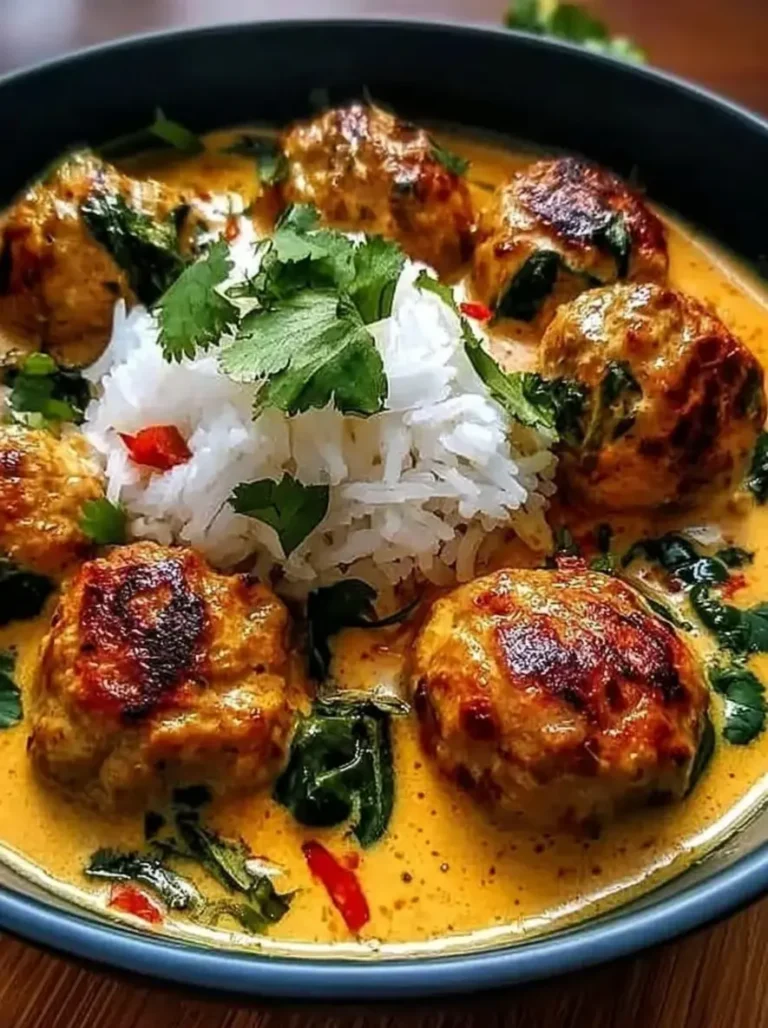
Tender chicken meatballs with Thai flavors, simmered in a creamy coconut curry sauce with fresh herbs.
Ingredients
- For the Chicken Meatballs:
- 500 g (1 lb) ground chicken
- 1/2 cup panko breadcrumbs
- 1 large egg
- 2 cloves garlic, minced
- 1 tablespoon fresh ginger, grated
- 2 green onions, finely sliced
- 2 tablespoons fresh cilantro, chopped
- 1 teaspoon fish sauce
- 1 teaspoon soy sauce
- 1/2 teaspoon salt
- 1/4 teaspoon black pepper
- 1 tablespoon vegetable oil
- For the Coconut Curry Sauce:
- 1 tablespoon vegetable oil
- 3 cloves garlic, minced
- 1 tablespoon fresh ginger, grated
- 2 tablespoons Thai red curry paste
Instructions
- In a large bowl, combine ground chicken, panko breadcrumbs, egg, garlic, ginger, green onions, cilantro, fish sauce, soy sauce, salt, and pepper. Mix well.
- Form the mixture into small meatballs (about 1 inch in diameter).
- Heat 1 tablespoon vegetable oil in a large skillet over medium heat. Add meatballs and cook until browned on all sides, about 5-7 minutes. Remove and set aside.
- In the same skillet, add 1 tablespoon oil. Sauté garlic and ginger for 1 minute until fragrant.
- Add Thai red curry paste and cook for 1 more minute.
- Pour in coconut milk (if using from full recipe), bring to a simmer.
- Return meatballs to the skillet, cover, and simmer for 10-12 minutes until cooked through.
- Garnish with fresh cilantro and serve over rice or noodles.
Tried This Recipe? Leave a Comment!
Did you make this recipe? I’d love to hear how it turned out! Please leave a comment and a rating below. Your feedback helps other home cooks and supports cheerychop.com!
For more delicious inspiration, follow me on Pinterest!