Vanilla Birthday Cake Recipe
“`html
Table of Contents
Vanilla Birthday Cake Recipe
Introduction
Did you know that vanilla is the world’s second most expensive spice, yet it remains the number one flavor for birthday cakes globally? This classic three-layer vanilla birthday cake is more than just a dessert; it’s the centerpiece of celebration, a canvas for creativity, and a testament to timeless baking. In this guide, we’ll walk you through creating a moist, tender, and incredibly flavorful cake paired with a silky buttercream frosting. Whether you’re a first-time baker or a seasoned pro, you’ll learn professional techniques to achieve stunning results that will make your special occasion unforgettable.
Ingredients List
For the best flavor and texture, use room temperature ingredients. This allows for better emulsification and a lighter crumb.
For the Vanilla Cake:
- 3 cups (360g) all-purpose flour: The foundation. For a lighter cake, you can substitute with cake flour, which will yield a more delicate, tender crumb.
- 2 ½ teaspoons baking powder: The leavening agent that gives the cake its rise and airy texture.
- ½ teaspoon baking soda: Works with the buttermilk for additional lift and tenderness.
- 1 teaspoon fine sea salt: Enhances all the flavors and balances the sweetness.
- 1 cup (226g) unsalted butter, room temperature: Provides rich flavor and a moist texture. It should be soft to the touch but not oily.
- 2 cups (400g) granulated sugar: Sweetens and helps create a light, fluffy structure when creamed with butter.
- 4 large eggs, room temperature: Bind the ingredients and add structure and richness. The yolks contribute to the beautiful golden color.
- 1 tablespoon pure vanilla extract: The star! Use a high-quality extract or vanilla bean paste for those signature fragrant, floral notes. (Avoid imitation vanilla for the best flavor.)
- 1 ½ cups (360ml) buttermilk, room temperature: The secret to supreme moisture and a slight tang. Substitution: No buttermilk? Mix 1 ½ cups milk with 1 ½ tablespoons white vinegar or lemon juice. Let it sit for 5 minutes until it curdles.
For the Vanilla Buttercream Frosting:
- 2 cups (452g) unsalted butter, room temperature: The base for a creamy, spreadable frosting.
- 7-8 cups (840-960g) powdered sugar, sifted: Provides sweetness and structure. Sifting is non-negotiable for a lump-free, silky finish.
- ⅓ cup (80ml) heavy cream or whole milk: Thins the frosting to the perfect spreading consistency.
- 2 teaspoons pure vanilla extract: Doubles down on that beautiful vanilla aroma.
- Pinch of salt: Cuts the sweetness and rounds out the flavor profile.
Timing
30 minutes
25-30 minutes
3 hours (includes cooling & decorating)
Compared to the average boxed mix or one-bowl recipe, this vanilla birthday cake requires a bit more hands-on time for creaming and layering. However, the payoff is a dramatically superior homemade taste and texture that’s well worth the extra 30 minutes of active prep. The majority of the total time is hands-off cooling, which is crucial for easy assembly.
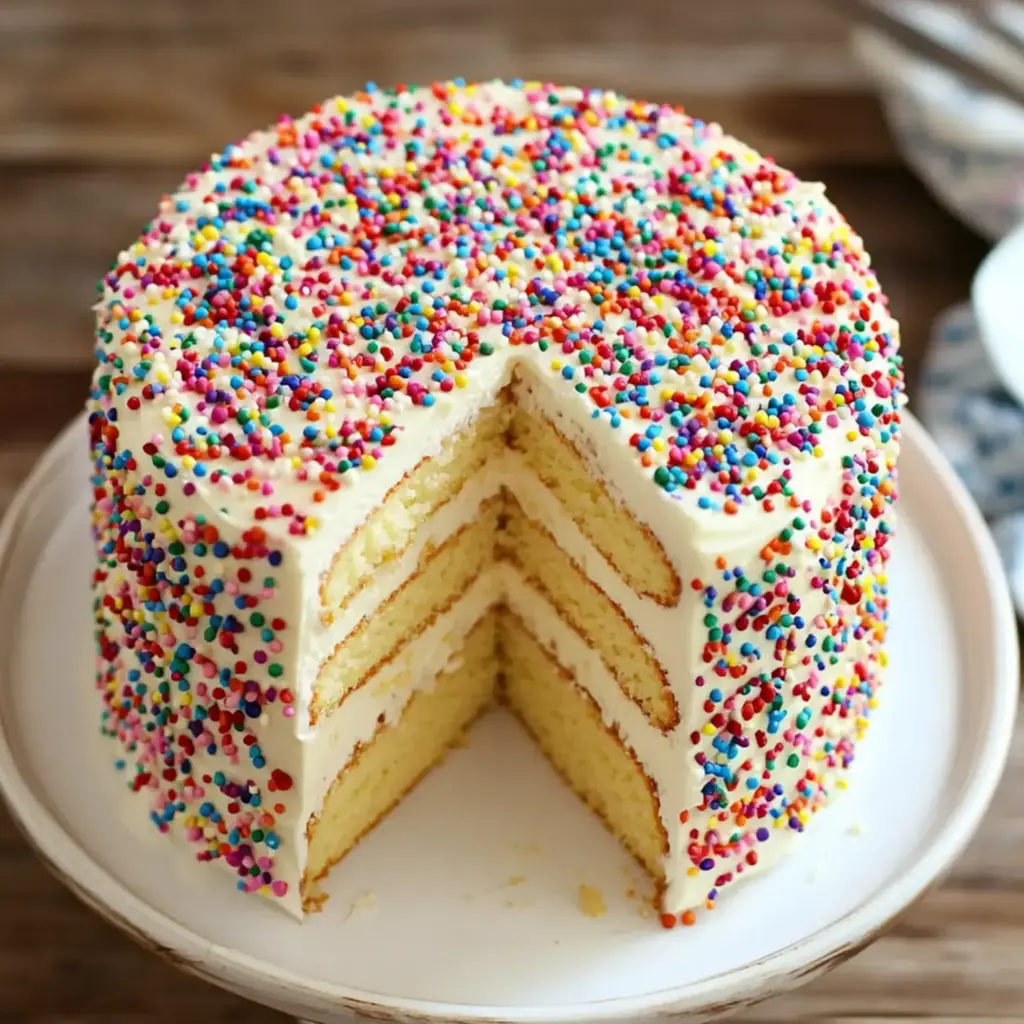
A classic, beautifully decorated three-layer vanilla birthday cake ready for celebration.
Step-by-Step Instructions
Step 1: Prepare the Cake Pans
Preheat your oven to 350°F (175°C). Grease three 8-inch round cake pans with butter or baking spray. Line the bottoms with parchment paper rounds, then grease the parchment as well. This double insurance policy guarantees your cakes will release perfectly without a single crumb left behind. Lightly dust the pans with flour, tapping out any excess.
Step 2: Cream Butter and Sugar
In the bowl of a stand mixer fitted with the paddle attachment, beat the softened butter on medium speed for 1 minute until smooth and creamy. Gradually add the granulated sugar with the mixer running. Increase speed to medium-high and beat for a full 4-5 minutes. Stop and scrape down the bowl once. You’re done when the mixture is very pale, fluffy, and almost white in color. This step incorporates air, which is essential for the cake’s lift.
Step 3: Combine Wet Ingredients
With the mixer on low, add the eggs one at a time, fully incorporating each before adding the next. Add the vanilla extract and mix until combined. The mixture may look slightly curdled at this point—that’s perfectly normal and will fix itself when you add the dry ingredients.
Step 4: Combine Dry Ingredients
In a separate bowl, whisk together the flour, baking powder, baking soda, and salt. With the mixer on low, add the dry ingredients to the butter mixture in three parts, alternating with the buttermilk in two parts. Begin and end with the dry ingredients. Mix only until just combined after each addition. Overmixing at this stage develops gluten and leads to a tough, dense cake.
Step 5: Bake to Perfection
Divide the batter evenly among the prepared pans (a kitchen scale ensures perfect layers). Smooth the tops with a spatula. Bake for 25-30 minutes, or until a toothpick inserted into the center comes out clean or with a few moist crumbs. The cakes should be golden and spring back when lightly touched. Let them cool in the pans on a wire rack for 10 minutes, then run a knife around the edges and invert them onto the rack to cool completely. They must be completely cool before frosting.
Step 6: Make the Buttercream
Clean your mixer bowl. Beat the softened butter on medium speed for 3-4 minutes until very pale and creamy. With the mixer on low, gradually add 4 cups of sifted powdered sugar. Once incorporated, add the vanilla, salt, and 2 tablespoons of cream. Beat on medium-high for 2 minutes. Gradually add the remaining powdered sugar, 1 cup at a time, beating well after each addition. Add the remaining cream as needed to reach a spreadable, fluffy consistency. Beat on high for a final 2 minutes until incredibly light and smooth.
Step 7: Assemble and Decorate
Place one cake layer on your serving plate or cake board. Spread about ¾ cup of frosting evenly over the top. Add the second layer and repeat. Top with the final layer. Apply a thin “crumb coat” of frosting over the entire cake and chill for 15 minutes. This seals in crumbs. Finally, apply a thick, final layer of frosting, using an offset spatula to create smooth sides or decorative swirls. For a simple yet stunning look, press sprinkles onto the sides or pipe rosettes on top with a star tip.
Nutritional Information
Per serving (1/12th of cake, with frosting):
- Calories: ~680 kcal
- Total Fat: 32g
- Saturated Fat: 20g
- Carbohydrates: 95g
- Sugar: 75g
- Protein: 5g
- Sodium: 280mg
Healthier Alternatives
You can make mindful swaps without sacrificing the celebratory feel of this vanilla birthday cake:
- Flour: Substitute half the all-purpose flour with white whole wheat flour for added fiber. The flavor remains mild and the texture is still tender.
- Sugar: In the cake, you can reduce granulated sugar by ¼ cup. For the frosting, replace 2 cups of powdered sugar with a powdered erythritol/monk fruit blend designed for baking. The sweetness and texture are remarkably similar.
- Fat: Replace half the butter in the cake with unsweetened applesauce or mashed ripe banana for moisture. In the frosting, use a blend of half butter and half lower-fat cream cheese.
- Dairy: Use plant-based milk and vinegar for the buttermilk substitute, and a high-fat vegan butter for a dairy-free version.
Serving Suggestions
- Serve slices with a dollop of freshly whipped cream and a handful of mixed berries for a refreshing contrast.
- Drizzle individual plates with a warm salted caramel or raspberry coulis for a restaurant-style presentation.
- Pair with a scoop of vanilla bean ice cream for the ultimate birthday indulgence.
- For a festive touch, serve with sparkler candles or edible gold leaf for a truly glamorous finish.
Common Mistakes
- Using Cold Ingredients: This prevents proper emulsification, leading to a dense, heavy cake. Plan ahead!
- Overmixing the Batter: Once the flour is added, mix only until no dry streaks remain. Overmixed batter = tough cake.
- Not Measuring Flour Correctly: Spoon flour into the measuring cup and level it off. Scooping directly packs the flour, resulting