Stunning Rose Gold Raspberry Lychee Pavlova Bombs
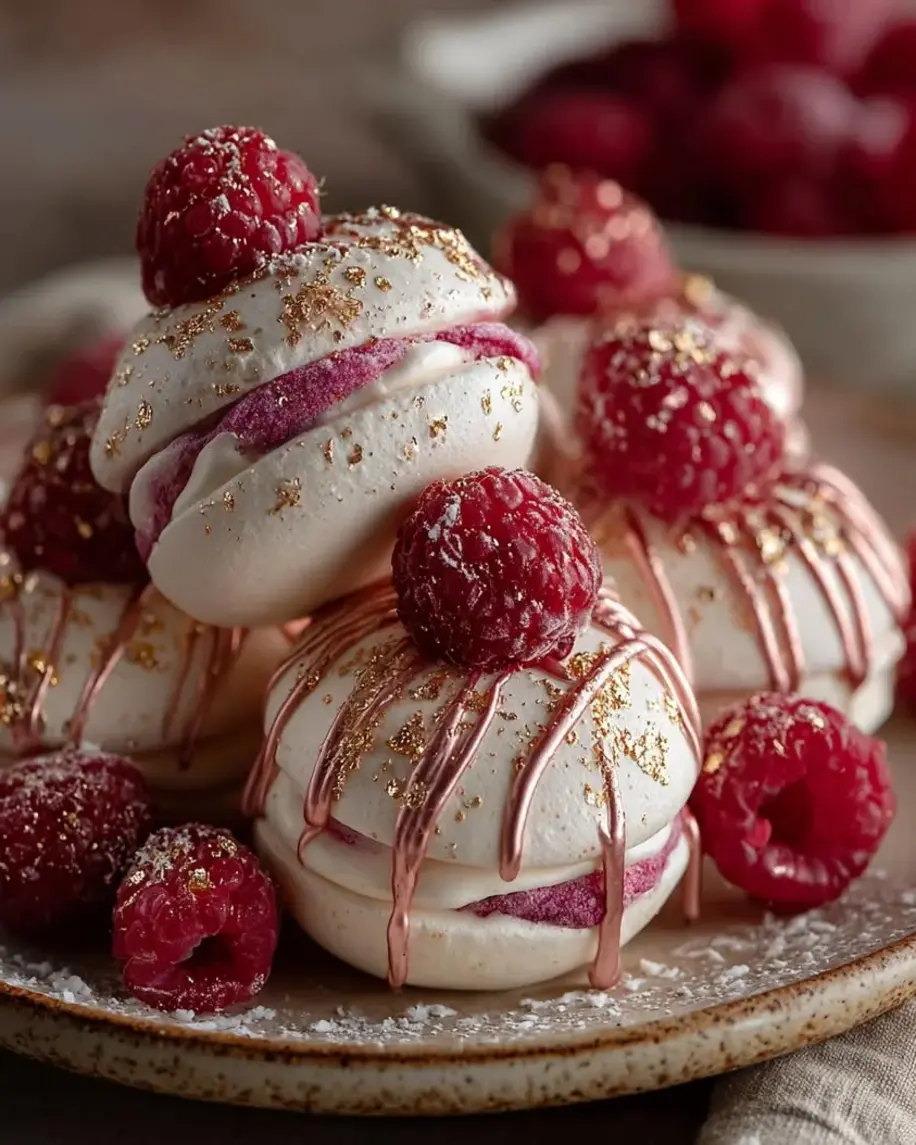
Table of Contents
Rose Gold Raspberry Lychee Pavlova Bombs – A Showstopper Dessert
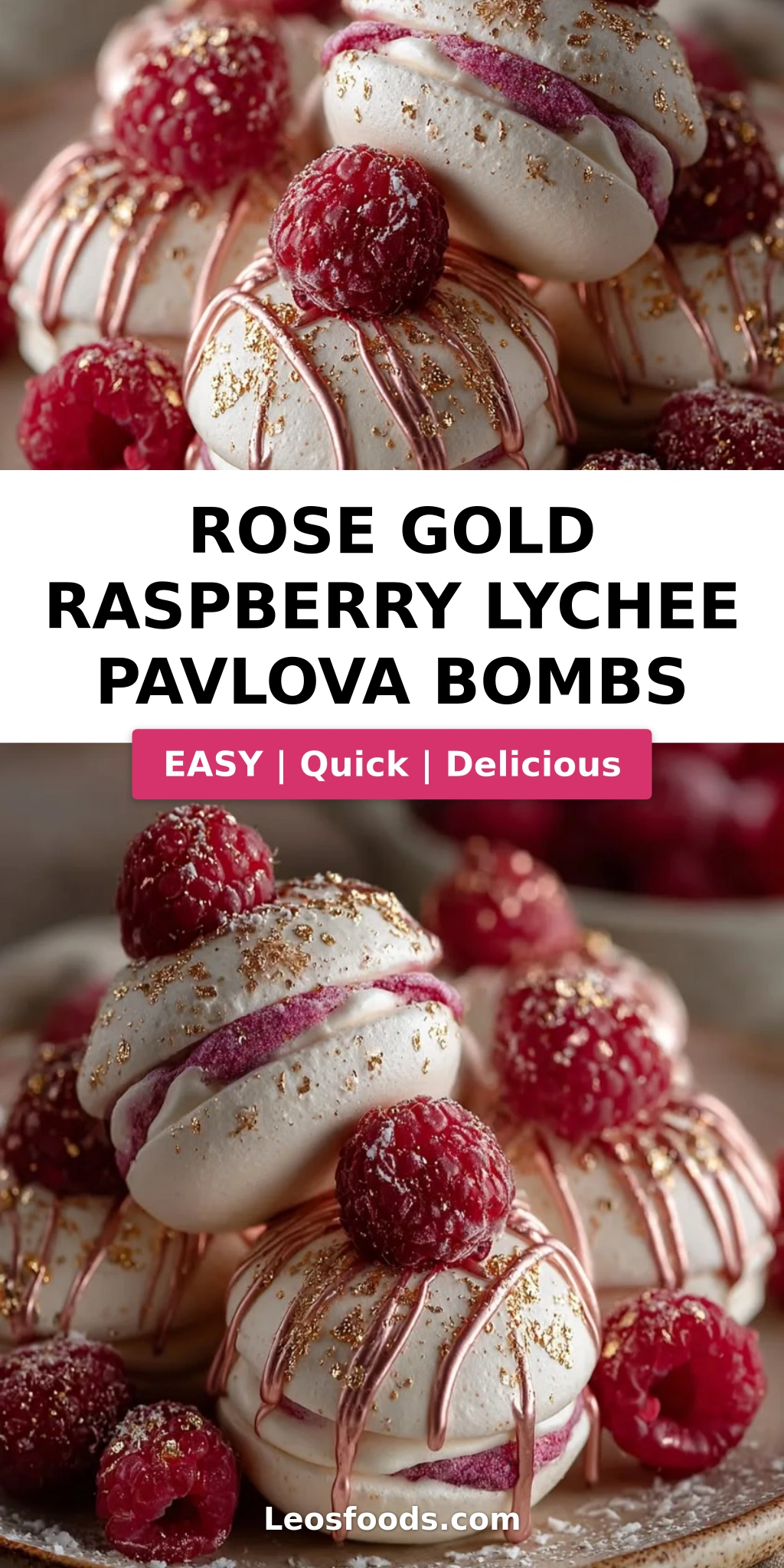
I still remember the first time I saw a pavlova in a Parisian pâtisserie window — a cloud of meringue crowned with cream and berries, almost too beautiful to eat. Growing up in Morocco, my mother’s desserts were all about warm spices and honey-soaked pastries, but that French meringue masterpiece sparked something in me. Years later, after training in Paris and settling here in New York City, I’ve taken that classic pavlova and given it a whimsical, modern twist: Rose Gold Raspberry Lychee Pavlova Bombs. This rose gold pavlova recipe combines the ethereal crunch of meringue with a jewel-toned raspberry lychee compote, silky vanilla cream, and a shimmering rose gold glaze that catches the light like evening jewelry. It’s the kind of elegant pavlova that makes any table feel like a celebration — whether it’s a birthday, anniversary, or just a Tuesday that deserves something extraordinary.
Imagine breaking through a delicate, crisp shell with your spoon — it gives way with a gentle crack, revealing a luscious layer of vanilla bean cream and a tangy-sweet raspberry lychee filling that tastes like summer in full bloom. The lychees bring a floral, almost rose-like perfume that pairs beautifully with the bright acidity of raspberries. Then comes the glaze: a silky white chocolate drizzle infused with edible rose gold luster dust, adding a subtle sweetness and a gorgeous metallic sheen that makes each pavlova bomb look like a precious gem. The texture journey is pure magic — crunchy outside, creamy in the middle, with pockets of fruity compote that burst on your tongue. Every bite is a little trip through my culinary history: the technique from Paris, the warmth of Moroccan hospitality, and the bold, inventive spirit of my NYC kitchen.
After testing this recipe more times than I can count, I can honestly say these pavlova bombs are the most beautiful and rewarding dessert I’ve ever developed. I’ve refined every detail to make sure you get that perfect crisp-yet-soft interior, a stable cream layer that won’t weep, and a glaze that sets to a gorgeous rose gold sheen without streaking. This rose gold dessert is absolutely achievable for home cooks — you just need a little patience and a few pro tips up your sleeve. I’ll show you exactly how to pipe the shells so they hold their shape, how to avoid the dreaded cracking (the number one pavlova frustration), and how to get that stunning rose gold color naturally using edible luster dust — no artificial food coloring needed. Let me walk you through every step, from my kitchen to yours.
Why This Rose Gold Pavlova Recipe Is the Best
The Flavor Secret: Most pavlova recipes stop at berries and cream, but I wanted something more layered — something that felt special. The raspberry lychee compote is the heart of this dessert. Lychees have a delicate, almost honeyed floral quality that elevates the raspberries into something truly elegant. I learned that trick from my mother, who always added a touch of rose water to her fruit preserves. Here, the lychees do that work naturally. The vanilla cream layer uses cream cheese for stability and tang, plus real vanilla bean paste for those gorgeous specks that tell you this is the real deal. Every component is designed to complement the others — the tart berries cut through the sweet meringue, the floral lychee whispers in the background, and the rose gold glaze ties it all together with a hint of white chocolate luxury.
Perfected Texture: Pavlova is notoriously finicky — too much sugar and it weeps, too little and it collapses. I’ve tested this recipe across a dozen batches at my NYC apartment (my neighbors have been very patient with my late-night meringue experiments!) to nail the exact ratio of egg whites to sugar, the precise baking temperature, and the crucial cooling method that prevents cracking. The key is adding cornstarch and vinegar to the meringue — a classic French technique that stabilizes the egg whites and creates that signature marshmallowy center. In Paris, my chef always said the secret to great meringue is patience: low, slow baking and letting the shells cool completely in the oven. Follow my timing and you’ll get pavlova bombs with a crisp shell and a soft, chewy interior that melts in your mouth.
Foolproof & Fast: While pavlova has a reputation for being tricky, I’ve broken this rose gold pavlova recipe into simple, manageable steps that any home baker can follow. The active prep time is only about 30 minutes — the rest is oven time and cooling, during which you can sit back and relax. I’ve also included detailed visual cues (“stiff, glossy peaks,” “thick and glossy compote,” “slow ribbon stage”) so you know exactly what to look for at each stage. No guesswork, no crossed fingers. Whether you’re making it for a date night, a dinner party, or just to treat yourself, this elegant pavlova is designed to deliver showstopping results without the stress.
Rose Gold Pavlova Recipe Ingredients
I source most of my ingredients from the Union Square Greenmarket here in NYC — the raspberries from a small farm in the Hudson Valley, the lychees from a specialty Asian market in Chinatown, and the vanilla bean paste from a little spice shop in Chelsea Market. When I close my eyes, I can still smell the meringue baking in my mother’s clay oven in Marrakech, though we never had anything this fancy! For the best results, use the freshest egg whites you can find and high-quality white chocolate for the glaze — it makes a real difference in the final taste and texture.
Ingredients List
- For the Pavlova Shells:
- 4 large egg whites, at room temperature
- 1 cup granulated sugar
- 1 tsp cornstarch
- 1 tsp white vinegar
- 1 tsp vanilla extract
- For the Raspberry Lychee Filling:
- 1 cup raspberries (fresh or frozen)
- 1 cup lychees, finely chopped (canned, frozen, or fresh)
- 2 tbsp honey
- 1 tsp lemon juice
- 1 tsp cornstarch
- 2 tbsp water
- For the Vanilla Cream Layer:
- 1 cup heavy cream, cold
- 4 oz (115 g) cream cheese, softened
- 2 tbsp powdered sugar
- 1 tsp vanilla bean paste
- For the Rose Gold Glaze:
- 1 cup white chocolate, melted
- 1 tbsp coconut oil
- 1 tsp edible rose gold luster dust
- For Garnish (optional):
- Fresh raspberries
- Lychee pieces
- Edible rose gold flakes
Ingredient Spotlight
Egg Whites: The backbone of any pavlova. For the best volume, use eggs that are at least 3-4 days old — they whip up higher and more stable than ultra-fresh ones. Separate your eggs when they’re cold, then let the whites come to room temperature (about 30 minutes) before beating. Any trace of yolk or grease will prevent the whites from reaching stiff peaks, so make sure your bowl and whisk are impeccably clean. If you’re in a pinch, pasteurized liquid egg whites work well too — use ½ cup for 4 large egg whites.
Lychees: These little tropical gems add a floral, honeyed sweetness that’s completely unique. I buy canned lychees in syrup from my local Asian market — they’re convenient, consistent, and already peeled and pitted. If you’re lucky enough to find fresh lychees, peel them, remove the pit, and chop finely. Frozen lychees (thawed and drained) work beautifully too. The key is to drain them well so the compote doesn’t become watery. Lychees are the secret to making this raspberry lychee dessert truly unforgettable.
Edible Rose Gold Luster Dust: This is the magic ingredient that gives the pavlova bombs their stunning rose gold color — completely naturally! Unlike artificial food coloring, luster dust is made from mica, a natural mineral that reflects light beautifully. Make sure you buy edible-grade luster dust (not the craft kind) from a baking supply store or online. A little goes a long way — 1 teaspoon is plenty for the entire glaze. It dissolves easily in melted white chocolate and coconut oil, creating a shimmering, jewel-like finish that makes this rose gold dessert absolutely unforgettable.
| Original Ingredient | Best Substitution | Flavor / Texture Impact |
|---|---|---|
| Egg whites (4 large) | ½ cup pasteurized liquid egg whites | Slightly less stable; add ¼ tsp cream of tartar |
| Lychees (fresh/canned) | 1 cup canned rambutan or diced mango | Less floral; mango gives tropical sweetness |
| White chocolate | Coconut butter + 2 tbsp honey | Dairy-free option; slightly less sweet |
| Cream cheese | Mascarpone cheese (same quantity) | Richer, less tangy; omit powdered sugar |
| Vanilla bean paste | 1 tsp vanilla extract + scrapings of ½ vanilla pod | Less intense vanilla; no specks |
How to Make Rose Gold Raspberry Lychee Pavlova Bombs — Step-by-Step
Take a deep breath and trust the process — these pavlova bombs are easier than they look, and I’m with you every step of the way. Let’s make some magic.
Step 1: Prepare and Beat the Meringue
Preheat your oven to 250°F (120°C) and line a large baking sheet with parchment paper. In a perfectly clean, dry bowl, beat the egg whites on medium speed until soft, foamy peaks form — about 2 minutes. Gradually add the sugar, 1 tablespoon at a time, while still beating. Once all the sugar is added, increase speed to high and beat for 5–7 minutes until the meringue is stiff, glossy, and holds a firm peak when you lift the whisk. The mixture should feel smooth between your fingers, not grainy — that means the sugar has fully dissolved.
💡 Stella’s Pro Tip: Wipe your bowl and whisk with a little lemon juice or white vinegar before starting — any trace of grease will ruin the meringue. I learned this the hard way my first week at culinary school in Paris!
Step 2: Fold and Pipe
Gently fold in the cornstarch, white vinegar, and vanilla extract with a rubber spatula — no more than 10 strokes. Over-mixing will deflate the meringue. Transfer the meringue to a piping bag fitted with a large round tip (or just snip the corner, no tip needed). Pipe 16 small dome shapes onto the parchment — each about 2 inches wide and 1.5 inches tall. Leave a small hollow in the center of each (like a nest) to hold the filling later. Space them 1 inch apart.
⚠️ Common Mistake to Avoid: Don’t pipe them too flat! The domes should be tall and sturdy — they’ll spread slightly during baking. If they’re too thin, they’ll crack or collapse. Think of a golf ball cut in half — that’s your target shape.
Step 3: Bake and Cool
Bake for 60–70 minutes. The shells should be firm to the touch and easily peel off the parchment when done. They should be pale ivory in color — not browned. After baking, turn off the oven and leave the door slightly open (prop with a wooden spoon). Let the shells cool completely inside the oven for at least 2 hours — this gradual cooling is the secret to preventing cracks.
💡 Stella’s Pro Tip: Resist the urge to open the oven during baking! Sudden temperature changes cause cracking. If you hear any hissing or popping, the heat is too high — reduce by 15°F next time.
Step 4: Make the Raspberry Lychee Compote
While the shells cool, make the filling. In a small saucepan, combine raspberries, finely chopped lychees, honey, and lemon juice. In a separate small bowl, whisk together cornstarch and water to make a slurry. Bring the fruit mixture to a gentle simmer over medium heat, then stir in the slurry. Cook for 3–4 minutes, stirring constantly, until the compote thickens and turns glossy. Remove from heat and let cool completely — it will continue to thicken as it cools.
⚠️ Common Mistake to Avoid: Don’t rush the cooling! If the compote is even slightly warm when you assemble the bombs, it will melt the vanilla cream and make a mess. Pop it in the fridge for 20 minutes to speed things up.
Step 5: Whip the Vanilla Cream
In a medium bowl, beat the softened cream cheese, powdered sugar, and vanilla bean paste until smooth and creamy — about 2 minutes. In a separate cold bowl, whip the heavy cream to soft peaks (the cream should hold its shape but still be soft and pillowy). Gently fold the whipped cream into the cream cheese mixture until just combined. Don’t over-mix — you want a light, airy texture.
💡 Stella’s Pro Tip: For the fluffiest cream, chill your bowl and beaters in the freezer for 10 minutes before whipping the cream. This is a classic French pastry trick that makes a noticeable difference.
Step 6: Assemble the Bombs
Take 16 cooled pavlova shells. Spoon or pipe a dollop of vanilla cream into the hollow of one shell. Add a generous teaspoon of the cooled raspberry lychee compote on top. Gently press a second shell on top, flat sides together, to form a round “bomb.” Repeat with all 16 shells to make 8 bombs. Place them on a wire rack set over a parchment-lined baking sheet.
⚠️ Common Mistake to Avoid: Don’t overfill! Too much cream or compote will squeeze out the sides and make the bombs unstable. A tablespoon of cream and a teaspoon of compote per bomb is the sweet spot.
Step 7: Make and Apply the Rose Gold Glaze
In a small heatproof bowl, melt the white chocolate and coconut oil together in the microwave in 20-second bursts, stirring in between, until completely smooth. Stir in the edible rose gold luster dust until the color is uniform — it should look like liquid rose gold. Using a spoon or a small whisk, drizzle the glaze lightly back and forth over the assembled bombs. Let the excess drip off onto the parchment. Work quickly — the glaze sets fast.
💡 Stella’s Pro Tip: If the glaze starts to thicken while you’re drizzling, pop it back in the microwave for 10 seconds and stir. Add an extra ½ tsp of coconut oil if you want a thinner, more translucent drizzle.
Step 8: Garnish and Serve
Immediately garnish with fresh raspberries, a small piece of lychee, and a sprinkle of edible rose gold flakes (if using). Let the glaze set for 5 minutes at room temperature. Serve immediately — these beauties are best enjoyed within a few hours of assembly for maximum crunch.
⚠️ Common Mistake to Avoid: Don’t refrigerate after glazing! The moisture in the fridge will soften the meringue and cause the glaze to sweat. If you must store them, keep them in a cool, dry place and glaze just before serving.
| Step | Action | Duration | Key Visual Cue |
|---|---|---|---|
| 1 | Beat meringue | 7–9 min | Stiff, glossy peaks; sugar dissolved |
| 2 | Pipe domes | 5 min | Tall, even mounds with hollow center |
| 3 | Bake + cool | 60–70 min + 2 hr cool | Firm, pale ivory; peels easily |
| 4 | Cook compote | 5–7 min | Thick, glossy, coats spoon |
| 5 | Whip cream | 3–4 min | Soft peaks, pillowy texture |
| 6 | Assemble bombs | 10 min | Two shells pressed firmly together |
| 7 | Apply glaze | 5 min | Smooth, shiny rose gold drizzle |
| 8 | Garnish + serve | 5 min | Fresh berries + shimmer finish |
Serving & Presentation
These pavlova bombs are made for showing off. Arrange them on a white cake stand or a slate board for maximum contrast — the rose gold glaze catches the light beautifully, and the fresh raspberries add a pop of red that’s pure drama. For an extra-special touch, dust the plate with a tiny pinch of edible rose gold flakes before placing the bombs. When I serve these at dinner parties in my NYC apartment, I like to place one bomb per person on a small dessert plate with a few extra raspberries and a mint sprig alongside. A dollop of extra vanilla cream on the side never hurts either!
These bombs pair wonderfully with a glass of chilled rosé or a floral gin cocktail — the lychee notes echo each other. For a non-alcoholic option, try a sparkling elderflower cordial with a splash of soda water. If you’re serving these after a heavy meal, keep the portions reasonable — they’re rich and satisfying, so one bomb per guest is plenty. For a Moroccan-inspired touch, serve with a pot of hot mint tea on the side. It’s how my mother would welcome guests, and it makes the whole experience feel even more special.
When it comes to plating, I’ve learned a few tricks from years of styling food for my blog. Use a damp paper towel to dab any glaze drips off the plate before serving (it shows up in photos more than you think!). If you’re making these for a special occasion like Valentine’s Day or an anniversary, add a few rose petals (make sure they’re edible!) around the plate. For a birthday, top each bomb with a single birthday candle — the rose gold shimmer with candlelight is absolutely magical.
| Pairing Type | Suggestions | Why It Works |
|---|---|---|
| Side Dish | Fresh raspberry coulis, extra vanilla cream, lychee sorbet | Adds layers of flavor and temperature contrast |
| Sauce / Dip | Warm dark chocolate sauce, salted caramel, passion fruit curd | Rich sauces balance the lightness of meringue |
| Beverage | Chilled rosé, gin & tonic, elderflower spritzer, Moroccan mint tea | Floral notes complement lychee and rose gold |
| Garnish | Edible rose petals, mint sprigs, gold leaf, fresh raspberries | Elevates visual appeal and adds fragrance |
Make-Ahead, Storage & Reheating
One of the best things about this rose gold pavlova recipe is how well it adapts to a busy schedule. Here in NYC, I’m always juggling work, family, and my blog, so I’ve perfected a make-ahead strategy that lets me enjoy these without last-minute stress. The key is to prepare the components separately and assemble just before serving — that way the meringue stays perfectly crisp and the cream stays fresh.
| Method | Container | Duration | Reheating Tip |
|---|---|---|---|
| Refrigerator | Airtight container (unfilled shells only) | Up to 3 days | Crisp in a 250°F oven for 5 min before filling |
| Freezer | Single layer in a freezer-safe container (unfilled shells) | Up to 1 month | Thaw at room temp 30 min; crisp at 250°F for 5 min |
| Make-Ahead | Store components separately | Shells: 3 days; Compote: 5 days; Cream: 1 day | Assemble and glaze within 2 hours of serving |
Here’s my favorite make-ahead timeline: On a Friday evening, bake the pavlova shells and let them cool overnight in the switched-off oven. On Saturday morning, make the compote and the vanilla cream — store both in the fridge. Before your guests arrive, fill and assemble the bombs, then drizzle with the rose gold glaze. They’ll hold beautifully for 2-3 hours at room temperature. If you need to store assembled bombs overnight (I don’t recommend it), keep them in a cool, dry place — NOT the fridge — and re-crisp any soft spots with a quick 3-minute blast in a 250°F oven. The glaze may lose some of its shine, so add a fresh drizzle if you’re going for perfection.
One more thing from my NYC kitchen: humidity is the enemy of pavlova. If you live in a humid climate (or it’s a rainy day in Manhattan), bake the shells a little longer — 75-80 minutes — and store them in an airtight container with a silica gel packet (yes, the kind from shoe boxes!). It sounds quirky, but it works like a charm to keep the meringue crisp. My French pastry chef taught me that trick, and it’s never let me down.
Variations & Easy Swaps
| Variation | Key Change | Best For | Difficulty Impact |
|---|---|---|---|
| Moroccan Spice Twist | Add ½ tsp rose water + ¼ tsp cinnamon to compote | Warm, exotic flavor profile | No change |
| Dairy-Free Adaptation | Use coconut cream + cashew cream cheese | Dairy-free, vegan option | Easy |
| Seasonal Fruit Swap | Replace lychee with diced mango in summer, pomegranate in fall | Year-round versatility | No change |
Moroccan Spice Twist
This variation is straight from my childhood in Marrakech. Add ½ teaspoon of rose water (culinary grade — you can find it at Middle Eastern markets or well-stocked grocery stores) and ¼ teaspoon of ground cinnamon to the raspberry lychee compote while it cooks. The rose water amplifies the floral notes of the lychees, while the cinnamon adds a warm, subtle spice that reminds me of my mother’s kitchen. It’s a beautiful nod to my North African roots and makes this elegant pavlova even more distinctive. The rose water — use it sparingly; too much will taste like perfume!
Dairy-Free Adaptation
For a dairy-free version that still feels indulgent, replace the heavy cream with full-fat coconut cream (chill a can of full-fat coconut milk overnight and scoop off the solid top). Replace the cream cheese with a plant-based alternative — I like cashew cream cheese for its neutral flavor and creamy texture. Use the same amounts: 1 cup coconut cream and 4 oz cashew cream cheese. The vanilla bean paste works beautifully with coconut. Note that the texture will be slightly less stiff, so pipe the cream into the shells rather than spooning it for cleaner results. The rose gold glaze can be made with dairy-free white chocolate (many brands now offer it). This version is lighter but still luscious — perfect for anyone avoiding dairy.
Seasonal Fruit Swap
When I can’t find lychees at my local markets (they’re seasonal and can be pricey), I swap them with other fruits depending on the time of year. In summer, diced mango is a fantastic substitute — it brings a similar tropical sweetness and pairs gorgeously with raspberries. In fall, try pomegranate arils for a tart, jewel-like crunch that’s absolutely stunning with the rose gold glaze. In winter, blood orange segments add a beautiful color and a bittersweet edge. Adjust the honey in the compote depending on the sweetness of your fruit — mango needs less honey, pomegranate needs a bit more. This flexibility makes this raspberry lychee dessert recipe truly year-round.
How do you get the rose gold color in a pavlova without using artificial food coloring?
The secret is edible rose gold luster dust, which is made from mica — a natural mineral that reflects light with a beautiful golden-pink shimmer. It’s completely safe to eat and available at baking supply stores or online. I mix 1 teaspoon of the luster dust into melted white chocolate along with 1 tablespoon of coconut oil, which helps the glaze flow smoothly and gives it that gorgeous metallic sheen. The white chocolate base provides a pale, warm canvas that lets the rose gold color shine through. Unlike artificial food coloring, which can streak or turn muddy, luster dust creates a luminous, sophisticated finish that makes this rose gold dessert truly special. For an even more intense color, add an extra ½ teaspoon of luster dust — the glaze will be more pigmented but still perfectly natural.
Can I use fresh lychees instead of canned or frozen for the lychee pavlova bombs?
Absolutely! Fresh lychees are wonderful in this recipe — they have a brighter, more delicate floral flavor that really shines. To use fresh lychees, peel off the pinkish-brown shell, slice the fruit open, and remove the large central pit. Chop the flesh finely and use it exactly as you would canned lychees. The main difference is that fresh lychees contain less sugar than canned ones (which are packed in syrup), so you may want to add an extra ½ tablespoon of honey to the compote to compensate. Also, fresh lychees have a slightly firmer texture, which adds a nice little bite to the compote. If you’re using fresh, make sure they’re ripe — they should feel heavy for their size and give slightly when pressed. Store them in the fridge and use within 2 days for the best flavor. This is a great way to elevate your pavlova bombs with peak-season fruit!
What is the best way to keep a pavlova from cracking when making it into a bomb shape?
Cracking is the number one pavlova frustration, and I’ve been through my fair share of broken shells! The key is threefold. First, make sure your meringue is beaten to stiff, glossy peaks with fully dissolved sugar — rub a tiny bit between your fingers; if it feels smooth, you’re good. If it’s grainy, keep beating. Second, bake low and slow at 250°F (120°C) for a full 60–70 minutes, then leave the shells in the switched-off oven with the door slightly open to cool gradually for at least 2 hours — this slow temperature transition prevents thermal shock, which is the main cause of cracks. Third, when you pipe the shells, make them thick and sturdy — about 2 inches wide and 1.5 inches tall — with a slight hollow in the center. Thin or uneven shells are much more likely to crack. If you do get a small crack, don’t panic! The vanilla cream and glaze will hide it beautifully. And when you join two shells to form a bomb, press them together gently — the filling acts as glue.
How far in advance can I assemble the rose gold raspberry lychee pavlova bombs before serving?
For the best texture, I recommend assembling the pavlova bombs no more than 2–3 hours before serving. The meringue shells are at their crispiest when freshly filled, and the vanilla cream and compote are coldest and most stable. If you assemble them too far in advance, the moisture from the cream and compote will gradually soften the meringue, turning that satisfying crunch into a chewy texture. That said, you can absolutely make all the components ahead of time: bake the shells up to 3 days in advance and store them in an airtight container at room temperature (not the fridge!), make the compote up to 5 days ahead and refrigerate it, and whip the cream up to 24 hours ahead and keep it chilled. Then on serving day, simply fill, assemble, glaze, and garnish — it takes about 15 minutes. This make-ahead strategy is how I handle dinner parties here in NYC, and it works perfectly every time.
Can I make these pavlova bombs gluten-free or vegan?
This recipe is naturally gluten-free since pavlova is made from egg whites, sugar, and cornstarch — no flour at all! So celiac friends, you’re good to go with the original recipe. For a vegan version, you’ll need some substitutions. Replace the egg whites with aquafaba (the liquid from a can of chickpeas) — ½ cup of aquafaba equals about 4 egg whites. Whip it exactly as you would egg whites, with the same sugar and flavorings, but add ¼ teaspoon cream of tartar to help with stability. For the cream layer, use coconut cream (chilled and whipped) and a plant-based cream cheese. For the glaze, use dairy-free white chocolate. I’ve tested the vegan version and it works beautifully — the aquafaba meringue is slightly less sturdy, so handle the shells gently, but the flavor and texture are remarkably close to the original.
What can I use instead of edible rose gold luster dust for the glaze?
If you can’t find edible rose gold luster dust, you have a few beautiful options. For a natural rose gold effect, mix a tiny drop of red food coloring with a tiny drop of yellow or gold food coloring into the melted white chocolate — start with just a toothpick’s worth and adjust until you get a warm, rosy gold hue. This won’t give you the metallic shimmer, but the color will be lovely. Another option is to use freeze-dried raspberry powder (just grind freeze-dried raspberries in a spice grinder) — sift a tiny amount into the white chocolate for a natural pink tint and a hint of raspberry flavor. For shimmer without the color, use edible gold luster dust (which is easier to find) and add a tiny drop of pink food coloring. My favorite alternative, though, is to skip the colored glaze altogether and simply dust the assembled bombs with edible gold leaf or gold flakes — it’s less work and gives a stunning, minimalist elegance that’s very on-trend.
Why did my pavlova shells deflate or become sticky after baking?
Deflated or sticky pavlova shells usually come down to one of three issues. First, humidity — if it’s a rainy or humid day, the meringue absorbs moisture from the air and becomes sticky. Bake the shells 5–10 minutes longer and cool them in the oven with the door cracked open to minimize moisture contact. Second, under-baking — the shells need a full 60–70 minutes to dry out completely. They should feel firm and lift easily off the parchment. If they’re still soft or sticking, pop them back in for 10 more minutes. Third, sugar that hasn’t fully dissolved — if your meringue felt grainy before piping, the undissolved sugar will weep during baking, causing the shells to collapse. Always rub a bit of meringue between your fingers; if it’s smooth, you’re good. If it’s grainy, keep beating for another 2–3 minutes. I’ve made all these mistakes myself in my early days, so don’t be discouraged — each batch teaches you something.
Can I use frozen raspberries and lychees for the compote?
Yes, frozen fruit works beautifully for this compote — in fact, I often use it when fresh fruit isn’t in season. Use frozen raspberries straight from the bag (no need to thaw them first) and add an extra minute of cooking time to account for the extra moisture. For frozen lychees, thaw them first, then drain them well — they release quite a bit of liquid as they thaw. Pat them dry with paper towels before chopping. The compote will be slightly more liquid when using frozen fruit, so I recommend increasing the cornstarch to 1½ teaspoons (instead of 1 teaspoon) to ensure it thickens properly. The flavor of frozen fruit is often excellent because it’s picked and flash-frozen at peak ripeness — sometimes even better than fresh fruit that’s been sitting on a truck for days. This makes it a great option for this raspberry lychee dessert all year round.
What’s the best way to transport pavlova bombs for a party?
Transporting pavlova bombs requires some care since the shells are delicate. Here’s my tried-and-true method: First, transport the components separately — bake the shells and store them in a sturdy cardboard or plastic container, packed with crumpled parchment paper between layers to prevent shifting. Keep the compote in a sealed jar and the vanilla cream in a chilled insulated bag. The glaze should be stored in a small jar and warmed up when you arrive. Once you reach your destination, assemble and glaze the bombs on-site — it only takes about 10 minutes and guarantees fresh, crispy results. If you must transport already-assembled bombs, place each one in a individual paper muffin cup (the tall pleated kind) and arrange them snugly in a box so they can’t roll around. Drive carefully and avoid sharp turns! This is how I bring desserts to friends’ homes here in NYC, and I’ve never had a casualty.
Can I use a stand mixer or hand mixer, and which is better for the meringue?
Both stand mixers and hand mixers work well for this recipe, but I have a slight preference for a stand mixer when making pavlova. The reason is stability — a stand mixer keeps the bowl steady and runs for 7–9 minutes without you having to hold anything, which is important since meringue needs a full, uninterrupted beating time to reach stiff peaks. If you’re using a hand mixer, place the bowl on a damp kitchen towel to keep it from spinning, and make sure to beat on medium-high speed consistently. The key with either mixer is to use a clean, grease-free bowl and beaters, and to add the sugar gradually. I’ve made pavlova with both in my NYC kitchen and get excellent results either way — the technique is more important than the tool. If your mixer has a whisk attachment, use that; it incorporates more air and gives a fluffier, more stable meringue than the paddle attachment.
Share Your Version!
I’d love to see your take on these Rose Gold Raspberry Lychee Pavlova Bombs! Did you try the Moroccan spice twist? Did you go all out with the edible gold flakes? Or maybe you invented a completely new variation that I haven’t even thought of — how exciting would that be? Drop a comment below with your star rating and let me know how it went. Any little hiccup or happy accident you encountered? Share that too — those are often the stories that teach us the most.
Tag your photos on Instagram or Pinterest with @leosfoods and use the hashtag #StellasKitchen so I can see your gorgeous creations. I’m especially curious — what occasion are you making these for? A birthday, an anniversary, a Galentine’s Day brunch, or just a Tuesday night that needed a little extra sparkle? Tell me in the comments below. And if you have any questions at all about this rose gold pavlova recipe, ask away — I read every single comment and I’m always here to help you nail it.
From my NYC kitchen to yours — I hope this recipe brings as much warmth to your table as it does to mine. — Stella 🧡
Love This Recipe? Save It to Pinterest!
If you enjoyed this Rose Gold Raspberry Lychee Pavlova Bombs recipe, don’t let it get lost in your browser tabs! 😄 Pin it now so you can find it again anytime — and explore hundreds more tried-and-tested recipes waiting for you on my Pinterest boards.
👉 Follow Stella on Pinterest @stellarecipeblog
📌 Pin this recipe · 🔁 Re-pin your favorites · 💬 Tag me when you make it — I love seeing your creations!
💬 Leave a comment below! What’s the special occasion you’re making these pavlova bombs for? I’d love to hear your story. ⭐
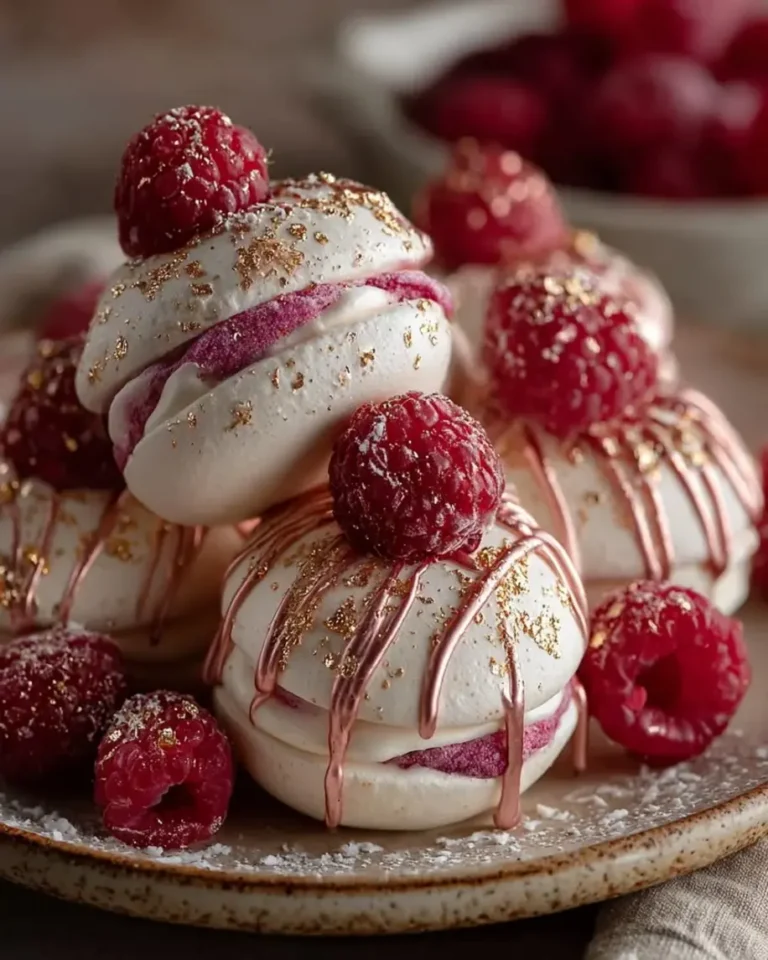
Rose Gold Raspberry Lychee Pavlova Bombs
Elegant pavlova bombs filled with raspberry lychee compote and vanilla cream, glazed with rose gold white chocolate.
- Yield: 8 1x
Ingredients
- For the Pavlova Shells:
- 4 large egg whites
- 1 cup granulated sugar
- 1 tsp cornstarch
- 1 tsp white vinegar
- 1 tsp vanilla extract
- For the Raspberry Lychee Filling:
- 1 cup raspberries
- 1 cup lychees, finely chopped
- 2 tbsp honey
- 1 tsp lemon juice
- 1 tsp cornstarch
- 2 tbsp water
- For the Vanilla Cream Layer:
- 1 cup heavy cream, cold
- 4 oz (115 g) cream cheese, softened
- 2 tbsp powdered sugar
- 1 tsp vanilla bean paste
- For the Rose Gold Glaze:
- 1 cup white chocolate, melted
- 1 tbsp coconut oil
- 1 tsp edible rose gold luster dust
- For Garnish (optional):
- Fresh raspberries
- Lychee pieces
- Edible rose gold flakes
Instructions
- 1. Preheat oven to 250°F (120°C) and line a baking sheet with parchment paper.
- 2. Beat egg whites until soft peaks form. Gradually add sugar and continue beating until stiff, glossy peaks form.
- 3. Fold in cornstarch, vinegar, and vanilla extract.
- 4. Pipe small hollow dome shapes onto the baking sheet.
- 5. Bake for 60–70 minutes, then cool completely inside the oven with the door slightly open.
- 6. Cook raspberries, lychees, honey, lemon juice, cornstarch, and water until thick and glossy. Cool completely.
- 7. Beat cream cheese, powdered sugar, and vanilla bean paste until smooth.
- 8. Whip heavy cream to soft peaks and fold into the cream cheese mixture.
- 9. Fill each pavlova shell with vanilla cream and a spoonful of raspberry lychee filling.
- 10. Join two filled shells together to form round bombs.
- 11. Mix melted white chocolate, coconut oil, and rose gold luster dust until smooth.
- 12. Drizzle lightly over the pavlova bombs.
- 13. Garnish with raspberries, lychee pieces, and edible rose gold flakes.
- 14. Serve immediately.
Nutrition
- Calories: 275
- Sugar: 30 g
- Fat: 15 g
- Carbohydrates: 33 g
- Protein: 3 g
Tried This Recipe? Leave a Comment!
Did you make this recipe? I’d love to hear how it turned out! Please leave a comment and a rating below. Your feedback helps other home cooks and supports cheerychop.com!
For more delicious inspiration, follow me on Pinterest!