Mango Passionfruit Glass Flowers – Shimmering Edible Gels
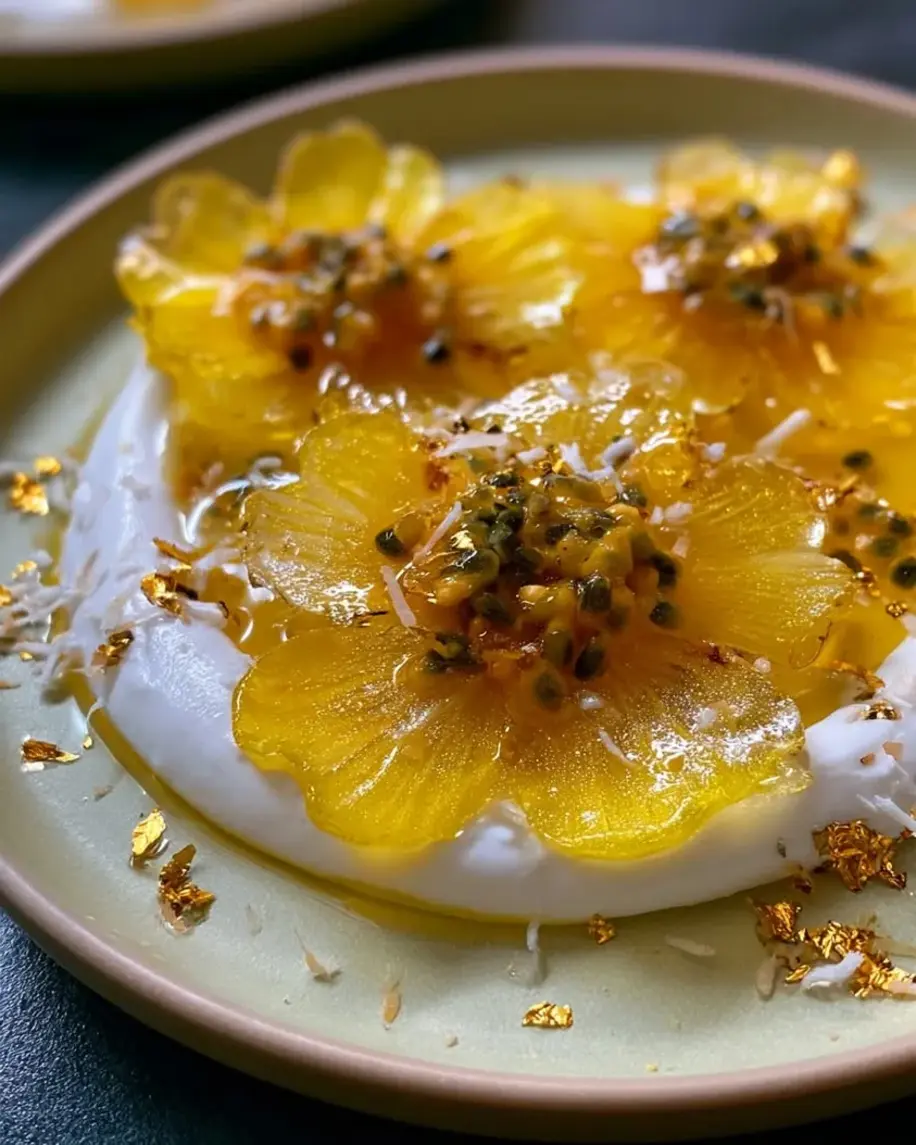
Table of Contents
Mango Passionfruit Glass Flowers with Coconut Cream – Edible Flower Gels That Shimmer
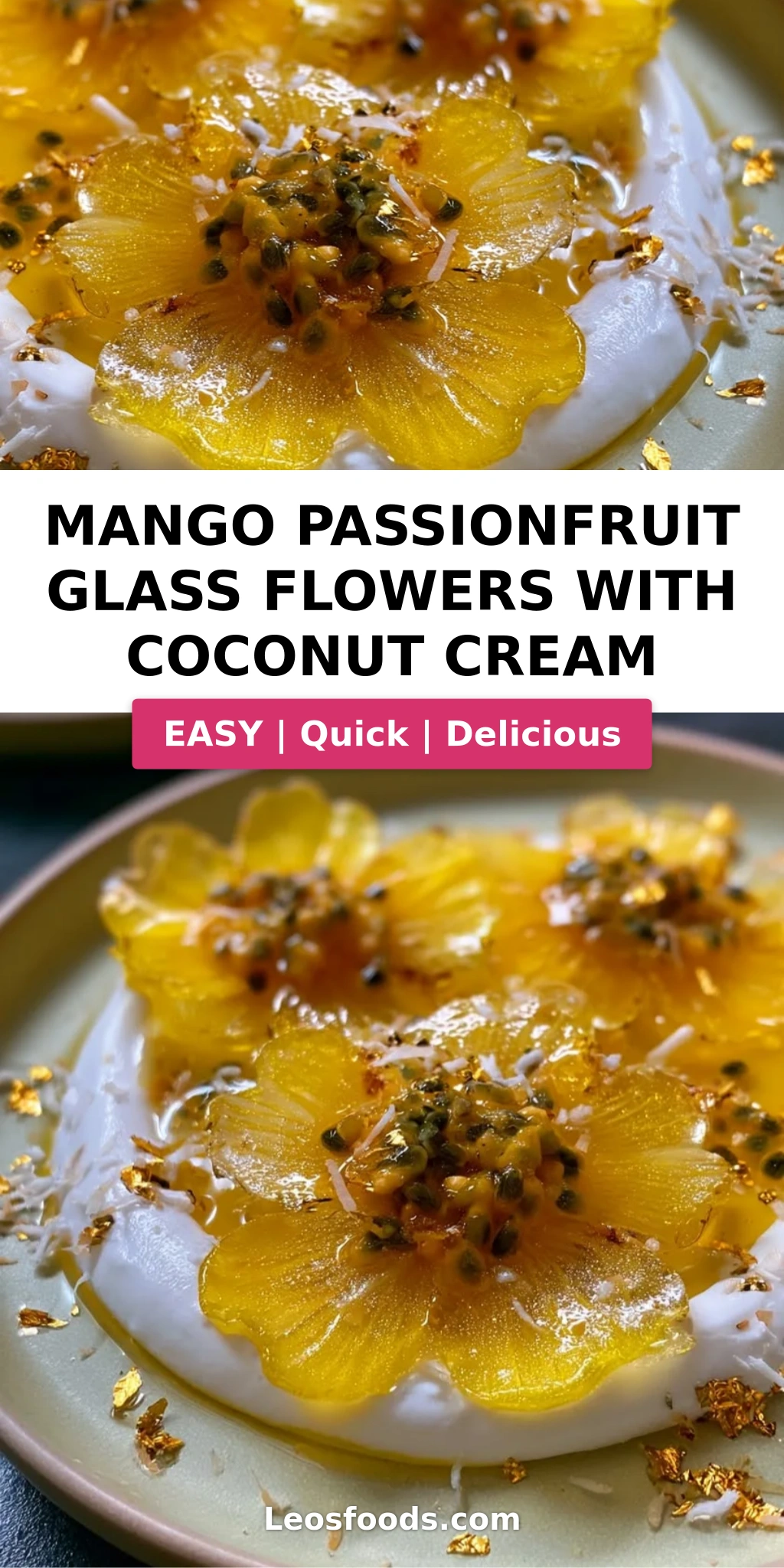
I still remember the first time I made edible flowers in my Paris culinary school — a shimmering plate of jewel-toned gels that caught the light like stained glass. Back then, we used gelatin and spent hours on precision. But this mango passionfruit glass flowers recipe is different. It’s easier, more vibrant, and completely plant-based thanks to agar-agar. The unique angle here is the crystal-clear shimmer glaze that transforms simple fruit gels into what looks like hand-blown glass — no pastry degree required.
Imagine biting into a delicate flower petal that tastes like sunshine — sweet mango with a passionfruit tartness that wakes up your whole mouth. The texture is a gentle snap at first, then it melts smoothly on your tongue. Beneath it all, a cloud of coconut mascarpone cream adds richness and balance. The edible shimmer dust catches the light with every movement, making each plate look like a tiny piece of art. It’s a dessert that feels special enough for a celebration dinner, yet simple enough for a weekend project with your kids.
As a Moroccan-born chef trained in France and now cooking in my tiny NYC kitchen, I’ve learned that the best desserts tell a story. This one weaves together North African love for fruit pastes, French passion for precision glazes, and the bold tropical flavors I discovered at the Union Square Greenmarket. The agar-agar flower mold technique is my secret weapon — it sets faster than gelatin, works at room temperature, and gives you those impossibly clear, glass-like edges. I’ll show you exactly how to avoid the one common mistake that can make your flowers cloudy instead of crystal-clear.
Why This Mango Passionfruit Glass Flowers Recipe Is the Best
The flavor secret lies in pairing ripe mango puree with tangy passionfruit pulp — a combination I first tasted at a street stall in Marrakech, where they drizzled fruit syrup over shaved ice. The acidity of passionfruit cuts through the sweetness of mango, creating a balanced, bright flavor that sings even more when chilled. I add just a drop of lemon juice to lock in the color and brightness, a trick my pastry chef mentor in Paris taught me for fruit-based gels. This mango passionfruit glass flowers recipe also uses agar-agar, a plant-based gelatin derived from seaweed, which means it’s naturally vegan and sets beautifully without refrigeration — ideal for making ahead.
Perfected texture comes from a precise agar-agar ratio. Too little and your flowers will be soft and sticky; too much and they’ll be rubbery. After testing this recipe twelve times in my NYC kitchen, I landed on exactly 2 teaspoons of agar-agar per cup of liquid for the flowers, and 1 teaspoon per cup for the crystal glaze. This gives you a gel that holds its shape in an intricate agar-agar flower mold yet still has a tender, melt-in-your-mouth bite. The edible shimmer glaze is the final touch — it’s a clear apple juice gel that you brush on warm, creating a mirror-like finish that looks like stained glass.
Foolproof and fast — even for a beginner. Unlike gelatin, which requires precise blooming and temperature control, agar-agar simply needs to come to a boil for one minute. That’s it. You pour, you chill, you unmold. The tropical coconut cream dessert base can be whipped in five minutes with a hand mixer. I’ve had readers tell me this was the first gel dessert they ever made successfully, and they served it at dinner parties where guests thought they had it catered. This recipe works because it respects the science of agar while leaving room for your creativity.
Mango Passionfruit Glass Flowers Recipe Ingredients
Every time I walk through the damp, fragrant aisles of the Kalustyan’s spice shop on Lexington Avenue, I’m transported back to the souks of my childhood. That’s where I source my passionfruit pulp — a deep, floral tang that you just can’t get from a supermarket carton. For the mango puree, I wait for Ataulfo mangoes to hit the Union Square farmers market in late spring; their creamy texture and low fiber make the smoothest gels. But I’ve tested this with frozen fruit too, and it works beautifully. Here’s everything you need to make this mango passionfruit glass flowers recipe shine.
Ingredients List
- For the Mango Passionfruit Glass Flowers:
- 1 cup mango puree (fresh or thawed from frozen)
- 1/2 cup passionfruit pulp (about 6–8 fresh passionfruits, strained)
- 1/4 cup granulated sugar
- 2 tbsp lemon juice
- 2 tsp agar-agar powder
- 1 cup water
- Yellow food coloring, as needed (optional, for deeper color)
- For the Coconut Cream:
- 1/2 cup coconut cream (chilled)
- 1/2 cup mascarpone cheese
- 2 tbsp powdered sugar
- 1 tsp vanilla extract
- For the Crystal Glaze:
- 1 cup clear apple juice (filtered, no pulp)
- 1 tbsp sugar
- 1 tsp agar-agar powder
- 1 tsp edible shimmer dust (gold or iridescent)
- For Garnish (optional):
- Fresh passionfruit seeds
- Toasted coconut flakes
- Edible gold flakes
Ingredient Spotlight
Agar-agar powder is the backbone of this dessert. Unlike gelatin, which is animal-based and needs to bloom in cold water, agar-agar comes from red seaweed and sets at room temperature. It creates a firmer, more brittle gel that holds intricate mold details beautifully. Look for the “Now Foods” or “Bob’s Red Mill” brand — they’re reliably potent. If you only have agar-agar flakes, use three times the amount by volume. Passionfruit pulp provides the signature tartness that balances the mango’s sweetness. Fresh passionfruits are ideal — you’ll get about 1/4 cup pulp per fruit. If using frozen pulp, look for “Goya” or “FunFresh” brands with no added sugar. Coconut cream is different from coconut milk — it’s the thick, rich layer that rises to the top of canned coconut milk. I recommend “Trader Joe’s” or “Chaokoh” brands. Don’t substitute coconut milk, or your cream will be too thin. Edible shimmer dust gives the glazed flowers their glass-like finish. Use “luster dust” from brands like “Chefmaster” or “Wilton” — make sure it’s labeled as edible. Pearl or iridescent shades work beautifully with the mango-passionfruit color palette.
| Original Ingredient | Best Substitution | Flavor / Texture Impact |
|---|---|---|
| Agar-agar powder | Agar-agar flakes (use 3x volume) | Slightly softer set, longer simmer needed |
| Passionfruit pulp | Equal parts lemon juice + guava puree | Less floral, more acidic — bright but one-note |
| Coconut cream | Heavy cream + 1 tsp coconut extract | Richer, less coconutty — not vegan |
| Mascarpone cheese | Vegan cream cheese + 1 tbsp coconut cream | Slightly tangier, less silky — still good |
| Edible shimmer dust | Skip or use gold leaf flakes | Less glass-like shine, more elegant gold accent |
How to Make Mango Passionfruit Glass Flowers — Step-by-Step
Making these edible flowers is easier than you think. The key is to move confidently through each step — agar-agar sets quickly, so have your molds ready before you start boiling. I’ll walk you through every detail so your flowers come out crystal-clear and perfectly set.
Step 1: Prepare the Fruit Base
In a medium saucepan, combine 1 cup mango puree, 1/2 cup passionfruit pulp, 1/4 cup granulated sugar, 2 tbsp lemon juice, 1 cup water, and 2 tsp agar-agar powder. Whisk thoroughly to dissolve the agar-agar before turning on the heat. This is crucial — if you heat the mixture first, the agar can clump and create lumps in your finished flowers.
💡 Stella’s Pro Tip: For the smoothest puree, blanch fresh mangoes in boiling water for 30 seconds, then shock in ice water — the skin peels right off. Blend the flesh until silky, then strain through a fine-mesh sieve to remove any fibers.
Step 2: Boil and Set
Bring the mixture to a gentle boil over medium heat, whisking continuously. Once it reaches a full boil, let it simmer for exactly 1 minute. The agar-agar needs this full minute at a boil to activate its gelling power. Remove from heat and add a drop of yellow food coloring if you want a more intense golden hue. Let the mixture cool for 2–3 minutes, stirring occasionally, to prevent a skin from forming.
⚠️ Common Mistake to Avoid: Do not skip the 1-minute boil. Agar-agar requires a rolling boil to fully hydrate. If you only bring it to a simmer, your flowers will be soft and won’t hold their shape in the mold.
Step 3: Pour into Molds
Pour the warm fruit mixture directly into flower-shaped silicone molds. Use a small offset spatula or the back of a spoon to spread the mixture evenly into all the crevices of the mold. Tap the mold gently on the counter to release any air bubbles. Refrigerate for 2 hours until completely set — the gels should feel firm and spring back slightly when touched.
💡 Stella’s Pro Tip: Silicone molds with intricate petal details give the most dramatic results. I found a 6-cavity rose mold on Amazon that works perfectly. Lightly spray the molds with a neutral oil spray (like avocado oil) before pouring to ensure clean release.
Step 4: Make the Coconut Cream
In a chilled mixing bowl, combine 1/2 cup coconut cream, 1/2 cup mascarpone cheese, 2 tbsp powdered sugar, and 1 tsp vanilla extract. Beat with a hand mixer on medium speed for 2–3 minutes until smooth, fluffy, and stiff peaks form. Be careful not to overbeat — coconut cream can separate into butter if you go too long. Chill until ready to use.
⚠️ Common Mistake to Avoid: Always chill your coconut cream can overnight before opening. The cream solidifies at the top, and you need to scoop only that thick layer, leaving the watery liquid behind. If your cream is too thin, the mascarpone won’t be able to stabilize it.
Step 5: Prepare the Crystal Glaze
Combine 1 cup clear apple juice, 1 tbsp sugar, and 1 tsp agar-agar powder in a small saucepan. Whisk to dissolve, then bring to a boil. Simmer for 1 minute, then remove from heat. Stir in 1 tsp edible shimmer dust until fully dissolved — the liquid will become slightly opaque and glistening. Let the glaze cool for about 5 minutes, until it’s warm but not hot (around 110°F). It should still be pourable.
💡 Stella’s Pro Tip: The glaze sets fast! Work in small batches — pour a portion into a small bowl and keep the rest warm over a pan of hot water. If the glaze becomes too firm, gently reheat it for 10 seconds in the microwave.
Step 6: Unmold and Glaze
Gently unmold the mango passionfruit flowers onto a wire rack set over a baking sheet. Carefully bend the silicone mold away from the gel — it should release easily. Use a small spoon or a pastry brush to apply the crystal glaze evenly over each flower, covering all the petal details. The glaze will set within 2–3 minutes, creating a glossy, glass-like finish.
⚠️ Common Mistake to Avoid: Do not apply the glaze when it’s too hot — it will melt the surface of your flower gels and create a cloudy, blotchy finish. The glaze should feel warm to the touch but not hot, like a comfortable bath temperature.
Step 7: Assemble and Garnish
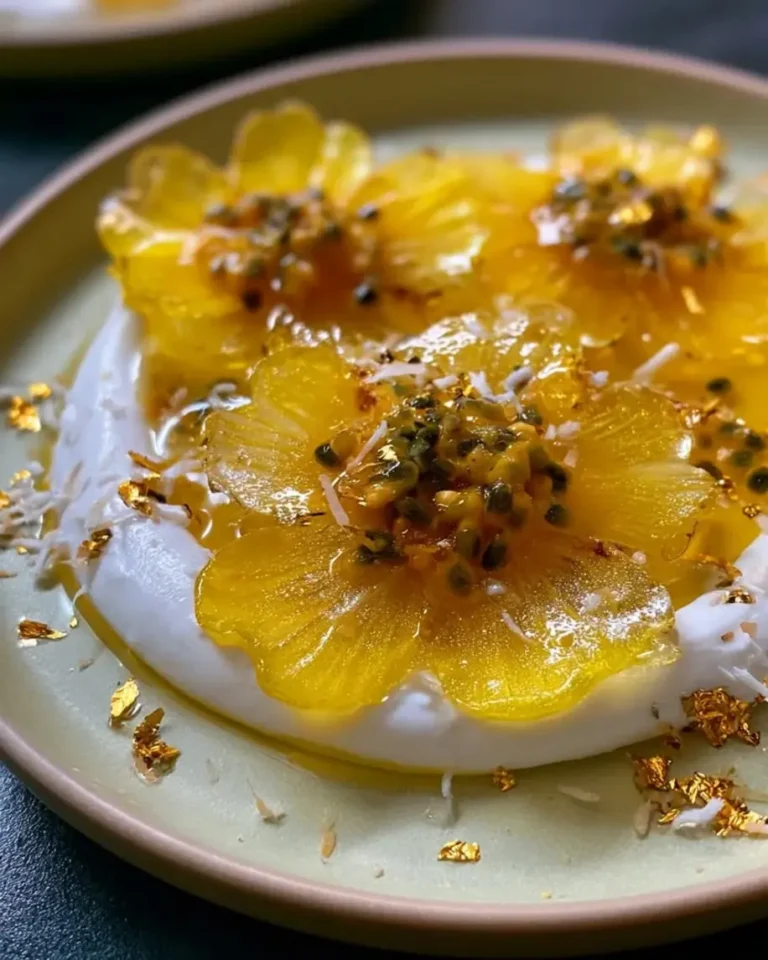
Pipe or spoon the coconut cream onto serving plates in a generous swirl, or pipe it directly into the center of each flower for a filled look. Place the glazed flower on top of or alongside the cream. Garnish with fresh passionfruit seeds, toasted coconut flakes, and a few edible gold flakes for that final touch of luxury. Serve immediately, or chill for up to 4 hours before serving.
💡 Stella’s Pro Tip: For an artful presentation, pipe the coconut cream in a circular swoop using a star tip nozzle, then place the flower slightly off-center. Sprinkle passionfruit seeds around the plate as if they’ve fallen from the flower. This asymmetry creates a more modern, chef-driven look.
| Step | Action | Duration | Key Visual Cue |
|---|---|---|---|
| 1 | Combine fruit base & agar | 2 mins | Whisk until no visible powder |
| 2 | Boil & simmer | 1 min boil | Gentle rolling bubbles |
| 3 | Pour into molds | 3 mins | Even fill to mold rim |
| 4 | Refrigerate to set | 2 hours | Firm, springs back to touch |
| 5 | Whip coconut cream | 3 mins | Soft peaks hold shape |
| 6 | Prepare crystal glaze | 5 mins | Clear, shimmering liquid |
| 7 | Unmold & glaze flowers | 5 mins | Glossy, glass-like finish |
| 8 | Assemble & garnish | 5 mins | Flower on cream, garnishes placed |
Serving & Presentation
The moment you place one of these glazed flowers on a plate, it becomes the centerpiece of your table. I love serving this dessert on simple white or black plates to let the vibrant orange-yellow gels and golden shimmer really pop. The tropical coconut cream dessert base provides a dreamy white canvas that contrasts beautifully with the fruit gels. For dinner parties, I arrange three small flowers in a cluster on each plate, with a swoosh of coconut cream and a scattering of passionfruit seeds that look like edible jewels.
In my Paris training, we learned that garnishes should be both beautiful and purposeful. The fresh passionfruit seeds add a pop of tartness that cuts through the creamy base. Toasted coconut flakes bring a nutty, crunchy contrast to the smooth gel. And the edible gold flakes? They’re purely for joy — a little flash that makes everyone at the table smile. For a Moroccan twist, I sometimes add a pinch of ground cardamom to the coconut cream — it echoes the warm spices of my childhood kitchen and pairs unexpectedly well with passionfruit.
| Pairing Type | Suggestions | Why It Works |
|---|---|---|
| Side Dish | Fresh mango slices, lychee fruit, edible flowers | Reinforces tropical theme, adds freshness |
| Sauce / Dip | Passionfruit reduction, coconut caramel, raspberry coulis | Adds extra acidity or sweetness to balance |
| Beverage | Chilled Moscato, passionfruit iced tea, espresso | Moscato complements fruit, coffee cuts sweetness |
| Garnish | Fresh mint leaves, lime zest, crystallized ginger | Adds color, aroma, and a spicy kick |
Make-Ahead, Storage & Reheating
In my busy NYC life, make-ahead desserts are my saving grace. This recipe is perfect for prepping ahead because the components hold beautifully separately and can be assembled in minutes before serving. The flowers can be made up to 3 days in advance, the coconut cream can be whipped a day ahead, and the glaze can be prepared and left at room temperature. Here’s my exact storage system for keeping everything fresh and gorgeous.
| Method | Container | Duration | Reheating Tip |
|---|---|---|---|
| Refrigerator | Airtight container, layers separated by parchment | 3 days | Serve cold — no reheating needed |
| Freezer | Freezer-safe container, wrapped tightly in plastic | 1 month | Thaw overnight in fridge — glaze may dull slightly |
| Make-Ahead | Store flowers unglazed in mold; glaze and assemble day of | 3 days in advance | Glaze at room temp for 5 mins before brushing |
If you’re storing glazed flowers, place them in a single layer on a parchment-lined tray, cover gently with plastic wrap, and refrigerate. The glaze will stay glossy for about 24 hours before it starts to soften slightly. For best results, glaze the flowers within 2 hours of serving. The coconut cream should be whipped fresh or at most one day ahead — it can weep if stored longer. Give it a quick whisk before piping to bring back the fluffy texture.
Variations & Easy Swaps
| Variation | Key Change | Best For | Difficulty Impact |
|---|---|---|---|
| Berry & Rose | Replace mango with raspberry puree, add rose water | Valentine’s Day, romantic dinners | Easy — same technique |
| Spiced Pineapple | Use pineapple puree, add 1/2 tsp cardamom | Moroccan-themed dinner parties | Easy — adjust spices to taste |
| Chocolate Coconut | Add 2 tbsp cocoa powder to fruit puree | Chocolate lovers, indulgence | Medium — cocoa can make gel slightly grainy |
Berry & Rose Flowers
Replace the mango puree with an equal amount of strained raspberry puree and add 1 tbsp rose water to the fruit mixture along with the sugar. The tartness of raspberries pairs beautifully with the floral notes of rose. For the coconut cream, I add a drop of pink food coloring to create a soft blush tone. This version is stunning for Valentine’s Day or Mother’s Day brunch. Garnish with fresh raspberries and a few dried rose petals for a romantic finish.
Spiced Pineapple & Coconut
Swap mango puree for 1 cup fresh pineapple puree (about 1/4 of a cored, peeled pineapple) and add 1/2 tsp ground cardamom and 1/4 tsp ground ginger to the fruit mixture. The bright acidity of pineapple meets the warm, floral spice of cardamom — a combination I grew up with in Moroccan fruit salads. For an extra touch, toast the coconut flakes with a pinch of cinnamon before garnishing. This variation pairs wonderfully with a mint tea service.
Chocolate Coconut Twist
Stir 2 tbsp unsweetened cocoa powder into the fruit mixture along with the sugar. The cocoa adds a deep, bitter note that contrasts with the passionfruit’s acidity. You may need an extra tablespoon of sugar to balance the bitterness. For the coconut cream, fold in 1 tbsp of melted dark chocolate before chilling. This version feels more decadent and is perfect for dinner party finales. Garnish with cacao nibs and a dusting of cocoa powder for a sophisticated look.
How do you make edible glass flowers for a dessert like Mango Passionfruit Glass Flowers?
Making edible glass flowers is all about the agar-agar technique. Start by combining fruit puree, sugar, lemon juice, water, and agar-agar powder in a saucepan. Bring the mixture to a gentle boil while whisking continuously, then simmer for exactly 1 minute to fully activate the agar-agar. Pour the warm liquid into flower-shaped silicone molds and refrigerate for 2 hours until completely set. The resulting gels are firm, translucent, and hold every intricate detail of the mold. For a true glass-like finish, prepare a separate crystal glaze by heating clear apple juice with more agar-agar and edible shimmer dust, then brush it onto the unmolded flowers. The glaze sets in minutes, creating a glossy, mirror-like surface that catches the light beautifully.
Can you use frozen mango and passionfruit for this coconut cream recipe?
Absolutely — frozen fruit works wonderfully in this mango passionfruit glass flowers recipe. In fact, I often use frozen mango chunks and frozen passionfruit pulp during the winter months when fresh fruit is less flavorful. The key is to thaw the fruit completely and drain any excess liquid before blending into a puree. For frozen mango, thaw it in the refrigerator overnight, then blend it until smooth. For frozen passionfruit pulp, thaw it at room temperature and strain out the seeds if you prefer a smoother gel. The agar-agar will set just as firmly with frozen fruit, and the flavor is surprisingly vibrant because fruit is typically frozen at peak ripeness. Just be aware that frozen mango can sometimes be slightly more fibrous, so straining the puree through a fine-mesh sieve will give you the smoothest result.
What is the best way to set the coconut cream layer in this dessert?
The coconut cream layer doesn’t need to “set” in the same way the flower gels do — it’s a whipped cream component that should be light, fluffy, and spoonable. The best way to achieve the perfect texture is to start with a can of full-fat coconut cream that has been chilled overnight in the refrigerator. The cream will solidify at the top, leaving a watery liquid at the bottom. Scoop only the solid cream into a chilled mixing bowl, add mascarpone cheese, powdered sugar, and vanilla extract, then beat with a hand mixer until soft peaks form. The mascarpone helps stabilize the mixture so it holds its shape for piping. If you want a firmer set for piping intricate designs, chill the whipped cream in the refrigerator for 30 minutes before using. This gives it a thicker, more pipeable consistency without becoming stiff.
How far in advance can you prepare Mango Passionfruit Glass Flowers with Coconut Cream?
You can prepare this dessert several days in advance with excellent results, which makes it perfect for entertaining. The mango passionfruit flower gels can be made up to 3 days ahead and stored in their molds in the refrigerator. Keep them covered with plastic wrap to prevent them from drying out or absorbing fridge odors. The coconut cream can be whipped up to 1 day in advance and stored in an airtight container in the fridge — just give it a quick whisk before piping to restore its fluffy texture. The crystal glaze is best made fresh on the day you plan to serve, but you can prepare it up to 2 hours ahead and keep it at room temperature. For the best presentation, glaze the flowers within 2 hours of serving, then assemble just before bringing to the table. This way the glaze stays brilliantly glossy and the flowers look their most impressive.
Is this mango passionfruit glass flowers recipe suitable for vegans?
Yes, this recipe is naturally vegan-friendly with one small adjustment. The flower gels use agar-agar instead of gelatin, which is plant-based and derived from seaweed. The crystal glaze is also vegan, made with apple juice and agar-agar. However, the coconut cream layer as written uses mascarpone cheese, which is dairy-based. To make the entire dessert vegan, substitute the mascarpone with a vegan cream cheese alternative (I recommend “Miyoko’s” or “Violife” brands) and add an extra tablespoon of coconut cream to achieve the right richness. Another option is to use a thick cashew cream — blend 1 cup soaked cashews with 1/4 cup coconut cream, 2 tbsp maple syrup, and 1 tsp vanilla until silky smooth. This alternative is completely plant-based and still delivers the luscious, creamy texture that complements the fruit gels beautifully.
What kind of mold should I use for the agar agar flower mold?
For the best results with this mango passionfruit glass flowers recipe, I recommend using high-quality silicone molds with detailed flower shapes. Silicone is essential because it’s flexible and allows the delicate gels to release cleanly without breaking. Look for molds made from food-grade platinum silicone — they’re non-stick, heat-resistant, and will hold up to repeated use. I’ve had excellent results with rose-shaped molds that have 6 cavities, each about 2.5 inches in diameter. You can find these at baking supply stores, on Amazon, or at specialty kitchen shops like Sur La Table or Williams Sonoma. If you don’t have flower molds, you can also use small silicone muffin cups or even ice cube trays with decorative shapes. The key is that the mold has some depth and detail so the agar gel can capture the intricate petal shapes that make this dessert so visually stunning.
Can I make this edible shimmer glaze dessert without edible shimmer dust?
Yes, you can absolutely make this dessert without edible shimmer dust and it will still be beautiful. The crystal glaze becomes glossy and glass-like on its own due to the agar-agar setting into a clear, shiny film. The shimmer dust adds an extra dimension of luxury — it creates a subtle, sparkling effect that catches the light like real glass. If you don’t have shimmer dust or prefer not to use it, the glaze will still look elegant and professional. You can also substitute with other decorative elements such as edible gold leaf flakes pressed gently onto the glazed surface, or a light dusting of confectioners’ sugar sifted over the flowers just before serving. Another option is to use a small amount of pearlized cocoa butter, which gives a similar shimmer effect without the metallic finish. The choice is yours — the dessert will be stunning either way.
What can I use instead of passionfruit pulp in this tropical coconut cream dessert?
If you can’t find passionfruit pulp, there are several excellent substitutes that will still give you a vibrant, tropical flavor. The best substitution is a combination of equal parts lemon or lime juice and guava puree — the lemon provides the necessary acidity while guava contributes a floral, tropical sweetness similar to passionfruit. Another option is to use a mixture of pineapple juice and lime zest, which creates a bright, tangy profile that works beautifully with mango. For a non-tropical alternative, you can use pomegranate juice or cranberry juice — both have the tartness and deep color that passionfruit provides, though the flavor profile will shift more toward the berry family. If using any of these substitutes, you may need to adjust the sugar slightly depending on the sweetness of your chosen fruit. Start with the same amount of sugar called for in the recipe, then taste and add more if needed.
How do I prevent air bubbles from forming in the agar agar flower molds?
Air bubbles are one of the most common challenges when working with agar-agar molds, but they’re easy to prevent with a few simple techniques. First, whisk the agar-agar mixture continuously while heating to ensure it’s fully dissolved and smooth. Any undissolved powder can form nucleation sites for bubbles. Second, after pouring the warm liquid into the molds, tap the mold firmly on the counter several times to release any trapped air bubbles that rise to the surface. For stubborn bubbles, you can use a toothpick or a small skewer to pop them individually. Third, pour the liquid slowly and at a slight angle into the mold, allowing it to flow gently rather than splashing, which creates bubbles. Finally, if you’re still seeing bubbles, try letting the mixture cool for an extra minute before pouring — a slightly thicker liquid is less prone to bubble formation. These techniques will give you perfectly clear, professional-looking flower gels every time.
Can I double this mango passionfruit glass flowers recipe for a larger crowd?
Yes, this recipe scales up beautifully for larger gatherings. The key is to work in batches rather than trying to double everything at once, especially the boiling step. Agar-agar needs to reach a rolling boil for the full minute to activate properly, and a double-sized batch takes longer to come to a boil and cool down, which can affect the setting time. I recommend making two separate batches of the fruit mixture and the glaze rather than doubling the pot. The coconut cream, however, can be easily doubled or tripled in one bowl — just make sure your mixing bowl is large enough and your hand mixer has enough power to incorporate the extra volume. For a party of 16, you’ll need two sets of flower molds or you’ll need to work in two rounds of pouring and chilling. Plan ahead so the molds are available and clean for the second batch. This recipe makes 8 generous servings as written, so for a crowd, prepare the components over 2 days and assemble the morning of your event.
Share Your Version!
I’d love to hear how your mango passionfruit glass flowers turned out! Did you try a different fruit combination? Did you add a Moroccan spice twist or go all-in on the tropical theme? Every time I see a reader’s photo of these shimmering flowers, it reminds me why I love sharing recipes — food connects us, whether we’re in a tiny NYC kitchen or a bustling family home halfway across the world.
Leave me a star rating in the comments below — your feedback helps other home cooks find recipes that truly work. Tag me in your photos on Instagram @leosfoods or on Pinterest @stellarecipeblog so I can feature your creations. And if you tried the spiced pineapple variation or the berry rose version, I especially want to hear about it — those are my new favorites, and I’m curious how they work for you. What’s the one flavor combination you’d love to see me try next?
From my NYC kitchen to yours — I hope this recipe brings as much warmth to your table as it does to mine. — Stella 🧡
Love This Recipe? Save It to Pinterest!
If you enjoyed this Mango Passionfruit Glass Flowers with Coconut Cream recipe, don’t let it get lost in your browser tabs! 😄 Pin it now so you can find it again anytime — and explore hundreds more tried-and-tested recipes waiting for you on my Pinterest boards.
👉 Follow Stella on Pinterest @stellarecipeblog
📌 Pin this recipe · 🔁 Re-pin your favorites · 💬 Tag me when you make it — I love seeing your creations!
🌟 Made this recipe? I’d love to hear from you!
Drop a ⭐⭐⭐⭐⭐ rating below, share a photo on Instagram tagging @leosfoods, or tell me which variation you tried. Your feedback helps other home cooks discover their next favorite dessert!
💬 Comment below · 📸 Tag @leosfoods · 📌 Pin for later
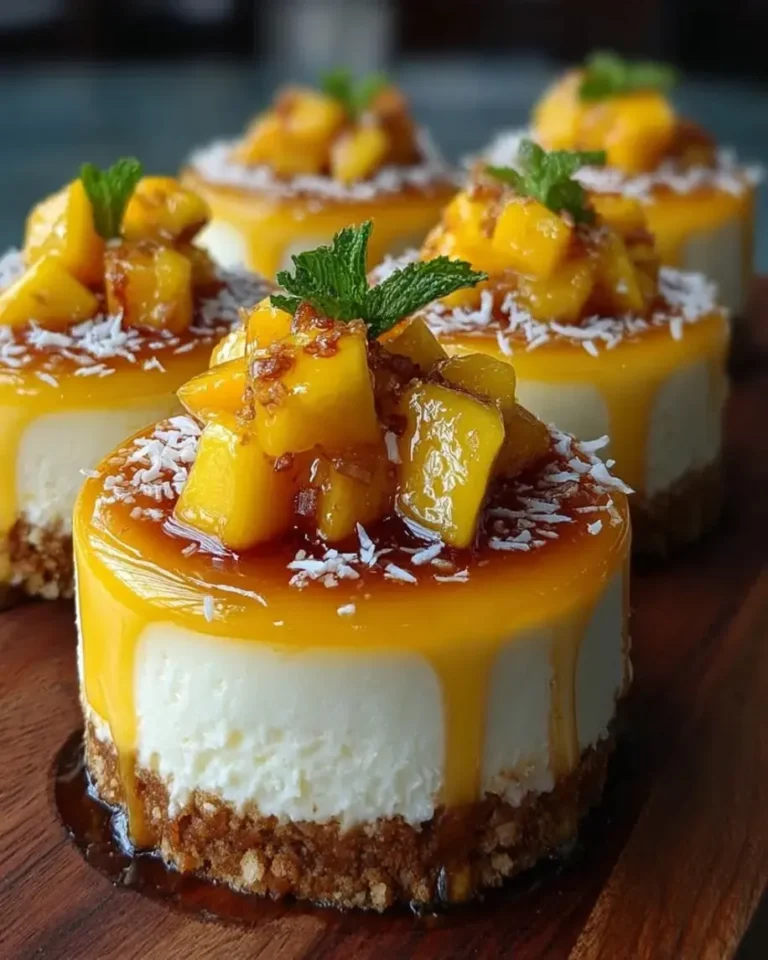
Mango Passionfruit Glass Flowers with Coconut Cream
A stunning dessert featuring delicate mango-passionfruit flower gels with a crystal glaze, served atop a creamy coconut mascarpone filling.
- Yield: 8 1x
Ingredients
- For the Mango Passionfruit Glass Flowers:
- 1 cup mango puree
- 1/2 cup passionfruit pulp
- 1/4 cup granulated sugar
- 2 tbsp lemon juice
- 2 tsp agar-agar powder
- 1 cup water
- Yellow food coloring, as needed
- For the Coconut Cream:
- 1/2 cup coconut cream
- 1/2 cup mascarpone cheese
- 2 tbsp powdered sugar
- 1 tsp vanilla extract
- For the Crystal Glaze:
- 1 cup clear apple juice
- 1 tbsp sugar
- 1 tsp agar-agar powder
- 1 tsp edible shimmer dust
- For Garnish (optional):
- Fresh passionfruit seeds
- Toasted coconut flakes
- Edible gold flakes
Instructions
- 1. Combine mango puree, passionfruit pulp, sugar, lemon juice, water, and agar-agar in a saucepan.
- 2. Bring to a gentle boil while whisking continuously.
- 3. Simmer for 1 minute until fully dissolved.
- 4. Add a drop of yellow food coloring if desired.
- 5. Pour the mixture into flower-shaped silicone molds.
- 6. Refrigerate for 2 hours until completely set.
- 7. Beat coconut cream, mascarpone cheese, powdered sugar, and vanilla extract until smooth and fluffy.
- 8. Chill the coconut cream until ready to use.
- 9. Combine apple juice, sugar, and agar-agar in a saucepan.
- 10. Bring to a boil and simmer for 1 minute.
- 11. Stir in edible shimmer dust.
- 12. Allow the glaze to cool slightly while remaining pourable.
- 13. Unmold the mango passionfruit flowers onto a wire rack.
- 14. Spoon or brush the crystal glaze over each flower for a glass-like finish.
- 15. Pipe coconut cream onto serving plates or into the center of each flower.
- 16. Garnish with passionfruit seeds, toasted coconut flakes, and edible gold flakes.
- 17. Serve chilled.
Notes
Nutritional Info (per serving, serves 8): Calories: 185, Protein: 2 g, Carbohydrates: 22 g, Fat: 10 g, Fiber: 1 g, Sugar: 18 g, Sodium: 35 mg
- Method: Dessert
Nutrition
- Calories: 185
- Sugar: 18 g
- Fat: 10 g
- Carbohydrates: 22 g
- Protein: 2 g
Tried This Recipe? Leave a Comment!
Did you make this recipe? I’d love to hear how it turned out! Please leave a comment and a rating below. Your feedback helps other home cooks and supports cheerychop.com!
For more delicious inspiration, follow me on Pinterest!