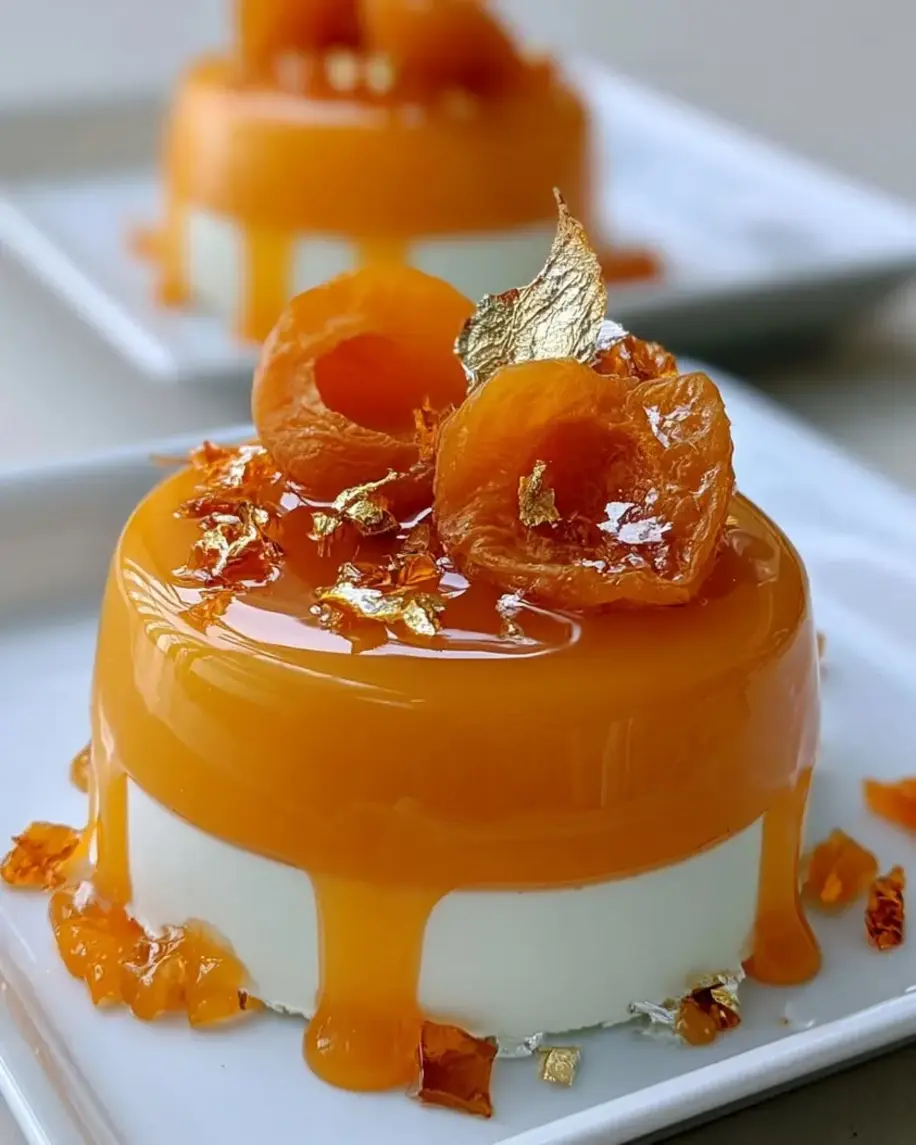
Golden Apricot Jewel Cakes with Shimmering Glaze
“`html
Table of Contents
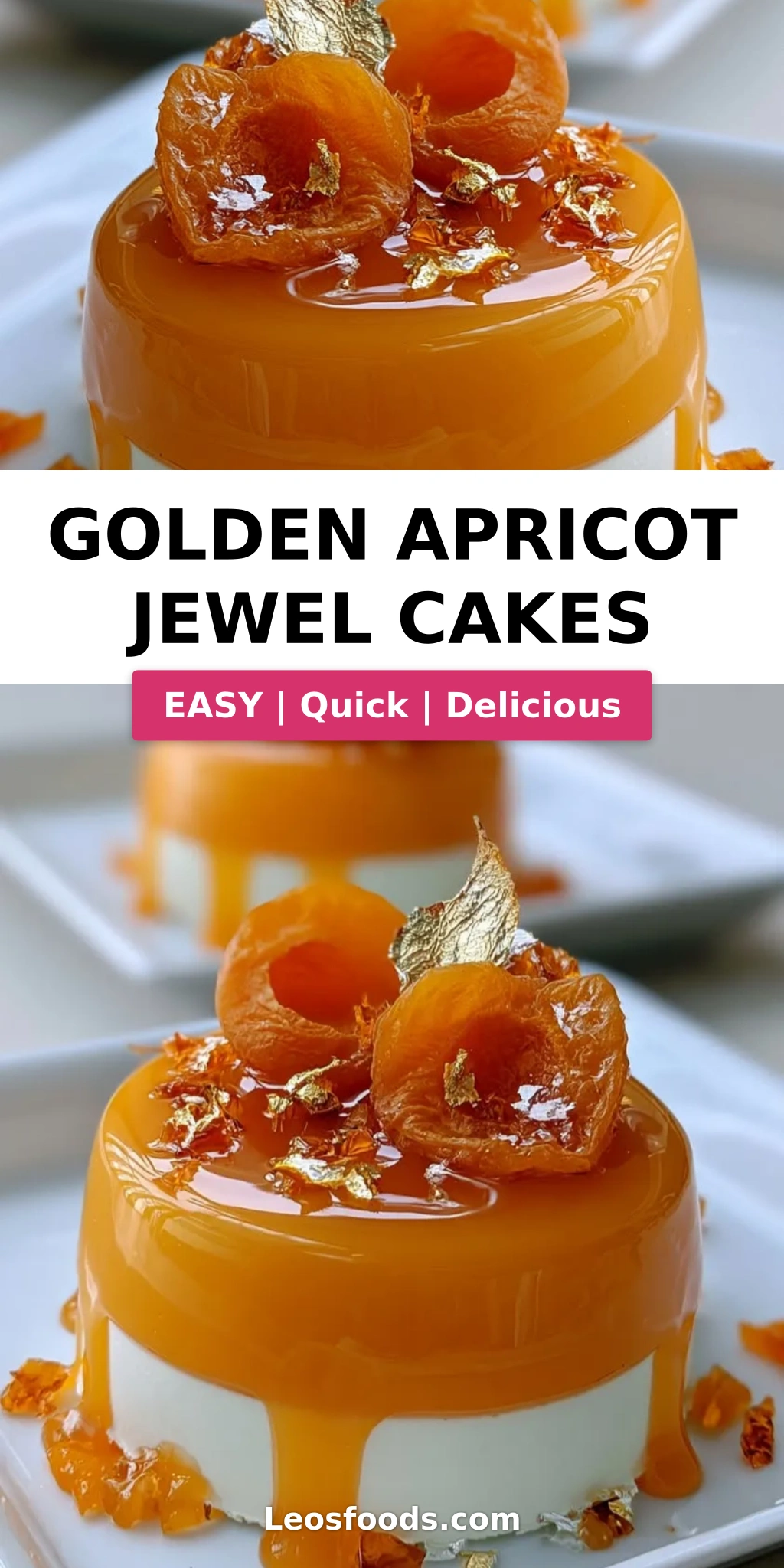
Golden Apricot Jewel Cakes with Shimmering Mirror Glaze – A Showstopping Gourmet Apricot Cake You Can Make at Home
I still remember the first time I saw a mirror-glazed cake in a Parisian pâtisserie window. I was 22, fresh out of culinary school, and my mother had just sent me a care package from Morocco filled with dried apricots from the souk in Marrakech. The pastry chef at Ladurée had created these little domes that caught the light like gemstones — they looked more like jewelry than dessert. That moment stuck with me for years, and when I finally perfected my own version for my NYC kitchen, I knew this apricot jewel cake recipe had to feature a golden mirror glaze cake finish that would make anyone stop and stare. This isn’t just a dessert — it’s a conversation piece, a celebration of the apricot in its most elegant form, blending my North African love for fruit-based sweets with the precision of French pâtisserie technique.
When you slice into one of these Golden Apricot Jewel Cakes, you’re met with layers of texture and flavor that unfold like a story. The outer shell is a shimmering, glass-like golden mirror glaze that shatters slightly as your spoon glides through. Beneath that lies a silky, creamy apricot cream cheese layer — tangy, sweet, and intensely fruity — wrapped around a hidden core of vanilla mascarpone that’s so luscious it nearly melts on your tongue. The apricot flavor is bright but not sharp, thanks to the cream cheese and heavy cream that round out every bite. A whisper of vanilla bean paste ties it all together, and the edible gold luster dust in the glaze catches the light like a tiny sunset on your plate. I’ve served these at birthday dinners, bridal showers, and quiet Sunday afternoons in my Brooklyn apartment — they always, always disappear first.
What sets my version of this apricot cream cheese dessert apart is the technique I developed during my years working pastry stations in Paris: a frozen core method that guarantees a perfectly defined center in every slice. Instead of fussing with multiple layers and worrying about them sliding apart, you pipe and freeze the mascarpone core first, then encase it in the apricot mixture before the final freeze. It’s the same logic we used for entremets at Le Cordon Bleu — build from the inside out, let the freezer do the heavy lifting. The golden mirror glaze, meanwhile, comes together with white chocolate glaze cake techniques I adapted from classic French glaçage miroir. One common mistake home bakers make is pouring the glaze too hot — it slides right off and pools at the bottom. I’ll show you exactly how to get that flawless jewel finish every time. And as always, I’m sharing the shortcuts and grocery-store hacks I’ve learned after testing this recipe a dozen times in my own kitchen.
Why This Golden Apricot Jewel Cake Recipe Is the Best
The Flavor Secret. Most apricot jewel cake recipe versions you’ll find rely on jarred apricot preserves or artificial flavoring. I build my apricot layer from fresh, ripe apricots that I purée myself — the natural pectin and acidity create a cleaner, brighter fruit flavor that pairs beautifully with the tangy cream cheese. A touch of orange-yellow gel food coloring (optional, but lovely) enhances the golden hue without tasting like anything artificial. This is the same approach my mother used in her kitchen in Morocco, where she’d simmer fresh apricots with a splash of orange blossom water for holiday pastries. That North African instinct to let fruit speak for itself is the backbone of this entire dessert.
Perfected Texture. The contrast between the creamy apricot layer, the dense vanilla mascarpone core, and the glass-like mirror glaze is what makes this a true gourmet apricot cake. I spent weeks testing gelatin ratios to get the apricot layer firm enough to hold its shape when unmolded, yet still silky on the tongue. The key is blooming the gelatin properly and folding in whipped cream at exactly the right moment — soft peaks that just hold their shape. Too stiff and the mixture becomes rubbery; too loose and it won’t set cleanly. The frozen core technique is borrowed from classic French entremets, and it guarantees that every cake has a perfectly centered, creamy heart that contrasts with the firmer apricot exterior.
Foolproof & Fast (for a showstopper). I know this looks like a bakery-level project, but I’ve broken it down into manageable steps that any confident home cook can tackle. The active kitchen time is only about 45 minutes — the rest is freezer time, which means you can make these over two days. I’ve included visual cues for every stage so you know exactly what to look for, and all the ingredients are available at a well-stocked US grocery store or online. No specialty equipment beyond silicone molds and a hand mixer. If you can make Jell-O and whip cream, you can make these jewel cakes. I promise.
Apricot Jewel Cake Recipe Ingredients
I source my apricots from the Union Square Greenmarket in late spring and early summer when the local ones are at their peak — fragrant, blushing orange, and so tender they bruise at a touch. In winter, I use good-quality canned apricot halves in juice (not syrup), drained and patted dry. The mascarpone I buy from Eataly in the Flatiron district, but any Italian brand at Whole Foods works beautifully. And the white chocolate for the glaze — I splurge on Valrhona Ivoire 35% because its cocoa butter content creates the smoothest mirror finish. Here’s everything you’ll need, organized by component.
Ingredients List
- For the Apricot Jewel Layer:
- 2 cups ripe apricots, peeled and pureed (about 8–10 medium apricots)
- 8 oz cream cheese, softened to room temperature
- 1 cup heavy cream, cold
- 1/3 cup powdered sugar
- 1 tsp vanilla extract
- 2 tsp unflavored gelatin (about one packet)
- 2 tbsp cold water (for blooming gelatin)
- Orange-yellow gel food coloring (optional, for deeper color)
- For the Vanilla Cream Core:
- 1/2 cup mascarpone cheese
- 2 tbsp heavy cream
- 1 tbsp powdered sugar
- 1 tsp vanilla bean paste
- For the Golden Mirror Glaze:
- 1 cup white chocolate, finely chopped (use good-quality couverture)
- 1/2 cup sweetened condensed milk
- 2 tsp unflavored gelatin
- 2 tbsp cold water (for blooming)
- 1/4 cup warm water (for dissolving)
- 1 tsp edible gold luster dust
- For Garnish (optional):
- Dried apricot halves
- Gold leaf flakes
- Caramel sugar shards
Ingredient Spotlight
Apricots. Fresh, ripe apricots are the soul of this dessert. Look for fruit that yields slightly to pressure and smells intensely sweet — that’s the signal that natural sugars and pectin are at their peak. If fresh apricots aren’t in season, use canned apricot halves packed in juice (not syrup) and drain them well. I’ve tested this with frozen apricots too; thaw them completely and drain off any excess liquid before pureeing. The flavor will be slightly less vibrant, so consider adding a teaspoon of lemon juice to brighten it up.
Cream Cheese. Full-fat block cream cheese is non-negotiable here. The low-fat or whipped versions contain too much water and will make the apricot layer weep during freezing. Let it soften completely to room temperature — about 30 minutes on the counter — so it blends into the apricot puree without lumps. I use Philadelphia because it’s widely available and consistently reliable, but any full-fat brand works.
White Chocolate. For the mirror glaze, the quality of your white chocolate directly determines the shine and texture. You want a couverture white chocolate with at least 30% cocoa butter — Valrhona Ivoire is my gold standard, but Callebaut and Guittard are excellent too. Chips or wafers often contain stabilizers that prevent smooth melting, so buy a bar and chop it finely. The cocoa butter content is what gives the glaze that lacquer-like gloss and clean snap when you cut into it.
Edible Gold Luster Dust. This is what transforms the glaze from pretty into breathtaking. It’s available at craft stores, specialty baking shops, and online. Make sure you buy edible luster dust — some decorative dusts are labeled non-toxic but not intended for consumption. The gold color blends beautifully with the apricot tones and catches light from every angle, making each cake look like a tiny treasure.
| Original Ingredient | Best Substitution | Flavor / Texture Impact |
|---|---|---|
| Fresh apricots | Canned apricots in juice (drained) | Slightly less bright flavor; add ½ tsp lemon juice |
| Mascarpone | Full-fat cream cheese + 1 tbsp heavy cream | Slightly tangier core; still creamy, less rich |
| White chocolate (couverture) | Good-quality white chocolate chips (e.g., Ghirardelli) | Glaze may be slightly less glossy; still delicious |
| Vanilla bean paste | 1 vanilla bean, scraped, or 2 tsp vanilla extract | Slightly less intense vanilla flavor; no visible specks |
How to Make Golden Apricot Jewel Cakes — Step-by-Step
This recipe comes together in three main stages — the cream core, the apricot layer, and the golden mirror glaze — plus assembly. I’ve organized the steps in the order you’ll actually do them, starting the day before you plan to serve. Take it one component at a time, and you’ll be rewarded with bakery-quality results.
Step 1: Bloom the Gelatin for the Apricot Layer
In a small bowl, sprinkle 2 teaspoons of unflavored gelatin over 2 tablespoons of cold water. Stir briefly with a fork — the granules will absorb the water and form a firm, jiggly mass within 5 minutes. This process, called blooming, hydrates the gelatin so it dissolves evenly into the warm apricot puree later. Don’t skip this step or rush it; dry gelatin clumps and creates an uneven texture.
💡 Stella’s Pro Tip: Use cold water — not warm, not room temperature. Warm water will start dissolving the gelatin prematurely and can lead to a weaker set. I keep a small bowl of ice water on the counter and measure my 2 tablespoons straight from it.
Step 2: Warm the Apricot Puree and Dissolve the Gelatin
Place the 2 cups of apricot puree in a small saucepan over medium-low heat. Warm it gently, stirring occasionally, until it’s just hot to the touch — about 110°F — but not simmering. Remove from heat and add the bloomed gelatin, whisking until it’s fully dissolved. The mixture should look smooth and slightly thickened. If you’re using the optional orange-yellow food coloring, add a drop or two now and whisk to combine.
⚠️ Common Mistake to Avoid: Overheating the puree. If the apricot puree gets too hot (above 140°F), the gelatin’s setting power starts to weaken. Use a thermometer if you have one, or simply test with a clean finger — it should feel like a warm bath, not hot tea.
Step 3: Mix in Cream Cheese, Powdered Sugar, and Vanilla
In a large bowl, beat the softened cream cheese with a hand mixer until smooth and fluffy. Gradually pour in the warm apricot-gelatin mixture while mixing on low speed. Add the powdered sugar and vanilla extract, then mix until fully combined and silky. The mixture should be a uniform pale orange color with no streaks of cream cheese.
💡 Stella’s Pro Tip: Make sure your cream cheese is truly at room temperature — if it’s cold, it will seize up when you add the warm apricot mixture and you’ll end up with lumps. Take it out of the fridge at least 30 minutes before starting.
Step 4: Whip and Fold the Heavy Cream
In a separate cold bowl, whip the 1 cup of heavy cream with a hand mixer until it reaches soft peaks — the cream should hold its shape when you lift the beaters but the peaks should droop slightly. Gently fold the whipped cream into the apricot-cream cheese mixture using a rubber spatula. Fold just until no white streaks remain. Over-folding can deflate the mixture and make the cakes dense.
⚠️ Common Mistake to Avoid: Over-whipping the cream. If you accidentally whip it to stiff peaks, you’ll have a harder time folding it in evenly, and the final texture may be slightly grainy. Stop at soft peaks — the mixture should look like smooth, thick yogurt when you’re done folding.
Step 5: Make the Vanilla Cream Core
In a small bowl, combine the 1/2 cup mascarpone, 2 tablespoons heavy cream, 1 tablespoon powdered sugar, and 1 teaspoon vanilla bean paste. Beat with a hand mixer until smooth and fluffy — about 30 seconds. The mixture should be thick but pipeable. Transfer it to a piping bag fitted with a small round tip (or use a zip-top bag with a corner snipped off).
💡 Stella’s Pro Tip: Vanilla bean paste gives you those beautiful black specks that scream “real vanilla.” If you’re using extract instead, the flavor will still be lovely, but you’ll lose the visual cue. For a special occasion, splurge on the paste — a little bottle lasts for months in the fridge.
Step 6: Pipe and Freeze the Cream Cores
Pipe small dollops of the mascarpone mixture into your silicone molds — about 1 tablespoon each, depending on the size of your molds. You want each core to be about 1/3 the volume of the finished cake. Smooth the tops gently with a wet fingertip and freeze for at least 2 hours, or until rock-solid. These frozen cores are what will stay perfectly centered when you pour the apricot mixture around them.
⚠️ Common Mistake to Avoid: Making the cores too large. If the mascarpone core takes up more than half the mold, the apricot layer will be too thin and the cakes won’t have enough structural integrity. Aim for cores that are about 1 inch in diameter for standard 3-inch dome molds.
Step 7: Fill the Molds with Apricot Mixture
Remove the silicone molds from the freezer. Fill each cavity about halfway with the apricot-cream cheese mixture. Tap the mold gently on the counter to release any air bubbles. Working quickly, insert one frozen cream core into the center of each cavity, pressing it down until it’s fully submerged. Then cover the core with the remaining apricot mixture, smoothing the tops with an offset spatula. The molds should be filled to the brim.
💡 Stella’s Pro Tip: If you’re using a standard half-sphere silicone mold, fill it slightly above the rim — the mixture will settle as it freezes. An offset spatula dipped in hot water and wiped dry makes the smoothest tops, which means less trimming later.
Step 8: Freeze Until Fully Set
Place the filled molds on a baking sheet and freeze for at least 5 hours, ideally overnight. The apricot layer needs to be completely frozen solid to unmold cleanly and to hold its shape under the warm glaze. If you’re in a hurry, 4 hours might work, but 5+ is safer. When you press a finger gently against the surface, it should feel rock-hard with no give.
⚠️ Common Mistake to Avoid: Rushing the freeze. If the cakes aren’t fully solid, they’ll start to soften at room temperature while you unmold and glaze them, leading to misshapen results and a messy finish. Patience pays off here in a big way.
Step 9: Prepare the Golden Mirror Glaze
Bloom the 2 teaspoons of gelatin in 2 tablespoons of cold water for 5 minutes. In a small saucepan, warm the 1/2 cup sweetened condensed milk with 1/4 cup warm water over medium heat until just steaming — don’t boil. Add the bloomed gelatin and stir until fully dissolved. Pour this hot mixture over the 1 cup of finely chopped white chocolate in a heatproof bowl. Let sit for 1 minute, then whisk gently until the chocolate is fully melted and the mixture is smooth and glossy.
💡 Stella’s Pro Tip: Whisk gently to avoid incorporating air bubbles — those bubbles will show up as tiny craters in your mirror finish. If you do see bubbles, tap the bowl on the counter a few times or pass the glaze through a fine-mesh strainer.
Step 10: Add Gold Luster Dust and Cool the Glaze
Stir in 1 teaspoon of edible gold luster dust until the glaze is an even, shimmering golden color. Let the glaze cool to 90–95°F — it should feel warm but not hot when you test a drop on the inside of your wrist. If it’s too hot, it will melt the frozen cakes; too cold, and it will thicken and lose its mirror shine. Stir occasionally while it cools to prevent a skin from forming.
⚠️ Common Mistake to Avoid: Pouring the glaze too thick. If the glaze starts to thicken before you pour it, gently rewarm it over a double boiler or in 5-second bursts in the microwave, stirring after each. But don’t overheat it — once white chocolate gets too hot, it seizes and becomes grainy.
Step 11: Unmold and Glaze the Cakes
Remove the frozen cakes from the molds by gently flexing the silicone. Place each cake on a wire rack set over a baking sheet (to catch drips). Working one at a time, pour the golden mirror glaze over each cake, starting from the center and letting it flow evenly over the sides. Let the excess drip off for about 30 seconds before transferring the glazed cake to a parchment-lined tray. Repeat with the remaining cakes.
💡 Stella’s Pro Tip: For the cleanest jewel finish, use a ladle to pour the glaze in one steady stream rather than drizzling. If you miss a spot, don’t try to patch it — the patch will show. Instead, let the cake sit for 30 seconds and re-dip the whole thing quickly.
Step 12: Garnish and Chill
While the glaze is still slightly tacky, add your garnishes: a dried apricot half on top, a few flakes of gold leaf, and a caramel sugar shard tucked alongside. Work quickly — the glaze sets fast once it hits the cold cake. Transfer the glazed cakes to the refrigerator and chill for at least 20 minutes to allow the glaze to fully set into a firm, glossy shell. Serve cold for the best texture.
⚠️ Common Mistake to Avoid: Touching the glaze after it sets. Your fingerprints will leave permanent marks in the mirror finish. If you need to move a cake after glazing, slide a thin spatula underneath rather than gripping the sides.
| Step | Action | Duration | Key Visual Cue |
|---|---|---|---|
| 1 | Bloom gelatin for apricot layer | 5 min | Firm, jiggly mass forms |
| 2 | Warm apricot puree + dissolve gelatin | 2–3 min | Smooth, slightly thickened puree |
| 3 | Mix cream cheese, sugar, vanilla | 3–4 min | Uniform pale orange, no lumps |
| 4 | Whip cream to soft peaks, fold in | 5 min | No white streaks; thick yogurt texture |
| 5 | Make mascarpone core | 2 min | Fluffy, pipeable, visible vanilla specks |
| 6 | Pipe and freeze cream cores | 2+ hrs | Rock-solid, unmold cleanly |
| 7 | Fill molds, insert cores, cover | 5 min | Cores centered, tops smooth |
| 8 | Freeze fully | 5+ hrs / overnight | Rock-hard, no give when pressed |
| 9 | Prepare golden mirror glaze | 8–10 min | Smooth, glossy, no lumps |
| 10 | Add gold dust, cool glaze | 5–8 min | 90–95°F, warm but not hot |
| 11 | Unmold and glaze each cake | 10–15 min | Even golden coat, clean drip |
| 12 | Garnish and chill | 20+ min | Glaze is firm, mirror-like, no fingerprints |
Serving & Presentation
These Golden Apricot Jewel Cakes are designed to be the centerpiece of any dessert table. I like to serve them on a mirrored tray or a dark slate board — the contrast makes the gold shimmer even more intensely. Arrange the cakes in a tight cluster or a single row, depending on your table shape, and scatter a few extra gold leaf flakes and caramel shards around the base for a dramatic, almost architectural presentation. A tiny pinch of flaky sea salt on each plate just before serving adds a savory counterpoint that lifts the apricot sweetness.
For plating, place each cake slightly off-center on a dessert plate with a small quenelle of crème fraîche or a spoonful of vanilla bean whipped cream alongside. The tangy cream balances the sweetness of the glaze and echoes the mascarpone core. A few fresh raspberries or a thin slice of fresh apricot in season makes a bright, colorful accent. I learned this plating approach from a pastry chef I worked with in Paris who always said “the plate is the frame, not the picture” — let the jewel cake be the star.
These cakes pair beautifully with a late-harvest Riesling or a chilled glass of Moscato d’Asti — the stone fruit notes in the wine mirror the apricot flavor in the dessert. For a non-alcoholic option, I love serving them with Moroccan mint tea (my mother’s recipe, with fresh spearmint and a touch of honey). The tea’s cool, herbaceous quality cuts through the richness of the cream cheese and glaze in a way that feels effortlessly elegant.
| Pairing Type | Suggestions | Why It Works |
|---|---|---|
| Side Dish | Crème fraîche, vanilla whipped cream, fresh raspberries | Tangy and bright accents balance the sweet glaze |
| Sauce / Dip | Warm caramel sauce, passion fruit coulis, honey drizzle | Adds contrasting warmth or tropical tartness |
| Beverage | Late-harvest Riesling, Moscato d’Asti, Moroccan mint tea | Stone fruit notes echo apricot; mint tea cuts richness |
| Garnish | Gold leaf flakes, dried apricot halves, caramel sugar shards | Reinforces the jewel theme; adds texture and luxury |
Make-Ahead, Storage & Reheating
One of the best things about this golden mirror glaze cake recipe is how beautifully it works for entertaining. I almost always make the components over two days: the cores and apricot layer on Day 1 (freeze overnight), then the glaze and assembly on Day 2. The glazed cakes actually taste even better after a day in the fridge — the flavors meld and the texture becomes perfectly creamy. Here’s my tested storage system from years of NYC dinner-party prep.
| Method | Container | Duration | Reheating Tip |
|---|---|---|---|
| Refrigerator | Airtight container, layered with parchment | Up to 3 days | Serve cold — no reheating needed |
| Freezer | Freezer-safe container, wax paper between layers | Up to 1 month | Thaw overnight in fridge; do not refreeze after glazing |
| Make-Ahead | Freeze unglazed cakes in molds, transfer to bag | Up to 2 weeks | Glaze directly from frozen — adjust glaze temp slightly |
A quick note on texture: these cakes are meant to be served cold, straight from the refrigerator. If you let them sit at room temperature for more than 20 minutes, the mirror glaze will start to soften and lose its glossy snap. For the best experience, arrange the cakes on a serving platter, garnish them, and return the platter to the fridge until the very moment you’re ready to serve. If you’re transporting them to a friend’s house, chill the assembled platter for an hour, then wrap the whole thing in plastic wrap — the cold cakes will hold their temperature for about 45 minutes in transit. I’ve carried these on the subway more times than I can count, and they always arrive looking like they just came out of a pastry case.
Variations & Easy Swaps
Over the years, I’ve developed several variations on this apricot cream cheese dessert to suit different tastes, dietary needs, and seasonal availability. Each one has been tested in my NYC kitchen, and I’m sharing the exact modifications so you can adapt with confidence. Whether you’re avoiding gluten, looking for a dairy-free option, or just want to try a different fruit, there’s a version here for you.
| Variation | Key Change | Best For | Difficulty Impact |
|---|---|---|---|
| Peach & Honey | Substitute peaches for apricots; add 2 tbsp honey | Late-summer stone fruit lovers | Same difficulty |
| Dairy-Free | Use dairy-free cream cheese, coconut cream, and vegan white chocolate | Dairy-sensitive guests | Slightly more finicky |
| Spiced Cardamom | Add ½ tsp ground cardamom and ¼ tsp rose water to apricot layer | Middle Eastern flavor profile | Same difficulty |
Peach & Honey Variation
When peaches are at their peak at the Union Square Greenmarket in August, I swap them in for apricots one-for-one. The flavor is softer and more floral, with a lower acidity level. To compensate, I add 2 tablespoons of honey to the cream cheese mixture and reduce the powdered sugar to 1/4 cup. The golden mirror glaze works beautifully with peach — the color shifts slightly warmer, more amber than gold. This variation reminds me of the peach tarts my grandmother used to make with honey from the Atlas Mountains. A little cinnamon in the mascarpone core (about 1/4 teaspoon) enhances the stone fruit flavor beautifully.
Dairy-Free Version
I developed this version for a friend’s dairy-free birthday, and it turned out better than I expected. Use a high-quality dairy-free cream cheese (Miyoko’s or Kite Hill work best) and full-fat coconut cream from a can (chilled and whipped to soft peaks) in place of the heavy cream. For the mascarpone core, mix 1/2 cup dairy-free cream cheese with 2 tablespoons coconut cream and the vanilla bean paste. The white chocolate glaze is trickiest — choose a vegan white chocolate that lists cocoa butter as the first ingredient (Pascha and iChoc are reliable brands). The texture is slightly less firm than the original, so freeze the cores for at least 3 hours. This version has a subtle coconut note that actually complements the apricot nicely.
Spiced Cardamom & Rose Variation
This is my love letter to the flavors of my Moroccan childhood. Add 1/2 teaspoon of freshly ground cardamom and 1/4 teaspoon of rose water to the apricot-cream cheese mixture. The cardamom’s warm, citrusy notes elevate the apricot flavor into something almost exotic, while the rose water adds a delicate floral perfume that lingers on the palate. For the garnish, skip the caramel shards and top each cake with a crushed pistachio crumble and a single dried rose petal. The green and pink against the gold mirror glaze is absolutely stunning. I’ve served this version at several dinner parties in my Brooklyn apartment, and guests always ask for the recipe before they finish their first bite.
What is the best way to keep apricot jewel cakes moist after baking?
Since these Golden Apricot Jewel Cakes are a no-bake frozen dessert, the question of “moistness” is really about texture preservation. The key is storing them properly in an airtight container in the refrigerator, layered with parchment paper so they don’t stick together. The cream cheese and heavy cream in the apricot layer naturally retain moisture, but if exposed to air in the fridge, the surface can develop a slight skin. I always press a piece of plastic wrap directly onto the surface of any leftover glaze before sealing the container — this prevents condensation from dulling the mirror finish. For the best texture, serve the cakes within 3 days of glazing. After that, the gelatin structure starts to weaken and the cakes can become slightly weepy.
Can I use dried apricots instead of fresh or canned for this recipe?
I don’t recommend using dried apricots as a direct substitute for fresh or canned in this particular recipe. Dried apricots have a much lower water content and a concentrated sweetness that would throw off the delicate balance of the apricot cream cheese layer. The texture would also be problematic — dried fruit doesn’t puree into a smooth, silky consistency the way fresh or canned does. If dried apricots are all you have on hand, you can rehydrate them by simmering them in water or apple juice for 10–15 minutes until plump, then drain and puree. But even then, the flavor will be noticeably sweeter and less bright than the original. For the best results, stick with fresh ripe apricots or canned apricot halves packed in juice.
How do I prevent the apricot glaze from becoming too sticky on the cakes?
Sticky glaze is usually a sign that the mirror glaze was poured at the wrong temperature or that the gelatin ratio is off. The most common culprit is pouring the glaze when it’s too cool — below 85°F — which causes it to thicken unevenly and remain tacky instead of setting into a firm, glossy shell. Always check the glaze temperature with a thermometer; it should be between 90°F and 95°F when you pour. If your glaze is still sticky after chilling for 20 minutes, you may need to bloom the gelatin more thoroughly next time. Make sure the gelatin sits in cold water for the full 5 minutes and that it’s fully dissolved into the warm condensed milk — tiny undissolved granules can prevent clean setting. A final tip: store glazed cakes uncovered in the fridge for the first 30 minutes so air circulation helps the surface set completely before you cover them.
What type of pan is recommended for baking golden apricot jewel cakes?
Since this is a no-bake frozen dessert, you don’t need a traditional baking pan at all. Instead, I recommend using silicone dome molds — the kind used for making French entremets and chocolate bonbons. Silicone is essential because the cakes need to be unmolded easily after freezing, and rigid metal or glass pans would make that nearly impossible without damaging the shape. I use a half-sphere silicone mold with cavities that hold about 1/4 cup each, which yields cakes that are roughly 3 inches in diameter — a perfect individual serving size. You can find these molds at baking supply stores, Sur La Table, or Amazon for around $12–$15. If you don’t have dome molds, you can use silicone muffin cups (the ones that hold their shape) and form the cakes into dome-like mounds by hand, but the shape will be less uniform.
Can I make these apricot jewel cakes without gelatin?
Gelatin is the structural backbone of both the apricot layer and the mirror glaze, so replacing it isn’t straightforward. If you need a vegetarian option, agar-agar can substitute for gelatin in the apricot layer, but the texture will be noticeably different — firmer and slightly more brittle, less silky. Use 1 teaspoon of agar-agar powder in place of the 2 teaspoons of gelatin, and simmer it in the apricot puree for 2 minutes to activate it fully (agar needs heat to set). For the mirror glaze, agar-agar is much trickier because it sets at a higher temperature and can create a cloudy finish. I’ve tested it and the results are passable but not as glossy. Your best bet if you want to avoid gelatin is to search for a pectin-based mirror glaze recipe and use that as a topping instead. But honestly, for the classic jewel-like finish, traditional gelatin gives the most reliable and beautiful result.
How far in advance can I make the golden mirror glaze?
You can make the golden mirror glaze up to 1 week in advance and store it in an airtight container in the refrigerator. When you’re ready to use it, warm the glaze gently in a double boiler or in the microwave in 15-second bursts at 50% power, stirring after each burst, until it reaches 90–95°F. The glaze will stay smooth and glossy if you reheat it carefully — don’t rush this step or let it get too hot. One thing to note: the edible gold luster dust may settle to the bottom during storage, so whisk the glaze thoroughly before and after reheating to redistribute the color evenly. I often make the glaze on a Wednesday for a Saturday dinner party, and it works perfectly. Just make sure the container is completely sealed so the glaze doesn’t absorb any refrigerator odors.
What can I use instead of mascarpone for the vanilla cream core?
If mascarpone isn’t available or you’re looking for a more budget-friendly option, full-fat cream cheese mixed with a splash of heavy cream makes an excellent substitute. Use 1/2 cup cream cheese (softened) blended with 2 tablespoons heavy cream and the vanilla bean paste — the texture will be slightly tangier than mascarpone but still creamy and luxurious. Another option is to use crème fraîche, which has a thinner consistency but a lovely tang that complements the apricot. If you go the crème fraîche route, add 1 extra tablespoon of powdered sugar to balance the acidity. I’ve also made the core with Greek yogurt (full-fat, strained) for a lighter version, but the texture is noticeably less rich and doesn’t freeze as firmly — it’s better as a last-minute substitute than a planned swap.
Why did my mirror glaze crack after I poured it over the cakes?
Cracked mirror glaze is almost always a temperature shock issue. If the frozen cakes are too cold (below 0°F) and the glaze is too warm (above 100°F), the sudden temperature change causes the glaze to contract and crack as it sets. The ideal scenario: your cakes should be fully frozen but not rock-hard at deep-freeze temperature — I recommend letting them sit at room temperature for 2–3 minutes after unmolding before glazing. The glaze should be between 90°F and 95°F. Another cause of cracking is pouring the glaze too thickly in one spot — use a steady, even stream and let the excess drip off naturally. If you see a crack forming immediately after pouring, you can sometimes smooth it over with a warm palette knife, but this is a rescue maneuver, not a guarantee. Prevention is the best strategy: check your temperatures and work in a cool room.
Can I freeze these cakes after they’ve been glazed?
Freezing glazed apricot jewel cakes is possible but not ideal for the mirror finish. The glaze can develop condensation when thawing, which dulls the shine and can create water spots on the surface. If you absolutely need to freeze them, place the glazed cakes on a parchment-lined baking sheet and freeze uncovered for 1 hour until the glaze is fully frozen, then transfer to an airtight container with wax paper between layers. When you’re ready to serve, thaw them in the refrigerator overnight — never at room temperature, as condensation will be worse. The texture of the apricot layer and core will still be good, but the glaze will be slightly less mirror-like. For the best presentation, I strongly recommend freezing unglazed cakes and pouring the glaze fresh on the day you plan to serve them.
How do I adjust this recipe for high-altitude kitchens?
Since this is a no-bake, gelatin-set recipe, high-altitude adjustments are less critical than for baked goods, but there are a few considerations. At altitudes above 5,000 feet, gelatin can set more firmly due to lower atmospheric pressure, so you may want to reduce the gelatin in the apricot layer by 1/4 teaspoon to avoid a rubbery texture. The mirror glaze is less affected, but you might notice it thickens slightly faster as it cools — keep it at the lower end of the temperature range (90°F) when pouring. The freezing process is actually faster at high altitude because lower air pressure accelerates sublimation, so your cakes may freeze solid in 4 hours instead of 5. And because the air is drier, condensation is less of a concern when thawing. I tested this recipe at my sister’s home in Denver (5,280 feet) and it worked beautifully with these minor tweaks.
Share Your Version!
I absolutely love hearing how these Golden Apricot Jewel Cakes turn out in your kitchen — and seeing your own creative touches. Did you try the cardamom-rose variation or go classic with the gold leaf? Maybe you swapped in peaches and drizzled honey over the top? Drop a star rating and a comment below to tell me how it went, and if you have any questions about a step or ingredient, I read every single comment and answer personally. Your feedback helps me refine these recipes for the whole community.
And if you’re sharing photos on Instagram or Pinterest, tag me @leosfoods so I can see your beautiful creations — I save my favorites to share on my stories every week. One quick question for you: what’s the one flavor combination you’d love to see me turn into a jewel cake next? I’m thinking about a passion fruit and coconut version for summer, but I’d love to hear what you’re craving. From my NYC kitchen to yours — I hope this recipe brings as much warmth to your table as it does to mine. — Stella 🧡
Love This Recipe? Save It to Pinterest!
If you enjoyed this Golden Apricot Jewel Cakes recipe, don’t let it get lost in your browser tabs! 😄 Pin it now so you can find it again anytime — and explore hundreds more tried-and-tested recipes waiting for you on my Pinterest boards.
👉 Follow Stella on Pinterest @stellarecipeblog
📌 Pin this recipe · 🔁 Re-pin your favorites · 💬 Tag me when you make it — I love seeing your creations!
“`
Print
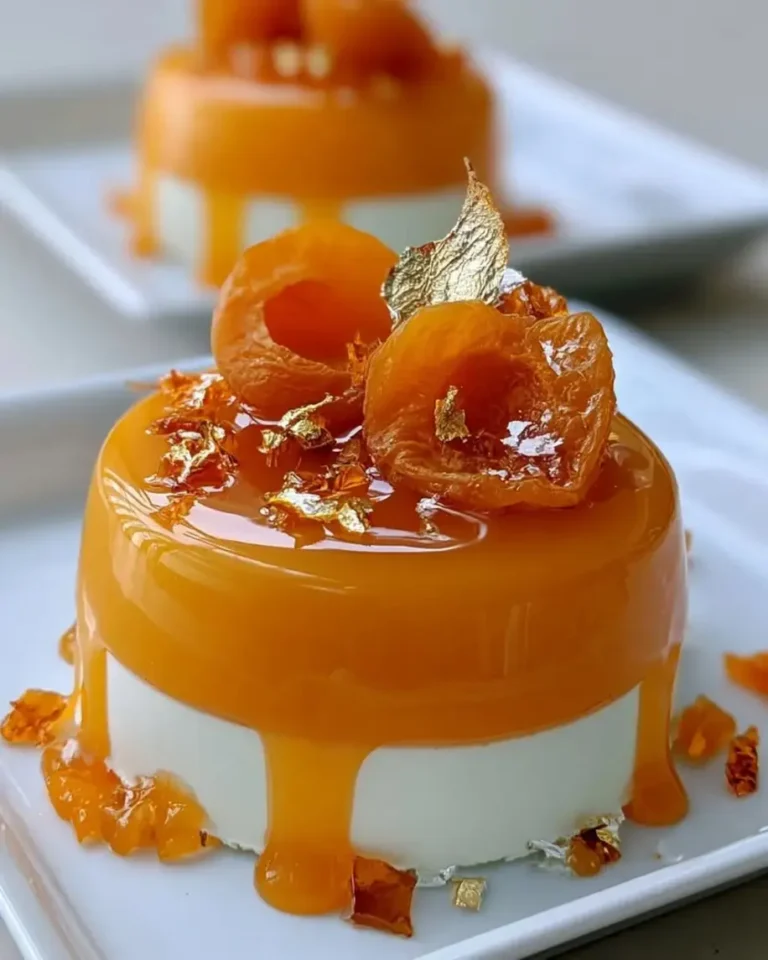
Golden Apricot Jewel Cakes
These elegant jewel-like cakes feature a creamy apricot layer with a vanilla mascarpone center, all enrobed in a shimmering golden mirror glaze.
- Yield: 8 1x
Ingredients
- For the Apricot Jewel Layer:
- 2 cups ripe apricots, peeled and pureed
- 8 oz cream cheese, softened
- 1 cup heavy cream
- 1/3 cup powdered sugar
- 1 tsp vanilla extract
- 2 tsp unflavored gelatin
- 2 tbsp cold water
- Orange-yellow gel food coloring (optional)
- For the Vanilla Cream Core:
- 1/2 cup mascarpone cheese
- 2 tbsp heavy cream
- 1 tbsp powdered sugar
- 1 tsp vanilla bean paste
- For the Golden Mirror Glaze:
- 1 cup white chocolate, finely chopped
- 1/2 cup sweetened condensed milk
- 2 tsp unflavored gelatin
- 2 tbsp cold water
- 1/4 cup warm water
- 1 tsp edible gold luster dust
- For Garnish (optional):
- Dried apricot halves
- Gold leaf flakes
- Caramel sugar shards
Instructions
- 1. Bloom gelatin in cold water for 5 minutes.
- 2. Warm apricot purée slightly and stir in gelatin until fully dissolved.
- 3. Mix in cream cheese, powdered sugar, and vanilla until smooth.
- 4. Whip heavy cream to soft peaks and gently fold into the apricot mixture.
- 5. Combine mascarpone, heavy cream, powdered sugar, and vanilla bean paste until fluffy for the core filling.
- 6. Pipe small cream cores into silicone molds and freeze until firm.
- 7. Fill molds halfway with apricot mixture.
- 8. Insert frozen cores, then cover with remaining mixture. Smooth the tops.
- 9. Freeze for at least 5 hours until fully set.
- 10. Bloom gelatin for glaze and dissolve into warm condensed milk.
- 11. Pour over white chocolate and blend until glossy and smooth.
- 12. Stir in gold luster dust until evenly combined.
- 13. Cool glaze to a pourable consistency.
- 14. Unmold cakes and place on a rack.
- 15. Pour golden glaze evenly over each piece.
- 16. Let excess drip off for a clean jewel finish.
- 17. Garnish with dried apricot, gold leaf, and caramel shards.
- 18. Chill for 20 minutes to set glaze.
- 19. Serve cold for best texture.
- 20. Enjoy.
Nutrition
- Calories: 368
- Sugar: 27 g
- Fat: 25 g
- Carbohydrates: 32 g
- Protein: 5 g
Tried This Recipe? Leave a Comment!
Did you make this recipe? I’d love to hear how it turned out! Please leave a comment and a rating below. Your feedback helps other home cooks and supports cheerychop.com!
For more delicious inspiration, follow me on Pinterest!