Fork-Tender Slow-Braised Apple Cider Chuck Roast
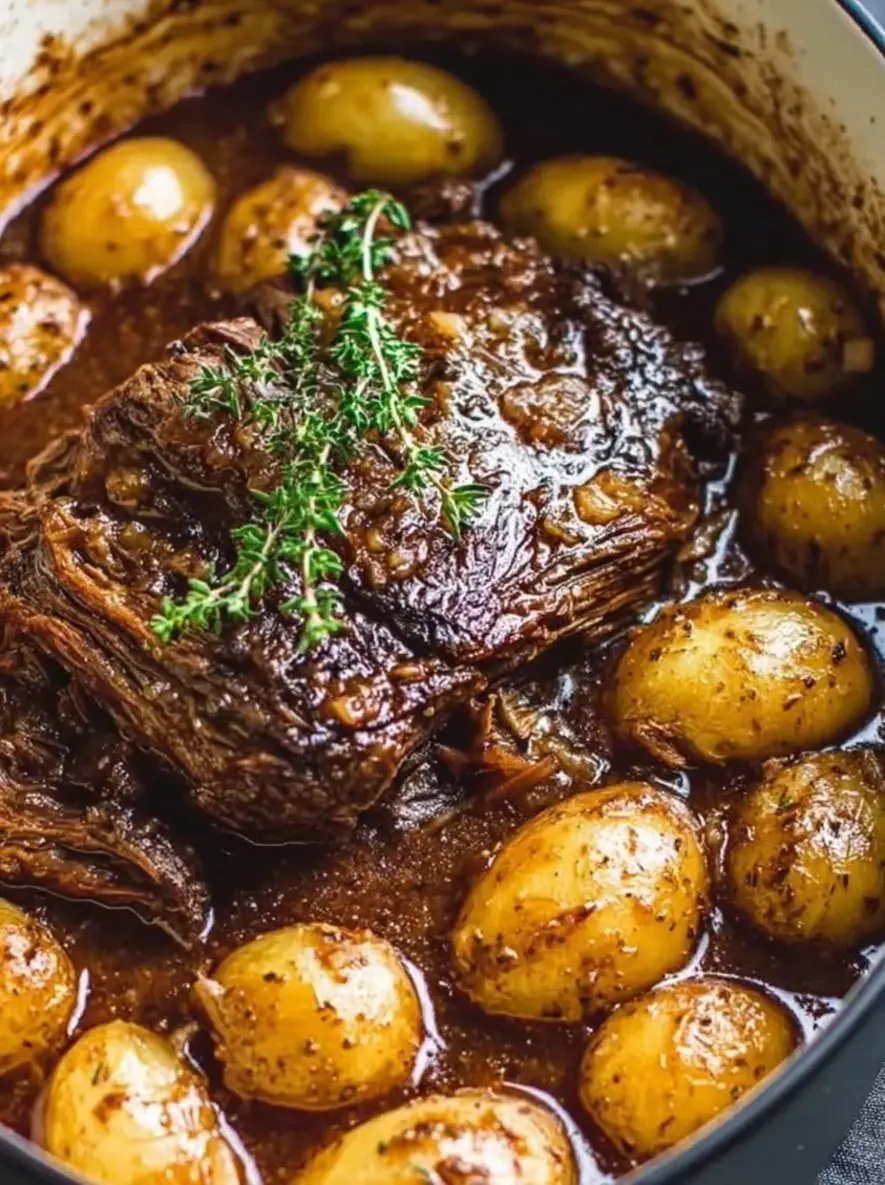
Table of Contents
Slow-Braised Apple Cider Chuck Roast with Herb-Infused Potatoes – A Fall Braised Beef Recipe That Tastes Like Home
There’s a moment every fall when the air turns crisp, the apples pile high at the Union Square Greenmarket, and I start craving the kind of meal that fills the whole apartment with a deep, savory warmth. That’s when I reach for a chuck roast. This slow-braised apple cider chuck roast with herb-infused potatoes is the dish I turn to again and again. It’s a fall braised beef recipe that marries the gentle sweetness of fresh apple cider with the earthy richness of beef, all brought together by a long, slow cook. I first learned the magic of braising in Paris, where my chef taught me that patience is the only shortcut to tenderness. But the soul of this dish? It’s straight from my mother’s kitchen in Morocco, where slow-cooked tagines taught me how spices and time can transform simple ingredients into something extraordinary.
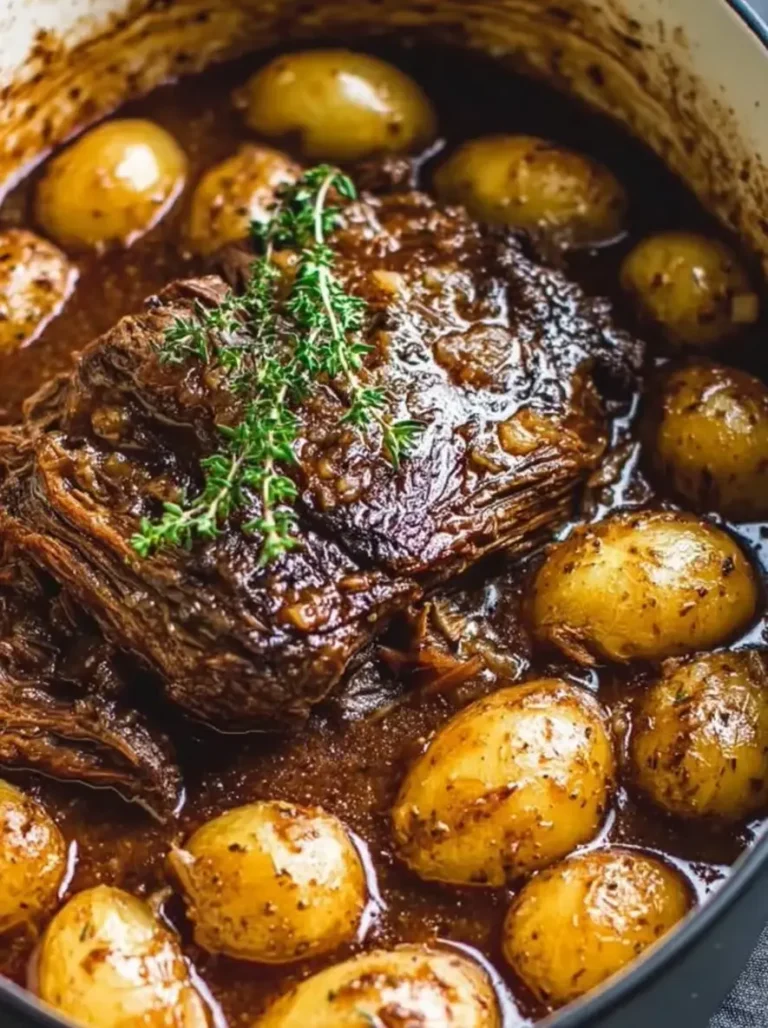
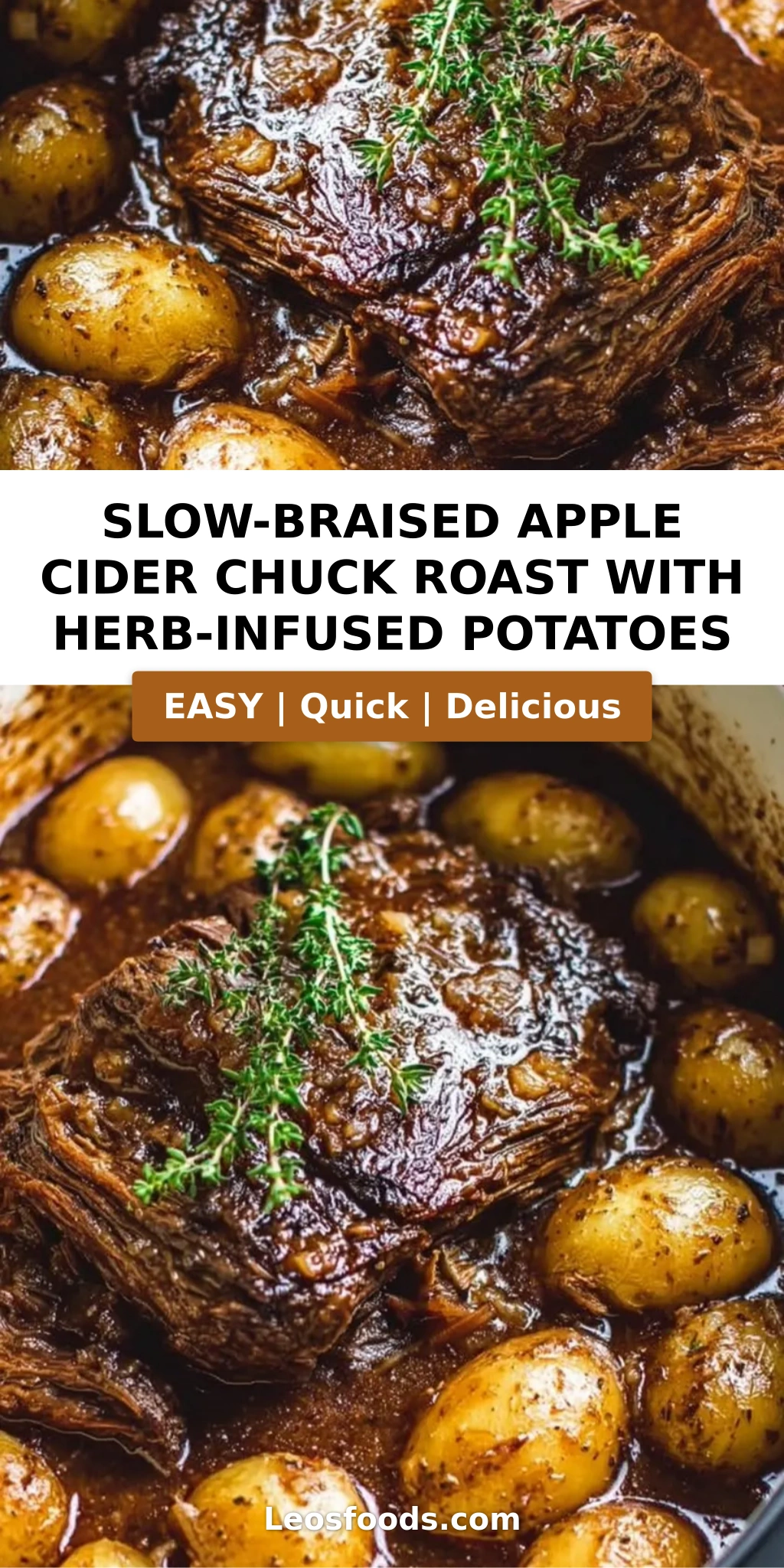
Imagine this: a thick, well-marbled chuck roast emerges from the oven after three hours, its surface lacquered with a dark, glossy pan sauce that smells of rosemary, apple, and just a hint of Dijon. The potatoes—baby Yukon Golds—have soaked up all that goodness, becoming creamy on the inside and slightly caramelized at the edges. Every bite is fork-tender, the beef practically falling apart as you slice it. The aroma alone is enough to make your neighbors knock on the door. The apple cider doesn’t make it sweet—it adds a subtle fruitiness that balances the savory depth of the broth, while smoked paprika and garlic powder give the meat a gentle warmth. This isn’t just comfort food; it’s a celebration of fall on a plate.
What sets my version apart is the way I layer flavors before the braise even begins. I sear the roast with a generous crust of smoked paprika, then bloom the tomato paste and mustard in the pan before adding the cider. That little step—cooking the tomato paste until it darkens—comes straight from my Paris training and it deepens the entire dish. And the herb-infused potatoes? I don’t just toss them in; I nestle them around the roast so they cook in the braising liquid, absorbing every drop of the apple-cider broth. One common mistake home cooks make is adding the potatoes whole—I always cut larger Yukon Golds in half so they soak up more flavor. And here’s a pro tip I swear by: let the roast rest in its own liquid for 10 minutes before carving. That rest is what makes the meat stay juicy.
Why This Slow-Braised Apple Cider Chuck Roast Recipe Is the Best
The Flavor Secret – My background in Moroccan cooking taught me that patience is a flavor. In this braise, I use apple cider the way my mother used preserved lemons: as a bright, acidic note that cuts through the richness of the beef. The smoked paprika adds a subtle smokiness that reminds me of the pimentón we’d use in Spanish tapas in Paris. The Dijon mustard isn’t just for heat—it helps emulsify the sauce, giving it a silky finish that clings to each slice of meat. This isn’t a one-note stew; it’s a layered, nuanced dish that tastes like it simmered all day because, well, it did.
Perfected Texture – Achieving truly fork-tender chuck roast requires two things: a good sear and a low, slow oven. The sear creates a caramelized crust that locks in juices, while the 325°F braise gently breaks down the tough connective tissue over hours. The result is meat that shreds with the lightest pressure—no sawing with a knife. The herb-infused potatoes, cooked right in the liquid, develop a creamy interior while the edges firm up slightly. The carrots and celery soften but keep a little bite, offering texture contrast. Every component is cooked to its ideal doneness because the timing is deliberate.
Foolproof & Fast for Home Cooks – I know not everyone has three hours to hover over a stove. But here’s the thing: active prep is only 20 minutes. Once the roast is seared and the vegetables are in the pot, the oven does all the work. You can walk away, fold laundry, or pour yourself a glass of wine. This recipe is forgiving too—if you braise for 2.5 hours or 3, the meat only gets more tender. There’s no risk of overcooking as long as you keep the liquid level above halfway up the roast. It’s my go-to for Sunday supper, and it’s never failed me.
Apple Cider Chuck Roast Ingredients
Shopping for this recipe in New York is a joy. I pick up my chuck roast from the butcher at the Chelsea Market—they know exactly the cut I need: well-marbled, about 3 pounds, with a thick fat cap. The apple cider I get from a farm stand at the Greenmarket; unfiltered is best because it has more body and flavor. And the baby Yukon Gold potatoes? They’re small enough to cook whole, but I halve any larger ones so they soak up that beautiful broth. Every ingredient here has a role, and each one is easy to find in any US grocery store.
Ingredients List
- 3 lbs beef chuck roast
- 2 tablespoons olive oil
- 1 teaspoon salt
- 1 teaspoon black pepper
- 1 teaspoon smoked paprika
- 1 teaspoon garlic powder
- 1 large yellow onion, sliced
- 4 cloves garlic, minced
- 3 cups baby Yukon gold potatoes
- 2 large carrots, sliced
- 2 celery stalks, chopped
- 2 cups apple cider
- 1 cup beef broth
- 2 tablespoons tomato paste
- 1 tablespoon Dijon mustard
- 2 teaspoons fresh rosemary
Ingredient Spotlight
Beef Chuck Roast – This cut comes from the shoulder, so it has plenty of connective tissue that breaks down into gelatin during braising. Look for even marbling—those thin streaks of fat running through the meat. Avoid roasts that are too lean; they will dry out. A 3-pound roast feeds six generously.
Apple Cider – Unfiltered apple cider is key. It has a cloudy appearance and a more complex apple flavor than clear juice. The natural sugars help caramelize the meat, but the acidity keeps the dish balanced. If you can only find apple juice, add a tablespoon of apple cider vinegar to mimic the tartness.
Baby Yukon Gold Potatoes – These are waxy enough to hold their shape after hours of braising, but creamy enough to soak up flavors. If you can’t find baby Yukons, use regular Yukon Golds cut into 1½-inch chunks. Avoid Russets; they’ll fall apart.
Smoked Paprika – This gives the roast a deep, smoky flavor without any heat. It’s optional but highly recommended. If you don’t have it, use regular paprika plus a pinch of chipotle powder.
Fresh Rosemary – Use the whole sprigs, not ground. Rosemary holds up to long cooking. If you only have dried, use 1 teaspoon, but add it later in the braise so it doesn’t become bitter.
| Original Ingredient | Best Substitution | Flavor / Texture Impact |
|---|---|---|
| Beef chuck roast | Beef brisket (flat cut) | Similar tenderness; slightly leaner, slice against grain |
| Apple cider | Apple juice + 1 tbsp apple cider vinegar | Slightly less fruity depth; vinegar adds needed acidity |
| Baby Yukon Gold potatoes | Red potatoes, halved | Slightly firmer texture; still holds shape well |
| Smoked paprika | Regular paprika + pinch of liquid smoke | Smokiness is milder; add liquid smoke sparingly |
| Fresh rosemary | Dried rosemary (1 tsp) | More concentrated; add later to avoid bitterness |
How to Make Slow-Braised Apple Cider Chuck Roast — Step-by-Step
I promise — this is simpler than it sounds. Just follow these steps and you’ll have a restaurant-quality braise with very little hands-on time. Let me walk you through each stage so you feel totally confident.
Step 1: Preheat and Season
Preheat your oven to 325°F (163°C). While it heats, pat the chuck roast dry with paper towels — moisture is the enemy of a good sear. Season generously on all sides with salt, pepper, smoked paprika, and garlic powder. Press the spices into the meat so they stick.
💡 Stella’s Pro Tip: For an even deeper crust, let the seasoned roast sit at room temperature for 20 minutes before searing. This takes the chill off and helps the meat brown more evenly.
Step 2: Sear the Roast
Heat olive oil in a large Dutch oven over medium-high heat. When the oil shimmers, add the roast. Sear for 4-5 minutes per side — don’t rush it. You’re looking for a deep mahogany crust. Use tongs to sear the ends too. Transfer the roast to a plate.
⚠️ Common Mistake to Avoid: Crowding the pan! If the roast doesn’t have good contact with the pan, it will steam instead of sear. Use a pot just big enough to hold the roast with a little room around it.
Step 3: Sweat the Aromatics
Reduce heat to medium. Add the sliced onion to the pot and cook, stirring occasionally, until softened and translucent — about 3-4 minutes. Add the minced garlic and cook for 1 minute more until fragrant. The fond (browned bits) on the bottom of the pot is pure flavor; don’t worry if it sticks a little.
💡 Stella’s Pro Tip: If the onions stick, add a splash of the beef broth to deglaze as you go. That flavor will go back into the sauce.
Step 4: Build the Base
Stir in the tomato paste and Dijon mustard. Cook for 1 minute, stirring constantly. The paste will darken slightly — that’s good. This is the same technique we used in Paris for a classic fond de braisage.
⚠️ Common Mistake to Avoid: Don’t skip this cooking step. Raw tomato paste tastes metallic; cooking it caramelizes the sugars and adds depth.
Step 5: Add the Liquids
Pour in the apple cider and beef broth. Using a wooden spoon, scrape up all the browned bits from the bottom of the pot — that’s where so much flavor lives. Bring the liquid to a simmer.
💡 Stella’s Pro Tip: Taste the broth at this point. It should be savory with a hint of apple sweetness. If it tastes too tart, add a pinch of brown sugar; if too sweet, add a splash more broth.
Step 6: Assemble and Braise
Return the seared roast to the pot, nestling it into the liquid. Add the baby Yukon Gold potatoes (halve any larger ones), sliced carrots, and chopped celery. Tuck the fresh rosemary sprigs around the roast. The liquid should come about halfway up the sides of the meat — if needed, add more broth. Cover with a tight-fitting lid and transfer to the preheated oven.
⚠️ Common Mistake to Avoid: Don’t overcrowd the pot. The vegetables need some room to cook evenly. If they are packed too tightly, they steam rather than braise.
Step 7: Braise and Rest
Braise for 2.5 to 3 hours. The meat is ready when a fork slides in with no resistance. Remove the pot from the oven, uncover, and let rest for 10 minutes. This resting period allows the juices to redistribute throughout the meat, so every slice stays moist.
💡 Stella’s Pro Tip: Don’t skip the rest! If you slice immediately, the juices will run out onto the cutting board. Patience pays off here.
| Step | Action | Duration | Key Visual Cue |
|---|---|---|---|
| 1 | Season & preheat | 10 minutes | Meat coated in spices, oven temp reached |
| 2 | Sear roast | 4-5 minutes per side | Deep brown crust, fond in pan |
| 3 | Sweat onions & garlic | 4-5 minutes | Onions translucent, garlic fragrant |
| 4 | Cook tomato paste & mustard | 1 minute | Paste darkens, smells toasty |
| 5 | Add liquids & deglaze | 3 minutes | Fond fully dissolved, liquid simmering |
| 6 | Assemble & braise | 2.5–3 hours | Meat fork-tender, potatoes soft |
| 7 | Rest | 10 minutes | Steam subsides, meat settles |
Serving & Presentation
When I serve this dish, I like to bring the whole Dutch oven to the table — it feels rustic and generous, like the family meals I grew up with in Morocco. Remove the roast to a cutting board and slice it against the grain into ½-inch thick slices. Arrange a few slices on each plate, then spoon the herb-infused potatoes and vegetables alongside. Ladle a generous amount of the braising liquid over everything — that’s the real gold. Garnish with a sprig of fresh rosemary or a sprinkle of flaky sea salt.
This dish pairs beautifully with a crusty baguette (my Parisian habit) or a side of creamy polenta. For a lighter touch, try a simple arugula salad with lemon vinaigrette — the peppery greens cut through the richness. I love to serve it with a medium-bodied red wine, like a Pinot Noir or a Côtes du Rhône. And if you’re like me and always crave a little brightness, a spoonful of tangy horseradish cream on the side is spectacular.
| Pairing Type | Suggestions | Why It Works |
|---|---|---|
| Side Dish | Crusty bread, polenta, mashed potatoes | Soaks up the braising liquid |
| Sauce / Dip | Horseradish cream, whole-grain mustard | Adds pungent heat that contrasts beef |
| Beverage | Pinot Noir, Côtes du Rhône, hard apple cider | Fruitiness mirrors the apple cider |
| Garnish | Fresh rosemary, flaky sea salt, chopped parsley | Adds color and freshness |
Make-Ahead, Storage & Reheating
This braise is actually better the next day — the flavors meld even more overnight. I often make it on a Saturday and serve it on Sunday when I have friends over. In my busy NYC schedule, make-ahead meals are a lifesaver. Here’s how to store and reheat so it tastes just as amazing as the day you cooked it.
| Method | Container | Duration | Reheating Tip |
|---|---|---|---|
| Refrigerator | Airtight container with liquid | Up to 4 days | Reheat gently on stovetop over low heat, covered |
| Freezer | Freezer-safe container or zip-top bag | Up to 3 months | Thaw overnight in fridge; reheat on stovetop, adding splash of broth if needed |
| Make-Ahead | Original Dutch oven, cooled | Make up to 2 days in advance | Store in fridge; before serving, skim any solidified fat, then reheat gently |
One thing I learned the hard way: don’t microwave the meat. It toughens the fibers and softens the crust you worked so hard to build. Instead, place the roast and vegetables in a wide skillet, ladle the braising liquid over them, cover, and warm over low heat for 10-15 minutes. If the sauce has thickened too much, thin it with a little beef broth or water. The meat will be just as tender as the day you made it.
Variations & Easy Swaps
This recipe is wonderfully adaptable. Here are a few ways to change it up depending on what you have in your pantry or what season it is.
| Variation | Key Change | Best For | Difficulty Impact |
|---|---|---|---|
| Moroccan Spiced | Add 1 tsp ras el hanout, swap potatoes for sweet potatoes | Aromatic twist with North African roots | Easy |
| Gluten-Free / Dairy-Free | Already GF; skip the bread side, use gluten-free mustard | Dietary restrictions | No change |
| Cider-Herb Remix | Use pear cider, add fresh thyme and sage | Autumn variation with different fruit | Easy |
Moroccan Spiced
This is my favorite twist — inspired by the tagines of my childhood. Simply stir 1 teaspoon of ras el hanout (a Moroccan spice blend) into the broth along with the tomato paste. Swap the Yukon Gold potatoes for cubed sweet potatoes; they hold up beautifully and their sweetness complements the spices. Sprinkle with toasted almonds and fresh cilantro before serving. It’s a beautiful bridge between my two culinary worlds.
Gluten-Free & Dairy-Free
This recipe is naturally gluten-free and dairy-free as written! The only potential source of gluten is the Dijon mustard — most are gluten-free, but check the label. To keep it dairy-free, skip any butter in the sides and avoid creamy garnishes. The braising liquid itself is rich enough without dairy.
Cider-Herb Remix
In early fall, when pears are abundant at the Union Square market, I sometimes swap the apple cider for pear cider. It’s slightly less sweet but just as fragrant. Replace the rosemary with fresh thyme sprigs (5-6 sprigs) and add 3 sage leaves. The sage adds an earthy note that pairs beautifully with pear. This version is a bit more delicate, so reduce the braising time to 2 hours 15 minutes, checking early.
How long should I braise a chuck roast in apple cider for it to be tender?
For a 3-pound chuck roast, braise at 325°F for 2.5 to 3 hours. The exact time depends on the thickness of the roast and how uniformly it cooks. You’ll know it’s ready when a fork slides into the thickest part with no resistance — that’s the “fork-tender” moment. If it’s not there at 2.5 hours, give it another 20–30 minutes. The low, slow heat breaks down the collagen in the chuck, turning it into silky gelatin that keeps the meat moist. Patience is key — don’t rush by cranking up the heat; you’ll toughen the meat instead of tenderizing it.
Can I substitute the apple cider with apple juice or another liquid in this slow-braised chuck roast recipe?
Yes, you can. Apple juice will work, but it’s usually sweeter and less tangy than unfiltered apple cider. To mimic the cider’s acidity, add 1 tablespoon of apple cider vinegar to the juice before pouring it in. If you want an entirely different flavor profile, you could use dry hard apple cider (which adds a slight fermented note) or even a combination of beef broth and a splash of balsamic vinegar. Avoid using sweetened apple juice from concentrate, as it can make the braise cloying. For a non-apple option, try pear juice or a mixture of chicken broth and white wine.
What are the best herbs to use for herb-infused potatoes to complement the apple cider chuck roast?
For this recipe, fresh rosemary is my top choice because its piney, slightly floral aroma stands up to the long braise and pairs beautifully with apple cider. Thyme is another excellent option — its earthy, lemony notes don’t overpower the dish. You can also add a few sage leaves for an autumnal touch, or a bay leaf for extra depth. If using dried herbs, halve the amount and add them later in the cooking process so they don’t turn bitter. Fresh herbs truly shine here; I buy bunches at the farmers market and keep them in a glass of water on the counter.
Should I sear the chuck roast before braising it in apple cider for better flavor?
Absolutely — never skip the sear. Searing the roast in hot oil creates the Maillard reaction, which develops deep, savory flavors that you simply can’t get from braising alone. That browned crust adds complexity to the final dish. Plus, the browned bits left in the pan (called fond) are the foundation of your braising liquid. When you deglaze with apple cider and broth, you dissolve that fond, infusing the whole sauce with umami. Without searing, the meat will be tender but noticeably less flavorful. So take the extra 4–5 minutes per side — it’s worth every second.
Can I cook this apple cider chuck roast in a slow cooker or Instant Pot?
Yes, with adjustments. For a slow cooker, sear the roast first, then transfer everything to the slow cooker. Cook on low for 8–10 hours or on high for 4–6 hours. The texture will be very tender, but you may miss some of the caramelization that occurs in the oven. For an Instant Pot, use the sauté function to sear, then pressure cook on high for 60–70 minutes with a natural release. The flavor will be excellent, but the potatoes may break down more. My oven method remains my favorite for the best balance of tenderness and texture.
What cut of beef works best if I can’t find chuck roast?
Beef brisket (flat cut) is the best substitute. It has similar marbling and will become fork-tender with the same braising time. You could also use bottom round, but it’s leaner and may dry out; you’d want to add a few tablespoons of butter to the pot to compensate. Short ribs are another fantastic option — they are even more tender and flavorful, but they’re bonier and more expensive. For any substitute, remember to sear well and braise until the meat yields easily to a fork.
How do I thicken the braising liquid into a gravy?
After braising, remove the roast and vegetables, and strain the liquid if you want a smooth gravy. Pour the liquid into a saucepan and bring to a simmer. Whisk together 2 tablespoons of cornstarch with 2 tablespoons of cold water to make a slurry, then whisk it into the simmering liquid. Cook for 2–3 minutes until thickened. You can also mash a few of the cooked potatoes directly into the liquid for a naturally thick, rustic sauce — that’s my favorite method because it adds body and flavor without additional starch.
Can I add other vegetables like parsnips or turnips?
Definitely. Parsnips are wonderful — they add a sweet, earthy flavor that complements the apple cider. Add them in 1-inch chunks at the same time as the carrots. Turnips are more peppery; dice them into 1-inch pieces and add them with the potatoes. Just be aware that turnips cook faster, so check them after 2 hours. You can also add quartered mushrooms for an umami boost. The beauty of this braise is its flexibility — use whatever root vegetables look good at the market.
Share Your Version!
I love hearing how this recipe turns out in your kitchen. Did you try the Moroccan spice twist? Or maybe you added extra carrots because that’s what you had on hand? Leave a comment below and let me know! And if you’re on Instagram or Pinterest, snap a photo of your slow-braised apple cider chuck roast with herb-infused potatoes and tag me @leosfoods. I can’t wait to see your beautiful fall dinners.
If you found this recipe helpful, please give it a star rating — it helps other home cooks discover it too. And if you have a question about any step, ask away in the comments. I personally read every single one and answer as quickly as I can. From my NYC kitchen to yours — I hope this recipe brings as much warmth to your table as it does to mine. — Stella 🧡
Love This Recipe? Save It to Pinterest!
If you enjoyed this Slow-Braised Apple Cider Chuck Roast with Herb-Infused Potatoes recipe, don’t let it get lost in your browser tabs! 😄 Pin it now so you can find it again anytime — and explore hundreds more tried-and-tested recipes waiting for you on my Pinterest boards.
👉 Follow Stella on Pinterest @stellarecipeblog
📌 Pin this recipe · 🔁 Re-pin your favorites · 💬 Tag me when you make it — I love seeing your creations!
Slow-Braised Apple Cider Chuck Roast with Herb-Infused Potatoes
A hearty and flavorful braised beef chuck roast cooked in apple cider with tender herb-infused potatoes.
- Total Time: 3 hours 20 minutes
- Yield: 6 servings 1x
Ingredients
- 3 lbs beef chuck roast
- 2 tablespoons olive oil
- 1 teaspoon salt
- 1 teaspoon black pepper
- 1 teaspoon smoked paprika
- 1 teaspoon garlic powder
- 1 large yellow onion, sliced
- 4 cloves garlic, minced
- 3 cups baby Yukon gold potatoes
- 2 large carrots, sliced
- 2 celery stalks, chopped
- 2 cups apple cider
- 1 cup beef broth
- 2 tablespoons tomato paste
- 1 tablespoon Dijon mustard
- 2 teaspoons fresh rosemary
Instructions
- Preheat oven to 325°F (163°C).
- Season the chuck roast on all sides with salt, pepper, smoked paprika, and garlic powder.
- Heat olive oil in a large Dutch oven over medium-high heat. Sear the roast until browned on all sides, about 4-5 minutes per side. Remove and set aside.
- Add sliced onion to the pot and cook until softened, about 3-4 minutes. Add minced garlic and cook for 1 minute.
- Stir in tomato paste and Dijon mustard, cooking for 1 minute.
- Pour in apple cider and beef broth, scraping up any browned bits from the bottom.
- Return the roast to the pot. Add potatoes, carrots, and celery. Sprinkle with fresh rosemary.
- Bring to a simmer, then cover and transfer to the preheated oven.
- Braise for 2.5 to 3 hours, until the meat is fork-tender.
- Remove from oven and let rest for 10 minutes before slicing. Serve with the vegetables and braising liquid.
- Prep Time: 20 minutes
- Cook Time: 3 hours
- Method: Main Course
- Cuisine: American
Nutrition
- Calories: 480 kcal
- Sugar: 12 g
- Fat: 22 g
- Carbohydrates: 25 g
- Protein: 38 g
Tried This Recipe? Leave a Comment!
Did you make this recipe? I’d love to hear how it turned out! Please leave a comment and a rating below. Your feedback helps other home cooks and supports cheerychop.com!
For more delicious inspiration, follow me on Pinterest!