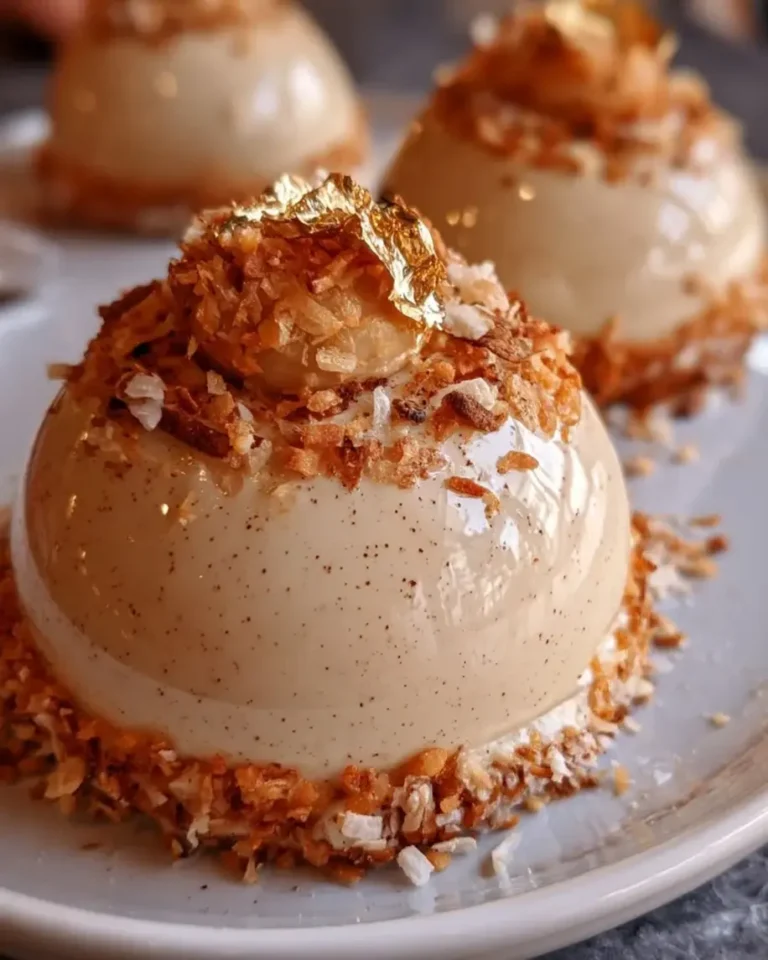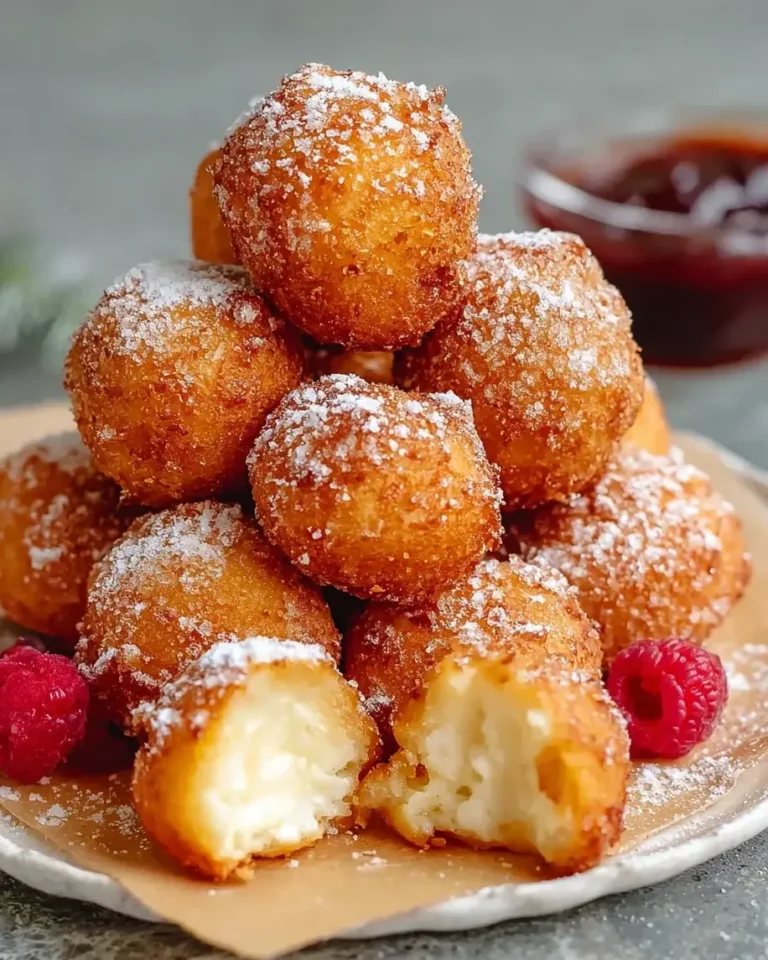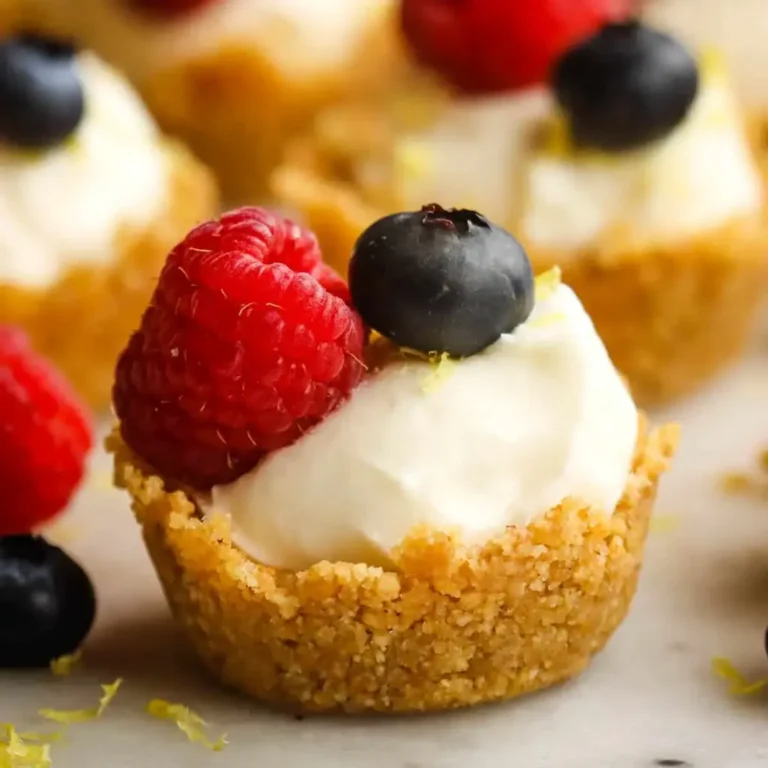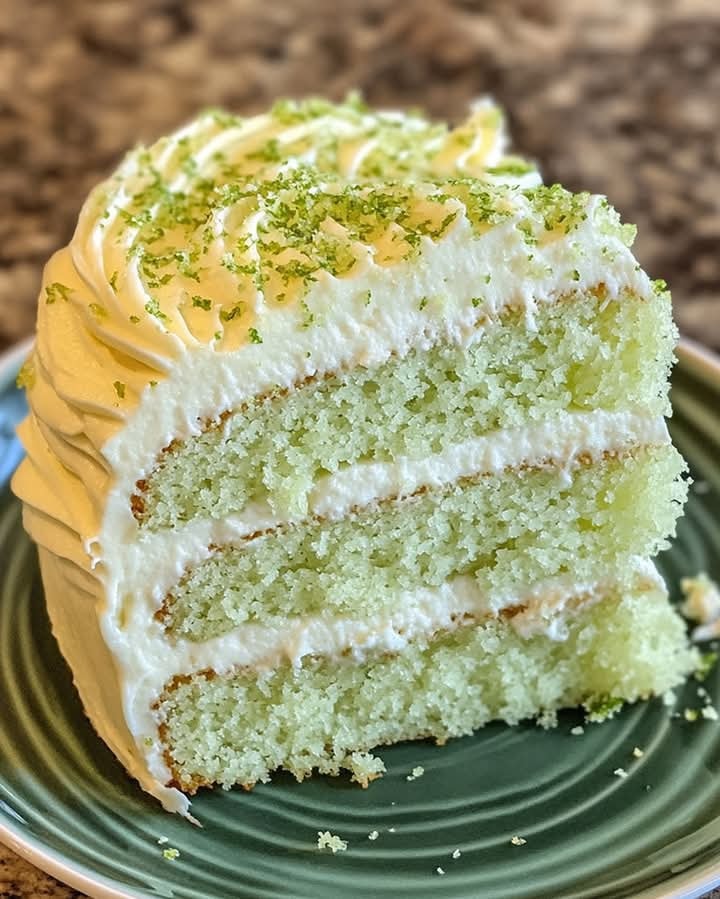
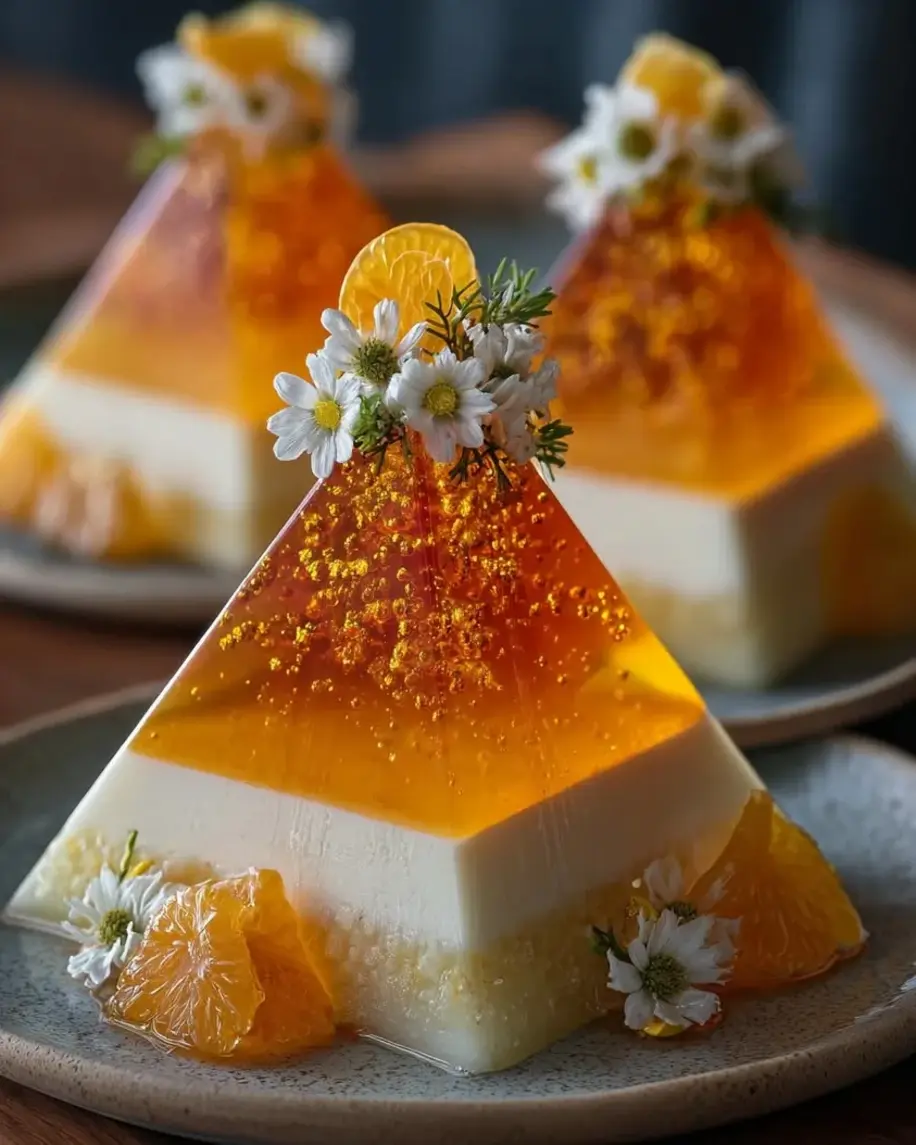
Apricot Vanilla Crystal Pyramids with Honey Cream Filling
“`html
Table of Contents
Apricot Vanilla Crystal Pyramids with Honey Cream Filling – A Stunning Crystal Dessert
I still remember the first time I saw a crystal-clear jelly dessert — it was in a tiny patisserie window in the 6th arrondissement of Paris, during my pastry training. The way the light passed through that shimmering dome, revealing a hidden creamy center, stopped me in my tracks. Years later, standing in my NYC kitchen with a basket of blushing apricots from the Union Square Greenmarket, I knew exactly what I wanted to create: my own version of that memory. This apricot vanilla crystal pyramids recipe with honey cream filling is the result — a dessert that captures the magic of translucent fruit gelée with a luxuriously silky heart. The unique angle here is the crystal-clear apricot shell achieved through agar-agar, which sets flawlessly without clouding, giving you that gem-like finish every time.
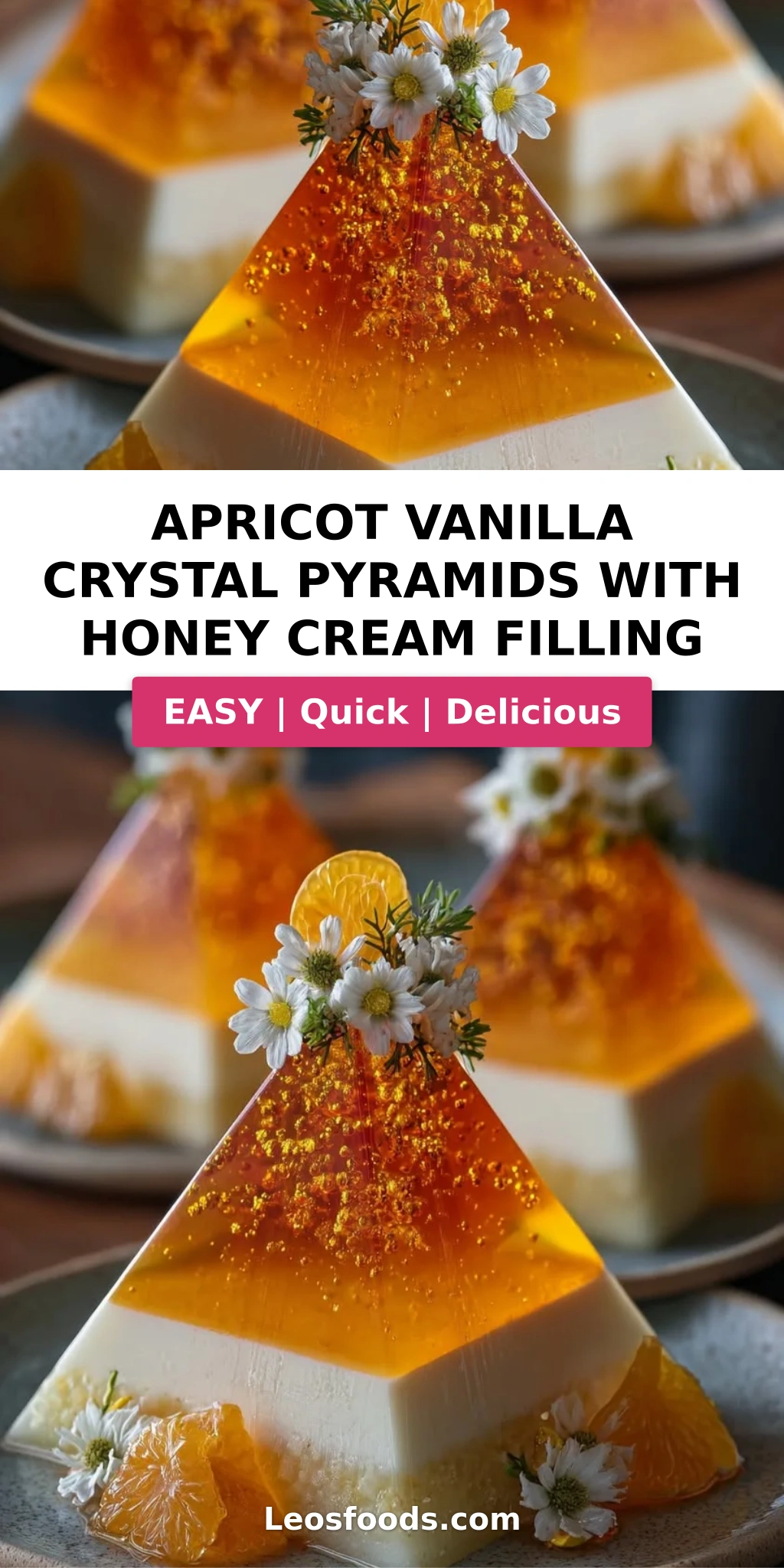
Imagine breaking through a delicate, jewel-bright pyramid with your spoon — the shell shatters ever so slightly, revealing a cloud-like honey-vanilla cream that spills out gently. The apricot flavor is bright and sunny, lifted by a whisper of vanilla and a hint of lemon, while the filling is rich, floral, and airy. Each bite is a contrast of tender gelée and whipped mascarpone, finished with a glossy apricot-honey glaze that catches the light like stained glass. This is the kind of dessert that feels both nostalgic and utterly refined — a nod to the French entremets I studied in Paris, with the warm stone fruit soul of my Moroccan childhood summers.
Over the years, I’ve tested dozens of variations to perfect this technique. The key is using high-quality agar-agar (not gelatin) to maintain that crystal clarity and a stable set at room temperature — no weeping, no cloudiness. My version skips the complicated gelatin blooming and uses a simple stovetop method that any home cook can master with a little patience. A common mistake I see? Not simmering the agar-agar long enough to activate it fully, which leads to a soft, unstable set. I’ll show you exactly how to avoid that, plus my favorite trick for getting perfectly unmolded pyramids every time. This isn’t just a recipe — it’s a showstopper you’ll be proud to bring to any table.
Why This Apricot Vanilla Crystal Pyramids Recipe Is the Best
The Flavor Secret: The flavor of this dessert starts with a double dose of apricot — nectar for the base and strained puree for depth. Growing up in Morocco, my mother would make apricot preserves every summer, and the fragrance of simmering fruit would fill our kitchen for days. Here, I marry that memory with French technique: the vanilla bean paste in the cream filling adds tiny flecks of real vanilla that bloom against the honey, while the mascarpone keeps everything luxuriously smooth. The result is a dessert that tastes both sun-drenched and elegantly composed.
Perfected Texture: The crystal-clear shell is achieved by using agar-agar, a plant-based gelling agent derived from seaweed. During my time at Le Cordon Bleu in Paris, I learned that agar-agar requires a full boil to activate — not just a simmer — and that acidic ingredients like lemon juice must be added after boiling to preserve gelling strength. This recipe follows that exact protocol. The honey cream filling is whipped to soft peaks so it pipess beautifully and stays light against the firm gelée. Every layer has been tested for the perfect bite.
Foolproof & Fast: Despite its impressive appearance, this apricot vanilla crystal pyramids recipe is surprisingly approachable. There’s no gelatin to bloom, no complicated tempering — just one saucepan, a blender for the puree, and a piping bag. The agar-agar does all the work, setting in about 2–3 hours in the fridge. I’ve broken down every step with clear visual cues so you know exactly when the mixture is ready, when it’s partially set, and when it’s perfectly unmoldable. Even if you’ve never made a molded dessert before, you can absolutely nail this one.
Apricot Vanilla Crystal Pyramids Recipe Ingredients
I source my apricot nectar from a little Italian market in Brooklyn’s Carroll Gardens, but any good-quality unsweetened nectar works beautifully. The apricot puree is easy to make at home — just blitz fresh or high-quality canned apricots and strain them through a fine-mesh sieve. For the agar-agar, I recommend using a trusted brand like Now Foods or Teleghma — the quality really matters for clarity. And the honey? I love using a mild wildflower honey from a small upstate New York farm, but a good clover honey from the grocery store works beautifully too.
Ingredients List
- For the Apricot Crystal Shell:
- 2 cups apricot nectar (unsweetened)
- 1 cup apricot puree, strained
- 1 1/2 cups water
- 3/4 cup granulated sugar
- 2 1/2 tsp agar-agar powder
- 1 tsp vanilla extract
- 1 tbsp lemon juice (freshly squeezed)
- 1/4 tsp salt
- For the Honey Cream Filling:
- 8 oz mascarpone cheese, softened
- 1/2 cup heavy whipping cream
- 1/4 cup honey (mild wildflower or clover)
- 1 tbsp powdered sugar
- 1 tsp vanilla bean paste
- For the Crystal Glaze:
- 1/4 cup apricot preserves
- 2 tbsp honey
- 1 tbsp water
- 1 tsp lemon juice
- For Garnish (optional but gorgeous):
- Fresh apricot slices
- White chocolate shards
- Edible gold flakes
- Edible pearl dust
- Tiny edible flowers (pansies or violas work beautifully)
Ingredient Spotlight
Agar-Agar Powder: This is the star of the show. Unlike gelatin, agar-agar sets at room temperature and remains stable even on warm days, making it ideal for crystal-clear desserts. It needs to be boiled for at least 2 minutes to fully activate. I buy mine from natural food stores or online — look for a pure powder with no additives. A good substitution is 2 1/2 teaspoons of agar-agar flakes, but flakes require longer simmering (about 5 minutes) and may give a slightly less clear result.
Apricot Nectar and Puree: The nectar provides the clear liquid base, while the puree adds body and intense apricot flavor. For the puree, I blitz about 1 1/2 cups of fresh or canned apricots (drained) in a blender, then push through a fine-mesh sieve to remove skins and fibers. If you can’t find apricot nectar, you can substitute with a mix of 1 cup apricot juice and 1 cup water, though the flavor will be slightly less concentrated.
Mascarpone Cheese: This Italian cream cheese gives the filling its signature silky richness without being too heavy. Let it come to room temperature before whipping so it blends smoothly with the cream. If you can’t find mascarpone, a high-quality cream cheese (full fat) mixed with 2 tablespoons of heavy cream is a decent substitute — though the flavor will be tangier and less delicate.
Vanilla Bean Paste: I use vanilla bean paste here instead of extract because the tiny seeds create beautiful specks throughout the cream filling, and the flavor is more concentrated and floral. If you only have vanilla extract, use 1 1/2 teaspoons — the flavor will still be lovely, just without the visual seeds. For an even more intense vanilla flavor, scrape the seeds from half a vanilla pod directly into the cream.
| Original Ingredient | Best Substitution | Flavor / Texture Impact |
|---|---|---|
| Agar-agar powder (2.5 tsp) | Agar-agar flakes (2.5 tsp, simmer 5 min) | Slightly less clear, same firmness |
| Apricot nectar (2 cups) | Apricot juice + water (1 cup each) | Less concentrated apricot flavor |
| Mascarpone (8 oz) | Cream cheese + 2 tbsp heavy cream | Tangier, slightly less smooth |
| Vanilla bean paste (1 tsp) | Vanilla extract (1.5 tsp) | No vanilla seeds, slightly less floral |
| Honey (1/4 cup) | Maple syrup (1/4 cup, less sweet) | Milder sweetness, subtle maple note |
How to Make Apricot Vanilla Crystal Pyramids — Step-by-Step
Trust me — once you break down each stage, this dessert is easier than it looks. I’ve designed the steps so you can work at a relaxed pace, and I’ll be right here with you through every pour, chill, and unmold. Let’s make something beautiful.
Step 1: Make the Crystal Shell Base
In a medium saucepan, combine 2 cups apricot nectar, 1 cup strained apricot puree, 1 1/2 cups water, 3/4 cup granulated sugar, 2 1/2 tsp agar-agar powder, 1 tsp vanilla extract, and 1/4 tsp salt. Whisk everything together thoroughly before turning on the heat — this prevents the agar-agar from clumping. Place the pan over medium-high heat and bring the mixture to a gentle simmer, whisking frequently. Once it reaches a full simmer, let it cook for exactly 2 minutes, stirring constantly. The mixture should be completely clear and slightly thickened — you’ll see it coat the back of a spoon.
💡 Stella’s Pro Tip: After the 2-minute simmer, remove the pan from heat and stir in 1 tbsp of fresh lemon juice. Adding acid after boiling preserves the gelling strength of the agar-agar. If you add it before the boil, the acid can weaken the set and your pyramids won’t hold their shape.
Step 2: Partial Set the Molds
Pour the apricot mixture into pyramid-shaped silicone molds, filling each cavity about halfway full. Work carefully — any bubbles on the surface can be popped with a toothpick or by gently tapping the mold on the counter. Place the molds on a flat tray and refrigerate for 30–45 minutes, until the mixture is partially set. It should feel firm on the surface but still slightly jiggly underneath — like a very soft jelly. This is the perfect texture for creating a cavity to hold the filling.
⚠️ Common Mistake to Avoid: Don’t let the mixture fully set before adding the filling! If the shell is too firm, the cream filling won’t integrate and you’ll get a separate layer instead of a beautiful filled center. Test by gently pressing the surface — it should feel set but still soft enough to yield slightly.
Step 3: Make the Honey Cream Filling
While the shells are chilling, make the filling. In a large bowl, combine 8 oz softened mascarpone cheese, 1/2 cup heavy whipping cream, 1/4 cup honey, 1 tbsp powdered sugar, and 1 tsp vanilla bean paste. Using a hand mixer or a stand mixer with the whisk attachment, whip on medium-low speed until the mixture is smooth, then increase to medium-high and whip until soft peaks form — about 2–3 minutes. Be careful not to overwhip; you want it airy and fluffy, not grainy or stiff. Transfer the filling to a piping bag fitted with a round tip.
💡 Stella’s Pro Tip: For the fluffiest texture, make sure your mascarpone is at room temperature and your heavy cream is cold. If the mascarpone is too cold, it won’t whip smoothly and you’ll get tiny lumps. Take it out of the fridge 20 minutes before you start.
Step 4: Fill and Cover
Remove the partially set molds from the fridge. Pipe a generous amount of honey cream filling into the center of each pyramid — aim for about 1 1/2 to 2 tablespoons per pyramid, depending on the size of your mold. Leave a small border around the edges so the cream doesn’t touch the sides. Gently pour the remaining apricot mixture (it should still be liquid — if it has set, gently reheat it until just pourable) over the filling, covering it completely. Tap the mold gently to release any air bubbles, then return to the refrigerator for at least 3 hours, or until fully set and crystal clear.
⚠️ Common Mistake to Avoid: If your remaining apricot mixture has fully set while waiting, don’t panic! Simply warm it gently in a small saucepan over low heat, stirring constantly, until it becomes liquid again. Let it cool for 2–3 minutes before pouring over the filling — hot liquid will melt the cream filling and ruin the layers.
Step 5: Unmold
Once the pyramids are fully set (firm to the touch and completely clear), it’s time to unmold. Gently flex the silicone mold at the base of each pyramid, working your way around. If the pyramid resists, dip the bottom of the mold briefly into a bowl of warm water — just 3–5 seconds — to loosen the seal. Invert onto a chilled serving platter and let the pyramid release gently. If any edges are slightly dull, don’t worry — the glaze will fix that.
💡 Stella’s Pro Tip: Place your serving platter in the refrigerator for 10 minutes before unmolding. The cold surface helps the pyramids release more cleanly and keeps them stable as you work. Silicone molds vary in flexibility, so if you’re using a new mold, test one pyramid first before committing to all six.
Step 6: Make the Crystal Glaze
In a small saucepan, combine 1/4 cup apricot preserves, 2 tbsp honey, 1 tbsp water, and 1 tsp lemon juice. Warm over low heat, stirring constantly, until the preserves melt and the mixture becomes smooth and glossy — about 2–3 minutes. Do not let it boil. Remove from heat and let it cool for 5–7 minutes until it’s still liquid but no longer hot. The glaze should be just warm to the touch — if it’s too hot, it will melt the surface of your pyramids.
⚠️ Common Mistake to Avoid: If your glaze is too thick to brush, add a teaspoon more water. If it’s too thin, simmer for another minute to reduce slightly. The perfect glaze consistency is like warm maple syrup — it should coat the back of a spoon but still run off in a steady stream.
Step 7: Glaze and Garnish
Using a soft pastry brush, gently brush the warm glaze over each pyramid, covering the entire surface. The glaze will add a brilliant shine and seal the pyramid beautifully. Work quickly but gently — one pass per side should be enough. Allow the glaze to set for 2–3 minutes, then decorate with fresh apricot slices, white chocolate shards, edible gold flakes, a dusting of pearl dust, and tiny edible flowers. The combination of gold and pearl against the apricot crystal is absolutely stunning.
💡 Stella’s Pro Tip: Apply the edible gold flakes with a dry paintbrush or a pair of tweezers for precision. The flakes stick best to the still-tacky glaze. For the pearl dust, use a small dry brush and tap off the excess before applying — a little goes a long way. Arrange the flowers just before serving so they stay fresh.
Step 8: Chill and Serve
Return the glazed and garnished pyramids to the refrigerator for at least 30 minutes before serving to allow the glaze to fully set. Serve thoroughly chilled on chilled plates. The contrast between the firm, crystal-clear shell and the silky honey-vanilla cream inside is nothing short of magical. Each pyramid is a work of art — luminous, elegant, and absolutely delicious.
| Step | Action | Duration | Key Visual Cue |
|---|---|---|---|
| 1 | Cook shell base | 10 mins | Mixture turns clear, coats spoon |
| 2 | Partial set molds | 30–45 mins | Surface firm, underneath jiggly |
| 3 | Make cream filling | 5 mins | Soft peaks form, mixture is fluffy |
| 4 | Fill and cover | 5 mins | Cream centered, covered by liquid |
| 5 | Chill to set | 3+ hours | Fully firm, crystal clear |
| 6 | Unmold | 2–3 mins | Pyramids release cleanly |
| 7 | Glaze | 5 mins | Glossy, sparkling finish |
| 8 | Garnish & serve | 10 mins | Beautifully decorated, chilled |
Serving & Presentation
These apricot vanilla crystal pyramids are meant to be the centerpiece of your dessert table. I love serving them on a chilled white platter — the contrast of the translucent apricot shell against the white dish is stunning. Place each pyramid with a little space around it so the garnishes can shine. A few fresh apricot slices arranged around the base, a sprinkle of edible gold flakes, and a tiny edible flower on top of each pyramid create a presentation that looks straight out of a Parisian pastry shop.
In my NYC kitchen, I often serve these after a light dinner — maybe a simple roasted chicken or a fresh summer salad. The dessert is elegant enough for a dinner party but approachable enough for a weekend family gathering. My husband loves them with a small glass of chilled Moscato or a cup of fragrant mint tea (a nod to my Moroccan roots). The sweetness of the honey cream and the brightness of the apricot pair beautifully with a slightly bitter espresso or a floral green tea.
For a truly special occasion, stack two pyramids on top of each other (using a tiny bit of glaze as “glue”) to create a larger centerpiece, or serve each pyramid on its own small mirror plate for maximum reflection. The edible pearl dust catches the light from every angle, making the pyramids look like they’re glowing from within. Don’t forget to snap a photo before everyone digs in — this is a dessert that demands to be remembered.
| Pairing Type | Suggestions | Why It Works |
|---|---|---|
| Side Dish | Fresh berries, citrus salad, light sorbet | Bright acidity balances the honey sweetness |
| Sauce / Dip | Raspberry coulis, caramel drizzle, extra glaze | Adds color contrast and flavor depth |
| Beverage | Moscato, espresso, mint tea, green tea | Bitter or floral notes cut the sweetness |
| Garnish | Gold leaf, pearl dust, fresh mint, flowers | Adds elegance, texture, and visual intrigue |
Make-Ahead, Storage & Reheating
One of the best things about this apricot vanilla crystal pyramids recipe is how well it works for entertaining. I often make the full dessert a day ahead of a dinner party — the pyramids actually taste better after resting overnight because the flavors meld together beautifully. Living in NYC with a busy schedule, I rely on make-ahead desserts that don’t sacrifice quality, and this one is a gem. Here’s exactly how to store everything so it stays perfect.
| Method | Container | Duration | Reheating Tip |
|---|---|---|---|
| Refrigerator | Airtight container, single layer | Up to 3 days | Serve directly from fridge — no reheating needed |
| Freezer | Freezer-safe container, parchment between layers | Up to 1 month | Thaw overnight in fridge — glaze may lose some shine |
| Make-Ahead | In silicone molds, covered | Up to 2 days in advance | Unmold and glaze on serving day for best shine |
If you’re storing the pyramids in the refrigerator, keep them in an airtight container to prevent them from absorbing any fridge odors. I’ve found that covering them loosely with plastic wrap (not touching the surface) works well if you don’t have a container tall enough. The glaze may soften slightly over time, but the pyramids will still look beautiful for up to 3 days. For the best texture and shine, I recommend glazing and garnishing on the day you plan to serve them — the crystal shell and cream filling can be made up to 2 days ahead and stored in the molds, then unmolded, glazed, and decorated just before serving.
One thing I’ve learned from testing: do not leave these pyramids at room temperature for more than 20–30 minutes. The agar-agar shell is stable at room temperature, but the cream filling contains mascarpone and heavy cream, so it needs to stay chilled. If you’re serving outdoors on a warm day, place the platter on a bed of ice or serve individual plates straight from the fridge. Trust me — cold is the way to go with this dessert. The cool, silky cream against the firm, clear shell is part of the magic.
Variations & Easy Swaps
Over the years, I’ve played with countless versions of this dessert in my NYC kitchen — some inspired by the spice markets of Marrakech, others by the seasonal fruits I find at the Greenmarket. Here are three of my favorite variations, each one tested and perfected so you can make this recipe your own.
| Variation | Key Change | Best For | Difficulty Impact |
|---|---|---|---|
| Moroccan Spice | Add cinnamon & orange blossom water | Exotic flavor twist | Same difficulty |
| Dairy-Free | Use coconut cream instead of mascarpone | Dairy-free diet | Same difficulty |
| Peach & Thyme | Sub peaches for apricots, add thyme | Summer seasonal swap | Same difficulty |
Moroccan Spice Variation
This version is a love letter to my Moroccan heritage. Add 1/2 teaspoon of ground cinnamon and 1 tablespoon of orange blossom water to the apricot shell mixture along with the lemon juice. The cinnamon adds warmth and depth, while the orange blossom water brings a floral, perfumed note that pairs beautifully with apricot. For the filling, replace the vanilla bean paste with 1/2 teaspoon of rose water and increase the honey to 1/3 cup. The result is a dessert that tastes like a Moroccan summer garden — fragrant, exotic, and utterly memorable. Garnish with a sprinkle of crushed pistachios and a tiny dried rose petal.
Dairy-Free / Vegan Option
For a dairy-free version that still feels luxuriously creamy, replace the mascarpone with full-fat coconut cream (the thick part from a can of chilled coconut milk). Whip 1 cup of coconut cream with 1/4 cup honey, 1 tablespoon powdered sugar, and 1 teaspoon vanilla bean paste until light and fluffy — about 3–4 minutes with a hand mixer. The coconut flavor is subtle and pairs beautifully with apricot. Use a vegan honey alternative like agave syrup if needed. The texture is slightly less dense than mascarpone but still silky and delicious. The agar-agar shell is naturally vegan, so the whole dessert becomes plant-based.
Peach and Thyme Seasonal Swap
When peaches are at their peak at the Union Square Greenmarket, I swap out the apricots entirely. Use 2 cups peach nectar and 1 cup strained peach puree instead of apricot. Add 2 sprigs of fresh thyme to the shell mixture while it simmers (remove before pouring) — the herbal note cuts through the sweetness beautifully. For the filling, replace the honey with 1/4 cup maple syrup and add 1/2 teaspoon of fresh thyme leaves, finely chopped. Garnish with a thin slice of fresh peach and a tiny thyme sprig on top. This version is bright, summery, and absolutely delightful.
Share Your Version!
I’d love to see how your apricot vanilla crystal pyramids turn out! Drop a comment below with a star rating and tell me about your experience — did you try any of the variations? Did you create your own twist? Your feedback helps other readers feel confident trying this recipe, and I personally read every single comment. If you post a photo on Instagram or Pinterest, tag me @leosfoods so I can see your beautiful creation and share it with our community.
One question I’d love for you to answer: Which variation are you most excited to try — the Moroccan spice, the dairy-free version, or the peach and thyme swap? Or do you have another fruit or flavor in mind? Let me know in the comments — I’m always inspired by your ideas. From my NYC kitchen to yours — I hope this recipe brings as much warmth to your table as it does to mine. — Stella 🧡
Love This Recipe? Save It to Pinterest!
If you enjoyed this Apricot Vanilla Crystal Pyramids with Honey Cream Filling recipe, don’t let it get lost in your browser tabs! 😄 Pin it now so you can find it again anytime — and explore hundreds more tried-and-tested recipes waiting for you on my Pinterest boards.
👉 Follow Stella on Pinterest @stellarecipeblog
📌 Pin this recipe · 🔁 Re-pin your favorites · 💬 Tag me when you make it — I love seeing your creations!
Can I use dried apricots instead of fresh for Apricot Vanilla Crystal Pyramids?
I don’t recommend using dried apricots for the crystal shell in this apricot vanilla crystal pyramids recipe. Dried apricots have a concentrated, chewy texture and lower water content, which makes it difficult to achieve the clear, translucent gel that fresh or high-quality canned apricots provide. The nectar and puree need to be free of fibers and solids to create that crystal-clear look. However, you could make a lovely apricot compote from rehydrated dried apricots (soaked in warm water or orange juice) and serve it alongside the pyramids as a garnish or sauce. For the shell itself, stick with nectar and fresh or canned puree for the best results.
What is the best way to achieve a clear, crystal-like texture for the pyramid dessert?
The secret to a perfectly clear, crystal-like texture lies in three key steps. First, use high-quality agar-agar powder and boil it for a full 2 minutes — this fully activates the gelling agent and ensures a firm, transparent set. Second, strain your apricot puree through a fine-mesh sieve to remove any pulp, fibers, or solids that could cloud the gel. Third, avoid adding acidic ingredients like lemon juice until after the mixture has finished boiling, because acid can weaken the agar-agar and cause cloudiness. I also recommend using a clear apricot nectar (not a cloudy juice) and allowing the pyramids to set completely in the refrigerator for at least 3 hours before unmolding. Patience is key — rushing the set will result in a softer, less brilliant finish.
How far in advance can I make the honey cream filling for these apricot pyramids?
You can make the honey cream filling up to 2 days in advance and store it in an airtight container in the refrigerator. I actually prefer making it a day ahead because the flavors of the honey and vanilla bean paste have time to meld and deepen. When you’re ready to use it, let the filling sit at room temperature for about 10–15 minutes to soften slightly, then give it a gentle whisk or a quick whip with a hand mixer for 30 seconds to restore its fluffy texture. If the filling looks a little stiff after refrigeration, that’s normal — just whip it briefly and it will become light and pipeable again. Do not microwave it to soften, as heat will melt the mascarpone and ruin the texture.
Can I substitute vanilla bean paste for vanilla extract in this recipe?
Absolutely, and I actually recommend it! Vanilla bean paste is a superb substitute for vanilla extract in this apricot vanilla crystal pyramids recipe. The paste contains real vanilla bean seeds suspended in a thick syrup, which means you get both the intense vanilla flavor and those beautiful little specks that make the cream filling look truly artisanal. Use a 1:1 substitution — 1 teaspoon of vanilla bean paste for 1 teaspoon of vanilla extract. If you’re using vanilla extract instead of paste, I recommend adding 1/2 teaspoon extra (so 1 1/2 teaspoons total) because extract is less concentrated than paste. For the shell, either works beautifully, but for the cream filling, the paste really elevates the visual appeal.
Why did my agar-agar pyramids turn out cloudy instead of clear?
Cloudy pyramids are usually caused by one of three things. First, the apricot puree may not have been strained thoroughly — any pulp, fibers, or bits of skin will create cloudiness. Always push the puree through a fine-mesh sieve and discard the solids. Second, the mixture may not have been boiled long enough. Agar-agar needs a full 2-minute boil to activate completely; if it’s under-boiled, the gel sets unevenly and appears hazy. Third, adding lemon juice or other acidic ingredients before the boil can weaken the agar-agar and cause a cloudy, soft set. Always add lemon juice after removing the pan from the heat. If your pyramids are already cloudy, they’re still perfectly edible — they just won’t have that stunning crystal-clear look. For next time, follow the straining and boiling steps carefully and you’ll get brilliant clarity.
Can I make these pyramids without silicone molds?
I strongly recommend using silicone molds for this recipe because the flexibility of silicone allows you to unmold the delicate pyramids without breaking them. If you don’t have pyramid-shaped silicone molds, you can use any small, narrow-bottomed silicone mold — small dome molds, heart shapes, or even silicone ice cube trays with interesting shapes work well. Avoid rigid plastic or metal molds, as the agar-agar gel is firm but brittle, and you’ll likely crack the pyramids trying to get them out. If you’re determined to use a non-silicone mold, line it very well with plastic wrap, leaving enough overhang to lift the set pyramid out gently. The shape won’t be as crisp, but it will still taste wonderful.
How do I prevent air bubbles from forming in my crystal pyramids?
Air bubbles are a common frustration when working with agar-agar gels, but there are a few easy fixes. First, whisk the mixture gently when combining the ingredients — vigorous whisking incorporates air. Second, after pouring the mixture into the molds, tap the mold firmly on the counter several times to bring any bubbles to the surface, then pop them with a toothpick or the tip of a small knife. Third, if you’re using a blender for the apricot puree, let it sit for 5 minutes after blending so the air from blending dissipates. Finally, when pouring the remaining mixture over the cream filling, pour it slowly down the side of the mold rather than directly onto the cream — this minimizes splashing and bubble formation. A few tiny bubbles are natural and won’t ruin the dessert, but these steps will give you a virtually flawless crystal finish.
What can I use instead of edible gold flakes for garnish?
If you don’t have edible gold flakes or prefer not to use them, there are several beautiful alternatives that still create an elegant presentation. Edible silver leaf or pearl dust gives a similar shimmering effect. You can also use finely crushed freeze-dried apricots for a pop of color and texture, or a light dusting of powdered sugar sifted through a fine-mesh sieve for a snowy, elegant finish. Thin shards of white chocolate arranged on top or around the base add a lovely contrast in both color and texture. For a natural touch, tiny edible flowers like pansies, violas, or borage blossoms create a garden-fresh look. Even a simple drizzle of the apricot glaze in a decorative pattern on the plate can elevate the presentation without any special ingredients.
Can I use gelatin instead of agar-agar for this recipe?
You can substitute gelatin for agar-agar, but I don’t recommend it for this particular recipe. Gelatin creates a softer, more delicate set that doesn’t hold its shape as well at room temperature, and it produces a cloudy, not crystal-clear, finish. The beauty of these apricot vanilla crystal pyramids is the transparent, jewel-like shell, which is only achievable with agar-agar. If you do choose to use gelatin, use 1 tablespoon of unflavored gelatin powder (bloomed in 1/4 cup cold water for 5 minutes, then dissolved into the warm mixture) for every 2 1/2 teaspoons of agar-agar. The set will be softer, the pyramids will be less stable at room temperature, and the clarity will be significantly reduced. For the best results, stick with agar-agar — it’s worth seeking out.
How do I store leftover honey cream filling?
Leftover honey cream filling can be stored in an airtight container in the refrigerator for up to 3 days. The mascarpone and cream mixture will firm up as it chills, so before using it again, let it sit at room temperature for about 15 minutes to soften slightly. Then whisk it gently with a hand mixer or a whisk for 30–60 seconds to restore its light, fluffy texture. If it seems too thick after whisking, you can fold in a tablespoon of cold heavy cream to loosen it. Leftover filling is delicious on its own as a dip for fresh fruit, spread on toast, or as a topping for scones or pancakes. You can also freeze the filling in a piping bag (clip the end and seal the bag tightly) for up to 1 month — thaw overnight in the refrigerator and re-whip before using.
💬 I’d love to hear from you!
Made these Apricot Vanilla Crystal Pyramids? Rate the recipe below and leave a comment — your feedback helps me create better recipes for you.
📸 Tag @leosfoods on Instagram or Pinterest for a chance to be featured in my stories!
“`
Print
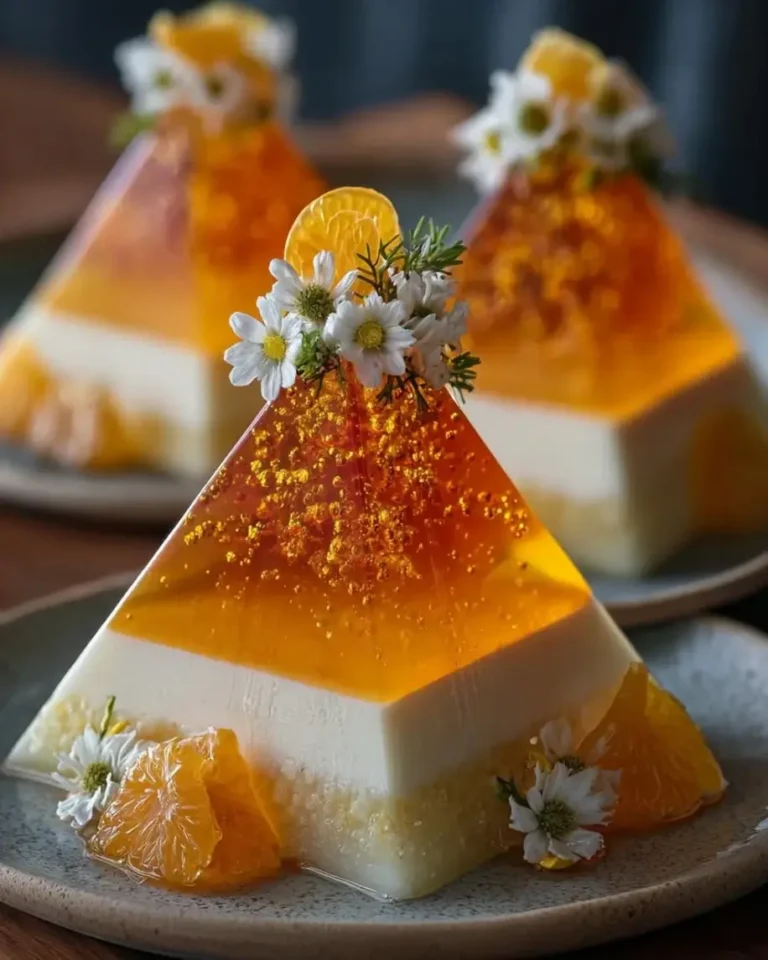
Apricot Vanilla Crystal Pyramids with Honey Cream Filling
A stunning dessert featuring a clear apricot crystal shell filled with silky honey-vanilla cream, glazed to a sparkling finish and garnished elegantly.
- Yield: 6 1x
Ingredients
- For the Apricot Crystal Shell:
- 2 cups apricot nectar
- 1 cup apricot puree, strained
- 1 1/2 cups water
- 3/4 cup granulated sugar
- 2 1/2 tsp agar-agar powder
- 1 tsp vanilla extract
- 1 tbsp lemon juice
- 1/4 tsp salt
- For the Honey Cream Filling:
- 8 oz mascarpone cheese
- 1/2 cup heavy whipping cream
- 1/4 cup honey
- 1 tbsp powdered sugar
- 1 tsp vanilla bean paste
- For the Crystal Glaze:
- 1/4 cup apricot preserves
- 2 tbsp honey
- 1 tbsp water
- 1 tsp lemon juice
- For Garnish (optional):
- Fresh apricot slices
- White chocolate shards
- Edible gold flakes
- Edible pearl dust
- Tiny edible flowers
Instructions
- Combine apricot nectar, apricot puree, water, sugar, agar-agar powder, vanilla extract, lemon juice, and salt in a saucepan. Heat while stirring until fully dissolved and bring to a gentle simmer.
- Pour the mixture into pyramid-shaped silicone molds, filling each cavity halfway. Refrigerate until partially set.
- Whip mascarpone cheese, heavy whipping cream, honey, powdered sugar, and vanilla bean paste until smooth, airy, and fluffy. Transfer to a piping bag.
- Pipe a generous amount of honey cream filling into the center of each partially set pyramid. Cover with the remaining apricot mixture and refrigerate until fully set and crystal clear.
- Carefully unmold the pyramids onto a chilled serving platter.
- Warm apricot preserves, honey, water, and lemon juice until smooth and glossy. Allow to cool slightly while remaining pourable.
- Brush or drizzle the glaze over each pyramid to create a sparkling crystal finish.
- Garnish with fresh apricot slices, white chocolate shards, edible gold flakes, pearl dust, and delicate edible flowers.
- Serve thoroughly chilled for a luminous apricot shell surrounding a silky honey-vanilla cream center.
Nutrition
- Calories: 310
- Sugar: 34g
- Fat: 16g
- Carbohydrates: 39g
- Protein: 4g
Tried This Recipe? Leave a Comment!
Did you make this recipe? I’d love to hear how it turned out! Please leave a comment and a rating below. Your feedback helps other home cooks and supports cheerychop.com!
For more delicious inspiration, follow me on Pinterest!