Blackberry Rosewater Velvet Domes with White Chocolate Core
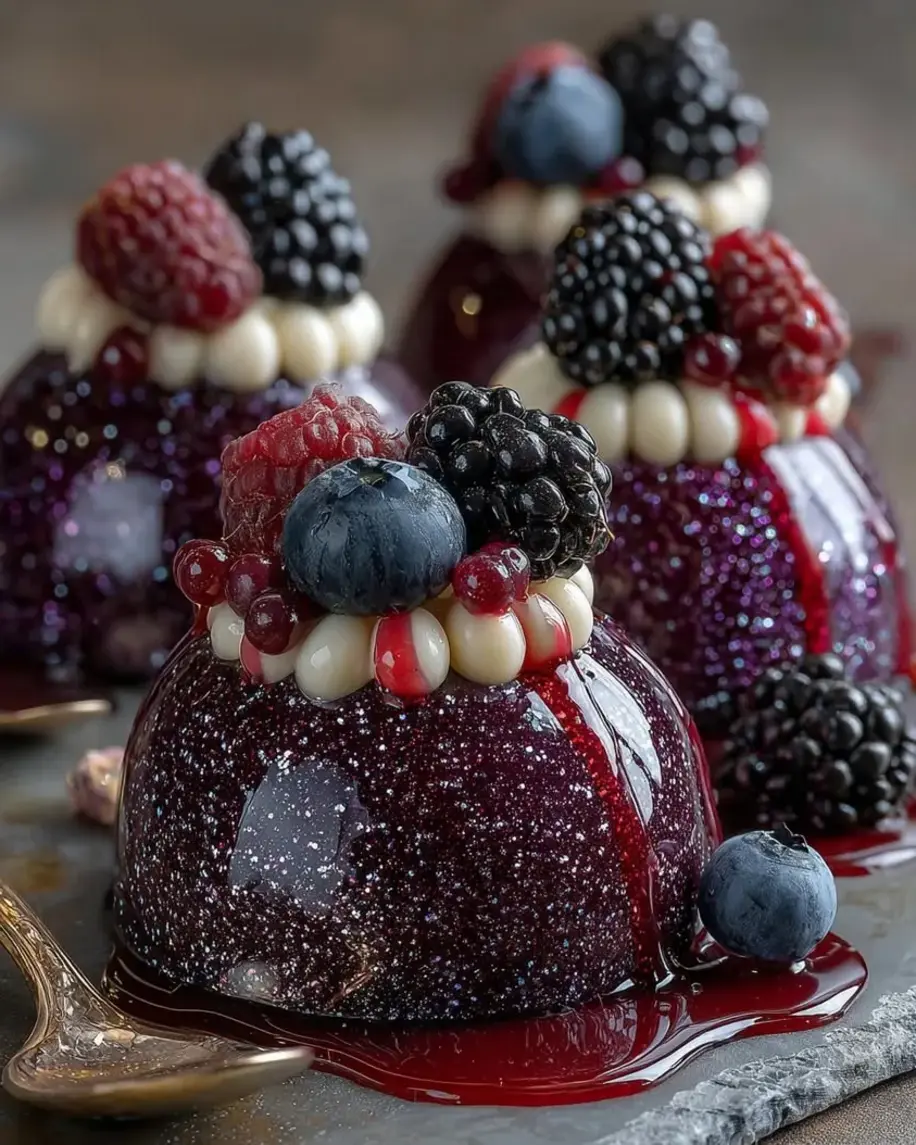
Table of Contents
Blackberry Rosewater Velvet Domes with White Chocolate Core – A Moroccan-French Masterpiece
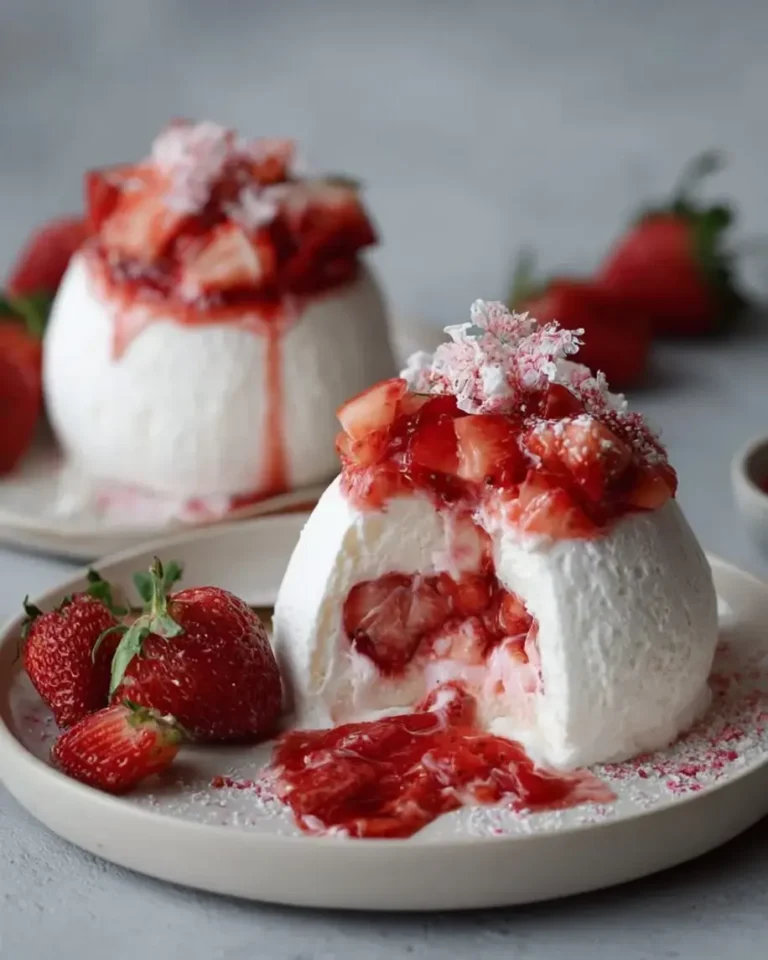
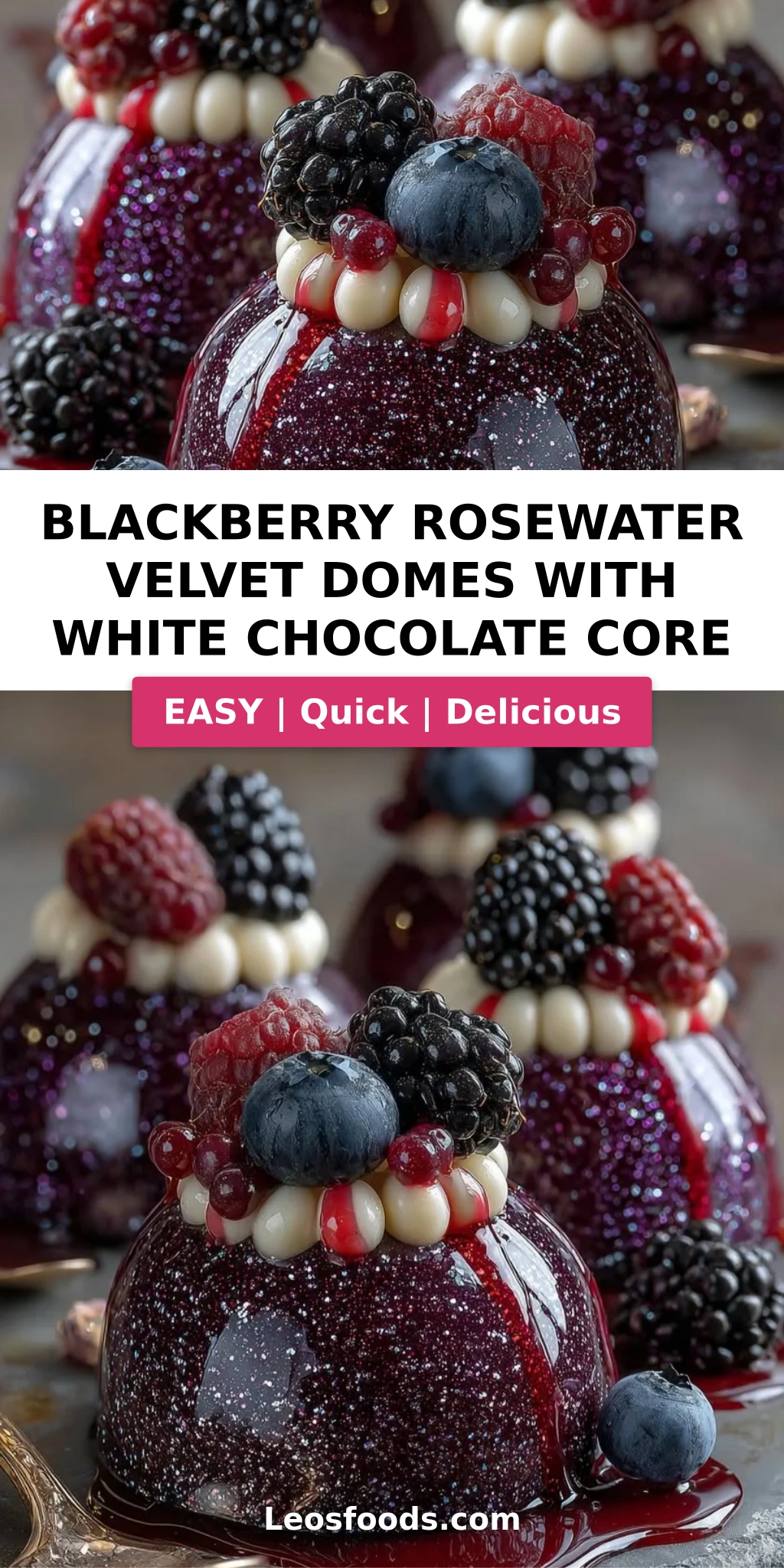
I still remember the first time I tasted rosewater in a dessert — I was eight years old, standing on a little wooden stool in my mother’s kitchen in Marrakech, watching her drizzle rosewater syrup over warm semolina cake. That floral whisper stayed with me. Decades later, after training at Le Cordon Bleu in Paris and settling into my New York City kitchen, I knew I had to marry that North African soul with French technique. These Blackberry Rosewater Velvet Domes with White Chocolate Core are exactly that: a love letter to my two worlds. The deep, jammy blackberry mousse meets a hidden center of silky white chocolate, all resting on a tender velvet sponge and finished with a mirror-bright glaze that shimmers like a jewel.
Imagine slicing into one of these domes at a dinner party — the glossy purple mirror glaze catches the light, then gives way to a cloud-like mousse that tastes like a blackberry picked at peak summer, lifted by the faintest hint of rose. Your spoon hits the white chocolate core, which has stayed perfectly solid and creamy, and then you reach the sponge base — buttery, tender, just sturdy enough to hold it all together. The rosewater doesn’t shout; it hums in the background, making the blackberries taste more like themselves. It’s the kind of dessert that makes people close their eyes when they take a bite.
What sets my version apart is the precision I’ve brought to every layer. I’ve tested the gelatin ratios so the mousse sets firm enough to unmold but stays ethereally light on the tongue. The white chocolate core is stabilized so it doesn’t melt into the mousse during freezing. And that mirror glaze? It’s the same technique I learned in Paris pastry school — but I’ve simplified it so home bakers can nail it on the first try. One pro tip I’ll share upfront: bloom your gelatin in ice-cold water for exactly five minutes, not a second less. That’s the secret to a glaze that pours like silk and sets like glass. 💡 Stella’s Pro Tip: For the most vibrant color, use a gel-based purple food coloring rather than liquid — it won’t dilute the glaze’s shine.
Why This Blackberry Rosewater Velvet Domes Recipe Is the Best
The Flavor Secret: Most blackberry desserts lean sweet and one-note. I borrowed a trick from my mother’s Moroccan pantry — a pinch of rosewater and a squeeze of lemon juice brighten the blackberry puree so it tastes alive, not cooked. The white chocolate core adds a buttery vanilla richness that balances the tart berries, and the mirror glaze seals everything in a thin, crackly shell of sweetness. This isn’t just a dessert; it’s a conversation between continents.
Perfected Texture: I spent weeks in my NYC test kitchen getting the mousse-to-core ratio right. The mousse needs to be light enough to feel airy but firm enough to hold the white chocolate center without collapsing. My method — whipping the cream to soft peaks and folding it into a cooled blackberry-gelatin base — creates a mousse that sets up beautifully in the freezer. And because I chill the white chocolate core until it’s thick but still spoonable, it stays put when you pipe it into the mousse.
Foolproof & Fast: Yes, this is an advanced recipe, but I’ve broken it into manageable steps that any confident home cook can handle. The velvet sponge comes together in one bowl and bakes in 20 minutes. The mousse uses the same gelatin-blooming technique as a simple panna cotta. And the mirror glaze — which scares most people — is actually just a matter of gentle heating and patience. I’ll guide you through every visual cue, so you’ll know exactly when each component is ready.
Blackberry Rosewater Velvet Domes with White Chocolate Core Ingredients
I source my blackberries from the Union Square Greenmarket in late summer, but frozen ones work beautifully for this recipe (more on that in the FAQ). The rosewater I use is from a little Middle Eastern market on Atlantic Avenue in Brooklyn — it’s the same brand my mother used, and the floral note is pure without being perfumey. For the white chocolate, I recommend a high-quality couverture like Valrhona or Callebaut because it melts more smoothly and tastes creamier than grocery-store white chips.
Ingredients List
For the Blackberry Rosewater Mousse:
- 2 cups blackberries (fresh or frozen)
- 1/3 cup granulated sugar
- 1 tbsp lemon juice
- 1 tsp rose water
- 1 cup heavy cream, cold
- 2 tsp powdered gelatin
- 2 tbsp cold water
For the White Chocolate Core:
- 3/4 cup white chocolate, finely chopped
- 1/3 cup heavy cream
- 1/2 tsp vanilla extract
For the Velvet Sponge Base:
- 1 cup all-purpose flour
- 1/2 tsp baking powder
- 1/4 tsp salt
- 1/4 cup unsalted butter, softened
- 1/3 cup granulated sugar
- 1 large egg
- 1/2 tsp vanilla extract
- 1/4 cup milk
For the Mirror Velvet Glaze:
- 1 cup white chocolate, finely chopped
- 1/3 cup sweetened condensed milk
- 1/4 cup water
- 1/2 cup granulated sugar
- 2 tsp powdered gelatin
- 2 tbsp cold water
- Purple food coloring, as needed (gel-based preferred)
- Edible shimmer dust, as needed
For Garnish (optional):
- Fresh blackberries
- Dried rose petals
Ingredient Spotlight
Blackberries are the backbone of this dessert. When you cook them down, they release a deep, wine-like flavor that’s nothing like the one-note sweetness of purchased puree. Look for berries that are deep purple-black, plump, and not leaking juice. Frozen blackberries work beautifully in the mousse — just thaw them first and include all the juices when you cook them.
Rosewater is a little bottle that goes a long way. I use a Middle Eastern brand called Cortas, which you can find in most specialty markets or online. It should smell like a garden after rain — not like soap or perfume. If you’ve never cooked with rosewater, start with the amount I’ve specified; you can always add more drop by drop, but you can’t take it out.
White chocolate is the heart of the core and the glaze. Cheap white chocolate contains vegetable oils that seize when melted and taste waxy. I use Valrhona Ivoire 35% — it melts to a silky consistency and has a natural vanilla sweetness. For the glaze, the white chocolate emulsifies with the condensed milk and gelatin to create that glass-like finish.
Gelatin is the structure-builder here. I use powdered gelatin (Knox is my go-to) because it’s most accessible in US grocery stores. The key is blooming it in cold water — not warm — for exactly 5 minutes. If the water is too warm, the gelatin will dissolve unevenly and you’ll get lumps in your mousse and glaze.
| Original Ingredient | Best Substitution | Flavor / Texture Impact |
|---|---|---|
| Blackberries | Frozen blackberries (thawed) | Slightly more liquid, but flavor is equally intense. Reduce sugar by 1 tbsp. |
| Rosewater | Orange blossom water or 1/2 tsp vanilla extract | Orange blossom is floral but more citrusy; vanilla is warmer but less exotic. |
| White chocolate (glaze) | High-quality white chocolate chips | Chips contain stabilizers, so glaze may be slightly less shiny but still works. |
| Powdered gelatin | Sheet gelatin (3 sheets = 2 tsp powdered) | Sheet gelatin gives an even cleaner set. Bloom in ice water for 5 mins. |
How to Make Blackberry Rosewater Velvet Domes — Step-by-Step
Take a deep breath, friend. This recipe has several parts, but I’ve organized them so you can work through each one calmly. I promise — when you unmold those glossy domes, you’ll feel like a pastry chef. Let’s go.
Step 1: Make the Velvet Sponge
Preheat your oven to 350°F (175°C). Grease a small baking pan (about 8×8 inches) and line it with parchment paper. In a bowl, whisk together 1 cup all-purpose flour, 1/2 tsp baking powder, and 1/4 tsp salt. In a separate large bowl, beat 1/4 cup softened unsalted butter with 1/3 cup granulated sugar until light and fluffy — about 2 minutes with a hand mixer. Add 1 large egg and 1/2 tsp vanilla extract, beating until smooth. Alternate adding the dry ingredients and 1/4 cup milk, starting and ending with the dry, until just combined. Spread the batter evenly in the pan and bake for 18–20 minutes, until a toothpick inserted in the center comes out clean. Cool completely, then use a round cutter slightly smaller than your dome molds to cut out 8 rounds. Set aside.
⚠️ Common Mistake to Avoid: Don’t overmix the sponge batter — it will become tough. Mix until the flour just disappears, then stop. A tender crumb is what you’re after.
Step 2: Bloom the Gelatin for the Mousse
In a small bowl, sprinkle 2 tsp powdered gelatin over 2 tbsp cold water. Let it sit for 5 minutes. It will look like a rubbery, opaque disk — that’s exactly what you want. Don’t rush this step. While the gelatin blooms, move on to the blackberry puree.
💡 Stella’s Pro Tip: Use ice-cold water for blooming gelatin. If your tap water is warmer than 60°F, add a couple of ice cubes to the bowl first.
Step 3: Make the Blackberry Puree
In a medium saucepan, combine 2 cups blackberries, 1/3 cup granulated sugar, and 1 tbsp lemon juice. Cook over medium heat, stirring occasionally, until the berries break down and the mixture is bubbling — about 6–8 minutes. Remove from heat and carefully blend the mixture with an immersion blender until smooth (or transfer to a regular blender and blend in batches). Strain the puree through a fine-mesh sieve into a bowl, pressing on the solids with a spatula to extract every drop. Discard the seeds. You should have about 1 cup of smooth, deep-purple puree.
⚠️ Common Mistake to Avoid: Don’t skip the straining step. Blackberry seeds are small but they’ll ruin the silky texture of your mousse. Push hard on the sieve — it’s worth the extra minute.
Step 4: Finish the Mousse
While the blackberry puree is still warm (but not hot), stir in 1 tsp rosewater and the bloomed gelatin. Stir until the gelatin is completely dissolved — about 1 minute. Set aside to cool to room temperature. In a large bowl, whip 1 cup cold heavy cream to soft peaks — when you lift the whisk, the cream should hold a gentle, droopy peak. Fold the cooled blackberry mixture into the whipped cream in three additions, using a gentle sweeping motion. Be careful not to deflate the cream. The mousse should be a uniform lavender-purple and look pillowy.
💡 Stella’s Pro Tip: If the blackberry puree is too warm when you add it to the cream, the mousse will turn watery. Let it cool until it feels just barely warm to the touch — like a warm bath, not hot cocoa.
Step 5: Make the White Chocolate Core
Place 3/4 cup finely chopped white chocolate in a heatproof bowl. In a small saucepan, heat 1/3 cup heavy cream until it just begins to steam — don’t let it boil. Pour the hot cream over the white chocolate and let it sit for 1 minute, then stir gently until smooth. Stir in 1/2 tsp vanilla extract. Transfer the mixture to a small dish and chill in the refrigerator for about 20 minutes, stirring every 5 minutes, until it thickens to the consistency of a thick pudding — it should hold its shape but still be spoonable.
⚠️ Common Mistake to Avoid: If the white chocolate mixture gets too cold and hard, it won’t pipe into the mousse properly. If it hardens, microwave it in 5-second bursts, stirring between each, until it softens again.
Step 6: Assemble the Domes
Have your dome molds ready. Spoon or pipe the blackberry mousse into each cavity until it’s about half full. Tap the mold gently on the counter to release any air bubbles. Spoon a small amount of the thickened white chocolate core into the center of each dome — about 1 tablespoon each. Cover the white chocolate with more blackberry mousse, filling the mold almost to the top. Leave a tiny gap for the sponge base. Place one velvet sponge round on top of each dome, pressing gently so it sits flush with the top of the mold. Freeze for at least 4 hours, or overnight — the domes must be fully frozen to unmold cleanly and to hold the glaze.
💡 Stella’s Pro Tip: If you don’t have dome molds, you can use jumbo muffin tins or even small oven-safe bowls lined with plastic wrap. The shape won’t be as perfect, but the taste will be the same.
Step 7: Make the Mirror Velvet Glaze
Bloom 2 tsp powdered gelatin in 2 tbsp cold water for 5 minutes. In a small saucepan, combine 1/4 cup water, 1/2 cup granulated sugar, and 1/3 cup sweetened condensed milk. Heat over medium heat, stirring gently, until the sugar dissolves and the mixture is smooth. Do not boil. Remove from heat and stir in the bloomed gelatin until completely dissolved. Place 1 cup finely chopped white chocolate in a heatproof bowl and pour the warm condensed milk mixture over it. Let it sit for 1 minute, then stir until glossy and smooth. Add purple gel food coloring drop by drop until you reach your desired shade — I like a deep violet. Stir in a pinch of edible shimmer dust for that velvet effect. Let the glaze cool to about 95°F (35°C) — it should feel warm to the touch but not hot. If it thickens too much, gently reheat it in 5-second microwave bursts.
⚠️ Common Mistake to Avoid: If the glaze is too hot (above 100°F), it will melt the frozen mousse and you’ll get a dull, streaky finish. Use an instant-read thermometer to be safe.
Step 8: Glaze the Domes
Remove the frozen domes from the molds. They should pop out easily — if they stick, run the outside of the mold under warm water for 10 seconds. Place the domes on a wire rack set over a baking sheet (to catch the drips). Pour the glaze slowly and evenly over each dome, starting at the top and letting it cascade down the sides. Work quickly but calmly — the glaze sets fast. Let the excess drip off for about 30 seconds, then use a small offset spatula to clean up the bottom edge of each dome. Transfer the glazed domes to a serving plate using a thin spatula. Allow the glaze to set for 10–15 minutes at room temperature, then refrigerate until serving. The glaze will stay shiny for hours.
💡 Stella’s Pro Tip: For the cleanest glaze application, pour the glaze from a height of about 6 inches above the dome. The force of the fall helps the glaze self-level and prevents air bubbles.
Step 9: Garnish and Serve
Just before serving, garnish each dome with a fresh blackberry and a sprinkle of dried rose petals. The fresh fruit contrasts beautifully with the smooth glaze, and the rose petals echo the floral notes in the mousse. Serve cold. These domes are designed to be eaten straight from the refrigerator — the mousse will be firm but creamy, like a luxurious frozen mousse cake.
| Step | Action | Duration | Key Visual Cue |
|---|---|---|---|
| 1 | Bake velvet sponge | 18–20 mins | Toothpick comes out clean; edges golden |
| 2 | Bloom gelatin | 5 mins | Gelatin is rubbery and opaque |
| 3 | Cook & strain blackberries | 8 mins | Berries are soft; puree is seed-free |
| 4 | Whip cream & fold mousse | 5 mins | Soft peaks; uniform purple color |
| 5 | Make white chocolate core | 20 mins (includes chilling) | Thick like pudding, spoonable |
| 6 | Assemble & freeze domes | 4+ hrs | Fully solid to the touch |
| 7 | Prepare mirror glaze | 15 mins | Glossy, smooth, 95°F |
| 8 | Glaze domes | 10–15 mins set time | Shiny, smooth, no bald spots |
Serving & Presentation
These domes are showstoppers, so let them shine. Place each glazed dome on a white or dark plate — the contrast makes the purple glaze pop. I like to add a small swoosh of extra mirror glaze on the plate for a restaurant-style finish. Garnish with a fresh blackberry and a few dried rose petals right before serving. The petals add a delicate crunch and a visual nod to the rosewater within.
In my NYC dinner parties, I serve these domes as the grand finale after a tagine-inspired main course. The floral blackberry notes pair beautifully with mint tea or a dry sparkling rosé. For a non-alcoholic option, try a black tea with a hint of rose — it mirrors the flavors in the dessert without competing. If you’re feeling extra fancy, add a tiny dollop of crème fraîche on the side; its tanginess cuts the sweetness of the glaze.
When I was in Paris, my pastry chef taught me that the best desserts tell a story. Each time I plate these domes, I think of my mother’s rosewater-scented kitchen in Marrakech and the gleaming pastry displays at Ladurée. This dessert bridges both worlds, and every bite is a reminder that food can carry memory across oceans.
| Pairing Type | Suggestions | Why It Works |
|---|---|---|
| Side Dish | Mint tea, shortbread cookie | Mint cleanses the palate; shortbread adds buttery crunch. |
| Sauce / Dip | Crème fraîche, whipped cream | Tangy cream balances the sweet glaze and rich mousse. |
| Beverage | Dry sparkling rosé, black rose tea | Sparkling rosé cuts richness; rose tea echoes floral notes. |
| Garnish | Fresh blackberries, dried rose petals, edible gold leaf | Adds color, texture, and a touch of elegance. |
Make-Ahead, Storage & Reheating
As a busy NYC food blogger, I live by make-ahead strategies — and this recipe is a dream for that. You can prepare the domes through Step 6 (fully assembled and frozen) up to two weeks before serving. The glaze can be made a day ahead and stored in the fridge, then gently rewarmed to 95°F before pouring. This means your actual party-day work is just glazing and garnishing — about 20 minutes of effort for a dessert that looks like you spent all day.
| Method | Container | Duration | Reheating Tip |
|---|---|---|---|
| Refrigerator | Airtight container, layered with parchment | Up to 3 days (glazed) | Serve cold — do not reheat. The glaze stays shiny. |
| Freezer | Wrap each frozen dome in plastic wrap, then foil | Up to 2 months (unglazed) | Thaw in fridge 2 hrs, then glaze as directed. |
| Make-Ahead | Frozen domes + glaze in fridge | Assemble domes 2 weeks ahead; glaze day of | Glaze must be rewarmed to 95°F before pouring. |
One thing I’ve learned from years of testing: glazed domes are best served within 24 hours of glazing. The mirror finish is at its most brilliant on day one. If you’re storing glazed domes in the fridge, place them on a plate and cover loosely with plastic wrap — don’t let the wrap touch the glaze or it will leave marks. And never, ever microwave a glazed dome — the mousse will collapse and the glaze will turn into a sticky mess. These beauties are meant to be enjoyed cold, straight from the fridge.
Variations & Easy Swaps
One of the joys of this recipe is how adaptable it is once you understand the basic structure. Over the years, I’ve tested countless variations — some inspired by my Moroccan roots, others by what I find at the Union Square farmers market on a Saturday morning. Here are three of my favorite twists.
| Variation | Key Change | Best For | Difficulty Impact |
|---|---|---|---|
| Raspberry-Rose Domes | Replace blackberries with raspberries | A brighter, tarter flavor profile | Same |
| Gluten-Free Version | Use gluten-free flour blend for sponge | Guests with gluten sensitivities | Same |
| Dark Chocolate Core | Replace white chocolate with dark (60%) | A richer, less sweet dessert | Same |
Raspberry-Rose Domes
This is my go-to summer variation. Swap the blackberries for an equal amount of fresh or frozen raspberries. Raspberries are naturally more tart, so you may want to increase the sugar by 1 tablespoon. The rosewater pairs even more beautifully with raspberries — the floral note seems to brighten the berry’s acidity. For the glaze, use a pink food coloring instead of purple, and garnish with fresh raspberries and a tiny mint leaf. It’s a completely different dessert, yet the structure is identical.
Gluten-Free Version
I tested this for a friend with celiac disease, and it worked beautifully on the first try. Use a 1:1 gluten-free all-purpose flour blend (I like Bob’s Red Mill) in the velvet sponge. The texture will be slightly more delicate, so handle the sponge rounds gently when placing them on the mousse. Everything else — the mousse, the core, the glaze — is naturally gluten-free. Just make sure your white chocolate is certified gluten-free, as some brands contain wheat-based additives.
Dark Chocolate Core
For those who prefer a less sweet dessert, the white chocolate core can be replaced with a dark chocolate ganache. Use 3/4 cup finely chopped dark chocolate (60% cacao) and 1/2 cup heavy cream. The dark chocolate adds a deep, bitter edge that cuts through the sweetness of the mousse and glaze. This version is especially lovely in fall and winter. I sometimes add a pinch of cinnamon or cayenne to the dark chocolate ganache for a Moroccan-inspired kick.
How do you make the white chocolate core stay solid inside the blackberry mousse dome?
The key is chilling the white chocolate core until it’s thickened but still pipeable — about the consistency of a thick pudding. I heat the cream and pour it over finely chopped white chocolate, stir until smooth, then chill it for about 20 minutes, stirring every 5 minutes. At this stage, it’s firm enough to hold its shape when spooned into the mousse, but it won’t freeze into a hard lump. When you freeze the assembled domes for at least 4 hours, the core stays creamy and distinct rather than seeping into the mousse. Also, make sure your mousse is fully assembled and frozen solid before glazing — that ensures the core stays exactly where you put it.
Can I use frozen blackberries instead of fresh for this velvet dome recipe?
Absolutely. Frozen blackberries work beautifully in this recipe. In fact, I often use them in winter when fresh berries aren’t at their peak. Simply thaw the frozen berries first — you can do this overnight in the fridge or by placing them in a bowl at room temperature for about an hour. Use them along with all the juices that collect during thawing; those juices are full of flavor. The only adjustment is that frozen berries can be slightly more watery, so you may need to cook the puree for an extra minute or two to thicken it. Otherwise, follow the recipe exactly as written.
What can I substitute for rosewater in this dessert?
If you don’t have rosewater, you have several good options. Orange blossom water is the closest substitute — it’s also floral but with a brighter, citrusy note. Use the same amount (1 tsp). Vanilla extract is a more neutral choice; it won’t add floral notes but will enhance the sweetness of the blackberries. For a boozy twist, try 1 tbsp of Chambord (black raspberry liqueur) — it reinforces the berry flavor beautifully. Just note that any substitution will change the flavor profile, so taste as you go and adjust if needed. If you leave out the rosewater entirely, the dessert will still be delicious — just more purely blackberry-forward.
How far in advance can I prepare Blackberry Rosewater Velvet Domes before serving?
This is one of the best make-ahead desserts in my repertoire. You can assemble the domes through Step 6 (fully frozen in the molds) up to 2 weeks before serving. Wrap each dome mold tightly in plastic wrap and then foil to prevent freezer burn. The mirror glaze can be made up to 3 days ahead and stored in an airtight container in the fridge. On serving day, simply rewarm the glaze to 95°F, unmold the frozen domes, and pour the glaze over them. The entire glazing process takes about 20 minutes. Once glazed, the domes are best served within 24 hours — the mirror finish is at its most brilliant on day one.
Why did my mirror glaze turn out streaky or dull?
Streaky or dull mirror glaze is usually caused by one of three issues. First, the glaze temperature is wrong — it should be between 90°F and 95°F (32–35°C). If it’s too hot, it melts the frozen mousse and becomes streaky; if too cold, it thickens and won’t self-level. Use an instant-read thermometer to be precise. Second, the frozen domes weren’t cold enough — they must be fully frozen solid (at least 4 hours, preferably overnight). Third, the gelatin wasn’t fully dissolved, which creates lumps and uneven shine. Make sure you bloom the gelatin in cold water for exactly 5 minutes, then stir it into the warm condensed milk mixture until no granules remain.
Can I make these domes without a dome mold?
Yes, you can! If you don’t have silicone dome molds, there are several workarounds. Use a jumbo muffin tin — line each cavity with plastic wrap, letting the ends overhang so you can lift the dome out after freezing. The shape will be more like a tall muffin top, but it’s still charming. Alternatively, use small oven-safe bowls or ramekins (about 4 oz capacity) — again, line them with plastic wrap for easy removal. For a truly domed shape, you can also use the bottom half of a plastic Easter egg or a ping pong ball cut in half (just make sure it’s food-safe). The texture and taste will be identical regardless of the mold.
Is there a non-alcoholic substitute for the shimmer dust?
Absolutely. Edible shimmer dust is typically made from mica powder and is non-alcoholic by itself — most brands use a food-grade mica that’s safe and flavorless. However, if you prefer to avoid it entirely, you can achieve a beautiful shine without any shimmer dust. The mirror glaze itself is naturally glossy thanks to the white chocolate and condensed milk. For a different kind of sparkle, try garnishing with edible gold leaf (also non-alcoholic) or a tiny pinch of superfine sugar that will catch the light. Or simply embrace the matte elegance — the deep purple color is striking enough on its own, and the fresh blackberry garnish adds a natural sheen.
How do I get the dome shape to be perfectly round and smooth?
The secret to perfectly smooth, round domes is threefold. First, use high-quality silicone dome molds that are rigid enough to hold their shape. Flexible silicone is fine, but place the filled mold on a baking sheet in the freezer to prevent warping. Second, tap the filled molds gently on the counter after adding the mousse to release any air bubbles — trapped air creates pockmarks on the surface. Third, once the domes are frozen solid, unmold them while they’re still frozen and smooth any rough edges with your fingertip (the heat of your hand will melt a thin layer). If you notice any small imperfections, you can fill them with a tiny dab of glaze before pouring the main coat.
Can I use this recipe to make a full-sized cake instead of individual domes?
Yes, you can absolutely adapt this recipe for a 6-inch or 8-inch round cake. The ratios remain the same — just bake the sponge in a 6-inch pan instead of a small pan, and double the mousse and core recipes for an 8-inch cake. Use a springform pan or a cake ring lined with acetate. Layer the sponge at the bottom, pipe a ring of mousse around the edge, fill the center with the white chocolate core, then cover with the remaining mousse. Freeze for at least 6 hours. For the glaze, you’ll need about 1.5 times the recipe for even coverage. Pour the glaze over the frozen cake and let it drip down the sides for that classic mirror cake effect.
Why did my mousse not set properly?
A mousse that doesn’t set is almost always a gelatin issue. The most common cause is using gelatin that’s past its expiration date — powdered gelatin loses its strength over time, so check the date on your package. Another culprit is not blooming the gelatin in cold water. If the water is too warm (over 70°F), the gelatin dissolves prematurely and won’t set properly. Also, make sure you stir the bloomed gelatin into the warm blackberry puree until it’s fully dissolved — you should see no granules at all. Finally, the mousse needs at least 4 hours in the freezer to set. If you’re short on time, it may still be soft. If all else fails, you can save a soft mousse by freezing it longer and serving the domes as a frozen mousse cake — they’ll still be delicious.
Share Your Version!
I hope you fall in love with these Blackberry Rosewater Velvet Domes as much as I have. There’s something truly magical about pulling a perfectly glazed dome out of the fridge and watching your guests gasp — it’s a moment every home cook deserves to experience. If you make this recipe, I’d love to hear how it goes. Leave a star rating and a comment below — tell me about your kitchen, your inspiration, or any tweaks you made. Did you try the raspberry variation? Did the glaze turn out perfectly on the first try?
And please, snap a photo of your beautiful domes and tag me on Instagram or Pinterest @leosfoods. I love seeing your creations — it’s the best part of my day. If you have a question about a specific step, just ask in the comments below. I read every single one and I’ll answer personally. From my NYC kitchen to yours — I hope this recipe brings as much warmth to your table as it does to mine. — Stella 🧡
🌟 Made this recipe? I’d love to hear from you!
👇 Leave a star rating and a comment below — or tag me on Instagram @leosfoods and show off your gorgeous domes!
💬 What’s one thing you’d change or add to this recipe? I’m always experimenting and your ideas inspire me!
Love This Recipe? Save It to Pinterest!
If you enjoyed this Blackberry Rosewater Velvet Domes with White Chocolate Core recipe, don’t let it get lost in your browser tabs! 😄 Pin it now so you can find it again anytime — and explore hundreds more tried-and-tested recipes waiting for you on my Pinterest boards.
👉 Follow Stella on Pinterest @stellarecipeblog
📌 Pin this recipe · 🔁 Re-pin your favorites · 💬 Tag me when you make it — I love seeing your creations!
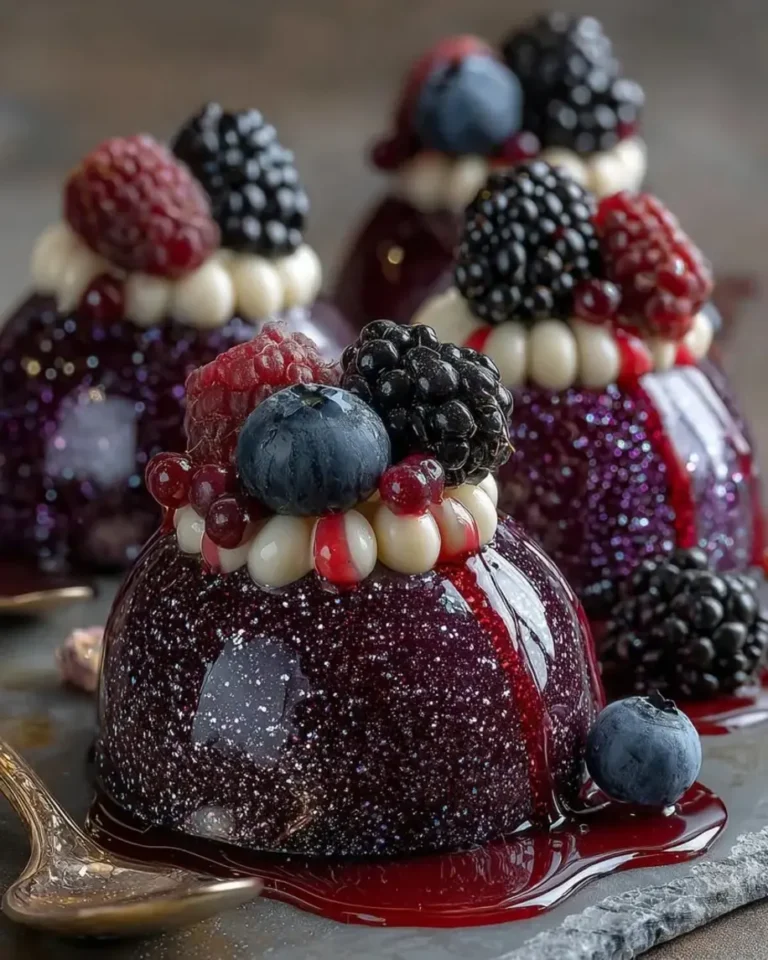
Blackberry Rosewater Velvet Domes with White Chocolate Core
Elegant blackberry and rosewater mousse domes with a white chocolate core, velvet sponge base, and mirror glaze.
- Yield: 8 1x
Ingredients
- For the Blackberry Rosewater Mousse:
- 2 cups blackberries
- 1/3 cup granulated sugar
- 1 tbsp lemon juice
- 1 tsp rose water
- 1 cup heavy cream
- 2 tsp powdered gelatin
- 2 tbsp cold water
- For the White Chocolate Core:
- 3/4 cup white chocolate, finely chopped
- 1/3 cup heavy cream
- 1/2 tsp vanilla extract
- For the Velvet Sponge Base:
- 1 cup all-purpose flour
- 1/2 tsp baking powder
- 1/4 tsp salt
- 1/4 cup unsalted butter, softened
- 1/3 cup granulated sugar
- 1 large egg
- 1/2 tsp vanilla extract
- 1/4 cup milk
- For the Mirror Velvet Glaze:
- 1 cup white chocolate, finely chopped
- 1/3 cup sweetened condensed milk
- 1/4 cup water
- 1/2 cup granulated sugar
- 2 tsp powdered gelatin
- 2 tbsp cold water
- Purple food coloring, as needed
- Edible shimmer dust, as needed
- For Garnish (optional):
- Fresh blackberries
- Dried rose petals
Instructions
- 1. Preheat oven to 350°F (175°C). Grease and line a small baking pan.
- 2. Whisk flour, baking powder, and salt in a bowl.
- 3. Beat butter and sugar until fluffy. Add egg and vanilla extract.
- 4. Alternate adding dry ingredients and milk until smooth.
- 5. Bake for 18–20 minutes. Cool completely and cut into small rounds.
- 6. Bloom gelatin in cold water for the mousse.
- 7. Heat blackberries, sugar, and lemon juice until soft. Blend and strain.
- 8. Stir in rose water and gelatin until dissolved. Cool to room temperature.
- 9. Whip heavy cream to soft peaks and fold into blackberry mixture.
- 10. For the white chocolate core, heat cream and pour over white chocolate. Stir until smooth and chill until slightly thick.
- 11. Fill dome molds halfway with mousse, add a small white chocolate core, and cover with more mousse.
- 12. Freeze until fully set, about 4 hours.
- 13. Bloom gelatin in cold water for the glaze.
- 14. Heat water, sugar, and condensed milk until smooth. Remove from heat.
- 15. Stir in gelatin, then pour over white chocolate and mix until glossy.
- 16. Add purple coloring and shimmer dust. Cool to a pourable consistency.
- 17. Unmold frozen domes and place on a rack.
- 18. Pour glaze evenly over each dome until fully coated.
- 19. Allow glaze to set for 10–15 minutes.
- 20. Garnish with blackberries and rose petals before serving.
Nutrition
- Calories: 330
- Sugar: 33 g
- Fat: 17 g
- Carbohydrates: 41 g
- Protein: 4 g
Tried This Recipe? Leave a Comment!
Did you make this recipe? I’d love to hear how it turned out! Please leave a comment and a rating below. Your feedback helps other home cooks and supports cheerychop.com!
For more delicious inspiration, follow me on Pinterest!