Fall-Off-The-Bone Braised Lamb Shanks in Herb Gravy
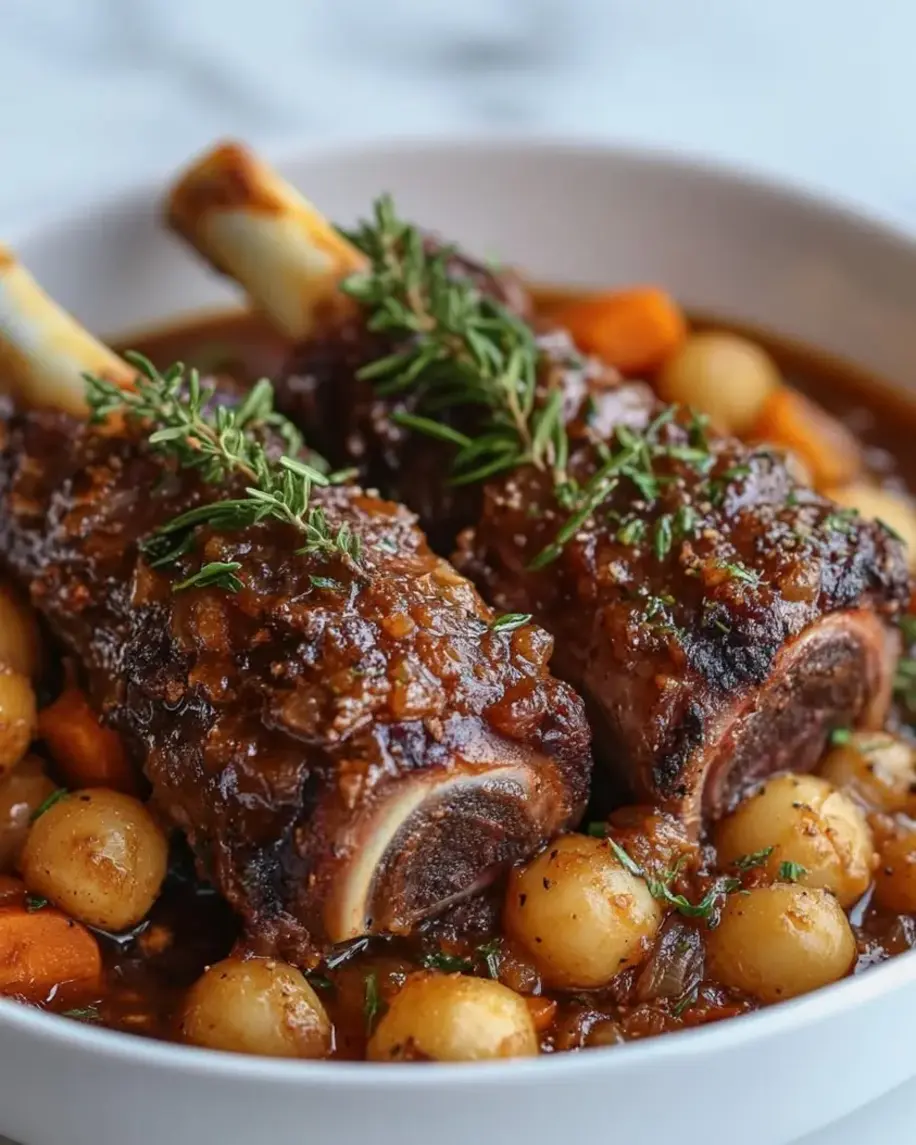
Table of Contents
Fall-Off-The-Bone Braised Lamb Shanks in Rich Herb Gravy – A Moroccan-French Braise That Melts in Your Mouth
I still remember the first time I truly understood what “fall-off-the-bone” meant — I was standing in my mother’s tiny kitchen in Marrakech, watching her lift a lamb shank from a bubbling tagine with nothing but a pair of wooden tongs. The meat slipped from the bone like it was surrendering to the heat, and the aroma of saffron, ginger, and fresh herbs filled every corner of the room. That moment planted a seed that would bloom years later in a Parisian culinary school kitchen, where I learned to marry the soulful, patient braising of North Africa with the precision of French sauce work. These braised lamb shanks in rich herb gravy are the direct result of that journey — a lamb shanks recipe that brings together the best of both worlds, slow-cooked until the meat is so tender it practically begs to be pulled apart.
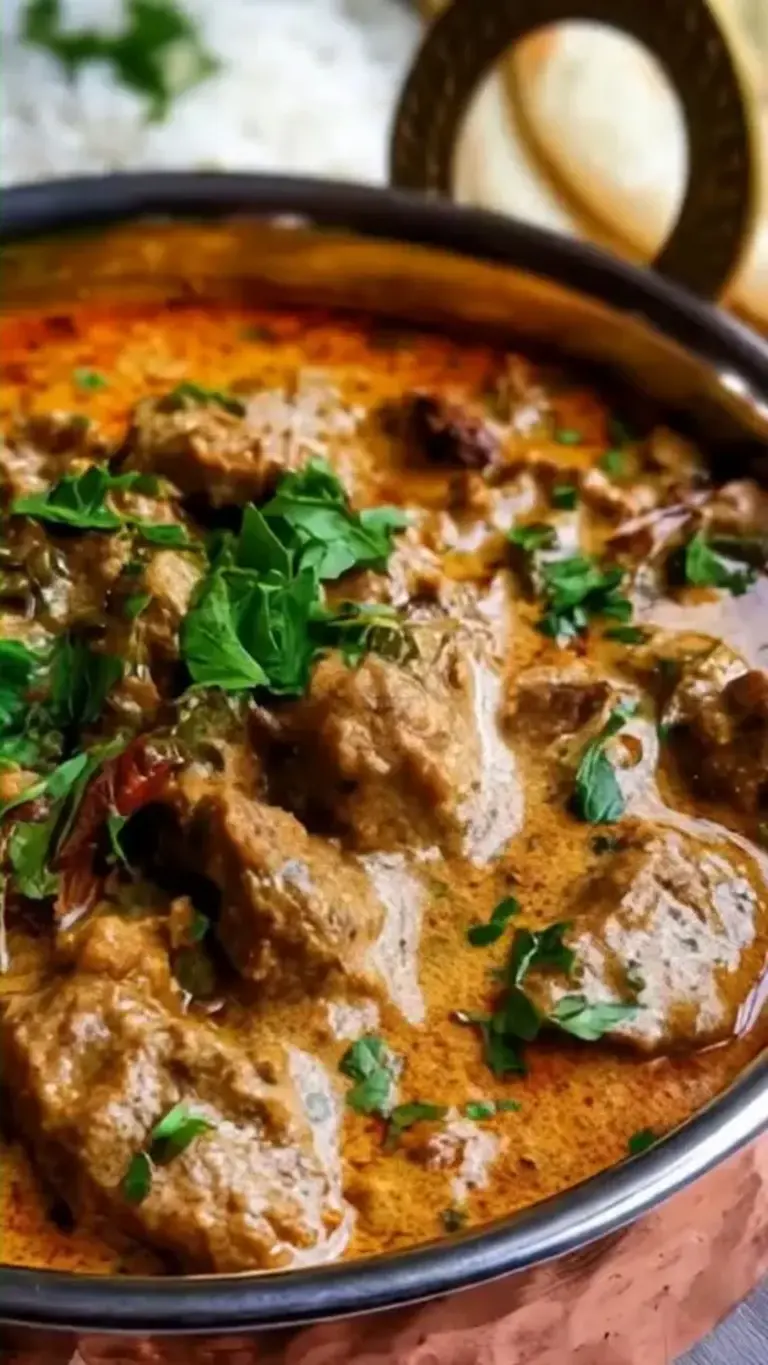
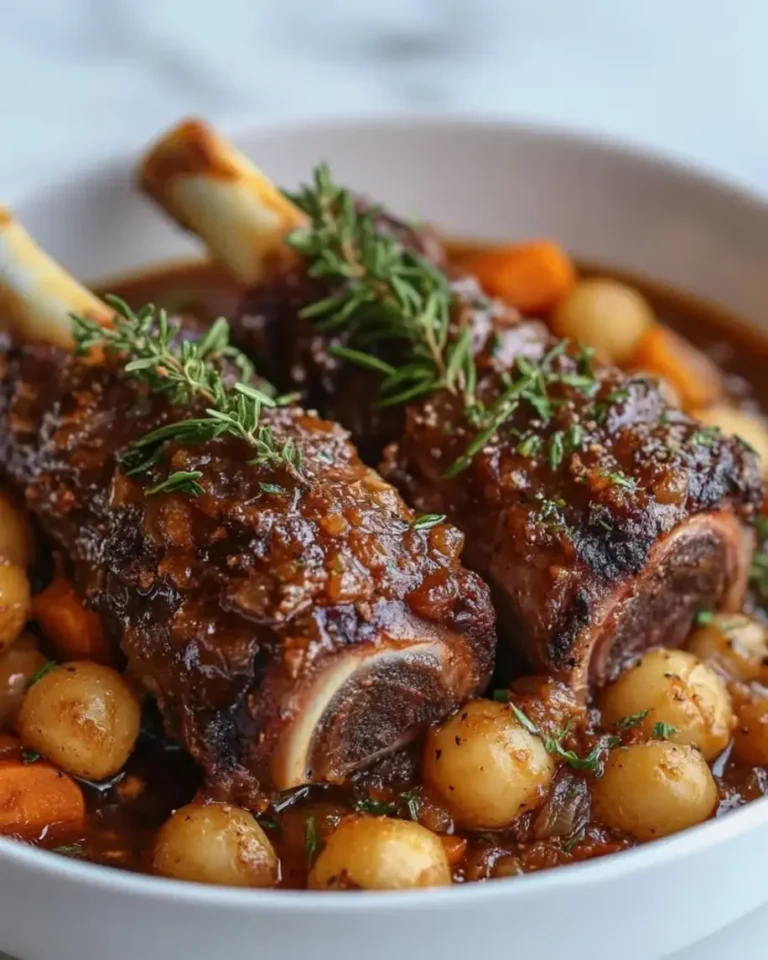
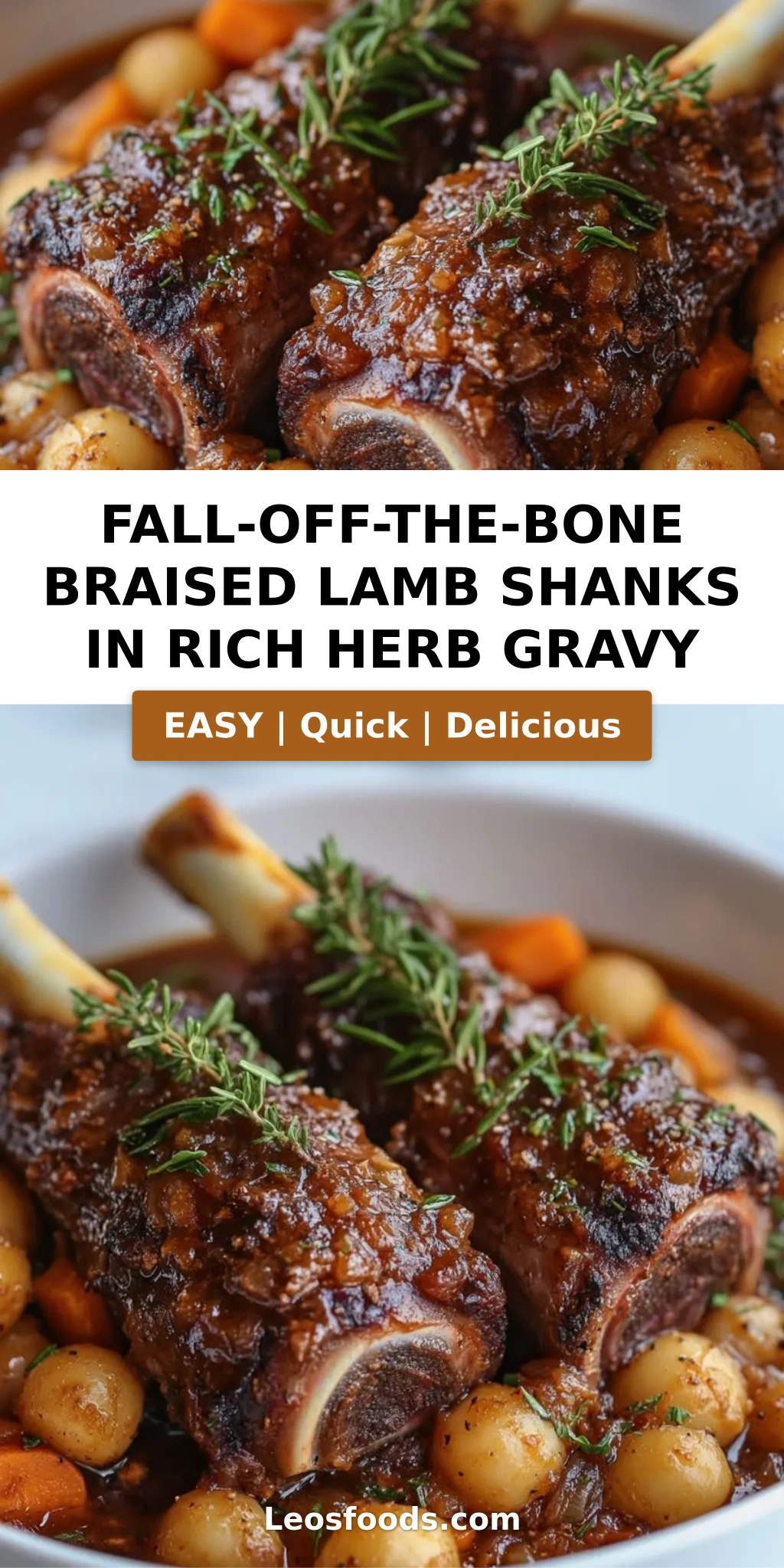
Imagine this: a deep, garnet-colored gravy, thick with crushed tomatoes and enriched by a full cup of red wine, clinging to a shank that has been seared to a deep mahogany and then braised for nearly three hours. The first bite gives you that perfect resistance — the meat is still intact, but the moment it hits your tongue, it dissolves into a rich, herbaceous, beefy-sweet mouthful. Rosemary and thyme have infused every fiber, while the carrots and onion have melted into the sauce, adding a natural sweetness that balances the wine’s acidity. This is the kind of dish that makes everything slow down — the kind you serve when you want people to close their eyes and just feel the flavor.
What makes my version different? It’s the little touches I picked up along the way — a Moroccan habit of blooming the tomato paste in the rendered fat until it darkens, a French trick of scraping every last bit of fond from the pot with wine, and a New Yorker’s insistence on making it work for a busy weeknight (yes, you can prep this the night before). I’ll show you exactly how to nail the sear, why you should never rush the braise, and the one mistake that can turn your gravy bitter. Let me guide you through making the best fall off the bone lamb you’ve ever served — with herb gravy lamb that you’ll want to spoon over everything on the plate.
Why This Braised Lamb Shanks Recipe Is the Best
The Flavor Secret. Most recipes stop at browning the meat and adding liquid — but I learned in Paris that depth comes from layering. I start by searing the lamb shanks until they form a dark, caramelized crust, then I cook the aromatics in that same fat, scraping up every browned bit. Blooming the tomato paste with garlic before adding the wine is a step that takes one minute but adds hours of flavor. That’s the French technique — building flavor at every stage, never wasting a single drop of fond.
Perfected Texture. The key to truly fall-apart lamb shanks isn’t just time — it’s temperature and coverage. Braising at 325°F — not higher, not lower — allows the collagen to break down into gelatin without toughening the protein. I also make sure the liquid comes about two-thirds up the shanks, not fully submerging them. The exposed tops brown gently in the oven’s dry heat while the submerged portion braises, giving you that perfect contrast of a darker exterior with meltingly tender meat underneath.
Foolproof & Fast. I know not everyone has three hours to hover over a pot — which is why this recipe is designed to be hands-off after the initial sear. Once it’s in the oven, you can walk away. The Dutch oven does all the work. And if you’re short on time, you can even prep the entire braise base the night before, refrigerate it, and pop the lamb in the next day. The flavor actually gets better overnight — a trick I picked up from my mother, who always said stews taste better the day after they’re made.
Braised Lamb Shanks Ingredients
Shopping for lamb shanks in red wine ingredients is one of my favorite weekend rituals. I head to the Union Square Greenmarket in early morning, grab rosemary and thyme from the herb stall, and then stop by my butcher on Bleecker Street who knows exactly which shanks are best for braising — meaty, well-marbled, and cut from the upper part of the leg. There’s something deeply satisfying about assembling these components — they’re humble individually, but together they create pure magic.
Ingredients List
- 4 lamb shanks (about 1 lb each)
- 2 tablespoons olive oil
- 1 large onion, diced
- 3 carrots, chopped into ½-inch pieces
- 3 celery stalks, chopped into ½-inch pieces
- 5 garlic cloves, minced
- 2 tablespoons tomato paste
- 2 cups beef broth (preferably low-sodium)
- 1 cup red wine (optional — see substitution below)
- 1 can (14 oz) crushed tomatoes
- 2 sprigs fresh rosemary
- 4 sprigs fresh thyme
- 2 bay leaves
- Salt and freshly ground black pepper, to taste
Ingredient Spotlight
Lamb Shanks: The star of the show. Look for shanks that are meaty and evenly shaped, with a good amount of connective tissue — that’s what renders into silky gelatin during the long braise. At the store, choose shanks with a deep pink-red color and white, not yellow, fat. If you can, ask your butcher for center-cut shanks from the hind leg — they’re meatier and more uniform.
Red Wine: A dry red wine like Cabernet Sauvignon, Merlot, or a Côtes du Rhône adds acidity and complexity that beef broth alone can’t match. Don’t use “cooking wine” — it’s too salty and lacks structure. If you’re skipping the wine, replace it with an additional cup of beef broth plus a tablespoon of balsamic vinegar for acidity.
Fresh Rosemary & Thyme: Dried herbs won’t give you the same depth here. Fresh rosemary and thyme release their essential oils slowly during the braise, infusing the gravy with a piney, floral, slightly peppery character that dried herbs can’t replicate. I tie them in a bundle with kitchen twine so they’re easy to fish out at the end.
Crushed Tomatoes: Canned crushed tomatoes (San Marzano if you can find them) provide body and a gentle sweetness that balances the wine and broth. They also help thicken the gravy naturally, so you don’t need to add flour or cornstarch later. Look for brands with no added sugar or citric acid — just tomatoes and salt.
| Original Ingredient | Best Substitution | Flavor / Texture Impact |
|---|---|---|
| Red wine | Additional beef broth + 1 tbsp balsamic vinegar | Slightly less complex, still rich and tangy |
| Fresh rosemary | 1 tsp dried rosemary (crushed) | Less fragrant, slightly woodsy; use less |
| Crushed tomatoes | 1 can diced tomatoes (blended smooth) | Slightly thinner gravy, same sweetness |
| Beef broth | Chicken broth or vegetable broth | Milder flavor; add ½ tsp mushroom powder for depth |
How to Make Braised Lamb Shanks — Step-by-Step
Trust me when I say this: if you can brown meat and chop vegetables, you can absolutely make this dish. The process is simple, but a few key details make the difference between good lamb shanks and truly unforgettable ones. Let me walk you through each step with the same care I use in my own kitchen.
Step 1: Preheat and Season
Preheat your oven to 325°F (165°C). While it’s heating, pat the lamb shanks dry with paper towels — this is crucial for good browning. Season them generously on all sides with salt and freshly ground black pepper. Don’t be shy; lamb can handle a robust amount of seasoning, and some of it will stay in the pan to flavor the gravy.
💡 Stella’s Pro Tip: Season the shanks at least 15 minutes before searing. This allows the salt to penetrate the meat rather than just sitting on the surface. If you have time, season them the night before and leave them uncovered in the fridge — that dry brine makes the crust even better.
Step 2: Sear the Lamb Shanks
Heat 2 tablespoons of olive oil in a large Dutch oven over medium-high heat until it shimmers. Carefully place the lamb shanks in the pot — don’t crowd them; work in batches if necessary. Sear on all sides until deeply browned, about 4–5 minutes per side. The goal is a dark, almost crusty exterior that will later infuse the braising liquid with incredible flavor. Remove the shanks to a plate and set aside.
⚠️ Common Mistake to Avoid: Moving the shanks too soon. If you try to flip them and they resist, they’re not ready. Let them cook undisturbed until they release naturally from the pot. That’s how you know the crust is properly formed.
Step 3: Cook the Aromatics
In the same pot, add the diced onion, chopped carrots, and celery. Reduce the heat to medium and cook, stirring occasionally, until the vegetables have softened — about 5 minutes. The moisture they release will help lift any stuck-on browned bits from the bottom. Add the minced garlic and tomato paste, stirring constantly for 1 minute until the paste darkens and becomes fragrant.
💡 Stella’s Pro Tip: Let the tomato paste cook until it turns a shade darker and starts to stick slightly to the bottom. This “blooming” step deepens its sweetness and removes any raw, tinny flavor. It’s a classic French technique that makes a huge difference.
Step 4: Deglaze with Wine
Pour in 1 cup of red wine (if using) and use a wooden spoon to scrape up all the browned bits from the bottom of the pot — that’s pure flavor concentrate. Let the wine bubble and reduce by about half, roughly 2 minutes. This step burns off the alcohol and concentrates the wine’s fruity, tannic notes into something deeply savory.
⚠️ Common Mistake to Avoid: Adding the wine and then immediately adding the broth. You need to let the wine reduce slightly — otherwise, the alcohol can make the gravy taste harsh and the sauce will be too thin. Those 2 minutes of patience pay off in silkiness.
Step 5: Build the Braising Liquid
Add 2 cups of beef broth, the crushed tomatoes, and the fresh herb bundle (rosemary, thyme, and bay leaves tied together with kitchen twine). Stir everything together until well combined. Bring the liquid to a gentle simmer — you should see small bubbles breaking the surface, not a rolling boil.
💡 Stella’s Pro Tip: Tie the herbs in a bundle with twine or place them in a cheesecloth sachet. This makes it effortless to remove them at the end. Nobody wants to fish stray rosemary needles out of their gravy while trying to serve dinner.
Step 6: Braise in the Oven
Return the lamb shanks to the pot, nestling them into the liquid so they’re partially submerged — the liquid should come about two-thirds of the way up the shanks. Bring everything to a gentle simmer on the stovetop, then cover the pot with a tight-fitting lid and transfer it to the preheated oven. Braise for 2.5 to 3 hours, checking once at the 2-hour mark to ensure the liquid is still gently bubbling and hasn’t reduced too much.
⚠️ Common Mistake to Avoid: Peeking too often. Every time you lift the lid, heat and steam escape, which can extend the cooking time and dry out the meat. Trust the process — check once at 2 hours and again at 2.5 hours.
Step 7: Finish and Serve
Remove the pot from the oven and carefully take out the herb bundle. Use a wide spoon to skim off any excess fat from the surface if desired — I usually leave a thin layer for richness. The meat should be so tender that it nearly falls off the bone when you lift it with tongs. Serve the lamb shanks with generous ladles of the rich herb gravy over mashed potatoes, creamy polenta, or crusty bread for sopping up every last drop.
💡 Stella’s Pro Tip: If you want an even thicker gravy, remove the shanks after braising, set the pot over medium heat, and simmer the liquid for 5–8 minutes until it reduces to your preferred consistency. You can also mash a few of the cooked carrots into the sauce for natural body.
| Step | Action | Duration | Key Visual Cue |
|---|---|---|---|
| 1 | Preheat & season | 15 min (rest) | Seasoned shanks at room temp |
| 2 | Sear shanks | 4–5 min per side | Deep mahogany crust |
| 3 | Cook aromatics | 5–6 min | Vegetables softened, tomato paste darkened |
| 4 | Deglaze with wine | 2 min | Wine reduced by half, fond released |
| 5 | Add liquids & herbs | 3 min | Liquid at gentle simmer |
| 6 | Oven braise | 2.5–3 hours | Meat pulls easily from bone |
| 7 | Skim & serve | 5 min | Clear, rich gravy with tender meat |
Serving & Presentation
Serving these braised lamb shanks is where you get to shine. I like to place one shank in the center of a wide, shallow bowl, then ladle the rich herb gravy generously over and around it. The gravy should pool at the bottom, ready to be soaked up by whatever you serve alongside. A sprinkle of fresh chopped parsley or a few thyme leaves on top adds a pop of green that contrasts beautifully with the deep red-brown sauce.
For the base, my top three pairings are creamy mashed potatoes (the gravy seeps into every crevice), soft polenta (its corn sweetness plays beautifully with the wine and tomatoes), or a thick slice of crusty sourdough bread that you can tear and drag through the sauce. In the fall, I often add a side of roasted root vegetables — parsnips, turnips, and carrots tossed in olive oil and cumin — for a nod to my Moroccan roots. And if you’re feeding a crowd, set up a “braise bar” with all three bases and let everyone build their own plate.
| Pairing Type | Suggestions | Why It Works |
|---|---|---|
| Side Dish | Mashed potatoes, soft polenta, crusty bread | Absorb the rich gravy and balance the lamb’s intensity |
| Sauce / Dip | Extra gravy, gremolata, harissa yogurt | Add brightness or heat to cut through the richness |
| Beverage | Full-bodied red wine (Cabernet, Côtes du Rhône), dark beer | The tannins and fruit mirror the braising liquid’s depth |
| Garnish | Fresh parsley, lemon zest, flaky sea salt | Brighten the dish and add a final layer of texture |
Make-Ahead, Storage & Reheating
As a busy New York City cook, I rely on make-ahead meals more than I’d like to admit — and this lamb shanks recipe is one of the best candidates. The flavor actually deepens overnight as the herbs and wine continue to meld. Here’s my system for storing, freezing, and reheating so that every serving tastes as good as the first.
| Method | Container | Duration | Reheating Tip |
|---|---|---|---|
| Refrigerator | Airtight container, shanks submerged in gravy | Up to 5 days | Reheat gently in a covered pot at 325°F for 20 min |
| Freezer | Freezer-safe container or heavy-duty zip bag, with gravy | Up to 3 months | Thaw overnight in fridge, then reheat at 325°F for 25 min |
| Make-Ahead | Prepare braise base, cool, refrigerate separately | Up to 2 days in advance | Add lamb and braise as directed; add 15 min to cook time |
My favorite trick for reheating: if the gravy has thickened too much in the fridge, I stir in a splash of beef broth or water before reheating to loosen it back to the perfect consistency. And never, ever microwave the shanks directly — the meat will toughen. Gentle oven reheating keeps it just as tender as the day you made it.
Variations & Easy Swaps
One of the things I love most about this lamb shanks in red wine recipe is how adaptable it is. Over the years, I’ve developed several variations that keep the dish exciting while respecting the core technique. Whether you’re craving North African warmth, French sophistication, or a lighter twist, there’s a version here for you.
| Variation | Key Change | Best For | Difficulty Impact |
|---|---|---|---|
| Moroccan-Spiced | Add ras el hanout, turmeric, cinnamon, and honey | Exotic flavor, special occasions | Easy (same method) |
| French-Style White Wine | Use dry white wine + Dijon mustard instead of red | Lighter, brighter flavor | Easy (same method) |
| Gluten-Free Serving | Serve over polenta or roasted vegetables | Dietary needs, lighter meal | No change (gravy is naturally GF) |
Moroccan-Spiced Lamb Shanks
This variation is closest to my heart — it’s the version my mother made on Friday nights in Marrakech. Add 2 teaspoons of ras el hanout, 1 teaspoon of turmeric, and a pinch of cinnamon to the pot when you bloom the tomato paste. Swap half the beef broth for chicken broth and add a tablespoon of honey. The result is a fragrant, warming braise that fills your kitchen with the scent of souks and saffron. Serve with couscous and a sprinkle of toasted almonds.
French-Style White Wine and Dijon
For a take that’s more Burgundy than Marrakech, substitute the red wine with a dry white wine like Chardonnay or Sauvignon Blanc. Stir in 2 tablespoons of whole-grain Dijon mustard along with the broth. The mustard adds a creamy sharpness that cuts through the lamb’s richness, while the white wine keeps the gravy lighter and brighter. This version pairs beautifully with roasted fingerling potatoes and a green salad with vinaigrette.
Gluten-Free and Grain-Free Serving
The braising liquid itself is naturally gluten-free (no flour is used to thicken it), so this variation is purely about what you serve alongside. Instead of bread or pasta, spoon the lamb and gravy over creamy polenta, cauliflower mash, or a bed of roasted vegetables. I love using a mix of butternut squash, Brussels sprouts, and red onion roasted with olive oil and cumin — the sweetness of the squash mirrors the tomatoes in the braise beautifully.
Frequently Asked Questions
How long should I braise lamb shanks to make them fall off the bone?
For truly fall-off-the-bone tender lamb shanks, you need to braise them for 2.5 to 3 hours at 325°F (165°C). The exact time depends on the size and thickness of the shanks — larger ones from the hind leg can take closer to 3 hours, while smaller ones may be done at 2.5 hours. You’ll know they’re ready when you can insert a fork into the thickest part of the meat and it twists easily, or when the meat starts to pull away from the bone with very little resistance. Braising at a gentle, low temperature is key — too high and the meat will toughen before it has time to break down.
Can I use red wine instead of broth in the braising liquid for lamb shanks?
Yes, you can absolutely use red wine in place of some of the broth — in fact, this recipe calls for 1 cup of red wine alongside 2 cups of beef broth. However, I don’t recommend replacing all the broth with wine, as the wine’s acidity and tannins can become overpowering and make the gravy taste harsh or overly sharp. A good rule of thumb is to keep the ratio at about one-third wine to two-thirds broth. If you want a deeper wine flavor, you can increase the wine to 1.5 cups and reduce the broth to 1.5 cups, but be sure to let the wine reduce fully before adding the broth to mellow out the alcohol.
What is the best way to thicken the herb gravy after braising lamb shanks?
The best way to thicken the herb gravy is to let it reduce naturally on the stovetop after removing the lamb shanks. Simply set the pot over medium heat and simmer the liquid uncovered for 5 to 10 minutes, stirring occasionally, until it reaches your desired consistency. The crushed tomatoes and puréed vegetables already provide some body, so you often don’t need additional thickeners. If you prefer a thicker gravy, you can mash a few of the cooked carrots directly into the sauce — they add natural sweetness and silky texture. Alternatively, you can make a slurry with 1 tablespoon of cornstarch and 2 tablespoons of cold water, whisk it in, and simmer for 2 minutes until thickened.
Should I sear lamb shanks before braising them in the oven?
Yes, searing the lamb shanks before braising is absolutely essential and should never be skipped. Searing creates a deep, flavorful crust on the meat through the Maillard reaction, which adds layers of savory, caramelized flavor that simply cannot be achieved by braising alone. This browned crust also creates the fond (the browned bits stuck to the bottom of the pot) that forms the foundation of your gravy when you deglaze with wine. Without searing, the lamb shanks will be pale, the gravy will lack depth, and the overall dish will taste flat. Take the time to brown each shank on all sides — it’s the most important step in the entire recipe.
Can I make braised lamb shanks in a slow cooker or Instant Pot?
Yes, you can adapt this recipe for a slow cooker or Instant Pot, but the method changes slightly. For a slow cooker, sear the lamb shanks and cook the aromatics in a skillet on the stovetop, then transfer everything to the slow cooker and cook on low for 7–8 hours or on high for 4–5 hours. For an Instant Pot, use the sauté function to sear the lamb and cook the aromatics, then pressure cook on high for 45 minutes with a natural release (about 15–20 minutes). Note that the gravy won’t reduce as much in a pressure cooker, so you’ll need to simmer it on the sauté setting for 5–10 minutes after cooking to thicken it.
What cut of lamb is best for braising?
The lamb shank is the absolute best cut for braising because it comes from a well-exercised part of the animal (the lower leg) and is rich in collagen and connective tissue. When braised low and slow, this collagen breaks down into gelatin, creating that signature fall-apart tenderness and a gravy with natural body and silkiness. Other good cuts for braising include lamb shoulder (also called lamb shoulder roast or blade roast) and lamb neck. Avoid lean cuts like the leg or loin, which will dry out during long cooking. Look for shanks that are meaty and evenly proportioned, about 1 pound each, with a good amount of marbling.
How do I know when lamb shanks are done?
You’ll know lamb shanks are perfectly done when the meat is so tender that it pulls away from the bone with almost no effort. The most reliable test is the fork test: insert a dinner fork into the thickest part of the meat and twist gently — if it slides in and out with minimal resistance and the meat begins to separate, it’s ready. Another visual cue: the meat will have visibly shrunk back from the top of the bone, and the bone will look clean and exposed. The internal temperature should be between 195°F and 205°F (91°C to 96°C) for the collagen to have fully broken down. Don’t rely solely on a thermometer, though — the fork test is more accurate for texture.
Can I make this recipe dairy-free or gluten-free?
Yes, this recipe is naturally both dairy-free and gluten-free as written — no butter, cream, flour, or wheat is used in the braising liquid or the cooking process. The gravy is thickened by the crushed tomatoes and the natural gelatin from the lamb shanks, so there’s no need for any gluten-based thickener. To keep it dairy-free, simply serve the lamb shanks with dairy-free sides like mashed potatoes made with olive oil or creamy oat milk, or with polenta made with vegetable broth. If you’re serving with bread, choose a gluten-free loaf. Always check labels on beef broth and tomato paste to ensure no hidden gluten or dairy ingredients.
What wine pairs best with braised lamb shanks?
The best wines to pair with braised lamb shanks are full-bodied red wines with enough structure and fruit to stand up to the rich, savory gravy. A Cabernet Sauvignon from California or Washington State offers firm tannins and dark fruit notes that complement the lamb beautifully. A Côtes du Rhône or a Châteauneuf-du-Pape from France brings earthy, herbal undertones that echo the rosemary and thyme in the dish. For a more affordable option, a Malbec from Argentina or a Zinfandel from California works wonderfully. If you prefer white wine, a full-bodied, oaked Chardonnay can work — look for one with enough weight and richness to match the dish.
Can I freeze braised lamb shanks?
Absolutely — braised lamb shanks freeze beautifully and are one of the best make-ahead meals you can prepare. To freeze, let the cooked lamb shanks and gravy cool completely to room temperature (no more than 2 hours for food safety). Transfer the shanks and gravy together to a freezer-safe container or heavy-duty zip-top bag, pressing out as much air as possible. They will keep well for up to 3 months. When you’re ready to serve, thaw overnight in the refrigerator, then reheat gently in a covered pot at 325°F (165°C) for about 25 minutes, or until the meat is heated through and the gravy is bubbling. Add a splash of beef broth if the gravy has thickened too much during freezing.
Share Your Version!
I absolutely love hearing how this recipe turns out in your kitchen — whether you followed it exactly or put your own spin on it. Did you go with the Moroccan-spiced variation? Serve it over creamy polenta? Or maybe you discovered a new favorite side pairing? Drop a comment below and let me know — your feedback helps other home cooks too!
If you snapped a photo of your fall-off-the-bone braised lamb shanks, tag me @leosfoods on Instagram or share it on Pinterest. I personally look at every single tag and it absolutely makes my day to see your beautiful creations. And if you loved this recipe, please give it a star rating — it helps more people discover the joy of slow-braised lamb.
From my NYC kitchen to yours — I hope this recipe brings as much warmth to your table as it does to mine. — Stella 🧡
Love This Recipe? Save It to Pinterest!
If you enjoyed this Fall-Off-The-Bone Braised Lamb Shanks in Rich Herb Gravy recipe, don’t let it get lost in your browser tabs! 😄 Pin it now so you can find it again anytime — and explore hundreds more tried-and-tested recipes waiting for you on my Pinterest boards.
👉 Follow Stella on Pinterest @stellarecipeblog
📌 Pin this recipe · 🔁 Re-pin your favorites · 💬 Tag me when you make it — I love seeing your creations!
Fall-Off-The-Bone Braised Lamb Shanks in Rich Herb Gravy
Tender, fall-off-the-bone lamb shanks braised low and slow in a rich herb-infused gravy with aromatic vegetables and red wine.
- Total Time: 3 hours 5 minutes
- Yield: 4 1x
Ingredients
- 4 lamb shanks
- 2 tablespoons olive oil
- 1 large onion, diced
- 3 carrots, chopped
- 3 celery stalks, chopped
- 5 garlic cloves, minced
- 2 tablespoons tomato paste
- 2 cups beef broth
- 1 cup red wine (optional)
- 1 can (14 oz) crushed tomatoes
- 2 sprigs fresh rosemary
- 4 sprigs fresh thyme
- 2 bay leaves
Instructions
- Preheat oven to 325°F (165°C).
- Season lamb shanks generously with salt and pepper.
- Heat olive oil in a large Dutch oven over medium-high heat. Sear lamb shanks on all sides until deeply browned, about 4-5 minutes per side. Remove and set aside.
- In the same pot, add onion, carrots, and celery. Cook, stirring occasionally, until softened, about 5 minutes.
- Add garlic and tomato paste; cook for 1 minute until fragrant.
- Pour in red wine (if using) and scrape up any browned bits from the bottom. Let wine reduce by half, about 2 minutes.
- Add beef broth, crushed tomatoes, rosemary, thyme, and bay leaves. Stir to combine.
- Return lamb shanks to the pot, nestling them into the liquid. Bring to a simmer.
- Cover the pot and transfer to the oven. Braise for 2.5 to 3 hours, until meat is very tender and falling off the bone.
- Remove from oven. Discard herb sprigs and bay leaves. Skim excess fat if desired.
- Serve lamb shanks with the rich gravy over mashed potatoes, polenta, or crusty bread.
Notes
For an even richer flavor, marinate lamb shanks overnight with garlic, rosemary, and thyme. Red wine can be substituted with additional beef broth.
- Prep Time: 20 minutes
- Cook Time: 2 hours 45 minutes
- Method: Main Course
- Cuisine: Mediterranean
Nutrition
- Calories: 680
- Sugar: 7 g
- Fat: 38 g
- Carbohydrates: 14 g
- Protein: 62 g
Tried This Recipe? Leave a Comment!
Did you make this recipe? I’d love to hear how it turned out! Please leave a comment and a rating below. Your feedback helps other home cooks and supports cheerychop.com!
For more delicious inspiration, follow me on Pinterest!