Fall-Off-the-Bone Lamb Shanks with Rosemary & Garlic
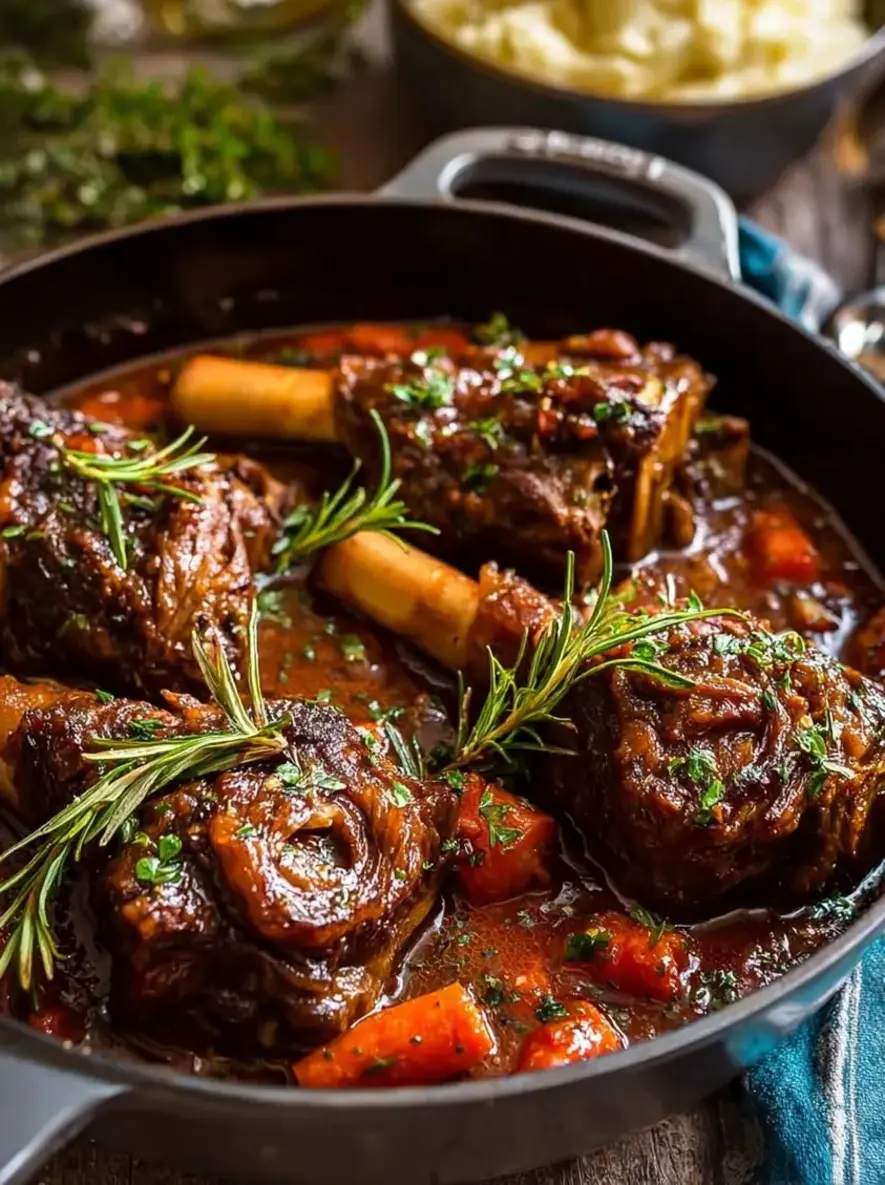
Table of Contents
Lamb Shanks with Rosemary, Garlic, and Red Wine – A Moroccan-French Braising Masterpiece
Growing up in Morocco, my mother would spend Friday afternoons coaxing lamb into submission with fragrant spices and patience that only a mother possesses. Years later, standing in a Parisian culinary school kitchen, I learned that the French call this technique braisage — slow cooking in a covered pot with aromatic liquid. These braised lamb shanks with rosemary, garlic, and red wine are the love child of those two worlds: the warmth of North African home cooking and the precision of French technique. Every time I make this dish in my tiny NYC apartment, the smell transports me straight back to our kitchen in Marrakech — and then to a bistro in the 6th arrondissement. This is the recipe I turn to when I want to impress without stress.
Imagine a fork sliding through tender lamb with zero resistance — that’s what we’re building here. The red wine, reduced and enriched, wraps each shank in a glossy robe that tastes of deep fruit, piney rosemary, and mellow garlic. The meat breaks apart into succulent strands, and the braising liquid becomes a silky, deeply savory sauce that begs to be spooned over mashed potatoes or soaked up with crusty bread. The aroma alone — wine mingling with rosemary and garlic — will have everyone wandering into your kitchen asking, “What’s for dinner?” It’s the kind of dish that makes you slow down, pour a glass of wine, and savor the moment.
Braised lamb shanks might sound like something only a professional chef can pull off, but I promise you: if you can brown meat and chop vegetables, you can make this. My version leans on a few French tricks — proper searing, deglazing, and low-and-slow oven braising — but I’ve stripped away anything that feels fussy. The result is an easy lamb shank recipe that delivers jaw-dropping results without requiring all day in the kitchen. One of the biggest mistakes home cooks make? Skipping the sear. Trust me, that golden-brown crust is where all the flavor lives. 💡 Stella’s Pro Tip: Don’t crowd the pan when browning — work in batches for a deep, even crust on every side.
Why This Braised Lamb Shanks Recipe Is the Best
The Flavor Secret: Most recipes rely solely on wine or broth, but I build layers from the ground up. First, I sear the lamb until deeply caramelized — that browning creates an umami foundation that no amount of seasoning can replicate. Then, I sweat the aromatics (onion, carrot, celery) until sweet and tender, bloom the garlic and rosemary in the residual oil, and deglaze with red wine, scraping up every last browned bit from the bottom of the pot. This process, called déglacage in French, is the single most important step for building deep, complex flavor. My Moroccan upbringing adds a whisper of warmth: a touch of dried thyme and bay leaves that echo the spice blends I grew up with, grounding the wine and herbs with earthy depth.
Perfected Texture: The goal is meat that falls apart at the slightest touch — and the path to that is low, slow heat in a covered pot. I braise these rosemary garlic lamb shanks at 350°F for 1½ to 2 hours, which is the sweet spot for dissolving connective tissue without drying out the meat. The collagen in the lamb shanks melts into the braising liquid, creating a naturally silky sauce with no need for added thickeners. I’ve tested this timing dozens of times across different ovens, and it consistently delivers that perfect, pull-apart tenderness.
Foolproof & Fast: Despite its impressive results, this is genuinely an easy lamb shank recipe. The active prep time is about 20 minutes — after that, the oven does all the work. No basting, no stirring, no hovering. You just walk away and let the gentle heat work its magic. I’ve taught this recipe to friends who’d never cooked lamb before, and every single one nailed it on the first try. If you can brown meat and chop a few vegetables, you’ve got this.
Braised Lamb Shanks Ingredients
When I’m shopping for these ingredients in New York, I head straight to the Union Square Greenmarket for fresh rosemary and garlic — the aroma alone is worth the trip. The lamb shanks I source from a butcher in Chelsea Market who knows exactly how to trim them. Back when I lived in Paris, I’d go to the Marché d’Aligre for lamb; the French butchers would always ask if I was making a sauté d’agneau. Now, in my NYC kitchen, I tell them I’m making lamb shanks with red wine, and they know exactly what I mean.
Ingredients List
- 4 lamb shanks (about ½ pound each), trimmed of excess fat
- Salt and freshly ground black pepper
- 3 tablespoons olive oil
- 1 large onion, chopped
- 1 carrot, chopped
- 2 celery stalks, chopped
- 6 cloves garlic, minced
- 2 tablespoons fresh rosemary leaves, chopped
- 2 cups dry red wine (such as Cabernet Sauvignon or Merlot)
- 2 cups beef broth
- 1 can (14.5 ounces) diced tomatoes, drained
- 2 bay leaves
- 1 teaspoon dried thyme
Ingredient Spotlight
Lamb Shanks: This cut comes from the lower part of the leg and is packed with connective tissue, which breaks down during braising into rich, unctuous goodness. Look for shanks that are evenly fleshed and about ½ pound each. If your shanks are larger, adjust the braising time up by 20–30 minutes. I ask my butcher to trim off any thick silver skin and excess fat, which keeps the finished dish from being greasy.
Red Wine: Choose a dry red wine you’d actually drink — Cabernet Sauvignon, Merlot, or a French Côtes du Rhône all work beautifully. The wine reduces and concentrates, so a fruity, medium-bodied wine gives the sauce depth without harsh tannins. Avoid “cooking wine” — it’s salty and lacks the complexity that transforms this dish.
Fresh Rosemary: Dried rosemary can be woody and piney in an aggressive way. Fresh rosemary, chopped fine, releases its essential oils into the braising liquid and perfumes the entire dish. If you only have dried, use 1 tablespoon and crush it between your fingers before adding.
Beef Broth: Chicken broth is too light; beef broth gives the sauce body and richness that stands up to the lamb. I use a low-sodium brand so I can control the salt level. For a deeper flavor, try using a good-quality bone broth.
Diced Tomatoes: One can of drained diced tomatoes adds a touch of acidity that balances the richness of the lamb and wine. Make sure to drain them well — you want the flavor, not excess liquid that would thin the sauce.
| Original Ingredient | Best Substitution | Flavor / Texture Impact |
|---|---|---|
| Dry red wine | Non-alcoholic red wine + 1 tbsp red wine vinegar | Similar depth; slightly less complex, still very good |
| Fresh rosemary | 1 tbsp dried rosemary, crushed | Less bright, more piney — reduce by half |
| Beef broth | Mushroom broth or strong vegetable broth | Less body; add 1 tsp soy sauce for umami |
| Diced tomatoes | 1 cup crushed tomatoes, reduce broth by ½ cup | Slightly smoother sauce, same acidity |
| Garlic (6 cloves) | 1 tbsp garlic paste or 1 tsp garlic powder | Less aromatic; garlic powder works but use sparingly |
How to Make Fall-Off-the-Bone Lamb Shanks — Step-by-Step
Making these fall off the bone lamb shanks is easier than you think. Each step builds on the last, and I’ve included my best tips and tricks to make sure you get perfect results every time.
Step 1: Season and Brown the Lamb Shanks
Preheat your oven to 350°F (175°C). Pat the lamb shanks dry with paper towels — moisture is the enemy of browning. Season them generously on all sides with salt and freshly ground black pepper. Heat 3 tablespoons of olive oil in a large Dutch oven or heavy-bottomed pot over medium-high heat. Working in batches (don’t crowd the pan!), brown the shanks on all sides, about 4–5 minutes per batch. Transfer the browned shanks to a plate and set aside.
💡 Stella’s Pro Tip: Use tongs to turn the shanks; a fork will pierce the meat and let juices escape. You want a deep, mahogany-brown crust — that’s pure flavor.
Step 2: Sauté the Aromatics
Reduce the heat to medium. Add the chopped onion, carrot, and celery to the pot. Cook, stirring occasionally, until softened and lightly golden, about 5 minutes. Add the minced garlic and chopped rosemary; cook for 1 minute until fragrant. The smell at this point is absolutely intoxicating — take a moment to enjoy it.
⚠️ Common Mistake to Avoid: Don’t rush the sweating step. If the vegetables aren’t fully softened, they won’t melt into the sauce properly. Let them get truly tender.
Step 3: Deglaze with Red Wine
Pour in the 2 cups of dry red wine, scraping up any browned bits (the fond) from the bottom of the pot with a wooden spoon. Those browned bits are packed with concentrated flavor from the seared lamb and vegetables. Bring the wine to a simmer and cook until reduced by half, about 5 minutes. This step concentrates the wine’s flavor and burns off the alcohol, leaving behind pure, fruity richness.
💡 Stella’s Pro Tip: Use a wooden spoon with a flat edge to scrape the pot bottom thoroughly. That dark layer stuck to the pot is liquid gold — don’t waste a bit of it.
Step 4: Add Liquids and Braise
Add the beef broth, drained diced tomatoes, bay leaves, and dried thyme to the pot. Stir to combine. Return the lamb shanks to the pot, nestling them into the liquid so they’re partially submerged. The liquid should come about halfway up the shanks — if it’s too low, add a splash more broth or water.
Cover the pot with a tight-fitting lid and transfer it to the preheated oven. Braise for 1½ to 2 hours, until the meat is very tender and pulling away from the bone. Check at the 90-minute mark — if a fork slides in with almost no resistance, they’re ready.
⚠️ Common Mistake to Avoid: Peeking too often! Every time you lift the lid, heat and steam escape, which can lengthen the cooking time. Resist the urge — trust the process.
Step 5: Finish and Serve
Remove the pot from the oven. Discard the bay leaves. Use a spoon to skim off any excess fat from the surface of the sauce — there shouldn’t be much if you trimmed the shanks well, but a quick skim keeps the sauce silky. Taste the sauce and adjust seasoning with salt and pepper. Serve the lamb shanks hot, spooning the sauce generously over the top.
💡 Stella’s Pro Tip: If the sauce is thinner than you’d like, set the pot over medium heat on the stovetop and simmer uncovered for 5–10 minutes to reduce and thicken. Stir gently to avoid breaking the meat.
| Step | Action | Duration | Key Visual Cue |
|---|---|---|---|
| 1 | Season and brown lamb | 8–10 mins total (in batches) | Deep mahogany crust on all sides |
| 2 | Sauté aromatics | 5–6 mins | Vegetables softened, garlic fragrant |
| 3 | Deglaze with wine | 5 mins | Wine reduced by half, pot bottom clean |
| 4 | Add liquids and braise | 1½–2 hrs in oven | Meat pulls away from bone; fork slides in easily |
| 5 | Finish and serve | 5 mins | Sauce glossy, fat skimmed, seasoning balanced |
Serving & Presentation
The way you serve these braised lamb shanks can elevate an already stunning dish into a true centerpiece. I like to place one shank on each plate and generously spoon the red wine sauce over the top, letting it pool around the meat. A sprinkle of fresh chopped parsley or a few rosemary sprigs adds a pop of green that makes the deep brown sauce look even more inviting. In my NYC apartment, I serve this with a side of creamy mashed potatoes or soft polenta — both are perfect for catching every last drop of that luscious sauce.
When I want to channel my Parisian training, I’ll pair the shanks with a simple gratin dauphinois (thinly sliced potatoes baked in cream) and a bright green vegetable like haricots verts or sautéed spinach. The richness of the lamb and wine sauce loves the acidity of a simple salad with a sharp vinaigrette on the side. For a Moroccan touch, I sometimes serve them with a side of couscous tossed with dried apricots and toasted almonds — the sweetness against the savory wine sauce is a match made in heaven.
One of my favorite memories of this dish is from a snowy January evening in New York. I had friends over, and the lamb shanks were braising in the oven while we sipped red wine and the snow piled up on the windowsill. When I brought the pot to the table, everyone just stopped talking for a second — that’s the power of a meal made with care. Serve these rosemary garlic lamb shanks family-style straight from the Dutch oven for a cozy, generous feel, or plate individually for a more polished presentation. Either way, they’ll disappear fast.
| Pairing Type | Suggestions | Why It Works |
|---|---|---|
| Side Dish | Creamy mashed potatoes, soft polenta, crusty bread | Soaks up the rich red wine sauce perfectly |
| Sauce / Dip | Extra braising liquid, a drizzle of balsamic glaze | Enhances the deep, savory notes of the lamb |
| Beverage | Cabernet Sauvignon, Merlot, a bold Syrah | The wine in the dish echoes the wine in the glass |
| Garnish | Fresh parsley, rosemary sprigs, lemon zest | Adds freshness and visual contrast to the rich dish |
Make-Ahead, Storage & Reheating
Living in New York means my schedule is always packed — between running the blog, teaching cooking classes, and exploring the latest food spots, I rarely have time to cook from scratch on a busy weeknight. That’s why this recipe is a lifesaver. I often make a double batch on Sunday and enjoy it throughout the week. The flavor actually deepens and gets even better after a day or two in the fridge, so these lamb shanks with red wine are a perfect make-ahead meal.
| Method | Container | Duration | Reheating Tip |
|---|---|---|---|
| Refrigerator | Airtight container with sauce | Up to 4 days | Reheat gently on stovetop over low heat, covered; add a splash of broth if needed |
| Freezer | Freezer-safe container or heavy-duty zip bag | Up to 3 months | Thaw overnight in fridge; reheat on stovetop over low heat, covered, until warmed through |
| Make-Ahead | In the Dutch oven, cooled, then refrigerated | 2–3 days in advance | Reheat covered at 325°F for 20–25 mins; the flavor is even better after a day |
When reheating, the key is low and gentle heat — rapid boiling can toughen the meat and make it stringy. I like to reheat leftovers on the stovetop in a covered pot over low heat, stirring the sauce occasionally. If the sauce has thickened too much in the fridge, stir in a splash of beef broth or water to loosen it. For frozen portions, thaw overnight in the refrigerator and reheat the same way. The sauce might need a quick whisk to re-emulsify — don’t worry, it’ll come right back together. Also, the fat will solidify on top when chilled, so you can easily remove it before reheating for an even leaner finish.
Variations & Easy Swaps
| Variation | Key Change | Best For | Difficulty Impact |
|---|---|---|---|
| Moroccan-Spiced | Add 1 tsp cumin, ½ tsp cinnamon, ½ tsp ginger | Warm, aromatic depth; a nod to North African roots | Easy — just add spices with the garlic |
| Gluten-Free / Dairy-Free | No changes needed; serve with rice or quinoa | Dietary restrictions; naturally GF/DF as written | No change — it’s already GF/DF |
| Spring Herb & Citrus | Add lemon zest, orange zest, and fresh mint | Bright, fresh flavor; perfect for spring entertaining | Easy — add zest at the end, mint as garnish |
Moroccan-Spiced Variation
This variation is my personal favorite — it brings me straight back to my mother’s kitchen in Marrakech. After you’ve sautéed the onion, carrot, and celery, add 1 teaspoon ground cumin, ½ teaspoon ground cinnamon, and ½ teaspoon ground ginger along with the garlic and rosemary. The warm spices meld beautifully with the red wine and create a sauce that’s both familiar and exotic. I like to serve this version with fluffy couscous and a sprinkle of toasted sesame seeds and fresh cilantro. The cinnamon doesn’t make it sweet — it adds a subtle, fragrant warmth that deepens the savory notes of the lamb.
Gluten-Free / Dairy-Free Variation
The beautiful thing about this recipe is that it’s naturally gluten-free and dairy-free as written — no substitutions needed! The sauce gets its body from the collagen in the lamb shanks and the reduced wine, not from flour or cream. Just be sure to serve it with a gluten-free side dish like roasted potatoes, rice, quinoa, or a simple green salad. And if you’re avoiding dairy, skip the butter-laced mashed potatoes and go for olive oil mashed potatoes or a creamy cauliflower purée instead. I’ve tested this countless times for friends with dietary restrictions, and everyone leaves the table happy.
Spring Herb & Citrus Variation
When spring arrives and I start seeing fresh herbs and citrus at the Union Square Greenmarket, I love to brighten up these easy lamb shanks with a burst of freshness. After braising, stir in the zest of 1 lemon and 1 orange, along with 2 tablespoons of fresh chopped mint. The citrus oils cut through the richness of the wine sauce, while the mint adds a cool, bright finish that’s perfect for warmer weather. I serve this version with a spring pea and feta salad and a light, crispy white wine instead of red. It’s a completely different mood from the classic version, and every bit as delicious.
How long does it take to cook lamb shanks in red wine sauce until they are tender?
For truly fall off the bone lamb shanks, you’ll want to braise them for 1½ to 2 hours in a 350°F oven. This slow, gentle cooking time is essential for breaking down the collagen in the lamb shanks into rich, silky gelatin that makes the meat incredibly tender and the sauce luscious. Start checking at the 90-minute mark — when a fork slides into the thickest part of the meat with almost no resistance and the meat begins to pull away from the bone, they’re ready. Larger shanks may need up to 2¼ hours. The total time, including prep and browning, is about 2 hours 30 minutes.
What is the best substitute for red wine in lamb shank recipes?
The best non-alcoholic substitute for red wine in this dish is a combination of non-alcoholic red wine (many grocery stores now carry decent options) plus 1 tablespoon of red wine vinegar added at the end for acidity. The vinegar brightens the sauce in the same way wine does. Alternatively, you can use a mix of beef broth and 1 tablespoon of balsamic vinegar, which adds both color and depth. Pomegranate juice is another excellent substitute — it brings a fruity sweetness and deep color that complements lamb beautifully. Whatever you choose, avoid using only broth alone, as the acidity from the wine is crucial for balancing the richness of the lamb.
Should I sear lamb shanks before braising them with rosemary and garlic?
Yes — absolutely! Searing the lamb shanks before braising is one of the most important steps in this recipe. When you brown the meat over medium-high heat until a deep mahogany crust forms, you’re creating what chefs call the Maillard reaction — a complex browning process that generates hundreds of flavor compounds. That flavorful browned crust carries through the entire braise and enriches the sauce in ways that no amount of seasoning can replicate. Beyond flavor, searing also renders some of the fat, which prevents the finished dish from being greasy. Don’t skip this step, and don’t rush it — 4–5 minutes per batch, working in batches so you don’t crowd the pan.
Can I cook lamb shanks with rosemary, garlic, and red wine in a slow cooker or Instant Pot?
Yes, you can make this recipe in both a slow cooker and an Instant Pot, with a few adjustments. For a slow cooker: after searing the lamb and cooking the aromatics on the stovetop, transfer everything to the slow cooker. Cook on LOW for 7–8 hours or on HIGH for 4–5 hours, until the meat is tender. For an Instant Pot: use the Sauté function to brown the lamb and cook the aromatics directly in the pot, then deglaze with wine as directed. Pressure cook on HIGH for 40 minutes with a natural release (about 15–20 minutes). Keep in mind that oven braising gives you a slightly thicker, more concentrated sauce because of the gentle reduction. With both the slow cooker and Instant Pot, you may want to simmer the sauce on the stovetop for a few minutes after cooking to thicken it.
What is the best cut of lamb for braising with rosemary and garlic?
Lamb shanks are the absolute best cut for braising — they come from the lower leg and are packed with connective tissue and collagen that breaks down during slow cooking, resulting in incredibly tender, succulent meat. Lamb shoulder (cut into large pieces) is a close second and works beautifully in the same recipe. Lamb neck is another excellent option, though it can be harder to find in standard US grocery stores. For best results, look for shanks that are about ½ pound each with a good amount of meat on them. Avoid lean cuts like the loin or leg for braising — they lack the connective tissue needed for that fall-apart texture and can dry out.
Can I make lamb shanks with red wine sauce ahead of time?
Yes, and I actually encourage it — these braised lamb shanks taste even better the next day! The flavors continue to meld and deepen as the meat rests in the sauce overnight. To make ahead, prepare the recipe completely, then let the pot cool to room temperature. Refrigerate the lamb shanks in the braising liquid in a covered container or directly in the Dutch oven (once cooled). The next day, the fat will have solidified on top, making it easy to remove for a leaner, cleaner sauce. Reheat gently on the stovetop over low heat, covered, for about 20–25 minutes, or in a 325°F oven until warmed through. Add a splash of broth if the sauce has thickened too much. The meat will remain incredibly tender, and the sauce will be more flavorful than the day before.
What goes well with braised lamb shanks as a side dish?
Braised lamb shanks pair beautifully with a wide range of side dishes. For classic comfort, serve them over creamy mashed potatoes, soft polenta, or buttery egg noodles — all of which are perfect for soaking up the rich red wine sauce. For a lighter option, try roasted root vegetables (carrots, parsnips, and sweet potatoes), a bright green vegetable like sautéed spinach or roasted asparagus, or a simple arugula salad with lemon vinaigrette to cut through the richness. For a nod to my Moroccan heritage, I love serving them with fluffy couscous tossed with dried apricots, almonds, and fresh mint. Crusty bread is also essential — no one wants to leave a drop of that sauce behind.
How do I prevent lamb shanks from being tough?
The key to preventing tough lamb shanks is cooking them long enough at a gentle temperature — low and slow is the golden rule. Lamb shanks need at least 1½ hours of braising at 350°F to fully break down the collagen and connective tissue. Undercooking is the most common cause of tough, chewy shanks. If your meat is still firm after 90 minutes, keep braising and check every 15 minutes. Another crucial tip: don’t boil the liquid. The braise should be at a gentle simmer, not a vigorous boil. If your stovetop or oven runs hot, adjust the temperature accordingly. And always let the meat rest in the sauce for 10 minutes after braising before serving — this allows the juices to redistribute evenly throughout the meat fibers.
Can I use dried rosemary instead of fresh for lamb shanks?
You can substitute dried rosemary for fresh in this recipe, but with a few adjustments. Dried rosemary has a more concentrated, pine-like flavor and can be somewhat woody in texture. If you’re using dried, use 1 tablespoon (since the recipe calls for 2 tablespoons fresh) and crush it between your fingers before adding to release its oils. Add it at the same point in the recipe — along with the garlic and fresh herbs. Be aware that dried rosemary won’t have the same bright, floral notes that fresh rosemary brings, so the flavor will be slightly more subdued and earthy. If you have access to fresh, I recommend using it — it really makes a difference in rosemary garlic lamb shanks. But in a pinch, dried works just fine.
What temperature should I braise lamb shanks at?
The ideal oven temperature for braising lamb shanks with red wine is 350°F (175°C). This temperature is hot enough to gently cook the meat and break down collagen over 1½ to 2 hours, without being so hot that the liquid boils and toughens the meat. If your oven runs hot, you can drop the temperature to 325°F and increase the braising time by about 20–30 minutes. The liquid should be at a gentle simmer, not a rapid boil — you want small bubbles gently breaking the surface. A tight-fitting lid is essential to trap steam and keep the meat moist. If you don’t have a lid, cover the pot tightly with foil. For a richer, more concentrated sauce, you can remove the lid for the last 20 minutes of cooking.
Share Your Version!
Now it’s your turn to bring these braised lamb shanks to life in your own kitchen. Whether you’re making them for a cozy Sunday dinner, a special occasion, or just because you deserve something extraordinary — I’d love to hear how it goes. Did you add a Moroccan spice twist? Serve them with something unexpected? I read every comment and love seeing how you make this recipe your own. Leave a star rating and a comment below — tell me what worked, what you changed, and what you served on the side. Your feedback helps other home cooks discover new ideas too.
📸 Snap a photo of your rosemary garlic lamb shanks and tag me on Instagram or Pinterest @leosfoods — I can’t wait to see your beautiful table! And if you’re looking for more cozy, soul-warming recipes like this one, be sure to save it to your “Comfort Food” or “Sunday Dinner” Pinterest board so you can find it again next time you want to impress. From my NYC kitchen to yours — I hope this recipe brings as much warmth to your table as it does to mine. — Stella 🧡
Love This Recipe? Save It to Pinterest!
If you enjoyed this Lamb Shanks with Rosemary, Garlic, and Red Wine recipe, don’t let it get lost in your browser tabs! 😄 Pin it now so you can find it again anytime — and explore hundreds more tried-and-tested recipes waiting for you on my Pinterest boards.
👉 Follow Stella on Pinterest @stellarecipeblog
📌 Pin this recipe · 🔁 Re-pin your favorites · 💬 Tag me when you make it — I love seeing your creations!
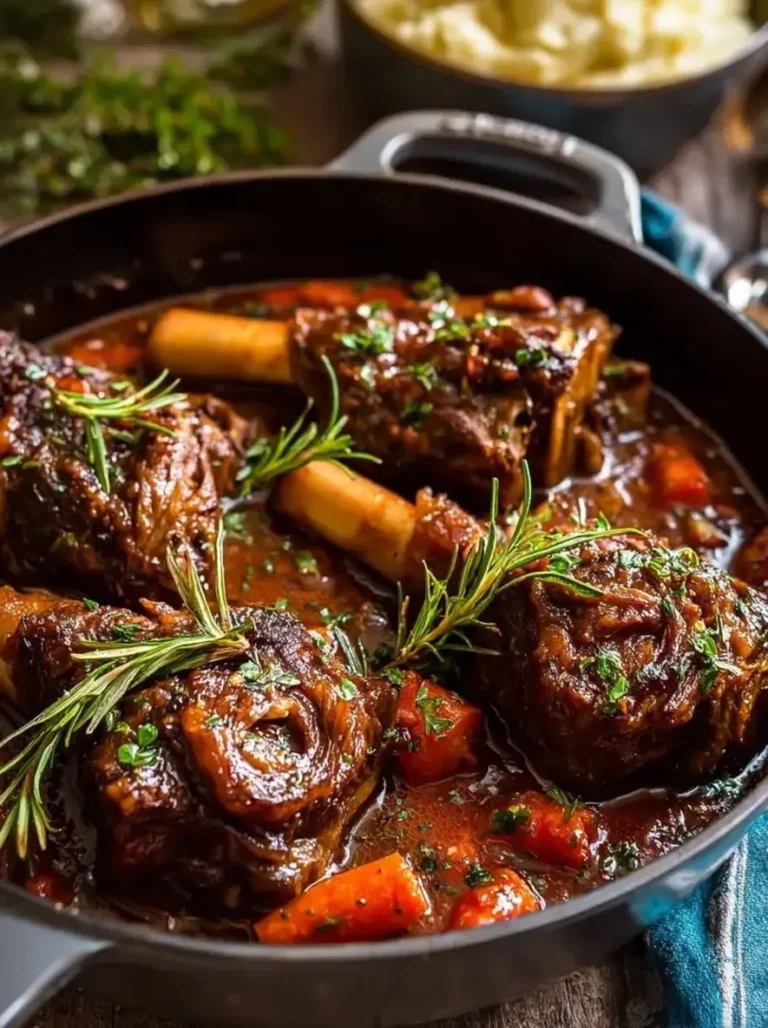
Lamb Shanks with Rosemary, Garlic, and Red Wine
Looking for a show-stopping meal? ✨🌿 These lamb shanks are infused with rosemary, garlic, and red wine for incredible depth of flavor.
- Total Time: 2 hours 30 minutes
- Yield: 4 1x
Ingredients
- 4 lamb shanks (about 1/2 pound each), trimmed of excess fat
- Salt and freshly ground black pepper
- 3 tablespoons olive oil
- 1 large onion, chopped
- 1 carrot, chopped
- 2 celery stalks, chopped
- 6 cloves garlic, minced
- 2 tablespoons fresh rosemary leaves, chopped
- 2 cups dry red wine (such as Cabernet Sauvignon or Merlot)
- 2 cups beef broth
- 1 can (14.5 ounces) diced tomatoes, drained
- 2 bay leaves
- 1 teaspoon dried thyme
Instructions
- Preheat oven to 350°F (175°C).
- Season lamb shanks generously with salt and pepper.
- Heat olive oil in a large Dutch oven or heavy-bottomed pot over medium-high heat. Working in batches, brown lamb shanks on all sides, about 4-5 minutes per batch. Transfer to a plate.
- Reduce heat to medium. Add onion, carrot, and celery; cook until softened, about 5 minutes. Add garlic and rosemary; cook for 1 minute until fragrant.
- Pour in red wine, scraping up any browned bits from the bottom of the pot. Bring to a simmer and cook until reduced by half, about 5 minutes.
- Add beef broth, diced tomatoes, bay leaves, and thyme. Return lamb shanks to the pot, nestling them into the liquid.
- Cover and transfer to the oven. Braise for 1 1/2 to 2 hours, until the meat is very tender and falling off the bone.
- Remove from oven. Discard bay leaves. Skim off any excess fat from the surface. Taste and adjust seasoning with salt and pepper. Serve hot.
- Prep Time: 20 minutes
- Cook Time: 2 hours 10 minutes
- Method: Main Course
- Cuisine: Mediterranean
Nutrition
- Calories: 520
- Sugar: 6g
- Fat: 28g
- Carbohydrates: 12g
- Protein: 48g
Tried This Recipe? Leave a Comment!
Did you make this recipe? I’d love to hear how it turned out! Please leave a comment and a rating below. Your feedback helps other home cooks and supports cheerychop.com!
For more delicious inspiration, follow me on Pinterest!