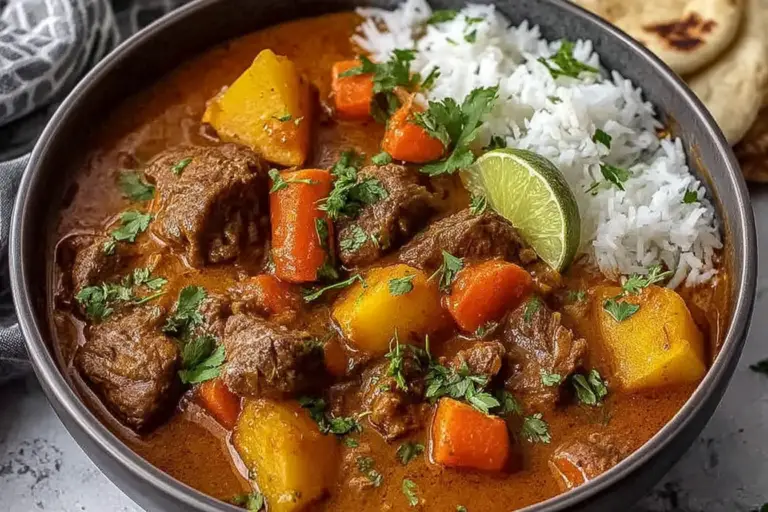
Easy Creamy Coconut Curry Chicken with Fresh Basil

“`html
Table of Contents
Creamy Coconut Curry, Tender Chicken, and Fresh Basil – The Best One-Skillet Thai Dinner
Growing up in Morocco, my mother taught me that the best dishes are built on patience and contrast — slow-simmered spices balanced with something fresh stirred in at the very last minute. This creamy coconut curry chicken recipe is my love letter to that lesson. Every time I make this Thai basil chicken curry in my New York kitchen, I’m transported back to our small kitchen in Marrakech, where the scent of ginger and garlic would drift through the house. This easy chicken curry skillet brings together velvety coconut milk, tender chicken, and vibrant basil in a way that feels both deeply comforting and incredibly fresh. It’s the kind of quick coconut curry dinner that comes together in about 35 minutes but tastes like it’s been simmering all day, which is exactly what I need after a long day exploring NYC farmers markets or testing recipes at my stove.
The first spoonful hits you with layers of richness: the red curry paste blooms in hot oil, the coconut milk adds a luscious, almost silky texture, and then — just when you think it can’t get any better — the fresh basil cuts through with its peppery, aromatic brightness. The chicken stays incredibly tender because it simmers gently in the curry sauce rather than being seared and dried out. Snow peas add a satisfying crunch, and the red bell pepper brings a touch of sweetness that balances the subtle heat. I still remember my pastry chef instructor in Paris lecturing us about balance — and this dish embodies that principle beautifully. Every element has a job, and the result is harmony in a bowl.
What I love most about this creamy coconut curry chicken is that it’s truly foolproof. You don’t need any special equipment or hard-to-find ingredients — everything is available at your local grocery store or farmers market. My version uses a clever technique: blooming the curry paste in hot oil with the aromatics to unlock its full depth of flavor. 💡 Stella’s Pro Tip: Don’t skip blooming the curry paste in oil for one minute before adding the liquids — this step is what separates a good curry from a great one. And ⚠️ Common Mistake to Avoid: adding the basil too early and letting it wilt into a sad, dark mess. Stir it in off the heat so it stays vibrant and fragrant. This is the kind of dinner that makes Tuesday nights feel special, and I’m so excited to share it with you.
Why This Creamy Coconut Curry Chicken Recipe Is the Best
The flavor secret lies in how the red curry paste is handled. In my Paris training, we learned that spices need heat to unlock their volatile oils. By sautéing the curry paste with garlic and ginger for one full minute before adding liquid, you get a deeper, more complex curry base. Then the coconut milk and chicken broth work together — the broth keeps things savory and light, while the coconut milk delivers that luxurious, velvety texture. I also add a touch of brown sugar and fish sauce for that perfect sweet-salty balance that’s the hallmark of Thai-inspired cooking. This isn’t a watery curry; it’s rich, creamy, and clings to every piece of chicken and rice.
The texture is perfected by a simple but crucial technique: simmering the chicken directly in the sauce. Unlike searing, which can dry out lean chicken breasts, gentle simmering in the coconut curry keeps each bite moist and tender. I learned this method during my time at Le Cordon Bleu — poaching proteins in a flavorful liquid preserves moisture while infusing flavor. The snow peas and bell pepper are added at the end so they stay crisp-tender, offering a fresh counterpoint to the creamy sauce. And that final scattering of fresh basil, stirred in off the heat, adds a pop of color and an aromatic lift that makes the whole dish sing.
This recipe is foolproof and fast because it all happens in one skillet. You don’t need separate pans for the chicken, the vegetables, or the sauce — everything comes together in a single 12-inch skillet or Dutch oven. That means fewer dishes, less cleanup, and a meal on the table in 35 minutes flat. Even if you’re new to cooking Thai-inspired food, the steps are straightforward, with visual cues at every stage. I’ve tested this easy chicken curry skillet with home cooks of all skill levels, and every single person has nailed it on the first try. That’s the kind of confidence I want you to feel when you step into your kitchen.
Coconut Chicken Curry Recipe Ingredients
I source my ingredients from the Union Square Greenmarket and my local Asian grocery in NYC’s East Village. The beauty of this creamy coconut curry chicken is that everything is easy to find, but each component plays a specific role. Let me walk you through what you’ll need and why each ingredient matters.
Ingredients List
- 1 tablespoon coconut oil
- 1 onion, finely chopped
- 3 garlic cloves, minced
- 1 tablespoon grated fresh ginger
- 2 tablespoons red curry paste
- 1 can (14 oz) coconut milk
- 1 cup chicken broth
- 2 tablespoons fish sauce
- 1 tablespoon brown sugar
- 1 pound boneless skinless chicken breasts, cut into bite-sized pieces
- 1 cup snow peas
- 1 red bell pepper, sliced
- 1/2 cup fresh basil leaves, torn
- Cooked jasmine rice, for serving
- Lime wedges, for serving
Ingredient Spotlight
Red Curry Paste: This is the backbone of the dish. Look for Thai brands like Mae Ploy or Thai Kitchen — they have a deeper, more authentic flavor than generic pastes. It’s a blend of red chilies, lemongrass, galangal, and spices. If you can’t find red curry paste, substitute with 1 tablespoon yellow curry powder plus 1 teaspoon chili flakes, but the flavor will be milder and less complex.
Coconut Milk: Full-fat is non-negotiable for that creamy texture. Light coconut milk will make the sauce thin and watery. I recommend Chaokoh or Aroy-D brands for the richest results. One 14-ounce can is perfect. If you only have coconut cream, use 1/2 cup cream plus 3/4 cup water — it’ll be even richer.
Fish Sauce: This adds the umami depth that makes the curry taste authentic. Red Boat is my go-to brand — it’s clean, flavorful, and not overly salty. If you need a vegetarian swap, use soy sauce or tamari plus a pinch of salt. The flavor will shift, but it’s still delicious.
Fresh Basil: Sweet basil (the standard grocery store basil) works beautifully, but Thai basil with its purple stems and slight licorice notes is even better. Add it at the very end, off the heat, to preserve its color and aroma. I grow Thai basil on my NYC fire escape in the summer — it’s surprisingly easy and adds such a personal touch.
| Original Ingredient | Best Substitution | Flavor / Texture Impact |
|---|---|---|
| Red Curry Paste | 1 tbsp yellow curry powder + 1 tsp chili flakes | Milder, less complex, still tasty |
| Coconut Milk | 1/2 cup coconut cream + 3/4 cup water | Richer, thicker sauce |
| Fish Sauce | Soy sauce or tamari + pinch of salt | Less umami, more salty, still good |
| Fresh Basil | Fresh mint or cilantro | Different herb profile, still fresh |
How to Make Creamy Coconut Curry Chicken — Step-by-Step
Trust me, this Thai basil chicken curry comes together faster than you’d expect from something this flavorful. Here’s exactly how to do it, with all the little details that make a difference.
Step 1: Sauté the Aromatics
Heat 1 tablespoon of coconut oil in a large skillet or Dutch oven over medium-high heat. Add the finely chopped onion and cook, stirring occasionally, for about 3 minutes until it’s softened and translucent. Then add the minced garlic and grated ginger, and cook for just one minute more until fragrant. The kitchen will smell incredible at this point — that’s the garlic and ginger releasing their essential oils into the hot fat.
⚠️ Common Mistake to Avoid: Don’t let the garlic brown too much at this stage. Burnt garlic becomes bitter and will ruin the delicate flavor of the curry. Keep stirring and lower the heat if needed.
Step 2: Bloom the Curry Paste
Stir in 2 tablespoons of red curry paste and cook for one full minute, stirring constantly. This step is crucial — it’s called “blooming” and it wakes up the spices in the paste, making them more fragrant and flavorful. You’ll notice the paste darkens slightly and becomes intensely aromatic. This is where the deep, complex flavor of your curry starts to build.
💡 Stella’s Pro Tip: If you like extra heat, add a sliced Thai chili along with the curry paste at this stage. It’ll infuse the whole dish with a gentle, persistent warmth without overwhelming the other flavors.
Step 3: Build the Curry Sauce
Pour in the full can of coconut milk, 1 cup of chicken broth, 2 tablespoons of fish sauce, and 1 tablespoon of brown sugar. Stir everything together until the curry paste is fully incorporated into the liquid. Bring the mixture to a gentle simmer — you’ll see small bubbles around the edges of the pan. The sauce should look smooth and creamy, with a beautiful reddish-orange color from the curry paste.
Step 4: Simmer the Chicken
Add the chicken pieces to the simmering sauce, making sure they’re submerged as much as possible. Reduce the heat to medium-low and let it simmer gently for 10 minutes, stirring occasionally. The chicken will cook through gently, staying tender and absorbing all that coconut curry flavor. Don’t boil it — a gentle simmer is key for tender meat.
⚠️ Common Mistake to Avoid: Simmering too vigorously can make the chicken tough and the sauce thicken too quickly. Keep the heat at medium-low and you’ll get perfectly tender chicken every time.
Step 5: Add the Vegetables
Add 1 cup of snow peas and the sliced red bell pepper to the skillet. Cook for 3-4 minutes, just until the vegetables are tender-crisp — they should still have some bite. Overcooking them will make them limp and mushy, and you want that bright, fresh contrast to the creamy sauce.
Step 6: Finish with Fresh Basil
Remove the skillet from the heat entirely. Stir in 1/2 cup of torn fresh basil leaves. The residual heat will wilt the basil just slightly, releasing its aromatic oils while keeping its vibrant green color. This is my favorite moment — the basil hits the warm curry and suddenly the whole dish smells like heaven. Let it rest for one minute before serving.
💡 Stella’s Pro Tip: Always tear basil by hand instead of cutting it with a knife. This prevents bruising and discoloration, and the torn edges release more flavor into the dish.
| Step | Action | Duration | Key Visual Cue |
|---|---|---|---|
| 1 | Sauté onion, garlic, ginger | 4 mins | Onion translucent, garlic fragrant |
| 2 | Bloom curry paste | 1 min | Paste darkens and becomes fragrant |
| 3 | Add liquids, bring to simmer | 3 mins | Small bubbles at edges, sauce smooth |
| 4 | Simmer chicken | 10 mins | Chicken cooked through, tender |
| 5 | Add vegetables | 3-4 mins | Snow peas bright green, crisp-tender |
| 6 | Stir in basil off heat | 1 min rest | Basil vibrant green, aromatic |
Serving & Presentation
I love serving this creamy coconut curry chicken over a bed of fluffy jasmine rice — the grains soak up that luscious sauce perfectly. Spoon the curry over the rice, making sure to distribute the chicken, snow peas, and bell pepper evenly. Garnish with extra fresh basil leaves and a generous squeeze of lime juice. The lime brightens everything and cuts through the richness beautifully. In my NYC kitchen, I often add a sprinkle of toasted sesame seeds for extra texture and a touch of elegance.
This quick coconut curry dinner is incredibly versatile when it comes to pairings. I often serve it with a simple cucumber salad on the side — just sliced cucumber, rice vinegar, and a pinch of sugar — for a refreshing crunch. If I’m feeling nostalgic for Morocco, I’ll add a side of warm, crusty bread to sop up every last drop of sauce. For a low-carb option, serve the curry over cauliflower rice or zucchini noodles — the sauce is so flavorful that you won’t miss the rice at all.
When I entertain friends in my tiny NYC apartment, I set up a cozy curry bar with bowls of jasmine rice, the curry in a large serving dish, and small bowls of toppings: extra basil, lime wedges, sliced red chili, and crushed peanuts. Everyone builds their own bowl, and it always sparks the best conversations. It’s the kind of meal that makes people feel cared for, and that’s what cooking is all about.
| Pairing Type | Suggestions | Why It Works |
|---|---|---|
| Side Dish | Jasmine rice, cucumber salad, crusty bread | Absorbs sauce, adds crunch or texture |
| Sauce / Dip | Extra lime juice, sriracha, peanut sauce | Adds heat, tang, or nutty richness |
| Beverage | Thai iced tea, crisp white wine, sparkling water | Cools the palate, refreshes between bites |
| Garnish | Fresh basil, lime wedges, sliced chili, crushed peanuts | Adds freshness, heat, and crunch |
Make-Ahead, Storage & Reheating
One of the things I love most about this easy chicken curry skillet is how well it keeps. In my busy NYC life, I often double the batch on Sunday and enjoy it for lunches throughout the week. The flavors actually deepen and get even better after a day or two in the fridge — it’s one of those magical dishes that tastes even more complex on day two. Here’s exactly how to store and reheat it for the best results.
| Method | Container | Duration | Reheating Tip |
|---|---|---|---|
| Refrigerator | Airtight container | Up to 4 days | Reheat in a skillet over medium-low, adding a splash of broth or water to thin the sauce |
| Freezer | Freezer-safe container or bag | Up to 3 months | Thaw overnight in fridge, then reheat gently on stove; add fresh basil after reheating |
| Make-Ahead | Prepare sauce and chicken, store separately | 2 days in advance | Combine and reheat, then add vegetables and basil at the end for freshest texture |
When reheating, I always add a little extra chicken broth or water to loosen the sauce — it tends to thicken as it sits. And here’s a non-negotiable tip from me: always add fresh basil after reheating, not before. The basil from the original cooking will have wilted and darkened, so stirring in a few fresh torn leaves right before serving makes a world of difference. It’s like a little gift to your future self.
Variations & Easy Swaps
This creamy coconut curry chicken recipe is endlessly adaptable. Whether you’re feeding a family with different preferences or just want to switch things up, these variations will keep the recipe fresh and exciting. Each one has been tested in my kitchen — I promise they all deliver delicious results.
| Variation | Key Change | Best For | Difficulty Impact |
|---|---|---|---|
| Moroccan Ras el Hanout Twist | Replace curry paste with 2 tbsp ras el hanout | North African flavor lovers | Easy |
| Vegetarian / Vegan | Replace chicken with tofu, use soy sauce | Plant-based meals | Easy |
| Creamy Peanut Curry | Add 2 tbsp creamy peanut butter with coconut milk | Peanut sauce fans | Easy |
Moroccan Ras el Hanout Twist
Growing up in Morocco, ras el hanout was the spice blend that defined our kitchen — it means “top of the shop” in Arabic, and every family has their own secret mix. Replace the red curry paste with 2 tablespoons of ras el hanout (a blend of cumin, coriander, cinnamon, turmeric, and rose petals). The flavor becomes warm, aromatic, and slightly sweet, with none of the heat of Thai curry. This version is incredibly comforting and pairs beautifully with the coconut milk and basil. I love serving it with couscous instead of rice for a true North African feel.
Vegetarian / Vegan Version
For a plant-based take on this Thai basil chicken curry, swap the chicken for 1 block of extra-firm tofu, pressed and cubed. Pan-sear the tofu separately until golden on all sides, then add it to the curry sauce to simmer for 5 minutes. Use soy sauce or tamari instead of fish sauce, and make sure your red curry paste is vegan-friendly (most are). The tofu absorbs the coconut curry sauce beautifully, and the texture is satisfyingly hearty. Snow peas and bell pepper add the same fresh crunch. This version has become a favorite in my NYC meal-prep rotation.
Creamy Peanut Curry Variation
When I’m craving something extra indulgent, I add 2 tablespoons of creamy peanut butter to the sauce along with the coconut milk. The peanut butter melts into the curry, adding a nutty richness that’s absolutely addictive. This variation is inspired by the satay-inspired curries I discovered at a food stall in Bangkok during a trip years ago. I’ll often add a handful of fresh spinach along with the snow peas for extra nutrition. The basil still plays a starring role, cutting through the richness with its fresh, peppery notes. Serve with a sprinkle of crushed peanuts on top for extra crunch.
What is the best way to add fresh basil to creamy coconut curry chicken?
The best way to add fresh basil is to stir it in at the very end, after you’ve removed the skillet from the heat. This allows the residual warmth to gently wilt the basil, releasing its aromatic oils without cooking it into a dark, slimy mess. I always tear the basil by hand rather than chopping it with a knife — torn edges release more flavor and prevent bruising. For the most vibrant result, use about 1/2 cup of loosely packed basil leaves and stir them in just before serving. If you’re making the curry ahead of time, wait until after reheating to add fresh basil for the best color and flavor.
Can I use coconut milk instead of coconut cream for this chicken curry recipe?
Absolutely — in fact, I recommend using full-fat coconut milk rather than coconut cream for this recipe. Coconut cream is much thicker and richer, with a higher fat content, which can make the curry sauce overly heavy and almost paste-like. A standard 14-ounce can of full-fat coconut milk provides the perfect balance of creaminess and fluidity. If you only have coconut cream on hand, use about 1/2 cup of cream and thin it with 3/4 cup of water or chicken broth. This will give you a sauce that’s still luxuriously creamy but has the right consistency for simmering chicken and coating rice.
How long should I simmer chicken in coconut curry to keep it tender?
For boneless, skinless chicken breasts cut into bite-sized pieces, simmer for about 10 minutes at a gentle simmer (not a rolling boil). This is enough time for the chicken to cook through completely while remaining tender and moist. If you’re using chicken thighs, you can simmer for 12-15 minutes — they’re more forgiving and actually benefit from a slightly longer simmer. The key is to keep the heat at medium-low and resist the urge to boil the curry. Boiling can make chicken breasts tough and dry. I always check that the internal temperature reaches 165°F, but the visual cue of the chicken being opaque throughout and slightly firm to the touch is also reliable.
What side dishes go well with creamy coconut curry chicken and basil?
Jasmine rice is the classic pairing — its light, floral aroma and fluffy texture are perfect for soaking up the creamy curry sauce. For a low-carb option, cauliflower rice or zucchini noodles work beautifully. I also love serving a simple cucumber salad on the side: sliced cucumbers tossed with rice vinegar, a pinch of sugar, and a sprinkle of sesame seeds. The cool, crisp cucumber is a refreshing contrast to the warm, rich curry. Crusty bread is another wonderful option for sopping up every last drop of sauce. For a more substantial meal, add a side of steamed bok choy or roasted sweet potatoes. And don’t forget a generous squeeze of fresh lime — it brightens all the flavors.
Can I make this coconut chicken curry in advance for meal prep?
Yes, this is one of my favorite dishes for meal prep! The curry actually tastes even better the next day as the flavors meld together. You can make the full recipe up to 4 days in advance and store it in an airtight container in the refrigerator. For best results, I recommend adding the fresh basil after reheating, not before — it will stay vibrant and aromatic that way. When reheating, add a splash of chicken broth or water to thin the sauce, as it thickens during storage. The curry also freezes beautifully for up to 3 months. Thaw overnight in the fridge and reheat gently on the stove. Make a double batch on Sunday and you’ll have delicious lunches all week!
Is this creamy coconut curry chicken recipe spicy?
This recipe has a gentle warmth rather than intense heat, making it approachable for most palates. Two tablespoons of red curry paste provide a mild to medium level of spice that’s aromatic and flavorful more than fiery. The coconut milk and brown sugar help balance the heat with richness and sweetness. If you’re sensitive to spice, start with 1 tablespoon of curry paste and taste before adding more. If you love heat, add a sliced Thai chili along with the curry paste, or serve with extra sriracha or chili flakes on the side. The beauty of this recipe is that you control the heat level based on your preference.
Can I use frozen chicken for this easy chicken curry skillet?
I recommend thawing the chicken completely before using it in this recipe. Cooking frozen chicken in the curry sauce can lead to uneven cooking, with the outside becoming overcooked while the inside remains underdone. For the best texture and food safety, thaw chicken breasts in the refrigerator overnight, then cut them into bite-sized pieces. If you’re short on time, you can use the cold water method: seal the chicken in a ziplock bag and submerge it in cold water for 30-45 minutes, changing the water every 15 minutes. Once thawed, pat the chicken dry with paper towels before adding it to the skillet.
What can I substitute for fish sauce in this Thai basil chicken curry?
Soy sauce or tamari is the best substitute for fish sauce in this recipe, though the flavor profile will shift slightly. Use 2 tablespoons of soy sauce in place of the fish sauce, and you may want to add a tiny pinch of salt to compensate for the difference in salinity. Soy sauce provides a similar umami depth, making it a reliable swap. For a gluten-free option, use tamari or coconut aminos. If you want to maintain a more authentic Thai flavor without fish sauce, look for vegan fish sauce alternatives made from soy sauce and seaweed at Asian grocery stores. The sauce will still be delicious and aromatic no matter which route you choose.
How do I prevent the coconut milk from separating in my curry?
Coconut milk can sometimes separate when exposed to high heat or acidic ingredients. To prevent this, always simmer your curry gently rather than boiling it vigorously. I also recommend stirring the coconut milk well in the can before adding it to the pan, as the cream often separates from the water during storage. Adding the coconut milk slowly while stirring helps create a smooth emulsion. If your coconut milk does separate slightly (which can happen especially with lower-fat brands), don’t worry — it won’t affect the flavor. A quick whisk will usually bring it back together. Using full-fat coconut milk from a reputable brand like Chaokoh or Aroy-D reduces the chance of separation significantly.
Can I add other vegetables to this quick coconut curry dinner?
Absolutely! This recipe is very flexible when it comes to vegetables. Snow peas and red bell pepper are my go-to combination, but you can easily customize based on what’s in season or in your fridge. Broccoli florets, green beans, carrots (thinly sliced), mushrooms, baby corn, or zucchini all work wonderfully. Just keep in mind the cooking time — add denser vegetables like carrots and broccoli earlier, and more delicate ones like spinach or zucchini toward the end. I love shopping at the NYC farmers markets and swapping in whatever looks freshest. The curry sauce is so flavorful that it complements almost any vegetable you throw in.
Share Your Version!
I absolutely love hearing how this creamy coconut curry chicken recipe turns out in your kitchen! Every time someone tells me they made this for their family or brought it to a potluck, it genuinely makes my day. If you try it, please leave a star rating and a comment below — tell me what variations you tried, what side dishes you served it with, or how you adjusted the spice level. Your feedback helps other home cooks feel confident trying the recipe too.
And if you’re on Instagram or Pinterest, snap a photo of your beautiful bowl of Thai basil chicken curry and tag @leosfoods. I love scrolling through your creations and seeing how you make this recipe your own. It’s amazing to think that the same dish can connect a home cook in Ohio, a foodie in San Francisco, and me here in my NYC kitchen. One question I’d love to hear your answer to: did you serve it with jasmine rice, or did you try something different? I’m always looking for new ideas and your creativity inspires me every day!
From my NYC kitchen to yours — I hope this recipe brings as much warmth to your table as it does to mine. — Stella 🧡
Love This Recipe? Save It to Pinterest!
If you enjoyed this Creamy Coconut Curry, Tender Chicken, and Fresh Basil recipe, don’t let it get lost in your browser tabs! 😄 Pin it now so you can find it again anytime — and explore hundreds more tried-and-tested recipes waiting for you on my Pinterest boards.
👉 Follow Stella on Pinterest @stellarecipeblog
📌 Pin this recipe · 🔁 Re-pin your favorites · 💬 Tag me when you make it — I love seeing your creations!
“`
Print
Creamy coconut curry, tender chicken, and fresh basil
Creamy coconut curry, tender chicken, and fresh basil come together in one irresistible skillet meal. Perfect for busy nights and big appetites! 😍🥥🍗
- Total Time: 35 minutes
- Yield: 4 1x
Ingredients
- 1 tablespoon coconut oil
- 1 onion, finely chopped
- 3 garlic cloves, minced
- 1 tablespoon grated fresh ginger
- 2 tablespoons red curry paste
- 1 can (14 oz) coconut milk
- 1 cup chicken broth
- 2 tablespoons fish sauce
- 1 tablespoon brown sugar
- 1 pound boneless skinless chicken breasts, cut into bite-sized pieces
- 1 cup snow peas
- 1 red bell pepper, sliced
- 1/2 cup fresh basil leaves, torn
- Cooked jasmine rice, for serving
- Lime wedges, for serving
Instructions
- Heat coconut oil in a large skillet over medium-high heat.
- Add onion and cook until softened, about 3 minutes.
- Add garlic and ginger, cook for 1 minute.
- Stir in red curry paste and cook for 1 minute until fragrant.
- Pour in coconut milk, chicken broth, fish sauce, and brown sugar. Stir well.
- Add chicken pieces and bring to a simmer. Cook for 10 minutes, stirring occasionally, until chicken is cooked through.
- Add snow peas and red bell pepper. Cook for 3-4 minutes until vegetables are tender-crisp.
- Remove from heat and stir in fresh basil.
- Serve over jasmine rice with lime wedges.
Notes
For extra heat, add a sliced Thai chili along with the curry paste.
- Prep Time: 15 minutes
- Cook Time: 20 minutes
- Method: Main Course
- Cuisine: Thai
Nutrition
- Calories: 420
- Sugar: 8g
- Fat: 28g
- Carbohydrates: 20g
- Protein: 28g

Tried This Recipe? Leave a Comment!
Did you make this recipe? I’d love to hear how it turned out! Please leave a comment and a rating below. Your feedback helps other home cooks and supports cheerychop.com!
For more delicious inspiration, follow me on Pinterest!