Creamy Lemon Tarragon Chicken with Leeks & Asparagus
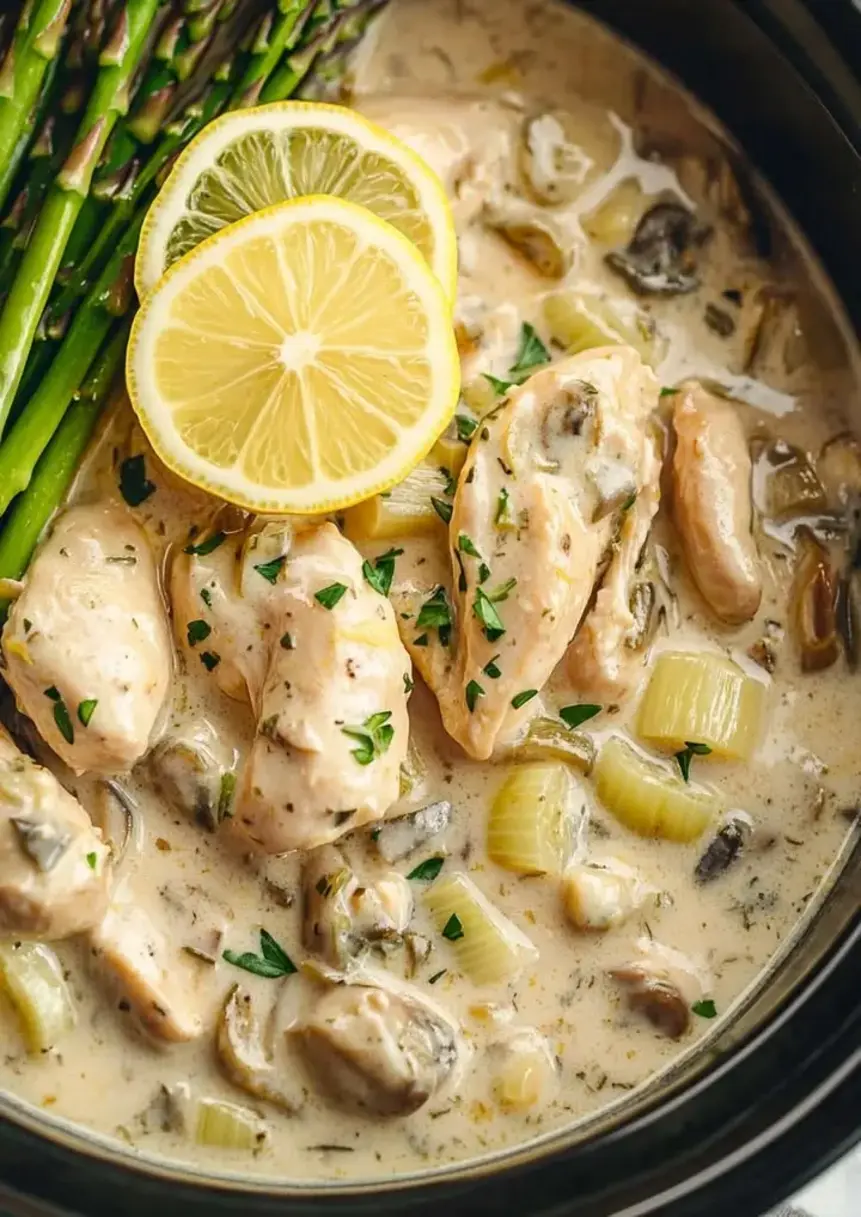
Table of Contents
Creamy Lemon Tarragon Chicken with Leeks and Asparagus – A Slow-Simmered Skillet Treasure
I still remember the first time I made this creamy lemon tarragon chicken in my tiny NYC apartment kitchen, the scent of leeks softening in butter mingling with the scent of tarragon and lemon drifting through my open window. Growing up in Morocco, my mother taught me that the best dishes are the ones that demand a little patience — a slow simmer, a gentle hand, and the willingness to let flavors truly melt together. This lemon tarragon chicken recipe is the embodiment of that wisdom: a creamy chicken skillet that tastes like it’s been bubbling away for hours, yet comes together in under an hour. Every time I make it, I’m transported back to her kitchen in Marrakech, where the simplest ingredients became something extraordinary.
Imagine tender, golden-brown chicken nestled in a velvety sauce that’s bright with fresh lemon and fragrant with aniseedy tarragon, with sweet, silky leeks and crisp-tender asparagus adding pops of color and texture. The cream balances the acidity so perfectly that each spoonful feels both indulgent and refreshing. The sauce itself is the star: rich and luscious from the heavy cream, with a subtle tang from Dijon mustard and a whisper of garlic. The leeks melt into the background, lending their subtle sweetness, while the asparagus stays just firm enough to contrast the creamy sauce. This is the kind of meal that makes you want to pause, take a deep breath, and savor every bite.
What sets my version apart is the slow-simmering technique — a method I honed during my culinary training in Paris, where I learned the power of low, gentle heat to transform simple cream sauces into something velvety and deep. This leek and asparagus chicken recipe is foolproof for beginners yet sophisticated enough for a dinner party. In this post, I’ll share my 💡 Stella’s Pro Tip for getting the creamiest sauce without curdling, plus a common mistake to avoid when adding asparagus so it stays perfectly tender. Whether you’re new to cooking or a seasoned home chef, this slow-simmered chicken dinner will become a staple on your table. From my NYC kitchen to yours — let’s dive in.
Why This Creamy Lemon Tarragon Chicken Recipe Is the Best
The Flavor Secret: The unique angle of this recipe is the slow-simmering technique itself. Most creamy chicken skillet recipes rush the process, but by taking the time to let the chicken gently cook in the sauce, the flavors meld in a way that feels deeply satisfying. The tarragon and lemon become one with the cream, each note distinct yet harmonious. My Moroccan roots taught me to layer flavors slowly, and my Parisian training refined the technique into something precise and reliable.
Perfected Texture: The key is browning the chicken first to build a savory foundation, then letting it finish cooking in the sauce. The leeks soften to silkiness, the asparagus stays bright, and the sauce thickens naturally without needing any flour or cornstarch. The result is a dish that looks and tastes restaurant-quality but is made entirely in one skillet. That’s the kind of weeknight magic I live for.
Foolproof & Fast: Despite its elegant flavor, this recipe comes together in 50 minutes from start to finish. The steps are straightforward: brown, simmer, add, serve. Even if you’ve never cooked with tarragon or leeks before, you’ll feel confident and successful. I’ve tested it in my own kitchen more times than I can count, and it delivers perfection every single time.
Creamy Lemon Tarragon Chicken Ingredients
I source my leeks from the Union Square Greenmarket in Manhattan, where the farmers’ leeks are as thick as my wrist and full of sweet, earthy flavor. The tarragon I grow in a little pot on my fire escape — a nod to my Paris days, when I kept herbs on every windowsill. Here’s everything you’ll need for this creamy lemon tarragon chicken.
Ingredients List
- 2 lbs boneless skinless chicken thighs or breasts, cut into large pieces
- 2 leeks, cleaned and thinly sliced
- 1 bunch asparagus, trimmed and cut into 2-inch pieces
- 1 cup chicken broth
- 1 cup heavy cream
- 2 tablespoons Dijon mustard
- 2 tablespoons fresh lemon juice
- 1 tablespoon lemon zest
- 2 teaspoons fresh tarragon, chopped (or 1 teaspoon dried)
- 1 teaspoon garlic powder
- Salt and black pepper, to taste
- 2 tablespoons butter or olive oil (for browning)
Ingredient Spotlight
Leeks: Leeks are the unsung hero of this dish. They bring a mellow, sweet onion flavor that becomes almost buttery when cooked slowly. Look for leeks with firm, white and light green parts and crisp, dark green tops (you’ll only use the white and light green parts). To clean them, slice lengthwise and rinse under cold water to remove any grit.
Tarragon: Fresh tarragon has a delicate licorice-like flavor that’s irreplaceable in this sauce. If you can’t find fresh, use half the amount of dried tarragon — but know that the fresh version truly makes this lemon tarragon chicken recipe shine. I grow mine on my fire escape in a small pot, and it thrives with minimal care.
Heavy Cream: Heavy cream is what gives the sauce its luxurious body. For a lighter option, you can substitute half-and-half, but the sauce will be thinner and less velvety. I tested this with coconut cream for a dairy-free version, and while it’s delicious, it changes the flavor profile significantly. More on that in the variations section.
| Original Ingredient | Best Substitution | Flavor / Texture Impact |
|---|---|---|
| Chicken thighs/breasts | Turkey cutlets or pork tenderloin | Similar texture; turkey is leaner, pork is slightly sweeter |
| Fresh tarragon | Dried tarragon (use 1 tsp) or fresh dill | Dill adds a different herbaceous note; dried tarragon is milder |
| Heavy cream | Canned coconut cream (full-fat) | Thick but coconut flavor emerges; dairy-free option |
| Leeks | 2 large shallots or 1 sweet onion | More pungent; less silky texture |
How to Make Creamy Lemon Tarragon Chicken — Step-by-Step
I promise you, this is one of the easiest yet most impressive creamy chicken skillet recipes you’ll ever make. Follow these steps, and you’ll have a restaurant-worthy meal on the table in under an hour.
Step 1: Brown the Chicken
Season your chicken pieces generously with salt and pepper. In a large skillet over medium heat, melt 2 tablespoons of butter or warm olive oil. Add the chicken in a single layer (work in batches if needed) and cook for 3-4 minutes per side, until golden brown. Remove the chicken to a plate and set aside. Don’t worry if it’s not cooked through — it will finish in the sauce.
💡 Stella’s Pro Tip: Pat the chicken dry with paper towels before seasoning. This ensures a deep golden crust rather than steaming the meat.
Step 2: Sauté the Leeks
In the same skillet, add the sliced leeks. Cook over medium heat for 3-4 minutes, stirring occasionally, until they’ve softened and are fragrant. Scrape up any browned bits from the bottom of the pan — that’s flavor you don’t want to lose.
⚠️ Common Mistake to Avoid: Don’t skip cleaning the leeks thoroughly. Grit between the layers can ruin the texture of your sauce. Slice them lengthwise, rinse under cold water, and pat dry.
Step 3: Build the Sauce
Add the chicken broth, heavy cream, Dijon mustard, lemon juice, lemon zest, chopped tarragon, and garlic powder to the skillet. Stir everything together, scraping the bottom to incorporate all the browned bits. Let it come to a gentle simmer.
💡 Stella’s Pro Tip: Add the lemon zest at this stage, not later. The heat helps release the oils from the zest, infusing the entire sauce with bright citrus flavor.
Step 4: Simmer the Chicken
Return the browned chicken pieces to the skillet, nestling them into the sauce. Bring the sauce to a gentle simmer, then reduce the heat to low. Cover the skillet and let it cook for 20 minutes. The chicken will become tender and the sauce will thicken slightly.
⚠️ Common Mistake to Avoid: Don’t let the sauce boil vigorously once the cream is added. A gentle simmer is all it needs — boiling can cause the cream to separate and become grainy.
Step 5: Add the Asparagus
After 20 minutes, add the asparagus pieces to the skillet, tucking them into the sauce. Cover and cook for another 5-7 minutes, until the asparagus is tender but still bright green and the chicken is fully cooked through.
💡 Stella’s Pro Tip: Trim the woody ends of the asparagus by bending each spear near the bottom — it will snap naturally at the point where it becomes tender. No knife needed.
Step 6: Finish and Serve
Taste the sauce and adjust seasoning with salt and pepper. If you want a thinner sauce, add a splash more chicken broth. Serve hot, spooning the creamy sauce, leeks, and asparagus over the chicken.
⚠️ Common Mistake to Avoid: Don’t overcook the asparagus. It should be tender but still have a slight bite — mushy asparagus loses its appeal and its nutritional value.
| Step | Action | Duration | Key Visual Cue |
|---|---|---|---|
| 1 | Brown chicken | 6-8 min | Deep golden crust on all sides |
| 2 | Sauté leeks | 3-4 min | Leeks are translucent and fragrant |
| 3 | Build sauce | 2 min | Sauce is smooth and bubbling gently |
| 4 | Simmer chicken | 20 min | Sauce has thickened slightly; chicken is tender |
| 5 | Add asparagus | 5-7 min | Asparagus is bright green and tender |
| 6 | Finish & serve | 1 min | Sauce coats the back of a spoon |
Serving & Presentation
This creamy lemon tarragon chicken is a showstopper on the plate. I love serving it in wide, shallow bowls so the creamy sauce has room to pool around the chicken and asparagus. Spoon the leeks and sauce generously over the meat, then finish with a sprinkle of fresh tarragon leaves and a twist of lemon zest for a pop of color. In my NYC apartment, I often serve it with crusty sourdough from the Orwashers Bakery on the Upper East Side to soak up every drop of sauce.
For a complete meal, pair this leek and asparagus chicken with buttery egg noodles, mashed potatoes, or a simple side of steamed rice. The sauce clings beautifully to all of them. A crisp green salad with a lemony vinaigrette is a lovely counterpoint to the richness of the dish. And if you’re feeling French-inspired, a glass of unoaked Chardonnay or Sauvignon Blanc is a wonderful match.
| Pairing Type | Suggestions | Why It Works |
|---|---|---|
| Side Dish | Buttered egg noodles, mashed potatoes, steamed rice | The creamy sauce coats each grain or strand perfectly |
| Sauce / Dip | Extra sauce on the side, a drizzle of lemon aioli | Enhances the lemon and herb notes |
| Beverage | Unoaked Chardonnay, Sauvignon Blanc, dry rosé | Crisp acidity balances the creamy sauce |
| Garnish | Fresh tarragon leaves, lemon zest, flaky sea salt | Adds freshness, color, and a final burst of flavor |
Make-Ahead, Storage & Reheating
One of the things I love about this slow-simmered chicken dinner is how well it keeps. In my busy NYC life, I often make a double batch on Sunday and enjoy it for easy lunches throughout the week. The flavors actually deepen overnight, making the leftovers even more delicious. Here’s how to store and reheat it properly.
| Method | Container | Duration | Reheating Tip |
|---|---|---|---|
| Refrigerator | Airtight container | Up to 4 days | Reheat gently on stovetop over low heat, adding a splash of broth to loosen the sauce |
| Freezer | Freezer-safe container or zip-top bag | Up to 3 months | Thaw overnight in fridge; reheat on stovetop, stirring often to keep the sauce smooth |
| Make-Ahead | Prepare through Step 4; refrigerate before adding asparagus | Up to 2 days in advance | Add fresh asparagus when reheating for best texture |
When reheating, the most important thing is to use low heat and stir gently. High heat can cause the cream sauce to separate. If you’re reheating in the microwave, use 50% power and stir every 30 seconds. For frozen portions, I recommend thawing in the refrigerator overnight and reheating in a skillet with a tablespoon of chicken broth to restore the silky consistency. The asparagus will soften a bit on reheating, but the flavor remains absolutely lovely.
Variations & Easy Swaps
This creamy lemon tarragon chicken is wonderfully adaptable. I’ve tested several variations in my kitchen, and each one brings something new to the table. Here’s a quick overview, followed by my three favorite twists.
| Variation | Key Change | Best For | Difficulty Impact |
|---|---|---|---|
| Moroccan Spice Twist | Add 1 tsp cumin and ½ tsp cinnamon to the sauce | Warm, aromatic depth | Easy — no extra steps |
| Dairy-Free Version | Use full-fat coconut cream instead of heavy cream | Dairy-free / lactose-free diet | Easy — note mild coconut flavor |
| Spring Vegetable Medley | Add sugar snap peas, fava beans, and peas with the asparagus | Fresh, seasonal abundance | Easy — add in Step 5 |
Moroccan Spice Twist
Growing up in Morocco, my mother often added warm spices to creamy dishes to balance the richness. For this variation, simply add 1 teaspoon of ground cumin and ½ teaspoon of cinnamon to the sauce in Step 3. The cumin adds an earthy warmth, and the cinnamon brings a subtle sweetness that pairs beautifully with the lemon and tarragon. It’s a nod to my heritage and a lovely way to change the flavor profile without extra work. Serve it with couscous for a truly North African-inspired meal.
Dairy-Free Version
To make this creamy lemon tarragon chicken dairy-free or lactose-free, replace the heavy cream with full-fat canned coconut cream. The sauce will still be rich and luscious, though you’ll notice a subtle coconut flavor. I tested this version twice, and the key is to use a good-quality coconut cream without added stabilizers. Add 1 extra teaspoon of lemon juice to brighten the flavor and cut through the coconut’s natural sweetness. The result is a beautiful, creamy sauce that’s completely dairy-free and every bit as satisfying as the original.
Spring Vegetable Medley
When I visit the Union Square Greenmarket in early spring, I can’t resist loading up on sugar snap peas, fava beans, and English peas. For this variation, add 1 cup of sugar snap peas (halved) and ½ cup of shelled fava beans or peas along with the asparagus in Step 5. The medley of spring vegetables adds color, texture, and freshness that makes the dish even more vibrant. It’s my favorite way to celebrate the season, and it turns this leek and asparagus chicken into a true springtime showpiece.
Can I swap the tarragon for another herb in creamy lemon tarragon chicken?
Absolutely, though the flavor profile will shift beautifully. Fresh tarragon has a distinct anise-like quality that’s hard to replicate exactly, but dried tarragon works well — use half the amount (1 teaspoon instead of 2). For a completely different but equally lovely result, try fresh dill (adds a bright, almost citrusy note) or fresh thyme (earthy and woodsy). Rosemary is a bolder choice that pairs nicely with lemon. I’ve tested all of these, and my personal favorite swap is dill when I want a lighter, more spring-like flavor. Just remember that delicate herbs like tarragon and dill are best added near the end of cooking to preserve their aroma.
What’s the best way to trim and prepare leeks for slow-simmered chicken?
Leeks can be sneaky — they trap grit between their layers, so proper cleaning is essential. Start by cutting off the dark green tops and the root end, leaving the white and pale green parts. Slice the leek in half lengthwise, then cut into half-moons about ¼-inch thick. Place the slices in a bowl of cold water and swish them around with your hands — the grit will sink to the bottom. Lift the leeks out with a slotted spoon or your hands, leaving the sandy water behind, then pat them dry on a clean kitchen towel or in a salad spinner. This method ensures your creamy sauce stays silky and grit-free, which is something I learned the hard way during my early days in Paris!
Should I add the asparagus at the beginning or end of the slow-simmering process?
Always add the asparagus toward the end! Asparagus cooks relatively quickly — just 5 to 7 minutes — and you want it to be tender but still bright green and slightly firm to the bite. If you add it at the beginning, it will turn mushy, grayish, and lose its wonderful texture. In this recipe, you add the asparagus after the chicken has simmered for 20 minutes, then cook for just 5-7 more minutes with the lid on. This timing ensures the asparagus absorbs the creamy lemon tarragon sauce while retaining its shape and color. This technique is a classic French approach that I learned in culinary school — vegetables are always added at the right moment to preserve their integrity.
How can I make this creamy lemon tarragon chicken dairy-free or lactose-free?
The best dairy-free swap I’ve tested is full-fat canned coconut cream. Replace the 1 cup of heavy cream with 1 cup of coconut cream (the thick, creamy part from a can of full-fat coconut milk). The sauce will still be rich and velvety, though you’ll get a subtle coconut flavor that pairs surprisingly well with the lemon and tarragon. I recommend adding an extra teaspoon of lemon juice to brighten it up. For a lighter option, you can use unsweetened cashew cream (soaked cashews blended with water), which has a more neutral flavor but a thinner consistency. Avoid low-fat coconut milk — it won’t thicken properly and can make the sauce watery. I’ve served the coconut cream version to dairy-loving friends, and they all gave it two thumbs up.
Can I use chicken breasts instead of thighs in this recipe?
Yes, you can absolutely use boneless skinless chicken breasts. The key is to adjust the simmering time slightly since breasts cook faster and can dry out if overcooked. Cut the breasts into large, even pieces (about 2-inch chunks) and brown them just as you would thighs. During the slow-simmering step, reduce the covered cooking time from 20 minutes to about 12-15 minutes, then add the asparagus and cook for another 5-7 minutes. Check for doneness by cutting into the thickest piece — it should be opaque throughout and register 165°F on an instant-read thermometer. Chicken thighs are more forgiving due to their higher fat content, but breasts work beautifully if you keep an eye on the timing. This is a great option for anyone watching their fat intake.
Can I use dried tarragon instead of fresh in this creamy chicken skillet?
Yes, dried tarragon works as a substitute, but there are a few important differences. Dried herbs are more concentrated, so use 1 teaspoon of dried tarragon in place of 2 teaspoons of fresh. Add the dried tarragon earlier in the cooking process — during the sauce-building stage in Step 3 — so it has time to rehydrate and release its flavor. Fresh tarragon has a bright, delicate anise note that is partially lost in drying, so the dried version will be more subtle and slightly earthier. If you only have dried, I recommend adding a squeeze of extra lemon juice at the end to brighten the dish. I keep both fresh and dried on hand in my NYC kitchen, and either will give you a delicious result.
How do I prevent the cream sauce from curdling or separating?
The number one rule for a silky cream sauce is to avoid high heat. Always simmer gently — never boil — once the cream has been added. Boiling causes the fat in the cream to separate from the liquid, resulting in a grainy, curdled appearance. Also, bring your cream to room temperature before adding it to the pan; a sudden temperature shock can cause separation. If you’re using a dairy-free alternative like coconut cream, the same rule applies — low and slow is your friend. I also recommend using heavy cream (at least 36% milk fat) because it’s more stable than light cream or half-and-half. If your sauce does start to look a little grainy, whisk in a tablespoon of cold chicken broth or a splash of fresh cream to help bring it back together.
What can I serve with creamy lemon tarragon chicken for a complete meal?
This dish is wonderfully versatile when it comes to pairings. For soaking up the creamy sauce, I love buttery egg noodles, mashed potatoes, or steamed jasmine rice — each one catches the sauce in a different way. Crusty sourdough or a French baguette is also fantastic for sopping up every last drop. On the vegetable side, a simple green salad with a lemony vinaigrette cuts through the richness beautifully, or you can serve roasted green beans or sautéed spinach. For beverages, a glass of unoaked Chardonnay or Sauvignon Blanc complements the lemon and tarragon perfectly. In my home, I often serve it with a side of roasted baby carrots dressed with honey and cumin — a little nod to my Moroccan roots that makes the meal feel extra special.
How long does this slow-simmered chicken dinner last in the fridge?
This recipe keeps beautifully in the refrigerator for up to 4 days when stored in an airtight container. The flavors actually deepen and meld together overnight, making leftovers even more flavorful. The asparagus will soften slightly over time, but it still tastes wonderful. For best results, let the dish cool completely before refrigerating — I usually let it sit at room temperature for about 30 minutes, then transfer to a container and refrigerate. Reheat gently on the stovetop over low heat, adding a splash of chicken broth if the sauce has thickened too much. If you plan to freeze it, the dish will keep for up to 3 months. I often freeze individual portions for easy weeknight lunches.
Can I add other vegetables to this leek and asparagus chicken recipe?
Absolutely! This recipe is a wonderful canvas for spring and summer vegetables. Along with the asparagus, try adding sugar snap peas, snow peas, fava beans, or English peas — all of which cook in about the same time. For a heartier version, you can add sliced mushrooms or zucchini along with the leeks in Step 2. If you want to include carrots or bell peppers, slice them thinly and sauté them with the leeks so they have time to soften. The key is to add quick-cooking vegetables (like peas and asparagus) at the end, and slower-cooking ones (like mushrooms and carrots) earlier. I often make a “spring garden” version with a mix of whatever looks best at the Union Square market, and it’s always a hit.
Share Your Version!
I absolutely love hearing how this creamy lemon tarragon chicken turns out in your kitchen. Did you try the dairy-free version with coconut cream? Did you add a pinch of cumin for a Moroccan twist? Or maybe you loaded it up with spring vegetables from your local farmers market? Drop a comment below and let me know — I read every single one, and your feedback helps me create even better recipes for you. If you’re on Instagram or Pinterest, tag me @leosfoods so I can see your beautiful creations and share them with our community.
From my NYC kitchen to yours — I hope this recipe brings as much warmth to your table as it does to mine. — Stella 🧡
Love This Recipe? Save It to Pinterest!
If you enjoyed this Creamy Lemon Tarragon Chicken recipe, don’t let it get lost in your browser tabs! 😄 Pin it now so you can find it again anytime — and explore hundreds more tried-and-tested recipes waiting for you on my Pinterest boards.
👉 Follow Stella on Pinterest @stellarecipeblog
📌 Pin this recipe · 🔁 Re-pin your favorites · 💬 Tag me when you make it — I love seeing your creations!

Creamy Lemon Tarragon Chicken with Leeks and Asparagus Slow-Simmered to Perfection
A creamy, flavorful chicken dish with leeks and asparagus, simmered in a lemon tarragon sauce.
- Total Time: 50 minutes
- Yield: 4 1x
Ingredients
- 2 lbs boneless skinless chicken thighs or breasts, cut into large pieces
- 2 leeks, cleaned and thinly sliced
- 1 bunch asparagus, trimmed and cut into 2-inch pieces
- 1 cup chicken broth
- 1 cup heavy cream
- 2 tablespoons Dijon mustard
- 2 tablespoons fresh lemon juice
- 1 tablespoon lemon zest
- 2 teaspoons fresh tarragon, chopped
- 1 teaspoon garlic powder
Instructions
- Season chicken pieces with salt and pepper. In a large skillet over medium heat, brown chicken on all sides. Remove and set aside.
- In the same skillet, add leeks and cook until softened, about 3-4 minutes.
- Add chicken broth, heavy cream, Dijon mustard, lemon juice, lemon zest, tarragon, and garlic powder. Stir to combine.
- Return chicken to the skillet. Bring to a simmer, then reduce heat to low. Cover and cook for 20 minutes.
- Add asparagus pieces, cover, and cook for an additional 5-7 minutes until asparagus is tender and chicken is cooked through.
- Adjust seasoning if needed. Serve hot.
Notes
This dish is slow-simmered for a creamy, rich flavor. For a thinner sauce, add a bit more chicken broth.
- Prep Time: 15 minutes
- Cook Time: 35 minutes
- Method: Main Course
- Cuisine: American
Nutrition
- Calories: 520
- Sugar: 5g
- Fat: 34g
- Carbohydrates: 12g
- Protein: 38g

Tried This Recipe? Leave a Comment!
Did you make this recipe? I’d love to hear how it turned out! Please leave a comment and a rating below. Your feedback helps other home cooks and supports cheerychop.com!
For more delicious inspiration, follow me on Pinterest!