Galette Dough Recipe (From Scratch)
Table of Contents
Galette Dough (From Scratch) – Buttery Crust with Moroccan Touch
Growing up on the bustling streets of Marrakesh, I learned that the heart of a good meal is often a humble dough that whispers promise. Back in Paris, my culinary school mornings taught me that great pastry starts with texture and timing. Now, in the vibrant food markets of New York City, I blend those two worlds—Moroccan warmth and French technique—into a buttery galette dough that sets the stage for whatever filling you choose.
This crust is a piece of sunshine: a golden, flaky surface that feels like a crisp croissant, yet rises to a tender interior with a subtle nutty note from the cold butter cubes. Imagine the aroma of fresh cumin and ras el hanout drifting from the oven, followed by a gentle crunch as you bite into the silver‑lined edge, only to discover a creamy, sweet, or savory filling waiting in the center. The visual is a rustic circle of dough with a bulging, glossy eye of flavor, like a French apple galette or a Moroccan almond tian, all wrapped in a buttery embrace.
I’ve spent countless afternoons stirring dough in my kitchen, watching it transform from humble flour to a delicate canvas. I’ve discovered that quirks—such as chilling the dough a full hour, or incorporating a pinch of seasoned salt—make all the difference. The result is a dough you can trust whether you’re plating a peach galette for brunch or a savory spinach and feta tart for dinner. Stay tuned for the pro tip that will save you from soggy corners and dry edges.
Why This Galette Dough Recipe Is The Best
The secret of this dough lies in its dual origins: the Southern European respect for olive oil and the North African love for herbs. I fold in ras el hanout just before chilling, letting the spices seep into the butter. That subtle infusion gives the crust an aromatic brightness that sets it apart from ordinary pizza dough or plain croissant layers.
Texture is king, and this dough delivers: it remains pliable while still crisping into a fine, sand‑like crunch that doesn’t divide into flour dust. I learned that prompt resting in the fridge gives the gluten time to relax, so the dough never tears when you roll it out as a 12‑inch circle.
Even beginners will love this recipe because each step is clearly mapped, the dough does not go to waste, and the finish is professional‑like. You’ll find that the slightly browned edge follows a predictable pattern—no more second‑friendly fumbling with thin rims.
Galette Dough Ingredients
I usually hunt for these ingredients at the Union Square Greenmarket, where fresh butter sells sold by the cold, unpasteurized kind. I pick up a light, fragrant loaf of French baguette from a nearby boulangerie, and I adore drizzling a touch of Moroccan saffron into the water to deepen the dough’s hue.
Ingredients List
- 1 ½ cups (213 gr.) all‑purpose flour, plus extra for dusting.
- ½ teaspoon kosher salt.
- 10 tablespoons (142.5 gr.) cold unsalted butter, cut into small cubes.
- 4‑5 tablespoons ice‑cold water.
- 1 large egg yolk.
Ingredient Spotlight
All‑purpose flour – The backbone of any dough, choose a brand with a balanced protein content for a tender bite. In the U.S., brands like King Arthur provide consistency.
Cold butter – Using cubed butter kept on ice creates fat pockets that steam into the dough, giving rise to flakiness. If you must, substitute with salted butter; you’ll need to reduce the salt in the dough by ¼ teaspoon.
Ice‑cold water – This keeps the butter from melting early. For a dairy free option, use non‑fat milk and add a pinch of baking soda to retain crispness.
| Original Ingredient | Best Substitution | Flavor / Texture Impact |
|---|---|---|
| All‑purpose flour | Whole‑wheat flour (half) | Adds nuttiness, denser crumb. |
| Cold butter | Cold margarine (unsalted) | May reduce flakiness slightly. |
| Ice‑cold water | Cold milk | Dairy flavor, slightly richer. |
How to Make Galette Dough — Step-by-Step
Here’s the straightforward path from raw ingredients to ready dough, with a small trick that keeps the edges from drying out.
Step 1: Prepare Ingredients
Place flour and salt in the bowl of a food processor. Pulse a few times to combine. Add in the cold butter cubes. Pulse 8‑10 times until butter resembles small clumps.
💡 Stella’s Pro Tip: Keep butter chilled on ice while the processor runs to avoid melting.
Step 2: Add Cold Water
Turn the machine on, add 4 tablespoons of ice‑cold water in one‑tablespoon increments until the mixture starts coming together.
⚠️ Common Mistake to Avoid: Adding too much water at once, which can make the dough sticky.
Step 3: Assemble Dough
At this point, the dough should start to form into a ball. If not, add the remaining water in small amounts until it does. Stop when the dough holds together without excessive sticking.
💡 Stella’s Pro Tip: Use a clean kitchen towel to absorb any excess moisture before chilling.
Step 4: Shape into Disk
Transfer onto a lightly floured surface, form it into a 4‑inch disk, and wrap tightly in plastic wrap. Place in the refrigerator for at least 1 hour, or overnight for deep flavor.
⚠️ Common Mistake to Avoid: Letting the dough rest at room temperature for too long, causing gluten tightening.
Step 5: Pre‑Roll
Take the dough out of the fridge 10 minutes before you’re ready to roll it out. This keeps it pliable.
💡 Stella’s Pro Tip: Lightly flour the work surface to prevent unintended sticking.
Step 6: Roll Dough
Roll the dough into a large 12‑inch circle. Transfer onto parchment paper, then onto a baking sheet. The parchment helps you lift the dough without damage.
⚠️ Common Mistake to Avoid: Rolling too thin in some spots, then patching with dough scraps.
Step 7: Place Filling
Place your chosen filling—sweet or savory—on top, slightly centered, leaving a 3‑inch border around the edges.
💡 Stella’s Pro Tip: Drizzle a little olive oil over the filling to lock moisture.
Step 8: Pleat Sides
Roll the sides of the dough overlapping as you go around, pleating along the edges, which traps steam and seals the crust.
⚠️ Common Mistake to Avoid: Skipping pleats, leading to uneven baking.
Step 9: Brush Yolk
Brush the edges of the dough with the egg yolk, which adds shine and helps the crust brown evenly.
💡 Stella’s Pro Tip: Keep egg yolk cold; beat it gently to avoid over‑whipping.
Step 10: Bake
Bake at 375°F (190°C) for 25‑30 minutes, until the crust is golden and the filling is bubbling.
💡 Stella’s Pro Tip: If edges brown too fast, tent with foil.
| Step | Action | Duration | Key Visual Cue |
|---|---|---|---|
| 1 | Pulse in processor until clumps | Butter looks like coarse crumbs | Crumbs visible |
| 2 | Add water incrementally | 1‑min | Dough starts to clump |
| 3 | Bind into ball | 2‑min | Ball holds without sticking |
| 4 | Wrap & chill | 60‑min | Smooth disk |
| 5 | Let cool 10‑min | 5‑min | Stripe from center |
| 6 | Roll to 12” circle | 10‑min | Even thickness |
| 7 | Add filling | 5‑min | Border visible |
| 8 | Pleat & seal | 7‑min | Crimps at edge |
| 9 | Brush with yolk | 2‑min | Glazed rim |
| 10 | Bake | 25‑30min | Golden crust |
Serving & Presentation
When you slice a galette, you’re presenting a piece of art. Position the slice on a warmed plate, drizzle a thin bind of olive oil or a lemon‑herb vinaigrette for savory versions, or a drizzle of honey and crushed pistachios for sweet versions. A sprinkle of fresh thyme or sage gives a fragrant crown.
For a brunch, serve alongside a sunny‑side‑up egg and roasted tomatoes; for a dinner entrée, pair with a fresh arugula salad tossed in orange vinaigrette, mirroring the Mediterranean synergy of my Moroccan upbringing.
| Pairing Type | Suggestions | Why It Works |
|---|---|---|
| Side Dish | Roasted root vegetables, mixed greens | Balances richness of crust |
| Sauce / Dip | Tzatziki, mint yogurt, honey glaze | Adds moisture and contrast |
| Beverage | Sparkling rosé, cool iced tea | Complementing tart and sweet notes |
| Garnish | Fresh herbs, caramelized nuts, citrus zest | Adds visual and flavor pop |
Make-Ahead, Storage & Reheating
When the city moves fast, I often batch‑cook this dough in a cozy kitchen apartment and pack it for the week. The dough stays pliable for up to 48 hours in the fridge, while an alternative pre‑frozen version keeps it safe for a month.
| Method | Container | Duration | Reheating Tip |
|---|---|---|---|
| Refrigerator | Plastic sealable bag | 2 days | Reheat at 375°F for 10‑12 min. |
| Freezer | Vacuum sealed bag | 1 month | Thaw overnight, bake at 375°F 12‑15 min. |
| Make‑Ahead | Pre‑rolled sheets | 3 days before | Assemble just before baking to preserve crispness. |
I love reheating a cold galette by reviving it in a hot oven — a quick 8‑minute burst turns it back into that warm, buttery crust I adore. If you foresee a week‑long staycation, keep a stack of pre‑filled sheets on hand, and each day just pop a sheet into the oven for a fresh bite.
Variations & Easy Swaps
| Variation | Key Change | Best For | Difficulty Impact |
|---|---|---|---|
| Caramel Apple Sweet Galette | Add cinnamon, caramel drizzle. | Weekend brunch. | Easy. |
| Gluten‑Free Version | Replace all‑purpose with cake flour + tapioca starch. | Gluten‑free diners. | Medium. |
| Mediterranean Olive & Feta | Add chopped olives, crumbled feta, oregano. | Tuesday night. | Easy. |
Caramel Apple Sweet Galette
Blade‑sliced apples caramelized in butter, sprinkled with cinnamon, and drizzled with a maple glaze make this version a sunrise favorite. The buttery crust holds the caramel so it stays moist and the spice enriches the pop, resonating with the sweet memory of Marrakech’s night markets.
Gluten‑Free Version
Swap the all‑purpose flour with a blend of cake flour and a tablespoon of tapioca starch. The dough remains tender, and the flakiness holds up; the baking time is shortened by 2 minutes, keeping the savory notes sharp.
Mediterranean Olive & Feta
Integrate finely chopped Kalamata olives, crumbled feta, and fresh oregano into the filling. The olive oil’s briny undertone pairs with the buttery crust, giving a Mediterranean twist that alegories the crisp street flavors of the Lower East Side.
Share Your Version!
I’d love to hear how you make this dough your own. Drop a comment below with a star rating, a recipe tweak, or a photo of your finished galette. Tag me on Instagram or Pinterest with @leosfoods so I can see your creation! Could you try adding a splash of saffron to the water for extra aroma? 🤔
From my NYC kitchen to yours — I hope this recipe brings as much warmth to your table as it does to mine. — Stella 🧡
How long does galette dough stay fresh in the refrigerator?
Galette dough retains its best texture for up to 48 hours when stored in an airtight plastic bag in the refrigerator. Beyond that, the dough begins to lose its high‑fat, flaky quality. If you need longer storage, freeze the dough; it will keep up to a month while preserving flavor.
What’s the difference between galette dough and puff pastry?
Puff pastry relies on layers of dough and butter that produce a more dramatic rise through repeated folding, whereas galette dough is a single‑layered, laminar dough. The result is a lighter, more pliable crust that is easier to roll and a bit less airy than puff pastry but still buttery, making it ideal for both sweet and savory fillings.
Can I use this dough for a quiche?
Absolutely! Override the galette’s free‑form shape with a sliced pan and fill with eggs, cheese, and veggies. The butter pockets give a tender, flaky base that elevates the quiche. Roll the dough firm, place in a pie tin, add filling, then bake as usual.
How do I prevent the crust from drying out?
Ensuring the dough is cooled to room temperature before rolling helps; an overly cold batch will cling and be tough. Lightly flour the surface and paper, and brush the crust with a thin layer of beaten egg yolk before baking. If you bake in a cooler oven, tent with foil after 20 minutes to keep moisture in.
How much water can I add if the dough feels dry?
Begin with the minimum 4 tablespoons, adding additional drops a teaspoon at a time until the dough no longer sticks to your finger. It’s best to add water in small increments because too much can make the dough sticky and prevent the fine flaking you want. An extra 5–10 ml is usually enough.
Is cold butter necessary?
Cold butter keeps the fat solid so it intermittently melts during baking, forming steam pockets that produce flakiness. Warm or melted butter won’t produce the same crumb. Using room‑temperature butter will result in a denser, brioche‑like dough that’s not ideal for a galette.
Can I use this dough for a savory tart with vegetables?
Yes, the buttery, flaky base is perfect for roasted vegetables, cheeses, or a hearty quiche. Just let the tart bake for a few minutes past the filling’s doneness to harden the crust. The gentle pressure of rolling also makes the dough forgiving for denser fillings.
Should I freeze the dough once it’s shaped?
Freezing before shaping can freeze the butter fat, making subsequent rolling difficult. It’s best to freeze only the raw dough before the first rest. If you need to freeze, wrap it tightly in plastic, freeze for up to 30 days, and thaw in the refrigerator overnight before rolling.
What temperature should I bake a galette at?
375 °F (190 °C) works well for most fillings, ensuring a golden crust and properly cooked center. For delicate fillings like fruit, lower the heat to 350 °F (175 °C) and add a few minutes of baking time to avoid over‑browning while ensuring the crust reaches a light tan.
Why is the dough chewy if I bake too long?
Over‑baking draws out moisture, rendering the crust dry and dense. Keep a close eye on the color; golden brown indicates that the dough is done. If you over‑bake, it’s often due to a hotter oven setting or a too‑full filling that pulls heat, so reduce the temperature and shell in a foil tent as a quick remedy.
Love This Recipe? Save It to Pinterest!
If you enjoyed this Galette Dough recipe, don’t let it get lost in your browser tabs! 😄 Pin it now so you can find it again anytime — and explore hundreds more tried‑and‑tested recipes waiting for you on my Pinterest boards.
👉 Follow Stella on Pinterest @exorecipe
📌 Pin this recipe · 🔁 Re-pin your favorites · 💬 Tag me when you make it — I love seeing your creations!
Have a question, or want to share your twists? Drop me a note in the comments or connect on Pinterest! Your culinary conversation fuels my next recipe adventure.
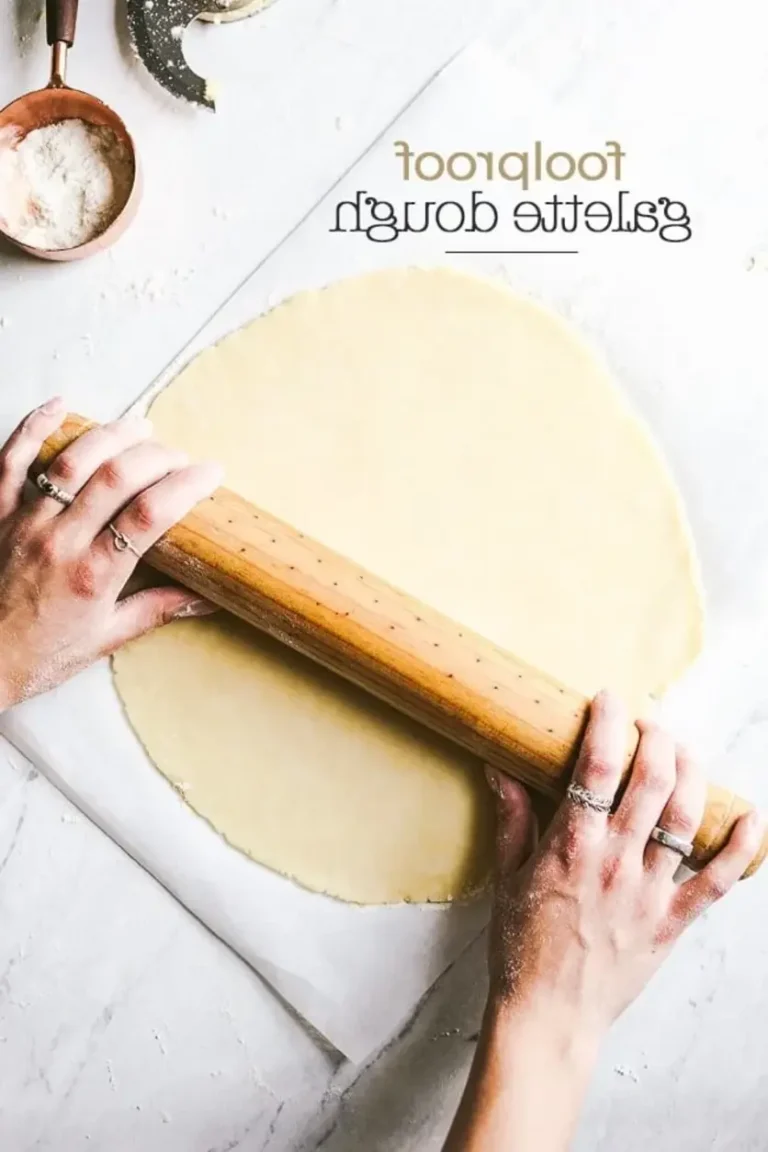
Galette Dough
A delicious galette starts with a buttery galette crust. This is my go-to galette dough recipe that I use for both sweet and savory galette recipes.
Ingredients
- 1 ½ cups (213 gr.) of all-purpose flour, more to flour the surfaces
- ½ teaspoon kosher salt
- 10 tablespoons (142.5 gr.) cold unsalted butter, cut into small cubes
- 4–5 tablespoons ice-cold water
- 1 large egg yolk
Instructions
- To make the galette dough: Place flour and salt in the bowl of a food processor. Pulse for a few times to mix. Add in the cold butter cubes. Pulse 8-10 times until butter resembles small clumps.
- Turn the machine on and add in 4 tablespoons of ice-cold water in one tablespoon increments.
- At this point, it should start to come together and form into a ball. If not add in the rest of the water until it does.
- Transfer onto a lightly floured surface, form it into a 4-inch disk, and wrap with plastic. Place in the fridge for at least 1 hour or overnight.
- Take it out of the fridge 10 minutes before you are ready to roll it out.
- Lightly flour your working surface. Roll the dough into a large 12-inch circle. Transfer onto the parchment paper and then onto the baking sheet.
- Place your filling (depending on the recipe you are using) on top slightly mounting in the middle, leaving a 3-inch border around the edges.
- Roll the sides of the dough overlapping as you go around and pleating the dough.
- Brush the edges of the dough (the outer crust) with egg yolk.
- Bake according to the instructions of the recipe you are using.