Foolproof Golden Garlic-Honey Confit Lamb Shoulder
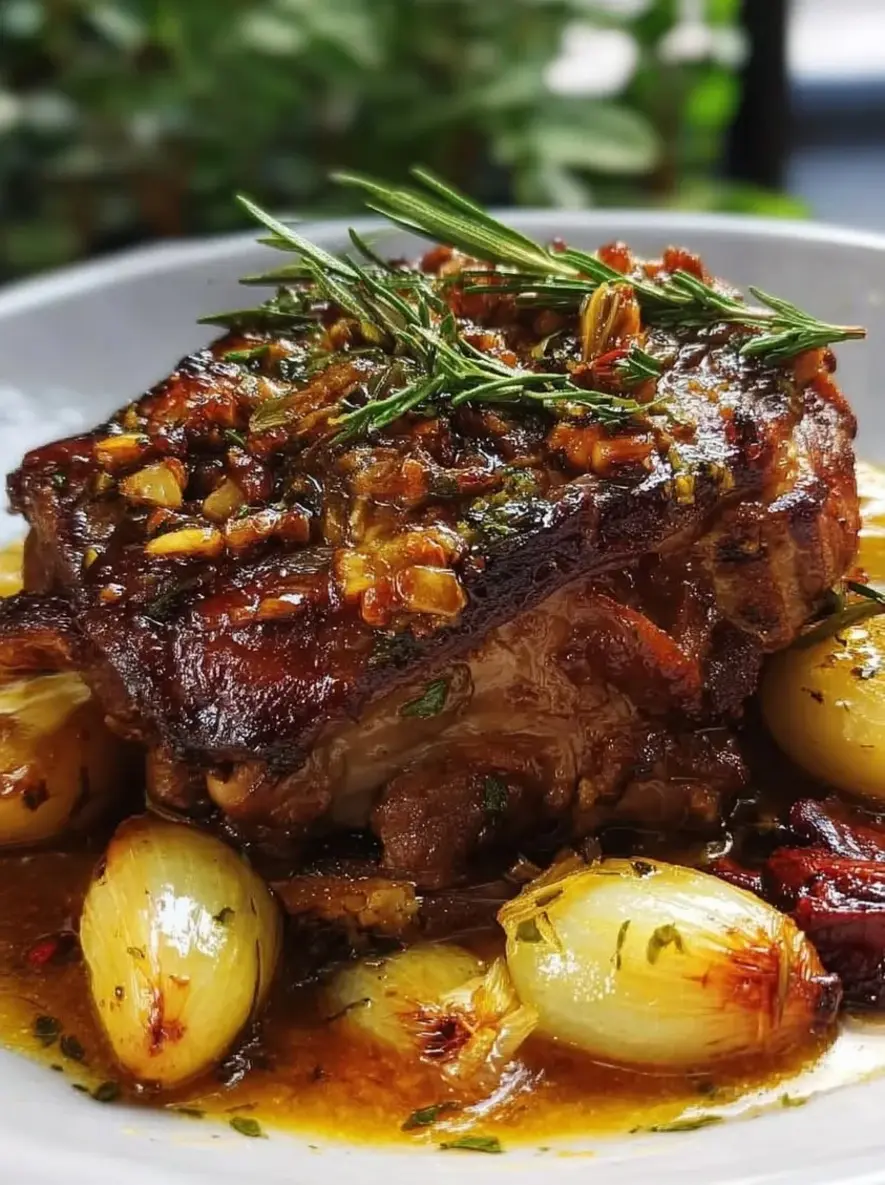
Table of Contents
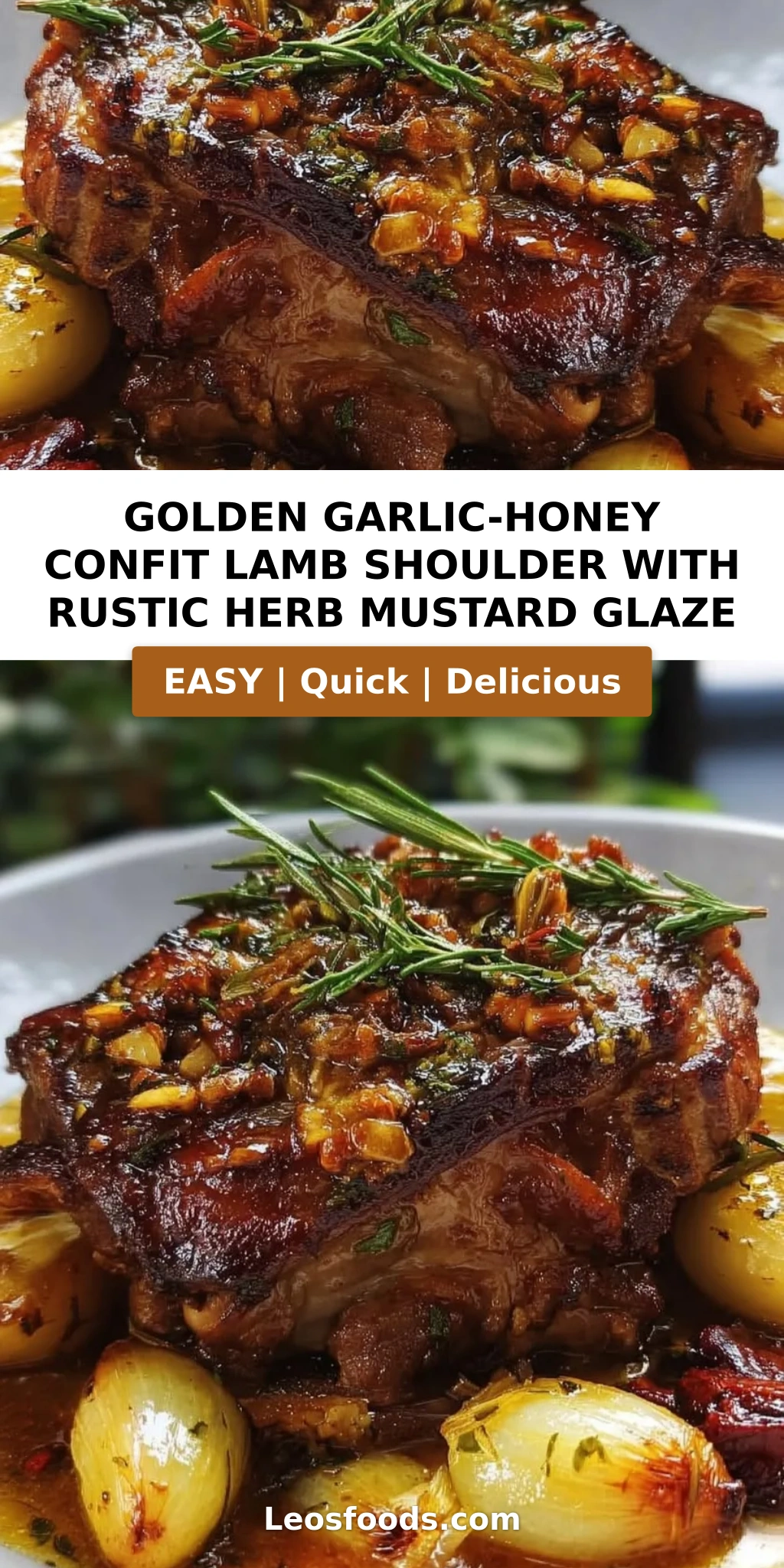
Golden Garlic-Honey Confit Lamb Shoulder with Rustic Herb Mustard Glaze – A Slow-Roasted Masterpiece for Your Sunday Table
I still remember the first time I made a golden garlic honey confit lamb shoulder in my tiny Parisian kitchen. I was a young culinary student then, my head full of French technique and my heart full of homesickness for the tagines my mother used to make in our little kitchen in Morocco. That evening, as the garlic and honey began to perfume the apartment, my roommate — a Parisian who swore by her grandmother’s blanquette de veau — knocked on my door and asked, “Qu’est-ce que c’est?” What is that? That moment, right there, is what this confit lamb shoulder recipe means to me: a bridge between the slow-cooked warmth of North Africa and the refined elegance of French cooking.
Imagine this: a bone-in lamb shoulder, slowly surrendering to the gentle heat of a 275°F oven for hours, bathing in a fragrant pool of golden garlic, honey, and mustard. The meat becomes so tender you can pull it apart with a fork — literally. Then we crank the heat, and that rustic herb mustard glaze caramelizes into a sticky, tangy, herb-flecked crust that shatters just slightly as you cut into the succulent flesh beneath. The aroma alone — sweet honey, pungent garlic, sharp whole grain mustard with pops of mustard seed — will bring everyone in your house drifting into the kitchen, asking when dinner will be ready.
What makes this honey mustard lamb shoulder different from every other lamb recipe you’ve seen? It’s the confit method — gentle, low-temperature cooking that transforms a tough cut into something spectacular. My version uses a clever oven confit technique that gives you all the tenderness of a sous vide without requiring any special equipment. I’ve tested this recipe dozens of times in my NYC kitchen, and I’m going to walk you through every temperature, every timing cue, and every pro tip so you can nail it on your first try. I’ll even show you the one mistake most home cooks make that dries out their lamb. Ready? Let’s cook.
Why This Golden Garlic-Honey Confit Lamb Shoulder Recipe Is the Best
The Flavor Secret: The magic here lies in the two-step cooking process. First, we confit the lamb low and slow with garlic cloves that soften into buttery, mellow sweetness. The honey doesn’t just add sweetness — it helps the meat caramelize beautifully during the final high-heat blast. The Dijon and whole grain mustards bring a sharp, tangy complexity that cuts through the richness of the lamb. This isn’t a one-note sweet roast; it’s layered, balanced, and deeply savory. My Moroccan roots taught me that sweet and savory belong together — think of lamb tagine with apricots and honey — and my French training taught me how to build that harmony with precision.
Perfected Texture: The confit technique is the star here. By cooking the lamb shoulder at 275°F for 4–5 hours, the connective tissue slowly melts into gelatin, leaving the meat impossibly tender but not falling apart into shreds (unless you want it to). The key is covering the pan tightly with foil to trap steam and create a gentle, moist environment — my version of a confit bath. Then the uncovered blast at 425°F creates that glorious caramelized crust that adds texture and depth. This two-temperature method is something I learned from a chef in Lyon who swore by it for duck confit. It works like a dream on lamb.
Foolproof & Fast to Prepare: Don’t let the long cook time fool you — the active prep is only 15 minutes. This is the ideal recipe for a lazy Sunday or a holiday dinner when you want to impress without spending all day in the kitchen. Season the lamb, mix the glaze, rub everything together, and pop it in the oven. Then you have hours to relax, set the table, or make side dishes while your home fills with the most incredible aroma. Even if you’re a beginner, this recipe is forgiving: the low temperature gives you a wide window of doneness, and the covering keeps the meat from drying out.
Golden Garlic-Honey Confit Lamb Shoulder Ingredients
I source my lamb from the farmers market in Union Square on Saturday mornings — the pasture-raised shoulders from a farm in the Hudson Valley have the most beautiful marbling and clean flavor. When I pick up the garlic, I think of the spice souks in Marrakech where my mother would buy whole braids of garlic, and when I reach for the honey, I always choose a local wildflower variety from a beekeeper I’ve come to know in Brooklyn. These ingredients are simple, but choosing them well makes all the difference.
Ingredients List
- 1 bone-in lamb shoulder (4–5 lbs)
- 10 garlic cloves, peeled
- 3 tablespoons Dijon mustard
- 2 tablespoons whole grain mustard
- 3 tablespoons honey
- 3 tablespoons olive oil
- Kosher salt and freshly ground black pepper, to taste
- Fresh rosemary or thyme sprigs (optional, for extra depth)
Ingredient Spotlight
Lamb Shoulder: This is the cut that makes this recipe shine. It’s well-marbled and full of connective tissue that breaks down into silky gelatin during the long, slow cook. Look for a bone-in shoulder that’s evenly thick — about 4–5 pounds is ideal for a 6-serving meal. If you can only find boneless, reduce the cook time by about 30 minutes and check for tenderness earlier. The bone adds flavor and helps conduct heat gently.
Garlic: I use a full 10 cloves here, and here’s why: during the low-temperature cook, the garlic mellows dramatically, losing its sharp bite and turning into sweet, buttery, almost spreadable nuggets. The cloves infuse the entire dish with a subtle, warm garlic flavor that never overwhelms. Use fresh garlic — not the pre-peeled jarred kind, which can taste bitter. I buy heads of garlic with tight, unbroken skins and peel them myself while I’m prepping.
Mustard: This recipe uses two types of mustard for a reason. Dijon provides a smooth, sharp, creamy base that emulsifies into the glaze. Whole grain mustard adds texture and little bursts of tangy mustard seeds that pop as you eat. Together, they create a complex mustard flavor that’s both bold and refined. Look for a good-quality Dijon like Maille or a French import — the flavor is noticeably brighter than standard yellow mustard.
Honey: The honey here does double duty. It adds natural sweetness that balances the sharp mustard and savory lamb, and it helps create that gorgeous caramelized crust during the final high-heat roast. I prefer a mild, runny wildflower or clover honey — something that won’t overpower the other flavors. Avoid strongly flavored honey like buckwheat or chestnut, which can dominate the dish. If your honey has crystallized, warm the jar gently in a bowl of hot water before measuring.
| Original Ingredient | Best Substitution | Flavor / Texture Impact |
|---|---|---|
| Bone-in lamb shoulder | Boneless lamb shoulder (reduce cook time by 30 min) | Less rich; cooks slightly faster; still tender |
| Dijon mustard | Spicy brown mustard or 2 tsp dry mustard + 1 tbsp vinegar | Slightly sharper; less creamy texture |
| Whole grain mustard | 1 tbsp Dijon + 1 tsp toasted mustard seeds | Similar tang; fewer texture pops |
| Honey | Maple syrup or light agave nectar | Different sweetness profile; maple adds woody notes |
| Olive oil | Avocado oil or grapeseed oil | Neutral flavor; same cooking properties |
How to Make Golden Garlic-Honey Confit Lamb Shoulder — Step-by-Step
Trust me when I say this: if you can set a timer and follow a few temperatures, you can make this slow cooked lamb shoulder like a pro. Take it one step at a time, and don’t rush the resting period — it’s part of the cooking.
Step 1: Preheat and Season
Preheat your oven to 275°F (135°C). While the oven is heating, pat the lamb shoulder dry with paper towels — moisture is the enemy of browning. Season the lamb generously on all sides with kosher salt and freshly ground black pepper. Don’t be shy; a 4-pound roast needs a good coating. Let it sit at room temperature for about 15 minutes while you prepare the glaze.
💡 Stella’s Pro Tip: Season the lamb at least 30 minutes ahead if you have time. The salt will penetrate the meat, seasoning it from the inside out. This is called dry-brining, and it’s a trick from my Paris training that makes every roast more flavorful.
Step 2: Make the Glaze
In a small bowl, whisk together the Dijon mustard, whole grain mustard, honey, and olive oil until smooth and emulsified. The mixture should be thick but spreadable — like a loose paste. Taste it: it should be tangy, sweet, and a little sharp. If you like more heat, add an extra teaspoon of Dijon. If you prefer a sweeter crust, add a little more honey. This is your signature blend, so adjust it to your palate.
⚠️ Common Mistake to Avoid: Don’t use cold honey straight from the refrigerator — it will be too stiff to whisk smoothly. If your honey is thick or crystallized, warm it in the microwave for 10 seconds or set the jar in a bowl of hot water for a few minutes. A smooth glaze means even coverage.
Step 3: Glaze and Aromatics
Place the seasoned lamb shoulder in a roasting pan just large enough to hold it comfortably. Rub the peeled garlic cloves all over the meat — press them into the surface so they adhere. Then, using a spatula or your hands (I always use my hands — it’s more personal), spread the mustard glaze evenly over the entire surface of the lamb, including the sides. Tuck any garlic cloves that fall off into the pan around the meat. If using fresh rosemary or thyme, scatter the sprigs around the pan.
💡 Stella’s Pro Tip: Make small slits in the lamb shoulder with a paring knife and push a garlic clove half into each slit. This infuses the meat from the inside as it cooks, creating pockets of sweet, mellow garlic throughout the roast. It’s a little extra step that makes a huge difference.
Step 4: The Confit Roast
Cover the roasting pan tightly with heavy-duty aluminum foil. This is crucial — the foil traps steam and creates the moist, gentle environment that defines the confit method. Place the pan in the preheated oven and roast for 4 to 5 hours. The exact time depends on the size of your shoulder and your oven. Start checking at 4 hours: the lamb should be fork-tender, meaning a fork inserted into the thickest part meets almost no resistance and the meat wants to pull apart.
⚠️ Common Mistake to Avoid: Don’t peek! Every time you lift the foil, you release steam and heat, which extends the cooking time. Resist the urge to check every hour. Set a timer for 4 hours, then check. If it’s not fork-tender, re-cover and roast for another 30 minutes before checking again.
Step 5: Caramelize the Crust
Once the lamb is tender, increase the oven temperature to 425°F (220°C). Remove the foil carefully — watch out for the steam — and roast the lamb uncovered for an additional 15 to 20 minutes. Watch it closely during this stage. The glaze will bubble, darken, and caramelize into a beautiful golden-brown crust. The edges of the garlic cloves will turn a deep amber. You want a rich, sticky exterior, but be careful not to let it burn.
💡 Stella’s Pro Tip: If the glaze is browning too quickly on one side but not another, rotate the pan halfway through the high-heat stage. Ovens often have hot spots, and rotating ensures even caramelization. Also, baste the lamb once with the pan juices after 10 minutes for an extra-glossy finish.
Step 6: Rest and Serve
Remove the lamb from the oven and let it rest on a cutting board for at least 10 minutes — 15 is even better. Resting allows the juices to redistribute throughout the meat so every slice is moist and flavorful. Tent it loosely with foil to keep it warm. After resting, carve the lamb against the grain into thick slices or pull it into large chunks with two forks. Spoon the pan juices over the top before serving. The garlic cloves will be soft and sweet — serve them alongside the meat for anyone who loves roasted garlic.
⚠️ Common Mistake to Avoid: Never skip the rest! Cutting into the lamb immediately will release all those precious juices onto the board, leaving you with dry meat. I know it’s tempting to dig in, but those 10 minutes are non-negotiable for a perfect result.
| Step | Action | Duration | Key Visual Cue |
|---|---|---|---|
| 1 | Preheat & season lamb | 15 min active | Salt evenly coats surface |
| 2 | Mix glaze | 2 min | Smooth, thick paste |
| 3 | Glaze & add aromatics | 3 min | Even coverage on all sides |
| 4 | Covered roast (confit) | 4–5 hours | Fork-tender, pulls apart easily |
| 5 | Uncovered caramelize | 15–20 min at 425°F | Golden-brown, bubbling glaze |
| 6 | Rest & serve | 10–15 min rest | Juices redistribute, meat stays moist |
Serving & Presentation
This golden garlic honey confit lamb shoulder is a showstopper, so let it shine. I like to serve it on a large wooden board or a white platter that contrasts with the deep golden-brown crust. Arrange the carved slices or pulled chunks in the center, drizzle with the pan juices, and scatter the soft roasted garlic cloves around the meat. A sprinkle of fresh thyme leaves or flaky sea salt (like Maldon) adds a final touch of elegance and texture.
In my home, we eat this with our hands sometimes — tearing off pieces of the tender meat and dipping them into the pan juices. It reminds me of Eid feasts in Morocco, where the whole family gathers around a central platter of slow-cooked lamb. In NYC, I serve it with a side of creamy mashed potatoes or roasted root vegetables to soak up every drop of that glorious mustard-honey jus. A bright, acidic salad on the side — like a simple arugula salad with lemon — cuts through the richness and keeps the meal balanced.
Pair this rustic herb lamb roast with a medium-bodied red wine like a Côtes du Rhône or a Malbec. The peppery, fruity notes complement the honey-mustard glaze without overpowering it. For a non-alcoholic option, a sparkling water with a slice of lemon and a sprig of mint is refreshing and palate-cleansing.
| Pairing Type | Suggestions | Why It Works |
|---|---|---|
| Side Dish | Creamy mashed potatoes, roasted carrots, or a warm farro salad | Soaks up the pan juices; adds creamy or earthy contrast |
| Sauce / Dip | Extra pan juices, a dollop of yogurt with lemon, or a mint chutney | Adds tang, freshness, or cooling contrast to the rich lamb |
| Beverage | Côtes du Rhône, Malbec, or a hoppy pale ale | Fruity, peppery notes complement honey-mustard glaze |
| Garnish | Fresh thyme, flaky sea salt, micro greens, or pomegranate arils | Adds color, freshness, and a pop of texture |
Make-Ahead, Storage & Reheating
This confit lamb shoulder recipe is a gift for meal preppers. I often make it on a Saturday for a Sunday dinner — the extra day in the refrigerator actually deepens the flavors. In my busy NYC life, being able to prepare a showstopping meal ahead of time is a game-changer. Here’s exactly how to store and reheat it so it tastes just as magnificent the second time around.
| Method | Container | Duration | Reheating Tip |
|---|---|---|---|
| Refrigerator | Airtight container with pan juices | Up to 4 days | Reheat covered at 300°F for 15–20 min, then uncovered 5 min to re-crisp |
| Freezer | Heavy-duty freezer bag or airtight container, with juices | Up to 3 months | Thaw overnight in fridge; reheat covered at 300°F for 25–30 min |
| Make-Ahead | Roast fully, cool, store in pan with foil | 1–2 days in advance | Reheat covered at 300°F for 20 min, then 5 min uncovered at 425°F |
The key to reheating lamb without drying it out is low, gentle heat and a covered dish. Always add a splash of the reserved pan juices or a little broth to the container before reheating. I’ve found that reheating in a 300°F oven, covered, for about 20 minutes, then a quick 5-minute uncovered blast at 425°F, restores both tenderness and that caramelized crust remarkably well. Avoid the microwave at all costs — it will toughen the meat and ruin the glaze.
One more thing from my test kitchen: if you have leftover lamb and pan juices, shred the meat coarsely and use it for a next-day pita sandwich with tzatziki, or fold it into a warm grain bowl with roasted vegetables. The confited lamb is so versatile, and the leftovers are honestly some of the best parts of this recipe.
Variations & Easy Swaps
Over the years, I’ve played with this recipe in countless ways — sometimes to accommodate a guest’s dietary need, sometimes because a particular ingredient caught my eye at the market. Here are three of my favorite variations, each tested and loved in my NYC kitchen.
| Variation | Key Change | Best For | Difficulty Impact |
|---|---|---|---|
| Moroccan Spiced Lamb | Add 1 tbsp ras el hanout + 1 tsp cumin to glaze | Aromatic, warm-spiced twist | Easy |
| Gluten-Free Version | Use certified GF Dijon and whole grain mustard | Gluten-sensitive guests | No change |
| Smoky Maple-Orange Lamb | Replace honey with maple syrup; add 1 tbsp orange zest | Sweet, smoky, citrusy flavor | Easy |
Moroccan Spiced Lamb
This variation is closest to my heart — it brings the flavors of my mother’s kitchen into this French-inspired dish. Add 1 tablespoon of ras el hanout and 1 teaspoon of ground cumin to the mustard-honey glaze before spreading it on the lamb. The warm, complex spices — think cinnamon, coriander, turmeric, and cardamom — meld beautifully with the honey and mustard, creating a crust that’s both exotic and familiar. Serve this version with couscous and a spoonful of harissa for a complete North African-inspired feast. It’s the dish I make when I’m feeling especially homesick for Marrakech.
Gluten-Free Version
This recipe is naturally gluten-free in its base form, but it’s worth noting that some mustard brands may contain trace amounts of gluten as a thickener. To be safe for gluten-sensitive guests, choose certified gluten-free Dijon and whole grain mustard — brands like Maille and Grey Poupon are generally considered safe, but always check the label. The flavor and texture are identical to the original, so no one will know the difference. This version is a staple in my house when I’m cooking for friends with celiac disease, and it’s never disappointed.
Smoky Maple-Orange Lamb
When fall arrives in NYC and the farmers market is overflowing with apples and pumpkins, I love switching up the sweetener and acid in this recipe. Replace the honey with pure maple syrup and add 1 tablespoon of finely grated orange zest to the glaze. The maple adds a deeper, slightly smoky sweetness, while the orange zest brightens the whole dish with citrus notes. This version pairs beautifully with roasted butternut squash and a side of sautéed kale. It’s a little taste of autumn in every bite.
What is the best temperature and cooking time for confit lamb shoulder to make it tender?
The ideal temperature for confit lamb shoulder is 275°F (135°C) — low enough to gently break down collagen without drying out the meat, but high enough to render fat effectively. For a 4–5 pound bone-in lamb shoulder, plan on 4 to 5 hours of covered roasting until the meat is fork-tender. The key is covering the pan tightly with foil to trap steam and create a moist environment. After that, uncover and roast at 425°F for 15–20 minutes to caramelize the glaze. Always let the lamb rest for 10–15 minutes before carving to allow juices to redistribute.
Can I use dried herbs instead of fresh for the rustic herb mustard glaze?
Yes, you can absolutely use dried herbs instead of fresh in this rustic herb mustard glaze. If using dried rosemary or thyme, use about one-third of the amount called for fresh — so 1 teaspoon of dried herbs for every tablespoon of fresh. Dried herbs are more concentrated in flavor, so you need less. I recommend crushing the dried herbs between your palms before adding them to the glaze to release their essential oils. Keep in mind that dried herbs will be less vibrant in color and slightly woodsier in flavor, but they will still add lovely aromatic depth to the lamb.
How do I make garlic honey confit without a sous vide or slow cooker?
This recipe is specifically designed to be made in a regular oven — no sous vide or slow cooker required! The key is the covered roasting method at 275°F, which mimics the gentle, moist environment of a confit bath. By tightly covering the roasting pan with heavy-duty aluminum foil, you trap steam and create a low-and-slow environment that tenderizes the lamb just like traditional confit. The garlic cloves soften and sweeten as they cook in the rendered lamb fat and juices. This oven confit technique is actually the method I teach in my cooking classes because it’s accessible, reliable, and delivers results that rival any sous vide.
What side dishes pair well with golden garlic-honey confit lamb shoulder?
This lamb is rich and flavorful, so I recommend sides that offer contrast. Creamy mashed potatoes are a classic choice — they soak up the pan juices beautifully. For something lighter, try a bright arugula salad with lemon vinaigrette and shaved Parmesan, which cuts through the richness. Roasted root vegetables like carrots, parsnips, and sweet potatoes echo the honey’s sweetness. For a grain option, a warm farro salad with dried cranberries and toasted almonds adds texture and a touch of acidity. In my NYC home, I also love serving it with a side of roasted broccolini or a simple couscous to honor my Moroccan roots.
Can I make this honey mustard lamb shoulder in a slow cooker or Instant Pot?
Yes, you can adapt this recipe for a slow cooker, but you’ll miss the caramelized crust. For a slow cooker, season and glaze the lamb as directed, then cook on LOW for 7–8 hours or on HIGH for 4–5 hours until tender. To finish, transfer the lamb to a baking sheet, increase the glaze with a little extra honey and mustard, and broil for 3–5 minutes to caramelize. For an Instant Pot, cook on high pressure for 60–90 minutes with 1 cup of broth, then finish under the broiler. The oven method gives the best texture and flavor, but the slow cooker works in a pinch.
How do I know when the confit lamb shoulder is done and fully tender?
The best test is the fork test — insert a kitchen fork into the thickest part of the lamb shoulder. If it goes in with almost no resistance and the meat wants to pull apart or shred easily, it’s done. The internal temperature should reach at least 195°F (90°C) for ideal tenderness, but I rely more on the fork test than a thermometer for this cut. The meat should look slightly pulled away from the bone, and the juices should run clear. Start checking at the 4-hour mark and continue roasting covered in 20-minute increments until it’s perfectly fork-tender.
What’s the difference between confit lamb shoulder and regular roasted lamb shoulder?
The main difference is the cooking temperature and environment. Confit lamb shoulder is cooked at a low temperature (275°F) in a covered pan, which traps steam and gently renders the fat and connective tissue over several hours — similar to a confit bath. Regular roasted lamb is typically cooked at higher temperatures (325°F–375°F), often uncovered, which produces a more browned exterior but can result in drier meat if not carefully monitored. The confit method gives you exceptionally tender, moist meat that’s nearly impossible to overcook. The trade-off is a longer cooking time, but the hands-on work is minimal.
Can I use a different cut of lamb for this garlic honey confit recipe?
Yes, but the cooking time will vary. Lamb leg (bone-in or boneless) is a good alternative — it’s leaner than the shoulder, so reduce the cook time to 3–4 hours and watch it carefully to prevent drying. Lamb neck or lamb breast are even more fatty and gelatinous than the shoulder, making them excellent for confit, but they may require slightly longer cooking. Lamb shanks are also fantastic — cook them for 2.5–3 hours in the same glaze. Avoid lean cuts like lamb loin or rack of lamb, which don’t have enough connective tissue to benefit from the long confit method.
How do I store leftovers of this rustic herb lamb roast?
Store leftover lamb in an airtight container with some of the pan juices poured over the meat to keep it moist. It will keep in the refrigerator for up to 4 days. For longer storage, freeze the lamb in a heavy-duty freezer bag or container with the juices for up to 3 months. The best way to reheat is in a 300°F oven, covered, for 15–20 minutes, then uncovered for 5 minutes to re-crisp the glaze. I don’t recommend microwaving, as it will toughen the meat. Leftover confit lamb is also fantastic cold or at room temperature in sandwiches and salads.
What wine pairs best with golden garlic-honey confit lamb shoulder?
The honey-mustard glaze and rich lamb call for a wine with good acidity, moderate tannins, and fruity notes to balance the sweetness and tang. A Côtes du Rhône or a Grenache-based blend from the southern Rhône is my top pick — the peppery, berry-forward character complements the herb mustard beautifully. A Malbec from Argentina or a Zinfandel from California also works well, with their jammy fruit and soft tannins. For white wine lovers, a rich, oaked Chardonnay or a Viognier can stand up to the dish’s intensity. Avoid very tannic wines like young Cabernet Sauvignon, which can clash with the honey.
Share Your Version!
I would love to hear how your golden garlic honey confit lamb shoulder turns out! Did you make it for a special occasion, or was it a Sunday dinner that filled your home with that incredible aroma? Did you try one of the variations — maybe the Moroccan spiced version that’s so close to my heart, or the smoky maple-orange twist that tastes like autumn in New York?
Leave a star rating and a comment below — your feedback helps me create better recipes for all of us. And I’d be absolutely thrilled if you shared a photo of your creation on Instagram or Pinterest and tagged @leosfoods. There’s nothing that makes my day like seeing a beautiful plate of this confit lamb on your table. Here’s one question I’d love you to answer: which part of this recipe was the most rewarding for you — the moment the garlic and honey hit the oven, the first bite of that caramelized crust, or the quiet satisfaction of mastering the confit technique?
From my NYC kitchen to yours — I hope this recipe brings as much warmth to your table as it does to mine. — Stella 🧡
Love This Recipe? Save It to Pinterest!
If you enjoyed this Golden Garlic-Honey Confit Lamb Shoulder with Rustic Herb Mustard Glaze recipe, don’t let it get lost in your browser tabs! 😄 Pin it now so you can find it again anytime — and explore hundreds more tried-and-tested recipes waiting for you on my Pinterest boards.
👉 Follow Stella on Pinterest @stellarecipeblog
📌 Pin this recipe · 🔁 Re-pin your favorites · 💬 Tag me when you make it — I love seeing your creations!
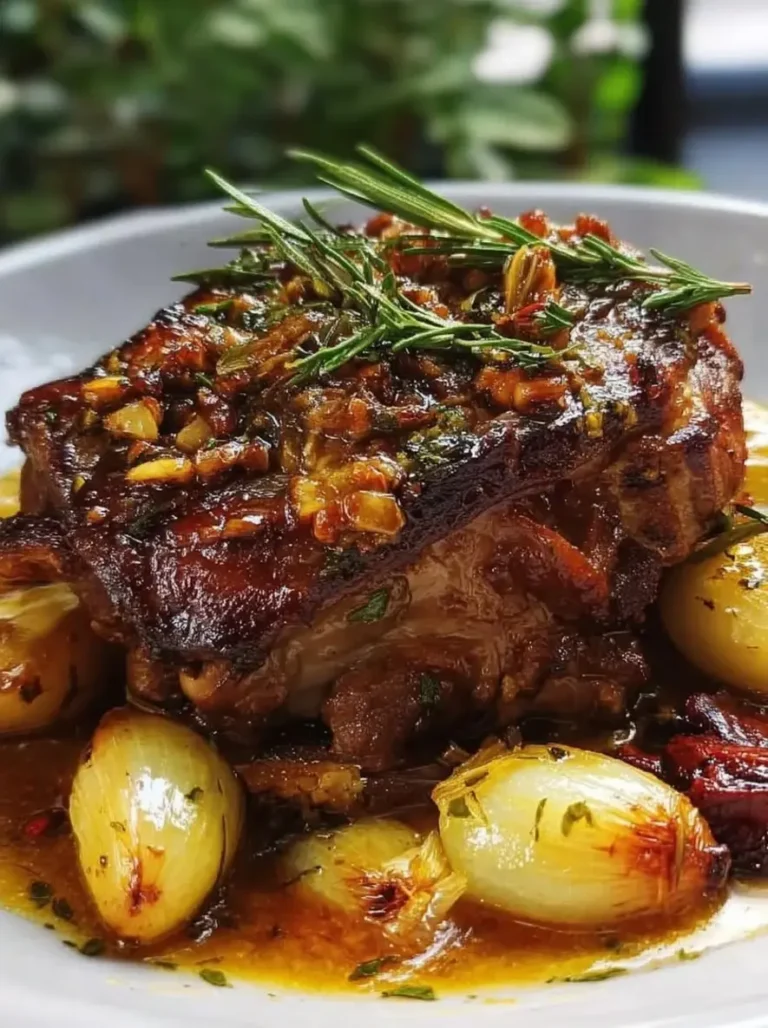
Golden Garlic-Honey Confit Lamb Shoulder with Rustic Herb Mustard Glaze
A succulent lamb shoulder confit with golden garlic and honey, finished with a rustic herb mustard glaze that adds a tangy, aromatic crust.
- Total Time: 4 hours 35 minutes
- Yield: 6 1x
Ingredients
- 1 bone-in lamb shoulder (4–5 lbs)
- 10 garlic cloves, peeled
- 3 tablespoons Dijon mustard
- 2 tablespoons whole grain mustard
- 3 tablespoons honey
- 3 tablespoons olive oil
Instructions
- Preheat oven to 275°F (135°C).
- Season the lamb shoulder generously with salt and pepper.
- In a small bowl, combine Dijon mustard, whole grain mustard, honey, and olive oil to make the glaze.
- Place the lamb shoulder in a roasting pan. Rub the garlic cloves over the meat, then spread the mustard glaze evenly over the surface.
- Cover the pan tightly with foil and roast for 4–5 hours, until the lamb is fork-tender.
- Increase oven temperature to 425°F (220°C). Remove foil and roast for an additional 15–20 minutes to caramelize the glaze.
- Let rest for 10 minutes before carving. Serve with pan juices.
Notes
For extra depth, add fresh rosemary or thyme sprigs to the pan before roasting. The confit method keeps the lamb incredibly moist.
- Prep Time: 15 minutes
- Cook Time: 4 hours 20 minutes
- Method: Main Course
- Cuisine: American
Nutrition
- Calories: 650
- Sugar: 10g
- Fat: 42g
- Carbohydrates: 12g
- Protein: 48g
Tried This Recipe? Leave a Comment!
Did you make this recipe? I’d love to hear how it turned out! Please leave a comment and a rating below. Your feedback helps other home cooks and supports cheerychop.com!
For more delicious inspiration, follow me on Pinterest!