Stunning Lemon Cheesecake Domes with Crystal Mirror
Table of Contents
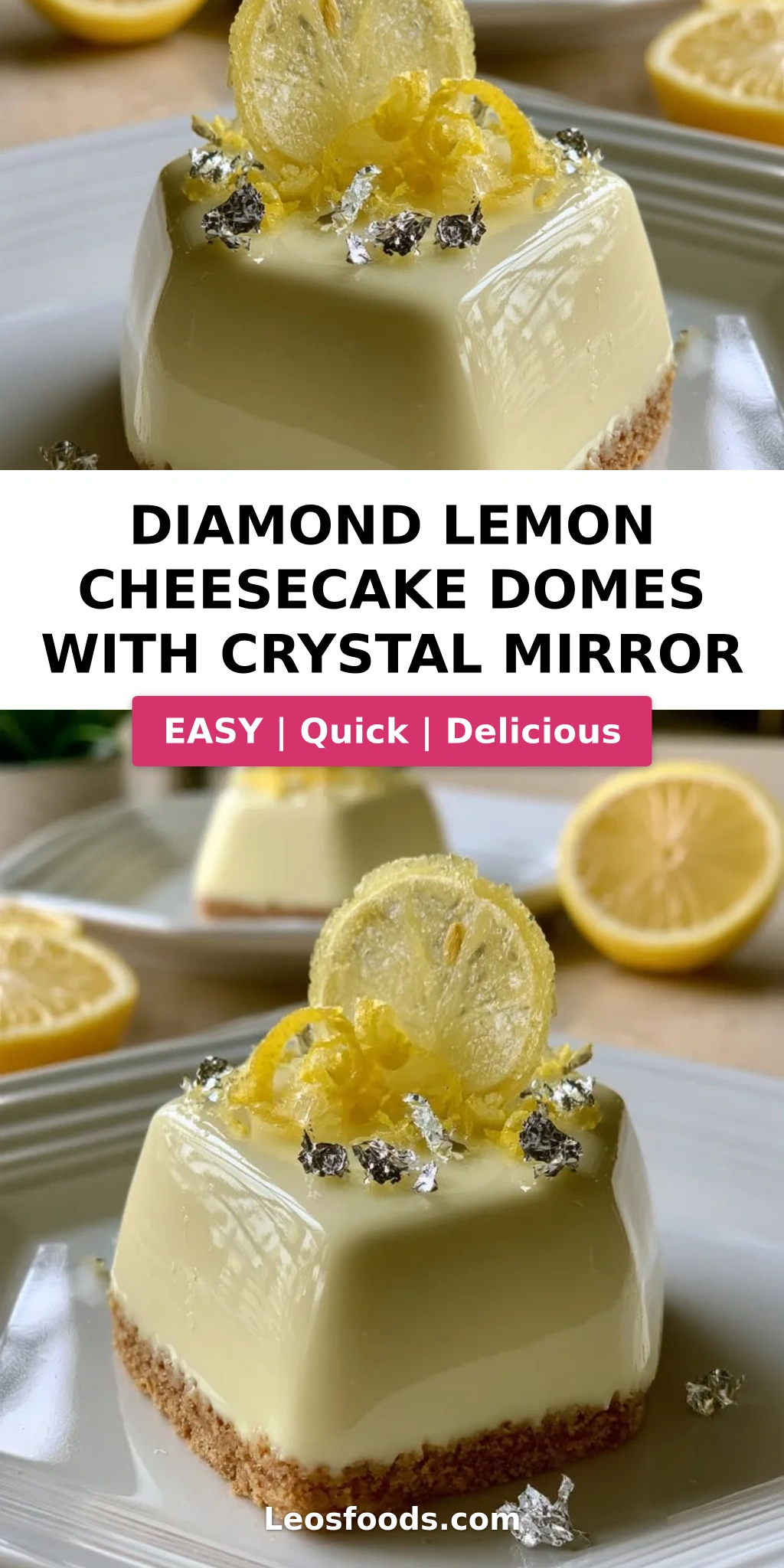
Diamond Lemon Cheesecake Domes with Crystal Mirror – A Stunning Showstopper Dessert
I still remember the first time I saw a perfectly executed mirror glaze at my pastry school in Paris. It was like looking into a smooth, colored gemstone. Years later, standing in my bustling NYC kitchen, I wanted to capture that same magic but with a flavor that truly spoke to my heart. These Diamond Lemon Cheesecake Domes with Crystal Mirror are exactly that—a dazzling fusion of precise French technique and the bright, sun-kissed citrus of my Moroccan heritage. The moment I drizzle that shimmering, jewel-like glaze over the creamy dome and watch it cascade perfectly, I feel like I’m back in that Parisian classroom, but with a little more confidence and a lot more lemon zest.
The very first bite is an absolute symphony of textures. Your spoon gently cracks through the crystal-clear mirror glaze, which has a delicate, just-set firmness. Beneath that lies an ethereally smooth and tangy lemon cheesecake mousse, so rich and velvety from the mascarpone and cream cheese that it melts instantly on your tongue. This gives way to a crisp, buttery graham cracker base, spiced with a whisper of cinnamon. The bright lemon flavor, intensified by both fresh juice and zest, cuts through the richness beautifully, while the edible silver flakes catch the light, making each plate look like a precious jewel. It’s a dessert that tastes as incredible as it looks.
I’ve spent years perfecting the balance for this crystal mirror glaze—getting it crystal clear, impossibly shiny, and perfectly set without becoming rubbery or cracking. In this detailed guide, I’m demystifying every step so you can create this showstopping dessert with total confidence. I’ll share my 💡 Stella’s Pro Tip for achieving that flawless, high-gloss finish every single time, and I’ll also walk you through the common mistakes to avoid so your glaze remains as smooth as glass. Whether you’re celebrating a special occasion or simply want to impress your dinner guests, this lemon cheesecake domes recipe is your ticket to a truly unforgettable dessert experience.
Why This Diamond Lemon Cheesecake Domes Recipe Is the Best
The Flavor Secret: The magic of this mirror glaze cheesecake lies in its double dose of lemon. I use both freshly squeezed lemon juice and finely grated zest in the filling, which gives it a clean, authentic brightness that dances across your palate. It’s a technique I learned from making preserved lemons back home in Morocco—lemon has the power to be both bold and gentle at the same time, perfectly balancing the rich cream cheese and mascarpone.
Perfected Texture: Texture is everything in a no-bake cheesecake, and this one is a masterpiece of mouthfeel. By combining cream cheese with mascarpone and a stabilized gelatin base, we achieve a filling that is luxuriously dense yet light as a cloud. It holds its diamond shape perfectly, creating an impeccable canvas for the glaze. The graham cracker base isn’t an afterthought, either—the melted butter and hint of cinnamon create a sturdy, flavorful foundation that contrasts beautifully with the creamy top.
Foolproof & Fast: I know that working with gelatin and mirror glazes can feel intimidating, but I promise you, this process is broken down into simple, manageable steps that anyone can follow. The gelatin work is straightforward, the glaze comes together in one bowl, and the results look like they belong in a Michelin-starred restaurant. This recipe is designed to build your confidence one delicious step at a time, proving that you can create an extraordinary fancy lemon dessert right in your own home kitchen.
Diamond Lemon Cheesecake Domes Ingredients
Whenever I’m developing a recipe like this, I head straight to the farmers market in Union Square for the freshest, juiciest lemons and the creamery for the best mascarpone. Quality ingredients make a world of difference here, especially since the flavors are so pure and vibrant. Using fresh, high-quality components will elevate your crystal mirror glaze dessert from great to absolutely unforgettable.
Ingredients List
For the Lemon Cheesecake Domes:
- 12 oz cream cheese, softened
- 1/2 cup mascarpone cheese
- 1/2 cup heavy cream
- 1/3 cup granulated sugar
- 3 tbsp fresh lemon juice
- 1 tbsp lemon zest
- 1 tsp vanilla extract
- 2 tsp gelatin powder
- 2 tbsp cold water
- Pinch of salt
For the Biscuit Base:
- 1 cup graham cracker crumbs
- 3 tbsp melted butter
- 1 tbsp granulated sugar
- 1/2 tsp cinnamon
For the Crystal Mirror Glaze:
- 1 cup white chocolate, finely chopped
- 1/2 cup sweetened condensed milk
- 1/4 cup water
- 1 tbsp gelatin powder
- 3 tbsp cold water
- 1 tbsp lemon juice
- 1/2 tsp edible pearl luster dust
- A few drops yellow food coloring
For Garnish (optional):
- 1 tbsp candied lemon peel, finely chopped
- 1 tsp lemon zest
- Edible silver flakes
Ingredient Spotlight
Gelatin: Gelatin is the backbone of both the silky mousse and the flawless mirror glaze. It provides structure without adding any flavor, allowing the lemon to shine. I recommend using Knox gelatin powder, which is widely available in US grocery stores. For a vegetarian alternative, you can use agar agar, but please note that the setting properties are different—it sets at room temperature and creates a firmer, less creamy texture.
White Chocolate: The quality of your white chocolate is paramount to achieving a crystal-clear glaze. Use a high-quality brand like Valrhona or Guittard, which contains real cocoa butter and will melt into a smooth, shiny emulsion. Avoid generic white chips, as they often contain stabilizers that can make the glaze cloudy or grainy. If you need a dairy-free option, look for a high-quality oat milk or soy-based white chocolate.
Mascarpone: This Italian cream cheese adds a rich, tangy depth and an incredibly velvety texture that regular cream cheese alone can’t achieve. It’s what gives the cheesecake filling its luxurious, melt-in-your-mouth quality. You can substitute it with an equal amount of full-fat cream cheese, but the filling will be slightly tangier and a bit denser.
| Original Ingredient | Best Substitution | Flavor / Texture Impact |
|---|---|---|
| Gelatin Powder | Agar Agar (vegan) | Firmer set, less creamy mousse; glaze sets at room temp |
| White Chocolate | Dairy-free white chocolate | Slightly different sweetness, may be less shiny |
| Mascarpone | Full-fat cream cheese | Tangier flavor, slightly denser texture |
| Graham Crackers | Shortbread cookies or gluten-free grahams | Butterier flavor; GF version works perfectly |
How to Make Diamond Lemon Cheesecake Domes — Step-by-Step
Let’s walk through this together, step by step. You’re going to be amazed at what you can create in your own kitchen. Take your time, follow the visual cues, and remember that every master was once a beginner!
Step 1: Bloom the Gelatin
In two separate small bowls, sprinkle the gelatin for the filling (2 tsp) and the glaze (1 tbsp) over their respective cold water amounts (2 tbsp and 3 tbsp). Do not stir. Let them sit undisturbed for 5-10 minutes until the gelatin has absorbed the water and looks like a firm, jiggly mass. This process, called blooming, is essential for a smooth, lump-free mixture.
💡 Stella’s Pro Tip: Always use cold water for blooming gelatin. Hot water can break down its setting power, leading to a weepy texture in your final dessert. Think of it as waking the gelatin up gently!
Step 2: Make the Biscuit Base
In a small bowl, combine the graham cracker crumbs, melted butter, granulated sugar, and cinnamon. Mix with a fork until the texture resembles wet sand and all the crumbs are evenly moistened. Firmly press about 1.5 tablespoons of this mixture into the bottom of each cavity of your diamond-shaped silicone molds. Use the back of a spoon or a small flat-bottomed glass to compact it tightly.
⚠️ Common Mistake to Avoid: Don’t press the base too thinly or leave it too loose. It needs to be an even, compact layer about 1/4-inch thick to properly support the weight of the mousse and hold its diamond shape after unmolding.
Step 3: Make the Cheesecake Filling
In a large mixing bowl, beat the softened cream cheese, mascarpone, heavy cream, sugar, fresh lemon juice, lemon zest, vanilla extract, and a pinch of salt together until the mixture is completely smooth, creamy, and lump-free. In a small saucepan, gently warm a 1/2 cup of this mixture over low heat. Add the bloomed gelatin to the warm mixture and whisk until fully dissolved. Pour this gelatin mixture back into the main bowl and fold gently but thoroughly until fully incorporated.
💡 Stella’s Pro Tip: Make sure your cream cheese is truly at room temperature. Cold cream cheese will create a lumpy filling. Take it out of the fridge at least an hour before you start baking!
Step 4: Fill and Freeze
Carefully divide the cheesecake filling evenly among the diamond molds, filling them right to the top over the biscuit base. Use a small offset spatula or the back of a spoon to smooth the tops so they are completely flat and even. Place the molds on a flat baking sheet and transfer them to the freezer. Freeze for at least 4 hours, or preferably overnight, until the domes are completely solid.
⚠️ Common Mistake to Avoid: The domes must be frozen solid before glazing. If they are even slightly soft in the center, the warmth of the glaze will cause them to collapse or become misshapen. Patience is key here!
Step 5: Make the Crystal Mirror Glaze
While the domes are freezing, prepare the glaze. Bloom the 1 tbsp of gelatin in 3 tbsp of cold water. In a small saucepan, heat the sweetened condensed milk and 1/4 cup of water until it is steaming hot but not boiling. Remove from heat and add the bloomed gelatin, whisking until fully dissolved. Pour this hot liquid over the finely chopped white chocolate in a heatproof bowl. Let it sit for 1 minute, then whisk gently starting from the center until you have a smooth, glossy emulsion. Stir in the lemon juice, edible pearl luster dust, and a few drops of yellow food coloring.
⚠️ Common Mistake to Avoid: The glaze must cool to 90-95°F (32-35°C) before pouring. If it’s too hot, it will melt the mousse. If it’s too cold, it will be too thick and won’t form a smooth, thin coating. Use an instant-read thermometer for accuracy!
Step 6: Glaze the Domes
Remove the frozen domes from the freezer and gently unmold them. Place them on a wire rack set over a baking sheet lined with parchment paper to catch the drips. Working quickly, pour the slightly cooled crystal mirror glaze evenly over each dome, starting from the center and allowing the glaze to cascade down the sides. Ensure the entire surface is covered. Let the excess drip away completely.
💡 Stella’s Pro Tip: For the cleanest, most professional look, pour the glaze in one steady, confident stream. Don’t go back and forth, as this can create streaks and bubbles. The excess will drip off cleanly on its own.
Step 7: Finish and Serve
Carefully transfer the glazed domes to serving plates. Refrigerate them for at least 20 minutes to allow the glaze to fully set and soften slightly. Just before serving, finish each dome with a sprinkle of finely chopped candied lemon peel, a tiny pinch of fresh lemon zest, and a few edible silver flakes for that dazzling diamond sparkle.
⚠️ Common Mistake to Avoid: Handle the glazed domes as little as possible. The glaze is sensitive and can pick up fingerprints easily. Use a small offset spatula to gently lift them from the rack to the plate.
| Step | Action | Duration | Key Visual Cue |
|---|---|---|---|
| 1 | Bloom Gelatin | 10 mins | Firm, jiggly, opaque mass |
| 2 | Press Base | 5 mins | Firm, compact layer in mold |
| 3 | Mix Filling | 10 mins | Smooth, creamy, no lumps |
| 4 | Freeze Domes | 4+ hours | Completely solid, hard to the touch |
| 5 | Make Glaze | 15 mins | Smooth, glossy, 90-95°F |
| 6 | Glaze Domes | 5 mins | Even, shiny coating |
| 7 | Refrigerate & Garnish | 20 mins | Glaze set, garnishes in place |
Serving & Presentation
These Lemon Cheesecake Domes are the epitome of elegance, and their presentation should match their stunning appearance. I love serving them on a simple, chilled white ceramic plate to let the crystal-clear glaze and sparkling silver flakes take center stage. For an extra touch of NYC bistro flair, I occasionally add a thin, crisp tuile cookie shaped like a diamond perched on top—it adds a fantastic layer of crunch and visual drama.
When it comes to accompaniments, I suggest keeping things simple and complementary. A small quenelle of lightly sweetened crème fraîche or a dollop of softly whipped cream on the side provides a lovely, cool contrast to the bright lemon. A handful of fresh raspberries or blueberries scattered around the plate adds a pop of color and a burst of fresh fruit that pairs beautifully with the rich, creamy cheesecake.
For the full experience, serve these domes slightly chilled—not straight from the freezer, but after that crucial 20-minute rest in the fridge. This allows the glaze to soften to the perfect consistency and the filling to become luxuriously creamy. Whether it’s a special birthday, an anniversary, or a holiday dinner, this fancy lemon dessert is guaranteed to elicit gasps of delight and clean plates all around.
| Pairing Type | Suggestions | Why It Works |
|---|---|---|
| Side / Accompaniment | Fresh raspberries, blueberries, or a citrus salad | The tartness of the berries mirrors the lemon and cuts through the richness. |
| Sauce / Dip | Crème fraîche, whipped cream, or a raspberry coulis | Adds a cool, creamy, or tart contrast to the sweet glaze and mousse. |
| Beverage | Espresso Martini, Limoncello, Moroccan Mint Tea | Coffee complements the dairy; citrus liqueur echoes the lemon; mint tea offers a refreshing palate cleanse. |
| Garnish | Candied lemon peel, edible silver flakes, mint sprigs, tuile cookies | Adds texture, visual sparkle, and a professional, high-end finish. |
Make-Ahead, Storage & Reheating
This is the ultimate make-ahead dessert for a busy home cook or entertainer. My hectic NYC schedule means I heavily rely on recipes that can be prepared in stages without sacrificing quality. Breaking this recipe down over two days makes it completely stress-free and actually improves the final texture.
| Method | Container | Duration | Reheating / Serving Tip |
|---|---|---|---|
| Refrigerator (Glazed) | Airtight container in a single layer | Up to 2 days | Serve chilled directly from the fridge. The glaze may lose some shine over time. |
| Freezer (Unglazed) | Flash-frozen on a tray, then wrapped tightly in plastic | Up to 1 month | Glaze directly from frozen. No need to thaw. Proceed with step 6 as directed. |
| Make-Ahead Plan | Assemble and freeze in the molds | Up to 3 days before serving | Day before serving: Unmold and glaze. Refrigerate overnight. Garnish just before serving. |
Once glazed, the domes are truly best enjoyed within 24 hours. The mirror glaze will stay beautifully shiny if kept in the refrigerator, but condensation can form if the domes are moved between the fridge and room temperature too often. If you are transporting them, keep them chilled until the last minute. I do not recommend freezing the domes once they are glazed, as the glaze can become cloudy and crack upon thawing.
Variations & Easy Swaps
One of the things I love most about this recipe is how versatile it is. Once you master the basic technique of the mousse and the crystal mirror glaze, you can experiment with a world of different flavors. Here are a few of my favorite variations that I’ve developed in my NYC kitchen, often inspired by a seasonal find at the Union Square Greenmarket.
| Variation | Key Change | Best For | Difficulty Impact |
|---|---|---|---|
| Raspberry Rose | Add raspberry purée to filling; tint glaze pink with rose water | Romantic occasions, Valentine’s Day | Medium |
| Key Lime Pie | Substitute lemon with key lime juice and zest | Summer gatherings, tropical-themed parties | Easy |
| Chocolate Orange | Use dark chocolate mousse and a clear orange mirror glaze | Chocolate lovers, holiday dessert table | Advanced |
Raspberry Rose Variation
This was a favorite during my time in a Parisian pâtisserie. Simply swirl 1/4 cup of raspberry purée into the cheesecake filling before pouring it into the molds. For the glaze, replace the lemon juice with 1/2 tsp of rose water and tint the glaze a pale pink. The floral notes of the rose pair exquisitely with the tart raspberry, and the pink hue makes for an absolutely stunning presentation. Garnish with a single fresh raspberry and a tiny rose petal.
Gluten-Free Adaptation
Making this recipe gluten-free is wonderfully simple. Just substitute the graham cracker crumbs with an equal amount of gluten-free graham crackers, or use crushed gluten-free shortbread cookies. The rest of the recipe is naturally gluten-free, so everyone can enjoy this dazzling dessert. The texture of the base will be just as buttery and crisp, providing that same perfect contrast to the creamy mousse.
Dairy-Free Adaptation
For a dairy-free version that doesn’t compromise on taste, use a high-quality plant-based cream cheese and full-fat coconut cream in place of the heavy cream and mascarpone. The coconut cream adds a lovely richness and a subtle tropical flavor that works beautifully with lemon. For the glaze, use a dairy-free white chocolate. Please note that the texture will be slightly different—the filling may be a bit softer, so a longer freezing time is essential for a successful glaze.
What is a crystal mirror glaze and how do you make it for lemon cheesecake domes?
A crystal mirror glaze is a type of shiny, reflective icing made from white chocolate, sweetened condensed milk, gelatin, and water. It is known for its high-gloss, mirror-like finish. To make it for these lemon cheesecake domes, you bloom gelatin in cold water, then dissolve it into a steaming mixture of condensed milk and water. This hot liquid is poured over finely chopped white chocolate and whisked until smooth. Lemon juice, edible pearl luster dust, and yellow food coloring are added for flavor and that shimmering crystal effect. The key is to let the glaze cool to about 90-95°F before pouring it over your frozen cheesecake domes for a flawless, smooth coating.
Can I use a different type of cheesecake filling for diamond-shaped domes?
Absolutely! While my lemon mascarpone filling is a delight, this technique works beautifully with many other cheesecake flavors. You can use a classic New York-style cheesecake filling, a chocolate cheesecake, or even a fruit-infused filling like strawberry or passion fruit. The key is to ensure your alternative filling has a similar consistency—creamy, smooth, and stabilized with gelatin. This structure is crucial for it to hold the sharp diamond shape of the mold and support the weight of the glaze. If your filling is too soft or runny, it won’t unmold cleanly or maintain its elegant form.
How do you achieve the diamond pattern on lemon cheesecake domes?
The beautiful diamond pattern is achieved by using a diamond-shaped silicone mold. These molds are widely available online or at baking supply stores. You simply press the graham cracker base into the bottom of the mold, fill it with the cheesecake mousse, and freeze it until solid. When you unmold the frozen cheesecake, it will have perfectly defined diamond facets. The crystal mirror glaze then coats these facets, creating a stunning, jewel-like appearance. The sharpness of the pattern depends on the quality of your mold and how tightly you press your base.
How far in advance can I prepare lemon cheesecake domes with mirror glaze?
These lemon cheesecake domes are a fantastic make-ahead dessert! You can prepare the cheesecake domes themselves (steps 1-4) and keep them frozen in their molds for up to 3 days before you plan to serve them. The mirror glaze can also be made a day ahead and stored in the fridge, then gently re-warmed to the correct pouring temperature. For the best visual result, I recommend glazing the domes on the day you plan to serve them. Once glazed, they can be kept in the fridge for up to 24 hours, but the glaze is at its shiniest and most beautiful within the first few hours.
Why did my mirror glaze crack?
A cracked mirror glaze is almost always a temperature issue. The most common reason is that the frozen cheesecake dome was too cold, or the glaze was too hot, causing thermal shock. The drastic temperature change makes the glaze seize and crack as it sets. Always ensure your glaze has cooled to the proper temperature range of 90-95°F (32-35°C) and that your domes are frozen solid but not straight out of a deep freezer that is set below 0°F. Another cause can be pouring the glaze too thin, so ensure you have enough glaze to fully coat the dome in one smooth, steady stream.
Can I use a different mold shape instead of diamond?
Yes, you can definitely use a different mold shape! While the diamond is stunning, this recipe works perfectly with any silicone mold shape. You could use classic half-sphere dome molds for a more traditional look, heart-shaped molds for Valentine’s Day, or even flower-shaped molds for a springtime dessert. Just keep in mind that the volume of your mold might be different, which will affect the number of servings you get. The same freezing and glazing techniques apply regardless of the shape you choose.
How can I get my mirror glaze extra shiny?
The extra-shiny, mirror-like finish comes from the quality of your ingredients and your technique. First, use a high-quality white chocolate that contains real cocoa butter, as it emulsifies better. Second, make sure your glaze is exceptionally smooth—use an immersion blender to remove any tiny air bubbles just before pouring. Third, the temperature must be perfectly controlled. Finally, the secret ingredient used here is edible pearl luster dust. Stirring a small amount of this into your glaze adds microscopic, light-reflecting particles that elevate the shine from simply glossy to truly radiant and mirror-like.
What can I use instead of silver flakes?
The edible silver flakes add a lovely touch of glamour, but they are purely decorative. If you don’t have them or prefer a different look, there are several beautiful alternatives. You can use edible gold leaf for a warmer, more luxurious feel. A tiny pinch of edible glitter or disco dust in a color like pink or iridescent would be charming. For a more natural look, a small candied violet or a delicate mint leaf placed on top of the dome can be just as elegant. The dessert is spectacular with or without the metallic sparkle!
Can I use bottled lemon juice?
I strongly recommend using freshly squeezed lemon juice for this recipe. Bottled lemon juice often contains preservatives and has a flat, one-dimensional sourness that lacks the bright, aromatic quality of fresh lemons. Since lemon is the star flavor of this dessert, the difference is significant. Fresh lemon zest is also irreplaceable—it contains essential oils that provide a depth of citrus flavor you simply cannot get from a bottle. For the best, most vibrant result, please take the extra minute to juice a couple of fresh lemons.
My cheesecake filling is too soft. What went wrong?
A soft or runny cheesecake filling typically results from one of three issues. First, your cream cheese or mascarpone might have been too soft or over-whipped, incorporating too much air. Second, the gelatin might not have been properly bloomed or fully dissolved into the mixture. Third, the mixture might not have been chilled long enough to set. The fix is to ensure you’re following the blooming process correctly and that you are stirring gently. If you find your mixture is still soft after chilling, you can try re-warming a small portion, adding a little extra dissolved gelatin, and folding it back in before refreezing.
Share Your Version!
I absolutely love seeing these beautiful creations come to life in your kitchens! There’s something so special about the moment you pour that glaze and watch the magic happen. Snap a photo of your Diamond Lemon Cheesecake Domes and tag me on Instagram @leosfoods, or leave a comment below telling me how they turned out. Did you try any of the fun variations like the Raspberry Rose or the Key Lime? What did your dinner guests say? Your feedback and photos bring me so much joy and inspire the entire Leo’s Foods community.
If you tried this recipe, please consider leaving a star rating below—it helps other home cooks find and trust this recipe too! And if you have any questions about the gelatin, the glaze, or the baking process, just drop them in the comments. I personally read every single one and I’m here to help you succeed. From my NYC kitchen to yours — I hope this recipe brings as much warmth to your table as it does to mine. — Stella 🧡
Love This Recipe? Save It to Pinterest!
If you enjoyed this Diamond Lemon Cheesecake Domes with Crystal Mirror recipe, don’t let it get lost in your browser tabs! 😄 Pin it now so you can find it again anytime — and explore hundreds more tried-and-tested recipes waiting for you on my Pinterest boards.
👉 Follow Stella on Pinterest @stellarecipeblog
📌 Pin this recipe · 🔁 Re-pin your favorites · 💬 Tag me when you make it — I love seeing your creations!
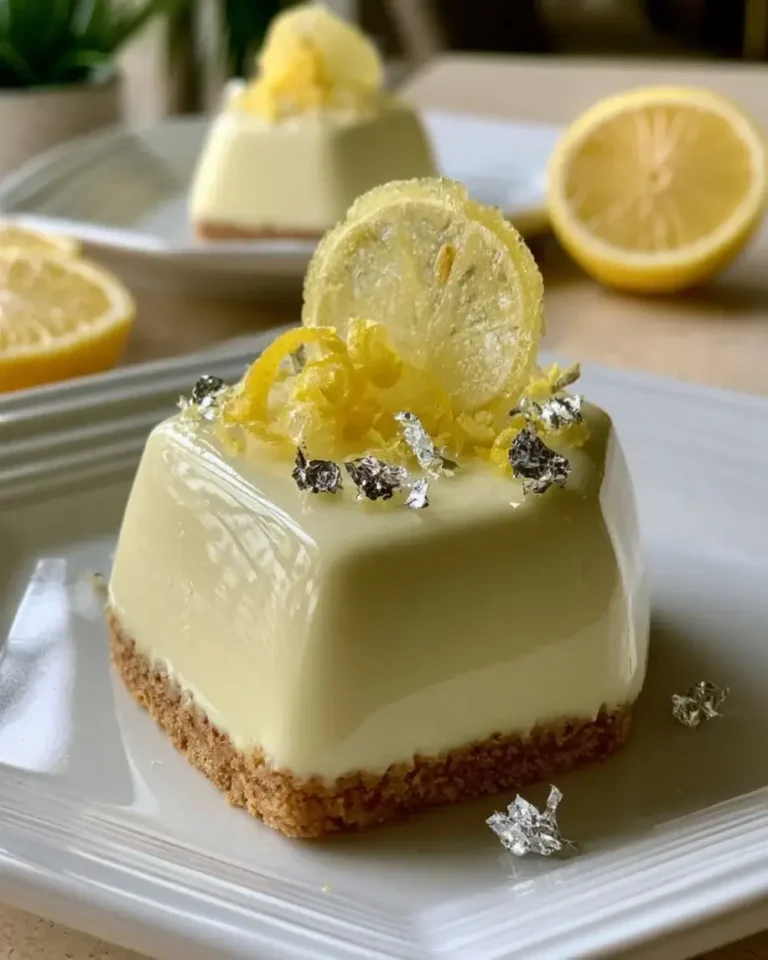
Diamond Lemon Cheesecake Domes with Crystal Mirror
Elegant lemon cheesecake domes with a crisp graham cracker base and a shimmering crystal mirror glaze, finished with candied lemon peel and edible silver flakes.
- Yield: 6 1x
Ingredients
- For the Lemon Cheesecake Domes:
- 12 oz cream cheese, softened
- 1/2 cup mascarpone cheese
- 1/2 cup heavy cream
- 1/3 cup granulated sugar
- 3 tbsp fresh lemon juice
- 1 tbsp lemon zest
- 1 tsp vanilla extract
- 2 tsp gelatin powder
- 2 tbsp cold water
- Pinch of salt
- For the Biscuit Base:
- 1 cup graham cracker crumbs
- 3 tbsp melted butter
- 1 tbsp granulated sugar
- 1/2 tsp cinnamon
- For the Crystal Mirror Glaze:
- 1 cup white chocolate, finely chopped
- 1/2 cup sweetened condensed milk
- 1/4 cup water
- 1 tbsp gelatin powder
- 3 tbsp cold water
- 1 tbsp lemon juice
- 1/2 tsp edible pearl luster dust
- A few drops yellow food coloring
- For Garnish (optional):
- 1 tbsp candied lemon peel, finely chopped
- 1 tsp lemon zest
- Edible silver flakes
Instructions
- Bloom gelatin in cold water for 5 minutes.
- Mix graham cracker crumbs, melted butter, sugar, and cinnamon until evenly combined. Press into diamond-shaped silicone molds to create the base layer.
- Beat cream cheese, mascarpone, heavy cream, sugar, lemon juice, lemon zest, vanilla extract, and salt until smooth and creamy.
- Warm a small portion of the cheesecake mixture and dissolve the bloomed gelatin. Fold it back into the remaining mixture until fully incorporated.
- Fill the molds over the biscuit base and smooth the tops. Freeze for at least 4 hours until completely firm.
- For the mirror glaze, bloom gelatin in cold water for 5 minutes.
- Heat sweetened condensed milk and water until steaming. Remove from heat and stir in gelatin until dissolved.
- Pour over white chocolate and whisk until smooth and glossy. Add lemon juice, pearl luster dust, and yellow food coloring.
- Allow the glaze to cool until slightly thickened but still pourable.
- Unmold the frozen cheesecake domes and place on a wire rack. Pour the crystal mirror glaze evenly over each dome, allowing excess glaze to drip away.
- Transfer to serving plates and refrigerate for 20 minutes before serving.
- Finish with candied lemon peel, lemon zest, and edible silver flakes.
Nutrition
- Calories: 435
- Sugar: 33g
- Fat: 29g
- Carbohydrates: 39g
- Protein: 6g
Tried This Recipe? Leave a Comment!
Did you make this recipe? I’d love to hear how it turned out! Please leave a comment and a rating below. Your feedback helps other home cooks and supports cheerychop.com!
For more delicious inspiration, follow me on Pinterest!