Fall-Off-the-Bone Madras Lamb Shanks with Creamy Coconut Curry
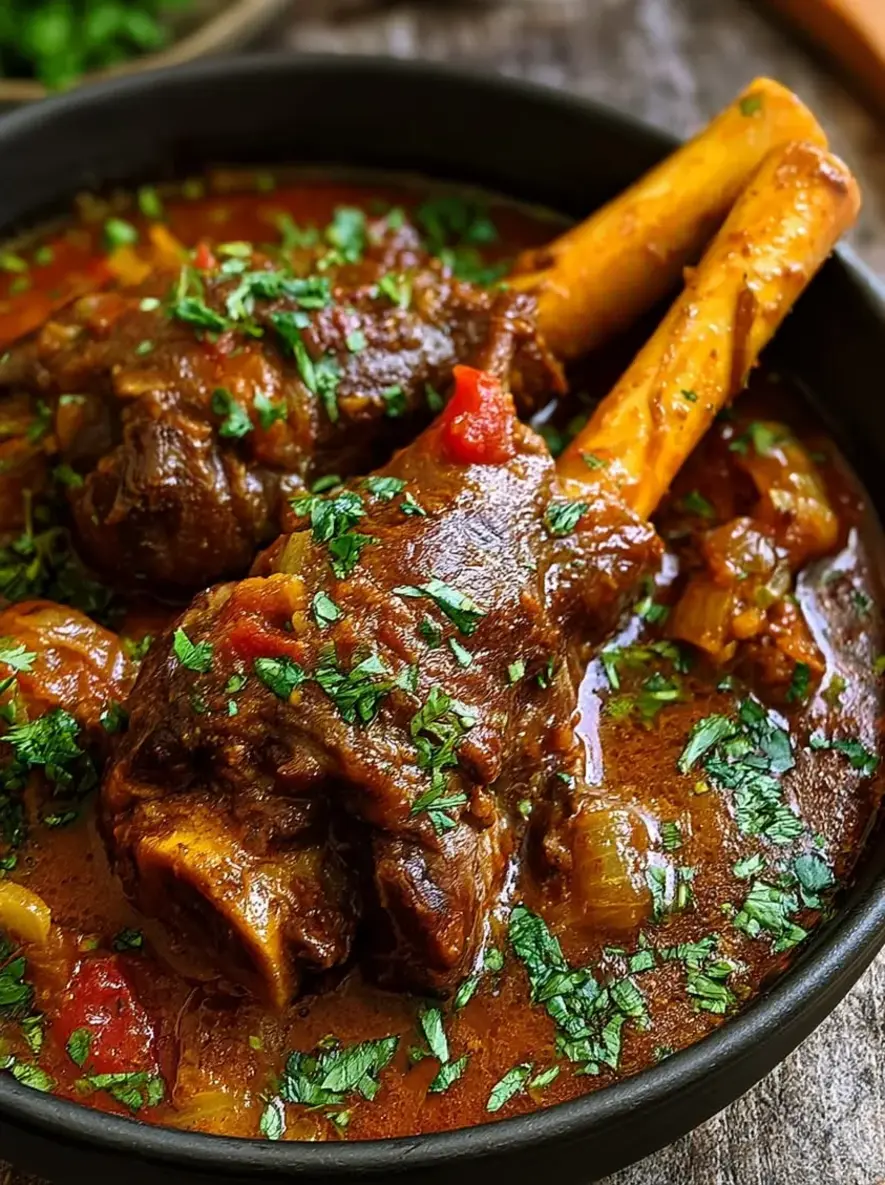
Table of Contents
Fall-Off-the-Bone Madras Lamb Shanks with Creamy Coconut Curry – A Rich South Indian-Style Slow Cooked Masterpiece
I still remember the first time I tasted a truly great Madras lamb shanks recipe — it was during a trip to London’s Brick Lane, where the aroma of slow-cooked Indian curry mingled with the city’s crisp autumn air. I was instantly transported back to my mother’s kitchen in Morocco, where she would braise lamb for hours with cinnamon, cumin, and coriander until the meat surrendered from the bone. That moment sparked something in me: the desire to marry the bold, fiery warmth of South Indian Madras curry with the French braising techniques I learned at culinary school in Paris. This slow cooked lamb shanks recipe is the result — a dish that’s both deeply comforting and sophisticated, with a creamy coconut curry that envelops every fiber of the meat.
Imagine this: you lift the lid of your Dutch oven after three hours of gentle simmering, and a cloud of fragrant steam rises — turmeric-gold, kissed with smoked paprika and cardamom. The lamb shanks are so tender that they practically fall apart at the touch of a fork, their richness balanced by the silky sweetness of coconut milk and the bright, tangy finish of fresh lime. Each bite carries layers of warmth — cumin and coriander on the palate, a whisper of cinnamon, and the lingering heat of Madras curry powder that builds slowly, never overpowering. This Indian lamb curry is the kind of meal that demands you slow down, tear off a piece of naan, and soak up every last drop of sauce.
What sets this coconut lamb curry apart from other lamb shanks recipes is the precision of the spice layering and the depth of the braising liquid. I’ve tested this Madras lamb shanks recipe more times than I can count — tweaking the ratio of coconut milk to broth, adjusting the bloom time for the spices, and perfecting the browning technique that locks in flavor. The result is a foolproof, fall-off-the-bone lamb experience that even a weeknight cook can achieve. 💡 Stella’s Pro Tip: For the most tender meat, always brown the shanks in batches — overcrowding the pot steams instead of sears, and you’ll lose that deep, caramelized foundation that makes this curry extraordinary.
Why This Madras Lamb Shanks Recipe Is the Best
The Flavor Secret — This isn’t just another Madras lamb shanks recipe; it’s a carefully calibrated blend of whole and ground spices that I’ve refined over years of cooking. My Moroccan upbringing taught me that the key to any great North African or Indian braise is patience with the spice bloom. I toast the Madras curry powder with cumin, coriander, turmeric, and smoked paprika in hot oil until they become fragrant and aromatic — this step releases their essential oils and deepens their warmth. Then I add tomato paste and let it caramelize for two full minutes before adding the liquids. That extra step, straight out of my French training, builds a sauce that’s rich, complex, and absolutely unforgettable.
Perfected Texture — The hallmark of a great slow cooked lamb shanks recipe is meat that clings to the bone but yields with the slightest pressure. Achieving that requires more than just time — it requires the right cooking environment. I use a heavy Dutch oven, which distributes heat evenly and maintains a gentle, consistent simmer. The lamb shanks are submerged in a coconut curry that’s fortified with beef broth, diced tomatoes, and a cinnamon stick — this combination of acid, fat, and collagen-dissolving liquid ensures that the connective tissue breaks down into silky, gelatinous richness. After 2.5 to 3 hours, the shanks are so tender you can pull them apart with a spoon.
Foolproof & Fast (for a braise) — While this Indian lamb curry takes three hours to cook, the active prep time is only 20 minutes. I’ve designed the recipe so that home cooks of any skill level can achieve restaurant-quality results. The steps are straightforward: brown the meat, sweat the aromatics, bloom the spices, build the sauce, and let the oven (or stovetop) do the rest. I also include a make-ahead tip — this coconut lamb curry tastes even better the next day, making it perfect for busy weeknights or weekend entertaining when you want to impress without stress.
Madras Lamb Shanks Recipe Ingredients
When I shop for ingredients for my Madras lamb shanks recipe, I head straight to the spice aisle at Kalustyan’s in Manhattan — that legendary shop on Lexington Avenue where you can find everything from smoked Kashmiri chilies to fresh curry leaves. The quality of your spices makes all the difference in a slow cooked lamb shanks recipe, so I urge you to seek out a Madras curry powder with a bright, deep red color and a complex aroma. Here’s everything you’ll need:
Ingredients List
- 4 lamb shanks (about 12–14 oz each)
- 2 tablespoons vegetable oil
- 1 large onion, finely diced
- 5 garlic cloves, minced
- 2 tablespoons fresh ginger, grated
- 2 tablespoons Madras curry powder
- 2 teaspoons ground cumin
- 2 teaspoons ground coriander
- 1 teaspoon turmeric
- 1 teaspoon smoked paprika
- ½ teaspoon ground cinnamon
- 4 cardamom pods, lightly crushed
- 1 teaspoon salt
- ½ teaspoon black pepper
- 2 tablespoons tomato paste
- 1 (14 oz) can diced tomatoes
- 1 (14 oz) can coconut milk (full-fat for best creaminess)
- 1 cup beef or chicken broth
- 2 bay leaves
- 1 cinnamon stick
- 1 tablespoon brown sugar
- Juice of 1 lime
- Fresh cilantro for garnish
Ingredient Spotlight
Lamb Shanks — The star of this Madras lamb shanks recipe. Look for shanks that are meaty with a good amount of marbling — the fat renders during the long braise, keeping the meat moist and infusing the curry with flavor. If you can find grass-fed lamb from New Zealand or local farms at your farmers market, the flavor will be cleaner and more delicate. If lamb shanks are unavailable, you can substitute bone-in lamb shoulder chops (about 3 lbs total), which will cook in about the same time and yield similarly tender results.
Madras Curry Powder — This is the heartbeat of the dish. Unlike standard curry powder, Madras curry powder is hotter and more aromatic, with a higher proportion of chilies and fenugreek. I recommend brands like Spicewalla or Rani — they use freshly ground spices that haven’t lost their volatile oils. If you can only find a generic blend, toast it in a dry pan for 30 seconds before adding it to the pot to revive its fragrance. You can also make your own by combining 1 tablespoon ground coriander, 1 tablespoon ground cumin, 1 teaspoon cayenne, 1 teaspoon turmeric, 1 teaspoon black pepper, and ½ teaspoon fenugreek.
Coconut Milk — Full-fat coconut milk is non-negotiable for a truly creamy coconut curry. Light coconut milk will break under the long simmer and yield a thin, watery sauce. I love Chaokoh or Thai Kitchen brands — they have a high fat content that emulsifies beautifully with the broth and spices. If you need a dairy-free or vegan option, full-fat coconut milk is already plant-based, so this Indian lamb curry is naturally dairy-free as written.
Cardamom Pods & Cinnamon Stick — These whole spices are what give this slow cooked lamb shanks recipe its signature South Indian aroma. Don’t skip them — they perfume the sauce from the inside out as they slowly release their essential oils during the braise. Lightly crushing the cardamom pods with the flat side of your knife opens their shells without releasing the seeds, allowing the flavor to infuse without becoming gritty.
| Original Ingredient | Best Substitution | Flavor / Texture Impact |
|---|---|---|
| Lamb Shanks | Bone-in lamb shoulder chops (3 lbs) | Equally tender; slightly fattier, richer flavor |
| Madras Curry Powder | Homemade blend (see above) or garam masala + cayenne | Garam masala is warmer, less hot; add extra cayenne to taste |
| Coconut Milk (full-fat) | Cashew cream (1 cup soaked cashews blended with 1 cup water) | Richer, nuttier; slightly thicker texture, not as sweet |
| Cardamom Pods | ½ teaspoon ground cardamom (added at end) | More immediate floral note; less layered infusion |
| Tomato Paste | 3 tablespoons tomato sauce (reduce broth by 2 tbsp) | Slightly less concentrated tomato depth; thinner sauce |
How to Make Madras Lamb Shanks — Step-by-Step
Trust me — this slow cooked lamb shanks recipe is easier than it looks. Follow these steps, and you’ll have a restaurant-worthy Indian lamb curry simmering on your stove in no time.
Step 1: Brown the Lamb Shanks
Pat the lamb shanks dry with paper towels — moisture is the enemy of a good sear. Season generously with salt and black pepper. Heat 2 tablespoons of vegetable oil in a large Dutch oven over medium-high heat until it shimmers. Add the lamb shanks in a single layer (work in two batches if needed) and brown on all sides, about 2 minutes per side, for a total of 8 minutes. The crust should be deep mahogany, not just pale brown. Remove to a plate and set aside.
💡 Stella’s Pro Tip: Don’t rush the browning. A deep, caramelized crust on the lamb is the single most important flavor-building step in this Madras lamb shanks recipe. It adds layers of savory richness that no amount of spice can replicate.
Step 2: Sweat the Aromatics
Reduce the heat to medium. In the same pot, add the finely diced onion and cook, stirring occasionally, until softened and translucent — about 5 minutes. Use a wooden spoon to scrape up any browned bits from the bottom of the pot; that’s pure flavor. Add the minced garlic and grated ginger, and cook for 1 minute more, until fragrant.
⚠️ Common Mistake to Avoid: Adding garlic and ginger at the same time as the onion can cause them to burn and turn bitter. Always wait until the onion is soft, then add these aromatics for just a minute before moving on.
Step 3: Bloom the Spices
Stir in the Madras curry powder, ground cumin, ground coriander, turmeric, smoked paprika, ground cinnamon, crushed cardamom pods, salt, and black pepper. Cook for about 1 minute, stirring constantly, until the spices become fragrant and toast. You should smell the warmth of the cumin and the heat of the curry powder awakening in the oil.
💡 Stella’s Pro Tip: This spice bloom is where your coconut lamb curry gets its soul. If the mixture looks dry, add a splash of broth or water to keep it moving — burnt spices will turn bitter. The fragrance should be deep and inviting, not sharp or acrid.
Step 4: Build the Sauce
Add the tomato paste and cook, stirring, for 2 minutes — this caramelizes the sugars in the paste and deepens the umami of the curry. Pour in the diced tomatoes (with their juices), full-fat coconut milk, beef or chicken broth, bay leaves, cinnamon stick, and brown sugar. Stir everything together, scraping the bottom of the pot one last time. Bring to a gentle simmer.
⚠️ Common Mistake to Avoid: Adding the coconut milk too early before the tomato paste has caramelized can result in a sauce that tastes flat. Give the tomato paste those full 2 minutes — it’s worth the wait.
Step 5: Simmer Low and Slow
Return the browned lamb shanks to the pot, nestling them into the sauce so they’re mostly submerged. If the liquid doesn’t cover them by at least two-thirds, add a splash more broth. Cover the pot with a tight-fitting lid, reduce the heat to low, and let it simmer gently for 2.5 to 3 hours. The sauce should barely bubble — a lazy simmer, not a vigorous boil. Check once or twice to ensure the liquid hasn’t reduced too much; if it looks thick, add a splash of water or broth.
💡 Stella’s Pro Tip: For the most fall-apart tender lamb shanks, use an oven instead of the stovetop. Preheat to 325°F, and cook the covered pot in the oven for 2.5–3 hours. The even, gentle heat of the oven produces more consistent results and eliminates the risk of scorching on the bottom.
Step 6: Finish and Serve
Remove the bay leaves and cinnamon stick (they’ve given their all). Stir in the fresh lime juice — this brightens the entire dish and cuts through the richness of the coconut milk. Taste and adjust seasoning: add more salt if needed, or a pinch more sugar if the tomatoes are too acidic. Garnish generously with fresh cilantro and serve over steamed basmati rice or with warm naan bread for sopping up every drop of that gorgeous, creamy sauce.
⚠️ Common Mistake to Avoid: Skipping the lime juice at the end. A Madras lamb shanks recipe needs that final hit of acidity to balance the deep, slow-cooked richness. Without it, the curry can taste heavy and one-dimensional.
| Step | Action | Duration | Key Visual Cue |
|---|---|---|---|
| 1 | Brown lamb shanks | 8 minutes | Deep mahogany crust on all sides |
| 2 | Sweat onion, garlic, ginger | 5–6 minutes | Onion translucent; garlic fragrant |
| 3 | Bloom spices | 1 minute | Fragrant, toasty aroma; spices darken slightly |
| 4 | Caramelize tomato paste; add liquids | 2 minutes + 2 minutes to simmer | Tomato paste turns brick-red; sauce bubbles gently |
| 5 | Simmer lamb in sauce | 2.5–3 hours | Meat pulls easily from bone; sauce thickened |
| 6 | Finish with lime; serve | 5 minutes | Sauce brightens; cilantro adds freshness |
Serving & Presentation
When I serve this Madras lamb shanks recipe in my NYC kitchen, I like to create a plate that’s as beautiful as it is delicious. Spoon a generous bed of steamed basmati rice onto a wide, shallow bowl — the grains should be light and fluffy, not clumpy. Nestle one lamb shank in the center, then ladle the creamy coconut curry over and around it, letting the sauce pool at the base. The meat should be so tender that it begins to fall away from the bone as you plate it. Finish with a shower of fresh cilantro, a few thin slices of red chili for heat if you like, and a wedge of lime on the side for an extra squeeze at the table.
For the full experience, serve with warm, buttery naan bread — I love to brush it with garlic-infused ghee and sprinkle with nigella seeds before heating it in the oven. You can also offer a side of cucumber raita (yogurt with cucumber, mint, and a pinch of cumin) to cool the palate between rich, spicy bites. A simple salad of sliced red onion, tomato, and a squeeze of lemon makes a bright, crunchy counterpoint.
| Pairing Type | Suggestions | Why It Works |
|---|---|---|
| Side Dish | Basmati rice, naan bread, crispy potato roast | Rice soaks up the curry; naan adds chew; potatoes add crunch |
| Sauce / Dip | Cucumber raita, mango chutney, pickled onions | Cool, tangy, and sweet — balance the heat and richness |
| Beverage | Lager (Kingfisher), dry Riesling, mint lassi | Crisp, acidic, or frothy — cuts through the coconut fat |
| Garnish | Fresh cilantro, sliced red chili, lime wedge, fried curry leaves | Adds color, heat, acidity, and an extra layer of aroma |
Make-Ahead, Storage & Reheating
One of the things I love most about this slow cooked lamb shanks recipe is how beautifully it keeps. In fact, I often make a double batch on Sunday for busy NYC weeknights — the flavors deepen and meld overnight, making the leftovers taste even better than the first serving. Here’s how to store and reheat your Indian lamb curry for the best results.
| Method | Container | Duration | Reheating Tip |
|---|---|---|---|
| Refrigerator | Airtight container, sauce submerged | Up to 4 days | Reheat gently in a covered pot over low heat, adding a splash of broth or water if the sauce has thickened. |
| Freezer | Freezer-safe container or zip-top bag | Up to 3 months | Thaw overnight in the fridge, then reheat in a covered pot over medium-low. Add a squeeze of fresh lime to refresh the flavors. |
| Make-Ahead | Cooked and stored in the pot | Up to 2 days in advance | Cool completely before refrigerating. Reheat on the stovetop, adding a splash of coconut milk to restore creaminess. |
When reheating this coconut lamb curry, always do so gently — high heat can cause the coconut milk to separate and the meat to dry out. I like to reheat in a covered Dutch oven over medium-low heat, stirring occasionally, until the sauce is bubbling and the lamb is warmed through. If the sauce has thickened overnight (which it will, as the collagen sets), thin it with a few tablespoons of broth or water. And don’t forget to add a fresh squeeze of lime before serving — it brings the flavors back to life.
Variations & Easy Swaps
One of the joys of a great Madras lamb shanks recipe is how adaptable it is. Whether you’re cooking for dietary needs or just want to shake things up, here are my favorite variations that I’ve tested in my own kitchen.
| Variation | Key Change | Best For | Difficulty Impact |
|---|---|---|---|
| Goan-Inspired Coconut & Tamarind | Add 2 tablespoons tamarind paste; reduce lime juice | A tangier, more sour-sweet curry — a nod to Goan cuisine | Easy |
| Dairy-Free / Vegan (with jackfruit) | Replace lamb with 2 cans young jackfruit in brine; use veg broth | Plant-based dinner that mimics the texture of pulled meat | Medium (jackfruit needs careful shredding) |
| Moroccan-Fusion Lamb Shanks | Add ½ teaspoon ras el hanout, 1 teaspoon harissa paste | A North African twist with warm, floral heat — from my childhood | Easy |
Goan-Inspired Coconut & Tamarind
This variation swaps the lime juice for tamarind paste, giving the curry a deeper, more complex sourness that’s characteristic of Goan cuisine. I love how the tamarind plays against the sweetness of the coconut milk and the warmth of the Madras spices. Add 2 tablespoons of tamarind concentrate along with the diced tomatoes, and reduce the lime juice to just a squeeze at the end. The sauce will have a gorgeous dark amber color and a sweet-tart edge that’s utterly addictive. Serve with a side of steamed rice and a pile of crispy fried onions for texture.
Dairy-Free / Vegan Version with Jackfruit
For a plant-based take on this coconut lamb curry, replace the lamb shanks with two 14-ounce cans of young green jackfruit in brine (not syrup). Drain, rinse, and pat dry, then shred the jackfruit with your hands or two forks to mimic pulled meat. Follow the same browning and simmering process — the jackfruit will absorb the Madras curry sauce beautifully and become tender and flavorful after about 45 minutes of simmering (much quicker than lamb). This version is naturally dairy-free and vegan, and it’s become a favorite among my NYC friends who swear by plant-forward eating.
Moroccan-Fusion Lamb Shanks
This variation is a tribute to my roots. Alongside the Madras curry powder, add ½ teaspoon of ras el hanout — the classic Moroccan spice blend with rose petals, cardamom, and ginger — and 1 tablespoon of harissa paste for gentle heat. The floral, North African warmth of ras el hanout pairs beautifully with the South Indian spices, creating a fusion that’s never overpowering. I also like to add a handful of dried apricots or dates during the last 30 minutes of cooking; their sweetness melts into the sauce and balances the heat. It’s a dish that tastes like my childhood in Morocco, filtered through the lens of my French training and my NYC kitchen.
Share Your Version!
I absolutely love hearing how this Madras lamb shanks recipe turns out in your kitchen — every home cook brings their own warmth to the pot. Did you try the Moroccan-fusion twist with harissa and apricots? Or did you stick with the classic South Indian-inspired version and load up on fresh cilantro and lime? Drop a comment below and let me know how it went — and if you took a photo, tag me on Instagram @leosfoods or save it to your Pinterest board so our whole community can see your beautiful creation.
From my NYC kitchen to yours — I hope this recipe brings as much warmth to your table as it does to mine. — Stella 🧡
Love This Recipe? Save It to Pinterest!
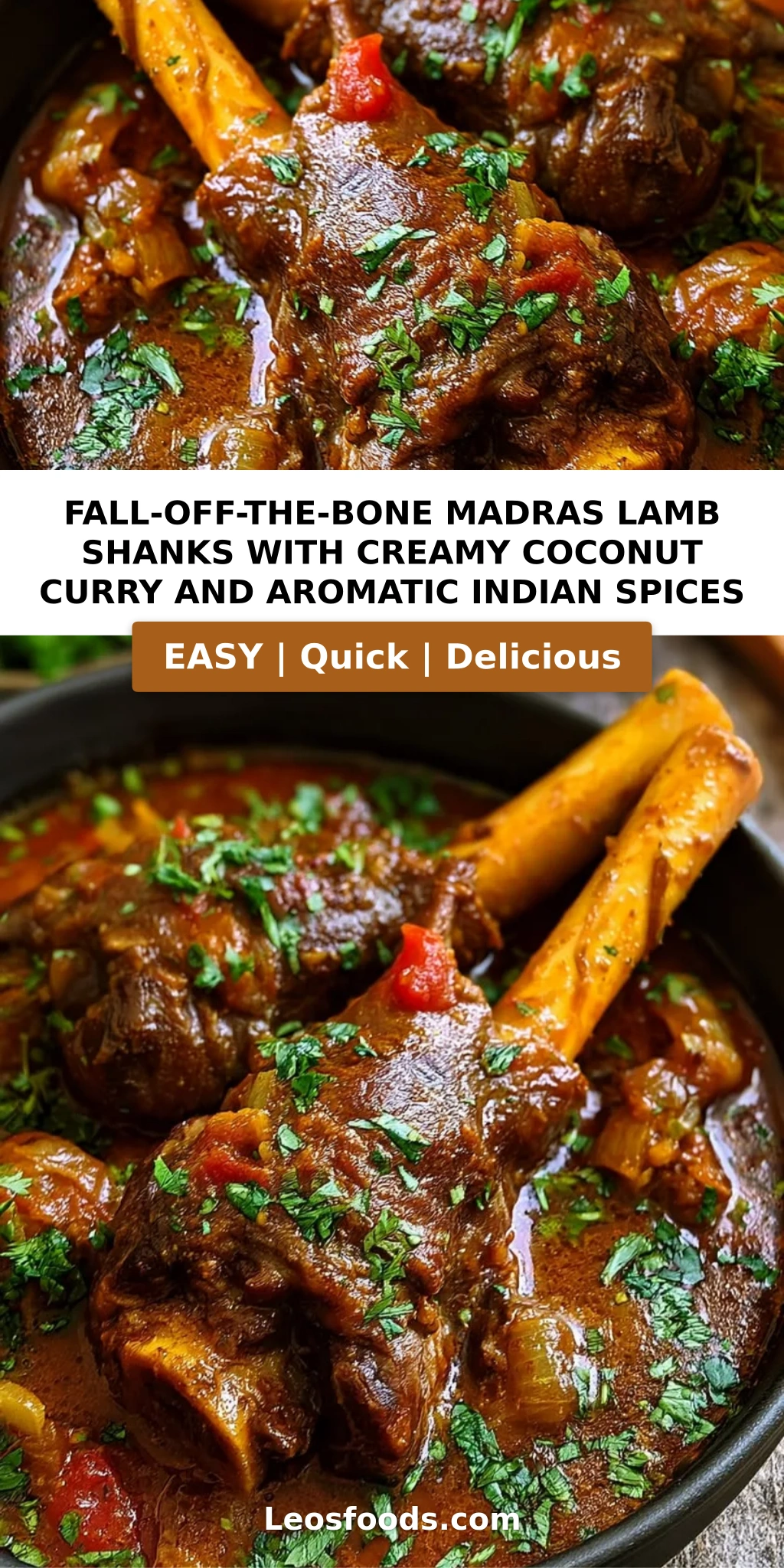
If you enjoyed this Fall-Off-the-Bone Madras Lamb Shanks with Creamy Coconut Curry and Aromatic Indian Spices recipe, don’t let it get lost in your browser tabs! 😄 Pin it now so you can find it again anytime — and explore hundreds more tried-and-tested recipes waiting for you on my Pinterest boards.
👉 Follow Stella on Pinterest @stellarecipeblog
📌 Pin this recipe · 🔁 Re-pin your favorites · 💬 Tag me when you make it — I love seeing your creations!
What’s your favorite way to serve lamb shanks? Share your twist in the comments below! 👇
⭐ Rate this recipe · 🗣️ Share your tips · 📸 Tag @leosfoods on Instagram
What is the best way to ensure lamb shanks fall off the bone when cooking a Madras curry?
The key to fall-off-the-bone tender lamb shanks in a Madras curry is low-and-slow cooking with sufficient liquid and acidity. First, always brown the shanks deeply — that caramelized crust adds flavor and helps the meat hold its structure during the long simmer. Then cook them submerged in a liquid that contains both acid (tomatoes, lime juice) and fat (coconut milk, broth), which helps break down collagen and connective tissue. Maintain a gentle simmer at 325°F in the oven or on the stovetop for 2.5 to 3 hours. The meat is ready when a fork inserted into the thickest part meets no resistance and the bone slides out cleanly. Don’t rush this process — if the lamb isn’t tender after 3 hours, it may need up to 30 more minutes depending on the size of the shanks.
Can I substitute coconut milk with something else in a creamy coconut curry for lamb shanks?
Yes, you can substitute coconut milk in this Madras lamb shanks recipe, though the flavor and texture will change. The best alternative is cashew cream — blend 1 cup of raw cashews (soaked for 4 hours or boiled for 10 minutes) with 1 cup of water until smooth. Cashew cream is rich, neutral-flavored, and thickens beautifully, making it an excellent dairy-free substitute. Another option is full-fat Greek yogurt (if you’re not dairy-free), which adds tanginess and creaminess — but you’ll need to temper it by stirring a cup of hot sauce into the yogurt before adding it to the pot to prevent curdling. Avoid using light coconut milk or milk, as they will break under the long simmer and result in a thin, watery sauce. Heavy cream can work in a pinch but lacks the subtle sweetness of coconut.
How long does it take to cook lamb shanks in a Madras-style curry until they are tender?
In this Madras lamb shanks recipe, the lamb shanks need about 2.5 to 3 hours of gentle simmering to become perfectly tender. The exact time depends on the size and thickness of the shanks — larger shanks (14–16 oz each) may need the full 3 hours, while smaller ones (10–12 oz) can be ready closer to 2 hours 15 minutes. I recommend checking at the 2-hour 15-minute mark by piercing the thickest part of the meat with a fork. If it meets resistance, continue cooking and check again every 15 minutes. The ideal temperature for the braising liquid is around 200–210°F — a gentle bubble, not a rolling boil. Cooking at too high a temperature will toughen the meat rather than tenderize it.
What are the essential Indian spices for an aromatic Madras lamb shank curry?
The essential Indian spices for an aromatic Madras lamb shank curry are: Madras curry powder (the star — a hot, aromatic blend with chilies, coriander, cumin, fenugreek, and turmeric), ground cumin for earthy warmth, ground coriander for citrusy notes, turmeric for color and mild earthiness, smoked paprika for depth (not traditional but adds incredible complexity), ground cinnamon for sweetness, and cardamom pods for a floral, almost eucalyptus-like perfume. I also include a cinnamon stick and bay leaves for background notes. The key is to bloom these spices in hot oil at the start of cooking — this releases their volatile oils and creates a deeply fragrant base for the coconut curry. Do not skip this step, as raw spices can taste dusty and flat.
Can I make this Madras lamb shanks recipe in a slow cooker or Instant Pot?
Absolutely — this Madras lamb shanks recipe adapts beautifully to both a slow cooker and an Instant Pot. For a slow cooker: Brown the lamb and bloom the spices on the stovetop first (this step is non-negotiable for depth of flavor), then transfer everything to the slow cooker and cook on LOW for 7–8 hours or on HIGH for 4–5 hours. The sauce will be slightly thinner due to less evaporation; you can thicken it by simmering uncovered on the stovetop for 10 minutes after cooking. For the Instant Pot: Use the sauté function for browning and blooming, then pressure cook on HIGH for 45 minutes with a natural release of 15 minutes. The meat will be fall-apart tender but the sauce may be less reduced — again, a quick sauté on the stovetop after pressure cooking will fix that.
What should I serve with Madras lamb shanks and coconut curry for a complete meal?
For a complete meal with this Madras lamb shanks recipe, I recommend starting with a base of steamed basmati rice — its long, fluffy grains are perfect for soaking up the creamy coconut curry. Warm, buttery naan bread (plain or garlic) is a must for wiping the bowl clean. For vegetables, a simple cucumber and mint raita (yogurt with grated cucumber, fresh mint, and a pinch of cumin) adds a cooling, refreshing contrast to the warm spices. A bright salad of sliced red onion, tomatoes, and lemon juice cuts through the richness. If you want a heartier vegetable side, try roasted cauliflower with turmeric and cumin — it echoes the Indian flavors of the main dish. For drinks, a cold lager or a dry Riesling pairs wonderfully with the curry’s heat and creaminess.
How do I store and reheat leftover Madras lamb shanks with coconut curry?
Leftover Madras lamb shanks with coconut curry store beautifully and actually taste even better the next day as the flavors meld. To store, let the curry cool completely to room temperature (no more than 2 hours), then transfer the lamb shanks and sauce to an airtight container. Refrigerate for up to 4 days, or freeze for up to 3 months. When reheating, thaw overnight in the refrigerator if frozen, then reheat gently in a covered pot over medium-low heat, stirring occasionally. The coconut milk can separate when chilled, so whisk it back together as it warms. If the sauce has thickened too much, add a splash of broth or water to reach your desired consistency. Always finish with a fresh squeeze of lime juice to brighten the flavors before serving.
Can I use a different type of meat in this Madras curry recipe?
Yes, this Madras curry sauce is versatile and works beautifully with other meats. Bone-in chicken thighs or drumsticks are an excellent option — they’ll cook in about 40–45 minutes of simmering and absorb the spices wonderfully. Beef short ribs or oxtail also work well, requiring about 3–4 hours of braising time similar to lamb shanks. For a quicker option, use cubed lamb or beef stew meat (chuck), which will be tender in about 1.5–2 hours. If you’re using a leaner cut like chicken breast or pork loin, reduce the cooking time significantly to prevent drying out — add them during the last 20 minutes of simmering. The key is to adjust the cooking time based on the meat you choose and always check for tenderness before serving.
What is the difference between Madras curry powder and regular curry powder?
Madras curry powder is a specific blend that originates from the Madras region (now Chennai) in South India, and it differs from standard curry powder in several key ways. Madras curry powder is significantly hotter and more pungent, with a higher proportion of dried red chilies and black pepper. It also typically contains fenugreek, which adds a slightly bitter, maple-like undertone, and more cumin and coriander for depth. Standard curry powder, by contrast, is often milder and sweeter, with more turmeric and less heat — it’s a Westernized blend designed for a broader palate. For this Madras lamb shanks recipe, using a true Madras curry powder is essential to achieving the authentic South Indian flavor profile. If you can only find standard curry powder, you can amp it up by adding extra cayenne pepper and a pinch of fenugreek powder.
Why did my coconut curry sauce separate or look grainy?
A separated or grainy coconut curry sauce is usually caused by one of three issues: overheating, too much acid, or low-quality coconut milk. When coconut milk is boiled vigorously (instead of gently simmered), the fat and water can separate, resulting in a grainy, oily sauce. To prevent this, always cook your Madras lamb shanks recipe at a gentle simmer — the surface should barely bubble. Another common cause is adding too much acid (like lime juice or tomatoes) too early, which can cause the coconut milk to curdle. Always add lime juice at the very end, after the cooking is complete. Finally, use full-fat coconut milk from a reputable brand like Chaokoh or Thai Kitchen — cheaper brands often contain stabilizers that break down during extended cooking. If your sauce does separate, you can sometimes rescue it by whisking in a tablespoon of cold coconut milk or blending it briefly with an immersion blender.
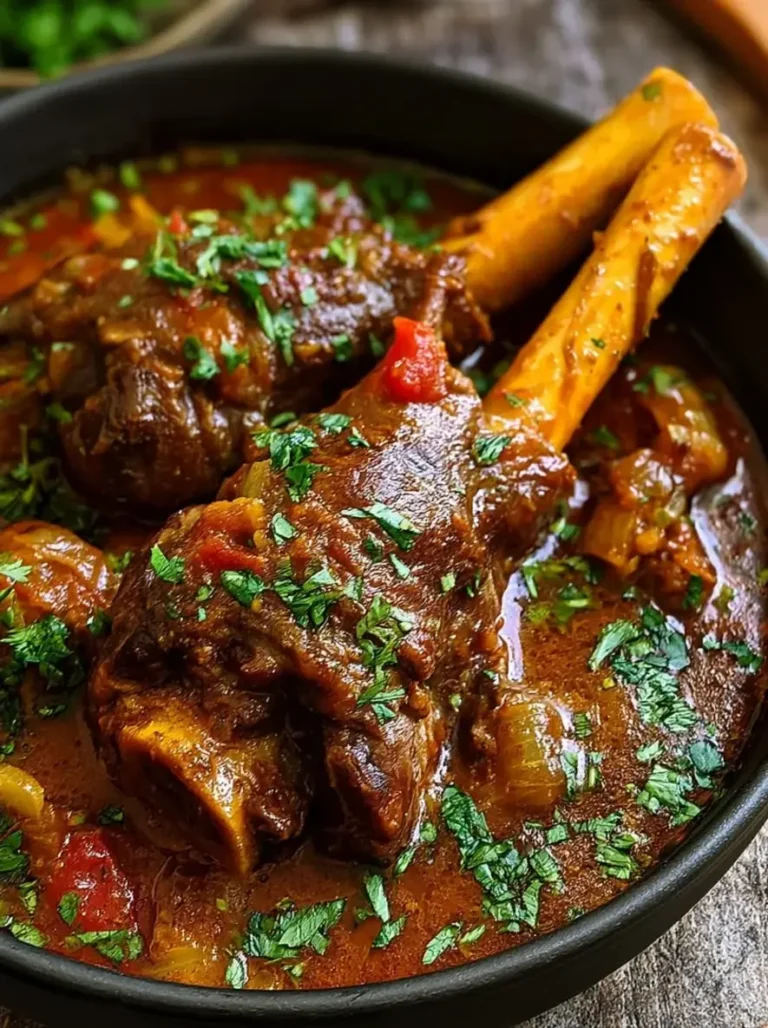
Fall-Off-the-Bone Madras Lamb Shanks with Creamy Coconut Curry and Aromatic Indian Spices
Tender lamb shanks slow-cooked in a rich, aromatic Madras curry sauce with creamy coconut milk, inspired by the flavors of South India.
- Total Time: 3 hours 20 minutes
- Yield: 4 servings 1x
Ingredients
- 4 lamb shanks
- 2 tablespoons vegetable oil
- 1 large onion, finely diced
- 5 garlic cloves, minced
- 2 tablespoons fresh ginger, grated
- 2 tablespoons Madras curry powder
- 2 teaspoons ground cumin
- 2 teaspoons ground coriander
- 1 teaspoon turmeric
- 1 teaspoon smoked paprika
- ½ teaspoon ground cinnamon
- 4 cardamom pods, lightly crushed
- 1 teaspoon salt
- ½ teaspoon black pepper
- 2 tablespoons tomato paste
- 1 (14 oz) can diced tomatoes
- 1 (14 oz) can coconut milk
- 1 cup beef or chicken broth
- 2 bay leaves
- 1 cinnamon stick
- 1 tablespoon brown sugar
- Juice of 1 lime
- Fresh cilantro for garnish
Instructions
- Season the lamb shanks with salt and pepper. Heat oil in a large Dutch oven over medium-high heat and brown the shanks on all sides, about 8 minutes total. Remove and set aside.
- In the same pot, add the onion and cook until softened, about 5 minutes. Add garlic and ginger, cook 1 minute more.
- Stir in the Madras curry powder, cumin, coriander, turmeric, smoked paprika, cinnamon, cardamom pods, salt, and pepper. Cook until fragrant, about 1 minute.
- Add tomato paste and cook, stirring, for 2 minutes. Pour in the diced tomatoes, coconut milk, broth, bay leaves, cinnamon stick, and brown sugar. Bring to a simmer.
- Return the lamb shanks to the pot, submerging them in the sauce. Cover and cook on low heat for 2.5–3 hours, until the meat is tender and falling off the bone.
- Remove the bay leaves and cinnamon stick. Stir in lime juice. Taste and adjust seasoning.
- Serve garnished with fresh cilantro, over steamed basmati rice or with naan bread.
Notes
For extra depth, marinate the lamb shanks overnight with the spices and yogurt. The curry can be made a day ahead and reheated.
- Prep Time: 20 minutes
- Cook Time: 3 hours
- Method: Main Course
- Cuisine: Indian
Nutrition
- Calories: 720 kcal
- Sugar: 9 g
- Fat: 48 g
- Carbohydrates: 18 g
- Protein: 52 g
Tried This Recipe? Leave a Comment!
Did you make this recipe? I’d love to hear how it turned out! Please leave a comment and a rating below. Your feedback helps other home cooks and supports cheerychop.com!
For more delicious inspiration, follow me on Pinterest!