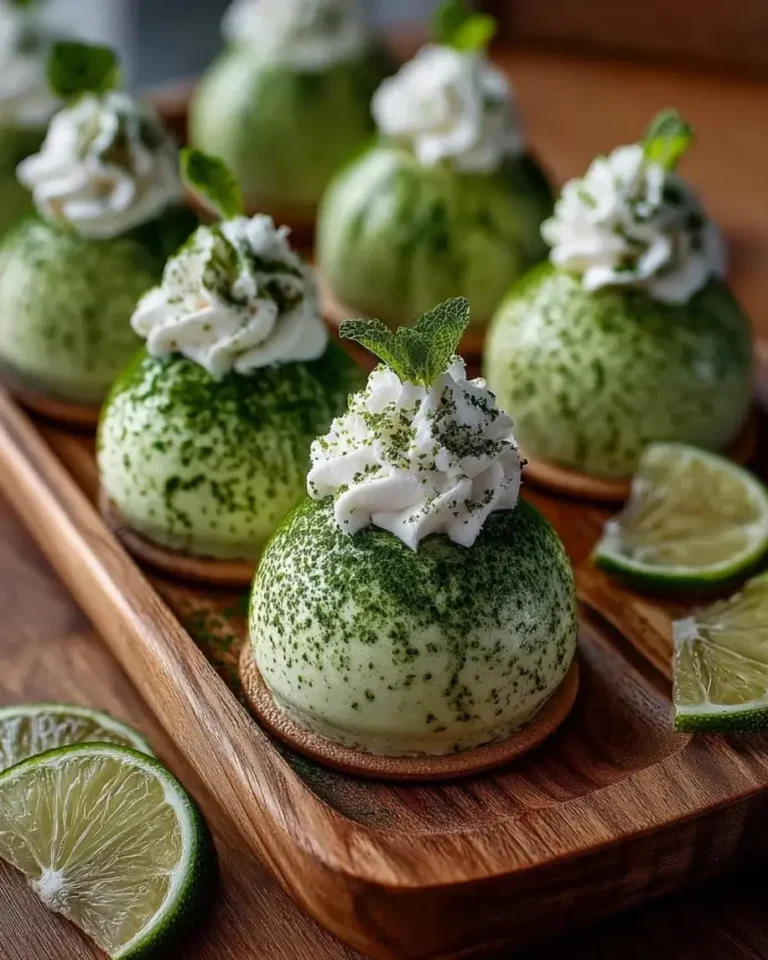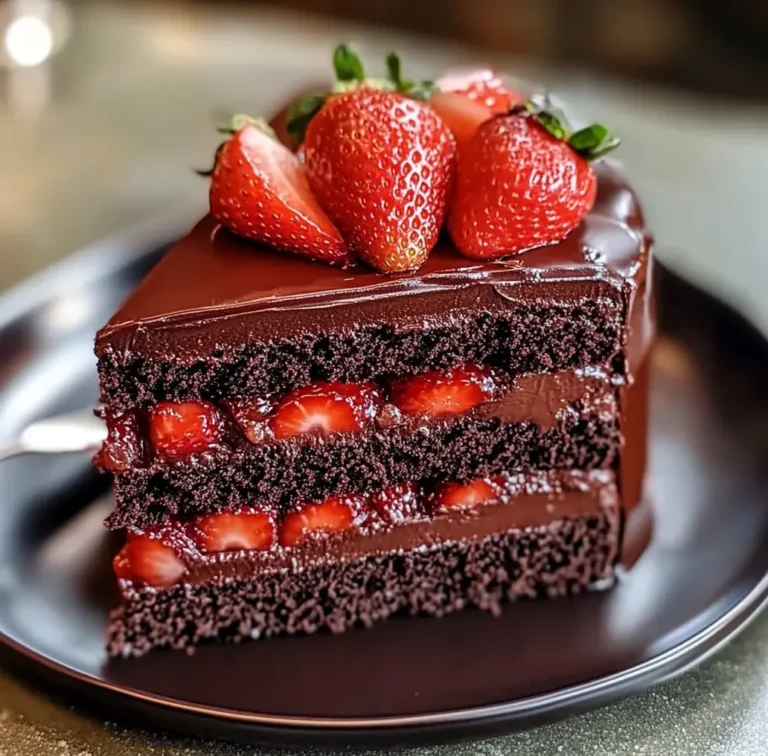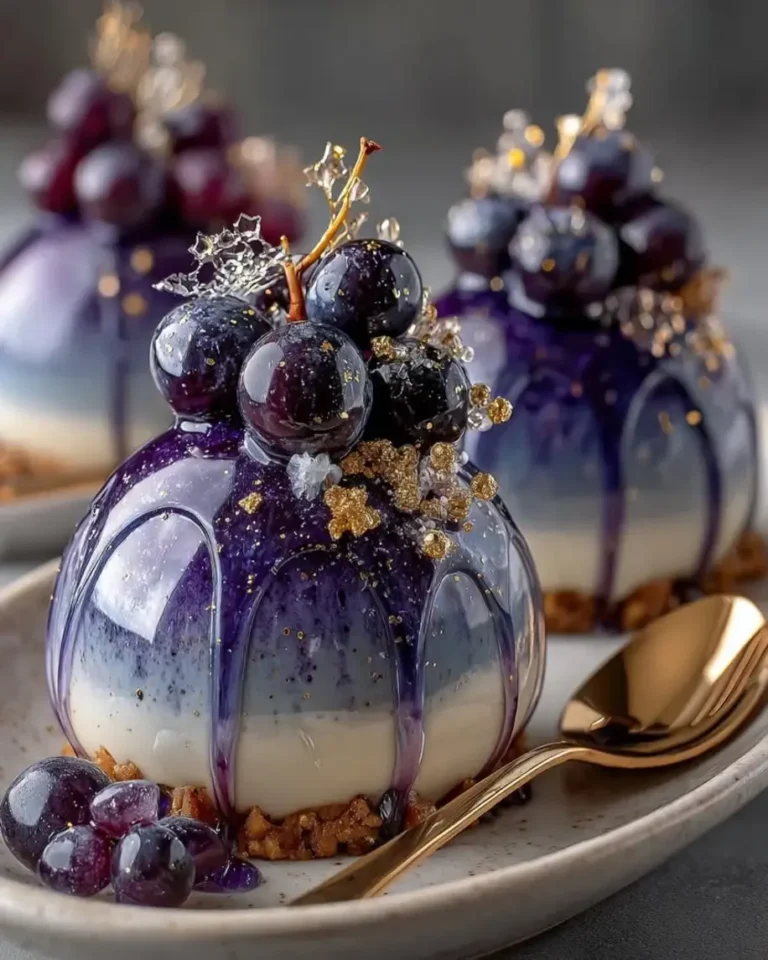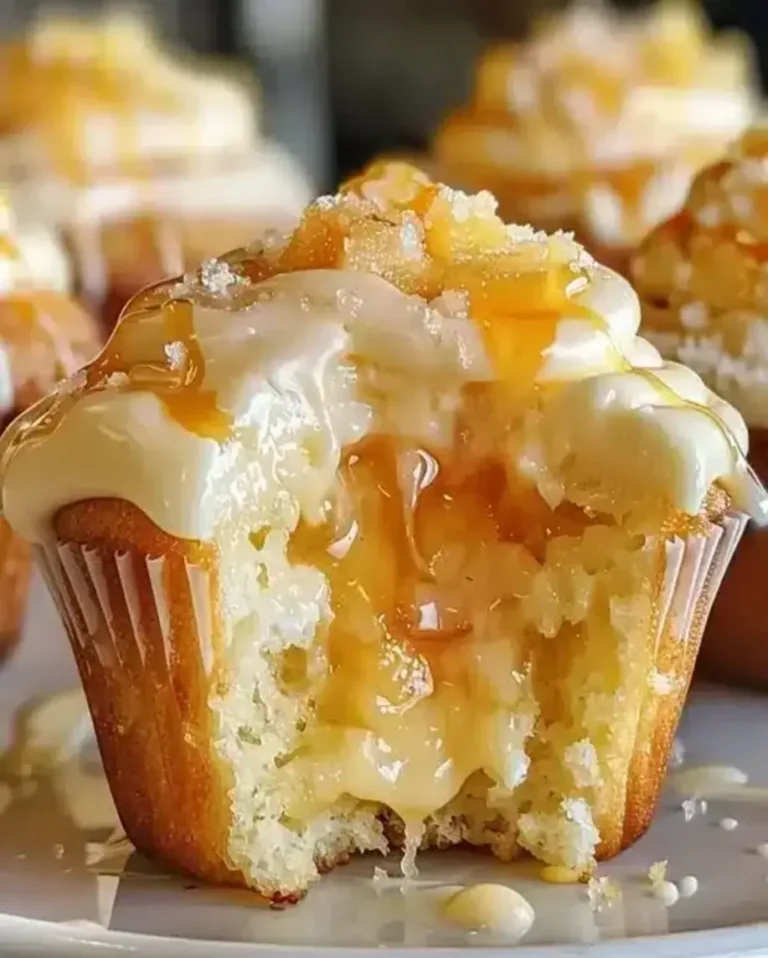
Golden Pineapple Cheesecake Pyramids with Crystal Glaze
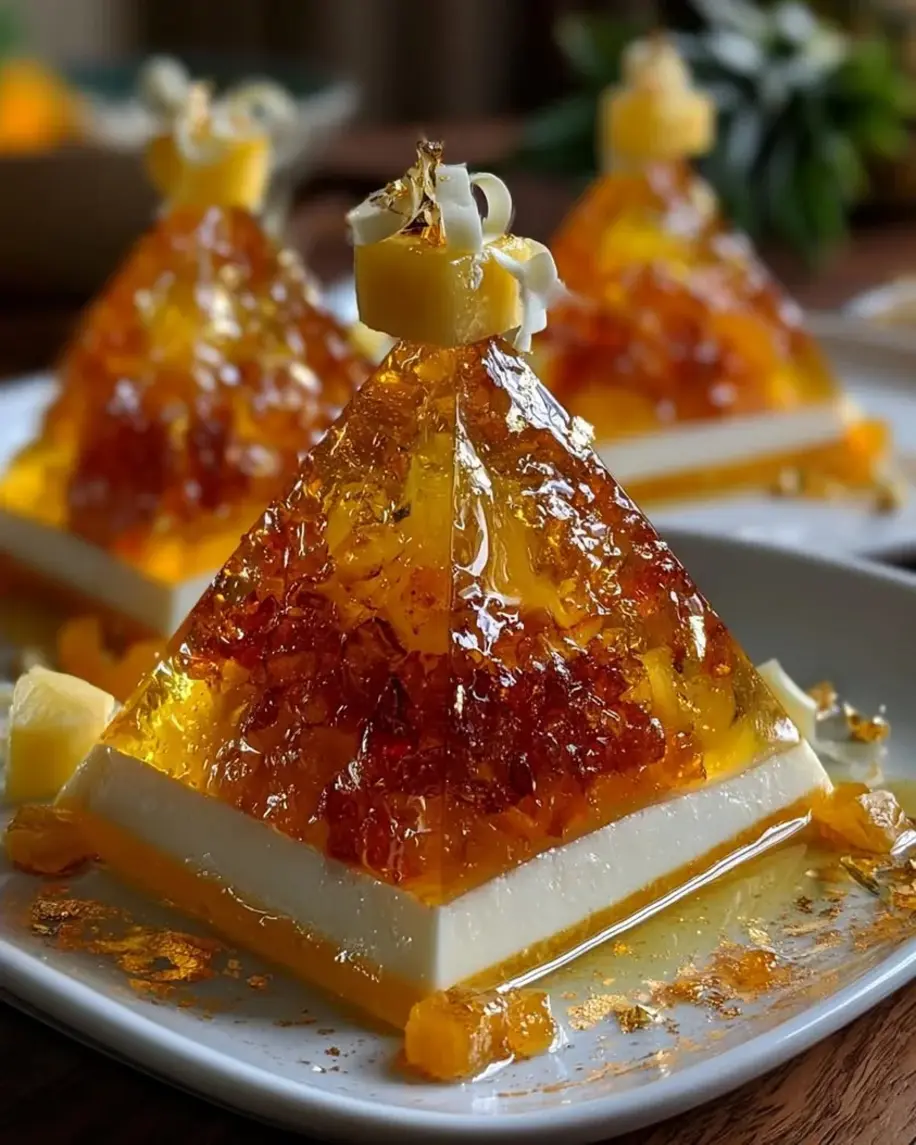
Table of Contents
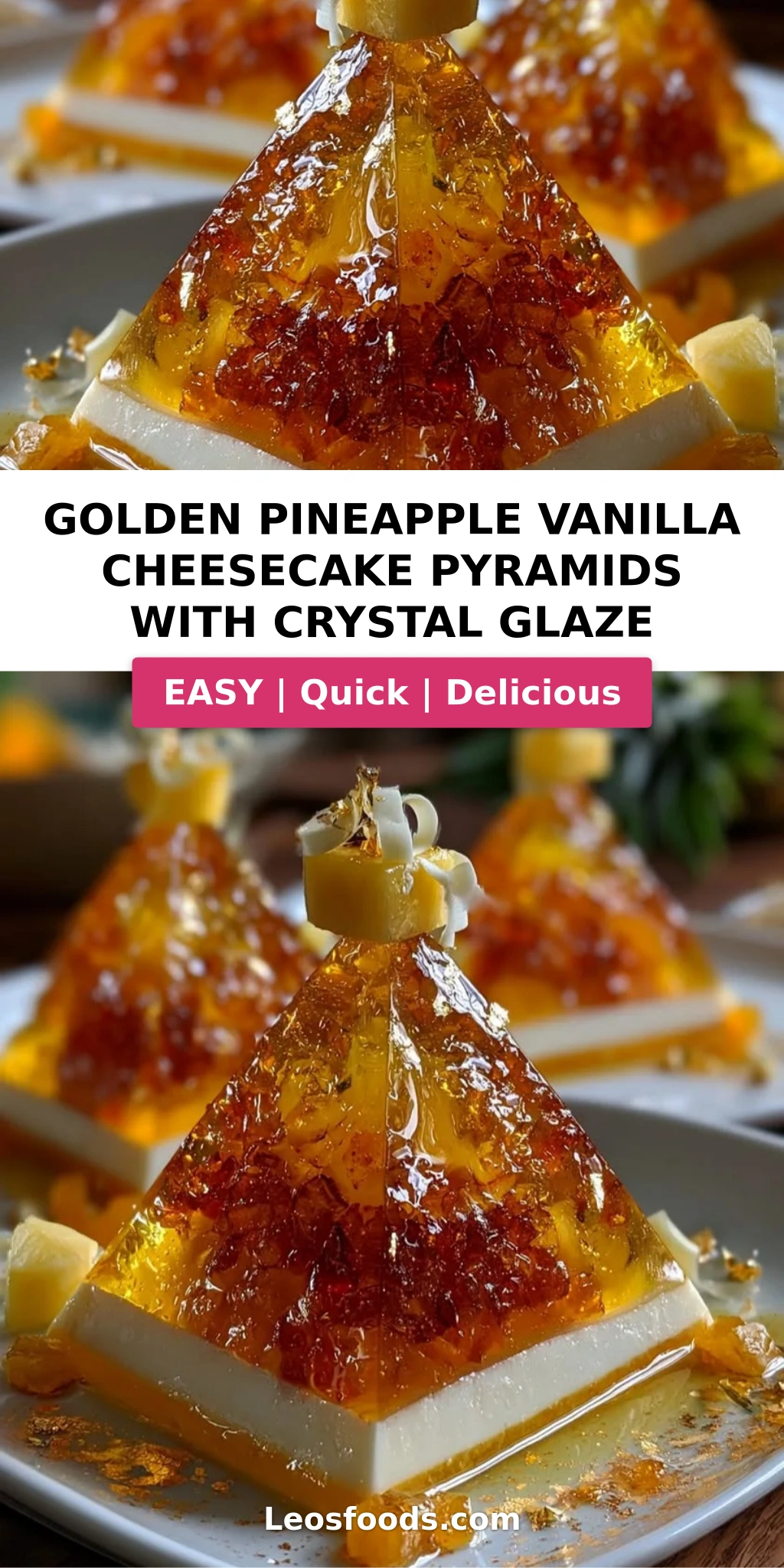
Golden Pineapple Vanilla Cheesecake Pyramids with Crystal Glaze – No-Bake Pineapple Cheesecake Pyramids with a Luminous Golden Finish
I still remember the first time I saw a crystal-clear fruit jelly shimmer under the Moroccan sun at a street market in Marrakech. My mother used to make a simple mint tea jelly for us during hot summers, and that memory came rushing back when I started developing this Golden Pineapple Vanilla Cheesecake Pyramids with Crystal Glaze recipe. These no-bake cheesecake pyramids combine the translucent beauty of agar-agar jellies with a luscious vanilla cheesecake center — a dessert that feels both nostalgic and utterly modern. The crystal glaze technique is the secret to that luminous golden finish that makes these little pyramids look like jewels on a platter.
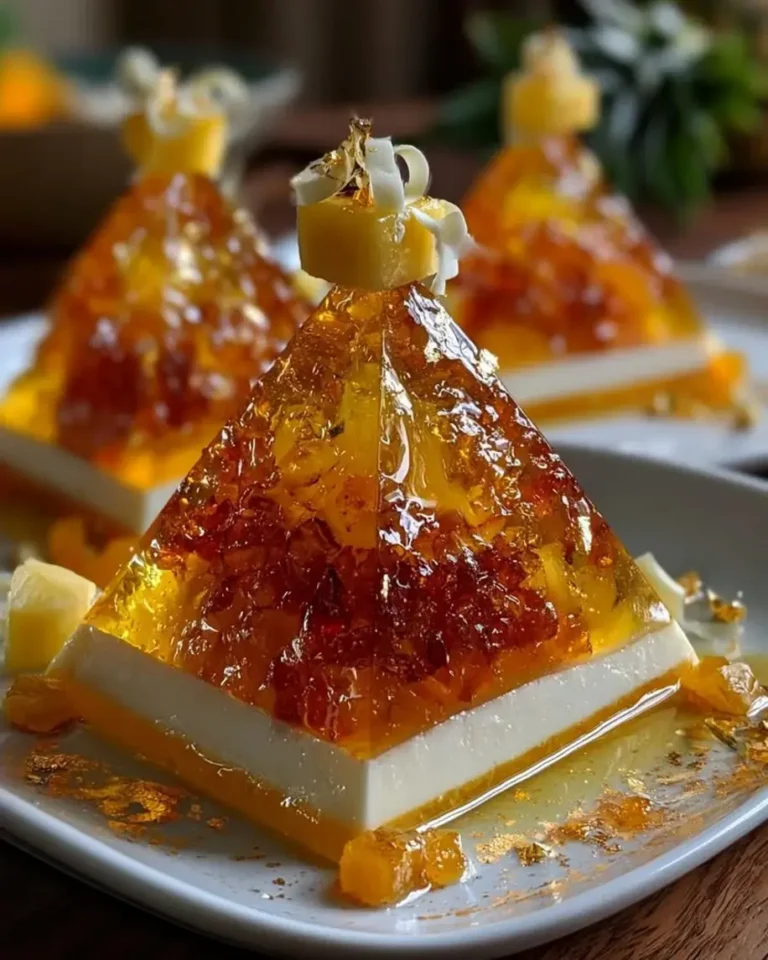
Imagine cutting into a perfectly chilled pyramid — the exterior is a firm, glossy pineapple jelly that gives way to a silky, cloud-like vanilla cheesecake core. The aroma hits you first: bright pineapple and floral vanilla bean, followed by a subtle lime note that keeps every bite bright. The texture is what truly sets this apart — the agar-agar creates a clean, firm set that slices beautifully without being rubbery, while the cheesecake center stays luxuriously creamy. It’s the kind of dessert that looks like it belongs in a Parisian pâtisserie window but comes together in your own kitchen with a few clever techniques.
What I love most about this pineapple cheesecake pyramids recipe is how it bridges my French pastry training with the bold fruit-forward flavors I grew up with in Morocco. The agar-agar powder — a staple in both Asian and North African kitchens — gives you a crystal-clear set that gelatin simply can’t achieve. Plus, it’s plant-based, which makes this dessert unexpectedly friendly for vegetarian guests. Over the years, I’ve tested every variable: the exact simmer time for the agar, the perfect cheesecake-to-jelly ratio, and the ideal temperature for the glaze to stay glossy without melting the pyramid. This version is foolproof, and I’m sharing every tip I’ve learned so you can nail it on your first try.
Why This Pineapple Cheesecake Pyramids Recipe Is the Best
The flavor secret here is all about layering. The pineapple jelly is made with both juice and puree, giving it a deep, concentrated fruitiness that doesn’t get lost next to the rich cheesecake. I learned this double-fruit technique during my time in Paris — using the juice for clarity and the puree for body creates a jelly that tastes like the ripest pineapple you’ve ever had, without any artificial notes. The vanilla bean paste in the center adds those tiny black specks that tell your eyes exactly what your taste buds are about to enjoy.
Texture is where this recipe really shines, and that comes down to the agar-agar. Unlike gelatin, which can make desserts feel wobbly or heavy, agar-agar sets at room temperature and gives a clean, firm bite that holds its shape beautifully. The key is letting the mixture simmer for a full minute after dissolving — that activates the agar properly. I’ve tested this more times than I can count, and the 2½ teaspoons of agar-agar powder I call for is the sweet spot: firm enough to unmold perfectly, but tender enough to melt on your tongue.
What makes this no-bake cheesecake recipe genuinely foolproof is the two-stage setting method. You fill the molds halfway, let them partially set, add the cheesecake center, then top off with more jelly. This ensures the cheesecake stays suspended right in the middle of each pyramid instead of sinking to the bottom. Even if you’re new to working with agar-agar, this approach gives you a beautiful result every time. The crystal glaze on top is the crowning touch — it adds shine and a thin, sweet layer that ties the whole dessert together.
Pineapple Cheesecake Pyramids Ingredients
When I make these golden pineapple vanilla cheesecake pyramids for dinner parties here in New York, I pick up my pineapples from the Union Square Greenmarket — they’re at their peak from late spring through fall. The agar-agar I order online in bulk because I use it so often, but you can find it in most Asian grocery stores or the baking aisle of well-stocked supermarkets. For the cheesecake center, I always use full-fat cream cheese and heavy cream — the richness is what makes the texture feel decadent against the light, fruity jelly.
Ingredients List
- For the Golden Pineapple Crystal Pyramids:
- 2 cups pineapple juice
- 1 cup pineapple puree, strained
- 1 1/2 cups water
- 3/4 cup sugar
- 2 1/2 tsp agar-agar powder
- 1 tbsp lime juice
- 1/4 tsp salt
- For the Vanilla Cheesecake Center:
- 8 oz cream cheese, softened
- 1/2 cup heavy whipping cream
- 1/4 cup powdered sugar
- 1 tsp vanilla bean paste
- 1 tbsp sweetened condensed milk
- For the Crystal Glaze:
- 1/4 cup pineapple preserves
- 2 tbsp honey
- 1 tbsp water
- 1 tsp lime juice
- For Garnish (optional):
- Small pineapple cubes
- White chocolate curls
- Edible gold dust
Ingredient Spotlight
Agar-agar powder is the backbone of this crystal glaze dessert — it’s a plant-based gelling agent derived from seaweed that produces a firm, transparent set. Look for it in the baking aisle or at Asian grocery stores; I recommend the “Now Foods” or “Telephone” brand for reliability. One important note: agar-agar needs to be brought to a full boil for about 30–60 seconds to activate properly, unlike gelatin which simply dissolves in warm liquid.
Pineapple juice and puree work together to give you both clarity and intense flavor. Use a high-quality bottled pineapple juice (not from concentrate if possible) and either fresh or canned pineapple puree. If you’re making your own puree from fresh pineapple, be sure to strain it well to remove fibers — a fine-mesh sieve works perfectly. Canned pineapple in its own juice, blended and strained, is a great shortcut that saves time without sacrificing taste.
Vanilla bean paste is my secret weapon for the cheesecake center — it gives you those beautiful vanilla specks and a deeper, more complex flavor than extract. If you don’t have vanilla bean paste, you can substitute the seeds from half a vanilla bean or 1½ teaspoons of pure vanilla extract. The paste also has a slightly thicker consistency that blends beautifully into the cream cheese mixture without thinning it out.
| Original Ingredient | Best Substitution | Flavor / Texture Impact |
|---|---|---|
| Agar-agar powder | Agar-agar flakes (use 3 tbsp for 2½ tsp powder) | Slightly softer set; soak flakes in water 15 min before heating |
| Pineapple juice | Mango or orange juice + 1 tbsp lemon juice | Brighter, less tropical flavor; may need extra sugar |
| Vanilla bean paste | 1½ tsp pure vanilla extract or seeds of ½ vanilla bean | Extract gives slightly less intense vanilla flavor; bean seeds look stunning |
| Heavy whipping cream | Full-fat coconut cream (chilled) | Dairy-free; slightly coconutty flavor that pairs well with pineapple |
How to Make Pineapple Cheesecake Pyramids — Step-by-Step
Trust me on this — the first time you unmold a perfect little pyramid, you’ll feel like a pastry chef in a five-star kitchen. Here’s exactly how to get there, with all the little details I’ve learned from making these dozens of times.
Step 1: Simmer the Pineapple-Agar Mixture
Combine 2 cups pineapple juice, 1 cup strained pineapple puree, 1½ cups water, ¾ cup sugar, 2½ teaspoons agar-agar powder, 1 tablespoon lime juice, and ¼ teaspoon salt in a medium saucepan. Whisk well to dissolve the agar-agar powder — it clumps easily, so take your time here. Place the pan over medium-high heat and bring to a gentle simmer while stirring constantly. Once you see small bubbles breaking the surface, let it simmer gently for 1 minute to fully activate the agar-agar.
💡 Stella’s Pro Tip: Don’t let the mixture come to a rolling boil — a gentle simmer is all you need. Boiling too vigorously can create bubbles that will show up as tiny air pockets in your crystal-clear jelly. If you do get bubbles, let the mixture sit off the heat for 30 seconds and skim them off with a spoon before pouring.
Step 2: Partial Fill and Initial Set
Pour the pineapple mixture into pyramid-shaped silicone molds, filling each cavity about halfway. Place the molds on a baking sheet (for easy handling) and refrigerate for 20–25 minutes, or until the jelly is partially set — it should feel firm to the touch but still have a slightly tacky surface. This partial set is what keeps the cheesecake center suspended in the middle of each pyramid.
⚠️ Common Mistake to Avoid: Don’t let the first layer fully set before adding the cheesecake — it needs to be tacky so the next layer of jelly bonds with it. If it sets completely, the layers can separate and you’ll see a visible seam when you unmold. If this happens, gently warm the next layer of jelly slightly before pouring.
Step 3: Make the Vanilla Cheesecake Filling
While the first layer sets, make the cheesecake center. In a large bowl, beat 8 ounces softened cream cheese with ¼ cup powdered sugar, 1 teaspoon vanilla bean paste, and 1 tablespoon sweetened condensed milk until smooth and fluffy with no lumps. In a separate bowl, whip ½ cup heavy whipping cream to stiff peaks. Gently fold the whipped cream into the cream cheese mixture in two additions, being careful not to deflate the cream. Transfer the mixture to a piping bag fitted with a round tip and refrigerate until ready to use.
💡 Stella’s Pro Tip: Make sure your cream cheese is truly softened — leave it on the counter for at least an hour before starting. Cold cream cheese will give you lumpy filling. If you’re in a hurry, microwave it in 10-second bursts, but watch it carefully: you want it soft, not melted.
Step 4: Pipe and Encase the Cheesecake Center
Pipe a small mound of cheesecake filling — about 1½ tablespoons — into the center of each partially set pyramid. Don’t press it down; just let it sit on top of the jelly. Gently warm the remaining pineapple mixture if it has thickened, then carefully pour it over the cheesecake filling, filling each cavity to the top. Tap the mold gently on the counter to release any air bubbles. Refrigerate for at least 3 hours, or overnight, until fully set and crystal clear.
⚠️ Common Mistake to Avoid: Pour the top layer of jelly slowly and steadily — pouring too fast can dislodge the cheesecake center or create air pockets. I like to pour it against the side of the mold cavity to let it flow gently over the filling. If any cheesecake peeks above the jelly surface, use a toothpick to gently nudge it back under.
Step 5: Unmold the Pyramids
Once fully set, carefully unmold the pyramids onto a chilled serving platter. The easiest way: gently press the bottom of each silicone mold cavity to release the pyramid, then invert it onto your palm or directly onto the platter. If any pyramid sticks, run the bottom of the mold under warm water for 5 seconds — that usually does the trick. Work quickly and keep your hands cool so the jelly doesn’t soften.
💡 Stella’s Pro Tip: For the cleanest unmold, chill your serving platter in the fridge for 15 minutes before you start. A cold surface helps the pyramids hold their shape as you transfer them. If you’re making these for a party, unmold them directly onto individual dessert plates for a stunning presentation.
Step 6: Make the Crystal Glaze
In a small saucepan, combine ¼ cup pineapple preserves, 2 tablespoons honey, 1 tablespoon water, and 1 teaspoon lime juice. Warm over low heat, stirring occasionally, until the mixture is smooth and glossy — about 2–3 minutes. Don’t let it boil. Remove from heat and allow it to cool for 5–7 minutes until it’s still pourable but no longer hot. The glaze should be warm but not hot enough to melt the jelly.
⚠️ Common Mistake to Avoid: Test the glaze temperature on the back of your hand — it should feel comfortably warm, not hot. Glaze that’s too hot will melt the surface of the jelly and ruin that perfect crystal finish. If the glaze becomes too thick as it cools, add a few drops of warm water and whisk.
Step 7: Glaze and Garnish
Using a pastry brush, gently brush a thin, even layer of the crystal glaze over each pyramid, or use a small spoon to drizzle it over the top, letting it cascade down the sides. The glaze should create a luminous golden finish that catches the light. While the glaze is still tacky, garnish with small pineapple cubes, white chocolate curls, and a light dusting of edible gold dust — if using. Serve immediately or keep chilled until serving.
💡 Stella’s Pro Tip: Apply the glaze in two thin coats rather than one thick coat — the first layer dries to a sticky surface that helps the second layer adhere evenly, giving you that mirror-like finish. Let the first coat set for about 3 minutes in the fridge before applying the second.
| Step | Action | Duration | Key Visual Cue |
|---|---|---|---|
| 1 | Simmer pineapple-agar mixture | 5–7 mins | Agar fully dissolved, gentle simmer, no bubbles |
| 2 | Partial fill and initial set | 20–25 mins | Jelly firm but tacky on surface |
| 3 | Make cheesecake filling | 10 mins | Fluffy, smooth, holds soft peaks |
| 4 | Pipe and encase cheesecake | 5 mins | Filling centered, top layer covers completely |
| 5 | Unmold pyramids | 2–3 mins | Clean release, no cracks, crystal clear |
| 6 | Make crystal glaze | 5–7 mins | Smooth, glossy, warm but not hot |
| 7 | Glaze and garnish | 10 mins | Luminous golden finish, garnishes adhere |
Serving & Presentation
These golden pineapple vanilla cheesecake pyramids are at their absolute best served thoroughly chilled — the contrast between the firm, glossy jelly and the creamy, almost mousse-like center is what makes every bite memorable. I like to arrange them on a chilled white platter with small pools of the remaining crystal glaze brushed lightly around them. The white porcelain makes the golden hue of the jelly and glaze really pop, especially when natural light hits the table.
For garnish, I keep it elegant but playful: a few tiny pineapple cubes scattered around, thin white chocolate curls made with a vegetable peeler, and the lightest dusting of edible gold dust — just enough to catch the light. If you’re serving these at a dinner party, place each pyramid on a small dessert plate with a dollop of lightly sweetened whipped cream and a single mint leaf. The mint adds a fresh green note that contrasts beautifully with the golden tones.
One of my favorite ways to serve these is with a small glass of chilled Moscato d’Asti or a pineapple-basil spritzer — the bubbles and bright acidity cut through the richness of the cheesecake center. For a non-alcoholic option, a sparkling limeade with a splash of coconut water is absolutely lovely. These pyramids also make a stunning addition to a dessert buffet or a bridal shower table, where their jewel-like appearance never fails to draw compliments.
| Pairing Type | Suggestions | Why It Works |
|---|---|---|
| Side Dish | Fresh berries, coconut sorbet, mango slices | Bright fruit complements pineapple; sorbet adds creamy contrast |
| Sauce / Dip | Passion fruit coulis, caramel drizzle, raspberry sauce | Tart sauces balance sweetness; caramel adds depth |
| Beverage | Moscato d’Asti, pineapple-basil spritzer, sparkling limeade | Bubbles and acidity cut through cheesecake richness |
| Garnish | Pineapple cubes, white chocolate curls, mint leaves, edible gold dust | Enhances visual appeal; adds texture contrast |
Make-Ahead, Storage & Reheating
One of the best things about this no-bake cheesecake recipe is how beautifully it works for advance preparation — which is essential for a busy cook in New York City! I often make the full pyramids (without the glaze) up to two days before a party, then add the glaze and garnishes a few hours before serving. The crystal glaze keeps its shine for about 6–8 hours, so timing the final step close to serving gives you the most dramatic presentation.
| Method | Container | Duration | Reheating Tip |
|---|---|---|---|
| Refrigerator | Airtight container in single layer | Up to 4 days | Serve directly from fridge — do not reheat |
| Freezer | Freezer-safe container, parchment between layers | Up to 1 month | Thaw in fridge 4 hours; glaze may weep slightly |
| Make-Ahead | Keep in molds in fridge | Up to 2 days before | Glaze and garnish within 4 hours of serving |
If you’re freezing these pineapple cheesecake pyramids, I recommend freezing them without the glaze. Wrap each unmolded pyramid individually in plastic wrap, then place them in a single layer in a freezer container. When you’re ready to serve, thaw them in the refrigerator for about 4 hours (overnight works too), then apply the crystal glaze fresh. The texture of the jelly remains perfect after freezing, though the glaze may lose a bit of its initial high shine — that’s why adding it fresh makes all the difference.
One important note: these pyramids are best served straight from the refrigerator. They shouldn’t sit at room temperature for more than 20–30 minutes, as the jelly can begin to soften and lose its clean shape. If you’re hosting a party, keep them chilled until the moment you serve them. For a buffet, nestle the platter in a larger dish filled with ice to keep everything cold.
Variations & Easy Swaps
| Variation | Key Change | Best For | Difficulty Impact |
|---|---|---|---|
| Mango-Passion Fruit | Substitute mango puree for pineapple puree; add passion fruit pulp | Summer entertaining, tropical theme | Same — easy swap |
| Coconut-Lime | Replace ½ cup water with coconut milk; add lime zest | Dairy-free option, tropical flavor | Slightly harder — coconut milk affects set |
| Berry-Rose | Use raspberry juice and puree; add 1 tsp rose water | Valentine’s Day, romantic dinners | Same — easy swap |
Variation 1: Mango-Passion Fruit Pyramids
For a variation that’s just as stunning but with a different tropical twist, swap out the pineapple puree for mango puree and add the seeds of 2 passion fruits to the jelly mixture before simmering. The passion fruit seeds add a delightful crunch and a tart pop that balances the sweetness of the mango. This version reminds me of the fruit markets in Marrakech where vendors sell fresh mango slices dusted with chili and lime — pure sunshine in every bite. The rest of the recipe stays exactly the same, making this an easy swap when mangoes are in season.
Variation 2: Coconut-Lime Dairy-Free Pyramids
To make this a completely dairy-free pineapple vanilla dessert, replace the heavy cream with full-fat coconut cream (chilled overnight) and use a dairy-free cream cheese alternative like Miyoko’s or Kite Hill. For the cheesecake center, whip the coconut cream to stiff peaks exactly as you would heavy cream — just make sure it’s well-chilled. Replace ½ cup of the water in the jelly with coconut milk for an extra layer of tropical flavor, and add the zest of one lime to the jelly mixture. The set will be slightly softer due to the coconut milk, so add an extra ¼ teaspoon of agar-agar powder to compensate.
Variation 3: Berry-Rose Valentine’s Pyramids
For a romantic twist that’s perfect for Valentine’s Day, use raspberry or strawberry juice and puree instead of pineapple, and add 1 teaspoon of rose water to the jelly mixture along with an extra tablespoon of sugar to balance the tartness. The crystal glaze can be made with raspberry preserves instead of pineapple, and I love garnishing these with fresh raspberries, a tiny rose petal, and a dusting of freeze-dried raspberry powder. The floral note from the rose water pairs beautifully with the berries and gives the dessert an elegant, perfume-like finish that feels very special.
What is the best way to create a crystal glaze for cheesecake pyramids?
The best way to create a crystal glaze for these cheesecake pyramids is to warm together pineapple preserves, honey, water, and lime juice until smooth and glossy — about 2–3 minutes over low heat. The key is to let the glaze cool slightly (to warm, not hot) before brushing or drizzling it over the pyramids. Hot glaze will melt the jelly surface and ruin the crystal finish. I recommend applying two thin coats for the most luminous shine: brush the first coat, let it set for 3 minutes in the fridge, then add the second coat. The glaze should be thick enough to coat a spoon but still pourable — if it thickens too much, stir in a few drops of warm water.
Can I use a different fruit instead of pineapple in this golden vanilla cheesecake recipe?
Absolutely you can swap the pineapple for other fruits, though the results will vary slightly. Mango is the easiest substitute — use mango juice and puree in the same proportions, and the texture and sweetness will be very similar. For a berry version, use raspberry or strawberry juice (strained to remove seeds) and add an extra tablespoon of sugar since berries are less sweet than pineapple. Keep in mind that some fruits, like fresh kiwi or papaya, contain enzymes that can prevent agar-agar from setting properly — so if you’re experimenting, stick with cooked or processed fruit juices and purees, or heat fresh fruit to 185°F to deactivate the enzymes before adding the agar.
How do I prevent the cheesecake pyramids from cracking while setting?
Cracking in agar-agar desserts usually happens for two reasons: the mixture was boiled too vigorously, creating large air bubbles that later collapse, or the dessert was exposed to temperature shock. To prevent cracking, always simmer the pineapple-agar mixture gently — never a rolling boil — and let it sit off the heat for 30 seconds before pouring into molds to let any bubbles rise and pop. When refrigerating, don’t place the molds directly against a cold back wall of the fridge; allow air to circulate around them. If you live in a very humid climate, reduce the water by 2 tablespoons to compensate for moisture absorption.
How far in advance can I make golden pineapple vanilla cheesecake pyramids for a party?
You can make these pineapple cheesecake pyramids up to 4 days in advance if stored properly in the refrigerator. I recommend making the full pyramids (without the glaze) up to 2 days ahead and keeping them in the molds — this protects them from drying out or absorbing fridge odors. When you’re ready to serve, unmold, glaze, and garnish within 4 hours of serving for the best visual impact. If you need to make them further ahead, freeze the unglazed pyramids for up to 1 month: wrap each individually in plastic wrap, place in a freezer container, thaw overnight in the fridge, then glaze fresh.
Can I use gelatin instead of agar-agar in this crystal glaze dessert?
You can substitute gelatin for agar-agar, but the results will be noticeably different. Gelatin creates a softer, more jiggly set that’s less stable for unmolding and won’t be as crystal clear. If you need a gelatin version, use 2 tablespoons of powdered gelatin bloomed in ½ cup cold water for 5 minutes, then dissolved into the warm pineapple mixture. The total liquid should be reduced by ½ cup to account for the bloom water. The dessert will need 4–6 hours to set (overnight is better) and should be kept cold — gelatin melts at room temperature, unlike agar-agar which holds its shape.
What type of mold should I use for pineapple cheesecake pyramids?
Silicone pyramid molds are essential for this recipe — they’re flexible enough to release the delicate jelly structures without breaking them. I recommend molds with cavities that hold about 3–4 ounces each. You can find them online or at specialty baking stores. If you don’t have pyramid molds, you can use small silicone dome molds, half-sphere molds, or even clean, dry silicone ice cube trays in fun shapes. Just keep in mind that the unmolding technique is trickier with rigid plastic or metal molds — always stick with silicone for the easiest release and the cleanest edges.
Is this no-bake cheesecake recipe suitable for vegetarians?
Yes, this no-bake cheesecake recipe is naturally vegetarian-friendly since it uses agar-agar (a plant-based seaweed derivative) instead of gelatin, which is derived from animal collagen. The cheesecake center uses cream cheese and heavy cream, so it’s not vegan, but it’s perfectly suitable for lacto-vegetarians. If you need a fully vegan version, check the variation section for the coconut-lime dairy-free adaptation — it swaps the cream cheese and heavy cream for coconut cream and vegan cream cheese, while keeping the agar-agar jelly base unchanged.
Why did my pineapple jelly turn cloudy instead of crystal clear?
Cloudy jelly is usually caused by one of three things: using unfiltered pineapple puree with too much fiber, boiling the mixture too vigorously and incorporating air, or pouring the hot liquid too aggressively into the molds. To achieve that crystal-clear finish, always strain your pineapple puree through a fine-mesh sieve or cheesecloth before adding it to the saucepan. Simmer gently rather than boiling, and let the mixture rest for 30 seconds off the heat before pouring. Pour slowly against the side of each mold cavity to minimize aeration. The clarity is worth the extra care — it’s what makes this crystal glaze dessert so visually stunning.
Can I make a larger batch of these pineapple vanilla cheesecake pyramids?
Absolutely, this recipe scales beautifully. To double it, simply multiply all ingredients by two. The most important thing to watch when scaling up is the simmering step — a larger volume of liquid will take longer to come to temperature, and the agar-agar needs a full minute at a gentle simmer to activate fully. I recommend using a wide saucepan to ensure even heating when making larger batches. The setting time in the refrigerator may increase by about 30 minutes for a bigger batch, so plan accordingly. All other steps remain exactly the same, making this an easy recipe to multiply for parties or events.
What should I do if my cheesecake filling sinks to the bottom of the pyramid?
If the cheesecake filling sinks, it’s usually because the first layer of jelly wasn’t set enough to support it. The first layer needs to be partially set — firm to the touch but still slightly tacky — before you pipe the cheesecake onto it. This usually takes 20–25 minutes in the refrigerator, but timing can vary based on your fridge temperature and the depth of your mold. Another cause is a cheesecake filling that’s too thin or warm — make sure your cream cheese is softened but not runny, and fold the whipped cream in gently to maintain a stable, pipeable consistency. If you’re still having trouble, refrigerate the piped cheesecake mounds for 10 minutes before pouring the top jelly layer.
Share Your Version!
I absolutely love seeing how these pineapple cheesecake pyramids turn out in your kitchens — every cook brings their own touch, and that’s what makes food so beautiful. If you make this recipe, please leave a star rating and a comment below letting me know how it went. Did you try one of the variations? Did the crystal glaze technique work perfectly for you? Your feedback helps me continue to refine and share recipes that truly work.
Snap a photo of your golden pineapple vanilla cheesecake pyramids and share it on Instagram or Pinterest — tag me @leosfoods so I can see your gorgeous creation! I personally reply to every comment and love featuring reader creations in my stories. And if you have a question I didn’t cover here, drop it in the comments — I’m always cooking up new tips and techniques to share with this wonderful community. From my NYC kitchen to yours — I hope this recipe brings as much warmth to your table as it does to mine. — Stella 🧡
Love This Recipe? Save It to Pinterest!
If you enjoyed this Golden Pineapple Vanilla Cheesecake Pyramids with Crystal Glaze recipe, don’t let it get lost in your browser tabs! 😄 Pin it now so you can find it again anytime — and explore hundreds more tried-and-tested recipes waiting for you on my Pinterest boards.
👉 Follow Stella on Pinterest @stellarecipeblog
📌 Pin this recipe · 🔁 Re-pin your favorites · 💬 Tag me when you make it — I love seeing your creations!
Golden Pineapple Vanilla Cheesecake Pyramids with Crystal Glaze
A stunning dessert featuring pineapple crystal pyramids with a creamy vanilla cheesecake center, finished with a glossy golden glaze.
- Yield: 6 1x
Ingredients
- For the Golden Pineapple Crystal Pyramids:
- 2 cups pineapple juice
- 1 cup pineapple puree, strained
- 1 1/2 cups water
- 3/4 cup sugar
- 2 1/2 tsp agar-agar powder
- 1 tbsp lime juice
- 1/4 tsp salt
- For the Vanilla Cheesecake Center:
- 8 oz cream cheese, softened
- 1/2 cup heavy whipping cream
- 1/4 cup powdered sugar
- 1 tsp vanilla bean paste
- 1 tbsp sweetened condensed milk
- For the Crystal Glaze:
- 1/4 cup pineapple preserves
- 2 tbsp honey
- 1 tbsp water
- 1 tsp lime juice
- For Garnish (optional):
- Small pineapple cubes
- White chocolate curls
- Edible gold dust
Instructions
- Combine pineapple juice, pineapple puree, water, sugar, agar-agar powder, lime juice, and salt in a saucepan. Heat while stirring until fully dissolved and bring to a gentle simmer.
- Pour the mixture into pyramid-shaped silicone molds, filling each cavity halfway. Refrigerate until partially set.
- Whip cream cheese, heavy whipping cream, powdered sugar, vanilla bean paste, and sweetened condensed milk until smooth and fluffy. Transfer to a piping bag.
- Pipe a small mound of cheesecake filling into the center of each partially set pyramid. Cover with the remaining pineapple mixture and refrigerate until fully set and crystal clear.
- Carefully unmold the pyramids onto a chilled serving platter.
- Warm pineapple preserves, honey, water, and lime juice until smooth and glossy. Allow to cool slightly while remaining pourable.
- Brush or drizzle the crystal glaze over each pyramid to create a luminous golden finish.
- Garnish with pineapple cubes, white chocolate curls, and a light dusting of edible gold dust. Serve thoroughly chilled.
Nutrition
- Calories: 285
- Sugar: 31g
- Fat: 15g
- Carbohydrates: 36g
- Protein: 4g
Tried This Recipe? Leave a Comment!
Did you make this recipe? I’d love to hear how it turned out! Please leave a comment and a rating below. Your feedback helps other home cooks and supports cheerychop.com!
For more delicious inspiration, follow me on Pinterest!