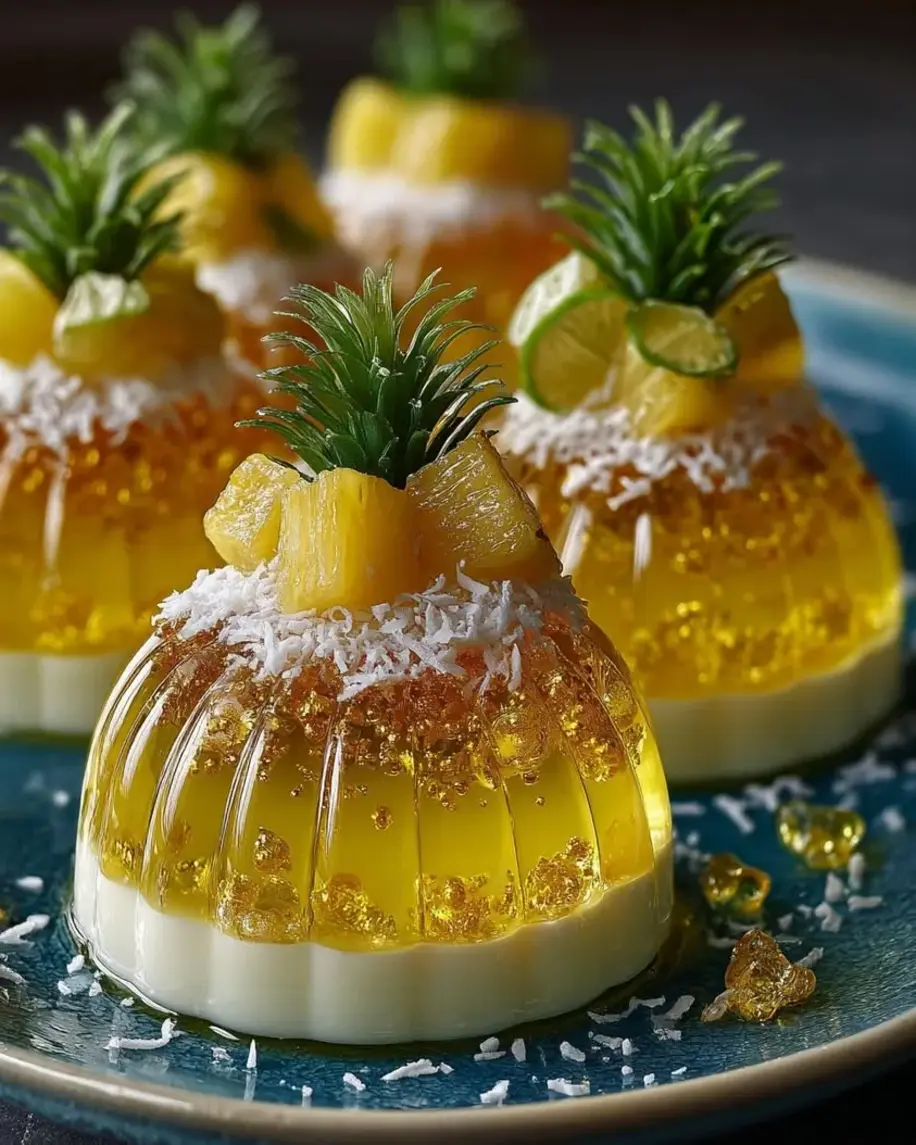
Golden Pineapple Coconut Cheesecake Domes
“`html
Table of Contents
Golden Pineapple Coconut Cheesecake Domes with Crystal Glaze – A Tropical Masterpiece
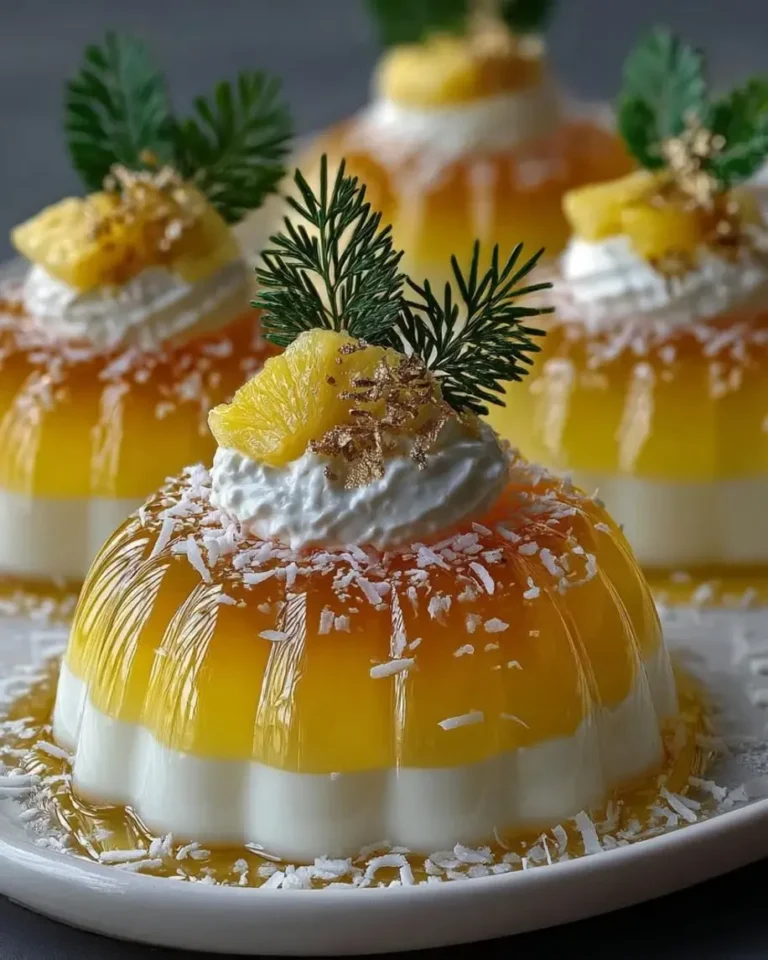
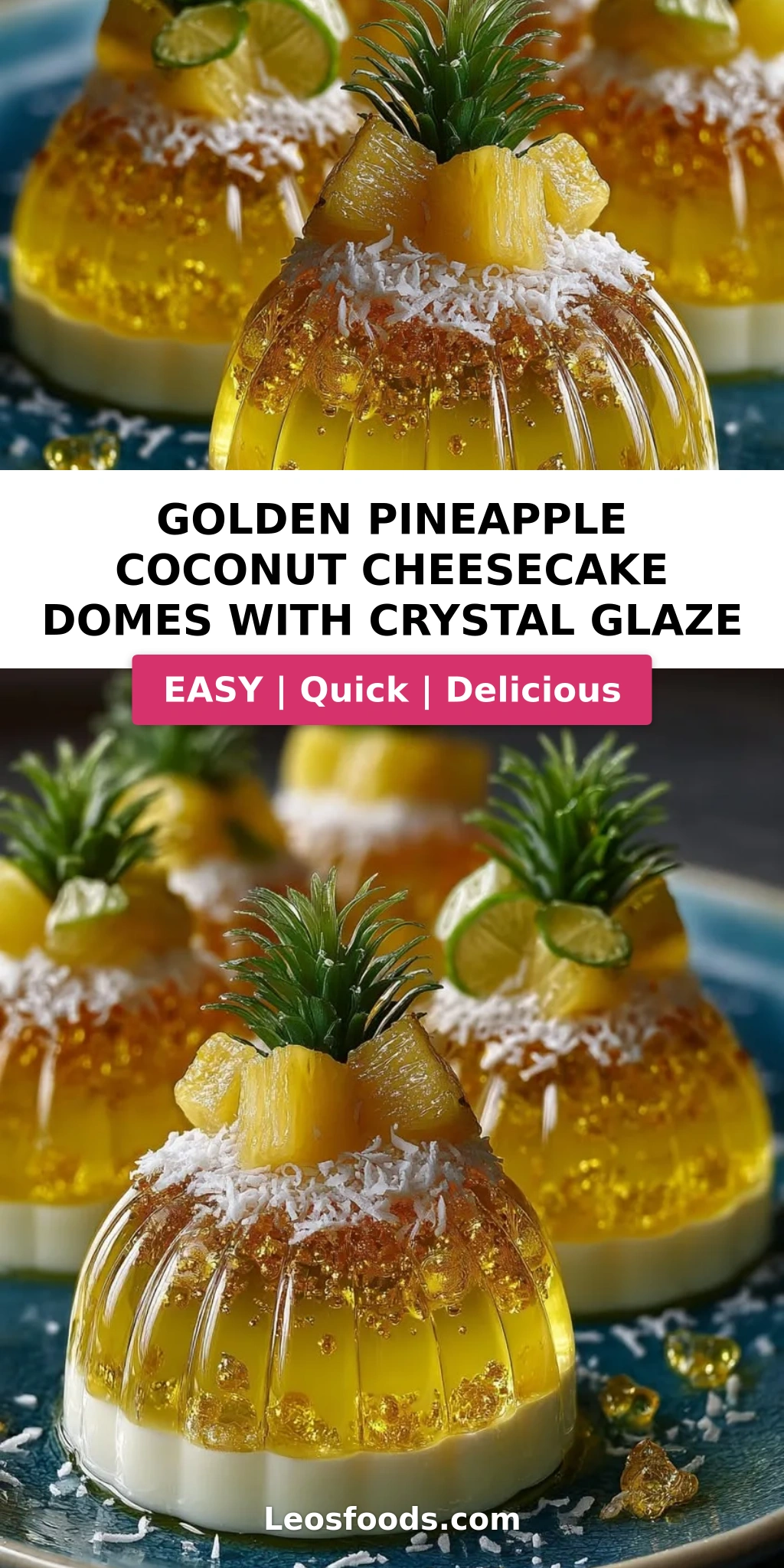
I still remember the first time I tasted a truly transparent fruit gel — not jiggly like Jell-O, but clean and brilliant like glass. I was in pastry school in Paris, and my instructor, a stoic Lyonnais with gold-rimmed spectacles, placed a tiny dome of mango gel on our boards. “This,” he said, “is not a dessert. This is light captured in fruit.” That lesson came rushing back to me the first time I made these Golden Pineapple Coconut Cheesecake Domes with Crystal Glaze. The pineapple coconut cheesecake domes glisten like jewels on the plate, and the crystal glaze dessert element gives them a finish that feels almost too beautiful to eat — until you take that first spoonful and the tropical aromas hit you. Growing up in Morocco, my mother would simmer pineapple with cinnamon and star anise for her midday teas, and I’ve carried that warmth into this recipe.
Imagine breaking through a glassy, translucent shell that tastes of golden pineapple and coconut water — it shatters delicately under your spoon, revealing a luscious coconut cheesecake center that is impossibly creamy, with tiny specks of vanilla bean paste and shreds of toasted coconut. The flavors are tropical and bright, with the pineapple providing a natural sweetness that is balanced by the tang of cream cheese and the floral notes of coconut cream. This is not just a pineapple cheesecake recipe — it is a study in contrasts: crisp and creamy, tart and sweet, simple and show-stopping. The agar agar dessert domes technique is what creates that signature crystal-clear finish, and once you master it, you will find yourself wanting to dome everything from citrus curds to berry mousses.
What I love most about this recipe is that it looks like it belongs in a Michelin-starred patisserie window, yet the technique is entirely doable for a confident home cook. I have tested this version over a dozen times in my NYC kitchen — tweaking the agar-agar ratio, adjusting the sweetness of the cheesecake filling, and perfecting the glaze so it stays glossy without becoming sticky. The secret lies in the partial set method: you fill the molds halfway, let them firm up just enough to hold a pocket of filling, then cap them with more pineapple gel. It sounds technical, but I promise you, it is simply a matter of patience. And as my mother always said in her kitchen in Marrakech, patience is the ingredient that turns good food into memorable food. From my NYC kitchen to yours — I hope this recipe brings as much warmth to your table as it does to mine. — Stella 🧡
Why This Pineapple Coconut Cheesecake Domes Recipe Is the Best
The Flavor Secret
The magic of these tropical cheesecake domes lies in the layering of pure, unmasked fruit flavor. I use a combination of pineapple juice and strained pineapple puree for the crystal dome, reinforced with coconut water that adds a subtle mineral sweetness without overwhelming the pineapple. The cheesecake center uses coconut cream — not coconut milk — for a velvety richness that stands up to the bright acidity of the pineapple. A touch of vanilla bean paste rounds out the tropical notes and adds that warm, familiar comfort that makes any dessert feel like a hug.
Perfected Texture
Texture is everything in a multi-component dessert, and I have engineered each layer to deliver a distinct mouthfeel. The agar-agar gel sets into a firm, clean-breaking crystal that holds its shape at room temperature but shatters like thin ice when you tap it with a spoon. The cheesecake filling is whipped until light and airy, then piped into a generous central core that stays soft and mousse-like. The crystal glaze adds a final slick, glossy coating that mirrors the shine of the dome itself. Every spoonful delivers a progression from glassy to creamy to glossy — a textural journey that keeps you coming back for more.
Foolproof & Fast
Despite the elegant result, this recipe is built for reliability. Agar-agar is far more forgiving than gelatin — it sets at room temperature, does not require blooming, and works beautifully with acidic fruits like pineapple. The domes can be made entirely in advance (up to 48 hours), making them a dream for dinner parties and holiday entertaining. I have included visual cues at every step so you know exactly what to look for, and the glaze can be adjusted for thickness with a simple splash of water. Even if you have never worked with silicone dome molds before, my step-by-step instructions will guide you to a flawless finish.
Pineapple Coconut Cheesecake Domes Ingredients
I source my pineapple juice from the farmers market in Union Square when I can — the fresh-pressed juice has a liveliness that bottled juice simply cannot match. The coconut cream I buy from a Caribbean grocery in Flatbush, where the cans are labeled “coconut cream” not “coconut milk” — a distinction that matters for the richness of the filling. And the agar-agar powder, which is the backbone of these crystal dome desserts, I order from a Japanese grocer in Midtown East. It keeps for months in the pantry, and I always have a backup box because once you start using agar, you will find excuses to gel everything.
Ingredients List
- For the Golden Pineapple Crystal Domes:
- 2 cups pineapple juice
- 1 cup pineapple puree, strained
- 1 1/2 cups coconut water
- 3/4 cup granulated sugar
- 2 1/2 tsp agar-agar powder
- 1 tbsp fresh lime juice
- 1/4 tsp salt
- For the Coconut Cheesecake Center:
- 8 oz cream cheese, softened
- 1/2 cup coconut cream
- 1/4 cup powdered sugar
- 1 tsp vanilla bean paste
- 2 tbsp finely shredded coconut
- For the Crystal Glaze:
- 1/4 cup pineapple preserves
- 2 tbsp honey
- 1 tbsp water
- 1 tsp fresh lime juice
- For Garnish (optional):
- Fresh pineapple cubes
- Toasted coconut flakes
- Edible gold dust
Ingredient Spotlight
Agar-Agar Powder: This plant-based gelling agent derived from red algae is the star of the crystal dome. Unlike gelatin, agar-agar sets at room temperature and maintains its structure even in warm environments up to about 85°F. It requires a brief boil to activate fully — simply stirring into hot liquid is not enough. The ratio I use (2 1/2 teaspoons per 4 1/2 cups of liquid) produces a firm yet delicate gel that cuts cleanly and releases beautifully from silicone molds. You can substitute agar-agar flakes, but you will need to increase the quantity by about 50% and boil for an additional 2 minutes. Do not substitute gelatin directly — the textures are not interchangeable for this crystal-clear effect.
Coconut Cream: Look for coconut cream in the international aisle or Asian grocery section — it is thicker and richer than coconut milk, with a fat content around 20-25%. The brand I trust most is Chaokoh, which has a clean, natural coconut flavor without added stabilizers. If you cannot find coconut cream, substitute full-fat coconut milk and reduce the liquid elsewhere by 2 tablespoons, but note that the filling will be slightly less decadent. Do not use cream of coconut (sweetened) — that is a different product used for cocktails and will make the filling overly sweet.
Pineapple Juice and Puree: For the clearest crystal dome, use pineapple juice that has been filtered or strained to remove pulp. Fresh-squeezed juice from a ripe pineapple is ideal — it has a golden color and bright acidity that bottled juice often lacks. The pineapple puree I make by blending fresh pineapple chunks and passing them through a fine-mesh sieve. This double layer of juice and puree gives the dome a deeper pineapple flavor without clouding its transparency. If you are short on time, a high-quality bottled juice like Lakewood Organic works perfectly — just avoid any that contains added sugar or preservatives.
Cream Cheese: Philadelphia full-fat cream cheese is my non-negotiable choice for the cheesecake center. It has the right balance of tang and richness, and its stable emulsifiers ensure a smooth, lump-free filling. Let the cream cheese soften at room temperature for at least 30 minutes before whipping — cold cream cheese will create lumps that no amount of beating can fully eliminate. If you are dairy-free, a plant-based cream cheese from brands like Violife or Miyoko’s works surprisingly well, though the filling will be slightly less firm and may need an extra tablespoon of powdered sugar for structure.
| Original Ingredient | Best Substitution | Flavor / Texture Impact |
|---|---|---|
| Agar-agar powder | Agar-agar flakes (increase by 50%) | Slightly softer gel, may appear less crystal clear |
| Coconut cream | Full-fat coconut milk (reduce liquid 2 tbsp) | Less rich filling, slightly looser texture |
| Pineapple juice | Mango or passion fruit juice | Different tropical flavor, similar clarity |
| Cream cheese | Dairy-free cream cheese (Violife, Miyoko’s) | Less firm filling, slightly tangier |
| Vanilla bean paste | 1 tsp vanilla extract | No vanilla specks, slightly less aromatic |
How to Make Golden Pineapple Coconut Cheesecake Domes — Step-by-Step
Making these pineapple coconut cheesecake domes is a beautiful process, and I have broken it down so each stage feels achievable. Take your time with the partial set — it is the only truly technique-sensitive step, and even if you overfill or under-set, the domes will still taste spectacular.
Step 1: Prepare the Crystal Dome Base
Combine 2 cups pineapple juice, 1 cup strained pineapple puree, 1 1/2 cups coconut water, 3/4 cup granulated sugar, 2 1/2 tsp agar-agar powder, 1 tbsp fresh lime juice, and 1/4 tsp salt in a medium saucepan. Whisk thoroughly to dissolve the agar-agar powder — it can clump if not evenly dispersed. Place the saucepan over medium-high heat and bring the mixture to a gentle simmer, stirring frequently with a heatproof spatula. Once you see small bubbles forming around the edges, set a timer for 2 minutes and continue stirring. The agar needs a full 2-minute boil to activate its gelling power; under-boiling will result in a soft, weepy gel that will not hold its shape. The mixture will look slightly translucent and will smell intensely of tropical fruit.
💡 Stella’s Pro Tip: Use a digital kitchen scale to weigh your agar-agar powder if possible. Measuring by volume can be inconsistent because different brands have different granule sizes. 2 1/2 teaspoons of agar-agar powder equals about 6 grams. Weighing ensures your crystal dome sets perfectly every time.
Step 2: Partial Set
Remove the saucepan from heat and let the pineapple mixture cool for about 5 minutes — it should still be warm but not hot enough to warp your silicone mold. Pour the liquid into dome-shaped silicone molds, filling each cavity halfway. Use a small offset spatula or your finger to spread the liquid evenly across the bottom of each cavity. Place the molds in the refrigerator, positioned level on a tray, and let them set for exactly 20 minutes. The gel should be firm enough to hold a pocket of filling but still slightly tacky on the surface — this tackiness is essential for the second layer to bond seamlessly.
⚠️ Common Mistake to Avoid: Do not let the first layer fully set before adding the filling. If the gel becomes completely firm and dry, the second layer will separate and create an air gap around the cheesecake filling. You want the surface to be set but still slightly sticky to the touch — like a post-it note that has just lost its stick.
Step 3: Make the Cheesecake Filling
While the domes are partially setting, prepare the coconut cheesecake filling. In a large mixing bowl, combine 8 oz softened cream cheese, 1/2 cup coconut cream, 1/4 cup powdered sugar, 1 tsp vanilla bean paste, and 2 tbsp finely shredded coconut. Using a hand mixer or stand mixer with the paddle attachment, beat on medium speed until the mixture is completely smooth, creamy, and fluffy — about 3 to 4 minutes. Scrape down the sides of the bowl at least twice during mixing to ensure no lumps remain. The filling should be light and spoonable but firm enough to hold a peak when piped. Transfer the filling to a piping bag fitted with a 1/2-inch round tip or simply snip the corner off a zip-top bag if you do not have a piping bag.
💡 Stella’s Pro Tip: For the smoothest cheesecake filling, bring your cream cheese to room temperature for a full hour, not just 30 minutes. Cold cream cheese creates tiny lumps that are nearly impossible to beat out. If you are in a hurry, cut the cream cheese into 1-inch cubes and microwave at 50% power for 10-second intervals until softened but not melted.
Step 4: Assemble the Domes
Remove the molds from the refrigerator after 20 minutes. The gel should be set but still slightly tacky. Pipe a generous mound of the coconut cheesecake filling into the center of each partially set dome, filling it about three-quarters of the way to the top — the filling should form a rounded peak that does not touch the edges of the mold. Gently press the filling down with the back of a small spoon to eliminate any air pockets. The filling should be fully submerged or at least surrounded by the gel. Carefully pour or spoon the remaining pineapple mixture over the filling, covering it completely and filling each cavity to the brim. Return the molds to the refrigerator and let them set for at least 4 hours, or overnight for the clearest, most stable results.
⚠️ Common Mistake to Avoid: Do not overfill the molds with cheesecake filling. If the filling touches the edges of the mold, it will be visible through the crystal dome after unmolding, breaking the illusion of a transparent jewel. Leave at least a 1/4-inch border of gel around the sides of the filling.
Step 5: Unmold
Once the domes are fully set — they should feel firm to the touch and the surface should be smooth and slightly springy — remove them from the refrigerator. To unmold, gently flex the silicone mold outward from the center, pressing the bottom of each cavity upward. The dome should release cleanly with a slight pop. If it resists, dip the bottom of the mold in warm water for 10 seconds and try again. Transfer each dome to a chilled serving platter, spacing them about 2 inches apart. If any domes have small imperfections or air bubbles, do not worry — the glaze will cover minor flaws.
💡 Stella’s Pro Tip: For the cleanest unmolding, lightly spray the silicone molds with vegetable oil spray before pouring the first layer. Use a paper towel to buff away any excess oil — you want a microscopic film, not a greasy coating. This is especially helpful in humid weather when the gel tends to stick more aggressively.
Step 6: Make the Crystal Glaze
In a small saucepan, combine 1/4 cup pineapple preserves, 2 tbsp honey, 1 tbsp water, and 1 tsp fresh lime juice. Warm over low heat, stirring constantly, until the preserves have melted and the mixture is smooth and glossy — about 2 to 3 minutes. Do not let it boil, as boiling can make the glaze cloudy and reduce its shine. Remove from heat and let it cool for 5 to 7 minutes, until it is warm but no longer hot. The glaze should be pourable but thick enough to coat the back of a spoon. If it is too thick, whisk in a few drops of warm water; if too thin, let it cool a bit longer and it will naturally thicken.
⚠️ Common Mistake to Avoid: Applying the glaze while it is too hot will melt the surface of the crystal dome, creating a dull, cloudy spot instead of a brilliant shine. Always let the glaze cool until it is warm to the touch — around 90°F to 95°F — before brushing or drizzling.
Step 7: Glaze and Garnish
Using a small pastry brush, gently brush the crystal glaze over each dome in thin, even strokes, starting at the top and working downward. The glaze should form a smooth, glossy coating that drips slightly over the edges. Alternatively, drizzle the glaze from a spoon in a thin stream, letting it cascade naturally over the dome. Allow the glaze to set for 5 to 10 minutes at room temperature — it will become tacky rather than hard, which is exactly what you want. Garnish each dome with a small cube of fresh pineapple, a scattering of toasted coconut flakes, and a delicate dusting of edible gold dust. Serve immediately or return to the refrigerator until ready to serve.
💡 Stella’s Pro Tip: For a professional-grade finish, apply two thin layers of glaze instead of one thick layer. Brush the first layer, let it set for 5 minutes, then apply a second layer. This creates a deeper, more reflective shine that looks like lacquered glass. The second layer also helps hide any minor cracks or air bubbles in the dome surface.
| Step | Action | Duration | Key Visual Cue |
|---|---|---|---|
| 1 | Boil agar mixture | 2 min simmer | Small bubbles, translucent liquid |
| 2 | Partial set | 20 min chill | Firm but tacky surface |
| 3 | Whip filling | 3-4 min mixing | Smooth, fluffy, holds a peak |
| 4 | Assemble domes | 5 min assembly | Filling centered, gel covers top |
| 5 | Full set | 4 hrs to overnight | Firm, springy, clear gel |
| 6 | Make glaze | 2-3 min heating | Smooth, glossy, warm to touch |
| 7 | Glaze & garnish | 5-10 min set | Glossy coating, tacky finish |
Serving & Presentation
These pineapple coconut cheesecake domes are at their absolute best when served thoroughly chilled — straight from the refrigerator, with no time spent at room temperature. The contrast between the cold, glassy shell and the creamy, almost mousse-like center is what makes every bite so memorable. I like to serve them on chilled white porcelain plates that let the golden color of the glaze really pop. A small swipe of passion fruit curd or a drizzle of coconut cream on the plate adds a beautiful artistic element and gives your guests something to swipe their spoons through.
For garnish, I always include fresh pineapple cubes — they reinforce the flavor and add a juicy burst that contrasts with the firm gel. Toasted coconut flakes add a nutty, crunchy element, and the edible gold dust is what transforms these from a home dessert into a showpiece. In my NYC apartment, I once served these domes at a dinner party where one guest asked if they were real jewels before tasting. “Better,” I said. “You can eat these.” The gold dust catches the light and makes the domes sparkle like lanterns on a tropical night. If you are serving these for a holiday or celebration, arrange them on a mirrored tray or a bed of fresh banana leaves for a dramatic, resort-worthy presentation.
For a truly memorable pairing, serve these domes alongside a glass of chilled sparkling wine or a coconut-rum cocktail. The effervescence cuts through the richness of the cheesecake filling, while the tropical notes in the drink echo the pineapple and coconut flavors in the dessert. If you prefer a non-alcoholic option, a chilled hibiscus iced tea or a sparkling limeade works beautifully — the tartness balances the sweetness of the glaze.
| Pairing Type | Suggestions | Why It Works |
|---|---|---|
| Side Dessert | Coconut sorbet, mango mousse, passion fruit panna cotta | Reinforces tropical theme without competing |
| Sauce / Dip | Passion fruit curd, coconut caramel, raspberry coulis | Adds acidity or sweetness to balance the creamy center |
| Beverage | Sparkling wine, coconut rum cocktail, hibiscus iced tea | Acidity and fizz cut through richness |
| Garnish | Fresh pineapple cubes, toasted coconut, edible gold dust, micro mint | Adds texture, color, and visual drama |
Make-Ahead, Storage & Reheating
One of the reasons I adore this pineapple cheesecake recipe is how beautifully it adapts to a busy schedule. In my NYC life — juggling recipe testing, writing, and the occasional dinner party — I rely on desserts that can be assembled in stages. These domes are the ultimate make-ahead showstopper. You can prepare the crystal base and cheesecake filling separately, then assemble and glaze a day or two before serving. The domes actually improve with a day of resting in the refrigerator, as the flavors meld and the texture of the gel becomes even more uniform.
| Method | Container | Duration | Reheating Tip |
|---|---|---|---|
| Refrigerator | Airtight container, single layer | Up to 48 hours | Serve directly from fridge — no reheating needed |
| Freezer | Freezer-safe tray, then wrap individually | Up to 1 month | Thaw in refrigerator 4 hrs before serving — do not microwave |
| Make-Ahead | Assemble in molds, refrigerate | Up to 24 hrs before glazing | Unmold, glaze, and garnish just before serving |
For refrigerator storage, arrange the assembled, unglazed domes in a single layer in an airtight container. Place a piece of plastic wrap directly on the surface of the domes to prevent condensation from forming on the gel. The domes will keep beautifully for up to 48 hours. Glaze them no more than 2 hours before serving for the brightest shine. If you need to store glazed domes, place them uncovered in the refrigerator for up to 4 hours — any longer and the glaze may begin to absorb moisture and lose its glass-like finish.
Freezing is an excellent option for longer storage. Freeze the unglazed domes on a parchment-lined tray until solid, then wrap each dome individually in plastic wrap and place them in a freezer-safe bag. To thaw, transfer the domes to the refrigerator and let them thaw slowly for 4 to 6 hours. Do not thaw at room temperature, as condensation will form and cloud the crystal. Glaze after thawing. I have frozen these domes up to a month ahead for holiday entertaining, and they taste just as fresh as the day they were made.
Variations & Easy Swaps
Over the many times I have made these tropical cheesecake domes, I have played with countless variations — some inspired by my Moroccan roots, others by the seasonal bounty at the NYC greenmarkets. Each variation keeps the crystal dome technique intact but shifts the flavor profile in exciting new directions. Here are my three favorite ways to reinvent this dessert.
| Variation | Key Change | Best For | Difficulty Impact |
|---|---|---|---|
| Moroccan Spiced Pineapple | Add cinnamon, star anise, and orange blossom water | Holiday entertaining, exotic flair | Same — strain out spices before pouring |
| Dairy-Free / Vegan | Use plant-based cream cheese and coconut cream | Dairy-sensitive guests | Same — filling slightly less firm |
| Mango Passion Fruit | Replace pineapple with mango juice and passion fruit puree | Summer gatherings, tropical parties | Same — adjust sugar to taste |
Moroccan Spiced Pineapple Domes
This variation is a nod to my mother’s kitchen in Marrakech, where she would simmer pineapple with a cinnamon stick, two star anise pods, and a splash of orange blossom water. To make this version, add the spices to the pineapple mixture while it simmers, then strain them out before pouring into the molds. The orange blossom water — just 1 teaspoon — adds a floral, almost honeylike perfume that I find intoxicating. For the cheesecake filling, replace the vanilla bean paste with 1/2 teaspoon of rose water and 1/4 teaspoon of ground cardamom. The result is a dessert that tastes like a souk in the best possible way — warm, aromatic, and entirely unforgettable.
Dairy-Free / Vegan Cheesecake Domes
To make these domes entirely plant-based, substitute the cream cheese with a high-quality dairy-free cream cheese like Miyoko’s or Violife. These brands have enough fat and structure to whip into a creamy filling, though the texture will be slightly less firm than the original. Use coconut cream from a can (the thick, solid part) to replace the dairy cream cheese — it adds richness and a clean coconut flavor. For the powdered sugar, ensure it is vegan (some brands use bone char in processing). The crystal dome itself is naturally vegan since it uses agar-agar rather than gelatin. I have served this version to both vegan and non-vegan friends, and no one could tell the difference — the tropical flavors are so bold that the dairy is not missed.
Mango Passion Fruit Domes
When summer hits New York and the greenmarkets are overflowing with mangoes and passion fruit, I swap out the pineapple for a mango-passion fruit combination. Use 2 cups of fresh mango juice (blend and strain ripe mangoes) and 1/2 cup of passion fruit puree (available frozen at most Latin grocery stores) in place of the pineapple juice and puree. Reduce the sugar to 1/2 cup, as mango is naturally sweeter than pineapple. The passion fruit seeds can be strained out or left in for a textural pop — I leave them in because I love the tiny crunch against the smooth gel. This version is brighter and more tart than the original, with a stunning golden-orange color that is just as beautiful as the pineapple original.
Can I make Golden Pineapple Coconut Cheesecake Domes without a dome mold?
Yes, absolutely! If you do not have dome-shaped silicone molds, you can use any small, smooth-sided bowl or ramekin as a substitute. The key is to choose a container with a rounded bottom so the unmolded shape resembles a dome. Line each bowl with a piece of plastic wrap large enough to overhang the edges — this will help you lift the set gel out later. Pour the pineapple mixture in, add the filling, and proceed as directed. The result will be less perfectly spherical but just as delicious. Alternatively, you can set the gel in a shallow dish, cut it into squares or rounds, and serve the cheesecake filling on top as a deconstructed version. The flavor is identical either way!
What can I use instead of gelatin to make the crystal glaze set?
The crystal glaze in this recipe does not actually require gelatin or any additional gelling agent — it sets through the natural pectin in the pineapple preserves combined with the honey, which thickens as it cools. When you warm the preserves, honey, water, and lime juice together, the mixture becomes smooth and glossy, and it will thicken to a tacky, gel-like consistency as it sits. If you want an even firmer glaze, you can add 1/2 teaspoon of agar-agar powder to the glaze mixture and boil for 1 minute, but this is entirely optional. The recipe as written produces a glaze that is glossy, slightly thick, and stays put on the dome without running off — no gelatin needed.
How far in advance can I prepare these pineapple coconut cheesecake domes?
These domes are remarkably make-ahead friendly. You can prepare the fully assembled, unglazed domes up to 48 hours in advance and store them in the refrigerator in an airtight container. In fact, I often recommend making them a day ahead because the extra resting time allows the agar-agar gel to stabilize fully and the flavors to meld together beautifully. The crystal glaze should be applied no more than 2 hours before serving for the brightest, most glass-like finish. If you need to prepare even further ahead, freeze the unglazed domes for up to one month — thaw them overnight in the refrigerator, then glaze and garnish just before serving.
How do I prevent the coconut from making the cheesecake filling too gritty?
The key to a smooth, non-gritty coconut cheesecake filling is using finely shredded coconut rather than medium or large shreds. Finely shredded coconut blends seamlessly into the cream cheese mixture and disappears into the texture without leaving any unpleasant crunch. I recommend buying “finely shredded unsweetened coconut” — the brand Bob’s Red Mill makes an excellent one. If you only have medium or large shreds, pulse them in a food processor for 10 to 15 seconds to break them down into a finer consistency. Another trick is to let the shredded coconut soak in the coconut cream for 10 minutes before mixing, which softens the fibers and helps them incorporate more smoothly into the filling.
Why did my agar-agar domes turn out cloudy instead of crystal clear?
Cloudy agar-agar domes are usually caused by one of three issues. First, using unfiltered pineapple juice or puree with too much pulp will create a hazy appearance — always strain your juice and puree through a fine-mesh sieve before using. Second, boiling the agar mixture too vigorously or for too long can introduce tiny air bubbles that get trapped in the gel, creating a cloudy or frosted look. Bring the mixture only to a gentle simmer, not a rolling boil. Third, condensation during chilling can fog the surface of the domes. To prevent this, cover the molds loosely with plastic wrap or place them in an airtight container while they set. If your domes are already cloudy, they will still taste wonderful — the cloudiness is purely cosmetic.
Can I use canned pineapple juice instead of fresh for this recipe?
Yes, canned pineapple juice works perfectly well for these cheesecake domes, and I use it myself when fresh pineapples are not in season. The most important thing is to choose a brand that is 100% pure pineapple juice with no added sugar or preservatives — Lakewood Organic and RW Knudsen are two excellent options available at most US grocery stores. Canned juice is actually more consistent in flavor and acidity than fresh juice, which can vary depending on the ripeness of the fruit. If you are using canned juice, you may need to adjust the sugar slightly downward, as some brands are sweeter than fresh-squeezed juice. Taste the mixture before adding the sugar and reduce by 1 to 2 tablespoons if it tastes already very sweet.
How do I get the domes to release cleanly from the silicone mold?
Clean release from silicone molds starts with proper preparation and patience. First, ensure your silicone molds are completely dry before pouring in the pineapple mixture — any moisture on the surface can cause sticking. Lightly spraying the molds with vegetable oil spray and buffing with a paper towel creates a microscopic non-stick film that helps the domes pop out effortlessly. When it is time to unmold, flex the silicone mold gently outward from the center, pressing the bottom of each cavity upward. The dome should release with a soft pop. If it resists, dip the bottom of the mold in warm water for 10 to 15 seconds — the warmth slightly softens the surface of the gel and helps it release. Never pull or tug aggressively, as the gel can tear.
Can I make these domes without coconut for someone who dislikes coconut?
Absolutely! While coconut is a defining flavor in this recipe, you can easily adapt the domes for coconut-averse guests. Replace the coconut water in the crystal dome with plain water or, for a more aromatic twist, use brewed jasmine tea or lemongrass tea. For the cheesecake filling, replace the coconut cream with an equal amount of full-fat heavy cream or a dairy-free alternative like oat cream. Omit the shredded coconut entirely, or substitute finely ground macadamia nuts or white chocolate shavings for a similar textural element. The pineapple and lime flavors will still shine through, and the crystal dome technique remains unchanged. The result is a Pineapple Cheesecake Dome with a bright, tropical flavor profile that sidesteps coconut entirely.
What is the best way to store leftover crystal glaze?
If you have leftover crystal glaze, store it in an airtight container in the refrigerator for up to 5 days. The glaze will thicken significantly when cold — this is normal. To reuse it, warm the container in a bowl of hot water or microwave it in 5-second bursts at 50% power, stirring between each burst, until it returns to a pourable consistency. If the glaze has become too thick after reheating, whisk in a few drops of warm water or lime juice to thin it out. I often make a double batch of the glaze and keep it on hand to refresh the shine on day-old domes or to drizzle over other tropical desserts like coconut sorbet or grilled pineapple.
Can I use this agar-agar dome technique for other fruit flavors?
Yes, this crystal dome technique is incredibly versatile and works beautifully with a wide range of fruit juices and purees. The key is to maintain the same liquid-to-agar ratio: 2 1/2 teaspoons of agar-agar powder per 4 1/2 cups of total liquid. Some of my favorite variations include mango-passion fruit, raspberry-rose, lemon-basil, and blood orange-cardamom. Keep in mind that highly acidic fruits like lemon or lime may require a slight increase in sugar to balance the tartness, and fruits with very low natural sugar (like cranberries) may need additional sweetener. Avoid using dairy or heavy cream in the crystal layer, as the fat will cloud the gel — save creamy ingredients for the center filling. The same technique can also be used to make crystal fruit cubes, domes, or even edible flower-studded gel sheets.
Share Your Version!
There is something truly special about creating a dessert that looks like it belongs in a glass case at a Michelin-starred patisserie, yet tastes like a warm hug from someone who loves you. These Golden Pineapple Coconut Cheesecake Domes with Crystal Glaze are that dessert for me — and I hope they become that for you too. I would love to hear how your domes turned out, what variations you tried, and whether you managed to get that perfect crystal-clear finish on your first try. Drop a comment below with your star rating, share a photo of your creation on Instagram or Pinterest and tag @leosfoods, and let me know if you have any questions I did not cover in the FAQ. Your feedback helps me create better recipes for this community, and I read every single comment.
From my NYC kitchen to yours — I hope this recipe brings as much warmth to your table as it does to mine. — Stella 🧡
💬 Did you make this recipe?
I want to see your crystal domes! 🌟
Tag @leosfoods on Instagram or Pinterest, and leave a comment below with your star rating.
Pin this recipe, share it with a friend who loves tropical desserts, and let’s make the world a little more delicious, one dome at a time. 🍍🥥✨
Love This Recipe? Save It to Pinterest!
If you enjoyed this Golden Pineapple Coconut Cheesecake Domes with Crystal Glaze recipe, don’t let it get lost in your browser tabs! 😄 Pin it now so you can find it again anytime — and explore hundreds more tried-and-tested recipes waiting for you on my Pinterest boards.
👉 Follow Stella on Pinterest @stellarecipeblog
📌 Pin this recipe · 🔁 Re-pin your favorites · 💬 Tag me when you make it — I love seeing your creations!
“`
Print
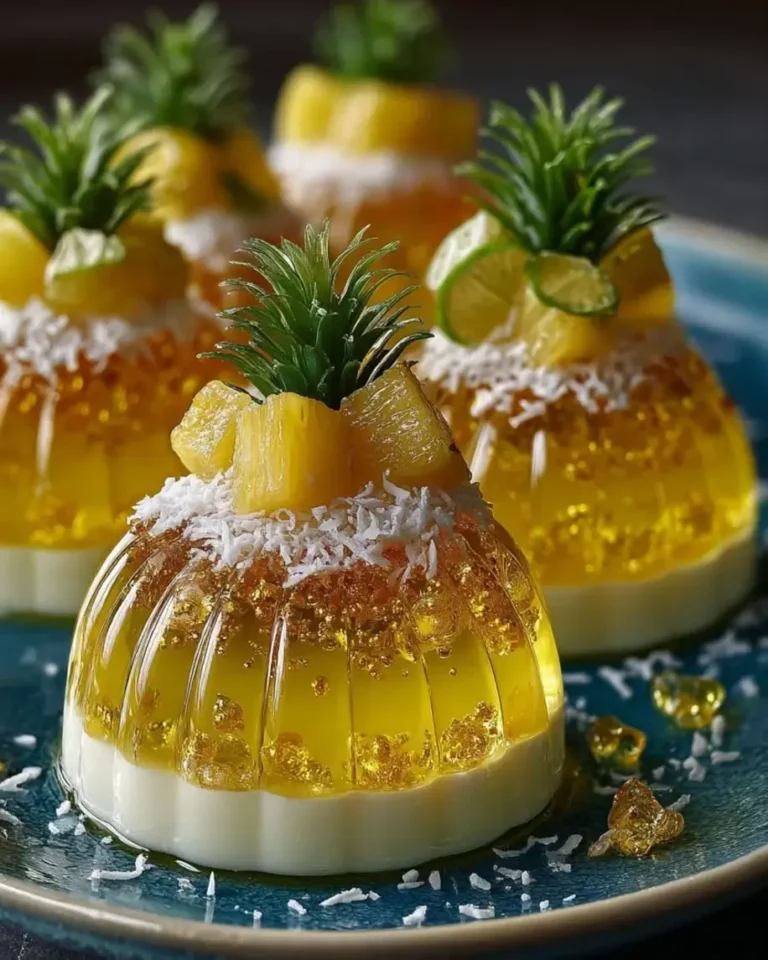
Golden Pineapple Coconut Cheesecake Domes with Crystal Glaze
Golden Pineapple Coconut Cheesecake Domes with Crystal Glaze
- Yield: 6 1x
Ingredients
- For the Golden Pineapple Crystal Domes:
- 2 cups pineapple juice
- 1 cup pineapple puree, strained
- 1 1/2 cups coconut water
- 3/4 cup granulated sugar
- 2 1/2 tsp agar-agar powder
- 1 tbsp fresh lime juice
- 1/4 tsp salt
- For the Coconut Cheesecake Center:
- 8 oz cream cheese, softened
- 1/2 cup coconut cream
- 1/4 cup powdered sugar
- 1 tsp vanilla bean paste
- 2 tbsp finely shredded coconut
- For the Crystal Glaze:
- 1/4 cup pineapple preserves
- 2 tbsp honey
- 1 tbsp water
- 1 tsp fresh lime juice
- For Garnish (optional):
- Fresh pineapple cubes
- Toasted coconut flakes
- Edible gold dust
Instructions
- Combine pineapple juice, pineapple puree, coconut water, sugar, agar-agar powder, lime juice, and salt in a saucepan. Heat while stirring until fully dissolved and bring to a gentle simmer.
- Pour the mixture into dome-shaped silicone molds, filling each cavity halfway. Refrigerate until partially set.
- Whip cream cheese, coconut cream, powdered sugar, vanilla bean paste, and shredded coconut until smooth, creamy, and fluffy. Transfer to a piping bag.
- Pipe a generous mound of coconut cheesecake filling into the center of each partially set dome. Cover with the remaining pineapple mixture and refrigerate until fully set and crystal clear.
- Carefully unmold the domes onto a chilled serving platter.
- Warm pineapple preserves, honey, water, and lime juice until smooth and glossy. Allow to cool slightly while remaining pourable.
- Brush or drizzle the crystal glaze over each dome to create a radiant golden glass-like finish.
- Garnish with fresh pineapple cubes, toasted coconut flakes, and a delicate dusting of edible gold dust. Serve thoroughly chilled.
Nutrition
- Calories: 300
- Sugar: 34g
- Fat: 15g
- Carbohydrates: 39g
- Protein: 4g
Tried This Recipe? Leave a Comment!
Did you make this recipe? I’d love to hear how it turned out! Please leave a comment and a rating below. Your feedback helps other home cooks and supports cheerychop.com!
For more delicious inspiration, follow me on Pinterest!