Pink Guava Rose Mirror Pyramids with Vanilla Mousse
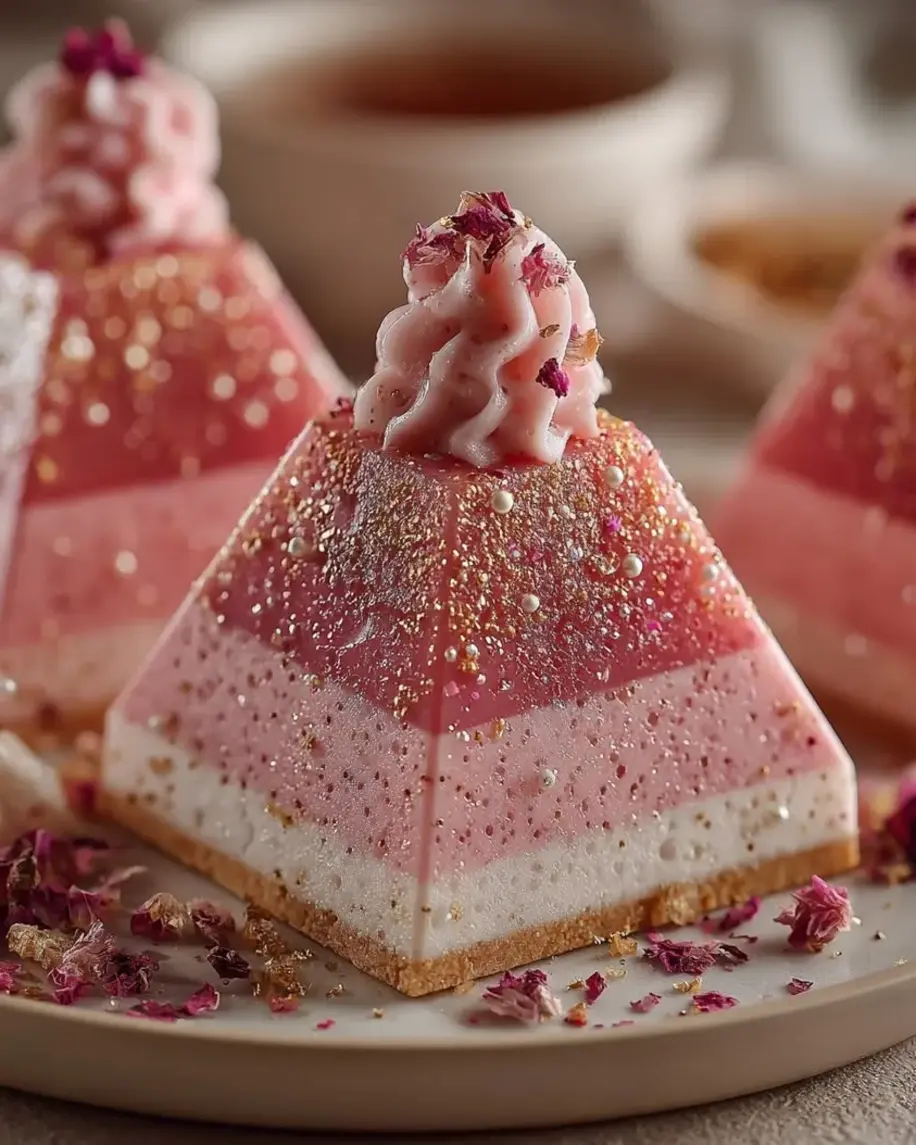
Table of Contents
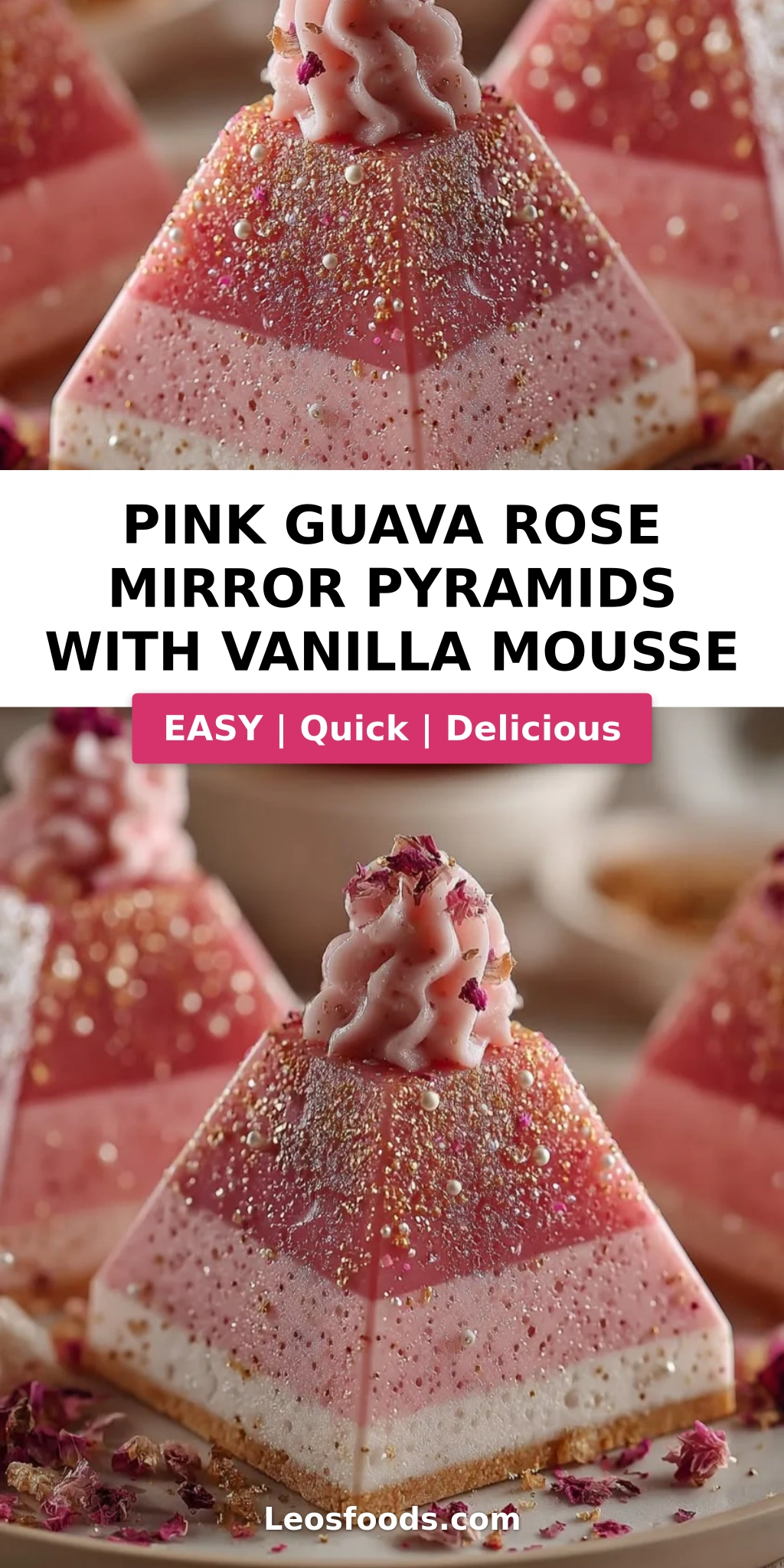
Pink Guava Rose Mirror Pyramids with Vanilla Mousse – A Stunning Showstopper Dessert
I still remember the first time I tasted pink guava — it was at a tiny fruit stand in the Marrakech medina, and my mother handed me a slice sprinkled with rosewater and a pinch of salt. That sweet-tropical-meets-floral flavor never left me. Years later, after training at Le Cordon Bleu in Paris and settling into my NYC kitchen, I knew I had to turn that memory into something spectacular. This Pink Guava Rose Mirror Pyramids recipe is the result: a luxurious pink guava rose dessert that pairs an exotic fruit mousse with a silky vanilla mascarpone core, all set on a buttery biscuit base and coated in a mirror-smooth, jewel-toned glaze. It’s the kind of dessert that stops conversation — in the best way possible.
When you cut into one of these pyramids, the layers tell a story. The glossy pink mirror glaze pyramid cake gives way to a light, airy guava-rose mousse that’s both fragrant and creamy. Hidden inside is a velvety vanilla mousse core — rich from mascarpone, but not heavy — and the crunch of the biscuit base adds just the right contrast. The rosewater whispers rather than shouts, while the pink guava brings a tangy sweetness that keeps every bite interesting. It’s elegant enough for a birthday, a bridal shower, or even a holiday table, yet approachable enough that I promise you can pull it off at home.
I’ve tested this vanilla mousse guava recipe more times than I can count — adjusting the gelatin ratio, tweaking the rosewater level, and perfecting the glaze temperature so it stays brilliantly shiny without a single crack. My training in Paris taught me the science behind a flawless mirror glaze, and my Moroccan roots taught me that rose and guava belong together. In this post, I’ll share my best tips for nailing the glaze, avoiding air bubbles, and unmolding the pyramids like a pro. Whether you’re a confident home baker or just starting your dessert journey, I’ve got you covered.
Why This Pink Guava Rose Mirror Pyramids Recipe Is the Best
The Flavor Secret — Most pink guava desserts rely solely on the fruit’s sweetness, but I add a touch of rosewater and a pinch of salt to deepen the flavor. My Paris training taught me to balance acidity and floral notes, while my Moroccan upbringing taught me that rose and guava are a match made in heaven. This isn’t just a dessert — it’s a tribute to the markets of Marrakech and the patisseries of Paris, all in one bite.
Perfected Texture — The magic of this pink mirror glaze dessert lies in its contrast: a crisp biscuit base, an airy mousse, a creamy core, and a glassy, crack-free glaze. I tested the gelatin bloom times, the whipping stages, and the glaze cooling temperature until every layer was flawless. The result is a dessert that’s as satisfying to eat as it is to look at.
Foolproof & Fast — Despite its fancy appearance, this recipe is built for real home bakers. I’ve broken down each step with clear visual cues, pro tips, and common mistakes to avoid. The make-ahead nature (most of the work happens in the freezer) means you can tackle it over a weekend and serve it on a busy weeknight. If you can make Jell-O and whip cream, you can make these pyramids.
Pink Guava Rose Mirror Pyramids Recipe Ingredients
I source my pink guava puree from a specialty Latin American market in Jackson Heights, Queens — it’s where the flavor is most authentic. The rosewater I buy from a little Middle Eastern shop on Atlantic Avenue, and the mascarpone comes from a dairy upstate that delivers to my farmers market. These ingredients deserve a little treasure hunt — they make the final dessert sing.
Ingredients List
- For the Pink Guava Rose Mousse:
- 1 cup pink guava puree
- 8 oz cream cheese, softened
- 1 cup heavy cream
- 1/2 cup granulated sugar
- 1 tsp rosewater
- 1 tsp vanilla extract
- 2 tsp powdered gelatin
- 3 tbsp cold water
- For the Vanilla Mousse Core:
- 3/4 cup mascarpone cheese
- 2 tbsp powdered sugar
- 1 tsp vanilla extract
- For the Biscuit Base:
- 1 cup digestive biscuits, finely crushed
- 3 tbsp melted butter
- For the Mirror Glaze:
- 1 cup granulated sugar
- 1/2 cup water
- 1/2 cup sweetened condensed milk
- 1 cup white chocolate, finely chopped
- 1 tbsp powdered gelatin
- 3 tbsp cold water
- 1 tsp clear vanilla extract
- 1 tsp edible pearl luster dust
- 1–2 drops pink food coloring
- For Garnish (optional):
- Dried rose petals
- White chocolate curls
- Edible gold flakes
Ingredient Spotlight
Pink Guava Puree — This is the heart of the mousse. Look for 100% pure guava puree (not a juice blend) in Latin grocery stores or online. It has a distinct floral-tropical sweetness that’s irreplaceable. If you find fresh pink guavas, you can puree and strain them yourself — just make sure they’re fully ripe.
Rosewater — A little goes a long way. I use culinary-grade rosewater from Middle Eastern markets. Skip the beauty-section rosewater, which often contains alcohol or synthetic fragrances. One teaspoon is enough to perfume the mousse without making it taste like soap.
Mascarpone Cheese — For the vanilla mousse core, mascarpone provides a velvety richness that cream cheese alone can’t match. It’s thicker and less tangy, creating a luxurious center that contrasts beautifully with the lighter guava mousse. If you can’t find mascarpone, you can substitute an equal amount of full-fat cream cheese blended with 1 tablespoon of heavy cream.
White Chocolate for the Glaze — Use a high-quality white chocolate with cocoa butter (not white confectionery coating). The cocoa butter helps the glaze set with that signature glossy sheen. I recommend Valrhona or Guittard — they melt smoothly and taste clean.
Edible Pearl Luster Dust — This optional ingredient gives the glaze a subtle shimmer that makes the pyramids look like magical gemstones. You can find it at baking supply stores or online. If you skip it, the glaze will still be beautifully glossy — just not quite as luminous.
| Original Ingredient | Best Substitution | Flavor / Texture Impact |
|---|---|---|
| Pink Guava Puree | Strawberry puree + 1/2 tsp lime juice | Less floral, more tart; still pink and pretty |
| Rosewater | 1/4 tsp rose extract + 3/4 tsp water | Slightly stronger floral note; use less |
| Mascarpone Cheese | Full-fat cream cheese + 1 tbsp heavy cream | Slightly tangier, still creamy |
| Digestive Biscuits | Graham crackers or shortbread cookies | Sweeter base; graham adds honey note |
| White Chocolate | High-quality white confectionery coating | Slightly less glossy; still works |
How to Make Pink Guava Rose Mirror Pyramids — Step-by-Step
Trust me when I say this: if you can follow these steps one at a time, you’ll have a dessert that looks like it came from a high-end patisserie. I’ve arranged them in a logical flow — start with the base, then the core, then the mousse, and finish with the glaze. Take your time, and don’t skip the chilling steps. They’re not just suggestions — they’re the secret to success.
Step 1: Prepare the Biscuit Base
Mix the finely crushed digestive biscuits with melted butter until the texture resembles wet sand. Press about 1 tablespoon of the mixture into the bottom of each pyramid mold, using a small glass or your fingertips to create an even, compact layer. The base should be about 1/4-inch thick. Chill the molds in the refrigerator for 15 minutes to set the base firmly before adding the mousse.
⚠️ Common Mistake to Avoid: Pressing the base too thick. If the biscuit layer is more than 1/4 inch, it can overwhelm the delicate mousse and make the pyramids hard to unmold. Keep it thin and even.
Step 2: Make the Vanilla Mousse Core
In a small bowl, combine the mascarpone cheese, powdered sugar, and vanilla extract. Stir until smooth and creamy — there should be no lumps. Spoon the mixture into small silicone ice cube trays or mini hemisphere molds (about 1 tablespoon per core). Freeze for at least 2 hours until the cores are solid enough to handle. These frozen cores will later be embedded in the guava mousse.
💡 Stella’s Pro Tip: Use silicone molds for the cores — they pop out easily without breaking. If you don’t have small molds, you can freeze the mixture in a thin layer on a parchment-lined tray and cut it into small squares once firm.
Step 3: Bloom the Gelatin for the Mousse
Sprinkle the 2 teaspoons of powdered gelatin over 3 tablespoons of cold water in a small bowl. Let it sit for 5 minutes until the gelatin absorbs the water and becomes spongy. This process, called blooming, ensures the gelatin dissolves evenly and creates a smooth, stable mousse without lumps.
⚠️ Common Mistake to Avoid: Adding gelatin directly to warm liquid without blooming. This creates stringy clumps that ruin the mousse texture. Always bloom in cold water first.
Step 4: Make the Pink Guava Rose Mousse
In a large bowl, beat the softened cream cheese with the pink guava puree, granulated sugar, rosewater, and vanilla extract until the mixture is completely smooth and free of lumps. In a small saucepan, warm about 2 tablespoons of the heavy cream over low heat, then add the bloomed gelatin and stir until dissolved. Pour this gelatin mixture into the guava-cream cheese mixture and mix well. In a separate bowl, whip the remaining heavy cream to soft peaks — when you lift the whisk, the cream should hold a gentle shape that droops slightly. Gently fold the whipped cream into the guava mixture in three additions, using a spatula and a light hand to keep the mousse airy.
💡 Stella’s Pro Tip: Fold in the whipped cream gently — overmixing will deflate the mousse and make it dense. Stop as soon as you no longer see streaks of white.
Step 5: Assemble the Pyramids
Remove the chilled molds with the biscuit bases from the refrigerator. Spoon or pipe the pink guava mousse into each mold, filling them about halfway. Take a frozen vanilla mousse core and press it gently into the center of the mousse — it should be fully surrounded. Fill the remaining space with more mousse, right up to the top of the mold. Use a small offset spatula to smooth the tops, ensuring they’re flush with the rim. Tap the molds gently on the counter to release any air bubbles.
⚠️ Common Mistake to Avoid: Not pressing the frozen core deep enough. It should be completely encased in mousse, with mousse covering the top. If the core is exposed, it can freeze solid and create a hard, icy center instead of a creamy one.
Step 6: Freeze the Pyramids
Place the filled molds on a small baking sheet or tray and transfer to the freezer. Freeze for at least 6 hours, or overnight for best results. The pyramids need to be fully frozen solid — this ensures they’ll hold their shape when you unmold them and when you pour the warm glaze over them. If they’re even slightly soft, the glaze can cause them to collapse or crack.
💡 Stella’s Pro Tip: Freeze the pyramids on a completely level surface. I use a small cutting board that fits in my freezer — this prevents the mousse from settling at an angle and gives you perfectly even pyramids.
Step 7: Bloom the Gelatin for the Glaze
About 30 minutes before you plan to glaze the pyramids, sprinkle the 1 tablespoon of powdered gelatin over 3 tablespoons of cold water in a small bowl. Let it bloom for 5–10 minutes until fully hydrated. This gelatin will give the mirror glaze its signature jiggly, glass-like finish that coats the pyramids without running off.
⚠️ Common Mistake to Avoid: Using too much gelatin. The glaze should be fluid enough to coat but firm enough to set. Stick to the measured amount — more gelatin can make the glaze rubbery.
Step 8: Make the Mirror Glaze
In a medium saucepan, combine the granulated sugar, water, and sweetened condensed milk. Heat over medium heat, stirring occasionally, until the mixture is steaming and the sugar has fully dissolved — about 3–4 minutes. Do not let it boil vigorously. Remove from heat and immediately add the bloomed gelatin and finely chopped white chocolate. Stir until the chocolate is completely melted and the mixture is smooth. Add the clear vanilla extract, edible pearl luster dust, and 1–2 drops of pink food coloring. Use an immersion blender to blend the glaze until it’s perfectly smooth, glossy, and free of air bubbles — this step is crucial for a mirror finish.
💡 Stella’s Pro Tip: Use an immersion blender (stick blender) for the smoothest glaze. Regular whisking can introduce air bubbles. Blend in an up-and-down motion, keeping the blade submerged to avoid incorporating air.
Step 9: Cool the Glaze to the Right Temperature
Let the glaze cool until it reaches about 90°F (32°C). This is the ideal temperature for pouring — warm enough to flow smoothly over the frozen pyramids, but cool enough to set quickly into a shiny, even layer. If the glaze is too hot, it will melt the mousse. If it’s too cool, it will be thick and clumpy. Use an instant-read thermometer for accuracy.
⚠️ Common Mistake to Avoid: Guessing the temperature. A difference of even 5°F can mean the difference between a flawless mirror finish and a dull, streaky glaze. Use a thermometer — it’s non-negotiable.
Step 10: Unmold and Glaze the Pyramids
Remove the frozen pyramids from their molds. If they resist, gently flex the silicone mold or run the outside under cool water for a few seconds — do not use warm water. Place each pyramid on a wire rack set over a drip tray. Pour the cooled mirror glaze evenly over each pyramid, starting from the top and allowing it to cascade down the sides. Make sure every surface is fully coated. Shake the rack gently to encourage any excess glaze to drip off. Refrigerate the glazed pyramids for at least 30 minutes to allow the glaze to set before serving.
💡 Stella’s Pro Tip: For the cleanest glaze application, use a measuring cup with a spout to pour in a steady, controlled stream. If you see any bare spots, immediately spoon a little extra glaze over them before it sets.
Step 11: Garnish and Serve
Once the glaze has set, transfer each pyramid to a serving plate using a thin metal spatula. Garnish with dried rose petals, white chocolate curls, and a light sprinkle of edible gold flakes. Serve immediately — the pyramids are best enjoyed within a few hours of glazing, while the glaze is still glossy and the mousse is perfectly chilled.
⚠️ Common Mistake to Avoid: Touching the glaze with your fingers. The oils from your skin can leave marks on the mirror finish. Always use a spatula or gloved hands to handle the pyramids.
| Step | Action | Duration | Key Visual Cue |
|---|---|---|---|
| 1 | Prepare biscuit base | 15 mins chill | Firm, compacted crumb layer |
| 2 | Make vanilla core | 5 mins + 2 hrs freeze | Firm, scoopable frozen discs |
| 3 | Bloom gelatin (mousse) | 5 mins | Spongy, hydrated gelatin |
| 4 | Make guava mousse | 15 mins | Smooth, airy, pale pink |
| 5 | Assemble pyramids | 15 mins | Core fully encased, smooth tops |
| 6 | Freeze pyramids | 6+ hrs or overnight | Rock-solid to the touch |
| 7 | Bloom gelatin (glaze) | 5–10 mins | Spongy, translucent |
| 8 | Make mirror glaze | 10 mins | Smooth, glossy, no bubbles |
| 9 | Cool glaze | 10–15 mins | 90°F on thermometer |
| 10 | Unmold & glaze | 5 mins + 30 mins set | Even pink coating, mirror shine |
| 11 | Garnish & serve | 5 mins | Garnished, gleaming, ready to wow |
Serving & Presentation
These Pink Guava Rose Mirror Pyramids are as much a visual experience as they are a culinary one. I love serving them on simple white plates to let the pink mirror glaze take center stage. A small dollop of unsweetened whipped cream on the side adds a lovely contrast, and a sprinkle of dried rose petals over the top ties the whole presentation together. For a dinner party, I sometimes arrange three pyramids on a wooden board with fresh figs and mint sprigs — the colors are absolutely stunning.
Growing up in Morocco, my mother would serve fruit-based desserts with a pot of hot mint tea, and I’ve carried that tradition into my NYC home. A glass of cold Sauternes or a floral rosé pairs beautifully with the guava and rose notes. If you’re serving these at a brunch, a cup of jasmine tea or a sparkling pomegranate cocktail is a wonderful match. The key is to keep the accompaniments simple — the pyramids are already a spectacle.
| Pairing Type | Suggestions | Why It Works |
|---|---|---|
| Side Dish | Fresh berries, whipped cream, or a light fruit salad | Adds freshness and balances the sweetness |
| Sauce / Dip | Raspberry coulis, passion fruit sauce, or honey drizzle | Adds acidity or floral sweetness |
| Beverage | Sauternes, rosé, jasmine tea, or pomegranate spritzer | Complementary floral and fruity notes |
| Garnish | Dried rose petals, gold flakes, white chocolate curls | Adds visual elegance and texture contrast |
Make-Ahead, Storage & Reheating
This is the ultimate make-ahead dessert — perfect for my busy NYC schedule. I often prepare the full pyramids (through step 6) up to 2 weeks in advance and keep them frozen in an airtight container. The mirror glaze is best made fresh on the day you plan to serve, but the frozen, unglazed pyramids can wait patiently in the freezer until you’re ready. This makes party prep a breeze — just glaze and garnish an hour before your guests arrive.
| Method | Container | Duration | Reheating Tip |
|---|---|---|---|
| Refrigerator | Airtight container on a parchment-lined tray | 2–3 days | Serve cold — do not reheat |
| Freezer | Airtight container, layers separated by parchment | Up to 2 weeks | Glaze from frozen — do not thaw |
| Make-Ahead | Freeze unglazed pyramids, then glaze day-of | Up to 2 weeks in advance | Pour glaze directly onto frozen pyramids |
A note on reheating: these pyramids are meant to be served cold or at a cool room temperature. If you’ve stored them in the refrigerator, let them sit at room temperature for 5–7 minutes before serving to take the chill off. The glaze will remain glossy and the mousse will be perfectly creamy. Do not microwave — the glaze will melt and become sticky, and the mousse will lose its structure.
Variations & Easy Swaps
| Variation | Key Change | Best For | Difficulty Impact |
|---|---|---|---|
| Strawberry Rose Version | Replace guava with strawberry puree | Easier to find ingredients | Same difficulty |
| Dairy-Free Adaptation | Use coconut cream and vegan cream cheese | Dairy-sensitive guests | Slightly harder |
| Mango Passion Twist | Replace guava with mango, add passion fruit to glaze | Tropical flavor lovers | Same difficulty |
Strawberry Rose Version
If you can’t find pink guava puree, this is your best bet. Use 1 cup of strawberry puree (from fresh or frozen strawberries, blitzed and strained) in place of the guava. The strawberry flavor is less floral but still beautifully pink. Add an extra 1/2 teaspoon of rosewater to boost the floral notes. This version is a hit at Valentine’s Day gatherings — it’s familiar but still feels special.
Dairy-Free Adaptation
For a dairy-free version, substitute the cream cheese with a high-quality vegan cream cheese (I like the one from Miyoko’s), use full-fat coconut cream in place of heavy cream, and replace the mascarpone with a thick coconut cream that’s been chilled and whipped. The biscuit base can use melted coconut oil instead of butter. The texture will be slightly less rich but still deliciously creamy. The mirror glaze needs full-fat condensed milk for its structure, so this adaptation works best for the mousse and core only.
Mango Passion Twist
Inspired by the tropical flavors I love at the Union Square Greenmarket, this swap uses mango puree in the mousse and adds 2 tablespoons of passion fruit pulp to the mirror glaze. The mango brings a lush sweetness, while the passion fruit seeds in the glaze add a pleasant crunch and a pop of tartness. This version is ideal for summer parties — it’s bright, sunny, and absolutely delicious.
How do you make a pink guava rose mirror glaze that stays shiny and smooth?
The key to a flawlessly shiny and smooth mirror glaze lies in three things: proper gelatin bloom, thorough blending, and precise temperature control. First, always bloom your gelatin in cold water for at least 5 minutes until it’s spongy — this ensures it dissolves evenly. Second, use an immersion blender to mix the glaze — this eliminates air bubbles that cause a dull finish. Finally, cool the glaze to exactly 90°F (32°C) before pouring. If it’s too warm, it will melt the frozen mousse and create a sticky, uneven coating. If it’s too cool, it will set before coating properly. I also recommend adding a pinch of edible pearl luster dust to enhance the shine — it gives the glaze a beautiful, luminous quality that makes the pink color pop.
What can I use as a substitute for pink guava if I can’t find it for this dessert?
If pink guava puree is unavailable, your best substitute is strawberry puree mixed with a splash of lime juice. Strawberries offer a similar sweet-tart profile and a beautiful pink color. Use 1 cup of strawberry puree (from fresh or frozen berries, blitzed and strained) and add 1/2 teaspoon of lime juice to mimic guava’s slight tanginess. You’ll also want to increase the rosewater to 1 1/2 teaspoons to enhance the floral notes that guava naturally provides. Another option is mango puree, which is sweeter and less tart — if using mango, add 1 teaspoon of lemon juice to brighten it. Both alternatives work well, though the flavor profile shifts slightly. I’ve tested both in my NYC kitchen, and my tasters couldn’t tell the difference!
Can I make the vanilla mousse and mirror pyramids ahead of time for a party?
Absolutely — this is one of the best make-ahead desserts I know. The fully assembled, unglazed pyramids can be frozen for up to 2 weeks. I recommend making them through step 6 (freezing the pyramids) at least a week before your event. On the day of your party, prepare the mirror glaze fresh, cool it to 90°F, and pour it directly onto the frozen pyramids. The glaze sets in about 30 minutes in the refrigerator, so you can glaze them an hour before serving and garnish just before bringing them out. The vanilla mousse core can also be frozen separately for up to a month. The key is to keep everything well-sealed in airtight containers to prevent freezer burn. I always label mine with the date — it saves so much stress when party planning!
What is the best way to unmold the mirror pyramids without damaging the glaze?
Unmolding the pyramids cleanly is all about patience and the right technique. First, ensure your pyramids are fully frozen — at least 6 hours or overnight. If you’re using silicone molds, gently flex the mold from the bottom and sides to release the pyramid. If the pyramid resists, run the outside of the mold under cool tap water for 5–10 seconds — do not use warm water, as it can start melting the mousse. For plastic or metal molds, you can dip them briefly in cool water. Once unmolded, handle the pyramids by the biscuit base or use a thin metal spatula to transfer them. Avoid touching the mousse directly — body heat can cause it to soften and lose its shape. After glazing, I recommend using a clean offset spatula to lift the pyramids onto serving plates. If any glaze drips onto the plate, you can wipe it with a damp paper towel for a clean presentation.
How do I get the mirror glaze to cover the pyramid evenly without any bare spots?
For a flawless, even coat, the key is to pour the glaze in a steady, controlled stream over the top of the pyramid, allowing it to cascade naturally down all sides. I use a measuring cup with a small spout — it gives me better control than a ladle. Start at the very top and pour in a circular motion, working outward. Make sure the pyramid is positioned on a wire rack over a drip tray so the excess glaze can drip away cleanly. If you miss a spot, immediately spoon a little extra glaze over the bare area before it sets. The glaze should be at exactly 90°F — if it’s too thick, it won’t flow properly; if it’s too thin, it won’t cover. I also recommend tapping the wire rack gently after pouring to encourage the glaze to settle into every crevice. With practice, you’ll get a perfect mirror finish every time.
Why did my mirror glaze crack or become dull after setting?
A cracked or dull mirror glaze is usually the result of temperature shock or improper gelatin ratio. If the frozen pyramid is too cold (below 0°F) and the glaze is too hot (above 95°F), the rapid temperature difference can cause the glaze to crack. Always use a thermometer to ensure the glaze is at 90°F and the pyramids are solidly frozen but not ice-cold from extended freezer storage. Dullness can happen if the glaze is poured too cool (below 85°F) — it sets before it can self-level, resulting in a matte finish. Another common cause is not blending the glaze thoroughly — air bubbles create a rough surface that scatters light. I always use an immersion blender for at least 30 seconds to ensure a perfectly smooth emulsion. Finally, make sure you’re using fresh gelatin — expired gelatin won’t set properly and can lead to weeping or a sticky surface.
Can I use frozen pink guava instead of puree for this recipe?
Yes, you can use frozen pink guava, but it requires a little extra preparation. Thaw the frozen guava completely, then puree it in a blender or food processor. Strain the puree through a fine-mesh sieve to remove any seeds and fibrous bits — pink guava has small, hard seeds that can be unpleasant in a smooth mousse. Measure out 1 cup of the strained puree and proceed with the recipe as written. I actually prefer using frozen guava during the winter months when fresh guava is hard to find in New York. The flavor is still excellent, and frozen fruit is typically picked at peak ripeness. If you’re using frozen guava, you may notice the puree is slightly thinner than store-bought — that’s fine, just make sure to strain it well so the mousse sets properly.
How do I store leftover mirror glaze, and can I reuse it?
You can store leftover mirror glaze in an airtight container in the refrigerator for up to 5 days. When you’re ready to reuse it, gently warm it in a heatproof bowl set over a pot of simmering water (double-boiler method) or in the microwave in 10-second bursts at 50% power. Stir gently between each burst until the glaze is fluid again. Re-blend with an immersion blender to restore its smooth, glossy texture. You may need to add a tablespoon of warm water if the glaze has thickened too much. The key is to avoid overheating — if the glaze gets too hot, it can break and become grainy. I always make extra glaze when I’m making these pyramids because it’s so handy to have on hand for drizzling over ice cream, cakes, or even pancakes. Just make sure to re-test the temperature before pouring — you want it back at 90°F for best results.
What type of molds should I use for the pyramid shape?
I recommend using silicone pyramid molds — they’re flexible, non-stick, and make unmolding effortless. You can find them online or at specialty baking stores. Look for molds that hold about 1/2 cup (4 oz) of liquid each, which is the perfect size for a single serving. Silicone molds allow you to gently flex the sides to release the frozen pyramid without damaging the shape. If you don’t have pyramid molds, you can use small dome-shaped silicone molds (hemisphere molds) — the dessert will look just as stunning, though the shape will be different. For a truly dramatic presentation, I’ve also used small rectangular silicone molds (like mini loaf pans) and cut the frozen mousse into triangles before glazing. Whatever mold you choose, make sure it’s freezer-safe and has a smooth interior surface — textured molds will leave marks on the mousse that show through the glaze.
Can I omit the rosewater if I don’t like floral flavors?
Absolutely — you can omit the rosewater entirely without compromising the dessert’s structure. The pink guava mousse will still be deliciously tangy and sweet on its own. If you skip the rosewater, I recommend adding an extra 1/2 teaspoon of vanilla extract to round out the flavor. Another option is to replace the rosewater with a teaspoon of orange blossom water, which has a milder floral note that some people find more approachable. If you want to keep the floral connection without the strong rose flavor, you can garnish the finished pyramids with dried rose petals — they add visual beauty and a very subtle floral aroma without tasting perfumey. In my own kitchen, I sometimes make a batch with rosewater and one without, depending on who I’m serving. Both versions are equally stunning.
Share Your Version!
I absolutely love seeing how you bring this Pink Guava Rose Mirror Pyramids recipe to life in your own kitchen. Whether you stick to the original or try one of the variations — strawberry rose, dairy-free, or mango passion — I want to hear about it! Leave a star rating and a comment below to let me know how it turned out. Did the glaze come out perfectly shiny? Did your guests gasp when you brought these to the table? Tell me everything!
And if you’re feeling proud of your creation (you should be!), snap a photo and share it on Instagram or Pinterest. Tag @leosfoods and use #PinkGuavaPyramids so I can see and share your masterpiece. I personally read every comment and love answering your questions — especially the ones about perfecting the mirror glaze or finding the best pink guava puree. From my NYC kitchen to yours — I hope this recipe brings as much warmth to your table as it does to mine. — Stella 🧡
Love This Recipe? Save It to Pinterest!
If you enjoyed this Pink Guava Rose Mirror Pyramids with Vanilla Mousse recipe, don’t let it get lost in your browser tabs! 😄 Pin it now so you can find it again anytime — and explore hundreds more tried-and-tested recipes waiting for you on my Pinterest boards.
👉 Follow Stella on Pinterest @stellarecipeblog
📌 Pin this recipe · 🔁 Re-pin your favorites · 💬 Tag me when you make it — I love seeing your creations!
💬 Did you make this recipe?
I’d love to hear how your Pink Guava Rose Mirror Pyramids turned out! Drop a comment and a star rating below — your feedback helps me create better recipes for you and inspires the entire leosfoods community. 🧡
⬇️ Scroll down to leave your review! ⬇️
Pink Guava Rose Mirror Pyramids with Vanilla Mousse
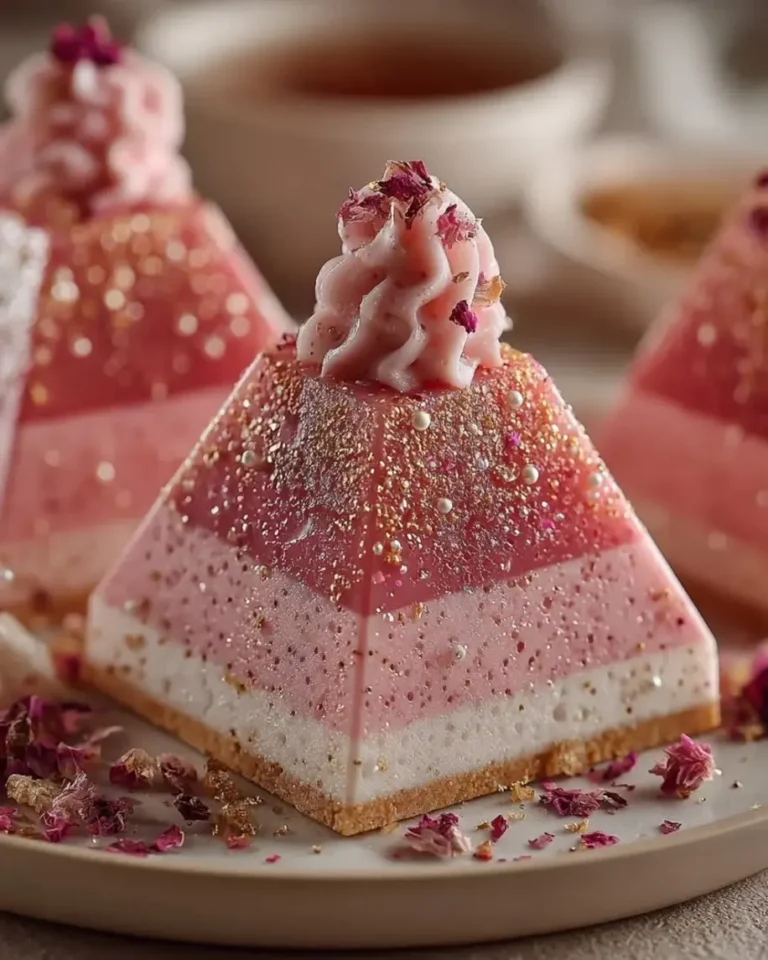
A stunning dessert featuring pink guava and rose mousse encasing a vanilla mascarpone core, set on a biscuit base and coated in a glossy pink mirror glaze.
- Yield: 8 1x
Ingredients
- For the Pink Guava Rose Mousse:
- 1 cup pink guava puree
- 8 oz cream cheese, softened
- 1 cup heavy cream
- 1/2 cup granulated sugar
- 1 tsp rosewater
- 1 tsp vanilla extract
- 2 tsp powdered gelatin
- 3 tbsp cold water
- For the Vanilla Mousse Core:
- 3/4 cup mascarpone cheese
- 2 tbsp powdered sugar
- 1 tsp vanilla extract
- For the Biscuit Base:
- 1 cup digestive biscuits, finely crushed
- 3 tbsp melted butter
- For the Mirror Glaze:
- 1 cup granulated sugar
- 1/2 cup water
- 1/2 cup sweetened condensed milk
- 1 cup white chocolate, finely chopped
- 1 tbsp powdered gelatin
- 3 tbsp cold water
- 1 tsp clear vanilla extract
- 1 tsp edible pearl luster dust
- 1–2 drops pink food coloring
- For Garnish (optional):
- Dried rose petals
- White chocolate curls
- Edible gold flakes
Instructions
- Mix crushed biscuits with melted butter and press into pyramid molds as a thin base layer. Chill for 15 minutes.
- Combine mascarpone cheese, powdered sugar, and vanilla extract until smooth.
- Spoon into small silicone inserts and freeze until firm.
- Bloom gelatin for the mousse in cold water for 5 minutes.
- Beat cream cheese, pink guava puree, sugar, rosewater, and vanilla until smooth.
- Warm a small portion of cream and dissolve gelatin, then mix into the guava mixture.
- Whip remaining cream to soft peaks and fold into the mixture.
- Fill pyramid molds halfway with mousse.
- Place a frozen vanilla mousse core into each mold.
- Cover with remaining mousse and smooth the tops.
- Freeze for at least 6 hours until fully firm.
- Bloom gelatin for the mirror glaze in cold water.
- Heat sugar, water, and condensed milk until steaming.
- Remove from heat and stir in gelatin and white chocolate until smooth.
- Add vanilla extract, pearl luster dust, and pink food coloring.
- Blend until glossy and silky.
- Cool glaze to about 90°F (32°C).
- Unmold frozen pyramids and place on a wire rack.
- Pour mirror glaze evenly over each pyramid until fully coated.
- Refrigerate for 30 minutes before serving.
- Garnish with dried rose petals, white chocolate curls, and gold flakes.
Notes
Nutritional Info (per serving, serves 8): Calories:360, Protein:4g, Carbohydrates:40g, Fat:20g, Fiber:1g, Sugar:35g, Sodium:75mg
Nutrition
- Calories: 360
- Sugar: 35g
- Fat: 20g
- Carbohydrates: 40g
- Protein: 4g
Tried This Recipe? Leave a Comment!
Did you make this recipe? I’d love to hear how it turned out! Please leave a comment and a rating below. Your feedback helps other home cooks and supports cheerychop.com!
For more delicious inspiration, follow me on Pinterest!