Raspberry Rose Glass Domes with Liquid Vanilla Center
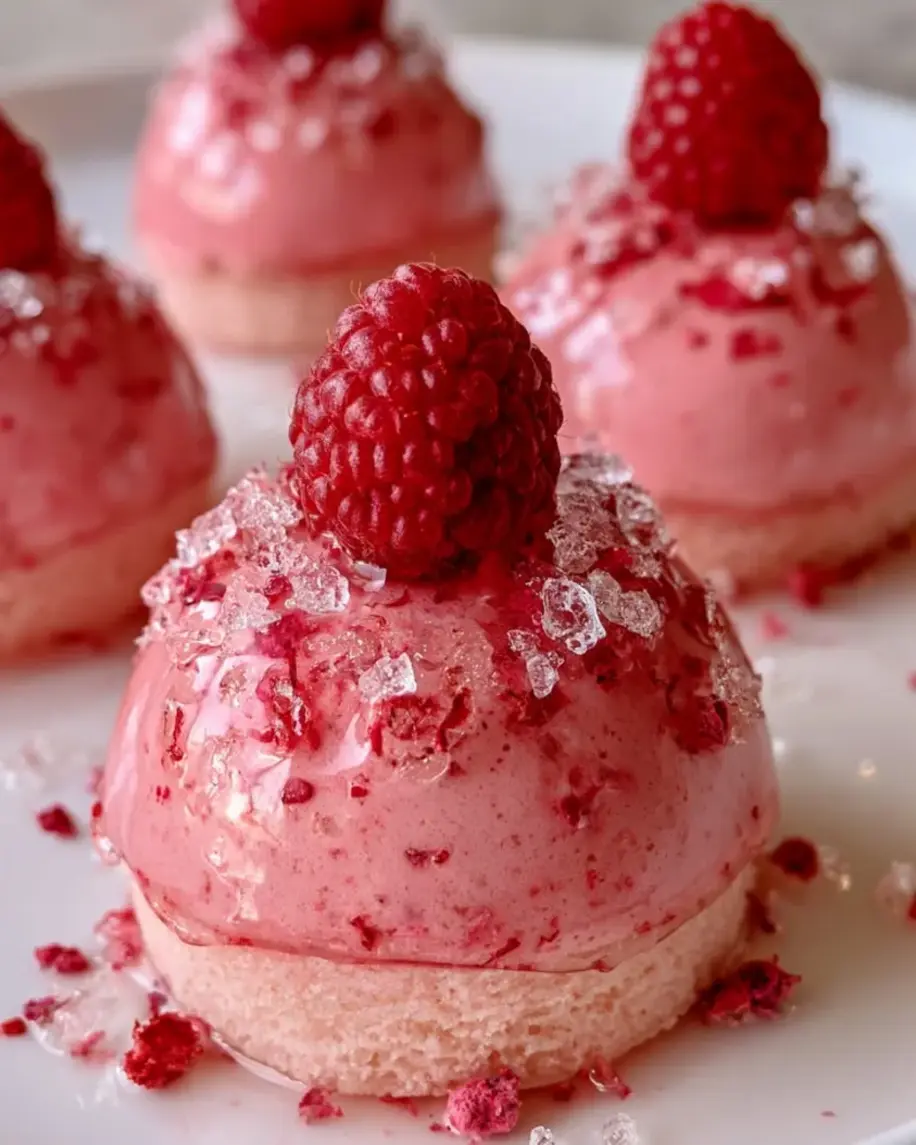
Table of Contents
Raspberry Rose Glass Domes with Liquid Vanilla Center – A Stunning Mirror Glaze Raspberry Dessert You Can Master at Home
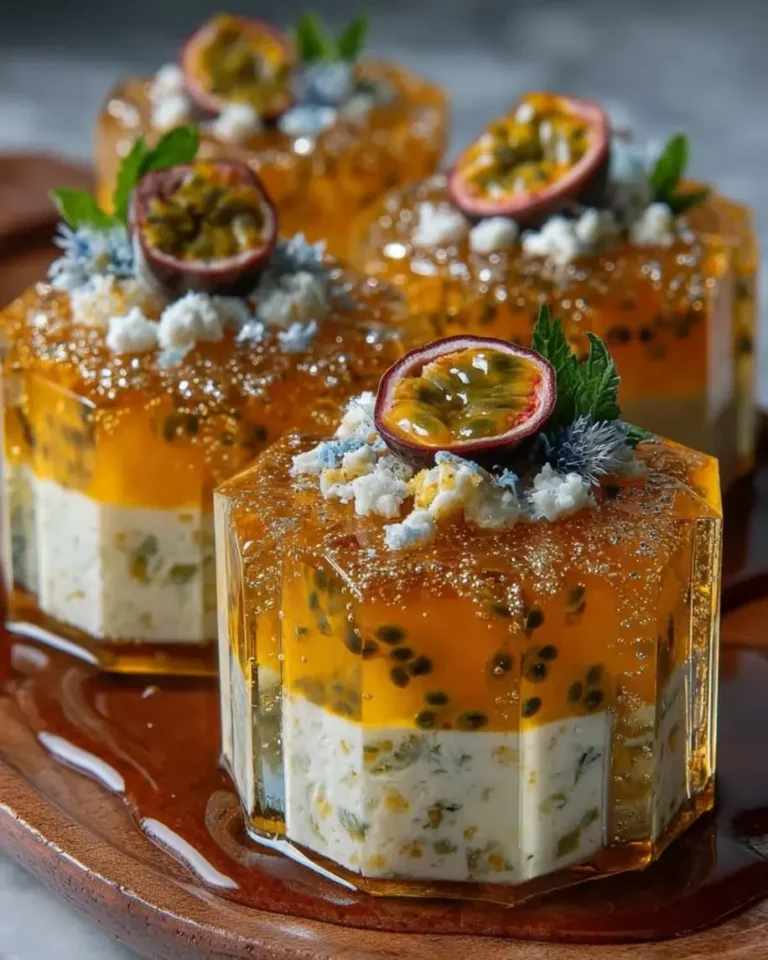
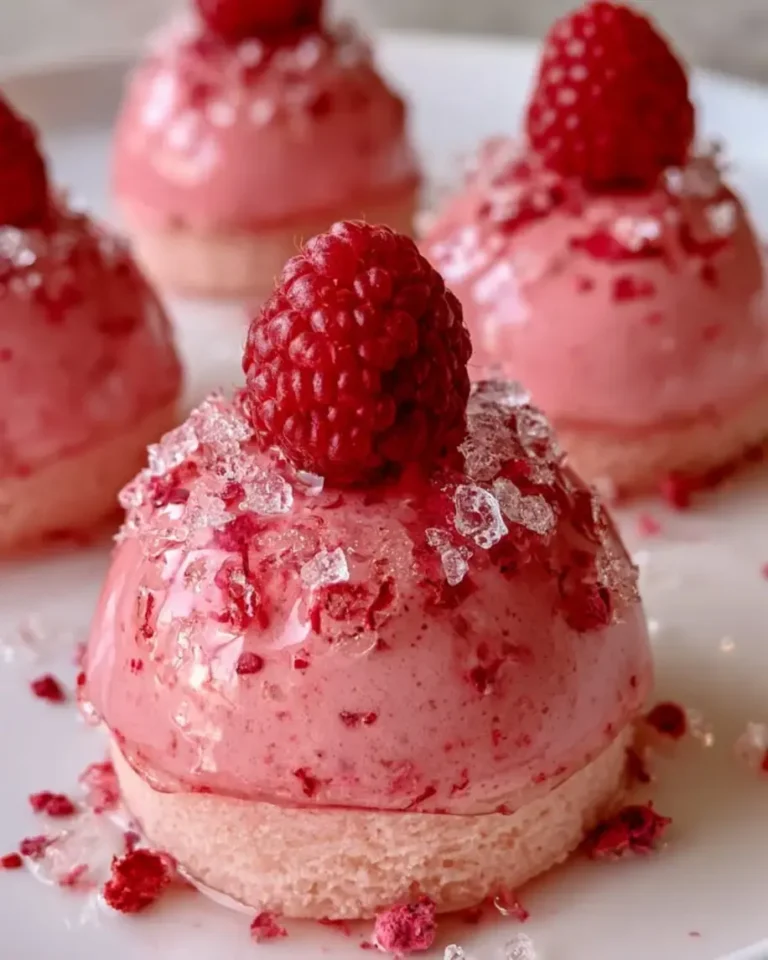
The first time I made these raspberry rose glass domes with liquid vanilla center, I was standing in my tiny Paris apartment kitchen, testing a dessert that looked like it belonged in a luxury patisserie window. Now, from my NYC kitchen, I’m sharing my raspberry rose glass domes recipe with you — and I promise it’s more approachable than it looks. The magic is in that gorgeous glass glaze dome dessert shell, glossy and translucent like sea glass, hiding a cloud of raspberry rose mousse and a liquid vanilla center that spills out when you crack through the surface. Growing up in Morocco, my mother taught me that dessert is about generosity — and this showstopper is the most generous thing I make. Every time I serve them, the table goes quiet for a second — and then the applause starts.
Imagine breaking through a crisp, mirror-like shell with your spoon. Beneath it, the raspberry rose mousse is impossibly light — tart, floral, and whisper-soft on the tongue. Then comes the liquid vanilla center: a silky, almost molten ribbon of sweetened cream that pools beneath the mousse like a hidden treasure. The rose water whispers rather than shouts, the way my mother used mint in her tea — a fragrance you feel before you taste. Each element plays off the others: the glassy glaze gives that first resist-then-release crack, the mousse melts, and the vanilla center finishes with a rich, comforting warmth. It’s texture theater in a spoon, and it’s the kind of mirror glaze raspberry dessert you’ll find in the best pastry cases from Paris to Brooklyn.
I’ve tested this raspberry rose mousse dome recipe more times than I can count — through my French pastry training, through years of catering in New York, and through many late-night experiments with my own silicone molds. What I love about this version is that every step is designed to work for a home baker. My one pro tip: freeze the liquid vanilla center dessert filling until it’s just barely firm, not solid, so it stays liquid inside the frozen mousse. And the most common mistake I see? Rushing the glaze temperature. Once you’ve mastered these two moments, you’ll be making glass glaze dome desserts that rival any pastry case — and with way less stress than you’d expect from a dessert this gorgeous.
“Dessert should be a little theater on the plate — a crack, a reveal, a sigh of delight. That’s what these glass domes are all about.” — Stella 🧡
Why This Raspberry Rose Glass Domes Recipe Is the Best
The Flavor Secret: Most raspberry desserts just shout “berry,” but this glass glaze dome dessert layers flavors the way a perfume is built — a high note of raspberry purée, a floral middle note of rose water, and a warm bass note from vanilla bean paste in both the mousse and the liquid center. The sweetened condensed milk in the liquid vanilla center adds a caramel-like depth that echoes the toffees I remember buying in the medina in Marrakech. It’s a dessert that tastes complex because it is — and every layer has a purpose.
Perfected Texture: The texture is where my Paris training really shows up. The mousse is aerated with softly whipped cream folded in by hand, so it stays light, not dense. The glass glaze is set with gelatin and poured at exactly 90°F, so it’s neither too thick nor too runny — it creates that perfect, crisp, translucent shell. And the liquid center is all about timing: freeze it just to the point where it’s a thick syrup, and it will stay beautifully fluid even after the domes are frozen solid. That moment when the center spills out is pure drama.
Foolproof & Fast: Despite how impressive they look, these domes are surprisingly forgiving. Every component can be made ahead, the gelatin stabilizes the mousse so it won’t collapse, and the glaze can be reheated if it sets too early. No tempering chocolate, no spun sugar, no water baths. If you can fold whipped cream into a mixture, you can make these. My goal was to take the raspberry rose glass domes recipe that usually only exists in pastry kitchens and break it into steps that any home cook in America can handle on a weekend.
Raspberry Rose Glass Domes Recipe Ingredients
I find most of these ingredients within a few blocks of my NYC apartment. White chocolate and heavy cream from the bodega on the corner, raspberries from the Union Square Greenmarket when they’re in season, and rose water from a little Middle Eastern grocery in Brooklyn that reminds me of the spice souks back home. The ingredients list looks long, but don’t let it intimidate you — most of it comes together in just a few bowls.
Ingredients List
- For the Raspberry Rose Mousse:
- 1 cup (240 ml) heavy whipping cream
- 6 oz (170 g) white chocolate, finely chopped
- 3/4 cup (180 ml) raspberry purée
- 1/4 cup (60 ml) whole milk
- 2 tsp powdered gelatin
- 3 tbsp cold water
- 1 tsp rose water
- 1 tsp vanilla bean paste
- Pinch of fine sea salt
- For the Liquid Vanilla Center:
- 1/3 cup (80 ml) sweetened condensed milk
- 1/4 cup (60 ml) heavy cream
- 2 tbsp mascarpone cheese
- 1 tsp vanilla bean paste
- 1 tsp clear glucose syrup
- For the Crystal Glass Glaze:
- 1 cup (240 ml) water
- 1/2 cup (100 g) granulated sugar
- 2 tbsp glucose syrup
- 2 tsp powdered gelatin
- 3 tbsp cold water
- Clear neutral glaze (optional)
- Tiny pinch of edible pearl shimmer
- For the Crystal Decoration:
- Clear rock candy crystals
- Freeze-dried raspberry powder
- White chocolate crystal shards
- Edible silver leaf
- Edible pearl flakes
- For Garnish (optional):
- Fresh raspberries
- Dried rose petals
- Micro mint leaves
Ingredient Spotlight
White Chocolate (6 oz): This is the backbone of the mousse, so skip the cheap stuff. You want a white chocolate that lists cocoa butter — not just palm oil — as an ingredient. I like Valrhona Ivoire or Cacao Barry Zéphyr; both melt into a silky emulsion with the warm milk and purée. If you use white chocolate chips, expect a slightly thicker mousse because they contain more stabilizers.
Rose Water (1 tsp): Rose water is incredibly concentrated, so a little goes a long way. Look for culinary-grade rose water — it should smell like roses, not soap. My rule of thumb: if you’re tempted to drink a drop, it’s good. The brand Cortas, found in most Middle Eastern grocery stores, is my go-to. You can also use rose extract, but use only 1/4 teaspoon since it’s far stronger.
Powdered Gelatin (2 tsp + 2 tsp): Gelatin is what transforms this from a soft mousse into a sliceable, glazable dome. Powdered gelatin is easiest for American home bakers — I use Knox or a craft-grade brand. The key is blooming it in cold water for a full 5 minutes before melting, which ensures it dissolves evenly with no lumps. I use separate batches in the mousse and the glaze, so keep your measurements straight.
Raspberry Purée (3/4 cup): You can use fresh or frozen raspberries, puréed and strained to remove the seeds. If you’re buying it, look for unsweetened purée — Boiron makes an excellent one that pastry chefs use. In peak summer, I’ll use fresh berries from the greenmarket and blitz them myself. The purée adds both flavor and acid, which cuts through the sweetness of the white chocolate beautifully.
Mascarpone (2 tbsp): Just a couple of tablespoons of mascarpone in the liquid vanilla center gives it a luxurious, velvety body that cream alone can’t achieve. It’s the same trick I learned in Paris for stabilizing whipped creams. Mascarpone is a soft Italian cheese — look for it in a tub, not the grated section. If you can’t find it, thick cream cheese works in a pinch, though the flavor will be slightly tangier.
| Original Ingredient | Best Substitution | Flavor / Texture Impact |
|---|---|---|
| White chocolate (bar) | White chocolate chips | Slightly thicker mousse, less refined melt |
| Rose water | Orange blossom water | Lighter citrus-floral note, Moroccan-inspired |
| Powdered gelatin | Agar agar powder | Vegan but firmer, jelly-like; requires boiling to activate |
| Raspberry purée | Strawberry or passion fruit purée | Tarter flavor; adjust sugar to balance |
| Mascarpone | Full-fat cream cheese | More tangy, slightly denser centers |
How to Make Raspberry Rose Glass Domes — Step-by-Step
Take a deep breath — this is easier than it looks. I’ve broken the process down into small, manageable steps, and I’m right here with you for each one. Set aside a weekend afternoon for the assembly, and you’ll be rewarded with the most spectacular dessert you’ve ever made.
Step 1: Bloom the Gelatin
In a small bowl, sprinkle the 2 teaspoons of powdered gelatin over 3 tablespoons of cold water. Let it sit undisturbed for exactly 5 minutes. The gelatin absorbs the water and swells into a thick, sponge-like mass. This step, known as blooming, guarantees the gelatin melts smoothly into the warm milk without leaving lumps.
⚠️ Common Mistake to Avoid: Use ice-cold water for blooming, not hot or warm water. Hot water makes the gelatin clump immediately into a rubbery mess that never dissolves evenly. Cold tap water works, but ice water gives you a wider safety window before the gelatin starts to dissolve.
Step 2: Warm the Milk and Melt the White Chocolate
Heat the milk in a small saucepan until it’s steaming, with tiny bubbles around the edges — but don’t let it boil. Gently squeeze the bloomed gelatin to remove excess water, then whisk it into the hot milk until fully dissolved. Pour this hot mixture over your finely chopped white chocolate and let it stand for 1 minute, then whisk slowly until smooth and glossy.
💡 Stella’s Pro Tip: Chop your white chocolate finely and uniformly. The smaller the pieces, the faster and more evenly they melt. I use a serrated knife to avoid breaking the chocolate into jagged shards that melt unevenly.
Step 3: Build the Raspberry Base
Stir in the raspberry purée, rose water, vanilla bean paste, and a generous pinch of sea salt. The salt matters here — it tames the sweetness and lifts the floral notes. Set the mixture aside to cool to room temperature. You want it cool but still fluid, so it doesn’t melt the whipped cream when you fold.
⚠️ Common Mistake to Avoid: Don’t add the purée while the chocolate mixture is still hot. Heat can make the white chocolate seize or separate, leaving you with a grainy mousse that never comes back together. Wait until the bowl feels cool to the touch — about 15 minutes at room temperature.
Step 4: Whip and Fold the Mousse
In a separate bowl, whip the chilled heavy cream to soft peaks — the cream should hold a gentle curl when you lift the whisk, not stiff peaks. Fold one-third of the cream into the raspberry mixture to lighten it, then gently fold in the rest. Use a wide rubber spatula and cut down through the center, then sweep around the bowl. Stop as soon as no streaks remain.
💡 Stella’s Pro Tip: Soft peaks are the sweet spot. If you over-whip to stiff peaks, the cream will be grainy and the mousse will taste buttery rather than light. When in doubt, stop earlier — the raspberry purée naturally softens the cream a bit during folding.
Step 5: Make the Liquid Vanilla Centers
Whisk together the sweetened condensed milk, heavy cream, mascarpone, vanilla bean paste, and clear glucose syrup in a bowl until completely smooth. The glucose syrup keeps the centers fluid even at frozen temperatures; it’s the same trick ice cream makers use to prevent iciness. Spoon the mixture into small half-sphere molds, about 1 inch in diameter, and freeze for 2–3 hours, until the edges are firm but the very center is still soft.
⚠️ Common Mistake to Avoid: Don’t freeze the centers completely solid. You want them “slushy” in the middle, like a semifreddo. That’s what keeps them liquid once they’re trapped inside the frozen mousse dome. If you accidentally freeze them too hard, let them sit at room temperature for 5 minutes before assembly.
Step 6: Assemble the Domes
Fill each large silicone dome mold halfway with the raspberry mousse. Press a frozen vanilla center into the middle, then cover with more mousse until the mold is completely full. Use a small offset spatula to smooth the top flush with the rim. Gently tap the mold on the counter to release any air pockets.
💡 Stella’s Pro Tip: Work quickly — the mousse starts to set the moment it hits the cold center. If you feel the mousse solidifying before you’ve filled the mold, that’s actually good news: it means the layers will hold their shape beautifully. Tap the mold firmly; trapped air bubbles show up as ugly holes in the final dome.
Step 7: Freeze Overnight
Place the filled molds on a baking sheet and freeze for at least 8 hours or overnight until completely firm. The domes need to be rock-solid to unmold cleanly and to survive the warm glaze. Don’t skip this — even 30 minutes less can result in a wobbly dome that collapses during glazing.
⚠️ Common Mistake to Avoid: Freezing for less than the full 8 hours is the number one reason domes break apart during unmolding. The vanilla center is still semi-liquid, and if the mousse hasn’t fully set, the weight of the center will push through the bottom. Patience is not optional here!
Step 8: Make the Crystal Glass Glaze
Bloom the second batch of gelatin in 3 tablespoons of cold water. In a separate saucepan, heat the water, granulated sugar, and glucose syrup, stirring until the sugar is fully dissolved and the liquid reads about 220°F. Remove from heat, whisk in the bloomed gelatin until fully melted, then add a tiny pinch of edible pearl shimmer for a subtle diamond-like glisten. Cool the glaze to exactly 90°F before pouring.
💡 Stella’s Pro Tip: Use a digital thermometer — guessing the temperature is the #1 reason mirror glazes fail. At 90°F, the glaze is thin enough to flow over the dome but thick enough to cling and set. If it cools too much, reheat it gently in a water bath and cool again.
Step 9: Unmold and Glaze
Unmold the frozen domes by pressing gently on the bottom of each silicone cavity, and place them on a wire rack set over a baking sheet. Pour the clear glaze in a slow, steady stream over the center of each dome, letting it cascade over the sides. Wait until the excess stops dripping, about 30 seconds, then carefully lift the dome with an offset spatula and transfer to a serving plate.
⚠️ Common Mistake to Avoid: Don’t let the domes sit in a puddle of glaze — the bottom will become sticky and uneven. Keep them on the rack until fully set, and if you want a thicker shell, apply a second thin coat after the first sets, about 5 minutes later.
Step 10: Decorate Like a Pastry Chef
Decorate each glass dome dessert before the glaze fully sets. Press small clusters of clear rock candy crystals onto the top and sides. Add white chocolate crystal shards — I make mine by piping melted white chocolate into free-form shapes, then cracking them into jagged “glass” pieces. Gently place a few flakes of edible silver leaf and pearl flakes for that fine-dining sparkle, then finish with a light dusting of freeze-dried raspberry powder.
💡 Stella’s Pro Tip: Wear gloves or use dry tweezers when handling edible silver leaf — it’s impossibly thin and sticks to any moisture. And apply the raspberry powder with a fine sieve from about 6 inches above so it falls like a delicate blush, not a heavy coat.
Step 11: Garnish and Rest Before Serving
Just before serving, arrange a fresh raspberry, a pinch of dried rose petals, and a tiny micro mint leaf on each plate or on top of the dome. Then refrigerate the domes for exactly 20–25 minutes so the mousse softens to a creamy texture while the vanilla center stays luxuriously fluid. Serve immediately, and warn your guests to be ready for the crack.
⚠️ Common Mistake to Avoid: Don’t leave the domes in the fridge for more than 30 minutes — the glaze will start to absorb moisture and lose its glassy shine. Set a timer, and if you need more time to plate, keep them in the freezer and pull them later.
| Step | Action | Duration | Key Visual Cue |
|---|---|---|---|
| 1 | Bloom gelatin | 5 mins | Spongy, thick mass |
| 2 | Warm milk + melt chocolate | 5 mins | Silky, glossy emulsion |
| 3 | Build raspberry base | 15 mins cooling | Cool but fluid, fragrant |
| 4 | Whip and fold cream | 5 mins | Soft peaks, no streaks |
| 5 | Freeze vanilla centers | 2–3 hrs | Slushy centers |
| 6 | Assemble domes | 15 mins | Mold filled to rim |
| 7 | Freeze overnight | 8 hrs + | Rock-solid domes |
| 8 | Make crystal glass glaze | 15 mins + cooling | 90°F, clear and pourable |
| 9 | Unmold and glaze | 10 mins | Even glass-like shell |
| 10 | Decorate | 10 mins | Crystals, shards, shimmer |
| 11 | Garnish and rest | 20–25 mins | Glaze glossy, mousse soft |
Serving & Presentation
These domes are the crown jewels of the dessert table. I like to serve them on white ceramic plates — the kind you’d find in a Paris bistro — so the glass glaze is the unmistakable star. A single dome is a statement; two is a feast. For a dinner party, I’ll plate each one with a delicate swoosh of extra raspberry purée and a few fresh berries scattered like rubies around the plate.
If you want to lean into the Moroccan side of this dessert, serve the domes with a pot of strong mint tea and some small almond cookies known as “gazelle horns” — the combination of rose, almond, and mint is pure North African hospitality. For an NYC twist, pair them with an espresso or a citrusy sparkling wine. The bright acidity cuts through the richness of the white chocolate mousse.
| Pairing Type | Suggestions | Why It Works |
|---|---|---|
| Side Dish | Moroccan gazelle horns, shortbread, butter madeleines | Adds gentle crunch and neutral richness to balance the soft mousse |
| Sauce / Dip | Raspberry coulis, rose-scented crème anglaise, dark chocolate ganache | Enhances the berry and floral notes while adding contrast |
| Beverage | Mint tea, espresso, sparkling rosé, Muscat dessert wine | Cuts sweetness, refreshes the palate between bites |
| Garnish | Fresh raspberries, dried rose petals, micro mint, edible flowers | Adds color contrast and a fragrant, garden-fresh aroma |
Make-Ahead, Storage & Reheating
This is the ultimate make-ahead dessert for entertaining. I often assemble the full domes — mousse, center, glaze, and decoration — two days before a dinner party, then keep them frozen until 25 minutes before serving. It means I’m actually at my own party instead of chained to the whisk.
| Method | Container | Duration | Reheating Tip |
|---|---|---|---|
| Refrigerator | Covered platter | Max 30 minutes before serving | Serve immediately; do not reheat |
| Freezer (glazed) | Airtight container, parchment between layers | Up to 3 days | Move to refrigerator 20–25 minutes before serving |
| Freezer (unglazed) | In silicone molds, wrapped tightly | Up to 2 weeks | Glaze directly from frozen at 92°F for best coverage |
When I say freezer, I mean a deep freezer set at 0°F. The frozen domes are surprisingly resilient — I’ve dropped a tray once and only one dome chipped. If you’re making the domes for a special occasion, do the full assembly up to the glaze, freeze, then glaze on the day. Although honestly, with the right storage, even glazed domes survive beautifully in the freezer.
If you store unglazed domes, keep them in the silicone molds with a layer of plastic wrap pressed directly onto the mousse. This prevents ice crystals from forming, which is the enemy of a smooth mirror finish. And when glazing from frozen, pour the glaze just a degree or two warmer, around 92°F, because the dome is colder and will set the glaze faster.
Variations & Easy Swaps
| Variation | Key Change | Best For | Difficulty Impact |
|---|---|---|---|
| Dark chocolate ganache dome | Replace white chocolate with dark chocolate in the mousse | Chocolate lovers, fall/winter entertaining | Same |
| Dairy-free / vegan | Coconut cream, vegan white chocolate, agar agar | Dairy-free households | Slightly harder |
| Passion fruit / mango | Swap raspberry purée, reduce rose water | Summer events, tropical theme | Same |
Dark Chocolate Ganache Variation
For a darker mood, substitute the white chocolate in the mousse with an equal weight of dark chocolate (around 60–70% cacao). The mousse becomes deeper, richer, and less sweet. Rose water still works beautifully — in Morocco we often pair dark chocolate with orange blossom water. The liquid vanilla center stays the same; the contrast between dark mousse and golden vanilla center is striking. Don’t use chocolate with more than 70% cacao, or the mousse may become too bitter against the sweet center.
Dairy-Free / Vegan Variation
To make this dairy-free, I’ve tested a version using full-fat coconut cream whipped to soft peaks, a high-quality vegan white chocolate, and sweetened condensed coconut milk for the center. Use agar agar in place of gelatin, simmering the liquid for 2 minutes to activate it. The texture is slightly firmer and the flavor gets a subtle coconut note, which pairs surprisingly well with raspberry and rose. I won’t pretend it’s identical — it’s its own delicious thing, but my dairy-free friends say it’s a winner.
Passion Fruit or Mango Variation
In the heart of summer, when the NYC markets are bursting with tropical fruit, I swap the raspberry purée for equal parts passion fruit or mango purée and reduce the rose water to 1/2 teaspoon. Passion fruit adds a sharp, lip-smacking acidity that plays beautifully against the sweet white chocolate and vanilla center. Decorate with freeze-dried mango powder or fresh passion fruit seeds for a poppy, jewel-like finish that photographs even better than the original.
Frequently Asked Questions About Raspberry Rose Glass Domes
What is a liquid vanilla center and how do you keep it from leaking or melting inside the raspberry rose glass dome?
The liquid vanilla center is a semi-set custard-like mixture made from sweetened condensed milk, heavy cream, mascarpone, vanilla bean paste, and glucose syrup. It’s partially frozen in half-sphere molds before being sealed inside the raspberry mousse, so it stays fluid while the outer dome sets firm. The key to preventing leaks is to freeze the center until it’s almost solid — you want it just barely fluid in the middle — and to fully freeze the assembled dome overnight. The gelatin in the mousse plus the long freeze time ensures the center is completely sealed. When you refrigerate the domes for 20–25 minutes before serving, the mousse softens but the center remains luxuriously liquid.
Can I use fresh raspberries instead of freeze-dried for the glass dome shell, and how does that affect the recipe?
I wouldn’t recommend replacing the freeze-dried raspberry powder used in the decoration with fresh berries. Fresh raspberries contain too much moisture, which will streak the mirror glaze and make the glass-like shell look cloudy. If you want a raspberry flavor boost, fold a small amount of freeze-dried raspberry powder into the mousse rather than the glaze. For garnish on the plate, fresh raspberries are wonderful — just place them right before serving so they don’t weep onto the glaze. The recipe already calls for fresh raspberries as a garnish, so you get that fresh pop of flavor without compromising the glass shell.
How far in advance can I make these raspberry rose glass domes, and what is the best way to store them so the liquid center stays intact?
You can make the domes up to 3 days in advance if you store them in an airtight container in the freezer. Once the glaze is set and the decorations are applied, keep them on a parchment-lined tray, cover gently with plastic wrap, and freeze. They must stay frozen until 20–25 minutes before serving; any longer at room temperature and the mousse will soften too much and the liquid center could break through the shell. I also recommend freezing the unglazed domes in their silicone molds if you want to glaze them fresh on the day of your event — they’ll keep well for up to 2 weeks that way.
What can I substitute for rose water or rose extract if I don’t have it on hand for this dessert recipe?
Orange blossom water is a beautiful substitute — it’s also lighter and has a lovely citrus-floral note that pairs well with raspberry. I grew up using orange blossom water in my mother’s Moroccan kitchen, so it feels like a natural swap to me. You can also use 1/2 teaspoon of almond extract plus a splash of vanilla, or steep a few dried rose petals in warm milk and strain before using. Start with a smaller amount and taste; any floral flavor is potent and you can always add more. If you skip the rose entirely, add an extra 1/4 teaspoon of vanilla bean paste so the dessert doesn’t feel unbalanced.
Can I make these raspberry rose glass domes without gelatin for a vegetarian version?
Yes, you can substitute agar agar, but expect a slightly firmer, more jelly-like texture. Use about 1 teaspoon of agar agar powder in place of the 2 teaspoons of gelatin, and simmer it in the milk or water for 1–2 minutes — agar needs boiling to activate, unlike gelatin which is just bloomed in cold water and melted into warm liquid. The mirror glaze will also set a bit more firmly. I’ve tested this and it works, though you’ll want to glaze the domes slightly warmer, around 95°F, to avoid premature setting. The liquid vanilla center will stay intact, but the overall mouthfeel is a touch more gel-like than silky.
Why is my clear glaze not shiny or has air bubbles?
Air bubbles in the glaze are usually the result of stirring too vigorously or pouring the glaze too quickly. After you stir in the bloomed gelatin, let the glaze sit for a few minutes so bubbles rise to the surface, then skim them off with a spatula. Strain the glaze through a fine-mesh sieve before cooling to 90°F — this is my Paris pastry-school trick. Also, make sure your frozen domes are absolutely dry; any ice crystals or condensation will cause tiny pits in the glaze finish. If your glaze is dull, it may have been poured too warm or too cool. A proper mirror glaze raspberry dessert should look like polished glass.
Can I use a different fruit purée instead of raspberry?
Absolutely. Strawberry, passion fruit, mango, or blackberry purée all work beautifully. Keep in mind that acidic fruits like passion fruit may require slightly more sugar in the mousse to balance the tartness. If you swap the purée, you’ll also want to adjust the decoration color — for example, use freeze-dried strawberry powder instead of raspberry. And if you use a firmer fruit like mango, blitz it in a blender and strain it before measuring so the texture stays silky. Rose pairs especially well with all berries, so don’t be afraid to experiment with your favorite farmers market finds.
What silicone molds work best for making these domes?
Use a half-sphere silicone mold with cavities that are at least 2.5 to 3 inches in diameter. Silicone is essential here because it flexes, letting the frozen dome release without cracking the glaze. Look for molds with smooth, glossy cavities — the smoother the mold, the more perfect the dome surface will be. For the liquid centers, use smaller half-sphere molds with about 1-inch cavities. I like to brush the molds with a tiny bit of neutral oil before filling to guarantee a clean release. Good molds are an investment; they’ll last for years of beautiful desserts.
How do I get the mirror glaze to be perfectly smooth on the dome?
The secret is temperature and one confident pour. Cool the glaze to exactly 90°F (32°C) — if it’s too warm, it slides off and is too thin; too cool, it sets thick and unevenly. Place the frozen dome on a wire rack over a deep baking sheet, then pour the glaze in one smooth motion over the center of the dome, letting it flow over the sides. Don’t go back to touch it; second pours create streaks. Let the excess drip briefly, then carefully lift the dome with an offset spatula. That one-pour confidence is what gives you a glass-like finish every time.
Can I turn these into cupcakes or a cake instead of domes?
You can, though the presentation will be different. For a cake, spread a thick layer of the raspberry mousse over a frozen sponge base, add blobs of the liquid vanilla center, and freeze before glazing the whole cake. For individual servings, you can fill small glass jars with the mousse and spoon the vanilla center on top before chilling. The mirror glaze won’t coat a delicate cake as cleanly, so I recommend keeping the glaze for domes or using it as a drip cake element instead. Both versions are delicious, but there’s something special about cracking into that glass dome.
Share Your Version!
I would love, love, love to see your raspberry rose glass domes! Tag me on Instagram or Pinterest @leosfoods when you make them. If you try this recipe, please leave a star rating and a comment below — tell me how the liquid vanilla center behaved for you, or if you tried any of the variations. I read every comment and answer questions personally.
What’s the first occasion you’re planning to make these for? A birthday, a dinner party, or just a spectacular Tuesday? Let me know in the comments — and don’t forget to save this recipe so you never lose it.
From my NYC kitchen to yours — I hope this recipe brings as much warmth to your table as it does to mine. — Stella 🧡
Love This Recipe? Save It to Pinterest!
If you enjoyed this Raspberry Rose Glass Domes with Liquid Vanilla Center recipe, don’t let it get lost in your browser tabs! 😄 Pin it now so you can find it again anytime — and explore hundreds more tried-and-tested recipes waiting for you on my Pinterest boards.
👉 Follow Stella on Pinterest @stellarecipeblog
📌 Pin this recipe · 🔁 Re-pin your favorites · 💬 Tag me when you make it — I love seeing your creations!
📸 Made this recipe?
If you try these Raspberry Rose Glass Domes with Liquid Vanilla Center, I’d love to hear how the liquid vanilla center turned out for you! Leave a ⭐ star rating and a comment below — and be sure to tag @leosfoods if you share your creation on Instagram or Pinterest. I read every single comment and I’m always here to help if something’s not quite right. Happy baking! 🧡
Raspberry Rose Glass Domes with Liquid Vanilla Center
Raspberry Rose Glass Domes with Liquid Vanilla Center
- Yield: 8 1x
Ingredients
- For the Raspberry Rose Mousse:
- 1 cup (240 ml) heavy whipping cream
- 6 oz (170 g) white chocolate, finely chopped
- 3/4 cup (180 ml) raspberry purée
- 1/4 cup (60 ml) whole milk
- 2 tsp powdered gelatin
- 3 tbsp cold water
- 1 tsp rose water
- 1 tsp vanilla bean paste
- Pinch of fine sea salt
- For the Liquid Vanilla Center:
- 1/3 cup (80 ml) sweetened condensed milk
- 1/4 cup (60 ml) heavy cream
- 2 tbsp mascarpone cheese
- 1 tsp vanilla bean paste
- 1 tsp clear glucose syrup
- For the Crystal Glass Glaze:
- 1 cup (240 ml) water
- 1/2 cup (100 g) granulated sugar
- 2 tbsp glucose syrup
- 2 tsp powdered gelatin
- 3 tbsp cold water
- Clear neutral glaze (optional)
- Tiny pinch of edible pearl shimmer
- For the Crystal Decoration:
- Clear rock candy crystals
- Freeze-dried raspberry powder
- White chocolate crystal shards
- Edible silver leaf
- Edible pearl flakes
- For Garnish (optional):
- Fresh raspberries
- Dried rose petals
- Micro mint leaves
Instructions
- Bloom the gelatin in the cold water for 5 minutes.
- Heat the milk until steaming, then stir in the bloomed gelatin until completely dissolved.
- Pour the hot milk over the white chocolate and whisk until silky smooth.
- Stir in the raspberry purée, rose water, vanilla bean paste, and sea salt. Let cool to room temperature.
- Whip the heavy cream to soft peaks and gently fold it into the raspberry mixture to create a light mousse.
- Whisk together the condensed milk, heavy cream, mascarpone, vanilla bean paste, and glucose syrup until smooth. Freeze small portions in silicone half-sphere molds until partially set but still fluid in the center.
- Fill silicone dome molds halfway with the raspberry mousse, insert the chilled liquid vanilla center, then cover with the remaining mousse. Freeze for at least 8 hours or overnight until completely firm.
- For the glass glaze, bloom the remaining gelatin. Heat the water, sugar, and glucose syrup until dissolved. Remove from the heat, stir in the gelatin, and cool to 90°F (32°C). Stir in a tiny pinch of edible pearl shimmer for a crystal-clear finish.
- Unmold the frozen domes and place them on a wire rack. Pour the clear glaze evenly over each dome until coated in a brilliant glass-like shell.
- Decorate with clusters of clear rock candy crystals, white chocolate crystal shards, edible silver leaf, pearl flakes, and a light dusting of freeze-dried raspberry powder.
- Garnish with fresh raspberries, dried rose petals, and micro mint leaves.
- Refrigerate for 20–25 minutes before serving so the mousse softens while the vanilla center remains luxuriously fluid.
Nutrition
- Calories: 348
- Sugar: 26 g
- Fat: 24 g
- Carbohydrates: 30 g
- Protein: 4 g
Tried This Recipe? Leave a Comment!
Did you make this recipe? I’d love to hear how it turned out! Please leave a comment and a rating below. Your feedback helps other home cooks and supports cheerychop.com!
For more delicious inspiration, follow me on Pinterest!