Tender Red Wine Braised Lamb Shanks with Balsamic Gravy
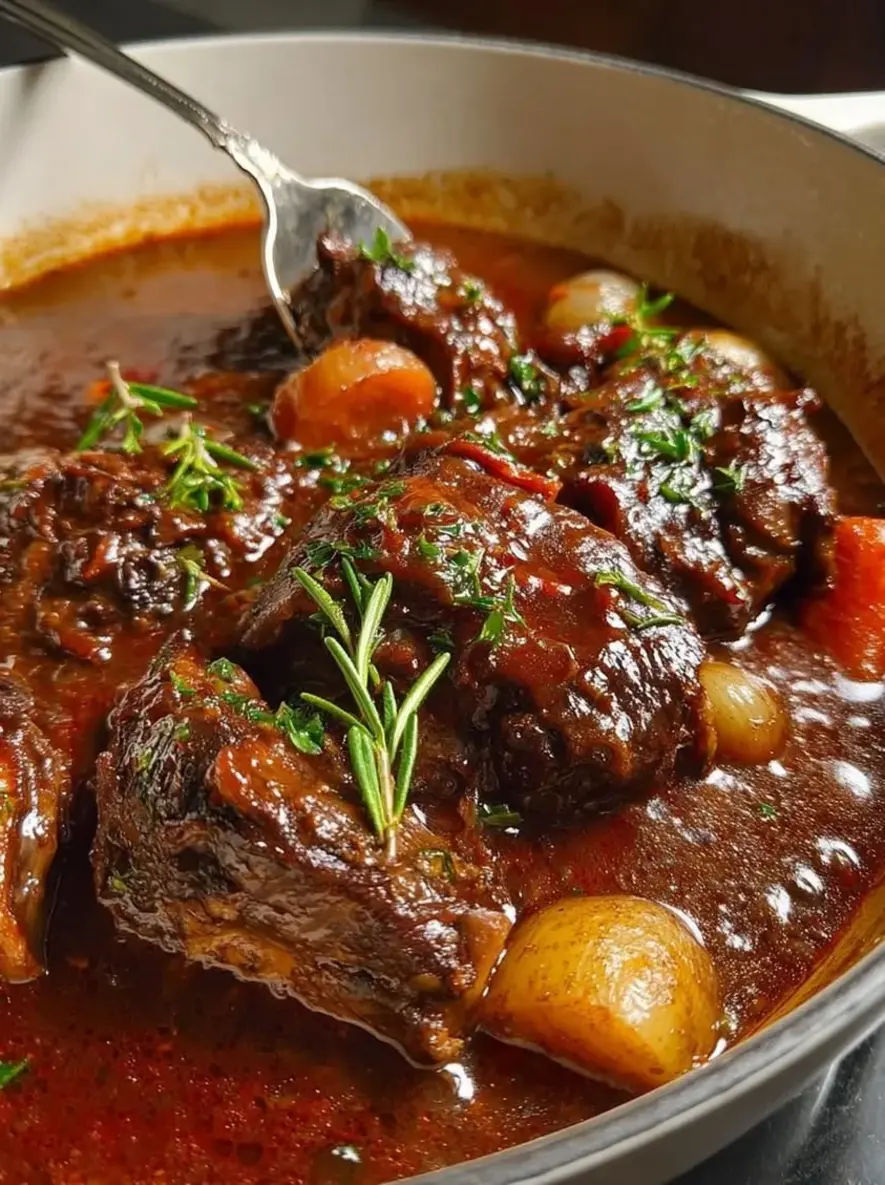
Table of Contents
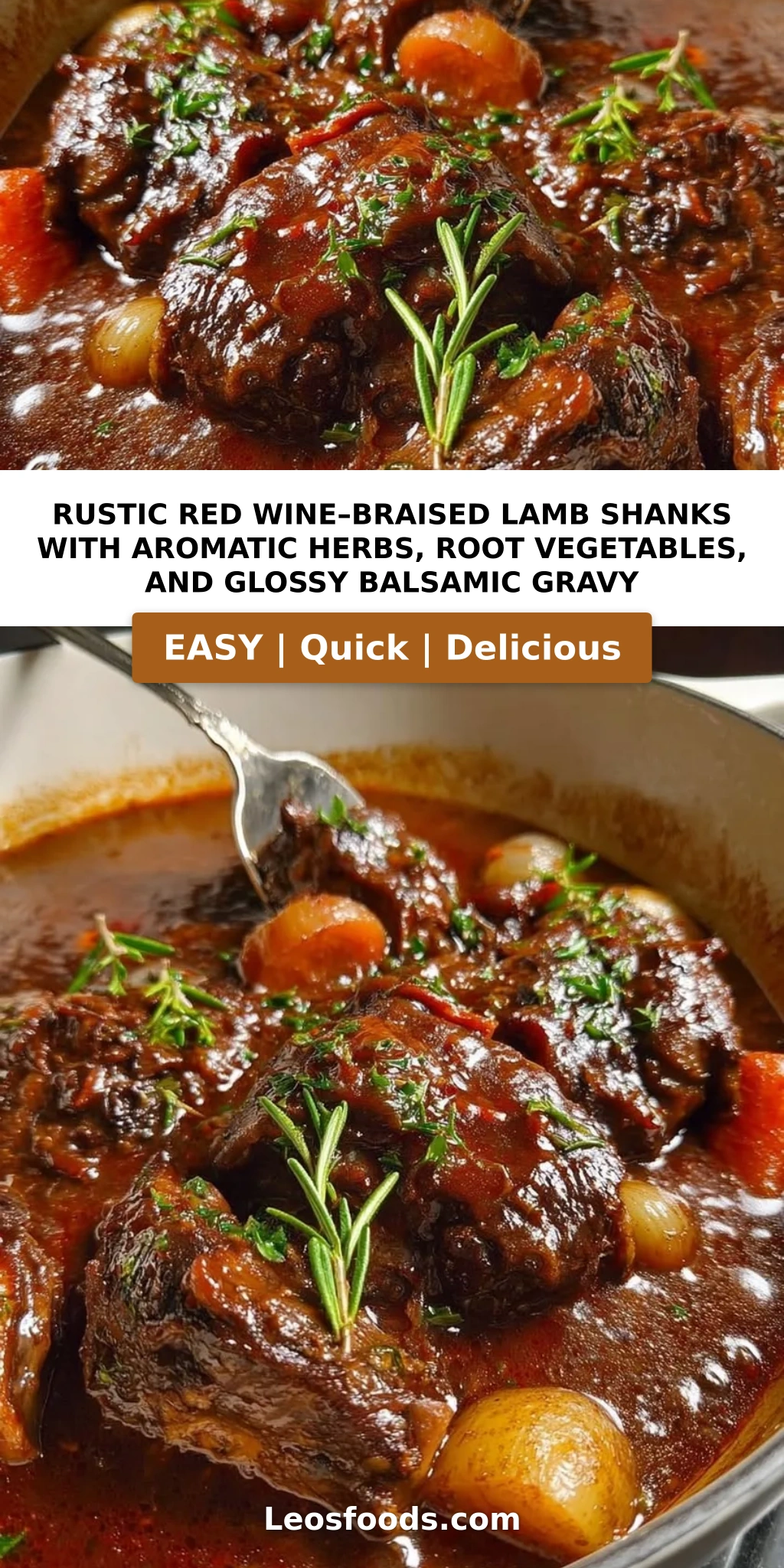
Rustic Red Wine–Braised Lamb Shanks with Aromatic Herbs, Root Vegetables, and Glossy Balsamic Gravy – The Ultimate Comfort Lamb Dish
Growing up in Morocco, my mother would spend Sunday afternoons coaxing the most incredible aromas out of a single tagine — lamb slow-cooked with saffron, ginger, and preserved lemons. When I later trained in Paris, I fell in love with the French technique of braised lamb shanks drenched in red wine and finished with a silky reduction. This recipe is my love letter to both worlds: tender, fall-apart red wine lamb shanks swimming in a glossy balsamic gravy, surrounded by earthy root vegetables and fresh herbs. Every time I make this, the scent of rosemary and thyme takes me right back to that tiny bistro in the 6th arrondissement.
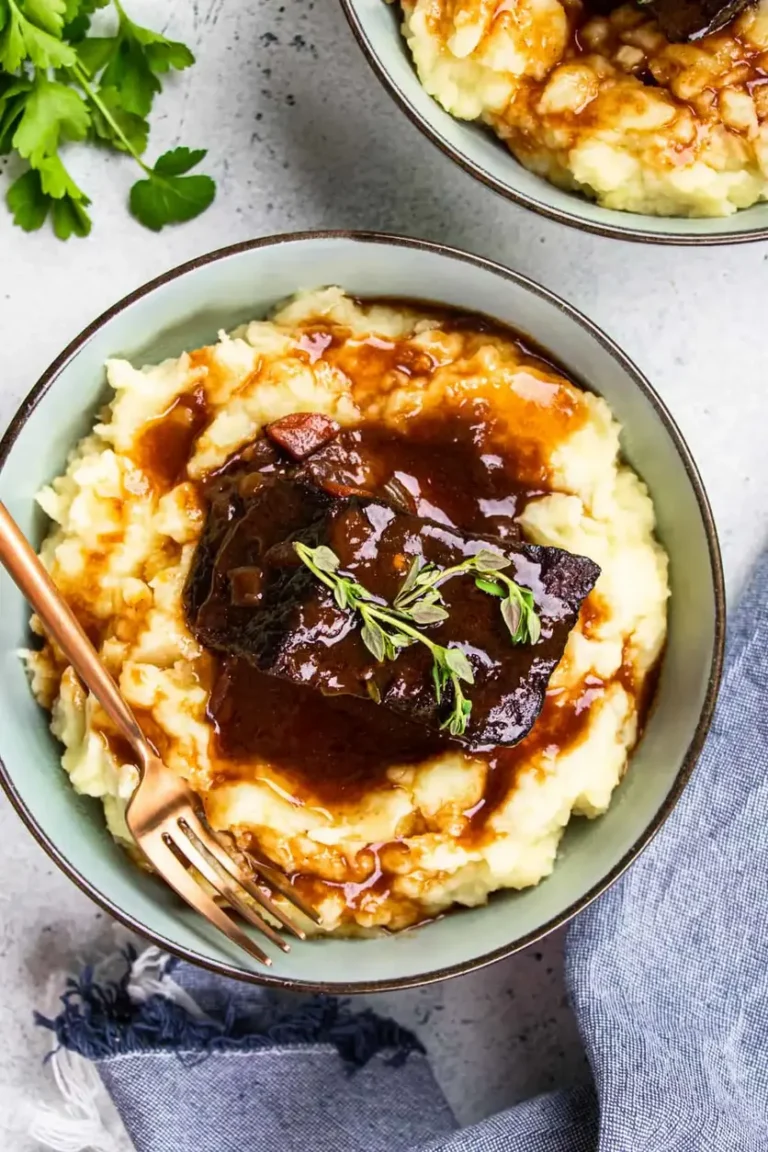
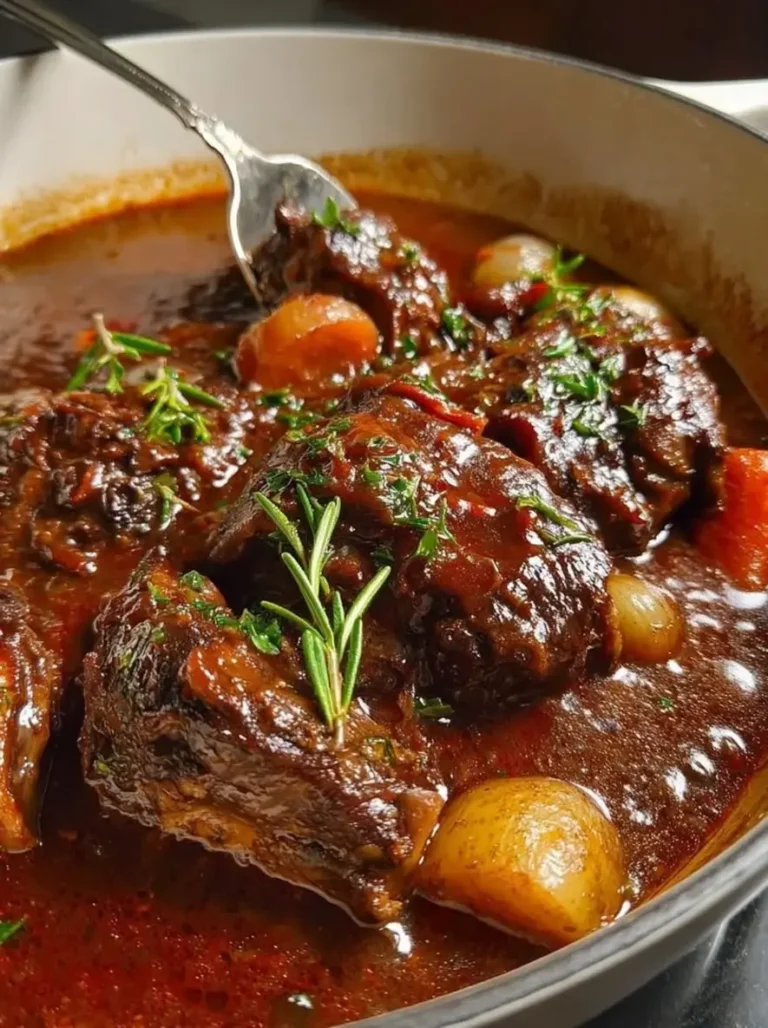
Imagine lifting the lid of your Dutch oven: steam rises to reveal lamb shanks so tender the meat practically melts off the bone, bathed in a deep mahogany sauce that glistens with a hint of balsamic. The carrots and potatoes have soaked up all that winey goodness, and the pearl onions add little bursts of sweetness. That final drizzle of balsamic vinegar — stirred into the reduced cooking liquid — creates a glossy, tangy gravy that ties every bite together. This isn’t just a lamb shanks recipe; it’s a sensory journey from North Africa through Paris to your own dinner table.
I’ve made this dish hundreds of times — first in Paris kitchens, later at my own pop‑up dinners in NYC, and now in my Brooklyn apartment for friends and family. My version is foolproof if you follow a few key steps: searing the shanks deeply, scraping up those brown bits (that’s where all the flavor hides), and not rushing the braise. One common mistake is skipping the balsamic finish — trust me, that sweet‑sour gloss takes the gravy from good to unforgettable. For an even richer sauce, stir in a tablespoon of cold butter right before serving. From my NYC kitchen to yours, this is comfort worth every minute.
Why This Rustic Red Wine–Braised Lamb Shanks Recipe Is the Best
The Flavor Secret: While many recipes stop at wine and stock, I add a generous splash of balsamic vinegar at the very end. That moment of reduction creates a glossy, slightly tangy gravy that balances the richness of the lamb. It’s a trick I learned from a Parisian chef who insisted every braise needs an acidic note — and it works wonders. Plus, the combination of fresh rosemary and thyme (I get mine from the Union Square Greenmarket) infuses the dish with a woodsy, aromatic depth that no dried herb can match.
Perfected Texture: Braising at 350°F for 2 to 2½ hours is the sweet spot — low enough to break down the connective tissue without drying out the meat. I always brown the shanks in batches so they get a deep, caramelized crust, then deglaze the pan with wine to lift every speck of flavor. The result? Lamb that is so tender you can pull it apart with a fork, surrounded by vegetables that are soft but not mushy.
Foolproof & Fast: Don’t be intimidated by the long cook time — the active prep is only 20 minutes. Once everything is in the pot, the oven does the rest. This is the perfect dish for a lazy Sunday or a dinner party where you want to impress without being stuck in the kitchen. I’ve taught this recipe to absolute beginners, and every single one has nailed it on the first try.
Braised Lamb Shanks Ingredients
I pick up my lamb shanks from the butcher at the Chelsea Market — they always have the meatiest cuts. The rest of the ingredients are easy to find at any grocery store. Here’s what you’ll need:
Ingredients List
- 4 lamb shanks (about 1 lb each)
- 2 tablespoons olive oil
- 1 teaspoon salt
- 1 teaspoon black pepper
- 1 large onion, diced
- 4 cloves garlic, minced
- 2 celery stalks, chopped
- 4 medium carrots, cut into chunks
- 3 medium potatoes, peeled and cubed
- 1 cup pearl onions (fresh or frozen)
- 2 tablespoons tomato paste
- 2 cups dry red wine (like Cabernet Sauvignon or Merlot)
- 3 cups beef stock (low sodium)
- 2 sprigs fresh rosemary
- 4 sprigs fresh thyme
- 1 tablespoon balsamic vinegar (for the glossy finish)
- Optional: 1 tablespoon unsalted butter (for extra richness)
Ingredient Spotlight
Lamb Shanks: The shank is the lower leg of the lamb — a tough, muscular cut that becomes incredibly tender when braised. Look for shanks that are meaty and have a good fat cap. If your butcher offers them, ask for hind shanks; they’re slightly larger and more flavorful. A great substitute is lamb shoulder chops, but adjust the cooking time to about 1.5 hours.
Red Wine: Choose a dry red you’d actually drink — something with enough body to stand up to the lamb. Cabernet Sauvignon, Merlot, or a Syrah work beautifully. If you can’t use wine, substitute with additional beef stock plus 2 tablespoons of red wine vinegar for acidity.
Fresh Rosemary & Thyme: Fresh herbs are non‑negotiable here. Dried herbs won’t give you the same vibrant flavor. Look for rosemary sprigs that are pliable and fragrant, and thyme that hasn’t turned brown. If you only have dried, use 1 teaspoon of each, but add them later in the braise so they don’t become bitter.
| Original Ingredient | Best Substitution | Flavor / Texture Impact |
|---|---|---|
| Lamb shanks (4) | Lamb shoulder chops (4, bone-in) | Equally tender, but cook time reduces to ~1.5 hours. Slightly more fatty. |
| Dry red wine (2 cups) | Beef stock (2 cups) + 2 tbsp red wine vinegar | Less complex, but still acidic enough. Gravy may be thinner; reduce a bit longer. |
| Fresh rosemary sprigs (2) | 1 tsp dried rosemary (crumbled) | Milder flavor. Add during last hour of braise to avoid bitterness. |
| Fresh thyme sprigs (4) | 1 tsp dried thyme | Less vibrant. Add with the wine. |
| Pearl onions (1 cup) | 1 cup frozen pearl onions (thawed) or 1 small sweet onion, cut into wedges | Frozen work perfectly. Fresh sweet onion gives larger pieces but same sweetness. |
How to Make Rustic Red Wine–Braised Lamb Shanks — Step-by-Step
Don’t let the long list of steps scare you — most of the time your oven is doing the work. Follow these steps and you’ll have a restaurant‑worthy dish right at home.
Step 1: Preheat and Season
Preheat your oven to 350°F (175°C). While it’s heating, pat the lamb shanks dry with paper towels. Season generously with salt and pepper — about 1 teaspoon each total. Don’t be shy; the seasoning will mellow during the long braise.
💡 Stella’s Pro Tip: Season the shanks at least 20 minutes ahead of time if you can. This lets the salt penetrate the meat for deeper flavor.
Step 2: Sear the Lamb
Heat the olive oil in a large Dutch oven over medium-high heat until shimmering. Working in two batches (so you don’t crowd the pot), brown the lamb shanks on all sides — about 4–5 minutes per side. You’re looking for a deep, dark crust. Remove the shanks to a plate and set aside.
⚠️ Common Mistake to Avoid: If you skip the sear or rush it, you lose tons of flavor. The brown bits (fond) left in the pot are pure gold.
Step 3: Sauté the Aromatics
Reduce the heat to medium. In the same pot, add the diced onion, minced garlic, chopped celery, carrot chunks, cubed potatoes, and pearl onions. Cook, stirring occasionally, until the vegetables start to soften — about 5 minutes. They don’t need to be fully cooked; they’ll finish in the oven.
💡 Stella’s Pro Tip: If the pot looks dry, add a splash of olive oil. The vegetables should be glistening, not sticking.
Step 4: Add Tomato Paste and Deglaze
Stir in the tomato paste and cook for 1 minute — it will darken slightly and concentrate in flavor. Pour in the red wine and beef stock, using a wooden spoon to scrape up all the browned bits from the bottom of the pot. Add the rosemary and thyme sprigs.
⚠️ Common Mistake to Avoid: Not scraping the bottom means all that caramelized goodness stays stuck. Keep scraping until the liquid is smooth.
Step 5: Return Lamb and Braise
Return the lamb shanks to the pot, nestling them into the liquid — it should come about halfway up the shanks. Bring the pot to a simmer on the stovetop. Cover with a tight-fitting lid and transfer to the preheated oven. Braise for 2 to 2½ hours, until the lamb is tender and practically falling off the bone.
💡 Stella’s Pro Tip: Check at the 2‑hour mark. The meat should pull away easily from the bone when poked with a fork. If not, give it another 15–30 minutes.
Step 6: Make the Glossy Balsamic Gravy
Carefully remove the lamb shanks and keep them warm on a platter (tent with foil). Skim off any excess fat from the surface of the cooking liquid using a spoon. Set the pot over medium-high heat and simmer the liquid, uncovered, until it reduces by about half — roughly 10–15 minutes. Taste and adjust seasoning. Stir in a drizzle (about 1 tablespoon) of balsamic vinegar for that glossy, tangy finish. For extra richness, whisk in 1 tablespoon cold butter right before serving.
💡 Stella’s Pro Tip: The balsamic is what makes this gravy unforgettable. Don’t skip it — the vinegar cuts through the richness and adds a beautiful sheen.
| Step | Action | Duration | Key Visual Cue |
|---|---|---|---|
| 1 | Season lamb shanks | 5 minutes | Even coating of salt & pepper |
| 2 | Sear lamb in batches | 8–10 minutes total | Deep mahogany crust |
| 3 | Sauté vegetables | 5 minutes | Vegetables begin to soften |
| 4 | Add tomato paste, deglaze with wine and stock | 2 minutes | Liquid simmers, fond lifts from bottom |
| 5 | Braise in oven (covered) | 2–2½ hours | Meat pulls away from bone |
| 6 | Reduce liquid, add balsamic, finish with butter | 15 minutes | Sauce coats spoon, glossy sheen |
Serving & Presentation
I love serving these lamb shanks family‑style, right in a large shallow bowl or even back in the Dutch oven (makes for a rustic, impressive table). Place one shank per plate, pile the vegetables alongside, and spoon that glossy balsamic gravy over everything. A sprinkle of fresh flaky sea salt and a few extra thyme leaves bring it all together.
For a true Mediterranean‑inspired spread, serve with creamy mashed potatoes (to catch every drop of gravy) or a side of roasted baby potatoes. A simple green salad with lemon vinaigrette cuts the richness beautifully. And don’t forget crusty bread — you’ll want to mop up that sauce.
When I make this for my NYC dinner parties, I often pair it with a bold Zinfandel or a peppery Syrah from my favorite wine shop in the East Village. For non‑alcoholic options, try a sparkling water with a twist of lemon or a pomegranate spritzer.
| Pairing Type | Suggestions | Why It Works |
|---|---|---|
| Side Dish | Mashed potatoes, roasted baby potatoes, couscous | Starchy sides absorb the rich gravy and balance the tender lamb. |
| Sauce / Dip | Extra balsamic gravy, harissa yogurt (if you want a Moroccan twist) | Harissa adds heat that cuts the richness; extra gravy is always welcome. |
| Beverage | Full-bodied red wine (Zinfandel, Syrah), dark beer, pomegranate spritzer | Bold wines stand up to the lamb; spritzer provides a refreshing contrast. |
| Garnish | Fresh thyme leaves, flaky sea salt, chopped parsley | Adds color, flavor, and a fresh finish to a rich dish. |
Make-Ahead, Storage & Reheating
This is one of those dishes that actually tastes better the next day — the flavors meld and deepen overnight. I often make it on a Saturday for a Sunday dinner, or I’ll freeze portions for busy weeknights. Here’s how to store and reheat like a pro:
| Method | Container | Duration | Reheating Tip |
|---|---|---|---|
| Refrigerator | Airtight container (lamb and gravy together) | Up to 4 days | Reheat gently in a covered pot on the stovetop over low heat, adding a splash of stock or water if needed. Or microwave in 1‑minute bursts. |
| Freezer | Freezer-safe zip-top bag or container (remove as much air as possible) | Up to 3 months | Thaw overnight in the refrigerator. Reheat in a covered Dutch oven at 325°F for 30–40 minutes, or until piping hot. |
| Make-Ahead | Same as refrigerator (store cooked and cooled) | Up to 2 days before serving | Prepare the full recipe, then cool completely. Reheat as above — the gravy may need a splash of stock to loosen. |
For the best texture, always reheat the lamb with the gravy — never microwave the meat alone, as it can toughen. If you’re reheating a large batch, the oven method is my go‑to because it warms everything evenly without drying out the lamb.
Variations & Easy Swaps
This recipe is incredibly adaptable. Whether you’re feeling adventurous or need to work around dietary needs, here are three of my favorite twists:
| Variation | Key Change | Best For | Difficulty Impact |
|---|---|---|---|
| Mediterranean Herb Twist | Add 1 tsp dried oregano and 1 tsp dried mint with the herbs; replace potatoes with chickpeas (1 can, drained) | A Greek/North African fusion | No change |
| Gluten-Free / Dairy-Free | Use certified gluten-free stock; skip the butter finish (or use a dairy-free alternative) | Those with gluten or dairy sensitivities | No change |
| Autumn Harvest Variation | Replace potatoes with cubed butternut squash and add 1 cup sliced parsnips | Fall and winter dinners | No change |
Mediterranean Herb Twist
This is my homage to the Moroccan tagines of my childhood. Add a teaspoon each of dried oregano and dried mint along with the fresh herbs. Swap the potatoes for a can of drained chickpeas — they soak up the gravy beautifully and add a nutty flavor. The mint and oregano brighten the dish and make it feel lighter despite the rich sauce. I serve it with a side of warm flatbread for scooping.
Gluten-Free / Dairy-Free
If you need to avoid gluten or dairy, this recipe is already mostly compliant — just be sure your beef stock is certified gluten‑free (many brands are). The butter finish is optional; you can get a glossy gravy by simply reducing the liquid well and stirring in the balsamic. For a dairy‑free richness, try a splash of full‑fat coconut milk at the end (it adds a subtle sweetness that pairs beautifully with the balsamic).
Autumn Harvest Variation
In the fall, I love swapping the potatoes for cubed butternut squash and adding a cup of sliced parsnips. The squash turns creamy as it braises, and the parsnips bring an earthy sweetness. This version is a staple at my Thanksgiving alternative dinner — it’s hearty enough to be the main event. I also add a pinch of cinnamon and cayenne along with the herbs for a warm, spiced note.
What is the best cut of lamb to use for braised lamb shanks to ensure they come out tender?
Lamb shanks are already the best cut for braising — they come from the lower leg, a well‑exercised muscle packed with connective tissue that melts into gelatin during the long, slow cook. That’s what gives you that fork‑tender, fall‑off‑the‑bone texture. For the meatiest results, ask your butcher for hind shanks (they’re larger than front shanks). If you can’t find shanks, lamb shoulder chops or even lamb neck make excellent substitutes, but adjust the cooking time.
Can I substitute the red wine with another liquid in this braised lamb shanks recipe?
Absolutely. If you prefer not to use wine, you can replace the 2 cups of dry red wine with an additional 2 cups of beef stock plus 2 tablespoons of red wine vinegar (or balsamic vinegar) for acidity. The vinegar mimics the wine’s brightness without the alcohol. For a different flavor profile, try pomegranate juice — it will add a fruity sweetness that pairs wonderfully with lamb. Just note that the final gravy may be slightly thinner and less complex, so you might need to reduce it a bit longer.
How long should I braise lamb shanks in the oven for the most fall-off-the-bone texture?
For perfectly tender lamb shanks, braise them in a 350°F (175°C) oven for 2 to 2½ hours. Start checking at the 2‑hour mark: the meat should easily pull away from the bone when poked with a fork. If it still feels tight, give it another 15–20 minutes. The sweet spot is when the meat is just starting to separate but isn’t completely disintegrating — that way it holds its shape but melts in your mouth. Every oven is a little different, so use texture as your guide over exact time.
What root vegetables work best in red wine–braised lamb shanks for flavor and texture?
Classic root vegetables for this braised lamb shanks recipe include carrots, potatoes, and celery — they hold their shape beautifully and absorb the winey gravy. For a sweeter twist, add parsnips, turnips, or celery root. Pearl onions (fresh or frozen) are also fantastic; they add little bursts of sweetness without breaking down. Avoid very starchy vegetables like sweet potatoes (they can get mushy) or beets (they’ll turn the gravy pink). Stick to hearty roots that can handle the long cook time.
Can I make this recipe in a slow cooker or Instant Pot?
Yes! For a slow cooker, follow steps 1–4 on the stovetop (sear the lamb and sauté the vegetables), then transfer everything to the slow cooker. Cook on low for 7–8 hours or on high for 4–5 hours. For an Instant Pot, use the sauté function for searing and deglazing, then pressure cook on high for 45 minutes followed by a natural release (about 15 minutes). In both cases, finish by reducing the gravy on the stovetop and adding the balsamic vinegar. The oven method gives the richest flavor, but the slow cooker and Instant Pot are excellent shortcuts.
How do I know when the lamb shanks are done?
The best test for doneness is tenderness: insert a fork into the thickest part of the shank — if it twists easily and the meat starts to pull away from the bone, it’s ready. Internal temperature should be around 190–200°F (88–93°C) for that fall‑apart texture. Don’t rely solely on time, as oven temperatures and shank sizes vary. If the meat still feels firm, continue braising and check every 15 minutes.
What if my gravy is too thin?
If your gravy hasn’t thickened after reducing, you have a few options. First, simmer it longer — uncovered — until it reaches your desired consistency. If time is short, whisk together 1 tablespoon cornstarch with 2 tablespoons cold water to make a slurry, then stir it into the simmering gravy. It will thicken in about a minute. Alternatively, mash a few of the cooked potatoes from the pot into the gravy; they’ll add body naturally. Remember that the gravy will thicken slightly as it cools, so don’t reduce it too much.
Can I use frozen lamb shanks?
Yes, you can use frozen lamb shanks — just thaw them completely in the refrigerator before cooking (24 hours is usually enough). Pat them dry very thoroughly before seasoning, because excess moisture will prevent a good sear. If you’re in a rush, you can sear them from frozen, but expect a less evenly browned crust and a slightly longer braise (add 30–45 minutes). For best results, plan ahead and thaw first.
What wine is best for braising lamb?
For this red wine lamb shanks recipe, choose a dry red wine with medium to full body — something you’d enjoy drinking. Cabernet Sauvignon, Merlot, Syrah, or a Zinfandel all work beautifully. Avoid “cooking wines” as they contain added salt and preservatives. If you don’t drink wine, a good non‑alcoholic red wine or pomegranate juice can substitute, but adjust sweetness accordingly. The wine’s acidity and tannins help tenderize the meat and deepen the flavor of the gravy.
How do I store leftover lamb shanks?
Store leftover lamb shanks along with the vegetables and gravy in an airtight container in the refrigerator for up to 4 days. The flavors will actually improve overnight. For longer storage, freeze in a freezer‑safe bag or container for up to 3 months — just be sure to remove as much air as possible to prevent freezer burn. When reheating, thaw overnight in the fridge if frozen, then reheat gently on the stovetop or in a 325°F oven until piping hot.
Share Your Version!
I’d love to hear how your rustic lamb shanks turned out — especially if you tried one of the variations or added your own twist! Drop a star rating ⭐ in the comments below, and let me know if the glossy balsamic gravy was as irresistible as I promised. Your feedback helps other home cooks feel confident about making this dish.
Snap a photo of your creation and tag me on Instagram or Pinterest @leosfoods — I’m always inspired by your beautiful plates. And if you have a question about any step, ask away! I read every comment and I’m here to help you nail this recipe on your first try. From my NYC kitchen to yours — I hope this recipe brings as much warmth to your table as it does to mine. — Stella 🧡
Love This Recipe? Save It to Pinterest!
If you enjoyed this Rustic Red Wine–Braised Lamb Shanks recipe, don’t let it get lost in your browser tabs! 😄 Pin it now so you can find it again anytime — and explore hundreds more tried-and-tested recipes waiting for you on my Pinterest boards.
👉 Follow Stella on Pinterest @stellarecipeblog
📌 Pin this recipe · 🔁 Re-pin your favorites · 💬 Tag me when you make it — I love seeing your creations!
Rustic Red Wine–Braised Lamb Shanks with Aromatic Herbs, Root Vegetables, and Glossy Balsamic Gravy
Tender lamb shanks braised in red wine with herbs and root vegetables, finished with a glossy balsamic gravy.
- Total Time: 2 hours 50 minutes
- Yield: 4 servings 1x
Ingredients
- 4 lamb shanks
- 2 tablespoons olive oil
- 1 teaspoon salt
- 1 teaspoon black pepper
- 1 large onion, diced
- 4 cloves garlic, minced
- 2 celery stalks, chopped
- 4 medium carrots, cut into chunks
- 3 medium potatoes, peeled and cubed
- 1 cup pearl onions
- 2 tablespoons tomato paste
- 2 cups dry red wine
- 3 cups beef stock
- 2 sprigs fresh rosemary
- 4 sprigs fresh thyme
Instructions
- Preheat oven to 350°F (175°C).
- Season lamb shanks with salt and pepper.
- Heat olive oil in a large Dutch oven over medium-high heat. Brown lamb shanks on all sides, about 4-5 minutes per side. Remove and set aside.
- In the same pot, add onion, garlic, celery, carrots, potatoes, and pearl onions. Cook until softened, about 5 minutes.
- Stir in tomato paste and cook for 1 minute.
- Pour in red wine and beef stock, scraping up any browned bits from the bottom. Add rosemary and thyme sprigs.
- Return lamb shanks to the pot. Bring to a simmer.
- Cover and transfer to the oven. Braise for 2 to 2.5 hours, until lamb is tender and falling off the bone.
- Remove lamb shanks and keep warm. Skim excess fat from the cooking liquid. Simmer on stovetop until reduced by half. Add a drizzle of balsamic vinegar for a glossy finish.
- Serve lamb shanks with vegetables and gravy.
Notes
For a richer gravy, stir in 1 tablespoon butter before serving.
- Prep Time: 20 minutes
- Cook Time: 2 hours 30 minutes
- Method: Main Course
- Cuisine: Mediterranean
Nutrition
- Calories: 650
- Sugar: 10g
- Fat: 28g
- Carbohydrates: 35g
- Protein: 45g
Tried This Recipe? Leave a Comment!
Did you make this recipe? I’d love to hear how it turned out! Please leave a comment and a rating below. Your feedback helps other home cooks and supports cheerychop.com!
For more delicious inspiration, follow me on Pinterest!