Tender Fall-Off-the-Bone Red Wine Braised Lamb Shanks
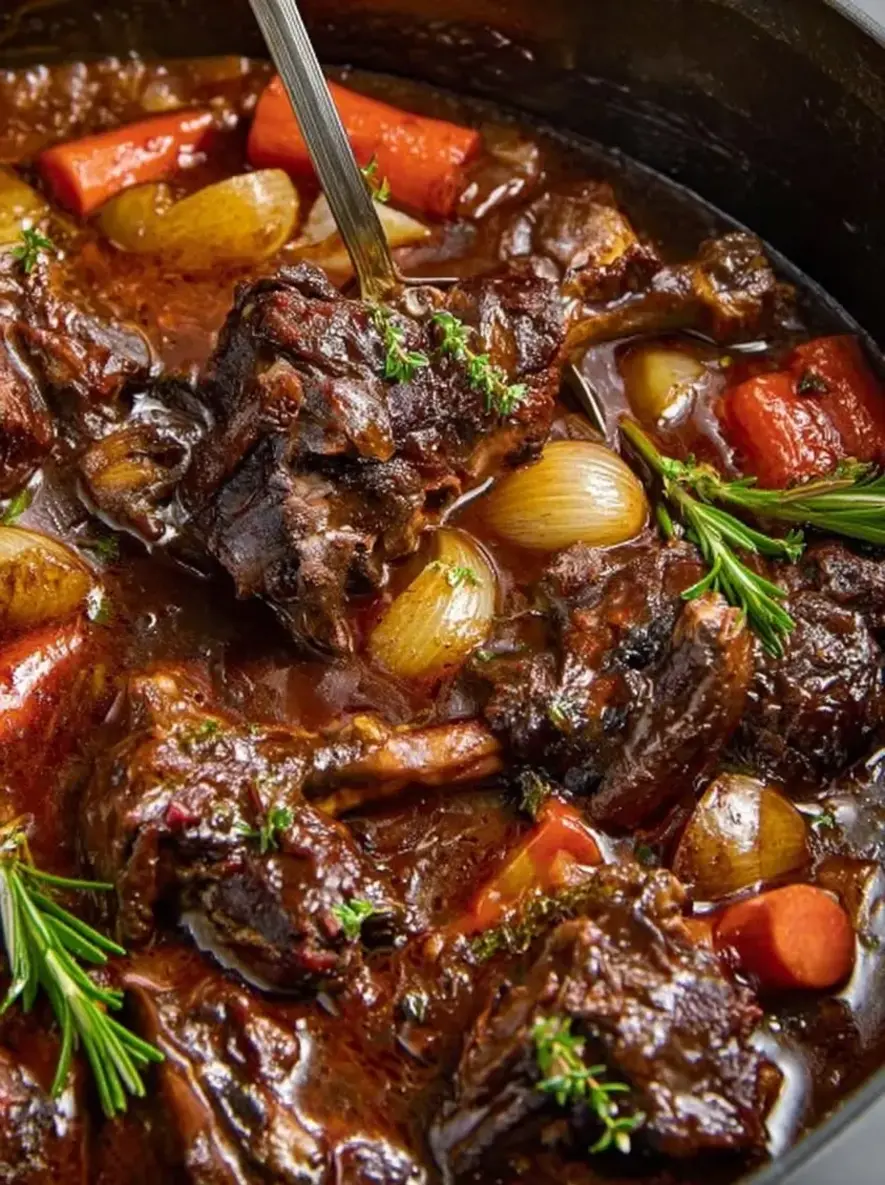
Table of Contents
Fall-Off-the-Bone Red Wine Braised Lamb Shanks with Rosemary, Thyme, and Rustic Root Vegetables
There’s a moment when you open the oven door after three hours of slow braising — the steam hits your face, rich and winey, carrying the scent of rosemary and garlic — and you know dinner is going to be unforgettable. I remember the first time I made red wine braised lamb shanks in my own New York kitchen. I was missing the tagines of my childhood in Morocco, the way my mother would slow-cook meat until it surrendered off the bone. But I brought Paris into the pot too — the precise sear, the careful deglazing — and this braised lamb shanks recipe was born. It’s become my go-to for chilly Sunday suppers, dinner parties, and any evening that calls for deep, layered flavor.
Picture this: a lamb shank so tender you barely need a knife, swimming in a glossy, crimson sauce that tastes of sun-ripened tomatoes, earthy thyme, and the subtle fruitiness of red wine. Each bite is a collision of textures — the creamy potato, the sweet pearl onion, the carrot softened to its very core. The aroma alone, mingling herbs and caramelized root vegetables, will have everyone wandering into the kitchen asking, “What’s for dinner?” It’s the kind of dish that feels both extravagant and comforting, like a slow hug on a cold evening.
What sets my version apart? I swear by a two-step sear: first the lamb shanks, then the vegetables — each in the same pot, building layers of fond. That deep brown crust is the heart of the flavor. Then I braise low and slow in a mix of beef stock and a full-bodied red, letting the collagen break down into silky gelatin. I’ll show you exactly how to nail that fall off the bone lamb shanks texture, plus the one rookie mistake that can make your meat dry instead of succulent. Trust me, once you’ve made this lamb shanks with root vegetables dish your way, you’ll never go back to takeout.
Why This Red Wine Braised Lamb Shanks Recipe Is the Best
The flavor secret is the marriage of French technique and Moroccan soul. In Paris, I learned to sear meat until it’s mahogany-dark, then deglaze with wine to capture every bit of fond. My mother taught me that low heat and patience make meat sing. Here, I combine both: a blistering hot sear on the lamb shanks locks in juices, while a three-hour stay in a 350°F oven coaxes out the natural sweetness of root vegetables. The addition of rosemary and thyme — fresh, not dried — gives the sauce a garden-fresh brightness that cuts through the richness. This isn’t just another braised lamb shanks recipe; it’s the one where every ingredient earns its place.
Texture is everything. I braise the shanks in the oven, not on the stovetop, because the gentle, even heat ensures the meat falls apart without toughening. The key is keeping the liquid at a bare simmer — never a boil. That steady, low-temperature environment dissolves connective tissue into pure, silky tenderness. And the root vegetables? They’re cut into generous chunks so they hold their shape, absorbing the wine and stock without turning to mush. The result: a plate piled with lamb shanks with rosemary and thyme that pull apart with a fork, surrounded by vegetables that are tender but not falling apart.
Foolproof and fast? Well, the hands-on work is just 20 minutes. After that, the oven does everything. Even a beginner can serve this to guests and feel like a pro. I’ll give you visual cues for each step — “sizzling when you add the shanks,” “tomato paste turns brick-red” — so you know exactly what to look for. No guesswork, no dry meat, just a showstopper of a meal that tastes like it took all day. And if you’re short on time, I’ll share my favorite make-ahead tips later.
Red Wine Braised Lamb Shanks Ingredients
I pick up my lamb shanks from the butcher at the Union Square Greenmarket — they always have the meatiest ones. The root vegetables come from the farm stand down the block. And the wine? A good $12 bottle of Cabernet or Merlot; you don’t need expensive stuff, just something you’d enjoy drinking. Here’s everything you need for this red wine braised lamb shanks recipe.
Ingredients List
- 4 lamb shanks (about 1 pound each)
- 2 tablespoons olive oil
- 1 teaspoon salt
- 1 teaspoon black pepper
- 1 large onion, diced
- 4 cloves garlic, minced
- 2 celery stalks, sliced
- 2 cups pearl onions (or frozen, thawed)
- 3 carrots, cut into 2-inch chunks
- 3 medium potatoes (Yukon Gold or Russet), cubed
- 2 tablespoons tomato paste
- 2 cups dry red wine (Cabernet Sauvignon, Merlot, or Syrah)
- 3 cups beef stock (low-sodium preferred)
- Fresh rosemary and thyme sprigs (for garnish, optional)
Ingredient Spotlight
Lamb shanks: Look for shanks that are well-marbled with a good meat-to-bone ratio. The bone adds flavor to the braising liquid, and the fat keeps the meat moist. If lamb shanks are unavailable, beef shanks or oxtail work, but adjust braising time to 2–2.5 hours for beef. Red wine: Use a dry red that you like — avoid “cooking wine” as it’s salty and flat. For a non-alcoholic option, substitute an equal amount of beef stock plus 2 tablespoons balsamic vinegar (adds acidity and depth). Root vegetables: Carrots and potatoes are classic; you can swap in parsnips, turnips, or sweet potatoes. Parsnips add a subtle sweetness; turnips bring a peppery bite. Beef stock: Low-sodium chicken stock works in a pinch, but the sauce will be less robust. For a vegetarian version (impossible here), you’d need a rich mushroom stock.
| Original Ingredient | Best Substitution | Flavor / Texture Impact |
|---|---|---|
| Lamb shanks | Beef shanks or oxtail | Beef is richer, slightly less tender; oxtail adds gelatinous body |
| Dry red wine | Beef stock + 2 tbsp balsamic vinegar | Less complex, but vinegar mimics acidity and depth |
| Carrots & potatoes | Parsnips & turnips | Parsnips are sweeter; turnips are earthier and firmer |
| Beef stock | Chicken stock (low-sodium) | Lighter flavor, still works but sauce will be thinner |
How to Make Red Wine Braised Lamb Shanks — Step-by-Step
This recipe is all about building layers of flavor. Follow these steps and you’ll have restaurant-quality fall off the bone lamb shanks at home.
Step 1: Preheat and Season
Preheat your oven to 350°F (175°C). While it heats, pat the lamb shanks dry with paper towels — moisture is the enemy of a good sear. Season them generously on all sides with salt and pepper. Let them sit for 10 minutes so the seasoning adheres.
💡 Stella’s Pro Tip: For deeper flavor, season the lamb shanks the night before and refrigerate uncovered. The salt penetrates the meat, and the surface dries out, giving you an even better crust.
Step 2: Sear the Lamb Shanks
Heat the olive oil in a large Dutch oven over medium-high heat until it shimmers. Carefully place the lamb shanks in the pot — don’t crowd them; sear in batches if needed. Cook without moving for 4–5 minutes per side, until deeply browned. Use tongs to turn and sear all sides, including the ends. Transfer the shanks to a plate.
⚠️ Common Mistake to Avoid: Don’t rush the sear! If you flip the shanks too early, they’ll stick and tear. The meat should release easily when it’s ready. Also, don’t skip searing the ends — that’s where connective tissue gets a head start on breaking down.
Step 3: Sauté the Vegetables
In the same pot (don’t wipe it clean!), add the diced onion, garlic, celery, pearl onions, carrots, and potatoes. Cook over medium heat, stirring occasionally, for about 5 minutes, until the onion softens and the garlic is fragrant. The vegetables will pick up the browned bits from the bottom.
💡 Stella’s Pro Tip: If the pot looks dry, add a splash of the red wine to loosen the fond while you stir. This is called deglazing mid-sauté — every bit of flavor counts.
Step 4: Add Tomato Paste
Push the vegetables to the sides, drop in the tomato paste, and stir it into the center of the pot. Cook for 1 minute, stirring constantly, until the paste darkens to a rusty brick color. This removes the raw tomato taste and adds umami.
⚠️ Common Mistake to Avoid: Don’t skip the tomato paste step or rush it. Raw tomato paste tastes harsh; cooking it for a full minute transforms it into a sweet, concentrated flavor booster.
Step 5: Deglaze with Wine and Stock
Pour in the red wine and beef stock, using a wooden spoon to scrape up any browned bits from the bottom of the pot. Those bits — called fond — are pure flavor. Bring the liquid to a simmer, letting the wine reduce slightly (about 2 minutes).
Step 6: Return Lamb and Braise
Nestle the lamb shanks back into the pot, submerging them partially in the liquid. They should be about halfway covered. Bring to a gentle simmer, then cover the pot with a tight-fitting lid. Transfer to the preheated oven and braise for 2.5 to 3 hours, until the meat is tender and falling off the bone.
💡 Stella’s Pro Tip: Check the pot at the 2-hour mark. If the liquid has reduced too much (shanks should remain at least a third covered), add a bit more stock or water. Also, turn the shanks once halfway through for even cooking.
Step 7: Finish and Garnish
Carefully remove the pot from the oven (the handle will be hot!). Let it rest, uncovered, for 10 minutes. Taste the sauce and adjust seasoning with salt and pepper. Serve the lamb shanks and vegetables in shallow bowls, spooning the sauce over the top. Garnish with fresh rosemary and thyme sprigs.
| Step | Action | Duration | Key Visual Cue |
|---|---|---|---|
| 1 | Preheat oven & season lamb | 10 mins | Lamb at room temp with salt/pepper coating |
| 2 | Sear lamb shanks | 4–5 mins per side | Deep brown crust all over |
| 3 | Sauté vegetables | 5 mins | Onion translucent, garlic fragrant |
| 4 | Cook tomato paste | 1 min | Turns brick red |
| 5 | Deglaze with wine & stock | 2 mins | Liquid simmers, bottom scraped clean |
| 6 | Braise in oven | 2.5–3 hrs | Meat pulls apart easily, vegetables tender |
Serving & Presentation
I love serving this dish family-style in the Dutch oven itself, right in the center of the table. But for a polished look, place one lamb shank on each plate (use a spatula — they’re delicate) and surround it with a generous scoop of the root vegetables. Spoon the silky sauce over everything, and finish with a sprinkle of fresh rosemary and a few thyme leaves. A piece of crusty bread on the side is non-negotiable; you’ll want to mop up every last drop.
When I’m craving a taste of Paris, I serve this with a simple frisée salad and a glass of the same red wine used in the braise. For a Moroccan twist, I’ll add a side of couscous studded with dried apricots and toasted almonds. Either way, the richness of the lamb and root vegetables sings with a bright, acidic side — try roasted green beans or a lemony arugula salad.
| Pairing Type | Suggestions | Why It Works |
|---|---|---|
| Side Dish | Mashed potatoes, crusty bread, couscous | Soaks up the sauce; adds neutral texture to contrast bold lamb |
| Sauce / Dip | None needed—the braising liquid is the sauce; a drizzle of balsamic glaze optional | Sauce is already rich and complex; balsamic adds tangy sweetness |
| Beverage | Same red wine (Cabernet, Merlot), full-bodied beer (Belgian dubbel), pomegranate juice | Red wine matches the braise; beer’s maltiness complements; pomegranate offers tart contrast |
| Garnish | Fresh rosemary, fresh thyme, chopped parsley, orange zest | Herbs add freshness; orange zest lifts the richness |
Make-Ahead, Storage & Reheating
As a busy New Yorker, I love that this lamb shanks with root vegetables dish tastes even better the next day. I often make it on Sunday, then reheat it for a stress-free Monday dinner. The flavors meld and deepen overnight. Here’s how to store and reheat like a pro.
| Method | Container | Duration | Reheating Tip |
|---|---|---|---|
| Refrigerator | Airtight container or covered Dutch oven | Up to 4 days | Reheat in a 325°F oven for 20–25 mins, or gently on stovetop over low heat, adding a splash of stock if needed |
| Freezer | Freezer-safe container or heavy-duty zip bag | Up to 3 months | Thaw overnight in fridge; reheat as above, or on stovetop over medium-low, covered, for 30–40 mins |
| Make-Ahead | Cool completely then refrigerate in pot | 1–2 days before serving | Skim chilled fat from surface before reheating; the flavor will be even deeper |
One more thing: when reheating, always bring the dish to a gentle simmer, never a boil, or the meat can dry out. If the sauce seems too thick, thin it with a bit of stock or water. And if you’re reheating the vegetables separately, a quick microwave will do, but for the full experience, I always reheat everything together so the flavors meld again.
Variations & Easy Swaps
This braised lamb shanks recipe is a fantastic canvas for creativity. Here are three variations that I often turn to — each one a little different, each one delicious.
| Variation | Key Change | Best For | Difficulty Impact |
|---|---|---|---|
| Moroccan-Spiced | Add 1 tsp cumin, 1 tsp coriander, 1/2 tsp cinnamon with the tomato paste | Warming, exotic twist on classic French | Easy (just add spices) |
| Gluten-Free / Dairy-Free | No changes needed — recipe is naturally gluten-free and dairy-free. Ensure stock is certified gluten-free | Anyone avoiding gluten or dairy | No extra effort |
| Slow Cooker Version | Sear shanks and sauté veggies as directed, then transfer to slow cooker. Add liquids, cook on low 8–10 hours | Set-it-and-forget-it convenience | Same prep, longer cook time |
Moroccan-Spiced Lamb Shanks
This variation takes me straight back to my mother’s kitchen. When you add the tomato paste, stir in 1 teaspoon each of ground cumin and coriander, plus ½ teaspoon cinnamon. The spices toast in the oil for a minute, releasing an intoxicating aroma. The finished dish has a warm, slightly sweet complexity that pairs beautifully with the red wine. Serve with couscous and a sprinkle of preserved lemon — it’s a North African–French fusion that never fails to impress.
Gluten-Free / Dairy-Free Lamb Shanks
The best part? This recipe is naturally gluten-free and dairy-free — no tweaks needed! Just make sure your beef stock is certified gluten-free (some brands add wheat-derived ingredients). For a dairy-free garnish, skip any butter and use a drizzle of olive oil and fresh herbs instead. The sauce itself is rich enough without cream or flour, which makes it perfect for anyone with dietary restrictions.
Slow Cooker Lamb Shanks
When I’m running errands in the city and want dinner ready when I walk in, I turn to my slow cooker. Follow the same searing and sautéing steps in a skillet, then transfer everything — including the deglazed liquid — to the slow cooker. Cook on low for 8–10 hours. The texture is just as tender, though the sauce won’t reduce as much as in the oven. I usually thicken it on the stovetop after cooking: remove the lamb and veggies, simmer the liquid for 10–15 minutes to concentrate it. Works like a charm.
What is the best way to sear lamb shanks to ensure they stay tender during braising?
The best way to sear lamb shanks is to pat them very dry with paper towels, season generously with salt and pepper, and heat oil in a heavy Dutch oven until it shimmers. Sear each shank for 4–5 minutes per side over medium-high heat without moving them, until a deep mahogany crust forms. This crust locks in juices and creates the fond that flavors the entire braising liquid. A common mistake is overcrowding the pot — if the pan is too full, the meat steams instead of searing. Work in batches if needed. Don’t rush the process; the caramelization is the foundation of the dish’s rich taste.
Can I substitute the red wine with something else in a lamb shank braise?
Absolutely. If you prefer not to use alcohol, substitute the red wine with an equal amount of beef stock plus 2 tablespoons of balsamic vinegar or red wine vinegar. The vinegar mimics the acidity and depth that wine provides. For a more complex non-alcoholic option, use a cup of pomegranate juice mixed with 1 cup of beef stock — the pomegranate adds fruity notes that pair beautifully with lamb. You can also use non-alcoholic red wine, though it tends to be sweeter, so reduce any added sugar. Keep in mind that omitting wine will slightly change the flavor, but the dish will still be delicious.
How long should I braise lamb shanks in the oven to make them fall off the bone?
For fall-off-the-bone tenderness, braise lamb shanks in a 350°F (175°C) oven for 2.5 to 3 hours. The exact time depends on the size of the shanks and your oven. Start checking at 2 hours: the meat should be pulling away from the bone and feel very tender when pierced with a fork. If it resists, continue braising, checking every 20 minutes. The key is maintaining a gentle simmer throughout — if the liquid is bubbling vigorously, the meat can become stringy. A tight-fitting lid is essential to retain moisture. This slow, low-heat method dissolves collagen into gelatin, giving you that iconic texture.
What are the best root vegetables to add to red wine braised lamb shanks for maximum flavor?
Carrots, potatoes, and pearl onions are my top picks for this braised lamb shanks recipe. Carrots bring natural sweetness that balances the wine’s acidity. Potatoes (Yukon Gold or Russet) add starchiness, thickening the sauce naturally. Pearl onions offer a mild, sweet pop of flavor and a pleasing texture. You can also add parsnips for an extra layer of earthy sweetness, or turnips for a peppery bite. Avoid vegetables that break down too quickly, like zucchini or eggplant — they’ll turn mushy before the lamb is tender. Cut all vegetables into uniform 2-inch chunks so they cook evenly.
Can I use frozen lamb shanks for this recipe?
Yes, you can use frozen lamb shanks, but it’s best to thaw them completely in the refrigerator for 24–48 hours before cooking. If you try to sear frozen shanks, the exterior will burn before the interior thaws, and you’ll lose the crust and moisture. You can braise from frozen if absolutely necessary: simply increase the braising time by about 45 minutes to an hour, and expect a less flavorful sear. For optimal results, thaw the shanks, pat them dry, season, and then proceed with the recipe. The texture and flavor will be far superior.
What type of red wine is best for braising lamb shanks?
Choose a dry, medium- to full-bodied red wine like Cabernet Sauvignon, Merlot, Syrah, or a Côtes du Rhône. These wines have enough tannins and structure to stand up to the richness of the lamb, and they infuse the sauce with deep fruit and earthy notes. Avoid sweet wines (like port or sweet Riesling) and very tannic young wines (like young Barolo), as they can become bitter during long cooking. A good rule of thumb: use a wine you would happily drink. If you wouldn’t sip it, don’t braise with it. A $10–15 bottle works perfectly.
How do I prevent lamb shanks from drying out during braising?
The most important factors are temperature and liquid level. Braise at a low temperature (350°F) and ensure the liquid comes at least halfway up the lamb shanks. If you’re using a slow cooker, the low setting is best. Always keep the pot covered to trap steam. After the initial sear, never boil the braising liquid — a gentle simmer is all you need. Overcooking can also dry out meat, so begin checking at the 2.5-hour mark. Finally, let the shanks rest in the liquid for 10 minutes after braising; this allows them to reabsorb some moisture before serving.
Can I add more herbs to this lamb shank braise?
Absolutely! While rosemary and thyme are classic, you can add a bay leaf, a few sprigs of parsley, or even a strip of orange zest to the pot during braising. For a more Mediterranean profile, add a teaspoon of dried oregano or marjoram. If you love garlic, throw in a few whole cloves along with the minced garlic. For a fresh finish, stir in a handful of chopped parsley or mint just before serving. Just be careful with strong herbs like sage — use sparingly, as they can dominate the delicate lamb flavor. Fresh herbs are always preferable; add dried herbs early in the cooking process to allow them to rehydrate and infuse.
Should I marinate lamb shanks before braising?
Marinating is optional but highly recommended for deeper flavor. For this red wine braised lamb shanks recipe, you can marinate the shanks overnight in the same red wine you’ll use for braising, plus a few sprigs of rosemary, thyme, and crushed garlic. This not only infuses the meat with flavor but also helps tenderize it slightly. If you’re short on time, a dry brine — salting the shanks and refrigerating uncovered for 2–24 hours — is a simpler alternative that improves both flavor and browning. Either way, pat the shanks dry before searing to ensure a good crust.
How do I thicken the sauce for braised lamb shanks?
There are several ways to thicken the sauce without using flour (which can clump). The easiest is to remove the lamb and vegetables after braising, then simmer the liquid over medium-high heat for 10–15 minutes until it reduces and becomes syrupy. For a thicker, glossier sauce, whisk in 1 tablespoon of softened butter (or use a dairy-free alternative) at the end — this is a classic French technique called monter au beurre. You can also mash a few of the cooked potatoes into the sauce; their starch will thicken it naturally. If you prefer a gluten-free thickener, mix 1 tablespoon cornstarch with 2 tablespoons cold water and stir it into the simmering sauce.
Share Your Version!
I truly believe that the best meals are shared — and I’d love to see how your red wine braised lamb shanks turn out! Did you add a personal twist? Try the Moroccan spice version? Leave a star rating and a comment below; your feedback helps other home cooks discover what works. Snap a photo and tag @leosfoods on Instagram or Pinterest — I reply to every one. And here’s a question for you: What’s the one side dish you always serve with braised lamb? I’m always looking for new ideas!
From my NYC kitchen to yours — I hope this recipe brings as much warmth to your table as it does to mine. — Stella 🧡
Love This Recipe? Save It to Pinterest!
If you enjoyed this Fall-Off-the-Bone Red Wine Braised Lamb Shanks recipe, don’t let it get lost in your browser tabs! 😄 Pin it now so you can find it again anytime — and explore hundreds more tried-and-tested recipes waiting for you on my Pinterest boards.
👉 Follow Stella on Pinterest @stellarecipeblog
📌 Pin this recipe · 🔁 Re-pin your favorites · 💬 Tag me when you make it — I love seeing your creations!
Did you try this recipe? I’d love to hear how it turned out! Drop a comment below, rate the recipe, or tag me on social media. Your feedback keeps me inspired. — Stella 🧡
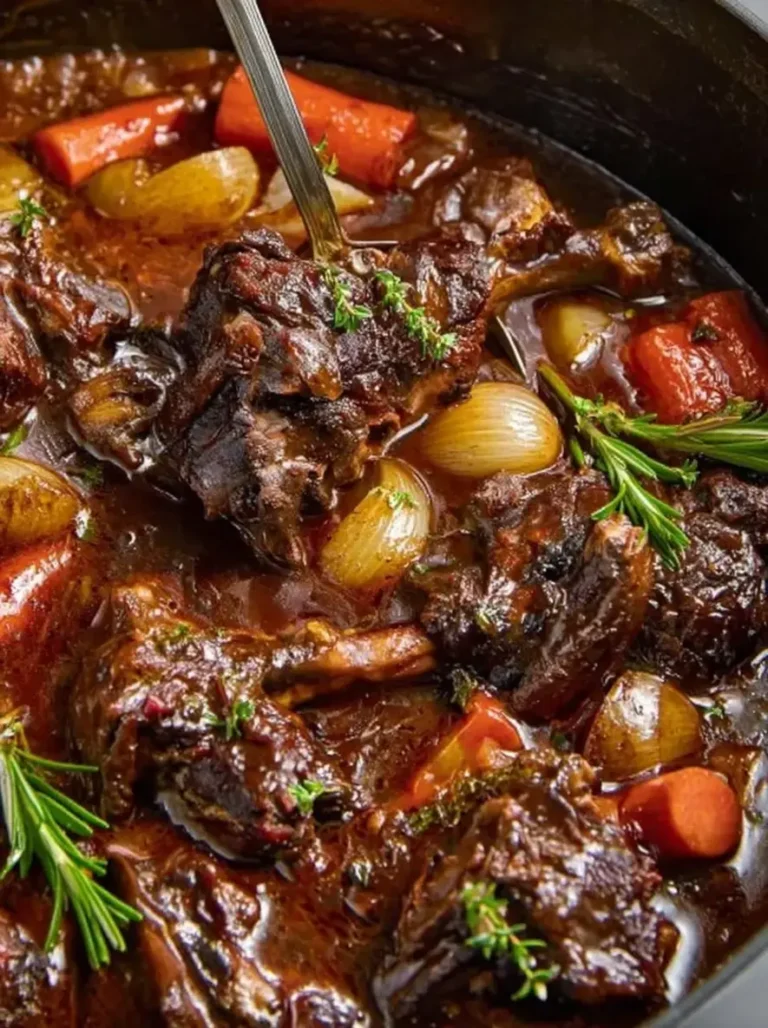
Fall-Off-the-Bone Red Wine Braised Lamb Shanks with Rosemary, Thyme, and Rustic Root Vegetables
Tender and flavorful lamb shanks braised in a rich red wine sauce with aromatic herbs and hearty root vegetables.
- Total Time: 3 hours 20 minutes
- Yield: 4 1x
Ingredients
- 4 lamb shanks
- 2 tablespoons olive oil
- 1 teaspoon salt
- 1 teaspoon black pepper
- 1 large onion, diced
- 4 cloves garlic, minced
- 2 celery stalks, sliced
- 2 cups pearl onions
- 3 carrots, cut into chunks
- 3 medium potatoes, cubed
- 2 tablespoons tomato paste
- 2 cups dry red wine
- 3 cups beef stock
Instructions
- Preheat oven to 350°F (175°C).
- Season lamb shanks with salt and pepper.
- Heat olive oil in a large Dutch oven over medium-high heat. Sear lamb shanks on all sides until browned, about 4-5 minutes per side. Remove and set aside.
- In the same pot, add onion, garlic, celery, pearl onions, carrots, and potatoes. Cook until softened, about 5 minutes.
- Stir in tomato paste and cook for 1 minute.
- Pour in red wine and beef stock, scraping up any browned bits from the bottom.
- Return lamb shanks to the pot. Bring to a simmer.
- Cover and transfer to the oven. Braise for 2.5 to 3 hours, until lamb is tender and falling off the bone.
Notes
For deeper flavor, marinate lamb shanks in red wine and herbs overnight. Garnish with fresh rosemary or thyme before serving.
- Prep Time: 20 minutes
- Cook Time: 3 hours
- Method: Main Course
- Cuisine: French
Nutrition
- Calories: 650
- Sugar: 8g
- Fat: 28g
- Carbohydrates: 25g
- Protein: 45g
Tried This Recipe? Leave a Comment!
Did you make this recipe? I’d love to hear how it turned out! Please leave a comment and a rating below. Your feedback helps other home cooks and supports cheerychop.com!
For more delicious inspiration, follow me on Pinterest!