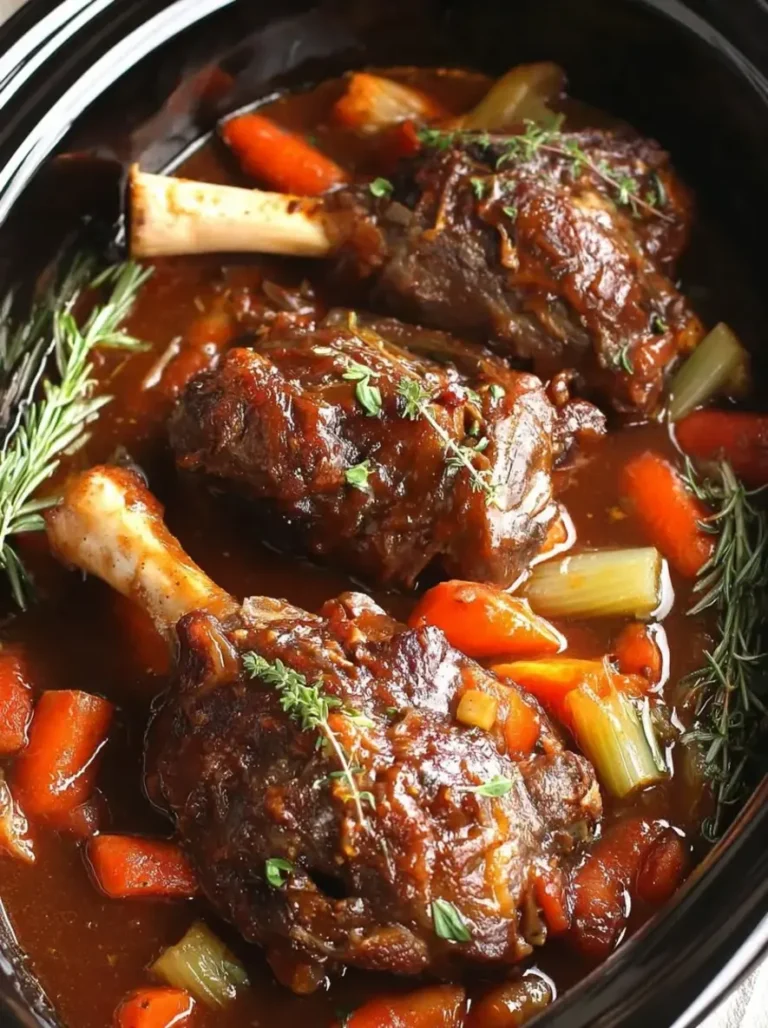
Rustic Rosemary & Cinnamon Braised Lamb Shanks
“`html
Table of Contents
Rustic Rosemary & Cinnamon Braised Lamb Shanks – Aromatic, Tender & Unforgettable
I still remember the first time I braised lamb shanks with cinnamon — I was standing in my mother’s tiny kitchen in Marrakech, the air thick with the scent of rosemary and warm spices, watching her coax tenderness from the toughest cuts of meat with nothing but time, patience, and a few humble ingredients. That dish, deeply browned and fragrant with North African warmth, became the foundation for everything I do in the kitchen today. After training in Paris and settling in New York City, I’ve refined that original recipe into something both rustic and refined — these braised lamb shanks are my love letter to slow cooking. With rosemary, cinnamon, and a silky herb gravy, this dish is the kind of meal that makes a Tuesday night feel like a holiday feast.
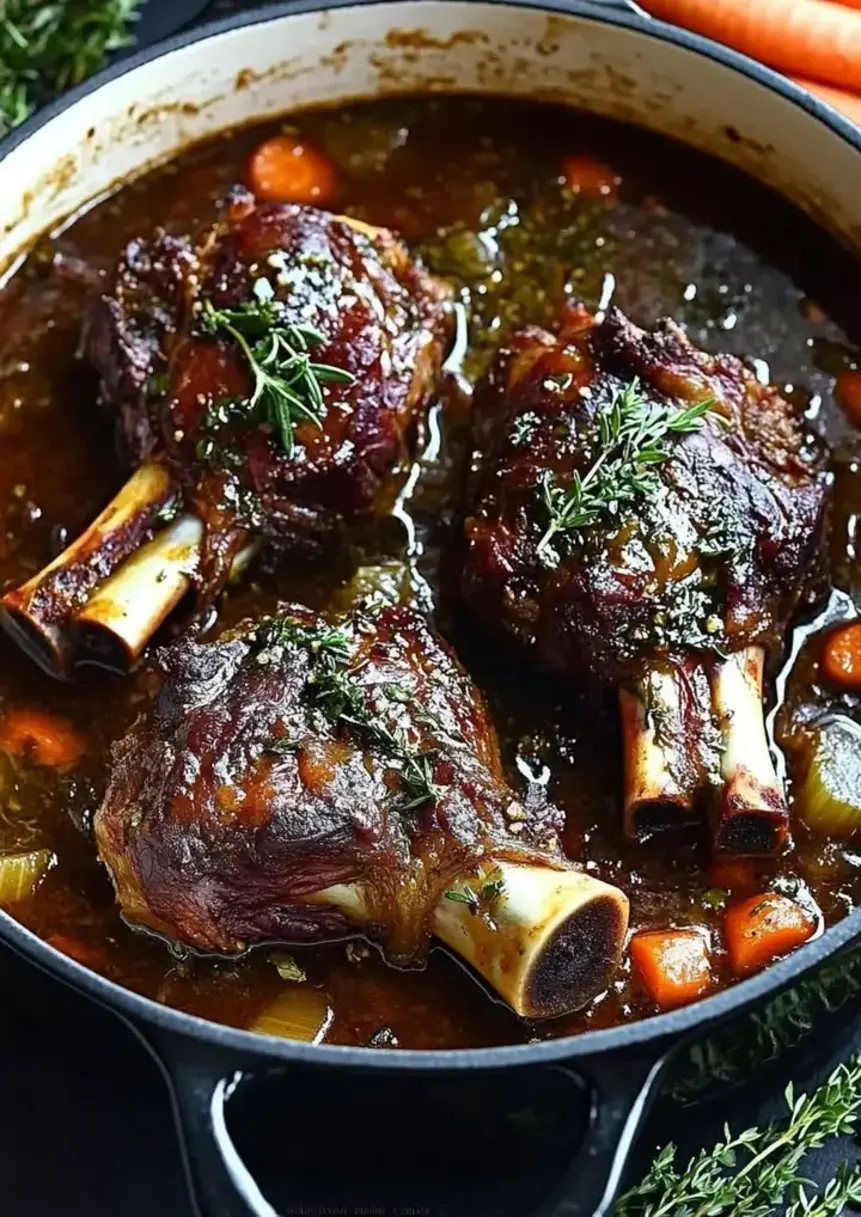
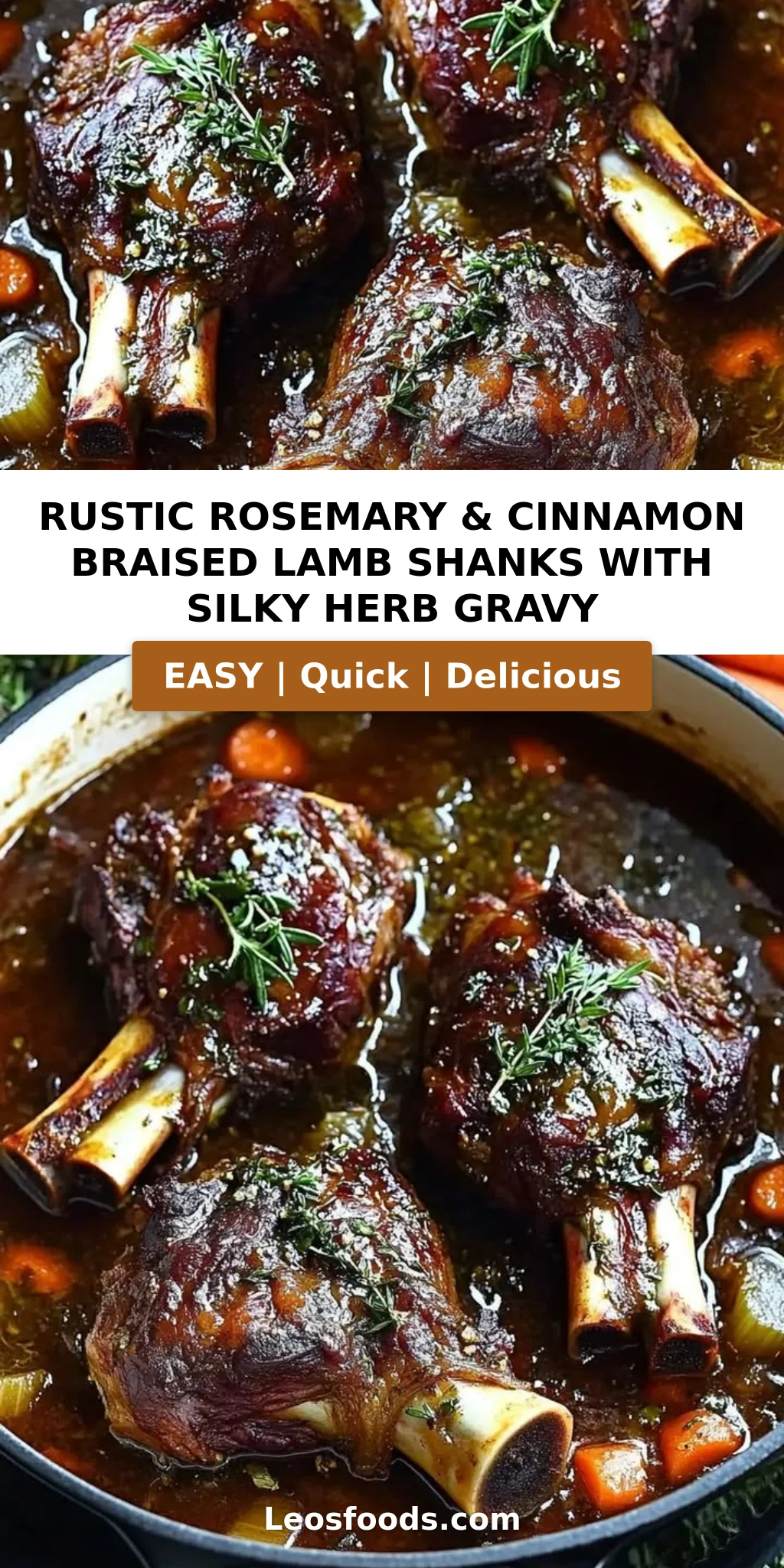
Imagine this: lamb shanks so tender the meat slips from the bone with the gentlest nudge of your fork, swimming in a gravy that’s glossy, herb-flecked, and deeply savory with just a whisper of cinnamon warmth in the background. The rosemary and thyme infuse the braising liquid with piney, earthy fragrance, while the cinnamon sticks add a layer of subtle sweetness that rounds out the acidity of the tomatoes and the richness of the stock. Every spoonful of that silky gravy — thickened with a simple cornstarch slurry — coats the meat like velvet. This is comfort food at its most elegant: rustic enough for a Sunday supper, polished enough to serve at a dinner party.
What makes my version of rustic lamb shank recipe truly special is the technique I developed during my years at Le Cordon Bleu in Paris, combined with the spice wisdom I inherited from my Moroccan mother. The secret lies in searing the shanks until they form a deep mahogany crust, then layering the aromatics in a specific order to build maximum flavor. I’ll show you exactly how to achieve that fall-off-the-bone texture without any fuss, and I’ll share my foolproof method for making a silky, lump-free gravy every single time. The most common mistake home cooks make? Not browning the meat enough — I’ll walk you through exactly what to look for. Let’s get started!
Why This Braised Lamb Shanks Recipe Is the Best
The Flavor Secret: The combination of fresh rosemary and cinnamon sticks is the signature twist that sets this braised lamb shanks recipe apart. While most recipes rely on just herbs, I add two whole cinnamon sticks to the braising liquid — they infuse the meat with a warm, aromatic complexity that doesn’t read as sweet, but rather as depth. This is a technique I borrowed from my mother’s Moroccan tagine cooking, where cinnamon is used in savory dishes with stunning results. The smoked paprika and cumin reinforce that North African soul, while the fresh thyme and garlic keep it rooted in French bistro tradition. It’s a fusion that works beautifully.
Perfected Texture: After years of testing in my NYC kitchen, I’ve dialed in the exact cooking time and temperature for lamb shanks with rosemary to achieve that ideal texture — tender but not falling apart into mush. The key is braising at 350°F (not too high, not too low) for 2.5 to 3 hours, and making sure the liquid comes only halfway up the shanks. This allows the exposed tops to caramelize slightly while the submerged portions become spoon-tender. I also insist on straining the braising liquid for the silkiest possible herb gravy lamb — no stringy bits, just pure, glossy perfection.
Foolproof & Fast to Prep: Despite tasting like it simmered all day under the watchful eye of a trained chef, this recipe is surprisingly forgiving. The active prep time is only 20 minutes, and the oven does the rest. Even if you’ve never braised anything before, my step-by-step instructions with visual cues will guide you to success. I’ve also included tested substitutions for every key ingredient, so you can adapt based on what’s in your pantry. Whether you’re cooking for a holiday table or a cozy weekend dinner, this dish delivers maximum flavor with minimal stress.
Braised Lamb Shanks Ingredients
I source my lamb shanks from the Union Square Greenmarket here in NYC — the pasture-raised ones from a small farm in Pennsylvania have the best flavor and marbling. Back in Morocco, my mother would use goat or lamb from the local souk, and the principle is the same: good-quality meat with a bit of fat makes the best braise. For this recipe, you’ll need a mix of fresh herbs, warm spices, and aromatic vegetables that build layers of flavor. Here’s everything you’ll need.
Ingredients List
- 2 large lamb shanks (or 4 smaller ones) — look for shanks with good marbling
- 1 tablespoon olive oil — use a good extra-virgin for searing
- 1 large bunch fresh rosemary (about 0.75 oz) — about 8–10 sprigs
- 8 garlic cloves, smashed — don’t bother mincing, smashed is perfect here
- 2 cinnamon sticks — preferably Ceylon cinnamon, but cassia works too
- 5 sprigs fresh thyme
- 1 large onion, chopped — yellow or sweet onion both work
- 2 carrots, chopped — about 1 cup
- 3 celery stalks, chopped — about 1 cup
- 1 cup fresh plum tomatoes, chopped — canned fire-roasted tomatoes work in a pinch
- 4 cups chicken stock — low-sodium, so you control the salt
- 1 tablespoon smoked paprika — sweet or hot, depending on preference
- 1 teaspoon ground cumin
- 3 bay leaves — fresh or dried both work
- Salt and freshly ground black pepper — to taste
- 2 tablespoons cornstarch mixed with 2 tablespoons cold water (slurry) — for the silky gravy
Ingredient Spotlight
Lamb Shanks: The hero of the dish. Lamb shanks are a tougher cut from the lower leg, loaded with collagen that breaks down during braising into rich, unctuous gelatin. This gives the gravy body and the meat its signature fall-apart tenderness. Look for shanks that are evenly sized so they cook at the same rate. If frozen, thaw completely in the refrigerator before cooking.
Fresh Rosemary vs. Dried: For this rustic lamb shank recipe, fresh rosemary is strongly preferred because it holds up to long cooking and releases its essential oils slowly. If you need to substitute dried, use only 1½ teaspoons — and add it later in the braise to avoid bitterness. The texture won’t be quite the same, but the flavor will still be lovely.
Cinnamon Sticks: This is my secret weapon. Cinnamon adds a warm, almost floral note that complements the gaminess of lamb beautifully. I use Ceylon cinnamon when I can find it — it’s milder and more complex than cassia. If you only have ground cinnamon, add ½ teaspoon toward the end of cooking, but whole sticks are far better here because they infuse without overpowering.
Smoked Paprika: This spice gives the dish a subtle smokiness that echoes the seared crust on the lamb. I buy mine from a spice shop in Chelsea Market — look for Spanish smoked paprika (pimentón) for the best quality. It’s not the same as regular paprika, so don’t skip it.
Chicken Stock: Use a good-quality low-sodium stock — you want to control the salt level yourself. Homemade is always best, but if you’re using store-bought, look for one without added sugar or MSG. The stock forms the base of your herb gravy lamb, so it matters.
| Original Ingredient | Best Substitution | Flavor / Texture Impact |
|---|---|---|
| Fresh Rosemary (0.75 oz bunch) | 1½ tsp dried rosemary, crushed | Slightly less aromatic; add halfway through braise to avoid bitterness |
| Cinnamon Sticks (2) | ½ tsp ground cinnamon (added late) | Less subtle infusion; can be slightly gritty if not dissolved well |
| Fresh Plum Tomatoes (1 cup) | 1 cup canned fire-roasted crushed tomatoes | Slightly smokier, more acidic; excellent substitute |
| Chicken Stock (4 cups) | Beef stock or bone broth | Richer, deeper flavor; more traditional with lamb |
| Smoked Paprika (1 tbsp) | 1 tbsp sweet paprika + ¼ tsp liquid smoke | Close approximation; slightly less complex but still excellent |
How to Make Rosemary Cinnamon Lamb Shanks — Step-by-Step
Don’t be intimidated by the long cooking time — the hands-on work here is minimal, and the results are spectacular. I’ve broken down every step with visual cues so you know exactly what to look for. Let’s braise!
Step 1: Preheat and Season
Preheat your oven to 350°F (175°C). Meanwhile, pat the lamb shanks dry with paper towels — this is crucial for a good sear. Season them generously on all sides with salt and freshly ground black pepper. Don’t be shy; much of the seasoning will stay in the pan and flavor the gravy.
💡 Stella’s Pro Tip: Season the lamb shanks at least 15 minutes before searing to allow the salt to penetrate the meat. If you have time, season them the night before and refrigerate uncovered — this dry-brines the meat for even deeper flavor.
Step 2: Sear the Lamb Shanks
Heat olive oil in a large Dutch oven over medium-high heat until it shimmers. Carefully place the lamb shanks in the pot — do not crowd them; work in batches if needed. Sear for 4–5 minutes per side, until deeply browned and crusty. The shanks should release easily from the pan when they’re ready; if they stick, give them another minute. Remove to a plate and set aside.
⚠️ Common Mistake to Avoid: Not browning enough! A pale sear means less flavor. Aim for a dark mahogany crust — that browned bits (fond) on the bottom of the pot are pure gold for the gravy.
Step 3: Soften the Aromatics
Reduce the heat to medium. In the same pot, add the chopped onion, carrots, and celery. Cook, stirring occasionally, for about 5 minutes until the vegetables have softened and started to take on a little color. Scrape up any browned bits from the bottom as you stir.
Step 4: Toast the Spices
Add the smashed garlic cloves, fresh rosemary sprigs, fresh thyme, cinnamon sticks, bay leaves, smoked paprika, and ground cumin. Cook for 1 minute, stirring constantly, until the spices are fragrant and the garlic is just starting to soften. This toasting step wakes up the essential oils and makes the flavors bloom.
💡 Stella’s Pro Tip: Keep the rosemary and thyme sprigs whole — they’ll be easy to fish out later when you strain the braising liquid. If you strip the leaves, they’ll float around and make the gravy look muddy.
Step 5: Add Tomatoes
Stir in the chopped fresh plum tomatoes and cook for 2 minutes, allowing them to break down slightly and release their juices. This adds acidity that balances the richness of the lamb.
Step 6: Braise
Return the lamb shanks to the pot, nestling them into the vegetable mixture. Pour in the chicken stock — the liquid should come about halfway up the shanks, not fully submerge them. Bring the liquid to a gentle simmer on the stovetop, then cover the pot with a tight-fitting lid and transfer to the preheated oven.
⚠️ Common Mistake to Avoid: Overcrowding the pot or using too much liquid. The shanks should be partially submerged, not swimming. Too much liquid dilutes the flavor and prevents the exposed tops from caramelizing.
Step 7: Check for Doneness
Braise for 2.5 to 3 hours. After 2.5 hours, check by inserting a fork into the thickest part of the meat — it should slide in with almost no resistance, and the meat should be starting to pull away from the bone. If it’s not quite there, continue cooking, checking every 15 minutes.
Step 8: Strain and Thicken the Gravy
Carefully remove the lamb shanks to a plate and tent loosely with foil to keep warm. Strain the braising liquid through a fine-mesh sieve set over a bowl or large measuring cup, pressing firmly on the solids with the back of a spoon to extract every drop of flavor. Discard the solids. Return the strained liquid to the pot and bring to a simmer over medium heat.
In a small bowl, whisk together 2 tablespoons cornstarch with 2 tablespoons cold water until smooth. Slowly drizzle the slurry into the simmering liquid while whisking constantly. Cook for 1–2 minutes until the gravy thickens to a silky, coat-the-spoon consistency. Season with salt and pepper to taste.
💡 Stella’s Pro Tip: For an even silkier herb gravy lamb, let the strained liquid sit for 5 minutes and skim off any excess fat from the surface before thickening. And always whisk the slurry into simmering — not boiling — liquid to prevent lumps.
Step 9: Serve
Place a lamb shank on each plate or a large platter. Spoon the silky herb gravy generously over the top. Garnish with fresh rosemary sprigs or a sprinkle of fresh thyme leaves if desired. Serve immediately.
| Step | Action | Duration | Key Visual Cue |
|---|---|---|---|
| 1 | Season lamb shanks | 5 minutes | Salt and pepper evenly coating all sides |
| 2 | Sear lamb shanks | 4–5 min per side | Deep mahogany brown crust, fond on pot bottom |
| 3 | Cook vegetables | 5 minutes | Onions translucent, carrots softened |
| 4 | Toast spices and herbs | 1 minute | Fragrant, garlic just softened |
| 5 | Add tomatoes | 2 minutes | Tomatoes breaking down, juices released |
| 6 | Braise in oven | 2.5–3 hours | Meat pulls from bone, fork slides in easily |
| 7 | Strain and thicken gravy | 5 minutes | Gravy coats the back of a spoon, no lumps |
Serving & Presentation
When I serve these lamb shanks with rosemary, I like to create a moment at the table — the aroma alone is enough to make everyone pause and take a deep breath. Place each shank on a warm plate with a generous pool of the silky herb gravy underneath and more spooned over the top. I love to garnish with a small sprig of fresh rosemary and a light sprinkle of flaky sea salt — it adds a pop of color and a final whisper of flavor.
For sides, think about what will soak up that glorious gravy. Creamy mashed potatoes are a classic for a reason — I make mine with a touch of roasted garlic, which echoes the garlic in the braise. Buttered egg noodles or soft polenta are also wonderful. For something lighter, I’ll serve a simple arugula salad with lemon vinaigrette on the side — the peppery greens cut through the richness beautifully. In the winter, I often add roasted carrots with honey and cumin, which ties back to the Moroccan notes in the dish.
When I’m hosting at my apartment in Brooklyn, I bring the Dutch oven straight to the table — it feels communal and cozy, like the dinners my mother used to host in Marrakech. The shanks themselves are stunning, so don’t hide them. Let the deep brown of the meat, the glossy gravy, and the green herbs create a picture-perfect plate.
| Pairing Type | Suggestions | Why It Works |
|---|---|---|
| Side Dish | Creamy mashed potatoes, soft polenta, buttered egg noodles | Soak up the silky herb gravy and balance the richness |
| Sauce / Dip | Extra gravy on the side, mint chutney (for brightness) | Gravy is the star; mint cuts the lamb’s richness |
| Beverage | Full-bodied red wine (Syrah, Grenache, or Côtes du Rhône), Moroccan mint tea | Red wine complements the spices; mint tea echoes the North African heritage |
| Garnish | Fresh rosemary sprigs, flaky sea salt, fresh thyme leaves | Adds color, aroma, and a fresh herbal finish |
Make-Ahead, Storage & Reheating
One of the best things about this rustic lamb shank recipe is that it tastes even better the next day — the flavors meld and deepen overnight. I often make a double batch on Sunday and portion it out for busy weeknights. In my NYC routine, having this in the fridge feels like having a secret weapon against takeout temptation. Here’s exactly how to store and reheat.
| Method | Container | Duration | Reheating Tip |
|---|---|---|---|
| Refrigerator | Airtight container, shanks in gravy | Up to 4 days | Reheat gently in a covered pot on low stove, or in a 325°F oven for 20 min |
| Freezer | Freezer-safe container or zip-top bag, shanks submerged in gravy | Up to 3 months | Thaw overnight in fridge, then reheat low and slow (300°F oven, covered, 30–40 min) |
| Make-Ahead | Complete the recipe, cool, and refrigerate | Up to 3 days in advance | Reheat as above; gravy may need a splash of stock to loosen |
Here’s my best reheating advice: always reheat lamb shanks low and slow, and never in the microwave — the microwave will toughen the meat and break the gravy. I prefer to reheat them in a covered Dutch oven in a 325°F oven for about 20–25 minutes, with an extra splash of stock if the gravy has thickened too much. The meat will stay tender and the gravy will become silky again. If you’re reheating from frozen, thaw completely in the refrigerator overnight first — don’t rush it.
One more tip from my kitchen: the gravy will solidify into a jelly-like consistency when chilled — that’s the collagen from the lamb shanks at work. It’s a sign of a good braise! Don’t be alarmed; it will liquefy beautifully as it heats.
Variations & Easy Swaps
| Variation | Key Change | Best For | Difficulty Impact |
|---|---|---|---|
| Moroccan Spice Blend | Add 1 tsp ras el hanout, swap cumin for coriander | Extra aromatic depth; authentic North African flair | Easy (just add spices) |
| Red Wine Braise | Replace 1 cup stock with dry red wine (Syrah or Côtes du Rhône) | Richer, deeper color; more French bistro vibe | Easy (swap liquid) |
| Dried Fruit Sweetness | Add ½ cup dried apricots or prunes during last 30 min | Sweet-savory contrast; classic Moroccan pairing | Easy (just add fruit) |
Moroccan Spice Blend Variation
If you want to lean even further into the North African roots of this dish, add 1 tablespoon of ras el hanout along with the smoked paprika and cumin. Ras el hanout — which means “head of the shop” in Arabic — is a complex spice blend that typically includes cardamom, nutmeg, allspice, and rose petals. It adds an incredible floral warmth that pairs beautifully with the cinnamon. I buy mine from a spice vendor at the Brooklyn Flea, but you can find good-quality blends online or at specialty markets. This variation makes the dish even more aromatic and unforgettable.
Gluten-Free / Dairy-Free Variation
This recipe is already naturally gluten-free and dairy-free as written — the gravy uses cornstarch (not flour) as a thickener, and there’s no butter or cream involved. Just double-check that your chicken stock is certified gluten-free if you’re serving someone with celiac disease. For a dairy-free garnish, skip any butter-based sides and opt for olive oil mashed potatoes or a simple rice pilaf. The braised lamb shanks themselves are completely safe and delicious for gluten-free and dairy-free diets.
Seasonal Flavor Twist
In the fall and winter, I love adding 2–3 large parsnips or turnips to the braising pot along with the carrots — they absorb the cooking liquid and become sweet and tender. In the spring, I’ll swap the plum tomatoes for 1 cup of crushed San Marzano tomatoes and add a splash of balsamic vinegar at the end for brightness. When summer rolls around and I’m shopping at the Union Square Greenmarket, I use fresh heirloom tomatoes and add a handful of chopped fresh basil right before serving. The recipe is endlessly adaptable to what’s in season — just keep the ratio of liquid to meat the same and you can experiment freely.
What is the best cooking time and temperature for braising lamb shanks until tender?
The ideal temperature for braising lamb shanks is 350°F (175°C), and the cooking time ranges from 2.5 to 3 hours. At this temperature, the collagen in the lamb shanks breaks down steadily into gelatin, giving you that fall-off-the-bone tenderness without drying out the meat. I recommend checking at the 2.5-hour mark — insert a fork into the thickest part of the meat; if it slides in with no resistance and the meat is pulling away from the bone, they’re done. Every oven runs slightly differently, so use visual cues over exact timing. The liquid should be at a gentle simmer, not a rolling boil, throughout the braise.
Can I substitute fresh rosemary with dried rosemary in this braised lamb shank recipe?
Yes, you can substitute dried rosemary for fresh, but you’ll need to adjust the amount and timing. Use 1½ teaspoons of dried rosemary (crushed between your fingers) instead of the 0.75 oz bunch of fresh. The key difference is that dried rosemary is more concentrated and can become bitter if cooked for too long, so I recommend adding it about halfway through the braise rather than at the beginning. The texture will be slightly different — fresh rosemary leaves soften as they cook, while dried remain a bit more brittle — but the flavor will still be lovely. For the best results, stick with fresh if you can find it, as it really shines in this rustic lamb shank recipe.
Should I sear the lamb shanks before braising them for better flavor?
Absolutely — searing the lamb shanks before braising is non-negotiable if you want deep, rich flavor. The browning process, known as the Maillard reaction, creates hundreds of flavor compounds that simply can’t be achieved through braising alone. I sear my shanks in a hot Dutch oven with olive oil for 4–5 minutes per side until they develop a deep mahogany crust. Those browned bits that stick to the bottom of the pot — called fond — are pure flavor gold that will infuse the entire braising liquid. Don’t rush this step; a pale sear means a pale-tasting gravy. If you skip searing, you’ll end up with a noticeably less flavorful dish.
What are the best side dishes to serve with rosemary and cinnamon braised lamb shanks?
The best side dishes are ones that can soak up the silky herb gravy. Creamy mashed potatoes are my top recommendation — I make mine with roasted garlic to echo the garlic in the braise. Soft polenta, buttered egg noodles, or a simple rice pilaf are also excellent choices. For something lighter, try a bright arugula salad with lemon vinaigrette — the peppery greens cut through the richness. In the winter, roasted carrots with honey and cumin make a gorgeous, cohesive plate. And don’t forget crusty bread for wiping the bowl clean! These sides let the lamb shanks with rosemary remain the star of the show.
Can I cook this rustic lamb shank recipe in a slow cooker or Instant Pot?
Yes, you can adapt this recipe for both a slow cooker and an Instant Pot, though the texture will be slightly different. For a slow cooker, sear the lamb shanks in a skillet first, then transfer all ingredients to the slow cooker and cook on low for 7–8 hours or on high for 4–5 hours. The gravy won’t reduce as much, so you’ll want to thicken it with cornstarch slurry at the end. For an Instant Pot, use the sauté function to sear, then pressure cook on high for 45 minutes with a natural release (about 15–20 minutes). The meat will be tender but won’t have the same caramelized top as oven-braising. Both methods work well for busy weeknights.
How do I make the herb gravy silky and lump-free?
The secret to silky, lump-free herb gravy lamb is in the technique. First, strain the braising liquid through a fine-mesh sieve to remove all solids — this gives you a clean base. Then, make a cornstarch slurry by whisking 2 tablespoons of cornstarch with 2 tablespoons of cold water until completely smooth. Bring the strained liquid to a gentle simmer (not a boil), then slowly drizzle in the slurry while whisking constantly. The constant motion prevents lumps from forming. Cook for 1–2 minutes until the gravy thickens to a glossy, coat-the-spoon consistency. If it’s too thick, whisk in a splash of warm stock; if too thin, simmer a minute longer.
Can I use boneless lamb for this braised lamb shanks recipe?
You can use boneless lamb shoulder or leg for this recipe, but the experience will be different. Lamb shanks are unique because the bone adds flavor to the braising liquid and the surrounding meat, and the collagen content is higher than in other cuts. If you use boneless lamb shoulder, cut it into large chunks and reduce the cooking time to about 2–2.5 hours, checking for tenderness earlier. The gravy won’t be as rich because there’s less collagen, so you may want to add a teaspoon of gelatin powder to the stock. The visual presentation will also be different — part of the beauty of this dish is the dramatic bone-in shank.
What wine pairs best with rosemary cinnamon lamb shanks?
This dish calls for a full-bodied red wine with enough structure to stand up to the rich lamb and warm spices. A Syrah or Shiraz is my top pick — its peppery, dark fruit notes complement the rosemary and smoked paprika beautifully. A Côtes du Rhône or a Grenache-based blend from Southern France works wonderfully too, with its soft tannins and hint of garrigue (herbal notes) that echo the thyme and rosemary. If you prefer New World wines, a California Zinfandel or an Argentinian Malbec are excellent choices. Serve the wine at cool room temperature (around 60–65°F) for the best experience.
Can I make this lamb shanks with rosemary recipe ahead of time for a dinner party?
Absolutely — this is one of the best recipes for making ahead, and I often do exactly that for dinner parties. Complete the entire recipe up to the point of serving, then let the lamb shanks cool in the braising liquid. Refrigerate for up to 3 days. The day of your party, remove the solidified fat from the surface, then reheat gently in a 325°F oven for 25–30 minutes. The flavors will be even deeper and more complex than the day you made them. This make-ahead advantage is one of the reasons this rustic lamb shank recipe is so popular for entertaining — you get to enjoy your guests instead of being stuck in the kitchen.
How do I know when the lamb shanks are fully cooked and tender?
The best way to test doneness is with a fork — insert it into the thickest part of the meat (avoiding the bone). If it slides in with little to no resistance and the meat is starting to pull away from the bone, the shanks are ready. Another good test: gently try to twist the bone — if it feels loose, the collagen has broken down sufficiently. Visual cues include the meat shrinking back from the bone ends by about ½ inch, and the surface looking moist and slightly glistening. For lamb shanks with rosemary, the total time is typically 2.5 to 3 hours at 350°F, but every cut of meat is different, so trust your fork over the clock.
Share Your Version!
I absolutely love hearing how these Rustic Rosemary & Cinnamon Braised Lamb Shanks turn out in your kitchen. Did you serve them with mashed potatoes or polenta? Did you add extra cinnamon or try the Moroccan spice blend variation? Leave a star rating and a comment below — your feedback helps other home cooks discover this recipe and gives me ideas for new variations to test.
And if you share a photo on Instagram or Pinterest, please tag @leosfoods so I can see your beautiful creation. I always love seeing that golden-brown crust and silky gravy on your table. Let me know in the comments: what’s one side dish you’re planning to serve with these lamb shanks? I’m always looking for new pairing ideas!
From my NYC kitchen to yours — I hope this recipe brings as much warmth to your table as it does to mine. — Stella 🧡
⭐️ Loved this recipe? Leave a 5-star rating and share your thoughts below! ⭐️
Tag @leosfoods on Instagram or Pinterest and show me your beautiful braised lamb shanks!
Love This Recipe? Save It to Pinterest!
If you enjoyed this Rustic Rosemary & Cinnamon Braised Lamb Shanks recipe, don’t let it get lost in your browser tabs! 😄 Pin it now so you can find it again anytime — and explore hundreds more tried-and-tested recipes waiting for you on my Pinterest boards.
👉 Follow Stella on Pinterest @stellarecipeblog
📌 Pin this recipe · 🔁 Re-pin your favorites · 💬 Tag me when you make it — I love seeing your creations!
“`
Print
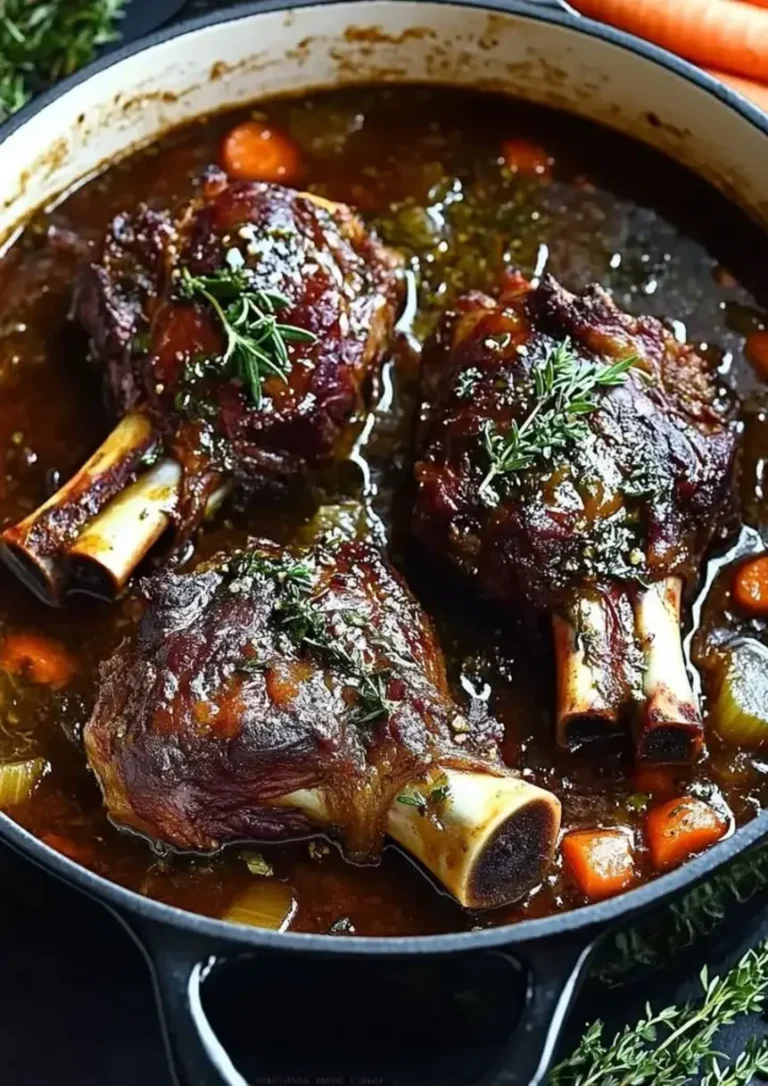
Rustic Rosemary & Cinnamon Braised Lamb Shanks with Silky Herb Gravy
Tender, fall-off-the-bone lamb shanks braised with aromatic rosemary, cinnamon, and garlic, finished with a silky herb-infused gravy. A rustic and comforting dish perfect for special occasions.
- Total Time: 3 hours 20 minutes
- Yield: 4 1x
Ingredients
- For the Lamb Shanks:
- 2 large lamb shanks (or 4 smaller ones)
- 1 tablespoon olive oil
- 1 large bunch fresh rosemary (about 0.75 oz)
- 8 garlic cloves, smashed
- 2 cinnamon sticks
- 5 sprigs fresh thyme
- 1 large onion, chopped
- 2 carrots, chopped
- 3 celery stalks, chopped
- 1 cup fresh plum tomatoes, chopped
- 4 cups chicken stock
- 1 tablespoon smoked paprika
- 1 teaspoon ground cumin
- 3 bay leaves
Instructions
- Preheat oven to 350°F (175°C).
- Season lamb shanks generously with salt and pepper.
- Heat olive oil in a large Dutch oven over medium-high heat. Sear lamb shanks on all sides until deeply browned, about 4-5 minutes per side. Remove and set aside.
- In the same pot, add onion, carrots, and celery. Cook until softened, about 5 minutes.
- Add garlic, rosemary, thyme, cinnamon sticks, bay leaves, smoked paprika, and cumin. Cook for 1 minute until fragrant.
- Stir in chopped tomatoes and cook for 2 minutes.
- Return lamb shanks to the pot. Pour in chicken stock, ensuring liquid comes about halfway up the shanks.
- Bring to a simmer, cover, and transfer to the oven. Braise for 2.5 to 3 hours, until meat is very tender and nearly falling off the bone.
- Remove lamb shanks to a plate and tent with foil. Strain braising liquid through a fine-mesh sieve, pressing on solids to extract all juices. Discard solids.
- Return liquid to the pot and bring to a simmer. Whisk in 2 tablespoons of cornstarch mixed with 2 tablespoons cold water (slurry) to thicken into a silky gravy. Adjust salt and pepper.
- Serve lamb shanks with gravy spooned over the top.
Notes
For the silkiest gravy, strain the braising liquid and whisk in a slurry of cornstarch and cold water. Leftovers are even better the next day.
- Prep Time: 20 minutes
- Cook Time: 3 hours
- Method: Main Course
- Cuisine: Mediterranean
Nutrition
- Calories: 650
- Sugar: 6
- Fat: 38
- Carbohydrates: 12
- Protein: 55
Tried This Recipe? Leave a Comment!
Did you make this recipe? I’d love to hear how it turned out! Please leave a comment and a rating below. Your feedback helps other home cooks and supports cheerychop.com!
For more delicious inspiration, follow me on Pinterest!