Homestyle Braised Beef Stew with Rich Savory Gravy
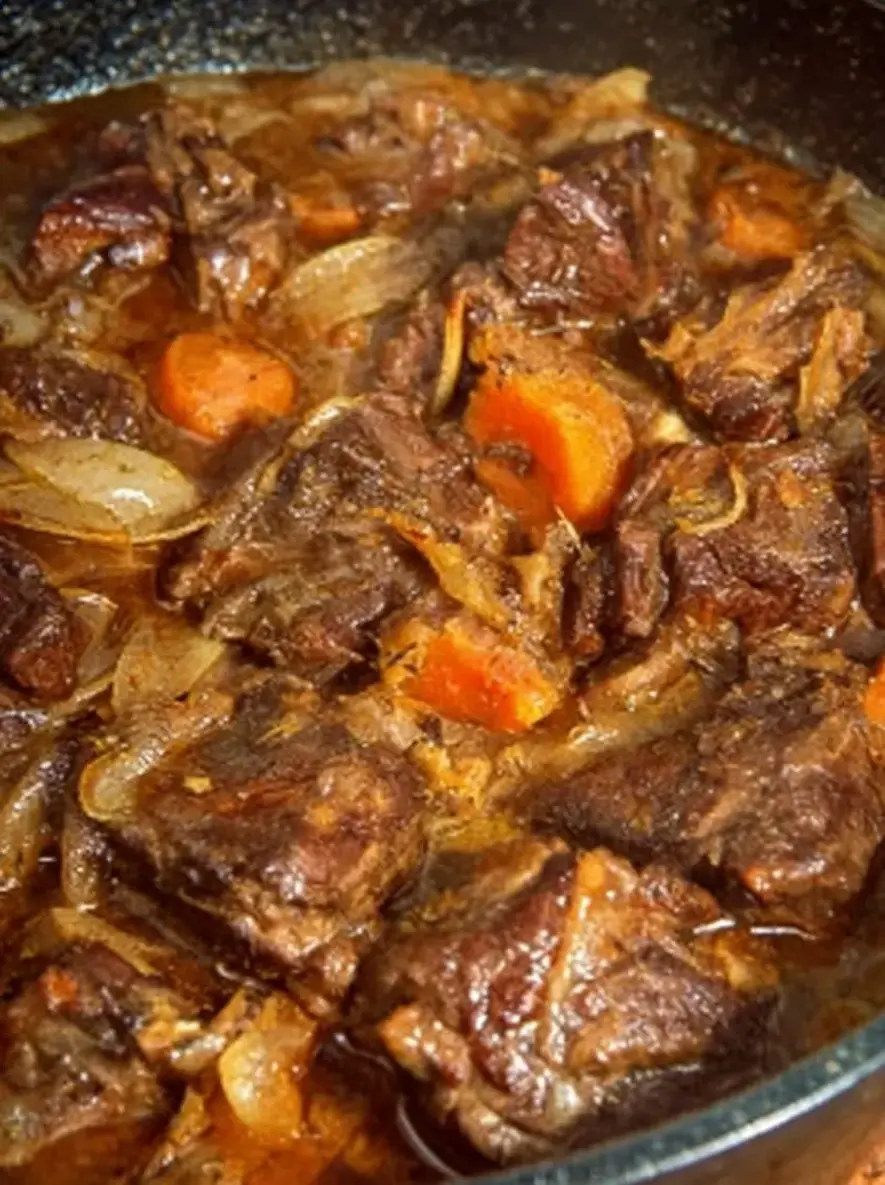
Table of Contents
Rustic Homestyle Braised Beef Stew with Garden Vegetables and Rich Savory Gravy – A Hearty Bowl of Comfort from My NYC Kitchen
As the autumn chill settles over New York City, I find myself craving the kind of meal that fills the whole apartment with an aroma so deep and welcoming it practically wraps around you like a favorite wool sweater. This rustic beef stew recipe is exactly that dish — a homestyle braised beef stew that I’ve been perfecting since my days training in Paris, with roots that go all the way back to my mother’s kitchen in Morocco. She taught me that the best stews aren’t rushed; they’re built layer by layer, with patience and a generous hand. The secret? A rich savory beef stew gravy that starts with properly seared meat and a splash of red wine, then simmers low and slow until every spoonful tastes like pure gold. This easy beef stew recipe brings together garden vegetables at their peak, tender beef, and a broth that’s silky, fragrant, and deeply satisfying.
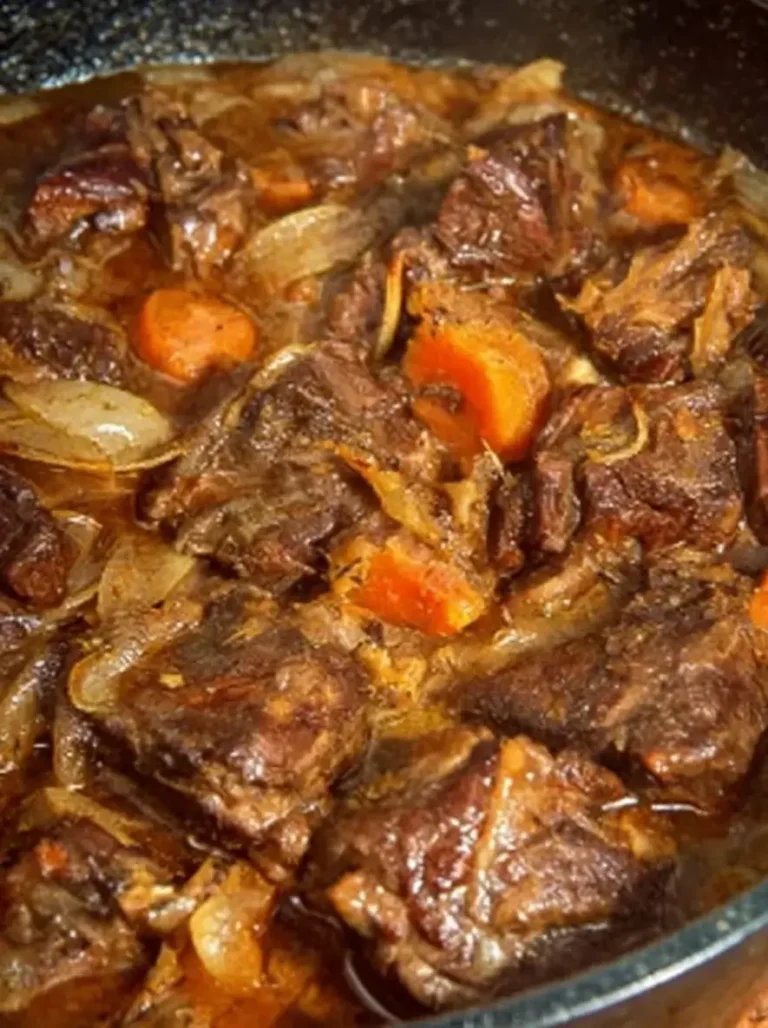
I want you to picture this: chunks of beef chuck that have been braised until they surrender into buttery tenderness, each one coated in a glossy, savory gravy that clings like velvet. Carrots and potatoes — humble garden vegetables — have absorbed all the flavor from the broth, becoming sweet and soft without turning to mush. A single whiff tells you that thyme, bay leaves, and a whisper of garlic have been working their magic for hours. The color is a deep, rich mahogany, the texture is hearty but not heavy, and every bite leaves you reaching for another piece of crusty bread to soak up every last drop. This isn’t just beef stew with garden vegetables — it’s a bowl of pure, unpretentious comfort that tastes like home, no matter where you’re from.
What makes this savory beef stew gravy so special is a technique I learned at Le Cordon Bleu: the art of building flavor through browning and deglazing. I’ll show you exactly how to get that deep, caramelized crust on your beef, how to let the tomato paste toast until it darkens and sweetens, and how a slurry of flour and water can transform your broth into a gravy that’s restaurant-worthy without any fancy equipment. I’ll also share a common mistake home cooks make that turns a good stew into a watery one — and how to avoid it every time. Whether you’re a seasoned home cook or trying an easy beef stew recipe for the first time, I promise this rustic beef stew recipe will earn a permanent spot in your dinner rotation.
Why This Rustic Beef Stew Recipe Is the Best
The Flavor Secret — My version of this homestyle braised beef stew draws on two culinary worlds. From my Moroccan upbringing, I learned to layer spices with restraint — a pinch of something warm, a bay leaf, a long, slow simmer that coaxes sweetness from onions and carrots. From my French training, I brought back the discipline of a proper mirepoix and the technique of deglazing with red wine. Together, they create a savory beef stew gravy that’s complex, never one-note, and deeply satisfying.
Perfected Texture — The trick to beef stew with garden vegetables that are tender but intact is timing. I add the carrots and potatoes later in the cooking process, after the beef has already begun to soften. This way, the vegetables cook long enough to absorb all that richness but not so long that they disintegrate. Every forkful gives you a perfect contrast: melt-in-your-mouth beef, hearty potatoes, and carrots with just a little bite left.
Foolproof & Fast — Despite its deep flavor, this easy beef stew recipe is surprisingly forgiving. You don’t need a slow cooker or a pressure cooker — just a heavy pot, a stove, and about two and a half hours. I’ve tested this recipe for busy weeknights and lazy weekends alike, and it works every time. The ingredients are simple and available at any grocery store, and the steps are designed to build confidence, even if you’ve never braised beef before.
Rustic Beef Stew Recipe Ingredients
Every Saturday morning, I walk to the Union Square Greenmarket and let the season guide me. In fall, that means the most beautiful carrots, onions, and potatoes you’ve ever seen — dusty with earth, full of flavor. For the beef, I head to my butcher in Chelsea Market, who knows me by name and always saves me a well-marbled chuck roast. And the red wine? A bottle I brought back from a small vineyard in Burgundy, though any dry red you enjoy drinking will work beautifully. Here’s everything you’ll need for this rustic beef stew recipe.
Ingredients List
- 2 1/2 lbs beef chuck roast, cut into large cubes
- 3 tablespoons olive oil
- 1 large onion, chopped
- 4 cloves garlic, minced
- 4 carrots, peeled and sliced
- 3 large potatoes, peeled and cubed
- 2 tablespoons tomato paste
- 3 cups beef broth
- 1 cup red wine or extra beef broth
- 1 teaspoon dried thyme
- 2 bay leaves
- Salt and black pepper to taste
- 2 tablespoons all-purpose flour (optional, for thickening)
Ingredient Spotlight
Beef Chuck Roast — This is the gold standard for a homestyle braised beef stew. Chuck comes from the shoulder, which means it has plenty of connective tissue and marbling. As it braises, that collagen breaks down into gelatin, giving you meat that’s impossibly tender and a broth that’s naturally silky. Look for cubes that are about 1 1/2 to 2 inches — too small and they’ll dry out, too large and they won’t cook through evenly. If you can’t find chuck, brisket or bottom round will work, but expect a slightly leaner result.
Red Wine — One cup of dry red wine adds acidity and fruitiness that balances the richness of the beef. I use a Côtes du Rhône or a Pinot Noir — something you’d be happy to drink but don’t need to splurge on. The alcohol cooks off, leaving behind complexity. If you prefer not to cook with wine, substitute an additional cup of beef broth plus a tablespoon of balsamic vinegar for that same depth.
Tomato Paste — Just two tablespoons of tomato paste concentrate a tremendous amount of umami into this stew. I love to cook it in the pot for a minute or two after the onions and garlic, until it darkens and starts to stick to the bottom. That caramelization is pure flavor. If you have a tube of tomato paste, it’s even easier — just squeeze and go.
Garden Vegetables — Carrots and potatoes are the classic duo for beef stew with garden vegetables, and for good reason. Carrots bring sweetness that balances the savory broth, and potatoes add heartiness and help thicken the stew naturally. In the summer, I swap in zucchini and bell peppers; in winter, parsnips and turnips are lovely. Just keep the total volume about the same: roughly 4 cups of vegetables total.
| Original Ingredient | Best Substitution | Flavor / Texture Impact |
|---|---|---|
| Beef Chuck Roast | Brisket or Bottom Round | Slightly leaner, still tender; add 1 tbsp oil if using bottom round |
| Red Wine | Extra beef broth + 1 tbsp balsamic vinegar | Slightly less complex but still rich; vinegar adds needed acid |
| Potatoes | Parsnips or Turnips | More earthy, less starchy; parsnips add subtle sweetness |
| Carrots | Celery Root or Parsnips | Less sweetness, more earthy; celery root adds a subtle herbal note |
How to Make Rustic Homestyle Braised Beef Stew — Step-by-Step
Trust me on this: the process is easier than you think, and the result will make you feel like a professional cook. Let’s walk through each step of this easy beef stew recipe together.
Step 1: Sear the Beef
Heat the olive oil in a large pot or Dutch oven over medium-high heat. Pat the beef cubes dry with paper towels — this is crucial for browning. Working in batches so you don’t crowd the pot, add the beef and sear on all sides until deeply browned, about 3–4 minutes per side. Remove the beef to a plate and set aside. ⚠️ Common Mistake to Avoid: Crowding the pan. If you add too much beef at once, it will steam instead of sear, and you’ll miss out on that deep, meaty flavor. Take your time and do it in batches.
Step 2: Sauté the Aromatics
In the same pot, add the chopped onion and minced garlic. Sauté over medium heat until softened and fragrant, about 3 minutes. The onion should turn translucent but not brown — you want sweetness, not bitterness. Stir in the tomato paste and cook for another minute, letting it darken slightly. 💡 Stella’s Pro Tip: Let the tomato paste cook until it starts to stick to the bottom of the pot — that caramelized layer is pure umami and will deepen the flavor of your savory beef stew gravy.
Step 3: Build the Broth
Return the seared beef to the pot along with any accumulated juices. Add the beef broth, red wine (or extra broth), dried thyme, bay leaves, a generous pinch of salt, and a few grinds of black pepper. Bring everything to a boil, then immediately reduce the heat to low, cover, and let it simmer gently for 1.5 hours. Stir occasionally to make sure nothing is sticking. ⚠️ Common Mistake to Avoid: A vigorous boil will toughen the meat and cloud the broth. Keep it at a gentle simmer — just a few lazy bubbles breaking the surface.
Step 4: Add the Vegetables
After 1.5 hours, the beef should be starting to get tender but not yet fall-apart. Add the sliced carrots and cubed potatoes to the pot. Stir them in gently, then continue to simmer uncovered for 30–40 minutes, until the vegetables are tender and the broth has reduced slightly. 💡 Stella’s Pro Tip: Cutting the potatoes and carrots into similar-sized pieces — about 1-inch cubes — ensures they cook evenly. I like to leave the potato skins on for extra texture and rustic charm.
Step 5: Thicken the Gravy (Optional)
If you prefer a thicker gravy, whisk 2 tablespoons of all-purpose flour with 2 tablespoons of cold water until smooth. Stir this slurry into the stew and cook for 5 more minutes, stirring gently. The broth will thicken to a glossy, coat-the-back-of-a-spoon consistency. ⚠️ Common Mistake to Avoid: Adding the flour directly to the hot liquid will create lumps. Always mix it with cold water first to make a smooth slurry.
Step 6: Finish and Serve
Remove the bay leaves. Taste the stew and adjust the seasoning with more salt and pepper if needed. Ladle the stew into warm bowls, making sure each serving gets a good mix of beef, vegetables, and plenty of that rich savory beef stew gravy. Serve hot, with crusty bread or over egg noodles. 💡 Stella’s Pro Tip: Stew always tastes better the next day. If you have time, let it cool completely, refrigerate overnight, and reheat gently — the flavors meld and deepen beautifully.
| Step | Action | Duration | Key Visual Cue |
|---|---|---|---|
| 1 | Sear beef in batches | ~12 mins total | Deep mahogany crust on all sides |
| 2 | Sauté onion, garlic, tomato paste | ~4 mins | Onion translucent, paste darkened |
| 3 | Add liquids and simmer covered | 1.5 hours | Gently bubbling, meat starting to tenderize |
| 4 | Add vegetables, simmer uncovered | 30–40 mins | Vegetables fork-tender, broth reduced |
| 5 | Thicken with slurry (optional) | 5 mins | Broth coats the back of a spoon |
Serving & Presentation
When I serve this homestyle braised beef stew at my table in Brooklyn, I like to keep things warm and inviting. Ladle the stew into wide, shallow bowls so the rich savory beef stew gravy has room to pool around the meat and vegetables. A sprinkle of fresh parsley on top adds a pop of green and a whisper of freshness that cuts through the richness. If I’m feeling extra indulgent, I’ll grate a little Parmesan over the top — yes, it’s untraditional, but the nutty saltiness is incredible with the braised beef.
For side dishes, I reach for something that can soak up every drop of that gravy. A crusty sourdough or a warm baguette is my go-to — tear it, drag it through the broth, and enjoy. Sometimes I serve this beef stew with garden vegetables over a bed of creamy mashed potatoes or wide egg noodles for a heartier meal. On the weekends, I’ll pour a glass of the same red wine I used in the stew and call it dinner. It’s the kind of meal that makes you want to linger at the table long after the plates are clean.
| Pairing Type | Suggestions | Why It Works |
|---|---|---|
| Side Dish | Crusty bread, mashed potatoes, egg noodles | Absorbs the rich savory gravy; adds comforting starch |
| Sauce / Dip | Horseradish cream, gremolata | Horseradish adds heat; gremolata adds freshness and brightness |
| Beverage | Red wine (Côtes du Rhône, Pinot Noir), dark beer, apple cider | Wine echoes the stew’s depth; cider adds a sweet-tart contrast |
| Garnish | Fresh parsley, grated Parmesan, cracked black pepper | Parsley adds color and freshness; Parmesan adds umami |
Make-Ahead, Storage & Reheating
As a busy cook in New York City, I live by the make-ahead philosophy. This rustic beef stew recipe is one of the best candidates for meal prep — it actually improves after a day in the fridge. I often make a double batch on Sunday and enjoy it throughout the week. Here’s exactly how to store and reheat it so every bowl tastes as good as the first.
| Method | Container | Duration | Reheating Tip |
|---|---|---|---|
| Refrigerator | Airtight container | Up to 5 days | Reheat gently on stovetop over low heat, adding a splash of broth if needed |
| Freezer | Freezer-safe container or zip-top bag | Up to 3 months | Thaw overnight in fridge, then reheat on stovetop; gravy may need a quick whisk |
| Make-Ahead | Prepped in pot, cooled, then refrigerated | Up to 2 days in advance | Complete all steps, cool, refrigerate; reheat and add fresh herbs before serving |
One thing I’ve learned from years of batch cooking: the potatoes will absorb some liquid as the stew sits, so when you reheat it, you may want to add a splash of beef broth or water to loosen the gravy. Don’t worry — the flavor will still be incredible. In fact, I often think the stew tastes even better on day two or three, after the flavors have had time to get to know each other. If you’re freezing the stew, consider leaving the potatoes out and adding fresh ones when you reheat — they’ll have a better texture after thawing.
Variations & Easy Swaps
| Variation | Key Change | Best For | Difficulty Impact |
|---|---|---|---|
| Moroccan Spiced Beef Stew | Add 1 tsp cumin, 1/2 tsp cinnamon, pinch of saffron | Warm, exotic flavor; special occasion | Same effort |
| Gluten-Free Version | Skip the flour slurry; use cornstarch or potato starch instead | Gluten-free diets | Same effort |
| Slow Cooker Version | Sear beef first, then transfer all to slow cooker; cook on low 6–8 hrs | Set-it-and-forget-it convenience | Even easier |
Moroccan Spiced Beef Stew
This variation is close to my heart — it’s the version my mother made in her kitchen in Marrakech. Add 1 teaspoon of ground cumin, 1/2 teaspoon of cinnamon, and a pinch of saffron threads along with the thyme and bay leaves. The cumin adds an earthy warmth, the cinnamon brings a subtle sweetness that pairs beautifully with the carrots, and the saffron gives the broth a golden hue and a floral note that’s utterly luxurious. Serve this with a side of couscous and a sprinkle of fresh cilantro for a true taste of North Africa.
Gluten-Free Version
Making this easy beef stew recipe gluten-free is simple. Skip the optional flour slurry and instead use 1 tablespoon of cornstarch or potato starch mixed with 2 tablespoons of cold water to thicken the gravy. Both work just as well as flour and leave the broth clear and glossy. Double-check that your beef broth is labeled gluten-free, as some store-bought brands contain additives. The flavor and texture are identical to the original — no one will know the difference.
Slow Cooker Version
For those days when you want to come home to the aroma of a homestyle braised beef stew without tending the pot all afternoon, the slow cooker is your friend. Sear the beef and sauté the aromatics exactly as directed, then transfer everything — beef, onions, garlic, tomato paste, broth, wine, thyme, bay leaves, salt, and pepper — to a slow cooker. Cook on low for 6–8 hours. During the last 30 minutes, add the carrots and potatoes and cook until tender. Thicken the gravy with a slurry if desired before serving. The flavor is deep and rich, and your kitchen will smell like heaven.
What is the best cut of beef to use for a rustic braised beef stew?
The best cut of beef for a rustic braised beef stew is beef chuck roast. It comes from the shoulder area and has generous marbling and connective tissue, which breaks down during long, slow cooking to create tender, flavorful meat and a naturally rich broth. Other good options include brisket and bottom round, but chuck is the most forgiving and delivers the most consistent results. Avoid lean cuts like sirloin or tenderloin — they will dry out and become tough before the vegetables are done.
How long should you braise beef stew to make the meat tender?
To achieve perfectly tender beef in a homestyle braised beef stew, you should braise it for about 2 to 2.5 hours at a gentle simmer. In this recipe, the beef cooks covered for 1.5 hours, then uncovered for another 30–40 minutes with the vegetables added. The key is to keep the liquid at a low simmer — not a boil — so the collagen in the meat slowly breaks down into gelatin, resulting in fork-tender beef. If the stew bubbles too vigorously, the meat will toughen and the broth will become cloudy.
Can you substitute frozen garden vegetables for fresh ones in this stew?
Yes, you can substitute frozen garden vegetables for fresh ones in this easy beef stew recipe, and it will still be delicious. Frozen vegetables are picked at peak ripeness and flash-frozen, so they retain good flavor and nutrients. However, they will be softer and release more water into the stew, which can thin the gravy slightly. To compensate, add them during the last 15–20 minutes of cooking instead of 30–40 minutes, and consider thickening the gravy with a bit more flour or cornstarch slurry. For the best texture, use frozen carrots and peas, but add frozen potatoes only if you don’t mind a softer result.
What is the secret to making a rich savory gravy for braised beef stew?
The secret to a rich savory beef stew gravy lies in three techniques: first, sear the beef deeply until a mahogany crust forms — those browned bits stuck to the pot are pure flavor. Second, cook the tomato paste until it darkens and starts to caramelize, which adds depth and umami. Third, deglaze the pot with red wine and scrape up all those browned bits (called the fond) so they dissolve into the broth. Finally, if you want a thicker gravy, a slurry of flour and cold water stirred in at the end creates a silky, glossy finish without lumps.
Can I make this beef stew in a slow cooker or Instant Pot?
Absolutely. For a slow cooker, sear the beef and sauté the aromatics on the stovetop first, then transfer everything — beef, broth, wine, herbs — to the slow cooker and cook on low for 6–8 hours. Add the vegetables during the last 30 minutes. For an Instant Pot, use the sauté function to sear the beef and cook the aromatics, then pressure cook on high for 35 minutes with a natural release. Add the vegetables and cook for another 5 minutes under pressure. Both methods yield a tender, flavorful rustic beef stew recipe with a rich gravy.
What can I use instead of red wine in this stew?
If you prefer not to use red wine, you can substitute it with an equal amount of beef broth plus 1 tablespoon of balsamic vinegar or Worcestershire sauce. The vinegar or Worcestershire adds the acidity and depth that the wine would normally provide. For a non-alcoholic option, try using pomegranate juice or unsweetened cranberry juice — both add a subtle fruitiness and a beautiful dark color to the savory beef stew gravy. Each substitution will slightly change the flavor profile, but the stew will still be delicious.
How do I thicken beef stew without flour or cornstarch?
To thicken this homestyle braised beef stew without flour or cornstarch, you have several excellent options. One method is to mash some of the cooked potatoes directly in the pot — their natural starch will thicken the broth beautifully. Another option is to add a handful of pearl barley or lentils at the beginning of cooking; they release starch as they simmer and add heartiness. You can also puree a cup of the cooked vegetables and broth in a blender, then stir it back into the pot. These techniques work perfectly in a rustic beef stew recipe, keeping it naturally gluten-free.
Can I add other vegetables to this beef stew?
Absolutely! This beef stew with garden vegetables is highly adaptable. In the spring, add peas, asparagus, and leeks. In the summer, zucchini, bell peppers, and green beans are lovely. In the fall, parsnips, turnips, and celery root add earthy sweetness. Mushrooms — cremini, shiitake, or oyster — are fantastic year-round and add an extra layer of umami that complements the savory beef stew gravy. Just keep the total vegetable volume to about 4 cups, and add delicate vegetables like peas during the last 10 minutes so they stay bright and tender.
Why is my beef stew tough and how can I fix it?
If your beef stew is tough, the most common cause is that the meat hasn’t cooked long enough or the heat was too high. Braising requires a gentle, low simmer — around 180–190°F — for the collagen to break down into gelatin. If the stew was boiling, the proteins tightened and squeezed out moisture. To fix it, return the stew to a gentle simmer and cook for another 30–60 minutes. If the liquid has reduced too much, add a splash of broth or water. The meat should become tender as it continues to cook. This is one of the most important lessons I learned in Paris: patience is the cook’s best friend.
How do I store leftover beef stew and reheat it properly?
To store leftover rustic beef stew recipe, let it cool completely at room temperature (but no longer than 2 hours), then transfer it to an airtight container and refrigerate for up to 5 days. For longer storage, freeze it for up to 3 months. To reheat, gently warm the stew on the stovetop over low heat, stirring occasionally. If the gravy has thickened too much, add a splash of beef broth or water. The microwave works in a pinch, but the stovetop gives you better control and more even heating. The flavor actually deepens after a day or two in the fridge — this is one stew that gets better with time.
Share Your Version!
I truly believe that the best recipes are the ones we share and make our own. If you try this rustic beef stew recipe — whether you add a pinch of cinnamon from my Moroccan heritage, a splash of extra wine from your favorite vineyard, or a handful of mushrooms from your local farmers market — I want to hear about it. Leave a star rating and a comment below telling me how it turned out. Did you serve it with crusty bread or over noodles? Did you make it for a cozy dinner party or a quiet weeknight meal?
Snap a photo of your homestyle braised beef stew and tag me on Instagram or Pinterest @leosfoods — I love seeing your creations and sharing them with our community. And if you have a question about a substitution or a technique, drop it in the comments. I read every single one and I’ll answer personally. From my NYC kitchen to yours — I hope this recipe brings as much warmth to your table as it does to mine. — Stella 🧡
Love This Recipe? Save It to Pinterest!
If you enjoyed this Rustic Homestyle Braised Beef Stew with Garden Vegetables and Rich Savory Gravy recipe, don’t let it get lost in your browser tabs! 😄 Pin it now so you can find it again anytime — and explore hundreds more tried-and-tested recipes waiting for you on my Pinterest boards.
👉 Follow Stella on Pinterest @stellarecipeblog
📌 Pin this recipe · 🔁 Re-pin your favorites · 💬 Tag me when you make it — I love seeing your creations!
💬 I’d love to hear from you! Leave a comment below with your favorite twist on this rustic beef stew recipe, or ask me anything about braising. Every question helps our whole community cook better. — Stella 🧡
Rustic Homestyle Braised Beef Stew with Garden Vegetables and Rich Savory Gravy
A hearty and comforting beef stew with tender chunks of beef, garden vegetables, and a rich, savory gravy. Perfect for a cozy dinner.
- Total Time: 2 hours 30 minutes
- Yield: 6 servings 1x
Ingredients
- 2 1/2 lbs beef chuck roast, cut into large cubes
- 3 tablespoons olive oil
- 1 large onion, chopped
- 4 cloves garlic, minced
- 4 carrots, peeled and sliced
- 3 large potatoes, peeled and cubed
- 2 tablespoons tomato paste
- 3 cups beef broth
- 1 cup red wine or extra beef broth
- 1 teaspoon dried thyme
- 2 bay leaves
- Salt and black pepper to taste
- 2 tablespoons all-purpose flour (optional, for thickening)
Instructions
- In a large pot or Dutch oven, heat olive oil over medium-high heat.
- Add beef cubes in batches, searing on all sides until browned. Remove and set aside.
- In the same pot, add onion and garlic. Sauté until softened, about 3 minutes.
- Stir in tomato paste and cook for 1 minute.
- Return beef to the pot. Add beef broth, red wine (or extra broth), thyme, bay leaves, salt, and pepper.
- Bring to a boil, then reduce heat to low, cover, and simmer for 1.5 hours, stirring occasionally.
- Add carrots and potatoes. Continue to simmer uncovered for 30-40 minutes, until vegetables are tender.
- If desired, whisk flour with 2 tablespoons of cold water to make a slurry, then stir into stew to thicken. Cook 5 more minutes.
- Remove bay leaves. Adjust seasoning. Serve hot.
Notes
For a deeper flavor, marinate beef in red wine and herbs overnight. This stew can also be made in a slow cooker; sear beef first, then cook on low for 6-8 hours.
- Prep Time: 20 minutes
- Cook Time: 2 hours 10 minutes
- Method: Main Course
- Cuisine: American
Nutrition
- Calories: 450 kcal
- Sugar: 8 g
- Fat: 18 g
- Carbohydrates: 35 g
- Protein: 35 g
Tried This Recipe? Leave a Comment!
Did you make this recipe? I’d love to hear how it turned out! Please leave a comment and a rating below. Your feedback helps other home cooks and supports cheerychop.com!
For more delicious inspiration, follow me on Pinterest!