Silky Coconut Chicken Curry with Warm Cinnamon Spices
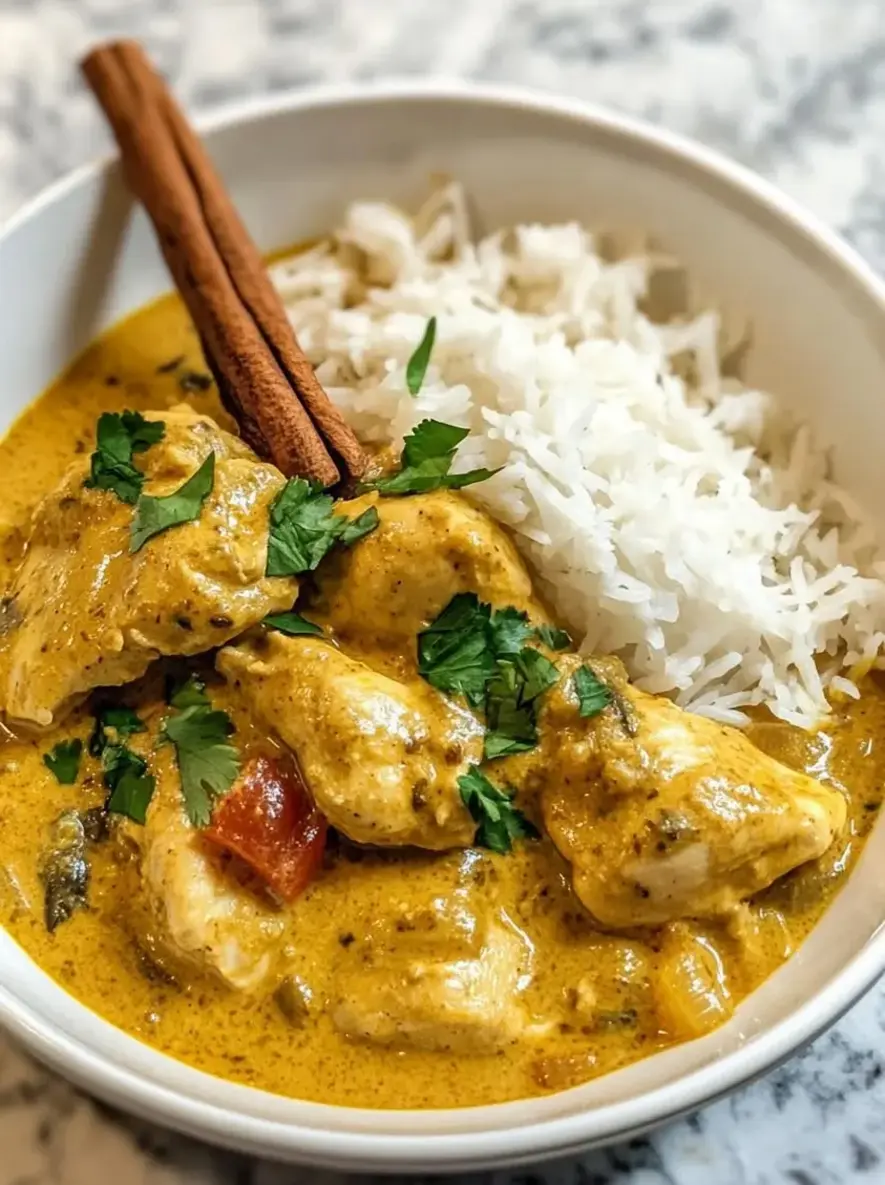
Table of Contents
Silky Coconut Chicken Curry Infused with Warm Cinnamon, Aromatic Spices, and Creamy Coconut Milk – The Only Coconut Chicken Curry Recipe You’ll Ever Need
Growing up in Morocco, the smell of cinnamon was never reserved for desserts alone — it drifted through my mother’s kitchen in savory stews and slow-simmered tagines long before any sweet treats appeared. When I moved to New York City after training at a culinary school in Paris, I carried that memory with me, and it eventually found its way into this silky coconut chicken curry. Warm cinnamon, aromatic spices, and creamy coconut milk might sound like an unusual trio to some, but together they create a comforting, deeply fragrant dish that feels both elegant and effortless. This easy coconut chicken curry recipe has become one of my most-loved weeknight dinners, and I’m so excited to walk you through it, step by step.
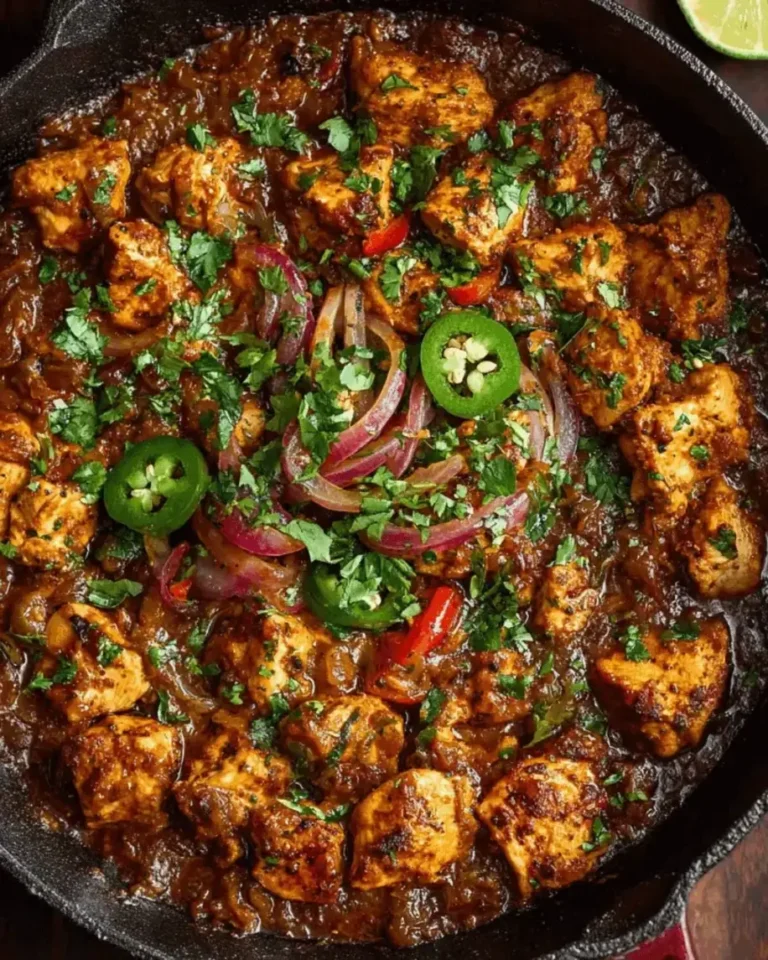
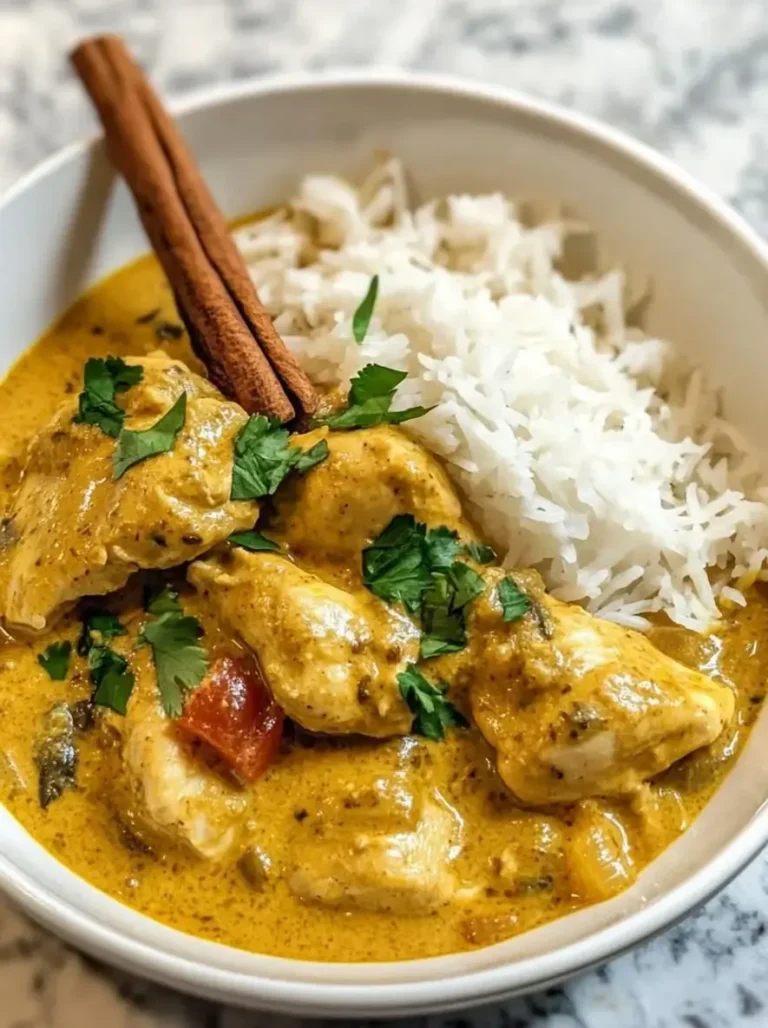
The first thing you’ll notice is the aroma. As the cinnamon stick slowly perfumes the coconut milk and the curry powder, cumin, coriander, smoked paprika, and turmeric bloom in the hot oil, your entire kitchen begins to smell like a cozy spice market. The sauce turns a stunning golden-amber color, glossy and velvety, with a texture that clings to each piece of tender chicken. It’s rich without being heavy, lightly sweet from the coconut, and warmed by a gentle smokiness that keeps every spoonful interesting. When you taste it, you’ll understand exactly what I mean by ‘silky’ — it coats the back of a spoon like a fine French sauce, yet it still feels wonderfully homey and welcoming.
I’ve tested this coconut chicken curry with coconut milk more times than I can count — in my tiny Paris apartment, in my NYC kitchen, and for friends who claim they can’t cook — and I’ve learned precisely what makes it foolproof. The secret is the cinnamon; most curry recipes skip it, and they’re missing out on a layer of warmth that turns an ordinary curry into something memorable. My French training taught me to build the sauce step by step: sear the chicken, bloom the spices, deglaze the pot, then simmer gently so everything merges into one silky sauce. Below, I’m sharing my Stella’s Pro Tips, the common mistakes to avoid, and every detail you need to nail this creamy coconut chicken curry on your very first try.
Why This Silky Coconut Chicken Curry Recipe Is the Best
The Flavor Secret — That cinnamon stick? It’s not just a pretty garnish. In Moroccan cooking, cinnamon is a bridge between sweet and savory, and it lends a subtle warmth that makes the curry taste slow-cooked even on a busy Tuesday night. Paired with smoked paprika, earthy cumin, and sweet coriander, the spice blend is balanced, aromatic, and utterly moreish. Every spoonful of this chicken curry with coconut milk delivers a gentle, fragrant heat that never overwhelms.
Perfected Texture — As a professionally trained cook, I care about technique. The step you don’t want to skip is searing the chicken first and blooming the spices in oil before adding any liquid. That browning, known in French cuisine as the Maillard reaction, is what creates the deep, savory base. Then, simmering the sauce gently at low heat lets the coconut milk emulsify naturally, giving you that silky, glossy finish without any curdling — exactly the texture that makes this creamy coconut chicken curry feel like a restaurant dish.
Foolproof & Fast — In 45 minutes, you can have a restaurant-quality curry on the table with very little hands-on effort. Most of the time is spent simmering, which means you can tidy up, set the table, or pour yourself a glass of wine. The ingredient list is straightforward and pantry-friendly, the steps are forgiving, and the result is always impressive. Whether you’re a seasoned home cook or a beginner, this easy coconut chicken curry recipe is practically impossible to mess up.
Coconut Chicken Curry Ingredients
For this coconut chicken curry recipe, I always shop with intention. On Saturdays, I pick up fresh ginger and cilantro at my local NYC farmers market, and I grab a few cinnamon sticks from my favorite spice shop in Manhattan. The number-one rule? Choose full-fat coconut milk — it’s the backbone of the silky sauce and the reason this curry tastes so indulgent. Most of these ingredients are everyday grocery staples, but the cinnamon stick is the one item I’d never skip.
Ingredients List
- 2 tablespoons olive oil
- 1½ pounds boneless, skinless chicken thighs, cut into bite-sized pieces
- 1 medium onion, finely diced
- 4 garlic cloves, minced
- 1 tablespoon fresh ginger, grated
- 1 cinnamon stick
- 2 teaspoons curry powder
- 1 teaspoon ground cumin
- 1 teaspoon ground coriander
- ½ teaspoon smoked paprika
- ¼ teaspoon turmeric
- 1 (14-ounce) can coconut milk
- 1 cup chicken broth
- 2 tablespoons tomato paste
- 1 teaspoon salt, or to taste
- ½ teaspoon black pepper, or to taste
- 2 tablespoons chopped fresh cilantro, for garnish
Ingredient Spotlight
Cinnamon Stick: The cinnamon stick is the quiet star of this dish. Unlike ground cinnamon, which can taste dusty and a little sweet, a whole cinnamon stick gently releases its oils as it simmers, lending a warm, woody perfume to the sauce. In the US, you’ll find two types — Ceylon (true cinnamon) and Cassia. Both work here, but Ceylon, which is lighter in color and sweeter, is especially nice for this recipe when you can find it. A 1-inch piece is enough to perfume the entire pot without making the curry taste like a dessert.
Full-Fat Coconut Milk: Full-fat coconut milk is non-negotiable if you want a creamy coconut chicken curry. It contains enough natural fat to stay emulsified and silky through the simmering process. Light coconut milk has roughly half the fat and will give you a noticeably thinner sauce. When you open the can, you may see a creamy layer on top — that’s normal and actually a good sign. Give it a vigorous shake or whisk it briefly before pouring, and always bring it to a gentle simmer, never a rolling boil.
Chicken Thighs: Boneless, skinless chicken thighs are my preference here because they stay moist and tender even after a 30-minute simmer. The extra fat in thighs also brings flavor to the sauce. If you swap in chicken breasts, you’ll need to adjust the timing and be careful not to overcook the meat. In my testing, thighs never dry out, making this one of the easiest, most forgiving one-pot meals you can make.
Tomato Paste: A couple of tablespoons of tomato paste may seem like a small addition, but it’s a flavor powerhouse. It adds a touch of umami and acidity that balances the sweetness of the coconut milk and the warmth of the cinnamon. Cooking the paste briefly in the oil — about a minute — removes its raw, tinny flavor and deepens its sweetness, a trick I learned in culinary school and still use in almost every braise and stew I make.
| Original Ingredient | Best Substitution | Flavor / Texture Impact |
|---|---|---|
| Cinnamon stick | ½ teaspoon ground cinnamon | Less aromatic but still warm; add with the other ground spices |
| Full-fat coconut milk | 1 cup heavy cream + 1 cup chicken broth | Richer, dairy-forward flavor; less coconut sweetness |
| Chicken thighs | Chicken breasts | Leaner; reduce the covered simmer time by 10 minutes |
| Tomato paste | 1 ripe tomato, grated | Softer, less concentrated umami |
| Fresh ginger | 1 teaspoon ground ginger | Less bright, slightly sharper flavor |
How to Make Silky Coconut Chicken Curry — Step-by-Step
Making this easy coconut chicken curry is a simple, rewarding process. Follow these steps exactly, and you’ll have a velvety, fragrant curry every single time — I promise you’ll be licking the spoon before it even hits the table.
Step 1: Sear the Chicken
Heat 2 tablespoons of olive oil in a large pot or Dutch oven over medium-high heat. Add the chicken pieces in a single layer and sear until golden brown on all sides, about 5 minutes. You’re not trying to cook the chicken all the way through — just build a golden crust. Remove the chicken with a slotted spoon and set it aside on a plate.
💡 Stella’s Pro Tip: Don’t overcrowd the pot. If your chicken thighs don’t fit in one layer, sear them in two batches. Crowded chicken steams instead of browning, and you lose all that delicious flavor.
Step 2: Sauté the Onion
In the same pot, add the finely diced onion and cook over medium heat until softened, about 3 minutes. Scrape the bottom of the pot as you stir — those browned bits from the chicken (the ‘fond’ in French cooking) dissolve into the onion and build the flavor base of the sauce.
⚠️ Common Mistake to Avoid: Adding liquid before the onion is fully soft. If the onions aren’t translucent, they’ll stay crunchy in the final sauce. Give them the full 3 minutes and lower the heat if they start to burn.
Step 3: Bloom the Spices
Add the minced garlic, grated ginger, cinnamon stick, curry powder, cumin, coriander, smoked paprika, and turmeric. Cook for exactly 1 minute, stirring constantly. The spices will darken slightly and smell incredible — that’s the essential oils releasing into the fat.
💡 Stella’s Pro Tip: Never skip the blooming step. Dry spices taste raw and powdery if you add them straight to liquid. Blooming them in oil for one minute wakes up their flavor and gives the curry that deep, professional-level aroma — a classic French technique I use constantly.
Step 4: Build the Sauce
Stir in the tomato paste and cook for about 1 minute, until it darkens slightly. Then pour in the coconut milk and chicken broth, scraping up any browned bits from the bottom of the pot. This is called deglazing, and it transfers all that leftover flavor into the sauce.
⚠️ Common Mistake to Avoid: Using cold coconut milk straight from the fridge can cause the sauce to split later. Let the can sit on the counter for 15 minutes, or quickly warm the coconut milk in a measuring cup before adding it to the pot.
Step 5: Return the Chicken
Return the chicken to the pot along with the salt and black pepper. Stir everything together, then bring the curry to a gentle simmer. You should see small, lazy bubbles — not a rolling boil.
💡 Stella’s Pro Tip: A heavy-bottomed Dutch oven distributes heat evenly and prevents hot spots that can scorch the coconut milk. My favorite is a 5-quart enameled cast iron pot, but any heavy pot will work beautifully.
Step 6: Simmer Covered
Reduce the heat to low, cover the pot, and let the curry simmer gently for 20 to 25 minutes, until the chicken is cooked through and completely tender. During this time, the cinnamon stick releases its warmth into the sauce and the flavors truly marry together.
⚠️ Common Mistake to Avoid: Don’t peek too often! Every time you lift the lid, valuable steam escapes and drops the temperature. Let it do its thing for at least 20 minutes before checking.
Step 7: Thicken the Sauce
Uncover and simmer for an additional 10 minutes to thicken the sauce slightly. You’ll notice the sauce reducing and turning glossier as the coconut milk concentrates. It should coat the back of a spoon now — this is the silky texture that defines this creamy coconut chicken curry.
💡 Stella’s Pro Tip: If you want an even thicker sauce, remove the chicken with a slotted spoon once it’s tender, let the sauce bubble for another 5 minutes, then return the chicken to the pot. You get the same silky texture with extra body.
Step 8: Taste and Adjust
Taste the curry with a clean spoon and adjust the seasoning. It may need another pinch of salt, a crack more black pepper, or a small squeeze of lemon juice to lift the flavors. This is the step where cooking becomes instinct — trust your palate.
⚠️ Common Mistake to Avoid: Underseasoning is the No. 1 mistake in home curry-making. The sauce should taste vibrant and slightly bold at this stage because it will mellow when served over rice or with naan.
Step 9: Rest the Curry
Remove the cinnamon stick and discard it. Let the curry rest off the heat for about 5 minutes before serving. Resting allows the sauce to settle, the chicken to reabsorb some of the liquid, and the spices to pull together into one harmonious flavor.
💡 Stella’s Pro Tip: I know it’s hard to wait, but those 5 minutes make a real difference. In French kitchens, we never serve a braise or stew straight from the stove — the rest is part of the cooking process.
Step 10: Garnish and Serve
Garnish with chopped fresh cilantro and serve hot over rice, quinoa, or with warm naan on the side. For an extra pop of color, scatter a few thin slices of red chili or a handful of toasted coconut flakes over the top.
⚠️ Common Mistake to Avoid: Don’t add the cilantro into the pot during simmering — it’ll lose its bright color and fresh flavor. Always add it right at the end, just before serving.
| Step | Action | Duration | Key Visual Cue |
|---|---|---|---|
| 1 | Sear chicken | 5 minutes | Golden brown on all sides |
| 2 | Sauté onion | 3 minutes | Softened and translucent |
| 3 | Bloom spices | 1 minute | Fragrant, spices coat onions |
| 4 | Build sauce | 2 minutes | Smooth, glossy red-brown liquid |
| 5 | Return chicken | — | Gentle simmer throughout |
| 6 | Simmer covered | 20–25 minutes | Chicken fork-tender |
| 7 | Thicken sauce | 10 minutes | Sauce coats the back of a spoon |
| 8 | Taste & adjust | 1 minute | Seasoning vibrant and balanced |
| 9 | Rest curry | 5 minutes | Sauce thickens slightly |
| 10 | Garnish & serve | 2 minutes | Bright cilantro on top |
Serving & Presentation
The way you serve this silky coconut chicken curry can transform a simple dinner into a special occasion. I love ladling the curry over a bed of fluffy jasmine rice in a wide, shallow bowl, letting the golden sauce pool around the rice like a warm blanket. A final shower of fresh cilantro, a few slices of red chili for color, and maybe a wedge of lime on the side make the plate look like something you’d order at a beautiful bistro.
If you’re like me, you’ll want something to soak up every last drop. Warm naan is my absolute favorite for scooping, but soft pillow bread or even a crusty baguette works surprisingly well. In Morocco, we’d serve this with khobz, a round rustic bread, and it would be gone before the meal even started. No matter what you choose, make sure there’s plenty of sauce — that’s the best part.
| Pairing Type | Suggestions | Why It Works |
|---|---|---|
| Side Dish | Steamed jasmine rice, basmati rice, quinoa, cauliflower rice | Neutral base that absorbs and soaks up the silky sauce |
| Sauce / Dip | Raita, cucumber yogurt sauce, mango chutney | Cool and tangy contrast to the warm, rich curry |
| Beverage | Dry Riesling, viognier, sparkling water with lime | Bright acidity cuts through the coconut richness |
| Garnish | Fresh cilantro, sliced red chili, toasted coconut, lime wedges | Adds freshness, color, and a pop of brightness |
Make-Ahead, Storage & Reheating
As a busy NYC food blogger, I live by make-ahead dinners, and this creamy coconut chicken curry is one of my absolute favorites to batch-cook. The flavor actually deepens overnight — the cinnamon mellows, the garlic and ginger settle into the coconut milk, and every spoonful tastes even more harmonious the next day. I often make a double batch on Sunday to get me through the first half of the week.
| Method | Container | Duration | Reheating Tip |
|---|---|---|---|
| Refrigerator | Airtight container | 3–4 days | Reheat gently over medium-low heat; add a splash of broth if needed |
| Freezer | Freezer-safe zip-top bag or container | Up to 3 months | Thaw overnight in the fridge, then reheat gently and stir |
| Make-Ahead | Covered pot or glass container | Up to 2 days in advance | Add fresh cilantro only after reheating |
One important reheating note: always use gentle, low heat. Coconut milk can separate if you blast it on high, leaving you with little oily pools on top. If the sauce looks thick after reheating, stir in a tablespoon or two of chicken broth or water a little at a time until it’s silky again. And whatever you do, don’t microwave the cinnamon stick — take it out before storing, and you’ll thank yourself later.
Variations & Easy Swaps
One of the things I love most about this easy coconut chicken curry recipe is how adaptable it is. You can take it in so many directions, depending on your mood, your pantry, or the season. Here are three of my favorite variations — each one tested in my NYC kitchen and delicious in its own way.
| Variation | Key Change | Best For | Difficulty Impact |
|---|---|---|---|
| Spicy Harissa Twist | Add 1–2 teaspoons harissa paste with the spices | Heat lovers who want Moroccan flair | Easy |
| Vegetarian Chickpea Version | Swap chicken for two 15-ounce cans of chickpeas | Meatless Monday | Easy |
| Autumn Pumpkin Twist | Stir in ½ cup pumpkin puree with the tomato paste | Fall comfort-food cravings | Easy |
Spicy Harissa Twist
Growing up in Morocco, harissa was always on our table, and it’s exactly what I reach for when I want to wake this curry up. Stir one to two teaspoons of harissa paste in with the tomato paste for a smoky, fiery depth that plays beautifully against the sweet cinnamon. If harissa isn’t in your pantry, try half a teaspoon of cayenne or one chopped red chile. You’ll get an extra layer of warmth without losing the creamy coconut soul of the dish.
Vegetarian Chickpea Version
To make this a hearty, plant-based meal, swap the chicken thighs for two (15-ounce) cans of chickpeas, drained and rinsed. Add them in step 5, right where you’d return the chicken, and let them simmer gently so they heat through and soak up the spiced coconut sauce without turning mushy. The chickpeas add protein and an earthy heartiness that stands up beautifully to the cinnamon and smoked paprika.
Autumn Pumpkin Twist
When fall hits New York and every farmers market vendor has pumpkins stacked high, I stir half a cup of pure pumpkin puree into the pot right after the tomato paste. It melts into the coconut milk and gives the curry a sweet, velvety body that makes the cinnamon taste even more pronounced. It’s a subtle switch — most people can’t name the extra ingredient, but they always ask what makes the sauce so silky.
Frequently Asked Questions
What is the best way to make coconut chicken curry creamy and silky without it curdling?
The best way to keep your coconut chicken curry creamy and silky is to use full-fat coconut milk and manage the heat with care. Shake the can well before opening so the coconut cream and water are fully combined. Always bring the sauce to a gentle simmer rather than a rolling boil, since high heat and rapid bubbling can cause the coconut milk to split. When adding an acidic ingredient like tomato paste, cook it off for a minute before adding the coconut milk, and never add cold coconut milk straight from the fridge to a hot pot. These small habits make all the difference for a velvety sauce.
Can I use chicken thighs instead of chicken breasts for this coconut curry recipe?
Yes, and in fact, chicken thighs are my first choice for this coconut curry recipe. They have a higher fat content than breasts, so they stay tender, juicy, and delicious even after simmering for 25 to 30 minutes. Chicken breasts will work if that’s what you have, but they cook faster and can dry out if left too long. If using breasts, sear them for about 4 minutes per side and reduce the covered simmer to roughly 15 minutes, or until they reach 165°F on an instant-read thermometer.
How long should I simmer coconut chicken curry to ensure the chicken is tender and the sauce thickens properly?
Simmer the curry covered for 20 to 25 minutes on low heat so the chicken becomes fully tender, then uncover and continue simmering for another 10 minutes for the sauce to thicken and turn glossy. That final uncovered simmer lets steam escape, which reduces the coconut milk and chicken broth into a concentrated sauce that coats the back of a spoon. If your sauce still looks thin after that, keep it uncovered for an extra 5 to 10 minutes, stirring occasionally. Since this is chicken curry with coconut milk, gentle heat is your best friend.
What can I substitute for coconut milk in a cinnamon-spiced chicken curry if I don’t have any on hand?
The closest substitute for coconut milk in this cinnamon-spiced chicken curry is a combination of 1 cup heavy cream and 1 cup chicken broth. It won’t taste like coconut, but it will mimic the creamy richness and silky body. For a dairy-free option, blend 1 cup of raw cashews with 2 cups of water until smooth, or use unsweetened cashew milk with a splash of creamer. If you use a lighter substitute, you may need to thicken the sauce with a cornstarch slurry (1 teaspoon cornstarch + 2 teaspoons water) at the end.
What is the best coconut milk to use for coconut chicken curry — full-fat or light?
I recommend full-fat coconut milk for this creamy coconut chicken curry. The high fat content keeps the sauce velvety and prevents curdling as it simmers. Light coconut milk can still be used, but the sauce will be noticeably thinner and less luxurious. If you choose light coconut milk, plan to thicken the sauce with a little cornstarch or simmer it uncovered for an extra 10 minutes. Full-fat is also the best choice for the silkiest texture, which is why I call this a silky coconut chicken curry.
Can I make this cinnamon chicken curry ahead of time?
Absolutely — this cinnamon chicken curry tastes even better the next day. The flavors have time to meld and deepen, particularly the cinnamon and smoked paprika. I recommend making it up to two days in advance, cooling it quickly, and keeping it in an airtight container in the fridge. When you’re ready to eat, reheat gently over medium-low heat with a splash of chicken broth or water to loosen the sauce. Just don’t add the fresh cilantro until right before serving, so it stays bright and vibrant.
Does cinnamon actually belong in chicken curry?
It might feel unexpected, but cinnamon is a classic ingredient in North African and Moroccan chicken stews, and it works beautifully in coconut chicken curry. A whole cinnamon stick adds a warm, fragrant, slightly sweet background note that complements cumin, coriander, and turmeric without tasting like a dessert. It’s one of those subtle ingredients that people can’t quite identify, but they instantly notice the curry tastes more complex and inviting. If you’re unsure, start with a 1-inch piece of the cinnamon stick — that’s all it takes to perfume the whole pot.
How do I thicken coconut chicken curry if it’s too thin?
The simplest way to thicken coconut chicken curry is to leave the lid off and let it simmer on low heat for a few extra minutes. Evaporation concentrates the coconut milk and broth, turning the sauce thick and glossy naturally. If you need a faster fix, whisk one teaspoon of cornstarch with two teaspoons of cold water and stir it into the curry; then simmer for two to three minutes until it visibly thickens. A splash of heavy cream or a tablespoon of room-temperature butter stirred in at the end also works beautifully to give the sauce extra body and shine.
What should I serve with coconut chicken curry?
Steamed jasmine rice and warm naan are my top picks for serving this coconut chicken curry. Basmati rice, quinoa, or cauliflower rice also work well if you’re trying to keep things lighter. Because the sauce is rich and silky, a simple cucumber salad or a bowl of cool yogurt raita makes a lovely contrast. I grew up eating stews with fresh bread in Morocco, so don’t be afraid to buy a crusty baguette — it’s wonderful for sopping up every last drop of that golden sauce.
Can I freeze coconut chicken curry made with coconut milk?
Yes, you can absolutely freeze this coconut chicken curry for up to three months. Let it cool completely, transfer it to a freezer-safe container or zip-top bag, and flatten it slightly so it freezes evenly. To serve, thaw it overnight in the refrigerator, then reheat gently on the stove over medium-low heat. Frozen coconut milk can sometimes look separated when thawing, but a good stir over gentle heat will bring the sauce back to a silky consistency. Add fresh cilantro after reheating for the best flavor.
Share Your Version!
Now it’s your turn! I hope you love this silky coconut chicken curry as much as I do. If you give it a try, please leave a star rating and a comment below — I personally read every single one and answer all your questions. Did you use the cinnamon stick? Did you add a twist of your own? I can’t wait to hear how it turned out in your kitchen.
If you share a photo on Instagram or Pinterest, tag @leosfoods so I can see your beautiful creations. I love featuring reader photos in my weekly newsletter — and seeing a bowl of this golden curry on your table genuinely makes my day. And here’s a question to get the conversation started: what’s your favorite thing to serve with curry — rice, naan, or something unexpected? Let me know in the comments below!
From my NYC kitchen to yours — I hope this recipe brings as much warmth to your table as it does to mine. — Stella 🧡
Love This Recipe? Save It to Pinterest!
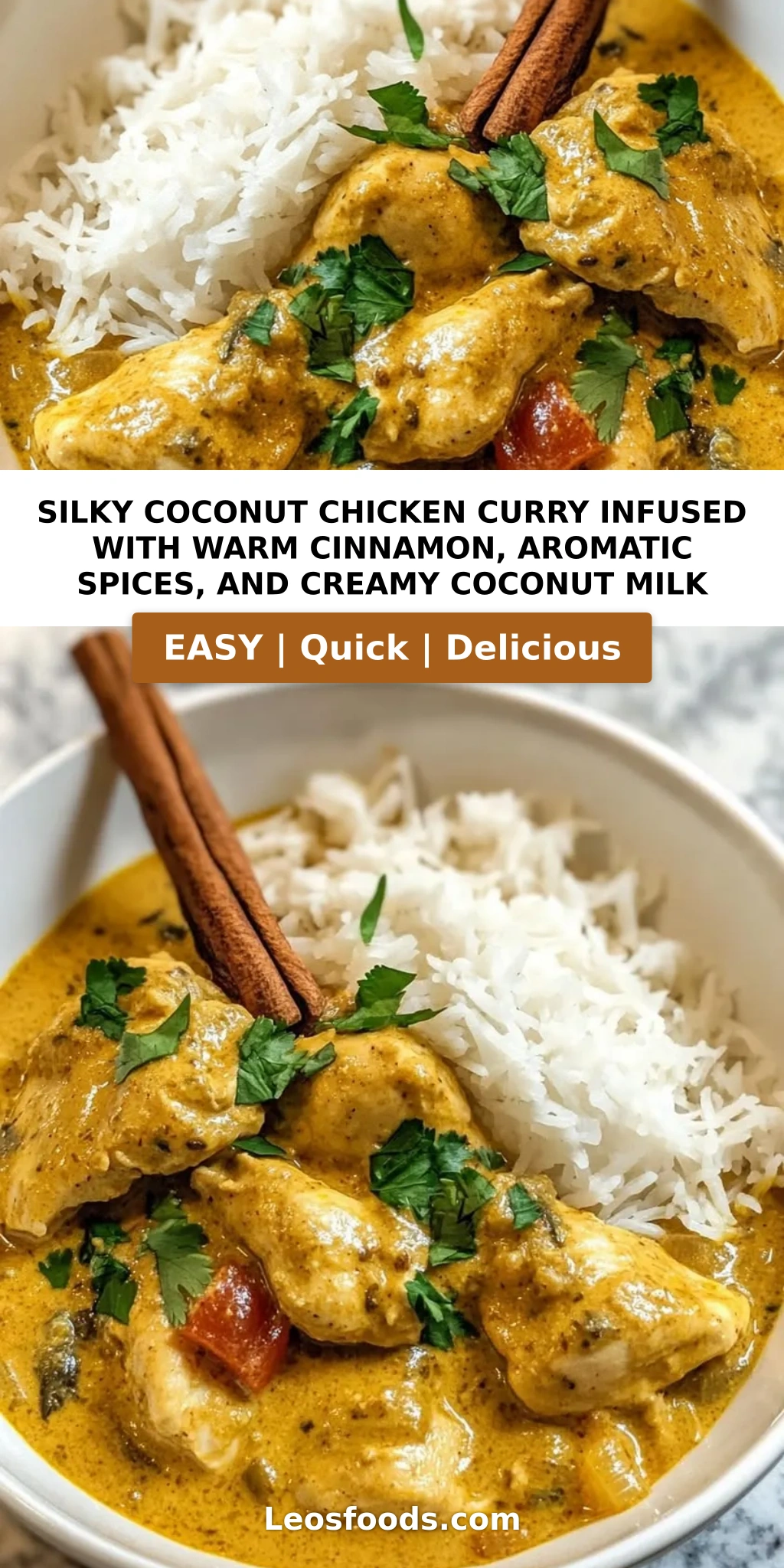
If you enjoyed this Silky Coconut Chicken Curry recipe, don’t let it get lost in your browser tabs! 😄 Pin it now so you can find it again anytime — and explore hundreds more tried-and-tested recipes waiting for you on my Pinterest boards.
👉 Follow Stella on Pinterest @stellarecipeblog
📌 Pin this recipe · 🔁 Re-pin your favorites · 💬 Tag me when you make it — I love seeing your creations!
⭐ Did you make this recipe?
If you enjoyed this Silky Coconut Chicken Curry, hit the star rating below and leave a comment — it helps other readers find the recipe and lets me know what you’d like to see next!
★★★★★
Silky Coconut Chicken Curry Infused with Warm Cinnamon, Aromatic Spices, and Creamy Coconut Milk
A silky and fragrant coconut chicken curry with warm cinnamon and aromatic spices, simmered in creamy coconut milk for a comforting and flavorful meal.
- Total Time: 45 minutes
- Yield: 4 servings 1x
Ingredients
- 2 tablespoons olive oil
- 1½ pounds boneless, skinless chicken thighs, cut into bite-sized pieces
- 1 medium onion, finely diced
- 4 garlic cloves, minced
- 1 tablespoon fresh ginger, grated
- 1 cinnamon stick
- 2 teaspoons curry powder
- 1 teaspoon ground cumin
- 1 teaspoon ground coriander
- ½ teaspoon smoked paprika
- ¼ teaspoon turmeric
- 1 (14-ounce) can coconut milk
- 1 cup chicken broth
- 2 tablespoons tomato paste
- 1 teaspoon salt, or to taste
- ½ teaspoon black pepper, or to taste
- 2 tablespoons chopped fresh cilantro, for garnish
Instructions
- Heat olive oil in a large pot or Dutch oven over medium-high heat.
- Add chicken pieces in a single layer and sear until golden brown on all sides, about 5 minutes. Remove chicken and set aside.
- In the same pot, add onion and cook until softened, about 3 minutes.
- Add garlic, ginger, cinnamon stick, curry powder, cumin, coriander, smoked paprika, and turmeric. Cook for 1 minute until fragrant.
- Stir in tomato paste, then pour in coconut milk and chicken broth, scraping up any browned bits from the bottom.
- Return the chicken to the pot, add salt and pepper, and bring to a simmer.
- Reduce heat to low, cover, and let simmer gently for 20-25 minutes, until chicken is cooked through and tender.
- Uncover and simmer for an additional 10 minutes to thicken the sauce slightly.
- Taste and adjust seasoning if needed.
- Garnish with fresh cilantro and serve hot with rice or naan.
Notes
For a spicier curry, add a pinch of cayenne pepper or a chopped chili with the spices. Use full-fat coconut milk for the silkiest texture. This curry tastes even better the next day.
- Prep Time: 10 minutes
- Cook Time: 35 minutes
- Method: Main Course
- Cuisine: Indian-inspired
Nutrition
- Calories: 485 kcal
- Sugar: 4 g
- Fat: 36 g
- Carbohydrates: 12 g
- Protein: 30 g
Tried This Recipe? Leave a Comment!
Did you make this recipe? I’d love to hear how it turned out! Please leave a comment and a rating below. Your feedback helps other home cooks and supports cheerychop.com!
For more delicious inspiration, follow me on Pinterest!