
Slow-Cooked Chicken Cacciatore with Burrata & Pancetta
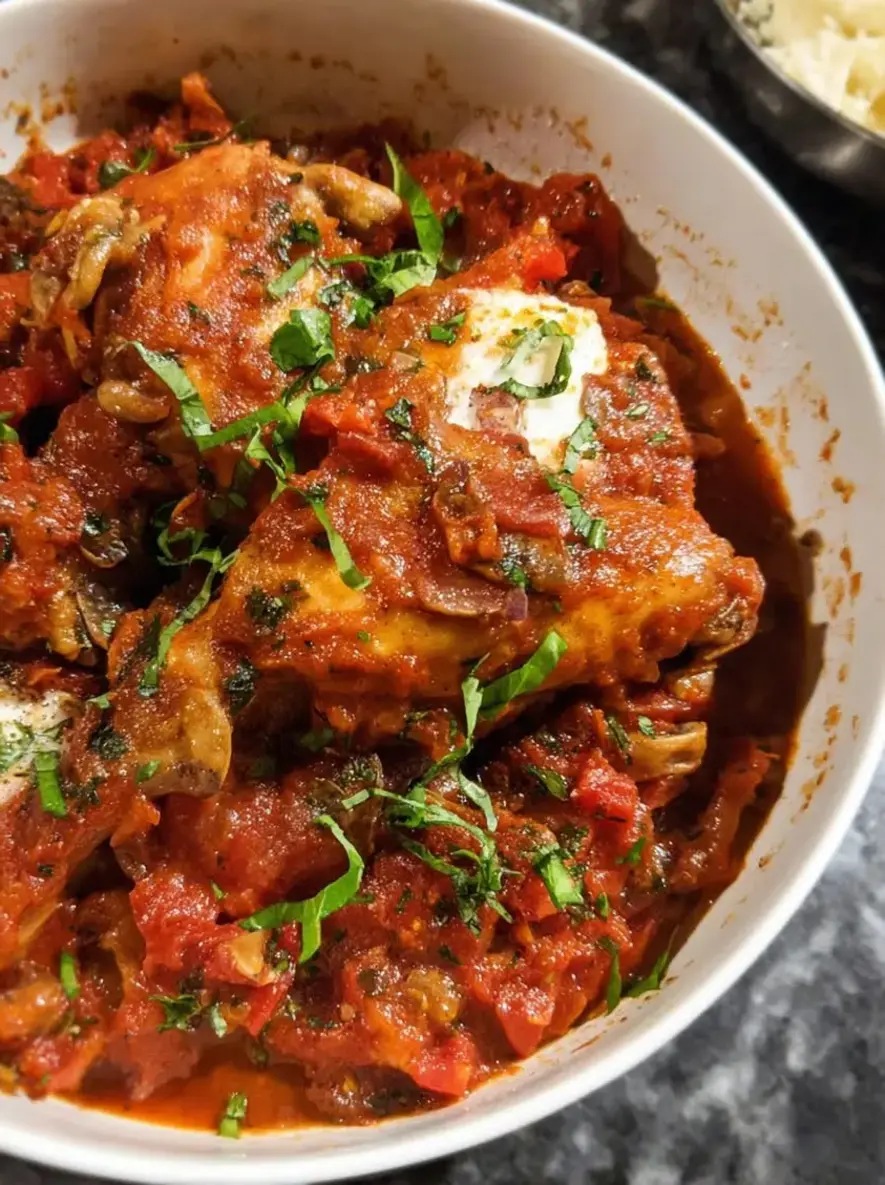
Table of Contents
Rustic Italian Slow-Cooked Chicken Cacciatore with Red Wine Tomato Sauce, Creamy Burrata & Crispy Pancetta — A Cozy Chicken Cacciatore Recipe for Slow Sunday Suppers
I’ll never forget the day I truly understood what “cacciatore” meant. It wasn’t in a rustic farmhouse in Tuscany — it was in my tiny Paris apartment, testing recipes for culinary school while a pot of red wine and tomatoes simmered away on the stove. My mother in Morocco taught me that great food is born from patience, and that lesson came rushing back as I stirred this rustic Italian chicken cacciatore recipe for the first time. This slow cooked chicken cacciatore with red wine isn’t just dinner; it’s a slow-braised love letter to the Italian countryside, carrying the same soulful, unhurried spirit as the tagines I grew up eating in Marrakech.
Picture this: after two hours in the pot, the chicken is so tender you can pull it apart with a fork and watch the juices run. The red wine tomato sauce has reduced into something glossy, complex, and deeply savory, with ribbons of creamy burrata melting right into it. Crispy pancetta adds a salty, crunchy contrast, while fresh oregano and shaved Parmigiano-Reggiano brighten every spoonful. The mushrooms soak up the sauce like little sponges, and the bell peppers turn soft and caramel-sweet. The whole kitchen fills with the scent of garlic and herbs — it’s the kind of aroma that makes your neighbors knock on the door wondering what you’re cooking.
I’ve developed this chicken cacciatore recipe over years of professional cooking, from my formal training in Paris to my Friday-night dinners here in New York City. My French technique taught me how to braise properly — low heat, covered pot, un-rushed — while my Moroccan roots gave me an instinct for layering flavors. That’s why my version includes two luxurious finishes that traditional recipes skip: creamy burrata and crispy pancetta. In the recipe card below, I’ll reveal my best tips, including the one common mistake that can ruin even the best slow-cooked chicken cacciatore — and it’s so easy to avoid.
Why This Chicken Cacciatore Recipe Is the Best
The flavor secret is the unhurried braise. Traditional cacciatore, from the Italian word meaning “hunter,” was born as a humble one-pot hunter’s stew. By simmering bone-in, skin-on thighs in a red wine tomato sauce for nearly two hours, the collagen melts into the sauce and gives it a velvety body that no quick-cooking recipe can replicate. The red wine isn’t just a flavoring — it’s the backbone of the whole dish. It adds tannin, acidity, and a deep fruitiness that tames the tomatoes and marries beautifully with oregano and basil. This is the chicken cacciatore recipe I make when I want something that tastes like it took all day, because it did.
I insist on searing the chicken until the skin is burnished golden-brown before it ever touches the sauce. That caramelization is pure flavor — it creates hundreds of little browned bits, called fond, on the bottom of the Dutch oven. When the wine hits that hot surface, it deglazes everything and lifts all that savory goodness into the sauce. That’s a classic French technique I learned in Paris: build the foundation slowly, and the reward is deep, layered flavor. The result is a sauce with remarkable body and chicken so moist it nearly falls off the bone.
While the technique sounds chef-y, this slow cooked chicken cacciatore is wonderfully forgiving. Once everything is in the pot, the heat does the heavy lifting. You don’t need a thermometer, you don’t need to stir constantly — just cover, walk away, and let time work its magic. It’s the perfect recipe for a Sunday afternoon when you want to fill your home with beautiful aromas without hovering over the stove. Even if you’ve never braised anything before, you will absolutely succeed with this chicken cacciatore recipe.
Chicken Cacciatore Recipe Ingredients
I source my chicken from the farmers market in Union Square on Saturday mornings, but this recipe shines with any good-quality bone-in thighs from your local grocery store. The key is buying chicken on the bone — it protects the meat during the long simmer and adds so much flavor to the sauce. In Morocco, we’d use preserved lemons and olives to brighten slow-cooked dishes; here, the balsamic vinegar and red wine serve that role beautifully, adding the same kind of bright, savory lift to this chicken cacciatore recipe.
Ingredients List
- For the Chicken:
- 2½ lbs bone-in, skin-on chicken thighs (or boneless thighs)
- 2 tbsp olive oil
- 1 tsp kosher salt
- 1 tsp black pepper
- 1 tsp garlic powder
- 1 tsp dried oregano
- 1 tsp dried basil
- ½ tsp dried thyme
- For the Sauce:
- 1 large onion, sliced
- 2 bell peppers (red and yellow), sliced
- 8 oz cremini mushrooms, sliced
- 5 cloves garlic, minced
- 1 can (28 oz) crushed tomatoes
- ½ cup dry red wine
- 1 tbsp tomato paste
- 1 tbsp balsamic vinegar
- 1 tsp Italian seasoning
- 2 bay leaves
- ½ tsp crushed red pepper flakes (optional)
- For Serving (Optional but Recommended):
- Creamy burrata or stracciatella
- Crispy pancetta
- Fresh oregano leaves
- Shaved Parmigiano-Reggiano
- Calabrian chili oil
- Balsamic fig reduction
Ingredient Spotlight
Bone-in, skin-on chicken thighs are the cut you want for this slow cooked chicken cacciatore. Dark meat stays moist and tender even after two hours of simmering, and the skin renders its fat into the sauce, enriching it naturally. Boneless thighs work in a pinch, but you’ll want to reduce the simmering time to 45–60 minutes to prevent them from drying out. I’ve tested both ways, and the bone-in version is simply more flavorful — that’s a fact from my years of professional cooking.
Dry red wine transforms this dish. Choose a wine you’d happily drink — a Chianti, Sangiovese, or a red blend from the Languedoc region of France. The wine doesn’t need to be expensive, but it shouldn’t be that leftover bottle you’ve been ignoring. The alcohol burns off during the simmer, leaving behind concentrated fruit and acid that balance the tomatoes. In a pinch, a splash of extra balsamic vinegar plus chicken broth can stand in, but honestly, you’ll taste the difference in depth.
Burrata is essentially fresh mozzarella with an impossibly creamy, stracciatella-filled center. When it hits the hot cacciatore, it softens and oozes into the sauce, creating a luxurious finish that turns an ordinary dinner into a restaurant-worthy meal. Look for burrata in the specialty cheese section of Whole Foods, Trader Joe’s, or your local Italian market. Always let it come to room temperature before serving, and tear it by hand — never slice it — for the best texture.
Pancetta is Italian cured pork belly seasoned with black pepper and nutmeg. Unlike bacon, it’s not smoked, so it brings a clean, porky savoriness to the dish. To make it perfectly crispy, a technique I picked up in Paris is to render it low and slow in a cold pan, so the fat melts evenly before the meat crisps. Guanciale makes a wonderful substitute, or regular bacon if you want that smoky character instead.
| Original Ingredient | Best Substitution | Flavor / Texture Impact |
|---|---|---|
| Bone-in chicken thighs | Boneless, skinless thighs | Less rich and less juicy; reduce cook time to 45–60 min |
| Dry red wine | Non-alcoholic red wine, or chicken broth + 1 tbsp red wine vinegar | Slightly less depth; still balanced and bright |
| Burrata | Fresh mozzarella | Less creamy; still melty, slightly more elastic |
| Pancetta | Bacon or guanciale | Bacon adds smokiness; guanciale is more aromatic |
| Cremini mushrooms | White button or portobello | Milder or heartier earthy note; texture similar |
How to Make Slow-Cooked Chicken Cacciatore — Step-by-Step
Grab your favorite Dutch oven and let’s get cooking — this chicken cacciatore recipe is about to become your new Sunday tradition. I’ll walk you through every step with my best tips so you feel confident from the first sizzle to the last spoonful.
Step 1: Season the Chicken
Pat the chicken thighs dry with paper towels — dry skin is crucial for a golden sear. In a small bowl, combine the kosher salt, black pepper, garlic powder, dried oregano, dried basil, and dried thyme. Sprinkle the spice mixture generously over both sides of the chicken, pressing gently so the herbs adhere.
💡 Stella’s Pro Tip: Season the chicken at least 15 minutes before cooking, or even overnight in the fridge. This dry-brine lets the salt penetrate deeper, ensuring every bite of your slow cooked chicken cacciatore is perfectly seasoned.
Step 2: Sear the Chicken
Heat the olive oil in a large 6- to 7-quart Dutch oven over medium-high heat until it shimmers. Place the chicken thighs in the pot, skin-side down, being careful not to overcrowd — work in batches if needed. Let them cook undisturbed for 4–5 minutes, until the skin is deep golden and releases easily from the pan. Flip and sear the other side for another 4–5 minutes. Transfer the chicken to a plate and set aside.
⚠️ Common Mistake to Avoid: Moving the chicken too soon. If the skin sticks to the pot, it needs more time. Let it develop that golden crust — patience here is what flavors the entire dish.
Step 3: Sauté the Vegetables
In the same pot, lower the heat to medium. Add the sliced onion, bell peppers, and cremini mushrooms. Sauté for 5–7 minutes, scraping up the browned bits left from the chicken. The onions will turn translucent, the peppers will soften, and the mushrooms will release and then reabsorb their liquid, concentrating their earthy flavor.
💡 Stella’s Pro Tip: Add a pinch of salt to the vegetables as they cook. This draws out their moisture and helps them soften faster. Don’t skip scraping the bottom of the pot — that browned fond is liquid gold for this chicken cacciatore recipe.
Step 4: Add the Garlic
Stir in the minced garlic and cook for 60 seconds until fragrant. Garlic burns quickly, so keep stirring and watch the heat carefully. The aroma should be nutty and sweet, never sharp or acrid. This is the moment where the whole kitchen starts to smell incredible.
⚠️ Common Mistake to Avoid: Adding garlic too early or with the heat too high. Burnt garlic tastes bitter, and there’s no way to un-bitter a dish. When in doubt, take the pot off the heat for a moment before dropping the garlic in.
Step 5: Build the Sauce
Pour in the dry red wine and use a wooden spoon to scrape up any remaining browned bits from the bottom of the pot. Let the wine bubble and reduce for 2 minutes. Then stir in the crushed tomatoes, tomato paste, balsamic vinegar, Italian seasoning, bay leaves, and crushed red pepper flakes (if using). Bring everything to a gentle simmer.
💡 Stella’s Pro Tip: This brief reduction of the wine removes the raw alcohol and concentrates its fruity depth. You want a deep, glossy sauce — don’t rush this step. This is what makes the chicken cacciatore taste like it’s been simmering for hours, even early on.
Step 6: Slow-Cook
Nestle the seared chicken thighs back into the pot, skin-side up, so they’re partially submerged in the sauce. Cover the Dutch oven with the lid and reduce the heat to low. Let it simmer gently for 1.5 to 2 hours. You want the barest movement of bubbles — a gentle blip, not a rolling boil. The chicken is ready when the meat easily pulls from the bone with a fork.
⚠️ Common Mistake to Avoid: Simmering too aggressively. A hard boil will make the meat tough and the sauce watery. The beauty of slow cooked chicken cacciatore is the low, forgiving heat that transforms collagen into silky gelatin.
Step 7: Finish and Season
Carefully remove the bay leaves and discard them. Taste the sauce and adjust seasoning with additional salt and pepper. For a thicker, more concentrated sauce, remove the chicken to a plate, simmer the sauce uncovered over medium-high heat for 10–15 minutes until it coats the back of a spoon, then return the chicken to the pot.
💡 Stella’s Pro Tip: Like most braised dishes, this chicken cacciatore recipe tastes even better the next day. The flavors meld overnight in the fridge, so don’t be afraid to make it a day ahead — your future self will thank you.
Step 8: Serve with Toppings
Spoon the slow cooked chicken cacciatore onto a large serving platter. Tear the creamy burrata over the top while the sauce is still hot, so it softens and oozes into the red wine tomato sauce. Scatter the crispy pancetta, fresh oregano leaves, and shaved Parmigiano-Reggiano. Finish with a drizzle of Calabrian chili oil and balsamic fig reduction, if desired. Serve immediately.
⚠️ Common Mistake to Avoid: Adding the burrata too early or cold. Cold cheese won’t melt properly. Bring it to room temperature, tear it with your hands, and drop it on right at the end so it blankets the cacciatore like a creamy Italian snowfall.
| Step | Action | Duration | Key Visual Cue |
|---|---|---|---|
| 1 | Season chicken | 15 min (or overnight) | Spices well adhered to moist surface |
| 2 | Sear chicken | 8–10 min total | Deep golden-brown crust; releases easily from pan |
| 3 | Sauté vegetables | 5–7 min | Onions translucent; peppers softened; mushrooms browned |
| 4 | Add garlic | 1 min | Fragrant, nutty scent; no color on garlic |
| 5 | Build sauce | 2 min wine reduction | Wine smells slightly sweet; sauce gently bubbling |
| 6 | Slow-cook | 1.5–2 hours | Bare bubbles; chicken nearly falling apart |
| 7 | Season & thicken | 10–15 min optional | Sauce coats the back of a spoon |
| 8 | Serve with toppings | Immediately | Burrata melting into hot sauce; pancetta scattered |
Serving & Presentation
When I serve this rustic Italian chicken cacciatore, I bring the Dutch oven straight to the table — it’s a dish made for sharing. Spoon the rich red wine tomato sauce over wide bowls of creamy polenta, pappardelle pasta, or crusty sourdough that can soak up every last drop. In my Brooklyn kitchen, I love pairing it with a bright green salad of arugula, shaved fennel, and a lemon vinaigrette to cut through the deep, savory richness. It’s the kind of meal that makes everyone lean in and reach for seconds.
The garnishes are what make this chicken cacciatore recipe feel truly special. Tear the burrata into rough pieces so it melts into glorious streaks across the sauce. Crown it with crispy pancetta bits, a shower of fresh oregano or flat-leaf parsley, and curls of Parmigiano-Reggiano. A drizzle of Calabrian chili oil adds a gentle warmth and a beautiful red glow, while the balsamic fig reduction brings an unexpected sweet-tart finish that my French pastry training absolutely loves. Don’t skip the garnishes — they turn a rustic pot of chicken into an unforgettable dining experience.
| Pairing Type | Suggestions | Why It Works |
|---|---|---|
| Side Dish | Creamy polenta, pappardelle pasta, crusty sourdough | Absorbs the glossy sauce; gives the rich braise a sturdy base |
| Sauce / Dip | Extra balsamic fig reduction, Calabrian chili oil | Adds sweetness and heat to balance the savory tomato depth |
| Beverage | Chianti Classico, Sangiovese, or a sparkling water with lemon | Wine echoes the braise’s red wine notes; sparkling water cleanses the palate |
| Garnish | Fresh oregano, shaved Parmigiano-Reggiano, torn burrata, crispy pancetta | Fresh herbs brighten; cheese and pancetta add richness and crunch |
Make-Ahead, Storage & Reheating
Between recipe development, photoshoots, and the chaos of city life, I’m a busy New York cook — which means I’m completely devoted to make-ahead meals. This slow cooked chicken cacciatore is actually designed for it. In fact, my French training taught me that braises are almost always better on day two. The sauce thickens, the flavors meld, and those herbs marry beautifully overnight. I like to dedicate a weekend afternoon to making a big pot, then portion it out for the week ahead. It saves me on busy weeknights when I want something deeply satisfying without any effort.
| Method | Container | Duration | Reheating Tip |
|---|---|---|---|
| Refrigerator | Airtight glass container | 4–5 days | Gently reheat in a covered saucepan over low heat |
| Freezer | Freezer-safe container or zip-top bag | 3 months | Thaw overnight in the fridge, then reheat on the stovetop |
| Make-Ahead | Assembled in the Dutch oven, uncooked | 1 day in advance | Cover and refrigerate, then cook from cold, adding 15 min |
One pro tip from my years of meal prepping: freeze the sauce and chicken separately from the burrata and pancetta. Those toppings are best added fresh right before serving, since they lose their magic after freezing and reheating. When reheating, resist the microwave — a low, slow reheat on the stovetop maintains the sauce’s velvety texture and keeps the chicken tender and moist. If the sauce looks a little thick after sitting in the fridge, just splash in a few tablespoons of chicken broth or water to loosen it back to silky perfection.
Variations & Easy Swaps
This chicken cacciatore recipe is wonderfully adaptable, whether you need to feed a big crowd, accommodate dietary restrictions, or just switch up the flavor profile. I’ve tested all of these variations in my NYC kitchen, and each one brings something special to the table. Here’s a quick overview before we dive into the details.
| Variation | Key Change | Best For | Difficulty Impact |
|---|---|---|---|
| Slow Cooker / Instant Pot | Use crockpot (6–8 hrs low) or pressure cooker (12 min high) | Hands-off busy days | Easier |
| Gluten-Free / Dairy-Free | Naturally GF; skip burrata, use dairy-free mozzarella or olive oil | Dietary restrictions | Easier |
| Moroccan-Spiced | Add harissa paste, preserved lemon, and green olives | Adventurous palates | Slightly harder |
Slow Cooker / Instant Pot Chicken Cacciatore
This chicken cacciatore recipe works beautifully in a slow cooker. Start by searing the chicken and sautéing the vegetables in a skillet — never skip this step, no matter how tempting it is to dump everything into the crockpot. The browning builds that essential flavor foundation. Then transfer it all to the slow cooker, pour the sauce over the top, and cook on low for 6–8 hours. For the Instant Pot, use the sauté function to sear and deglaze with the wine, then pressure cook on high for 12 minutes, followed by a 10-minute natural release. Both methods deliver tender, saucy results with minimal hands-on time.
Gluten-Free / Dairy-Free Chicken Cacciatore
Going gluten-free or dairy-free with this dish is easier than you might think. This slow cooked chicken cacciatore is naturally gluten-free as written — just double-check your pancetta doesn’t contain any wheat-based fillers. To make it dairy-free, skip the burrata and finish with a generous drizzle of extra-virgin olive oil, or use a high-quality dairy-free mozzarella that melts well. The red wine tomato sauce is so robust and full of umami that it honestly doesn’t miss the cheese. I’ve served this version to dairy-free friends, and they never felt sacrificed — the crispy pancetta and fresh oregano carry the dish beautifully.
Moroccan-Spiced Cacciatore
This is my little nod to my mother’s kitchen in Marrakech. Stir in a tablespoon of harissa paste along with the crushed tomatoes, then add a handful of green olives and a few strips of preserved lemon rind near the end of cooking. The warm chile heat and smoky depth of harissa pair remarkably well with the red wine and herbs, while the preserved lemon adds a salty-citrusy brightness that cuts the richness. It’s the fusion of two of my food worlds — Northern African and rustic Italian — in one glorious pot. Serve this chicken cacciatore with couscous instead of bread for the full cross-cultural experience.
Frequently Asked Questions About Chicken Cacciatore
What is the best cut of chicken to use for slow-cooked chicken cacciatore?
Bone-in, skin-on chicken thighs are hands-down the best choice for this slow cooked chicken cacciatore. The dark meat stays moist and juicy during the long simmer, and the bone adds savory depth to the sauce as it cooks. The skin renders its fat into the red wine tomato sauce, naturally enriching it with every passing minute. If you prefer leaner meat, boneless, skinless chicken thighs work too, but reduce the cook time to about 45–60 minutes to prevent them from drying out. Chicken breasts tend to become dry and chalky after two hours of braising, so I really don’t recommend them for this chicken cacciatore recipe.
Can I substitute the red wine in chicken cacciatore with something non-alcoholic?
Yes, absolutely. Replace the ½ cup of dry red wine with the same amount of chicken broth or beef broth. To compensate for the lost acidity and depth, add an extra tablespoon of balsamic vinegar or a splash of red wine vinegar. You can also use a non-alcoholic red wine from your local grocery store, which keeps the flavor closest to the original. The sauce will be slightly less complex without the wine’s tannins and fruit, but you’ll be surprised how rich it gets from the slow braise alone. The garlic, herbs, and tomatoes carry more than enough flavor to make this an easy swap.
How long should I simmer chicken cacciatore to get the most tender results?
For bone-in chicken thighs, I recommend simmering gently for 1.5 to 2 hours. The collagen in the thighs breaks down into gelatin somewhere around the 90-minute mark, which is exactly what creates that tender, falling-apart texture. After two hours, the meat will be so soft it practically falls off the bone. The key is maintaining very low heat — you want just a few lazy bubbles breaking the surface of this slow cooked chicken cacciatore, never a rapid boil. A too-active simmer will make the meat rubbery and dry, so exercise patience and trust the process. Your reward is the most succulent chicken cacciatore of your life.
What can I use instead of burrata and pancetta for a lighter version of this dish?
To lighten up this chicken cacciatore recipe, swap the burrata for a reduced amount of fresh mozzarella, or simply drizzle a good-quality extra-virgin olive oil over the top for richness without the dairy. For the pancetta, crispy turkey bacon or sautéed, golden-brown mushrooms provide a similar savory crunch without the pork. I’ve also finished the dish with a sprinkle of nutritional yeast, which adds a nutty, cheese-like savoriness. The red wine tomato sauce itself is already so deeply flavored from the slow braise that you honestly won’t feel deprived — it’s all about that beautiful balance of acidity and richness.
Can I make chicken cacciatore in a slow cooker or Instant Pot?
Absolutely! For the slow cooker, sear the chicken and sauté the vegetables on the stovetop first to build that deep, layered flavor, then transfer everything to the slow cooker and cook on low for 6–8 hours. For the Instant Pot, use the sauté function to sear the chicken and cook the aromatics, deglaze with the wine, then pressure cook on high for 12 minutes, followed by a 10-minute natural pressure release. Both methods deliver tender, saucy results with minimal hands-on time. Just remember that browning step is non-negotiable — it’s where all the flavor lives, whether you’re using a Dutch oven, crockpot, or pressure cooker.
Do I need to sear the chicken before slow cooking?
Yes, and I can’t stress this enough — searing is non-negotiable in this chicken cacciatore recipe. That golden-brown crust is where all the flavor lives. When the chicken browns, it releases natural sugars and proteins that caramelize into a deeply savory crust. As the wine and tomatoes hit the hot pan, those browned bits, called fond, dissolve into the sauce and add an incredible depth that no spice blend can fake. Searing only adds about 10 minutes to the total time, but it elevates the entire dish from good to absolutely unforgettable. It’s a technique I learned in culinary school in Paris, and it applies to almost every braised dish worth making.
What should I serve with chicken cacciatore?
This saucy, braised chicken cacciatore is endlessly versatile. I love spooning it over creamy polenta, wide pappardelle noodles, or buttery egg noodles — anything that can catch that gorgeous red wine tomato sauce. Crusty sourdough or Italian bread is an absolute must for soaking up every last drop. For a low-carb option, serve it alongside roasted cauliflower, sautéed spinach, or steamed greens. Honestly, the only thing this dish really needs is something to absorb that glorious sauce. Whatever you choose, make sure there’s plenty of it, because people will want to mop their plates clean.
Can I freeze chicken cacciatore?
Yes, chicken cacciatore freezes beautifully, which makes it a fantastic meal-prep option. Let it cool completely, then transfer the chicken and sauce to a freezer-safe container or zip-top bag. It will keep for up to 3 months without losing its flavor. When you’re ready to eat, thaw it overnight in the refrigerator, then reheat gently on the stovetop over low heat. Keep the burrata and pancetta out of the freezer — always add those fresh after reheating for the best texture and flavor. The sauce might thicken in the freezer; simply stir in a splash of broth or water while reheating to bring it back to silky perfection.
How do I thicken the tomato sauce for chicken cacciatore?
After the long, slow simmer, you’ll usually find the sauce has already thickened nicely from the tomatoes and the collagen released by the chicken during the braise. If you want it even thicker and more concentrated, remove the chicken to a plate, keep the sauce simmering uncovered over medium-high heat, and let it reduce for 10–15 minutes. This is my preferred French technique because it deepens flavor without adding anything artificial. You can also make a quick slurry with 1 tablespoon of cornstarch whisked into 2 tablespoons of cold water, then stir it in and simmer for 2 minutes. But honestly, the reduction method gives the cleanest, most naturally robust flavor to this slow cooked chicken cacciatore.
Why is my chicken cacciatore sauce bitter?
A bitter sauce in chicken cacciatore almost always comes from one of two places: burnt garlic or a low-quality wine. Garlic burns quickly in a hot pan, and burnt garlic has a distinctly acrid, unpleasant bitterness that carries throughout the whole dish. Always add garlic at the end of sautéing and keep the heat moderate. The other culprit is the wine. If you use a very tannic, cheap red wine, those harsh tannins can come through after reduction. Stick with a moderately priced, smooth dry red wine that you’d enjoy drinking. If your sauce does turn bitter, a small spoonful of sugar or honey stirred in can help balance it, but prevention is the real cure.
Share Your Version!
I would absolutely love to see how you make this chicken cacciatore recipe your own! Leave a star rating below if you tried it, and tell me in the comments what toppings you chose — did you go full burrata and pancetta, or did you take the lighter route? Tag me in your photos on Instagram or Pinterest when you cook this slow cooked chicken cacciatore. I’m always genuinely excited to see your creations, and I try to reply to every single comment and tag. It makes my day to know this rustic Italian recipe is being loved in kitchens all around the world.
From my NYC kitchen to yours — I hope this recipe brings as much warmth to your table as it does to mine. — Stella 🧡
Love This Recipe? Save It to Pinterest!
If you enjoyed this Rustic Italian Slow-Cooked Chicken Cacciatore recipe, don’t let it get lost in your browser tabs! 😄 Pin it now so you can find it again anytime — and explore hundreds more tried-and-tested recipes waiting for you on my Pinterest boards.
👉 Follow Stella on Pinterest @stellarecipeblog
📌 Pin this recipe · 🔁 Re-pin your favorites · 💬 Tag me when you make it — I love seeing your creations!
📸 Tried This Recipe? Show It Some Love!
Tag @leosfoods in your chicken cacciatore creations for a chance to be featured in my Sunday Stories — and don’t forget to leave a star rating. Happy cooking, friends! 🍷🍗
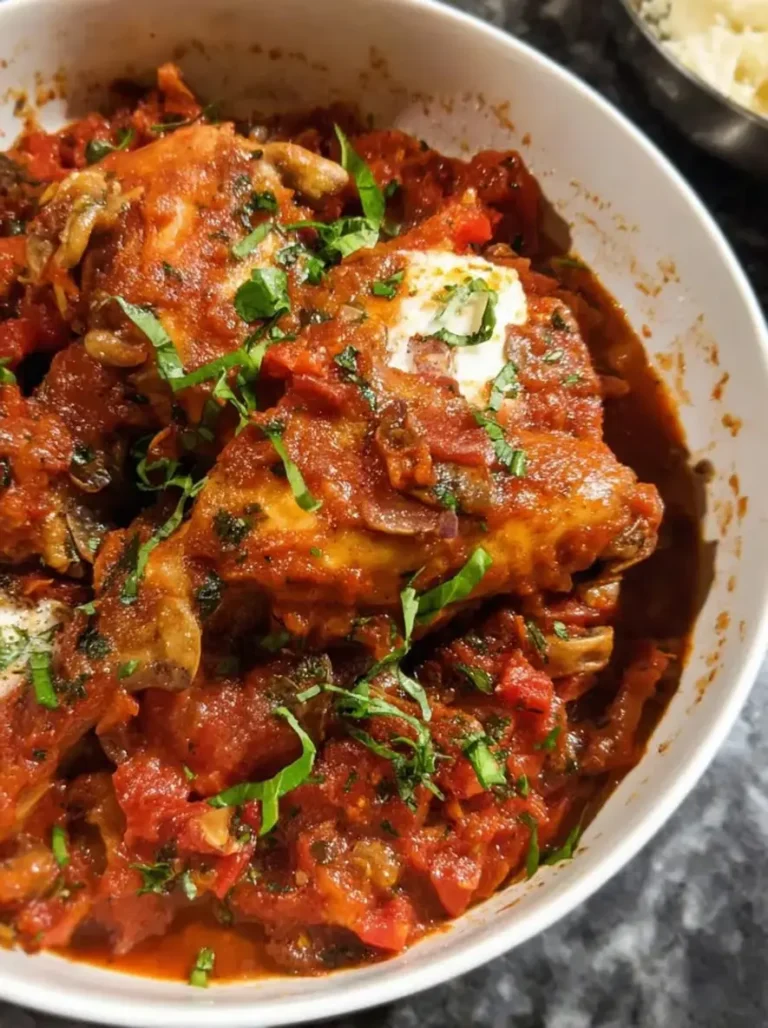
Rustic Italian Slow-Cooked Chicken Cacciatore with Red Wine Tomato Sauce, Creamy Burrata & Crispy Pancetta
This rustic Italian chicken cacciatore is slow-cooked with a rich red wine tomato sauce, then topped with creamy burrata and crispy pancetta. A hearty and elegant one-pot meal that’s full of flavor.
- Total Time: 2 hours 20 minutes
- Yield: 6 servings 1x
Ingredients
- For the Chicken:
- 2½ lbs bone-in, skin-on chicken thighs (or boneless thighs)
- 2 tbsp olive oil
- 1 tsp kosher salt
- 1 tsp black pepper
- 1 tsp garlic powder
- 1 tsp dried oregano
- 1 tsp dried basil
- ½ tsp dried thyme
- For the Sauce:
- 1 large onion, sliced
- 2 bell peppers (red and yellow), sliced
- 8 oz cremini mushrooms, sliced
- 5 cloves garlic, minced
- 1 can (28 oz) crushed tomatoes
- ½ cup dry red wine
- 1 tbsp tomato paste
- 1 tbsp balsamic vinegar
- 1 tsp Italian seasoning
- 2 bay leaves
- ½ tsp crushed red pepper flakes (optional)
- For Serving (Optional but Recommended):
- Creamy burrata or stracciatella
- Crispy pancetta
- Fresh oregano leaves
- Shaved Parmigiano-Reggiano
- Calabrian chili oil
- Balsamic fig reduction
Instructions
- Season the chicken thighs on both sides with salt, pepper, garlic powder, oregano, basil, and thyme.
- Heat olive oil in a large Dutch oven or heavy pot over medium-high heat. Add the chicken thighs, skin-side down, and sear until golden brown, about 4-5 minutes per side. Remove the chicken and set aside.
- In the same pot, add the sliced onion, bell peppers, and mushrooms. Sauté for 5-7 minutes until softened and starting to brown.
- Add the minced garlic and cook for another minute until fragrant.
- Stir in the crushed tomatoes, red wine, tomato paste, balsamic vinegar, Italian seasoning, bay leaves, and crushed red pepper flakes (if using). Bring to a simmer.
- Return the chicken thighs to the pot, nestling them into the sauce. Cover and reduce heat to low. Let it gently simmer for 1.5 to 2 hours, or until the chicken is tender and falling off the bone.
- Remove the bay leaves and adjust seasoning with salt and pepper to taste.
- Serve hot, topped with torn burrata, crispy pancetta, fresh oregano leaves, shaved Parmigiano-Reggiano, a drizzle of Calabrian chili oil, and balsamic fig reduction if desired.
Notes
For a richer sauce, you can remove the chicken after simmering to a covered plate, then reduce the sauce over medium-high heat until slightly thickened, then return the chicken to the pot.
- Prep Time: 20 minutes
- Cook Time: 2 hours
- Method: Main Course
- Cuisine: Italian
Nutrition
- Calories: 620 kcal
- Sugar: 12 g
- Fat: 42 g
- Carbohydrates: 22 g
- Protein: 38 g
Tried This Recipe? Leave a Comment!
Did you make this recipe? I’d love to hear how it turned out! Please leave a comment and a rating below. Your feedback helps other home cooks and supports cheerychop.com!
For more delicious inspiration, follow me on Pinterest!