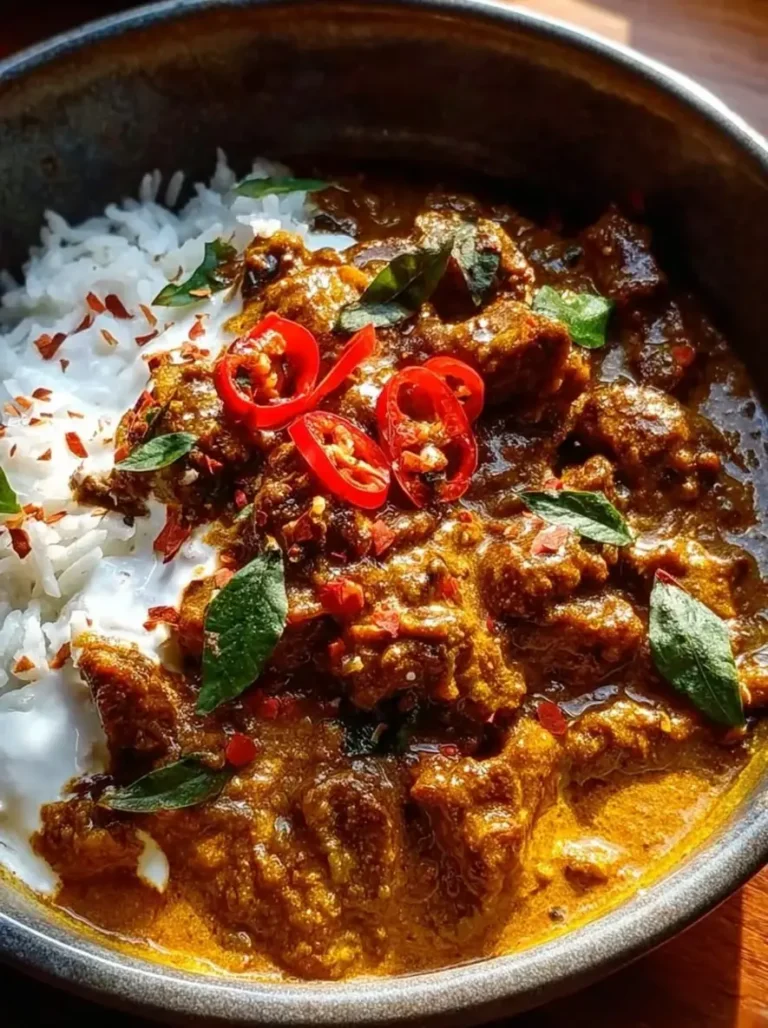
Slow-Simmered Lamb Madras Curry with Coconut Tomato Sauce
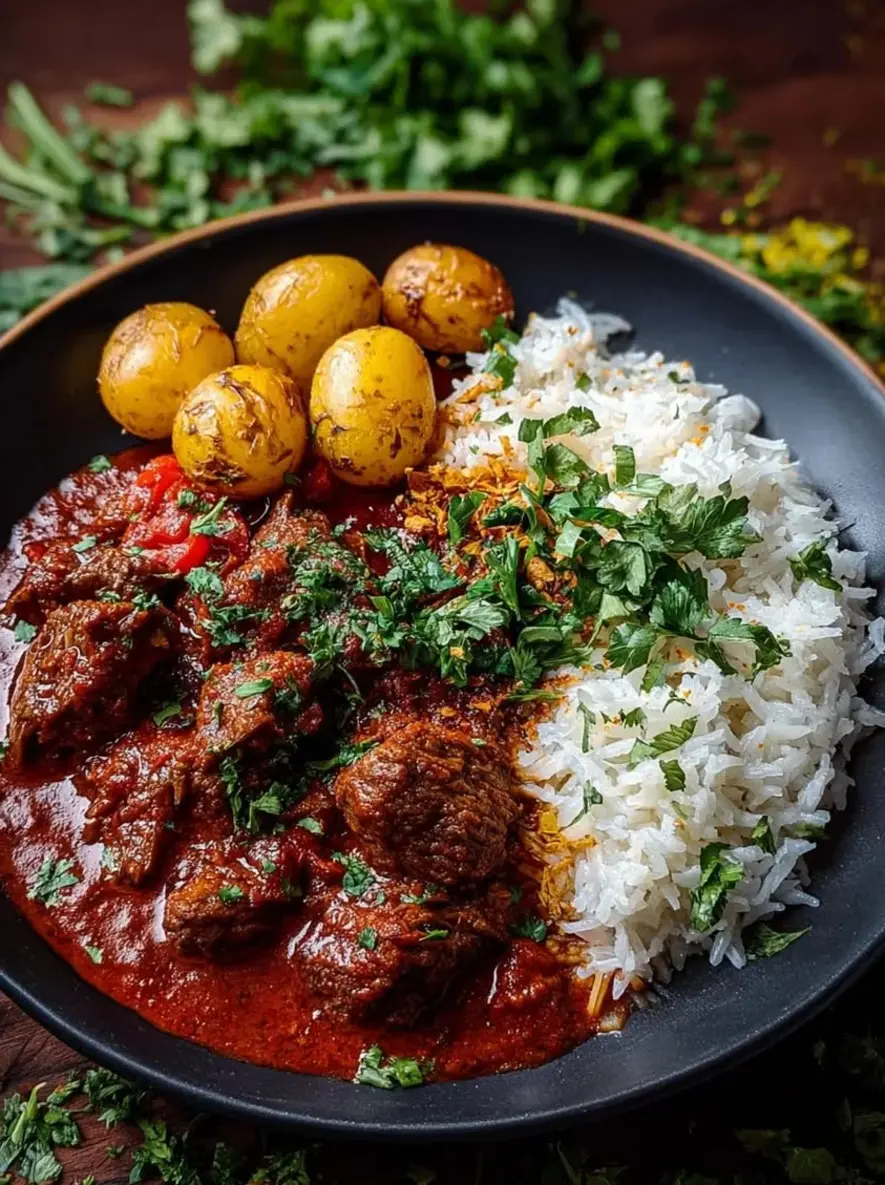
Table of Contents
Slow-Simmered Lamb Madras Curry with Coconut Tomato Sauce – A Fragrant, Deeply Comforting Bowl
I still remember the first time I made a slow-simmered lamb Madras curry in my tiny NYC kitchen. The aromas — cumin, coriander, turmeric, and that signature Madras curry powder — filled every corner of my apartment, drifting out into the hallway and pulling my neighbor over to ask what on earth was cooking. That’s the kind of power this Lamb Madras curry recipe has. It’s a dish that announces itself with warmth and depth before you even take a bite. My version uses a slow simmered lamb curry technique I learned from a spice master in Chennai, combined with a silky coconut tomato sauce that balances heat with creaminess. This isn’t a quick weeknight curry — it’s a weekend project that rewards every minute you give it.
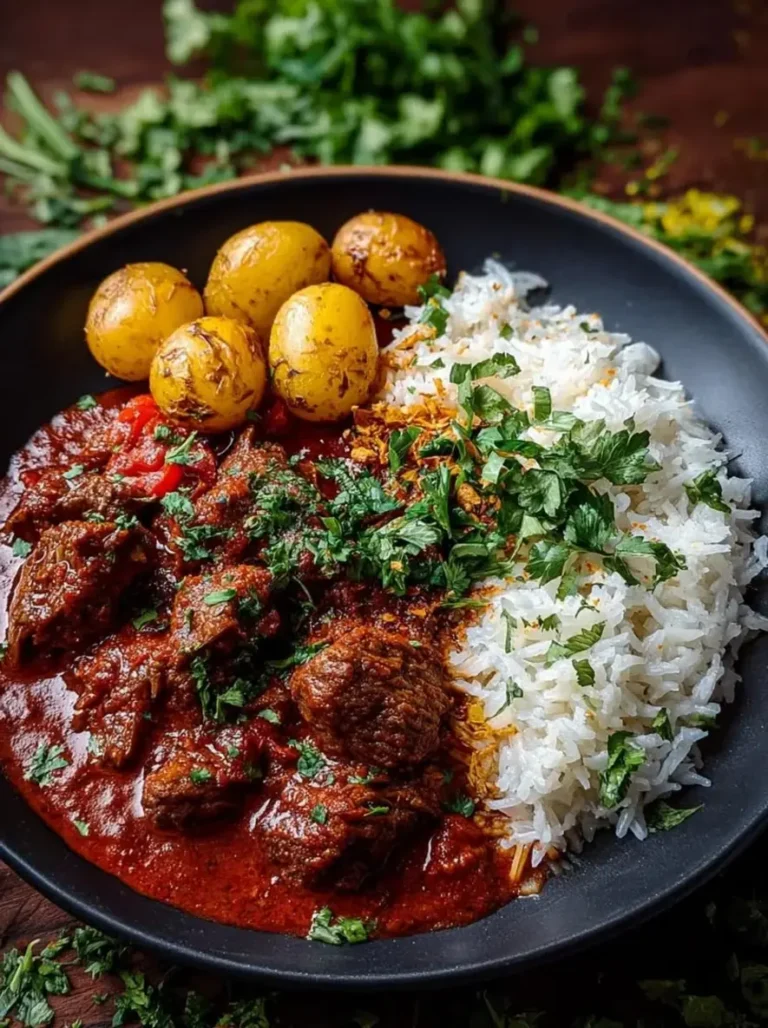
Imagine tender chunks of lamb shoulder, browned to a deep mahogany, then slowly cooked in a sauce built from crushed tomatoes, coconut milk, and a fragrant blend of spices. The Madras curry powder provides a warm, medium heat with notes of fenugreek and fennel, while the ground cumin and coriander add an earthy foundation. As the curry simmers, the lamb becomes so tender it practically falls apart at the touch of a fork. The sauce thickens and deepens, turning into a rich, velvety blanket that clings to each piece of meat. A final hit of fresh cilantro and a squeeze of lime brightens everything — this is comfort food at its most aromatic and satisfying.
What makes this coconut tomato lamb curry truly special is the layering of flavor. I was trained in Paris to build sauces methodically — sweating the aromatics, blooming the spices, and simmering low and slow. That French discipline meets the bold, vibrant soul of South Indian cooking in this pot. The result is a Madras curry with lamb that tastes both deeply traditional and wonderfully approachable. 💡 Stella’s Pro Tip: Browning the lamb in batches is non-negotiable — crowding the pan steams the meat and you lose that deep, caramelized flavor that makes this curry sing. And one common mistake? Adding all the spice powder at once without blooming it first — that raw, dusty taste is something you want to avoid entirely.
Why This Lamb Madras Curry Recipe Is the Best
The Flavor Secret. Most lamb Madras recipes stop at curry powder. I build mine in layers — starting with whole spices toasted in oil, then blooming the Madras powder with garlic and ginger before adding the tomatoes. This technique, which I adapted from my time at Le Cordon Bleu in Paris, ensures every granule of spice releases its full essential oil potential. The coconut tomato sauce acts as a canvas that carries those deep, complex notes without overwhelming them. The result is a fragrant Indian lamb curry that tastes like it has been simmering for hours — because it has.
Perfected Texture. The slow-simmering process is the heart of this recipe. Lamb shoulder is a tough, fatty cut that needs time — at least 1.5 hours — to break down its collagen into rich, silky gelatin. I simmer the curry covered for most of the time, then uncover it at the end to let the sauce reduce and concentrate. The meat becomes so tender it yields to the gentlest pressure, yet it still holds its shape in the spoon. That’s the sign of a properly slow simmered lamb curry — meat that’s fork-tender but not falling apart into mush.
Foolproof & Fast. Despite the rich complexity, this recipe is surprisingly forgiving. You don’t need hard-to-find ingredients — everything is available at a standard US grocery store. The instructions are designed for home cooks of any level. As long as you brown the meat well, bloom your spices, and let the pot do its work on low heat, you will get a spectacular result every time. This is the kind of Lamb Madras curry recipe that makes you look like you spent all day in the kitchen, even though much of that time is hands-off simmering.
Lamb Madras Curry Recipe Ingredients
I source my spices from Kalustyan’s on Lexington Avenue — it’s a New York institution that has been supplying the city’s best home cooks and chefs for decades. Walking through those aisles takes me back to the spice souks of Marrakech, where my mother would let me choose bags of cumin and coriander for her tagines. For this coconut tomato lamb curry, every ingredient plays a specific role, and I want you to feel confident picking the best version of each.
Ingredients List
- 2 pounds lamb shoulder, cut into bite-sized chunks
- 2 tablespoons vegetable oil
- 1 large onion, finely diced
- 4 cloves garlic, minced
- 1 tablespoon fresh ginger, grated
- 2 tablespoons Madras curry powder
- 1 teaspoon ground cumin
- 1 teaspoon ground coriander
- 1/2 teaspoon turmeric
- 1/4 teaspoon cayenne pepper (optional)
- 1 can (14 ounces) crushed tomatoes
- 1 can (13.5 ounces) full-fat coconut milk
- Salt to taste
- Fresh cilantro and lime wedges for garnish
Ingredient Spotlight
Lamb Shoulder. This is the best cut for slow simmering because it has enough marbling and connective tissue to break down into tender, juicy pieces over low heat. Look for pieces with some fat cap still attached — it bastes the meat from within. If lamb shoulder isn’t available, beef chuck works beautifully, though the flavor will be less distinctive. Avoid lean cuts like leg or loin — they will dry out and become tough during the long simmer.
Madras Curry Powder. Not all curry powders are created equal. Madras curry powder is a specific blend from South India that features a higher proportion of chili, fenugreek, and fennel compared to milder blends. I recommend Swad or MDH brands, which you can find in most Indian grocery stores or online. The freshness of your curry powder directly affects the final flavor — if yours has been sitting in the cupboard for more than a year, buy a new batch.
Coconut Milk. Full-fat coconut milk is essential for the velvety texture of this sauce. Light coconut milk will separate and won’t provide the same creamy richness. Shake the can well before opening, or better yet, whisk it in a bowl to ensure the cream and liquid are fully combined before adding it to the pot. One can is the perfect amount for this recipe — enough to enrich without making the curry taste like dessert.
Crushed Tomatoes. Canned crushed tomatoes provide the perfect consistency — thick enough to cling to the meat, but not so chunky that they compete with the lamb. I like Muir Glen or San Marzano varieties for their sweetness and low acidity. If you only have whole peeled tomatoes, crush them by hand before adding. Canned diced tomatoes will work in a pinch, though they will leave you with a slightly more textured sauce.
| Original Ingredient | Best Substitution | Flavor / Texture Impact |
|---|---|---|
| Lamb Shoulder | Beef Chuck | Beef is leaner and less sweet; still tender but less distinctive flavor |
| Madras Curry Powder | Homemade spice blend (2 tbsp chili powder + 1 tbsp each cumin, coriander, fenugreek) | More control over heat and depth; takes extra prep time |
| Coconut Milk (full-fat) | Heavy Cream + 1/2 cup water | Richer and less sweet; no coconut flavor (use if you want a creamier, milder sauce) |
| Crushed Tomatoes | Fresh tomatoes, blanched and crushed (about 4 medium) | Brighter, more acidic flavor; sauce will be slightly thinner |
| Fresh Ginger | 1 tsp ground ginger (if in a pinch) | Less bright and pungent; missing the fresh heat — use only as last resort |
How to Make Slow-Simmered Lamb Madras Curry — Step-by-Step
Trust me — this slow simmered lamb curry is easier than it looks. You just need a good heavy pot (a Dutch oven is ideal), a bit of patience, and these straightforward steps. Let’s cook together.
Step 1: Brown the Lamb
Heat 1 tablespoon of the vegetable oil in a large Dutch oven or heavy pot over medium-high heat. Pat the lamb chunks dry with paper towels — moisture is the enemy of browning. Working in batches (do not crowd the pot), add the lamb in a single layer and cook undisturbed for 3–4 minutes per side, until a deep brown crust forms. Use tongs to turn the pieces. Transfer the browned lamb to a plate and set aside. Repeat with remaining lamb, adding more oil if needed.
💡 Stella’s Pro Tip: The darker the crust, the deeper the flavor. If you pull the lamb off the pan too early, you lose that savory foundation. Think of it like a steak — you want a proper sear.
Step 2: Sweat the Aromatics
Reduce the heat to medium. In the same pot, add the remaining 1 tablespoon of oil. Add the diced onion and cook, stirring frequently, for about 5 minutes until softened and translucent. Scrape up any browned bits from the bottom of the pot — that’s pure flavor waiting to be released. Add the minced garlic and grated ginger and cook for 1 minute more, until fragrant.
⚠️ Common Mistake to Avoid: Overcooking the garlic and ginger. If they burn, they turn bitter and ruin the entire dish. Keep the heat at medium and stir constantly during this minute.
Step 3: Bloom the Spices
Stir in the Madras curry powder, ground cumin, ground coriander, turmeric, and cayenne pepper (if using). Cook for 1 minute, stirring constantly. The mixture will become fragrant and slightly pasty — this is the blooming process, which awakens the volatile oils in the spices and deepens their flavor dramatically. If the mixture seems too dry, add a splash of water or a bit more oil to keep it moving.
💡 Stella’s Pro Tip: Blooming spices in the hot oil and aromatics is the single most important step in any curry recipe. It’s a technique I learned in Paris for building sauce bases — and it transforms a good curry into a great one.
Step 4: Combine and Simmer
Return the browned lamb to the pot, along with any juices that have accumulated on the plate. Add the crushed tomatoes and stir to combine. Bring the mixture to a gentle simmer — you should see small bubbles breaking the surface, not a rolling boil. Reduce the heat to low, cover the pot, and let it simmer for 1.5 to 2 hours. Stir occasionally to prevent sticking. After about an hour, add the coconut milk and stir well.
Step 5: Check and Thicken
After 1.5 hours, check the lamb for tenderness — it should yield easily when pierced with a fork. If it’s still tough, continue simmering covered for another 15–30 minutes. Once the lamb is tender, uncover the pot and simmer for an additional 15–20 minutes if you prefer a thicker sauce. Taste and adjust seasoning with salt — start with 1/2 teaspoon and add more as needed. The sauce should be rich, slightly spicy, and deeply aromatic.
⚠️ Common Mistake to Avoid: Adding the coconut milk too early in the simmer can cause it to separate and curdle. I always add it during the last hour of cooking, which gives it time to meld without breaking.
Step 6: Rest and Serve
Remove the pot from the heat and let it rest for 5–10 minutes before serving. This allows the flavors to settle and the sauce to relax slightly. Serve over steamed basmati rice or with warm naan bread. Garnish with fresh cilantro leaves and a squeeze of lime juice — the brightness cuts through the richness beautifully.
| Step | Action | Duration | Key Visual Cue |
|---|---|---|---|
| 1 | Brown lamb in batches | 8–10 min total | Deep brown crust on all sides |
| 2 | Cook onion, garlic, ginger | 6 min | Onion translucent, garlic fragrant |
| 3 | Bloom spices in oil | 1 min | Fragrant, slightly pasty |
| 4 | Add lamb and tomatoes, simmer covered | 1.5–2 hrs | Lamb fork-tender, sauce deepened |
| 5 | Add coconut milk, uncover to thicken | 15–20 min | Sauce coats the back of a spoon |
| 6 | Rest and serve | 5–10 min rest | Aromas settle, sauce relaxes |
Serving & Presentation
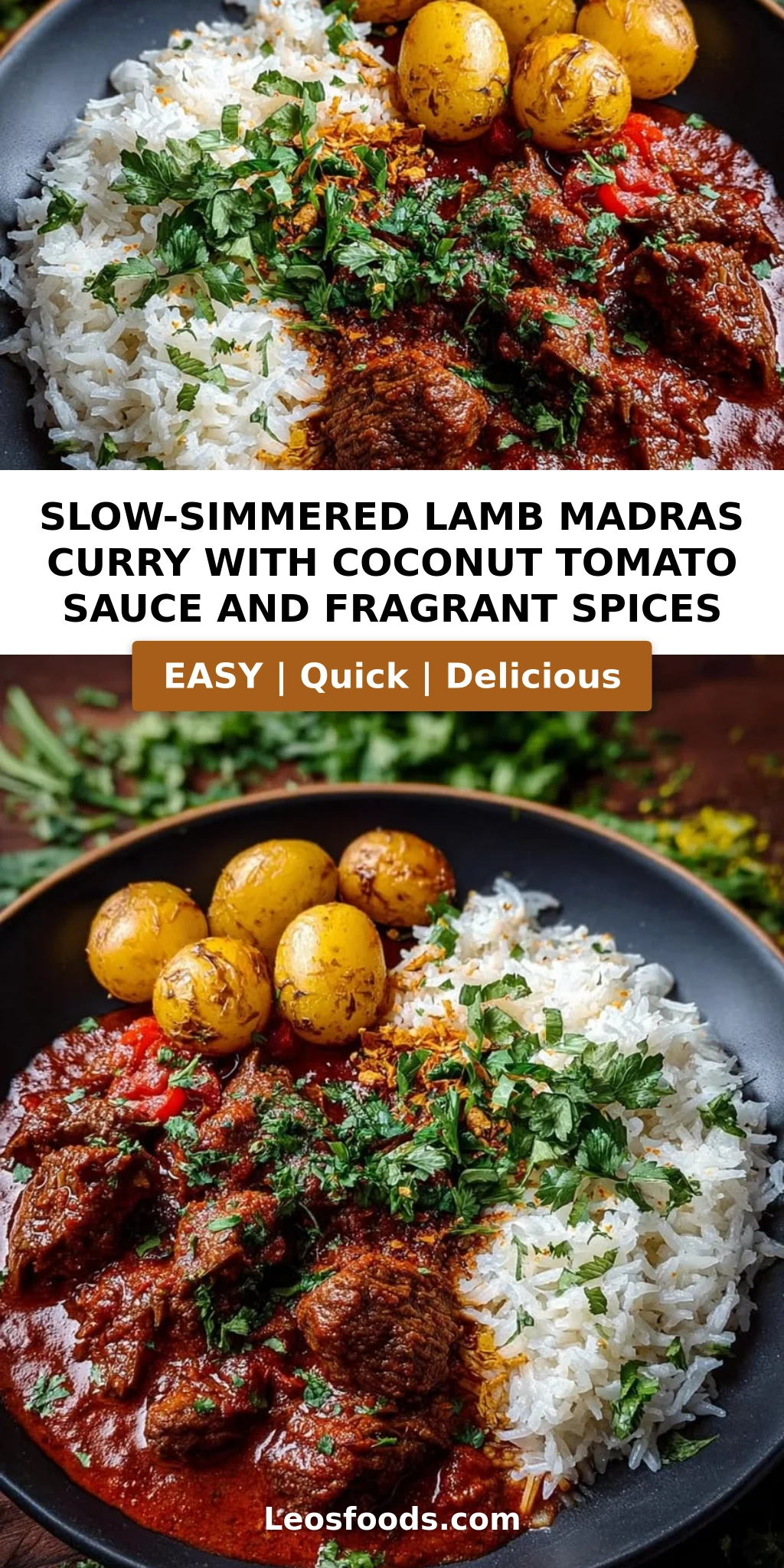
This fragrant Indian lamb curry deserves a beautiful presentation. I like to serve it in a wide, shallow bowl — the kind that lets the sauce pool around the meat. Start with a generous scoop of steamed basmati rice, then ladle the curry alongside or on top. The rice should be fluffy and separate, each grain distinct, ready to soak up that velvety coconut tomato sauce. A final shower of fresh cilantro leaves and a lime wedge on the side complete the dish.
For a Moroccan touch that reminds me of home, I sometimes sprinkle a pinch of dried rose petals or toasted slivered almonds over the top — it adds a subtle sweetness and a beautiful visual contrast. In Paris, I learned to finish sauces with a swirl of crème fraîche or yogurt; here, a dollop of plain Greek yogurt works wonders to cool the heat and add a tangy counterpoint. For a NYC-inspired twist, serve with warm naan brushed with garlic butter and a side of quick-pickled red onions.
This curry also reheats beautifully for lunch the next day — the flavors continue to meld and deepen overnight. I often make a double batch and freeze half for busy weeks. The sauce works wonderfully as a base for other proteins, too — try it with chickpeas for a vegetarian version, or with shrimp for a quicker weeknight meal.
| Pairing Type | Suggestions | Why It Works |
|---|---|---|
| Side Dish | Steamed basmati rice, garlic naan, or roasted cauliflower | Neutral bases soak up the rich, spicy sauce without competing |
| Sauce / Dip | Plain Greek yogurt, mango chutney, or cucumber raita | Cool, creamy elements balance the heat and add freshness |
| Beverage | Cold lager, dry Riesling, or salted lassi | Crisp, cold drinks cut through the richness and spice |
| Garnish | Fresh cilantro, lime wedges, toasted almonds, or sliced green chiles | Adds brightness, texture, and a pop of color |
Make-Ahead, Storage & Reheating
As a busy mom and food blogger in New York City, I rely on make-ahead meals to keep my family fed without stress. This slow simmered lamb curry is one of my favorite meal-prep staples. It actually tastes better the next day — the flavors continue to meld and deepen as the curry sits overnight. Here’s how I store and reheat it for the best results.
| Method | Container | Duration | Reheating Tip |
|---|---|---|---|
| Refrigerator | Airtight glass or BPA-free plastic container | Up to 5 days | Reheat gently on stovetop over medium-low heat, adding a splash of water or coconut milk if needed |
| Freezer | Freezer-safe zip-top bag or rigid container (leave 1 inch headspace) | Up to 3 months | Thaw overnight in the fridge, then reheat in a pot over low heat, stirring occasionally |
| Make-Ahead | Prepare fully, cool completely, then refrigerate | Up to 2 days in advance | Reheat on stovetop; flavors are even better after 24 hours |
When reheating from frozen, I’ve found that the sauce can thicken considerably as it cools. Don’t be alarmed — simply add a splash of water, coconut milk, or even chicken broth while reheating to restore its silky consistency. The lamb remains tender and flavorful even after freezing, making this a perfect candidate for batch cooking. I often double the recipe and freeze individual portions for those nights when I need a deeply satisfying meal in minutes.
One more thing from my NYC kitchen: if you’re reheating in the microwave, use a lower power setting (50-70%) and stir every minute to ensure even heating. The sauce can sputter and splatter if overheated too quickly. But honestly — the stovetop is always the best method for this curry. It gives you control over the texture and allows the flavors to re-marry beautifully.
Variations & Easy Swaps
One of the things I love most about this Madras curry with lamb is how adaptable it is. Whether you’re feeding a crowd, accommodating dietary restrictions, or just looking to switch things up, these variations will keep the recipe fresh and exciting. Each one has been tested in my own kitchen, so you can try them with confidence.
| Variation | Key Change | Best For | Difficulty Impact |
|---|---|---|---|
| Vegetarian Chickpea Madras | Replace lamb with 2 cans chickpeas (drained), reduce simmer to 30 min | Meatless Monday / vegetarian guests | Easier (much shorter cook time) |
| Creamy Cashew Madras | Soak 1/2 cup cashews, blend with 1 cup water, add in place of coconut milk | Dairy-free / nutty richness without coconut | Medium (requires blender) |
| Spicy Hyderabadi-Style Lamb | Add 2 dried red chiles, 1 tsp garam masala at end, and 1 tbsp tamarind paste | Heat lovers / South Indian flavor fans | Same (just add ingredients) |
Vegetarian Chickpea Madras
This version is incredibly satisfying and comes together in under 45 minutes. After blooming the spices and aromatics, add two cans of drained chickpeas along with the crushed tomatoes and coconut milk. Simmer for just 30 minutes — enough time for the sauce to thicken and the chickpeas to absorb all those beautiful flavors. I love serving this with a dollop of yogurt and some quick-pickled onions for crunch. It’s become a staple in my house on busy weeknights, and even my meat-loving husband asks for it regularly.
Creamy Cashew Madras (Dairy-Free / Nutty)
For a twist on the coconut version, soak 1/2 cup of raw cashews in hot water for 20 minutes, then blend with 1 cup of fresh water until completely smooth. Add this cashew cream in place of the coconut milk during the last 30 minutes of simmering. The result is a subtly sweet, velvety sauce with a completely different character — nutty and rich without any coconut flavor. This is perfect for those who want a dairy-free sauce but aren’t fans of coconut, or for anyone looking to experiment with new textures. I tested this version on a snowy NYC afternoon and it was devoured in minutes.
Spicy Hyderabadi-Style Lamb
If you love heat, this variation is for you. Along with the Madras curry powder, add 2 dried red chiles (broken into pieces) when blooming the spices. At the very end of cooking, stir in 1 teaspoon of garam masala and 1 tablespoon of tamarind paste. The tamarind adds a sour, fruity note that cuts through the richness and brightens the entire dish. This style is inspired by the bold, fiery curries of Hyderabad, where heat and sourness dance together. Serve with extra lime wedges and a cooling cucumber raita to balance the fire.
Share Your Version!
I absolutely love hearing how this Lamb Madras curry recipe turns out in your kitchen. Did you try one of the variations? Did you add your own twist? Maybe you discovered a new favorite side dish to serve alongside it? Drop a comment below and let me know — I read every single one, and your feedback helps me create even better recipes for you. If you’re feeling generous, a star rating would mean the world to me and helps other home cooks find this recipe too.
And if you share a photo on Instagram or Pinterest, be sure to tag @leosfoods so I can see your beautiful creation. There’s nothing that makes my day quite like seeing one of my recipes come to life on your table. Have a question about the technique or an ingredient? Ask away in the comments — I’m here to help you make this slow simmered lamb curry a success in your own home.
From my NYC kitchen to yours — I hope this recipe brings as much warmth to your table as it does to mine. — Stella 🧡
What is the best cut of lamb to use for slow-simmered Madras curry?
Lamb shoulder is hands-down the best cut for a slow-simmered Madras curry. It has enough marbling and connective tissue to break down into tender, juicy pieces over the long cooking time. The fat bastes the meat from within, keeping it moist and flavorful. Look for lamb shoulder that has some fat cap still attached — avoid lean cuts like leg or loin, which will dry out and become tough. If lamb shoulder isn’t available, beef chuck is an excellent substitute, though the flavor will be slightly different. I always buy my lamb from a trusted butcher or the meat counter at my local Whole Foods — never pre-packaged stew meat, which is often cut from less desirable parts.
Can I substitute coconut milk with cream or yogurt in this lamb Madras recipe?
Yes, you can substitute coconut milk with heavy cream or Greek yogurt, but each will change the final dish in noticeable ways. Heavy cream creates a richer, more luxurious sauce with a milder, less sweet flavor — it’s a great option if you want a creamier curry without the coconut taste. Greek yogurt, on the other hand, adds a tangy, bright note that can be lovely, but it must be added off the heat and stirred in gently to prevent curdling. I recommend using full-fat yogurt and tempering it with a ladleful of hot sauce before stirring it into the pot. Neither will replicate the unique sweet richness of coconut milk, but both are delicious in their own right.
How long should I simmer lamb Madras curry for the most tender meat?
For the most tender, fall-apart lamb, you should simmer the curry for 1.5 to 2 hours on low heat. The exact time depends on the size of your lamb pieces and how the meat was cut. After 1.5 hours, check the lamb by piercing it with a fork — if it meets resistance, continue simmering covered for another 15–30 minutes. The ideal texture is meat that yields easily but still holds its shape. I also recommend simmering covered for most of the time, then uncovering for the last 15–20 minutes to thicken the sauce. Patience is key here — rushing the simmer will leave you with tough, chewy meat and a sauce that hasn’t fully developed its depth.
What fragrant spices are essential for an authentic Madras curry base?
An authentic Madras curry base relies on a specific blend of warm, aromatic spices. The essential ones are Madras curry powder (a pre-blended mix containing chili, coriander, cumin, fenugreek, fennel, and turmeric), plus additional ground cumin and ground coriander for depth. Turmeric adds a beautiful golden color and earthy note, while cayenne pepper provides optional heat. For the most fragrant result, I always bloom these spices in hot oil along with fresh garlic and ginger — this step awakens their volatile oils and transforms them from dusty powders into a deeply aromatic paste. Fenugreek leaves (dried) are another wonderful addition if you can find them — they add a maple-like sweetness that’s signature to many South Indian curries.
Can I make lamb Madras curry in a slow cooker or Instant Pot?
Absolutely, and both work wonderfully. For a slow cooker, brown the lamb and bloom the spices on the stovetop first, then transfer everything to the slow cooker with the crushed tomatoes and cook on low for 6–8 hours. Add the coconut milk during the last hour of cooking. For an Instant Pot, use the sauté function to brown the lamb and bloom the spices, then pressure cook on high for 35 minutes with a natural release. Add the coconut milk after releasing the pressure and use the sauté function to thicken the sauce. The stovetop method gives you the most control over texture, but these appliance methods are excellent for busy days when you need a hands-off approach.
Is this lamb Madras curry very spicy? How can I adjust the heat level?
This curry has a moderate level of heat — warm and aromatic rather than fiery. The Madras curry powder provides a medium heat with a complex, layered character. If you’re sensitive to spice, you can easily adjust the heat level in several ways. Omit the optional cayenne pepper entirely, which removes the most concentrated source of heat. You can also use a mild curry powder in place of Madras powder, though you’ll lose some of the signature flavor complexity. For those who love heat, add the cayenne and consider including a diced fresh green chile (like serrano or Thai bird’s eye) with the aromatics. The coconut milk in this recipe naturally balances the heat, so even spice-sensitive eaters can often enjoy it as written.
What should I serve with lamb Madras curry for a complete meal?
For a complete and satisfying meal, I recommend serving this lamb Madras curry with steamed basmati rice as the foundation — the fluffy, separate grains are perfect for soaking up the rich sauce. Warm garlic naan bread is another essential for scooping every last drop. For side dishes, a simple cucumber and tomato salad with lemon and salt adds freshness and crunch. A cooling cucumber raita (yogurt with cucumber and mint) helps balance the heat beautifully. I also love serving a quick Indian-style pickle or mango chutney on the side for bursts of tangy sweetness. Finish the meal with a cup of masala chai or a simple fruit dessert — the curry is hearty enough to be the star.
How can I thicken my lamb Madras curry sauce if it’s too thin?
If your sauce is thinner than you’d like, there are several foolproof ways to thicken it. The most effective method is to uncover the pot and let it simmer for an additional 10–15 minutes — this allows excess liquid to evaporate naturally, concentrating the flavors and creating a thicker, more velvety sauce. You can also mash a few pieces of the cooked lamb against the side of the pot with a spoon — the meat will break down and thicken the sauce beautifully. For a more traditional approach, mix 1 tablespoon of cornstarch with 2 tablespoons of cold water to create a slurry, then stir it into the simmering curry and cook for 2–3 minutes until thickened. Avoid adding flour directly, as it can create lumps and a raw taste.
Can I make this lamb Madras curry dairy-free and gluten-free?
Yes, this lamb Madras curry is naturally both dairy-free and gluten-free when made as written. The recipe uses coconut milk rather than any dairy product, and all the spices and aromatics are naturally free of gluten. The only potential issue is if your Madras curry powder contains any additives — most pure spice blends are gluten-free, but always check the label to be sure. Brands like Swad, MDH, and Simply Organic are reliably gluten-free. I serve this curry with rice or gluten-free naan (many brands are now available at Whole Foods and Trader Joe’s). It’s a wonderfully inclusive dish that most people with dietary restrictions can enjoy without modifications.
How do I store leftover lamb Madras curry and how long does it keep?
Leftover lamb Madras curry stores beautifully and actually tastes even better the next day as the flavors continue to meld. Store it in an airtight container in the refrigerator for up to 5 days. For longer storage, freeze the curry in a freezer-safe container or zip-top bag for up to 3 months — just leave about an inch of headspace to allow for expansion. When reheating, the sauce may have thickened, so add a splash of water, coconut milk, or broth to restore the desired consistency. Reheat gently on the stovetop over medium-low heat, stirring occasionally. I often make a double batch specifically for freezing — it’s one of the best make-ahead meals in my weekly rotation.
Love This Recipe? Save It to Pinterest!
If you enjoyed this Slow-Simmered Lamb Madras Curry with Coconut Tomato Sauce and Fragrant Spices recipe, don’t let it get lost in your browser tabs! 😄 Pin it now so you can find it again anytime — and explore hundreds more tried-and-tested recipes waiting for you on my Pinterest boards.
👉 Follow Stella on Pinterest @stellarecipeblog
📌 Pin this recipe · 🔁 Re-pin your favorites · 💬 Tag me when you make it — I love seeing your creations!
⭐ Did you make this recipe? I’d love to hear from you!
Leave a star rating below, share your photo on Instagram with @leosfoods, or tag me on Pinterest. Your feedback helps me create better recipes for our community!
🌀 Question of the day: What’s your favorite side dish to serve with a slow-simmered curry like this? Drop your answer in the comments!
Slow-Simmered Lamb Madras Curry with Coconut Tomato Sauce and Fragrant Spices
A rich and aromatic lamb curry with a coconut tomato sauce, slow-simmered for deep flavor.
- Total Time: 2 hours 40 minutes
- Yield: 4-6 1x
Ingredients
- 2 pounds lamb shoulder, cut into bite-sized chunks
- 2 tablespoons vegetable oil
- 1 large onion, finely diced
- 4 cloves garlic, minced
- 1 tablespoon fresh ginger, grated
- 2 tablespoons Madras curry powder
- 1 teaspoon ground cumin
- 1 teaspoon ground coriander
- 1/2 teaspoon turmeric
- 1/4 teaspoon cayenne pepper (optional)
- 1 can (14 ounces) crushed tomatoes
Instructions
- Heat the vegetable oil in a large pot over medium-high heat.
- Add the lamb chunks and brown on all sides, working in batches if needed. Remove and set aside.
- In the same pot, add the diced onion and cook until softened, about 5 minutes.
- Add the garlic and ginger, cook for 1 minute until fragrant.
- Stir in the Madras curry powder, cumin, coriander, turmeric, and cayenne pepper (if using). Cook for 1 minute.
- Return the lamb to the pot and add the crushed tomatoes. Bring to a simmer.
- Reduce heat to low, cover, and simmer for 1.5 to 2 hours, or until lamb is tender. Stir occasionally.
- Uncover and simmer for an additional 15-20 minutes if you like a thicker sauce. Adjust seasoning with salt to taste.
- Serve over rice or with naan bread.
- Prep Time: 20 minutes
- Cook Time: 2 hours 20 minutes
- Method: Main Course
- Cuisine: Indian
Tried This Recipe? Leave a Comment!
Did you make this recipe? I’d love to hear how it turned out! Please leave a comment and a rating below. Your feedback helps other home cooks and supports cheerychop.com!
For more delicious inspiration, follow me on Pinterest!