Creamy Thai Coconut Beef Curry with Lime and Basil
“`html
Table of Contents
Thai-Style Creamy Coconut Beef Curry with Yellow Curry Spices, Lime, and Fresh Basil – A Rich, Fragrant One-Pot Wonder
I still remember the first time I made a Thai coconut beef curry that truly sang. I was standing in my tiny Parisian kitchen — a former pastry chef trained in French technique, missing the bold, layered flavors I grew up with in my mother’s Moroccan kitchen. That night, I grabbed a jar of yellow curry paste from a little épicerie, a can of coconut milk, and a bunch of fresh basil from the market downstairs. The moment that curry hit my lips, I knew I had found something special. This Thai coconut beef curry recipe is the result of years of tweaking — blending the slow-cooked comfort of North African tagines with the bright, aromatic punch of Thai cuisine. It’s rich, creamy, and finished with fresh lime and basil for a pop of brightness that cuts through all that gorgeous, velvety sauce.
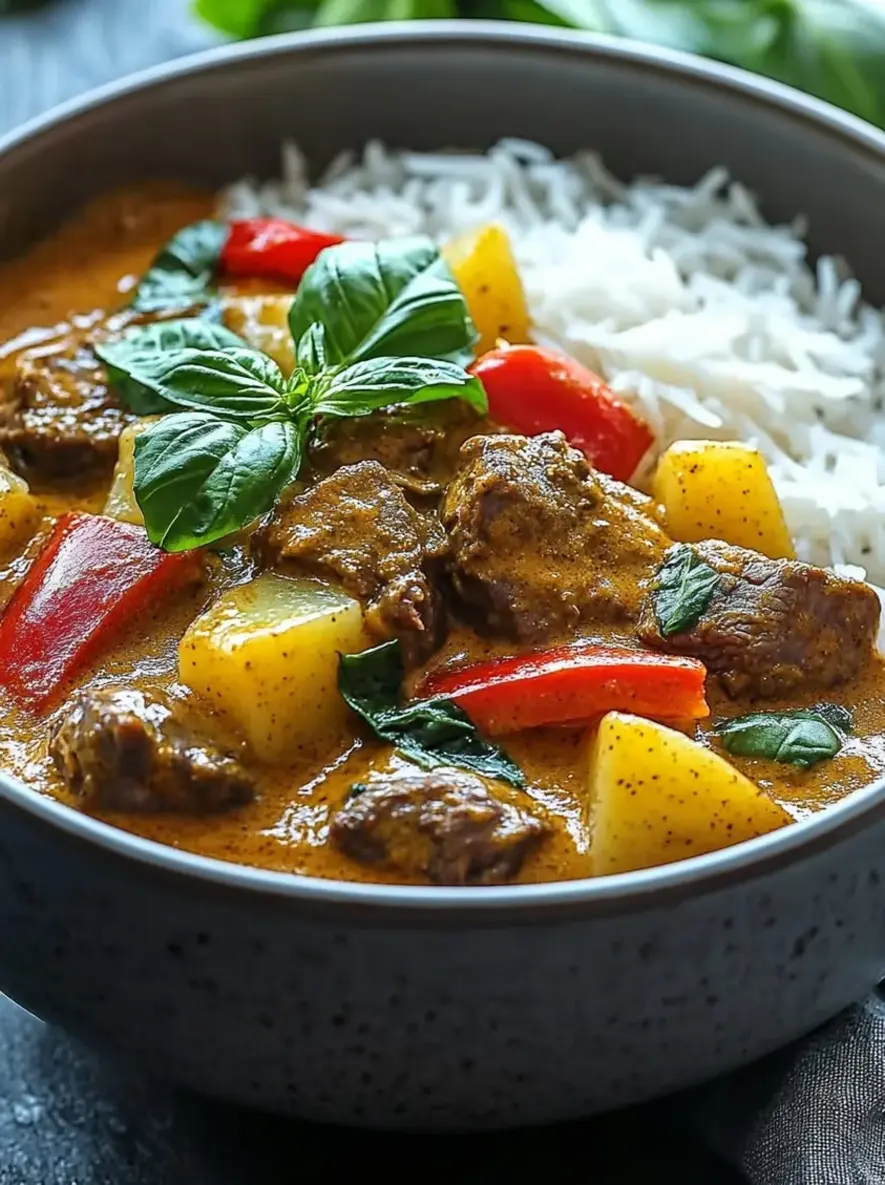
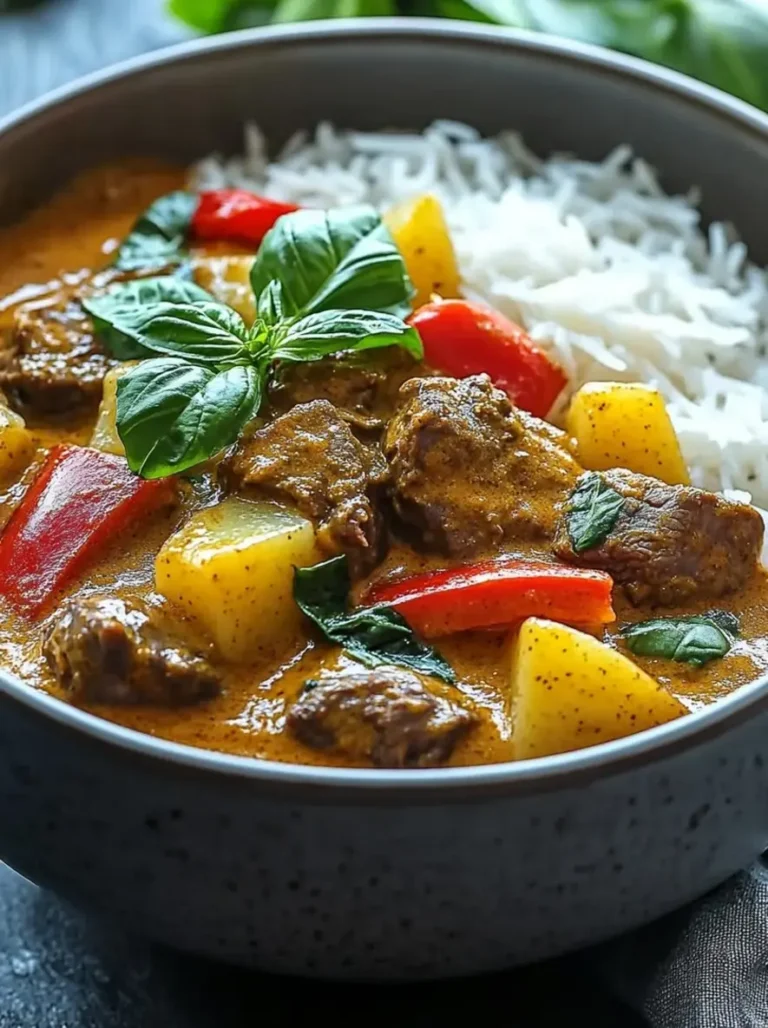
Imagine tender chunks of beef chuck, simmered low and slow until they practically melt into a luscious, golden-yellow coconut sauce. The aroma alone will stop you in your tracks — warm turmeric and cumin swirling with the sharp, fragrant notes of garlic, ginger, and yellow curry paste. Each spoonful is a journey: first the creamy coconut hits your palate, then the gentle warmth of the spices builds, and finally the fresh lime and basil lift everything up and leave you craving another bite. The sauce is thick enough to coat the back of a spoon, studded with soft slices of red bell pepper that add a subtle sweetness and a pop of color. It’s the kind of meal that makes you close your eyes and smile — pure comfort, but with layers of complexity that only time and technique can deliver.
What sets this creamy yellow curry beef apart from the rest is the way I build flavor in stages. I trained in Paris under chefs who drilled into me the importance of browning meat properly and blooming spices before adding liquid. That’s not a step you want to skip — it’s the difference between a flat curry and one that sings. In this post, I’ll walk you through every single step, share my pro tips for getting the most tender beef, and even show you my favorite trick for balancing the richness of coconut milk with a hit of lime. I’ve also included easy swaps for busy weeknights, make-ahead instructions for meal prep, and answers to the most common questions I get from readers. Whether you’re a seasoned cook or trying Thai beef curry for the first time, I promise this recipe will become a staple in your kitchen. From my NYC kitchen to yours — let’s make some magic together.
Why This Thai Coconut Beef Curry Recipe Is the Best
The secret to this creamy yellow curry beef lies in the way I layer flavors — a technique I picked up during my time training in Paris and one that my mother used instinctively in her Moroccan kitchen. Most recipes just dump everything into one pot and hope for the best, but I take a more deliberate approach. I season and sear the beef in batches to develop a deep, caramelized crust, then bloom the yellow curry paste, turmeric, and cumin in the same pot until they become fragrant and toasty. That brief bloom — just 60 seconds — wakes up the essential oils in the spices and transforms the entire dish. Then, I deglaze with coconut milk and beef stock, scraping up all those browned bits from the bottom of the pot. That’s where the real flavor lives, and I make sure every drop of it ends up in your bowl.
Texture is everything in a great Thai beef curry with coconut milk, and I’ve perfected the simmer time to get beef that’s fork-tender but still holds its shape. Beef chuck has just the right amount of marbling to break down into succulent, melt-in-your-mouth pieces after 1.5 to 2 hours of gentle simmering. The coconut milk reduces and thickens naturally, creating a velvety sauce that clings to every piece of beef without needing any cornstarch or thickeners. I also add the red bell pepper and lime juice at the very end — not at the beginning — so the pepper stays slightly crisp and the lime keeps its bright, fresh punch. It’s a small detail, but it makes a world of difference in the final dish.
What I love most about this coconut beef curry with lime is that it’s foolproof for home cooks of any skill level. You don’t need a wok, a mortar and pestle, or any special equipment — just a heavy-bottomed pot, a sharp knife, and a little patience. The ingredient list is straightforward and most items are available at any well-stocked US grocery store. I’ve tested this recipe dozens of times in my own NYC kitchen, tweaking the balance of fish sauce, brown sugar, and lime until it was just right. Whether you’re cooking for a weeknight family dinner or meal-prepping for the week ahead, this curry delivers restaurant-quality results with minimal fuss. I even share my favorite shortcut for busy nights in the variations section below. Trust me, once you make this Thai coconut beef curry, you’ll never go back to takeout.
Thai Coconut Beef Curry Ingredients
I love sourcing my ingredients for this Thai beef curry with coconut milk from the vibrant markets around my neighborhood in NYC. There’s a little spice shop on Atlantic Avenue where I buy my yellow curry paste, and the smell alone transports me back to the souks of Marrakech. For the coconut milk, I always reach for full-fat — it’s non-negotiable for that luscious, creamy texture. And the fresh basil? I grab a big bunch from the farmers market in Union Square, where the smell of summer herbs fills the air. Here’s everything you’ll need to make this creamy yellow curry beef recipe shine.
Ingredients List
- 1kg beef chuck steak, cut into bite-sized cubes (about 2.2 lbs)
- 2 tablespoons vegetable oil
- Salt and black pepper to taste
- 1 large onion, sliced
- 4 cloves garlic, minced
- 1 tablespoon fresh ginger, grated
- 3 tablespoons yellow curry paste
- 1 teaspoon ground turmeric
- 1 teaspoon ground cumin
- 400ml coconut milk (full-fat, about 1⅔ cups)
- 1 cup beef stock
- 2 tablespoons fish sauce
- 1 tablespoon brown sugar
- 2 tablespoons lime juice (freshly squeezed)
- 1 red bell pepper, sliced
- Fresh basil leaves, for garnish
Ingredient Spotlight
Let me walk you through the key players in this coconut beef curry with lime — what they do, how to choose them at the store, and tested substitutions that actually work. These are the ingredients I get asked about most, so I want to make sure you feel confident before you start cooking.
Beef chuck is my top choice for this Thai coconut beef curry. It has plenty of marbling, which renders down during the long simmer and keeps the meat incredibly tender and juicy. Look for pieces with nice streaks of fat throughout — that’s where the flavor lives. If you can’t find chuck, brisket or bottom round are good alternatives, though you may need to adjust the cooking time slightly. Avoid lean cuts like sirloin or tenderloin, as they tend to dry out and toughen during the long simmer.
Yellow curry paste is the heart and soul of this creamy yellow curry beef. It’s a fragrant blend of dried red chilies, coriander seeds, cumin, lemongrass, galangal, and turmeric that gives the curry its signature golden color and warm, aromatic flavor. I recommend buying a good-quality jarred paste from a Thai brand like Maesri or Mae Ploy — they’re widely available in US grocery stores and deliver consistent results. Store it in the fridge after opening, and it will keep for months. If you’re feeling ambitious, you can make your own, but honestly, the jarred stuff works beautifully here.
Full-fat coconut milk is absolutely essential for achieving that rich, velvety texture that makes this Thai beef curry with coconut milk so indulgent. Light coconut milk has too much water and not enough fat, which means your sauce will be thin and watery instead of lush and creamy. I always buy full-fat canned coconut milk and give it a good shake before opening to emulsify the cream and liquid. One of my favorite brands is Chaokoh or Aroy-D — both are thick, creamy, and widely available.
Fresh basil and lime are the finishing touches that take this curry from good to unforgettable. Thai basil is traditional, but sweet Italian basil works beautifully too — I actually use whatever looks freshest at my local market. The lime juice should be freshly squeezed; bottled juice lacks that bright, zesty sparkle that cuts through the richness of the coconut milk. I always add the lime at the very end of cooking so it stays bright and fresh, never cooked and bitter.
| Original Ingredient | Best Substitution | Flavor / Texture Impact |
|---|---|---|
| Beef chuck steak | Boneless beef short ribs or brisket | Richer, more marbled; may need slightly longer simmer |
| Yellow curry paste | Red curry paste + extra turmeric | Spicier, slightly less earthy; add ½ tsp more turmeric |
| Full-fat coconut milk | Coconut cream (diluted with water) | Even richer and thicker; use ¾ cup cream + ¾ cup water |
| Fish sauce | Soy sauce + a pinch of salt | Less umami depth; add 1 tsp extra lime to brighten |
| Fresh basil | Fresh cilantro or mint | Different herbal note; cilantro adds freshness, mint adds coolness |
How to Make Thai Coconut Beef Curry — Step-by-Step
Making this creamy yellow curry beef from scratch is easier than you think. I’ve broken it down into five simple steps, each with a pro tip or common mistake to help you nail it every time. Take your time with the browning — it’s the most important step for deep flavor — and let the pot do the work during the simmer. Your kitchen is about to smell incredible.
Step 1: Season and Brown the Beef
Pat the beef cubes dry with paper towels — this is key for getting a good sear. Season generously with salt and black pepper. Heat 1 tablespoon of vegetable oil in a large heavy-bottomed pot or Dutch oven over medium-high heat. Working in batches, add the beef in a single layer without crowding the pot. Cook for 3–4 minutes per side until deeply browned, then transfer to a plate. Crowding the pot will steam the meat instead of browning it, so take your time with this step.
💡 Stella’s Pro Tip: Dry the beef cubes thoroughly before seasoning. Moisture is the enemy of browning — wet meat will steam, not sear, and you’ll lose all that beautiful crust that builds flavor.
Step 2: Sauté the Aromatics
In the same pot, reduce the heat to medium and add the remaining 1 tablespoon of oil. Add the sliced onion, minced garlic, and grated ginger. Sauté for about 3 minutes, stirring frequently, until the onion is soft and translucent and smells fragrant. Use a wooden spoon to scrape up any browned bits from the bottom of the pot — that’s concentrated flavor waiting to be released.
⚠️ Common Mistake to Avoid: Burning the garlic. Garlic can go from fragrant to bitter in seconds. Keep the heat at medium and stir constantly. If the pot looks too dark, add a splash of water to lower the temperature.
Step 3: Bloom the Spices
Add the yellow curry paste, ground turmeric, and ground cumin to the pot. Stir constantly for 1 minute until the paste darkens slightly and becomes very fragrant. This blooming step is crucial — it toasts the spices and deepens their flavor, so don’t rush it. If the paste sticks to the bottom, add a splash of coconut milk to loosen it.
💡 Stella’s Pro Tip: Blooming the curry paste in oil before adding liquid concentrates its flavor and eliminates any raw, harsh notes. This is a classic French technique I use for all my spice-based dishes — it makes a world of difference.
Step 4: Simmer Until Tender
Return the browned beef to the pot, along with any juices that have accumulated on the plate. Pour in the coconut milk and beef stock, then add the fish sauce and brown sugar. Stir everything together, scraping the bottom of the pot to incorporate all the browned bits. Bring the liquid to a gentle simmer, then cover the pot, reduce the heat to low, and let it cook for 1.5 to 2 hours. Check occasionally and stir to prevent sticking. The beef is ready when it’s fork-tender and the sauce has thickened to a velvety consistency.
⚠️ Common Mistake to Avoid: Simmering too vigorously. A gentle simmer is what you want — just a few small bubbles breaking the surface. Boiling will toughen the beef and cause the coconut milk to separate, leaving you with a greasy sauce.
Step 5: Finish with Bell Pepper and Lime
Once the beef is tender, add the sliced red bell pepper and freshly squeezed lime juice. Stir gently, cover again, and cook for another 5 minutes — just long enough for the pepper to soften slightly while retaining a little crunch. Taste the sauce and adjust the seasoning: add more salt, fish sauce, or lime juice as needed. I usually add an extra squeeze of lime at this point because I love that bright, tangy finish. Serve hot, garnished generously with fresh basil leaves.
💡 Stella’s Pro Tip: Always add the lime juice at the end of cooking. If you add it too early, the heat will dull its brightness and the curry will lose that fresh, zesty pop. I squeeze mine right before serving for maximum impact.
| Step | Action | Duration | Key Visual Cue |
|---|---|---|---|
| 1 | Season and brown the beef | 10–12 minutes total (in batches) | Deep golden-brown crust on all sides |
| 2 | Sauté aromatics | 3 minutes | Onion translucent, garlic fragrant |
| 3 | Bloom spices | 1 minute | Paste darkens, very fragrant |
| 4 | Simmer until tender | 1.5 – 2 hours | Beef fork-tender, sauce thickened |
| 5 | Finish with bell pepper and lime | 5 minutes | Pepper slightly softened, sauce bright |
Serving & Presentation
This creamy yellow curry beef is hearty enough to stand on its own, but I love serving it with something to soak up all that gorgeous sauce. In my NYC kitchen, I usually pair it with Jasmine rice — the floral notes of the rice complement the yellow curry spices beautifully. For a low-carb option, try cauliflower rice or even just a big bowl of steamed greens. When I’m feeling nostalgic for my mother’s table in Morocco, I serve it with warm, fluffy couscous or crusty bread for dipping. The curry is also delicious spooned over rice noodles or even quinoa if you want a protein boost.
For presentation, I ladle the curry into shallow bowls, making sure each portion gets plenty of sauce and a generous scattering of red bell pepper. Then I pile on the fresh basil leaves — not just as a garnish, but as a crucial flavor component. The basil adds a peppery, aromatic freshness that balances the richness of the coconut milk. I also like to add a wedge of lime on the side so everyone can squeeze in extra brightness to their taste. A sprinkle of red pepper flakes or a drizzle of chili oil adds a beautiful pop of color and heat for those who want it. Serve it family-style in a large clay pot, and watch everyone go back for seconds.
When I entertain friends in my Brooklyn walk-up, this Thai beef curry with coconut milk is always the star of the show. I set out a little topping bar with extra lime wedges, sliced red chilies, fresh cilantro, and crispy fried shallots — a trick I picked up at a street food stall in Bangkok. My guests love customizing their bowls, and it makes the meal feel interactive and fun. For a casual weeknight dinner, I keep it simple: a bowl of rice, a generous ladle of curry, and a big glass of cold lager or a crisp white wine like Sauvignon Blanc. The acidity in the wine cuts through the richness beautifully.
| Pairing Type | Suggestions | Why It Works |
|---|---|---|
| Side Dish | Jasmine rice, cauliflower rice, couscous, crusty bread | Soaks up the creamy sauce; neutral base lets curry shine |
| Sauce / Dip | Chili oil, sweet chili sauce, extra lime wedges | Adds heat, sweetness, or acidity to customize each bite |
| Beverage | Cold lager, Sauvignon Blanc, iced green tea | Crisp, acidic drinks cut through the richness of coconut milk |
| Garnish | Fresh basil, cilantro, sliced red chili, crispy shallots | Adds freshness, color, texture, and aromatic contrast |
Make-Ahead, Storage & Reheating
This Thai coconut beef curry is a meal-prepper’s dream — it actually tastes even better the next day after the flavors have had time to meld and deepen. I often make a double batch on Sunday and enjoy it throughout the week for quick, satisfying lunches. Here’s my tried-and-tested guide for storing, freezing, and reheating this creamy yellow curry beef so it stays just as delicious as the day you made it. I’ve learned a few tricks from my busy NYC lifestyle, and I’m sharing them all with you.
| Method | Container | Duration | Reheating Tip |
|---|---|---|---|
| Refrigerator | Airtight container | Up to 5 days | Reheat gently on stovetop over medium-low, adding a splash of water or stock to loosen the sauce |
| Freezer | Freezer-safe container or zip-top bag | Up to 3 months | Thaw overnight in fridge, then reheat on stovetop; add fresh lime and basil after reheating |
| Make-Ahead | Pot, then transfer to container | Up to 3 days in advance | Cook fully, cool quickly, refrigerate; add fresh basil and a squeeze of lime when serving |
One thing I want to emphasize: when reheating this coconut beef curry with lime, always go low and slow. High heat can cause the coconut milk to separate and become greasy. I reheat mine in a covered pot over medium-low heat, stirring occasionally, and add a splash of beef stock or water if the sauce has thickened too much during storage. If you’re reheating in the microwave, use 50% power and stir every 45 seconds. And please — always add the fresh basil and a final squeeze of lime right before serving, not before storing. The basil will wilt and the lime will lose its brightness, so keep them fresh and add them at the last moment. Trust me, it makes all the difference.
Variations & Easy Swaps
One of the things I love most about this Thai beef curry with coconut milk is how adaptable it is. Over the years, I’ve experimented with different proteins, seasonal vegetables, and spice levels to keep things exciting in my kitchen. Whether you’re cooking for a crowd, catering to dietary needs, or just want to try something new, these variations will give you endless options. I’ve organized them in a quick-reference table, followed by detailed descriptions of my three favorite twists.
| Variation | Key Change | Best For | Difficulty Impact |
|---|---|---|---|
| Chicken or Turkey | Use boneless chicken thighs or turkey breast instead of beef | Lighter meals, quicker cooking | Easier — shorter simmer time |
| Vegetarian / Vegan | Replace beef with firm tofu or chickpeas | Plant-based diets, Meatless Monday | Easier — no browning needed |
| Spicy Kick | Add 1–2 minced Thai bird chilies or extra curry paste | Heat lovers, bold flavor seekers | No change |
Chicken or Turkey Variation
If you’re looking for a lighter, quicker version of this Thai coconut beef curry, swap the beef for boneless, skinless chicken thighs or turkey breast. Chicken thighs are my go-to because they stay juicy and flavorful even with a shorter cooking time. Simply brown the chicken pieces in the same way you would the beef (about 3–4 minutes per side), then proceed with the recipe. The simmer time drops to about 30–40 minutes for chicken thighs, or 20–25 minutes for turkey breast. The sauce won’t be quite as rich as the beef version, but it’s still incredibly satisfying. I sometimes add an extra tablespoon of coconut milk to compensate. This variation is perfect for busy weeknights when you want all the flavor of the original in half the time.
Gluten-Free & Dairy-Free
This creamy yellow curry beef is naturally gluten-free and dairy-free, which makes it a fantastic option for anyone with dietary restrictions. The only potential source of gluten is the beef stock — some store-bought brands contain wheat-based additives. I always recommend checking the label or using a certified gluten-free beef stock. Alternatively, you can use chicken stock or even water with a splash of tamari (gluten-free soy sauce). The dish is already dairy-free thanks to the coconut milk, so no substitutions are needed there. If you’re serving a crowd with multiple dietary needs, this recipe is a total win — it’s inclusive, flavorful, and everyone can enjoy it without worry.
Extra Vegetable Variation
In the summer months, when the farmers market in Union Square is overflowing with gorgeous produce, I love loading this Thai beef curry with coconut milk with extra vegetables. Along with the red bell pepper, I add a handful of snap peas, some bamboo shoots, and a few chunks of zucchini or eggplant. The key is to add the vegetables at the right time — hardy ones like eggplant go in with the bell pepper (about 5 minutes before serving), while tender ones like snap peas go in just 2 minutes before the end. This keeps everything crisp-tender and vibrant. I also throw in a handful of fresh spinach right before serving and let it wilt into the sauce. It adds color, nutrients, and a lovely earthy note that pairs beautifully with the yellow curry spices.
Can I use a different protein instead of beef in Thai coconut curry?
Absolutely! This Thai coconut beef curry is very forgiving when it comes to protein swaps. Chicken thighs are my favorite alternative because they stay juicy and cook much faster — just 30 to 40 minutes of simmering instead of 1.5 to 2 hours. Boneless turkey breast works well too, though it cooks even faster, so keep an eye on it. For a vegetarian version, try firm tofu or chickpeas. If using tofu, press it well, cube it, and pan-fry it until golden before adding it to the curry. For chickpeas, simply rinse and drain a can and add them during the last 10 minutes of simmering. Each protein will change the character of the dish slightly, but the yellow curry and coconut sauce are so flavorful that it will still be delicious.
What is the best way to thicken a Thai yellow curry sauce?
The best way to thicken this creamy yellow curry beef is to let it simmer uncovered toward the end of cooking. As the liquid reduces, the natural starches from the coconut milk and the gelatin from the beef chuck will create a beautifully thick, velvety sauce without any added thickeners. If you’re in a hurry, you can make a quick slurry by whisking 1 tablespoon of cornstarch with 2 tablespoons of cold water, then stirring it into the simmering curry and cooking for 2–3 minutes until thickened. Another trick I learned in Paris is to mash a few pieces of the cooked beef against the side of the pot with a wooden spoon — the shredded meat acts as a natural thickener and adds body to the sauce. Either method works beautifully.
How long should I simmer the beef for a tender Thai coconut curry?
For the most tender beef in this Thai coconut beef curry, you’ll want to simmer it for 1.5 to 2 hours over low heat. Beef chuck is a tough cut with lots of connective tissue, and low-and-slow cooking is what breaks that down into rich, melt-in-your-mouth tenderness. The exact time depends on the size of your beef cubes and how vigorously your pot simmers. I recommend checking at the 1.5-hour mark by piercing a piece of beef with a fork — if it slides in easily with little resistance, it’s ready. If not, continue simmering and check again every 15 minutes. Remember to keep the heat low enough that only a few small bubbles break the surface; a rolling boil will make the beef tough and cause the coconut milk to separate.
Can I substitute fresh basil with dried basil in this Thai beef curry recipe?
I really don’t recommend using dried basil in this Thai beef curry with coconut milk. Fresh basil plays a very specific role in this dish — it adds a bright, peppery, aromatic finish that balances the richness of the coconut milk and the warmth of the yellow curry spices. Dried basil has a much milder, more herbal flavor and lacks the fresh, almost minty quality that makes basil so special here. If you can’t find fresh basil, your best alternatives are fresh cilantro or fresh mint. Cilantro adds a bright, citrusy note that pairs beautifully with the lime, while mint adds a cool, refreshing contrast. Both will give you that pop of freshness that the dish needs. If you absolutely must use dried basil, add it sparingly (about 1 teaspoon) during the last 5 minutes of cooking, but know that the result won’t be quite the same.
Can I make this Thai coconut beef curry in a slow cooker or Instant Pot?
Yes, this creamy yellow curry beef is fantastic in both a slow cooker and an Instant Pot. For the slow cooker, brown the beef and sauté the aromatics and spices on the stovetop first — this step is non-negotiable for deep flavor. Then transfer everything to the slow cooker, add the coconut milk and beef stock, and cook on low for 6 to 8 hours or on high for 3 to 4 hours. Add the bell pepper and lime juice during the last 30 minutes of cooking. For the Instant Pot, use the sauté function to brown the beef and cook the aromatics, then pressure cook on high for 35 minutes with a natural release of 15 minutes. Add the bell pepper and lime juice after pressure cooking, then use the sauté function to simmer for 5 minutes to thicken the sauce. Both methods work beautifully and save time.
What type of beef is best for Thai curry?
For the best results in this Thai coconut beef curry, I strongly recommend beef chuck steak. It’s a tough, well-marbled cut that becomes incredibly tender during long, gentle simmering. The fat and connective tissue break down and enrich the sauce, giving you beef that’s succulent and full of flavor. Other good options include boneless beef short ribs (even richer, but more expensive), brisket, or bottom round. Whatever you choose, look for pieces with visible marbling and cut them into uniform 1.5-inch cubes for even cooking. Avoid lean cuts like sirloin, tenderloin, or round steak — they will become dry and tough during the long simmer. If you’re short on time, you can use pre-cut “stew beef” from the grocery store, but try to pick pieces that are well-marbled and not too lean.
Can I freeze Thai coconut beef curry?
Yes, this Thai beef curry with coconut milk freezes beautifully, making it perfect for meal prep. I often make a double batch and freeze half for busy weeks. To freeze, let the curry cool completely at room temperature (no more than 2 hours), then transfer it to airtight freezer-safe containers or heavy-duty zip-top bags. Press out as much air as possible to prevent freezer burn. The curry will keep well for up to 3 months. When you’re ready to enjoy it, thaw it overnight in the refrigerator, then reheat gently on the stovetop over medium-low heat. You may need to add a splash of beef stock or water to loosen the sauce as it reheats. One important tip: do not add the fresh basil or the final squeeze of lime before freezing. Add those fresh elements after reheating for the brightest, most vibrant flavor.
Is Thai yellow curry paste very spicy?
Thai yellow curry paste is actually one of the milder curry pastes in Thai cuisine. It’s made with dried red chilies, but the heat is balanced by a generous amount of turmeric, coriander seeds, cumin, lemongrass, and galangal, which gives it a warm, earthy flavor rather than a sharp, fiery heat. In this creamy yellow curry beef, the spiciness is further mellowed by the rich coconut milk and beef stock. Most people find it to be mild to medium in heat — just enough to add a pleasant warmth without overwhelming the other flavors. If you’re sensitive to spice, start with 2 tablespoons of curry paste instead of 3, and adjust to taste. If you love heat, add 1–2 minced Thai bird chilies along with the curry paste, or stir in a drizzle of chili oil at the end. The recipe is very customizable to your preferred spice level.
What can I serve with Thai coconut beef curry?
This Thai coconut beef curry is wonderfully versatile when it comes to pairings. Steamed jasmine rice is the classic choice — its floral aroma and fluffy texture are perfect for soaking up the creamy yellow sauce. For a low-carb or grain-free option, I love serving it with cauliflower rice or a bed of sautéed spinach. Crusty bread or warm naan is fantastic for dipping, and it’s a great way to make sure you don’t leave a drop of that delicious sauce behind. Rice noodles or even cooked quinoa also work beautifully. I always serve the curry with a wedge of fresh lime on the side and a generous pile of fresh basil or cilantro on top. For a complete meal, add a simple cucumber salad with rice vinegar and a sprinkle of sesame seeds — the cool, tangy crunch is a perfect counterpoint to the rich, warm curry.
How do I store leftover Thai coconut beef curry?
Storing leftover Thai beef curry with coconut milk is simple and straightforward. Allow the curry to cool to room temperature — but don’t leave it out for more than 2 hours. Transfer it to an airtight container and refrigerate for up to 5 days. The flavors will actually deepen and meld overnight, making leftovers taste even better. When reheating, do so gently on the stovetop over medium-low heat, stirring occasionally and adding a splash of beef stock or water if the sauce has thickened too much. If you’re using a microwave, reheat at 50% power in 45-second intervals, stirring between each, to prevent the coconut milk from separating. Always add fresh basil and an extra squeeze of lime after reheating — these elements are best when they’re fresh and bright. For longer storage, the curry freezes well for up to 3 months; just thaw overnight in the fridge before reheating.
Share Your Version!
I absolutely love hearing from you — there’s nothing that makes my day like seeing a photo of my recipe being enjoyed in your kitchen. If you make this Thai coconut beef curry with yellow curry spices, lime, and fresh basil, please leave a star rating and a comment below. Tell me how it turned out, what you served it with, or any fun twists you added — I read every single comment and I learn so much from your creativity!
Don’t forget to snap a photo and share it on Instagram or Pinterest. Tag me @leosfoods and use the hashtag #StellaCooks so I can see your beautiful creation and share it with our community. I’m always inspired by the amazing dishes you all make, and I love featuring my favorites on my stories. If you have a question or ran into a snag, drop that in the comments too — I’m here to help! From my NYC kitchen to yours — I hope this recipe brings as much warmth to your table as it does to mine. — Stella 🧡
Love This Recipe? Save It to Pinterest!
If you enjoyed this Thai-Style Creamy Coconut Beef Curry recipe, don’t let it get lost in your browser tabs! 😄 Pin it now so you can find it again anytime — and explore hundreds more tried-and-tested recipes waiting for you on my Pinterest boards.
👉 Follow Stella on Pinterest @stellarecipeblog
📌 Pin this recipe · 🔁 Re-pin your favorites · 💬 Tag me when you make it — I love seeing your creations!
“`
Print
Thai-Style Creamy Coconut Beef Curry with Yellow Curry Spices, Lime, and Fresh Basil
A rich and creamy Thai-inspired beef curry made with yellow curry spices, coconut milk, and fresh lime and basil.
- Total Time: 2 hours 20 minutes
- Yield: 6 1x
Ingredients
- 1kg beef chuck steak, cut into bite-sized cubes
- 2 tablespoons vegetable oil
- Salt and black pepper to taste
- 1 large onion, sliced
- 4 cloves garlic, minced
- 1 tablespoon fresh ginger, grated
- 3 tablespoons yellow curry paste
- 1 teaspoon ground turmeric
- 1 teaspoon ground cumin
- 400ml coconut milk
- 1 cup beef stock
- 2 tablespoons fish sauce
- 1 tablespoon brown sugar
- 2 tablespoons lime juice
- 1 red bell pepper, sliced
Instructions
- Season beef cubes with salt and black pepper.
- Heat vegetable oil in a large pot over medium-high heat. Brown the beef in batches, then set aside.
- In the same pot, add onion, garlic, and ginger; sauté until softened, about 3 minutes.
- Stir in yellow curry paste, turmeric, and cumin; cook for 1 minute until fragrant.
- Return beef to the pot. Pour in coconut milk and beef stock. Add fish sauce and brown sugar. Bring to a simmer.
- Cover and cook on low heat for 1.5 to 2 hours, until beef is tender.
- Add sliced red bell pepper and lime juice. Cook for another 5 minutes.
- Taste and adjust seasoning with more salt, fish sauce, or lime juice as needed.
- Serve hot, garnished with fresh basil.
- Prep Time: 20 minutes
- Cook Time: 2 hours
- Method: Main Course
- Cuisine: Thai
Nutrition
- Calories: 580
- Sugar: 8g
- Fat: 38g
- Carbohydrates: 12g
- Protein: 42g

Tried This Recipe? Leave a Comment!
Did you make this recipe? I’d love to hear how it turned out! Please leave a comment and a rating below. Your feedback helps other home cooks and supports cheerychop.com!
For more delicious inspiration, follow me on Pinterest!