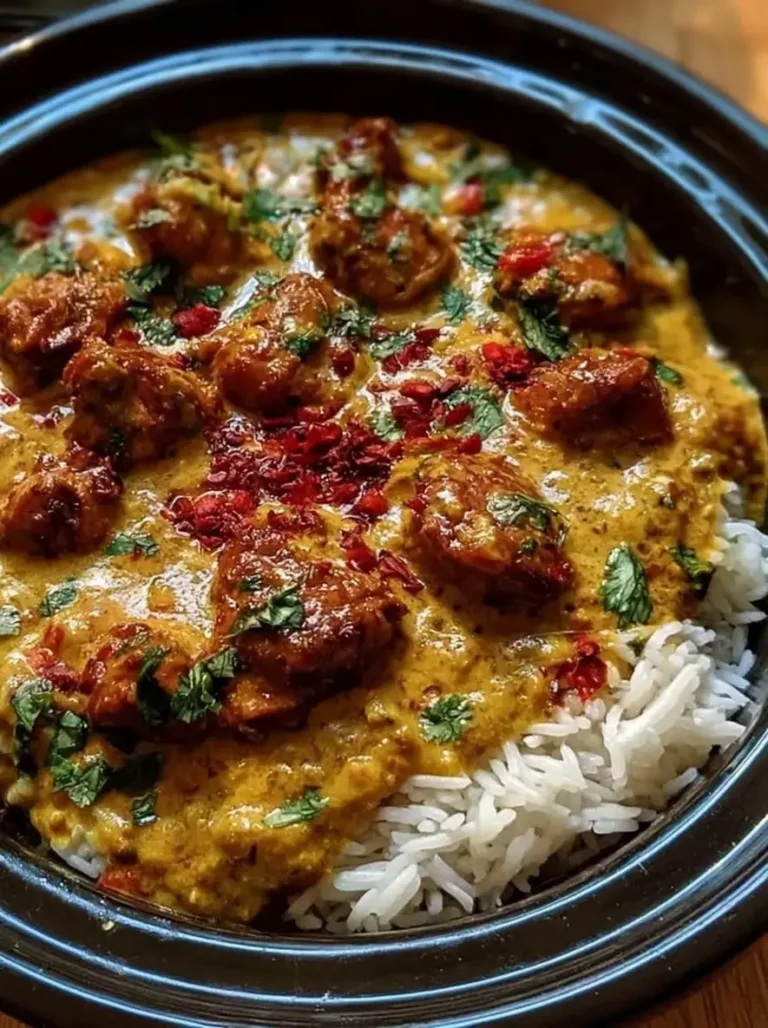
Slow-Simmered Thai Coconut Curry Chicken in One Pot
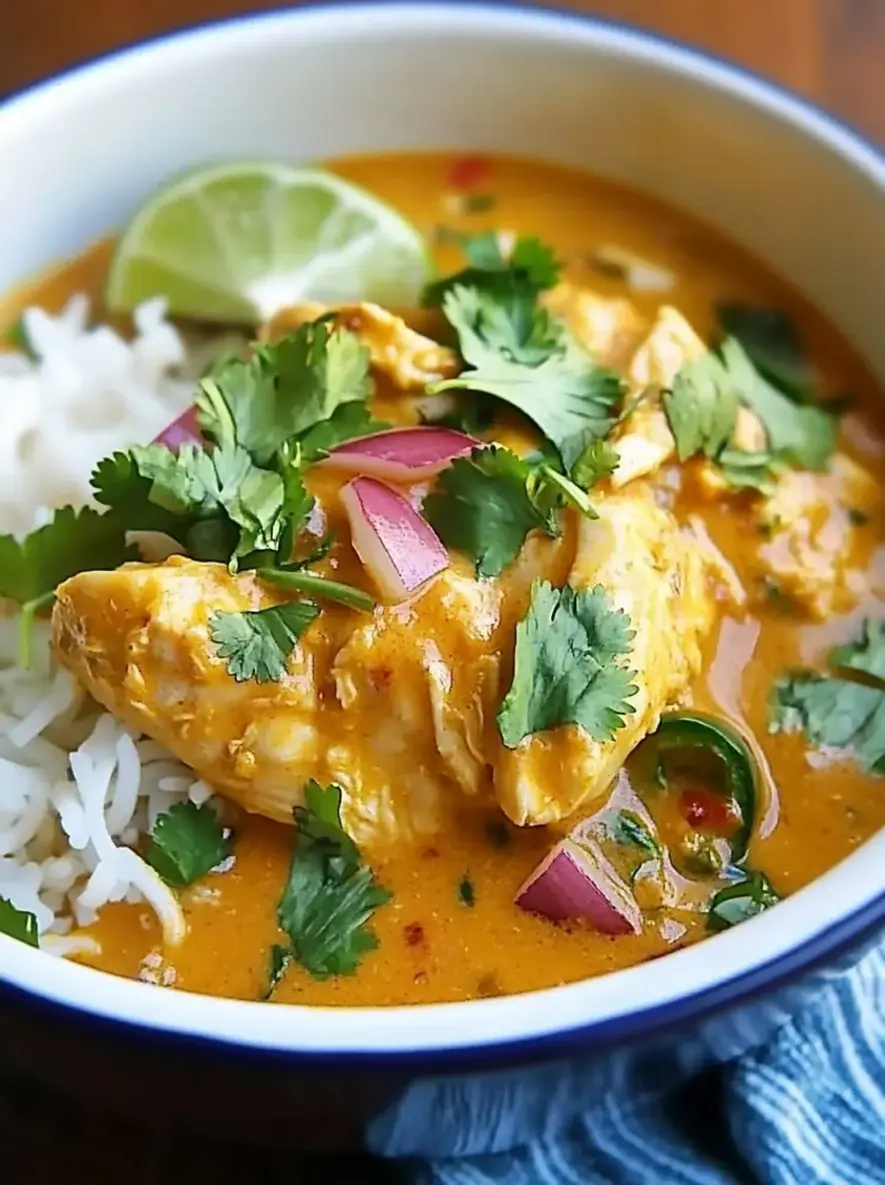
Table of Contents
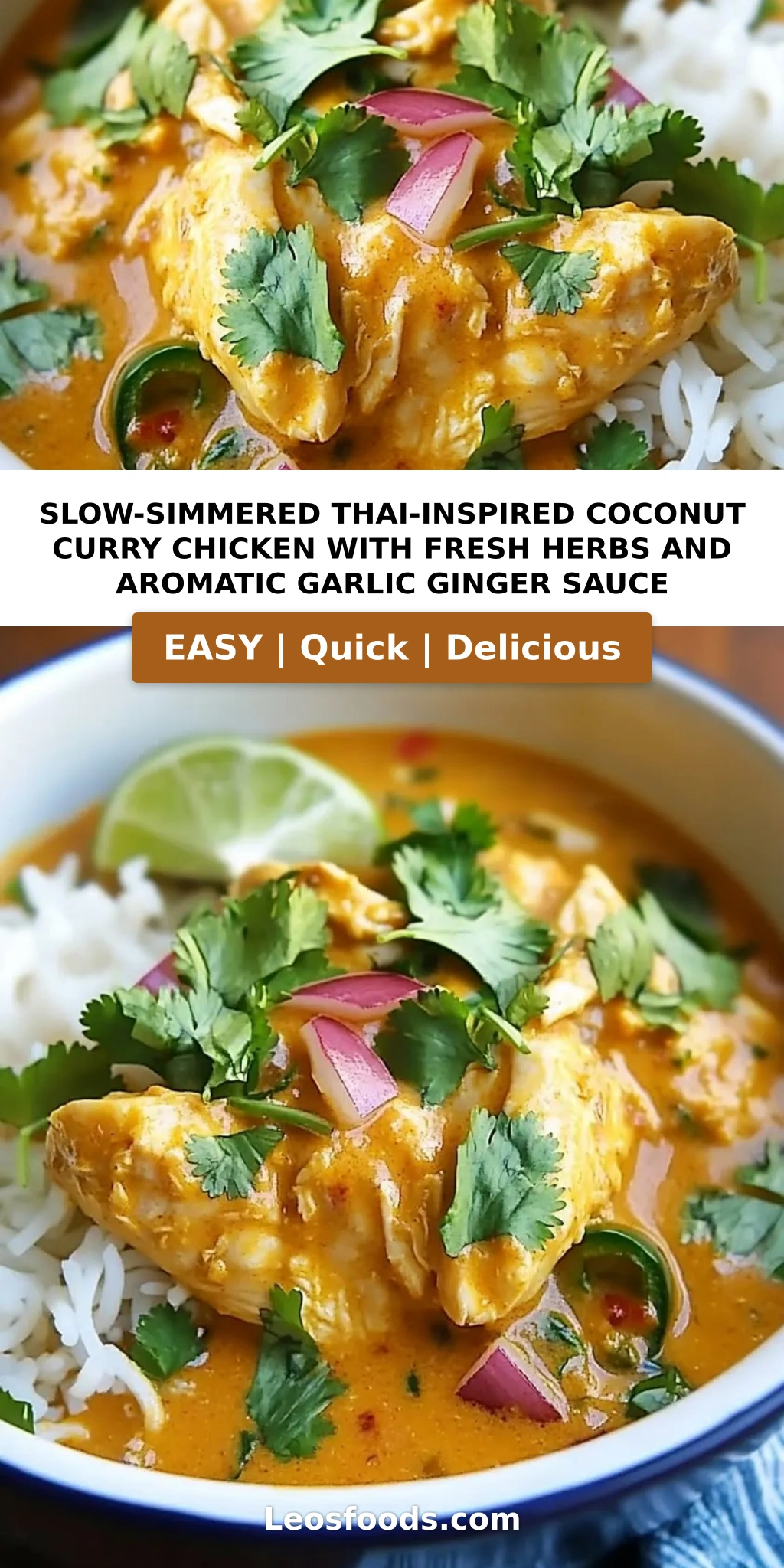
Slow-Simmered Thai-Inspired Coconut Curry Chicken with Fresh Herbs and Aromatic Garlic Ginger Sauce – An Easy Thai Coconut Curry Chicken Recipe
Growing up in Morocco, the scent of slow-simmered spices drifting from my mother’s kitchen was our family’s gentle morning alarm. Years later, after training in a Paris culinary school and settling into my bustling New York City life, I still chase that comforting feeling of walking into a kitchen where something wonderful has been bubbling away for a while. This thai coconut curry chicken recipe is my love letter to that memory — a slow simmered coconut curry chicken that builds layers of flavor the way my mother built her tagines. The thai inspired chicken curry with ginger garlic and fresh herbs makes this easy thai chicken curry with coconut milk taste like a special occasion, yet it all comes together in one pot on a busy weeknight.
Picture this: full-fat coconut milk gently bubbling and reducing until it clings to every piece of chicken, while turmeric and smoked paprika paint the sauce a gorgeous golden hue. The garlic and ginger hit your nose the moment they meet the hot oil, and by the time you fold in the cilantro and basil, your entire apartment smells like your favorite Thai restaurant. The sauce is silky, slightly sweet from coconut sugar, bright from fresh lime juice, and deeply savory from fish sauce. Each spoonful over jasmine rice is pure comfort — the kind of meal that makes you close your eyes on the very first bite. It’s the kind of homemade thai curry chicken that becomes a requested favorite, whether it’s a casual Tuesday night or a dinner party centerpiece.
What sets my version apart is the slow-simmering technique — letting the chicken braise gently in coconut milk rather than rushing it. That patience is something I carried from Paris, where my chef instructors drilled into me the beauty of a low, steady flame. Here’s the thing most recipes get wrong: they crank the heat to speed things up, which can break the coconut milk and turn the sauce greasy. My tested method keeps everything at a gentle simmer so the sauce stays lusciously silky and the chicken stays fork-tender. Stick with me, and I’ll also show you my favorite trick for thickening the sauce without a drop of heavy cream — plus the one rookie mistake I see people make over and over.

Why This Thai Coconut Curry Chicken Recipe Is the Best
The Flavor Secret. The secret here is what I call the “aromatic base” — jalapeño, garlic, and ginger bloomed in olive oil before any liquid goes in. This is a technique I borrowed from both my Moroccan mother and my Parisian chef instructors. The spices are then toasted for just 30 seconds to wake up their essential oils before the coconut milk tames everything into something deeply flavorful rather than fiery. This thai inspired chicken curry with ginger garlic proves that a few extra minutes on the front end pay off with restaurant-quality depth and complexity.
Perfected Texture. A low, slow simmer does all the heavy lifting. As the chicken cooks in the coconut milk, it releases natural juices that mingle with the spices to create a sauce that’s velvety and rich. I know it’s tempting to turn up the heat, but a gentle simmer for 30 to 40 minutes is what transforms a decent curry into a memorable one. The chicken emerges perfectly tender, and the sauce reduces to just the right consistency that coats a spoon beautifully.
Foolproof & Fast. Even though it tastes like it simmered all day, this easy thai chicken curry with coconut milk is ready in about an hour from start to finish. There’s no complicated technique, no special equipment — just a Dutch oven or heavy pot, simple ingredients from any US grocery store, and thirty seconds of spice toasting that makes all the difference. It’s the kind of recipe that feels special enough for company but simple enough for a laid-back weeknight. Plus, cleanup is a breeze since it’s all made in one pot.
Thai Coconut Curry Chicken Recipe Ingredients
Before we get cooking, let’s talk ingredients. I love picking up fresh cilantro, basil, and jalapeños at the Union Square Greenmarket on Saturday mornings — that’s where the herbs are at their peak and the prices are friendly. For the spices, I always reach for my favorite curry powder from the spice shop in Chelsea Market. And when I’m missing a taste of home, I think back to my mother’s kitchen in Morocco, where turmeric and cumin were as essential as salt. Here’s everything you’ll need for this slow simmered coconut curry chicken.
Ingredients List
- 1 pound boneless, skinless chicken breasts or thighs
- 1 (13.5-ounce) can full-fat coconut milk
- 1 tablespoon curry powder
- 1 tablespoon fish sauce (or soy sauce)
- 1 tablespoon fresh lime juice
- 1 tablespoon coconut sugar (or brown sugar)
- 1 medium onion, diced
- 1 jalapeño, finely diced (remove seeds for milder heat)
- 4 garlic cloves, chopped
- 1 tablespoon freshly grated ginger
- 1 teaspoon ground turmeric
- 1 teaspoon smoked paprika
- ½ teaspoon ground cumin
- ¼ teaspoon black pepper
- ½ teaspoon salt
- 1 tablespoon olive oil
- 1 red bell pepper, sliced
- 1 cup baby spinach
- ¼ cup chopped fresh cilantro
- ⅓ cup chopped fresh basil
- Cooked jasmine rice, for serving
Ingredient Spotlight
Full-Fat Coconut Milk. This is the backbone of the sauce. Full-fat coconut milk provides the rich, velvety texture that makes the curry feel indulgent. When shopping at your local US grocery store, look for a can with no additives — just coconut and water. Shake it gently; you want to hear that creamy liquid move. If you only have lite coconut milk, the sauce will be thinner, but you can stir in a spoonful of coconut cream at the end to restore richness.
Fresh Ginger. Fresh ginger brings a bright, slightly spicy warmth that dried ginger simply cannot replicate. Look for firm, smooth-skinned ginger with a zesty aroma. Peel it with a spoon and grate it on a microplane for the best texture. In a pinch, you can substitute 1 teaspoon of ground ginger, but the flavor will be earthier and less punchy.
Curry Powder & Turmeric. The spice duo gives this curry its warm, golden hue and deep aromatic character. For the most vibrant flavor, buy fresh curry powder and turmeric — they should smell fragrant, not musty. My French training taught me that spices lose their magic about six months after opening, so replace yours regularly.
Fresh Cilantro & Basil. These herbs are the finishing touch that brightens the entire dish. Cilantro brings a citrusy, slightly peppery note, while basil adds a sweet, anise-like fragrance. Chop them right before serving to keep them vibrant. If you’re not a cilantro fan, extra basil or even mint works beautifully.
Fish Sauce. A staple in Thai cooking, fish sauce adds that deep, savory umami that makes curry taste authentic. I know it smells strong from the bottle, but trust me — it melts into the sauce and leaves behind something magical. If you’re vegetarian or simply out of fish sauce, soy sauce or tamari is a reliable stand-in, though you’ll lose a bit of that funky depth.
| Original Ingredient | Best Substitution | Flavor / Texture Impact |
|---|---|---|
| Full-fat coconut milk | Lite coconut milk + 1 tbsp coconut cream | Thinner sauce, less rich but still creamy |
| Curry powder | Thai red curry paste | More heat, deeper umami, different spice profile |
| Fish sauce | Soy sauce or tamari | Less savory depth, milder saltiness |
| Fresh ginger | 1 tsp ground ginger | Less bright, more earthy and mellow |
| Jalapeño | Serrano or ¼ tsp red pepper flakes | Serrano brings more heat; flakes add dry heat |
How to Make Slow-Simmered Thai Coconut Curry Chicken — Step-by-Step
Grab your favorite Dutch oven and let’s get cooking! This homemade thai curry chicken is easier than you think — just follow these steps and you’ll have a pot of liquid gold on your stove.
Step 1: Prep the Spice Blend
In a small bowl, whisk together the curry powder, turmeric, smoked paprika, cumin, black pepper, and salt. Set this aside near the stove so it’s ready when you need it.
💡 Stella’s Pro Tip: Mix the spices before you start cooking. Once things are sizzling in the pot, you don’t want to be fumbling with jars — having the blend ready means you can add it at the perfect moment for maximum flavor.
Step 2: Sauté the Onion Base
Heat the olive oil in a large pot or Dutch oven over medium heat. Add the diced onion and cook, stirring occasionally, until it turns translucent — about 5 minutes. The onions should soften and sweeten without browning too much.
⚠️ Common Mistake to Avoid: Don’t rush the onions on high heat. If you scorch them, the entire curry will carry a bitter edge. Low and slow for 5 minutes is all it takes — I’ll often stir in a pinch of salt to help them release their moisture faster.
Step 3: Bloom the Aromatics
Add the finely diced jalapeño, chopped garlic, and freshly grated ginger to the pot. Cook for 2 minutes, stirring constantly, until the mixture is incredibly fragrant and the garlic just starts to turn golden.
💡 Stella’s Pro Tip: This is the “blooming” stage — the oils in the garlic and ginger are releasing their aroma molecules, which builds the flavor foundation of the whole dish. If it smells amazing, you’re doing it right!
Step 4: Toast the Spices
Sprinkle the prepared spice blend over the aromatics and stir continuously for 30 seconds. You’ll notice the spices become intensely aromatic as they toast in the oil.
⚠️ Common Mistake to Avoid: Be careful not to toast the spices too long — they can burn and turn bitter. Thirty seconds of constant stirring is plenty. If you see dark brown or black flecks, you’ve gone too far.
Step 5: Brown the Chicken
Add the chicken pieces and cook, turning occasionally, until they’re browned on all sides — about 5 minutes. Don’t worry about cooking them through; they’ll finish in the simmer.
💡 Stella’s Pro Tip: Work in batches if needed! If your pot is crowded, the chicken will steam instead of brown. A little golden crust on the chicken adds incredible savory flavor to the sauce.
Step 6: Build the Curry Sauce
Pour in the full-fat coconut milk, fish sauce, fresh lime juice, and coconut sugar. Stir everything together, scraping up any browned bits from the bottom of the pot — that’s where so much flavor lives.
⚠️ Common Mistake to Avoid: Make sure you give the bottom of the pot a good scrape. Those caramelized bits, called “fond,” are pure flavor. Leaving them behind means leaving flavor behind.
Step 7: Slow Simmer to Tenderize
Bring the curry to a gentle simmer, then reduce the heat to low. Cover the pot and let it simmer for 30–40 minutes, until the chicken is fork-tender and the sauce has thickened to a luscious consistency.
💡 Stella’s Pro Tip: This is the heart of the recipe! A gentle simmer — where tiny bubbles just break the surface — keeps the coconut milk smooth and the chicken moist. If you want a thicker sauce, uncover the pot for the last 10 minutes of cooking.
Step 8: Add the Vegetables
Stir in the sliced red bell pepper and baby spinach. Cook for 5 more minutes, just until the spinach has wilted and the bell pepper is tender-crisp.
⚠️ Common Mistake to Avoid: Add the spinach at the very last stage. If it cooks for too long, it turns dark and slimy. You want it just wilted so it stays vibrant green and fresh-tasting.
Step 9: Finish with Fresh Herbs
Remove the pot from the heat and stir in the chopped cilantro and fresh basil. The residual heat will soften them slightly while releasing their bright, fragrant oils.
💡 Stella’s Pro Tip: Fold the herbs in gently — don’t over-stir. I like to leave some of the basil leaves slightly whole so you get beautiful green flecks in every spoonful. This is what makes homemade thai curry chicken feel so fresh and vibrant.
Step 10: Serve and Enjoy
Serve the curry hot over a bed of cooked jasmine rice. Garnish with extra fresh herbs and a lime wedge on the side if you like.
⚠️ Common Mistake to Avoid: Don’t skimp on the rice-to-curry ratio. You want enough rice to soak up all that glorious sauce. Day-old rice works great too — it’s actually firmer and soaks up the sauce even better!
| Step | Action | Duration | Key Visual Cue |
|---|---|---|---|
| 1 | Mix spices | 1 min | Fragrant, deeply colored blend |
| 2 | Sauté onion | 5 mins | Translucent, lightly golden |
| 3 | Bloom aromatics | 2 mins | Fragrant, garlic golden |
| 4 | Toast spices | 30 secs | Deeply aromatic, no burning |
| 5 | Brown chicken | 5 mins | Golden-brown edges |
| 6 | Build sauce | 2 mins | Smooth, creamy liquid |
| 7 | Simmer covered | 30–40 mins | Sauce thickened, chicken tender |
| 8 | Add vegetables | 5 mins | Spinach wilted, peppers crisp-tender |
| 9 | Add herbs | 1 min | Bright green, fresh aroma |
| 10 | Serve | 2 mins | Steaming hot over rice |
Serving & Presentation
I love serving this thai coconut curry chicken recipe the way they do at the Thai spots I frequent in Queens — over a generous bowl of jasmine rice with the curry spooned right on top. The sauce should pool around the rice, not drown it. That balance is everything. For a special weekend dinner, I’ll set out small bowls of extra herbs, lime wedges, and sliced jalapeño so everyone can customize their plate.
In my NYC apartment, I finish the dish with a flourish: a scattering of fresh basil and cilantro leaves, a few thin slices of red jalapeño for a pop of color, and a lime wedge on the side. It’s how my Parisian chef taught me to plate — with attention to contrast, height, and texture. And honestly, the visual is stunning: golden sauce, vibrant green herbs, juicy red pepper, tender chicken. It practically begs to be photographed.
Nutrition info per serving, based on 4 servings: approximately 520 kcal, 18g carbohydrates, 38g fat, 28g protein, and 8g sugar.
| Pairing Type | Suggestions | Why It Works |
|---|---|---|
| Side Dish | Jasmine rice, coconut rice, garlic naan, roti | These soak up the fragrant sauce beautifully and balance the heat. |
| Sauce / Dip | Cucumber salad, pickled carrots & daikon, chili crisp | Cool, crunchy, and tangy sides cut through the rich coconut curry. |
| Beverage | Thai iced tea, coconut water, Sauvignon Blanc, pale lager | The sweetness, acidity, or carbonation cleanses the palate between bites. |
| Garnish | Fresh basil, cilantro, lime wedge, sliced red jalapeño, fried shallots | Adds freshness, color, brightness, and an extra layer of aroma. |
Make-Ahead, Storage & Reheating
I’m a big fan of meal-prepping this easy thai chicken curry with coconut milk on Sundays. The truth is, it actually tastes even better the next day — the spices settle and meld together in a way that makes the flavors even deeper and rounder. It’s one of those magical dishes that rewards you for being patient. I’ll often make a double batch on Sunday, portion it into containers, and have delicious lunches for the whole week.
| Method | Container | Duration | Reheating Tip |
|---|---|---|---|
| Refrigerator | Airtight container | 4 days | Reheat gently on stovetop over low heat |
| Freezer | Freezer-safe container or zip-top bag | 3 months | Thaw overnight in the fridge, then reheat gently |
| Make-Ahead | Spice blend + chopped aromatics in separate containers | 2 days in advance | Assemble and cook fresh when ready |
When reheating, always go low and slow — not the microwave on full blast! Microwaves can turn the coconut milk grainy and unevenly heat the chicken. Instead, reheat in a saucepan over medium-low heat, stirring occasionally. If the sauce has thickened too much in the fridge, add a splash of coconut milk or chicken broth to loosen it back up. The same goes for frozen curry — a quick stovetop simmer will bring it back to silky perfection.
One of my favorite tricks from my Paris training: never reheat Thai curry twice. Portion out exactly what you’ll eat, because repeated heating diminishes the fresh herb aromatics. That’s why I always store the curry in single-serving containers — it makes grabbing lunch effortless and preserves the quality of every bite.
Variations & Easy Swaps
| Variation | Key Change | Best For | Difficulty Impact |
|---|---|---|---|
| Vegetarian Tofu Version | Swap chicken for extra-firm tofu | Meatless Mondays, vegetarian guests | Easy |
| Gluten-Free / Dairy-Free | Use tamari instead of fish sauce | Gluten-free households | Easy |
| Summertime Coconut Curry Lite | Light coconut milk, extra veggies, more lime | Hot summer days, light dinners | Easy |
Vegetarian Tofu Version
To make this homemade thai curry chicken vegetarian, swap the chicken for 14 ounces of extra-firm tofu. Press it dry, cube it, and pan-sear it in a little oil until golden before proceeding with the rest of the recipe. Tofu won’t release the same juices as chicken, so the sauce will be slightly less rich — add an extra splash of coconut milk to compensate. I love this version in the spring; it reminds me of the vibrant tofu dishes I discovered during my time in Paris’s 13th arrondissement.
Gluten-Free / Dairy-Free Version
This easy thai chicken curry with coconut milk is naturally dairy-free, and making it gluten-free is a simple swap: use tamari or coconut aminos instead of fish sauce. I’ve tested both, and tamari comes closest to that deep savory flavor. If you go the coconut aminos route, add a pinch of extra salt since aminos are less salty. Serve it over rice and you’ve got a completely gluten-free, dairy-free dinner that still tastes indulgent — perfect for anyone with dietary restrictions.
Summertime Coconut Curry Lite
When summer hits New York City and the Union Square Greenmarket is bursting with zucchini, snap peas, and sweet corn, I lighten up this curry. I use light coconut milk, add a generous cup of sliced zucchini and snap peas, and finish with extra lime juice and a handful of torn basil. The result is a brighter, fresher curry that feels like summer in a bowl. It’s also a gorgeous way to use up whatever vegetables are in your crisper drawer — the slow-simmered sauce works beautifully with just about any veggie.
Frequently Asked Questions
How long should I simmer Thai coconut curry chicken to ensure the chicken is tender and the sauce thickens properly?
For the best results, simmer your Thai coconut curry chicken for 30 to 40 minutes over low heat with the pot covered. This gentle simmering time allows the chicken to become fork-tender while the coconut milk sauce naturally thickens as it reduces. If you prefer a thicker sauce, remove the lid for the final 10 minutes so excess liquid can evaporate. Always keep the heat at a gentle bubble — a rolling boil can cause the coconut milk to separate and become grainy.
Can I use chicken thighs instead of chicken breasts in this Thai coconut curry recipe?
Absolutely — in fact, I actually prefer chicken thighs in this slow simmered coconut curry chicken! Boneless, skinless chicken thighs are richer in flavor and stay wonderfully moist even with a longer simmer. The extra marbling in the thighs also adds depth to the sauce. Just keep the same cooking time, and you’ll find that thigh meat becomes even more velvety and tender than breasts. If you do mix both, be sure to cut them into similarly sized pieces so they cook evenly.
What is the best way to thicken a slow-simmered coconut curry sauce without adding heavy cream?
The easiest and most natural way to thicken this easy Thai chicken curry with coconut milk is to simmer it uncovered for the last 10 minutes. As the sauce reduces, it concentrates its flavors and becomes naturally thicker. You can also mash a few pieces of chicken against the side of the pot, which releases natural starches and proteins to help bind the sauce. Another trick is to stir in a slurry made from 1 tablespoon of cornstarch mixed with 2 tablespoons of cold water — but honestly, the simmering method yields the best, most flavorful texture without altering the taste.
Can I make this Thai-inspired coconut curry chicken ahead of time, and how should I reheat it for the best flavor?
Yes! This homemade Thai curry chicken is actually even better made a day ahead — the flavors need time to meld and deepen. Store it in an airtight container in the refrigerator for up to 4 days. For reheating, the stovetop is your best friend: warm it gently over medium-low heat, stirring occasionally, and add a splash of coconut milk or chicken broth if the sauce has thickened too much. Avoid microwaving at full power, as it can make the coconut milk curdle and the chicken dry out.
What is the best coconut milk to use for Thai coconut curry chicken?
Always reach for full-fat coconut milk for the richest, creamiest sauce. Look for a brand with just two ingredients — coconut and water — with no guar gum or stabilizers. I especially love the single-ingredient cans from Thai brands; they separate into thick cream and coconut water, which is totally normal. Just give the can a good shake or blend it before adding it to the pot. Full-fat coconut milk gives you that luscious, silky sauce that’s the hallmark of a great Thai curry. Lite versions work in a pinch but result in a thinner sauce with less body.
Can I freeze this slow simmered coconut curry chicken?
Yes, this slow simmered coconut curry chicken freezes beautifully! Allow it to cool completely, then transfer it to airtight freezer-safe containers or heavy-duty zip-top bags. It will remain fresh for up to 3 months. When you’re ready to enjoy it, thaw it overnight in the refrigerator, then reheat gently on the stovetop over medium-low heat. You may need to add a splash of coconut milk or broth to loosen the sauce. Just remember to portion it before freezing so you only thaw what you’ll eat in one sitting — repeated reheating can dull the fresh herb flavors.
Is this easy Thai chicken curry with coconut milk very spicy?
Not at all! This recipe is what I call “family-friendly warm” rather than spicy-hot. The base recipe uses one finely diced jalapeño, which adds a pleasant mild heat that’s balanced beautifully by the creamy coconut milk and a touch of coconut sugar. If you’re extra sensitive to heat, simply remove the ribs and seeds from the jalapeño before dicing — that’s where most of the capsaicin lives. If you love spice, you can keep the seeds, swap in a serrano pepper, or finish the dish with sliced fresh chilies and a drizzle of chili crisp at the table.
What can I serve with this homemade Thai curry chicken besides jasmine rice?
Jasmine rice is the classic pairing, but there are so many delicious options! Coconut rice amplifies the tropical flavors beautifully. For a lower-carb option, serve it over cauliflower rice or with a side of steamed broccoli. Naan or roti are wonderful for scooping up every last bit of sauce. For a Thai-inspired feast, I like to add a fresh cucumber salad and crispy spring rolls on the side. A glass of crisp Sauvignon Blanc or a cold Thai iced tea rounds out the meal beautifully.
Share Your Version!
There’s something so special about this slow-simmered Thai-inspired coconut curry chicken — the way the garlic-ginger sauce mingles with coconut milk, the way the fresh herbs brighten every spoonful. It’s the kind of recipe I love passing along to friends, family, and everyone who reads my blog. So now it’s your turn: please leave a star rating and a comment below — I genuinely read every single one and would love to hear how it turned out for you. Did you try a substitution? Did your family devour it in five minutes flat? Tell me all about it!
And if you make this homemade thai curry chicken, don’t forget to snap a photo and tag @leosfoods on Instagram or Pinterest. There’s truly nothing that makes me happier than seeing your beautiful creations. Want to try a slightly different spin next time? Let me know if you’d like me to develop a red curry version or a Thai green coconut curry with chicken — I’m always looking for new recipe inspiration from my readers. From my NYC kitchen to yours — I hope this recipe brings as much warmth to your table as it does to mine. — Stella 🧡
Love This Recipe? Save It to Pinterest!
If you enjoyed this Slow-Simmered Thai-Inspired Coconut Curry Chicken with Fresh Herbs and Aromatic Garlic Ginger Sauce recipe, don’t let it get lost in your browser tabs! 😄 Pin it now so you can find it again anytime — and explore hundreds more tried-and-tested recipes waiting for you on my Pinterest boards.
👉 Follow Stella on Pinterest @stellarecipeblog
📌 Pin this recipe · 🔁 Re-pin your favorites · 💬 Tag me when you make it — I love seeing your creations!
🍛 What’s Your Curry Style?
Do you love this slow-simmered version, or do you prefer a quick 20-minute curry? Drop your answer in the comments — I read every single one and love hearing how you make it your own!
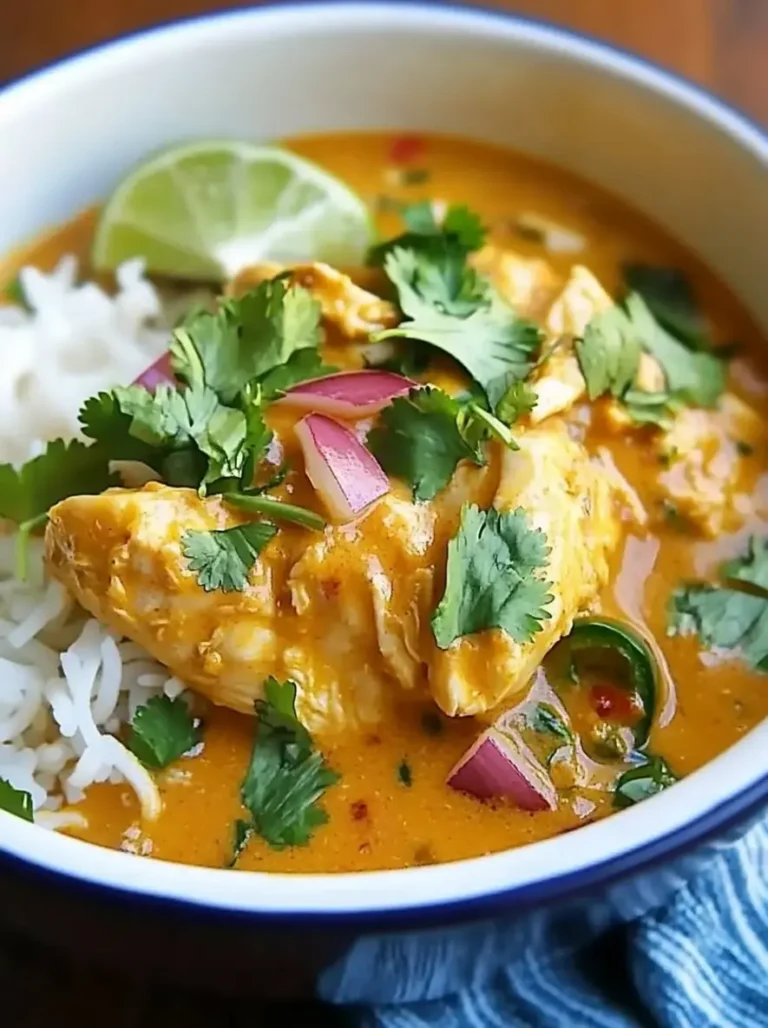
Slow-Simmered Thai-Inspired Coconut Curry Chicken with Fresh Herbs and Aromatic Garlic Ginger Sauce
A rich and aromatic Thai-inspired coconut curry chicken, slow-simmered with fresh herbs and a fragrant garlic-ginger sauce. Perfectly balanced with coconut milk, spices, and vibrant vegetables, served over jasmine rice.
- Total Time: 1 hour
- Yield: 4 servings 1x
Ingredients
- 1 pound boneless, skinless chicken breasts or thighs
- 1 (13.5-ounce) can full-fat coconut milk
- 1 tablespoon curry powder
- 1 tablespoon fish sauce (or soy sauce)
- 1 tablespoon fresh lime juice
- 1 tablespoon coconut sugar (or brown sugar)
- 1 medium onion, diced
- 1 jalapeño, finely diced
- 4 garlic cloves, chopped
- 1 tablespoon freshly grated ginger
- 1 teaspoon ground turmeric
- 1 teaspoon smoked paprika
- ½ teaspoon ground cumin
- ¼ teaspoon black pepper
- ½ teaspoon salt
- 1 tablespoon olive oil
- 1 red bell pepper, sliced
- 1 cup baby spinach
- ¼ cup chopped fresh cilantro
- ⅓ cup chopped fresh basil
- Cooked jasmine rice, for serving
Instructions
- 1. In a small bowl, mix together curry powder, turmeric, smoked paprika, cumin, black pepper, and salt. Set aside.
- 2. Heat olive oil in a large pot or Dutch oven over medium heat. Add onion and cook until translucent, about 5 minutes.
- 3. Add jalapeño, garlic, and ginger; cook for 2 minutes until fragrant.
- 4. Add the spice mixture and stir for 30 seconds.
- 5. Add chicken pieces and brown on all sides, about 5 minutes.
- 6. Pour in coconut milk, fish sauce, lime juice, and coconut sugar. Stir to combine.
- 7. Bring to a gentle simmer, then reduce heat to low. Cover and let simmer for 30-40 minutes, until chicken is tender and sauce has thickened.
- 8. Stir in red bell pepper and baby spinach; cook for 5 more minutes until spinach is wilted.
- 9. Remove from heat and stir in fresh cilantro and basil.
- 10. Serve hot over cooked jasmine rice.
Notes
Adjust heat by removing seeds from jalapeño. For a thicker sauce, simmer uncovered for the last 10 minutes. Substitute chicken with tofu for a vegetarian version.
- Prep Time: 15 minutes
- Cook Time: 45 minutes
- Method: Main Course
- Cuisine: Thai-inspired
Nutrition
- Calories: 520 kcal
- Sugar: 8 g
- Fat: 38 g
- Carbohydrates: 18 g
- Protein: 28 g
Tried This Recipe? Leave a Comment!
Did you make this recipe? I’d love to hear how it turned out! Please leave a comment and a rating below. Your feedback helps other home cooks and supports cheerychop.com!
For more delicious inspiration, follow me on Pinterest!