Easy Thai Coconut Lamb Curry with Yellow Curry Paste
“`html
Table of Contents
Thai-Inspired Coconut Lamb Curry with Yellow Curry Paste, Lime and Basil – A Fragrant, Creamy One-Pot Wonder
I still remember the first time I made a Thai coconut lamb curry. It was a rainy Tuesday in my tiny NYC apartment, and I was missing the warm, layered flavors of the tagines I grew up with in Morocco. I had just picked up a jar of yellow curry paste from a little market in Chinatown, and I thought — what if I treat lamb shoulder the way my mother treated a slow-cooked mechoui, but with coconut milk and lemongrass instead of cumin and saffron? That experiment turned into this recipe, and it’s been a staple in my kitchen ever since. This Thai coconut lamb curry is the dish I turn to when I want something deeply comforting, boldly flavored, and surprisingly easy to pull off on a weeknight. The yellow curry paste brings a gentle warmth, the coconut milk makes it luscious, and the lime and basil at the end keep everything bright and fresh. I honestly think this is the best easy Thai curry recipe for anyone who wants big flavor without a ton of fuss.
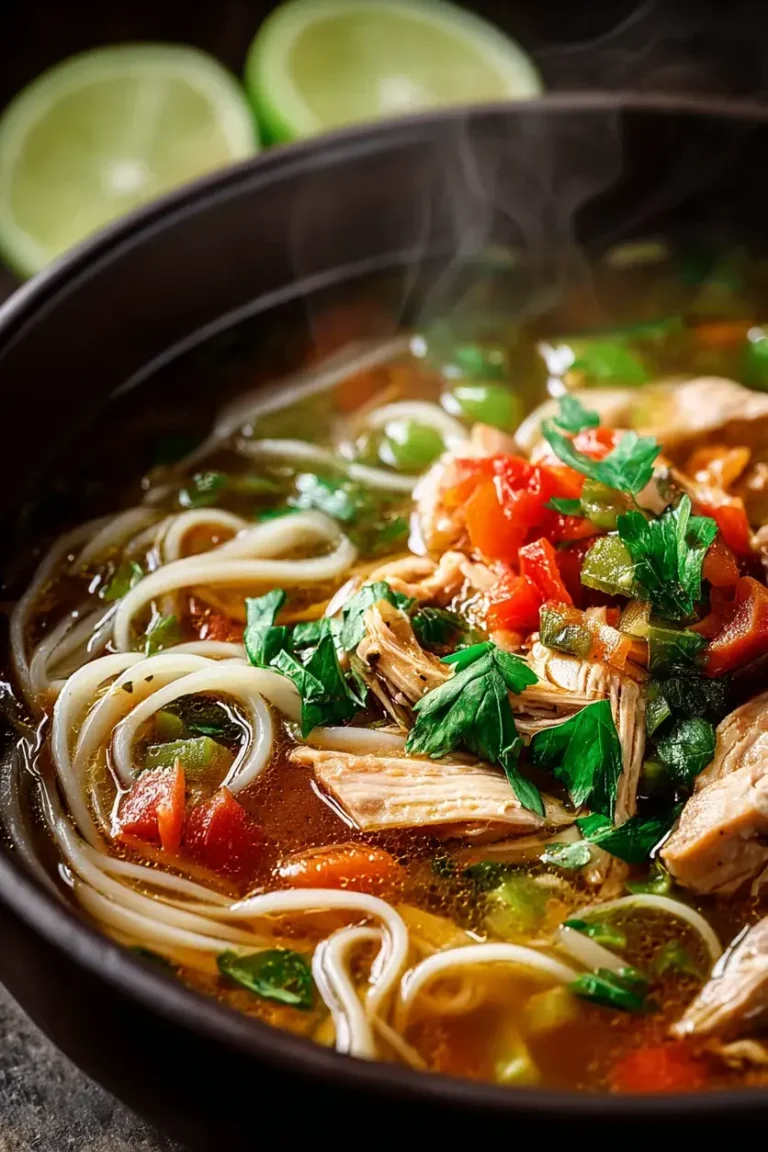
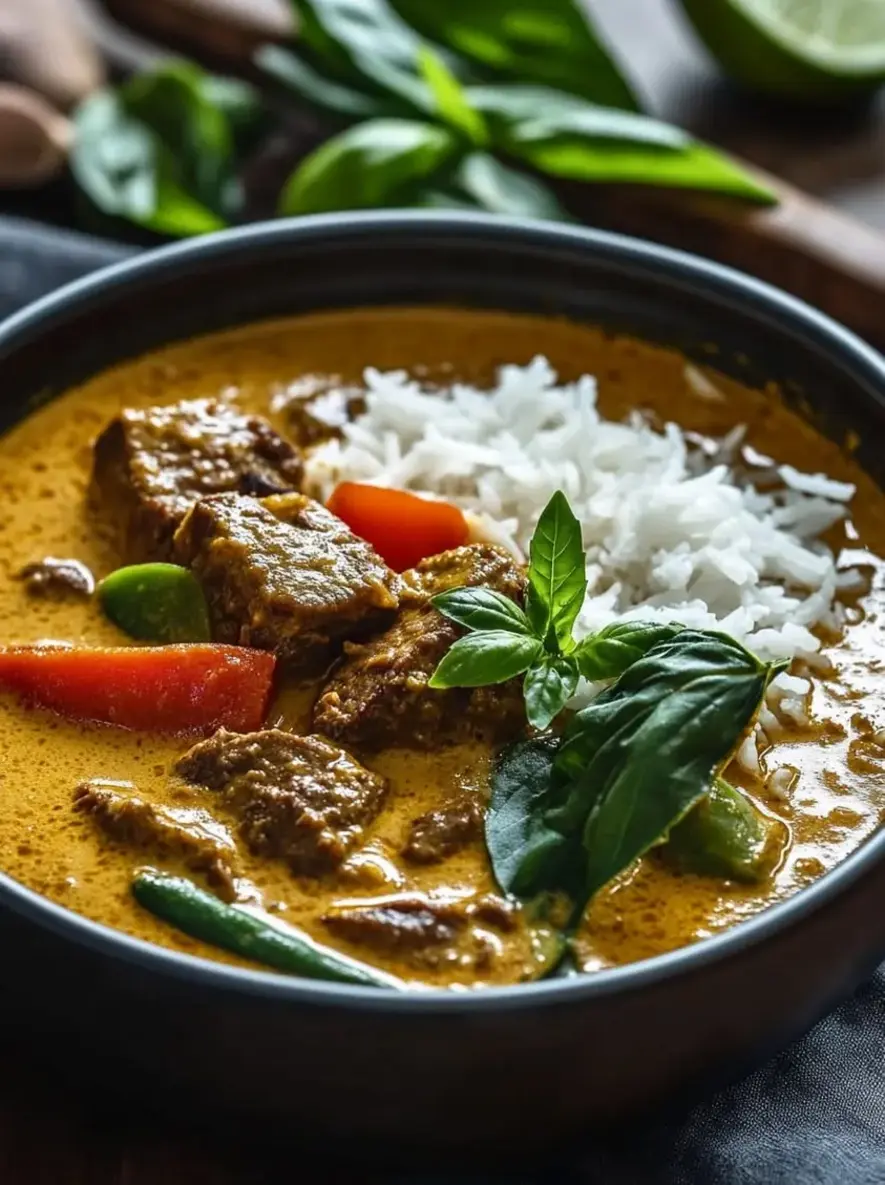
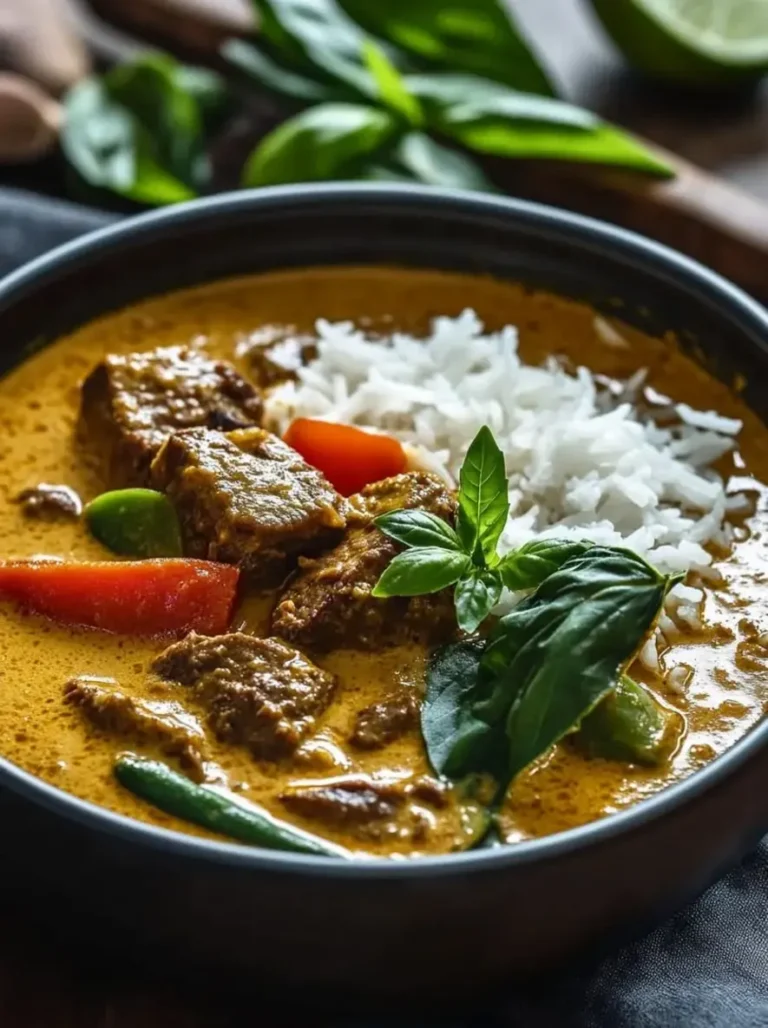
Close your eyes and imagine it: tender pieces of lamb shoulder, browned until golden, then simmered low and slow in a fragrant sauce of coconut milk, yellow curry paste, ginger, and garlic. The potatoes soak up all that creamy, slightly spicy liquid, and the carrots add just a hint of sweetness. When you lift the lid after an hour, the aroma hits you — warm, earthy, a little bit floral from the curry paste, and with that unmistakable richness that only coconut milk can bring. A squeeze of lime cuts through the richness, and fresh basil leaves add a peppery, aromatic finish. Every spoonful is a little journey: first the creaminess, then the warmth of the curry, then the tender lamb that practically melts on your tongue. It’s the kind of meal that makes you want to sit down, take a deep breath, and savor every bite.
What makes my version of this Thai lamb curry different? I trained at Le Cordon Bleu in Paris, and I learned there that the secret to a great curry isn’t just the ingredients — it’s how you layer them. I brown the lamb in batches to get deep caramelization, bloom the curry paste in the rendered fat to unlock its full fragrance, and simmer everything just long enough for the flavors to meld without the lamb drying out. My Moroccan background also taught me to treat meat with patience and respect — low and slow is always the way. One thing I see home cooks often get wrong is adding the curry paste too early or toasting it over heat that’s too high, which makes it bitter. I’ll show you exactly how to avoid that. Whether you’re new to cooking lamb or a seasoned curry lover, this recipe will give you restaurant-quality results right in your own kitchen.
Why This Thai Coconut Lamb Curry Recipe Is the Best
The flavor secret here is the yellow curry paste. Unlike red curry paste, which is heavy on dried chilies, or green curry paste, which is fresh and herbal, yellow curry paste is warm, mellow, and slightly sweet — thanks to turmeric, cumin, coriander, and a touch of lemongrass. It pairs beautifully with lamb, which has a richer, gamier flavor than chicken or beef. I also add a little brown sugar and fish sauce at the end to balance the heat and salt, and the lime and basil finish adds a brightness that makes the whole dish sing. This isn’t just another curry — it’s a carefully balanced bowl of comfort that hits every note.
The texture is where my French training comes in. I brown the lamb shoulder in small batches so each piece gets a deep, caramelized crust — that’s flavor you simply can’t get from dumping raw meat into a pot. Then I deglaze the pan with the coconut milk and chicken stock, scraping up all those browned bits (the French call it le fond, the foundation of the sauce). The simmering time — a full hour — is just right to break down the collagen in the lamb shoulder, leaving you with fork-tender meat that’s still holding its shape. The potatoes cook until they’re creamy on the inside but still firm enough to hold their own in the sauce. Every texture in this dish is intentional.
And it’s foolproof. I’ve tested this easy Thai curry recipe with home cooks of all skill levels in my NYC cooking workshops, and it works every single time. The ingredient list is straightforward — you can find everything at your local grocery store or Asian market — and the steps are designed to build flavor without any complicated techniques. Whether you’re cooking for your family on a Tuesday night or impressing guests at a weekend dinner party, this lamb curry with coconut milk delivers. Plus, it tastes even better the next day, so you can easily make it ahead.
Thai Coconut Lamb Curry Ingredients
I love how accessible these ingredients are. I pick up my yellow curry paste at the Thai grocery on Mosco Street in Manhattan, but you can find it at any well-stocked supermarket — look for the Mae Ploy or Thai Kitchen brands. The coconut milk I always buy full-fat (Chaokoh or Aroy-D are my go-tos). And the lamb shoulder? I get mine from the butcher at the Union Square Greenmarket, but any grocery store butcher counter will have it. Here’s everything you’ll need.
Ingredients List
- 2 lbs lamb shoulder, cut into bite-sized cubes
- 1 tablespoon vegetable oil
- 1 medium onion, sliced
- 3 cloves garlic, minced
- 1 tablespoon fresh ginger, grated
- 3 tablespoons yellow curry paste (use 2 for a milder curry)
- 2 cans (14 oz each) coconut milk (full-fat)
- 1 cup chicken stock
- 2 medium potatoes, diced (Yukon Gold or Russet)
- 1 carrot, sliced
- 1 tablespoon fish sauce (or soy sauce for a vegetarian option)
- 1 tablespoon brown sugar
- Fresh lime wedges, for serving
- Fresh basil leaves (Thai basil if you can find it, or sweet basil), for garnish
Ingredient Spotlight
Lamb Shoulder: This is the cut I recommend for this Thai coconut lamb curry. Lamb shoulder has enough marbling and connective tissue to stay tender and juicy during the long simmer. Look for cubes that are about 1½ inches — big enough to brown well without shrinking too much. If you can’t find lamb shoulder, lamb leg or lamb stew meat will work, but reduce the simmering time to about 45 minutes, as leg meat is leaner and can dry out. For a milder option, you can use beef chuck or chicken thighs — both hold up well in the curry.
Yellow Curry Paste: This is the heart of the dish. Yellow curry paste is milder than red or green, with a warm, earthy flavor from turmeric and coriander. I prefer Mae Ploy brand for its balanced heat and depth. Store it in the fridge after opening — it keeps for months. If you substitute with red or green curry paste, the flavor profile will shift significantly (red is spicier and smokier, green is brighter and more herbal). I talk more about this in the FAQ section below.
Coconut Milk: Full-fat coconut milk is non-negotiable here for the creamy, luscious texture. Light coconut milk will make the curry watery and thin. Shake the can well before opening — the cream and liquid separate, and you want them emulsified in the sauce. If you see a brand that’s mostly water and has a thin consistency, look for one with a higher fat content (check the label — at least 60% coconut extract).
Fish Sauce: This adds the savory, umami depth that makes Thai curries so addictive. It doesn’t taste fishy at all once it’s cooked into the sauce — just salty and rich. If you’re vegetarian, use soy sauce or tamari instead. I recommend Red Boat fish sauce for its clean flavor and simple ingredient list (just anchovies and salt).
| Original Ingredient | Best Substitution | Flavor / Texture Impact |
|---|---|---|
| Lamb Shoulder | Beef Chuck or Chicken Thighs | Beef is richer, chicken is milder; both work well |
| Yellow Curry Paste | Red or Green Curry Paste | Red is spicier/smokier, green is brighter/more herbal |
| Coconut Milk (Full-Fat) | Light Coconut Milk + 1 tbsp Coconut Oil | Slightly thinner sauce, still creamy |
| Fish Sauce | Soy Sauce or Tamari | Less briny, more savory; still delicious |
| Fresh Basil | Cilantro or Mint | Cilantro adds citrusy notes, mint adds coolness |
How to Make Thai Coconut Lamb Curry — Step-by-Step
Trust me when I say this: the process is simpler than you think, and the results are spectacular. Just follow these steps, and you’ll have a pot of golden, fragrant curry that will fill your home with the most incredible aroma.
Step 1: Brown the Lamb
Heat 1 tablespoon of vegetable oil in a large, heavy-bottomed pot or Dutch oven over medium-high heat. Pat the lamb cubes dry with paper towels — this is crucial for good browning. Working in two batches so you don’t crowd the pot, add the lamb and brown on all sides, about 5 minutes per batch. The lamb should be deep golden brown, not just gray. Use a slotted spoon to transfer the browned lamb to a plate and set aside.
💡 Stella’s Pro Tip: Don’t skip the browning! This step builds the foundation of flavor. If you crowd the pot, the lamb will steam instead of brown, and you’ll miss out on that deep, meaty richness. Give each piece room to breathe.
Step 2: Sauté the Aromatics
In the same pot, add the sliced onion, minced garlic, and grated ginger. Sauté over medium heat until the onion is soft and translucent, about 2 minutes. If the pot looks dry, add a splash more oil or a tablespoon of the coconut oil from the can. The garlic and ginger should be fragrant but not browned — keep stirring.
⚠️ Common Mistake to Avoid: Garlic burns very quickly. If your heat is too high, the garlic will turn bitter in seconds. Keep the heat at medium and stir constantly. If you see the garlic starting to color, turn the heat down immediately.
Step 3: Bloom the Curry Paste
Stir in 3 tablespoons of yellow curry paste and cook for 1 minute, stirring constantly. This is called “blooming” — heating the paste in oil releases its essential oils and makes it more aromatic and flavorful. The paste should darken slightly and become very fragrant. Don’t let it stick to the bottom of the pot.
💡 Stella’s Pro Tip: Blooming the curry paste is a technique I learned in Paris — we do the same with tomato paste and spices. It only takes a minute, but it makes a world of difference in the depth of flavor. Use a wooden spoon or spatula and keep it moving.
Step 4: Build the Curry Base
Pour in 2 cans of coconut milk and 1 cup of chicken stock, stirring vigorously to scrape up any browned bits from the bottom of the pot (that’s pure flavor). Add the diced potatoes and sliced carrot. Return the browned lamb to the pot along with any juices that have accumulated on the plate. Stir everything together to combine.
⚠️ Common Mistake to Avoid: Don’t add the potatoes too early or cut them too small, or they’ll disintegrate into the sauce. Dicing them into ½-inch cubes ensures they cook through but still hold their shape. Also, make sure you’re using enough liquid — the lamb should be mostly submerged.
Step 5: Simmer Until Tender
Bring the curry to a gentle boil, then reduce the heat to low, cover the pot, and simmer for 1 hour, or until the lamb is tender enough to be pierced easily with a fork. Stir occasionally to prevent sticking. The sauce will thicken slightly as it cooks, and the flavors will meld together beautifully.
💡 Stella’s Pro Tip: Simmering is the secret to tender lamb. Don’t rush it — a full hour at a gentle simmer (small bubbles, not a rolling boil) breaks down the connective tissue in the lamb shoulder. If you’re using lamb leg, check at 45 minutes. The curry will also taste even better the next day, so feel free to make it ahead!
Step 6: Season and Finish
Stir in 1 tablespoon of fish sauce and 1 tablespoon of brown sugar. Taste and adjust — you might want a little more fish sauce for saltiness, a little more sugar for sweetness, or a squeeze of lime for brightness. The sauce should be savory, slightly sweet, and gently spicy, with a rich, creamy texture. If it’s too thick, add a splash of chicken stock or water. If it’s too thin, let it simmer uncovered for a few minutes to reduce.
⚠️ Common Mistake to Avoid: Season at the end, not the beginning. Fish sauce is salty, and the curry paste also contains salt. If you season too early, the sauce may reduce and become overly salty. Always taste and adjust just before serving.
Step 7: Serve and Garnish
Serve the curry hot, garnished generously with fresh lime wedges and basil leaves. The lime is essential — it cuts through the richness of the coconut milk and brightens all the flavors. The basil adds a peppery, aromatic note that ties everything together. Spoon the curry over steamed jasmine rice or serve with warm naan or crusty bread.
💡 Stella’s Pro Tip: For the best presentation, squeeze a lime wedge over each bowl just before serving and scatter the basil leaves on top — don’t stir them in. That way, every spoonful gets a burst of fresh flavor. I also love adding a few thin slices of red chili for a pop of color and heat.
| Step | Action | Duration | Key Visual Cue |
|---|---|---|---|
| 1 | Brown lamb in batches | 5 min per batch | Deep golden brown all over |
| 2 | Sauté onion, garlic, ginger | 2 min | Onion soft and translucent |
| 3 | Bloom curry paste | 1 min | Paste darkens, very fragrant |
| 4 | Add liquids, vegetables, lamb | 3 min | Liquid mostly covers lamb |
| 5 | Simmer covered | 1 hour | Lamb fork-tender, sauce slightly thickened |
| 6 | Season with fish sauce and sugar | 2 min | Taste-balanced, savory-sweet |
| 7 | Serve with lime and basil | 2 min | Bright garnishes on top |
Serving & Presentation
This Thai coconut lamb curry is a meal in itself, but the right accompaniments can take it from delicious to unforgettable. I love serving it over a bed of fluffy jasmine rice — the rice soaks up all that creamy, golden sauce and makes every bite satisfying. For a low-carb option, try cauliflower rice or serve it with warm roti or naan for dipping. I also like to set out a little bowl of extra lime wedges, fresh basil leaves, and maybe some sliced red chili for anyone who wants more heat.
When I plate this for guests, I spoon the curry into wide, shallow bowls, place a generous mound of rice in the center, and tuck a few basil leaves and a lime wedge on the side. A sprinkle of fresh cilantro or a drizzle of chili oil on top adds a restaurant-quality finish. The colors are gorgeous — the golden-orange curry, the bright green basil, the white rice. It’s the kind of dish that makes everyone at the table lean in for a closer look before they even take a bite.
In my NYC cooking classes, I always tell students that the way you serve a dish is part of the experience. This curry is hearty enough for a winter weeknight but elegant enough for a dinner party. I’ve served it at casual family dinners and at small gatherings with friends, and it always gets the same reaction: silence, then smiles, then requests for the recipe. From my Moroccan table to my NYC kitchen, this is a dish that brings people together.
| Pairing Type | Suggestions | Why It Works |
|---|---|---|
| Side Dish | Jasmine rice, cauliflower rice, warm naan, or roti | Rice soaks up sauce; naan and roti add chewiness |
| Sauce / Dip | Extra lime juice, chili oil, or a side of sambal oelek | Adds acidity or heat to balance richness |
| Beverage | Crisp white wine (Riesling or Sauvignon Blanc), cold beer (lager or witbier), or iced tea | Acidity and effervescence cut through coconut creaminess |
| Garnish | Fresh basil, lime wedges, sliced red chili, fresh cilantro | Brightens flavor, adds color and freshness |
Make-Ahead, Storage & Reheating
One of the best things about this lamb curry with coconut milk is that it tastes even better the next day — the flavors continue to meld and deepen overnight. I often make a double batch on Sunday and enjoy it for lunch or dinner throughout the week. Here’s how to store and reheat it so it stays just as delicious as the day you made it.
| Method | Container | Duration | Reheating Tip |
|---|---|---|---|
| Refrigerator | Airtight container | Up to 5 days | Reheat gently on stovetop over low heat, adding a splash of water or stock if too thick |
| Freezer | Freezer-safe container or zip-top bag | Up to 3 months | Thaw overnight in fridge, then reheat on stovetop; the sauce may separate slightly — stir well |
| Make-Ahead | Cook fully, cool, then refrigerate | 2–3 days in advance | Add fresh basil and lime just before serving for brightness |
When reheating, I always use the stovetop rather than the microwave — it’s gentler and helps the sauce stay emulsified. If the curry has thickened too much in the fridge, add a splash of chicken stock, water, or even a little extra coconut milk to loosen it up. Taste and adjust the seasoning after reheating, as flavors can mellow over time. And never forget the fresh garnishes — a squeeze of lime and a few basil leaves right before serving will make it taste freshly made.
One more thing: if you’re freezing this curry, leave the potatoes out of the portion you’re freezing. Potatoes can become grainy and waterlogged after freezing and thawing. Instead, add fresh potatoes when you reheat the curry. The rest of the curry freezes beautifully — the lamb gets even more tender, and the flavors become incredibly rich.
Variations & Easy Swaps
I’ve tested this easy Thai curry recipe with so many variations over the years, and I’m excited to share my favorite twists with you. Whether you’re looking to change the protein, adjust the heat, or work with what you have in your pantry, there’s a version here for you.
| Variation | Key Change | Best For | Difficulty Impact |
|---|---|---|---|
| Chicken or Beef Version | Chicken thighs or beef chuck instead of lamb | Milder flavor, more familiar to some palates | Easier (shorter cook time) |
| Gluten-Free & Dairy-Free | Already GF/DF; use tamari for soy sauce substitute | Dietary restrictions | No change |
| Spicy Red Curry Version | Substitute red curry paste for yellow | Bolder heat, smokier flavor | No change |
Chicken or Beef Version
If lamb isn’t your thing, or if you just want to use what you have on hand, this curry works beautifully with chicken thighs or beef chuck. For chicken, use boneless, skinless thighs — they stay juicy and tender. Skip the browning step if you’re short on time (just add the chicken directly to the pot), but I recommend a quick sear for extra flavor. Simmer for 30 minutes instead of an hour. For beef chuck, follow the same steps as lamb — beef chuck needs about 45 minutes to 1 hour to become tender. I sometimes add a cinnamon stick and a star anise when using beef for a deeper, almost pho-like flavor. It’s a lovely twist that reminds me of the fusion cooking I explored during my time in Paris.
Gluten-Free & Dairy-Free Version
This recipe is already naturally gluten-free and dairy-free, which is one of the reasons I love it so much. The only thing to watch out for is the fish sauce — most brands are gluten-free, but some contain additives, so check the label. If you’re vegan or vegetarian, swap the lamb for firm tofu or chickpeas, use soy sauce or tamari instead of fish sauce, and use vegetable stock instead of chicken stock. The tofu version is especially good — press the tofu well, cube it, and pan-fry it until golden before adding it to the curry. I developed this variation for a friend who’s dairy-free, and it’s become a favorite in its own right.
Spicy Red Curry Version
For those who love heat, try this curry with red curry paste instead of yellow. Red curry paste is made with dried red chilies, so it has a spicier, smokier profile. I recommend starting with 2 tablespoons and tasting before adding more — some red curry pastes are significantly hotter than others. The rest of the recipe stays the same, but I like to add a tablespoon of lime juice at the end to brighten the smoky heat. This version is inspired by a bowl of red curry I had at a street stall in Bangkok during a trip I took after culinary school. It’s bold, fiery, and absolutely unforgettable. If you want even more depth, add a teaspoon of shrimp paste (or an extra splash of fish sauce) to the curry base.
What is the best cut of lamb to use for a Thai-inspired coconut curry?
Lamb shoulder is absolutely the best cut for this Thai coconut lamb curry. It has enough marbling and connective tissue to stay tender and juicy during the long, slow simmer — the fat renders into the sauce and keeps the meat moist. Look for boneless lamb shoulder, cut into 1½-inch cubes. If you can’t find lamb shoulder, lamb leg is a good second choice, but it’s leaner, so reduce the simmering time to about 45 minutes to prevent it from drying out. Avoid lamb chops or loin — they’re too lean and will become tough and chewy in the curry. I always buy my lamb from a trusted butcher and ask them to cube it for me to save time.
Can I substitute yellow curry paste with red or green curry paste in this lamb recipe?
Yes, you absolutely can, but keep in mind that the flavor profile will change. Red curry paste is spicier and smokier, with a deeper chili flavor — it pairs well with lamb if you want more heat. Green curry paste is brighter, fresher, and more herbal, with notes of cilantro, lime leaf, and Thai basil. If you use green curry paste, I recommend reducing the amount to 2 tablespoons and adding a little extra lime and basil to complement the herbal notes. Yellow curry paste, which I use in this recipe, is the mildest and warmest of the three, with turmeric and coriander taking center stage. It’s the gentlest option and lets the lamb flavor shine. Adjust the amount based on your heat tolerance, and always taste as you go.
How long should I simmer lamb in coconut curry to make it tender?
For lamb shoulder, I recommend simmering for a full hour at a gentle, low heat. This gives the collagen time to break down into gelatin, which makes the meat incredibly tender and gives the sauce a rich, silky texture. If you’re using lamb leg, which is leaner, simmer for about 45 minutes — check at 40 minutes to be safe. The key is to keep the heat low and steady — a gentle simmer with small bubbles, not a rolling boil. Boiling can make the lamb tough and cause the coconut milk to separate. I always test for doneness by piercing a piece of lamb with a fork: if it slides in easily with little resistance, it’s ready. The curry will also continue to tenderize as it cools and sits, so leftovers are even more tender.
What can I serve with Thai coconut lamb curry to balance the flavors?
I love serving this Thai coconut lamb curry with fluffy jasmine rice — the rice soaks up all that creamy, golden sauce and provides a neutral base that lets the curry shine. For a low-carb option, cauliflower rice works beautifully. I also recommend a side of warm naan or roti for dipping into the sauce. To balance the richness, add fresh lime wedges and a handful of fresh basil leaves right before serving — the acidity and herbal notes cut through the creaminess beautifully. A simple cucumber salad with rice vinegar and cilantro also makes a refreshing side. For drinks, a crisp Riesling or Sauvignon Blanc, or a cold lager, complements the curry without overpowering it.
Can I make this Thai lamb curry in a slow cooker or Instant Pot?
Yes, this curry adapts well to both methods. For the slow cooker, brown the lamb and sauté the aromatics and curry paste on the stovetop first, then transfer everything to the slow cooker with the coconut milk, stock, and vegetables. Cook on low for 6–8 hours or on high for 3–4 hours. For the Instant Pot, use the sauté function to brown the lamb and cook the aromatics, then add the liquids and vegetables. Pressure cook on high for 35 minutes with a natural release of 15 minutes. The lamb will be incredibly tender with both methods. The stovetop version is still my favorite because it gives you the most control over the browning and the sauce consistency, but the slow cooker and Instant Pot are great for hands-off cooking.
How do I thicken my Thai coconut lamb curry if it’s too thin?
If your curry is thinner than you’d like, there are a few easy fixes. The simplest method is to remove the lid and let it simmer uncovered for 5–10 minutes, which will allow some of the liquid to evaporate and the sauce to concentrate. You can also mash a few of the cooked potato pieces against the side of the pot — the starch will thicken the sauce naturally without altering the flavor. Another option is to mix 1 tablespoon of cornstarch with 2 tablespoons of cold water to make a slurry, then stir it into the curry and let it simmer for 2–3 minutes until thickened. I prefer the potato-mashing method because it keeps the texture natural and adds body to the sauce. Avoid adding flour or too much cornstarch, as it can make the sauce gummy.
Can I use lamb mince instead of lamb shoulder for this curry?
Yes, lamb mince (ground lamb) works well in this curry, though the texture will be different — it will be more like a ragù or a keema-style curry rather than a chunky stew. To use mince, brown it in the pot, breaking it up with a spoon, and drain any excess fat if needed. Then proceed with the same steps — add the aromatics, curry paste, coconut milk, stock, and vegetables. Reduce the simmering time to about 20 minutes, since the mince cooks much faster than cubed lamb. The potatoes will still need about 20 minutes to cook through, so that timing works out well. I sometimes make this version when I’m short on time, and it’s just as flavorful. It’s also great spooned over rice or tucked into warm tortillas for a quick curry wrap.
What is yellow curry paste and where can I buy it?
Yellow curry paste is a fragrant Thai seasoning paste made from dried red chilies, turmeric, coriander seeds, cumin, lemongrass, galangal, garlic, shallots, and shrimp paste. It has a warm, earthy, mildly spicy flavor with a beautiful golden-yellow color from the turmeric. You can find it in the international aisle of most well-stocked US grocery stores — look for brands like Mae Ploy, Thai Kitchen, or Aroy-D. It’s also available at Asian grocery stores and online. The paste usually comes in a tub or a jar and should be refrigerated after opening. I prefer Mae Ploy for its balanced heat and deep flavor. If you can’t find yellow curry paste, you can substitute with curry powder (use 2 tablespoons) mixed with a little turmeric and ginger, but the flavor won’t be quite as complex.
Can I freeze Thai coconut lamb curry?
Yes, this curry freezes beautifully! The lamb becomes even more tender, and the flavors meld and deepen during freezing. To freeze, let the curry cool completely, then transfer it to freezer-safe containers or zip-top bags. Remove as much air as possible to prevent freezer burn. The curry will keep for up to 3 months. When you’re ready to eat, thaw it overnight in the refrigerator, then reheat gently on the stovetop over low heat. The coconut milk may separate slightly during freezing, but a good stir will bring it back together. I recommend leaving the potatoes out of the portion you plan to freeze, as they can become grainy after thawing. Instead, add fresh potatoes when you reheat the curry. This make-ahead tip is a lifesaver on busy nights!
How do I know when the lamb is fully cooked and tender in this curry?
The best way to tell if the lamb is done is to pierce it with a fork. The fork should slide in easily with very little resistance, and the lamb should be tender enough to pull apart gently. For lamb shoulder, this usually takes about 1 hour of simmering. You can also taste a piece — it should be juicy and flavorful, not tough or dry. Another visual cue is that the sauce will have thickened slightly and the lamb will have darkened in color. If the lamb is still chewy after 1 hour, continue simmering and check every 10 minutes. Factors like the size of your cubes and the exact cut of meat can affect cooking time. I always cut my lamb into uniform 1½-inch cubes so they cook evenly. And remember, the lamb will continue to tenderize slightly as it cools and sits in the sauce.
Share Your Version!
Now it’s your turn to bring this Thai coconut lamb curry to life in your own kitchen. I can’t wait to hear how it turns out for you! Did you stick with the yellow curry paste, or try a spicy red twist? Did you serve it over rice, or maybe with warm naan for dipping? Whatever you do, know that I’m right here cheering you on. This recipe is one of those rare dishes that feels both special and doable — a little bit of magic in a single pot.
If you enjoyed this recipe, I’d be so grateful if you left a star rating and a comment below. Your feedback helps other home cooks find this dish and gives me so much joy to read. And if you share a photo on Instagram or Pinterest, please tag me @leosfoods — I absolutely love seeing your creations. It’s the next best thing to being in your kitchen with you. One question I always ask my readers: what’s one ingredient you added to this curry that surprised you? I’m always looking for new ideas, and your creativity inspires me every day.
From my NYC kitchen to yours — I hope this recipe brings as much warmth to your table as it does to mine. — Stella 🧡
Love This Recipe? Save It to Pinterest!
If you enjoyed this Thai-Inspired Coconut Lamb Curry with Yellow Curry Paste, Lime and Basil recipe, don’t let it get lost in your browser tabs! 😄 Pin it now so you can find it again anytime — and explore hundreds more tried-and-tested recipes waiting for you on my Pinterest boards.
👉 Follow Stella on Pinterest @stellarecipeblog
📌 Pin this recipe · 🔁 Re-pin your favorites · 💬 Tag me when you make it — I love seeing your creations!
“`
Print
Thai-Inspired Coconut Lamb Curry with Yellow Curry Paste, Lime and Basil
A fragrant and creamy lamb curry with Thai flavors, featuring yellow curry paste, coconut milk, and fresh lime and basil.
- Total Time: 1 hour 15 minutes
- Yield: 6 1x
Ingredients
- 2 lbs lamb shoulder, cut into bite-sized cubes
- 1 tablespoon vegetable oil
- 1 medium onion, sliced
- 3 cloves garlic, minced
- 1 tablespoon fresh ginger, grated
- 3 tablespoons yellow curry paste
- 2 cans (14 oz each) coconut milk
- 1 cup chicken stock
- 2 medium potatoes, diced
- 1 carrot, sliced
- 1 tablespoon fish sauce
- 1 tablespoon brown sugar
Instructions
- Heat vegetable oil in a large pot over medium-high heat. Add lamb cubes and brown on all sides, about 5 minutes. Remove and set aside.
- In the same pot, add sliced onion, minced garlic, and grated ginger. Sauté until fragrant, about 2 minutes.
- Stir in yellow curry paste and cook for 1 minute.
- Pour in coconut milk and chicken stock, scraping up any browned bits from the bottom. Add potatoes and carrot.
- Return lamb to the pot. Bring to a boil, then reduce heat and simmer for 1 hour, or until lamb is tender.
- Stir in fish sauce and brown sugar. Adjust seasoning to taste.
- Serve hot, garnished with fresh lime wedges and basil leaves.
Notes
For a milder curry, reduce yellow curry paste to 2 tablespoons. Can substitute chicken or beef for lamb.
- Prep Time: 15 minutes
- Cook Time: 1 hour
- Method: Main Course
- Cuisine: Thai
Nutrition
- Calories: 520
- Sugar: 8g
- Fat: 35g
- Carbohydrates: 22g
- Protein: 32g
Tried This Recipe? Leave a Comment!
Did you make this recipe? I’d love to hear how it turned out! Please leave a comment and a rating below. Your feedback helps other home cooks and supports cheerychop.com!
For more delicious inspiration, follow me on Pinterest!