Tender Wine-Braised Lamb Shanks with Rosemary Gravy
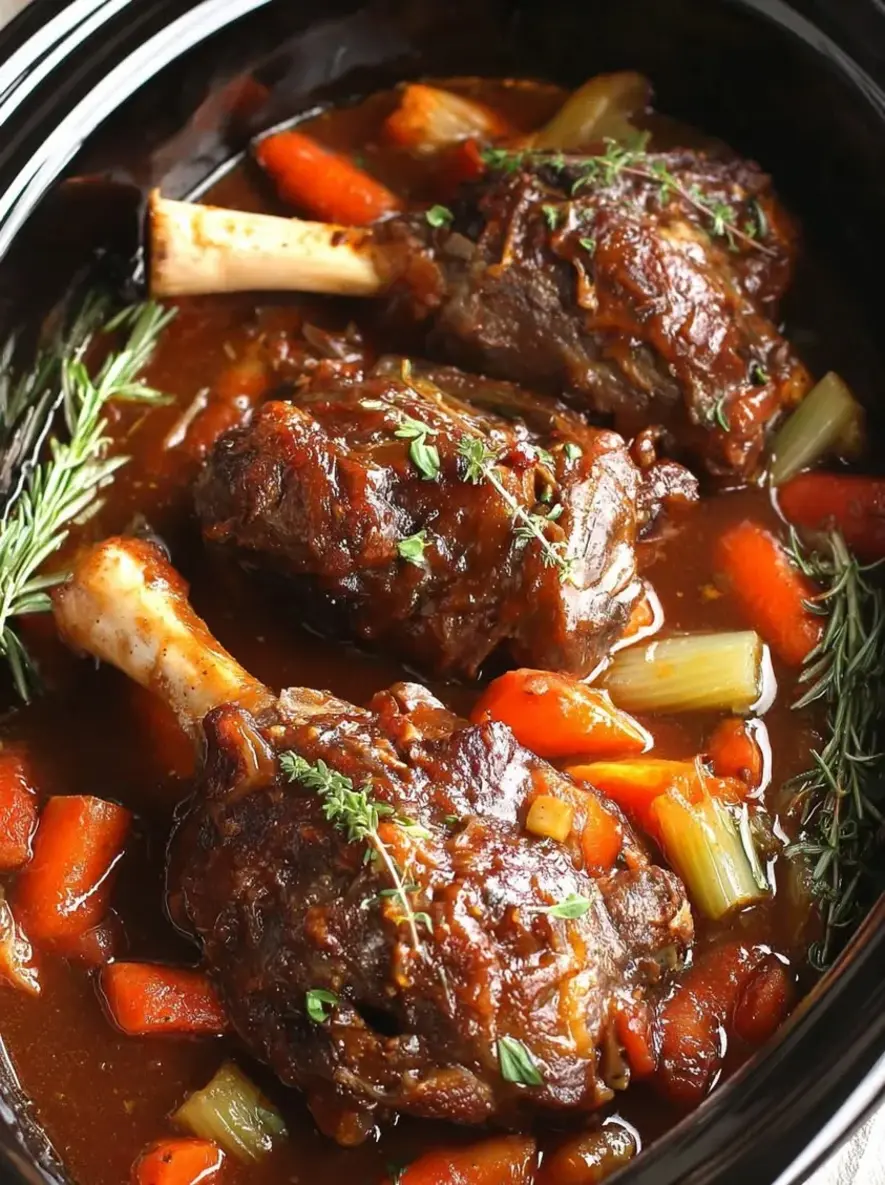
Table of Contents
Rustic Wine-Braised Lamb Shanks with Rosemary Herb Gravy – Tender, Slow-Braised Perfection
I still remember the first time I made wine braised lamb shanks in my tiny Parisian kitchen during culinary school. The landlord definitely did not approve of the rosemary-and-red-wine aroma seeping into the hallway, but my classmates certainly did. That dish — a rustic, fall-apart braise finished with a silky herb gravy — became my signature. Now, years later, living in New York City and cooking for my family and friends, this braised lamb shanks recipe is still the one I turn to when I want to impress without stress. It’s bold, deeply flavorful, and surprisingly simple once you know the rhythm of the pot.
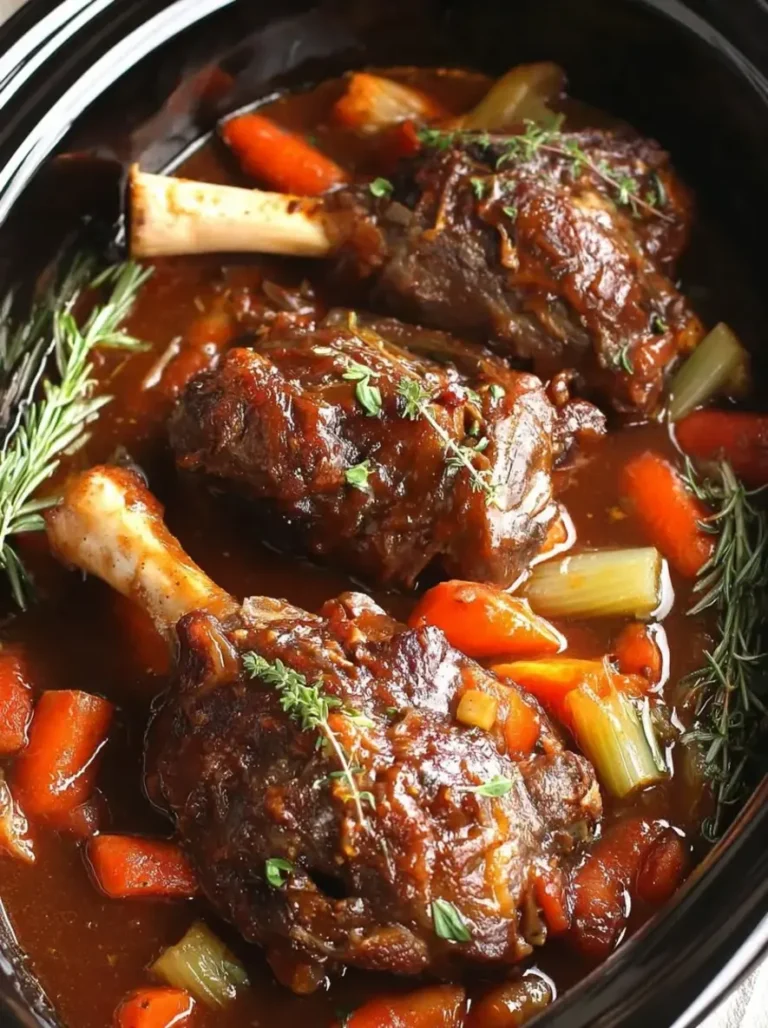
Imagine this: a lamb shank so tender the meat practically slides off the bone, bathed in a rich, wine-dark sauce fragrant with fresh rosemary and thyme. The braising liquid — a combination of red wine, beef broth, and diced tomatoes — reduces into a savory gravy that clings to every bite. With each spoonful, you get the sweetness of caramelized carrots and onions, the brightness of herbs, and the deep umami of perfectly browned lamb. It’s the kind of meal that makes you slow down, breathe deeply, and savor the moment.
My version of this rustic lamb shanks recipe draws on everything I love: the bold, slow-cooked flavors of my Moroccan childhood, the precision of French sauce-making, and the seasonal market ingredients I pick up at the Union Square Greenmarket. The secret? A proper sear, a patient braise, and a French-inspired gravy technique using a simple flour slurry finished with butter for gloss and richness. In this post, I’ll walk you through every step — including one common mistake that can make lamb shanks tough — so you can serve a restaurant-quality meal right from your own oven.
Why This Rustic Wine-Braised Lamb Shanks Recipe Is the Best
The flavor secret here is layers. I start by searing the lamb shanks until deeply browned — that fond (the browned bits on the bottom of the pot) is pure gold. Then I build the braising base with wine, broth, tomatoes, and a bundle of fresh herbs. My French training taught me to deglaze properly and let the wine cook off just enough before adding the liquid, which concentrates the flavor without any raw alcohol taste. The result is a gravy that tastes like it simmered all day — because it did, but with minimal hands-on effort.
Texture is everything in a braised lamb shanks recipe, and I’ve perfected the cooking time so the meat is fork-tender but not falling apart into a mush. The key is low-and-slow simmering, not boiling. I also finish the gravy with a knob of butter whisked in off the heat — that classic French technique called “monter au beurre” — which gives the sauce a gorgeous sheen and a velvety mouthfeel. It’s a small step that makes a huge difference.
And despite how elegant this lamb shanks with rosemary gravy sounds, it’s actually foolproof. You don’t need any special equipment besides a heavy Dutch oven, and the active cooking time is only about 20 minutes. After that, the oven does the work. I’ve tested this recipe with home cooks of all skill levels, and even beginners get perfect results because the braising method is so forgiving. That’s why I call it my “rustic confidence builder.”
Wine Braised Lamb Shanks Ingredients
I source my lamb shanks from a butcher in Chelsea Market, but any good-quality market will do. The ingredients here are simple and mostly pantry-friendly — the hero is really the lamb and the wine you choose. Below is everything you’ll need for this rustic lamb shanks recipe.
Ingredients List
- 4 lamb shanks
- Salt and black pepper, to taste
- 2 tablespoons olive oil
- 1 large onion, chopped
- 3 cloves garlic, minced
- 2 carrots, sliced
- 2 celery stalks, chopped
- 1 cup dry red wine (e.g., Cabernet Sauvignon or Merlot)
- 2 cups beef broth
- 1 can (14.5 oz) diced tomatoes, undrained
- 2 sprigs fresh rosemary
- 2 sprigs fresh thyme
- 2 bay leaves
- 2 tablespoons tomato paste
- 1 tablespoon all-purpose flour (for gravy)
- 2 tablespoons butter (for gravy)
Ingredient Spotlight
Lamb Shanks: Look for shanks with good marbling and ample meat around the bone. A well-marbled shank stays moist during the long braise. If lamb shanks are hard to find, lamb shoulder chops make an excellent substitute — just reduce the cooking time by about 30 minutes.
Red Wine: The wine is the backbone of this dish. Use a dry red like Cabernet Sauvignon, Merlot, or a Côtes du Rhône. Stick to something you’d happily drink — avoid cooking wines, which are often oversalted. My go-to is a Merlot from Long Island’s North Fork wine region.
Fresh Rosemary and Thyme: Fresh herbs make a real difference here. Dried can work in a pinch (see the FAQ), but fresh rosemary and thyme release essential oils that perfume the entire dish. I buy mine at the farmers market and keep the extra stems in a glass of water on my counter.
| Original Ingredient | Best Substitution | Flavor / Texture Impact |
|---|---|---|
| Lamb shanks | Lamb shoulder chops (bone-in) | Slightly less gelatin, similar richness; cook 30 min less |
| Dry red wine | Dry white wine + 1 tbsp balsamic vinegar | Lighter color, more acidic; less depth but still delicious |
| Fresh rosemary (2 sprigs) | 1 tsp dried rosemary, crushed | More concentrated flavor; use 1/3 amount and crush well |
How to Make Rustic Wine-Braised Lamb Shanks — Step-by-Step
Trust me — if you can brown meat and open a bottle of wine, you can make this braised lamb shanks recipe. Below is exactly how I do it in my NYC kitchen.
Step 1: Season and Sear the Lamb Shanks
Pat the lamb shanks completely dry with paper towels — this is crucial for a good sear. Season generously on all sides with salt and black pepper. Heat the olive oil in a large heavy pot or Dutch oven over medium-high heat until shimmering. Sear the shanks in batches if needed (do not crowd the pot), cooking until deeply browned on all sides, about 3–4 minutes per side. Transfer to a plate and set aside.
💡 Stella’s Pro Tip: Don’t rush the sear! A deep mahogany crust builds the entire flavor foundation for the braise. If the shanks release easily from the pot, they’re ready to flip. If they stick, give them another minute.
Step 2: Sauté the Aromatics
Reduce the heat to medium. Add the chopped onion, garlic, sliced carrots, and chopped celery to the pot. Cook, stirring occasionally, until softened and lightly golden, about 5–7 minutes. The moisture from the vegetables will help lift some of the browned bits from the bottom.
⚠️ Common Mistake to Avoid: Overcrowding the pan with too many vegetables at once can cause them to steam instead of brown. Keep the heat at medium and give them room — I use a wide Dutch oven for exactly this reason.
Step 3: Build the Braising Base
Stir in the tomato paste and cook for 1 minute, until it darkens slightly and smells rich. Pour in the red wine, using a wooden spoon to scrape up all the browned bits (fond) from the bottom of the pot. Let the wine simmer for 2 minutes to cook off the raw alcohol and concentrate its flavor.
💡 Stella’s Pro Tip: Letting the wine reduce by about half before adding broth intensifies the sauce. You want a deep, jammy wine flavor, not a sharp one. This is the same technique I learned in Paris for making sauces like Bordelaise.
Step 4: Combine and Braise
Add the beef broth, diced tomatoes (with their juices), fresh rosemary sprigs, thyme sprigs, and bay leaves. Return the lamb shanks to the pot, nestling them into the liquid so they’re partially submerged. Bring the liquid to a gentle boil, then reduce the heat to low, cover, and simmer gently for 2 to 2.5 hours, until the meat is tender and pulling away from the bone.
⚠️ Common Mistake to Avoid: A vigorous boil will toughen the meat. The liquid should barely bubble — just an occasional lazy burp. I set my burner to the lowest setting and check after 10 minutes to ensure it’s a gentle simmer.
Step 5: Make the Rosemary Herb Gravy
Carefully transfer the cooked lamb shanks to a plate and keep warm. Discard the rosemary sprigs, thyme sprigs, and bay leaves. In a small bowl, whisk the flour with 2 tablespoons of cold water to make a smooth slurry. Bring the braising liquid to a simmer and whisk in the slurry. Cook, stirring, for 2–3 minutes until the gravy thickens. Season with additional salt and pepper to taste. Off the heat, whisk in the butter until melted and glossy.
💡 Stella’s Pro Tip: For an even silkier gravy, strain the braising liquid through a fine-mesh sieve before adding the slurry. This removes the vegetable solids and herb stems, leaving a restaurant-smooth sauce. I do this when I’m feeling fancy — but it’s completely optional.
Step 6: Serve and Enjoy
Place a lamb shank on each plate and spoon the rosemary herb gravy generously over the top. Serve immediately with mashed potatoes, crusty bread, or buttered egg noodles to soak up every last drop of that glorious gravy.
| Step | Action | Duration | Key Visual Cue |
|---|---|---|---|
| 1 | Season & sear lamb shanks | 12–16 min | Deep golden-brown crust on all sides |
| 2 | Sauté aromatics | 5–7 min | Onions translucent, carrots softened |
| 3 | Build braising base (wine, broth, tomatoes) | 2–3 min | Wine reduces slightly, fond is fully dissolved |
| 4 | Braise lamb shanks | 2–2.5 hrs | Meat pulls away from bone, fork-tender |
| 5 | Make rosemary herb gravy | 3–5 min | Gravy thickens to coat spoon; glossy from butter |
| 6 | Serve | Immediately | Gravy spooned over shanks |
Serving & Presentation
I love serving this lamb shanks with rosemary gravy over a generous scoop of creamy mashed potatoes — the potatoes catch every bit of that rich, herbed sauce. A side of roasted carrots or a simple green salad with lemon vinaigrette balances the richness. In my house, I also set out a basket of crusty sourdough so no one leaves a drop of gravy on their plate. It’s the kind of meal that makes everyone at the table go quiet — in the best way.
For a touch of elegance, garnish each plate with a tiny sprig of fresh rosemary or a sprinkle of flaky sea salt. I learned this plating trick at Le Cordon Bleu — it signals to your guests that care went into every detail. And if you’re serving this for a dinner party, a bold red wine like a Syrah or Zinfandel pairs beautifully with the richness of the lamb and gravy.
| Pairing Type | Suggestions | Why It Works |
|---|---|---|
| Side Dish | Creamy mashed potatoes, buttered egg noodles, roasted root vegetables | Soaks up the rich gravy and balances the meaty depth |
| Sauce / Dip | Extra gravy on the side, fresh horseradish cream, mint chutney | Adds brightness and cuts through the richness |
| Beverage | Syrah, Zinfandel, or a dark, malty beer like a brown ale | Bold flavors stand up to the wine and herbs in the dish |
| Garnish | Fresh rosemary sprig, flaky sea salt, cracked black pepper, lemon zest | Brightens presentation and adds a final layer of aroma |
Make-Ahead, Storage & Reheating
This braised lamb shanks recipe is actually at its best the next day — the flavors deepen overnight as the lamb sits in the braising liquid. I often make it on a Sunday for a Monday dinner. Here’s exactly how to store and reheat it so every bite tastes as good as the first.
| Method | Container | Duration | Reheating Tip |
|---|---|---|---|
| Refrigerator | Airtight container with lid | Up to 4 days | Reheat gently in a covered pot on low with 2 tbsp water or broth |
| Freezer | Freezer-safe container or zip-top bag | Up to 3 months | Thaw overnight in fridge, then reheat as above |
| Make-Ahead | Store shanks in braising liquid in fridge | Make up to 2 days in advance | Reheat on stovetop; gravy may need a splash of broth to loosen |
One of my favorite tricks is to make the full recipe, let it cool, and refrigerate it overnight. The next day, the fat solidifies on top — I simply scrape it off before reheating. This not only makes the dish leaner but also gives the gravy a cleaner, more polished flavor. It’s a classic French technique I use all the time.
When reheating, always do it low and slow. A quick blast in the microwave can toughen the meat. I gently warm the shanks in their liquid in a covered pot over low heat for about 15–20 minutes, spooning the hot gravy over them as they warm. The lamb stays tender and the gravy stays velvety.
Variations & Easy Swaps
One of the things I love most about this braised lamb shanks recipe is how adaptable it is. Whether you’re cooking for dietary needs or just want to switch up the flavor profile, there’s a variation here for you.
| Variation | Key Change | Best For | Difficulty Impact |
|---|---|---|---|
| Moroccan-Spiced | Add cinnamon, cumin, and preserved lemon | A taste of North Africa | Easy (add spices with tomato paste) |
| Gluten-Free Gravy | Replace flour with cornstarch or arrowroot | Gluten-free diets | Easy (use 1 tbsp starch + 2 tbsp cold water) |
| White Wine & Herb | Replace red wine with dry white wine; add lemon zest | A brighter, springtime version | Easy (same technique, different wine) |
Moroccan-Spiced Lamb Shanks
Growing up in Morocco, my mother would braise lamb with cinnamon, cumin, and preserved lemon — a combination that still makes my heart sing. For this variation, add 1 teaspoon of ground cumin and 1 cinnamon stick along with the tomato paste. Swap the fresh rosemary for a pinch of saffron threads, and finish the gravy with a spoonful of harissa for heat. Serve it over couscous, and you’ll understand why North African cuisine is so beloved.
Gluten-Free Gravy Variation
If you’re avoiding gluten, the gravy is easy to adapt. Instead of all-purpose flour, mix 1 tablespoon of cornstarch or arrowroot powder with 2 tablespoons of cold water to form a slurry. Whisk it into the simmering braising liquid just as you would the flour slurry. The texture will be slightly glossier and the gravy will be just as thick and flavorful. I’ve tested this for friends with celiac disease, and it works perfectly every time.
White Wine & Herb Variation
For a lighter, spring-appropriate take on this rustic lamb shanks recipe, swap the red wine for a dry white wine like Sauvignon Blanc or Pinot Grigio. Add the zest of one lemon along with the fresh herbs, and finish the gravy with a handful of chopped fresh parsley and chives. The result is a brighter, more delicate sauce that pairs beautifully with roasted asparagus or a fresh pea purée. I love making this version when ramps and spring onions appear at the Union Square market.
Share Your Version!
I hope this braised lamb shanks recipe becomes as beloved in your kitchen as it is in mine. There’s something magical about a dish that fills your home with the aromas of wine, rosemary, and slow-cooked lamb — it’s comfort food at its most elegant. Whether you serve it for a quiet Sunday dinner or a festive holiday table, I’d love to hear how it turns out for you.
Leave a star rating and a comment below with your experience — tell me what side dish you paired it with, or whether you tried one of the variations. And if you share a photo on Instagram or Pinterest, be sure to tag @leosfoods so I can see your beautiful creation! My favorite question to hear? What wine did you use in the braise and what did you serve alongside? That conversation always teaches me something new. From my NYC kitchen to yours — I hope this recipe brings as much warmth to your table as it does to mine. — Stella 🧡
What is the best wine to use for braising lamb shanks?
The best wine for braising lamb shanks is a dry red wine with good structure and moderate tannins. I recommend a Cabernet Sauvignon, Merlot, or a Côtes du Rhône. These wines have enough body to stand up to the richness of the lamb and the herbs. Avoid sweet wines or “cooking wines” — they’re often oversalted and lack the complexity you want. A good rule of thumb: choose a wine you’d happily drink with the finished dish. If the wine tastes flat or harsh on its own, it will taste the same in your braise.
How long does it take to braise lamb shanks until they are tender?
Lamb shanks typically need 2 to 2.5 hours of gentle simmering to become fork-tender. The exact time depends on the size of the shanks and the consistency of your simmer. I check for doneness by piercing the meat with a fork — it should slide in easily with no resistance, and the meat should be pulling away from the bone. Make sure the braising liquid stays at a gentle simmer, not a rolling boil, as aggressive heat can toughen the meat. A heavy Dutch oven helps maintain steady, even heat throughout the cooking process.
Can I substitute fresh rosemary with dried rosemary in the herb gravy?
Yes, you can substitute dried rosemary for fresh, but there are a few important adjustments to make. Dried rosemary is more potent and concentrated, so use about 1 teaspoon of dried rosemary (crushed in your palm) for every 2 sprigs of fresh. Add it earlier in the cooking process — during the sauté stage or when you add the wine — so the dried herb has time to rehydrate and soften. Keep in mind that dried rosemary can be slightly woody in texture, so I recommend crushing it well or even grinding it lightly before adding it to the pot.
What side dishes pair well with wine-braised lamb shanks?
Wine-braised lamb shanks pair beautifully with side dishes that can soak up the rich rosemary herb gravy. My top recommendations are creamy mashed potatoes, buttered egg noodles, soft polenta, or a crusty sourdough bread. For vegetables, roasted carrots, parsnips, or green beans with almonds add color and balance. A simple side salad with a lemony vinaigrette cuts through the richness nicely. In my NYC kitchen, I also love serving them with a Moroccan-inspired couscous with dried apricots — it’s a nod to my heritage and absolutely delicious.
Should I sear lamb shanks before braising?
Yes, searing the lamb shanks before braising is absolutely essential for the best flavor. Searing creates a deep, caramelized crust on the meat through the Maillard reaction, and the browned bits left in the pot — called fond — are the foundation of a rich, savory gravy. Without searing, the braising liquid will taste flat and the meat will lack color. I pat the shanks completely dry, season them generously, and sear them in hot olive oil until deeply browned on all sides. This step only takes about 12 minutes but adds layers of depth that can’t be replicated any other way.
Can I cook lamb shanks in a slow cooker or Instant Pot?
Yes, both a slow cooker and Instant Pot work well for lamb shanks, though the texture and depth of flavor will differ slightly from the stovetop method. For a slow cooker, sear the shanks first, then transfer everything to the slow cooker and cook on low for 7–8 hours or on high for 4–5 hours. For an Instant Pot, use the sauté function for searing, then pressure cook on high for 45 minutes with a natural release. The gravy will be thinner from the Instant Pot, so I recommend thickening it with a slurry on the stovetop afterward.
How do I thicken the gravy for lamb shanks?
The easiest way to thicken the gravy for lamb shanks is with a simple flour slurry. Mix 1 tablespoon of all-purpose flour with 2 tablespoons of cold water until smooth, then whisk it into the simmering braising liquid. Cook for 2–3 minutes until the gravy thickens to your desired consistency. For a gluten-free option, use cornstarch or arrowroot powder in the same ratio. I also finish the gravy by whisking in 2 tablespoons of cold butter off the heat — this French technique adds a silky, glossy finish that makes the gravy taste incredibly luxurious.
What is the difference between lamb shanks and lamb shoulder for braising?
Lamb shanks and lamb shoulder are both excellent for braising, but they have distinct differences. Lamb shanks come from the lower leg and contain more connective tissue and collagen, which breaks down during slow cooking to create a rich, gelatinous sauce. Lamb shoulder is meatier and slightly fattier, with a more open texture. Shanks are more impressive for individual presentation (one shank per person), while shoulder is better for shredding into stews or sandwiches. If substituting shoulder for shanks, reduce the cooking time by about 30 minutes, as shoulder becomes tender more quickly.
Can I freeze leftover wine-braised lamb shanks?
Absolutely — wine-braised lamb shanks freeze beautifully, making them a fantastic make-ahead meal. Allow the dish to cool completely, then transfer the lamb shanks and braising liquid to a freezer-safe container or heavy-duty zip-top bag. They will keep well for up to 3 months. I recommend freezing the shanks in their liquid to prevent them from drying out. When you’re ready to eat, thaw overnight in the refrigerator, then reheat gently in a covered pot on the stovetop over low heat, adding a splash of beef broth or water if the gravy needs thinning. The flavor actually deepens after freezing!
Why are my lamb shanks tough after braising?
If your lamb shanks are tough after braising, the most common cause is cooking them at too high a temperature or not cooking them long enough. Lamb shanks need a gentle, low-temperature simmer for the collagen to break down properly — if the liquid is boiling, the meat will tighten and become tough rather than tender. Always cook at a bare simmer with just a few small bubbles breaking the surface. Another potential issue is insufficient cooking time: very large shanks may need close to 3 hours. Finally, slicing the meat against the grain when serving can also make a difference in perceived tenderness.
Love This Recipe? Save It to Pinterest!
If you enjoyed this Rustic Wine-Braised Lamb Shanks with Rosemary Herb Gravy recipe, don’t let it get lost in your browser tabs! 😄 Pin it now so you can find it again anytime — and explore hundreds more tried-and-tested recipes waiting for you on my Pinterest boards.
👉 Follow Stella on Pinterest @stellarecipeblog
📌 Pin this recipe · 🔁 Re-pin your favorites · 💬 Tag me when you make it — I love seeing your creations!
Did you make this recipe? I’d love to hear from you! 🧡
Drop a comment below, rate the recipe, and tell me what wine you used. Don’t forget to tag @leosfoods on Instagram or Pinterest — your photos make my day!
Rustic Wine-Braised Lamb Shanks with Rosemary Herb Gravy
Tender lamb shanks slow-braised in red wine with fresh rosemary and herbs, finished with a rich, savory gravy.
- Total Time: 2 hours 50 minutes
- Yield: 4 1x
Ingredients
- 4 lamb shanks
- Salt and black pepper, to taste
- 2 tablespoons olive oil
- 1 large onion, chopped
- 3 cloves garlic, minced
- 2 carrots, sliced
- 2 celery stalks, chopped
- 1 cup dry red wine (e.g., Cabernet Sauvignon or Merlot)
- 2 cups beef broth
- 1 can (14.5 oz) diced tomatoes, undrained
- 2 sprigs fresh rosemary
- 2 sprigs fresh thyme
- 2 bay leaves
- 2 tablespoons tomato paste
- 1 tablespoon all-purpose flour (for gravy)
- 2 tablespoons butter (for gravy)
Instructions
- 1. Pat lamb shanks dry with paper towels. Season generously with salt and pepper.
- 2. Heat olive oil in a large heavy pot or Dutch oven over medium-high heat. Sear the lamb shanks, working in batches if needed, until browned on all sides, about 3-4 minutes per side. Transfer to a plate.
- 3. Reduce heat to medium. Add onion, garlic, carrots, and celery; cook, stirring occasionally, until softened, about 5-7 minutes.
- 4. Stir in tomato paste and cook for 1 minute. Pour in red wine, scraping up any browned bits from the bottom. Bring to a simmer and let cook for 2 minutes.
- 5. Add beef broth, diced tomatoes, rosemary, thyme, and bay leaves. Return the lamb shanks to the pot, nestling them into the liquid. Bring to a boil, then reduce heat to low, cover, and simmer gently for 2 to 2.5 hours, or until the meat is tender and falling off the bone.
- 6. Carefully remove the lamb shanks to a plate and keep warm. Discard rosemary sprigs, thyme sprigs, and bay leaves.
- 7. For the gravy: In a small bowl, mix flour with 2 tablespoons of cold water to make a slurry. Bring the braising liquid to a simmer and whisk in the flour slurry. Cook, stirring, until thickened, about 2-3 minutes. Season with additional salt and pepper to taste. Off heat, whisk in butter until melted and smooth.
- 8. Serve lamb shanks with gravy spooned over the top.
Notes
For an even richer flavor, marinate the lamb shanks in the wine and herbs overnight before cooking. Serve with mashed potatoes or crusty bread to soak up the gravy.
- Prep Time: 20 minutes
- Cook Time: 2 hours 30 minutes
- Method: Main Course
- Cuisine: Mediterranean
Nutrition
- Calories: 520
- Sugar: 6 g
- Fat: 28 g
- Carbohydrates: 12 g
- Protein: 42 g
Tried This Recipe? Leave a Comment!
Did you make this recipe? I’d love to hear how it turned out! Please leave a comment and a rating below. Your feedback helps other home cooks and supports cheerychop.com!
For more delicious inspiration, follow me on Pinterest!