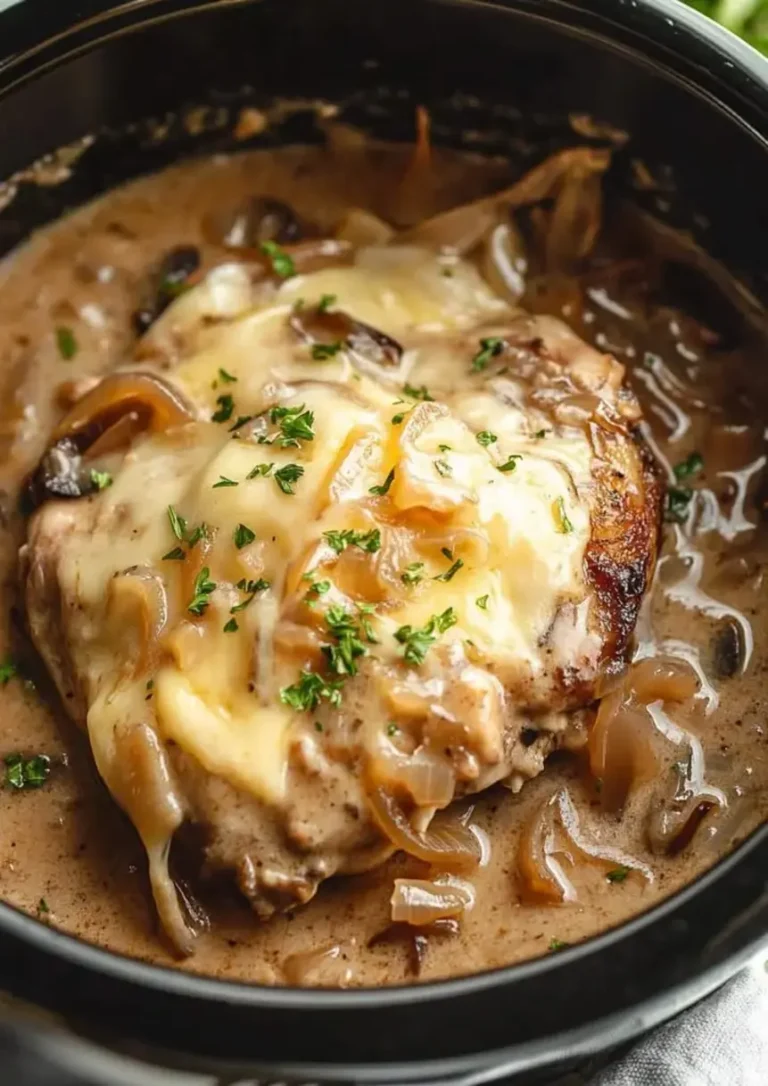
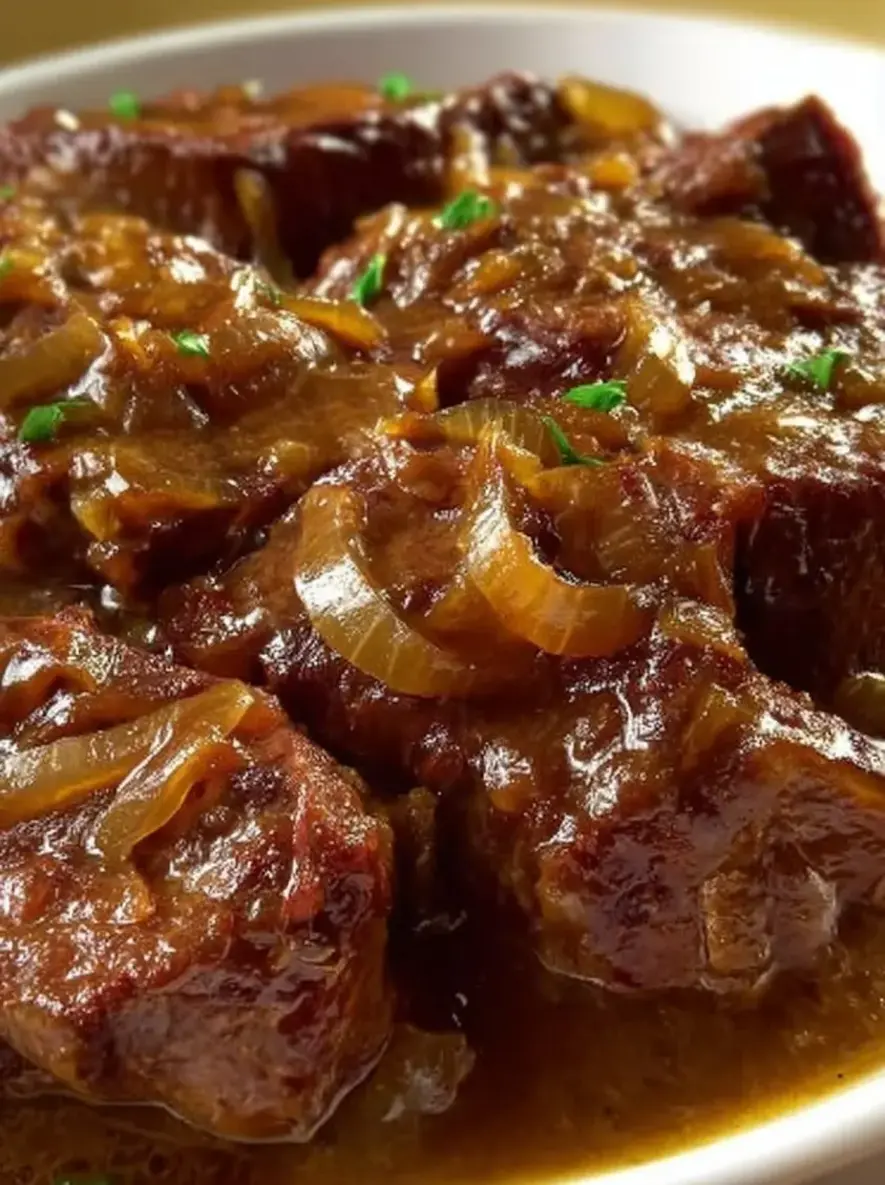
Rustic Braised Beef Stew with Sweet Caramelized Onions
“`html
Table of Contents
Rustic Braised Beef Stew with Rich Brown Gravy and Sweet Caramelized Onions – A Hearty, Slow-Braised Comfort Classic
I still remember the first time I made a truly great braised beef stew. It was a cold, grey afternoon in my tiny Parisian kitchen during culinary school, and my instructor had just demonstrated the art of caramelizing onions — low and slow, with patience and a pinch of salt. That day, the rustic braised beef stew we created had a depth of flavor I had only ever tasted in my mother’s tagines back in Morocco. The sweet caramelized onions melted into the rich brown gravy, coating every piece of tender beef like velvet. That dish became my gold standard, and this recipe is the one I’ve perfected over years of cooking — for my family, for friends, and now for you.
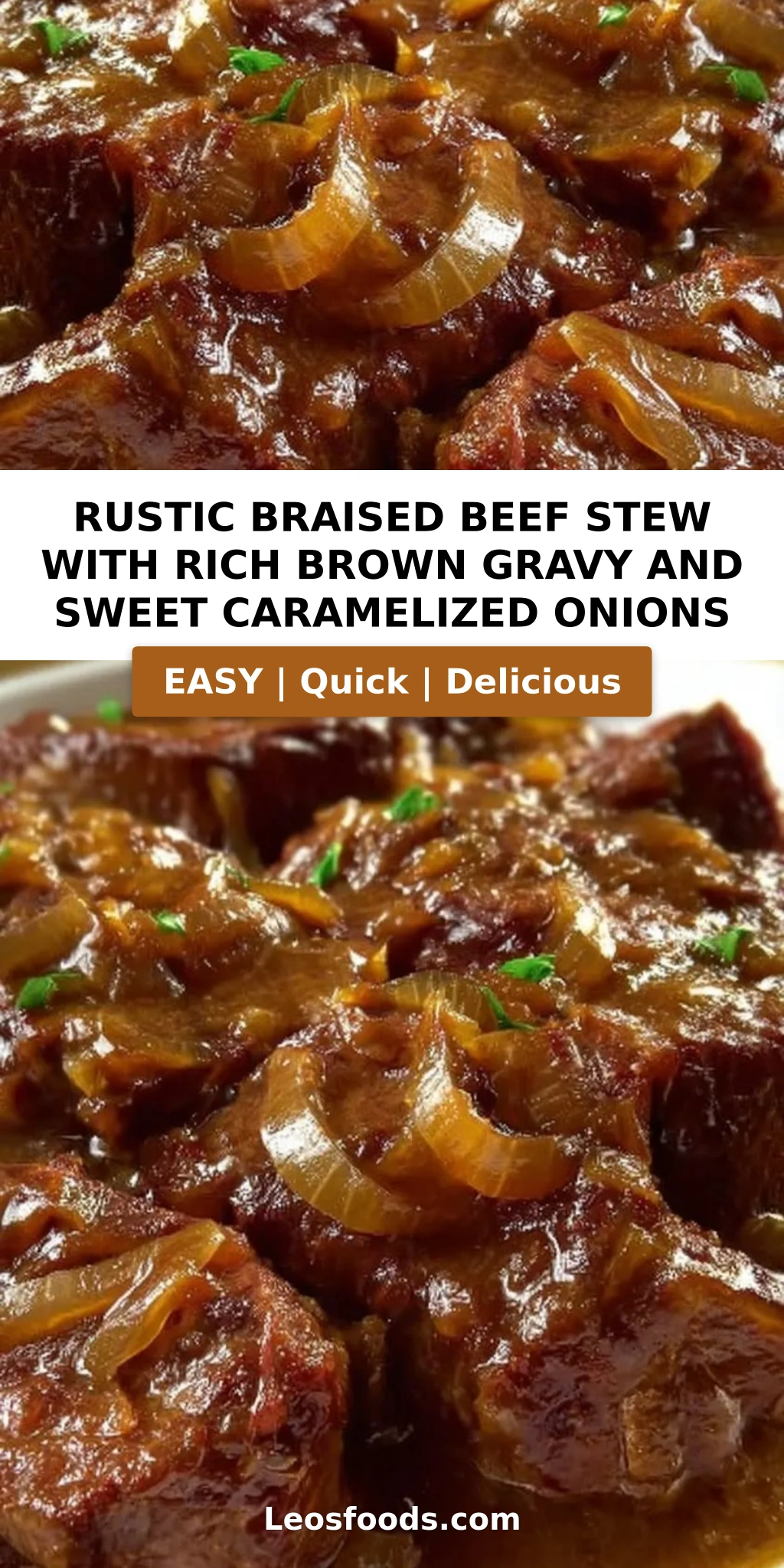
Imagine a bowl filled with fork-tender beef, nestled in a deeply savory gravy that glistens with the sweetness of slowly caramelized onions. The aroma alone — thyme, rosemary, Worcestershire, and a whisper of tomato paste — will fill your kitchen with the kind of warmth that makes everyone wander in asking, “What’s for dinner?” Each spoonful is rich, silky, and utterly satisfying. The carrots and celery add just enough earthy sweetness and texture, while the gravy clings to every morsel like a cozy blanket. This isn’t just stew; it’s a hug in a bowl, crafted with technique I learned in Paris and soul I learned from my mother.
What sets my version apart? It’s the double caramelization — first the onions, then the fond left from searing the beef — that builds an almost ridiculous depth of flavor. I also use a classic French technique of blooming the tomato paste and flour into the caramelized onions before adding broth, which creates a gravy that’s silky, lump-free, and intensely savory. Whether you’re a seasoned cook or brand new to braising, this homemade beef stew recipe is designed to succeed. I’ll show you exactly how to nail the sear, coax the sweetness from the onions, and walk away while the oven does the work. 💡 Stella’s Pro Tip: Pat the beef cubes dry with paper towels before seasoning — it’s the single most important step for a gorgeous brown crust.
Why This Rustic Braised Beef Stew Recipe Is the Best
The Flavor Secret: Most beef stew recipes rely on a quick sauté of onions, but I take the extra time to deeply caramelize them — 15 to 20 minutes of patient stirring. This transforms their natural sugars into a sweet, jammy foundation that pairs perfectly with the umami-rich beef. Then, I deglaze the pan with broth, scraping up all those browned bits (the fond) that hold immense flavor. This double layer of caramelization is the secret to a gravy that tastes like it’s been simmering all day — because it has, but with maximum efficiency.
Perfected Texture: I learned in Paris that the key to tender beef is low, gentle heat over time. Braising at a bare simmer — never a boil — ensures the collagen in the beef chuck breaks down into gelatin, giving you meat that pulls apart with a fork and a gravy that’s naturally thick and silky. The flour I add to the caramelized onions acts as a gentle thickener, and by cooking it for a minute before adding liquid, you avoid any raw flour taste. The result is a velvety braised beef stew with gravy that coats every spoonful perfectly.
Foolproof & Fast for What It Is: Yes, this easy beef stew slow cooked recipe takes about 3 hours — but most of that is hands-off oven time. The active prep is only about 20 minutes, and the technique is straightforward. I’ve tested this recipe more times than I can count, and I’ve designed every step to be clear, forgiving, and rewarding. Whether you’re cooking for a Sunday supper, a holiday meal, or a weeknight that calls for something special, this stew delivers without stress.
Rustic Braised Beef Stew Ingredients
When I shop for this stew at the Union Square farmers market here in NYC, I look for the best-quality beef chuck I can find — well-marbled, deep red, from a butcher I trust. The onions I source from the last of the winter storage crop; they’re sweet and firm. Every ingredient in this list has a purpose, and I’ve tested substitutions so you can cook with confidence no matter what you have on hand.
Ingredients List
- 2 pounds beef chuck, cut into 1½-inch cubes
- 2 tablespoons olive oil
- 2 large onions, thinly sliced
- 3 cloves garlic, minced
- 2 tablespoons tomato paste
- 3 tablespoons all-purpose flour
- 4 cups beef broth (preferably low-sodium)
- 1 tablespoon Worcestershire sauce
- 1 teaspoon dried thyme
- 1 teaspoon dried rosemary
- 2 bay leaves
- 1 teaspoon salt
- ½ teaspoon black pepper
- 2 carrots, sliced into ½-inch rounds
- 2 celery stalks, chopped
- 1 tablespoon butter
Ingredient Spotlight
Beef Chuck: This is my go-to cut for caramelized onion beef stew. It comes from the shoulder area and has just the right amount of marbling to keep the meat moist and tender during long braising. When shopping at a US grocery store, look for chuck roast with visible white streaks of fat — that’s the collagen that will melt into silky richness. If you can’t find chuck, brisket or bottom round will work, though brisket may need a slightly longer cook time.
Onions: Two large yellow or sweet onions are the heart of this dish. Yellow onions strike the best balance between sweetness and savory depth. If you only have white or red onions, you can use them — red onions will turn slightly purple and have a milder sweetness, while white onions are sharper and may need an extra 5 minutes of cooking to soften fully. The key is to slice them thinly so they melt into the gravy.
Beef Broth: The quality of your broth makes a real difference. I use a low-sodium beef broth so I can control the salt level. Better Than Bouillon roasted beef base is my secret weapon — it’s concentrated and adds deep, slow-roasted flavor. If you’re using boxed broth, choose one with no added sugar and a short ingredient list. You can also substitute with chicken broth in a pinch, but the gravy will be slightly less robust.
Worcestershire Sauce: This pantry staple adds umami, tang, and a hint of anchovy — don’t skip it! It deepens the savory profile without being fishy. If you’re vegetarian or don’t have it, soy sauce or coconut aminos make a good substitute, though you’ll lose the subtle tang. Add a splash of balsamic vinegar if you want to mimic that complexity.
| Original Ingredient | Best Substitution | Flavor / Texture Impact |
|---|---|---|
| Beef chuck | Brisket or bottom round | Brisket is richer but needs longer cook; bottom round is leaner, slightly less tender |
| Yellow onions | Sweet onions (Vidalia) or white onions | Sweeter or sharper respectively; cooking time may vary by 5 minutes |
| Beef broth | Better Than Bouillon + water, or chicken broth | Bouillon is more concentrated; chicken broth yields lighter gravy |
| Worcestershire sauce | Soy sauce + splash of balsamic vinegar | Similar umami, less tang; balsamic adds sweetness |
| All-purpose flour | Cornstarch slurry (2 tbsp cornstarch + ¼ cup cold water) | Gluten-free option; add at end of cooking, simmer 2 minutes |
How to Make Rustic Braised Beef Stew — Step-by-Step
Trust me — if you can brown meat and stir onions, you can make this stew. I’ll walk you through each stage so you feel confident and in control. Let’s get that Dutch oven warmed up!
Step 1: Season and Sear the Beef
Pat the beef cubes dry with paper towels — this is non-negotiable for a good sear. Season generously with 1 teaspoon salt and ½ teaspoon black pepper. Heat 2 tablespoons olive oil in a large Dutch oven over medium-high heat until it shimmers. Working in batches (don’t crowd the pot!), brown the beef on all sides, about 3–4 minutes per batch. The goal is a deep, dark crust — that’s flavor. Transfer the browned beef to a plate and set aside.
💡 Stella’s Pro Tip: If the beef sticks to the pot, it’s not ready to flip! Let it sear undisturbed for another 30–60 seconds. It will release naturally when properly browned.
Step 2: Caramelize the Onions
Reduce the heat to medium. Add 1 tablespoon butter to the pot — it will sizzle and melt into the beef drippings. Add the thinly sliced onions and stir well. Cook for 15–20 minutes, stirring every 2–3 minutes, until the onions are deeply golden, soft, and smell sweet. Don’t rush this step — it’s the heart of the caramelized onion beef stew flavor. If the onions start to stick or brown too fast, add a splash of water or broth.
⚠️ Common Mistake to Avoid: Adding sugar to speed up caramelization. Onions have plenty of natural sugar — just be patient. Sugar can burn and turn bitter.
Step 3: Build the Gravy Base
Stir in the minced garlic and 2 tablespoons tomato paste. Cook for 1 minute, stirring constantly, until the tomato paste darkens slightly and smells fragrant. Sprinkle 3 tablespoons all-purpose flour over the onions and stir well — cook for 1 minute to eliminate the raw flour taste. Slowly pour in 4 cups beef broth while stirring continuously with a wooden spoon to prevent lumps. The mixture will thicken almost immediately.
💡 Stella’s Pro Tip: Pour the broth in a thin, steady stream while whisking vigorously. This ensures a silky, lump-free gravy every time — a technique I learned in my French sauce class.
Step 4: Simmer and Braise
Add 1 tablespoon Worcestershire sauce, 1 teaspoon dried thyme, 1 teaspoon dried rosemary, and 2 bay leaves. Stir in the sliced carrots and chopped celery. Return the browned beef to the pot, along with any juices that collected on the plate. Bring the stew to a gentle simmer — small bubbles, not a rolling boil. Cover the pot and transfer it to a 325°F oven (or leave on the stovetop over low heat). Cook for 2½ to 3 hours, stirring once or twice, until the beef is fork-tender and the gravy is rich and thickened.
⚠️ Common Mistake to Avoid: Boiling the stew! A vigorous boil will toughen the meat and cloud the gravy. Keep the heat low so the liquid barely shimmers. Low and slow is the mantra of braising.
Step 5: Finish and Serve
Remove the bay leaves and discard. Taste the stew and adjust the seasoning with additional salt and pepper if needed. If the gravy is thinner than you like, simmer uncovered for 5–10 minutes to reduce. Serve piping hot, garnished with a sprinkle of fresh parsley if you have it. I love this stew over creamy mashed potatoes, with crusty bread for soaking up every drop, or alongside buttered egg noodles.
💡 Stella’s Pro Tip: Let the stew rest for 10 minutes after cooking — the flavors meld and deepen beautifully. This also allows the gravy to settle to the perfect consistency.
| Step | Action | Duration | Key Visual Cue |
|---|---|---|---|
| 1 | Season and sear beef | 10–12 min | Deep brown crust on all sides |
| 2 | Caramelize onions | 15–20 min | Deep golden, soft, sweet-smelling |
| 3 | Build gravy base | 3–4 min | Flour fully incorporated, no dry patches |
| 4 | Simmer and braise | 2½–3 hr | Beef fork-tender, gravy thickened |
| 5 | Finish and serve | 5–10 min | Gravy coats back of spoon |
Serving & Presentation
This homemade beef stew recipe is a meal in itself, but the right accompaniments make it unforgettable. I love to ladle the stew over a mound of creamy mashed potatoes — the gravy soaks into every nook and cranny. A thick slice of crusty sourdough or a warm baguette is essential for sopping up the last drops. For a lighter touch, serve it over buttered egg noodles or alongside a simple green salad with lemon vinaigrette to cut through the richness.
When I serve this at home in NYC, I like to garnish each bowl with a sprinkle of fresh parsley or thyme leaves for a pop of color and freshness. A small dollop of crème fraîche or Greek yogurt on top might sound unusual, but it’s a trick I picked up in Paris — the tanginess balances the deep, savory gravy beautifully. For a Moroccan twist, I sometimes add a pinch of ras el hanout or smoked paprika to the top of each serving.
This stew also shines as part of a larger spread: pair it with roasted root vegetables, a warm farro salad, or even tucked into a puff pastry pot pie. However you serve it, the key is to let the stew be the star — it’s rich, complex, and deeply satisfying all on its own.
| Pairing Type | Suggestions | Why It Works |
|---|---|---|
| Side Dish | Creamy mashed potatoes, buttered egg noodles, crusty bread | Absorb and balance the rich gravy |
| Sauce / Topping | Crème fraîche, Greek yogurt, fresh parsley | Tang and freshness cut through richness |
| Beverage | Full-bodied red wine (Malbec, Côtes du Rhône), dark beer, sparkling water with lemon | Clarity and acidity complement the savory depth |
| Garnish | Fresh parsley, thyme sprigs, smoked paprika, crispy fried onions | Adds color, texture, and aromatic lift |
Make-Ahead, Storage & Reheating
This easy beef stew slow cooked recipe is a dream for meal prep. In fact, it tastes even better the next day — the flavors deepen and meld as they sit. I often make a double batch on Sunday and enjoy it throughout the week for quick, soul-warming dinners after long days in the city. Here’s how to store and reheat it like a pro.
| Method | Container | Duration | Reheating Tip |
|---|---|---|---|
| Refrigerator | Airtight container | Up to 5 days | Reheat gently on stovetop over medium-low, adding a splash of broth if needed |
| Freezer | Freezer-safe zip-top bag or rigid container | Up to 3 months | Thaw overnight in fridge, then reheat on stovetop — flavor is even deeper |
| Make-Ahead | Dutch oven or covered casserole | Up to 2 days in advance | Cook fully, cool, refrigerate; reheat at 325°F for 20–25 minutes |
When reheating, I always use the stovetop over medium-low heat, stirring occasionally. If the gravy has thickened too much in the fridge, a splash of beef broth or water brings it back to the perfect consistency. For frozen stew, thaw it overnight in the refrigerator for the best texture — then reheat gently and slowly. I’ve found that the stew’s flavor actually improves after a day or two, making it a fantastic make-ahead dish for entertaining or busy weeks.
Variations & Easy Swaps
One of the joys of a great stew is how adaptable it is. Over the years, I’ve developed several variations that keep this recipe exciting year-round. Whether you need a gluten-free version, want to try a Moroccan twist, or simply want to use what’s in season, here are my favorite tested swaps.
| Variation | Key Change | Best For | Difficulty Impact |
|---|---|---|---|
| Moroccan Spiced | Add 1 tsp ras el hanout, ½ tsp cumin, ¼ tsp cinnamon | Warm, aromatic twist — tastes like home | Easy |
| Gluten-Free | Replace flour with 2 tbsp cornstarch slurry (add at end) | Celiac or gluten sensitivity | Easy — just adjust timing |
| Spring Vegetable | Add 1 cup peas and 1 cup diced potatoes in last 30 min | Lighter, more colorful seasonal stew | Easy |
Moroccan Spiced Variation
This variation is very close to my heart. Growing up in Morocco, my mother would make a similar stew with lamb or beef, scented with ras el hanout — a warm blend of cumin, coriander, ginger, cinnamon, and saffron. To make this version, add 1 teaspoon ras el hanout, ½ teaspoon ground cumin, and ¼ teaspoon cinnamon along with the dried herbs in Step 4. The spices don’t overpower the rustic braised beef stew; instead, they add a gentle warmth and complexity that pairs beautifully with the sweet caramelized onions. Serve it with couscous and a sprinkle of fresh cilantro for a true North African–French fusion meal.
Gluten-Free / Dairy-Free Variation
To make this stew gluten-free, simply replace the all-purpose flour with a cornstarch slurry: mix 2 tablespoons cornstarch with ¼ cup cold water until smooth, then stir it into the bubbling stew during the last 5 minutes of cooking. The gravy will thicken beautifully without any graininess. For dairy-free, use an additional tablespoon of olive oil instead of butter, and check that your Worcestershire sauce is gluten-free (Lea & Perrins is GF in the US). I’ve tested this version many times, and it’s every bit as rich and satisfying as the original — just be sure to simmer the slurry for at least 2 minutes to activate the thickener.
Spring Vegetable Twist
When the weather starts warming up in NYC, I love to lighten this stew with spring vegetables. About 30 minutes before the stew is done, add 1 cup frozen peas and 1 cup diced Yukon Gold potatoes (no need to peel — I love the rustic texture). The potatoes will break down slightly and help thicken the gravy naturally, while the peas add a pop of sweetness and color. You can also swap the carrots for parsnips or add a handful of green beans. This version feels fresh and seasonal while keeping all the comforting depth of the original caramelized onion beef stew.
Share Your Version!
I absolutely love hearing how this rustic braised beef stew turns out in your kitchen. Did you try the Moroccan spice twist? Serve it over creamy polenta? Add a splash of red wine? Every variation tells a story, and I’d be thrilled to hear yours. Leave a star rating and a comment below — your feedback helps other home cooks find the confidence to try this recipe themselves. And if you’re feeling proud of your stew (as you should be!), snap a photo and share it on Instagram or Pinterest. Tag me @leosfoods so I can cheer you on and feature your creation!
One question I’d love for you to answer: what’s your favorite side dish to serve with this stew? I’m always looking for new inspiration, and the community here has the best ideas. From my NYC kitchen to yours — I hope this recipe brings as much warmth to your table as it does to mine. — Stella 🧡
⭐️⭐️⭐️⭐️⭐️
Did you make this recipe? I’d love to hear how it turned out! Leave a comment below, rate it, and tag me @leosfoods on Instagram. Happy cooking! 🍲
What is the best cut of beef to use for a rustic braised beef stew with rich brown gravy?
For the best rustic braised beef stew, I highly recommend beef chuck. It comes from the shoulder area and has excellent marbling — those little streaks of fat melt during the long, slow braise, keeping the meat incredibly tender and moist. Chuck also contains plenty of collagen, which breaks down into gelatin and gives your rich brown gravy a silky, luxurious body without any artificial thickeners. If you can’t find chuck, brisket is a very close second, though it may need an extra 30 minutes of cook time. Bottom round works in a pinch, but it’s leaner and won’t be quite as fork-tender. Look for well-marbled pieces at your local butcher or grocery store — the quality of the meat directly impacts the final flavor and texture of your stew.
How long should you braise beef stew to get tender meat and caramelized onions?
For perfectly tender meat and deeply flavorful caramelized onion beef stew, you should braise for 2½ to 3 hours at a gentle simmer. The onions themselves need about 15–20 minutes of active cooking before the braise even begins — that’s the time it takes to coax out their natural sugars and achieve that deep golden color. Once everything is combined in the pot, the long, slow braise at 325°F (or very low stovetop heat) allows the collagen in the beef to break down, which transforms the meat from chewy to fork-tender. The key is maintaining a bare simmer — small bubbles, not a rolling boil. If you rush this step, the meat will be tough and the gravy won’t develop that rich, complex flavor that makes this homemade beef stew recipe so special.
Can I substitute the sweet caramelized onions with regular onions in this beef stew recipe?
Absolutely — you can use regular yellow onions in place of sweet onions for this rustic braised beef stew. In fact, I often use yellow onions because they strike the perfect balance between sweetness and savory depth. Yellow onions have enough natural sugar to caramelize beautifully in 15–20 minutes, and their slightly sharper flavor holds up well during the long braise. If you only have white onions, they’ll work too — they’re a bit more pungent, so you may want to cook them for an extra 5 minutes to soften fully. Red onions are also fine, though they’ll turn a faint purple hue and have a milder sweetness. The key takeaway: any onion can become a caramelized onion beef stew — just give them time and patience, and they’ll reward you with deep, sweet flavor.
What is the secret to making a rich brown gravy for braised beef stew?
The secret to a truly rich brown gravy for braised beef stew with gravy lies in three key techniques. First, sear the beef thoroughly — a deep, dark crust creates fond (those browned bits on the bottom of the pot) that is pure flavor. Second, caramelize the onions properly; their natural sugars add sweetness and color to the gravy base. Third, bloom the tomato paste and flour in the caramelized onions before adding any liquid. Cooking the tomato paste for 60 seconds deepens its sweetness, and toasting the flour eliminates any raw taste. When you slowly add the broth while stirring, the flour thickens the gravy smoothly. A splash of Worcestershire sauce adds umami depth, and the long, slow braise allows all these flavors to meld into a velvety, deeply savory gravy that clings to the beef and vegetables beautifully.
Can I make this beef stew in a slow cooker or Instant Pot?
Yes, you can adapt this easy beef stew slow cooked recipe for a slow cooker or Instant Pot, but I recommend a few adjustments. For a slow cooker, sear the beef and caramelize the onions on the stovetop first (don’t skip these steps — they’re essential for deep flavor). Then transfer everything to the slow cooker and cook on low for 7–8 hours or on high for 4–5 hours. For the Instant Pot, use the sauté function for searing and caramelizing, then pressure cook on high for 35 minutes with a natural release. The texture will be slightly different — the slow cooker version is more tender, while the Instant Pot is quicker but the gravy may be thinner. In both cases, you may need to thicken the gravy at the end with a cornstarch slurry. The stovetop/oven method still gives the most depth, but these shortcuts work beautifully for busy days.
What can I serve with rustic braised beef stew for a complete meal?
This rustic braised beef stew is a complete meal on its own, but the right sides take it to the next level. My absolute favorite pairing is creamy mashed potatoes — the gravy soaks into them like a dream. Buttered egg noodles are a close second, especially if you want something lighter. For a low-carb option, serve the stew over cauliflower mash or alongside roasted Brussels sprouts. A thick slice of crusty sourdough or a warm baguette is essential for sopping up the gravy. For a touch of freshness, add a simple green salad with a lemon vinaigrette — the acidity cuts through the richness beautifully. And if you’re feeling indulgent, a dollop of crème fraîche or Greek yogurt on top adds a lovely tang that balances the deep, savory flavors.
How do I store and reheat leftover beef stew?
Storing and reheating this homemade beef stew recipe is simple, and the flavor actually improves after a day or two. Let the stew cool completely, then transfer it to an airtight container and refrigerate for up to 5 days. For longer storage, freeze it in a freezer-safe bag or container for up to 3 months. When reheating, I always use the stovetop over medium-low heat — it keeps the texture consistent and allows you to adjust the consistency. If the gravy has thickened too much, add a splash of beef broth or water while stirring. Avoid microwaving if possible, as it can toughen the meat and create uneven heating. For frozen stew, thaw overnight in the refrigerator before reheating. The stew’s flavor deepens beautifully after a day or two, making it a fantastic make-ahead meal.
Can I add red wine to this braised beef stew?
Absolutely — red wine is a wonderful addition to this braised beef stew with gravy. I often add ½ cup of dry red wine (like a Côtes du Rhône, Malbec, or Cabernet Sauvignon) right after caramelizing the onions, letting it simmer for 2–3 minutes to cook off the alcohol before adding the broth. The wine adds acidity, complexity, and depth that beautifully complement the sweet caramelized onions and savory gravy. If you choose to add wine, reduce the beef broth by the same amount so the liquid ratio stays balanced. For a non-alcoholic substitute, use ½ cup of unsweetened pomegranate juice or a splash of balsamic vinegar mixed with water — both add similar acidity and fruitiness without alcohol.
Why are my onions not caramelizing properly in the stew?
If your onions aren’t caramelizing properly for your caramelized onion beef stew, a few common issues could be at play. First, the heat might be too high — medium heat is ideal, as high heat will burn the onions before they soften. Second, you may be overcrowding the pot; the onions need space to release moisture and brown. Use a wide Dutch oven and don’t pile them more than 1–2 inches deep. Third, patience is key — 15–20 minutes of steady stirring is normal. If they’re sticking to the pot, add a splash of water or broth to deglaze and keep them moving. Finally, make sure you’re using enough fat: the 1 tablespoon of butter called for in the recipe creates the perfect environment for caramelization. Yellow or sweet onions work best; red onions take slightly longer to soften.
Can I freeze this beef stew with potatoes or other vegetables?
Yes, you can freeze this rustic braised beef stew, but there’s a small catch with potatoes — they can become grainy or watery after thawing. If you plan to freeze the stew, I recommend adding potatoes fresh when reheating rather than freezing them in the stew. Carrots and celery freeze perfectly fine, as do the beef and gravy. Simply cook the stew without potatoes, cool completely, and freeze for up to 3 months. When you’re ready to enjoy it, thaw overnight in the refrigerator, reheat on the stovetop, and stir in diced potatoes during the last 20 minutes of cooking. This way, you get perfectly tender potatoes without any texture issues. The same goes for peas or other delicate vegetables — add them fresh during reheating for the best result.
Love This Recipe? Save It to Pinterest!
If you enjoyed this Rustic Braised Beef Stew with Rich Brown Gravy and Sweet Caramelized Onions recipe, don’t let it get lost in your browser tabs! 😄 Pin it now so you can find it again anytime — and explore hundreds more tried-and-tested recipes waiting for you on my Pinterest boards.
👉 Follow Stella on Pinterest @stellarecipeblog
📌 Pin this recipe · 🔁 Re-pin your favorites · 💬 Tag me when you make it — I love seeing your creations!
“`
Print
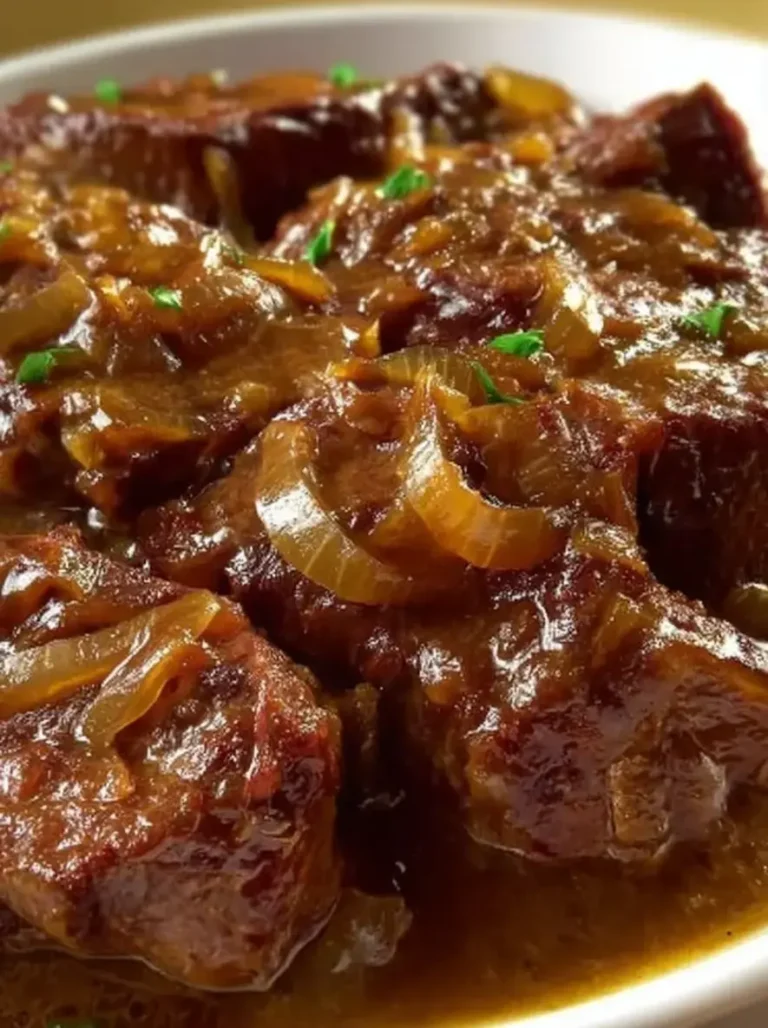
Rustic Braised Beef Stew with Rich Brown Gravy and Sweet Caramelized Onions
A hearty and comforting beef stew with deeply caramelized onions and a rich brown gravy, slow-braised to perfection.
- Total Time: 3 hours 20 minutes
- Yield: 6 servings 1x
Ingredients
- 2 pounds beef chuck, cut into 1½-inch cubes
- 2 tablespoons olive oil
- 2 large onions, thinly sliced
- 3 cloves garlic, minced
- 2 tablespoons tomato paste
- 3 tablespoons all-purpose flour
- 4 cups beef broth
- 1 tablespoon Worcestershire sauce
- 1 teaspoon dried thyme
- 1 teaspoon dried rosemary
- 2 bay leaves
- 1 teaspoon salt
- 1/2 teaspoon black pepper
- 2 carrots, sliced
- 2 celery stalks, chopped
- 1 tablespoon butter
Instructions
- Season the beef cubes with salt and pepper.
- Heat olive oil in a large Dutch oven over medium-high heat.
- Brown the beef in batches until deeply seared on all sides. Remove and set aside.
- Add butter and sliced onions to the pot. Cook for 15-20 minutes, stirring often, until deeply caramelized.
- Stir in garlic and tomato paste and cook for 1 minute.
- Sprinkle flour over the onions and stir well.
- Slowly pour in the beef broth while stirring to prevent lumps.
- Add Worcestershire sauce, thyme, rosemary, bay leaves, carrots, and celery.
- Return the beef to the pot and bring to a gentle simmer.
- Cover and cook on low heat for 2½ to 3 hours, stirring occasionally, until the beef is fork-tender.
- Remove bay leaves and adjust seasoning if needed.
- Serve hot with crusty bread, mashed potatoes, or buttered noodles.
- Prep Time: 20 minutes
- Cook Time: 3 hours
Nutrition
- Calories: 520 kcal
Tried This Recipe? Leave a Comment!
Did you make this recipe? I’d love to hear how it turned out! Please leave a comment and a rating below. Your feedback helps other home cooks and supports cheerychop.com!
For more delicious inspiration, follow me on Pinterest!