Crystal Blueberry Cheesecake Hearts with Mirror Glaze
“`html
Table of Contents
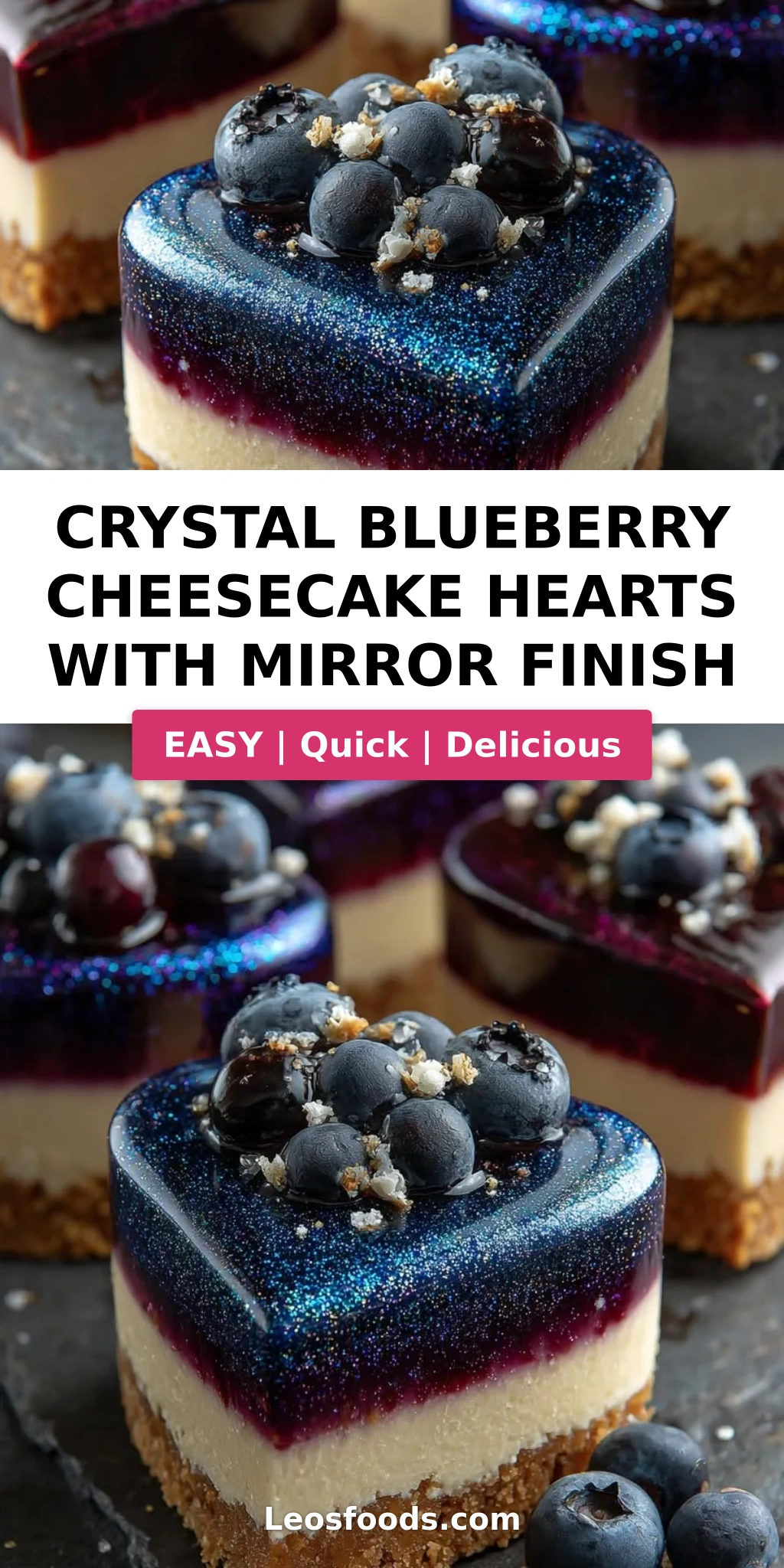
Crystal Blueberry Cheesecake Hearts with Mirror Finish – Elegant Individual Desserts with a Stunning Glossy Glaze
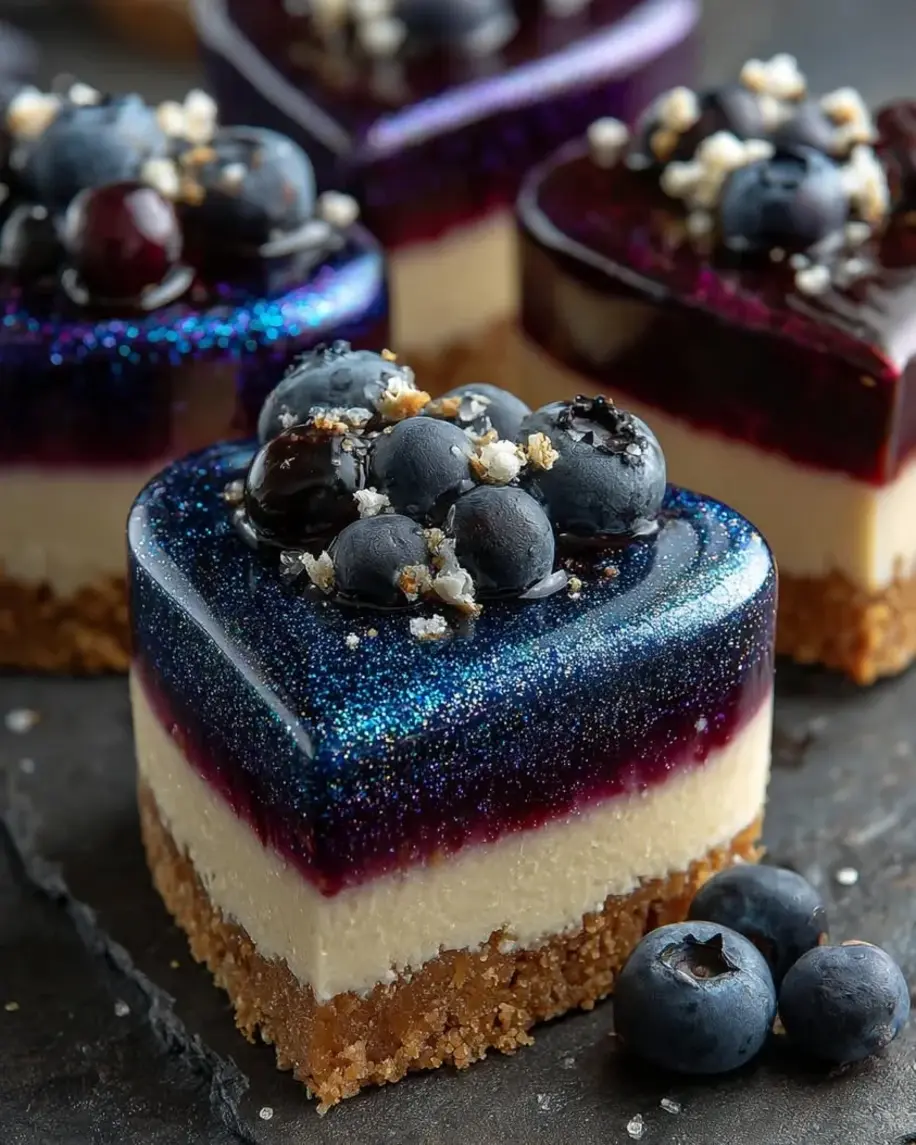
I still remember the first time I saw a mirror-glazed dessert in a pastry shop window in Paris — that flawless, glass-like surface reflecting the afternoon light like a jewel. I was a young culinary student then, fresh from my mother’s kitchen in Morocco, where we made simple fruit tarts and honey-soaked pastries. That moment in Paris sparked something in me: the realization that dessert could be both art and comfort. This blueberry cheesecake hearts recipe is my love letter to that memory — elegant individual cheesecakes shaped like hearts, topped with a shimmering blueberry mirror glaze that catches every bit of light. The mirror glaze cheesecake technique combines my French pastry training with the bold, fruity flavors I grew up loving in North Africa.
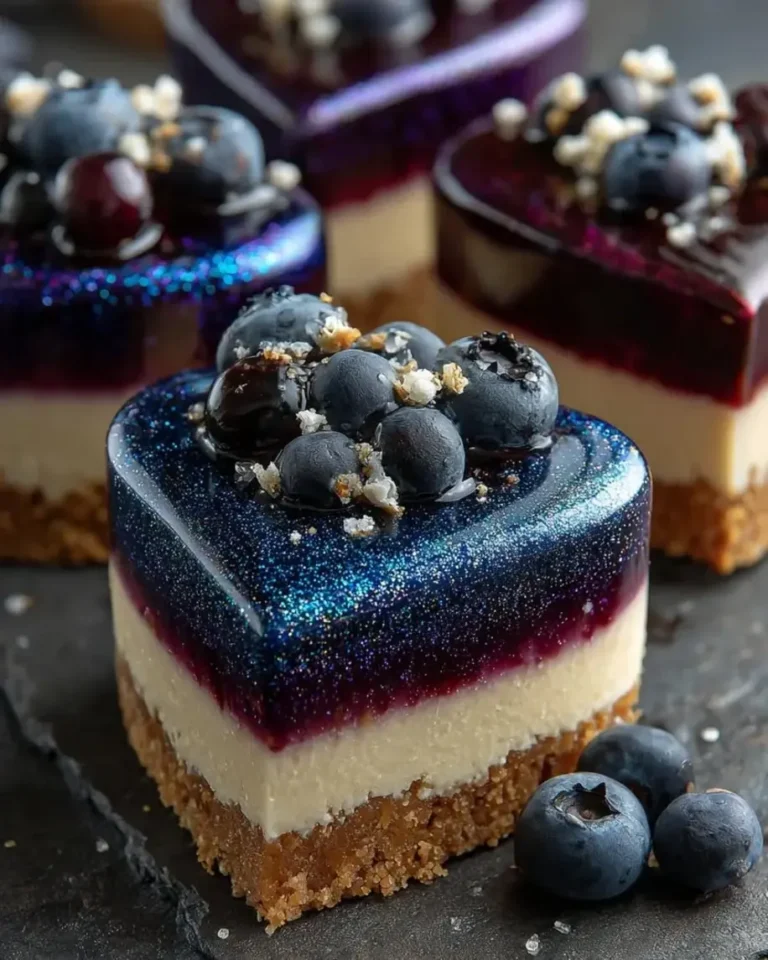
Imagine slicing into a perfectly chilled heart-shaped cheesecake: the glossy blueberry mirror glaze gives way to a creamy, velvety blueberry cheesecake filling, all sitting atop a buttery cinnamon-spiced graham cracker crust. Each bite is a harmony of textures — the smooth mirror finish on top, the luscious no-bake blueberry cheesecake underneath, and the slight crunch of the biscuit base. The blueberry puree in both the cheesecake and the glaze delivers a bright, tangy-sweet berry flavor that cuts through the richness of the cream cheese and mascarpone. It’s the kind of dessert that makes people gasp when you bring it to the table, yet it’s surprisingly achievable at home with a little patience and the right technique.
What sets this mirror glaze cheesecake apart is the attention to detail — from blooming the gelatin perfectly to letting the glaze cool to exactly the right consistency before pouring. I’ve tested this blueberry cheesecake hearts recipe more times than I can count, tweaking the ratios until the filling set perfectly every time and the glaze flowed like liquid glass. In this post, I’ll share my insider tips for achieving that flawless mirror finish, the one mistake most home bakers make with gelatin, and how you can adapt this recipe for a dairy-free or vegan-friendly version. From my NYC kitchen to yours — let’s make something beautiful together.
Why This Blueberry Cheesecake Hearts Recipe Is the Best
The flavor secret here is the double blueberry treatment. I use blueberry puree in both the cheesecake filling and the mirror glaze, which gives this dessert a concentrated berry flavor that doesn’t get lost behind the cream cheese. Growing up in Morocco, we used fruit purees in everything from tagines to pastries, and I learned early on that cooking fruit down concentrates its natural sweetness and acidity. The mascarpone cheese adds a luxurious richness that cream cheese alone can’t achieve — a trick I picked up from an Italian pastry chef in Paris who insisted that mascarpone was the key to a silky no-bake cheesecake.
Perfected texture comes from a French technique I learned at Le Cordon Bleu: stabilizing the cheesecake filling with just the right amount of bloomed gelatin. This ensures the hearts hold their shape when unmolded, while still remaining creamy and spoonable. The gelatin is gently warmed into a small portion of the mixture before being folded back into the full batch — this prevents lumps and guarantees a smooth, even set. The mirror glaze itself is a classic French glaçage miroir, made with sugar, corn syrup, and gelatin for that signature high-shine finish that looks like polished crystal.
Foolproof and fast — despite how impressive these heart-shaped cheesecakes look, the process is surprisingly straightforward once you understand a few key principles. This no-bake blueberry cheesecake requires no oven time for the filling, which means you don’t have to worry about water baths, cracks, or over-baking. The most critical step is letting the cheesecake freeze for at least 4 hours before glazing — this ensures the mirror glaze sets cleanly without melting or sliding off. I’ve taught this recipe to beginners in my NYC cooking workshops, and every single person left with a showstopping dessert they were proud of.
Blueberry Cheesecake Hearts Recipe Ingredients
I source my cream cheese from a small dairy farm upstate that delivers to the Union Square Greenmarket in NYC — the difference in flavor and texture is remarkable. The blueberries I use come from a farm in New Jersey when they’re in season, but frozen wild blueberries work beautifully too, especially for the puree. This ingredient list is divided into four parts: the blueberry cheesecake filling, the biscuit base, the mirror glaze, and optional garnishes. Each component plays a specific role in creating that stunning final presentation.
Ingredients List
- For the Blueberry Cheesecake Hearts:
- 12 oz cream cheese, softened
- 1/2 cup mascarpone cheese
- 1/2 cup heavy cream
- 1/3 cup granulated sugar
- 1 tsp vanilla extract
- 1 cup blueberry puree (fresh or frozen blueberries blended and strained)
- 2 tsp gelatin powder
- 2 tbsp cold water (for blooming gelatin)
- Pinch of salt
- For the Biscuit Base:
- 1 cup graham cracker crumbs
- 3 tbsp melted butter
- 1 tbsp sugar
- 1/2 tsp cinnamon
- For the Mirror Blueberry Glaze:
- 1 cup granulated sugar
- 1/2 cup water
- 1/2 cup light corn syrup
- 1 tbsp gelatin powder
- 3 tbsp cold water (for blooming gelatin)
- 1/2 cup blueberry puree
- 1 tsp lemon juice
- For Garnish (optional):
- 2 tbsp fresh blueberries
- 1 tbsp white chocolate curls
- Edible silver dust
Ingredient Spotlight
Cream Cheese: Use full-fat block-style cream cheese (not the spreadable kind in a tub). The higher fat content ensures a stable, creamy filling that sets properly. Philadelphia cream cheese is widely available and reliable. For a tangier flavor, look for an artisanal brand at your local farmers market. Avoid low-fat versions — they contain more water and can make the cheesecake filling loose and grainy.
Mascarpone Cheese: This Italian cream cheese adds a luxurious silkiness that regular cream cheese alone can’t match. It has a higher fat content and a milder, sweeter flavor. Mascarpone is available in most US grocery stores near the specialty cheeses or in the dairy section. If you can’t find it, you can substitute with equal parts cream cheese and heavy cream beaten together, but the texture will be slightly less velvety.
Blueberry Puree: You can make your own by blending fresh or frozen blueberries and straining out the seeds and skins through a fine-mesh sieve. This gives you a smooth, vibrant puree that works beautifully in both the filling and the glaze. For a shortcut, look for unsweetened blueberry puree at specialty grocery stores. Avoid blueberry jam or preserves — they contain added sugar and pectin that will alter the texture of both the cheesecake and the glaze.
Gelatin Powder: This is the key to both the cheesecake structure and the mirror glaze. Use powdered gelatin (like Knox brand, available at any US supermarket). Always bloom gelatin in cold water for 5 minutes before gently warming it to dissolve. Never boil gelatin or add it directly to hot liquid — it will lose its setting power and create a grainy texture. For a vegan-friendly option, see the FAQ section below.
| Original Ingredient | Best Substitution | Flavor / Texture Impact |
|---|---|---|
| Cream Cheese | Neufchâtel cheese (reduced fat) | Slightly less rich, tangier, slightly softer set |
| Mascarpone | Equal parts cream cheese + heavy cream (blended) | Slightly less silky, still creamy and stable |
| Graham Cracker Crumbs | Shortbread cookie crumbs or vanilla wafer crumbs | Sweeter base, less cinnamon flavor, same texture |
| Gelatin (glaze) | Agar-agar powder (vegan alternative) | Firmer set, slightly less glossy, needs different blooming method |
| Light Corn Syrup | Glucose syrup or honey (adjust sweetness) | Honey adds floral note; glucose gives same shine as corn syrup |
How to Make Crystal Blueberry Cheesecake Hearts — Step-by-Step
Don’t let the elegant results intimidate you — this heart-shaped cheesecake recipe comes together in a series of simple, well-defined steps. I’ve broken everything down so you know exactly what to look for at each stage. Take your time with the glaze cooling step; it’s the one place where patience really pays off.
Step 1: Prepare the Biscuit Base
In a small bowl, combine 1 cup graham cracker crumbs, 3 tbsp melted butter, 1 tbsp sugar, and 1/2 tsp cinnamon. Stir with a fork until every crumb is evenly moistened. The mixture should hold together when pressed between your fingers. Divide the mixture evenly among 6 heart-shaped silicone molds, pressing firmly into an even layer on the bottom. Use the back of a small spoon or a flat-bottomed glass to compact the crumbs. Place the molds on a small baking sheet and refrigerate while you prepare the filling.
💡 Stella’s Pro Tip: For an extra-clean edge on your hearts, use silicone molds rather than metal. Silicone releases the frozen cheesecake hearts without sticking, preserving the sharp heart shape. If you only have metal molds, line them with plastic wrap strips for easy unmolding.
Step 2: Bloom the Gelatin
Sprinkle 2 tsp gelatin powder over 2 tbsp cold water in a small bowl. Let it sit undisturbed for 5 minutes until the gelatin absorbs the water and becomes a firm, jiggly mass. This process, called blooming, ensures the gelatin dissolves evenly and sets properly. Do not skip this step — adding dry gelatin directly to the mixture will result in lumps and an uneven set.
⚠️ Common Mistake to Avoid: Using hot water to bloom gelatin. The gelatin will dissolve too quickly and may form clumps or lose its setting power. Always use cold water (refrigerated is best) and let it bloom for the full 5 minutes.
Step 3: Make the Cheesecake Filling
In a large mixing bowl, combine 12 oz softened cream cheese, 1/2 cup mascarpone cheese, 1/2 cup heavy cream, 1/3 cup granulated sugar, 1 tsp vanilla extract, 1 cup blueberry puree, and a pinch of salt. Using a hand mixer or stand mixer fitted with the paddle attachment, beat on medium speed until smooth, creamy, and fluffy — about 2-3 minutes. Scrape down the sides and bottom of the bowl at least once to ensure everything is incorporated. The mixture should be light and airy, with a pale lavender-pink color from the blueberry puree.
Step 4: Dissolve and Fold In Gelatin
Scoop about 1/2 cup of the cheesecake mixture into a small microwave-safe bowl. Heat it in the microwave for 15 seconds until warm but not hot. Add the bloomed gelatin to the warm mixture and stir until completely dissolved and smooth. Let it cool for 1 minute, then pour it back into the main cheesecake mixture. Fold gently with a spatula until fully incorporated — about 20 strokes. The gelatin must be evenly distributed for the cheesecake to set uniformly.
💡 Stella’s Pro Tip: If you prefer not to use a microwave, place the small bowl of cheesecake mixture over a pan of simmering water (double boiler method) and stir in the bloomed gelatin until dissolved. This gentle heating prevents the gelatin from overheating and losing its strength.
Step 5: Assemble and Freeze
Divide the cheesecake filling evenly among the 6 heart-shaped molds, spooning it over the biscuit base. Smooth the tops with an offset spatula or the back of a spoon. Tap the baking sheet gently on the counter to release any air bubbles. Place the molds in the freezer and freeze for at least 4 hours, or overnight for best results. The cheesecakes must be fully frozen solid before glazing — this is critical for the mirror glaze to set properly without melting the filling.
⚠️ Common Mistake to Avoid: Glazing the cheesecakes when they are only partially frozen. The warmth of the glaze will soften the cheesecake surface, causing it to slump or create an uneven finish. Always freeze for a minimum of 4 hours, and up to 24 hours for convenience.
Step 6: Make the Mirror Glaze
In a small bowl, bloom 1 tbsp gelatin powder in 3 tbsp cold water for 5 minutes. Meanwhile, in a small saucepan, combine 1 cup sugar, 1/2 cup water, and 1/2 cup light corn syrup. Heat over medium heat, stirring occasionally, until the sugar dissolves and the mixture comes to a gentle boil. Remove from heat immediately. Add the bloomed gelatin and stir until fully dissolved. Stir in 1/2 cup blueberry puree and 1 tsp lemon juice until the glaze is smooth and glossy. The color should be a deep, vibrant magenta-blue.
Step 7: Cool the Glaze
Let the glaze cool at room temperature, stirring occasionally, until it thickens slightly and reaches a consistency similar to warm honey — about 20-25 minutes. To test, dip a spoon into the glaze: it should coat the back of the spoon evenly and drip off in a steady stream. If it’s too thin, it will run off the cheesecake without coating. If it’s too thick, it will set in lumps. The ideal temperature is around 90-95°F. You can speed up cooling by placing the bowl over an ice bath, stirring constantly.
💡 Stella’s Pro Tip: Check the glaze temperature with an instant-read thermometer. Between 90°F and 95°F is the sweet spot for a flawless mirror finish. If the glaze gets too thick, gently reheat it in the microwave for 5-second intervals, stirring between each, until it flows again.
Step 8: Glaze the Hearts
Remove the frozen cheesecake hearts from the molds and place them on a wire rack set over a baking sheet (to catch drips). Working one at a time, pour the cooled mirror glaze evenly over each heart, starting from the center and letting it flow over the edges. The glaze should coat the entire surface in a smooth, glossy layer. Let any excess drip off onto the baking sheet. Using an offset spatula, gently scrape the bottom of each heart to remove any drips before transferring to a serving plate.
⚠️ Common Mistake to Avoid: Pouring the glaze too quickly or from too high up. Pour slowly and steadily from a height of about 2-3 inches above the cheesecake. This allows the glaze to flow smoothly over the surface without creating bubbles or uneven patches.
Step 9: Chill and Garnish
Transfer the glazed cheesecake hearts to individual serving plates or a platter. Refrigerate for 20 minutes to allow the mirror glaze to set completely. The glaze will firm up to a soft, jelly-like consistency with a brilliant high-shine finish. Just before serving, garnish with fresh blueberries, white chocolate curls, and a light dusting of edible silver dust for that extra-special occasion feel.
💡 Stella’s Pro Tip: Add garnishes right before serving so they stay fresh and vibrant. White chocolate curls can be made by running a vegetable peeler along a block of white chocolate. For the edible silver dust, use a small fine-mesh sieve to dust evenly — a little goes a long way.
| Step | Action | Duration | Key Visual Cue |
|---|---|---|---|
| 1 | Prepare biscuit base | 5 minutes | Crumbs hold together when pressed |
| 2 | Bloom gelatin | 5 minutes | Gelatin becomes firm, jiggly mass |
| 3 | Make cheesecake filling | 3 minutes | Smooth, fluffy, pale lavender |
| 4 | Dissolve gelatin into filling | 2 minutes | No streaks of gelatin visible |
| 5 | Fill molds and freeze | 4+ hours | Hearts are solid and firm to touch |
| 6 | Cook mirror glaze | 10 minutes | Clear, glossy, deep magenta color |
| 7 | Cool the glaze | 20-25 minutes | Coats spoon, drips in steady stream |
| 8 | Glaze the hearts | 5 minutes | Smooth, even glossy coating |
| 9 | Chill and garnish | 20 minutes | Glaze is set, shiny, not tacky |
Serving & Presentation
These crystal blueberry cheesecake hearts deserve a dramatic reveal. I like to serve them on chilled white porcelain plates — the contrast between the glossy blueberry mirror glaze and the white surface is absolutely stunning. Place each heart slightly off-center and add a small cluster of fresh blueberries on the side. A tiny pinch of edible silver dust catches the light and makes the whole plate feel like a piece of jewelry. For special occasions like Valentine’s Day, anniversaries, or Galentine’s brunch, I arrange three hearts on a wooden board with fresh flowers scattered around.
In my NYC apartment, I often pair these cheesecake hearts with a Moroccan mint tea — the bright, herbal notes cut through the richness of the cheesecake and echo the blueberry’s natural freshness. For a wine pairing, a late-harvest Riesling or a sparkling Moscato d’Asti complements the berry flavors without overwhelming them. If you’re serving these after a heavy meal, keep the portions as is — these hearts are rich but not overly heavy, thanks to the lightness of the no-bake blueberry cheesecake filling.
| Pairing Type | Suggestions | Why It Works |
|---|---|---|
| Side Dish | Fresh berries, whipped cream, lemon sorbet | Bright acidity balances richness of cheesecake |
| Sauce / Dip | Lemon curd, white chocolate ganache, berry coulis | Adds contrasting texture and complementary flavor |
| Beverage | Moroccan mint tea, late-harvest Riesling, sparkling Moscato | Herbal or sweet wine notes mirror the blueberry and cream |
| Garnish | Fresh blueberries, white chocolate curls, mint sprigs, edible flowers | Adds color contrast, freshness, and visual appeal |
Make-Ahead, Storage & Reheating
This mirror glaze cheesecake recipe is perfect for make-ahead entertaining — in fact, I almost always prepare it a day ahead of time for dinner parties and holiday gatherings. The cheesecake hearts freeze beautifully before glazing, and the glazed hearts hold up well in the refrigerator for several hours. Here’s my tested system for planning ahead without sacrificing quality or presentation.
| Method | Container | Duration | Reheating Tip |
|---|---|---|---|
| Refrigerator | Airtight container in single layer | Up to 3 days | No reheating needed; serve chilled |
| Freezer (unglazed) | Wrap each heart in plastic wrap, then foil | Up to 1 month | Thaw in refrigerator 30 min before glazing |
| Make-Ahead | Freeze in molds up to 1 week; glaze day of serving | Assemble up to 1 day ahead | Add garnishes just before serving |
For the best texture and presentation, I recommend glazing the cheesecake hearts the same day you plan to serve them. The mirror glaze is at its most brilliant within 24 hours of being poured. If you’re making these for a dinner party, freeze the unglazed hearts up to a week in advance, then glaze them about an hour before your guests arrive. Let the glazed hearts sit in the refrigerator for at least 20 minutes to set the glaze, then add the garnishes right before serving. The mirror finish will stay glossy and beautiful for several hours in the fridge, though condensation may form if the hearts are moved between temperature extremes.
Variations & Easy Swaps
| Variation | Key Change | Best For | Difficulty Impact |
|---|---|---|---|
| Raspberry Mirror Glaze | Replace blueberry puree with raspberry puree | Valentine’s Day, romantic occasions | Same technique |
| Gluten-Free Base | Use gluten-free graham crackers or almond flour crust | Gluten-sensitive guests | Slightly easier |
| Citrus-Berry Twist | Add 1 tsp lemon zest to filling and 1 tbsp orange juice to glaze | Spring gatherings, brunch | Same technique |
Raspberry Mirror Glaze Variation
For a Valentine’s Day or anniversary twist, swap the blueberry puree in the mirror glaze for an equal amount of raspberry puree. The raspberry version has a slightly tarter edge that cuts beautifully through the creamy cheesecake filling. I like to add a drop of pink food coloring to deepen the rose-red hue. In Morocco, we often use rose water in desserts, and a tiny splash — about 1/4 teaspoon — added to the raspberry glaze gives it an elegant floral note that pairs wonderfully with the berries. Garnish with fresh raspberries and rose petals for an extra romantic presentation.
Gluten-Free & Dairy-Free Variation
To make this recipe gluten-free, simply use certified gluten-free graham crackers for the biscuit base. The texture and flavor are virtually identical — I tested this with my gluten-sensitive NYC friends and they couldn’t tell the difference. For a dairy-free version, substitute the cream cheese with a high-quality plant-based cream cheese (I like Miyoko’s or Kite Hill), use coconut cream in place of heavy cream, and replace mascarpone with a thick cashew cream (soaked cashews blended with a splash of coconut milk). The dairy-free version will have a slightly softer set, so I recommend adding an extra 1/2 tsp of gelatin to compensate. The mirror glaze can be made with vegan gelatin alternatives (see FAQ #4 for details).
Lemon-Blueberry Twist Variation
During blueberry season in New Jersey, I love adding fresh lemon zest to the cheesecake filling — about 1 tablespoon of finely grated zest from 2 lemons. The lemon brightens the blueberry flavor and adds a layer of complexity that feels both familiar and elevated. In the mirror glaze, replace the lemon juice with fresh orange juice and add a strip of orange zest while the glaze is heating (remove before pouring). This variation is particularly lovely for spring brunches and outdoor gatherings. The citrus note reminds me of the preserved lemons my mother used in Morocco — a touch of brightness that makes everything taste more vibrant.
What is the key technique to achieve a mirror finish on blueberry cheesecake hearts?
The key technique for achieving a flawless mirror finish is all about temperature control and glaze consistency. First, your cheesecake hearts must be fully frozen solid — at least 4 hours in the freezer. Second, the glaze must be cooled to exactly 90-95°F before pouring. At this temperature, the glaze flows like warm honey, coating the frozen surface evenly and setting quickly into a smooth, glass-like layer. Pour the glaze slowly from a height of 2-3 inches, starting at the center and letting it naturally flow over the edges. Any bubbles can be gently popped with a toothpick or by lightly tapping the wire rack. The bloomed gelatin in the glaze is what creates that signature high-shine finish — so never skip the blooming step and always use cold water.
Can I use frozen blueberries for the crystal glaze on this cheesecake recipe?
Absolutely — frozen blueberries work wonderfully for the mirror glaze and the cheesecake filling. In fact, I often prefer frozen wild blueberries because they are smaller, more intensely flavored, and available year-round. To make the puree, simply thaw the frozen blueberries, then blend them in a food processor or blender until smooth. Strain the puree through a fine-mesh sieve to remove the skins and seeds, which ensures a silky-smooth glaze. Frozen blueberries tend to release more liquid than fresh ones, so you may get slightly more puree than called for — just measure out the exact amount needed for each component. The color from frozen blueberries is just as vibrant as fresh, especially when combined with the lemon juice in the glaze.
How long does it take to set the mirror glaze on blueberry cheesecake hearts?
The mirror glaze sets relatively quickly — about 15-20 minutes in the refrigerator after it has been poured over the frozen cheesecake hearts. The glaze firms up into a soft, jelly-like layer that holds its shape and shine. However, for the best results, I recommend chilling the glazed hearts for at least 30 minutes before serving. This allows the glaze to fully stabilize and ensures clean, neat edges when you transfer them to serving plates. If you’re making these ahead for a party, you can glaze them up to 4 hours in advance and keep them refrigerated — the mirror finish will remain glossy and beautiful during that time. Avoid leaving glazed cheesecakes at room temperature for more than 30 minutes, as the glaze can soften and lose its sharp mirror quality.
What can I use instead of gelatin to make the crystal topping vegan-friendly?
For a vegan-friendly mirror glaze, agar-agar powder is the best alternative to gelatin. Agar-agar is a plant-based gelling agent derived from seaweed, and it sets more firmly than gelatin. To use it, follow the package instructions carefully — typically 1 teaspoon of agar-agar powder replaces 1 tablespoon of gelatin. However, agar-agar needs to be brought to a boil to activate its gelling properties, so you’ll need to whisk it into the sugar-water-corn syrup mixture and bring it to a full boil for 1-2 minutes. The glaze will set at room temperature, so you can use it slightly warmer than a gelatin-based glaze. Be aware that agar-agar creates a firmer, slightly less glossy finish than gelatin, and the texture is more gel-like than silky. For the cheesecake filling itself, you can use a vegan cream cheese and a plant-based gelatin alternative, but the texture will be denser and less creamy.
Can I make this blueberry cheesecake hearts recipe without mascarpone cheese?
Yes, you can make this recipe without mascarpone cheese, though the texture will be slightly less silky and luxurious. The best substitute is to use an additional 1/2 cup of full-fat cream cheese beaten with 2 tablespoons of heavy cream until smooth and fluffy. This mimics the fat content and texture of mascarpone reasonably well. Alternatively, you can simply use 1 full cup of cream cheese and omit the mascarpone entirely — the cheesecake will still be creamy and delicious, just a bit denser. I don’t recommend using Neufchâtel or reduced-fat cream cheese as the sole substitute because the lower fat content can make the filling less stable and more prone to being watery. If you’re in a pinch, full-fat Greek yogurt blended with an equal amount of cream cheese works surprisingly well, though it adds a tangier flavor.
Why did my mirror glaze turn out cloudy instead of clear and glossy?
A cloudy mirror glaze is usually caused by one of three issues. First, the glaze may have been poured too cold — if the glaze drops below 85°F, it starts to thicken unevenly and can appear hazy. Always check the temperature with a thermometer and keep it between 90-95°F for pouring. Second, undissolved sugar crystals can cause cloudiness — make sure the sugar is fully dissolved before removing the syrup from the heat, and avoid stirring the glaze once it starts to cool, as this can introduce air bubbles and sugar crystals. Third, the blueberry puree may not have been strained properly — seeds and pulp particles scatter light and make the glaze look dull. Always strain your puree through a fine-mesh sieve, pressing with a spatula to extract as much liquid as possible while leaving solids behind. If your glaze still turns cloudy, gently reheat it to 95°F, stir in a tablespoon of light corn syrup, and pour again over fresh frozen cheesecakes.
Can I use a different fruit instead of blueberry in this heart shaped cheesecake?
Absolutely — this recipe is wonderfully adaptable to other fruits. Strawberry, raspberry, blackberry, mango, or passion fruit all work beautifully in both the cheesecake filling and the mirror glaze. The technique remains exactly the same: make a puree of your chosen fruit, strain it to remove seeds or fibers, and use it 1:1 in place of the blueberry puree. Keep in mind that different fruits have different natural sugar and pectin levels. Very sweet fruits like mango may need a teaspoon of lemon juice to brighten the flavor, while tart fruits like raspberry may need an extra tablespoon of sugar in the glaze. For the mirror finish, fruits with vibrant natural colors — like raspberry (deep pink), mango (golden yellow), or passion fruit (bright orange) — create stunning visual effects. The garnishes should complement the fruit you choose: fresh berries for berry flavors, tropical fruits for mango or passion fruit.
How do I prevent the mirror glaze from dripping off the sides of the cheesecake hearts?
A small amount of drip is actually desirable — it gives the hearts a professional, cascading look. But if you want minimal drips, there are a few techniques to control the coverage. First, make sure your cheesecake hearts are fully frozen when you glaze them. The cold surface causes the glaze to set immediately on contact, which naturally limits how far it drips. Second, pour the glaze in two stages: start with a thin base coat by pouring just enough to cover the top, let it set for 2-3 minutes, then pour a second, thicker coat. This creates a more even layer with less runoff. Third, use a slightly thicker glaze — let it cool to around 88°F (just below the ideal pouring temperature) so it’s a bit more viscous and won’t run as much. Finally, after glazing, use an offset spatula to gently scrape any drips from the bottom before transferring to serving plates. For perfectly clean edges, some pastry chefs freeze the hearts again for 5 minutes after glazing, then trim the bottom edge with a hot knife.
Can I use this mirror glaze recipe on other desserts like cakes or donuts?
Yes, this blueberry mirror glaze works beautifully on a variety of desserts beyond cheesecake hearts. It’s fantastic on classic vanilla or lemon bundt cakes, chocolate mousse cakes, panna cotta, cream puffs, and even glazed donuts. The key principle remains the same: the surface you’re glazing must be cold and smooth for the glaze to flow evenly and set properly. For cakes, freeze the cake for at least 1-2 hours before glazing, and place it on a wire rack over a baking sheet to catch drips. For donuts, a quick 15-minute freeze is sufficient. The glaze recipe as written yields enough for about 6 large donuts or one 8-inch round cake. If you’re glazing a larger cake, you may need to multiply the recipe by 1.5 or 2. One important note: this glaze sets with a soft, jelly-like texture, so it’s best for desserts that will be served chilled and eaten within 24 hours — it’s not ideal for cakes that will sit at room temperature for long periods.
How should I store leftover mirror glazed cheesecake hearts and how long do they last?
Leftover glazed blueberry cheesecake hearts can be stored in the refrigerator for up to 3 days, though the mirror glaze is most brilliant within the first 24 hours. Store them in a single layer in an airtight container to prevent the glaze from absorbing other flavors or developing condensation. If you need to stack them, place a piece of parchment paper between each layer. To restore some shine after refrigeration, let the hearts sit at room temperature for 5-10 minutes before serving — the glaze will soften slightly and regain some of its gloss. I do not recommend freezing glazed cheesecake hearts, as the mirror glaze can crack or become cloudy when thawed. However, unglazed hearts freeze beautifully for up to 1 month — simply thaw in the refrigerator and glaze fresh when ready to serve. Always add garnishes like fresh berries and mint just before serving, as they can wilt or weep moisture onto the glaze over time.
Share Your Version!
I absolutely love seeing how you make this blueberry cheesecake hearts recipe your own — whether you stick with the classic blueberry mirror glaze, try the raspberry variation, or create something entirely new. Drop a star rating below and leave a comment telling me how it turned out. Did the mirror finish come out perfectly? Did you try a fruit substitution I haven’t mentioned? Your feedback helps me improve these recipes for the whole leosfoods.com community, and it might inspire someone else to try something new in their own kitchen. Tag your photos on Instagram or Pinterest with @leosfoods and use #CrystalBlueberryHearts so I can see your beautiful creations — I share my favorites on my stories every week!
I have one question for you: what special occasion are you planning to serve these crystal blueberry cheesecake hearts for? Whether it’s Valentine’s Day, an anniversary, a birthday, or just a Tuesday that needs a little extra magic — I’d love to hear about it in the comments below. From my NYC kitchen to yours — I hope this recipe brings as much warmth to your table as it does to mine. — Stella 🧡
Love This Recipe? Save It to Pinterest!
If you enjoyed this Crystal Blueberry Cheesecake Hearts with Mirror Finish recipe, don’t let it get lost in your browser tabs! 😄 Pin it now so you can find it again anytime — and explore hundreds more tried-and-tested recipes waiting for you on my Pinterest boards.
👉 Follow Stella on Pinterest @stellarecipeblog
📌 Pin this recipe · 🔁 Re-pin your favorites · 💬 Tag me when you make it — I love seeing your creations!
💬 What Occasion Will You Make These For?
Drop a comment below with your special occasion — I read every single one and reply personally! 🧡
“`
Print
Crystal Blueberry Cheesecake Hearts with Mirror Finish
Elegant individual cheesecake hearts with a blueberry mirror glaze, perfect for special occasions.
- Total Time: 4 hours 40 minutes (includes freezing)
- Yield: 6 1x
Ingredients
- For the Blueberry Cheesecake Hearts:
- 12 oz cream cheese, softened
- 1/2 cup mascarpone cheese
- 1/2 cup heavy cream
- 1/3 cup granulated sugar
- 1 tsp vanilla extract
- 1 cup blueberry puree
- 2 tsp gelatin powder
- 2 tbsp cold water
- Pinch of salt
- For the Biscuit Base:
- 1 cup graham cracker crumbs
- 3 tbsp melted butter
- 1 tbsp sugar
- 1/2 tsp cinnamon
- For the Mirror Blueberry Glaze:
- 1 cup granulated sugar
- 1/2 cup water
- 1/2 cup light corn syrup
- 1 tbsp gelatin powder
- 3 tbsp cold water
- 1/2 cup blueberry puree
- 1 tsp lemon juice
- For Garnish (optional):
- 2 tbsp fresh blueberries
- 1 tbsp white chocolate curls
- Edible silver dust
Instructions
- Bloom gelatin in cold water for 5 minutes.
- Mix graham cracker crumbs, melted butter, sugar, and cinnamon until combined. Press into heart-shaped silicone molds as the base layer.
- Whip cream cheese, mascarpone, heavy cream, sugar, vanilla extract, blueberry puree, and salt until smooth and fluffy.
- Warm a small portion of the mixture and dissolve the bloomed gelatin, then fold it back into the full cheesecake mixture.
- Fill molds over the biscuit base and smooth the tops. Freeze for at least 4 hours until fully set.
- For the mirror glaze, bloom gelatin in cold water for 5 minutes.
- Heat sugar, water, and corn syrup until fully dissolved and clear. Remove from heat and stir in gelatin and blueberry puree until smooth and glossy. Add lemon juice and mix well.
- Allow glaze to cool until slightly thick but still pourable.
- Unmold frozen cheesecake hearts and place on a wire rack. Pour the mirror glaze evenly over each heart, letting excess drip off.
- Transfer to serving plates and chill for 20 minutes before serving.
- Finish with fresh blueberries, white chocolate curls, and edible silver dust.
Notes
Optional garnishes can be adjusted to preference; ensure gelatin is fully bloomed for proper setting.
- Prep Time: 30 minutes
- Cook Time: 10 minutes
- Method: Dessert
- Cuisine: American
Nutrition
- Calories: 420
- Sugar: 34g
- Fat: 28g
- Carbohydrates: 41g
- Protein: 6g
Tried This Recipe? Leave a Comment!
Did you make this recipe? I’d love to hear how it turned out! Please leave a comment and a rating below. Your feedback helps other home cooks and supports cheerychop.com!
For more delicious inspiration, follow me on Pinterest!