Greek Chicken Stifado with Artichokes & Olives
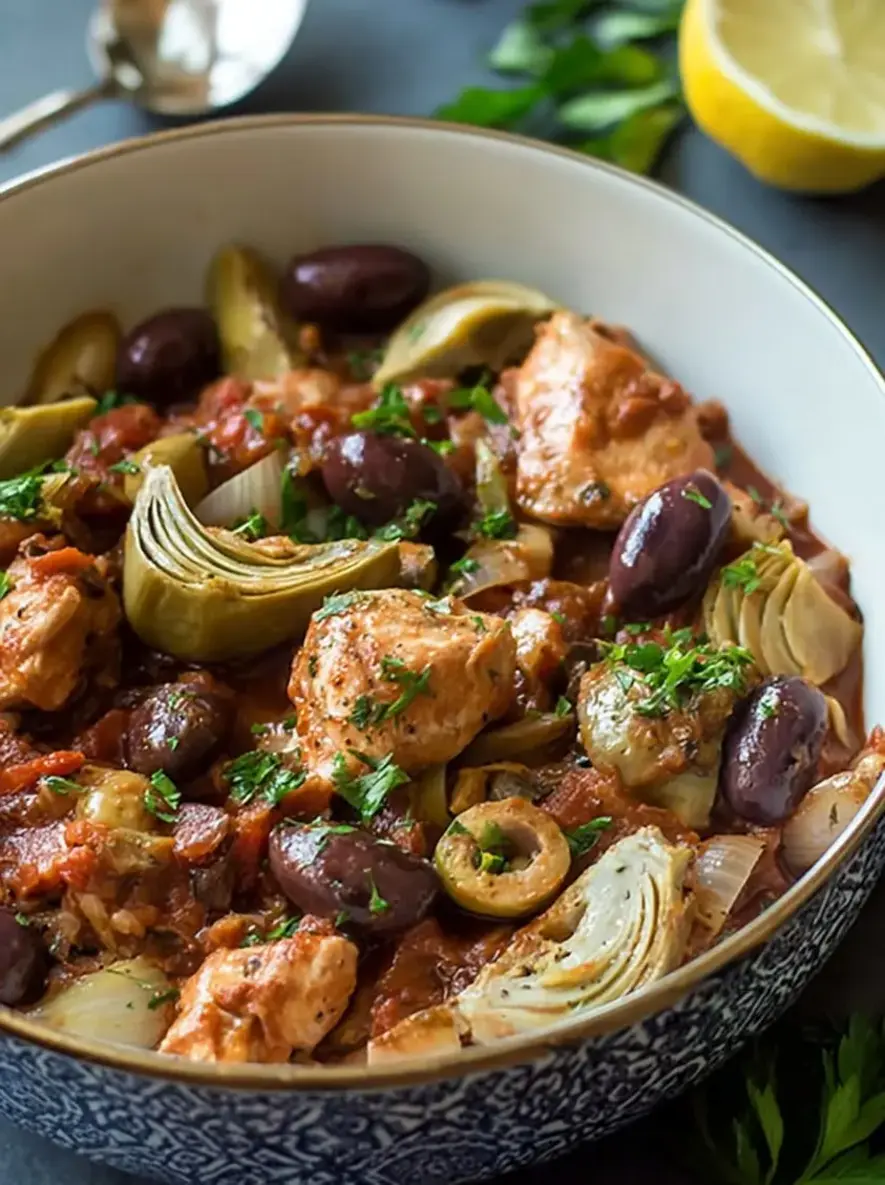
Table of Contents
Chicken Stifado with Artichokes and Kalamata Olives – A Greek Braised Chicken Recipe
I still remember the first time I made a proper Chicken Stifado recipe in my tiny Parisian apartment. I had just finished a grueling week at culinary school, and all I wanted was something deeply comforting — a braise that would fill my kitchen with the scent of oregano, garlic, and slow-cooked tomatoes. This Greek chicken stifado, with its tender chicken, sweet baby onions, and briny Kalamata olives, was my answer. The artichokes came later, when I was developing this recipe for leosfoods.com, and they added a layer of elegance that makes this dish truly unforgettable. In this chicken stifado with artichokes, every bite tells a story — of Greece, of France, and of my own journey through food.
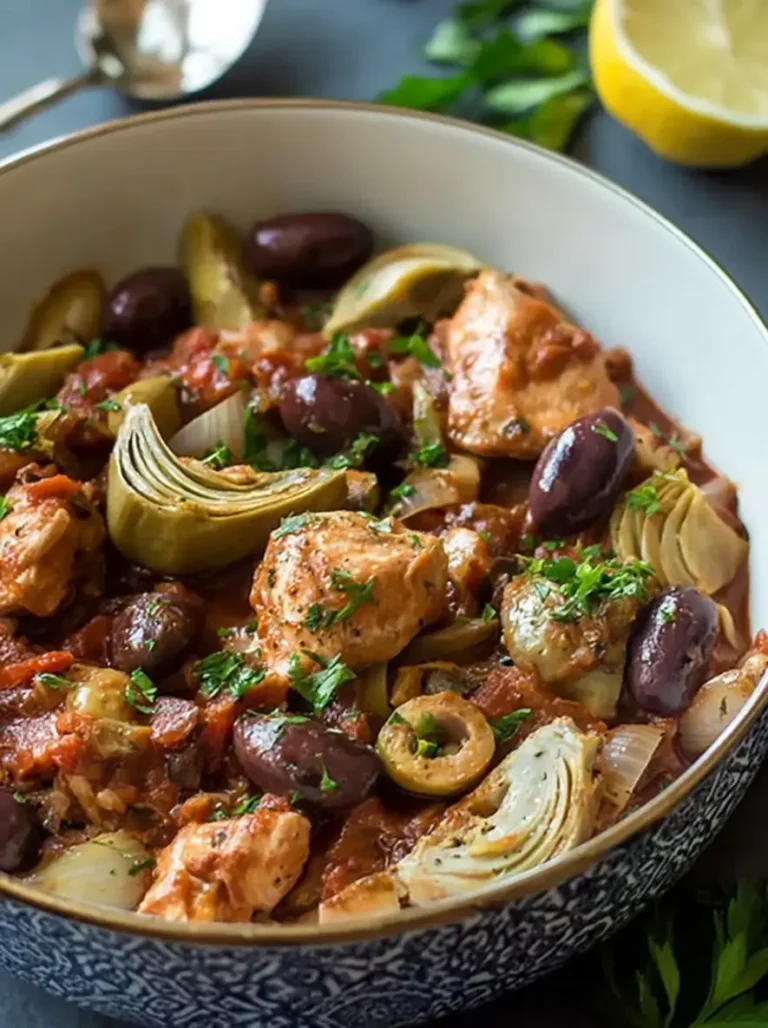
Picture this: deeply browned chicken thighs, bathed in a tomato-oregano sauce that’s both bright and rich, studded with silky artichoke hearts and those signature Greek olives that burst with salt and sunshine. The baby onions soften into sweet little gems, and the garlic — oh, the garlic — mellows into a creamy, almost nutty note that binds everything together. This Artichoke and olive chicken recipe delivers a sauce so luscious, you’ll want to soak up every last drop with crusty bread or over a bed of fluffy orzo. The aroma alone will have your family hovering around the stove, asking, “Is it ready yet?”
I’ve tested this Greek chicken stifado more times than I can count, tweaking the balance of herbs, the searing time, and the simmering duration to get it just right. My version stays true to the classic Greek stifado — a slow-braised comfort dish traditionally made with rabbit or beef — but swaps in chicken for a quicker, everyday version. I’ll share my 💡 Stella’s Pro Tip for getting the most tender chicken, and also a ⚠️ Common Mistake to Avoid that can make your sauce bitter. Whether you’re new to Greek cooking or a seasoned home cook, this recipe is designed to work beautifully every time.
Why This Chicken Stifado Recipe Is the Best
The flavor secret here is in the marinade and the slow-simmered tomato base. Growing up in Morocco, my mother taught me that a great braise starts with patience — letting the meat rest with salt, oregano, and olive oil before it even hits the pan. That same principle applies here. By marinating the chicken for just 20 minutes, the herbs penetrate deep into the meat, while the olive oil helps create that gorgeous golden crust during searing. Then, the real magic happens: the tomato paste is cooked until it darkens and caramelizes, a technique I learned in Paris, which adds a depth of umami that no canned sauce can match.
Texture is everything in this chicken stifado with artichokes and olives. The chicken thighs stay incredibly moist and tender because they’re braised gently — not boiled — at a low simmer. The baby onions are halved just enough so they hold their shape but soften completely, and the artichokes are added late so they retain a slight bite. I also deglaze the pan with a splash of lemon juice after searing, which lifts the fond (those brown bits stuck to the pot) and adds a brightness that cuts through the richness. It’s a classic French trick that makes every Mediterranean flavor sing.
And here’s why this recipe is foolproof even for beginners: it’s a one-pot wonder. You sear, you sauté, you simmer — all in the same Dutch oven. No transferring, no complicated steps. The hardest part is peeling the baby onions, and I’ll show you a quick trick for that. Plus, this Chicken Stifado recipe is forgiving — you can use frozen artichokes, skip the olives if you’re out, or even swap in chicken breasts if that’s all you have. The sauce will adjust and still be glorious. It’s the kind of meal that makes you look like a star with very little fuss.
Chicken Stifado Recipe Ingredients
When I shop for this Greek chicken stifado, I head straight to my favorite Mediterranean market on Atlantic Avenue in Brooklyn. The baby onions — either cipollini or pearl onions — are sweeter and smaller than standard yellow onions, and they’re worth seeking out. I also grab a jar of Kalamata olives from the olive bar and a can of baby artichokes packed in water. If I’m feeling ambitious, I’ll pick up fresh artichokes from the Union Square Greenmarket and trim them myself, but canned or frozen work beautifully for a weeknight. Here’s every ingredient you’ll need, plus a few pantry staples.
Ingredients List
- Marinade:
- 2 tablespoons olive oil
- 1 teaspoon dried oregano
- ½ teaspoon dried thyme
- ½ teaspoon dried rosemary
- 1 teaspoon kosher salt
- ¼ teaspoon freshly ground black pepper
- For the Stifado:
- 1½ pounds boneless, skinless chicken thighs, diced into bite-sized pieces
- 2 tablespoons olive oil
- 12 to 15 baby onions (shallots, pearl onions, or cipollini), peeled and halved if large
- 10 cloves garlic, roughly chopped
- 2 tablespoons tomato paste
- 2 cups chopped ripe tomatoes
- 1 can (14 ounces) baby artichokes, drained and quartered
- 2 tablespoons fresh lemon juice
Ingredient Spotlight
Baby Onions (Pearl or Cipollini): These little sweethearts are the backbone of any authentic stifado. They add sweetness and body to the sauce as they slowly break down. In a US grocery store, look for pearl onions in the frozen aisle (already peeled!) or fresh cipollini near the shallots. If you can’t find them, use halved shallots or even small yellow onions cut into wedges — just know the sweetness will be slightly milder.
Kalamata Olives: These purple-black, almond-shaped olives from Greece are briny, fruity, and firm. They’re the classic choice for this dish. I buy them pitted to save time, but unpitted have better flavor — just warn your guests! If you substitute with Castelvetrano olives, the flavor will be milder and buttery; with Niçoise olives, you’ll get a more intense, earthy brine. Avoid canned black olives, which are too soft and one-note.
Baby Artichokes (Canned or Frozen): Canned baby artichokes are a total time-saver. Look for them packed in water with salt and citric acid — no added oil or strong pickling brine. Drain and quarter them before adding. Frozen artichoke hearts are also excellent; just thaw and pat dry. Fresh baby artichokes, if you can find them, need their tough outer leaves trimmed but offer the best texture. Globe artichokes are too large and fibrous for this quick braise.
Tomato Paste: This concentrated powerhouse is essential for the deep, savory backbone of the sauce. I prefer double-concentrated tomato paste in a tube (the Italian kind) — it’s richer and easier to use than the canned stuff. When you cook it for 2 minutes in the hot oil before adding the tomatoes, it transforms from raw to caramelized, adding a layer of complexity that makes this Greek chicken stifado taste like it’s been simmering all day.
| Original Ingredient | Best Substitution | Flavor / Texture Impact |
|---|---|---|
| Baby onions (shallots/pearl/cipollini) | Shallots, halved; or small yellow onion wedges | Slightly less sweet; still delicious |
| Kalamata olives | Castelvatrano or Niçoise olives | Milder (Castelvetrano) or earthier (Niçoise) |
| Canned baby artichokes | Frozen artichoke hearts, thawed | Good texture; slightly less tangy |
| Fresh lemon juice | Red wine vinegar (1½ tbsp) | Brighter acidity; slightly sharper finish |
How to Make Chicken Stifado with Artichokes and Kalamata Olives — Step-by-Step
This Chicken Stifado recipe comes together in about an hour, but the active time is only about 20 minutes. The rest is hands-off simmering, giving you time to set the table, pour a glass of wine, and let the aromas build. Follow these steps, and you’ll have a stunning Greek chicken stifado that tastes like it came from a taverna in Athens.
Step 1: Marinate the Chicken
In a medium bowl, whisk together 2 tablespoons olive oil, 1 teaspoon dried oregano, ½ teaspoon dried thyme, ½ teaspoon dried rosemary, 1 teaspoon kosher salt, and ¼ teaspoon black pepper. Add the diced chicken thighs and toss well to coat. Let it sit at room temperature for 15–20 minutes while you prep the other ingredients. This short marinating time is enough for the herbs to infuse the meat and for the salt to help tenderize the chicken.
⚠️ Common Mistake to Avoid: Don’t skip the marinating or rush it. If you add the chicken directly to the pot without marinating, the herbs will just sit on the surface and the chicken won’t be as flavorful. Even 10 minutes makes a difference.
Step 2: Sear the Chicken
Heat 2 tablespoons olive oil in a large Dutch oven or heavy-bottomed pot over medium-high heat. Add the marinated chicken pieces in a single layer (work in batches if needed) and cook without moving for 3–4 minutes until deeply golden brown on the bottom. Flip and sear for another 2–3 minutes. Transfer the seared chicken to a plate. Don’t worry if it’s not cooked through — it will finish in the sauce.
💡 Stella’s Pro Tip: For the best crust, pat the chicken dry with paper towels after marinating. Any excess moisture will steam the meat instead of browning it. That golden fond on the bottom of the pot is pure flavor — don’t clean it off!
Step 3: Sauté the Onions and Garlic
Reduce the heat to medium. Add the peeled baby onions to the same pot and cook for 4–5 minutes, stirring occasionally, until they’re softened and starting to brown in spots. Add the roughly chopped garlic and cook for 30 seconds until fragrant but not burnt. The garlic will be pungent now but will mellow dramatically during the braise.
⚠️ Common Mistake to Avoid: Don’t let the garlic burn! Burnt garlic turns bitter and can ruin the entire sauce. If the pot seems too hot, lower the heat before adding the garlic. You want it to sizzle gently, not scorch.
Step 4: Caramelize the Tomato Paste
Push the onions and garlic to the side of the pot and add the 2 tablespoons of tomato paste directly to the hot surface. Cook for 2 minutes, stirring constantly, until the paste darkens to a deeper red and starts to smell sweet and rich. This caramelization step is a game-changer — it eliminates the raw, tinny flavor of tomato paste and unlocks its full savory potential.
💡 Stella’s Pro Tip: Use a wooden spoon or silicone spatula to stir the tomato paste. Watch it closely — once it starts to stick just slightly to the bottom of the pot, you know it’s caramelized enough. If it turns brown or black, you’ve gone too far.
Step 5: Build the Sauce
Add the 2 cups of chopped ripe tomatoes (fresh or canned — both work great) and stir everything together, scraping up the browned bits from the bottom of the pot. Bring the sauce to a gentle simmer. Return the seared chicken along with any juices that accumulated on the plate. Stir in the 2 tablespoons fresh lemon juice, then nestle the chicken pieces into the sauce so they’re mostly submerged.
⚠️ Common Mistake to Avoid: Don’t add the artichokes yet! If you add them now, they’ll overcook and turn mushy. Artichokes only need about 10 minutes to heat through and absorb the sauce. Add them later, as instructed in Step 6.
Step 6: Simmer and Add Artichokes
Reduce the heat to low, cover the pot, and let the Chicken Stifado simmer for 20 minutes. The sauce will thicken and the chicken will become fork-tender. After 20 minutes, gently stir in the drained and quartered baby artichokes. Cover again and cook for an additional 10 minutes. The artichokes will warm through and absorb the beautiful tomato-olive sauce without losing their shape.
💡 Stella’s Pro Tip: To thicken the sauce even more without adding flour, remove the lid for the last 5–10 minutes of simmering. This lets excess moisture evaporate and concentrates the flavors. If you prefer a looser sauce, keep the lid on. You’re in control!
Step 7: Finish and Adjust Seasoning
Remove the pot from the heat. Taste the sauce and add more salt or lemon juice if needed. The Kalamata olives are already salty, so go easy on additional salt. If you like, stir in a handful of chopped fresh parsley or dill for a pop of color and freshness. Let the stifado rest for 5 minutes before serving — the sauce will settle and the flavors will harmonize beautifully.
| Step | Action | Duration | Key Visual Cue |
|---|---|---|---|
| 1 | Marinate chicken with herbs and oil | 15–20 mins | Chicken coated evenly, herbs visible |
| 2 | Sear chicken until golden brown | 5–7 mins total | Deep golden crust; fond on pot bottom |
| 3 | Sauté onions; add garlic | 5–6 mins | Onions softened, edges golden |
| 4 | Caramelize tomato paste | 2 mins | Paste darkens to deep red, smells sweet |
| 5 | Add tomatoes, lemon juice, chicken | 5 mins | Sauce bubbling gently; fond fully deglazed |
| 6 | Simmer covered; add artichokes | 30 mins total | Chicken tender, sauce thickened |
| 7 | Adjust seasoning, rest | 5 mins rest | Sauce coats spoon; flavors melded |
Serving & Presentation
This Greek chicken stifado is a saucy, hearty dish that begs for something to soak up every drop. In my NYC kitchen, I love serving it over a bed of fluffy orzo pasta — the little rice-shaped grains catch the sauce perfectly. A side of crusty sourdough or warm pita bread is also a fantastic choice. For a lighter option, try it with steamed rice or even creamy mashed potatoes. I like to finish each bowl with a sprinkle of fresh dill or parsley and a few extra Kalamata olives on top for a pop of color and brine.
When I’m plating for guests, I spoon the stifado into shallow bowls so the sauce pools around the chicken and artichokes. A generous crack of black pepper and a drizzle of good olive oil just before serving adds a luxurious finish. In the summer, I’ll serve it with a simple Greek salad on the side — tomatoes, cucumbers, feta, and a lemon-oregano vinaigrette. In the winter, it’s perfect with roasted vegetables or a warm lentil soup. This dish travels well from Morocco to Paris to NYC, and it always brings a taste of the Mediterranean to my table.
One of my favorite memories is making this Chicken Stifado recipe for a small dinner party in my Chelsea apartment. The guests couldn’t stop dipping bread into the sauce, and everyone asked for the recipe. Since then, it’s become my go-to for cozy family dinners and celebratory Sunday suppers alike. Serve it with confidence — this dish is a showstopper.
| Pairing Type | Suggestions | Why It Works |
|---|---|---|
| Side Dish | Orzo, crusty bread, rice, mashed potatoes | Soaks up the rich tomato-olive sauce perfectly |
| Sauce / Dip | Tzatziki, lemon-herb vinaigrette | Cool, creamy contrast to the warm braise |
| Beverage | Greek red (Xinomavro), Assyrtiko white, lemonade | Fruity red or crisp white balances acidity |
| Garnish | Fresh dill, parsley, extra olives, lemon wedge | Adds color, freshness, and bright flavor |
Make-Ahead, Storage & Reheating
As a busy NYC food blogger, I rely on make-ahead meals that taste even better the next day — and this Chicken Stifado recipe is a champion in that department. The flavors deepen and meld overnight, making leftovers an absolute treat. I often double the batch so I can freeze half for a future lazy Sunday. Here’s everything you need to know about storing and reheating this Greek chicken stifado with artichokes and olives.
| Method | Container | Duration | Reheating Tip |
|---|---|---|---|
| Refrigerator | Airtight container | Up to 4 days | Reheat gently on stove over medium-low heat, adding a splash of water or broth to loosen the sauce. |
| Freezer | Freezer-safe zip-top bag or container | Up to 3 months | Thaw overnight in fridge, then reheat in a covered pot on low, stirring occasionally. |
| Make-Ahead | Cook completely, cool, refrigerate | Make up to 2 days ahead | The flavor improves overnight. Add fresh herbs just before serving for a vibrant finish. |
For best results, I recommend reheating this chicken stifado on the stovetop rather than in the microwave. The gentle, even heat helps the chicken stay tender and the sauce remain luscious. If the sauce seems too thick after refrigeration, add a splash of chicken broth or even water and stir well. Don’t forget to taste and adjust the salt and lemon juice — the flavors can mute slightly during storage, and a fresh squeeze of lemon at the end can wake everything up beautifully.
Variations & Easy Swaps
One of the things I love most about this Chicken Stifado recipe is how flexible it is. Over the years, I’ve tested countless variations — some inspired by my Moroccan roots, others by my Parisian training, and many by the fresh ingredients I find at NYC farmers markets. Here are three of my favorite twists to keep this Greek chicken stifado exciting all year round.
| Variation | Key Change | Best For | Difficulty Impact |
|---|---|---|---|
| Moroccan Spiced Stifado | Add 1 tsp ras el hanout and ½ tsp cinnamon | Warm, aromatic twist | Easy |
| Dairy-Free / Paleo | Use coconut aminos instead of lemon? No — just skip dairy sides | Paleo, dairy-free diets | Easy |
| Spring Vegetable Stifado | Add green beans, peas, or asparagus with artichokes | Seasonal Spring bounty | Easy |
Moroccan Spiced Stifado
Growing up in Morocco, I learned to love the warmth of spices like cinnamon, cumin, and ginger in savory dishes. For a Moroccan-inspired version of this Greek chicken stifado, add 1 teaspoon of ras el hanout and ½ teaspoon of ground cinnamon along with the tomato paste. The spices meld beautifully with the oregano and lemon, creating a sauce that’s both familiar and exotic. I love serving this version with couscous and a sprinkle of toasted almonds — it’s a nod to my childhood kitchen in Marrakech.
Paleo / Dairy-Free Version
This Chicken Stifado recipe is naturally dairy-free and gluten-free, making it perfect for paleo and Whole30 diets. Just serve it with roasted sweet potatoes, cauliflower rice, or a simple green salad instead of orzo or bread. The sauce is already rich and satisfying on its own. I also like to add a tablespoon of capers along with the Kalamata olives for extra brininess — it’s a little twist that brightens the whole dish without any dairy.
Spring Vegetable Stifado
When spring arrives in NYC, I head to the Union Square Greenmarket for the first fresh peas, green beans, and asparagus. In this variation, I add a handful of trimmed green beans or sugar snap peas along with the artichokes during the last 10 minutes of simmering. The bright green vegetables add a pop of color and a fresh, snappy texture that contrasts beautifully with the tender chicken and soft onions. It’s a celebration of the season in every spoonful.
FAQ
What is the best way to tenderize the chicken for Chicken Stifado with Artichokes and Kalamata Olives?
The best way to tenderize the chicken for this Greek chicken stifado is twofold. First, use boneless, skinless chicken thighs — they are naturally more tender and juicy than breasts because of their higher fat content. Second, marinate the chicken for at least 15–20 minutes with olive oil, salt, and herbs. The salt helps break down the protein fibers slightly, making the meat more tender. Also, avoid overcooking. Simmer the chicken gently for about 30 minutes total, no longer, and always check for doneness with a fork. The low, slow braise in the tomato sauce keeps the chicken moist and fork-tender.
Can I substitute frozen artichokes for fresh ones in this Chicken Stifado recipe?
Absolutely! Frozen artichoke hearts are a fantastic substitute for fresh or canned artichokes in this Chicken Stifado with Artichokes and Kalamata Olives. Simply thaw them completely, then pat them dry with paper towels to remove excess moisture. Add them to the pot during the last 10 minutes of simmering, just as you would with canned artichokes. Frozen artichokes are usually already blanched, so they need only gentle heating to warm through. They hold their shape well and absorb the tomato-olive sauce beautifully. Just avoid over-stirring once added, as they can break apart if handled too vigorously.
How long should I simmer Chicken Stifado for the flavors to fully develop?
For this Greek chicken stifado, a total simmering time of 30 to 35 minutes is ideal for the flavors to fully develop. Specifically, after adding the tomatoes and returning the seared chicken to the pot, simmer covered for 20 minutes. Then add the artichokes and simmer for another 10 minutes. This timeframe allows the tomato paste to deepen, the herbs to infuse the sauce, and the chicken to become tender without drying out. If you have more time, you can simmer for up to 45 minutes total, adding a splash of broth if the sauce thickens too much. The longer it simmers, the more the flavors meld — but 30 minutes is the sweet spot for a weeknight.
What can I serve alongside Chicken Stifado with Artichokes and Kalamata Olives to soak up the sauce?
This Chicken Stifado recipe has a wonderfully rich, flavorful sauce that begs for something to soak it up. My top recommendations are: creamy orzo pasta (the little rice-shaped grains catch every drop), crusty sourdough or warm pita bread for dipping, fluffy white rice, or even buttery mashed potatoes. For a low-carb option, serve it over cauliflower rice or with roasted zucchini noodles. I also love pairing it with a simple Greek salad — the acidity of the dressing balances the richness of the stifado. Whatever you choose, make sure it’s something that loves a good bath of tomato-olive sauce!
Can I use chicken breasts instead of thighs for this Greek chicken stifado?
Yes, you can use boneless, skinless chicken breasts in this Chicken Stifado with Artichokes and Kalamata Olives, but I recommend making a few adjustments. Chicken breasts are leaner and can dry out more easily than thighs. To keep them juicy, cut the breasts into similar bite-sized pieces, sear them just until golden (about 2 minutes per side), and reduce the total simmering time to 15–20 minutes after adding the tomatoes. Check for doneness with a meat thermometer — 165°F is perfect. Add the artichokes after 10 minutes of simmering. For the best results, I still recommend thighs, but breasts work well if handled with care.
Is this Chicken Stifado recipe gluten-free?
Yes, this Chicken Stifado recipe is naturally gluten-free! There are no flour, pasta (unless you serve it with orzo, which contains gluten), or any wheat-based ingredients in the recipe itself. The sauce is thickened purely by the slow simmering of tomatoes and tomato paste, which concentrates naturally without any grain-based thickeners. To keep the entire meal gluten-free, serve your Greek chicken stifado with rice, quinoa, roasted potatoes, or gluten-free bread or pasta. Always check the labels on your canned artichokes and olives to ensure no gluten-containing additives are present — though most are naturally gluten-free.
Can I make this Chicken Stifado in a slow cooker or Instant Pot?
Absolutely! To make this Greek chicken stifado in a slow cooker, sear the chicken and sauté the onions and garlic on the stovetop first, then transfer everything (including the artichokes) to the slow cooker. Cook on low for 4–6 hours or on high for 2–3 hours. For an Instant Pot, use the sauté function for the searing and softening steps, then pressure cook on high for 10 minutes with a natural release. Add the artichokes after pressure cooking — use the sauté function to warm them through for 5 minutes. Both methods yield tender, flavorful results, though the stovetop version gives you more control over the sauce thickness.
What are Kalamata olives called in US grocery stores?
In US grocery stores, Kalamata olives are most commonly labeled simply as “Kalamata Olives.” You’ll typically find them in the olive bar section of the deli counter (often pitted or with pits), in jars or cans in the international foods aisle, or sometimes in the refrigerated section near the pickles and olives. They are distinctively purple-black, almond-shaped, and packed in brine or olive oil. For this Chicken Stifado recipe, I recommend buying pitted Kalamata olives to save prep time, but if you find unpitted ones, just slice the flesh off the pit or warn your guests. They are widely available at most US supermarkets.
Can I add other vegetables to this Greek chicken stifado?
Certainly! This Chicken Stifado recipe welcomes additional vegetables, especially in spring and summer. Try adding a cup of trimmed green beans, sugar snap peas, or asparagus spears during the last 10 minutes of simmering — they’ll stay bright and crisp-tender. For a heartier version, you can add diced carrots or celery along with the onions in Step 3. Bell peppers (red or yellow) also work well, added with the tomatoes. Just avoid watery vegetables like zucchini or eggplant, as they can make the sauce thin and watery. If you add more vegetables, you may want to adjust the salt and seasonings slightly. Have fun with it!
How do I prevent the sauce from becoming too bitter when cooking Chicken Stifado?
Bitterness in a Chicken Stifado can come from a few sources, but the most common culprit is burnt garlic. When garlic is cooked over high heat or for too long, it turns bitter and can ruin the entire dish. Always add garlic after the onions and cook it for only 30 seconds until fragrant — no longer. Another potential source of bitterness is the tomato paste if it’s caramelized too far (it should darken to a deep red, not brown or black). Finally, if you’re using canned artichokes packed in brine with citric acid, rinse them well before adding. A touch of lemon juice at the end can also help balance any sharpness.
Share Your Version!
I absolutely love hearing how this Chicken Stifado recipe turns out in your kitchen. Did you try the Moroccan spiced variation? Did you serve it with orzo or crusty bread? Did you swap in chicken breasts or add extra vegetables? Every twist you make tells me you’ve made this dish your own — and that’s the highest compliment a recipe can get. Drop a star rating and a comment below to let me know how it went. Your feedback helps me create even better recipes for you and helps other home cooks discover their new favorite Greek chicken stifado.
If you snap a photo of your creation, tag me on Instagram or Pinterest @leosfoods — I love seeing your beautiful plates! And if there’s one question I want you to answer, it’s this: What side dish did you choose to soak up that glorious sauce, and why? Your answer just might inspire the next person reading this post. From my NYC kitchen to yours — I hope this recipe brings as much warmth to your table as it does to mine. — Stella 🧡
Love This Recipe? Save It to Pinterest!
If you enjoyed this Chicken Stifado with Artichokes and Kalamata Olives recipe, don’t let it get lost in your browser tabs! 😄 Pin it now so you can find it again anytime — and explore hundreds more tried-and-tested recipes waiting for you on my Pinterest boards.
👉 Follow Stella on Pinterest @stellarecipeblog
📌 Pin this recipe · 🔁 Re-pin your favorites · 💬 Tag me when you make it — I love seeing your creations!
Chicken Stifado with Artichokes and Kalamata Olives
Ingredients
- Marinade:
- 2 tablespoons olive oil
- 1 teaspoon dried oregano
- ½ teaspoon dried thyme
- ½ teaspoon dried rosemary
- 1 teaspoon kosher salt
- ¼ teaspoon freshly ground black pepper
- For the Stifado:
- 1½ pounds boneless, skinless chicken thighs, diced into bite-sized pieces
- 2 tablespoons olive oil
- 12 to 15 baby onions (shallots, pearl onions, or cipollini), peeled and halved if large
- 10 cloves garlic, roughly chopped
- 2 tablespoons tomato paste
- 2 cups chopped ripe tomatoes
- 1 can (14 ounces) baby artichokes, drained and quartered
- 2 tablespoons fresh lemon juice
Instructions
Tried This Recipe? Leave a Comment!
Did you make this recipe? I’d love to hear how it turned out! Please leave a comment and a rating below. Your feedback helps other home cooks and supports cheerychop.com!
For more delicious inspiration, follow me on Pinterest!